
The design of the 3d dull purple on orange-yellow
King Edward VII · Great Britain · De La Rue · 20 March 1902
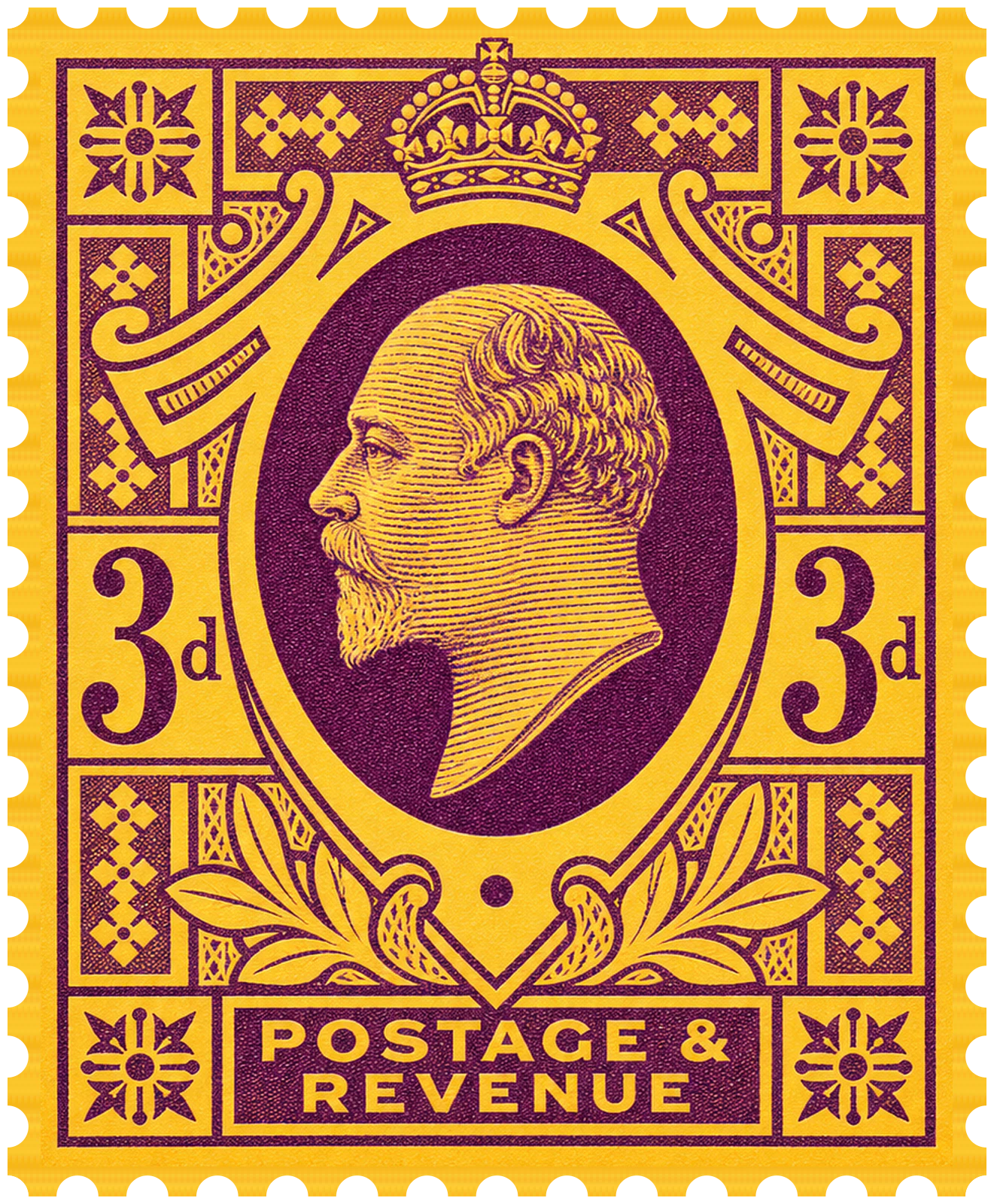
A Victorian frame with a new King
Much of the ornamental framework comes from Queen Victoria’s Jubilee threepence of 1887. For the Edwardian issue, the King’s portrait replaced the Queen’s and a crown was added to the border. Purple printing on yellow paper also continued from the earlier design. [1]
The new monarch therefore appeared within a familiar setting. The paired value panels, patterned corners and inscription at the foot make the continuity visible even before the fine details are examined.
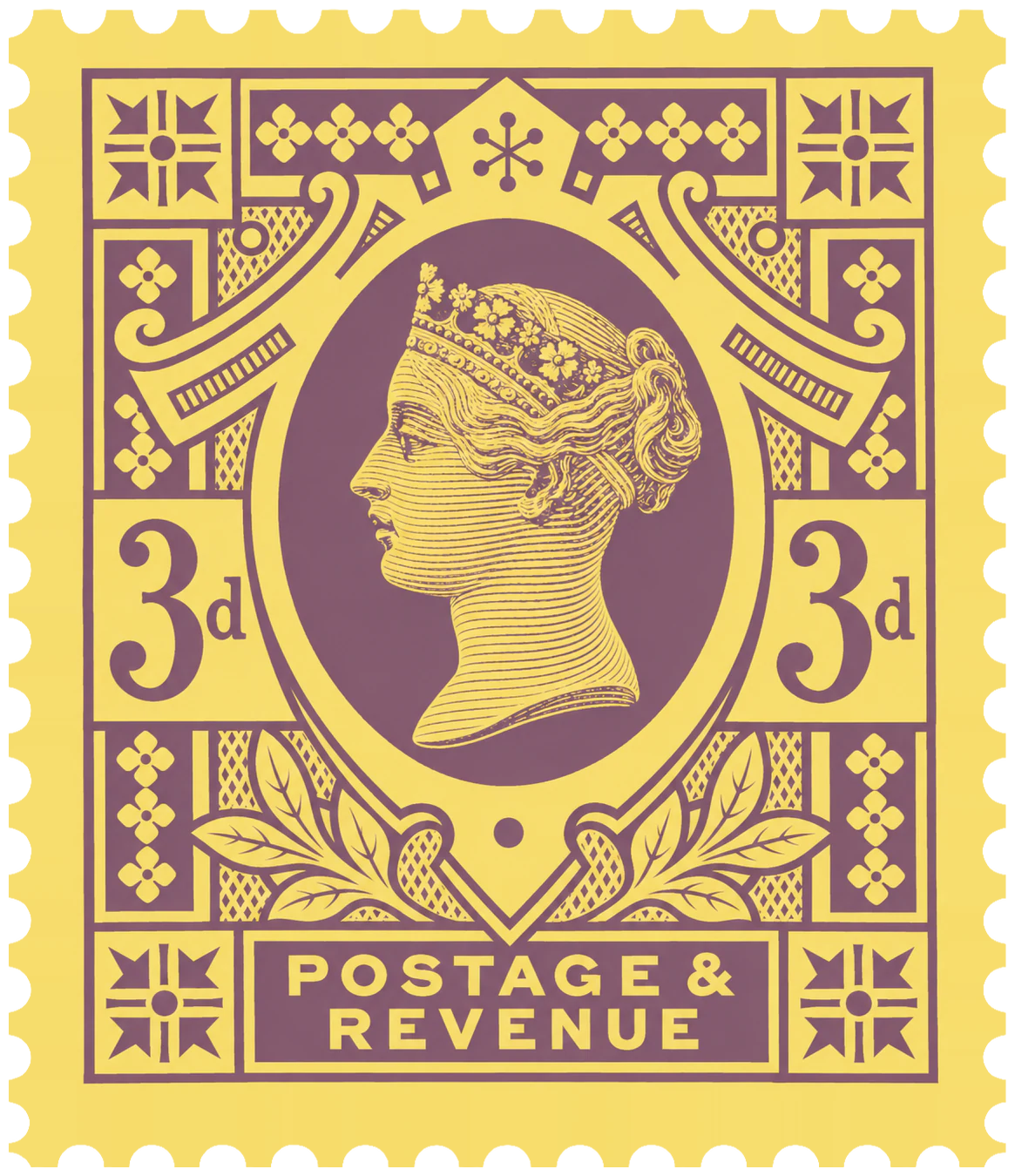
Compare the portrait setting and surrounding frame.
Click either stamp to magnify
The portrait — a face drawn in lines
The left-facing likeness is based on the work of Emil Fuchs, an Austrian-born artist. Edward VII granted him a sitting after rejecting earlier proposals for the new stamps. [2]
Separate printed lines build up the forehead, cheek and neck, with paper showing between them. Curving strokes follow the hair and beard, while darker passages distinguish the profile from its background.
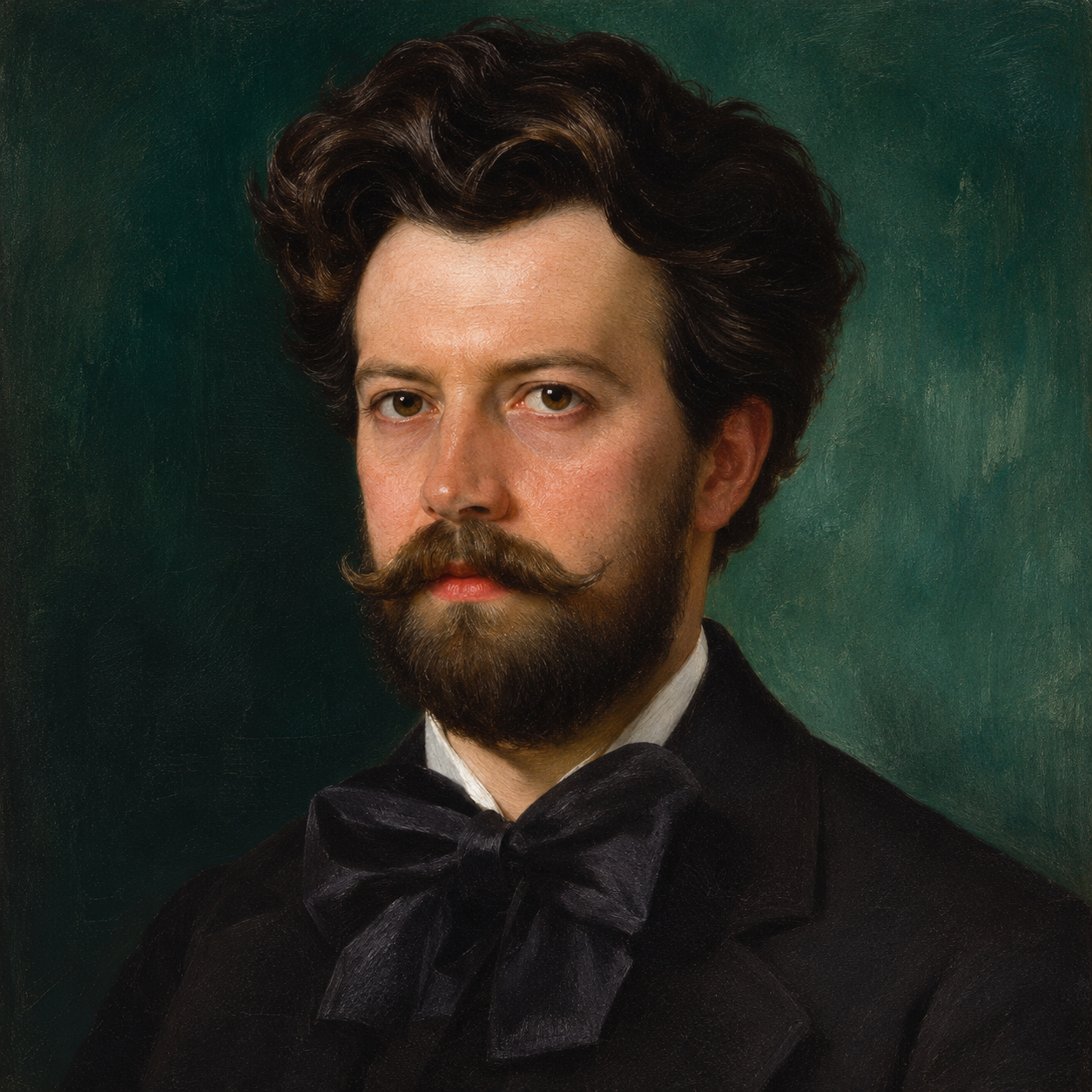
Image information
Click image to magnify
Emil Fuchs, with dark hair, a moustache and beard, wearing a dark suit.
- Credit
- Emil Fuchs, Self-Portrait (1905). Brooklyn Museum, via Wikimedia Commons. Public domain source.
- Notes
- Digitally reconstructed
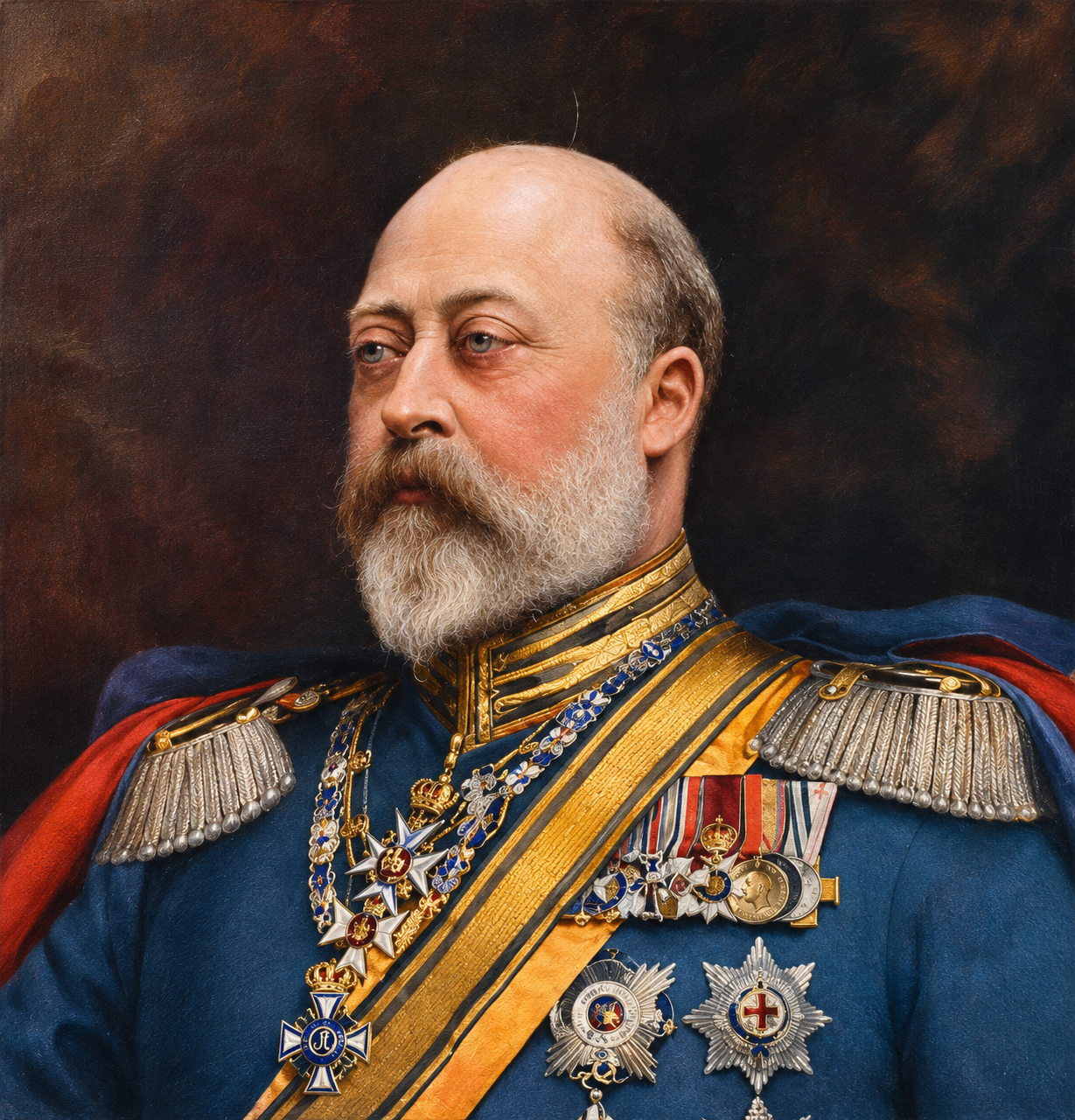
Image information
Click image to magnify
Portrait illustration of King Edward VII in ceremonial uniform.
- Credit
- Stunning Stamps · 2026
- Notes
- Digitally reconstructed
The crown — royal authority
The crown has arches rising towards a small cross, with rounded ornaments above a patterned band.
The King is bare-headed; the crown sits separately in the frame above him.

Image information
Click image to magnify
Gold Tudor royal crown with jewels, pearls, small figures and a purple cap.
- Credit
- Stunning Stamps · 2026
- Notes
- Digitally constructed
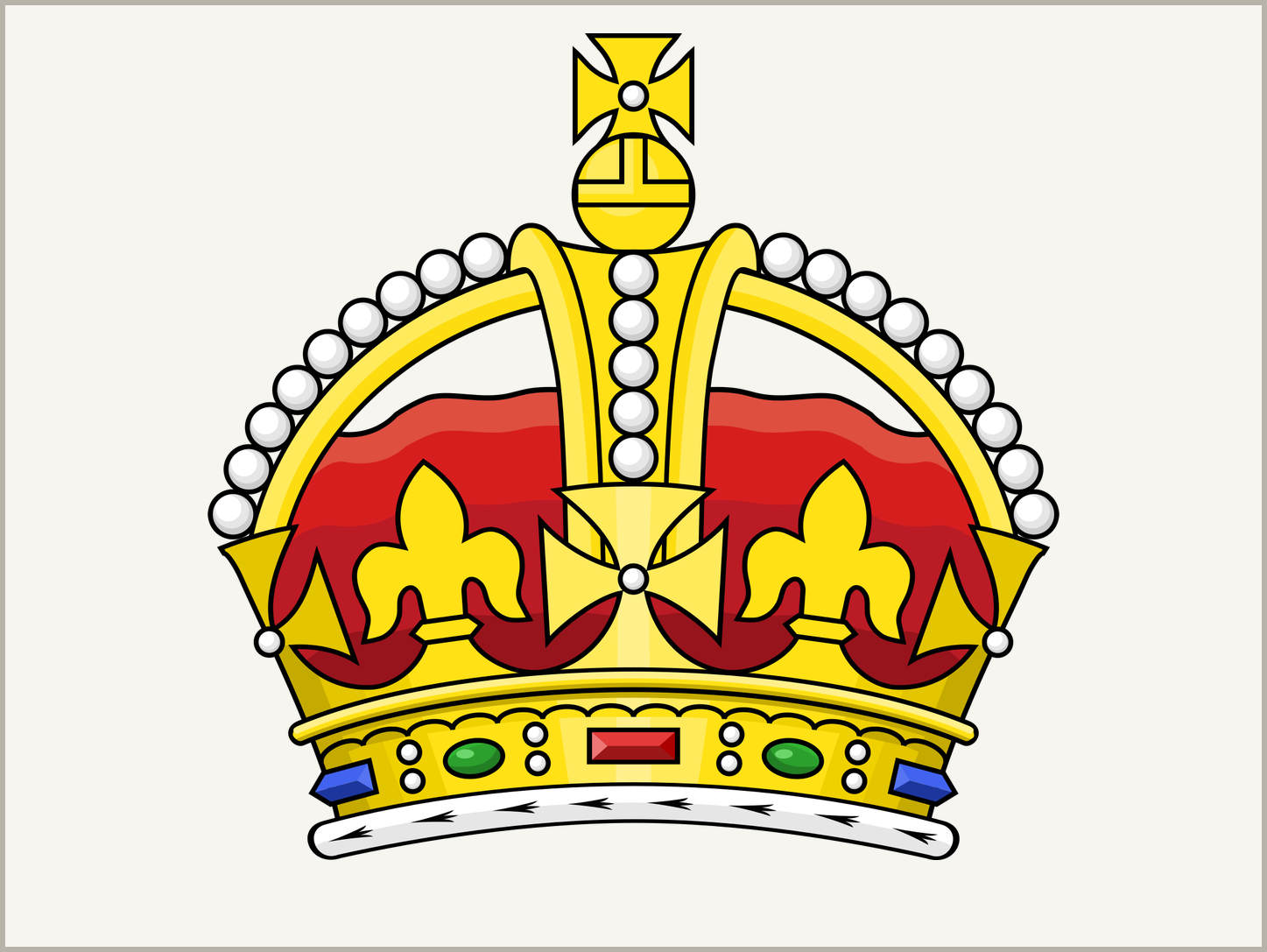
Image information
Click image to magnify
Heraldic Tudor Crown with rounded arches, a cross and orb, red cap, crosses and fleurs-de-lis.
- Credit
- Dgp4004 · Wikimedia Commons · CC0
Scrolls, foliage and four corner ornaments
Large curved scrolls turn outwards above the portrait. Below, two sprays of stylised leaves curve towards the centre. Around them, small geometric panels alternate with the four matching ornaments in the corners.
The corner ornaments resemble rosettes: repeated forms radiate from a central point. They provide four strong anchors for the rectangular frame. The lower leaves are more stylised than the oak, laurel or olive branches on other values, so they are described here as ornamental foliage rather than assigned to a particular plant.
Click either stamp to magnify
A value on each side
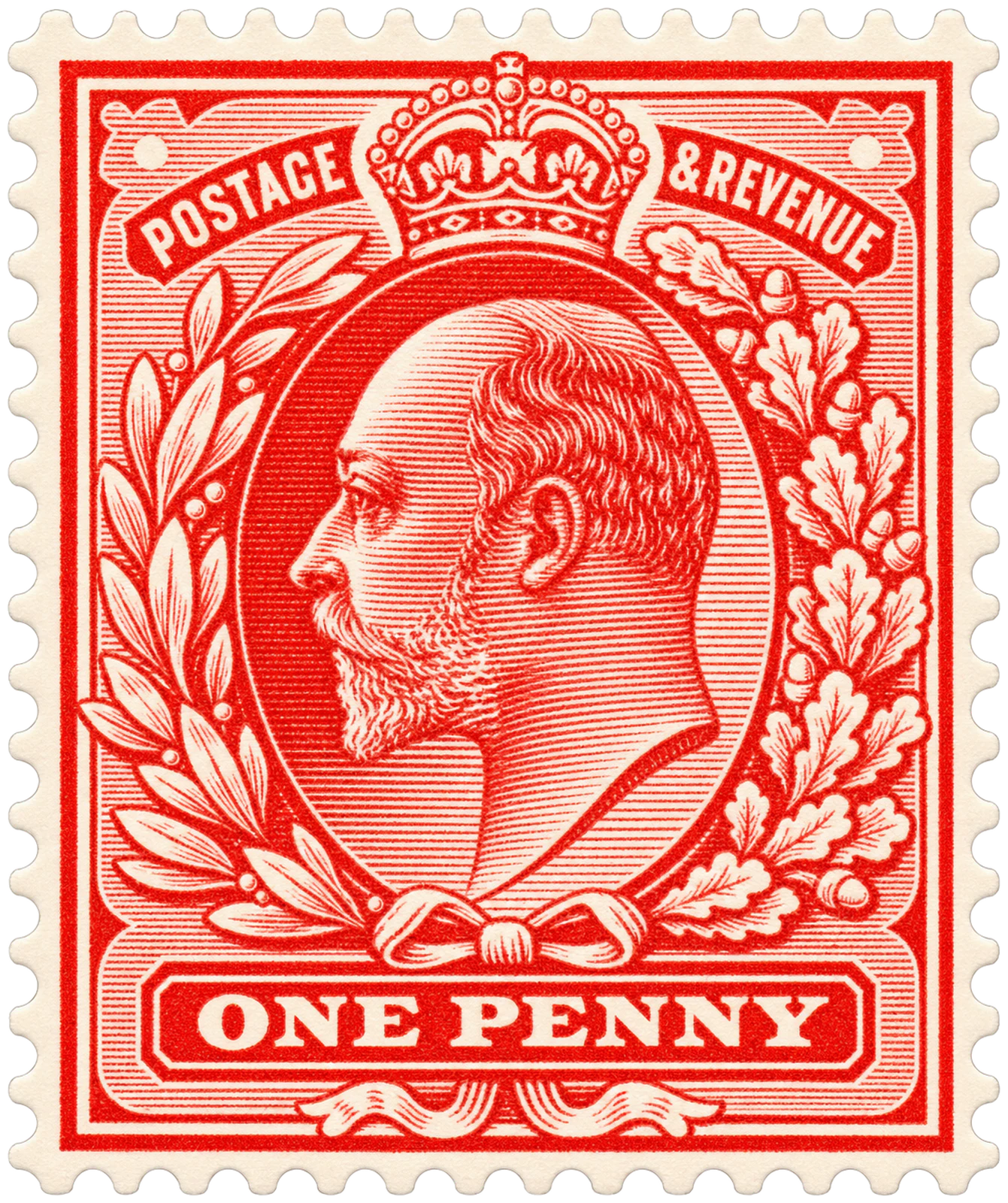
The denomination is repeated to the left and right of the portrait. Each panel contains a large 3 and a smaller d. This leaves the space beneath the head free for the scrolls, foliage and the inscription POSTAGE & REVENUE.
Both figures sit at the same height, balancing one another across the oval. Their broad shapes are easy to pick out among the much smaller repeated patterns.
POSTAGE & REVENUE
The inscriptions identify two uses for the stamp: paying postage and paying certain revenue duties. A revenue stamp records payment of a tax or duty on a document. Combined postage-and-revenue stamps had already been introduced during Victoria’s reign. [3, 4]
POSTAGE & REVENUE is placed in a broad panel at the foot, below the portrait and foliage.
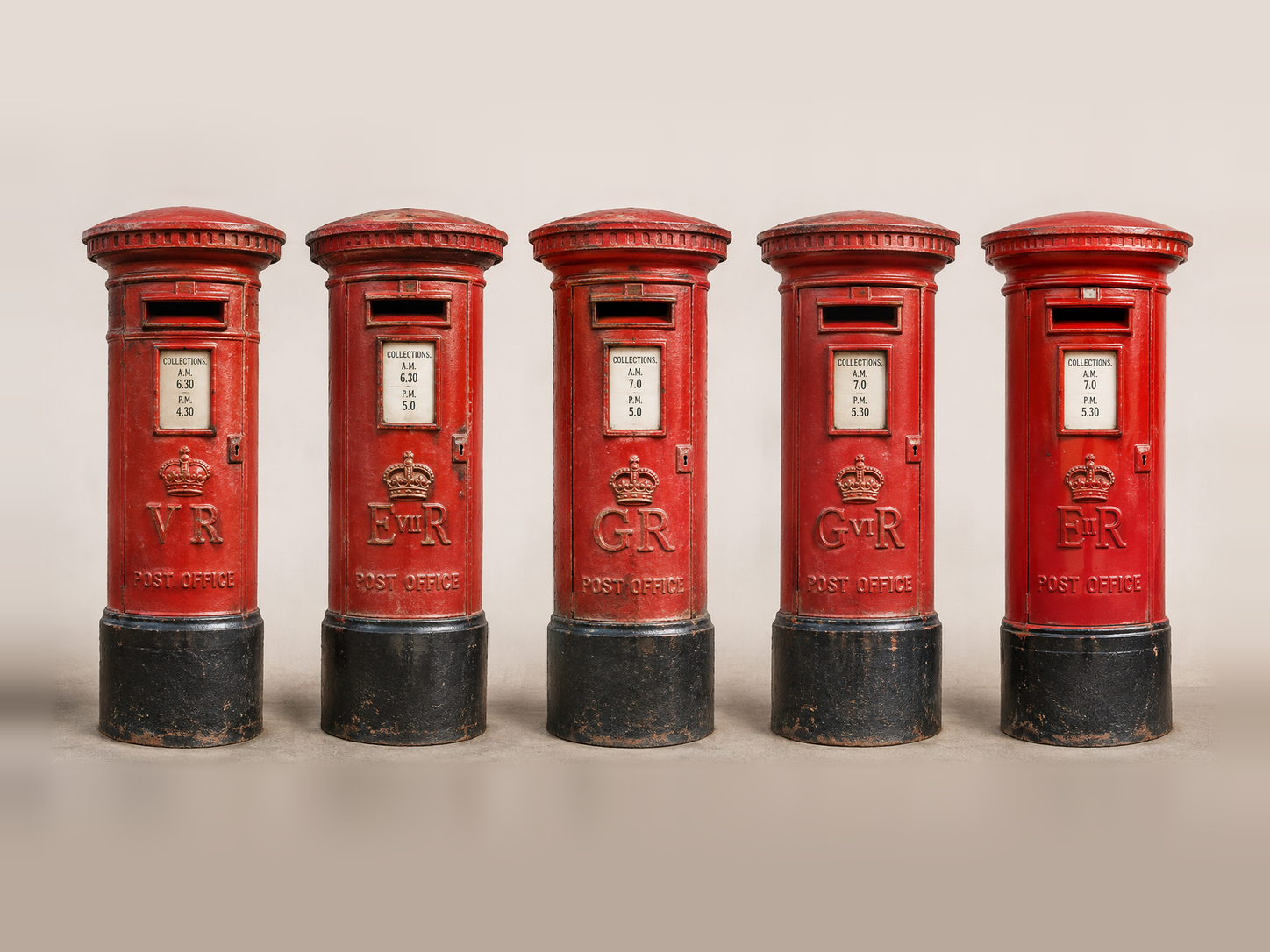
Image information
Click image to magnify
Illustration of five red pillar boxes with royal cyphers.
- Credit
- Stunning Stamps · 2026
- Notes
- Digitally reconstructed
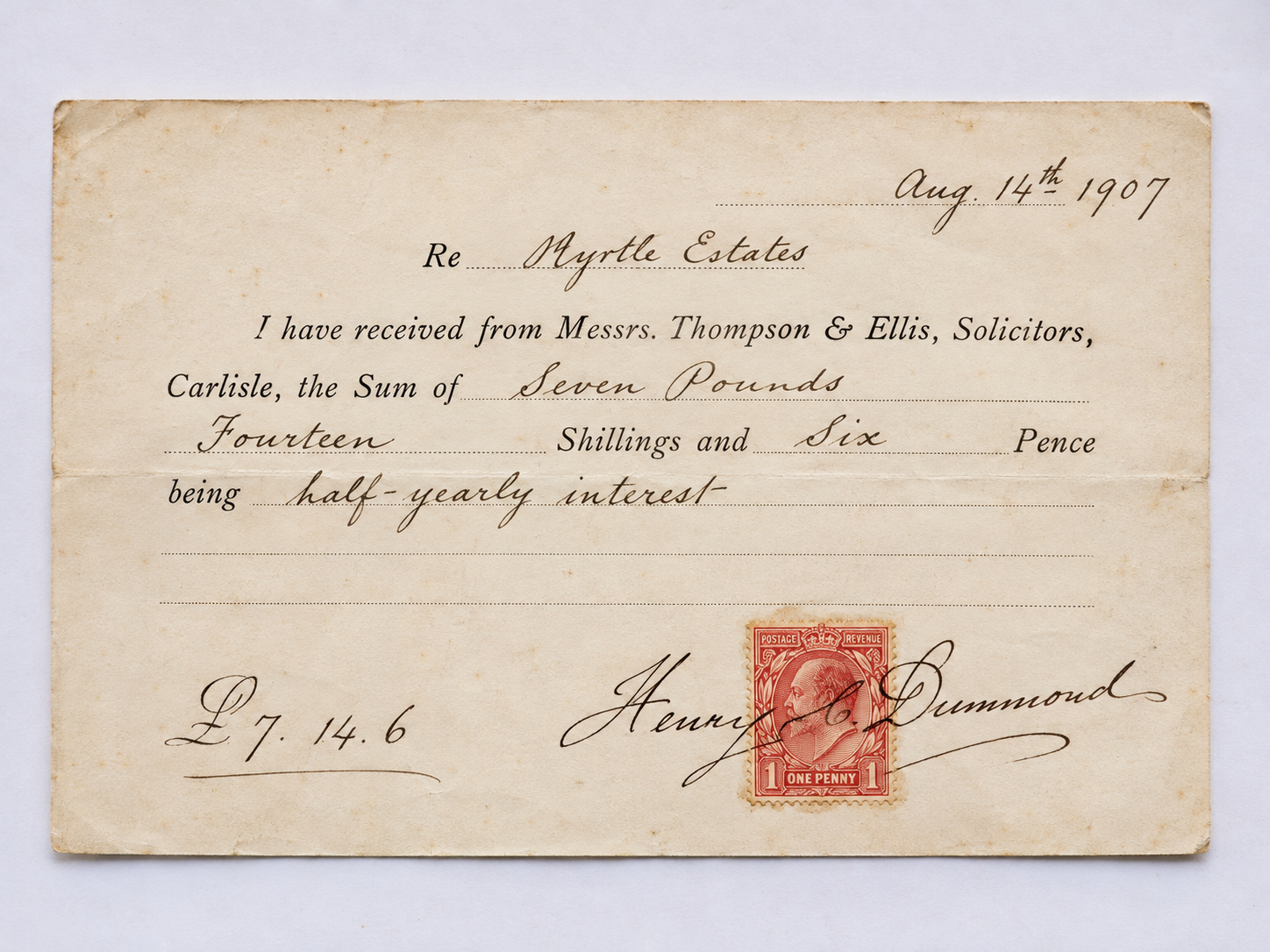
Image information
Click image to magnify
Illustration of a handwritten receipt with an Edward VII penny stamp cancelled by a signature.
- Credit
- Stunning Stamps · 2026
- Notes
- Digitally constructed
Purple ink on yellow paper
The yellow is the colour of the paper, not a second printing ink. A single purple impression creates the portrait, frame and inscriptions. Wherever the design is left unprinted, the yellow paper shows through. [1]
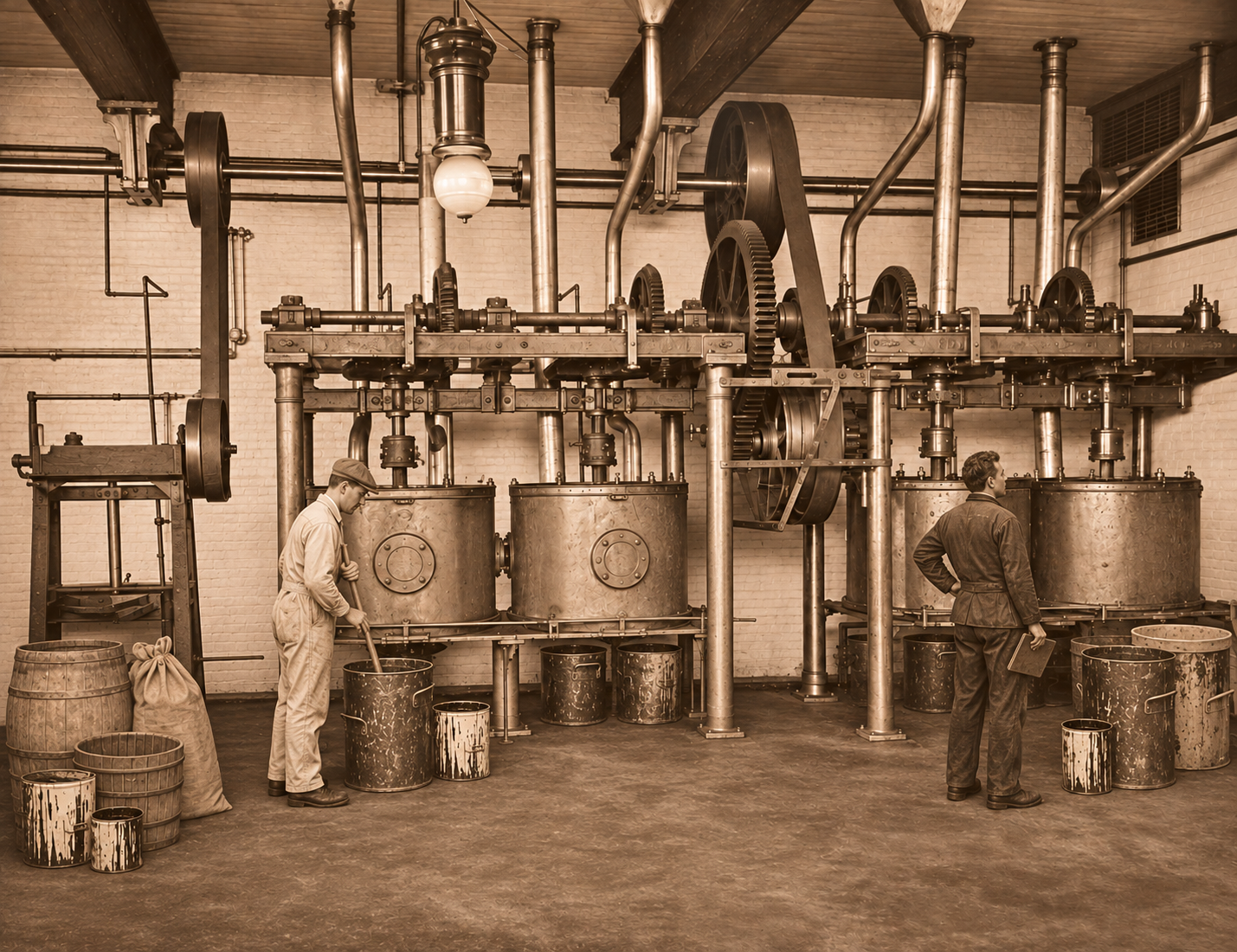
Image information
Click image to magnify
Victorian ink factory with workers, large mixing vats, belt-driven machinery and buckets.
- Credit
- Stunning Stamps · 2026
- Notes
- Digitally constructed
Look at the face, the spaces within the leaves and the lettering at the foot. The same paper supplies their light colour. This differs from the three-halfpence and twopence, whose contrasting colours came from separate printed impressions.
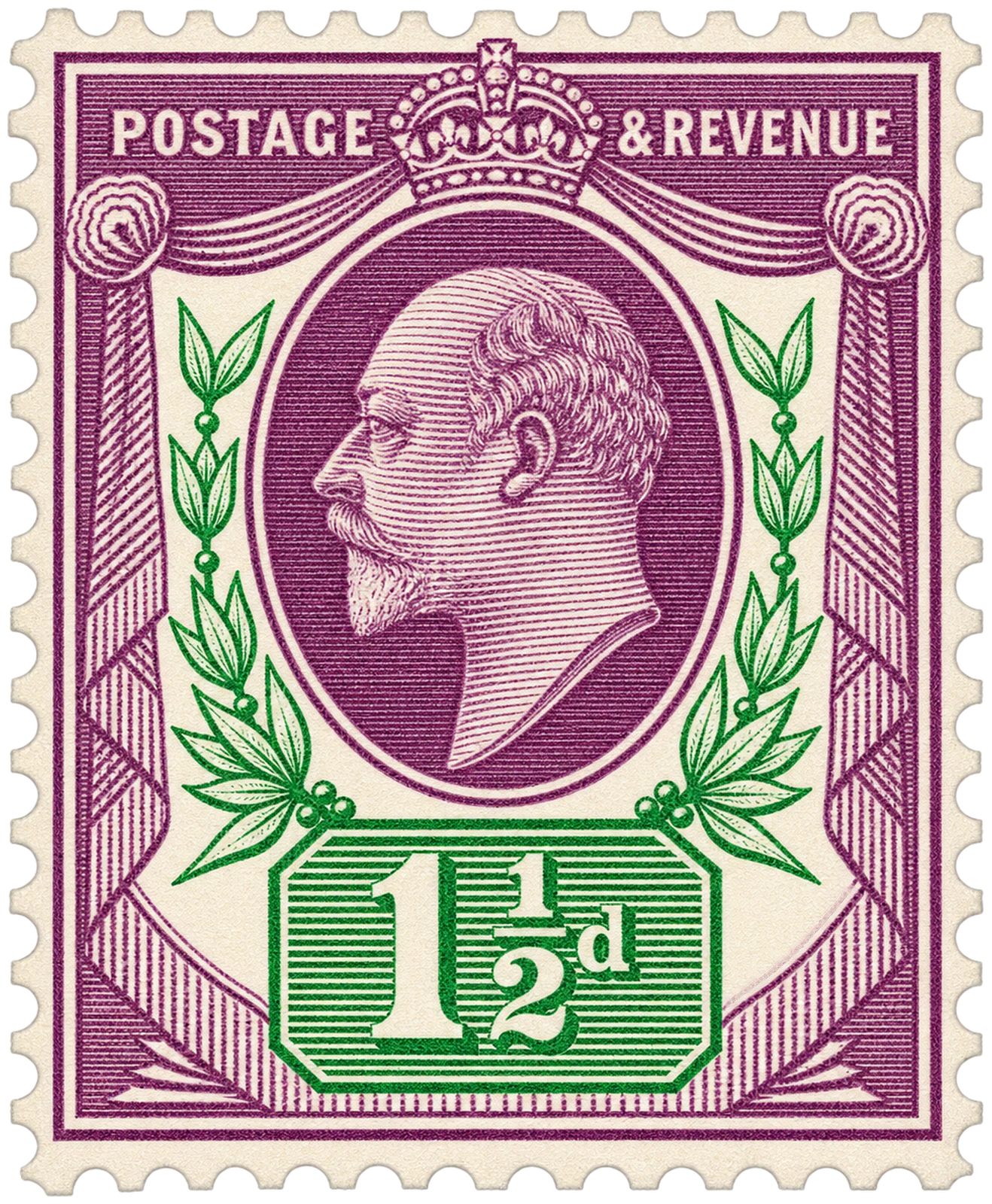
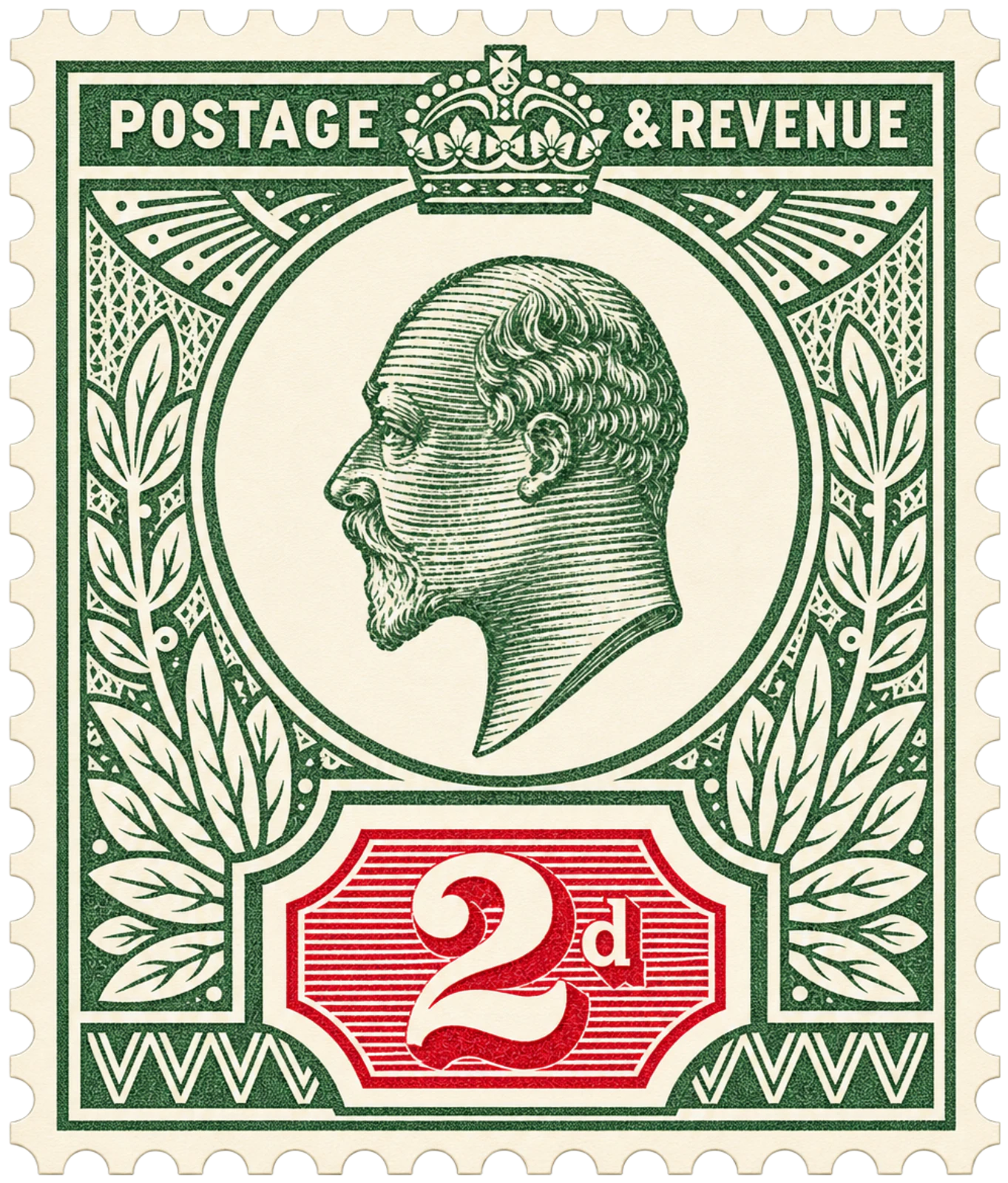
The threepence gets its yellow background from the paper; the other two designs use separate coloured impressions.
Click a stamp to magnify
Fine lines and surface printing
Printed lines model the portrait, while repeated background strokes and clear spaces distinguish the lettering. On original stamps, magnification reveals the individual marks behind apparently smooth tones.
The issued stamp was produced by typography, also called surface printing. The fine-lined appearance should not be confused with recess printing, in which ink is held in engraved grooves. Here the image was printed from the raised surface of the plate. [5]
The people and printer behind this stamp
Fuchs supplied the Edward VII portrait retained on this 3d dull purple on orange-yellow stamp. The surrounding design was developed for De La Rue; later printers continued the established portrait and frame. [6, 7]
De La Rue manufactured this 3d. Use the paper and colour description with the printer’s name: later firms continued many Edward VII designs, so the portrait alone cannot identify a De La Rue printing. [6, 7, 8]
Warren de la Rue, the printer and scientist, belonged to the firm’s earlier history. He died in 1889, before these Edward VII stamps were issued. [9]
Sources
- Fred Gee: Varieties of yesteryear — coloured papers, British Philatelic Bulletin, September 2000, p. 20
- The Postal Museum: Designing a Royal Stamp
- Great Britain Philatelic Society: Diamond Jubilee display at the Royal Philatelic Society London — combined postage and revenue stamps
- Smithsonian National Postal Museum: Stamp from the Stamp Act of 1765
- British Stamp Market Values 2020: King Edward VII section (hosted copy)
- Royal Philatelic Society London: The De La Rue Story, 1996
- Royal Mail: Edward VII and Emil Fuchs, British Philatelic Bulletin, September 1993
- Paul Voller: Edward VII 3d dull purple on orange-yellow, SG 232
- University of Reading Special Collections: De La Rue Archive (MS 937)
← Return to the 3d dull purple on orange-yellow stamp
Facts checked