
The design of the ½d blue-green
King Edward VII · Great Britain · De La Rue · 1 January 1902
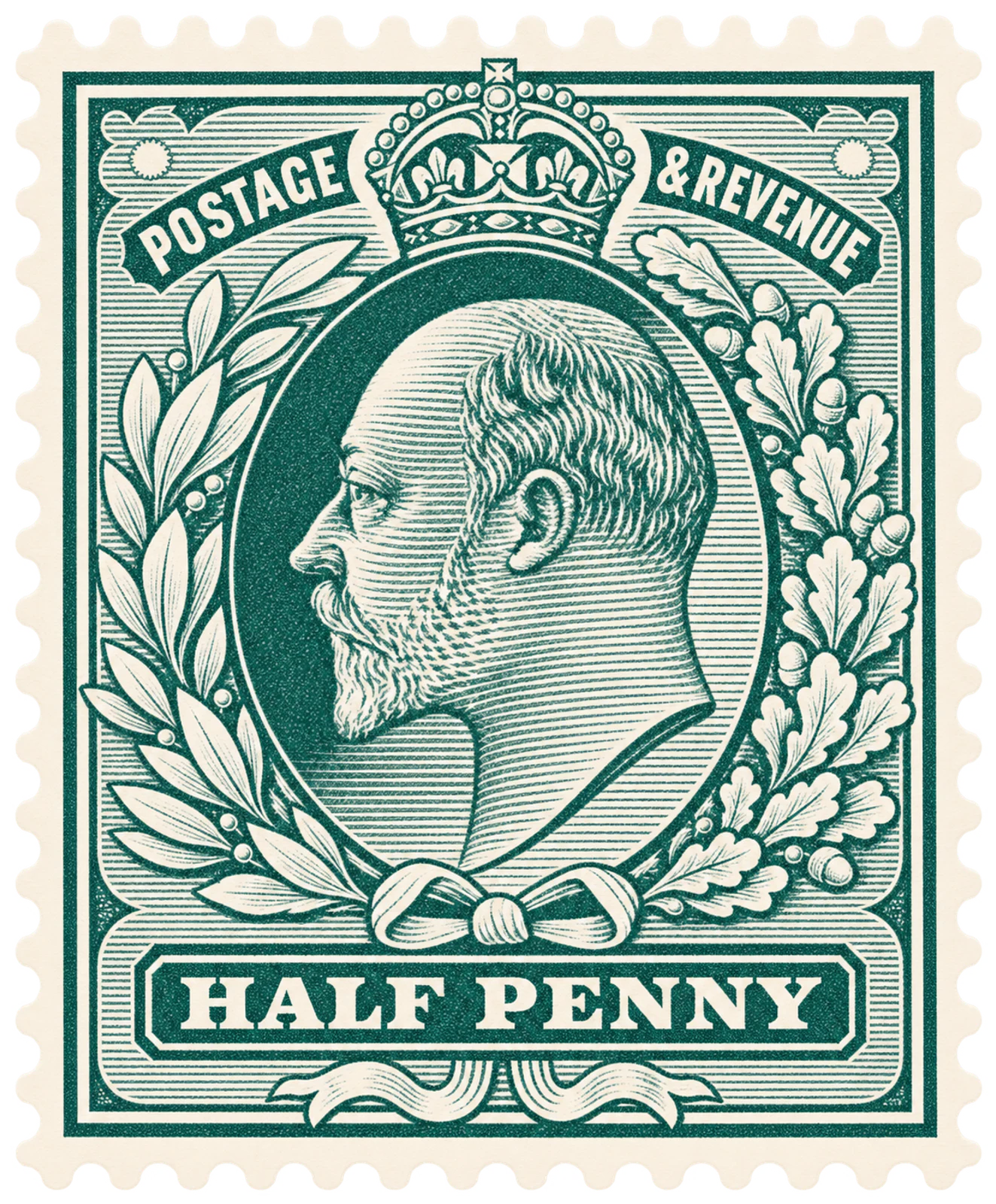
A green that was too close to blue
Under post-office gaslight, postal staff could mistake the blue-green halfpenny for the ultramarine 2½d, a stamp worth five times as much. In 1904 the Post Office replaced it with yellowish-green. The portrait and wreath stayed: colour was the part of the design that needed to change. [1, 2]
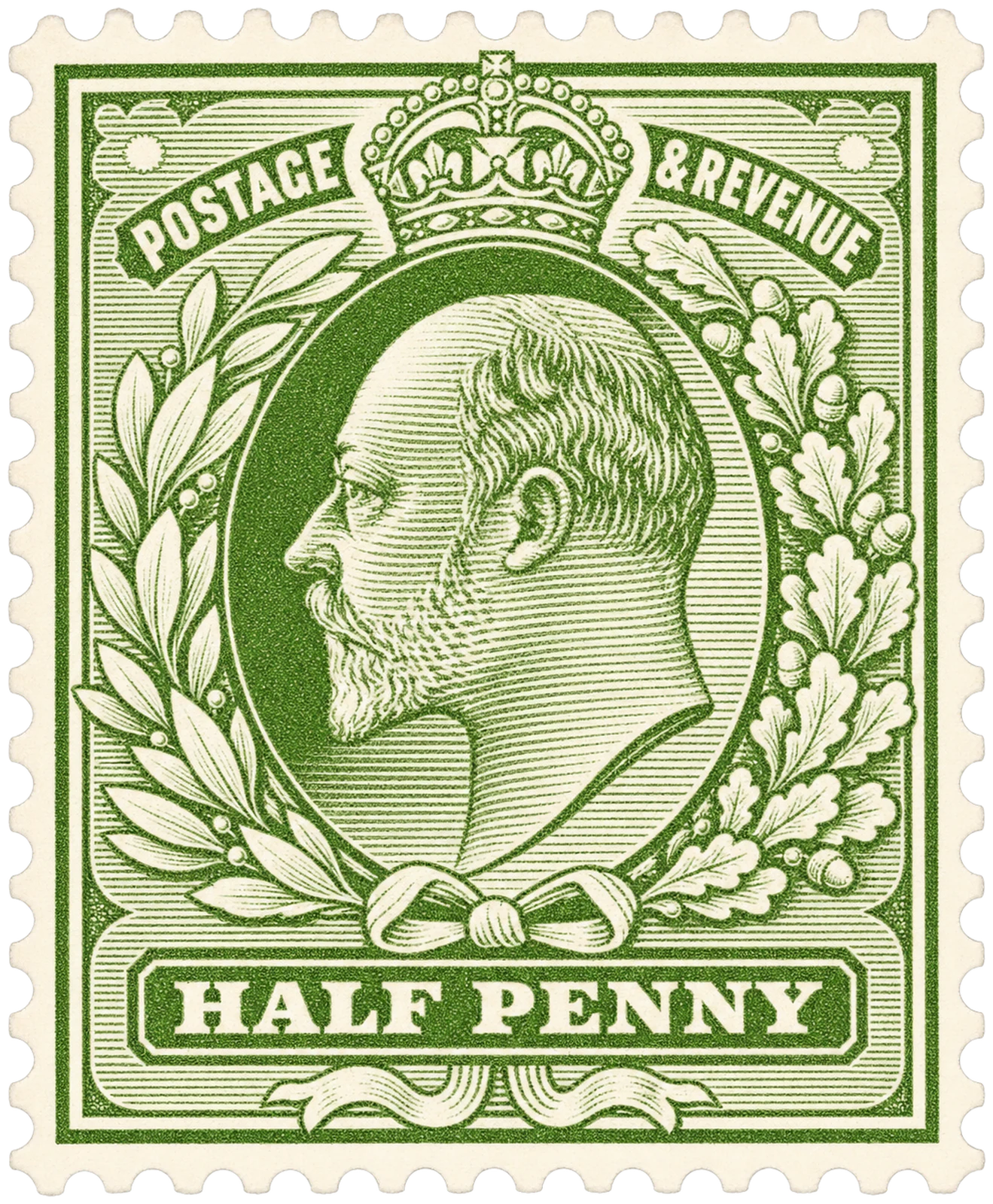
Click either stamp to magnify
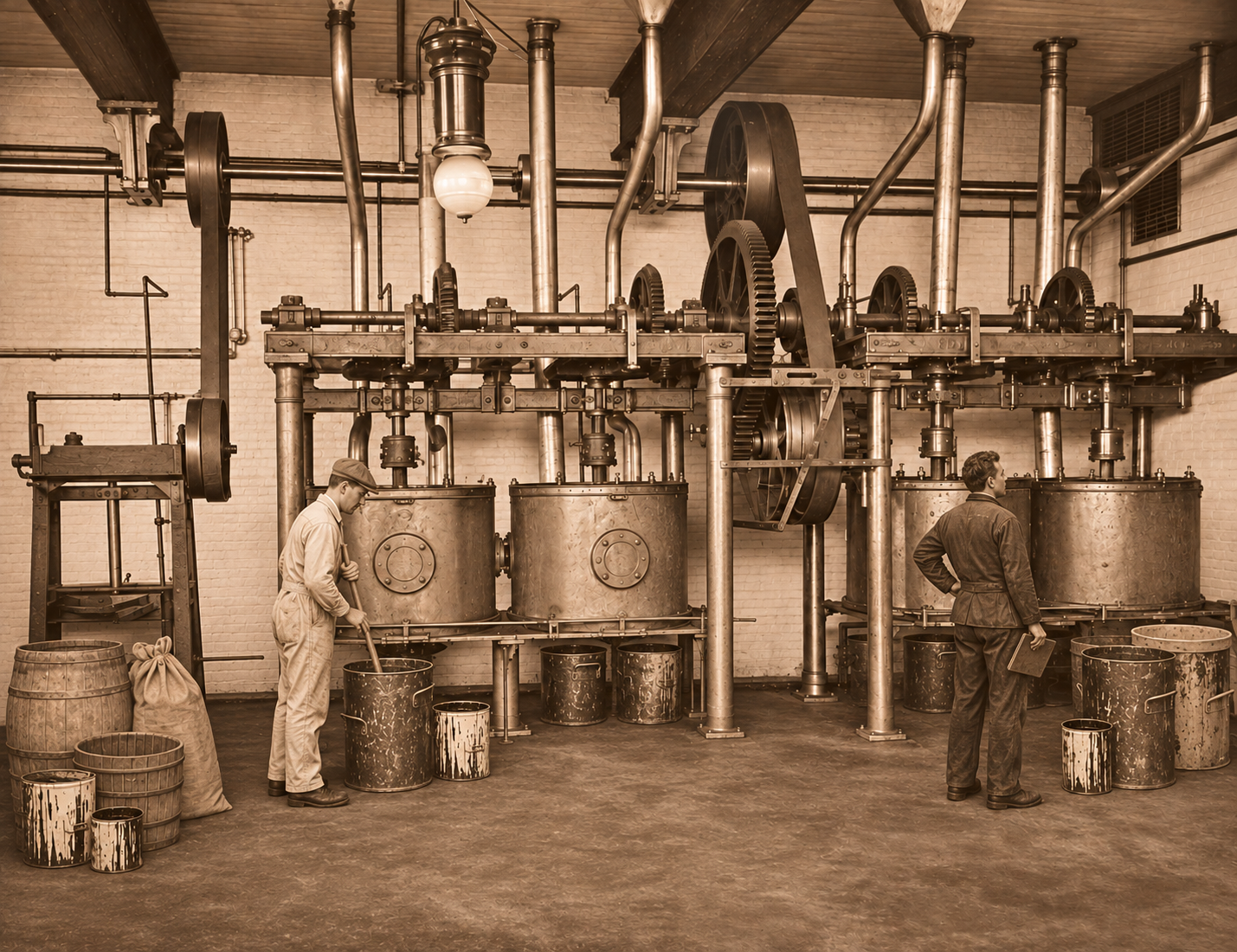
Image information
Click image to magnify
Victorian ink factory with workers, large mixing vats, belt-driven machinery and buckets.
- Credit
- Stunning Stamps · 2026
- Notes
- Digitally constructed
Fuchs’s portrait
Edward VII granted the Austrian-born artist Emil Fuchs a sitting after rejecting earlier stamp proposals. Fuchs supplied the likeness used here; the fine lines of the printed portrait turn the modelling of a face into marks that can be repeated on a printing plate. [3]
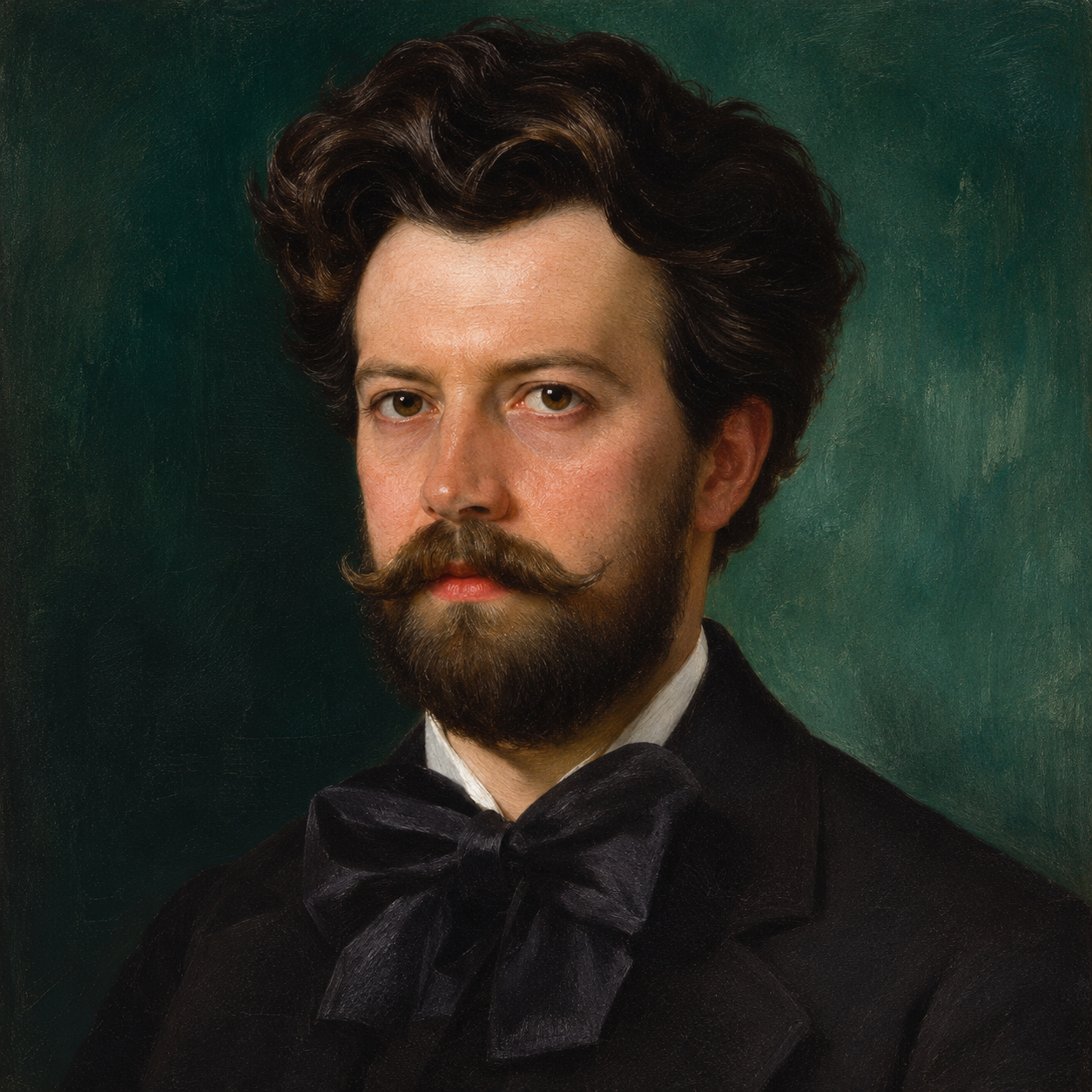
Image information
Click image to magnify
Emil Fuchs, with dark hair, a moustache and beard, wearing a dark suit.
- Credit
- Emil Fuchs, Self-Portrait (1905). Brooklyn Museum, via Wikimedia Commons. Public domain source.
- Notes
- Digitally reconstructed
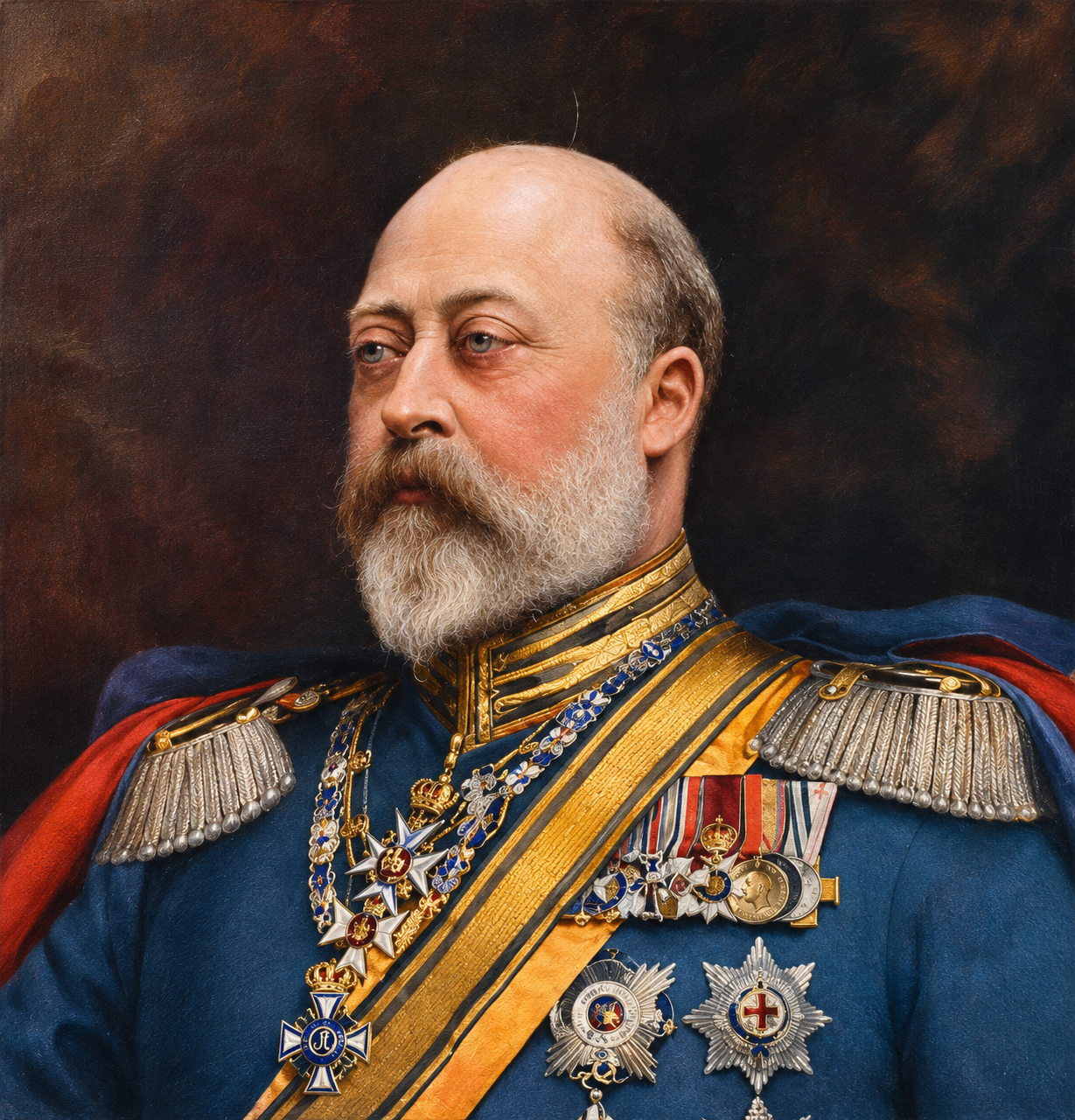
Image information
Click image to magnify
Portrait illustration of King Edward VII in ceremonial uniform.
- Credit
- Stunning Stamps · 2026
- Notes
- Digitally reconstructed
Two plants in one wreath: laurel
The wreath combines two different plants. On the left, laurel has narrow, pointed leaves and small round berries. Its association with victory reaches back to ancient Rome, where it crowned successful commanders; it was also sacred to Apollo. [4]
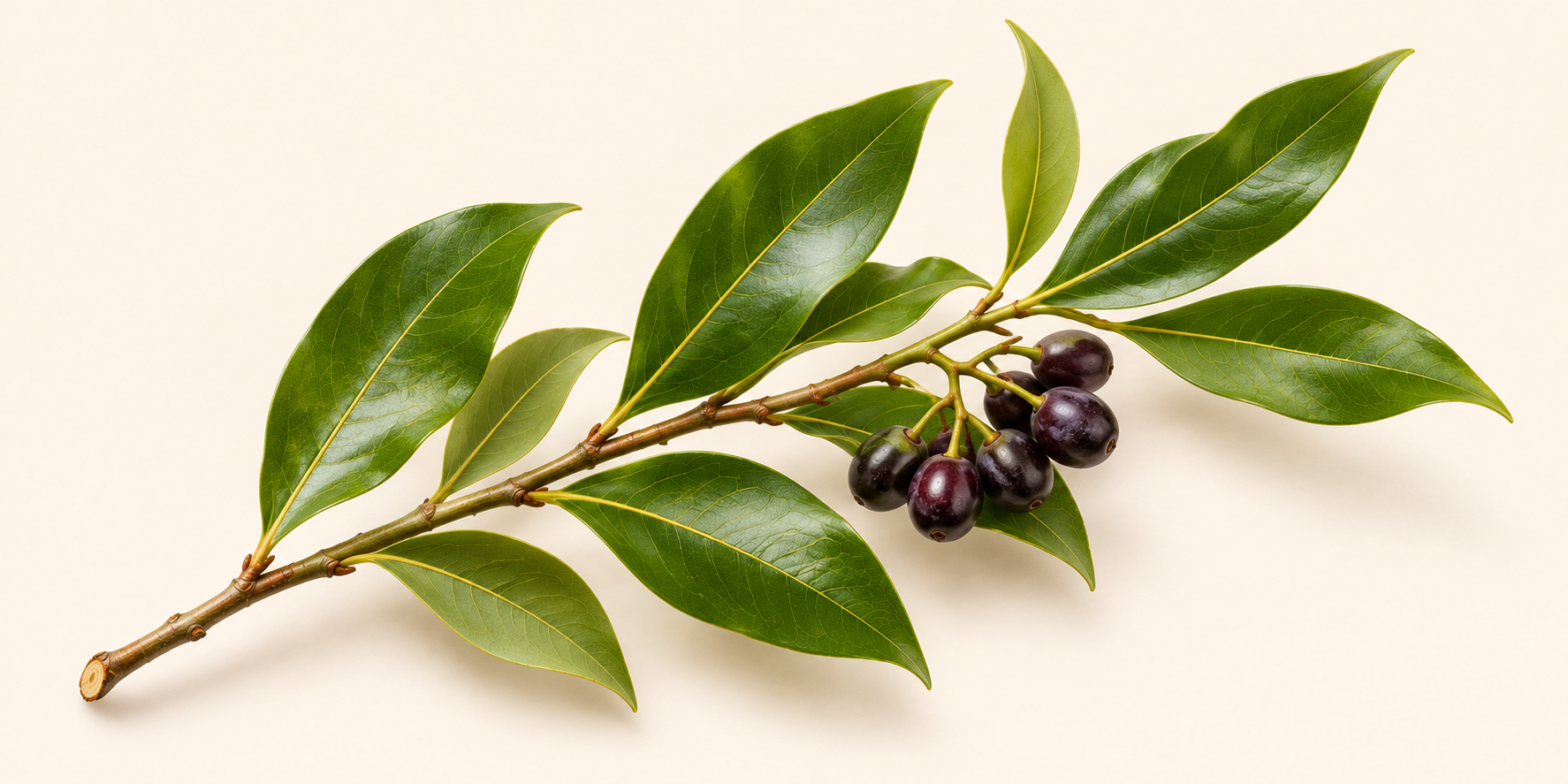
Image information
Click image to magnify
Illustration of a laurel branch with glossy pointed green leaves and dark berries.
- Credit
- Stunning Stamps · 2026
- Notes
- Digitally constructed
Oak, endurance and the Royal Oak
The lobed leaves and acorns on the right identify oak, long associated with strength and endurance. The contrast with the pointed laurel is easier to recognise once you know to look for the acorn cups. [5]
Oak had a royal association too: Charles II hid in an oak at Boscobel after his defeat at Worcester in 1651. The celebrated Royal Oak story gives this familiar British tree another connection with the monarchy. [6]
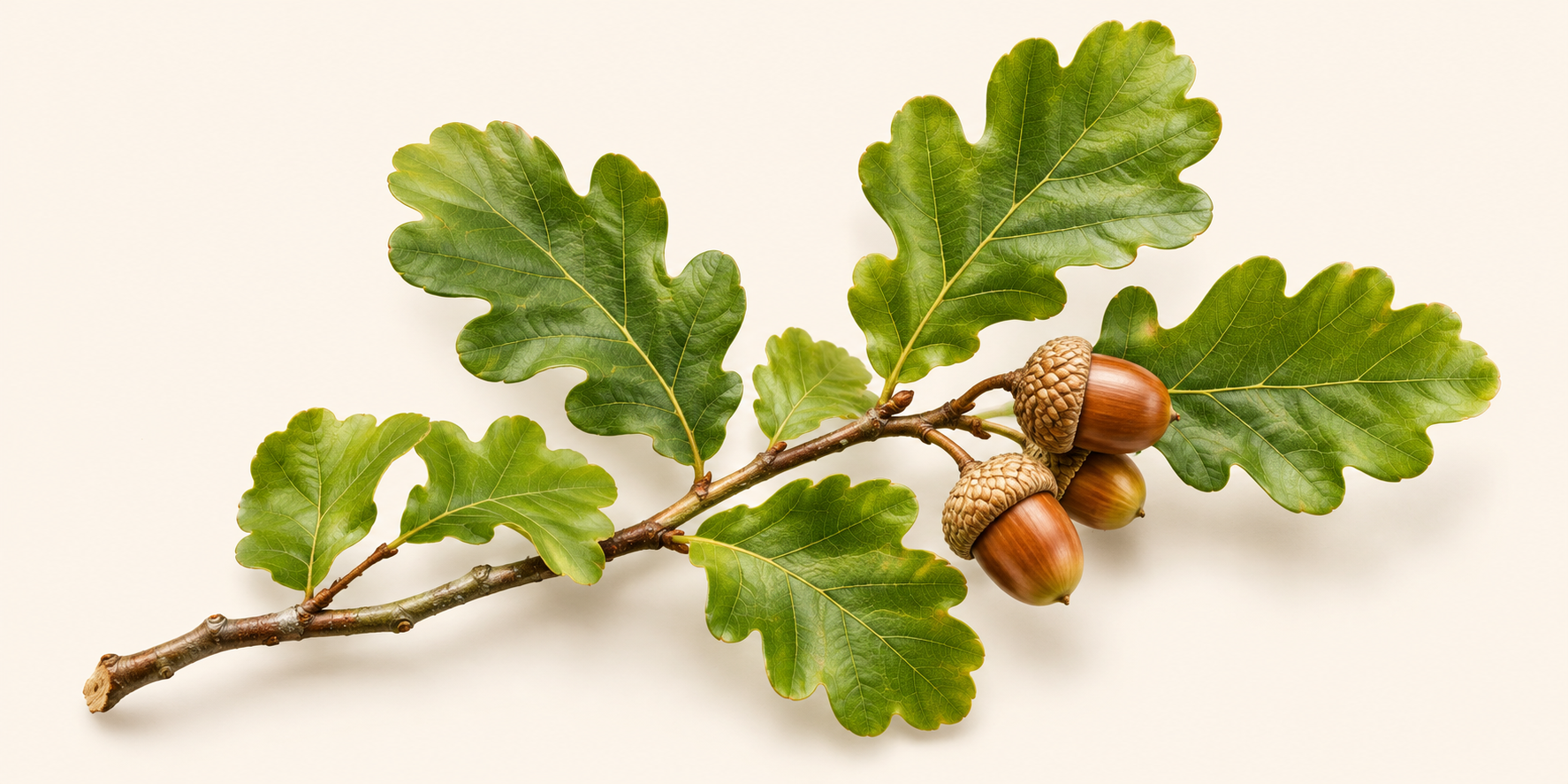
Image information
Click image to magnify
Illustration of an oak branch with green lobed leaves and brown acorns in textured cups.
- Credit
- Stunning Stamps · 2026
- Notes
- Digitally reconstructed
Recognising the Tudor Crown
The rounded arches belong to the heraldic pattern known as the Tudor Crown. Compare the tiny stamp emblem with the larger heraldic drawing below: a complicated arrangement of arches, crosses and fleurs-de-lis has to remain recognisable in a space only a few millimetres wide. [7]
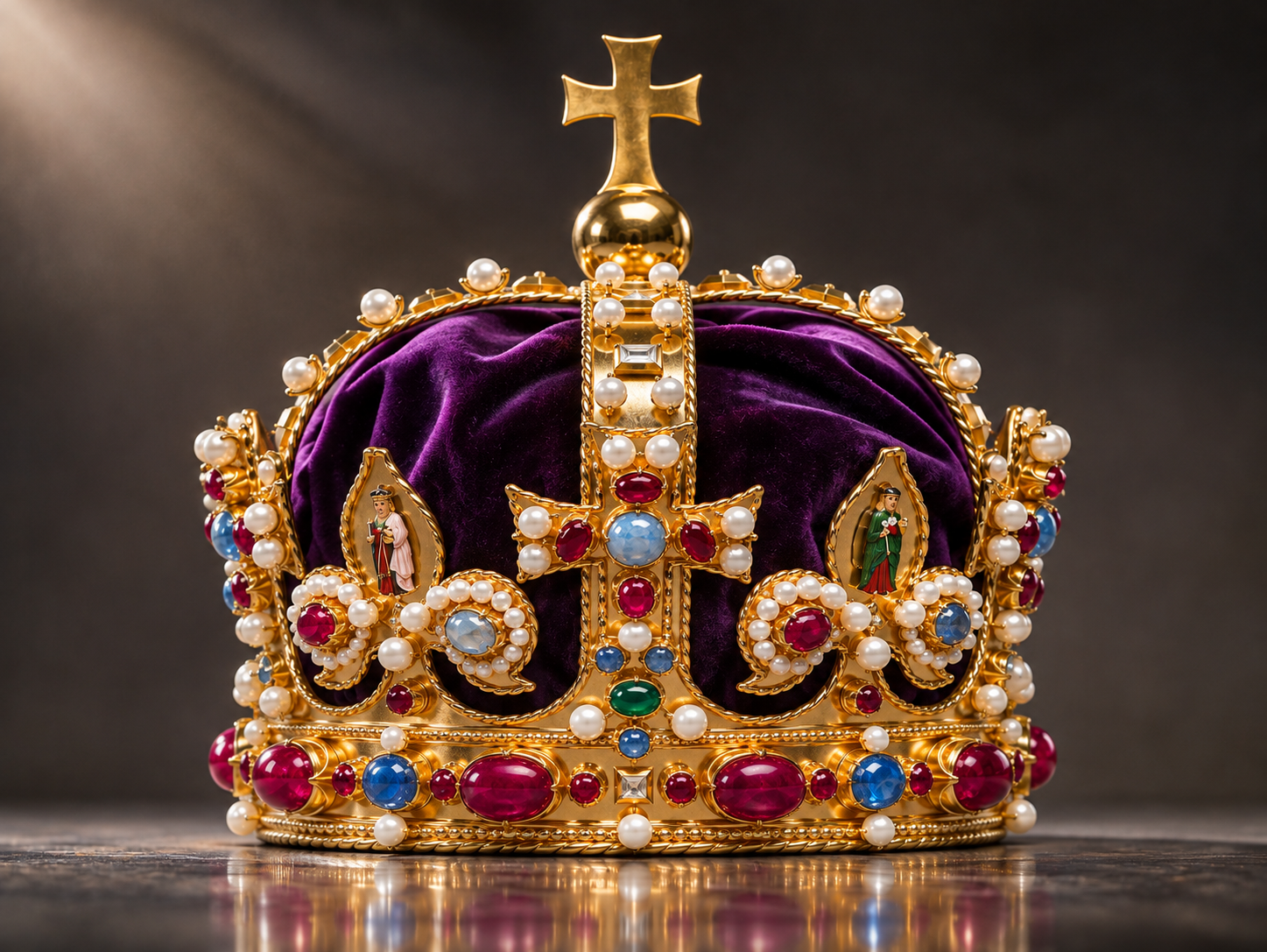
Image information
Click image to magnify
Gold Tudor royal crown with jewels, pearls, small figures and a purple cap.
- Credit
- Stunning Stamps · 2026
- Notes
- Digitally constructed
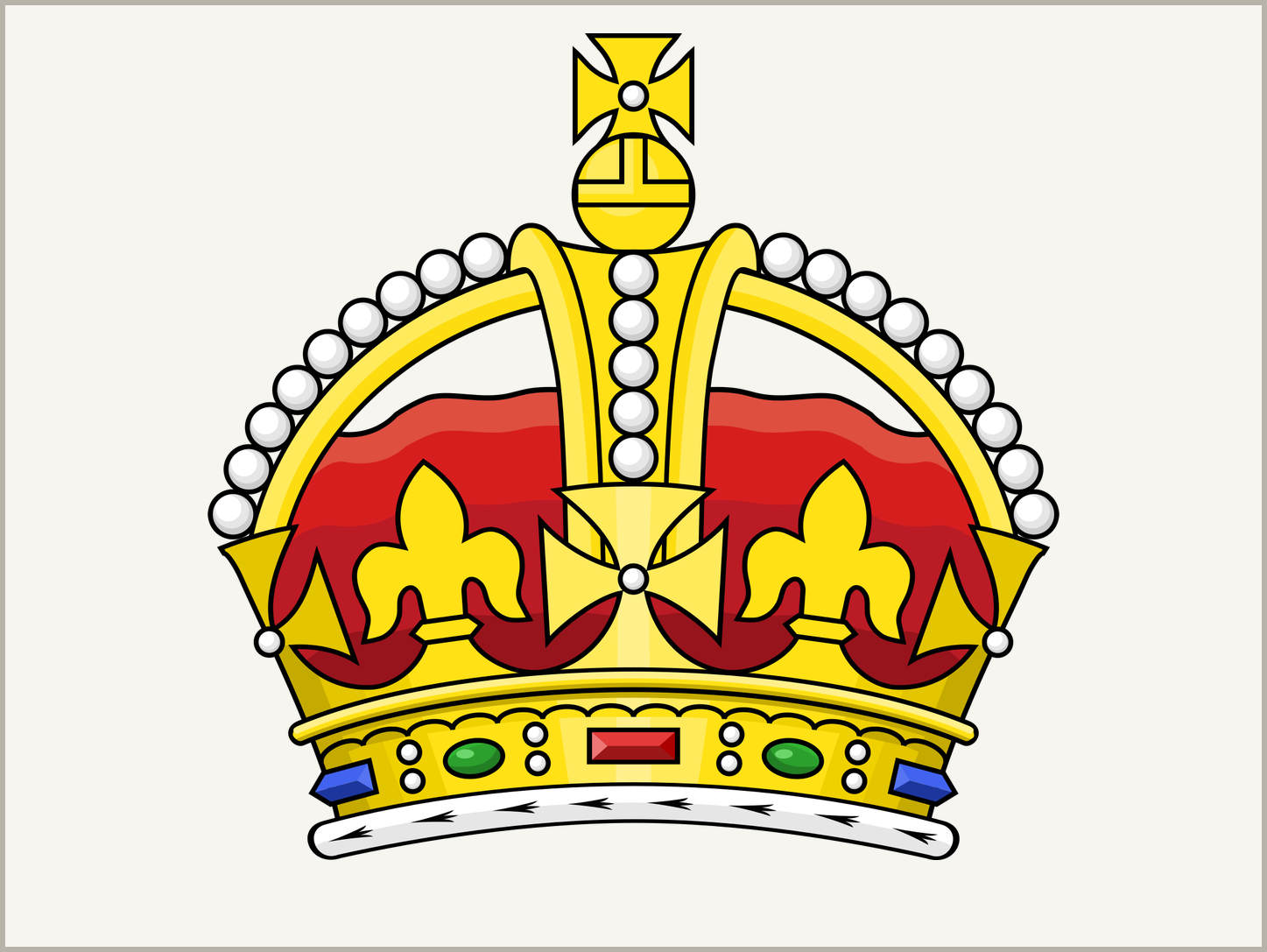
Image information
Click image to magnify
Heraldic Tudor Crown with rounded arches, a cross and orb, red cap, crosses and fleurs-de-lis.
- Credit
- Dgp4004 · Wikimedia Commons · CC0
Why POSTAGE & REVENUE?
The wording identifies two uses: postage and certain revenue duties, or taxes paid on documents. Combined postage-and-revenue stamps had been introduced under Victoria, so the new King’s stamps continued an established arrangement. [8, 9]
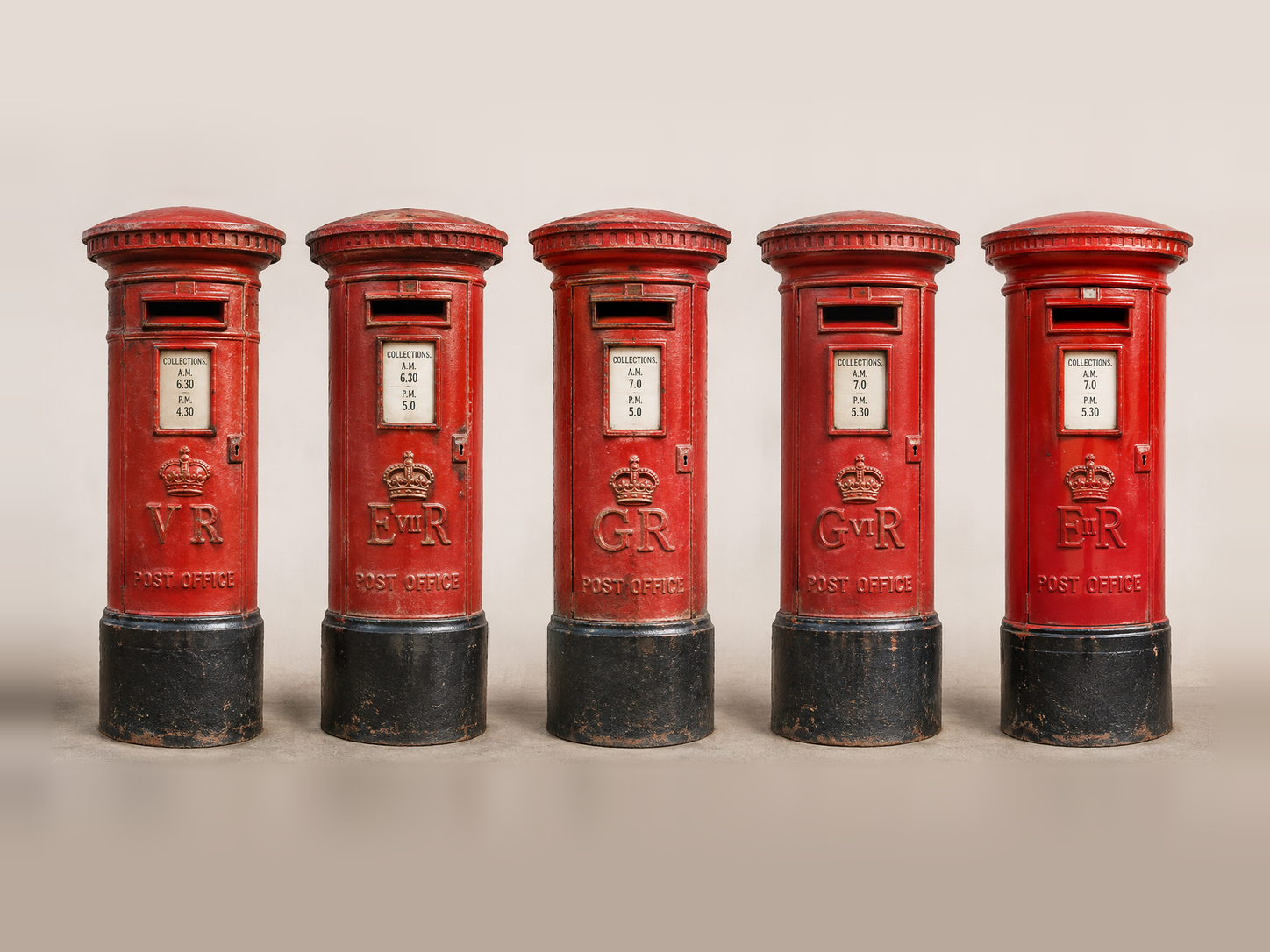
Image information
Click image to magnify
Illustration of five red pillar boxes with royal cyphers.
- Credit
- Stunning Stamps · 2026
- Notes
- Digitally reconstructed
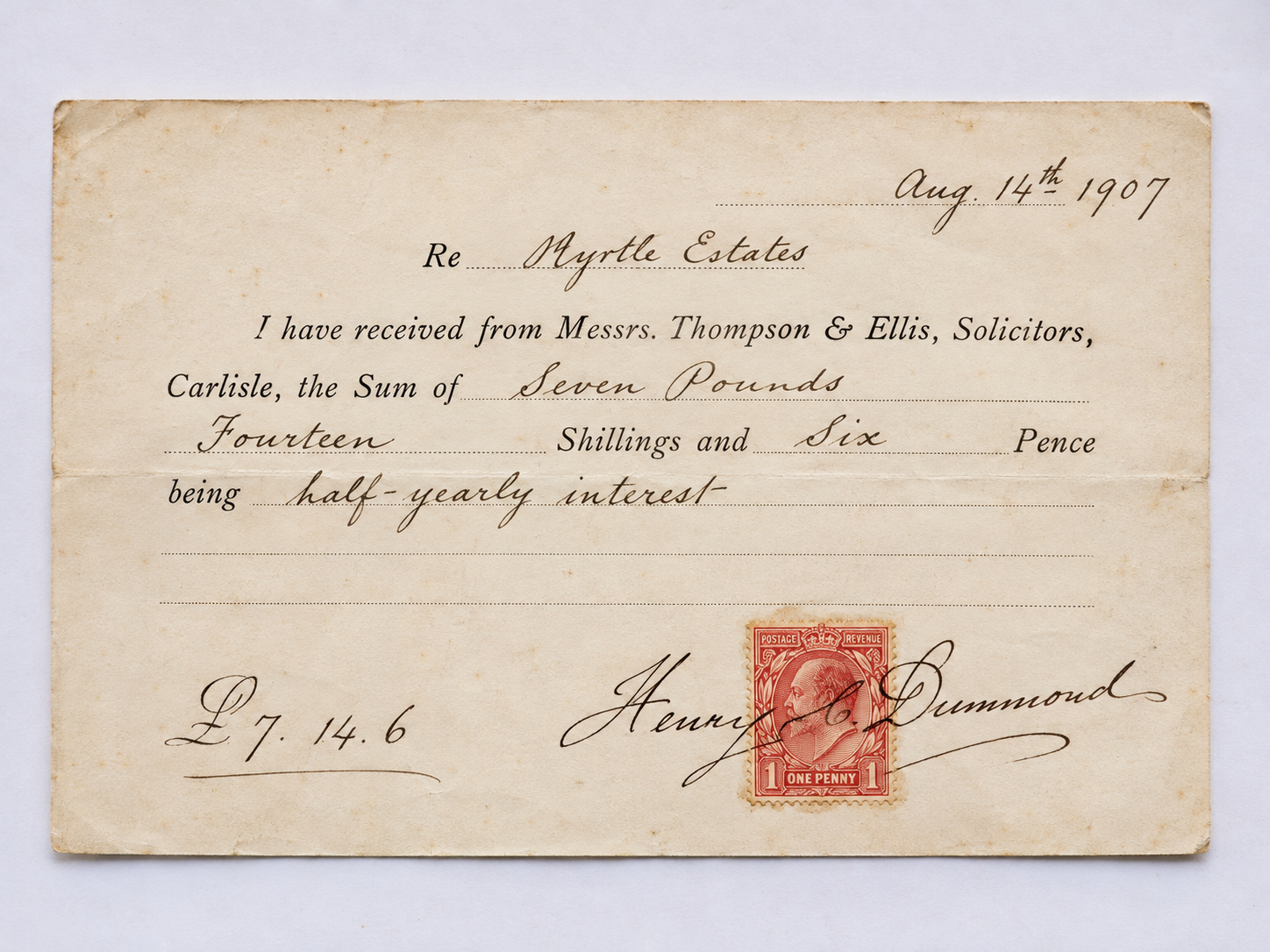
Image information
Click image to magnify
Illustration of a handwritten receipt with an Edward VII penny stamp cancelled by a signature.
- Credit
- Stunning Stamps · 2026
- Notes
- Digitally constructed
Turning the design into stamps
De La Rue developed the surrounding design and printed this halfpenny by typography, also called surface printing. Ink came from the raised surface of the plate; the fine lines of the portrait do not make it a recess-printed stamp. [10, 11]
Warren de la Rue, the printer and scientist, belonged to the firm’s earlier history. He died in 1889, before these Edward VII stamps were issued. [12]
Sources
- Colin Baker: Twentieth Century Postal Stationery, Part 1: Edward VII, British Philatelic Bulletin 33, September 1995, pp. 22–24
- Postal Union Colours — Gibbons Stamp Weekly, Vol. 1 (1905), p. 79; reprinted from The Amateur Photographer
- The Postal Museum: Designing a Royal Stamp
- Deirdre Larkin, The Metropolitan Museum of Art: Green Victory, 27 January 2012
- The Royal Mint: O — Oak Tree, 2019 UK 10p
- English Heritage: History of Boscobel House and the Royal Oak
- A. C. Fox-Davies: A Complete Guide to Heraldry (1909), chapter XXII, figure 642
- Great Britain Philatelic Society: Diamond Jubilee display at the Royal Philatelic Society London — combined postage and revenue stamps
- Smithsonian National Postal Museum: Stamp from the Stamp Act of 1765
- Royal Philatelic Society London: The De La Rue Story, 1996
- British Stamp Market Values 2020: King Edward VII section (hosted copy)
- University of Reading Special Collections: De La Rue Archive (MS 937)
← Return to the ½d blue-green stamp
Facts checked