
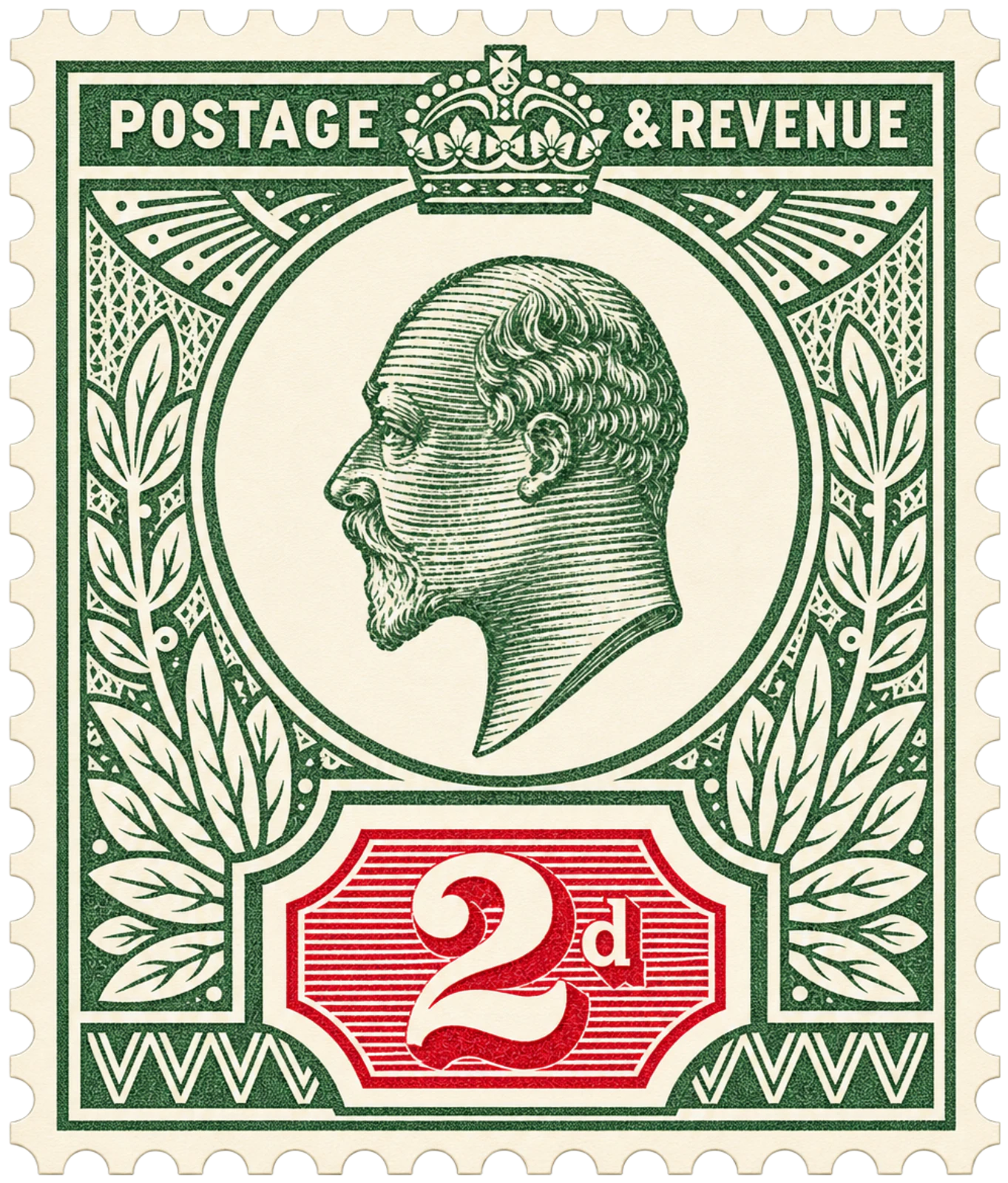
The design of the 2d deep dull green and carmine
King Edward VII · Great Britain · Somerset House · 8 August 1911
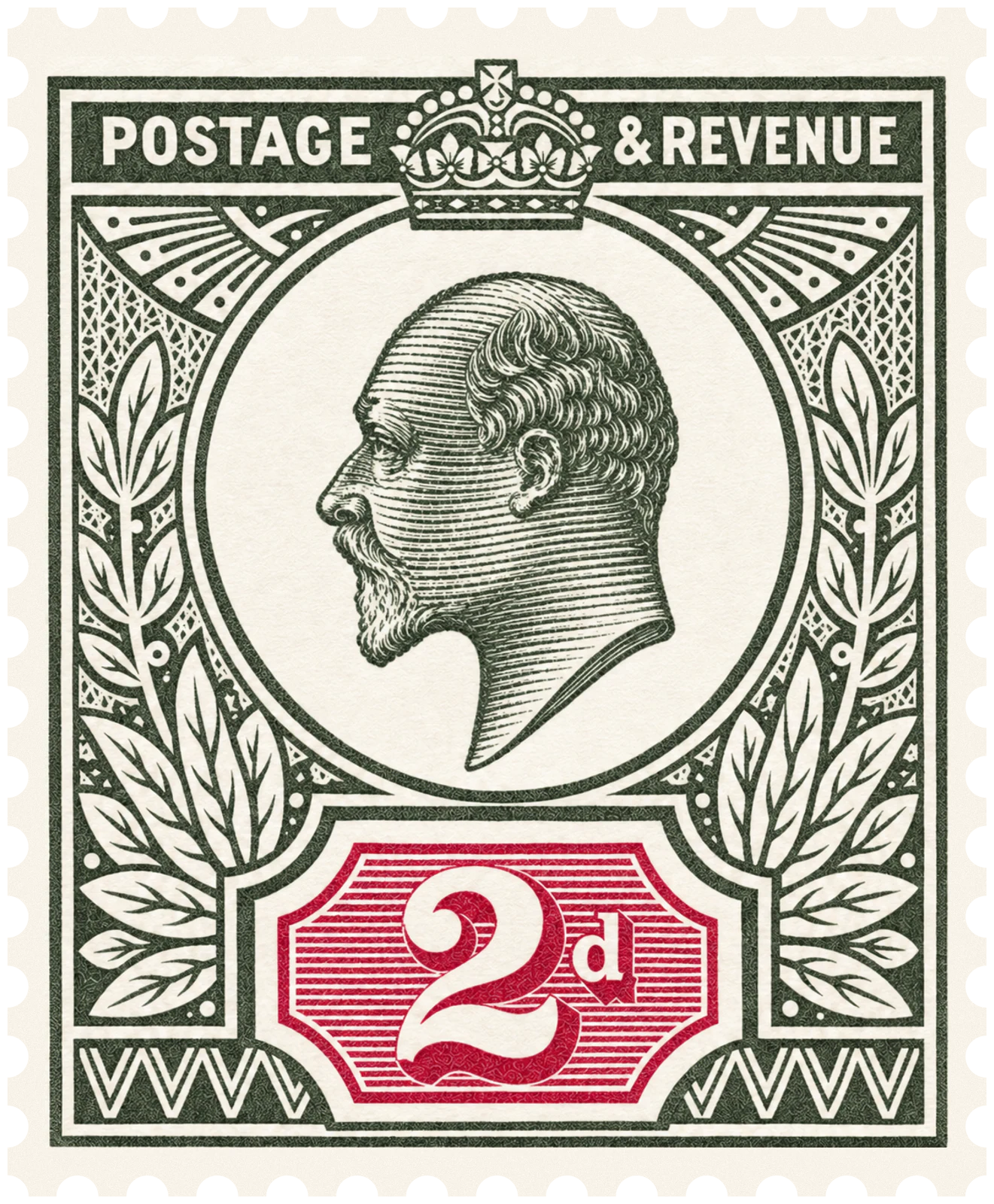
The portrait — a face drawn in lines
The left-facing likeness is based on the work of Emil Fuchs, an Austrian-born artist. Edward VII granted him a sitting after rejecting earlier proposals for the new stamps. [1]
Separate printed lines build up the forehead, cheek and neck, with paper showing between them. Curving strokes follow the hair and beard, while darker passages distinguish the profile from its background.
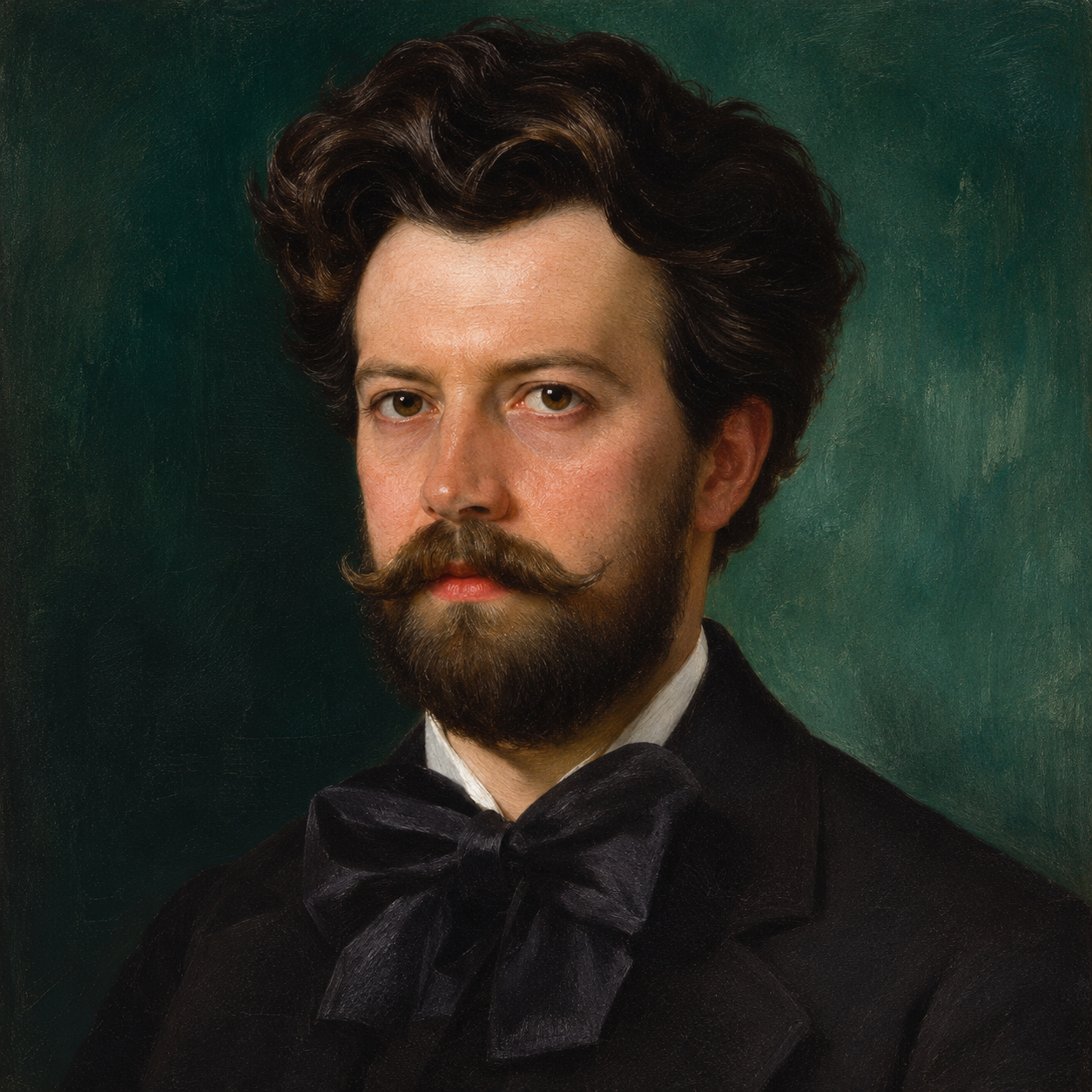
Image information
Click image to magnify
Emil Fuchs, with dark hair, a moustache and beard, wearing a dark suit.
- Credit
- Emil Fuchs, Self-Portrait (1905). Brooklyn Museum, via Wikimedia Commons. Public domain source.
- Notes
- Digitally reconstructed
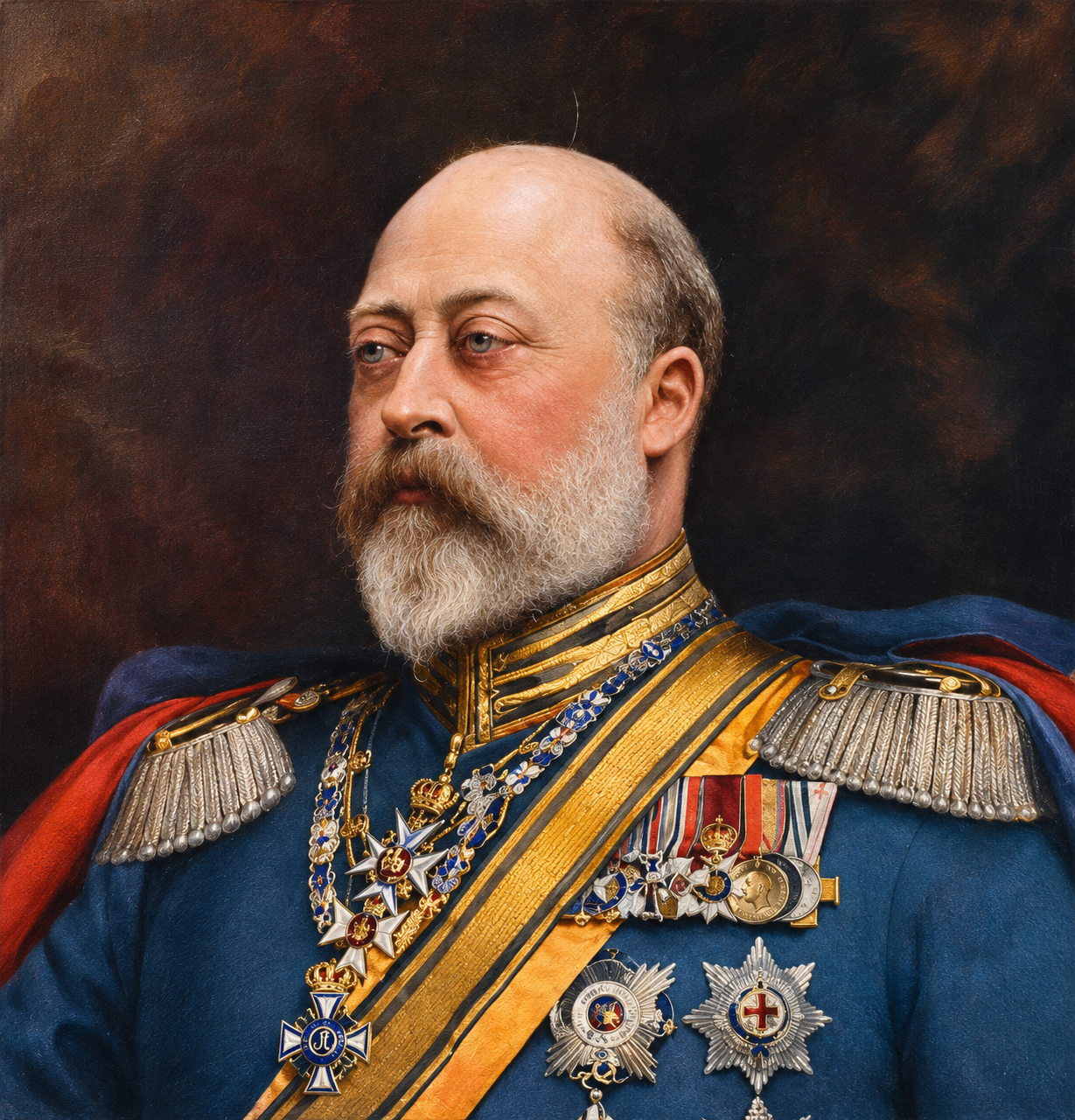
Image information
Click image to magnify
Portrait illustration of King Edward VII in ceremonial uniform.
- Credit
- Stunning Stamps · 2026
- Notes
- Digitally reconstructed
A light circular setting for the portrait
The King’s profile is drawn in green lines against a light circular field. The crown interrupts the circle at the top, while the value panel meets it at the foot. A contemporary description distinguishes this uncoloured circle from the dark oval setting used on the three-halfpence. [2]
The light space around the face gives the profile a clear outline. Outside it, the foliage and patterned corners fill the gaps between a curved centre and a rectangular outer border.
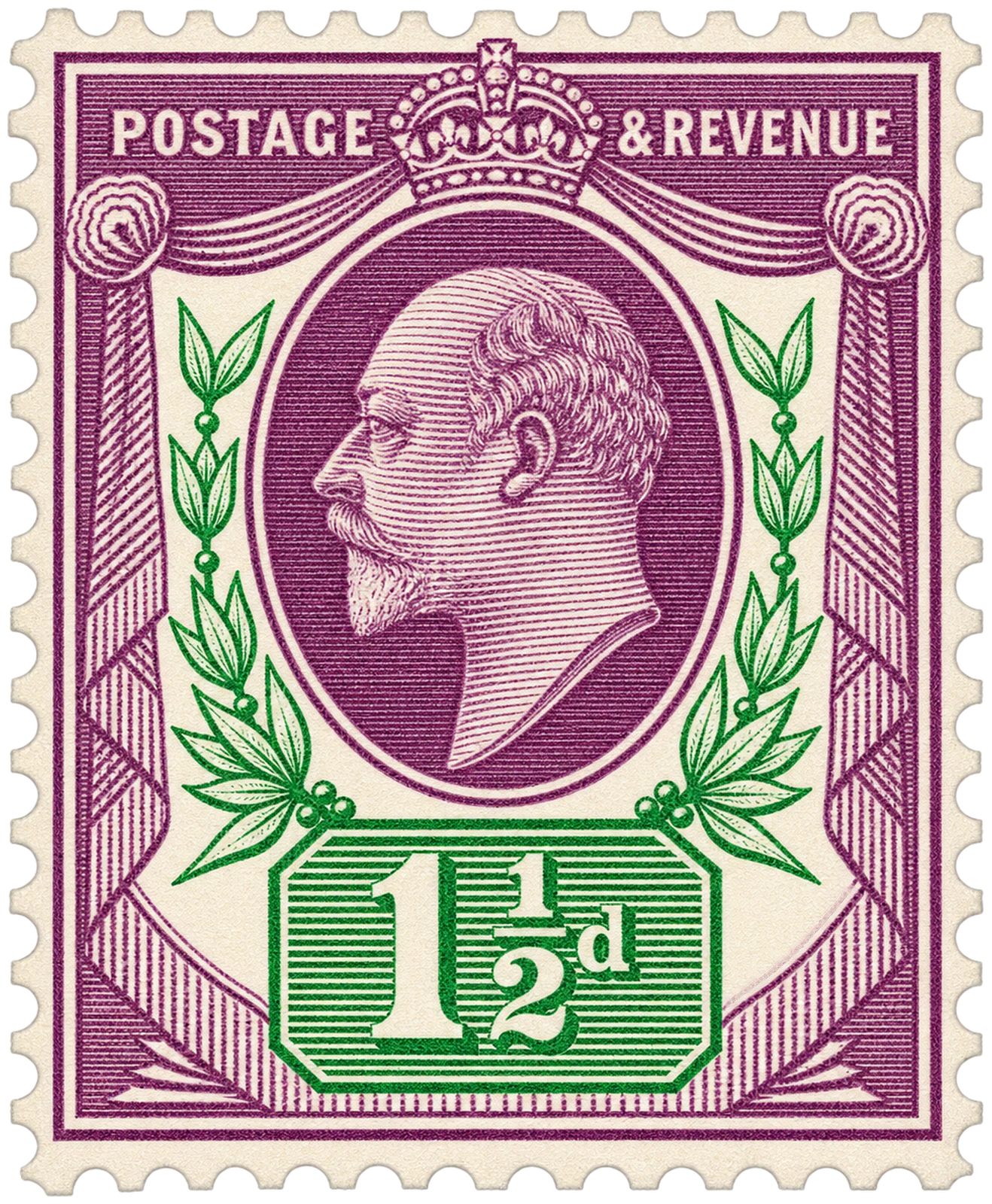
Compare the space immediately surrounding the portrait.
Click either stamp to magnify
Olive branches — a tradition of peace
The branches beside the portrait have narrow leaves and small fruits. Contemporary descriptions identify them as olive branches. Their repeated leaves frame the head without the contrast between two different plants found in the oak-and-laurel designs. [3, 2]
Olive branches are a traditional symbol of peace. No specific diplomatic message has been established for their use here. [4]
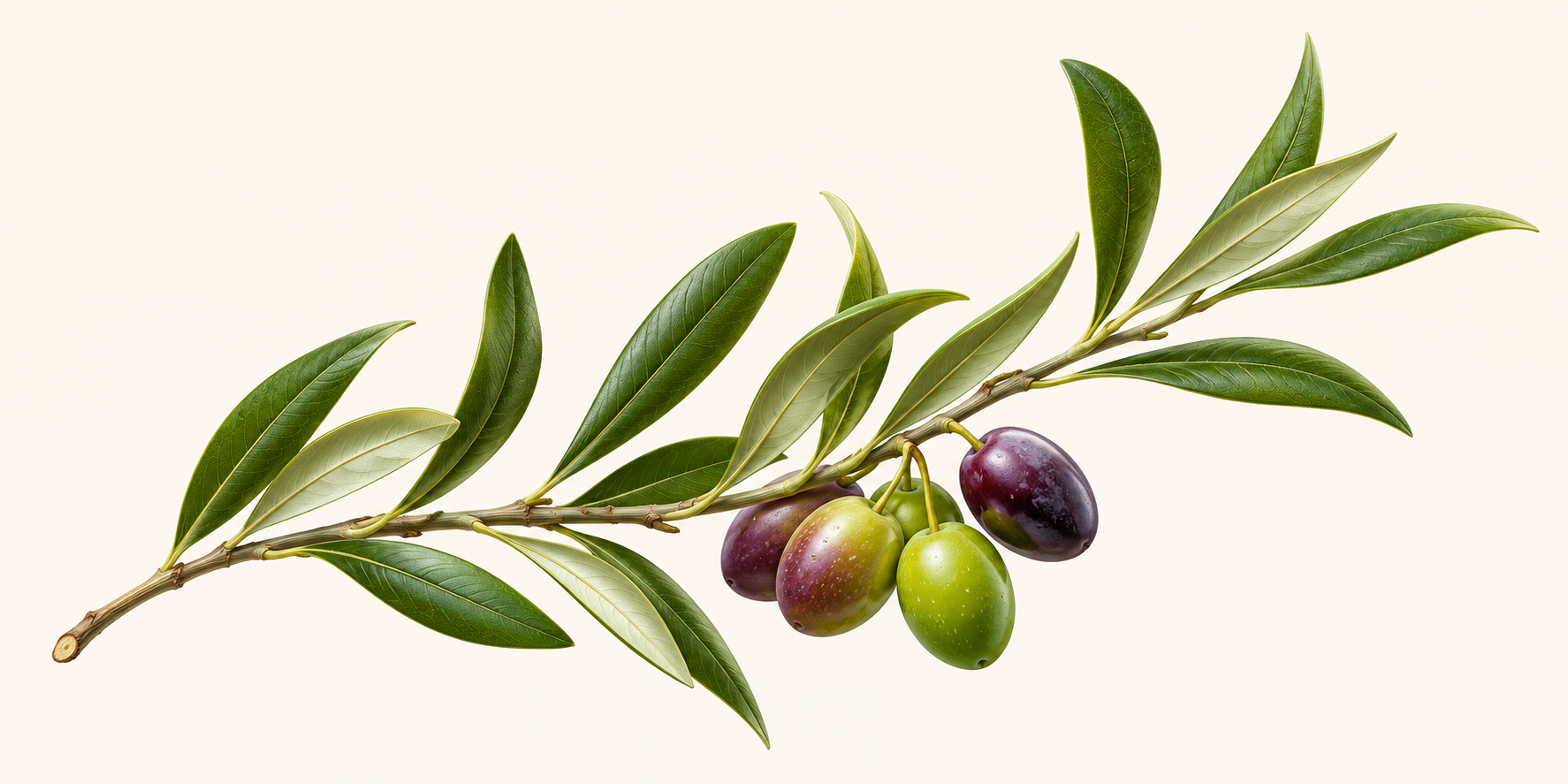
Image information
Click image to magnify
Illustration of an olive branch with slender green leaves and green and purple olives.
- Credit
- Stunning Stamps · 2026
- Notes
- Digitally reconstructed
The crown — royal authority
The crown has arches rising towards a small cross, with rounded ornaments above a patterned band.
The King is bare-headed; the crown sits separately in the frame above him.
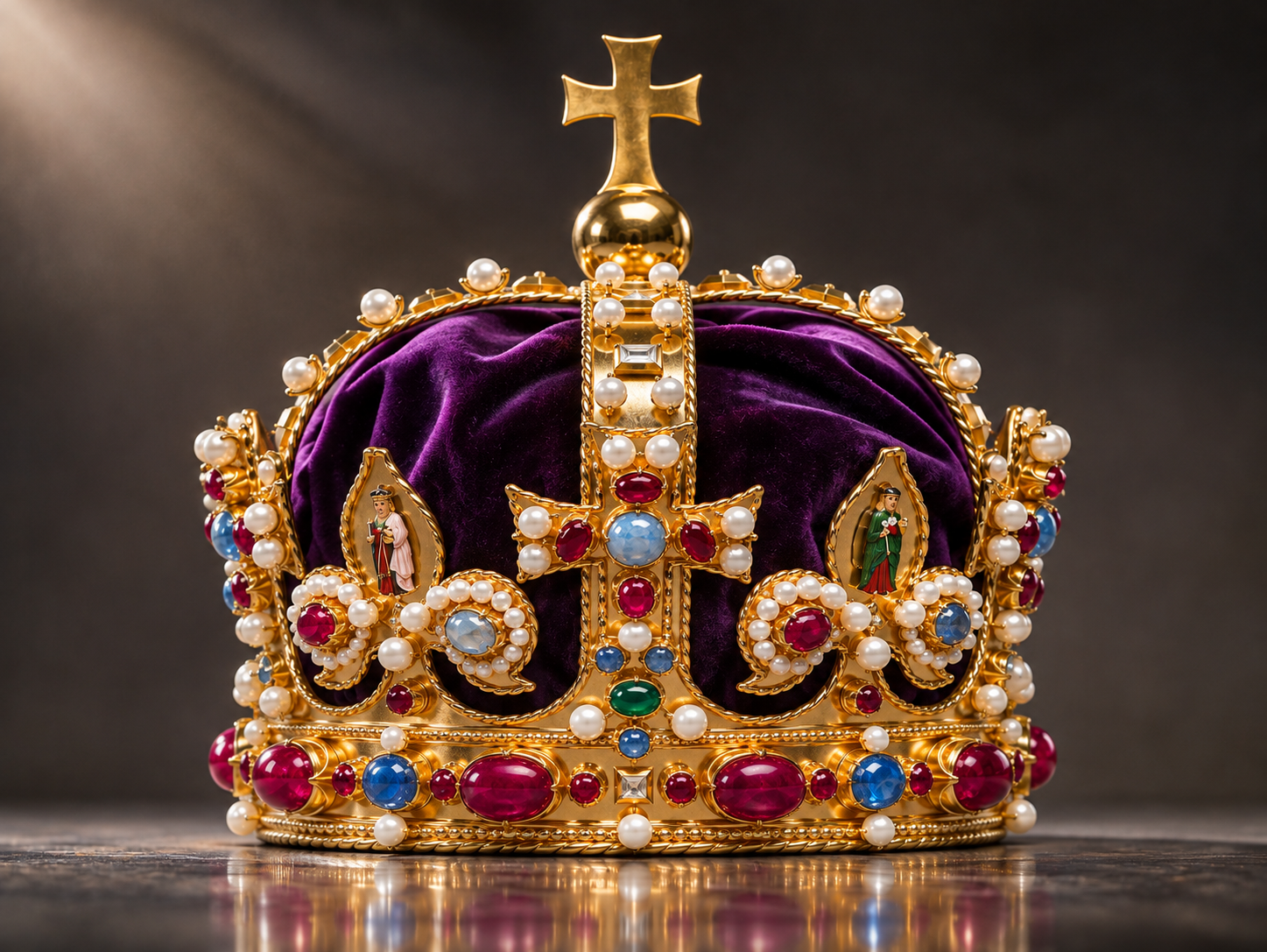
Image information
Click image to magnify
Gold Tudor royal crown with jewels, pearls, small figures and a purple cap.
- Credit
- Stunning Stamps · 2026
- Notes
- Digitally constructed
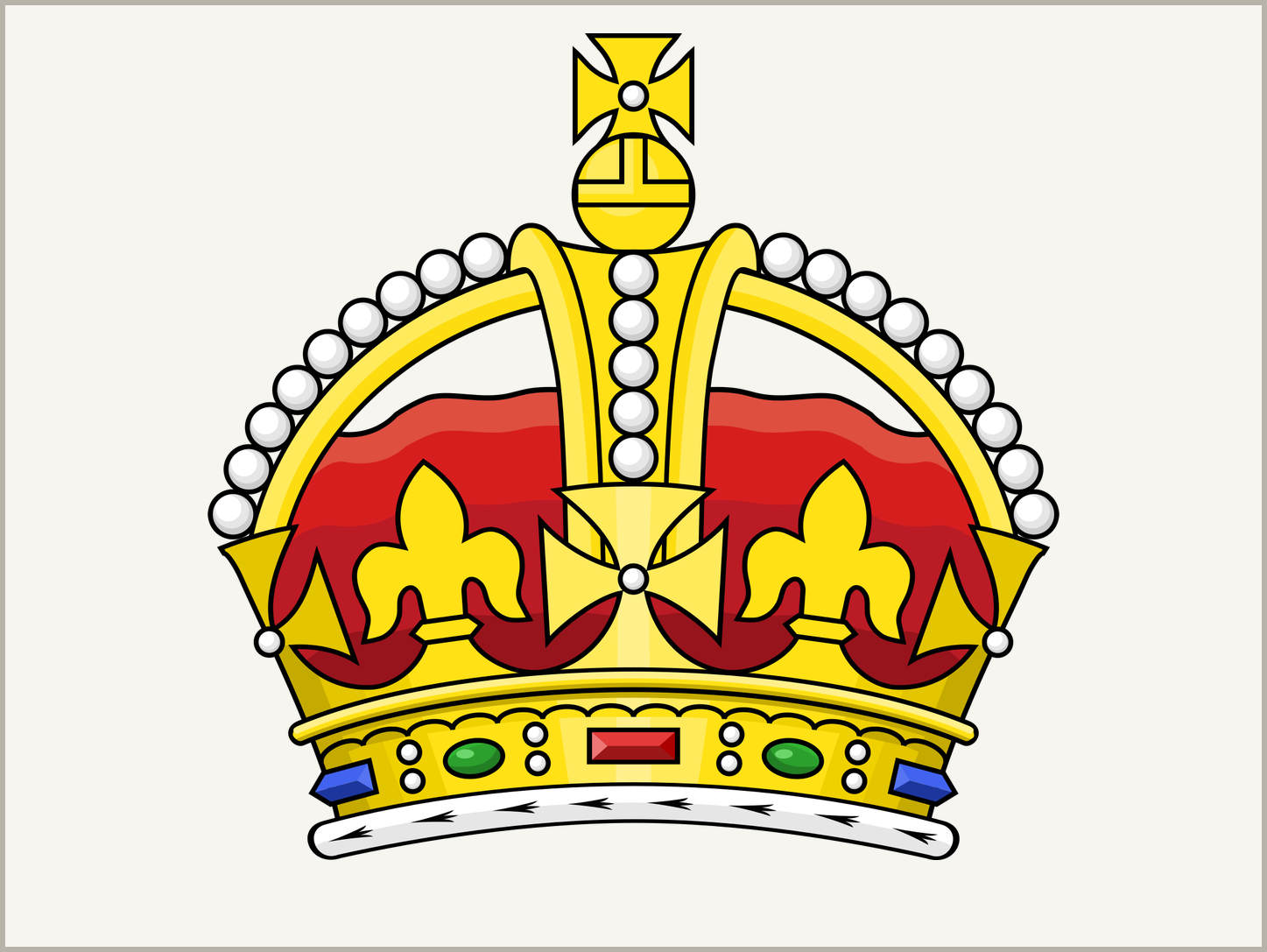
Image information
Click image to magnify
Heraldic Tudor Crown with rounded arches, a cross and orb, red cap, crosses and fleurs-de-lis.
- Credit
- Dgp4004 · Wikimedia Commons · CC0
The red value panel
The 2d appears in a carmine-red panel beneath the head. Its outline has eight sides, with curved shoulders and a pale surrounding border. Horizontal red lines provide the background to the light figure and letter. [2]
It is the only red part of the design. The contrast makes the face value immediately distinct from the green portrait, crown, foliage and inscriptions.
Patterned corners and a geometric border
The upper corners combine rays, dots and triangular patterns. At the foot, repeated zigzag lines fill the spaces beside the value panel. These small areas connect the larger shapes of the circle, crown and denomination to the rectangular border.
POSTAGE & REVENUE
The inscriptions identify two uses for the stamp: paying postage and paying certain revenue duties. A revenue stamp records payment of a tax or duty on a document. Combined postage-and-revenue stamps had already been introduced during Victoria’s reign. [5, 6]
POSTAGE and & REVENUE appear above the portrait, separated by the crown.
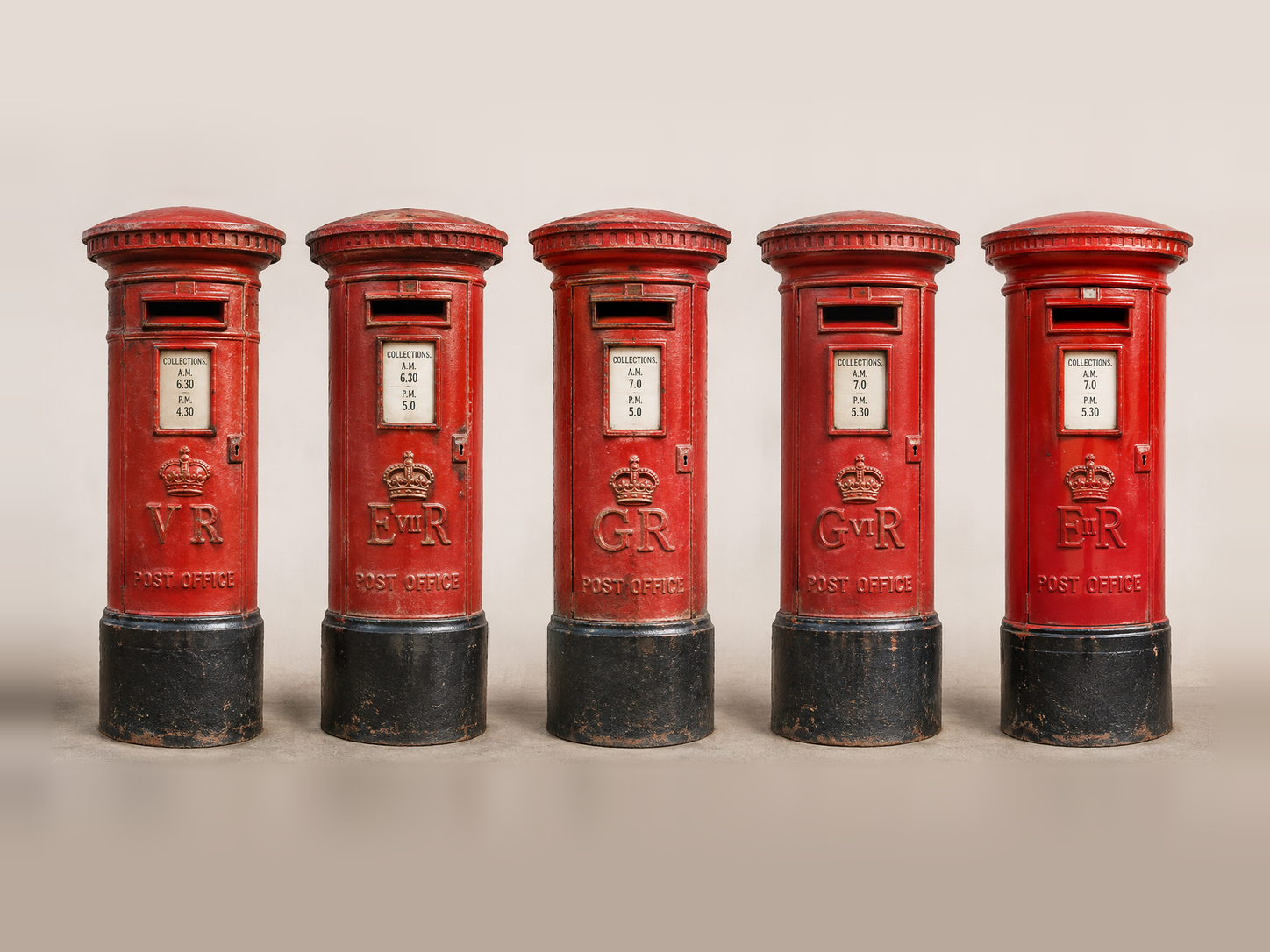
Image information
Click image to magnify
Illustration of five red pillar boxes with royal cyphers.
- Credit
- Stunning Stamps · 2026
- Notes
- Digitally reconstructed
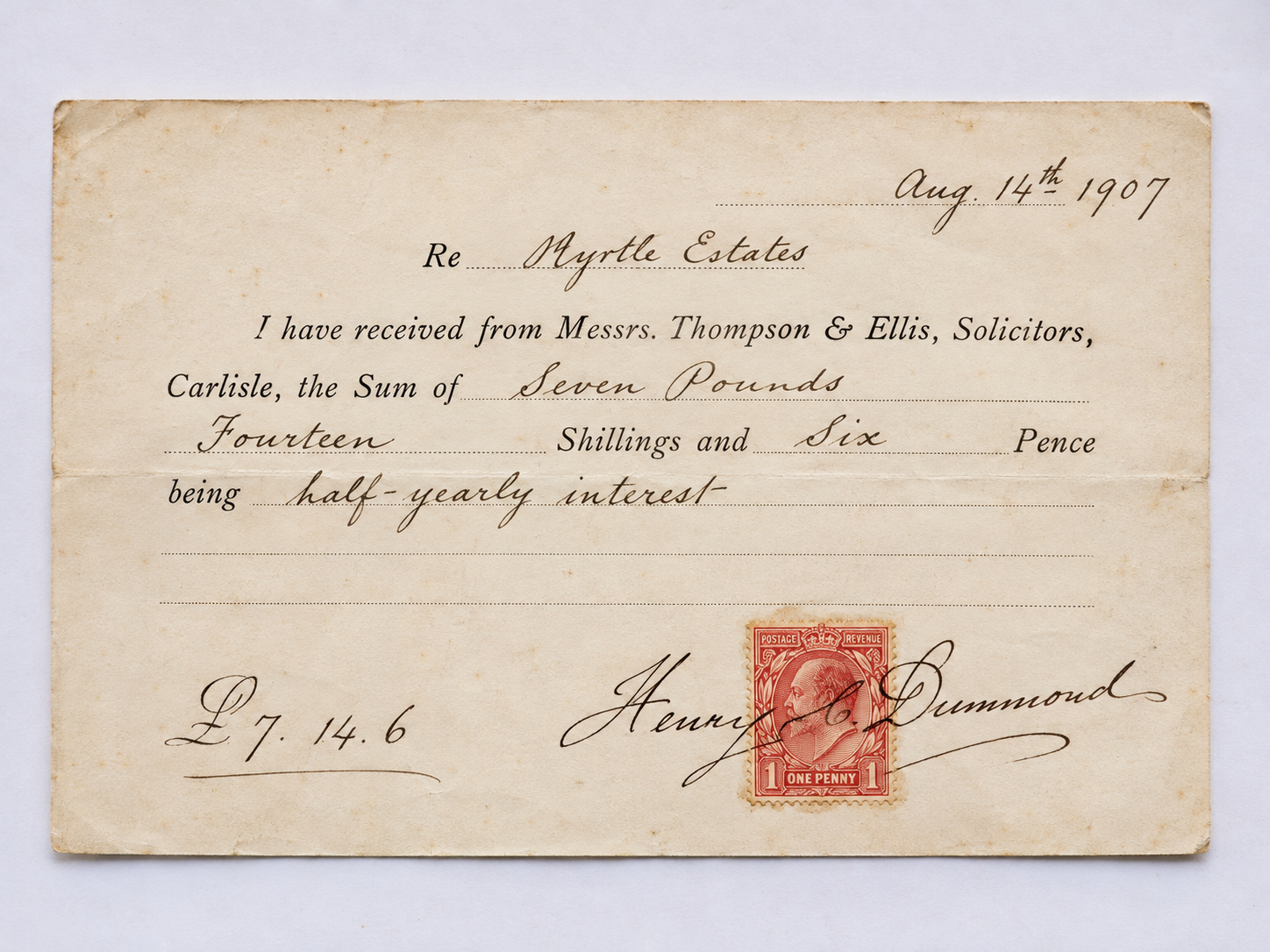
Image information
Click image to magnify
Illustration of a handwritten receipt with an Edward VII penny stamp cancelled by a signature.
- Credit
- Stunning Stamps · 2026
- Notes
- Digitally constructed
Deep dull green and carmine
Deep dull green supplies the portrait, olive branches and ornamental frame. Carmine is concentrated in the value panel beneath the head. The two colours were printed separately, and the pale border keeps the lower panel distinct.
The circular portrait setting and eight-sided red value panel continue De La Rue’s arrangement in the later Somerset House colours. [7]
Image information
Click image to magnify
Victorian ink factory with workers, large mixing vats, belt-driven machinery and buckets.
- Credit
- Stunning Stamps · 2026
- Notes
- Digitally constructed
Fine lines and surface printing
Printed lines model the portrait, while repeated background strokes and clear spaces distinguish the lettering. On original stamps, magnification reveals the individual marks behind apparently smooth tones.
The issued stamp was produced by typography, also called surface printing. The fine-lined appearance should not be confused with recess printing, in which ink is held in engraved grooves. Here the image was printed from the raised surface of the plate. [8]
The design under a later printer
Somerset House continued this Edwardian design after the printing arrangements changed in 1911. These are later printings bearing the late King’s portrait, made during George V’s reign. Differences in ink, paper and impression distinguish their appearance from De La Rue’s work while the principal design remains recognisable. [9, 10]
Click either stamp to magnify
The people and printer behind this stamp
Fuchs supplied the Edward VII portrait retained on this 2d deep dull green and carmine stamp. The surrounding design was developed for De La Rue; later printers continued the established portrait and frame. [11, 12]
Here “Somerset House” means the Board of Inland Revenue’s Stamping Department in London. It identifies the government printing of the Edward VII design. Similar-looking De La Rue examples belong to the earlier printing. [11, 12, 13]
Sources
- The Postal Museum: Designing a Royal Stamp
- Sam. C. Buckley: The Edwardian Twopence, The Philatelic Record, 1913, pp. 153–155
- Sam. C. Buckley: The Edwardian Three-Halfpence, The Philatelic Record, June 1913, pp. 103–106; corrected by T. F. Phillipot, August 1913, p. 148
- United Nations: UN Emblem and Flag — olive branches as symbols of peace
- Great Britain Philatelic Society: Diamond Jubilee display at the Royal Philatelic Society London — combined postage and revenue stamps
- Smithsonian National Postal Museum: Stamp from the Stamp Act of 1765
- L. W. Crouch, New Issues of 1911, The Stamp Year 1912, p. 120
- British Stamp Market Values 2020: King Edward VII section (hosted copy)
- Paul Voller: Edward VII portrait, Harrison and Somerset House issues, 1911–1913
- Dr Paul Ramsay FRPSL, Royal Mint Museum: Postage dues
- The Postal Museum archive: Post Office Stamp Depot, administrative history
- Royal Mail: Edward VII and Emil Fuchs, British Philatelic Bulletin, September 1993
- The Stamp Year 1912, p.120: new issues of 1911
← Return to the 2d deep dull green and carmine stamp
Facts checked