
The design of the 1s bistre-brown
King George V · Great Britain · Waterlow & Sons; later Harrison & Sons · Introduced 1924–1926
At the boundary of two stamp families
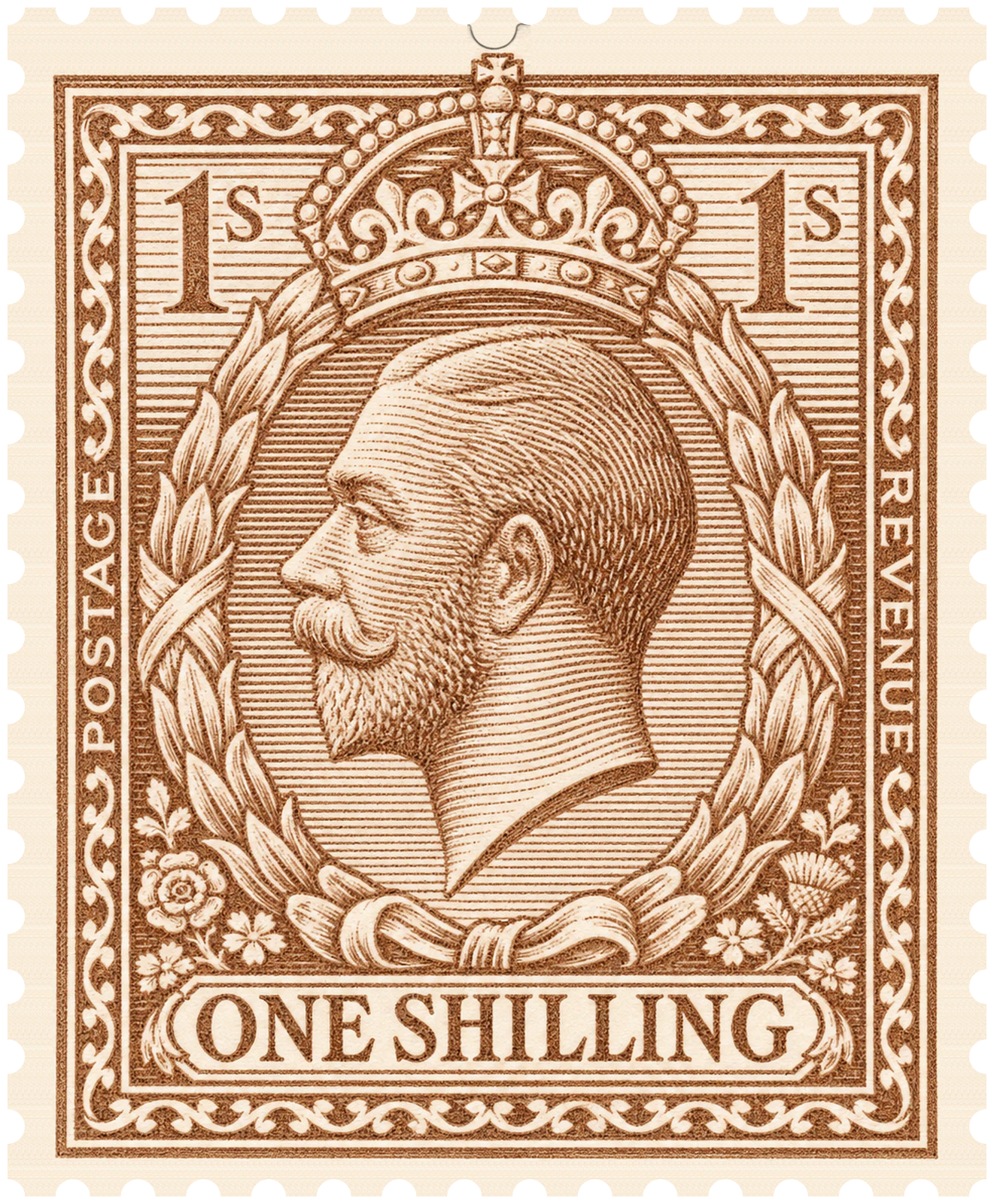
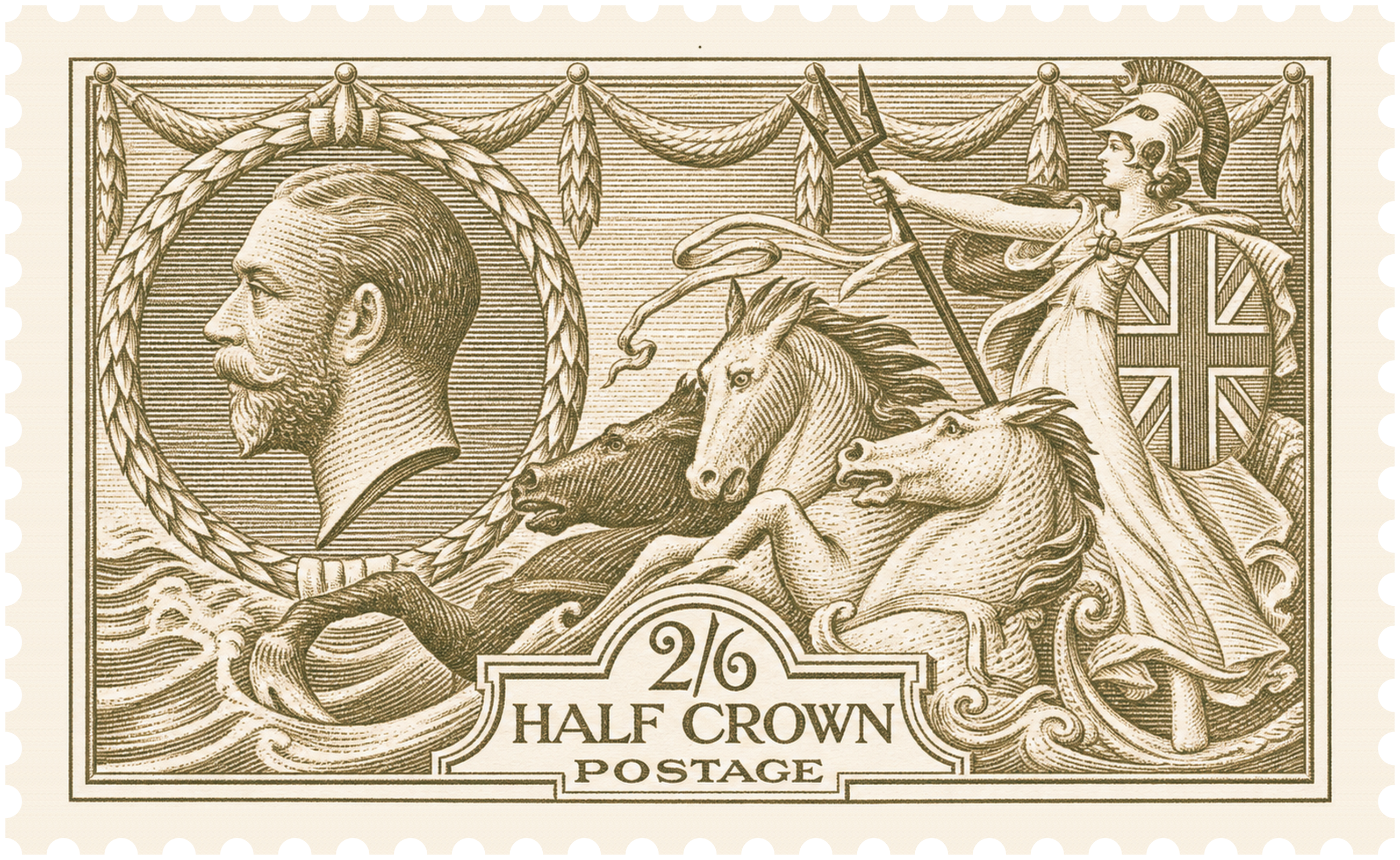
The shilling was the highest value in the small profile-head set printed by letterpress. In that process, raised printing surfaces carried the ink to the paper. The next denomination, the half-crown or 2s 6d, belonged to the larger Seahorse group. Its picture of Britannia and a chariot was recess-printed, with ink held in engraved lines, under a separate contract. [1, 2]
The comparison shows their approximate relative size: the half-crown has room for Britannia’s chariot and sea horses beside the royal portrait, whereas the shilling belongs to the compact portrait-and-frame designs. [3, 4]
Eve’s wreath had itself begun as a fourpenny proposal. After that version was rejected, it was adapted in 1913 around a smaller medal portrait for the ninepenny, tenpenny and shilling. The same composition continued on the Block Cypher shilling. [1]
A laurel wreath tied with ribbons
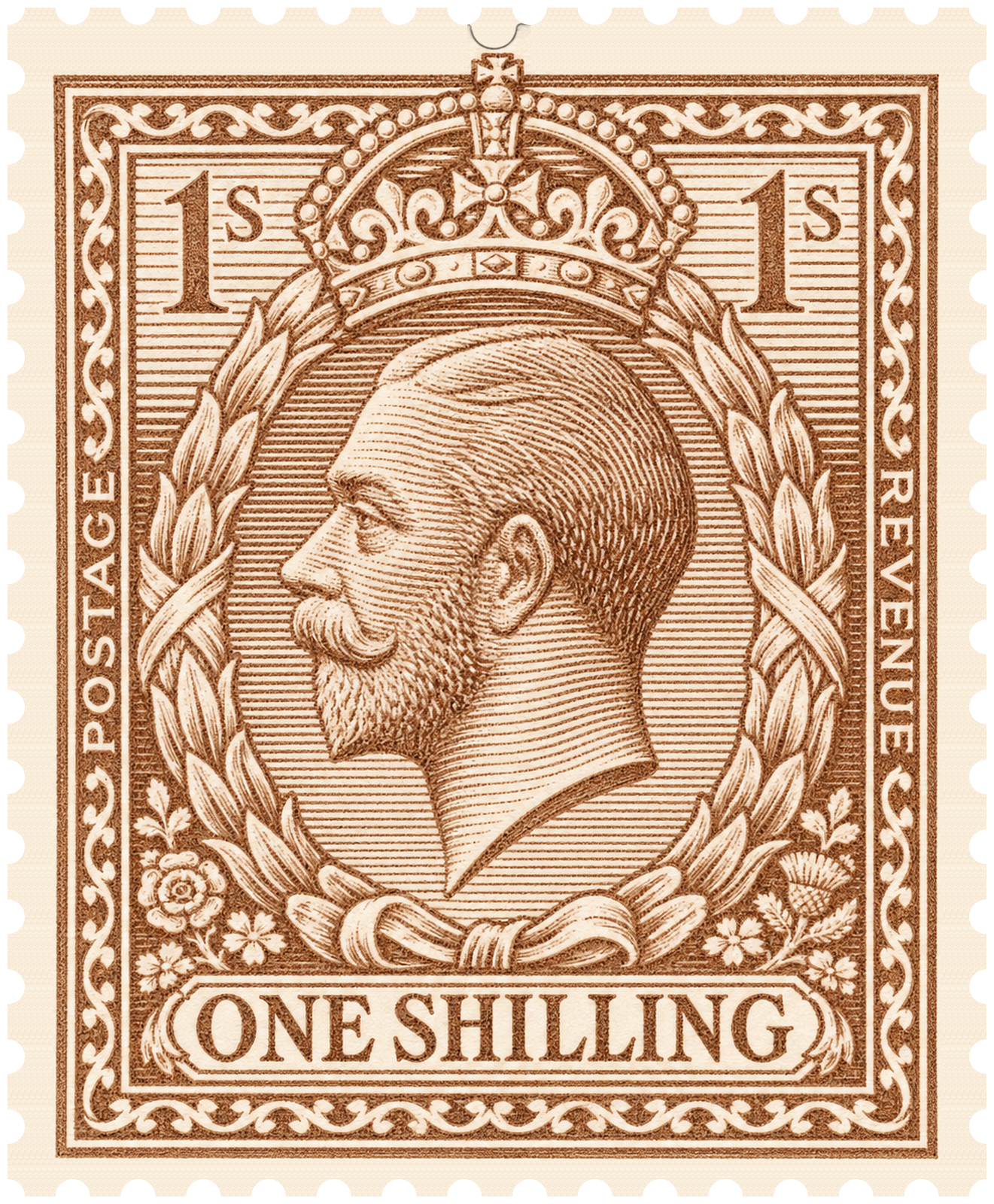
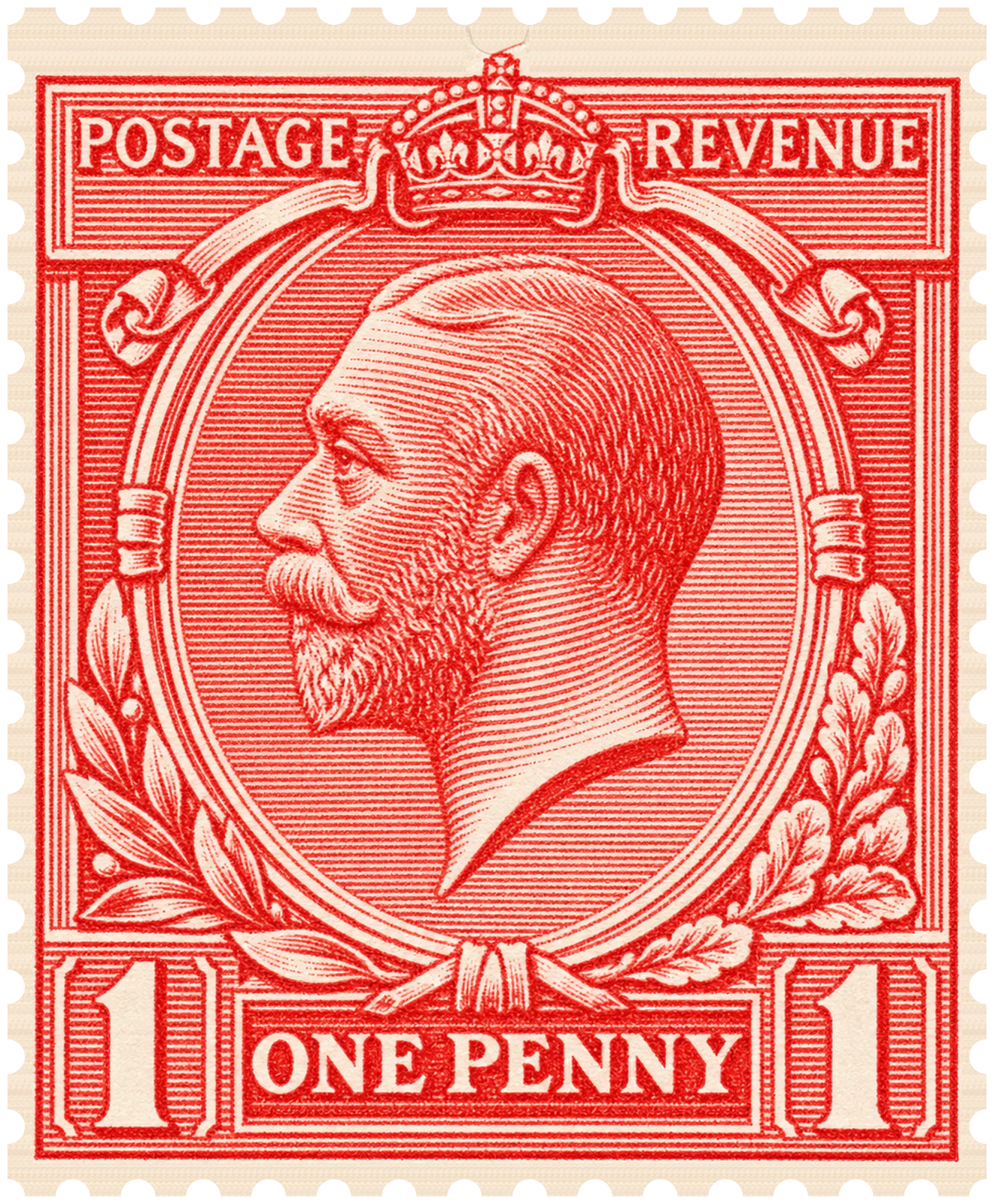
Long pointed leaves form a close oval around the King. Pale ribbons cross the branches part-way up and meet in a bow below the portrait. The wreath is more continuous than the separate sprays in Mackennal’s penny design.
The laurel leaves form a slimmer, more evenly spaced wreath than the thick bundles on the earlier Downey penny. Laurel is a traditional emblem of victory and honour. [5, 6]
Eve developed this frame while working on the fourpence, although that value ultimately used another design. The wreath was then adopted for the 9d, 10d and 1s with the smaller Medal Head II. [1]
Click either stamp to magnify

Image information
Click image to magnify
Illustration of a laurel branch with glossy pointed green leaves and dark berries.
- Credit
- Stunning Stamps · 2026
- Notes
- Digitally constructed
The small flowers at the foot
The lower corners contain floral groups beside the bow and value panel: a rose, thistle and shamrock. They are the traditional plant emblems of England, Scotland and Ireland. Their small scale makes them easy to overlook beside the much larger wreath. [7]
Look for the rounded petals of the rose, the compact thistle head and the shamrock’s cluster of leaves.
Wales has no separate emblem in this arrangement. The three-plant grouping belongs to an older tradition of national symbolism, shaped by Wales’s incorporation into the Kingdom of England. The royal shield on Edward VII’s fivepenny likewise has no separate Welsh quarter. [8, 9]
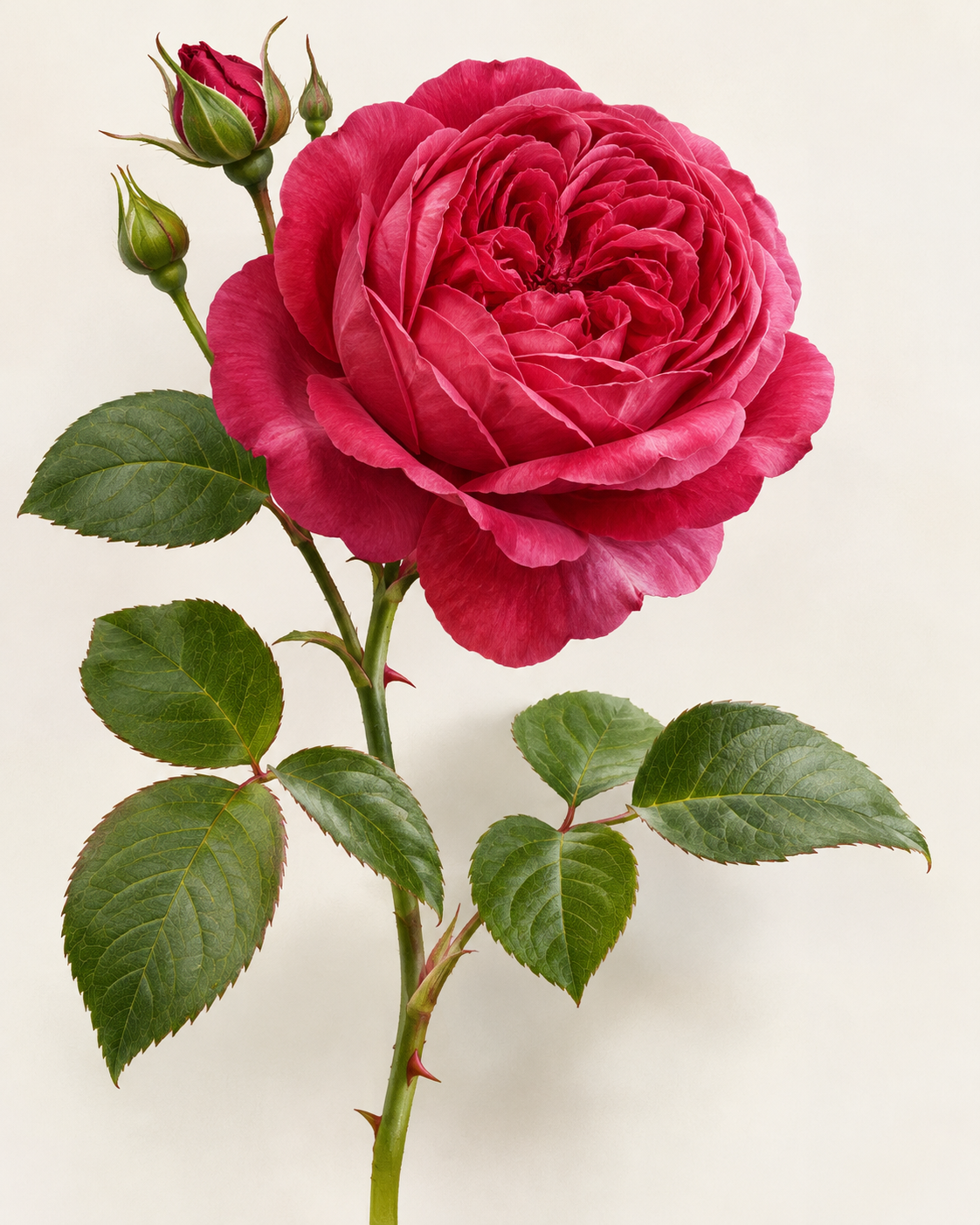
Image information
Click image to magnify
Red rose with layered petals, buds and green leaves.
- Credit
- Stunning Stamps · 2026
- Notes
- Digitally reconstructed

Image information
Click image to magnify
Purple thistle flower with a spiny head and pointed green leaves.
- Credit
- Stunning Stamps · 2026
- Notes
- Digitally reconstructed
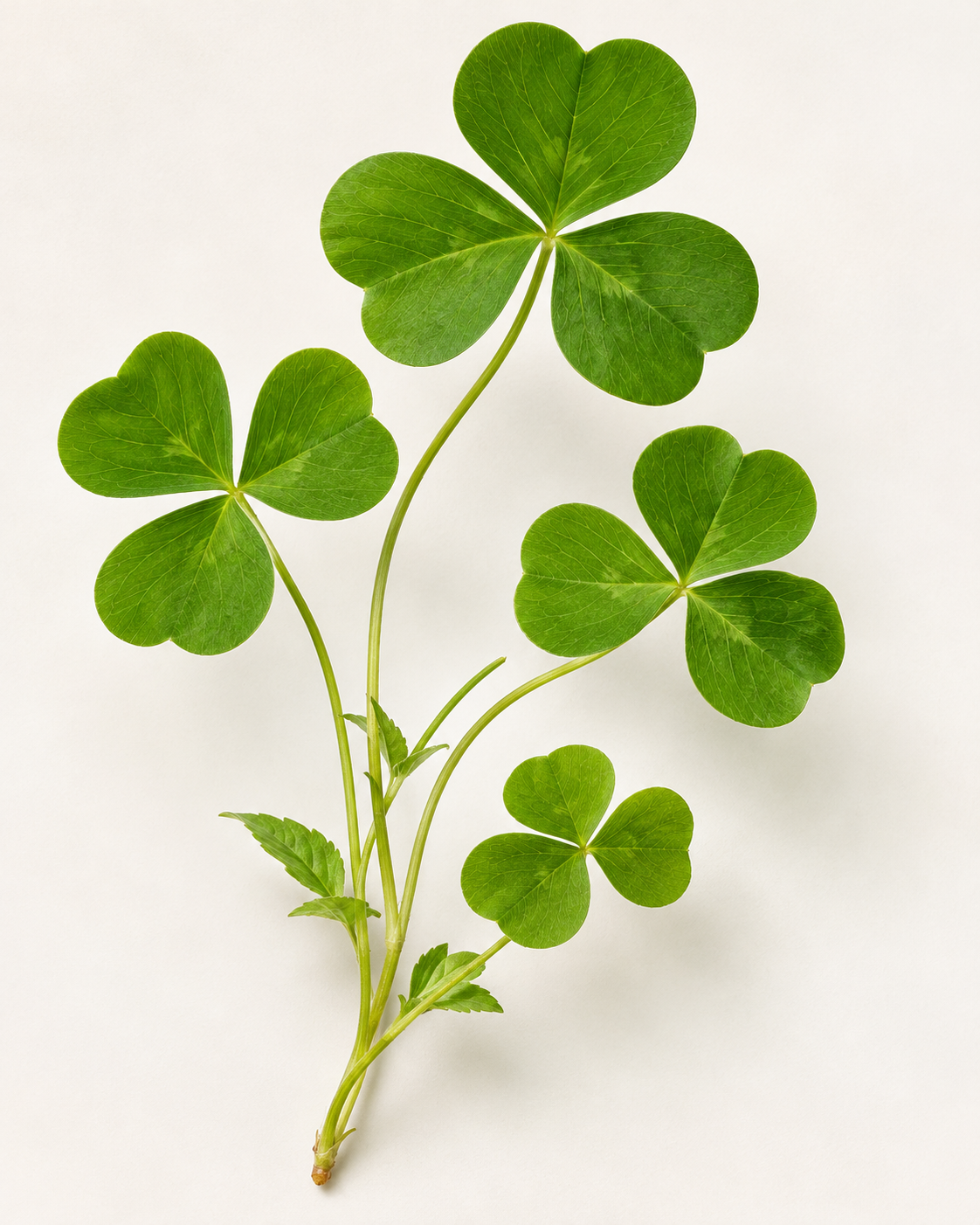
Image information
Click image to magnify
Green shamrock sprigs with groups of three leaflets.
- Credit
- Stunning Stamps · 2026
- Notes
- Digitally reconstructed
George VI’s low-value definitives later included a daffodil for Wales alongside the rose, thistle and shamrock. [10]
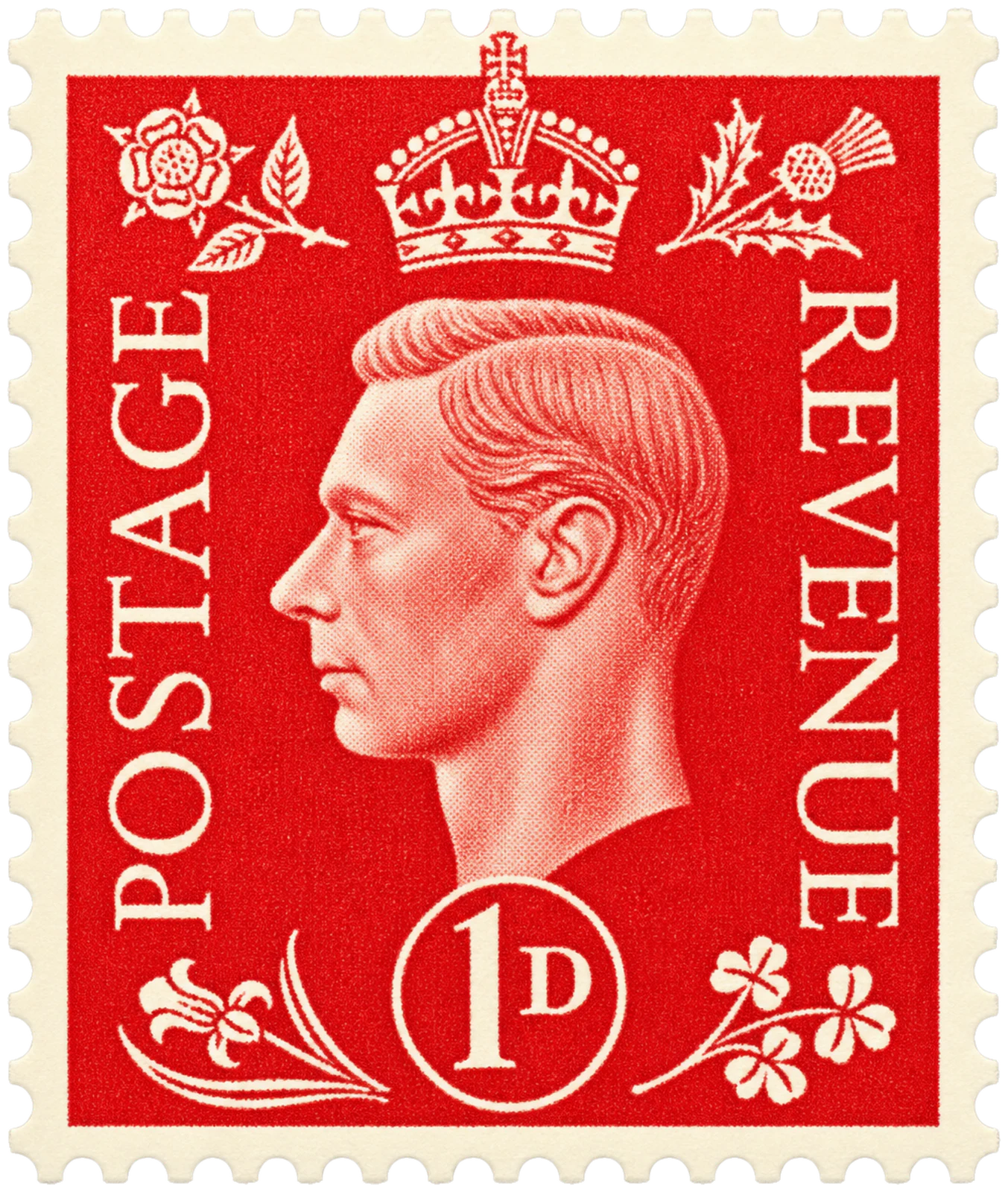
The later reign includes all four national floral emblems.
Click the stamp to magnify
The portrait — Medal Head II
George V’s first small stamps used a photograph by W. & D. Downey, showing his face turned towards the viewer. The printed likeness disappointed him and attracted public criticism. A profile offered a fresh start, but changing the head also meant reconsidering the frames around it. [1, 11]
The need for a smaller portrait emerged during the troubled preparation of the fourpenny: the Coinage Head crowded George W. Eve’s wreath frame. The King preferred Mackennal’s medal portrait, so J. A. C. Harrison returned to that sculptural model and engraved a fresh, smaller head in March–April 1913. Known as Medal Head II, it fitted Eve’s pillar and wreath designs for the higher values. [1]
There is space around the forehead and behind the head, so the surrounding ornament remains clear. The neck ends in a diagonal sweep above the foliage. Look at the different directions of the lines in the hair, cheek and beard: each helps describe a different surface.
The South African medal shown here illustrates the sculptural source. The medal dates from 1910; “II” identifies the later stamp engraving. The earlier Medal Head (I) appears on the letterpress 1d and 2½d, while the Coinage Head appears on the ½d, 1½d, 2d, 3d and 4d. [1, 12]
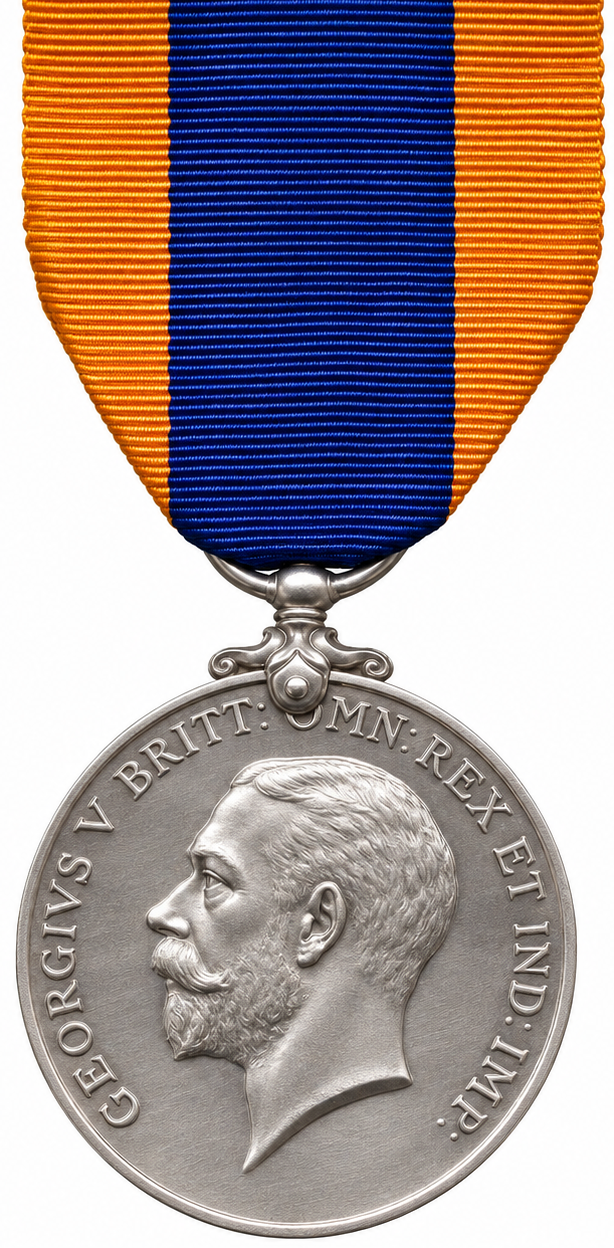
Image information
Click image to magnify
The front of the silver-coloured South African medal, showing George V’s bare head facing left beneath a blue ribbon with orange borders.
- Credit
- Stunning Stamps · 2026
- Notes
- Digitally reconstructed
Ink, paper and the printed image
The original dies were engraved, but these stamps were printed by typography, also called letterpress. Ink on the raised parts of a printing surface was pressed onto the paper. An engraved master does not mean the issued stamp was recess-printed. [2]
This version is printed in bistre-brown. The width and spacing of printed marks create lighter and darker tones: closely worked hair and beard appear darker than the open background, while unprinted paper supplies the highlights. [2]
Image information
Click image to magnify
Decorative blue, green and white advertisement for Mander Brothers printing inks, Wolverhampton.
- Credit
- Stunning Stamps · 2026
- Notes
- Digitally constructed
Lettering and the value
POSTAGE reads upwards on the left border, while REVENUE reads downwards on the right. The two words name the stamp’s postal and fiscal functions. Revenue use means paying a tax or duty on a document; it is separate from paying to carry a letter. [13]
Pale letters stand against a darker ground, distinct from the leaves and scrolls beside them.
ONE SHILLING fills the panel beneath the portrait. The value is repeated in the two upper corners beside the crown.
The small s identifies a shilling. Before decimalisation, one shilling contained twelve pence; the value is written out beneath the portrait.
The close wreath leaves narrow spaces at either side for the vertical inscriptions. Compare it with the more open sprays beneath the portrait on the penny.
Image information
Click image to magnify
Illustration of five red pillar boxes with royal cyphers.
- Credit
- Stunning Stamps · 2026
- Notes
- Digitally reconstructed
Image information
Click image to magnify
Illustration of a handwritten receipt with an Edward VII penny stamp cancelled by a signature.
- Credit
- Stunning Stamps · 2026
- Notes
- Digitally constructed
The crown above the head
A crown occupies the centre at the top. Rounded ornaments follow its arches above a patterned band, and a small cross completes the outline.
The crown sits in the frame above the King’s bare head. The wreath rises to meet its lower edge, leaving the value figures visible on each side.
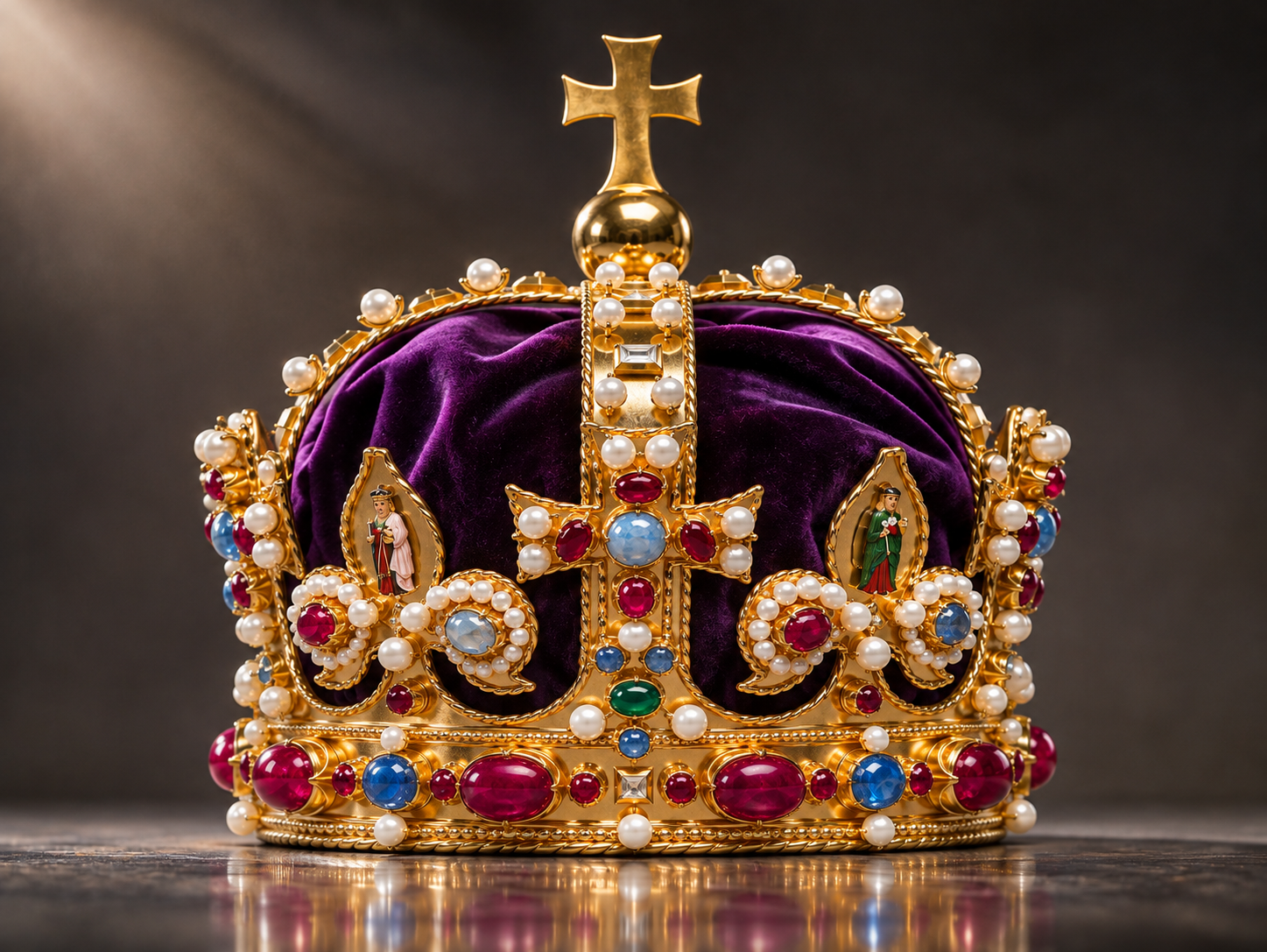
Image information
Click image to magnify
Gold Tudor royal crown with jewels, pearls, small figures and a purple cap.
- Credit
- Stunning Stamps · 2026
- Notes
- Digitally constructed
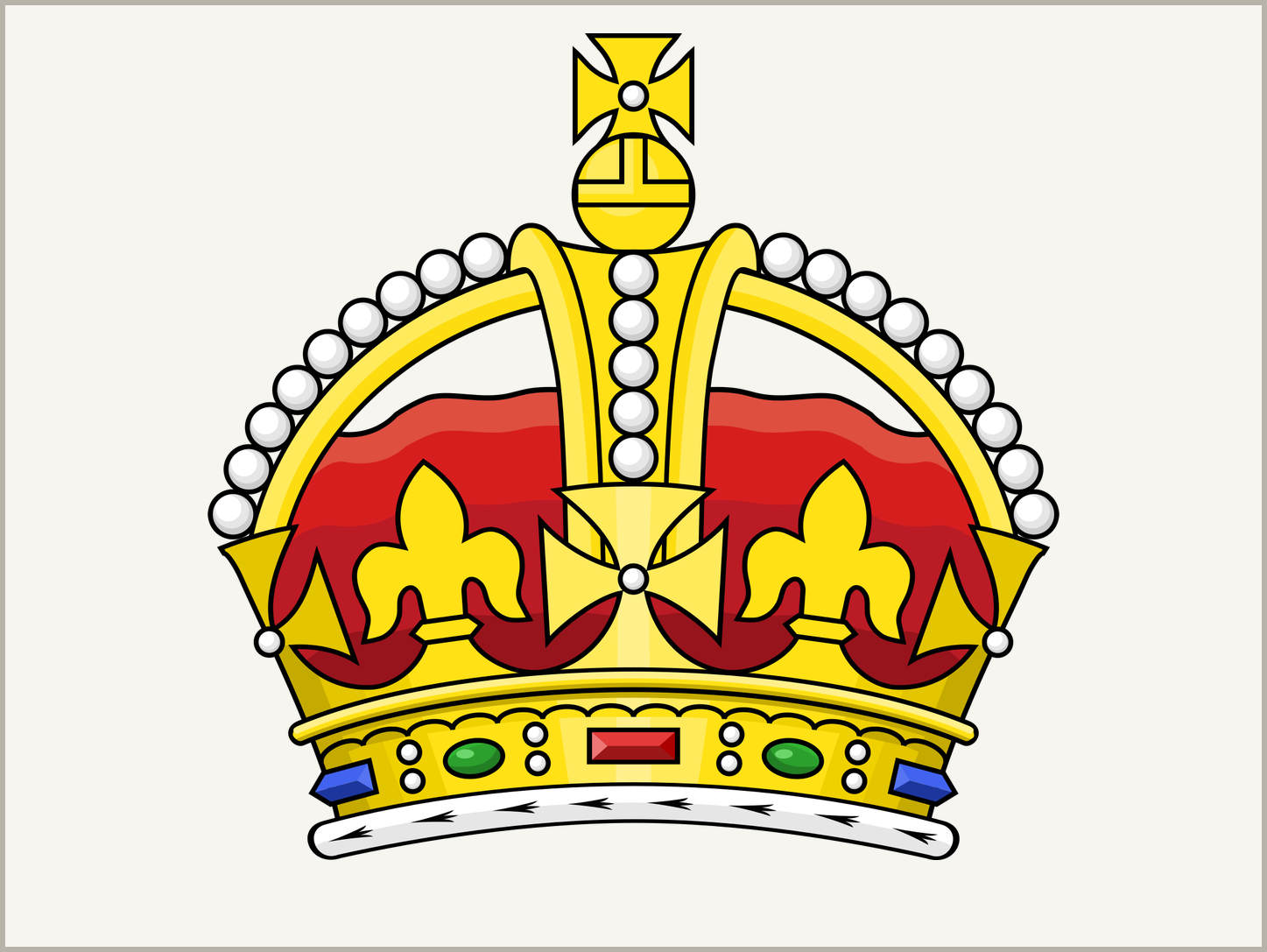
Image information
Click image to magnify
Heraldic Tudor Crown with rounded arches, a cross and orb, red cap, crosses and fleurs-de-lis.
- Credit
- Dgp4004 · Wikimedia Commons · CC0
Familiar designs on new paper
Bertram Mackennal supplied the royal portrait model, George W. Eve designed the frame, and J. A. C. Harrison engraved the stamp portrait. [14, 15, 16]
The Block Cypher issue kept the established profile designs while changing the watermark. Bold, upright letters replaced the earlier script cypher. The name describes a pattern formed in the paper, not an inscription added to the printed face. [11, 17]
Waterlow & Sons took over the main low-value printing contract in January 1924. A new printer and new paper gave the established drawing another chapter in its working life. [11]
The illustrations show both patterns from the front. Seen from the back of a stamp, the letters are reversed. They are enlarged explanations of the watermark, rather than templates for its exact position on a stamp. [11]
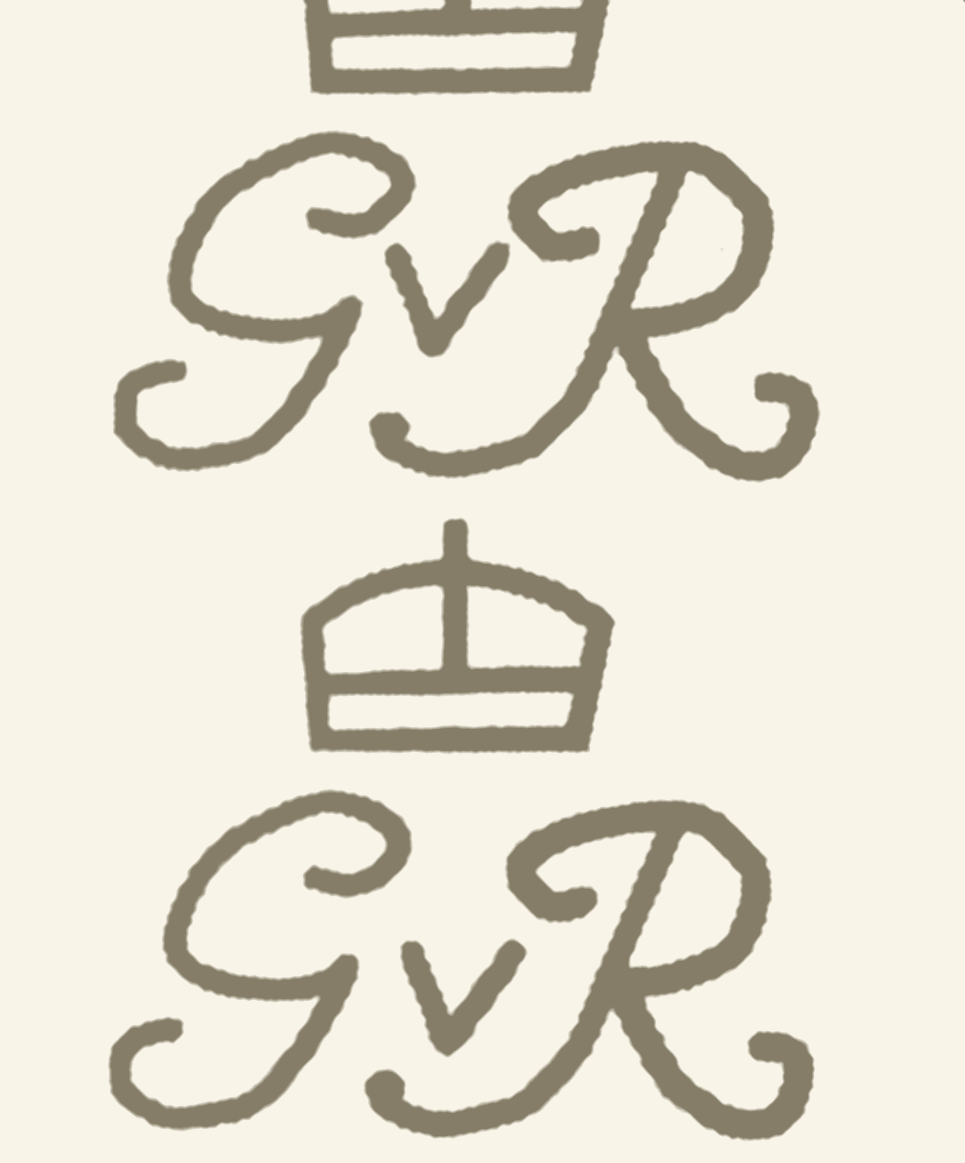
Image information
Click image to magnify
Small crowns and script GvR cyphers repeated in vertical strips.
- Credit
- Stunning Stamps · 2026
- Notes
- Digitally reconstructed; enlarged explanatory view, not a scale or stamp-position template.
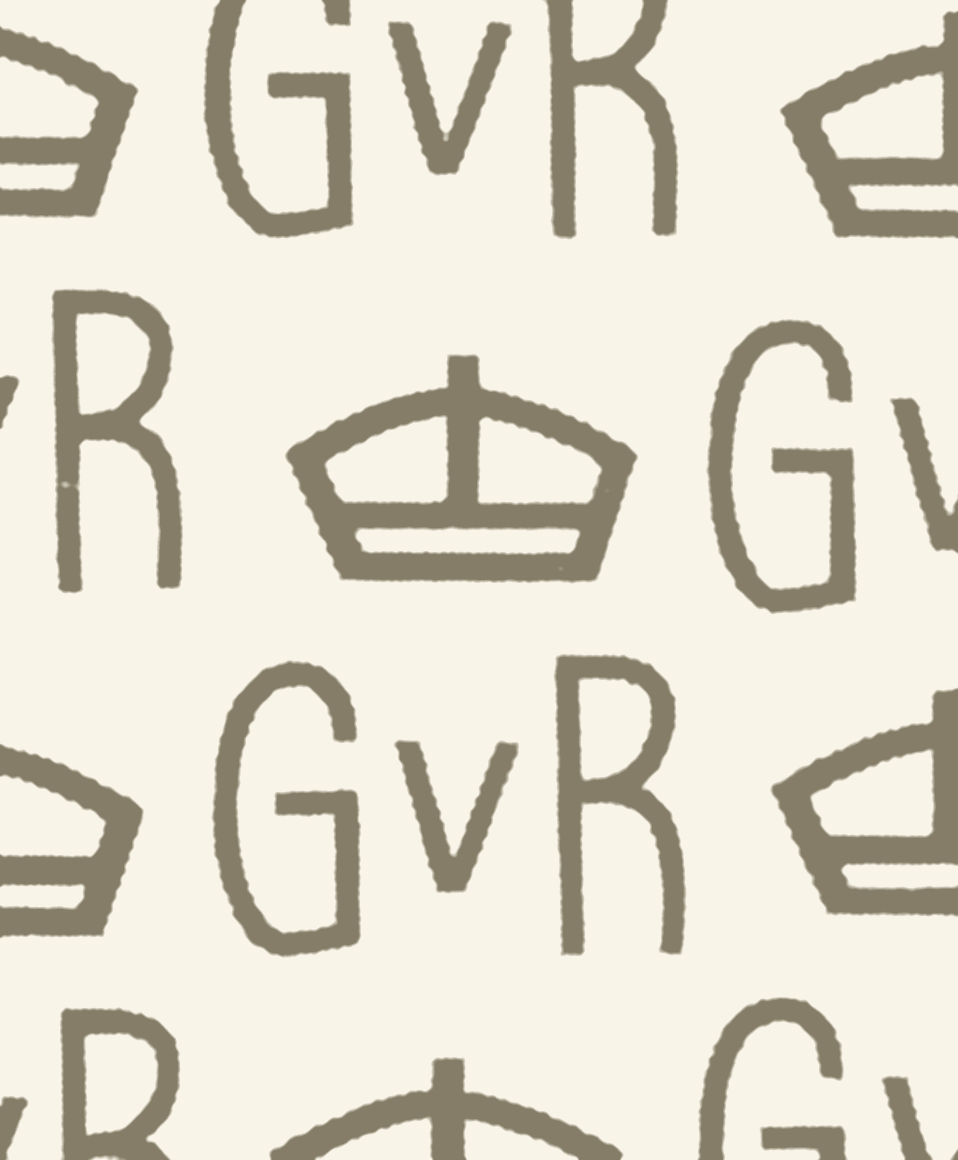
Image information
Click image to magnify
Repeating crowns and plain block GvR lettering, used for the later letterpress and photogravure definitives.
- Credit
- Stunning Stamps · 2026
- Notes
- Digitally reconstructed; enlarged explanatory view, not a scale or stamp-position template.
Letterpress continued while photogravure began
Harrison & Sons regained the low-value printing contract at the beginning of 1934, with photogravure intended to replace letterpress. Applying the process to the enormous demand for postage stamps proved difficult. The change of contract came before a complete replacement range could be supplied. [18, 11]
Harrison therefore continued printing the existing letterpress designs, while Waterlow helped with provisional supplies of the four lowest denominations. The new photogravure stamps appeared in stages; the fivepenny, tenpenny and shilling did not arrive until after George V’s death in January 1936. [18]
The older designs and the new process overlapped. Some stamps bought during the changeover still carried the familiar letterpress drawing, while others showed its photogravure adaptation. [19, 11]
Compare the letterpress stamp with its photogravure successor below. The same family of ornament is still recognisable, but the portrait, lettering and surrounding shading have been adapted for a different way of holding and transferring the ink. [19]
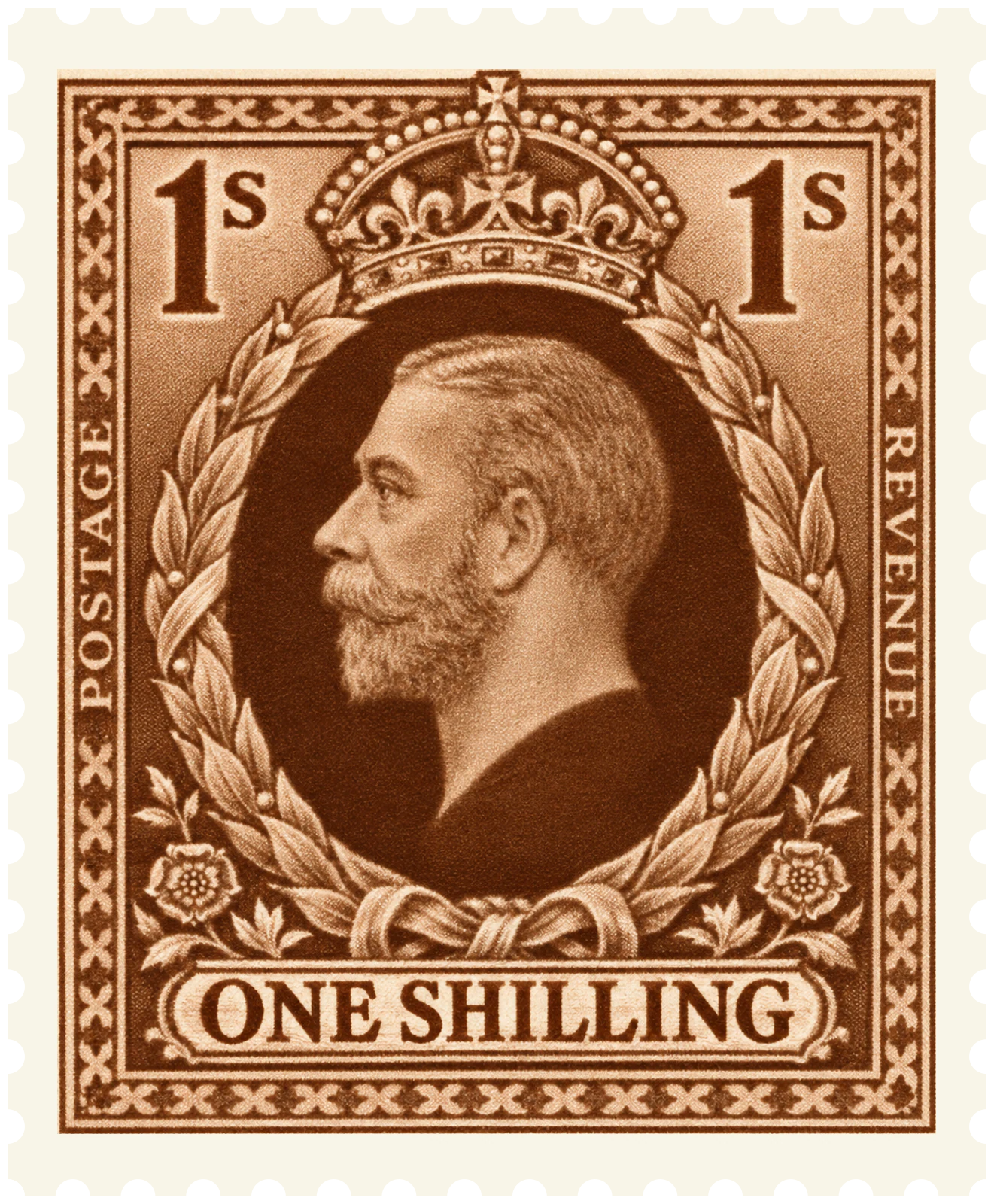
Click either stamp to magnify
Sources
- Alan N. Moorcroft, The King's Head, RPSL display, 25 February 2010
- Adrian Keppel, The Four Kings, British Philatelic Bulletin 49, February 2012, pp.148–151
- LastDodo: 1912 George V 2½d, catalogue dimensions
- LastDodo: 1913 Waterlow 2s 6d Seahorse, catalogue dimensions
- David Thompson: The George V Profile Stamps, STAMPS, 26 March 1988; illustrated reprint, Mekeel’s & Stamps, 9 November 2018, p. 19
- Deirdre Larkin, The Metropolitan Museum of Art: Green Victory, 27 January 2012
- David Thompson, The George V Profile Stamps, parts 32–34 (1988; illustrated reprint): frames and national flowers
- House of Lords Constitution Committee: The Union and devolution — the incorporation of Wales
- The Royal Family: Royal Standard — the quarterings and Wales
- The Postal Museum: Designing a Royal Stamp — George VI and the four national flowers
- Charles Goodwyn, Great Britain – King George V, Royal Philatelic Collection display, 17 September 1998
- Royal Museums Greenwich: Union of South Africa Commemoration Medal, MED2384, made 1910
- The Postal Museum: British Empire Exhibition stamp history, p.16 — postage stamps and receipt duty
- Buckinghamshire Council: Harrison & Sons printworks
- Science Museum Group: Waterlow and Sons Limited
- Royal Philatelic Society London: The King’s Head, 2010
- Ivybridge Heritage: Postage Stamp Paper, records of Stowford Mill
- Marcus Samuel: King George V Photogravure Sixpence—So Nearly a Stamp, part 1, British Philatelic Bulletin 16/7, pp. 3–5
- Glenn H Morgan, 75 years of GB stamps by photogravure, British Philatelic Bulletin, August 2009
← Return to the 1s bistre-brown stamp
Last reviewed · Facts checked