
The design of the 2½d blue
King George V · Great Britain · Waterlow & Sons; later Harrison & Sons · Introduced 1924–1926
A penny design in blue
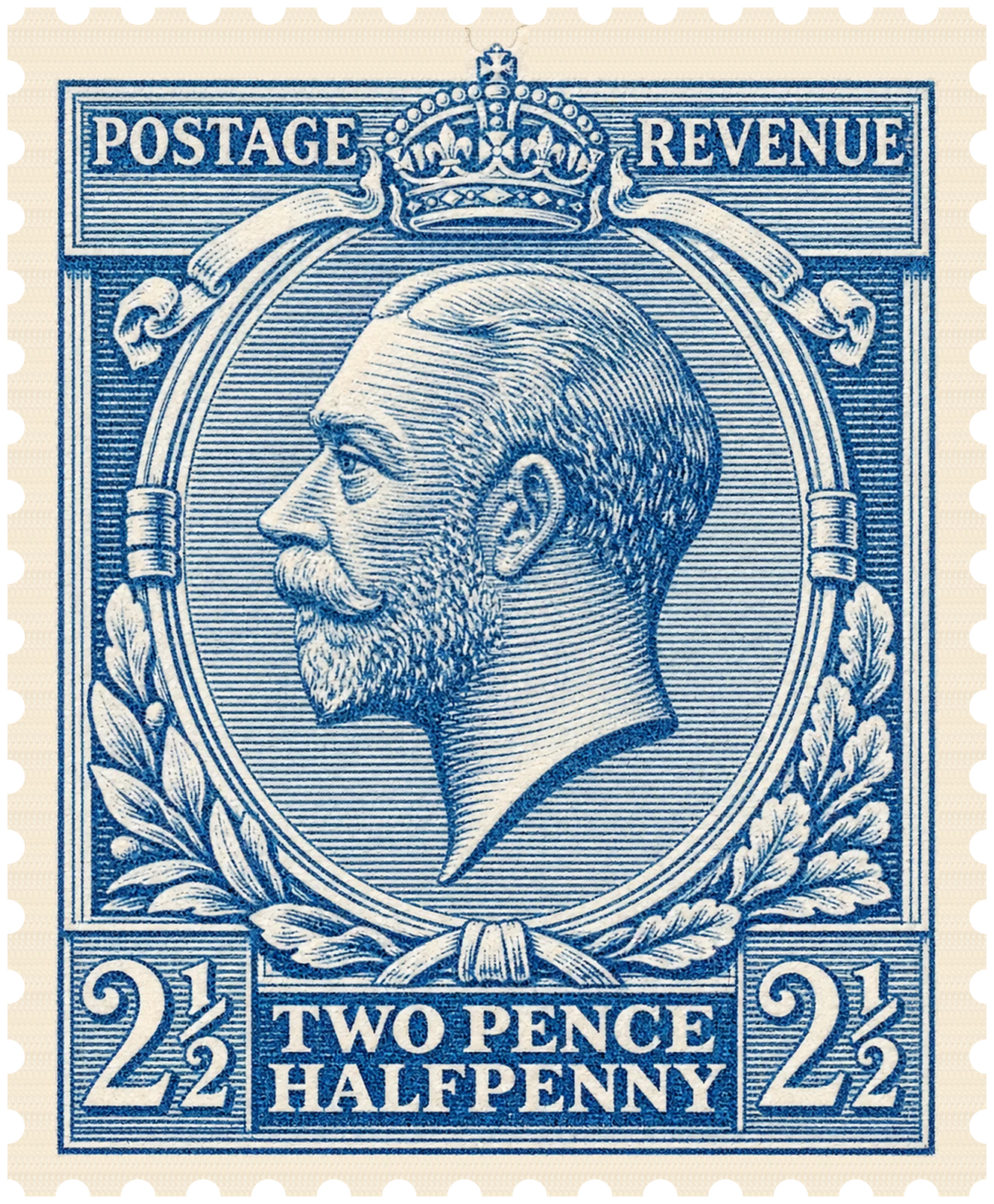
The twopence-halfpenny inherited the penny’s design when the profile stamps were prepared in 1912. Both values use Mackennal’s Medal Head, derived from his model for the opening of South Africa’s first Union Parliament in 1910. [1]
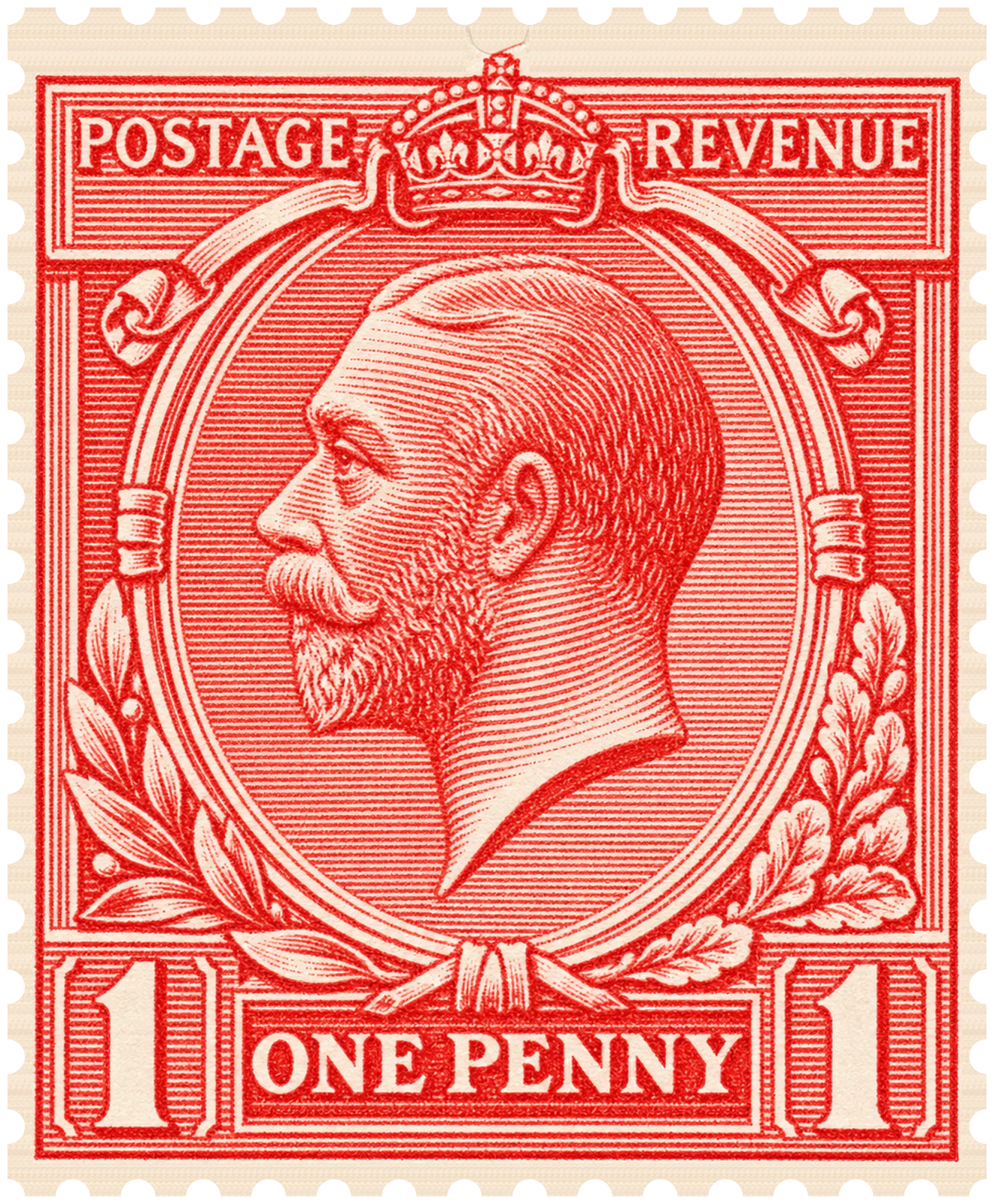
The Royal Cypher penny shows the portrait and foliage inherited by the later blue stamp.
Click the stamp to magnify
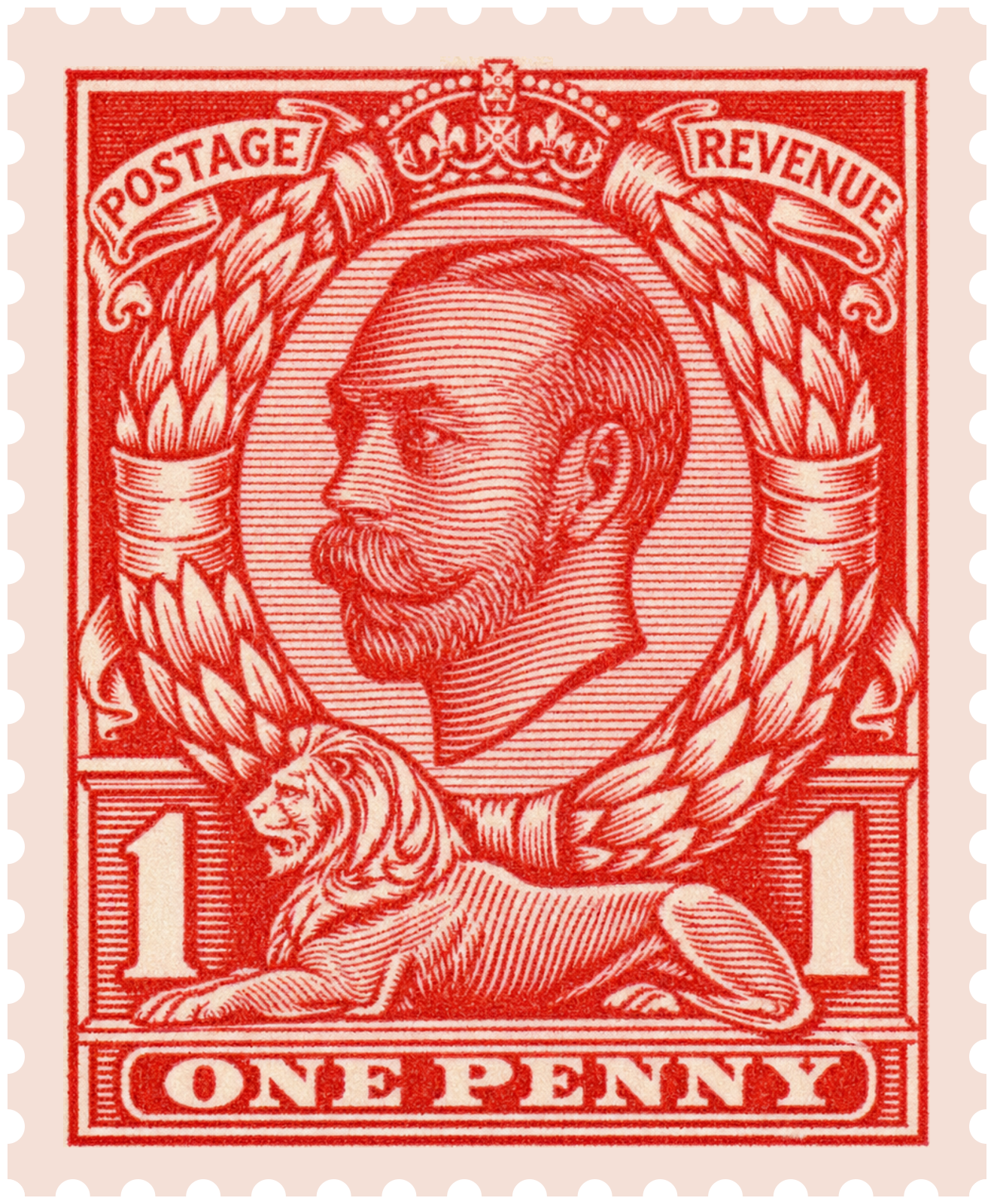
The arrangement had emerged from a failed attempt to fit the King’s profile above a lion. The head looked cramped, so Mackennal replaced the lion frame with laurel and oak and used the medal portrait preferred by the King. The resulting penny design supplied the basis for the blue twopence-halfpenny too. [1]
By the time Block Cypher paper arrived, these decisions were more than a decade old. The blue stamp carried on with the same portrait and paired sprays. [1, 2]
Laurel and oak
The foliage below the portrait is different on each side. On the left are narrow laurel leaves and small berries. On the right, the oak has broader, lobed leaves and acorns. A tied ribbon joins their stems beneath the neck.
Laurel has long associations with victory and honour; oak with strength and endurance. [3, 4]

Image information
Click image to magnify
Illustration of a laurel branch with glossy pointed green leaves and dark berries.
- Credit
- Stunning Stamps · 2026
- Notes
- Digitally constructed
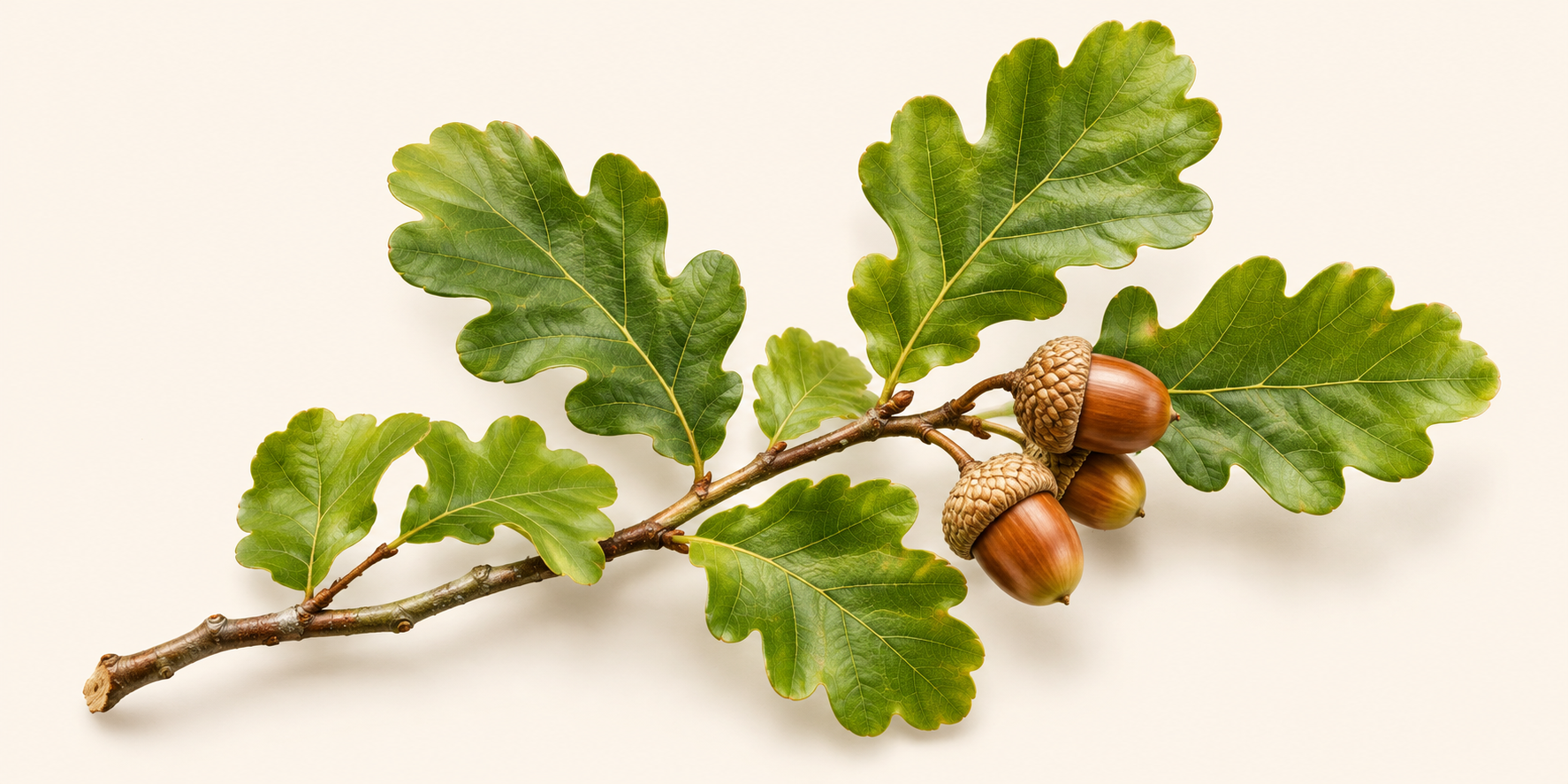
Image information
Click image to magnify
Illustration of an oak branch with green lobed leaves and brown acorns in textured cups.
- Credit
- Stunning Stamps · 2026
- Notes
- Digitally reconstructed
The portrait — Medal Head (I)
George V’s first small stamps used a photograph by W. & D. Downey, showing his face turned towards the viewer. The printed likeness disappointed him and attracted public criticism. A profile offered a fresh start, but changing the head also meant reconsidering the frames around it. [1, 2]
The first solution came from Bertram Mackennal’s model for the King’s coins. J. A. C. Harrison engraved this Coinage Head for the stamps, and it fitted the dolphin and ribbon frames. Other designs proved less accommodating: the proposed penny looked cramped when the same head was tried above its lion. [1]
Mackennal’s Medal Head supplied the likeness for the penny and twopence-halfpenny. Its source was his medal portrait for the opening of South Africa’s first Union Parliament in 1910. This bare-headed model differs from the crowned portrait on his Coronation medal. [1]
The uncovered head stands inside a broad oval. Curving lines describe the hair and moustache; finer shading models the cheek and neck. The sharp outline of the nose and beard makes the profile readable even when the stamp is small.
This is the earlier Medal Head, also distinguished as Medal Head I, introduced on the 1d and 2½d in 1912. The smaller Medal Head II was engraved separately in 1913 for the 5d to 1s. Both trace back to the medal model; the Coinage Head on the ½d, 1½d, 2d, 3d and 4d is a different engraving. [1]
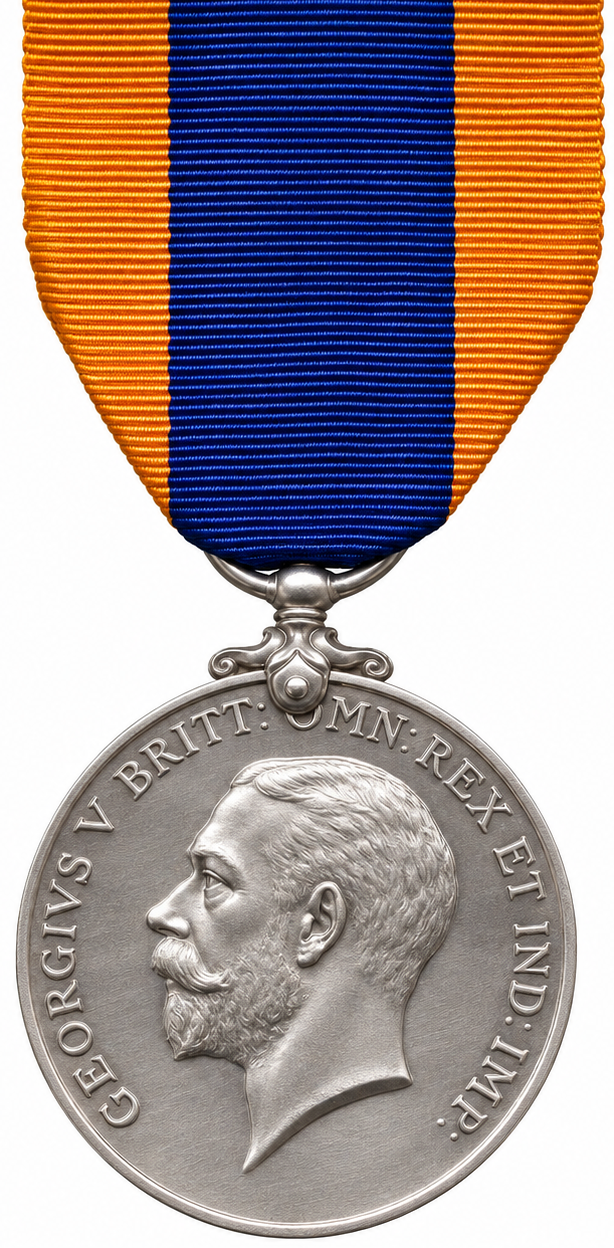
Image information
Click image to magnify
The front of the silver-coloured South African medal, showing George V’s bare head facing left beneath a blue ribbon with orange borders.
- Credit
- Stunning Stamps · 2026
- Notes
- Digitally reconstructed
Ink, paper and the printed image
The original dies were engraved, but these stamps were printed by typography, also called letterpress. Ink on the raised parts of a printing surface was pressed onto the paper. An engraved master does not mean the issued stamp was recess-printed. [5]
This version is printed in blue. The width and spacing of printed marks create lighter and darker tones: closely worked hair and beard appear darker than the open background, while unprinted paper supplies the highlights. [5]
Image information
Click image to magnify
Decorative blue, green and white advertisement for Mander Brothers printing inks, Wolverhampton.
- Credit
- Stunning Stamps · 2026
- Notes
- Digitally constructed
Lettering and the value
POSTAGE and REVENUE sit on either side of the crown across the top of the design. The two words name the stamp’s postal and fiscal functions. Revenue use means paying a tax or duty on a document; it is separate from paying to carry a letter. [6]
Pale letters stand against a darker ground, distinct from the leaves and scrolls beside them.
TWO PENCE HALFPENNY appears in the lower panel, with 2½ repeated in the two corners beside it. The words are arranged over two lines to fit the longer denomination.
The fraction ½ adds half an old penny to the two pence.
The curved portrait oval contrasts with the straight lower edge formed by the value panel and its flanking numerals.
Image information
Click image to magnify
Illustration of five red pillar boxes with royal cyphers.
- Credit
- Stunning Stamps · 2026
- Notes
- Digitally reconstructed
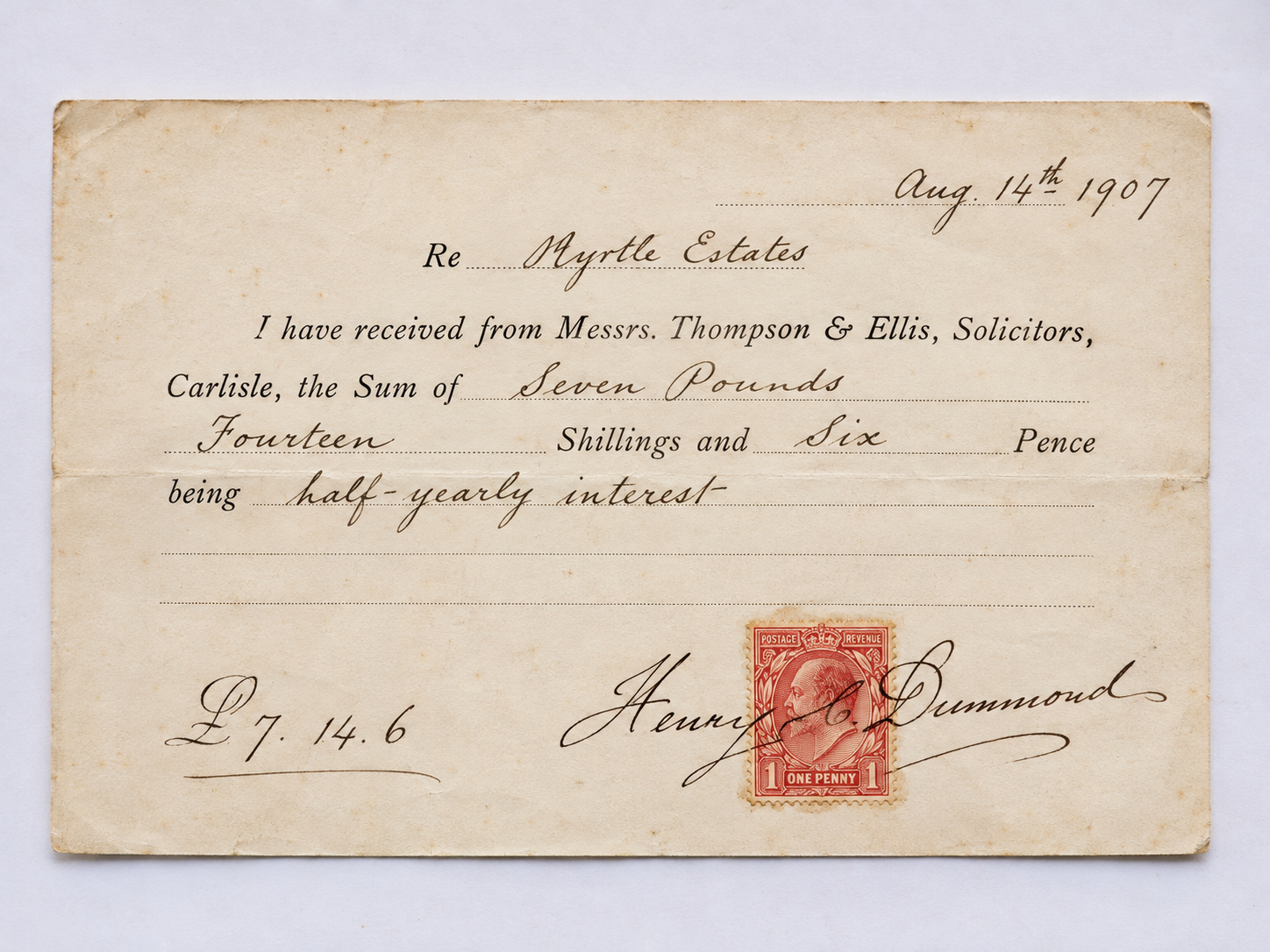
Image information
Click image to magnify
Illustration of a handwritten receipt with an Edward VII penny stamp cancelled by a signature.
- Credit
- Stunning Stamps · 2026
- Notes
- Digitally constructed
The crown above the head
A crown occupies the centre at the top. Rounded ornaments follow its arches above a patterned band, and a small cross completes the outline.
The crown sits in the frame above the King’s bare head. The curled ends of the oval frame connect it to the surrounding ornament.
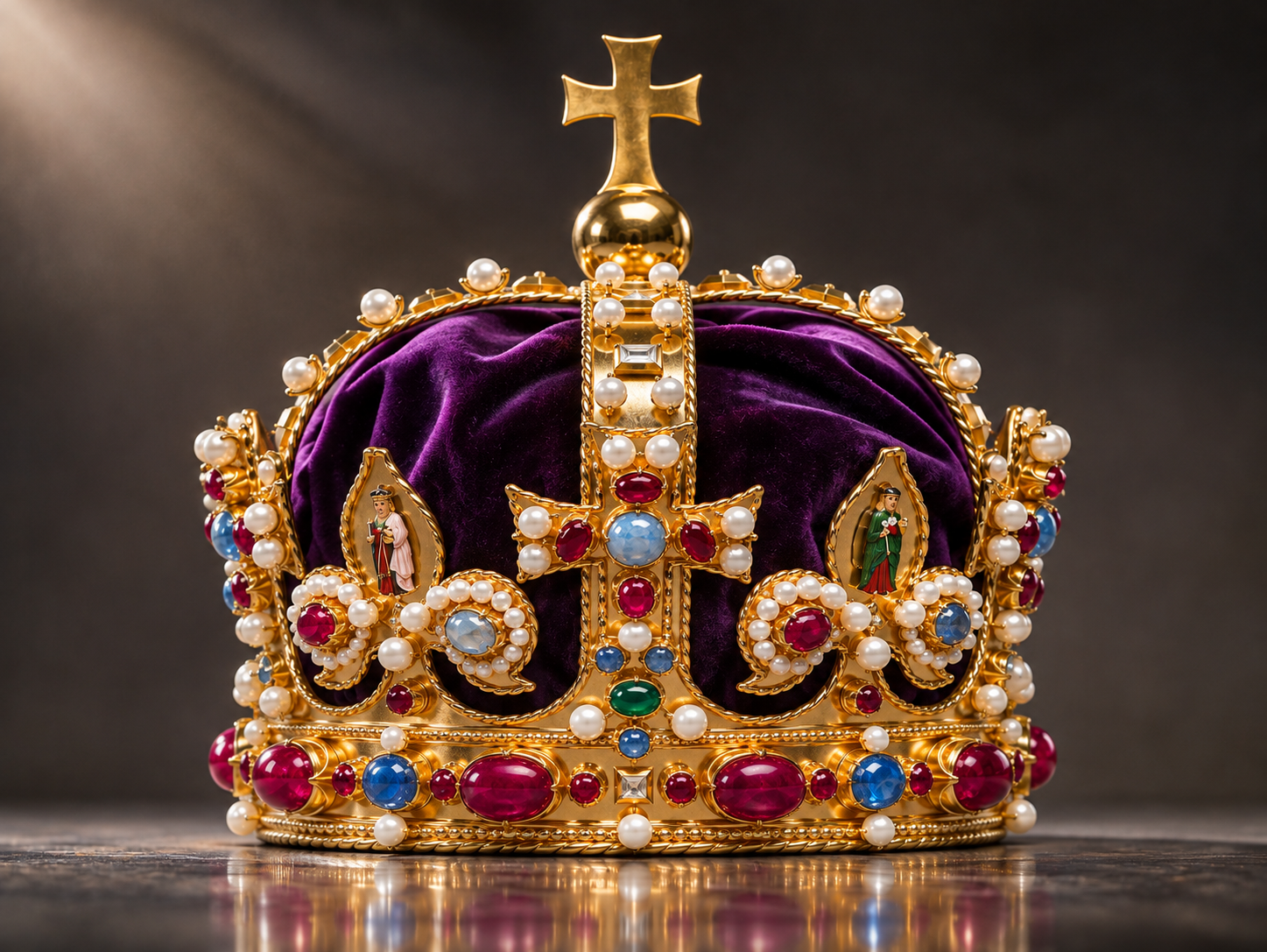
Image information
Click image to magnify
Gold Tudor royal crown with jewels, pearls, small figures and a purple cap.
- Credit
- Stunning Stamps · 2026
- Notes
- Digitally constructed
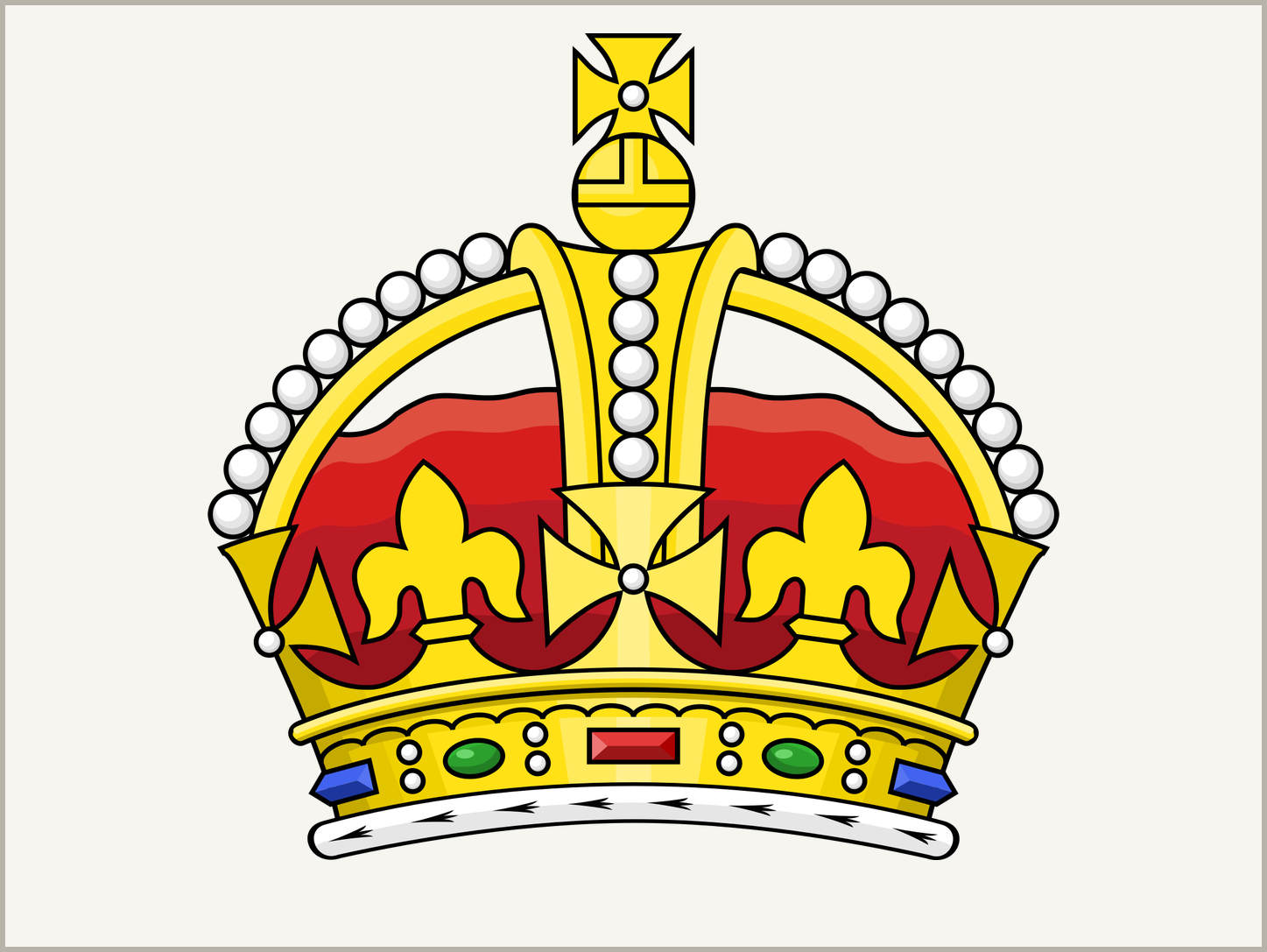
Image information
Click image to magnify
Heraldic Tudor Crown with rounded arches, a cross and orb, red cap, crosses and fleurs-de-lis.
- Credit
- Dgp4004 · Wikimedia Commons · CC0
Familiar designs on new paper
Bertram Mackennal supplied the royal portrait model and ornamental frame; J. A. C. Harrison prepared the stamp engraving. [7, 8, 9]
The Block Cypher issue kept the established profile designs while changing the watermark. Bold, upright letters replaced the earlier script cypher. The name describes a pattern formed in the paper, not an inscription added to the printed face. [2, 10]
Waterlow & Sons took over the main low-value printing contract in January 1924. A new printer and new paper gave the established drawing another chapter in its working life. [2]
The illustrations show both patterns from the front. Seen from the back of a stamp, the letters are reversed. They are enlarged explanations of the watermark, rather than templates for its exact position on a stamp. [2]
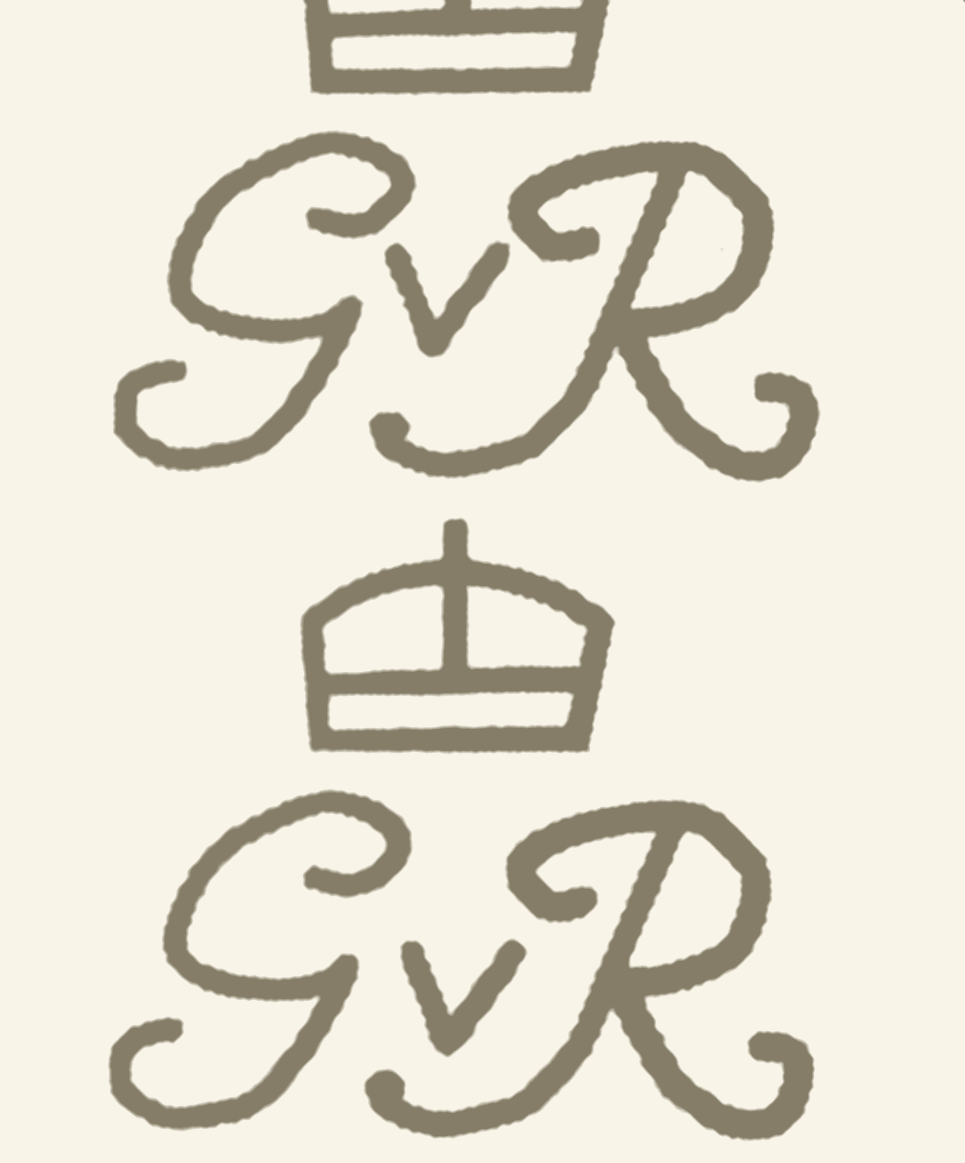
Image information
Click image to magnify
Small crowns and script GvR cyphers repeated in vertical strips.
- Credit
- Stunning Stamps · 2026
- Notes
- Digitally reconstructed; enlarged explanatory view, not a scale or stamp-position template.
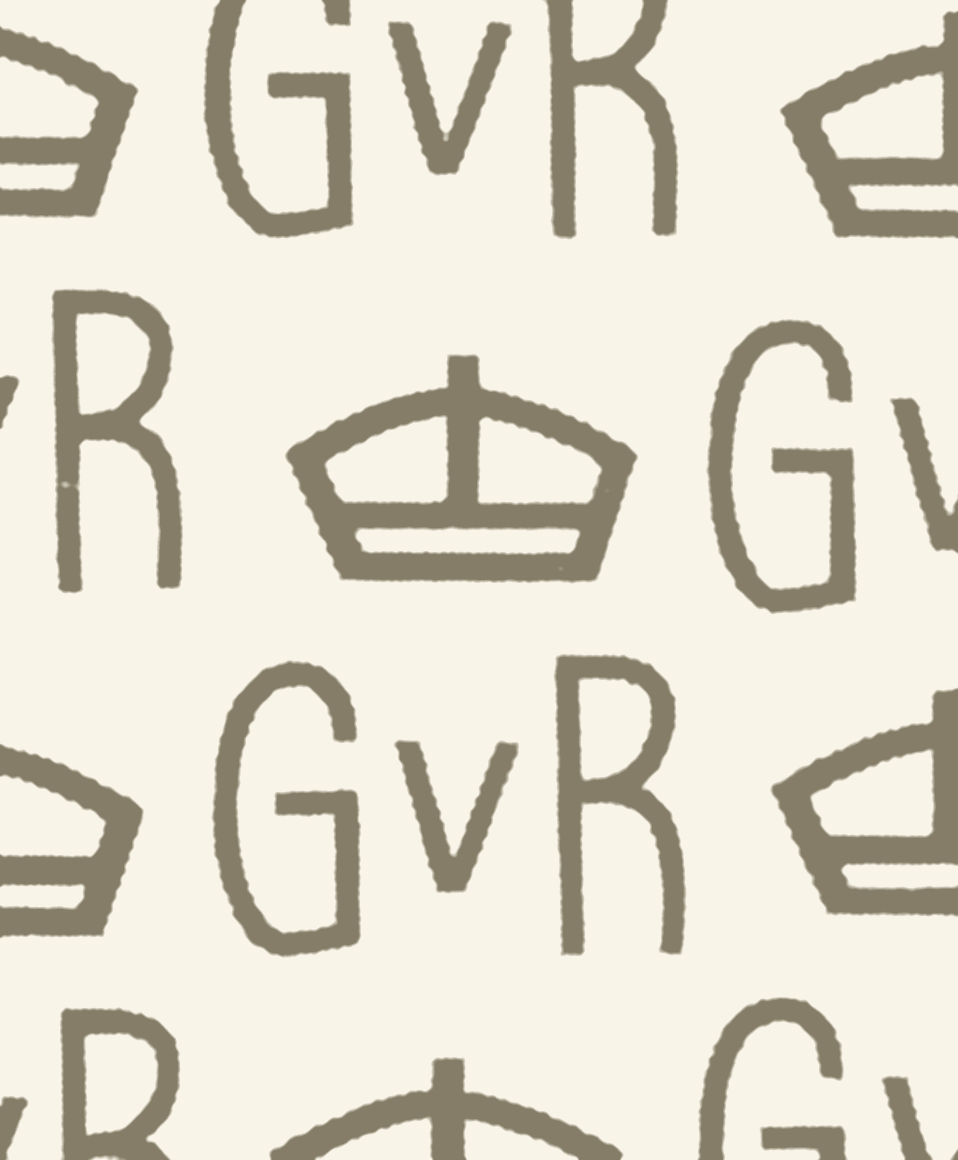
Image information
Click image to magnify
Repeating crowns and plain block GvR lettering, used for the later letterpress and photogravure definitives.
- Credit
- Stunning Stamps · 2026
- Notes
- Digitally reconstructed; enlarged explanatory view, not a scale or stamp-position template.
Letterpress continued while photogravure began
Harrison & Sons regained the low-value printing contract at the beginning of 1934, with photogravure intended to replace letterpress. Applying the process to the enormous demand for postage stamps proved difficult. The change of contract came before a complete replacement range could be supplied. [11, 2]
Harrison therefore continued printing the existing letterpress designs, while Waterlow helped with provisional supplies of the four lowest denominations. The new photogravure stamps appeared in stages; the fivepenny, tenpenny and shilling did not arrive until after George V’s death in January 1936. [11]
The older designs and the new process overlapped. Some stamps bought during the changeover still carried the familiar letterpress drawing, while others showed its photogravure adaptation. [12, 2]
Compare the letterpress stamp with its photogravure successor below. The same family of ornament is still recognisable, but the portrait, lettering and surrounding shading have been adapted for a different way of holding and transferring the ink. [12]
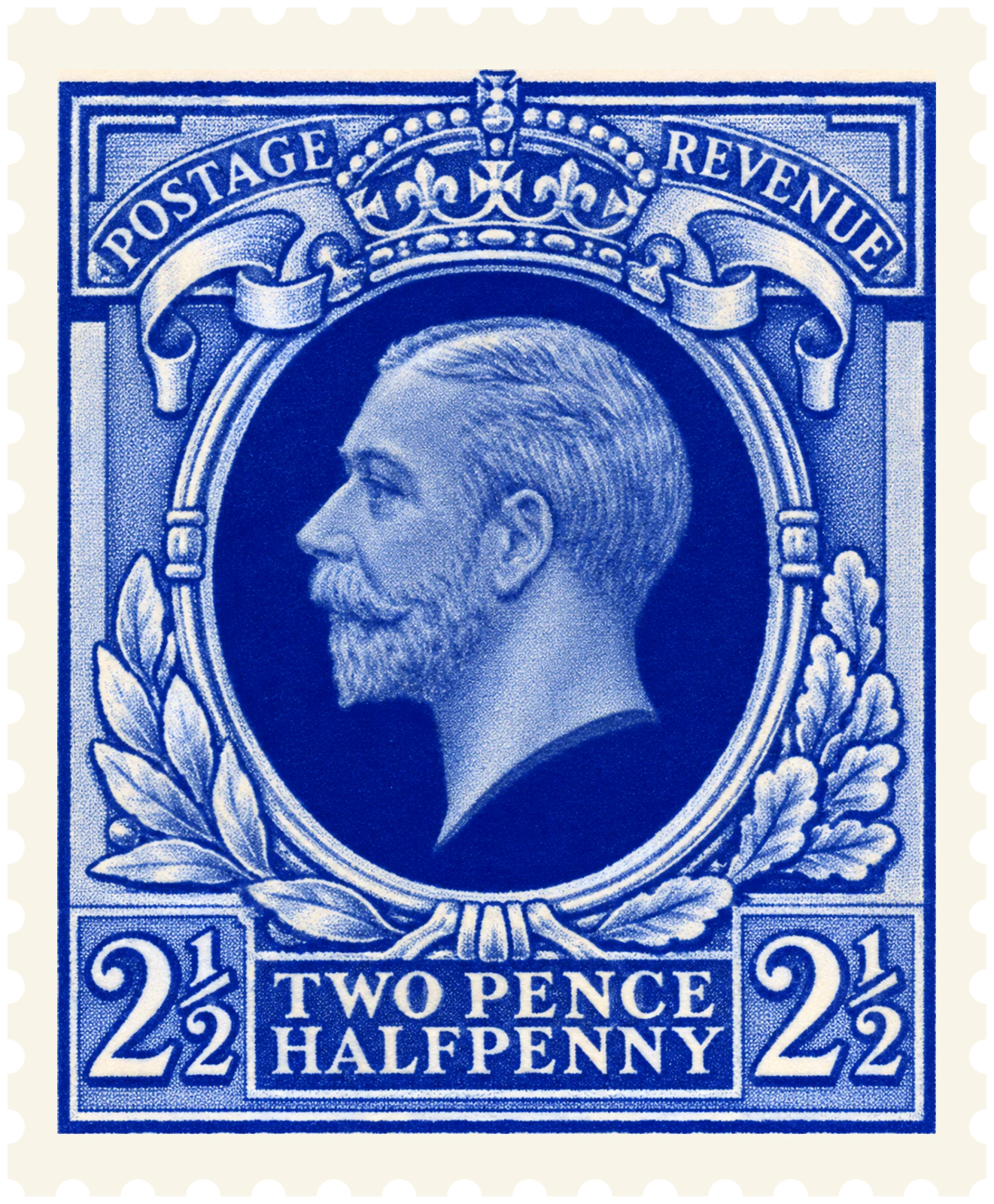
Click either stamp to magnify
Sources
- Alan N. Moorcroft, The King's Head, RPSL display, 25 February 2010
- Charles Goodwyn, Great Britain – King George V, Royal Philatelic Collection display, 17 September 1998
- Deirdre Larkin, The Metropolitan Museum of Art: Green Victory, 27 January 2012
- The Royal Mint: O — Oak Tree, 2019 UK 10p
- Adrian Keppel, The Four Kings, British Philatelic Bulletin 49, February 2012, pp.148–151
- The Postal Museum: British Empire Exhibition stamp history, p.16 — postage stamps and receipt duty
- Buckinghamshire Council: Harrison & Sons printworks
- Science Museum Group: Waterlow and Sons Limited
- Royal Philatelic Society London: The King’s Head, 2010
- Ivybridge Heritage: Postage Stamp Paper, records of Stowford Mill
- Marcus Samuel: King George V Photogravure Sixpence—So Nearly a Stamp, part 1, British Philatelic Bulletin 16/7, pp. 3–5
- Glenn H Morgan, 75 years of GB stamps by photogravure, British Philatelic Bulletin, August 2009
← Return to the 2½d blue stamp
Last reviewed · Facts checked