
The design of the 1d dull scarlet
King George V · Great Britain · Harrison & Sons · August 1913
Why the lion disappeared
The proposed penny placed the King’s profile within a frame containing a lion. The head looked cramped, and adjustments failed to produce a satisfactory result. Bertram Mackennal, the sculptor involved in the stamp designs, replaced the frame with laurel and oak. The portrait changed too. The new version used the Medal Head, derived from Mackennal’s medal for the opening of South Africa’s first Union Parliament. It was not taken from the crowned Coronation medal sometimes named as its source. [1]
Selecting the penny’s colour reached the King himself. Eight trials were prepared in September 1912. The Royal Philatelic Collection preserves complete trial sheets, including the approved colour initialled by George V, who was himself a stamp collector. [1, 2]
These artistic and colour decisions belonged to 1912. The Multiple Cypher penny of August 1913 inherited the resulting design; its new chapter concerned the paper and the way the stamps were supplied. [1, 3]
Quicker mailing—and keeping count
A roll of five hundred pennies put a useful supply of postage inside a small office machine. This penny and the halfpenny appeared on Multiple Cypher paper in August 1913, chiefly for FIXO affixers. The stamps were printed in sheets before being made into rolls. [3, 4]
Instead of separating, moistening and pressing down each stamp by hand, the operator worked a plunger. A stamp fed from the roll, its gum was moistened from a water supply, and a knife edge separated it for attachment. The attraction was speed when a desk had a pile of envelopes to clear. [5]
The machine also helped account for the stamps. Rutland County Museum’s surviving FIXO has a counter and a compartment secured by two separate keys, requiring two people to open it. Stamps were money in a convenient, pocketable form; the machine combined quicker mailing with a check on their use. [5]
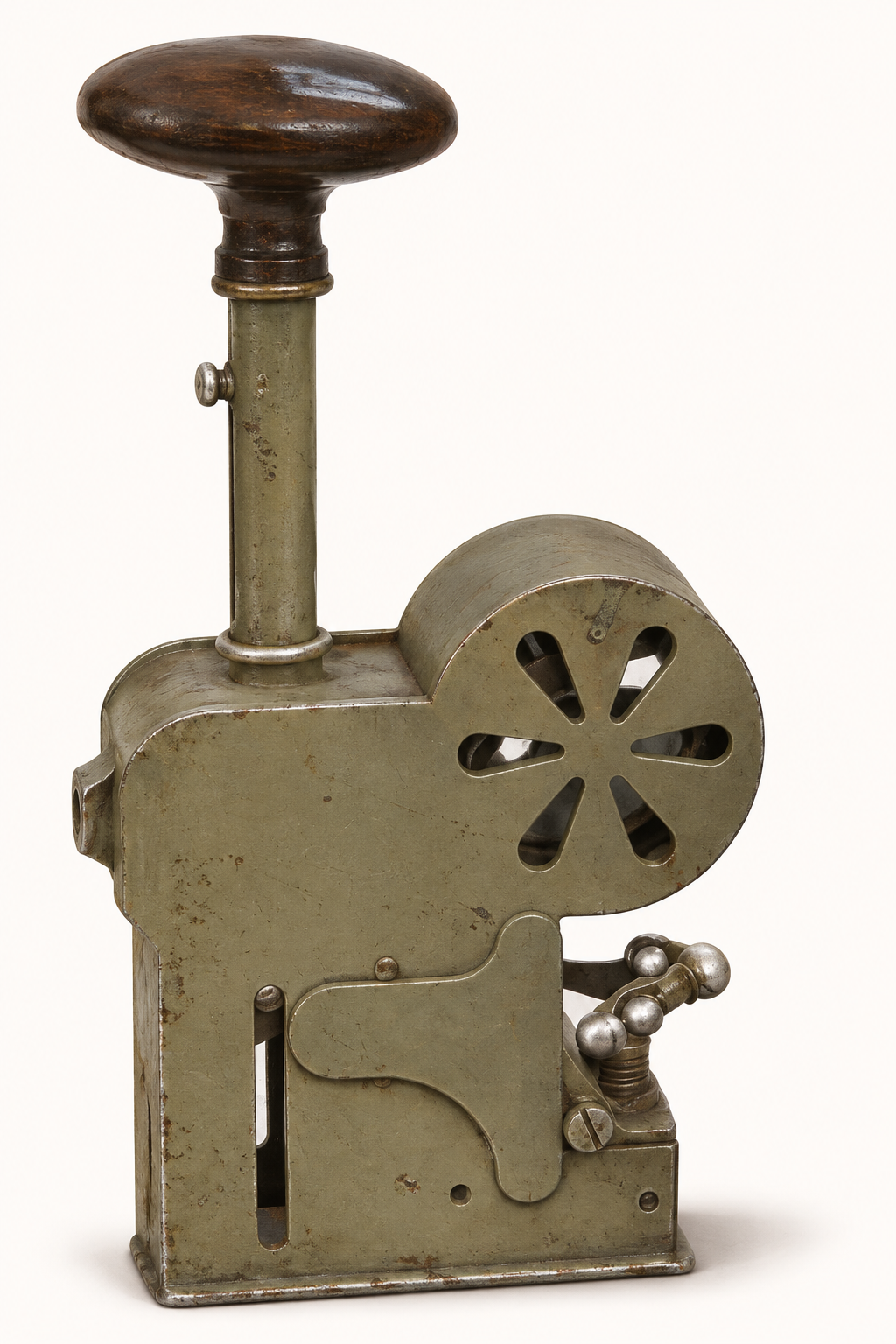
Image information
Click image to magnify
Reconstruction of a FIXO stamp affixer with an upright wooden-handled plunger and circular roll compartment.
- Credit
- Stunning Stamps · 2026
- Notes
- Digitally reconstructed from a documented surviving FIXO machine. Illustrative, not a record of a particular 1913 machine or roll.
From lion to laurel and oak
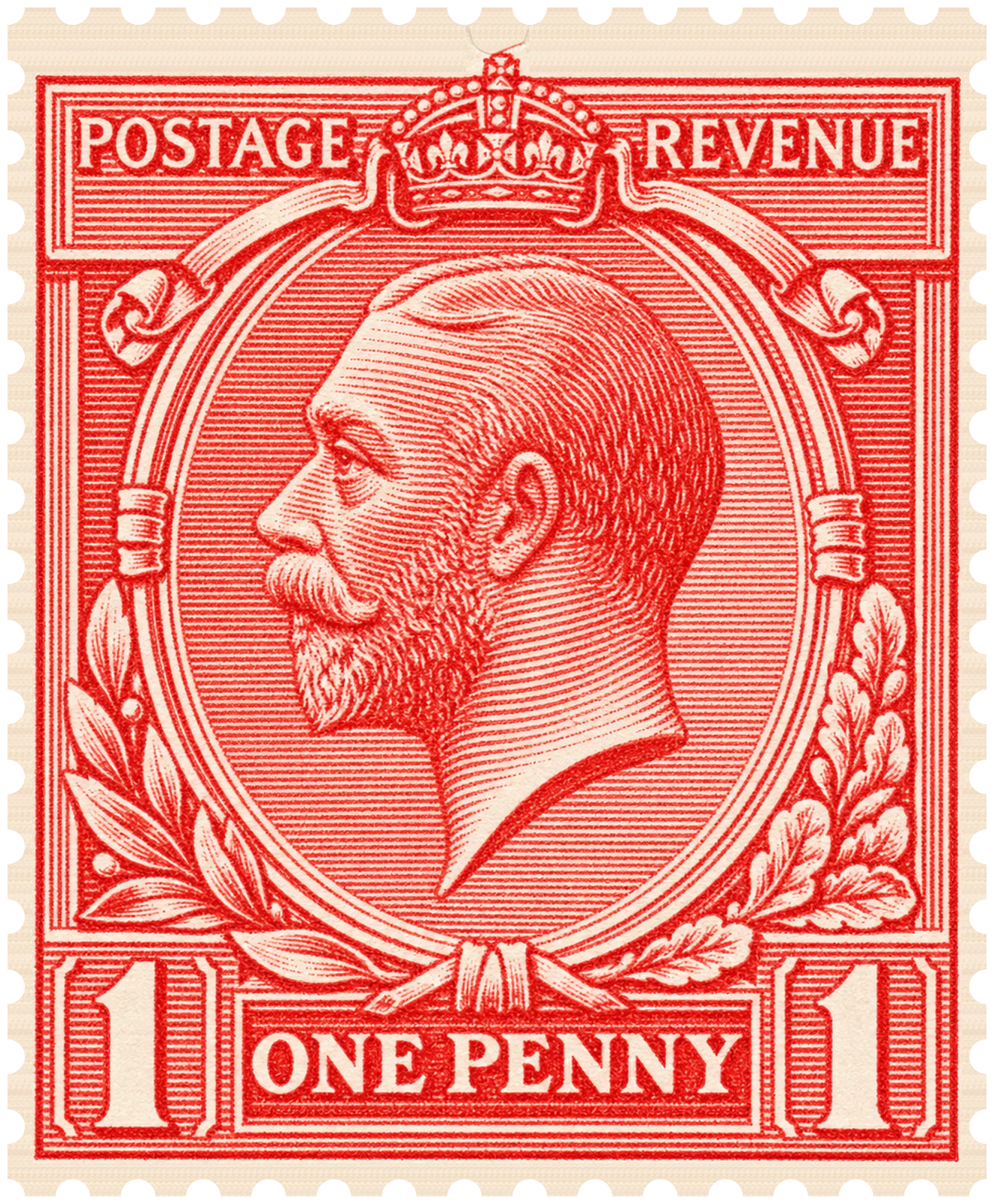
Compare this penny with the Downey penny on Multiple Cypher paper. The Downey stamp has a three-quarter portrait and a lion below it. Here the King faces left in profile, separate laurel and oak sprays gather beneath the oval, and a wide value panel takes the place of the lion. [1]
Both stamps shown here belong to the Multiple Cypher watermark family. The earlier Downey portrait faces partly towards the viewer; the 1913 stamp uses a left-facing profile. Watermark and portrait therefore tell different parts of the story. [6, 1]
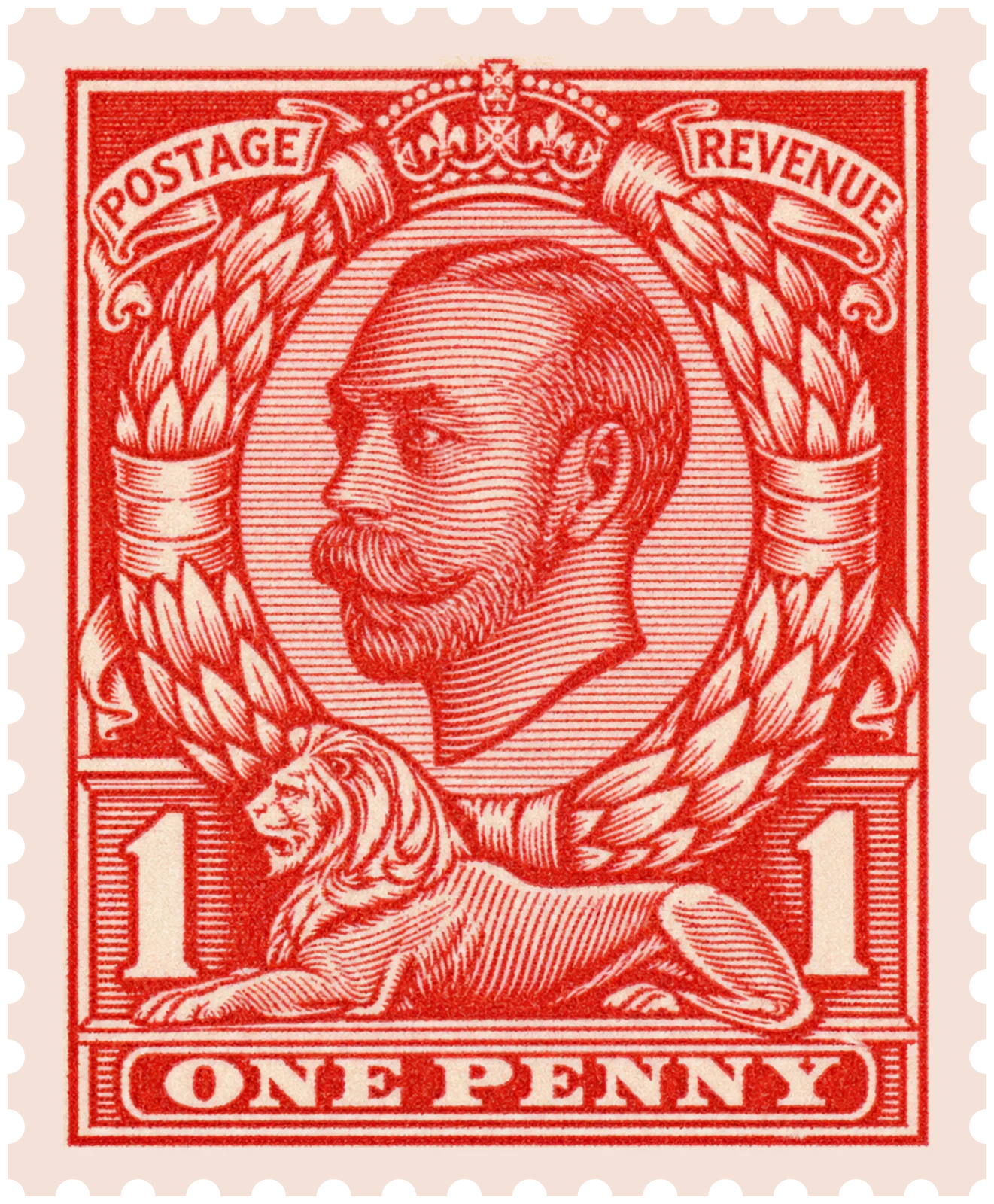
Click either stamp to magnify
A difference hidden in the paper
The printed faces look like the ordinary Royal Cypher halfpenny and penny. The difference lies inside the paper. A watermark is a pattern formed by differences in paper thickness during manufacture; it is not another design printed on the surface. [7]
Royal Cypher, also called Simple Cypher, has crowns and the King’s script initials arranged in vertical strips. Multiple Cypher repeats them across the paper. These enlarged illustrations show both patterns as seen from the front of the sheet. Viewed from the back, they are reversed. [7]
Why use this paper for rolls? A September 1913 report in The British Philatelist, reproduced by GB Stamp Rolls, described it as tougher and better suited to that use than the Simple Cypher paper. The familiar stamp faces concealed a practical change in the material passing through the machine. [3]
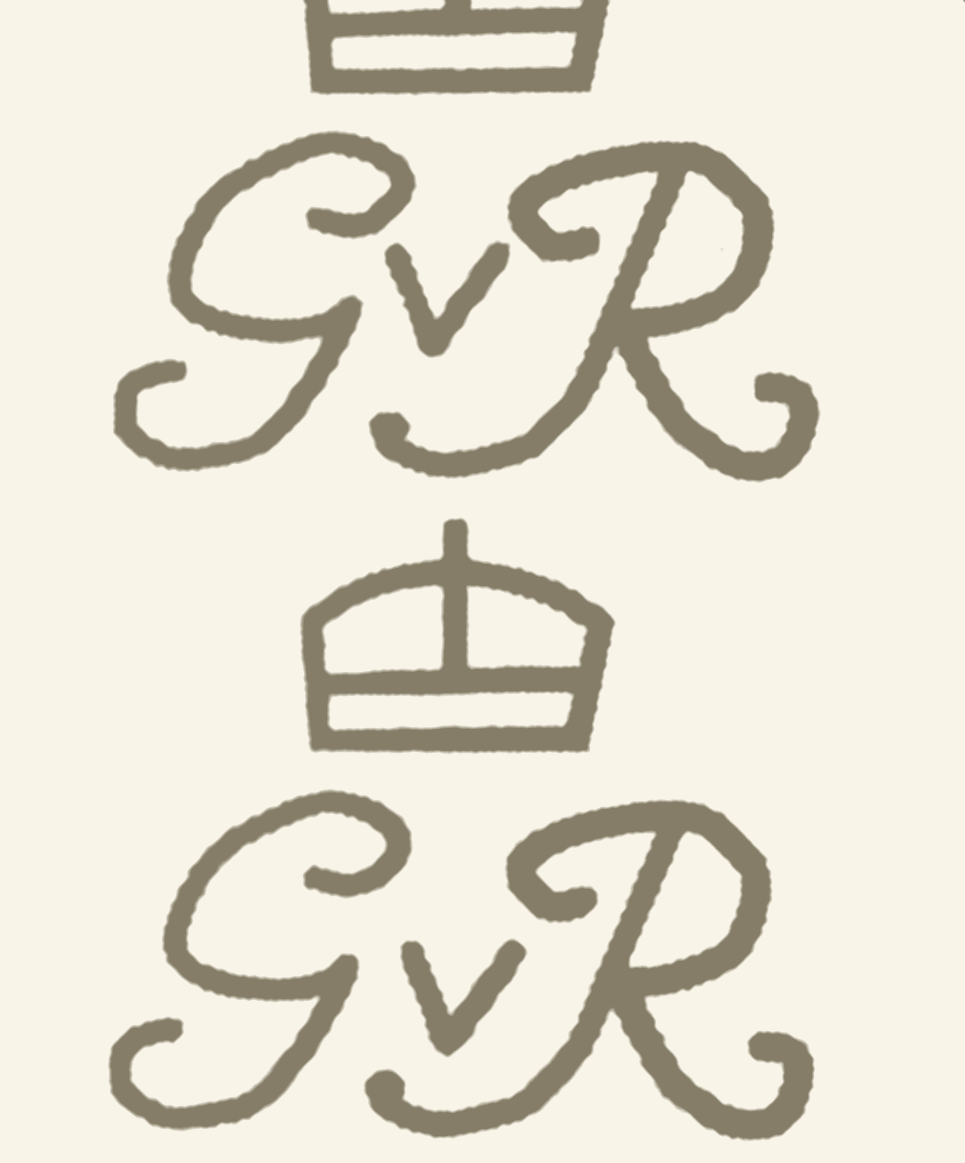
Image information
Click image to magnify
Royal (Simple) Cypher: crowns and initials in vertical strips.
- Credit
- Stunning Stamps · 2026
- Notes
- Digitally reconstructed watermark, viewed from the front. Enlarged to explain the pattern, not a scale template for a single stamp. The view from the back is reversed.
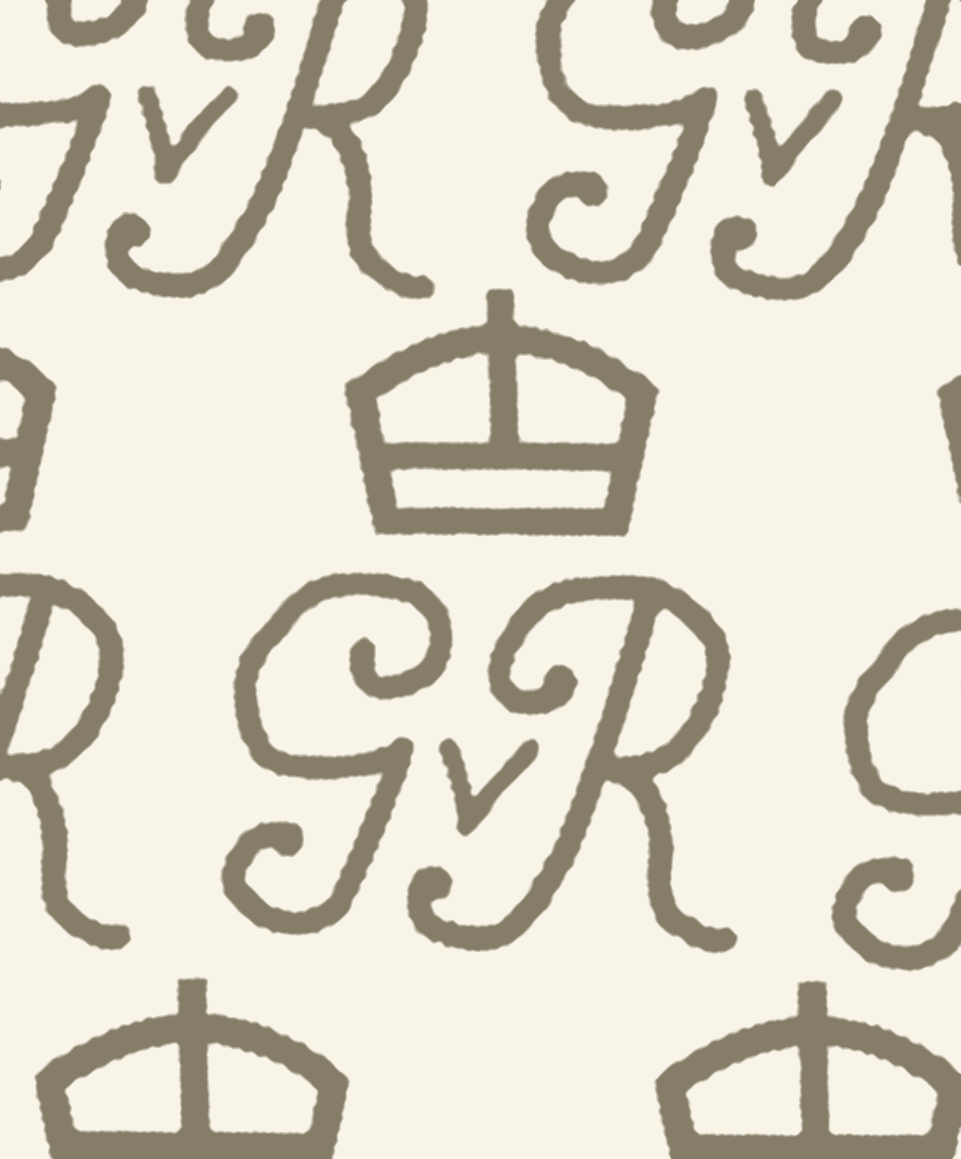
Image information
Click image to magnify
Multiple Cypher: crowns and initials repeated across the paper.
- Credit
- Stunning Stamps · 2026
- Notes
- Digitally reconstructed watermark, viewed from the front. Enlarged to explain the pattern, not a scale template for a single stamp. The view from the back is reversed.
Laurel and oak
The foliage below the portrait is different on each side. On the left are narrow laurel leaves and small berries. On the right, the oak has broader, lobed leaves and acorns. A tied ribbon joins their stems beneath the neck.
Laurel has long associations with victory and honour; oak with strength and endurance. [8, 9]

Image information
Click image to magnify
Illustration of a laurel branch with glossy pointed green leaves and dark berries.
- Credit
- Stunning Stamps · 2026
- Notes
- Digitally constructed
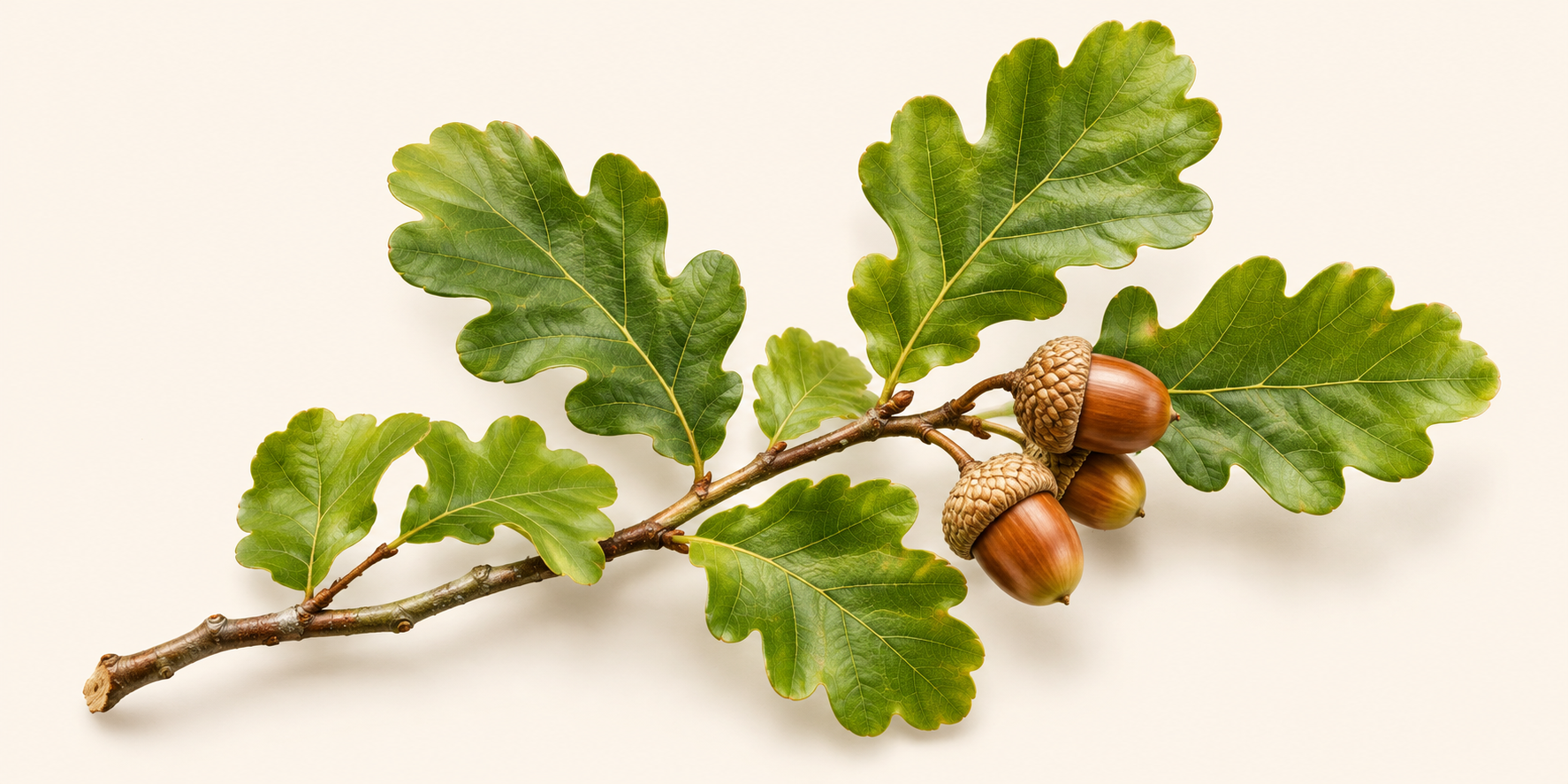
Image information
Click image to magnify
Illustration of an oak branch with green lobed leaves and brown acorns in textured cups.
- Credit
- Stunning Stamps · 2026
- Notes
- Digitally reconstructed
The portrait — Medal Head (I)
George V’s first small stamps used a photograph by W. & D. Downey, showing his face turned towards the viewer. The printed likeness disappointed him and attracted public criticism. A profile offered a fresh start, but changing the head also meant reconsidering the frames around it. [1, 2]
The first solution came from Bertram Mackennal’s model for the King’s coins. J. A. C. Harrison engraved this Coinage Head for the stamps, and it fitted the dolphin and ribbon frames. Other designs proved less accommodating: the proposed penny looked cramped when the same head was tried above its lion. [1]
Mackennal’s Medal Head supplied the likeness for the penny and twopence-halfpenny. Its source was his medal portrait for the opening of South Africa’s first Union Parliament in 1910. This bare-headed model differs from the crowned portrait on his Coronation medal. [1]
The uncovered head stands inside a broad oval. Curving lines describe the hair and moustache; finer shading models the cheek and neck. The sharp outline of the nose and beard makes the profile readable even when the stamp is small.
This is the earlier Medal Head, also distinguished as Medal Head I, introduced on the 1d and 2½d in 1912. The smaller Medal Head II was engraved separately in 1913 for the 5d to 1s. Both trace back to the medal model; the Coinage Head on the ½d, 1½d, 2d, 3d and 4d is a different engraving. [1]
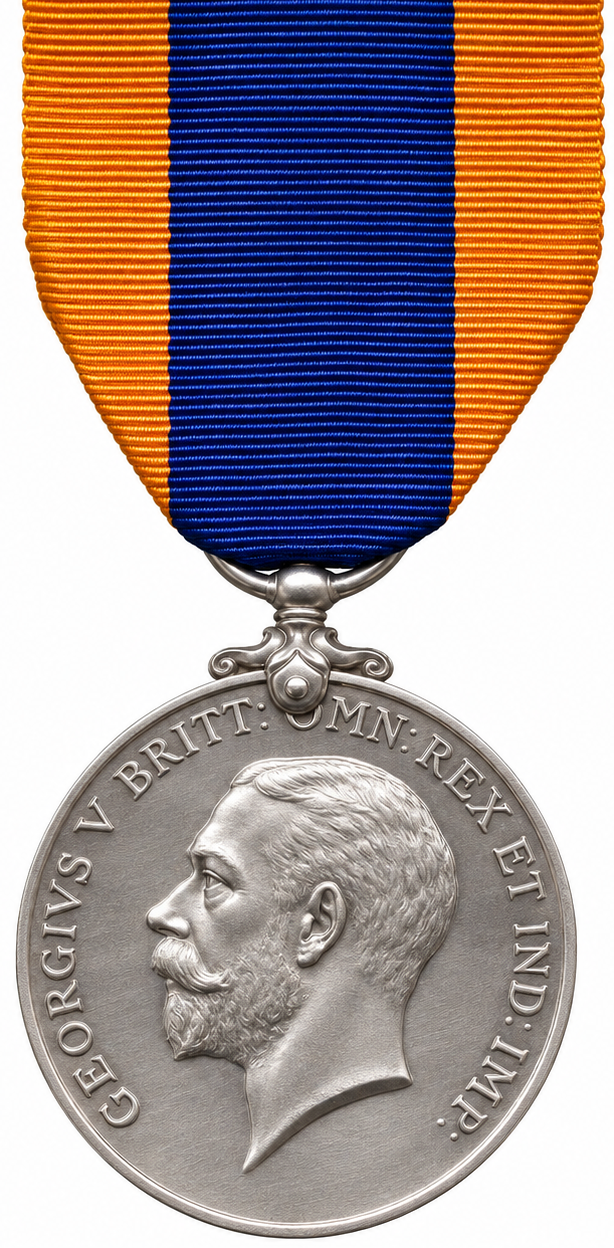
Image information
Click image to magnify
The front of the silver-coloured South African medal, showing George V’s bare head facing left beneath a blue ribbon with orange borders.
- Credit
- Stunning Stamps · 2026
- Notes
- Digitally reconstructed
Ink, paper and the printed image
The original dies were engraved, but these stamps were printed by typography, also called letterpress. Ink on the raised parts of a printing surface was pressed onto the paper. An engraved master does not mean the issued stamp was recess-printed. [10]
The width and spacing of printed marks create apparent tones. Closely worked hair and beard appear darker than the open background; unprinted paper supplies the highlights. Harrison & Sons printed this issue on Multiple Cypher paper for supply chiefly in coils in 1913. [10, 3, 4]
Scarlet carries both the finely shaded head and the stronger lines of the frame. Pale lettering and open spaces prevent the red from becoming one continuous block.
Image information
Click image to magnify
Decorative blue, green and white advertisement for Mander Brothers printing inks, Wolverhampton.
- Credit
- Stunning Stamps · 2026
- Notes
- Digitally constructed
Lettering, value and arrangement
POSTAGE and REVENUE sit on either side of the crown across the top of the design. The two words name the stamp’s postal and fiscal functions. Revenue use means paying a tax or duty on a document; it is separate from paying to carry a letter. [11]
Pale letters stand against a darker ground, distinct from the leaves and scrolls beside them.
ONE PENNY appears in the lower panel, with 1 repeated in the two corners beside it. The broad words sit between the two tall figures.
PENNY is singular here; other denominations use HALFPENNY, HALFPENCE or PENCE, as appropriate.
The curved portrait oval contrasts with the straight lower edge formed by the value panel and its flanking numerals.
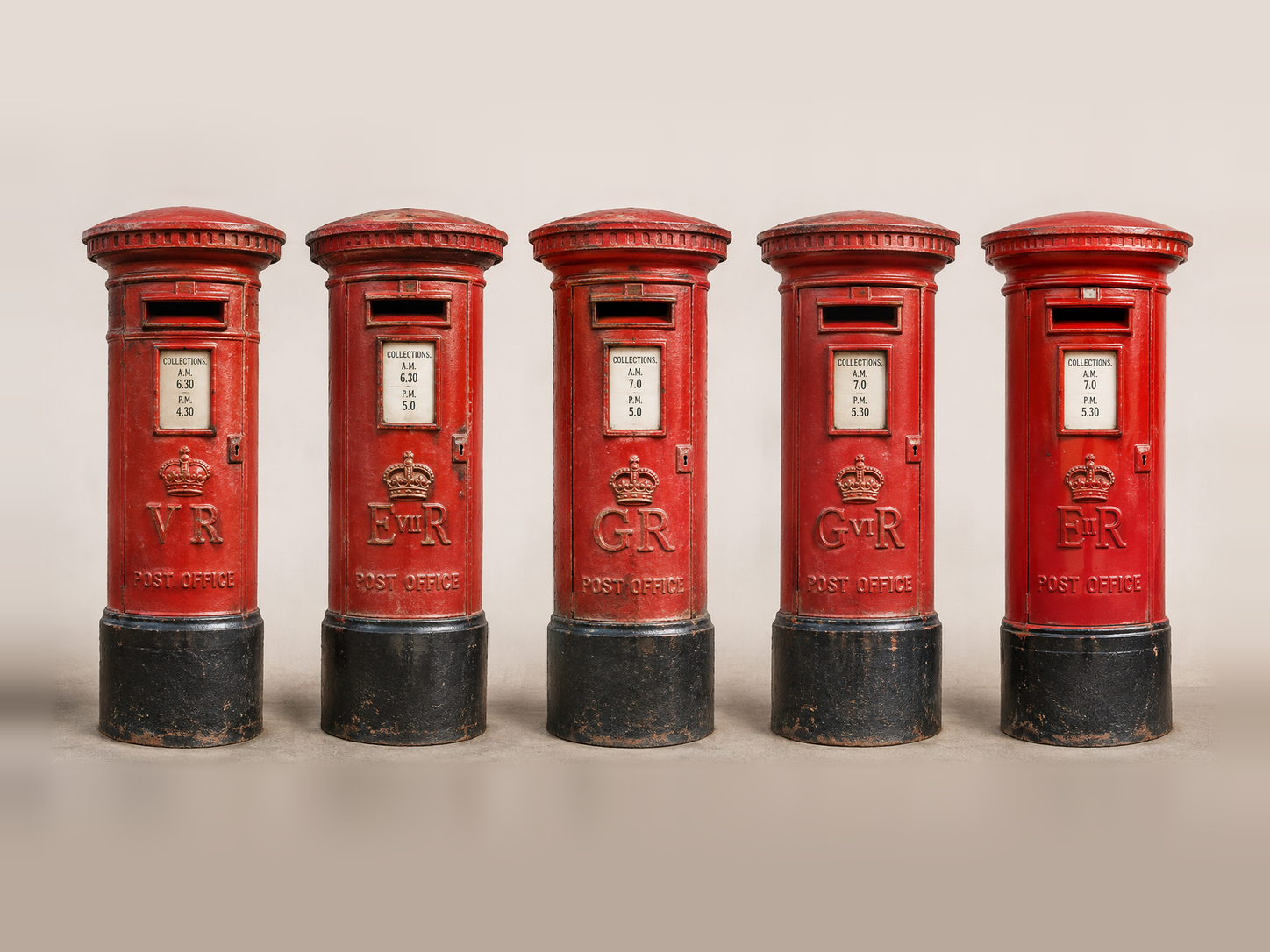
Image information
Click image to magnify
Illustration of five red pillar boxes with royal cyphers.
- Credit
- Stunning Stamps · 2026
- Notes
- Digitally reconstructed
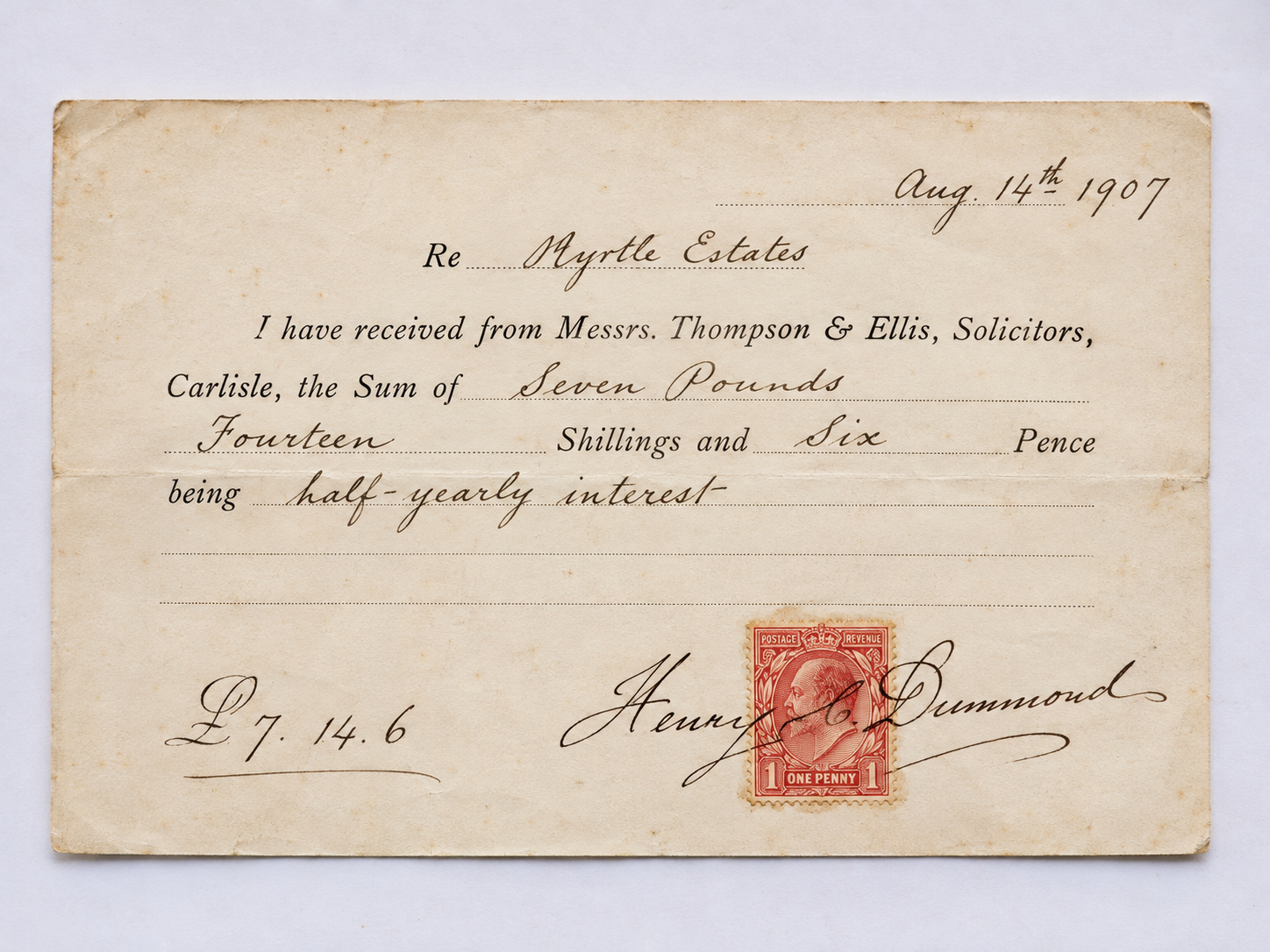
Image information
Click image to magnify
Illustration of a handwritten receipt with an Edward VII penny stamp cancelled by a signature.
- Credit
- Stunning Stamps · 2026
- Notes
- Digitally constructed
The crown above the head
A crown occupies the centre at the top. Rounded ornaments follow its arches above a patterned band, and a small cross completes the outline.
The crown sits in the frame above the King’s bare head. The curled ends of the oval frame connect it to the surrounding ornament.
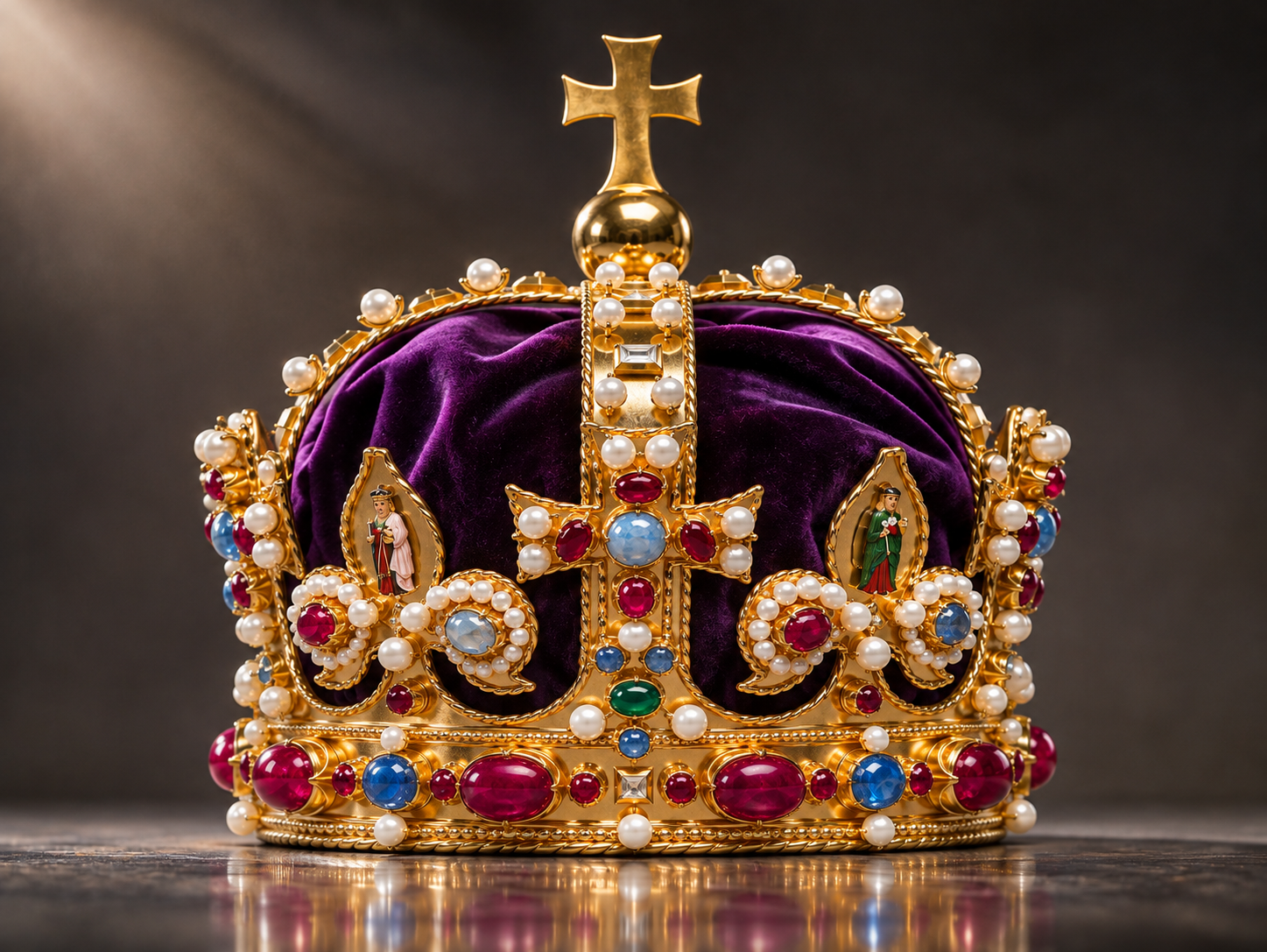
Image information
Click image to magnify
Gold Tudor royal crown with jewels, pearls, small figures and a purple cap.
- Credit
- Stunning Stamps · 2026
- Notes
- Digitally constructed
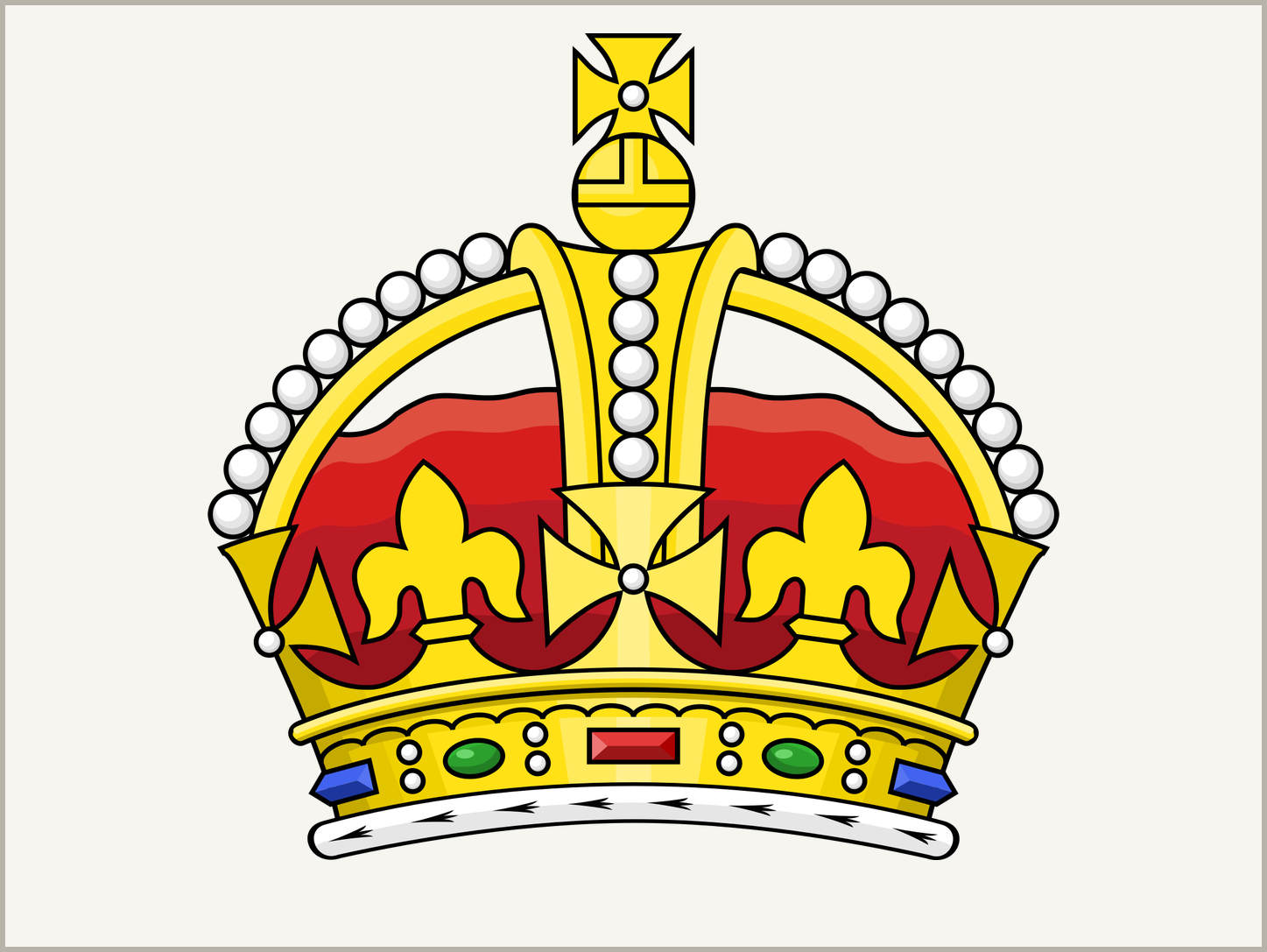
Image information
Click image to magnify
Heraldic Tudor Crown with rounded arches, a cross and orb, red cap, crosses and fleurs-de-lis.
- Credit
- Dgp4004 · Wikimedia Commons · CC0
The people and printer behind this stamp
Bertram Mackennal supplied the royal portrait model and ornamental frame; J. A. C. Harrison prepared the stamp engraving. [12, 13]
Harrison & Sons printed these profile stamps by letterpress for the 1913 Multiple Cypher issue. J. A. C. Harrison, who engraved the stamp portrait, was an individual craftsman; Harrison & Sons was the printing firm. [3, 12, 13]
Sources
- Alan N. Moorcroft, The King's Head, RPSL display, 25 February 2010
- Charles Goodwyn, Great Britain – King George V, Royal Philatelic Collection display, 17 September 1998
- GB Stamp Rolls: Royal Cypher — the first profile-head rolls, August 1913
- Charles Goodwyn: The Royal Philatelic Collection, RPSL, 1998, Frame 28 — profile-head Multiple Cypher
- Rutland County Museum: On a Roll — the FIXO stamp affixer, 10 May 2021
- Gerard J McGouran: King George V Concise album, sheet 13 — August 1913 Multiple Cypher pair
- Ivybridge Heritage: Postage Stamp Paper — Simple, Multiple and Single Cypher arrangements
- Deirdre Larkin, The Metropolitan Museum of Art: Green Victory, 27 January 2012
- The Royal Mint: O — Oak Tree, 2019 UK 10p
- Adrian Keppel, The Four Kings, British Philatelic Bulletin 49, February 2012, pp.148–151
- The Postal Museum: British Empire Exhibition stamp history, p.16 — postage stamps and receipt duty
- Buckinghamshire Council: Harrison & Sons printworks
- Royal Philatelic Society London: The King’s Head, 2010
← Return to the 1d dull scarlet stamp
Last reviewed · Facts checked