
Royal Cypher profile heads
These stamps replaced the troubled Downey likeness with a profile, but no single portrait suited every frame. Three engravings and several frame families emerged as designs were adapted, rejected and reused. Their history runs from 1912 through wartime ink shortages and changing postal charges into the 1920s. “Royal Cypher” names the watermark: crowns and the King’s initials formed within the paper.
15 entries. Select a stamp to explore its design, production and history.
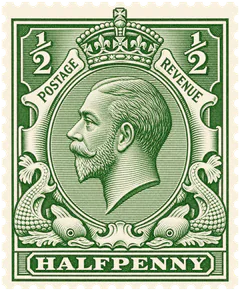
½d green
1913 · Harrison & Sons
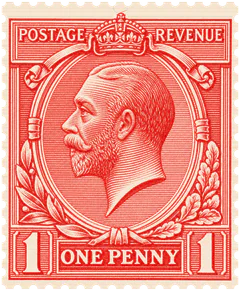
1d scarlet
1912 · Harrison & Sons
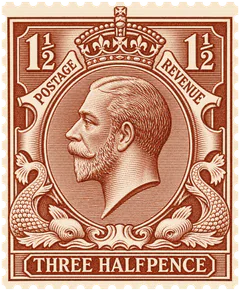
1½d red-brown
1912 · Harrison & Sons
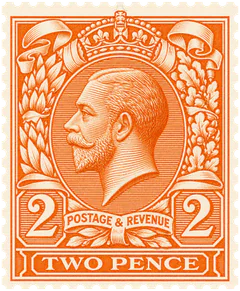
2d orange
1912 · Harrison & Sons
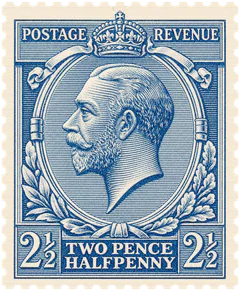
2½d blue
1912 · Harrison & Sons
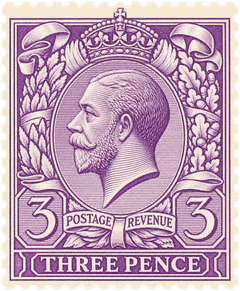
3d violet
1912 · Harrison & Sons
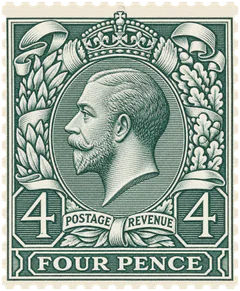
4d grey-green
1913 · Harrison & Sons
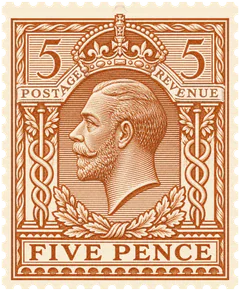
5d yellow-brown
1913 · Harrison & Sons
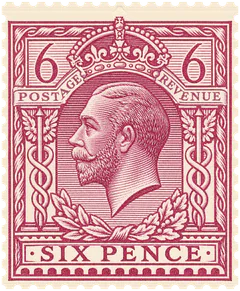
6d reddish-purple
1913 · Somerset House
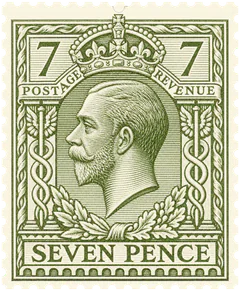
7d olive-green
1913 · Harrison & Sons
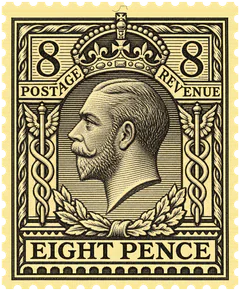
8d black on yellow
1913 · Harrison & Sons
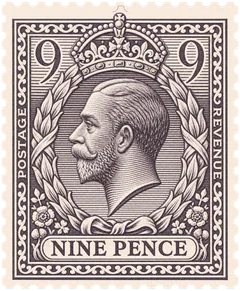
9d agate
1913 · Harrison & Sons
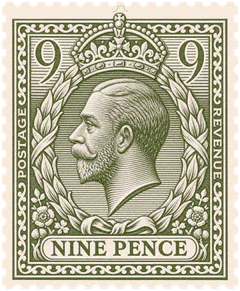
9d olive-green
1922 · Harrison & Sons
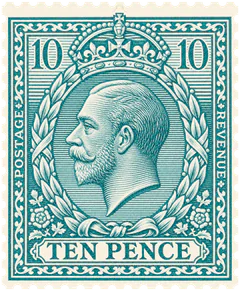
10d turquoise-blue
from 1914 · Harrison & Sons
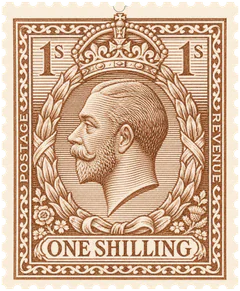
1s bistre-brown
from 1914 · Harrison & Sons