
The design of the ½d blue-green
Queen Victoria · Great Britain · Thomas De La Rue & Co. · 1900
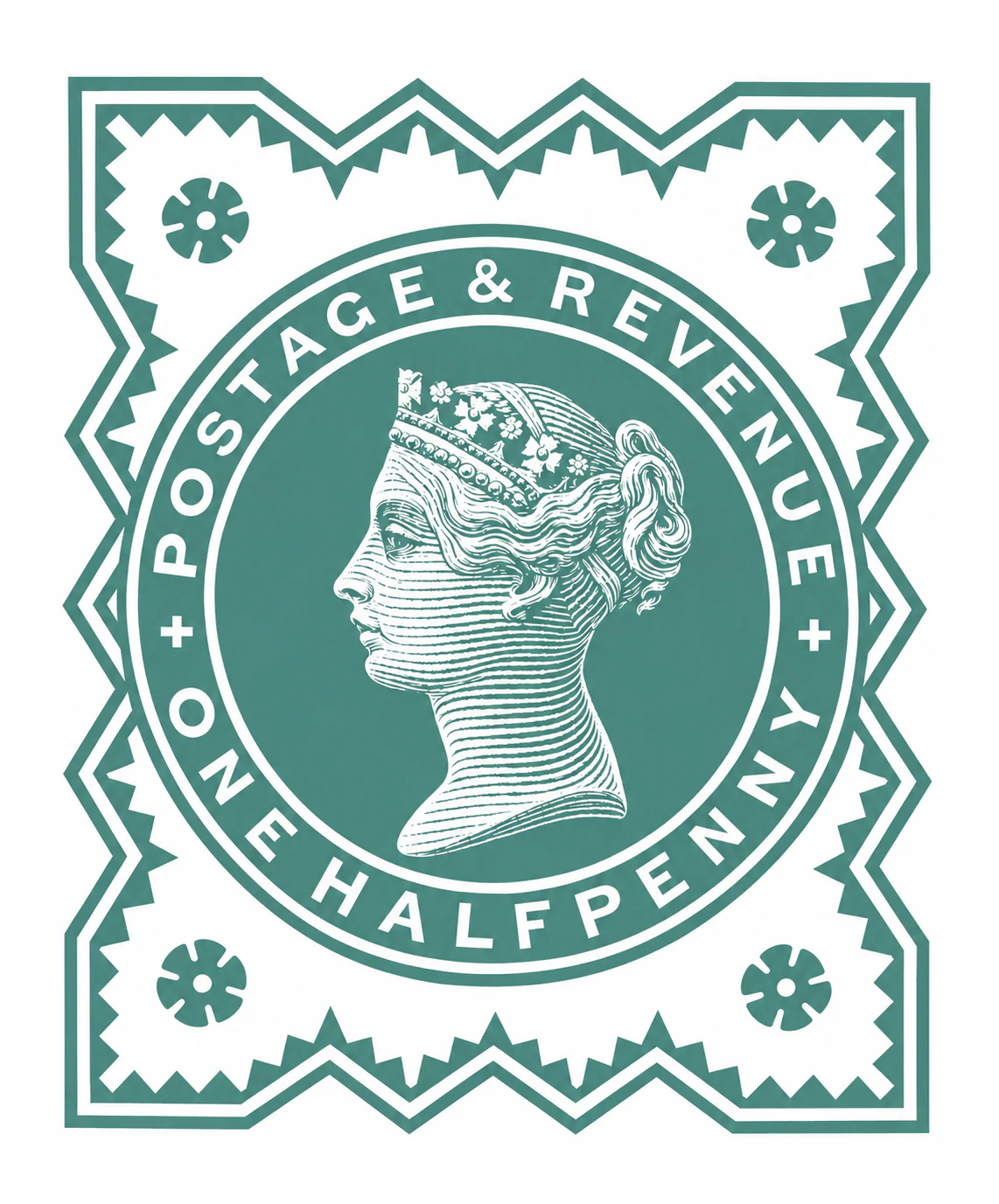
The vermilion stamp becomes blue-green
The halfpenny of 1900 retained the engraved design introduced in 1887.
Victoria's portrait, circular frame, inscriptions and surrounding ornament remained unchanged. Only the printing ink was different.
The colour changed from vermilion to blue-green on 17 April 1900, following international recommendations. [1]
The new ink gave the familiar design a noticeably different appearance.
The engravers did not need to prepare another portrait or frame.
A change made in the ink-making department had transformed a stamp that had already been in production for thirteen years.
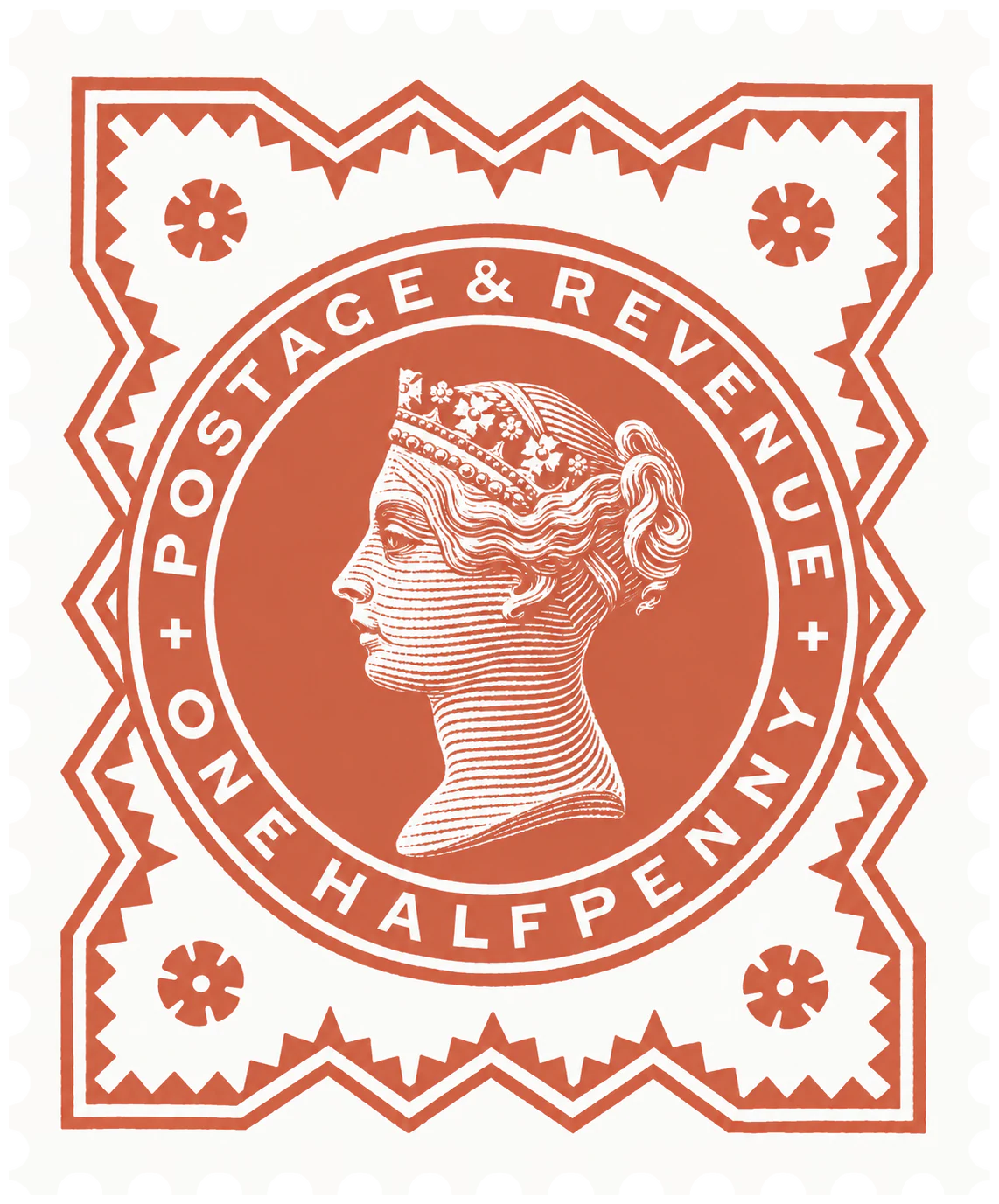
The circular portrait and Jubilee ornament continued in a new colour.
Click either stamp to magnify
Three inks behind the same colour
The blue-green halfpenny was printed using three different ink preparations.
The first contained lead, which did not comply with the printing contract. The second used zinc but proved too soluble in water. A third, organic preparation followed in November 1900. [1]
All three were intended to produce the same general colour.
The shades can overlap, making it difficult to identify the formula from appearance alone.
The distinction illustrates how a stamp's visible colour could conceal important differences in the chemistry of the printing ink.
The blue stamp that should have been green
Some blue-green halfpennies have a noticeably blue appearance.
This could result from the chemical behaviour of the printing ink, particularly when stamps came into contact with water.
One of the preparations was sufficiently soluble for moisture to alter its colour. [2]
The effect was not a new design or an intentional change of shade.
It was a manufacturing weakness.
The same engraved lines could produce stamps that looked distinctly different because the ink reacted to its surroundings.
The unchanged circular portrait
The central design still shows Victoria within the circular frame created for the 1887 halfpenny.
POSTAGE & REVENUE follows the upper curve, while ONE HALFPENNY appears below. [3]
Ornamental scrolls and geometric patterns fill the spaces between the circle and rectangular border.
The blue-green ink emphasises different parts of the engraving from the earlier vermilion.
The composition, however, remained the same, retaining a portrait created many years before the colour change.
The inherited youthful likeness traces through the earlier surface-printed head engraved by Joubert, after Corbould’s drawing and Wyon’s medal. These are earlier artistic sources: De La Rue retained the 1887 Jubilee engraving for the 1900 colour change, rather than commissioning a new portrait from them. [4, 5, 6]
The control letter R
The blue-green halfpenny has no identifying letters within its four corners.
But the original printing sheets carried a small control letter R beneath the stamps.
The letter helped De La Rue keep track of the paper supplied for printing. [2]
The earlier vermilion issue had used a sequence from A to Q.
The green issue retained R throughout its production.
The letter is visible only on suitable marginal examples, where it provides evidence of the factory's record-keeping system.
The protective lines around the sheet
Later halfpenny printing sheets contain coloured lines around the panes of stamps.
These Jubilee lines protected the outer edges of the printing plates from damage caused by repeated contact with the inking rollers. [2]
They had been introduced during the vermilion halfpenny's working life and were retained for the blue-green issue.
The lines were not printed as part of the individual stamp.
A marginal block can reveal this practical improvement, hidden from anyone examining only a single example.
The crown hidden within the paper
The blue-green halfpenny was printed on paper carrying the Imperial Crown watermark.
The crown was formed during papermaking rather than printed in ink. It helped protect the stamp against imitation.
The same paper design had been used for the vermilion issue. [2]
The change of colour did not require a new watermark.
The printed portrait and the hidden crown therefore both survived the alterations made in 1900.
The diamond diadem made for a king
The ornament in Victoria's hair was commissioned for George IV's coronation in 1821. [7]
It contains 1,333 diamonds, with crosses and the national emblems of the rose, thistle and shamrock.
Victoria later wore the diadem in portraits, and it became a familiar feature of British postage stamps.
On the blue-green halfpenny, its jewels are reduced to tiny printed marks. A magnificent royal ornament had become part of an everyday stamp worth half a penny.

Image information
Click image to magnify
Digitally created illustration of the diamond diadem, with crosses, floral emblems and rows of pearls, resting on a blue cushion.
- Credit
- Stunning Stamps.
- Notes
- Digitally created.
Sources
- Philip Waud and David Willmer: The Story of the QV Jubilees (2019), frame 5
- The 1887 Jubilee Issue: Technical Information
- Windsor Stamps: photographed SG213 blue-green halfpenny
- Robert B. Galland, The First Low Value Surface Printed Postage Stamps of Great Britain (RPSL, 2014), p. 3: earlier Joubert portrait engraving after Corbould
- Douglas N. Muir, William Wyon & the Penny Black, Royal Mint Museum
- Philip Waud and David Willmer, The Story of the QV Jubilees, GBPS display at RPSL (2019), development and frames 4–6
- Royal Collection Trust: George IV's Diamond Diadem