
Benedetto Pistrucci
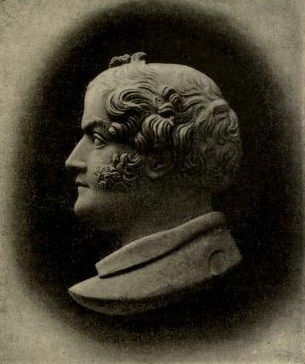
Image information
Click image to magnify
Cameo relief of Benedetto Pistrucci in left-facing profile.
- Credit
- Maria Elisa Pistrucci, c.1850. Reproduced in Leonard Forrer’s Biographical Dictionary of Medallists, volume 4 (1904), via Wikimedia Commons. Public domain source.
1783–1855 · Gem engraver and medallist
A battle between a saint and a dragon became one of Britain’s most familiar coin designs. Benedetto Pistrucci’s work continued to inspire artists long after his death.
On the stamp you were exploring
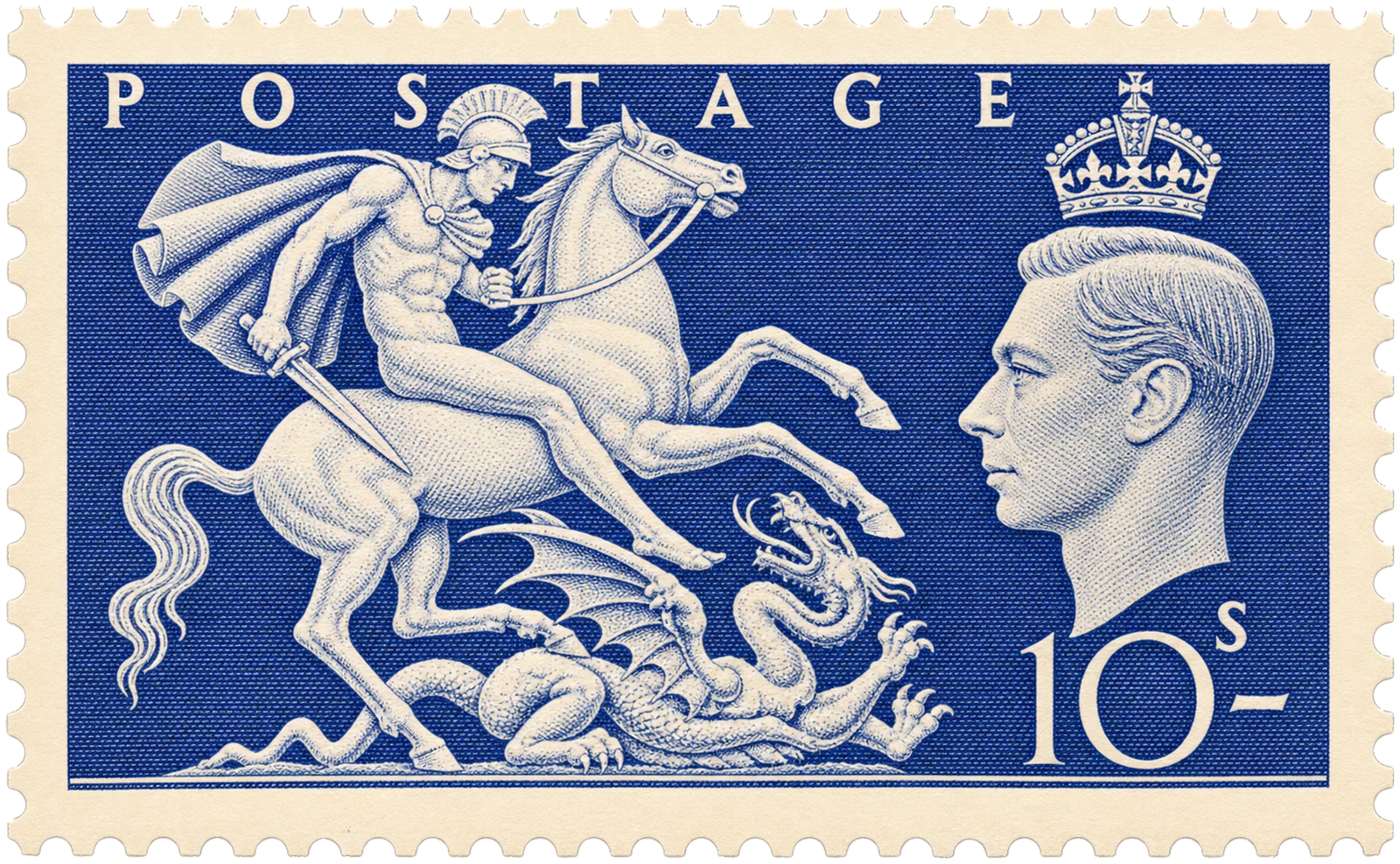
George VI · 10s ultramarine · 3 May 1951
Pistrucci’s earlier St George and dragon composition was an artistic source for Metcalfe’s 10s ultramarine design. Pistrucci died in 1855 and was not a designer of the 1951 stamp.
On the stamp you were exploring
George VI · 10s ultramarine · 3 May 1951
Pistrucci’s earlier St George and dragon composition was an artistic source for Metcalfe’s 10s ultramarine design. Pistrucci died in 1855 and was not a designer of the 1951 stamp.
Example stamps
Click a stamp to magnify it, or follow its caption link to explore the design.
George VI 10s ultramarine 3 May 1951 Earlier artistic source
A gem engraver at the Mint
Pistrucci brought the skills of gem engraving to work for the Royal Mint after arriving in Britain in 1815. His St George and dragon reverse was introduced on the gold sovereign in 1817. A compact sculptural scene could carry dramatic movement without relying on a long inscription. [1]
The medal that took decades
His great Waterloo medal project occupied more than thirty years. The dies were finally completed in 1849, but their enormous size prevented successful hardening for striking. The surviving engraved dies are evidence both of extraordinary craftsmanship and of the practical limits of manufacture. [1]
An influence, not a later commission
Percy Metcalfe’s St George composition for the 1951 ten-shilling stamp belongs to a later design history. Pistrucci’s earlier work is relevant as an artistic source, not as a personal stamp-design credit. Keeping those roles separate helps explain how familiar imagery is adapted across generations. [2]