
George Rothe Bellew
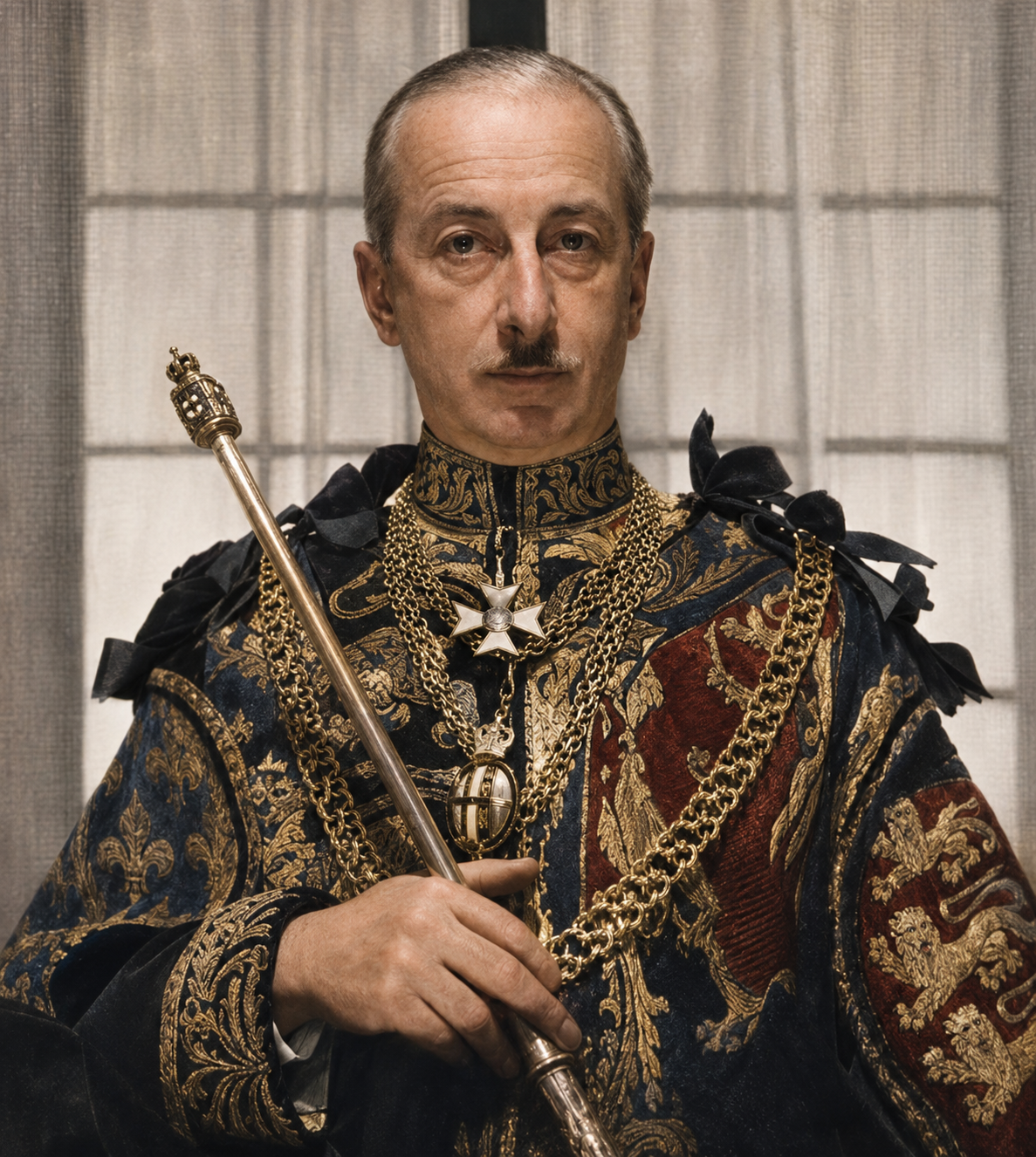
Image information
Click image to magnify
Portrait of George Rothe Bellew holding a ceremonial staff, wearing an embroidered tabard and gold chains.
- Credit
- Cecil Beaton, 1953. National Portrait Gallery, London (NPG x14023), via Wikipedia.
- Notes
- Digitally reconstructed
1899–1993 · Herald and stamp designer
A herald’s work brings history, ceremony and visual symbols together. George Rothe Bellew applied that knowledge both to royal occasions and to postage stamps small enough to rest on a fingertip.
On the stamp you were exploring
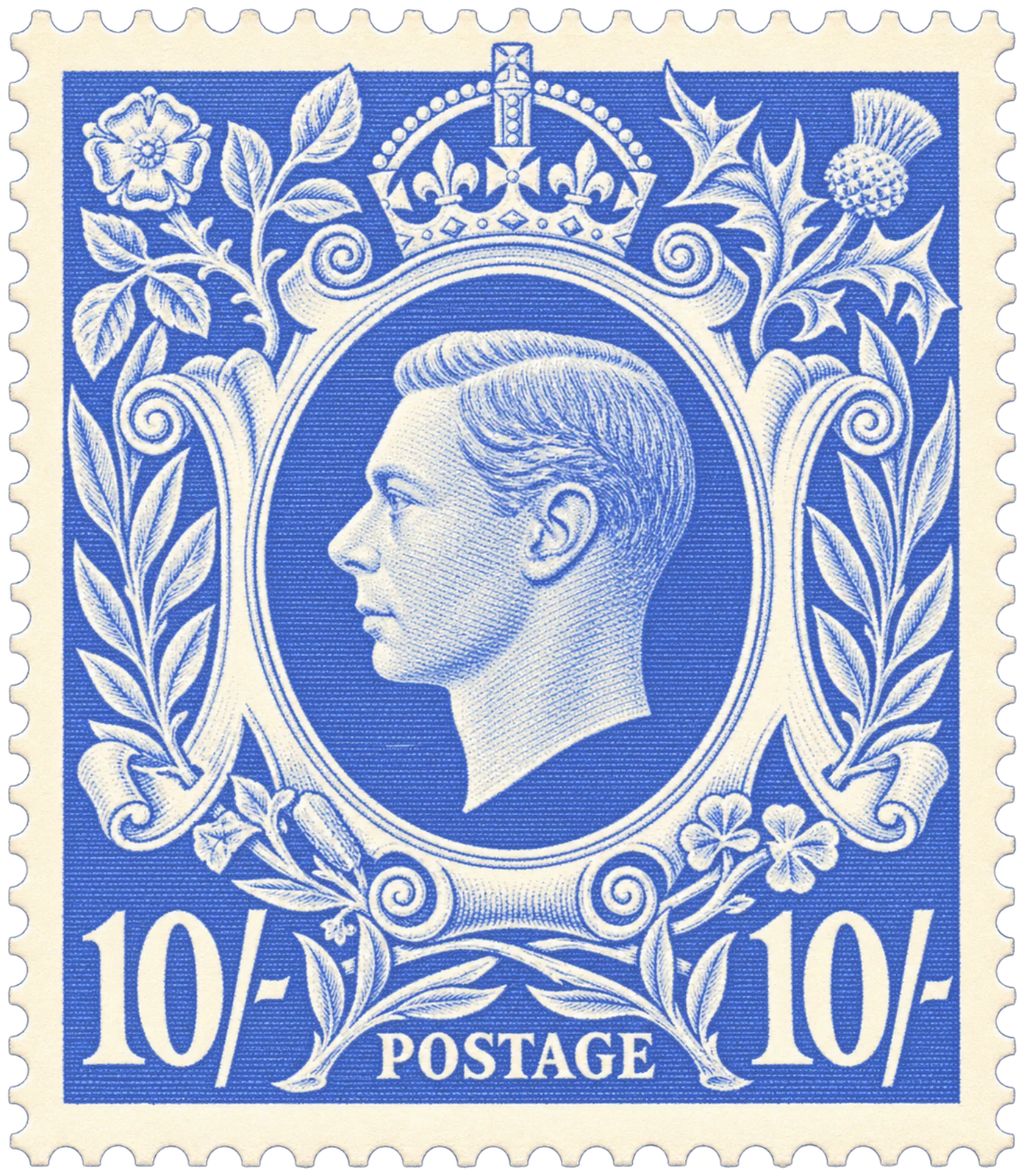
George VI · 10s ultramarine · 30 November 1942
Bellew composed the ornamental frame around Dulac’s portrait for this high-value design. This 10s ultramarine printing retains that design.
On the stamp you were exploring
George VI · 10s ultramarine · 30 November 1942
Bellew composed the ornamental frame around Dulac’s portrait for this high-value design. This 10s ultramarine printing retains that design.
On the stamp you were exploring
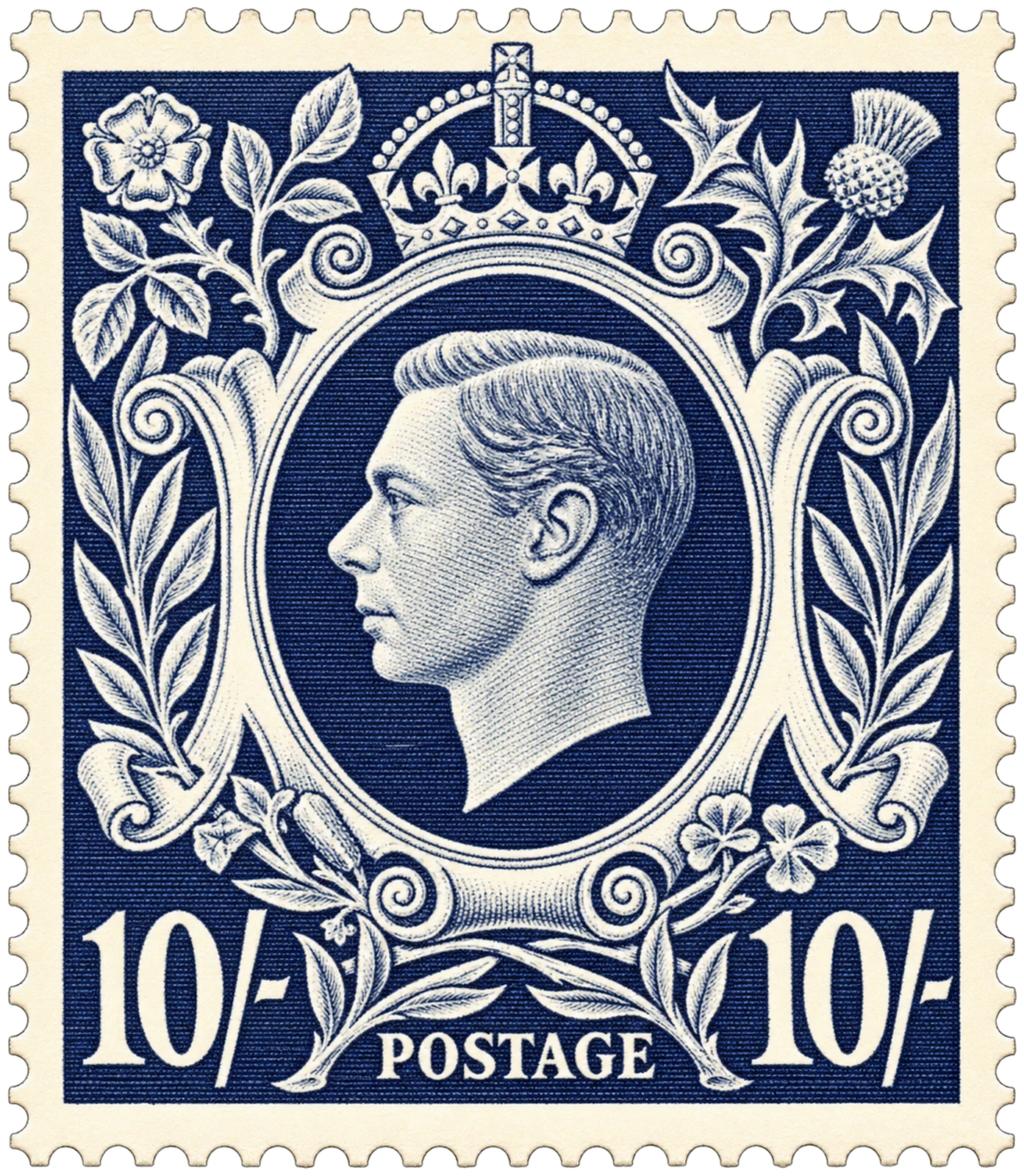
George VI · 10s dark blue · 30 October 1939
Bellew composed the ornamental frame around Dulac’s portrait for this high-value design. This 10s dark blue printing retains that design.
On the stamp you were exploring
George VI · 10s dark blue · 30 October 1939
Bellew composed the ornamental frame around Dulac’s portrait for this high-value design. This 10s dark blue printing retains that design.
On the stamp you were exploring
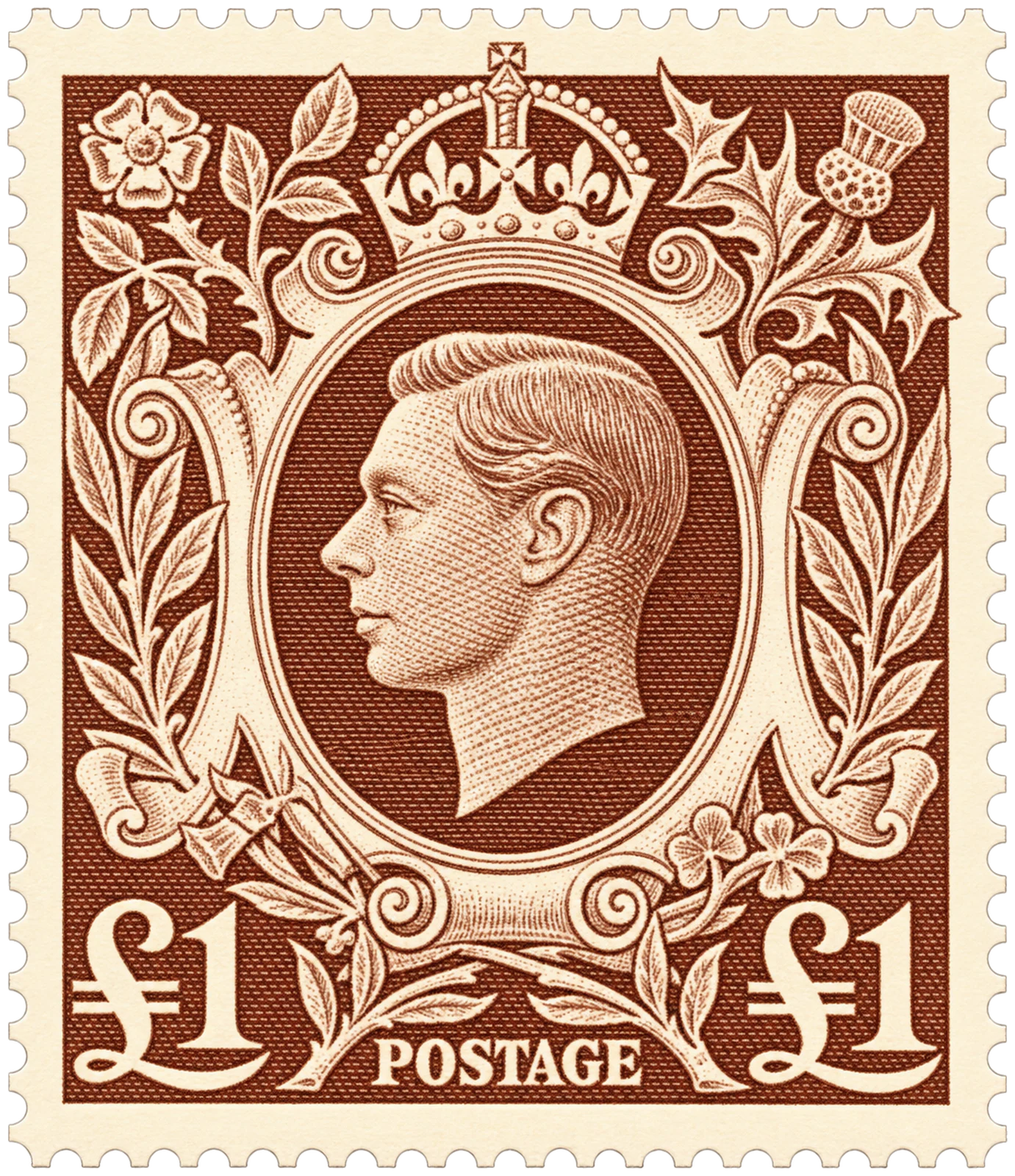
George VI · £1 brown · 1 October 1948
Bellew composed the ornamental frame around Dulac’s portrait for this high-value design. Waterlow adapted the value for the £1 stamp.
On the stamp you were exploring
George VI · £1 brown · 1 October 1948
Bellew composed the ornamental frame around Dulac’s portrait for this high-value design. Waterlow adapted the value for the £1 stamp.
Example stamps
Click a stamp to magnify it, or follow its caption link to explore the design.
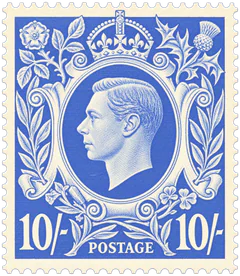
George VI 10s ultramarine 30 November 1942 Frame 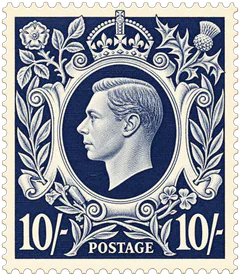
George VI 10s dark blue 30 October 1939 Frame 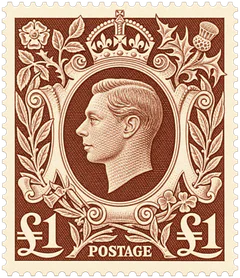
George VI £1 brown 1 October 1948 Frame
A career at the College of Arms
Bellew studied at Christ Church, Oxford, and became Somerset Herald in 1926. He served as Registrar of the College of Arms from 1935 to 1946, then as Garter King of Arms from 1950 to 1961. His career placed him among the people responsible for preserving and interpreting heraldic and ceremonial traditions. [1]
Drawing national symbols
During the preparation of George VI’s high values, the Post Office invited designs from the College of Arms. Submissions included Bellew’s ideas as well as work by other staff artists. Bellew later stated that he had composed and drawn the floral design himself before a draughtsman redrew it. That distinction preserves the collaborative stages behind the finished image. [2]
From stamps to state occasions
His stamp work included the 10s and £1 high values and the 1949 one-shilling Universal Postal Union commemorative. He also organised George VI’s state funeral in 1952 and took part in Elizabeth II’s proclamation and coronation arrangements. The same working life thus encompassed both miniature printed symbols and great public ceremonies. [1]