
Percy Metcalfe

Image information
Click image to magnify
Portrait of Percy Metcalfe in a grey-brown jacket and striped tie, facing the camera.
- Credit
- Bassano Ltd, 2 October 1940. National Portrait Gallery, London (NPG x154229), via Wikimedia Commons.
- Notes
- Digitally reconstructed
1895–1970 · Sculptor, medallist and designer
Percy Metcalfe made animals, portraits and emblems work within the small boundaries of coins and medals. His bold compositions also found a place on postage stamps.
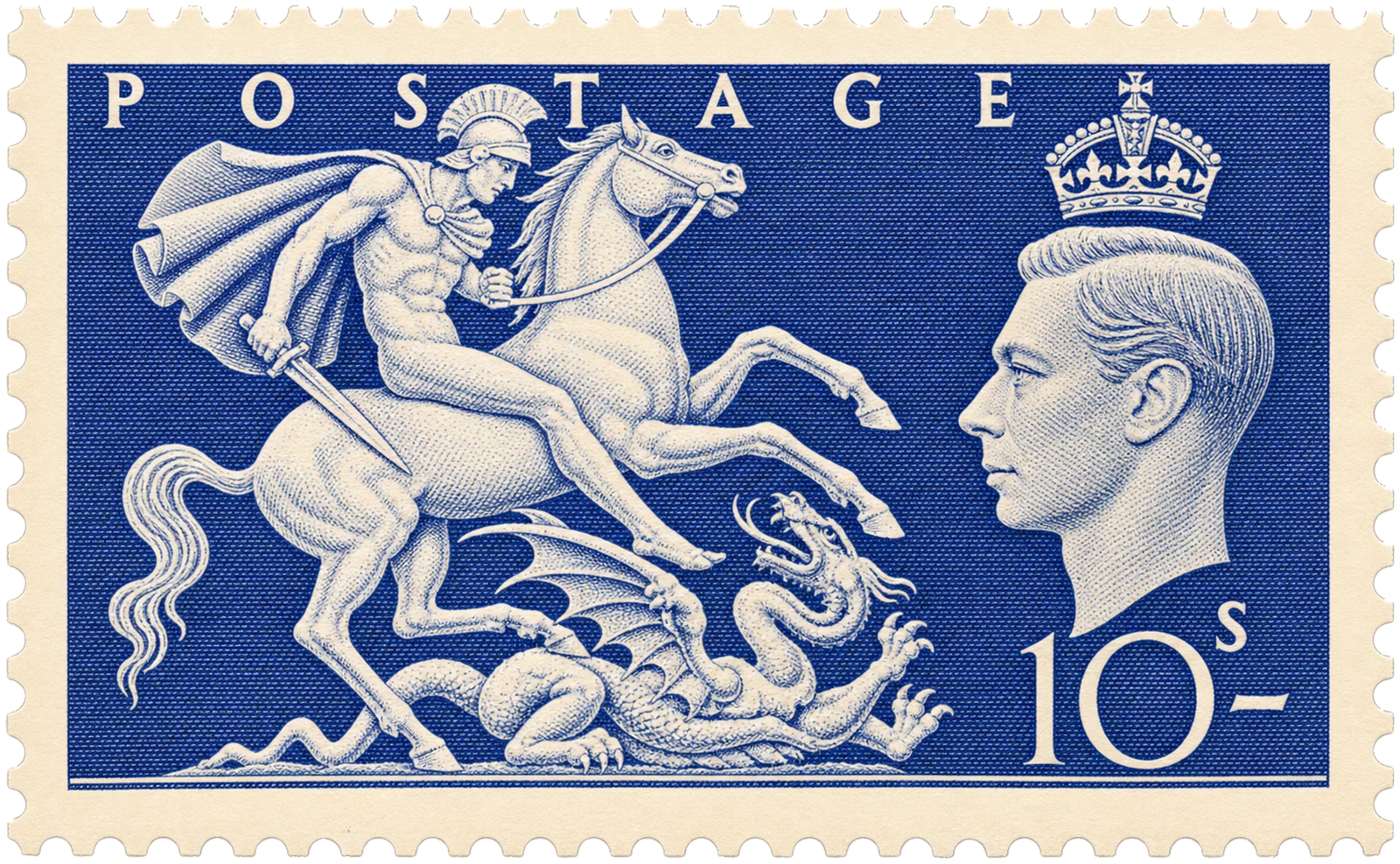
On the stamp you were exploring
George VI · 10s ultramarine · 3 May 1951
Percy Metcalfe designed the St George and the dragon composition on this 10s ultramarine stamp. Waterlow & Sons translated the approved artwork into the engraved issue of 1951.
On the stamp you were exploring
George VI · 10s ultramarine · 3 May 1951
Percy Metcalfe designed the St George and the dragon composition on this 10s ultramarine stamp. Waterlow & Sons translated the approved artwork into the engraved issue of 1951.
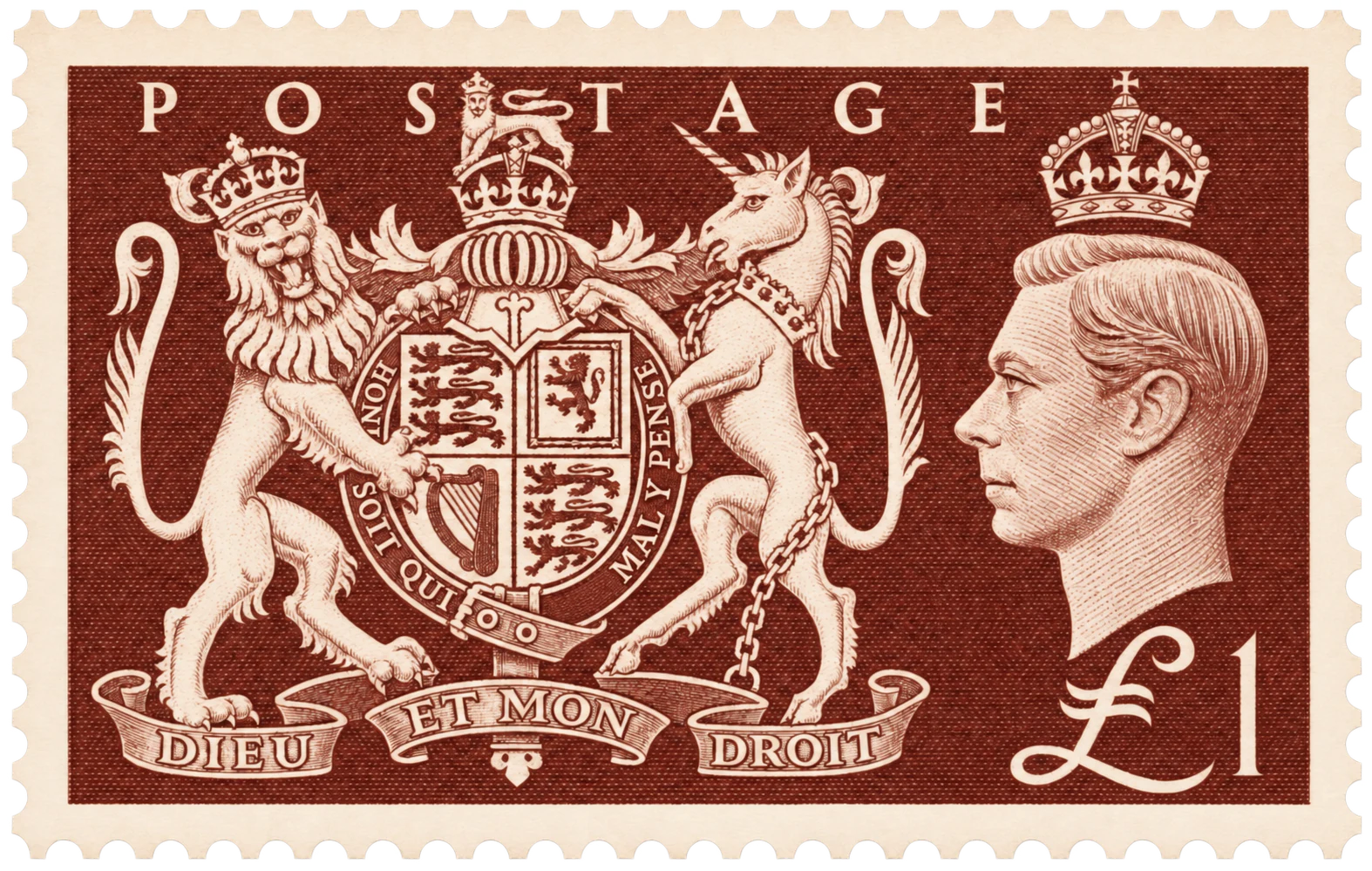
On the stamp you were exploring
George VI · £1 brown · 3 May 1951
Percy Metcalfe designed the Royal Arms composition on this £1 brown stamp. Waterlow & Sons translated the approved artwork into the engraved issue of 1951.
On the stamp you were exploring
George VI · £1 brown · 3 May 1951
Percy Metcalfe designed the Royal Arms composition on this £1 brown stamp. Waterlow & Sons translated the approved artwork into the engraved issue of 1951.
Example stamps
Click a stamp to magnify it, or follow its caption link to explore the design.
George VI 10s ultramarine 3 May 1951 Design 
George VI £1 brown 3 May 1951 Design
A distinctive sculptural style
Metcalfe’s strong, simplified forms gave his coins and medals a recognisable character. His work for the Royal Mint began with medals for the British Empire Exhibition of 1924–1925. The lion on the keepsake medal came from his much larger sculpture made for the exhibition. [1]
The seagull that never became a coin
For Edward VIII’s proposed coinage, Metcalfe submitted a shilling with a flying seagull. Its outstretched wings were not accepted by the advisory committee. The surviving model records an experiment rather than an issued coin: rejected designs can reveal how artists explored a commission. [1]
From coins to stamps
His 1928 Irish Free State coins became an important example of modern coin design. In the 1951 British high-value stamp series he supplied the St George and dragon and Royal Arms designs. Waterlow’s engraving and the approval process turned those compositions into the issued ten-shilling and one-pound stamps. [1, 2]