
The design of the 2s 6d lilac
King Edward VII · Great Britain · De La Rue · 5 April 1902
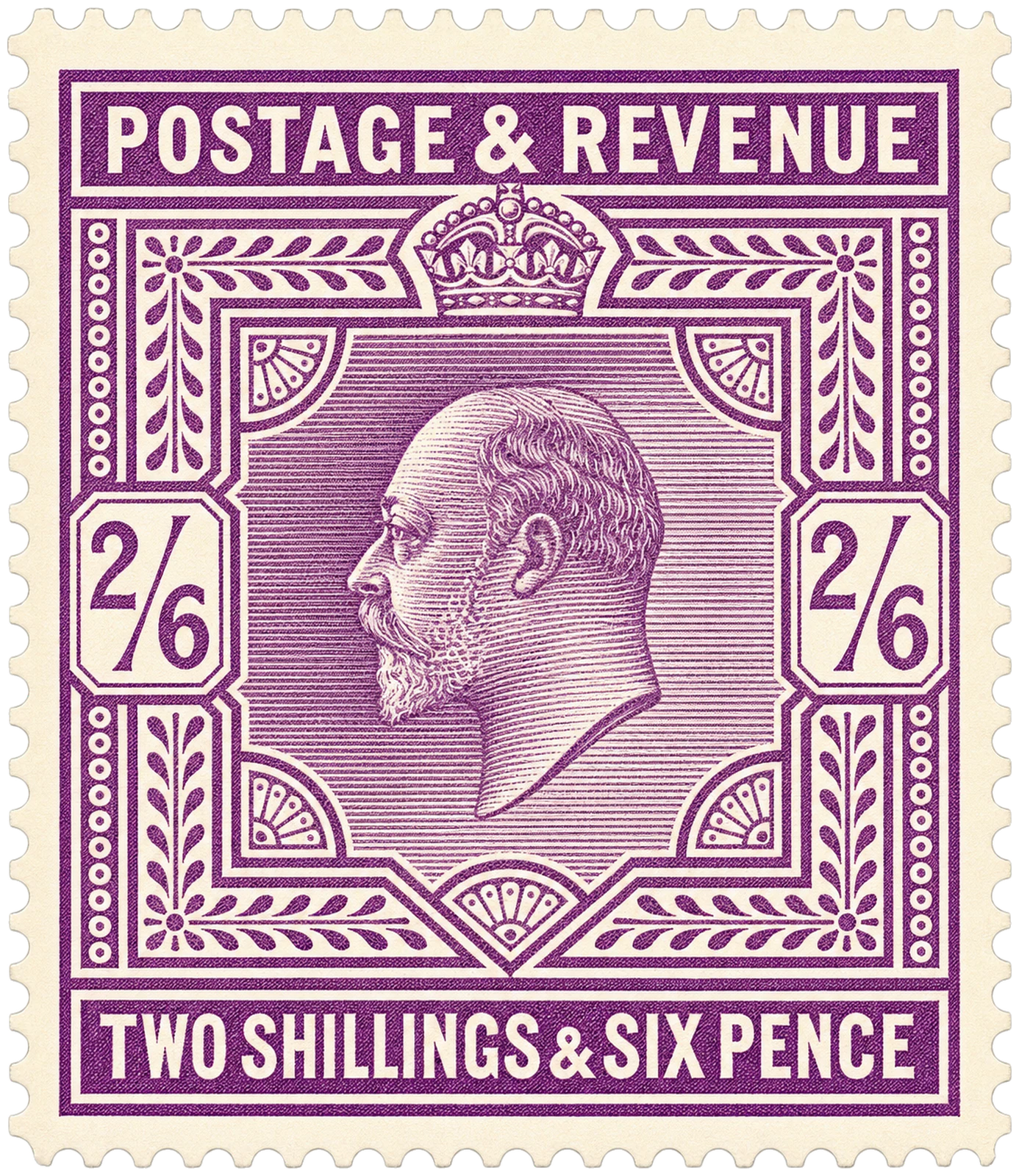
Leaves around a shaped portrait field
The head occupies a broad central field with horizontal lines running behind it. Small curved ornaments intrude at the corners, and a pointed extension projects below the portrait. Pale outlines separate these shapes from the surrounding decoration.
Rows of small leaves run along the upper, lower and side borders. Dotted strips sit beside them. The leaves are repeated as a decorative pattern, giving the frame a fine texture without becoming a naturalistic wreath.
The portrait — a face drawn in lines
The left-facing likeness is based on the work of Emil Fuchs, an Austrian-born artist. Edward VII granted him a sitting after rejecting earlier proposals for the new stamps. [1]
Separate printed lines build up the forehead, cheek and neck, with paper showing between them. Curving strokes follow the hair and beard, while darker passages distinguish the profile from its background.

Image information
Click image to magnify
Emil Fuchs, with dark hair, a moustache and beard, wearing a dark suit.
- Credit
- Emil Fuchs, Self-Portrait (1905). Brooklyn Museum, via Wikimedia Commons. Public domain source.
- Notes
- Digitally reconstructed
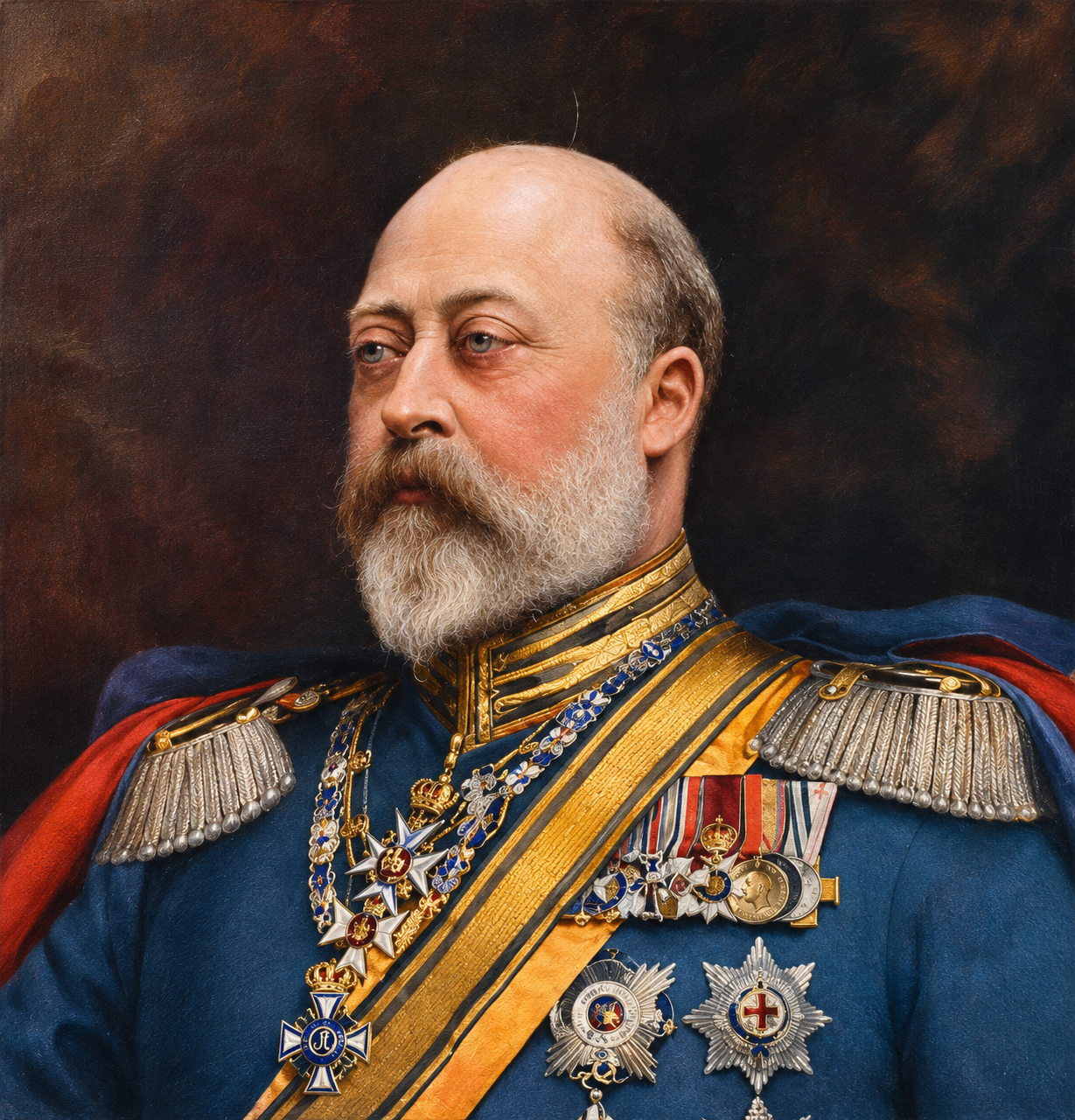
Image information
Click image to magnify
Portrait illustration of King Edward VII in ceremonial uniform.
- Credit
- Stunning Stamps · 2026
- Notes
- Digitally reconstructed
The crown — royal authority
The crown has arches rising towards a small cross, with rounded ornaments above a patterned band.
The King is bare-headed; the crown sits separately in the frame above him.

Image information
Click image to magnify
Gold Tudor royal crown with jewels, pearls, small figures and a purple cap.
- Credit
- Stunning Stamps · 2026
- Notes
- Digitally constructed
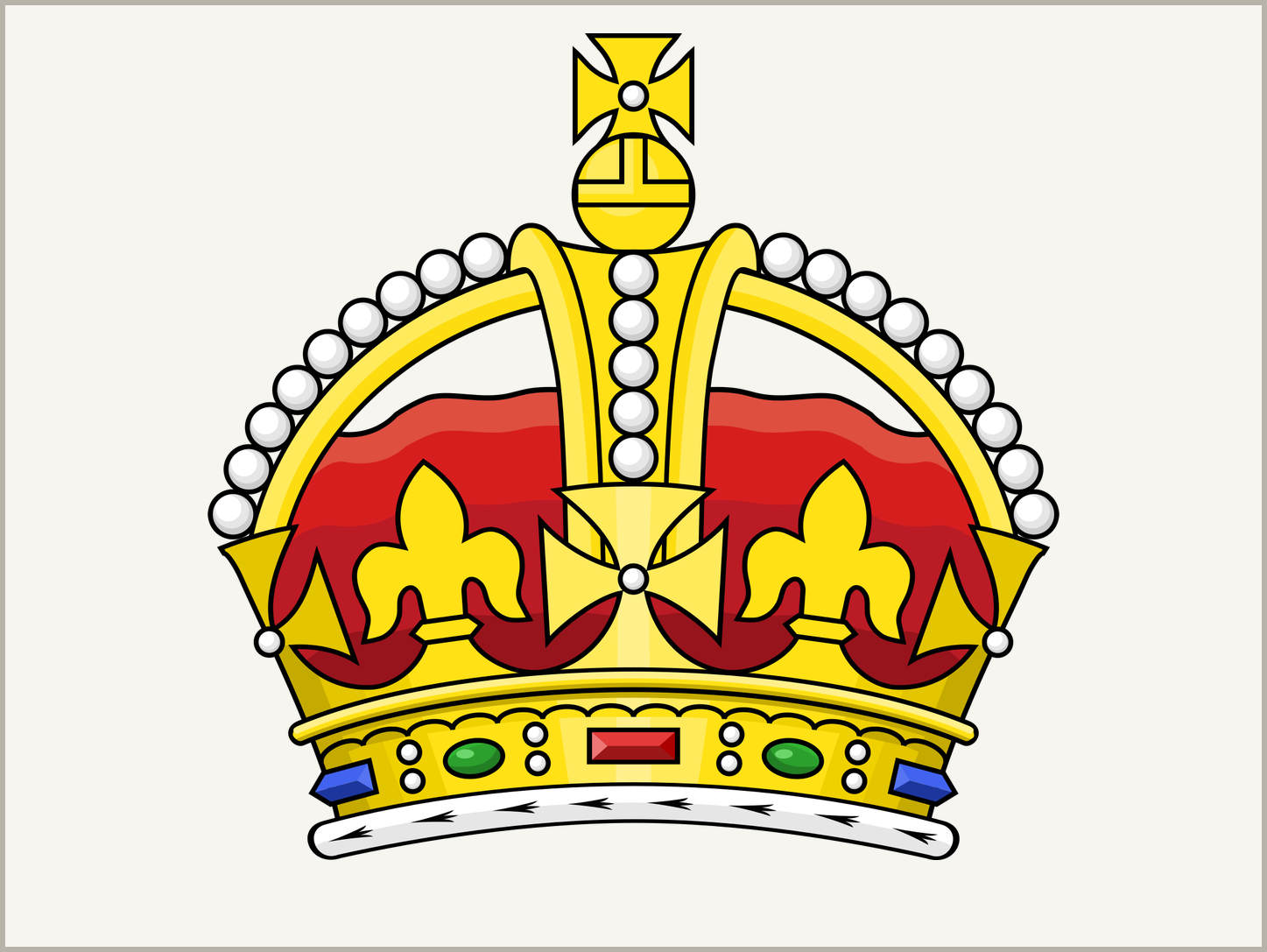
Image information
Click image to magnify
Heraldic Tudor Crown with rounded arches, a cross and orb, red cap, crosses and fleurs-de-lis.
- Credit
- Dgp4004 · Wikimedia Commons · CC0
Two ways to read half a crown
The short form 2/6 appears in a pale panel on either side of the portrait. It means two shillings and sixpence, commonly called half a crown. The slash separates the shillings from the pence; it is not a fraction.
The full value, TWO SHILLINGS & SIX PENCE, stretches across the bottom in a long rectangular panel. The small side values and the lower wording therefore say the same thing in two different forms. Pale lettering stands against the coloured lower band.
POSTAGE & REVENUE
The inscriptions identify two uses for the stamp: paying postage and paying certain revenue duties. A revenue stamp records payment of a tax or duty on a document. Combined postage-and-revenue stamps had already been introduced during Victoria’s reign. [2, 3]
POSTAGE & REVENUE runs across a straight band above the crown.
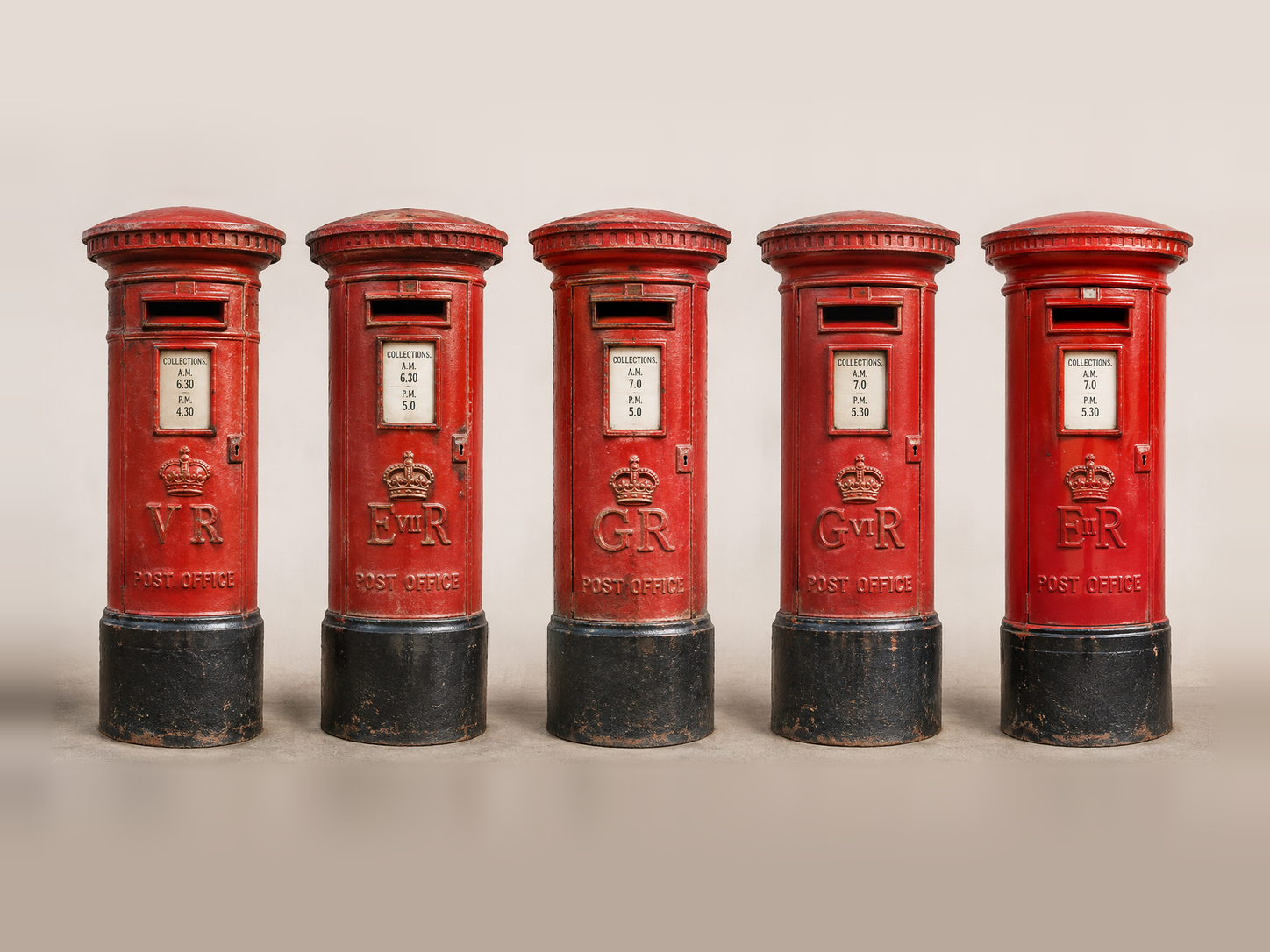
Image information
Click image to magnify
Illustration of five red pillar boxes with royal cyphers.
- Credit
- Stunning Stamps · 2026
- Notes
- Digitally reconstructed
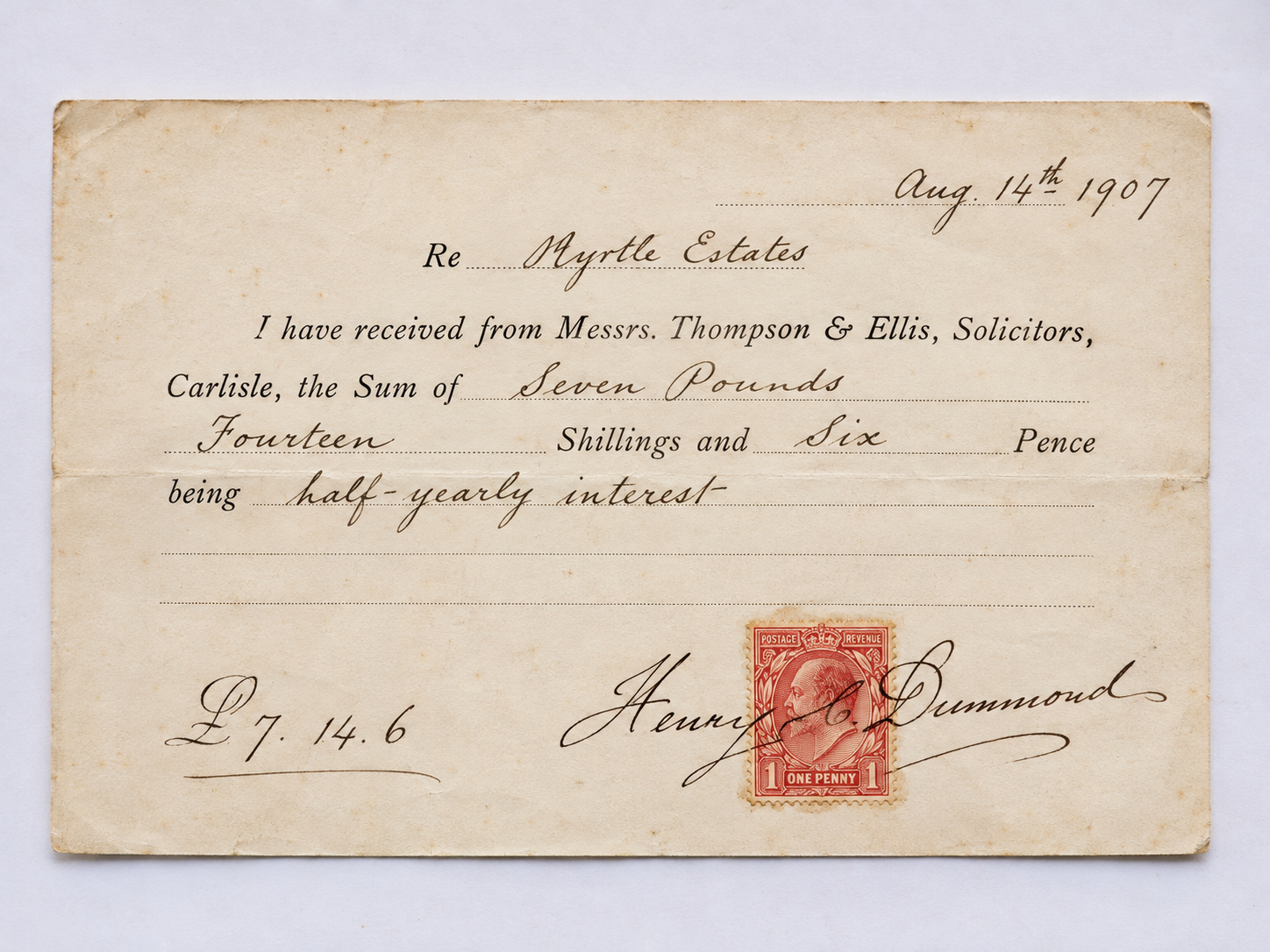
Image information
Click image to magnify
Illustration of a handwritten receipt with an Edward VII penny stamp cancelled by a signature.
- Credit
- Stunning Stamps · 2026
- Notes
- Digitally constructed
One ink, several textures
Lilac ink forms the entire printed design. The pale side panels carry coloured figures, while the top and bottom bands reverse the effect with pale letters against colour.
The pale areas are the paper showing between the printed marks. Closely spaced lines look darker from a distance; wider gaps make a lighter tone. The same ink can therefore describe a rounded cheek, a dark background and a sharply outlined letter.
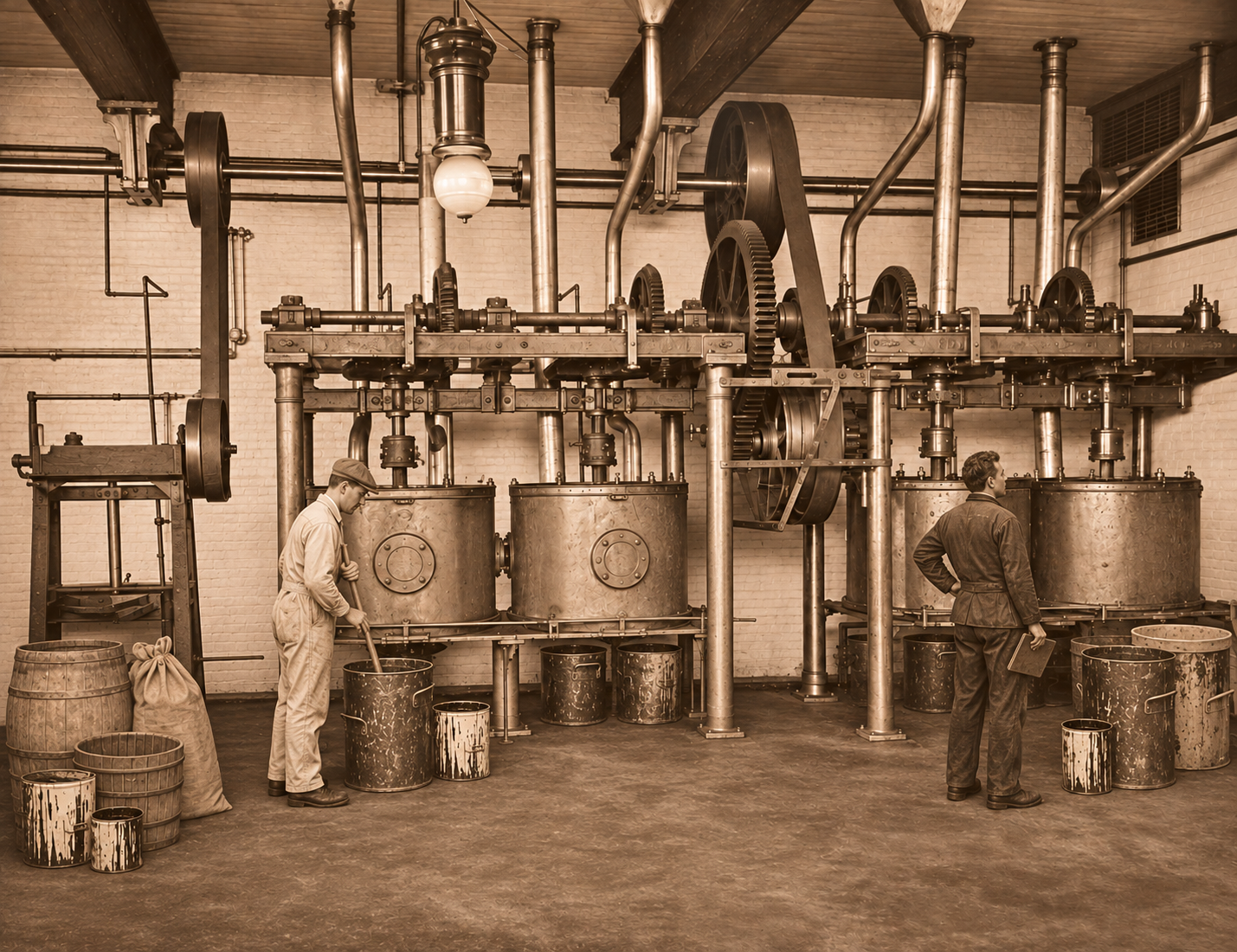
Image information
Click image to magnify
Victorian ink factory with workers, large mixing vats, belt-driven machinery and buckets.
- Credit
- Stunning Stamps · 2026
- Notes
- Digitally constructed
An earlier framework carried into a new reign
The design was adapted from Queen Victoria’s high-value stamps. Edward VII’s portrait replaced hers, while the corner identification letters of the Victorian issue were omitted. The broad arrangement remained recognisable. [4]
The side values, leafy rectangular frame and long lower denomination panel preserve the earlier stamp’s main structure. Ornament replaces the earlier corner letters.
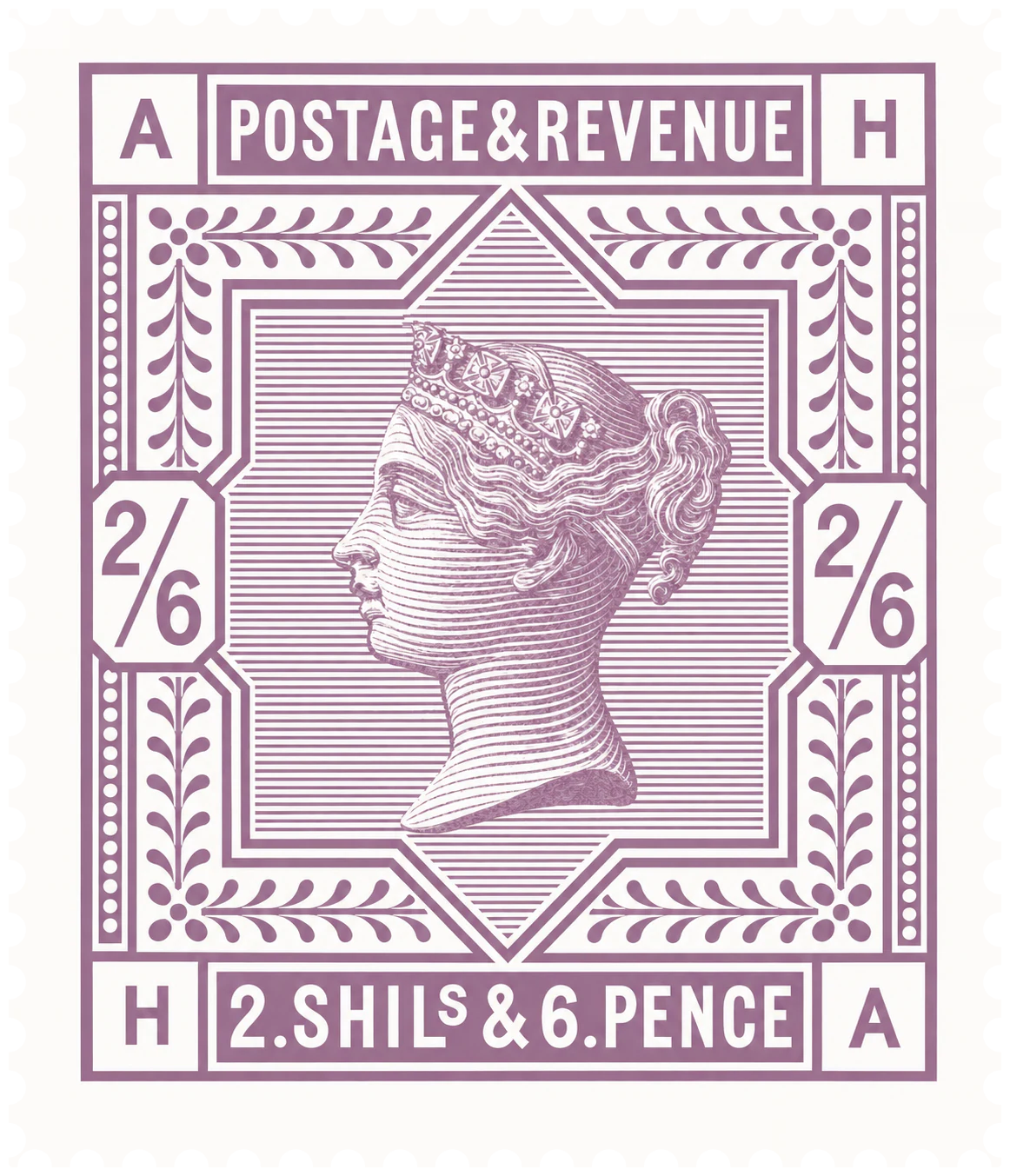
Compare the portrait setting and surrounding frame.
Click either stamp to magnify
Fine lines and surface printing
Printed lines model the portrait, while repeated background strokes and clear spaces distinguish the lettering. On original stamps, magnification reveals the individual marks behind apparently smooth tones.
The issued stamp was produced by typography, also called surface printing. The fine-lined appearance should not be confused with recess printing, in which ink is held in engraved grooves. Here the image was printed from the raised surface of the plate. [5]
The people and printer behind this stamp
Fuchs supplied the Edward VII portrait retained on this 2s 6d lilac stamp. The surrounding design was developed for De La Rue; later printers continued the established portrait and frame. [6, 7]
De La Rue manufactured this 2s 6d. Use the paper and colour description with the printer’s name: later firms continued many Edward VII designs, so the portrait alone cannot identify a De La Rue printing. [6, 7, 8]
Warren de la Rue, the printer and scientist, belonged to the firm’s earlier history. He died in 1889, before these Edward VII stamps were issued. [9]
Sources
- The Postal Museum: Designing a Royal Stamp
- Great Britain Philatelic Society: Diamond Jubilee display at the Royal Philatelic Society London — combined postage and revenue stamps
- Smithsonian National Postal Museum: Stamp from the Stamp Act of 1765
- W. Ward, The Postage Stamps of Great Britain: the Edward VII issue (1917; illustrated reprint, parts 23–27)
- British Stamp Market Values 2020: King Edward VII section (hosted copy)
- Royal Philatelic Society London: The De La Rue Story, 1996
- Royal Mail: Edward VII and Emil Fuchs, British Philatelic Bulletin, September 1993
- Paul Voller: Edward VII half-crown, SG 260
- University of Reading Special Collections: De La Rue Archive (MS 937)
← Return to the 2s 6d lilac stamp
Facts checked