
Photogravure — Harrison
A familiar royal portrait acquired a richer printed appearance when Harrison & Sons introduced photogravure in 1934. The eleven denominations appeared gradually, with the final three arriving after George V’s death in 1936. These illustrations show the final small designs introduced in 1935–1936; “small” describes the image inside the perforations. The missing 6d, 7d and 8d are intentional gaps: the sixpence encountered printing difficulties, while work on the sevenpence and eightpence stopped after the King’s death.
11 entries. Select a stamp to explore its design, production and history.
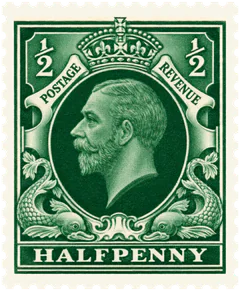
½d green
1935 · Small format · Harrison & Sons
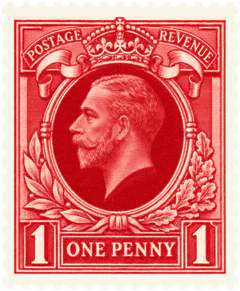
1d scarlet
1935 · Small format · Harrison & Sons
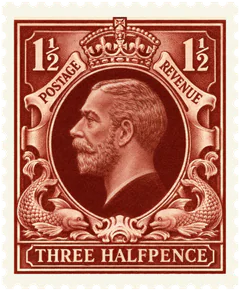
1½d red-brown
1935 · Small format · Harrison & Sons
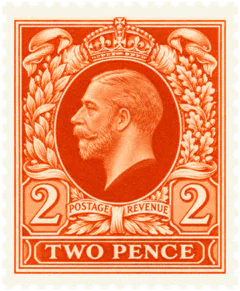
2d orange
1935 · Small format · Harrison & Sons
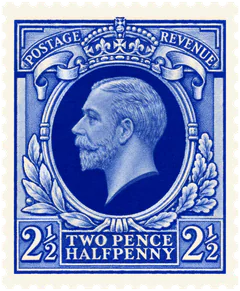
2½d ultramarine
1935 · Small format · Harrison & Sons
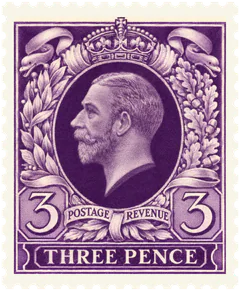
3d violet
1935 · Small format · Harrison & Sons
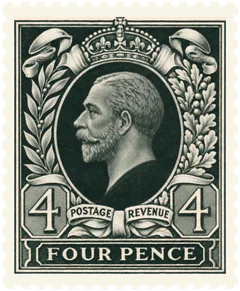
4d grey-green
1935 · Small format · Harrison & Sons
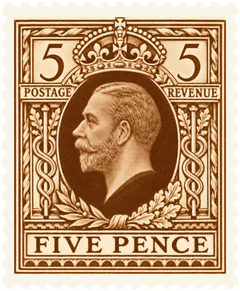
5d yellow-brown
1936 · Small format · Harrison & Sons
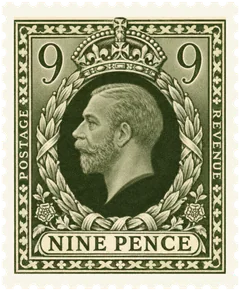
9d deep olive-green
1935 · Small format · Harrison & Sons
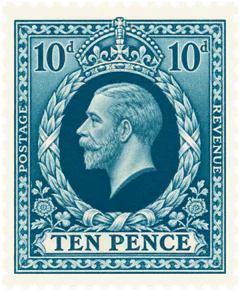
10d turquoise-blue
1936 · Small format · Harrison & Sons
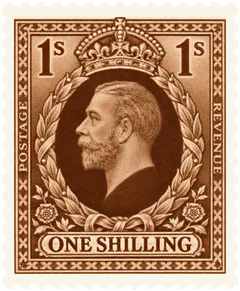
1s bistre-brown
1936 · Small format · Harrison & Sons