
The design of the ½d green
King George V · Great Britain · Harrison & Sons · 1913
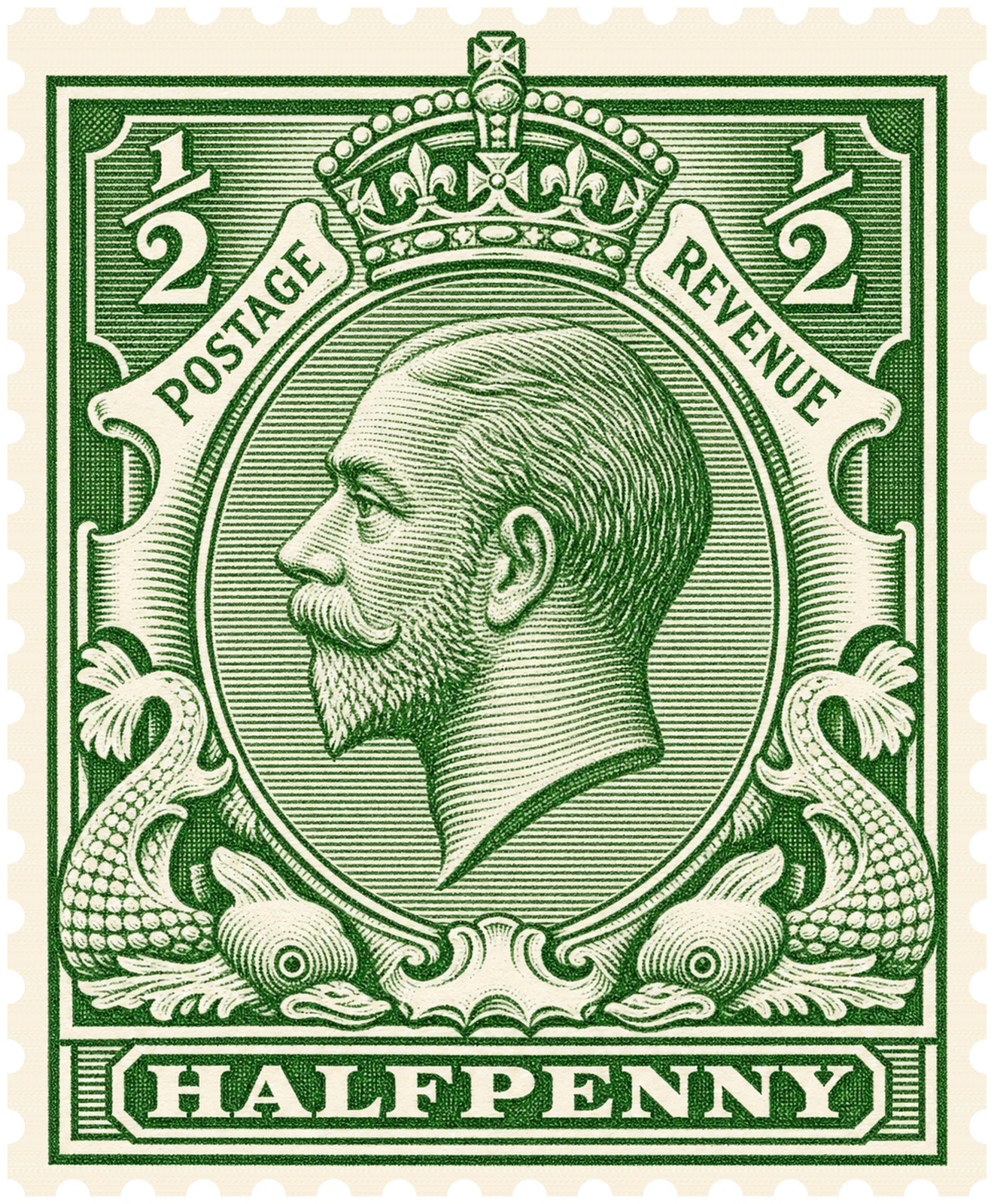
The dolphins survived the portrait
The curling dolphins had appeared on the halfpenny of 1911, surrounding the earlier three-quarter portrait. Replacing the head did not mean discarding the whole frame. The designers worked from a transfer, a copied impression used in preparing the new printing tools. They removed the old head, value and parts of the background, then inserted the profile known as the Coinage Head. The related penny-halfpenny was prepared first; the revised halfpenny followed in January 1913. [1]
The dolphins beneath the portrait
Two decorative dolphins curve up the sides of the oval. Their large eyes and open mouths face inwards near its foot, while the scaled bodies turn upwards towards spreading tails.
Mackennal’s Dolphin frame was first used with the earlier Downey portrait and then adapted for the profile issues. These are stylised ornamental creatures, not a natural-history illustration of dolphins. [1]
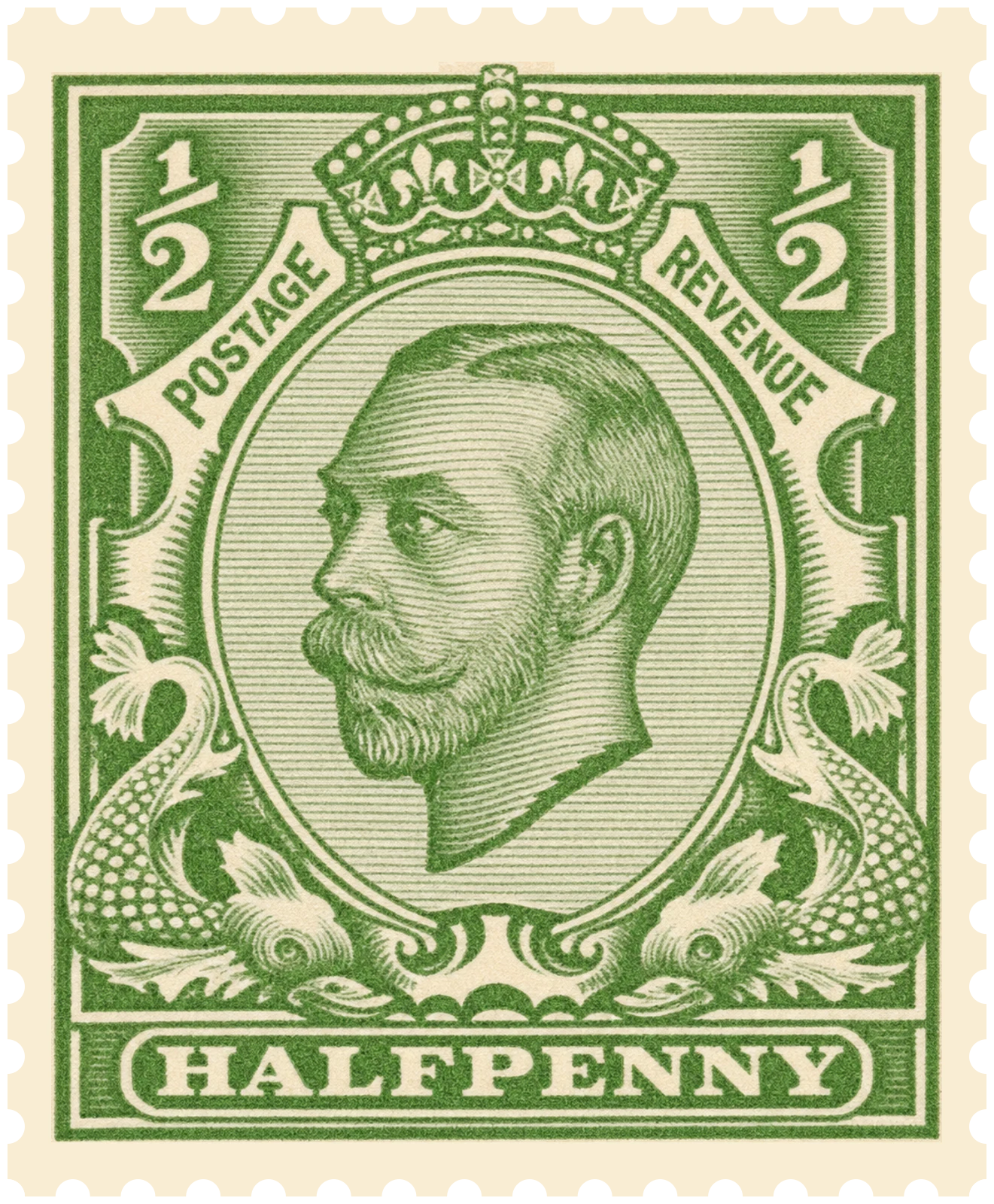
Click either stamp to magnify
From the Embankment to the stamp
The dolphins have a connection with London’s riverside architecture. Writing in the British Philatelic Bulletin in 1993, James Mackay traced Mackennal’s halfpenny ornaments to the dolphins on the lamp-posts along the Victoria Embankment. Many of those lamp standards date from around 1870. [2, 3]
The broad heads, open mouths, scales and curling bodies belong to the same decorative vocabulary. On the lamps, these forms wrap around an upright shaft; on the stamp, the paired creatures curve around the King’s portrait.
The ornament puzzled some viewers when the Downey halfpenny appeared in 1911. Speaking in the House of Commons on 15 August, Lord Balcarres said that a fellow MP had told him the creatures were dolphins. Their bills reminded him of a duck-billed platypus; he called the halfpenny frame “fantastic” and said the penny’s heavy frame dwarfed the King’s head. [4, 5]
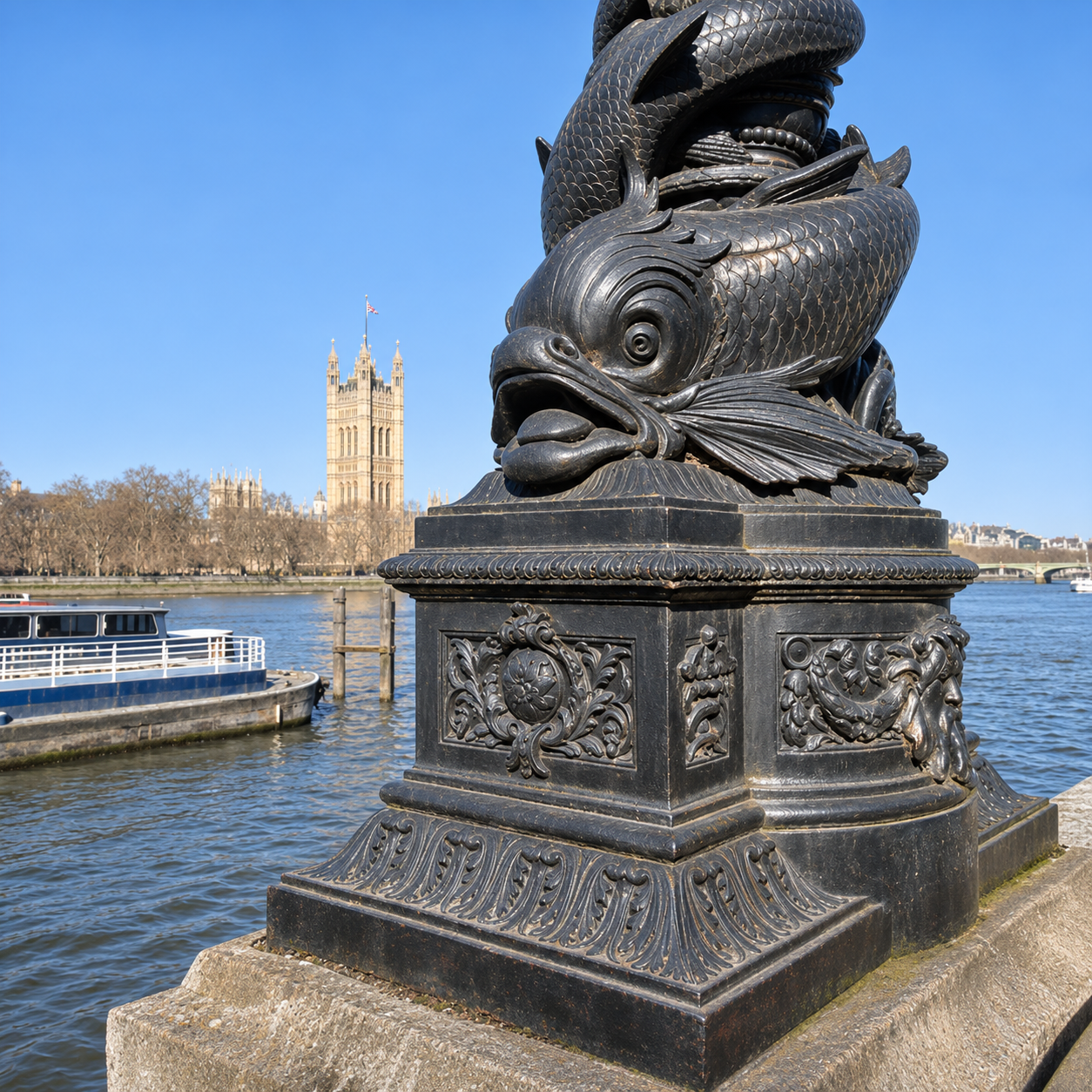
Image information
Click image to magnify
Reconstruction of a black cast-iron dolphin lamp base beside the Thames, with Westminster across the river.
- Credit
- Stunning Stamps · 2026
- Notes
- Digitally reconstructed
The portrait — the Coinage Head
George V’s first small stamps used a photograph by W. & D. Downey, showing his face turned towards the viewer. The printed likeness disappointed him and attracted public criticism. A profile offered a fresh start, but changing the head also meant reconsidering the frames around it. [1, 6]
This left-facing profile belongs to the version collectors call the Coinage Head. It was adapted from Bertram Mackennal’s model for George V’s coins, with the stamp engraving prepared by J. A. C. Harrison. [1]
Follow the profile from the forehead to the nose, moustache and pointed beard. The curved end of the neck recalls the sculpted model, while lines within the face describe light and shadow.
On the issued letterpress low values, the Coinage Head appears on the ½d, 1½d, 2d, 3d and 4d. The 1d and 2½d use the Medal Head, while the 5d to 1s use Medal Head II. These are three distinct stamp engravings, even though all show a bare head facing left. [1]
On the proposed penny, the new profile looked cramped above the lion. Mackennal replaced the lion with laurel and oak and used a portrait derived from his South African medal model, which the King preferred. That became the Medal Head of the penny and twopence-halfpenny. Eve’s later frames required another adjustment: Harrison engraved a smaller version of the medal portrait, called Medal Head II. The three heads record different solutions to the problem of fitting the King into a small stamp. [1]
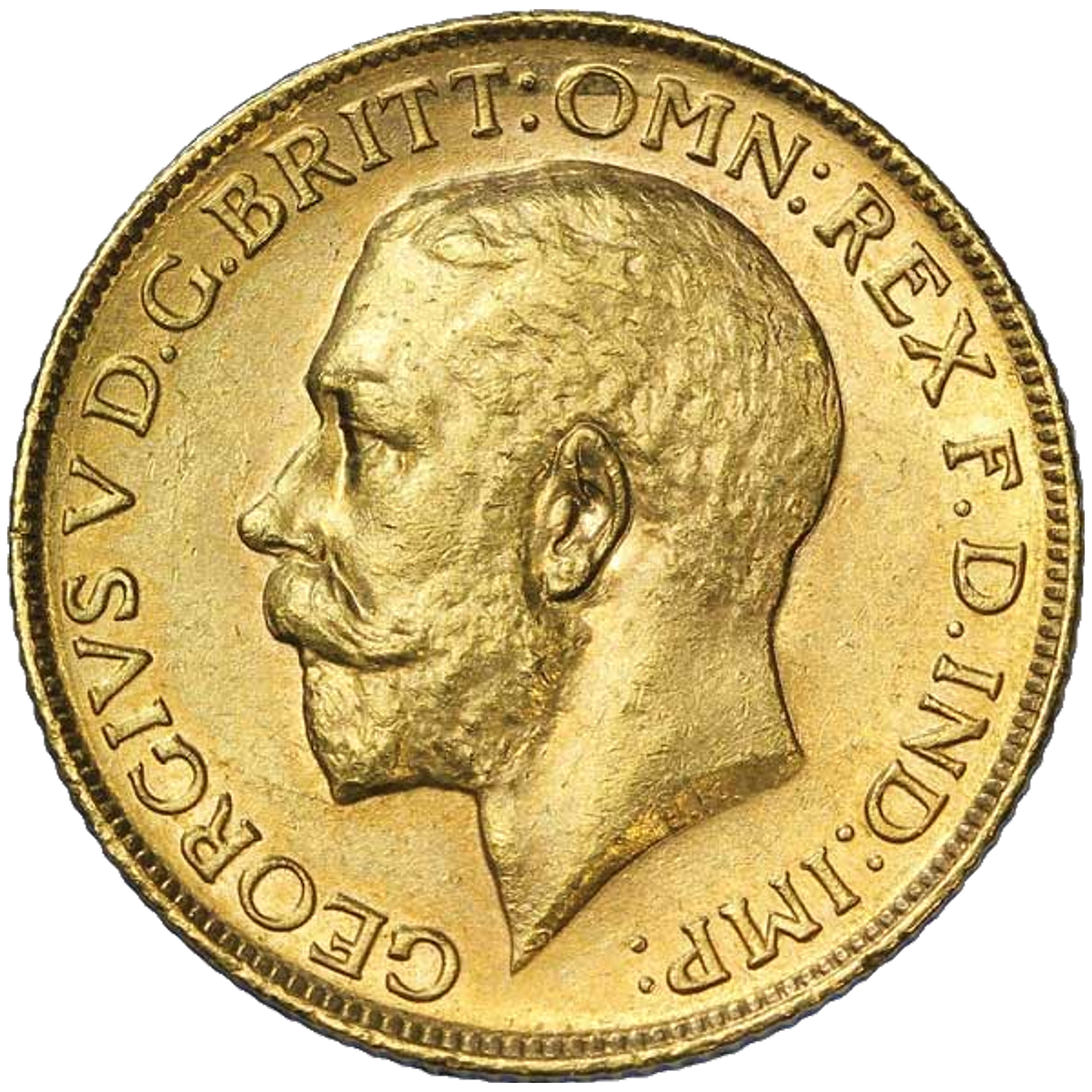
Image information
Click image to magnify
Gold sovereign showing George V’s bare head facing left, with the surrounding inscription and beaded rim.
- Credit
- cgb, via Wikimedia Commons. CC BY-SA 3.0.
- Notes
- Digitally reconstructed
Ink, paper and the printed image
The original dies were engraved, but these stamps were printed by typography, also called letterpress. Ink on the raised parts of a printing surface was pressed onto the paper. An engraved master does not mean the issued stamp was recess-printed. [7]
The width and spacing of printed marks create apparent tones. Closely worked hair and beard appear darker than the open background; unprinted paper supplies the highlights. This page represents the Harrison & Sons printing of the design. [7]
The green ink gives the ornament and portrait a common colour, while pale paper separates the leaves, lettering and facial highlights.
Image information
Click image to magnify
Decorative blue, green and white advertisement for Mander Brothers printing inks, Wolverhampton.
- Credit
- Stunning Stamps · 2026
- Notes
- Digitally constructed
Lettering, value and arrangement
POSTAGE is on the rising scroll at the upper left; REVENUE occupies its counterpart on the right. The two words name the stamp’s postal and fiscal functions. Revenue use means paying a tax or duty on a document; it is separate from paying to carry a letter. [8]
Coloured letters stand on pale ribbons or bands, keeping the words legible among the ornament.
HALFPENNY runs across the lower panel. The value ½ is repeated in both upper corners, alongside the crown.
The fraction ½ means half of one old penny. The repeated figures make the value readable without having to follow the full inscription.
The left-facing head breaks the near symmetry of the frame: the crown, paired dolphins and repeated values lie on either side of its central line.
Image information
Click image to magnify
Illustration of five red pillar boxes with royal cyphers.
- Credit
- Stunning Stamps · 2026
- Notes
- Digitally reconstructed
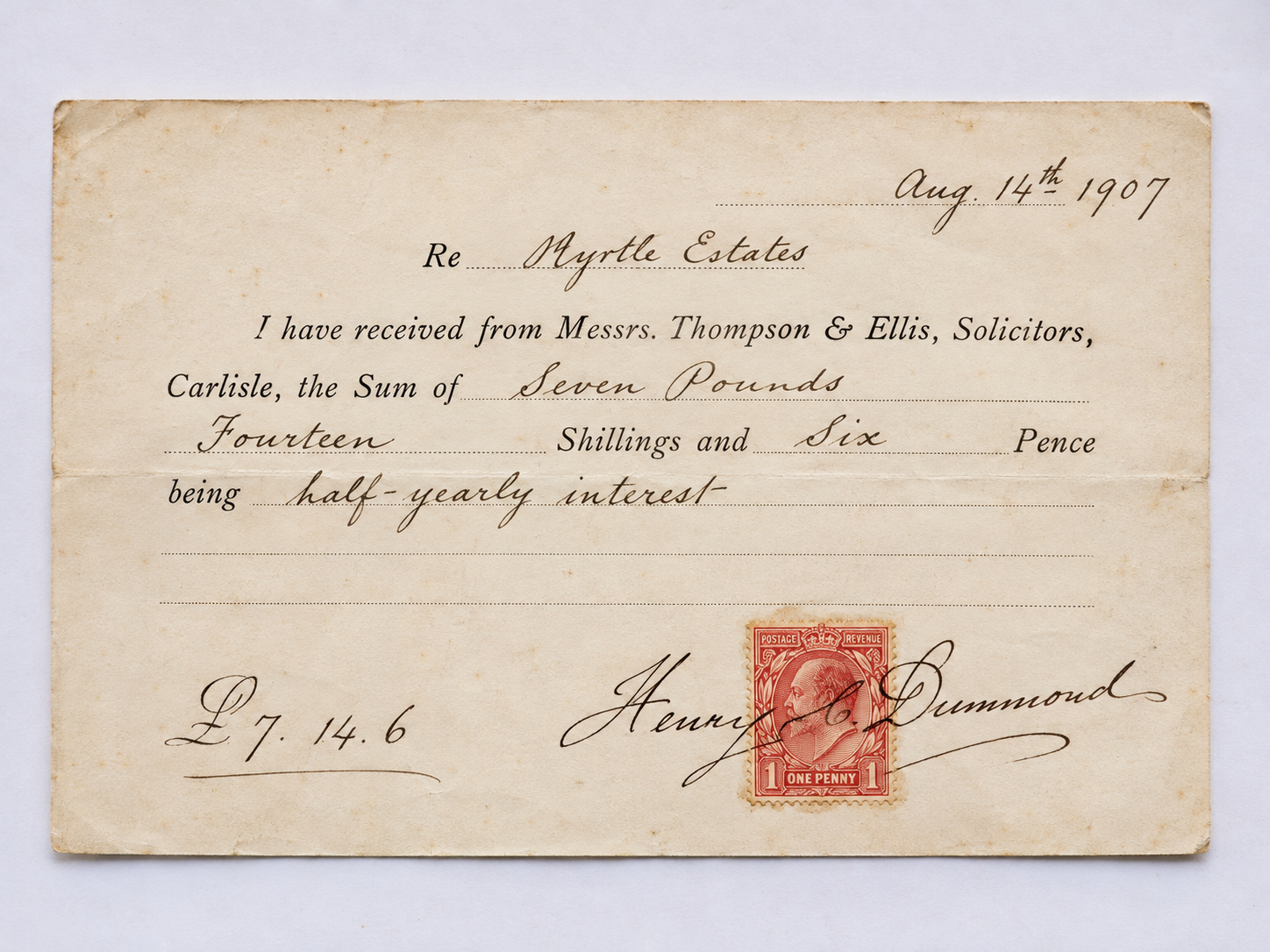
Image information
Click image to magnify
Illustration of a handwritten receipt with an Edward VII penny stamp cancelled by a signature.
- Credit
- Stunning Stamps · 2026
- Notes
- Digitally constructed
The crown above the head
A crown occupies the centre at the top. Rounded ornaments follow its arches above a patterned band, and a small cross completes the outline.
The crown sits in the frame above the King’s bare head. The sloping inscription scrolls link it to the sides of the portrait.
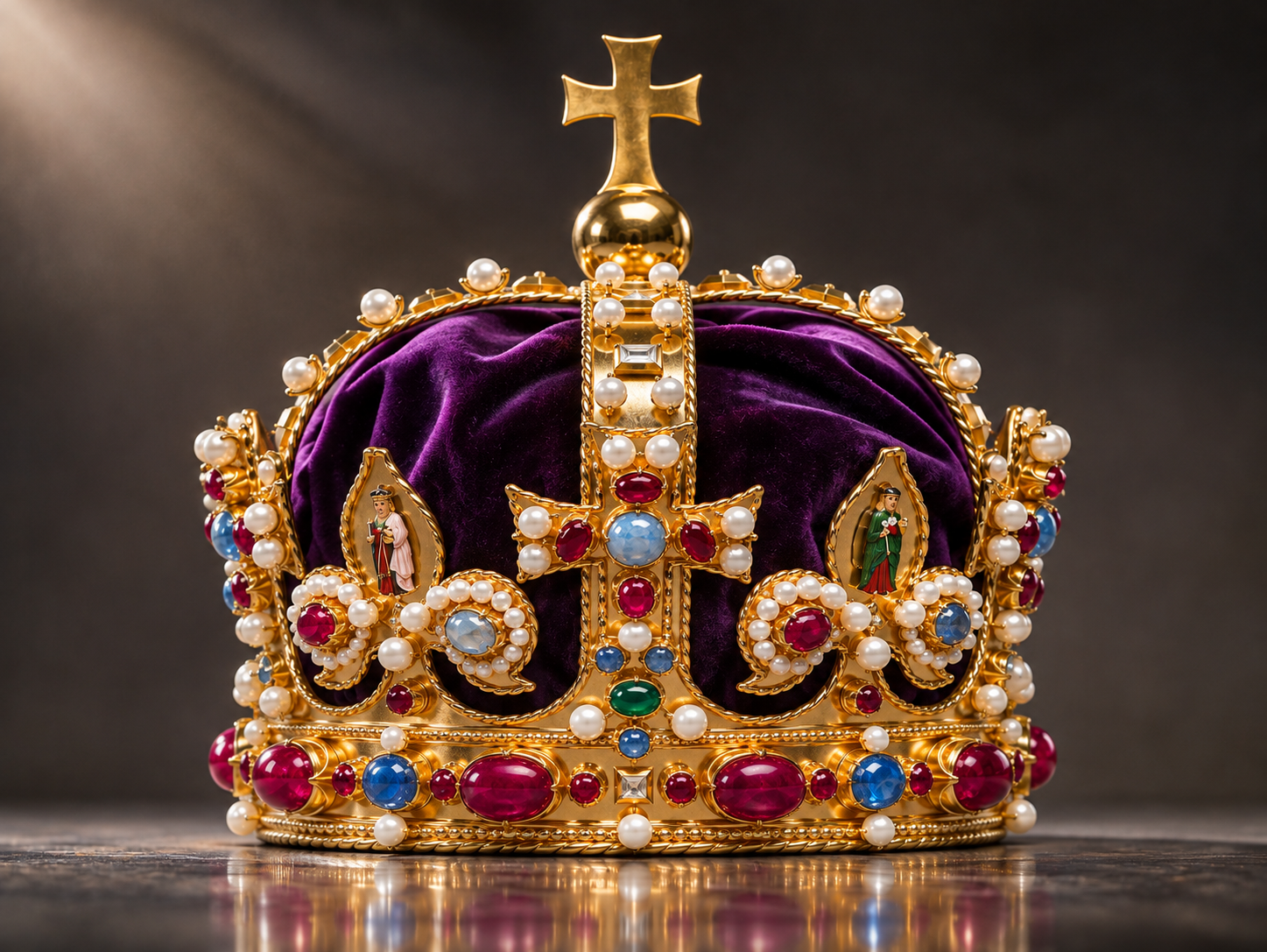
Image information
Click image to magnify
Gold Tudor royal crown with jewels, pearls, small figures and a purple cap.
- Credit
- Stunning Stamps · 2026
- Notes
- Digitally constructed
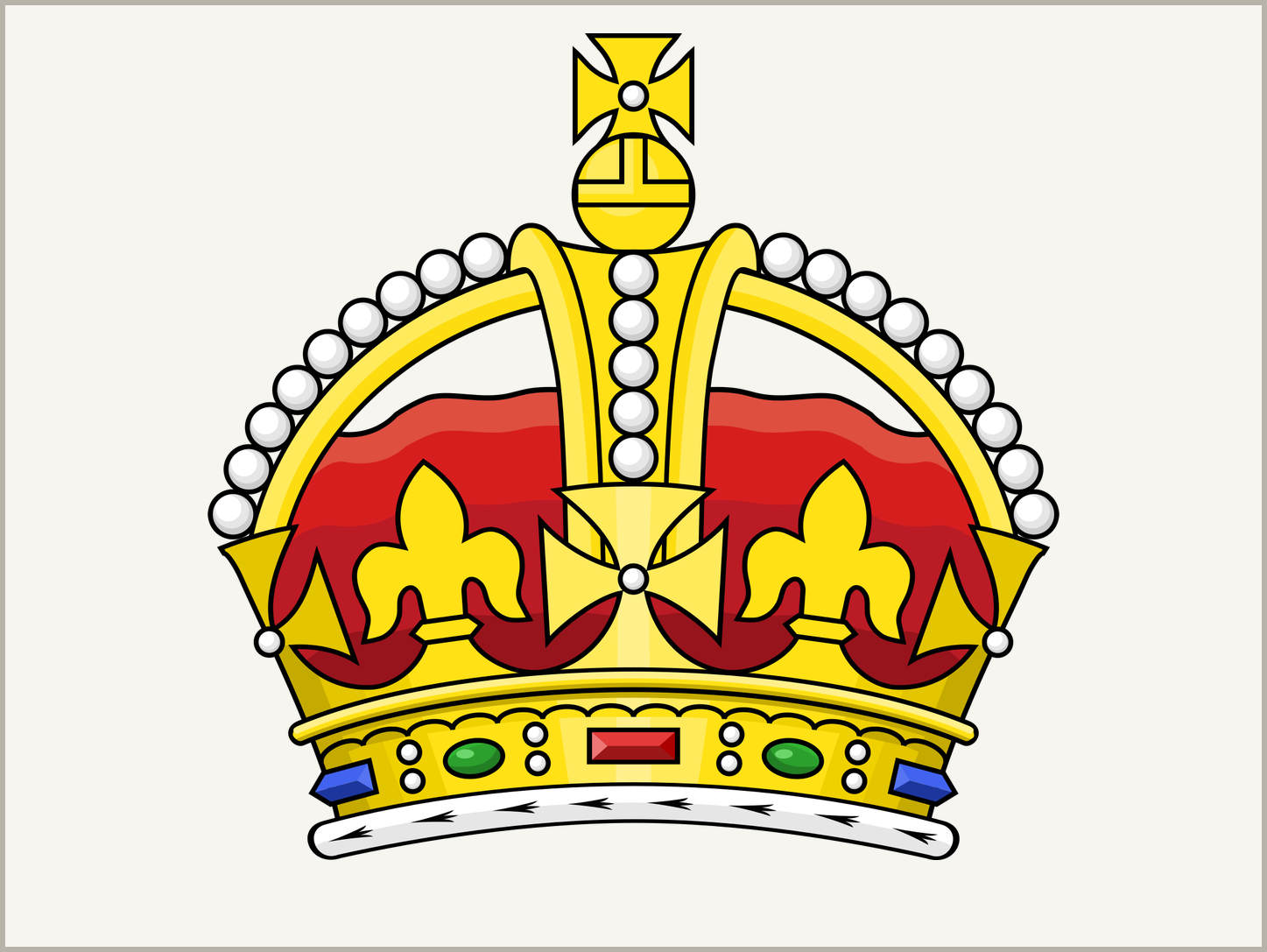
Image information
Click image to magnify
Heraldic Tudor Crown with rounded arches, a cross and orb, red cap, crosses and fleurs-de-lis.
- Credit
- Dgp4004 · Wikimedia Commons · CC0
The people and printer behind this stamp
Bertram Mackennal supplied the royal portrait model and ornamental frame; J. A. C. Harrison prepared the stamp engraving. [9, 10]
Harrison & Sons printed this ½d by typography. This belongs to the Royal Cypher letterpress issue. [9, 10, 11]
Sources
- Alan N. Moorcroft, The King's Head, RPSL display, 25 February 2010
- James Mackay, Stamps of the Four Kings: 3. The George V Downey Heads, British Philatelic Bulletin, November 1993, pp.74–75
- Historic England, Embankment River Wall, Stairs and Lamp Standards, Victoria Embankment: list entry 1237712
- Hansard, New Postage Stamps, 15 August 1911, cols.1839–1840: Lord Balcarres on the halfpenny’s dolphins
- Hansard, New Postage Stamps, 15 August 1911, cols.1839–1840, Lord Balcarres
- Charles Goodwyn, Great Britain – King George V, Royal Philatelic Collection display, 17 September 1998
- Adrian Keppel, The Four Kings, British Philatelic Bulletin 49, February 2012, pp.148–151
- The Postal Museum: British Empire Exhibition stamp history, p.16 — postage stamps and receipt duty
- Buckinghamshire Council: Harrison & Sons printworks
- Royal Philatelic Society London: The King’s Head, 2010
- Adrian Keppel, The Four Kings, British Philatelic Bulletin 49, February 2012, pp.148–151
← Return to the ½d green stamp
Last reviewed · Facts checked