
The design of the 7d olive-green
King George V · Great Britain · Harrison & Sons · 1913
Pillars and a smaller portrait
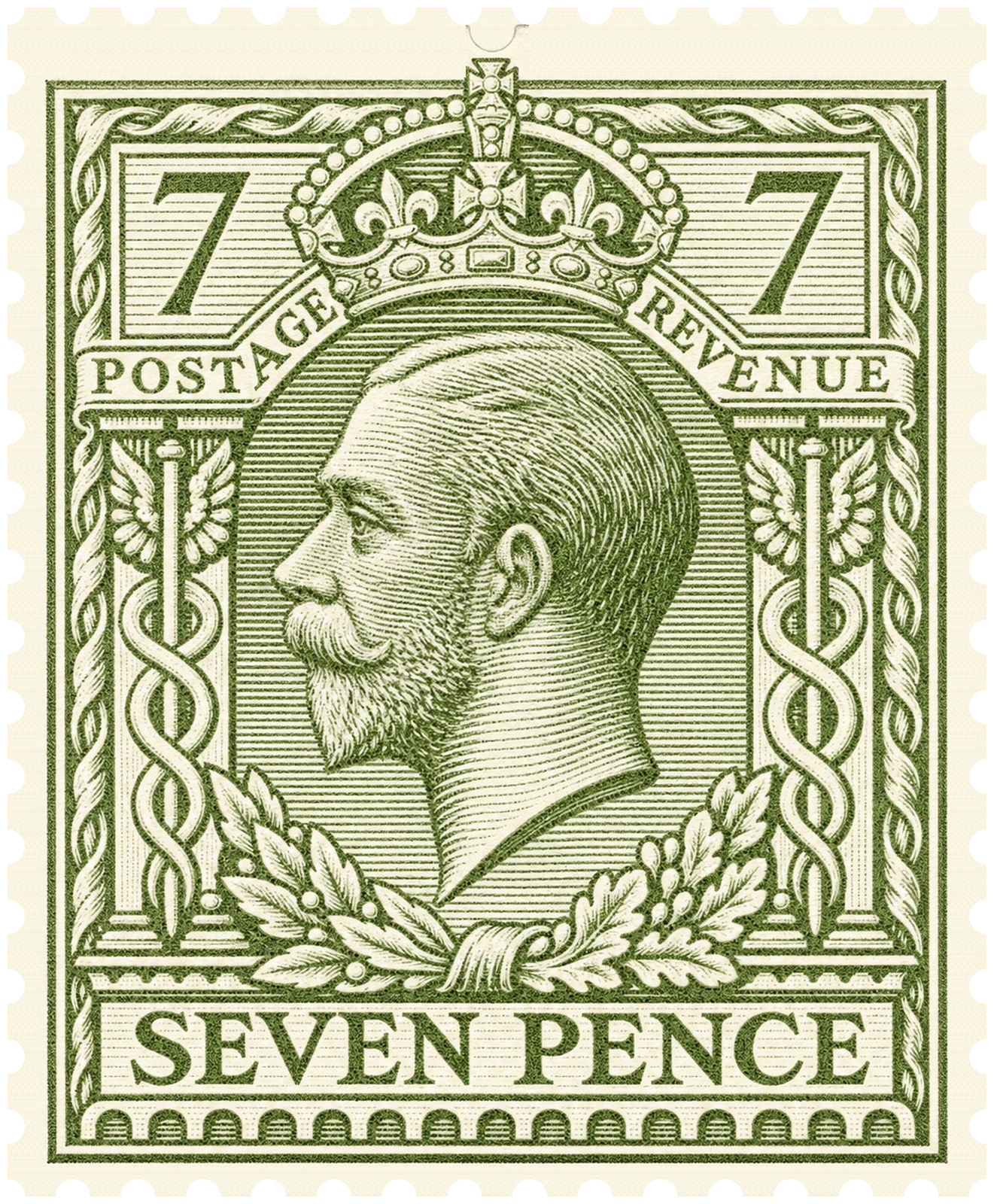
The fivepenny, sixpenny and sevenpenny had initially been intended for a wreath frame. In February 1913, the Postmaster General selected George W. Eve’s pillar design instead. One reason was to make the sixpenny easier to distinguish from the threepenny. The upright side ornaments gave the middle values a different structure, while the fivepenny and eightpenny were used in developing the new arrangement. [1]
The need for a smaller portrait emerged during the troubled preparation of the fourpenny: the Coinage Head crowded George W. Eve’s wreath frame. The King preferred Mackennal’s medal portrait, so J. A. C. Harrison returned to that sculptural model and engraved a fresh, smaller head in March–April 1913. Known as Medal Head II, it fitted Eve’s pillar and wreath designs for the higher values. [1]
The winged staff of Mercury
On either side of the King’s portrait stands a caduceus: a staff entwined by two serpents and topped with wings. The plural is caducei. George W. Eve set these matching emblems within the upright sides of his Pillar frame; caducei also appear in his preliminary stamp designs. [2]
The caduceus is the staff of Mercury, the Roman messenger of the gods, known as Hermes in Greek mythology. Mercury was also associated with trade and travellers, giving the emblem a connection with communication and commerce. [3, 4]
The snakes cross as they wind around the straight shafts, then open out beneath the wings. Their curved bodies contrast with the upright sides of the frame.
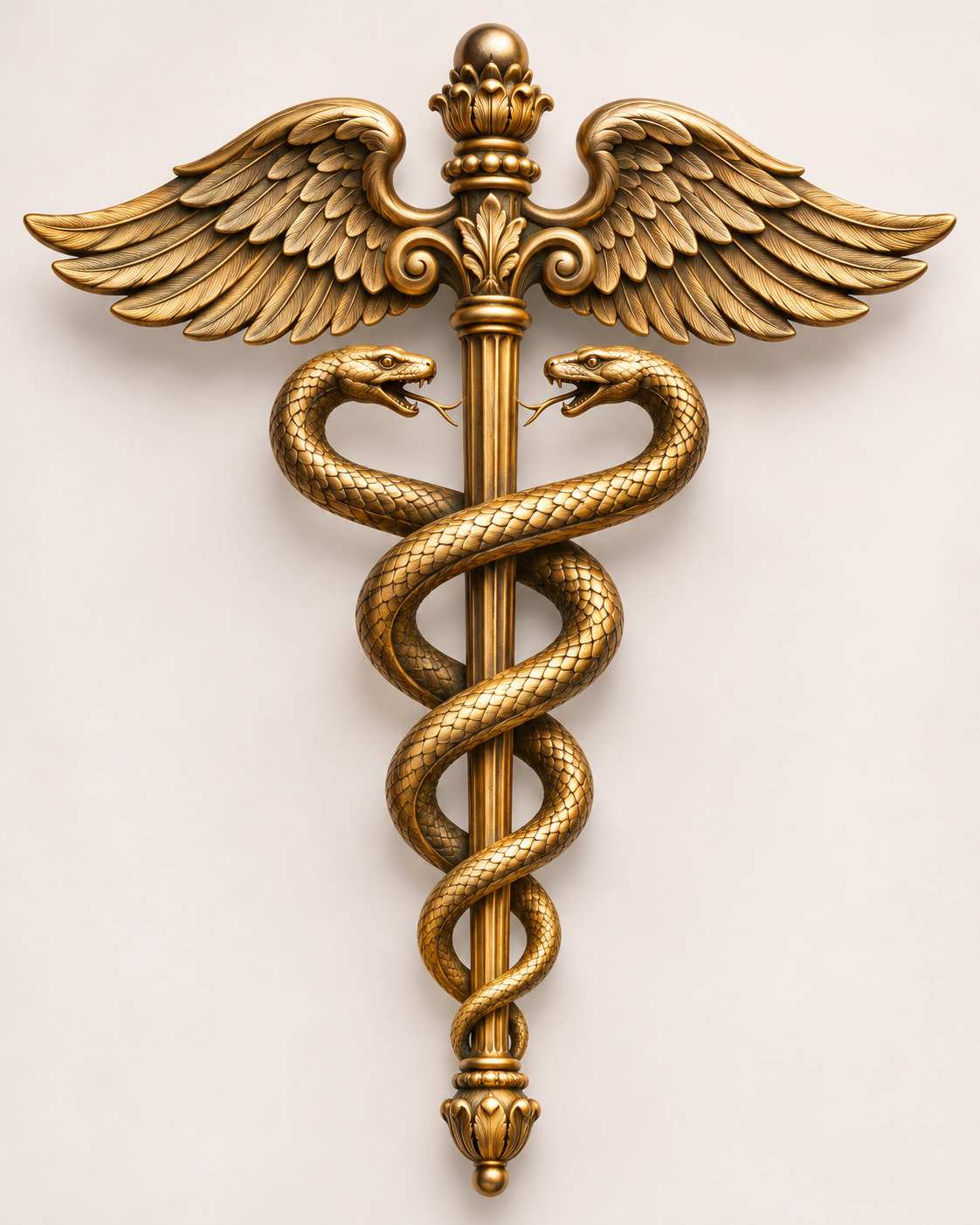
Image information
Click image to magnify
Illustration of a golden caduceus, with two serpents winding around a staff beneath outspread wings.
- Credit
- Stunning Stamps · 2026
- Notes
- Digitally reconstructed
Foliage beneath the portrait
Two sprays of foliage curve beneath the King’s head, their stems gathered by a ribbon at the centre. The left-hand spray has narrow, pointed leaves, while the right-hand spray has broader, deeply lobed leaves. Together they form a shallow bowl above the denomination panel. [5]
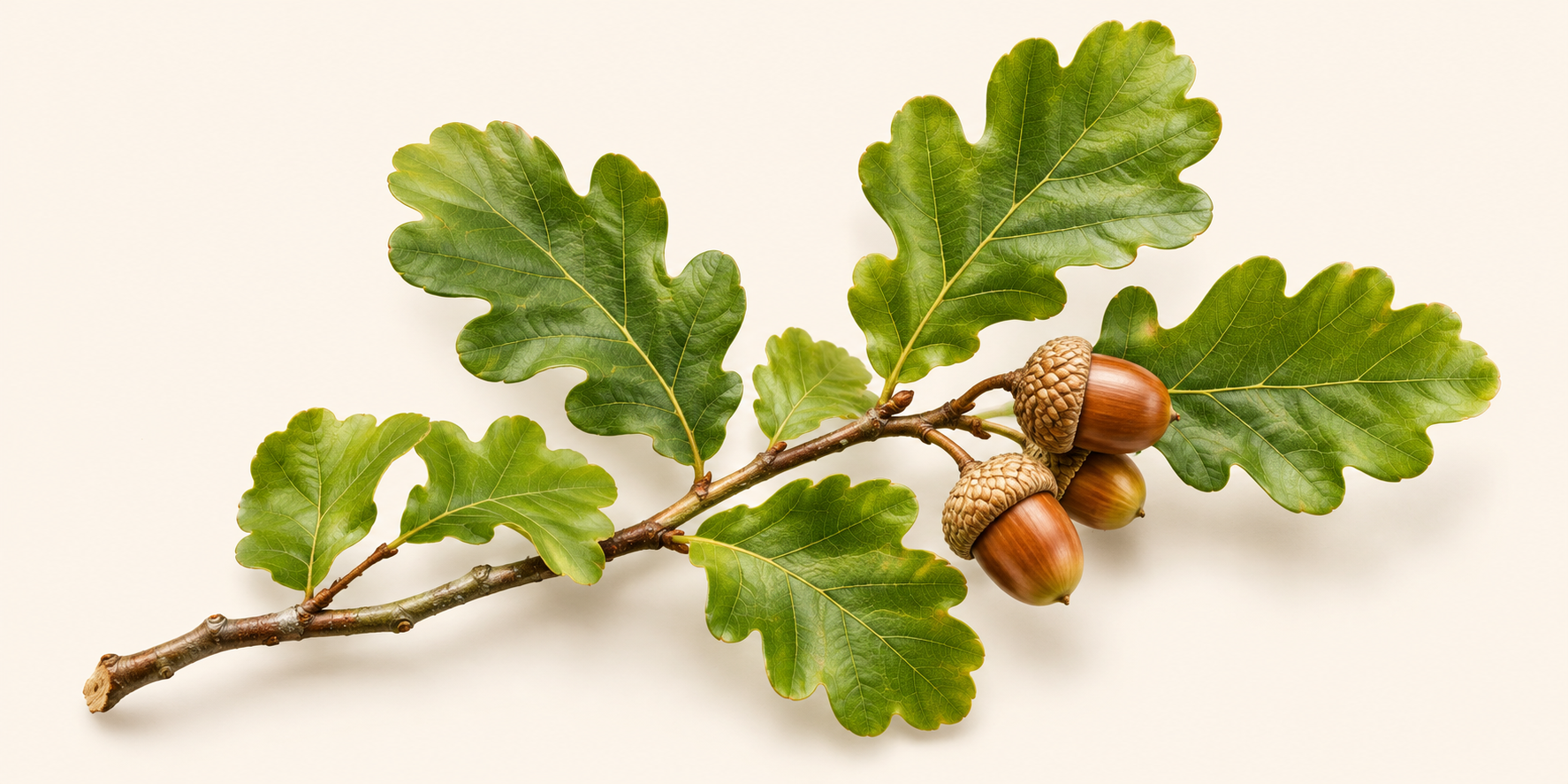
Image information
Click image to magnify
Illustration of an oak branch with green lobed leaves and brown acorns in textured cups.
- Credit
- Stunning Stamps · 2026
- Notes
- Digitally reconstructed
The portrait — Medal Head II
George V’s first small stamps used a photograph by W. & D. Downey, showing his face turned towards the viewer. The printed likeness disappointed him and attracted public criticism. A profile offered a fresh start, but changing the head also meant reconsidering the frames around it. [1, 6]
The need for a smaller portrait emerged during the troubled preparation of the fourpenny: the Coinage Head crowded George W. Eve’s wreath frame. The King preferred Mackennal’s medal portrait, so J. A. C. Harrison returned to that sculptural model and engraved a fresh, smaller head in March–April 1913. Known as Medal Head II, it fitted Eve’s pillar and wreath designs for the higher values. [1]
There is space around the forehead and behind the head, so the surrounding ornament remains clear. The neck ends in a diagonal sweep above the foliage. Look at the different directions of the lines in the hair, cheek and beard: each helps describe a different surface.
The South African medal shown here illustrates the sculptural source. The medal dates from 1910; “II” identifies the later stamp engraving. The earlier Medal Head (I) appears on the letterpress 1d and 2½d, while the Coinage Head appears on the ½d, 1½d, 2d, 3d and 4d. [1, 7]
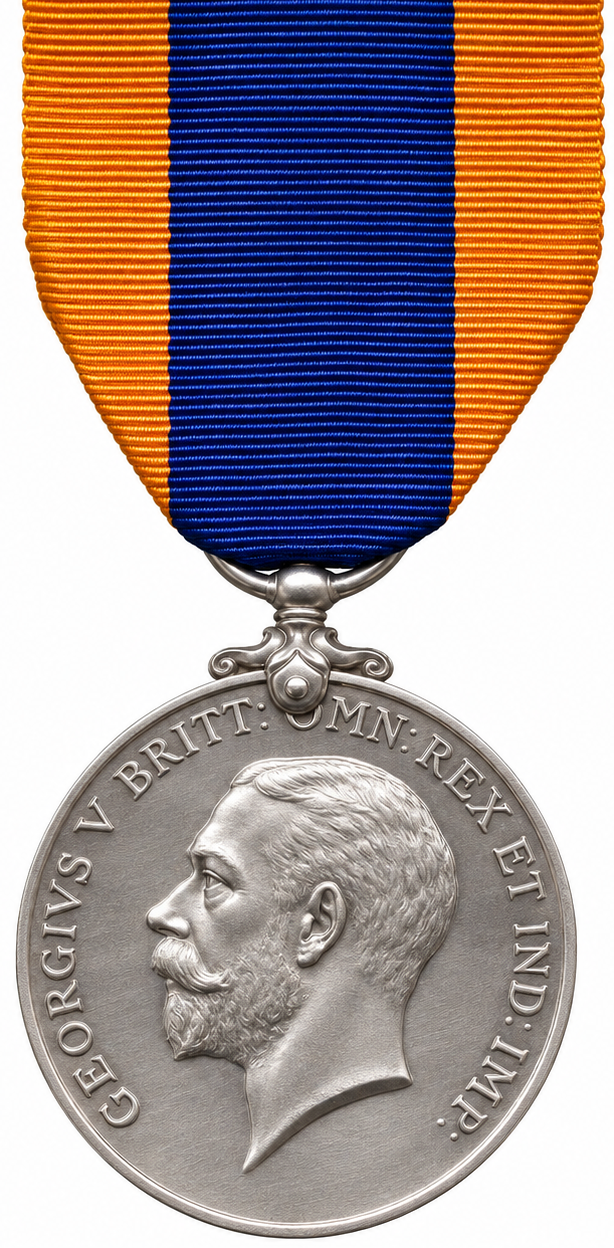
Image information
Click image to magnify
The front of the silver-coloured South African medal, showing George V’s bare head facing left beneath a blue ribbon with orange borders.
- Credit
- Stunning Stamps · 2026
- Notes
- Digitally reconstructed
Ink, paper and the printed image
The original dies were engraved, but these stamps were printed by typography, also called letterpress. Ink on the raised parts of a printing surface was pressed onto the paper. An engraved master does not mean the issued stamp was recess-printed. [8]
The width and spacing of printed marks create apparent tones. Closely worked hair and beard appear darker than the open background; unprinted paper supplies the highlights. This page represents the Harrison & Sons printing of the design. [8]
Olive-green ink forms the portrait and frame. Unprinted paper supplies the pale lettering and highlights.
Image information
Click image to magnify
Decorative blue, green and white advertisement for Mander Brothers printing inks, Wolverhampton.
- Credit
- Stunning Stamps · 2026
- Notes
- Digitally constructed
Lettering, value and arrangement
POSTAGE and REVENUE occupy bands above the pillars, bending upwards beside the crown. The two words name the stamp’s postal and fiscal functions. Revenue use means paying a tax or duty on a document; it is separate from paying to carry a letter. [9]
Coloured letters stand on pale ribbons or bands, keeping the words legible among the ornament.
SEVEN PENCE fills the panel beneath the portrait. The value is repeated in the two upper corners beside the crown.
The figure 7 is repeated for quick recognition. The panel below spells out the value in old pence, rather than leaving it as a number alone.
The straight pillars give this frame a more rectangular outline than the curling foliage on lower values.
Image information
Click image to magnify
Illustration of five red pillar boxes with royal cyphers.
- Credit
- Stunning Stamps · 2026
- Notes
- Digitally reconstructed
Image information
Click image to magnify
Illustration of a handwritten receipt with an Edward VII penny stamp cancelled by a signature.
- Credit
- Stunning Stamps · 2026
- Notes
- Digitally constructed
The crown above the head
A crown occupies the centre at the top. Rounded ornaments follow its arches above a patterned band, and a small cross completes the outline.
The crown sits in the frame above the King’s bare head. Its base joins the angled bands carrying the inscriptions over the two pillars.
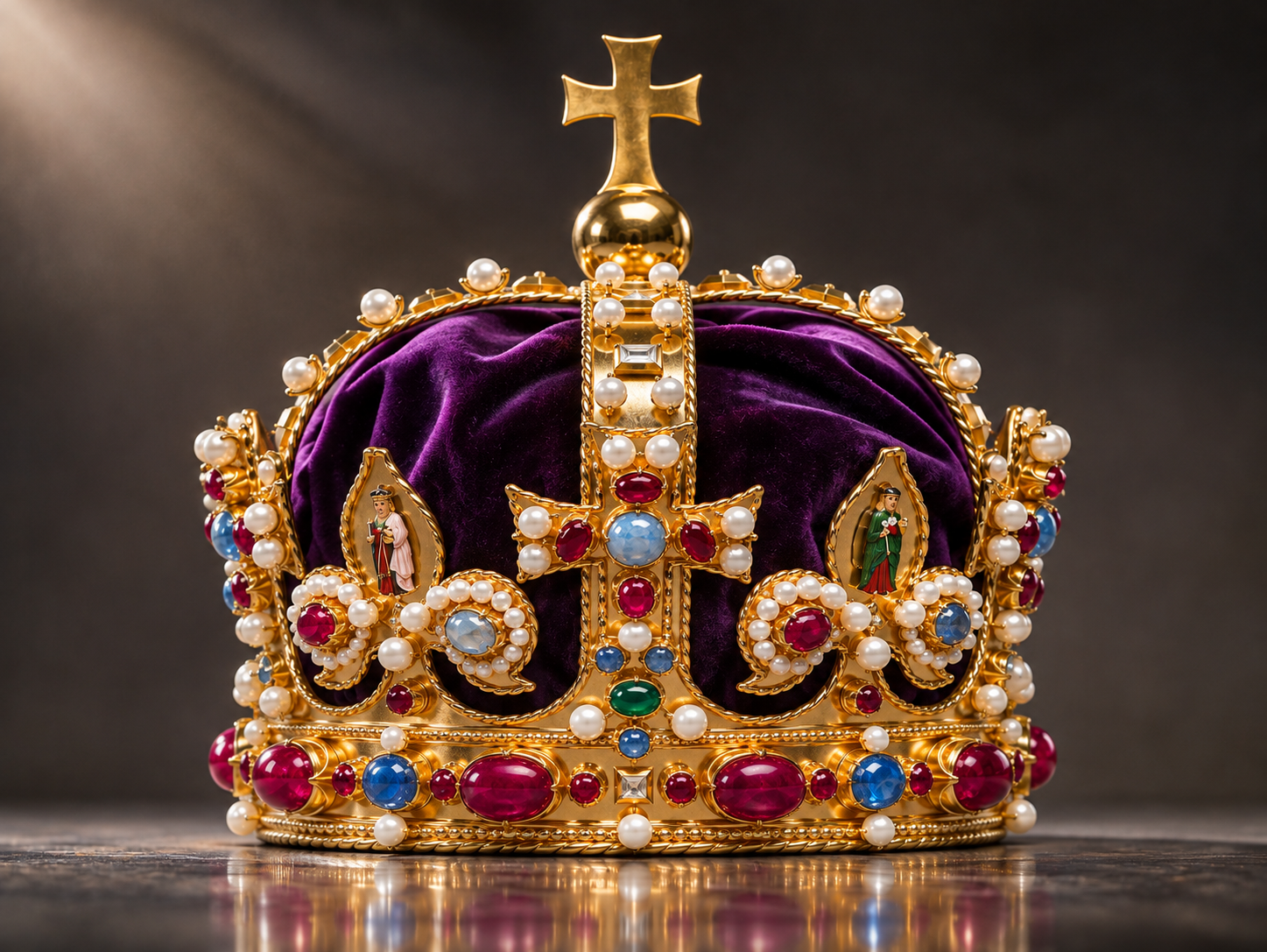
Image information
Click image to magnify
Gold Tudor royal crown with jewels, pearls, small figures and a purple cap.
- Credit
- Stunning Stamps · 2026
- Notes
- Digitally constructed
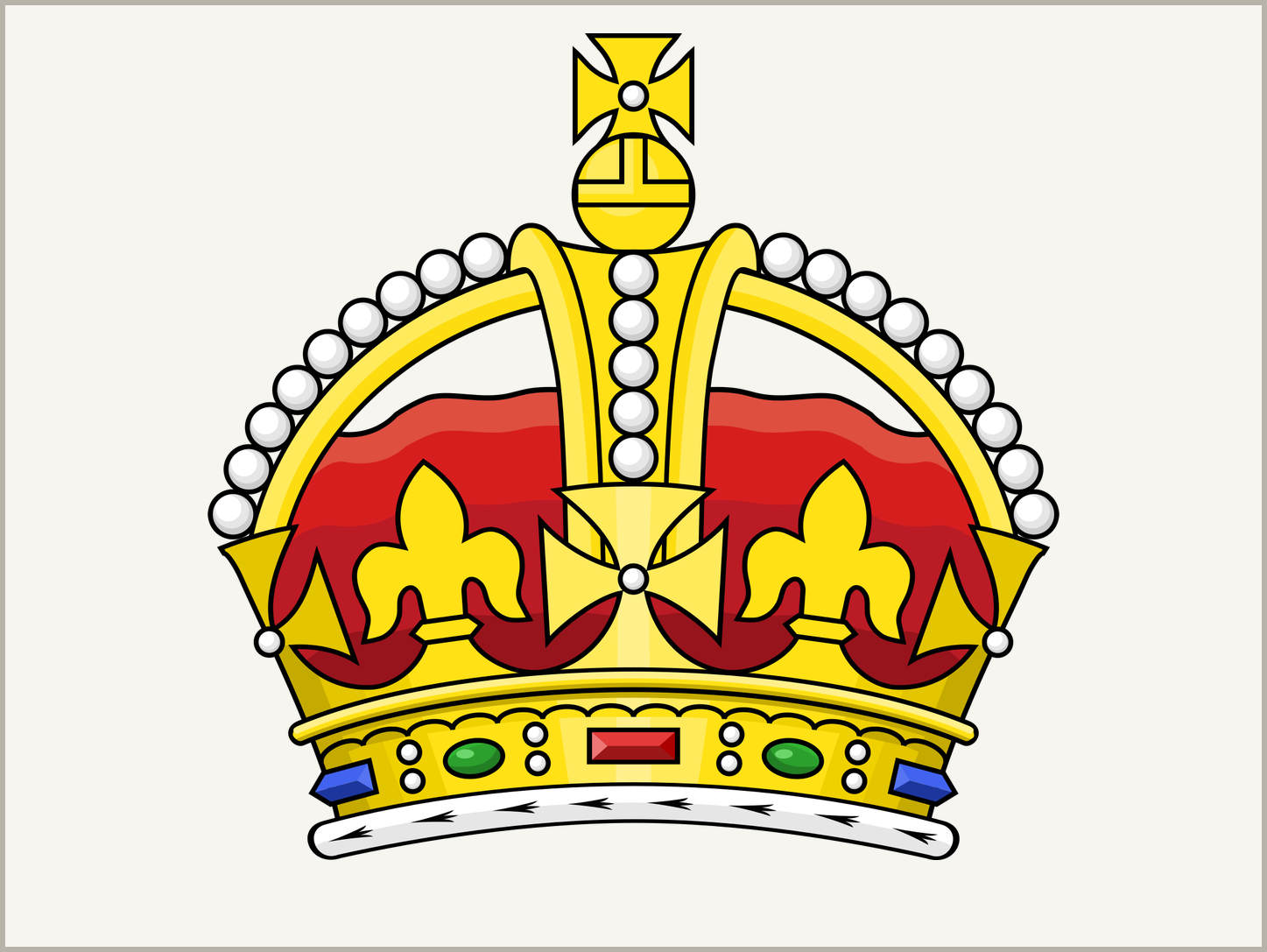
Image information
Click image to magnify
Heraldic Tudor Crown with rounded arches, a cross and orb, red cap, crosses and fleurs-de-lis.
- Credit
- Dgp4004 · Wikimedia Commons · CC0
The people and printer behind this stamp
Bertram Mackennal supplied the royal portrait model, George W. Eve designed the frame, and J. A. C. Harrison engraved the stamp portrait. [10, 11]
This page represents the Harrison & Sons printing of the Royal Cypher 7d. The first printings were produced at Somerset House, with Harrison & Sons responsible for subsequent production. Somerset House controls include a stop after the letter, as in C.13, while Harrison controls omit it. The reconstructed illustration is not evidence identifying the printer of an original specimen. [10, 11, 12, 13]
Sources
- Alan N. Moorcroft, The King's Head, RPSL display, 25 February 2010
- Collectors Club Philatelist, January–February 2023, p.27: Eve’s preliminary sevenpence design and its caducei
- The National Gallery: Mercury — the messenger, his winged staff and serpents
- National Trust Collections: Mercury, god of speed, travellers and commerce, object 1228445
- RPSL, The King's Head, pp.8–10, Pillar-frame engraving; issued specimens corroborated in audit follow-up
- Charles Goodwyn, Great Britain – King George V, Royal Philatelic Collection display, 17 September 1998
- Royal Museums Greenwich: Union of South Africa Commemoration Medal, MED2384, made 1910
- Adrian Keppel, The Four Kings, British Philatelic Bulletin 49, February 2012, pp.148–151
- The Postal Museum: British Empire Exhibition stamp history, p.16 — postage stamps and receipt duty
- Buckinghamshire Council: Harrison & Sons printworks
- Royal Philatelic Society London: The King’s Head, 2010
- GB Journal, vol. 28 no. 2 (1990): The Profile Head 1912-1934, pp. 38-39, printers and controls
- Universal Philatelic Auctions, sale 43: Royal Cypher Somerset House control listings including 7d C.13
← Return to the 7d olive-green stamp
Last reviewed · Facts checked