King George VI
Explore the everyday stamps of George VI in five principal issue groups.
The dates show first introductions within each group; printing and use could continue later. All five groups have individual stamp articles, with design stories, technical details and illustrated guides.
Original low values
Introduced: 1937–1939; 11d added in 1947
The first everyday George VI stamps, from ½d to 1s. Three frame designs share Edmund Dulac’s portrait; the 11d joined the series after the war.
15 stamp articles
Explore the stamps →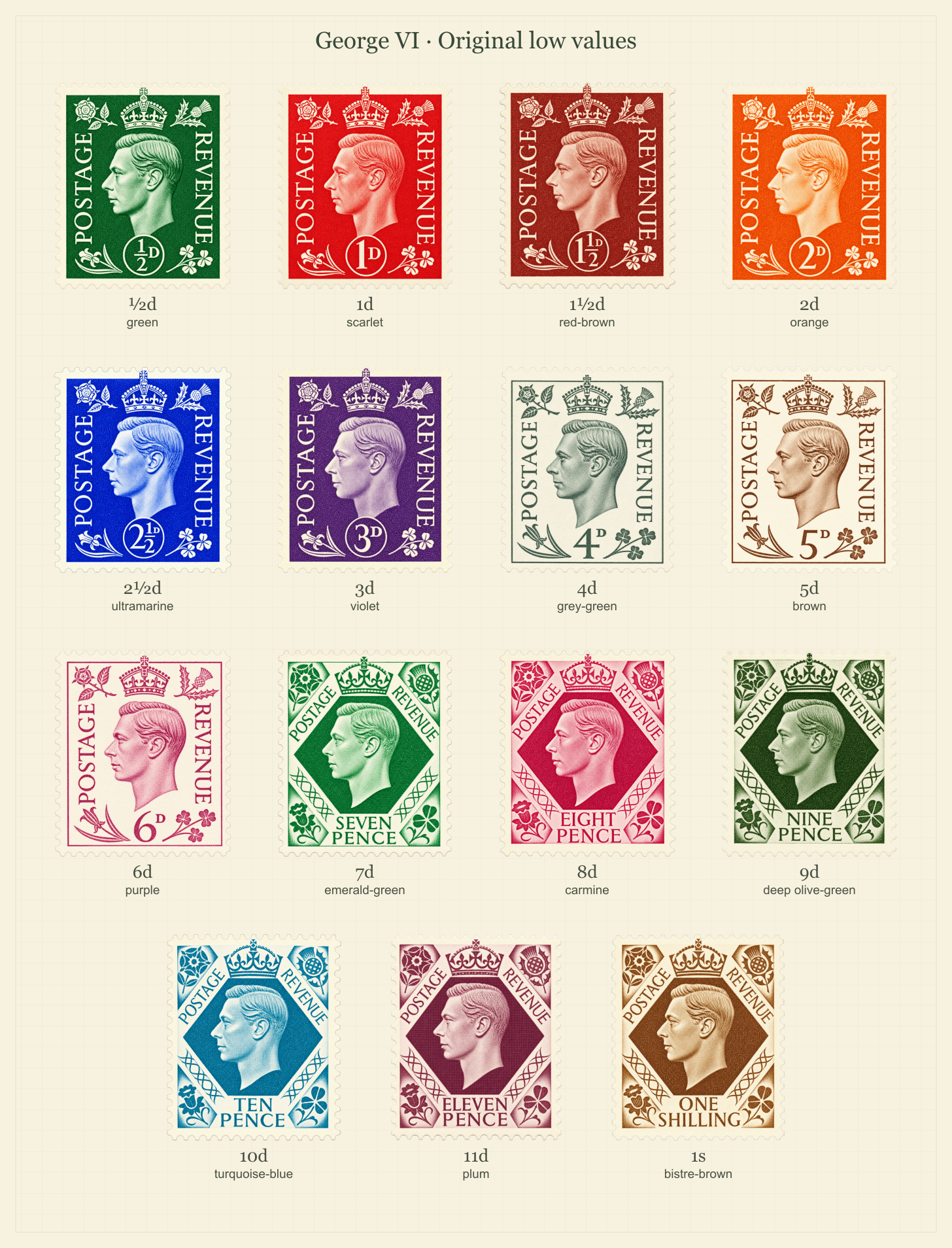
Wartime light colours
Introduced: 1941–1942
The six lowest values in paler colours, introduced during wartime economies. Their portraits and basic frames continued the original designs.
6 stamp articles
Explore the stamps →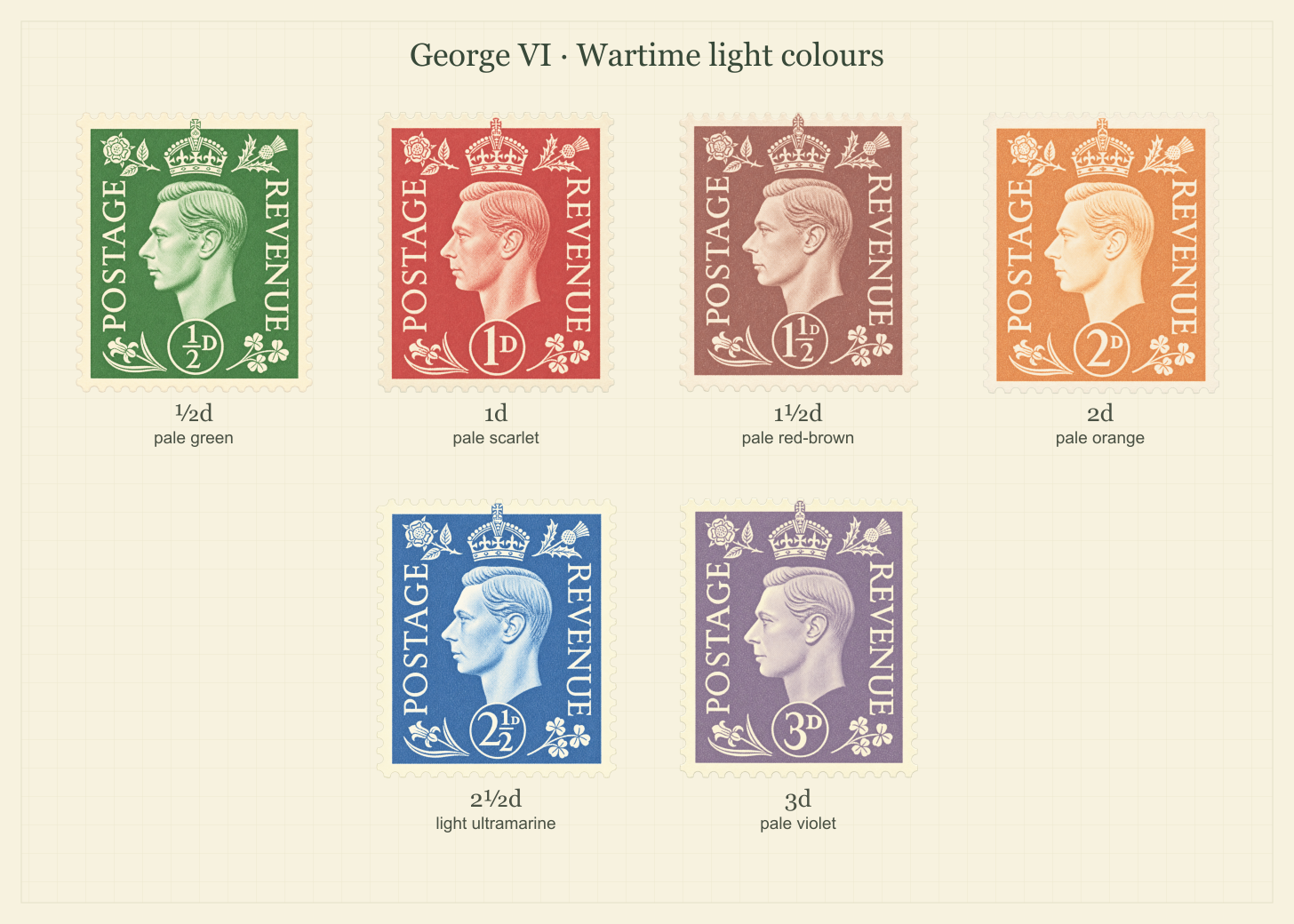
Changed colours
Introduced: 1950–1951
Six low values in reassigned colours, introduced to comply with Universal Postal Union conventions. As postal rates changed, blue, red and green were allocated to the denominations used for foreign letters, postcards and printed papers respectively. The other three values were also recoloured to distinguish them.
6 stamp articles
Explore the stamps →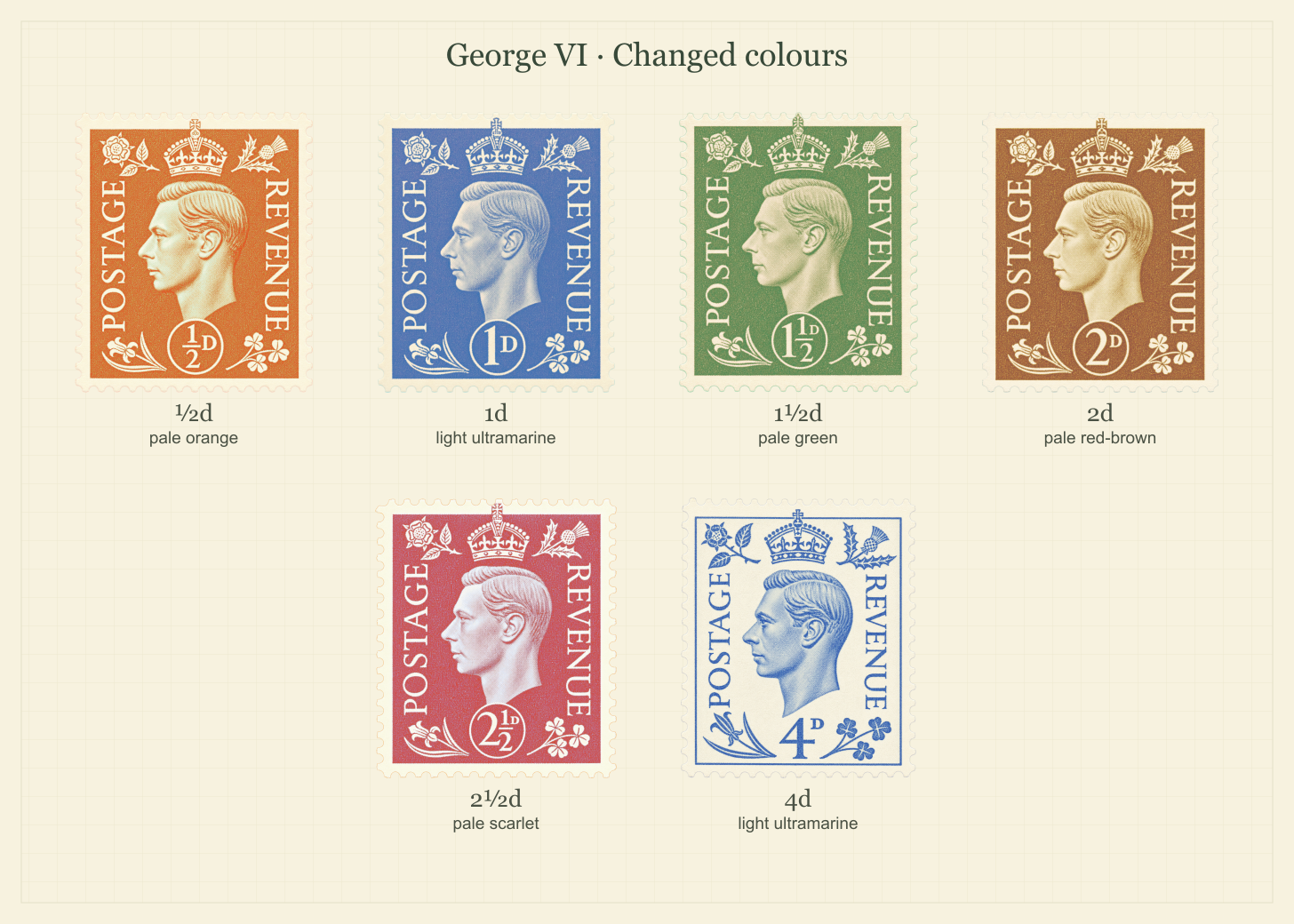
Earlier high values
Introduced: 1939–1948
These larger stamps helped pay for telegrams, overseas parcels and airmail: charges beyond the everyday letter. Dulac’s Royal Arms frame served the half-crown and five-shilling; Bellew’s floral frame surrounded Dulac’s portrait on the ten-shilling and later pound. The first three values appeared in 1939, wartime colour changes followed in 1942, and an adapted £1 joined them in 1948.
6 stamp articles
Explore the stamps →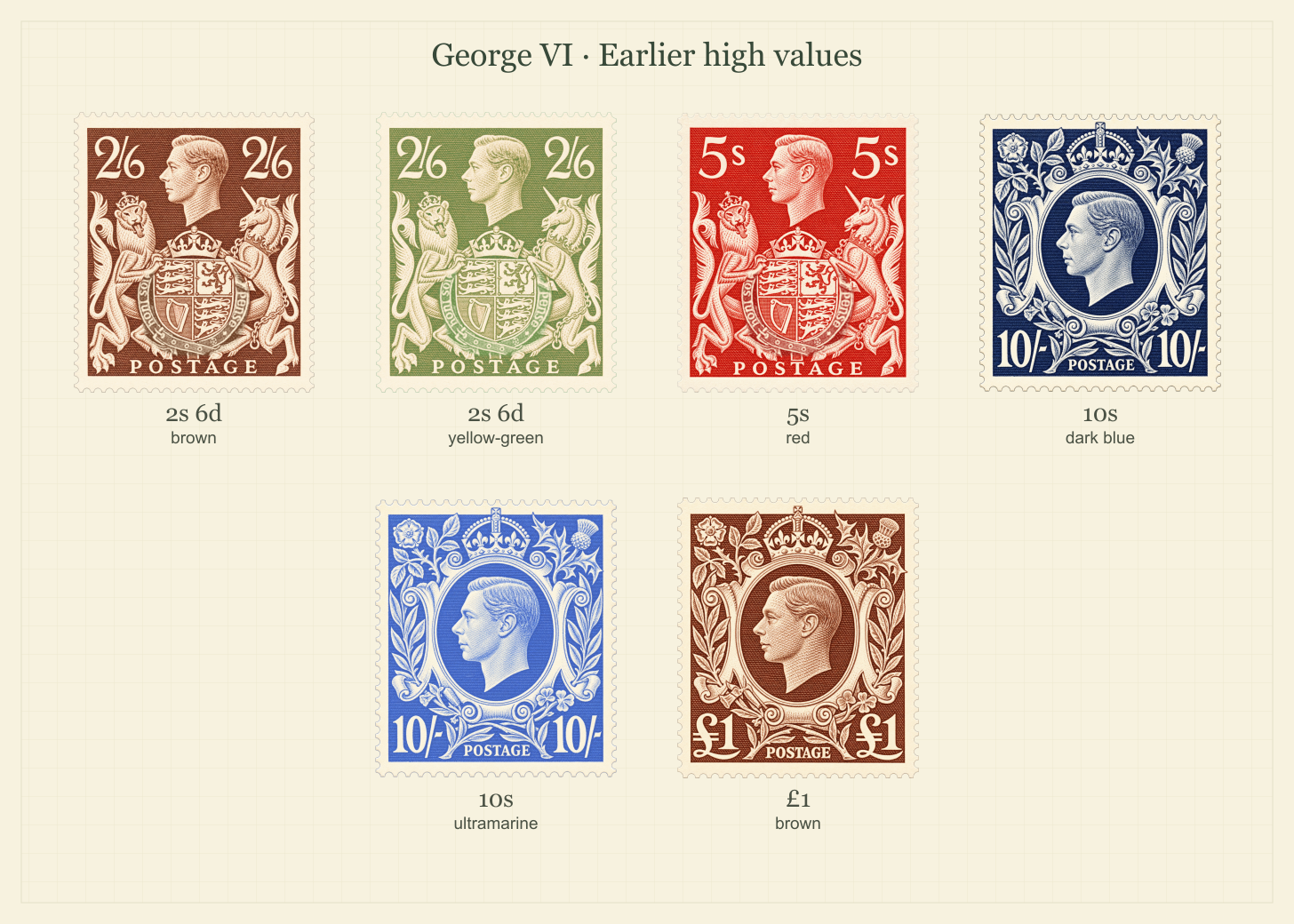
Pictorial high values
Introduced: 1951
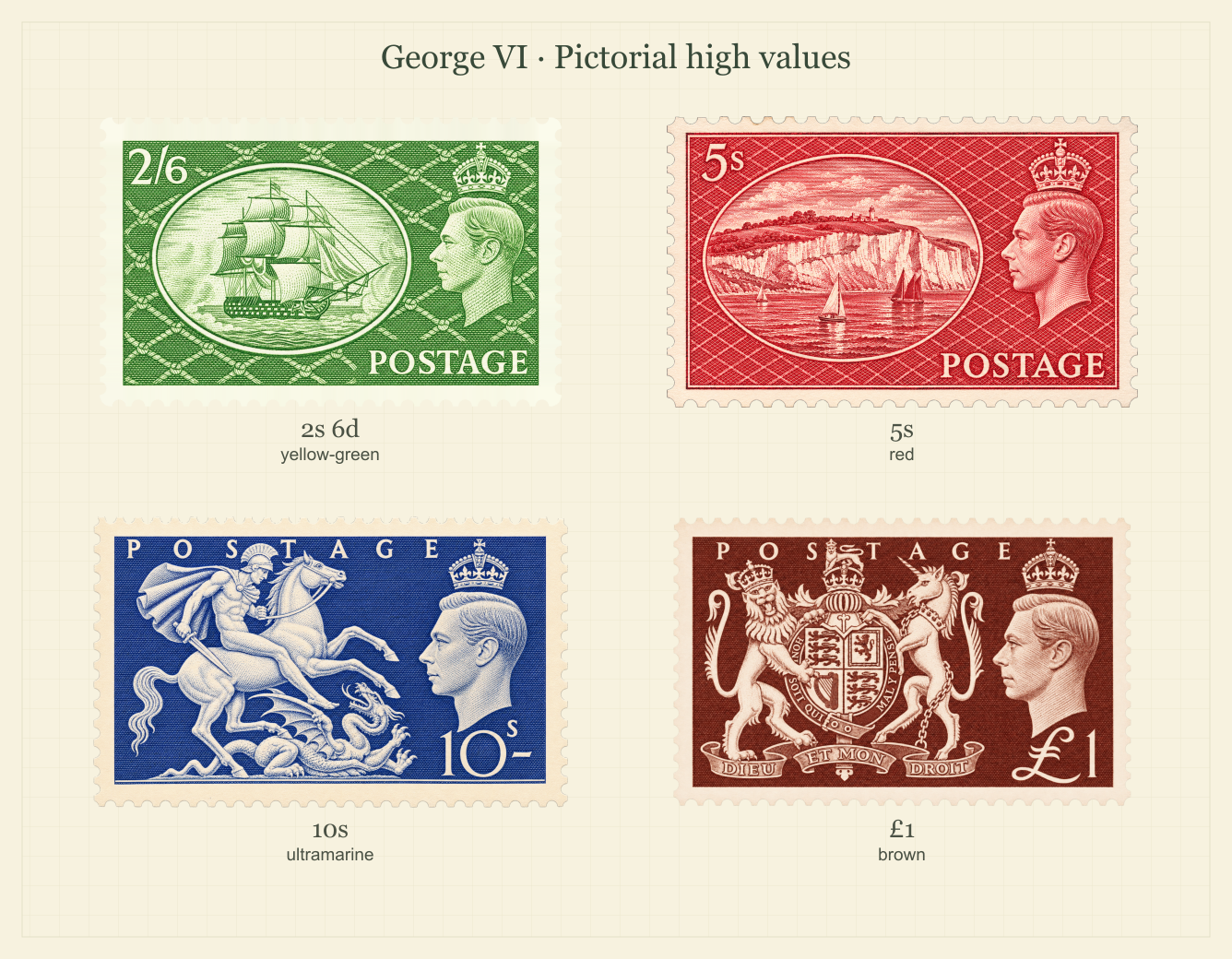
Four wide, recess-printed definitives introduced on 3 May 1951: HMS Victory, the White Cliffs of Dover, St George and the dragon, and the Royal Arms. Issued alongside the Festival of Britain stamps, these high values continued in everyday postal service after the Festival.
4 stamp articles
Explore the stamps →