The tenpence had a second life. Introduced in 1848 for overseas postage, it lost much of its purpose when the rate to France fell to fourpence. Supplies were withdrawn in 1855, but renewed demand brought stocks of the brown embossed stamp back into use in the 1860s. [1]
Stories
The stamp that had to wait for its engraver
The stamp that had to wait for its engraver
The tenpenny brown and one-shilling green were intended to appear together in September 1847. The government had entrusted their portraits to William Wyon, Chief Engraver at the Royal Mint, who was already famous for his work on coins and medals.
But Wyon had other commissions. His work on service and campaign medals took priority, delaying the completion of the tenpenny design. The green shilling appeared on 11 September 1847, while its brown companion remained unfinished. [6, 7]
The first tenpenny die was registered in May 1848. Even then, the public had to wait until 6 November before the new stamp was issued.
The delay illustrates the difficulties of relying on a celebrated craftsman. Wyon's skill made him an obvious choice for a secure and beautifully engraved stamp, but that same reputation meant his services were in demand elsewhere.
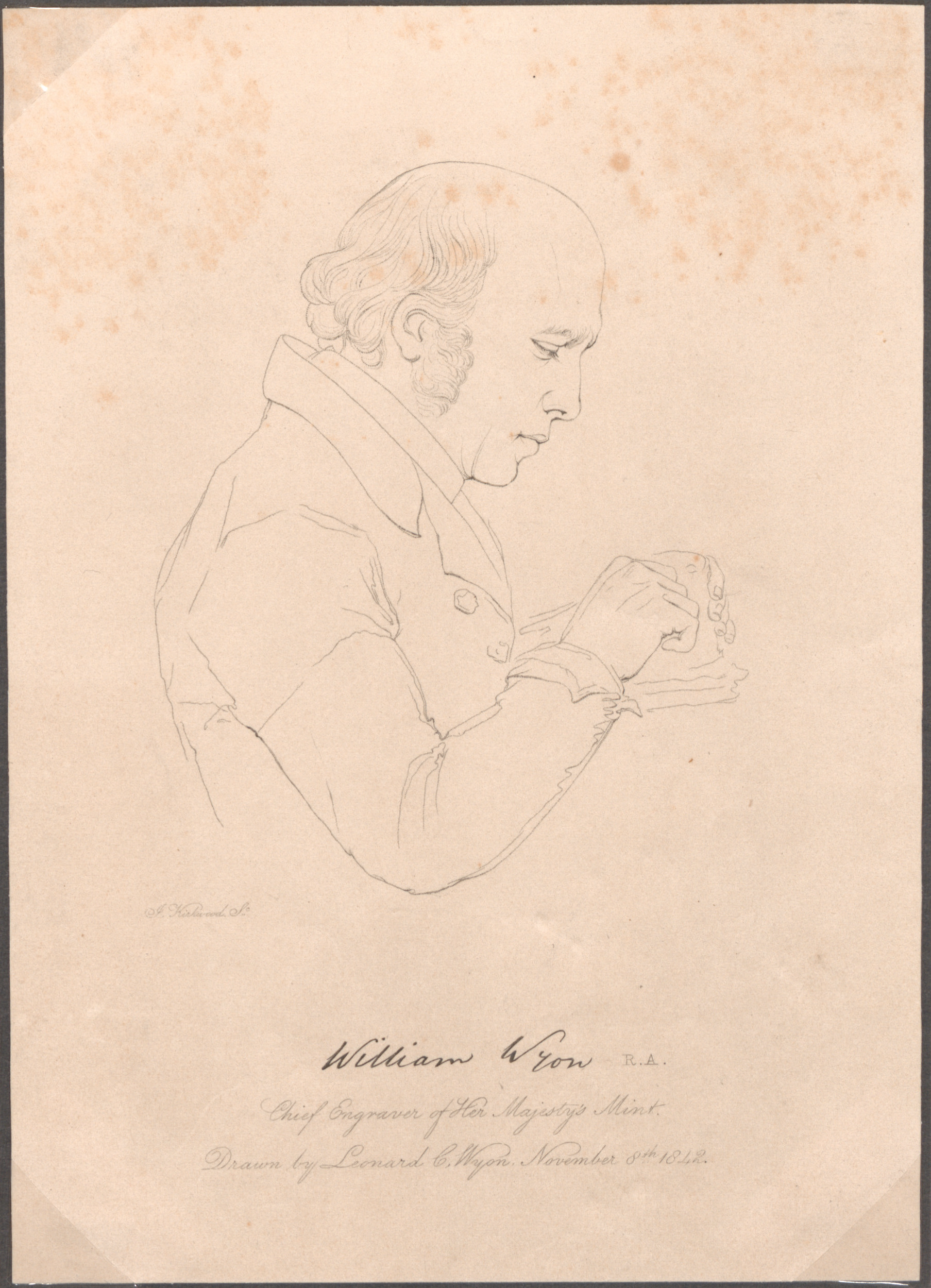
William Wyon at work, drawn by his son Leonard Charles in 1842.Image information
Click image to magnify
Pencil drawing of William Wyon in profile, holding a small object, with identifying inscriptions beneath.
Credit
Leonard Charles Wyon, William Wyon, R.A., chief engraver of Her Majesty’s Mint (1842). The Metropolitan Museum of Art, Thomas J. Watson Library; Gift of Romano I. Peluso. Public domain / CC0.
Before the tenpenny die was ready, the government needed to decide what colour the new stamp should be.
On 17 April 1847, the Commissioners of Stamps and Taxes wrote to Colonel William Leader Maberly, Secretary of the Post Office, enclosing a sample in the proposed brown. There was an awkward complication: the tenpenny die had not yet been completed. [6]
The officials therefore used the one-shilling die to produce an impression in brown. It demonstrated the proposed colour, even though the denomination was wrong.
By then the intended tenpenny stamp had already existed on paper for several months. William Wyon had submitted a sketch to the Treasury in December 1846, but turning the design into a working embossing die was taking longer.
For a brief moment in the stamp's development, the best available demonstration of the Ten Pence Brown was actually a brown One Shilling.
Four thousand stamps made to demonstrate one
The Post Office faced a practical problem before the tenpenny stamp appeared. Postmasters needed to recognise the new design, but many had never handled an embossed adhesive stamp of this value.
The government prepared 4,000 stamps marked SPECIMEN. These were supplied to the Post Office in September 1848, before the ordinary stamps were ready for distribution. [6]
An official circular dated 27 October announced the new stamp and arranged for specimens to be sent to postal officials.
One remarkable survivor is a notice sent by Francis Abbott at the General Post Office in Edinburgh. Two brown tenpenny stamps, each marked SPECIMEN, remain attached to the printed instructions. [8]
The notice preserves the moment when an unfamiliar design was introduced to the people expected to recognise and handle it. Rather than relying on a written description, the authorities supplied the real object.
Twenty-four impressions, all made separately
The tenpenny brown was manufactured at Somerset House, using embossing presses supplied by the Dryden Brothers of Lambeth. Unlike the Penny Black, it was not printed from a plate containing hundreds of stamps.
A worker fed the paper into the press by hand, positioned it beneath the die and made a single impression. The sheet then had to be moved for the next stamp. Twenty-four separate operations were needed to complete a tenpenny sheet, arranged in six rows of four. [6]
The operators had difficulty keeping the impressions in straight lines and at regular intervals. Some were too close together; others overlapped. The shape and spacing of a finished sheet therefore depended partly on the skill and judgement of the person operating the press.
The tenpenny was an expensive stamp to manufacture. Its elaborate appearance concealed a slow process that demanded repeated, careful handwork.
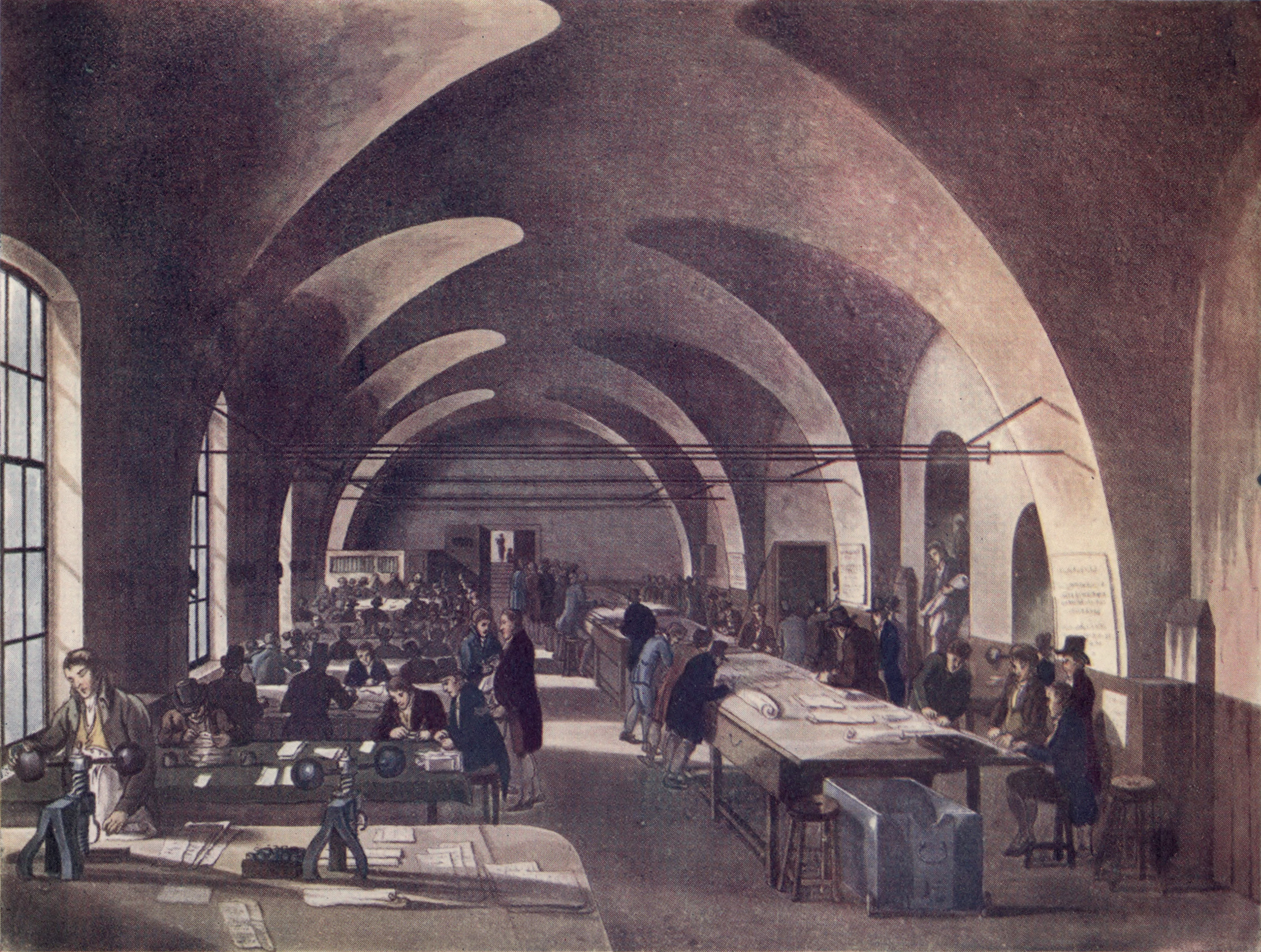
The Stamp Office at Somerset House, c.1809–1810, decades before these embossed stamps were made.Image information
Click image to magnify
Coloured aquatint of clerks and workers at long desks beneath the vaulted ceiling of the Stamp Office at Somerset House.
Credit
After Thomas Rowlandson and Augustus Charles Pugin, Stamp Office, Somerset House, The Microcosm of London, plate 74 (c.1809–1810; 1904 reproduction), via Wikimedia Commons. Public domain.
The tenpenny design outlived its original purpose. Several steel dies had been prepared for embossing the stamps, and some were retained after the government stopped manufacturing them.
In 1889, more than forty years after the tenpenny stamp first appeared, dies of the same design were put to work producing embossed impressions on telegraph forms. Dies numbered 5 and 6 were used in blue for foreign and colonial telegram forms. [9]
The colour later changed back to brown, and further dies continued to be used for telegraph forms and impressed stationery.
The later history of these dies has interested researchers because the surviving records do not agree entirely about their earlier use. In 1899, Hastings Wright and A. B. Creeke reported seeing apparently genuine adhesive-stamp impressions from die 5, although later research identifies only dies 1 to 4 as regularly used for the original postage stamps. [6, 9]
The old tools had found a new job, carrying Victoria's youthful portrait into another generation of communications technology.
The papermaker who hid blue threads inside the stamp
John Dickinson was a successful papermaker and inventor. Among his inventions was a method of incorporating coloured threads into paper while it was being manufactured, making the finished product much harder to imitate.
Dickinson patented the idea in 1829 and developed it further over the following decade. He supplied security paper for the early postal stationery, and the same principle was adopted for the embossed tenpenny stamp. [9, 10]
Two narrow blue threads were normally positioned vertically through each stamp, about five millimetres apart. Although collectors call this silk-thread paper, the threads in the embossed stamps were actually made from twisted cotton.
Placing the embossed impression over the threads required care. Sometimes the alignment went wrong, leaving only one thread visible or positioning the threads unusually far apart.
Dickinson had helped make a seemingly ordinary sheet of paper into a security device. The tiny blue lines in the finished stamp were evidence of an invention concealed within the paper itself. [7, 9]
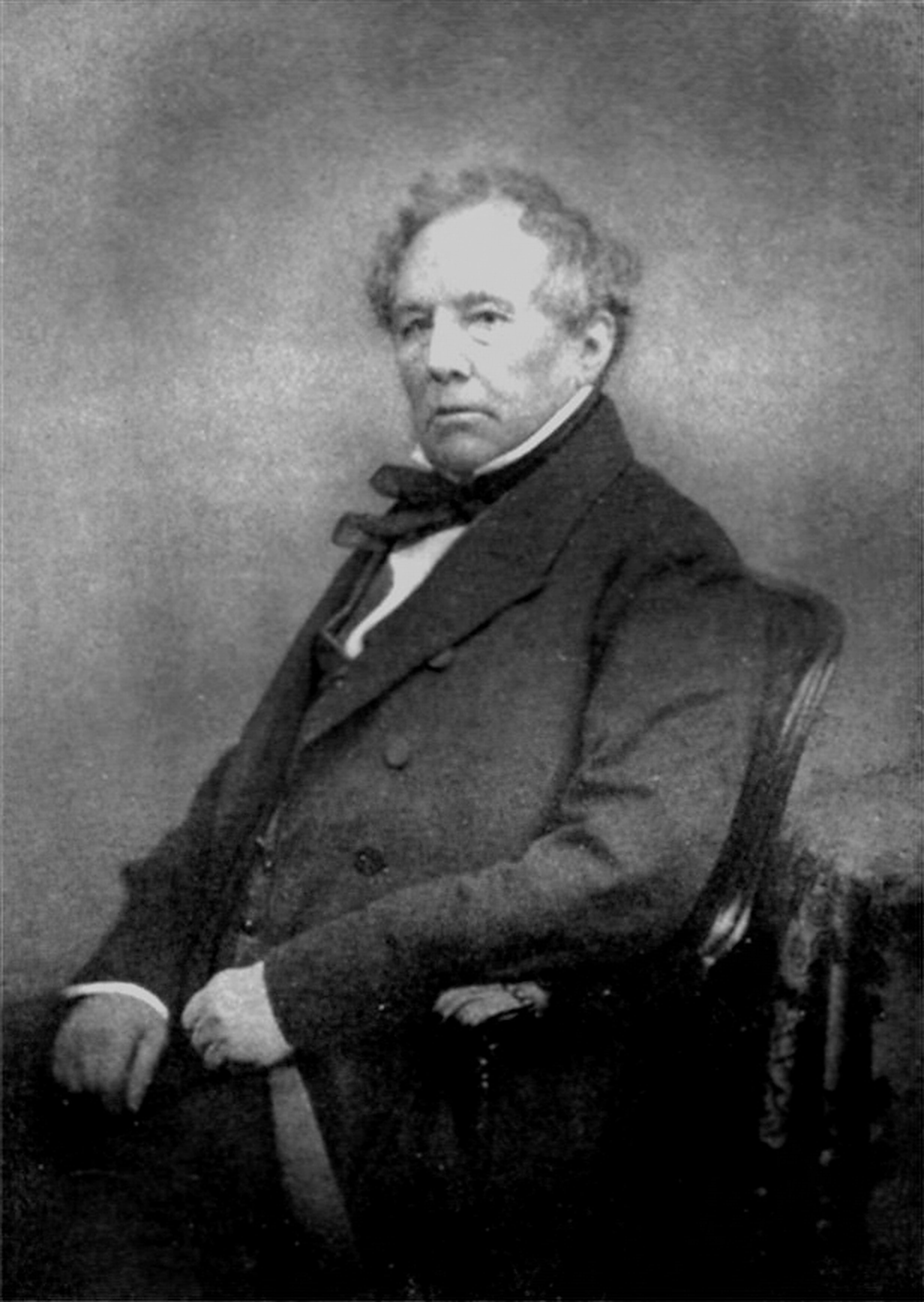
John Dickinson, whose invention placed security threads inside the paper.Image information
Click image to magnify
Black-and-white portrait of the papermaker John Dickinson, seated in a dark coat and bow tie.
Credit
John Dickinson, papermaker; portrait maker and date unrecorded. Reproduced in John Parker Haythornthwaite, The Parish of Kings Langley (1924), via Wikimedia Commons. Public domain; Commons contrast adjustment by Mike Hayes (2015).
Another member of the Hill family enters the story
Rowland Hill is remembered for transforming the British postal system, but the embossed stamps also involved his nephew, Ormond Hill.
Ormond was the son of Rowland's brother Edwin. He had entered the government department responsible for postage stamps in 1841 and was working at Somerset House when the new embossed stamps were developed. [11, 6]
Ormond contributed to the design of the new stamps. William Wyon, Chief Engraver at the Royal Mint, supplied the royal portrait, while the surrounding ornament and lettering were developed for the embossing dies.
Unlike the earlier Penny Black, which had been printed by the private firm Perkins, Bacon & Petch, the tenpenny brown was produced by the government's own stamping department.
The Hill family's connection with postage had extended into the workshop. Rowland's reforming work was being carried forward by people who included his own nephew, helping turn a new design into something the government could manufacture. [6, 11]
Why do some stories appear on several pages?
Every page is written to make sense on its own. Visitors often arrive directly at a particular stamp or subject, without having explored the rest of the site.
Some stories are relevant to several stamps, so they are repeated where they help explain what you're looking at. For those exploring a series, the details specific to each stamp generally come first, with the more familiar stories further down the page.
This way, you can explore the site in any order without missing interesting background.
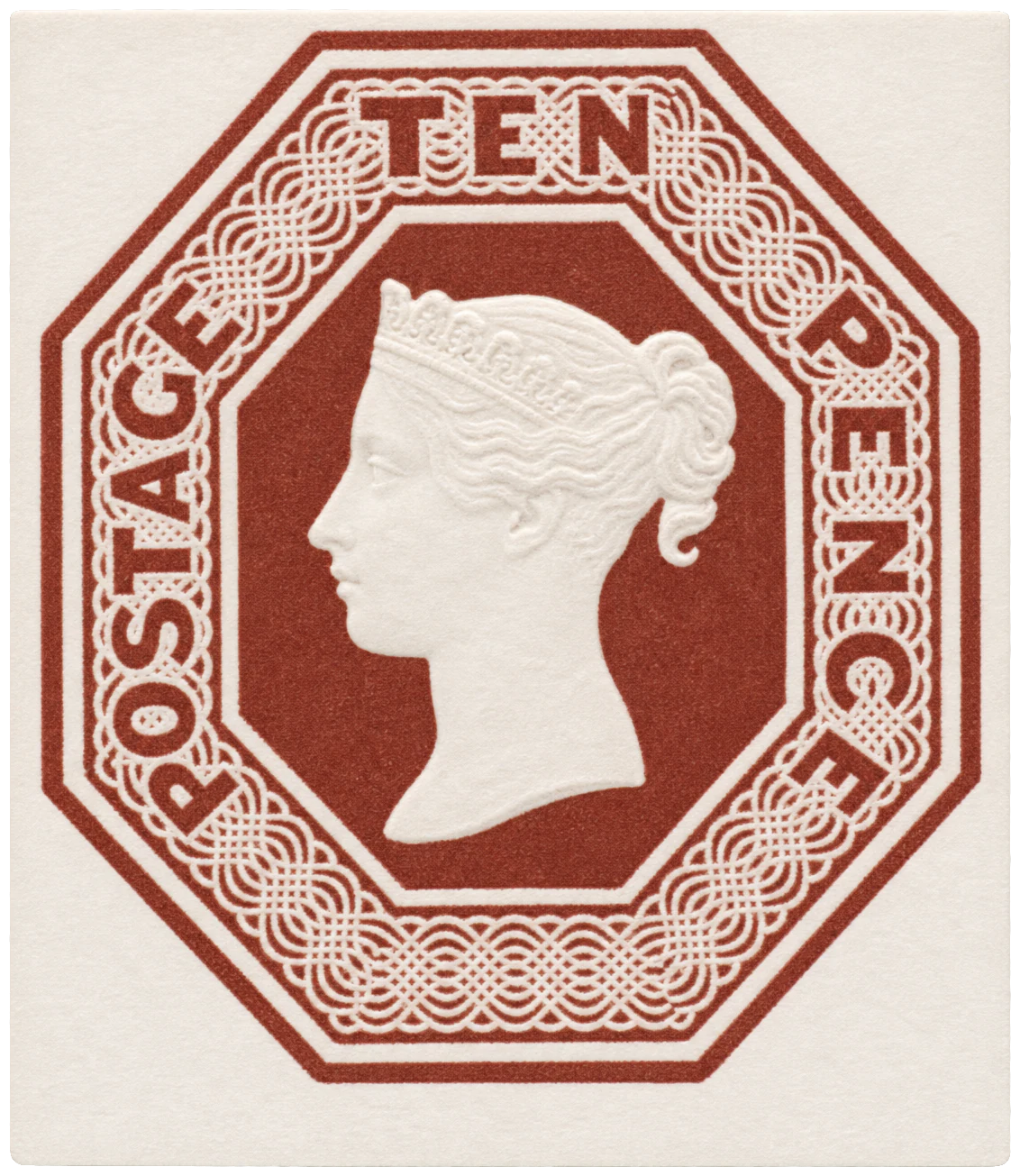
The tenpence uses a brown octagonal frame around a white royal profile. TEN and PENCE replace the shilling’s value, while a different hanging curl and interlaced border give this denomination its own details. [12]
A stamp can be printed, sent to post offices, put on sale and made valid for postage on different dates. An official notice or instruction can establish when it was intended to be used; a dated letter shows that a particular example was actually used.
An early surviving cover is evidence of use by that day. It does not necessarily identify the first day of sale. A year in the heading may also cover later printings of the same design.
On this stamp
The 1848 embossed tenpence was first issued on 6 November 1848. Old stocks were supplied again in the 1860s.
Embossing changes the shape of the paper. The recessed parts of a metal die receive the raised portions of the design as the paper is pressed against a softer counterpart underneath. Ink on the die’s surface colours the flatter areas, leaving the portrait and fine ornament in uncoloured relief.
Each adhesive stamp was struck separately. An operator repositioned the paper for the next impression instead of printing a complete sheet from one plate. Uneven spacing, tilted impressions and overlapping designs are consequences of this process.
On an original, the white portrait has actual shallow relief. A flat photograph can suggest it through light and shadow, but cannot establish the depth or condition of the embossing.
On this stamp
The 1848 embossed tenpence was made one impression at a time. Its original raised portrait is represented here by a digital reconstruction.
Imperforate means that the sheet had no punched rows of holes for tearing the stamps apart. Each stamp had to be cut from the paper. The octagonal or curved outline belongs to the printed design; it did not dictate the shape of the piece of paper.
A stamp cut square retains the blank paper outside the design. A stamp cut to shape has been trimmed around the frame. Closely spaced or overlapping impressions could make it impossible to cut out one stamp with clear margins all round, even before later damage or trimming is considered.
For an original specimen, look for an intact design, genuine paper margins and undamaged relief. The complete rectangular margins in these reconstructions illustrate the intended design; they are not evidence about a surviving stamp’s condition.
On this stamp
The illustration shows the 1848 embossed tenpence with rectangular paper margins around its complete design.
John Dickinson’s security paper incorporated coloured threads within the paper as it was made. The shilling and tenpence normally have two blue threads running vertically through each stamp. Their presence was an additional obstacle to making convincing imitations.
Collectors traditionally call it silk-thread paper. The RPSL account identifies the material as twisted cotton. These are fibres embedded in the sheet, not blue lines printed on its surface.
Because impressions were positioned by hand, a stamp can lie awkwardly across the pairs of threads. A thread near an edge, or an unusual distance between threads, needs to be assessed with the impression’s position in mind.
On this stamp
The shilling and tenpence used this threaded paper. The threads normally run vertically, but irregular placement of an impression can change their position within a stamp.
A watermark is a pattern formed by differences in paper thickness during manufacture. A security thread is a separate strand of material embedded in the paper. They are different methods of making the paper identifiable.
The shilling and tenpence embossed adhesives used Dickinson’s blue-thread paper without a watermark. The later sixpence used wove paper with large VR letters as a watermark and no blue threads.
On this stamp
No watermark is recorded for this issue; its paper contains blue threads.
A post-office sheet is the unit supplied for sale and accounting. All three embossed values were arranged to total one pound: twenty shillings, twenty-four tenpences or forty sixpences. Their different stamp counts follow from their face values.
The shilling sheet had five rows of four; the tenpence had six rows of four. The sixpence sheet comprised two panes of twenty. A pane is a group within a larger sheet.
These arrangements describe the intended layout, not a plate carrying twenty or forty designs. Each impression was made singly, so the spaces between neighbouring stamps could vary.
A working die is the metal tool that directly impresses the paper. It is distinct from the original portrait die and the intermediate tools used to reproduce the design. These stamps were made one at a time, so a working-die number is not a sheet position or a printing-plate number.
Small W.W. initials refer to William Wyon; an accompanying numeral identifies the working die. These marks lie at the base of the bust. Weak embossing can leave them incomplete or unreadable, so absence of a clear mark is not enough to identify a variety.
The dies recorded for issued adhesives are 1–2 for the shilling, 1–4 for the tenpence and 1 for the sixpence. Higher numbers also occur in the history of postal stationery and telegraph forms; those later uses must be kept separate.
On this stamp
Dies 1–4; early Die 1 lacks initials and number. No microscopic die number is assigned to this reconstruction.
Gum arabic is a water-soluble adhesive. The paper was gummed before it went into the embossing press, so the operator had to present the correct side to the die. Contemporary supplies ranged from nearly clear to yellowish or brown.
Some sixpence sheets were accidentally impressed on the gummed side. Ormond Hill’s letter of 28 February 1855 explains that the gum had been coloured to make the two sides easier to distinguish. The resulting greenish gum is a feature of later sixpence supplies, not the colour of the printed design.
The gum on an original belongs to its condition history: washing can remove it, and a later application is not original gum. Its presence or colour cannot be assessed from a front-only illustration.
On this stamp
The green-tinted gum introduced for the sixpence is not recorded for this value.
A stamp catalogue gives each listed issue a reference number. SG means Stanley Gibbons, the publisher of the catalogue used here. These numbers help collectors refer to the same issue; they are not serial numbers printed on individual stamps.
A range of numbers groups related entries. Colour, paper or perforation differences may account for separate listings within that range.
On this stamp
This illustration represents SG57. It does not certify an original’s shade, gum, margins or working die.
Somerset House housed the Inland Revenue’s Stamping Department. Its work included manufacturing stamps and controlling their supply. In 1914 the relevant staff and responsibilities passed to the Post Office.
On this stamp
The Board of Stamps and Taxes’ Stamping Department at Somerset House produced the 1848 embossed tenpence, striking each impression separately.
William Wyon was a medallist and engraver at the Royal Mint. His models of royal heads were made for coins and medals and also became sources for stamp portraits.
On this stamp
Wyon engraved the original portrait used on the 1848 embossed tenpence, drawing on his City of London medal.
Thomas Moss engraved stamp ornament and lettering. His recorded work on the Victorian embossed adhesives includes their frames and the curls added to the royal portrait.
On this stamp
Moss is credited with engraving the frame, inscriptions and added curl.
The country identifies the postal authority that issued the stamp. The monarch identifies the ruler whose portrait it carries. A definitive is an everyday stamp intended for regular postal use.
On this stamp
This is a Great Britain definitive bearing Queen Victoria’s portrait.
The denomination is the stamp’s face value: the amount of postage it represents. Its price to a collector can be quite different.
In Britain’s old currency, 12 pence made one shilling and 20 shillings made one pound: 240 pence altogether. The abbreviations were d for pence, s for shillings and £ for pounds. The d comes from the Latin denarius. A halfpenny, written ½d, was half an old penny.
On this stamp
Tenpence was two old pence short of a shilling. Twenty-four tenpences made one pound.
A shade is a variation within a stamp’s colour. Some variations receive their own catalogue numbers even though the design and denomination stay the same.
Compare known examples under consistent lighting. Fading can change a stamp’s appearance, and photographs or screens can alter how colours look. A catalogue colour name helps describe a shade; it is not a colour test by itself.
On this stamp
The tenpence was issued in brown with variations in depth. Its warm brown reconstruction represents the recorded SG57 design.
These three values share a method of manufacture: pressure moulded the paper into a raised design while colour was applied to its flatter surface. The shilling appeared in 1847, the tenpence in 1848 and the sixpence in 1854.
They are adhesive stamps, made on gummed sheets and cut out for sticking to letters. Embossed postal stationery carries its stamp directly on an envelope or other form. Related designs and dies were used for that work too, so an embossed impression is not automatically one of these adhesives.
On this stamp
This 1848 tenpence belongs to the three-value embossed adhesive series.
A higher denomination let a sender pay a substantial charge with fewer stamps. These values served overseas postage; the sixpence also paid the registration fee. A face value alone does not identify the service for which a stamp was used.
Foreign postage depended on the date, destination, route and weight. Several stamps could pay a heavier letter or combine to make a rate for which there was no single denomination. Registration was an additional service charged separately from ordinary postage.
A complete cover preserves evidence that a loose stamp has lost: address, date, routing instructions and the other stamps used with it. Those details are needed before assigning a particular postal rate.
On this stamp
The tenpence paid certain European rates and could be combined with a shilling for a charge of 1s 10d. It was withdrawn in August 1855; old stocks returned to use in the 1860s as rates changed.
A cancellation marks a stamp as used, preventing it from paying postage again. A dated postmark and the obliterating mark over the stamp can be separate impressions.
The prominent white head was considered useful for cancellation: it met the cancelling device readily, and its uninked surface took the obliterating ink clearly. This was one reason the authorities favoured embossing for the higher values.
A cancellation can obscure the tiny die marks or interrupt the apparent outline of the portrait. On a loose stamp, a numeral or part of a date may be informative without proving the destination or charge paid.
On this stamp
The unused reconstruction has no cancellation. On a used original the inked obliteration may partly conceal the relief and die initials.