
The design of the 4d vermilion
Queen Victoria · Great Britain · Thomas De La Rue & Co. · 1876
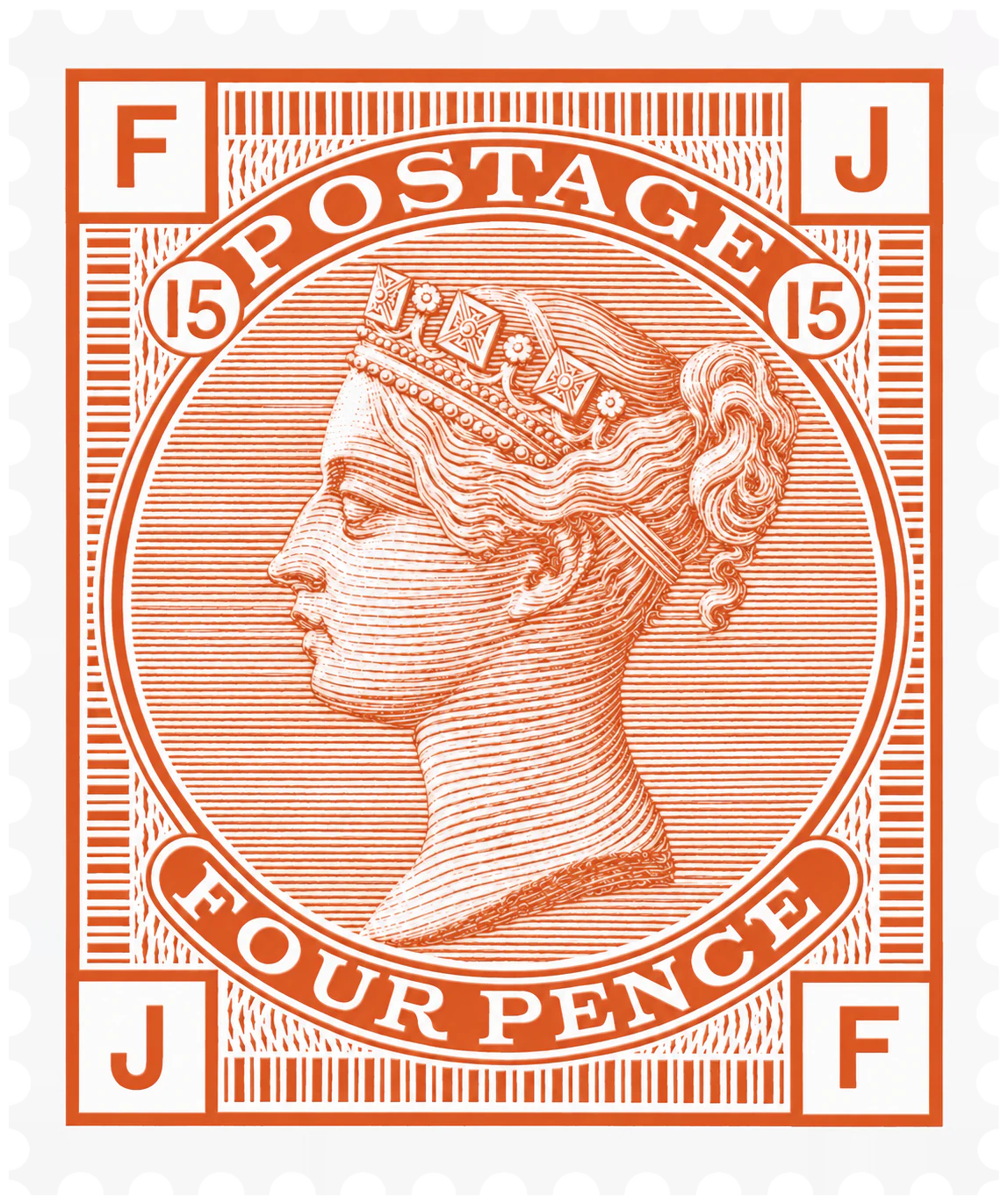
The corner letters change colour
The most obvious difference between the fourpenny stamps of 1865 and 1876 is the treatment of their corner letters.
The earlier version had white letters against coloured squares. The new design reversed the arrangement, placing vermilion letters against white backgrounds. [1]
The lower letters identify the stamp's position within the sheet. The upper pair repeats them in reverse order.
The change made the plates easier to prepare, using interchangeable letter plugs.
A manufacturing improvement had become a visible part of the design.
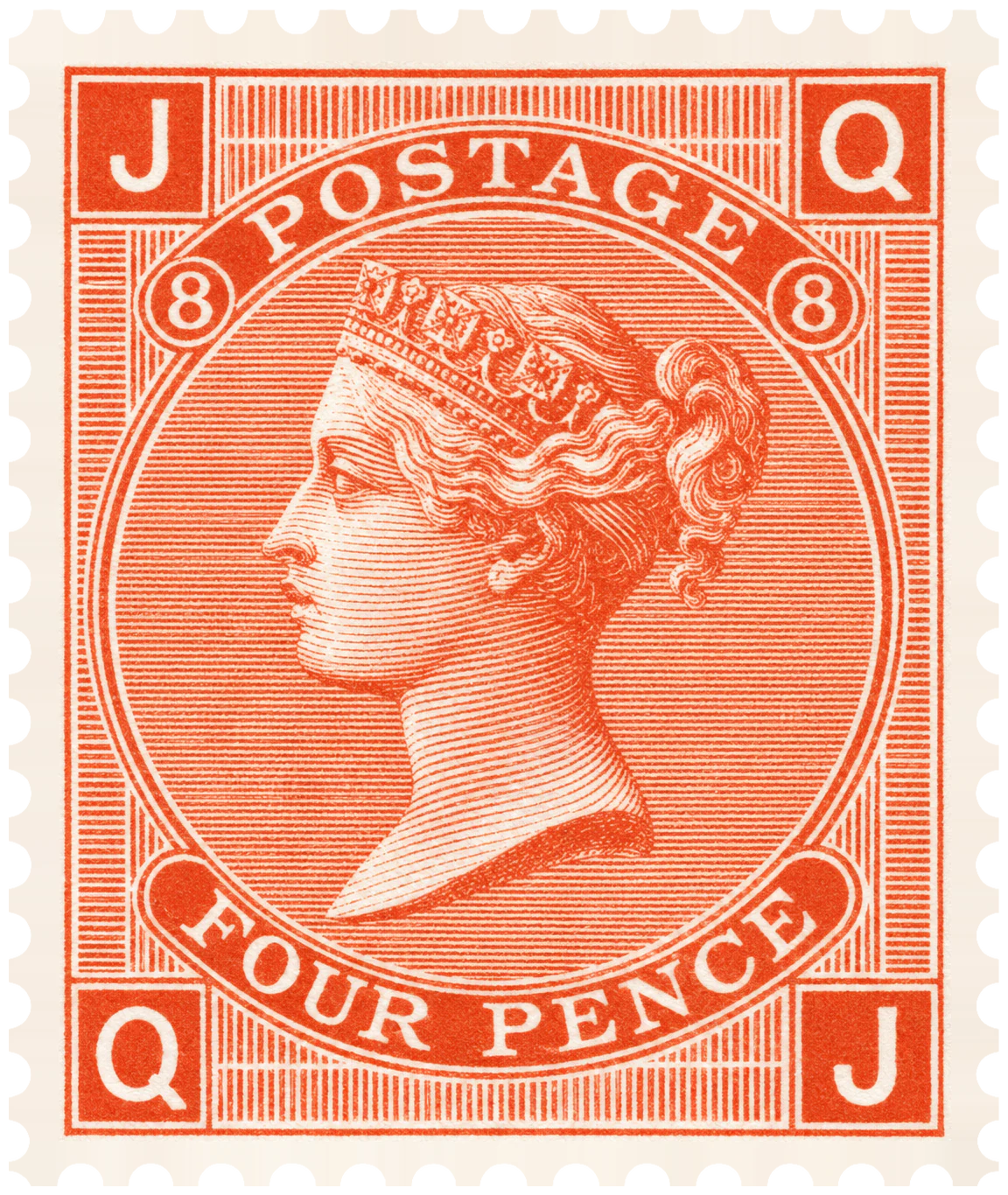
Compare the four corner panels and the changes to the surrounding frame.
Click either stamp to magnify
The Queen's portrait touches its frame
De La Rue prepared a revised die for the new fourpenny.
Victoria's head was slightly retouched, and the ornament in the spaces between the central circle and the outer frame was altered.
One small difference is particularly noticeable under magnification: the pointed base of Victoria's bust touches the enclosing circle. [2]
The changes were modest, but they show that the engravers did more than replace the lettering.
The familiar portrait had been adjusted to suit a new stage in the stamp's production.
The plate numbers turn vermilion
The small plate numbers appear inside circular panels on either side of Victoria's portrait.
Like the corner letters, they changed from white figures on coloured backgrounds to coloured figures on white.
The issued vermilion stamps came principally from plate 15, with a small number of impressions from plate 16. [2]
These figures identify the printing equipment used for each stamp.
The new arrangement was part of De La Rue's attempt to make the preparation of plates faster and more economical.
The Garter with thicker lines
The fourpenny was printed on paper carrying a Large Garter watermark.
This royal emblem was formed within the paper during manufacture, rather than printed in ink.
The version introduced in 1872 had noticeably thicker lines than the earlier Garter watermark. [3]
The same paper was used for the vermilion fourpenny of 1876.
The watermark also extended into the surrounding sheet margins, where the word MARK could appear.
The printed stamp therefore concealed another design, made by the papermaker rather than the engraver.
The same design in two colours
In November 1876, plate 15 was registered for a second time, now using sage-green ink.
The green stamps retained the portrait, frame, corner letters and plate numbers of the vermilion issue. [1]
The change was ordered because postal staff could mistake the vermilion for the new eightpenny orange under gaslight.
A comparison of the official registration impressions shows how much the character of the stamp changed when the ink changed.
The engravers had done no further work, yet the finished image looked distinctly different.
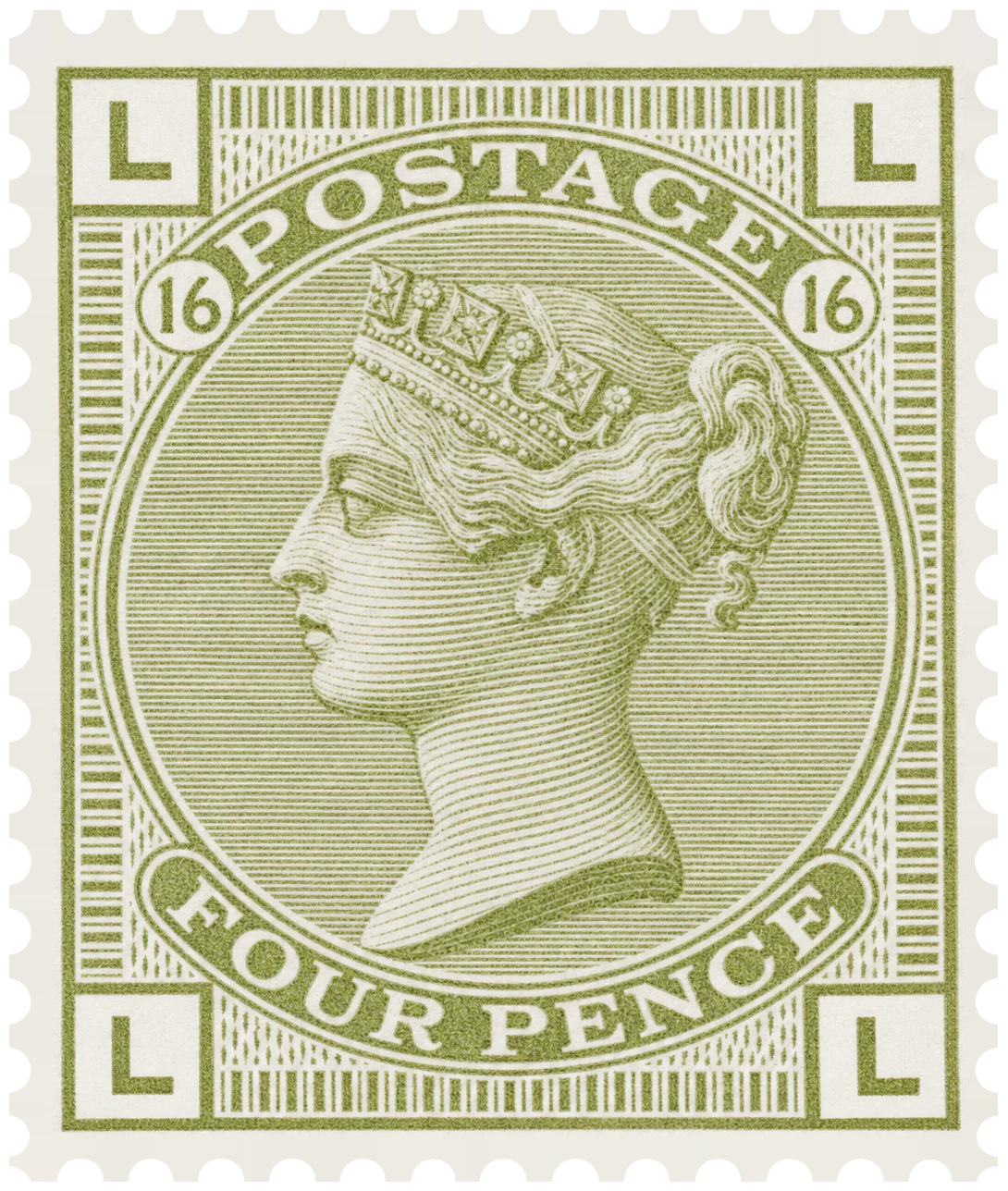
The same design in two issued colours. These are stamp illustrations, not the official registration impressions.
Click either stamp to magnify
A portrait passed between three artists
Victoria's likeness originated in a portrait by William Wyon, Chief Engraver at the Royal Mint. His medal portrait drew on a sketch made in 1834, when Victoria was fifteen. [4]
Henry Corbould prepared a drawing based on Wyon's portrait, which later supplied the model for Jean Ferdinand Joubert de la Ferté's surface-printed engraving.
The fourpenny vermilion retained Joubert's interpretation.
The stamp brought together the work of artists whose contributions extended across more than thirty years.
The diamond diadem made for a king
The ornament in Victoria's hair was commissioned for George IV's coronation in 1821. [5]
It contains 1,333 diamonds, with crosses and the national emblems of the rose, thistle and shamrock.
Victoria later wore the diadem in portraits, and it became a familiar feature of British postage stamps.
On the fourpenny vermilion, its jewels are reduced to tiny engraved marks. A magnificent royal ornament had become part of an everyday object worth fourpence.
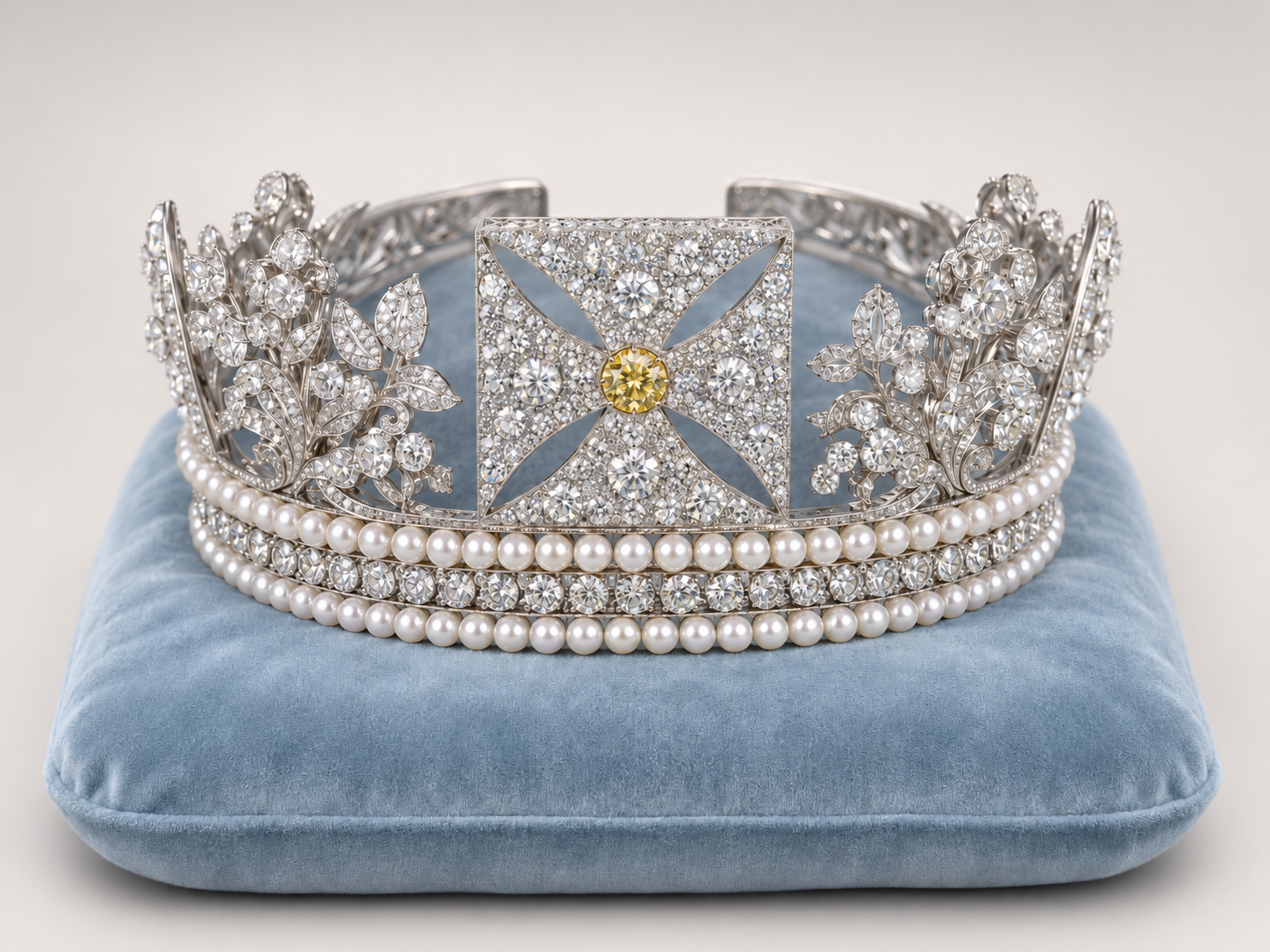
Image information
Click image to magnify
Digitally created illustration of the diamond diadem, with crosses, floral emblems and rows of pearls, resting on a blue cushion.
- Credit
- Stunning Stamps.
- Notes
- Digitally created.
Sources
- Robert B. Galland: The First Low Value Surface Printed Postage Stamps of Great Britain (2014), p. 25 — two registration impressions from plate 15
- Hastings E. Wright and A. B. Creeke: A History of the Adhesive Stamps of the British Isles (1899), pp. 100–102
- H. L'Estrange Ewen: Standard Priced Catalogue of the Stamps and Postmarks of the United Kingdom (1898), fourpenny watermark descriptions
- Douglas N. Muir, Royal Mint Museum: William Wyon & the Penny Black
- Royal Collection Trust: George IV's Diamond Diadem