
Eric Gill
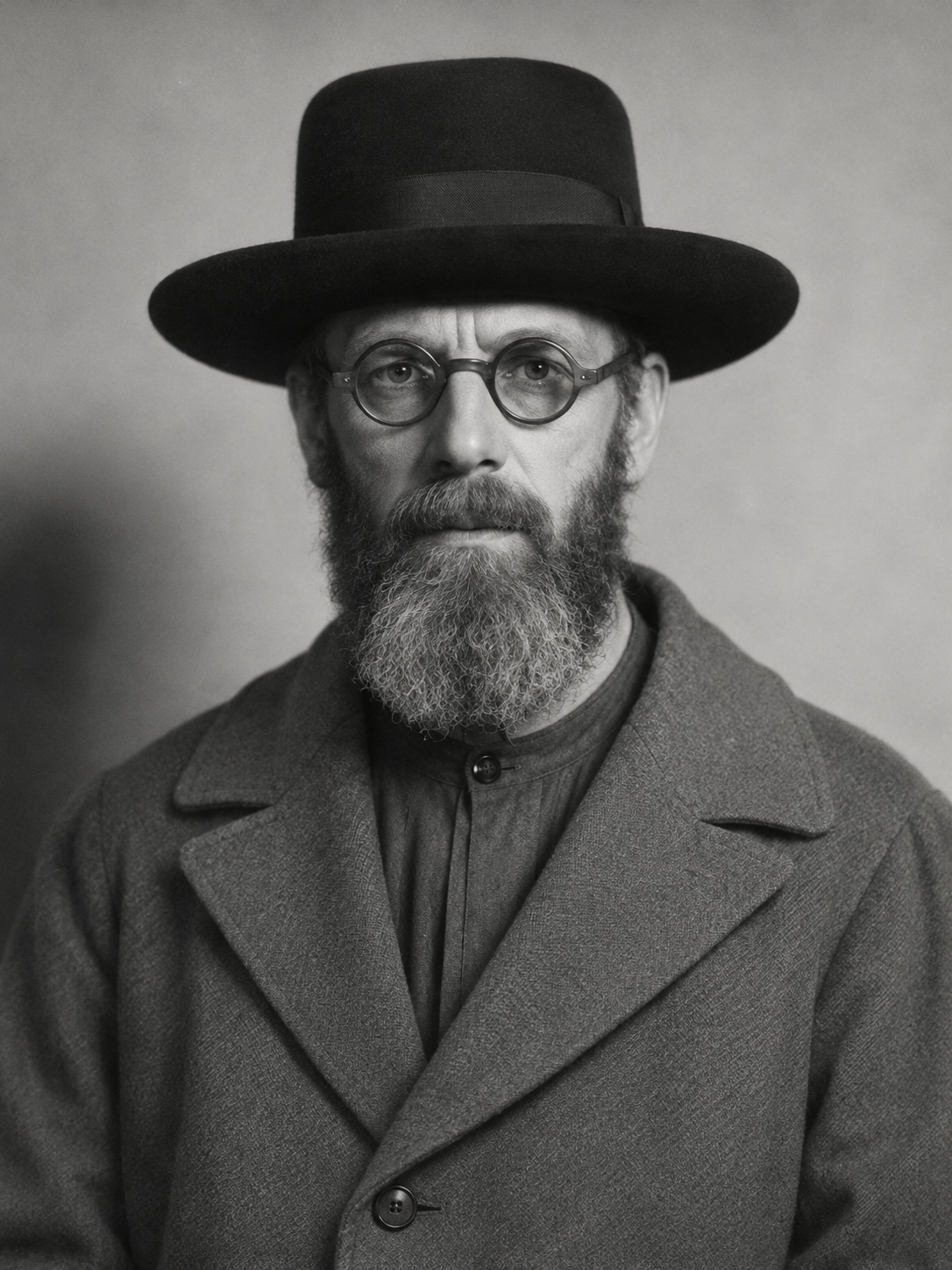
Image information
Click image to magnify
Monochrome portrait of Eric Gill wearing round glasses, a broad-brimmed hat and a beard.
- Credit
- Stunning Stamps · 2026
- Notes
- Digitally reconstructed
1882–1940 · Letter-carver, sculptor and designer
Letters cut into stone and designs printed on paper were both part of Eric Gill’s working life. His lettering, sculpture and book work brought him into public design, including the frames of George VI’s low-value postage stamps.
On the stamp you were exploring
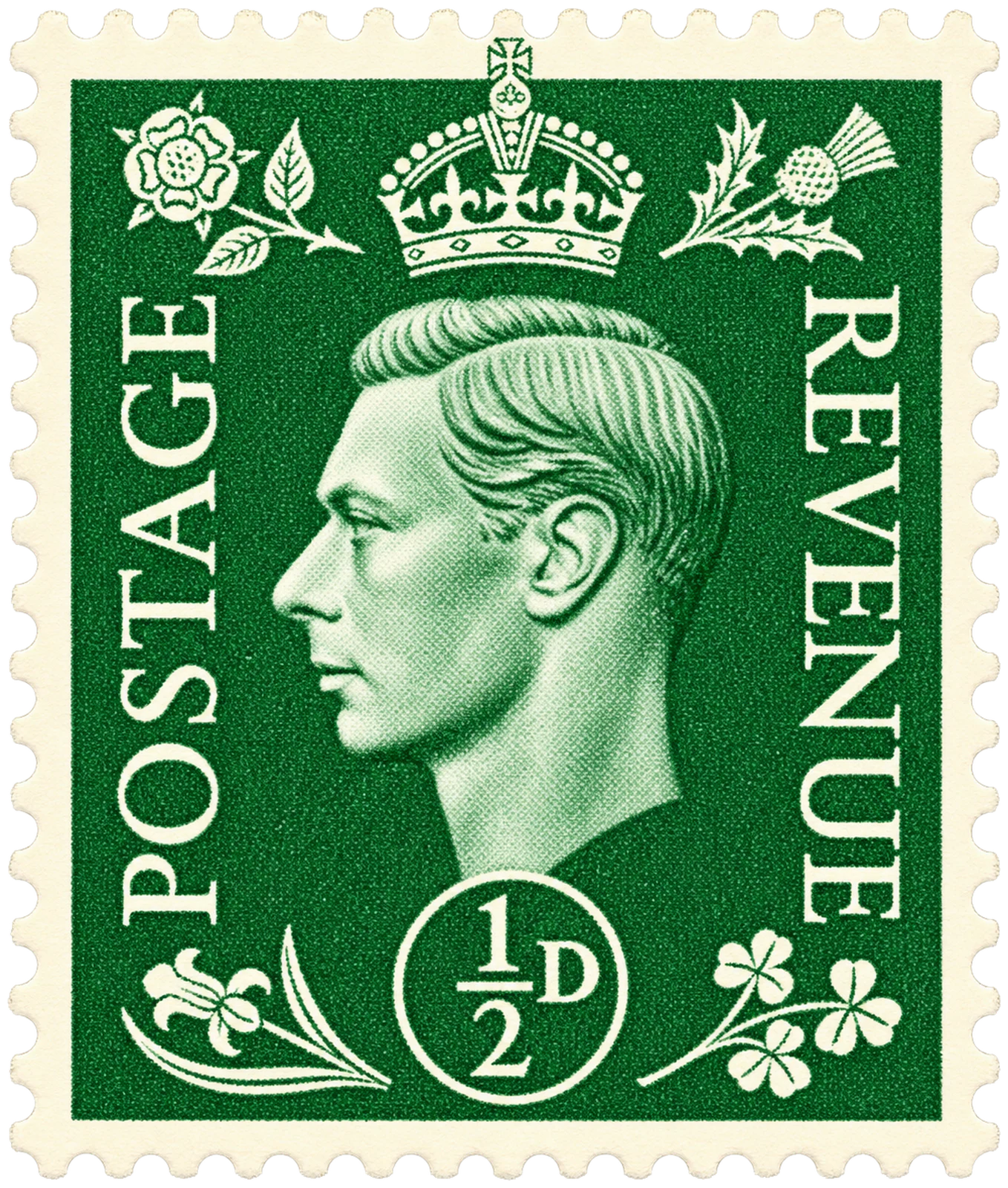
George VI · ½d green · 10 May 1937
Gill supplied the frame around Dulac’s royal portrait for the design used on this ½d green stamp. A later colour did not mean a new frame commission.
On the stamp you were exploring
George VI · ½d green · 10 May 1937
Gill supplied the frame around Dulac’s royal portrait for the design used on this ½d green stamp. A later colour did not mean a new frame commission.
On the stamp you were exploring
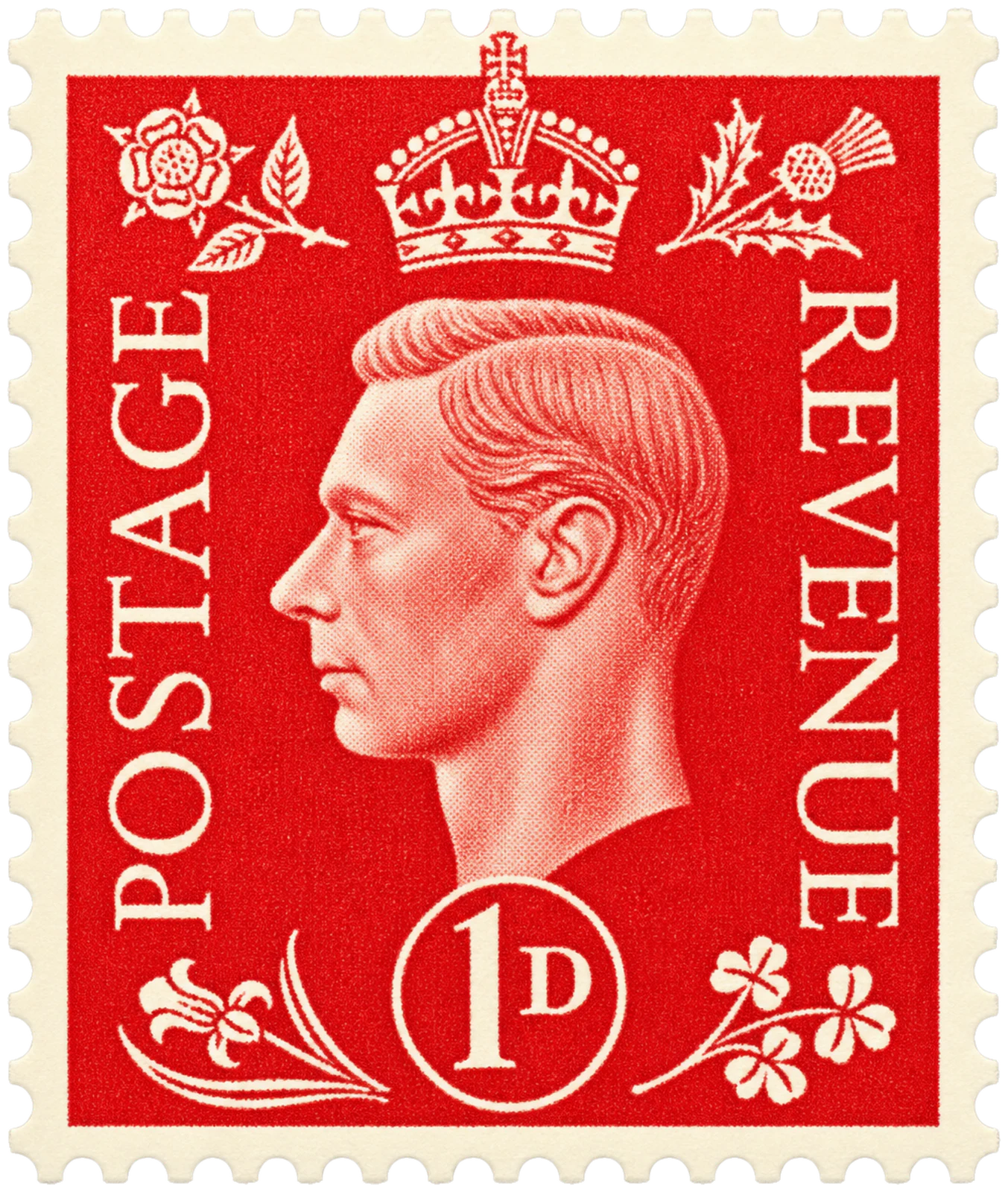
George VI · 1d scarlet · 10 May 1937
Gill supplied the frame around Dulac’s royal portrait for the design used on this 1d scarlet stamp. A later colour did not mean a new frame commission.
On the stamp you were exploring
George VI · 1d scarlet · 10 May 1937
Gill supplied the frame around Dulac’s royal portrait for the design used on this 1d scarlet stamp. A later colour did not mean a new frame commission.
On the stamp you were exploring
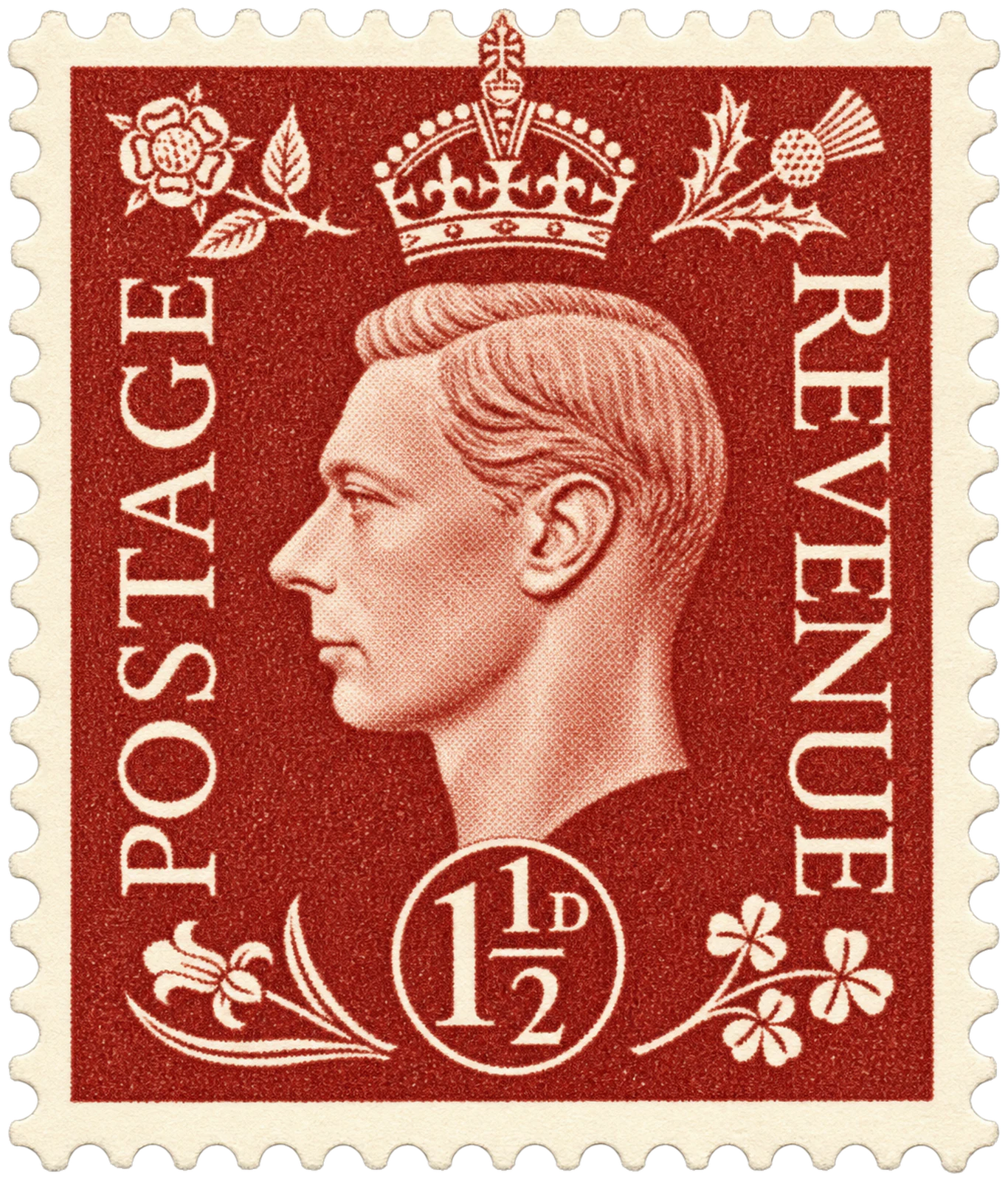
George VI · 1½d red-brown · 30 July 1937
Gill supplied the frame around Dulac’s royal portrait for the design used on this 1½d red-brown stamp. A later colour did not mean a new frame commission.
On the stamp you were exploring
George VI · 1½d red-brown · 30 July 1937
Gill supplied the frame around Dulac’s royal portrait for the design used on this 1½d red-brown stamp. A later colour did not mean a new frame commission.
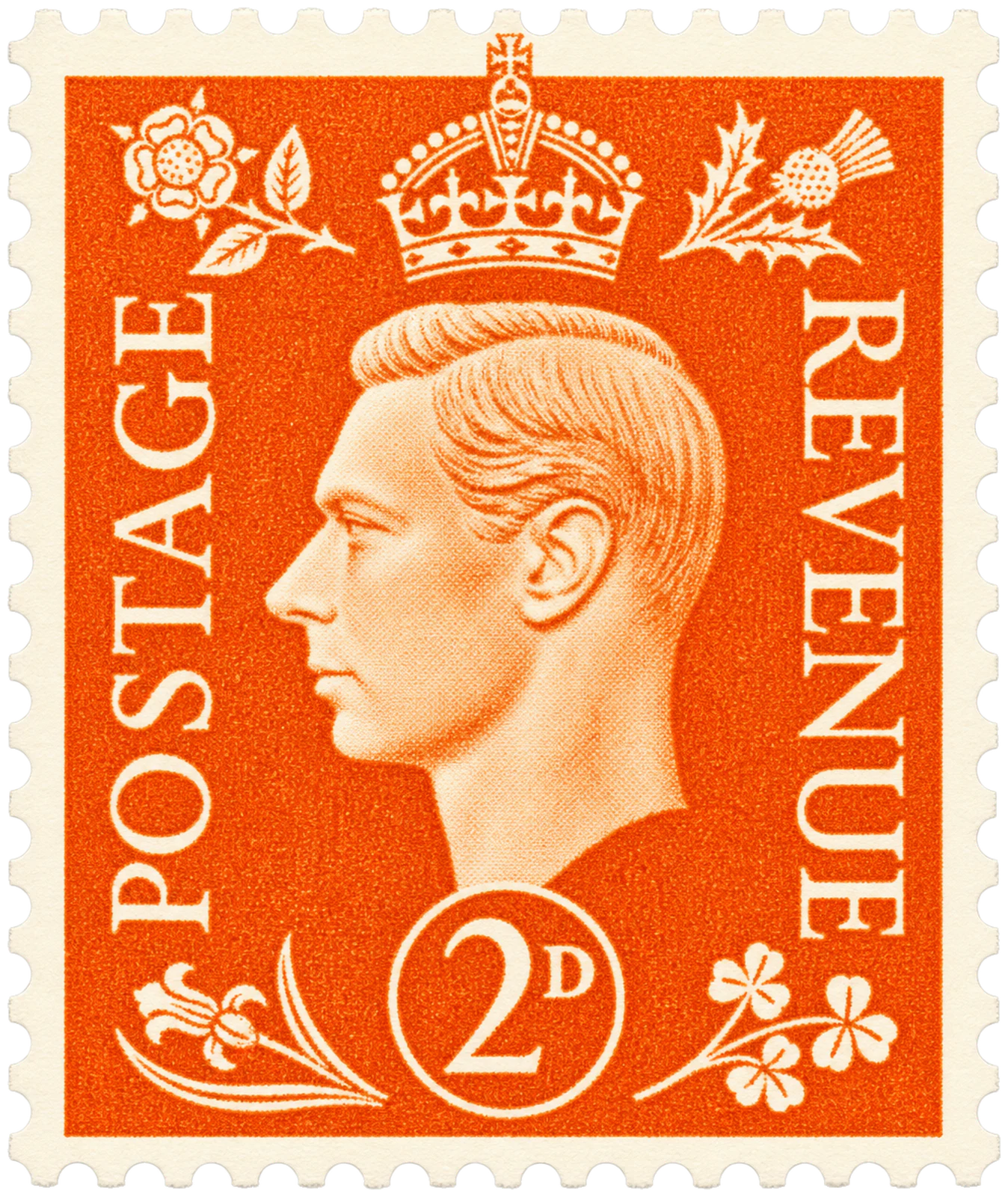
On the stamp you were exploring
George VI · 2d orange · 31 January 1938
Gill supplied the frame around Dulac’s royal portrait for the design used on this 2d orange stamp. A later colour did not mean a new frame commission.
On the stamp you were exploring
George VI · 2d orange · 31 January 1938
Gill supplied the frame around Dulac’s royal portrait for the design used on this 2d orange stamp. A later colour did not mean a new frame commission.
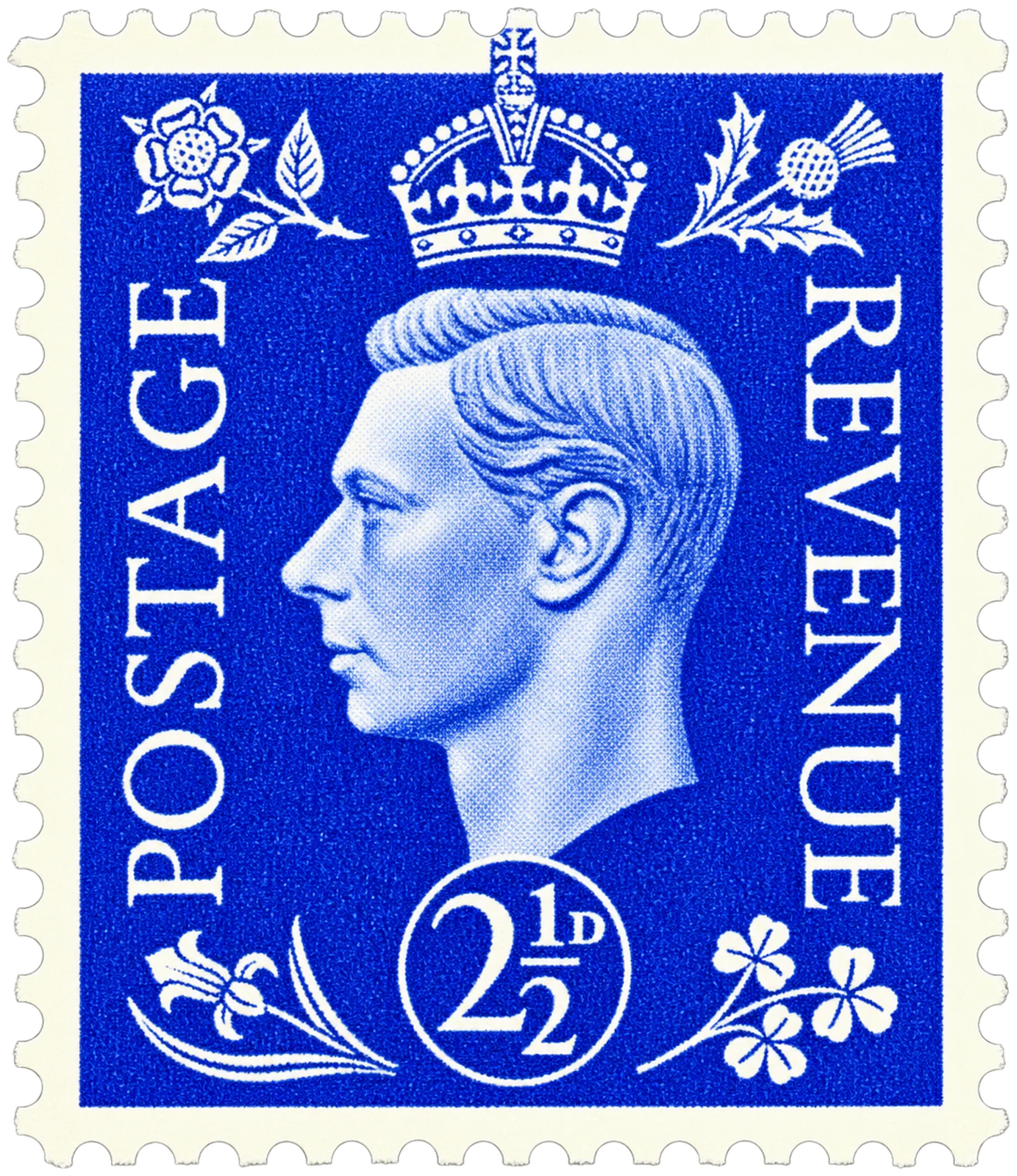
On the stamp you were exploring
George VI · 2½d ultramarine · 10 May 1937
Gill supplied the frame around Dulac’s royal portrait for the design used on this 2½d ultramarine stamp. A later colour did not mean a new frame commission.
On the stamp you were exploring
George VI · 2½d ultramarine · 10 May 1937
Gill supplied the frame around Dulac’s royal portrait for the design used on this 2½d ultramarine stamp. A later colour did not mean a new frame commission.
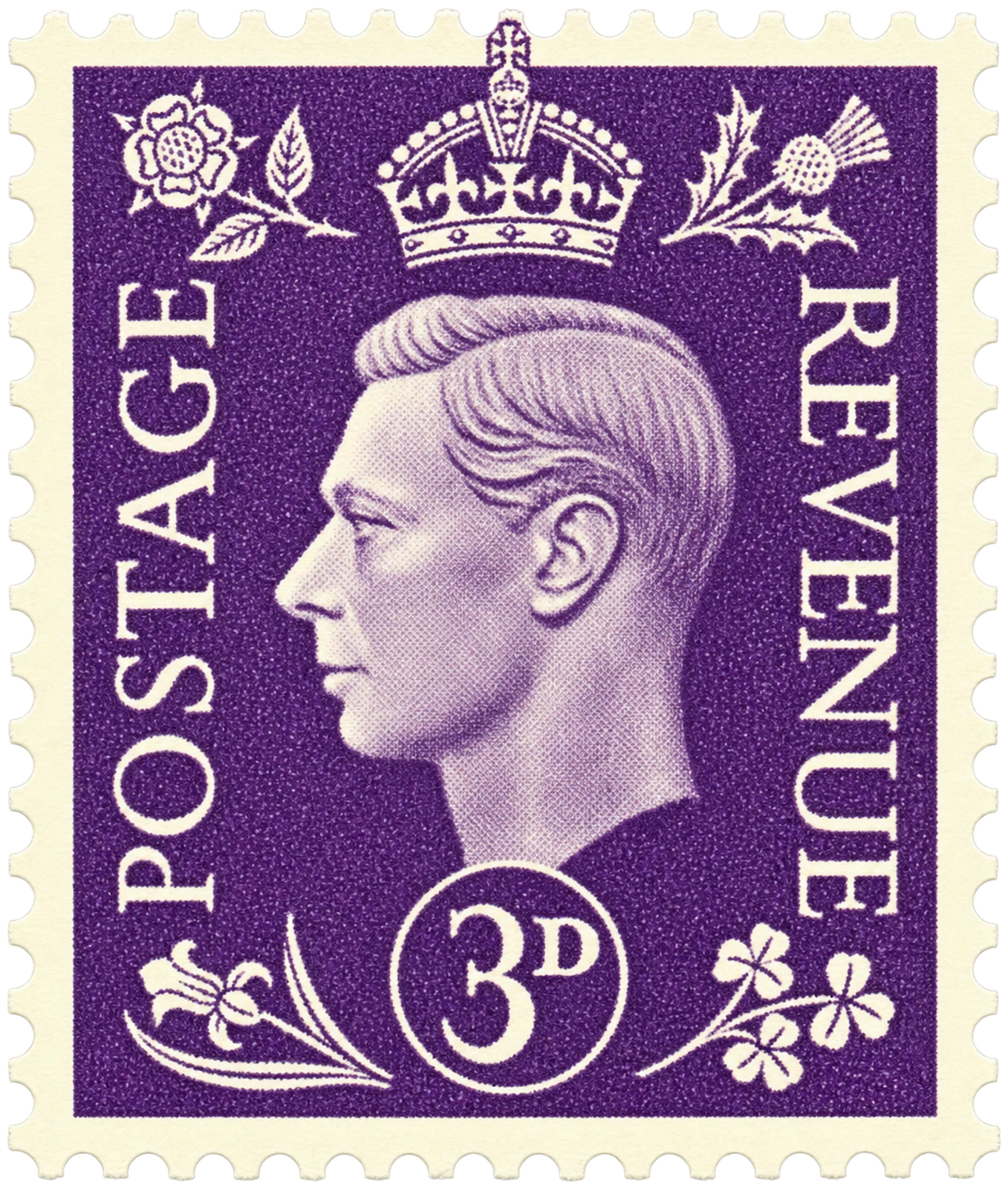
On the stamp you were exploring
George VI · 3d violet · 31 January 1938
Gill supplied the frame around Dulac’s royal portrait for the design used on this 3d violet stamp. A later colour did not mean a new frame commission.
On the stamp you were exploring
George VI · 3d violet · 31 January 1938
Gill supplied the frame around Dulac’s royal portrait for the design used on this 3d violet stamp. A later colour did not mean a new frame commission.
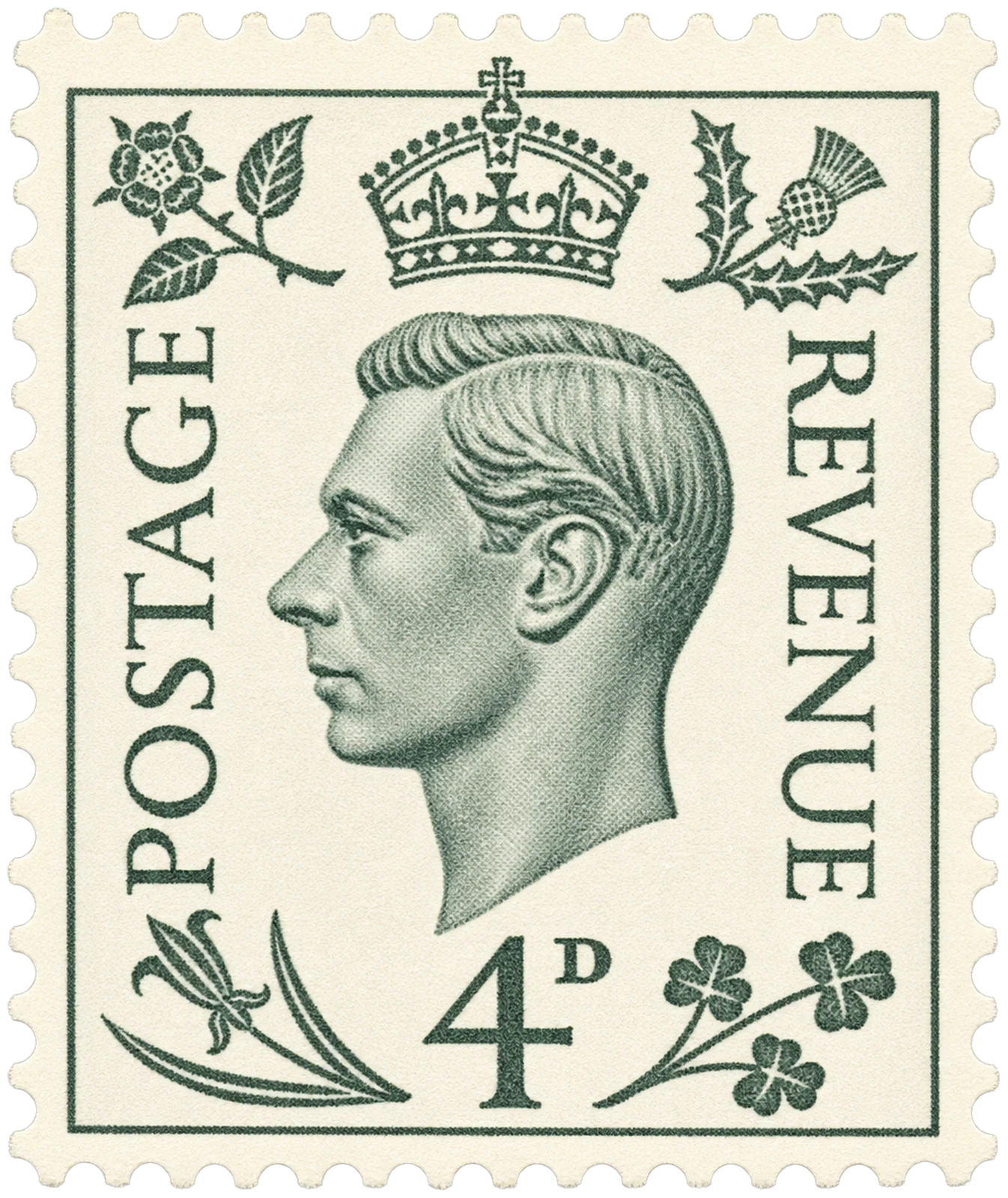
On the stamp you were exploring
George VI · 4d grey-green · 21 November 1938
Gill supplied the frame around Dulac’s royal portrait for the design used on this 4d grey-green stamp. A later colour did not mean a new frame commission.
On the stamp you were exploring
George VI · 4d grey-green · 21 November 1938
Gill supplied the frame around Dulac’s royal portrait for the design used on this 4d grey-green stamp. A later colour did not mean a new frame commission.
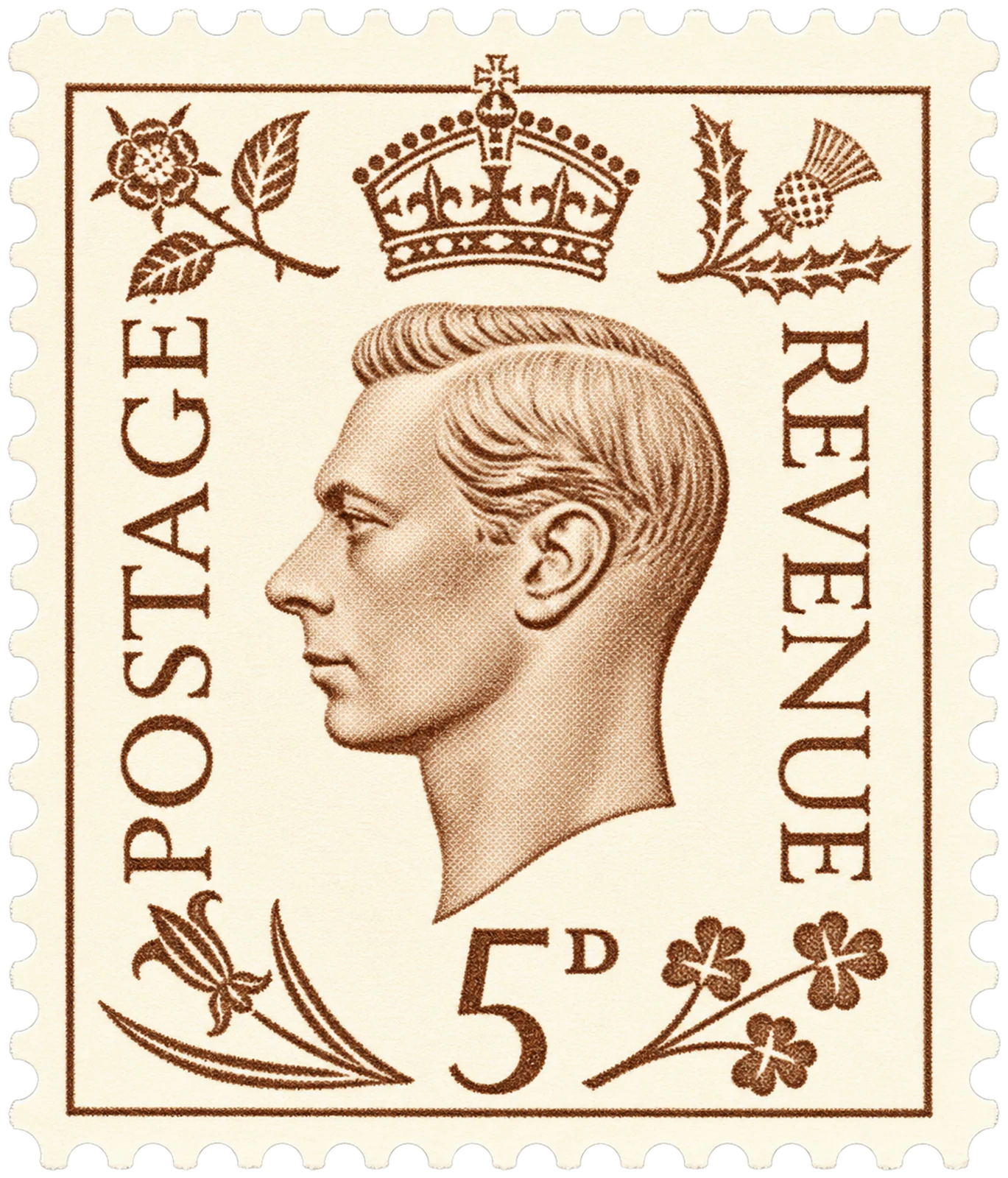
On the stamp you were exploring
George VI · 5d brown · 21 November 1938
Gill supplied the frame around Dulac’s royal portrait for the design used on this 5d brown stamp. A later colour did not mean a new frame commission.
On the stamp you were exploring
George VI · 5d brown · 21 November 1938
Gill supplied the frame around Dulac’s royal portrait for the design used on this 5d brown stamp. A later colour did not mean a new frame commission.
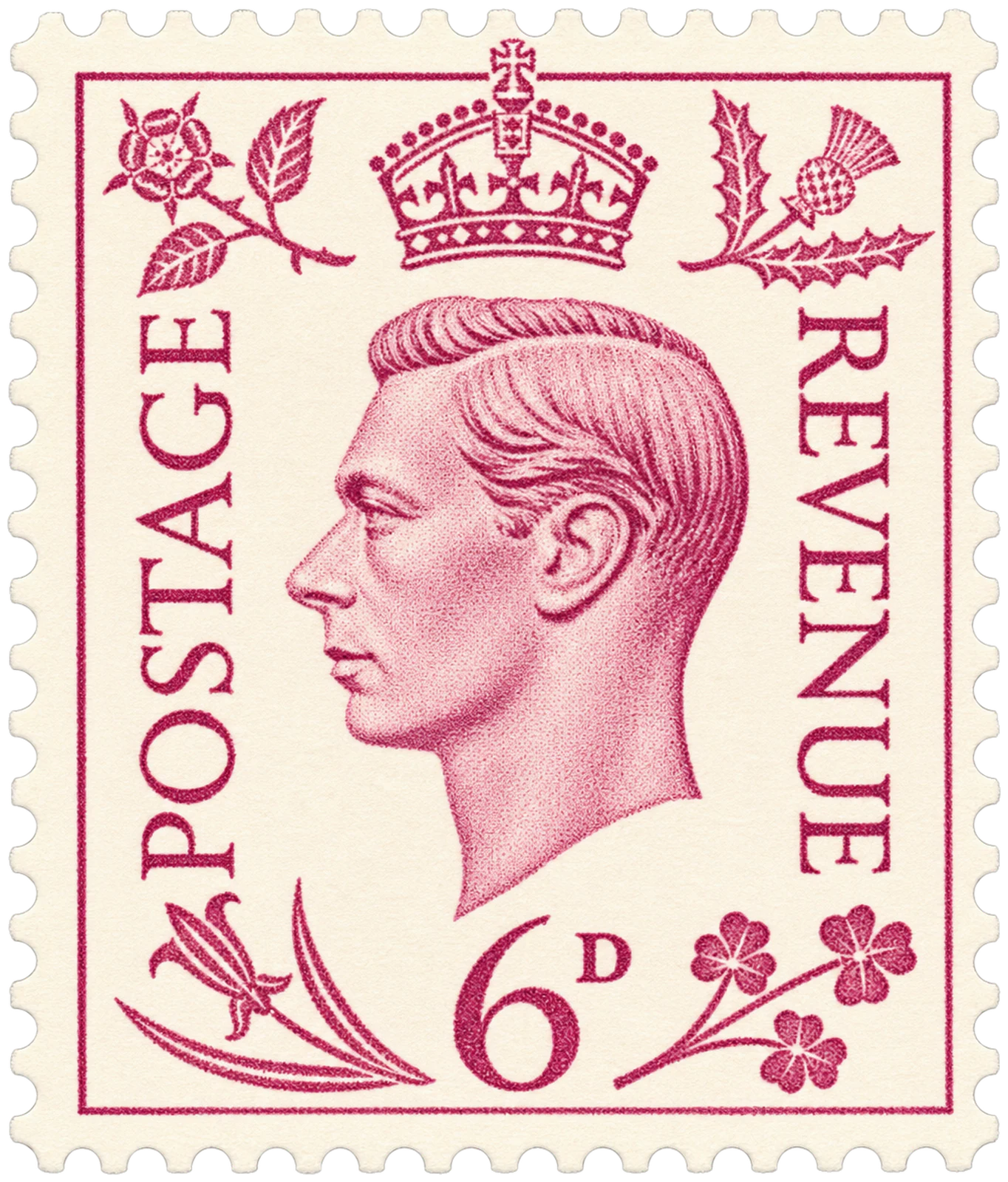
On the stamp you were exploring
George VI · 6d purple · 30 January 1939
Gill supplied the frame around Dulac’s royal portrait for the design used on this 6d purple stamp. A later colour did not mean a new frame commission.
On the stamp you were exploring
George VI · 6d purple · 30 January 1939
Gill supplied the frame around Dulac’s royal portrait for the design used on this 6d purple stamp. A later colour did not mean a new frame commission.
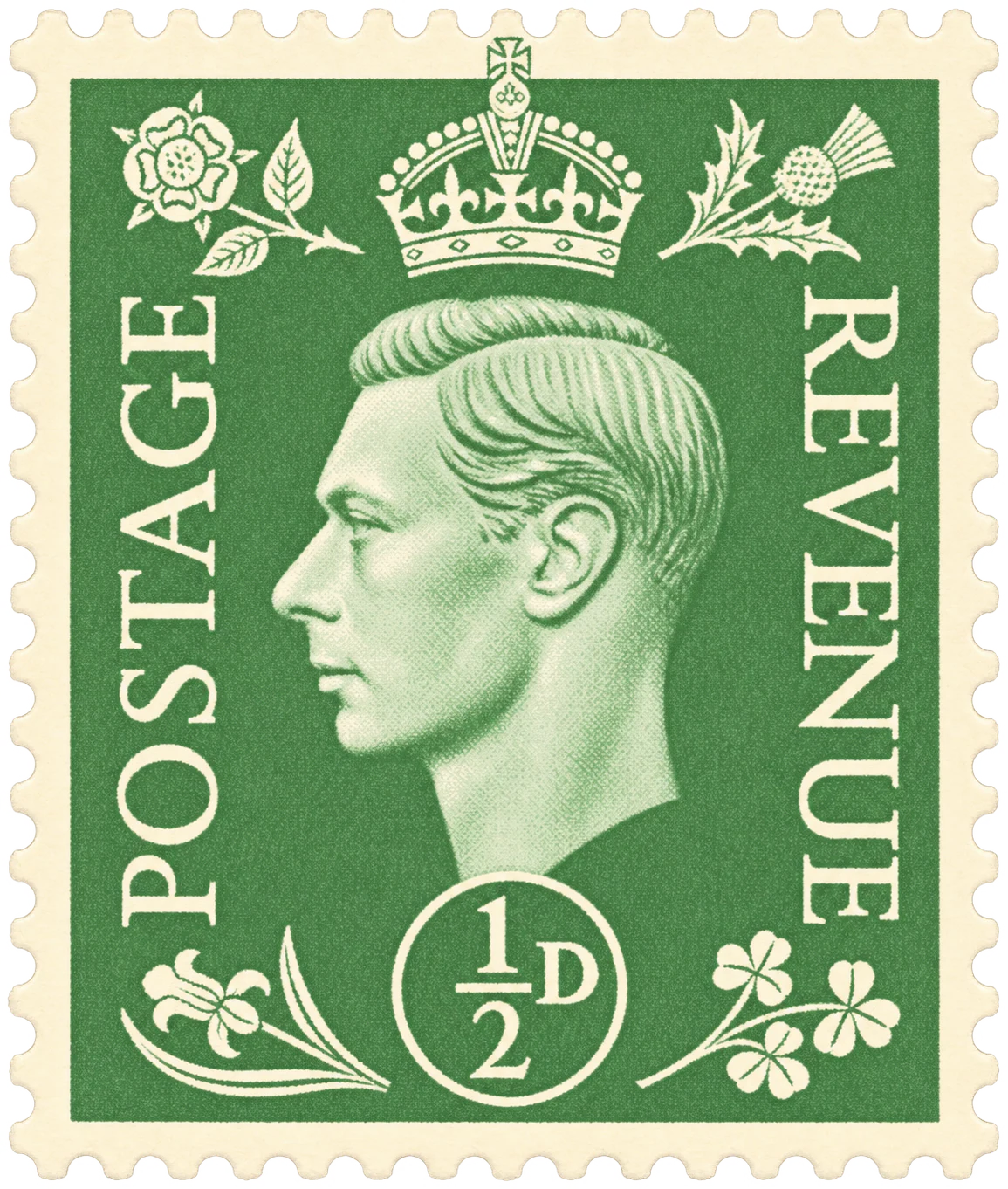
On the stamp you were exploring
George VI · ½d pale green · 1 September 1941
Gill supplied the frame around Dulac’s royal portrait for the design used on this ½d pale green stamp. A later colour did not mean a new frame commission.
On the stamp you were exploring
George VI · ½d pale green · 1 September 1941
Gill supplied the frame around Dulac’s royal portrait for the design used on this ½d pale green stamp. A later colour did not mean a new frame commission.
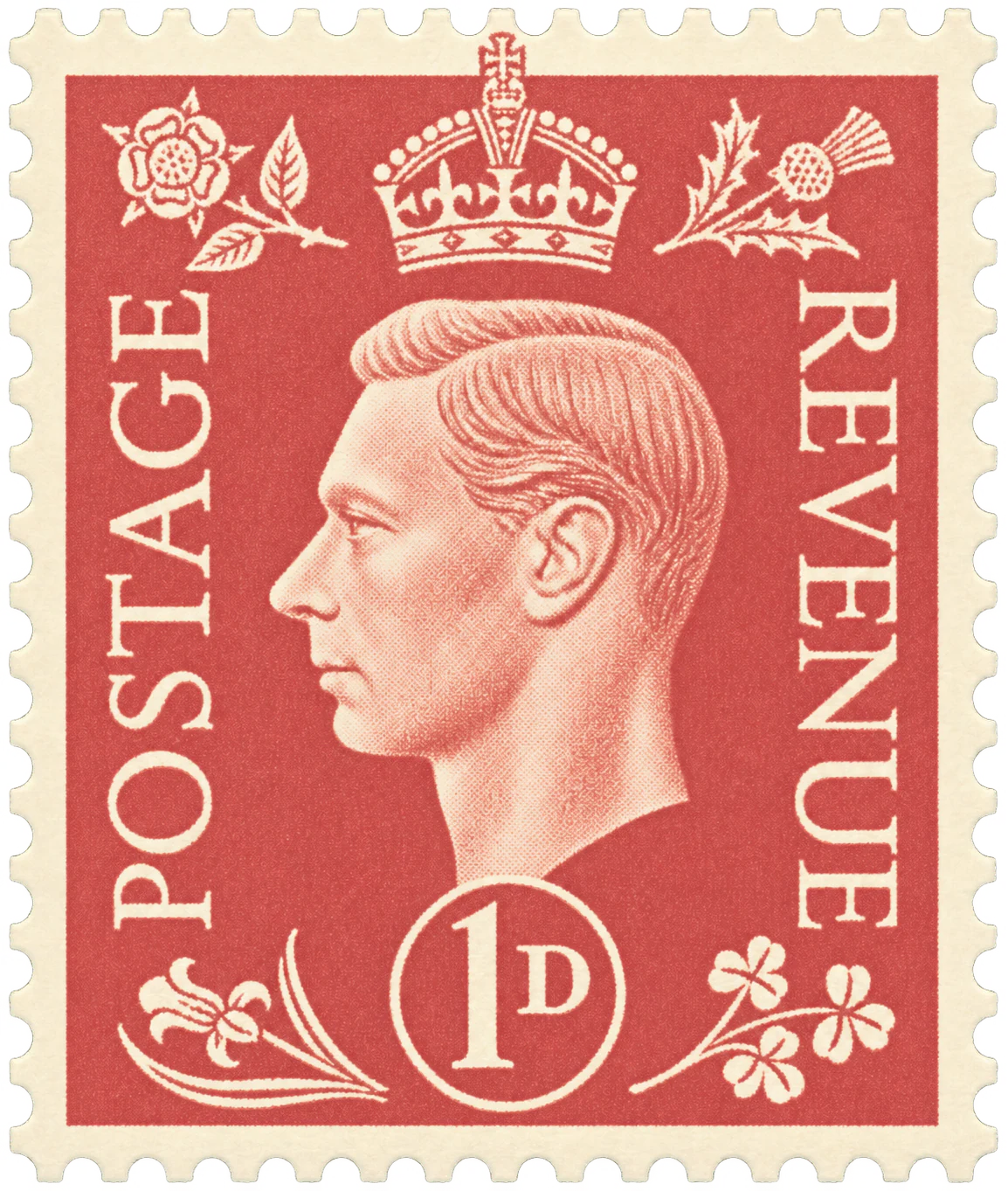
On the stamp you were exploring
George VI · 1d pale scarlet · 11 August 1941
Gill supplied the frame around Dulac’s royal portrait for the design used on this 1d pale scarlet stamp. A later colour did not mean a new frame commission.
On the stamp you were exploring
George VI · 1d pale scarlet · 11 August 1941
Gill supplied the frame around Dulac’s royal portrait for the design used on this 1d pale scarlet stamp. A later colour did not mean a new frame commission.
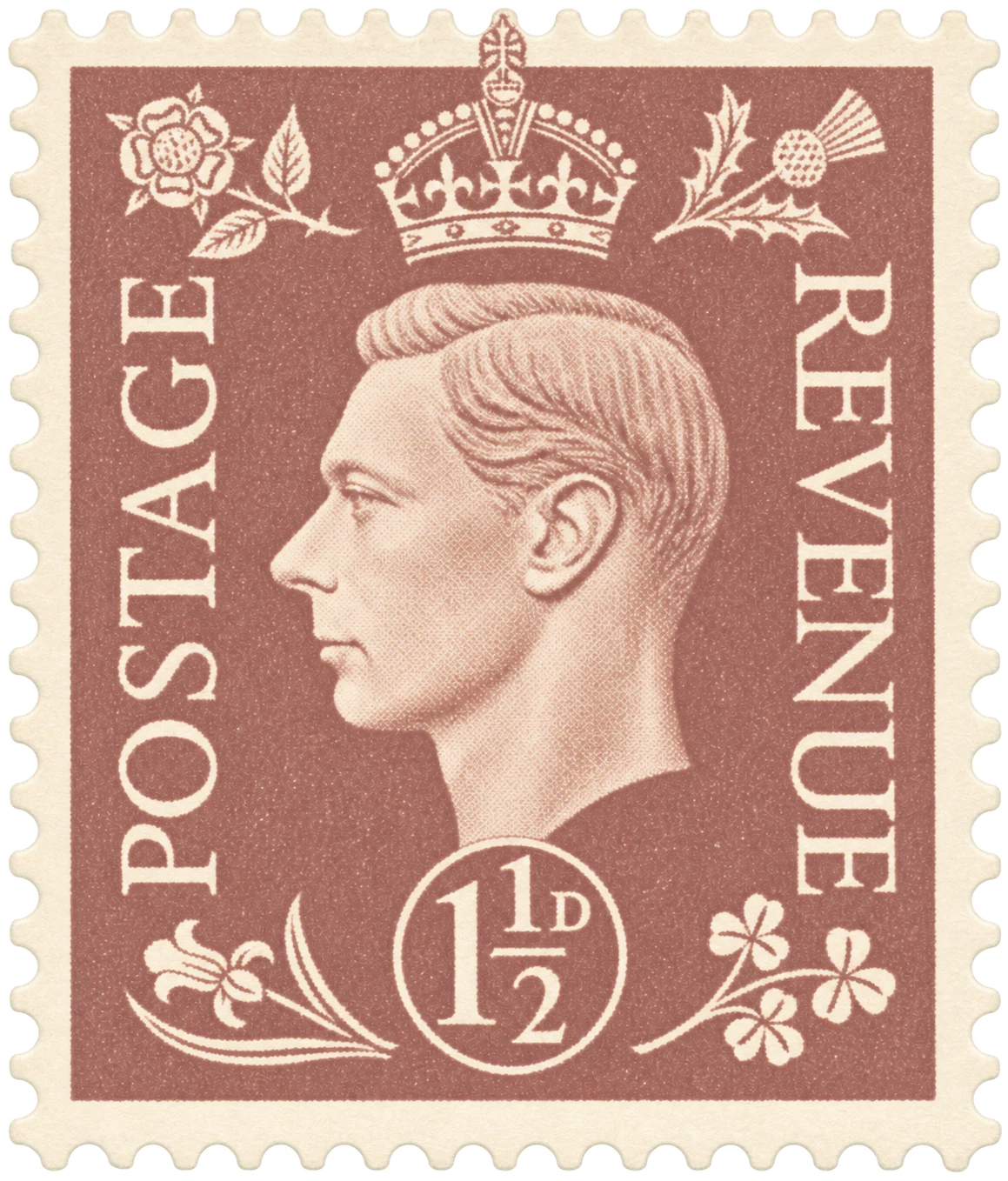
On the stamp you were exploring
George VI · 1½d pale red-brown · 28 September 1942
Gill supplied the frame around Dulac’s royal portrait for the design used on this 1½d pale red-brown stamp. A later colour did not mean a new frame commission.
On the stamp you were exploring
George VI · 1½d pale red-brown · 28 September 1942
Gill supplied the frame around Dulac’s royal portrait for the design used on this 1½d pale red-brown stamp. A later colour did not mean a new frame commission.
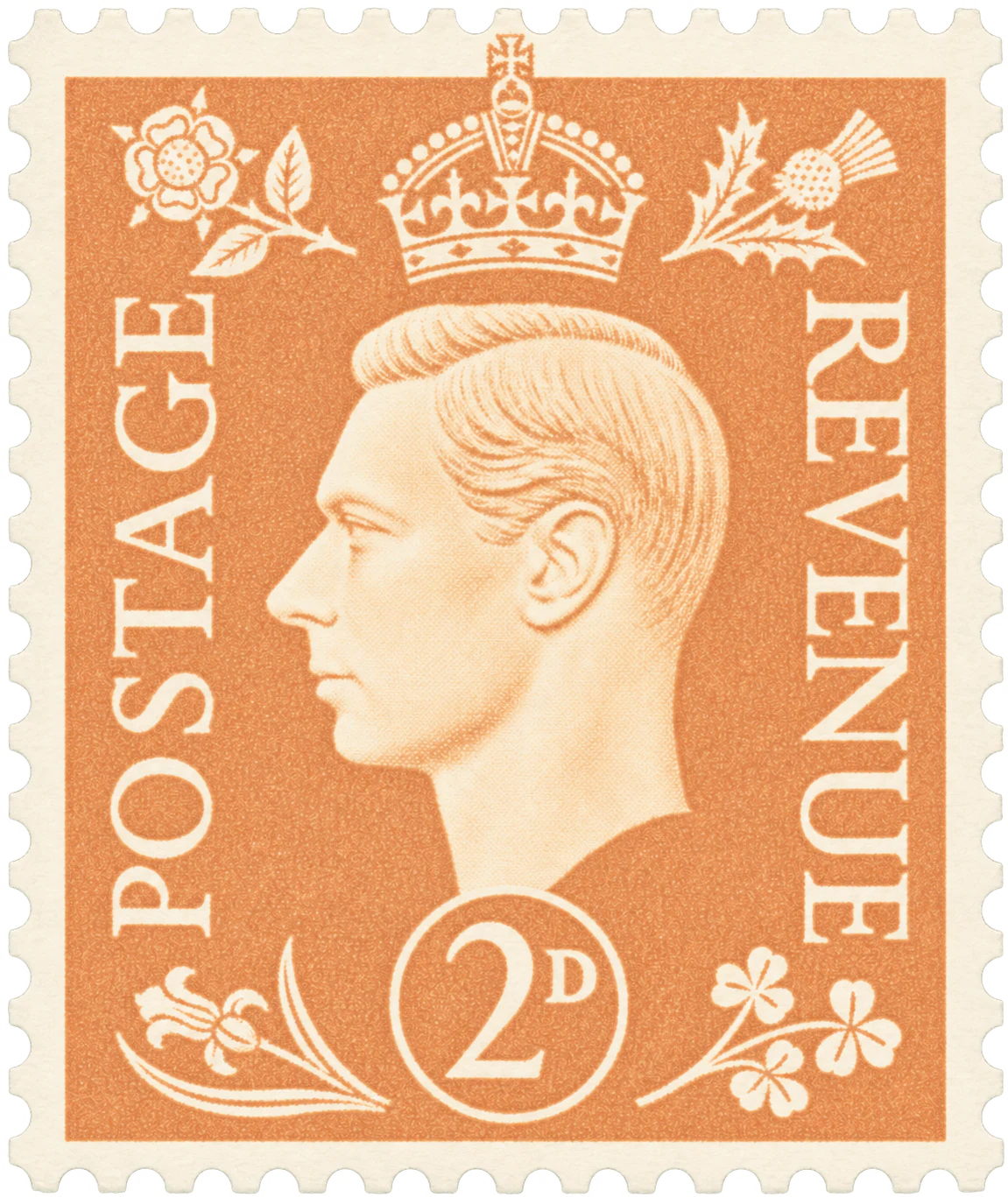
On the stamp you were exploring
George VI · 2d pale orange · 6 October 1941
Gill supplied the frame around Dulac’s royal portrait for the design used on this 2d pale orange stamp. A later colour did not mean a new frame commission.
On the stamp you were exploring
George VI · 2d pale orange · 6 October 1941
Gill supplied the frame around Dulac’s royal portrait for the design used on this 2d pale orange stamp. A later colour did not mean a new frame commission.
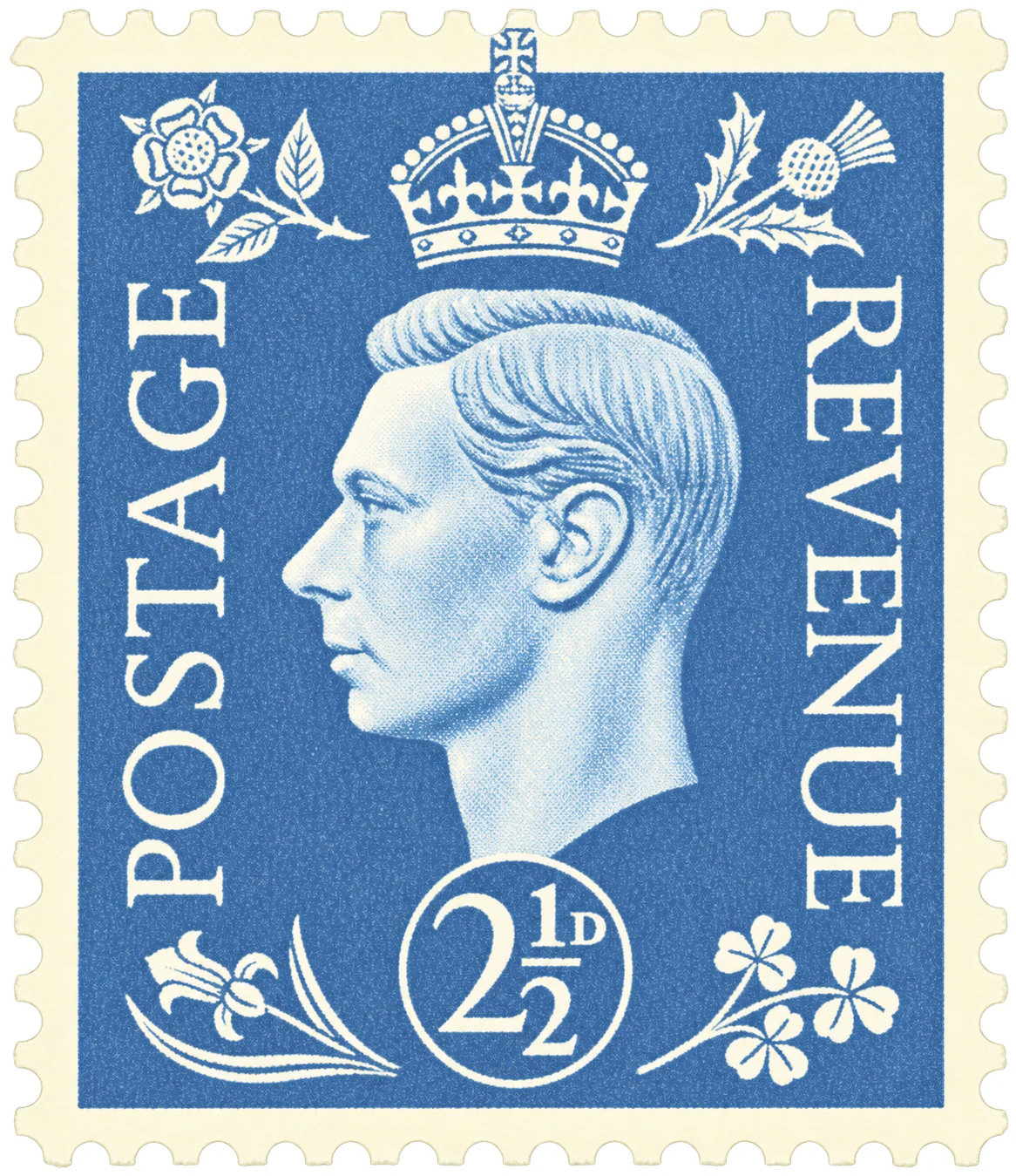
On the stamp you were exploring
George VI · 2½d light ultramarine · 21 July 1941
Gill supplied the frame around Dulac’s royal portrait for the design used on this 2½d light ultramarine stamp. A later colour did not mean a new frame commission.
On the stamp you were exploring
George VI · 2½d light ultramarine · 21 July 1941
Gill supplied the frame around Dulac’s royal portrait for the design used on this 2½d light ultramarine stamp. A later colour did not mean a new frame commission.
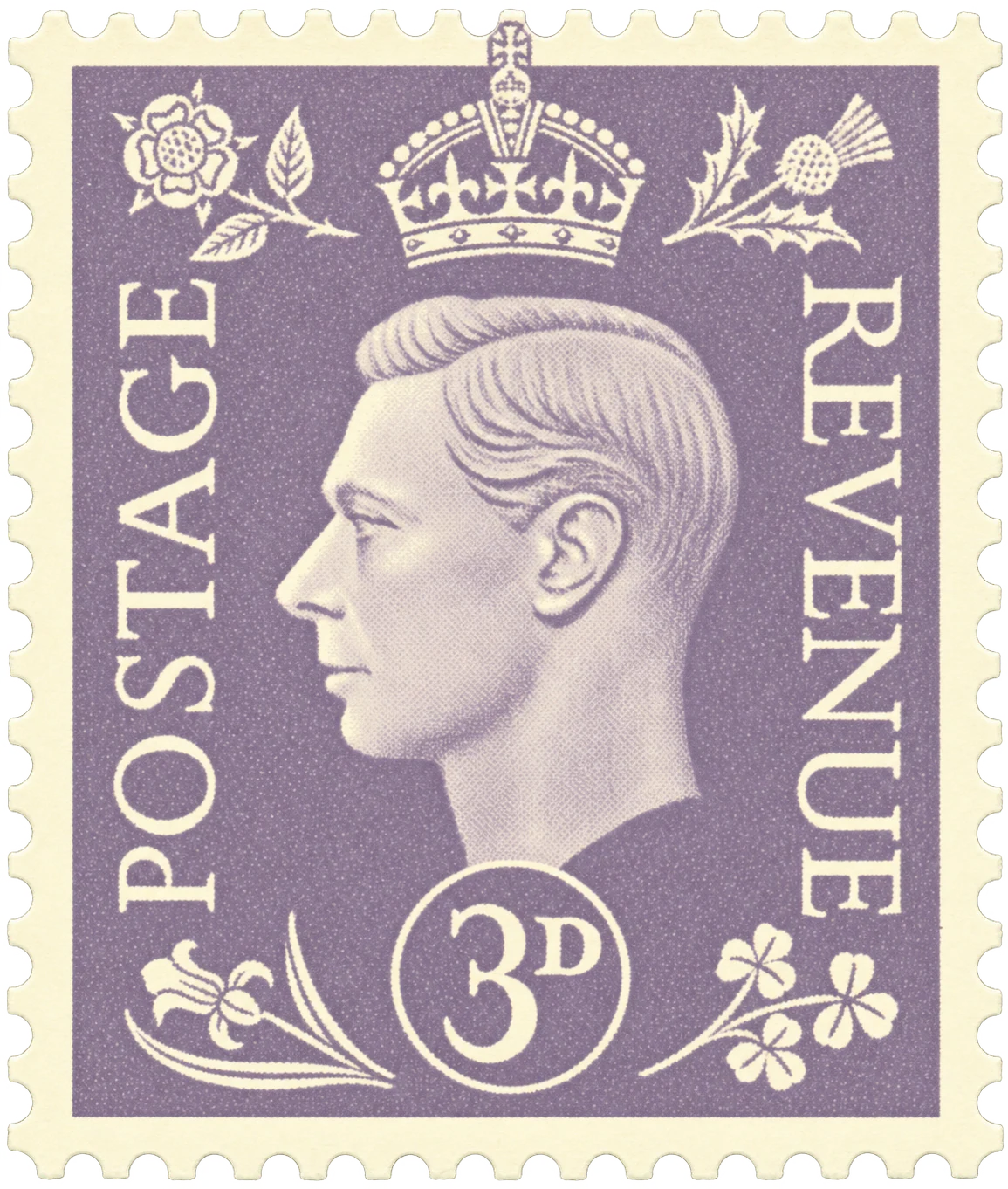
On the stamp you were exploring
George VI · 3d pale violet · 3 November 1941
Gill supplied the frame around Dulac’s royal portrait for the design used on this 3d pale violet stamp. A later colour did not mean a new frame commission.
On the stamp you were exploring
George VI · 3d pale violet · 3 November 1941
Gill supplied the frame around Dulac’s royal portrait for the design used on this 3d pale violet stamp. A later colour did not mean a new frame commission.
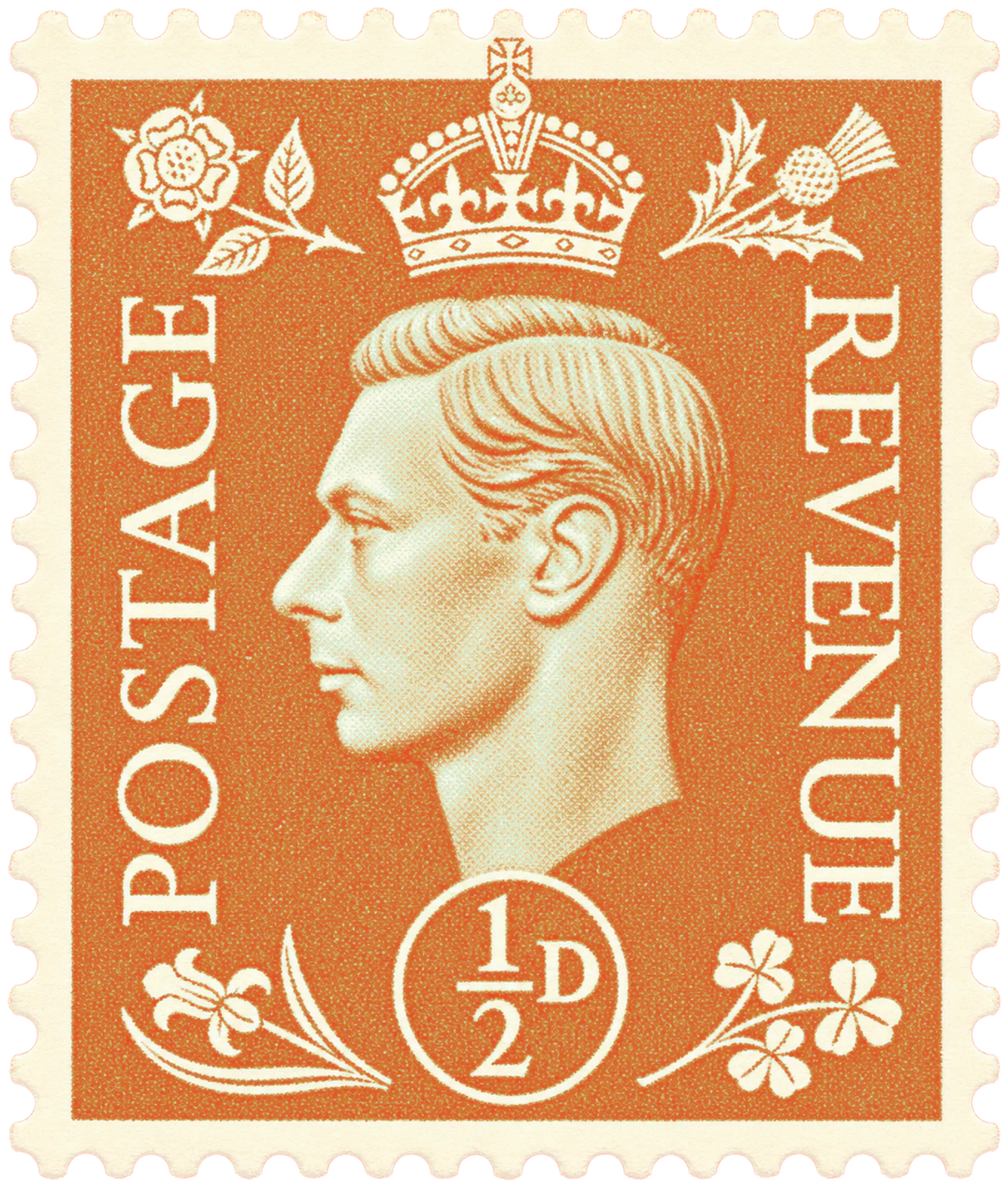
On the stamp you were exploring
George VI · ½d pale orange · 3 May 1951
Gill supplied the frame around Dulac’s royal portrait for the design used on this ½d pale orange stamp. A later colour did not mean a new frame commission.
On the stamp you were exploring
George VI · ½d pale orange · 3 May 1951
Gill supplied the frame around Dulac’s royal portrait for the design used on this ½d pale orange stamp. A later colour did not mean a new frame commission.
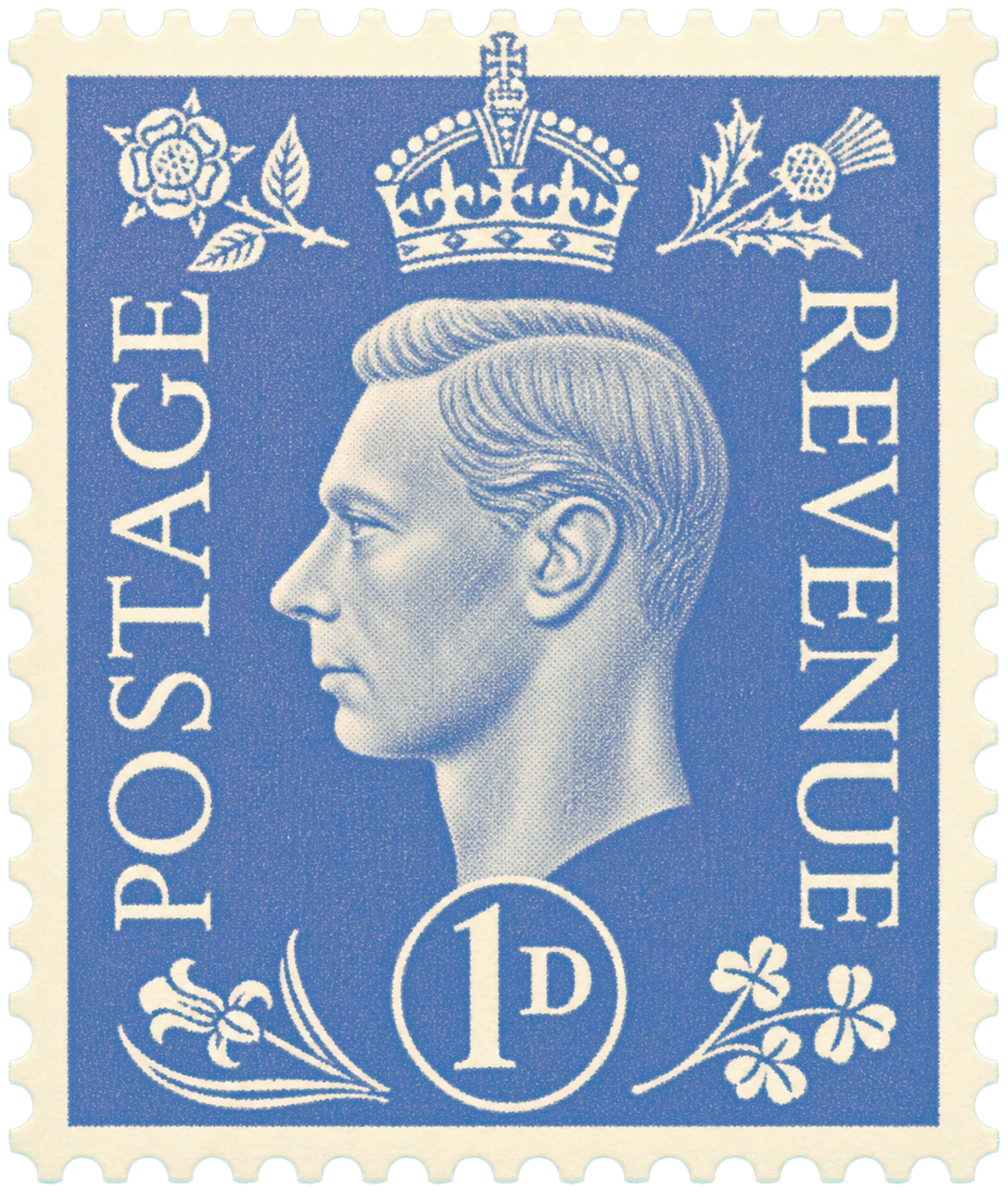
On the stamp you were exploring
George VI · 1d light ultramarine · 3 May 1951
Gill supplied the frame around Dulac’s royal portrait for the design used on this 1d light ultramarine stamp. A later colour did not mean a new frame commission.
On the stamp you were exploring
George VI · 1d light ultramarine · 3 May 1951
Gill supplied the frame around Dulac’s royal portrait for the design used on this 1d light ultramarine stamp. A later colour did not mean a new frame commission.
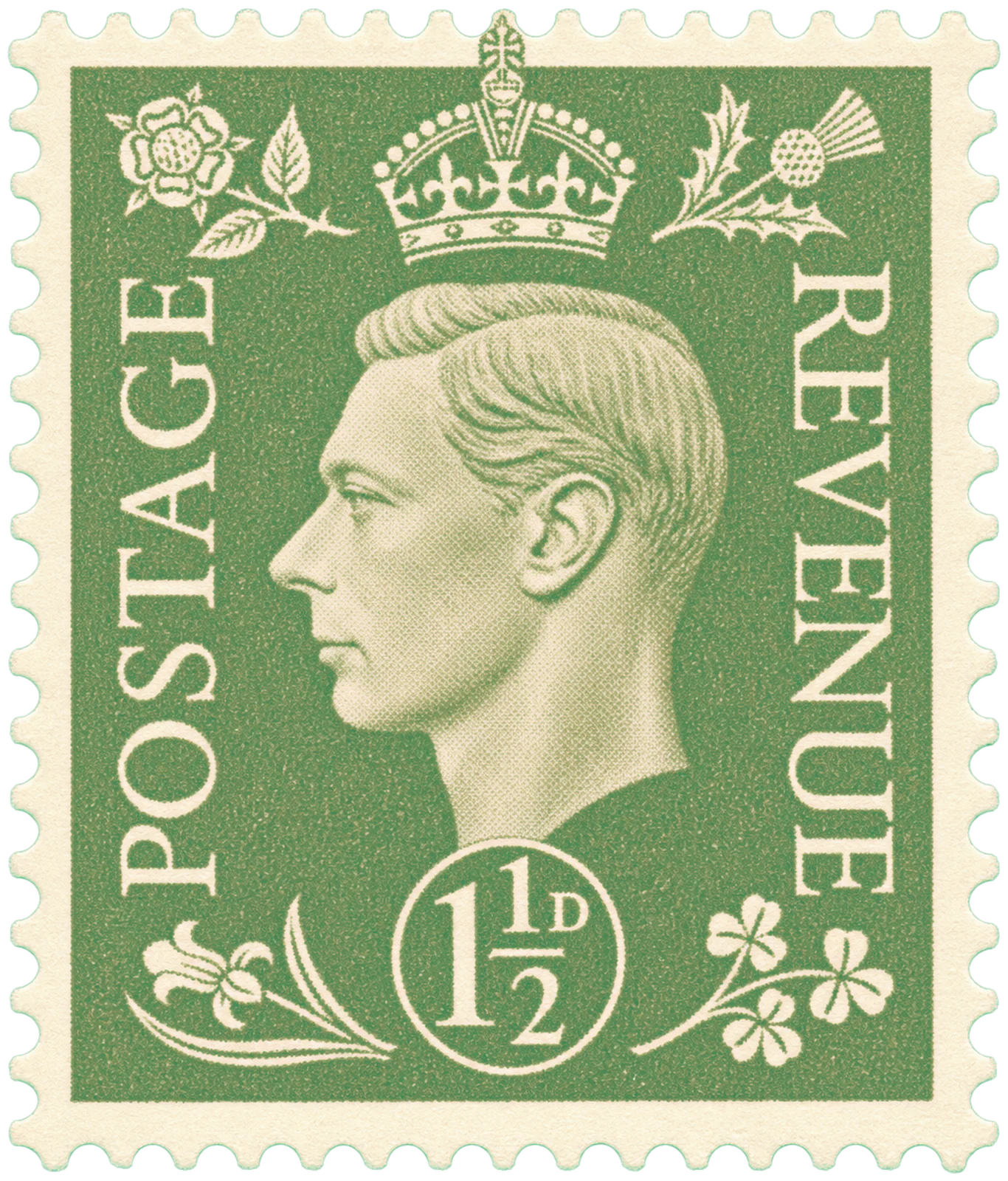
On the stamp you were exploring
George VI · 1½d pale green · 3 May 1951
Gill supplied the frame around Dulac’s royal portrait for the design used on this 1½d pale green stamp. A later colour did not mean a new frame commission.
On the stamp you were exploring
George VI · 1½d pale green · 3 May 1951
Gill supplied the frame around Dulac’s royal portrait for the design used on this 1½d pale green stamp. A later colour did not mean a new frame commission.
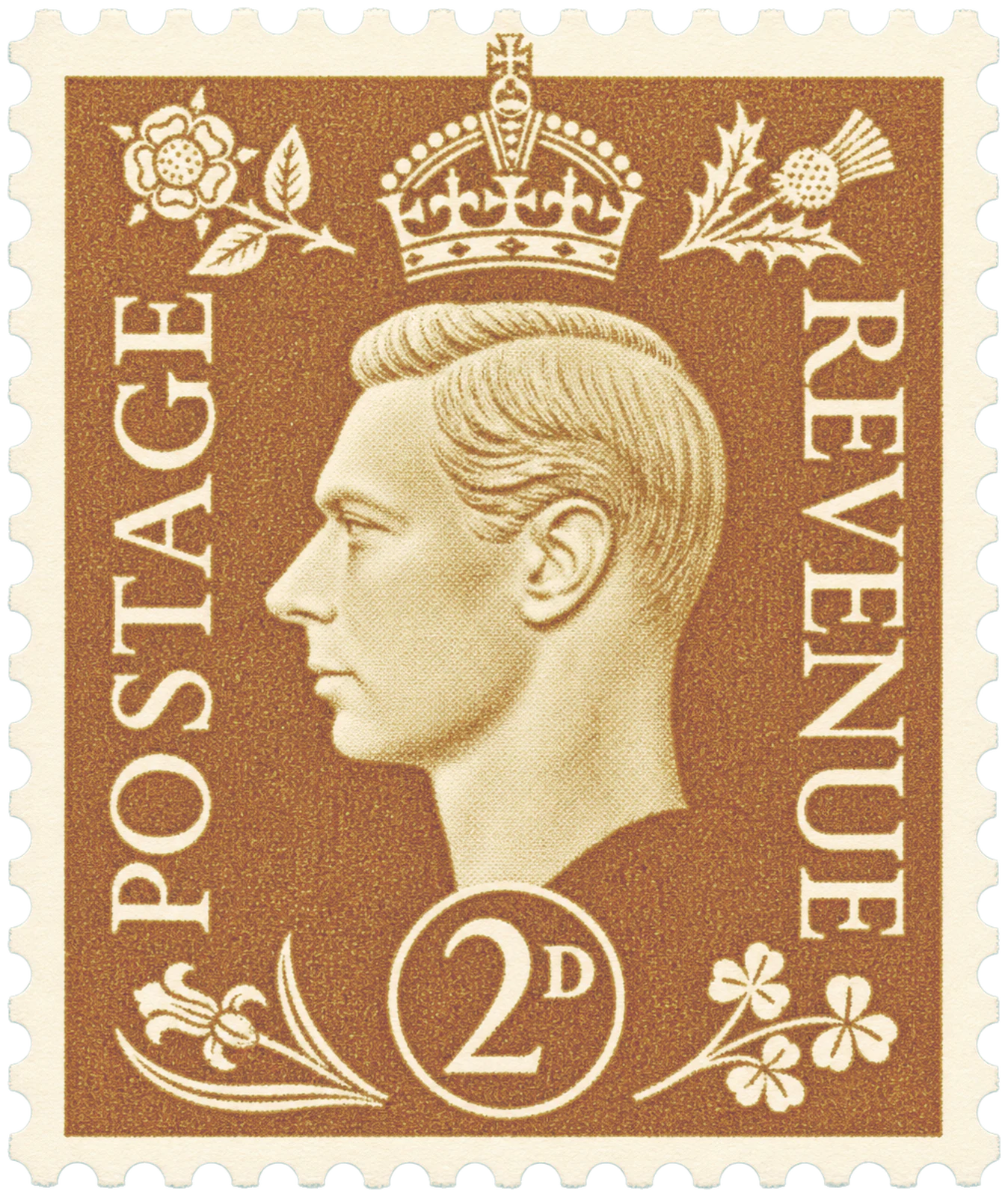
On the stamp you were exploring
George VI · 2d pale red-brown · 3 May 1951
Gill supplied the frame around Dulac’s royal portrait for the design used on this 2d pale red-brown stamp. A later colour did not mean a new frame commission.
On the stamp you were exploring
George VI · 2d pale red-brown · 3 May 1951
Gill supplied the frame around Dulac’s royal portrait for the design used on this 2d pale red-brown stamp. A later colour did not mean a new frame commission.
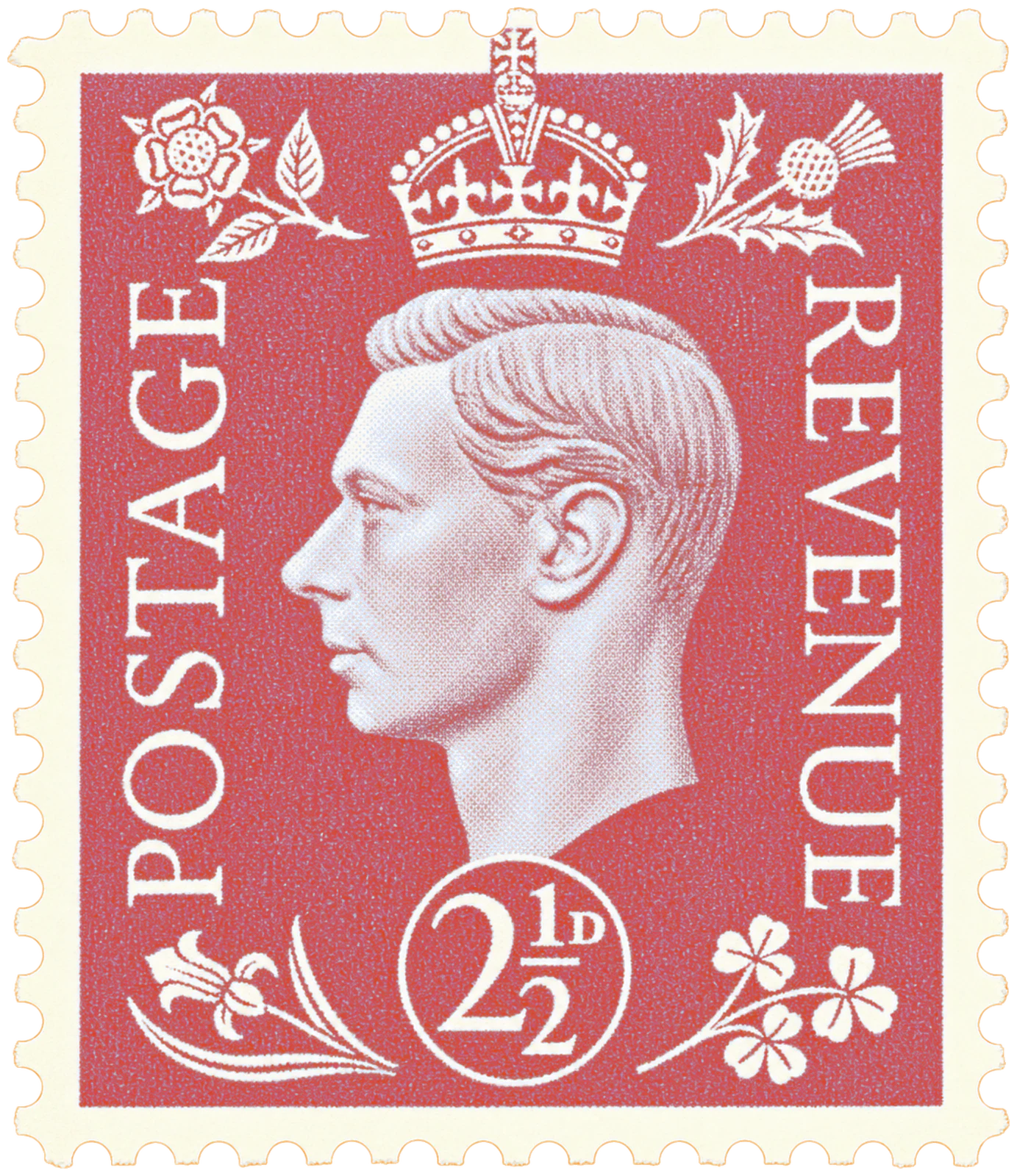
On the stamp you were exploring
George VI · 2½d pale scarlet · 3 May 1951
Gill supplied the frame around Dulac’s royal portrait for the design used on this 2½d pale scarlet stamp. A later colour did not mean a new frame commission.
On the stamp you were exploring
George VI · 2½d pale scarlet · 3 May 1951
Gill supplied the frame around Dulac’s royal portrait for the design used on this 2½d pale scarlet stamp. A later colour did not mean a new frame commission.
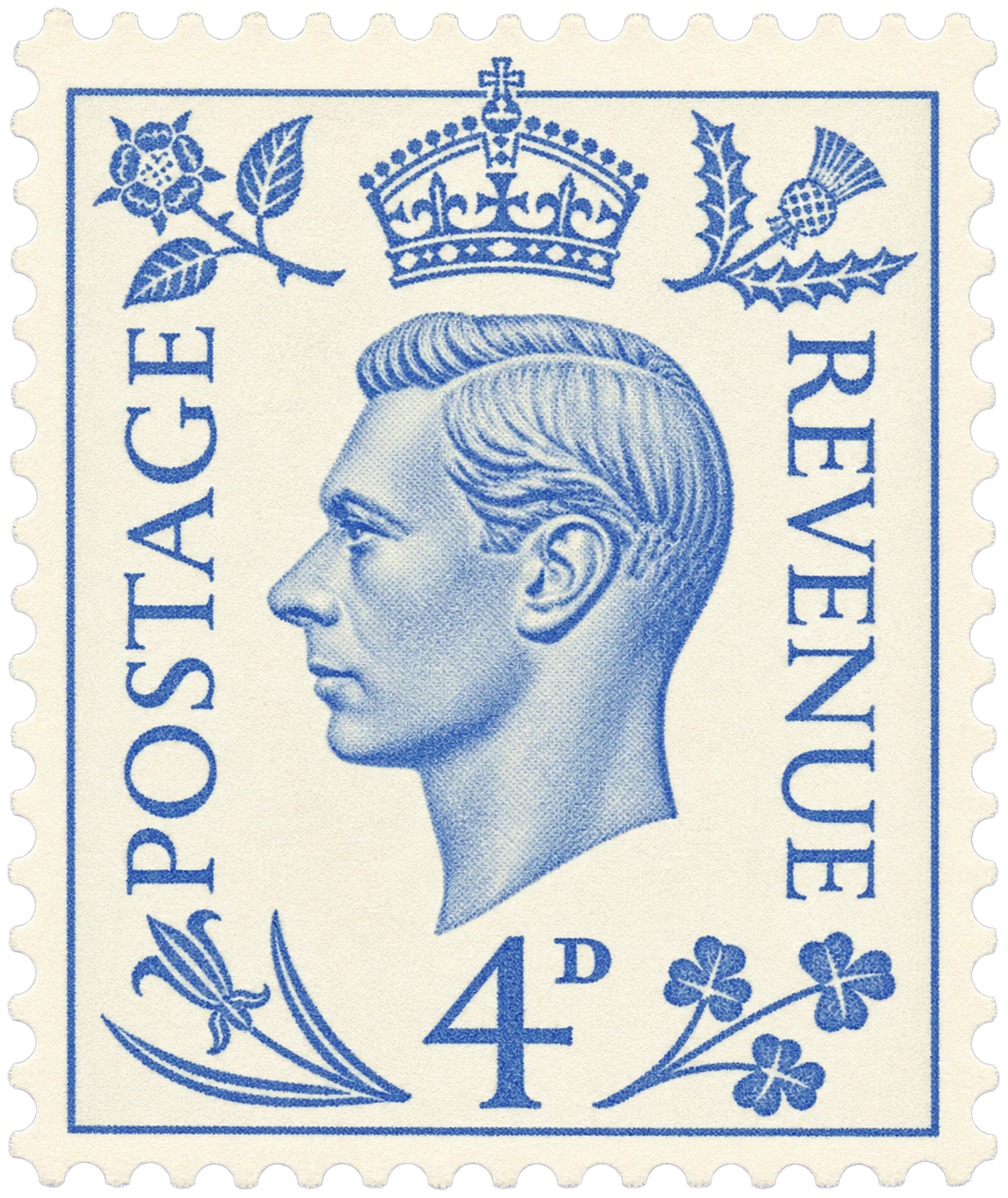
On the stamp you were exploring
George VI · 4d light ultramarine · 2 October 1950
Gill supplied the frame around Dulac’s royal portrait for the design used on this 4d light ultramarine stamp. A later colour did not mean a new frame commission.
On the stamp you were exploring
George VI · 4d light ultramarine · 2 October 1950
Gill supplied the frame around Dulac’s royal portrait for the design used on this 4d light ultramarine stamp. A later colour did not mean a new frame commission.
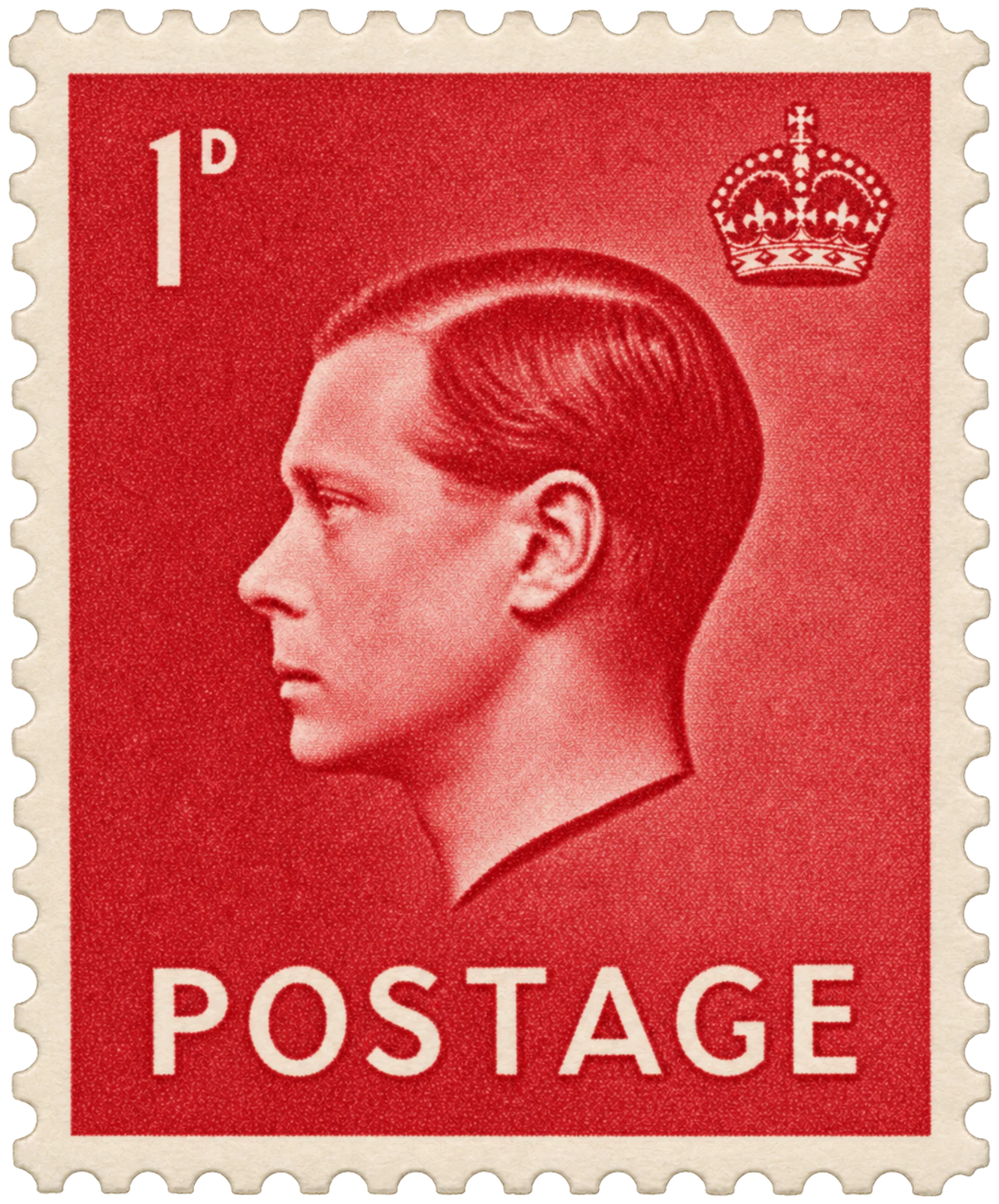
On the stamp you were exploring
Edward VIII · 1d scarlet · 14 September 1936
The letters and value figures on this Edward VIII 1d scarlet stamp use Gill Sans, the typeface Gill designed for Monotype. Harrison & Sons used his existing typeface when developing Brown’s layout around Cecil’s photograph.
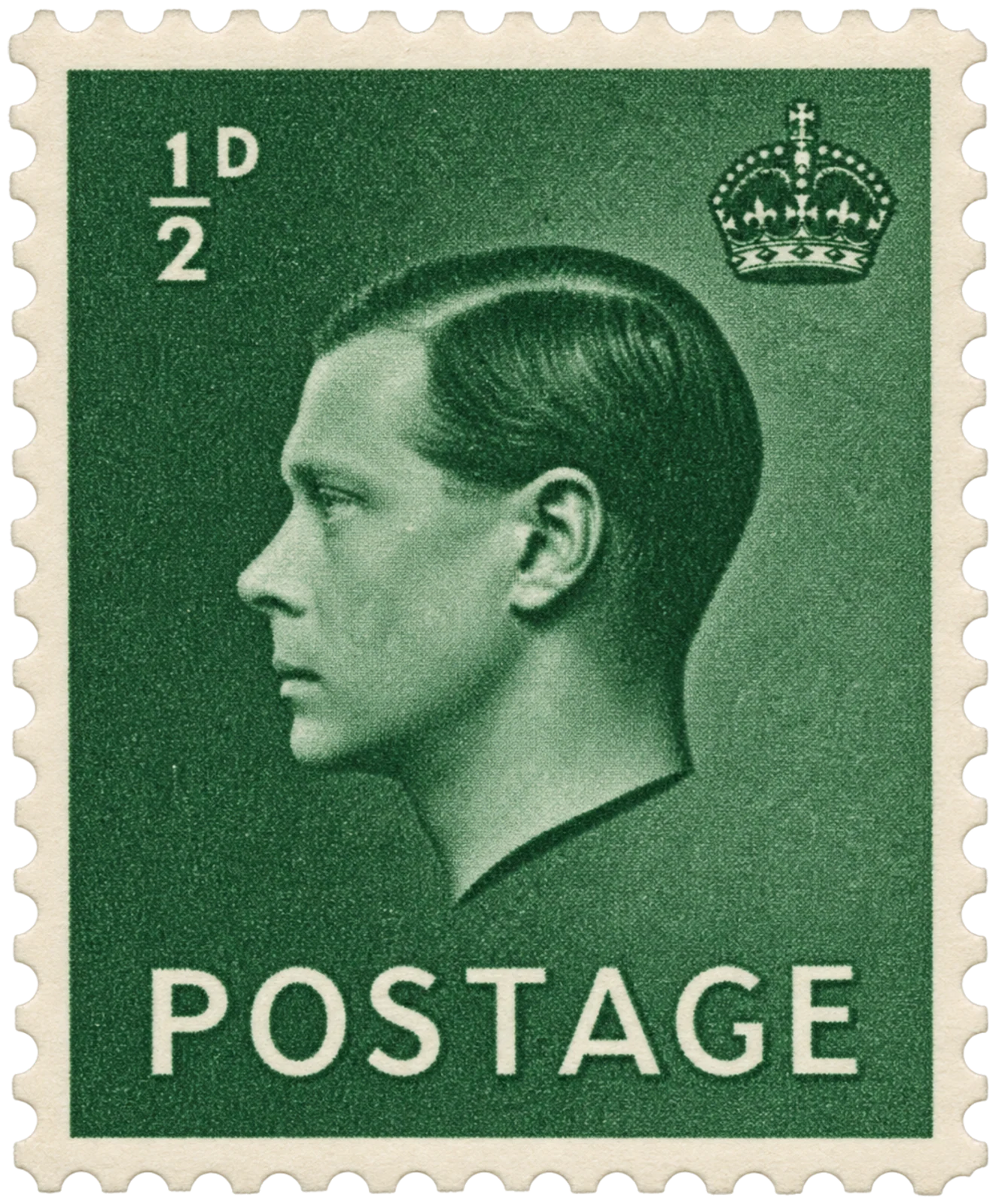
On the stamp you were exploring
Edward VIII · ½d green · 1 September 1936
The letters and value figures on this Edward VIII ½d green stamp use Gill Sans, the typeface Gill designed for Monotype. Harrison & Sons used his existing typeface when developing Brown’s layout around Cecil’s photograph.
On the stamp you were exploring
Edward VIII · ½d green · 1 September 1936
The letters and value figures on this Edward VIII ½d green stamp use Gill Sans, the typeface Gill designed for Monotype. Harrison & Sons used his existing typeface when developing Brown’s layout around Cecil’s photograph.
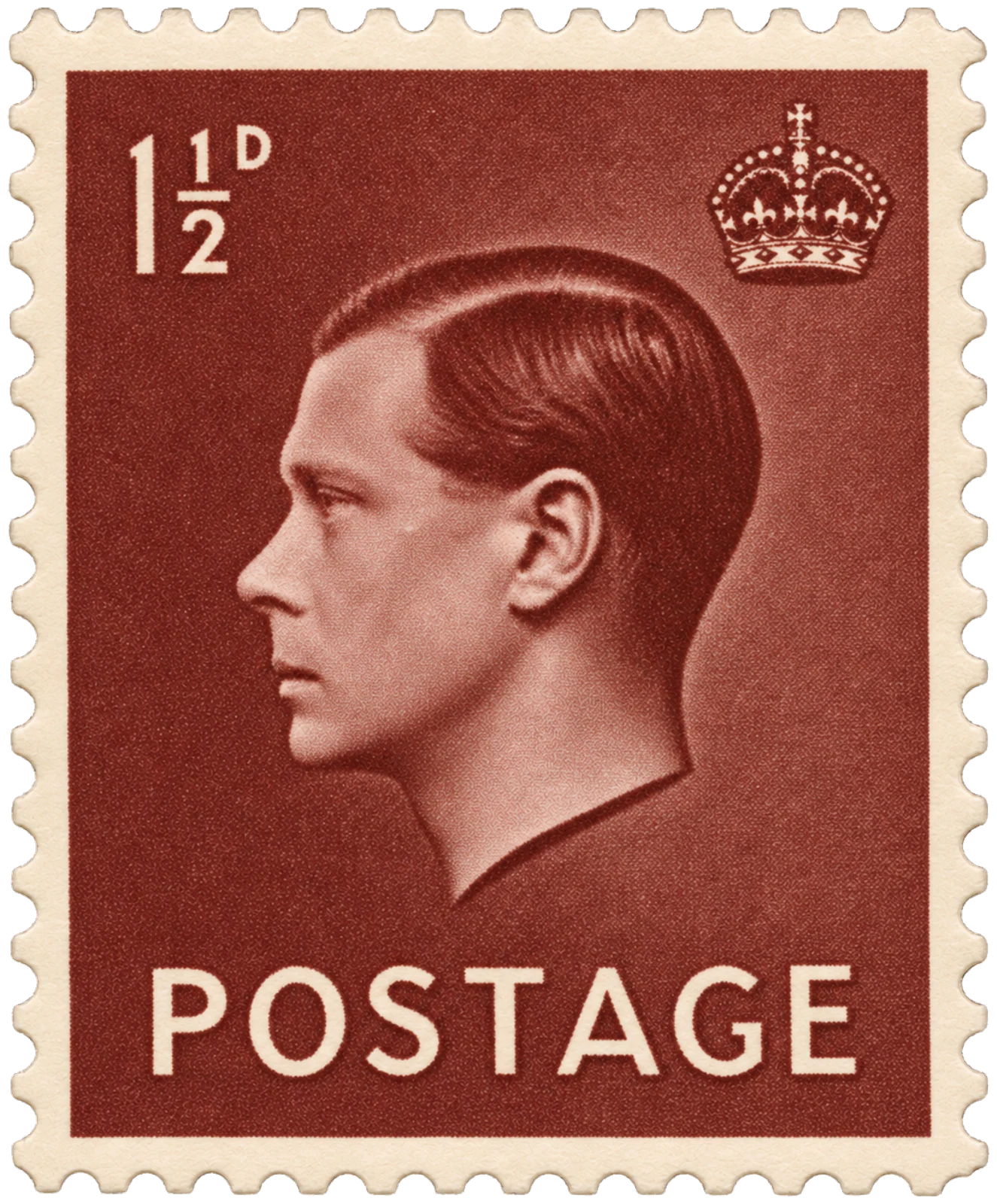
On the stamp you were exploring
Edward VIII · 1½d red-brown · 1 September 1936
The letters and value figures on this Edward VIII 1½d red-brown stamp use Gill Sans, the typeface Gill designed for Monotype. Harrison & Sons used his existing typeface when developing Brown’s layout around Cecil’s photograph.
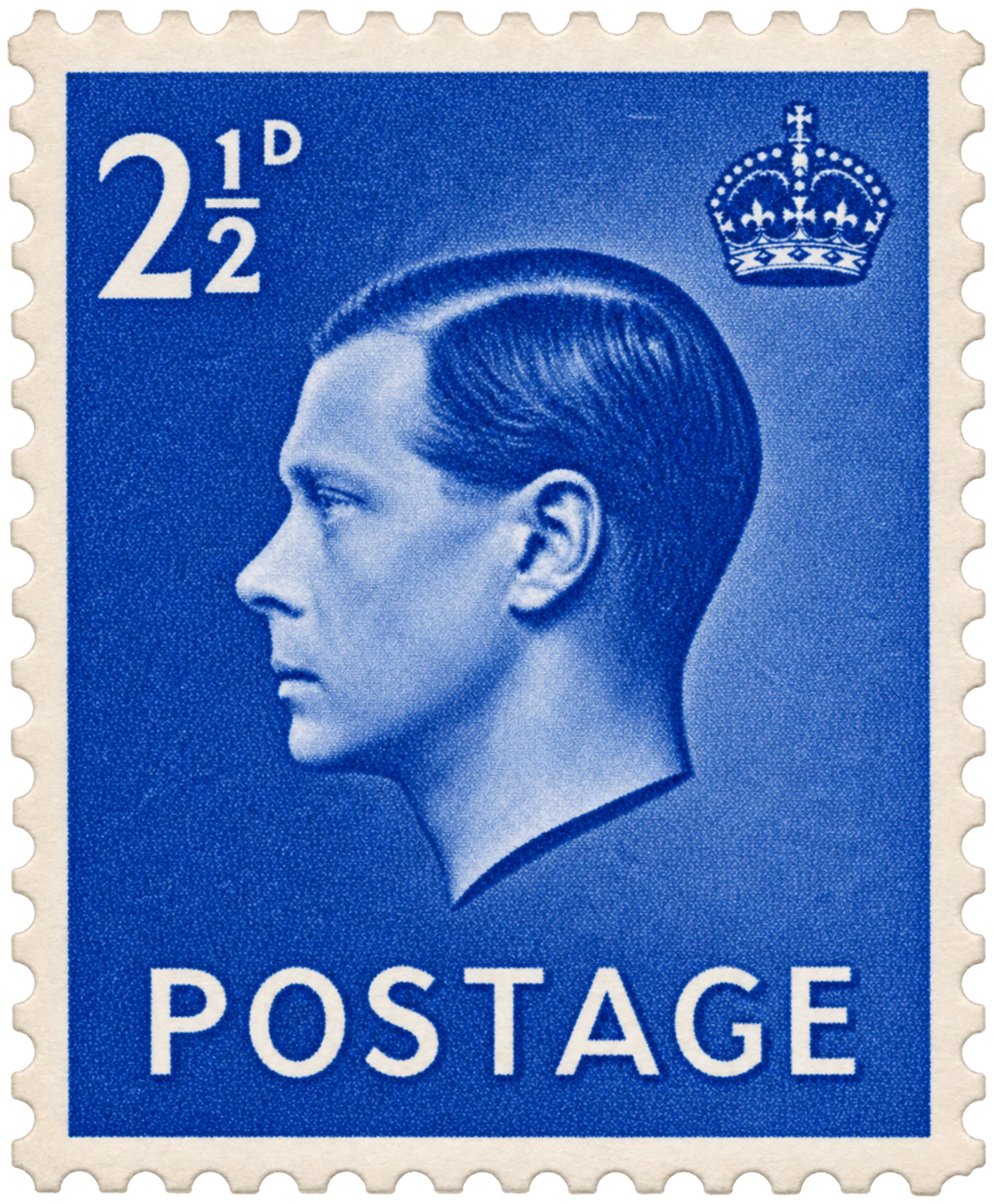
On the stamp you were exploring
Edward VIII · 2½d bright blue · 1 September 1936
The letters and value figures on this Edward VIII 2½d bright blue stamp use Gill Sans, the typeface Gill designed for Monotype. Harrison & Sons used his existing typeface when developing Brown’s layout around Cecil’s photograph.
Example stamps
Representative examples from 25 stamps associated with this person. Click a stamp to magnify it, or follow its caption link to explore the design.
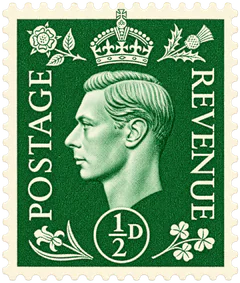
George VI ½d green 10 May 1937 Frame 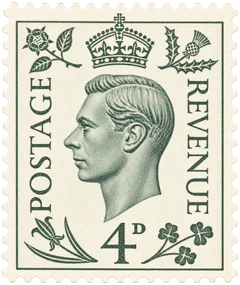
George VI 4d grey-green 21 November 1938 Frame 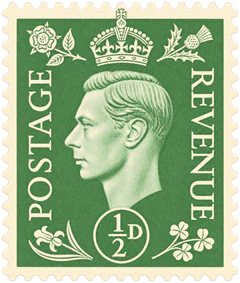
George VI ½d pale green 1 September 1941 Frame 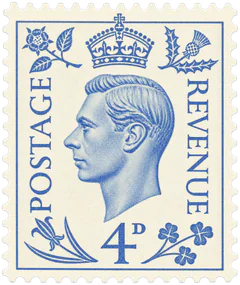
George VI 4d light ultramarine 2 October 1950 Frame
Learning to make letters
Born in Brighton in 1882, Gill moved to London in 1900 to train in architecture. Alongside that work he studied masonry and lettering, influenced by the calligrapher Edward Johnston. Commissions for inscriptions encouraged him to leave architectural training in 1903 and make a career in lettering. His work later included sculpture, wood engraving, books and type design. [1]
The frame around a king
Gill supplied the surrounding design for George VI’s halfpenny, while Dulac supplied the portrait. Upright POSTAGE and REVENUE inscriptions, a circular value tablet and the floral emblems organise the small space. The stamp’s design page follows those choices and the alterations made during approval. [2]
Craft and public life
Gill’s work crossed the boundary between individual craftsmanship and widely reproduced images. His book illustrations and lettering were influential, while his religious and social beliefs informed his arguments about work and art. Stamps placed this concern with form and readable lettering into a particularly small, everyday object. [3]
His life and legacy
A biography must also acknowledge Gill’s abuse. His diaries document the sexual abuse of his daughters; Fiona MacCarthy’s 1989 biography brought that evidence to wider public attention. Museums now address this alongside his artistic work. Understanding his contribution to stamp design does not excuse the harm he caused. [3]