
Hubert John Brown
Collector and originator of Edward VIII’s stamp layout
A young collector’s sketch helped shape the everyday stamps of a king. Hubert John Brown’s story shows how an idea from outside the professional design world could find its way into millions of hands.
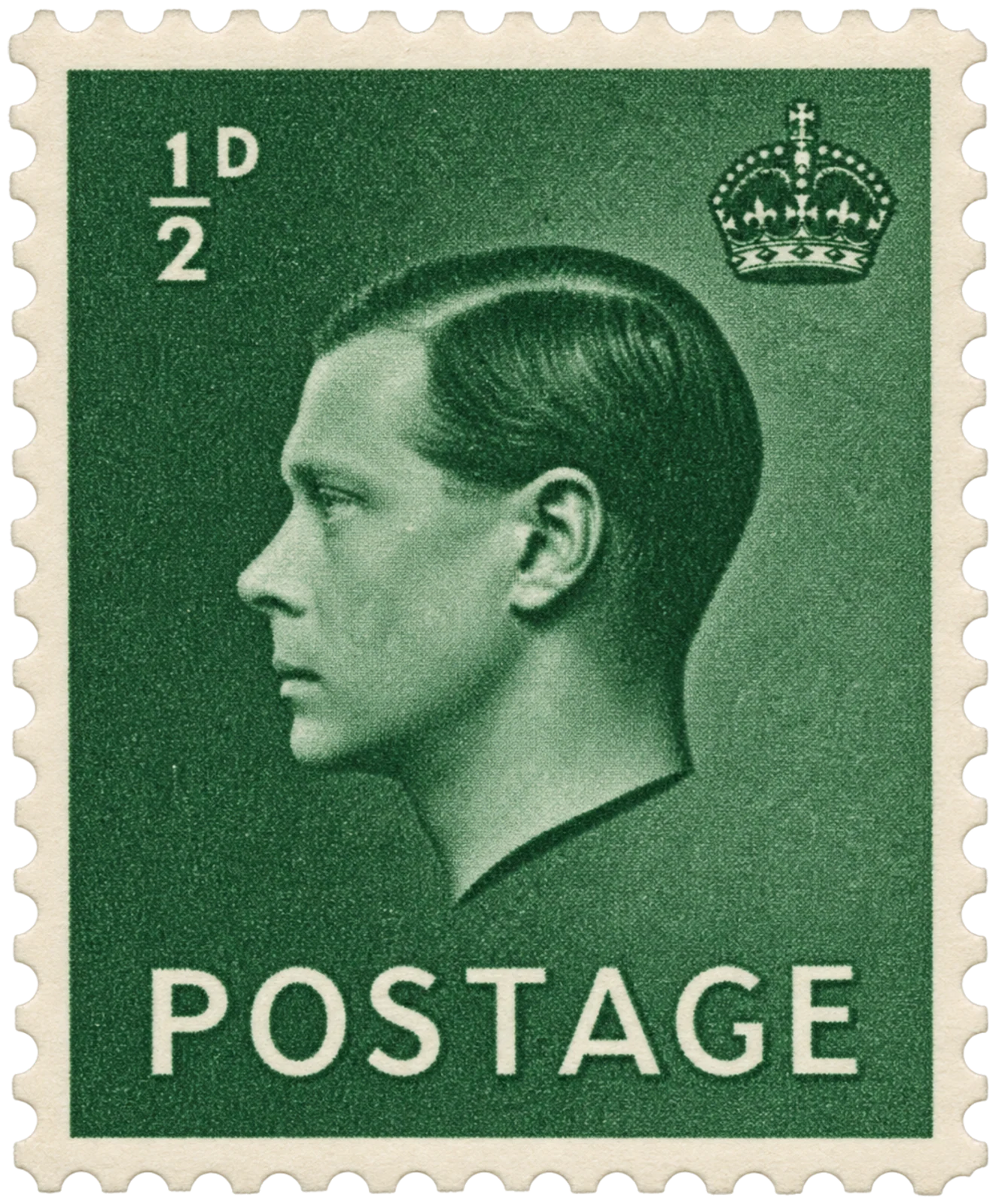
On the stamp you were exploring
Edward VIII · ½d green · 1 September 1936
Brown’s proposal supplied the starting point for the layout of this ½d green stamp. Harrison & Sons adapted it around Hugh Cecil’s photograph.
On the stamp you were exploring
Edward VIII · ½d green · 1 September 1936
Brown’s proposal supplied the starting point for the layout of this ½d green stamp. Harrison & Sons adapted it around Hugh Cecil’s photograph.
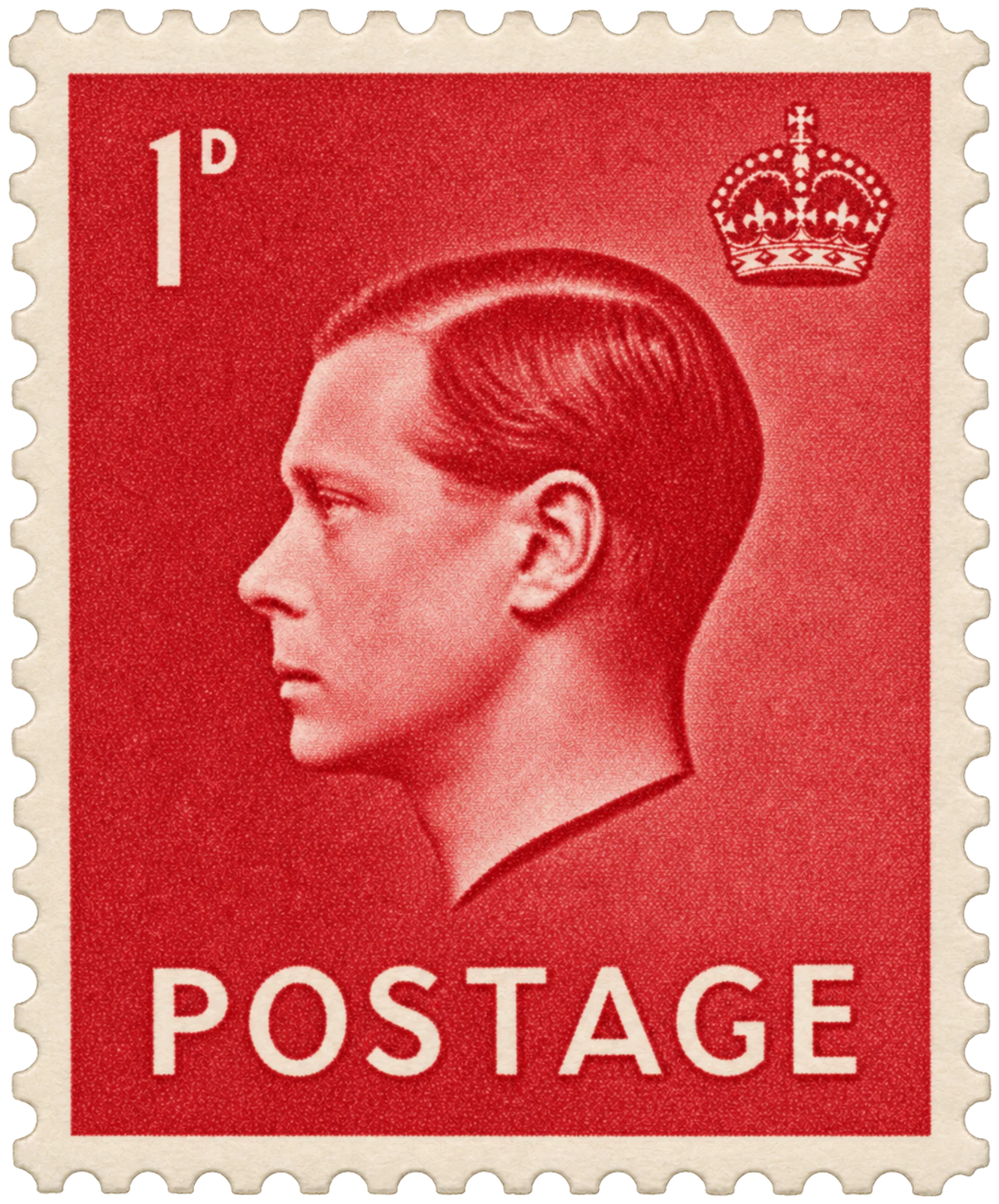
On the stamp you were exploring
Edward VIII · 1d scarlet · 14 September 1936
Brown’s proposal supplied the starting point for the layout of this 1d scarlet stamp. Harrison & Sons adapted it around Hugh Cecil’s photograph.
On the stamp you were exploring
Edward VIII · 1d scarlet · 14 September 1936
Brown’s proposal supplied the starting point for the layout of this 1d scarlet stamp. Harrison & Sons adapted it around Hugh Cecil’s photograph.
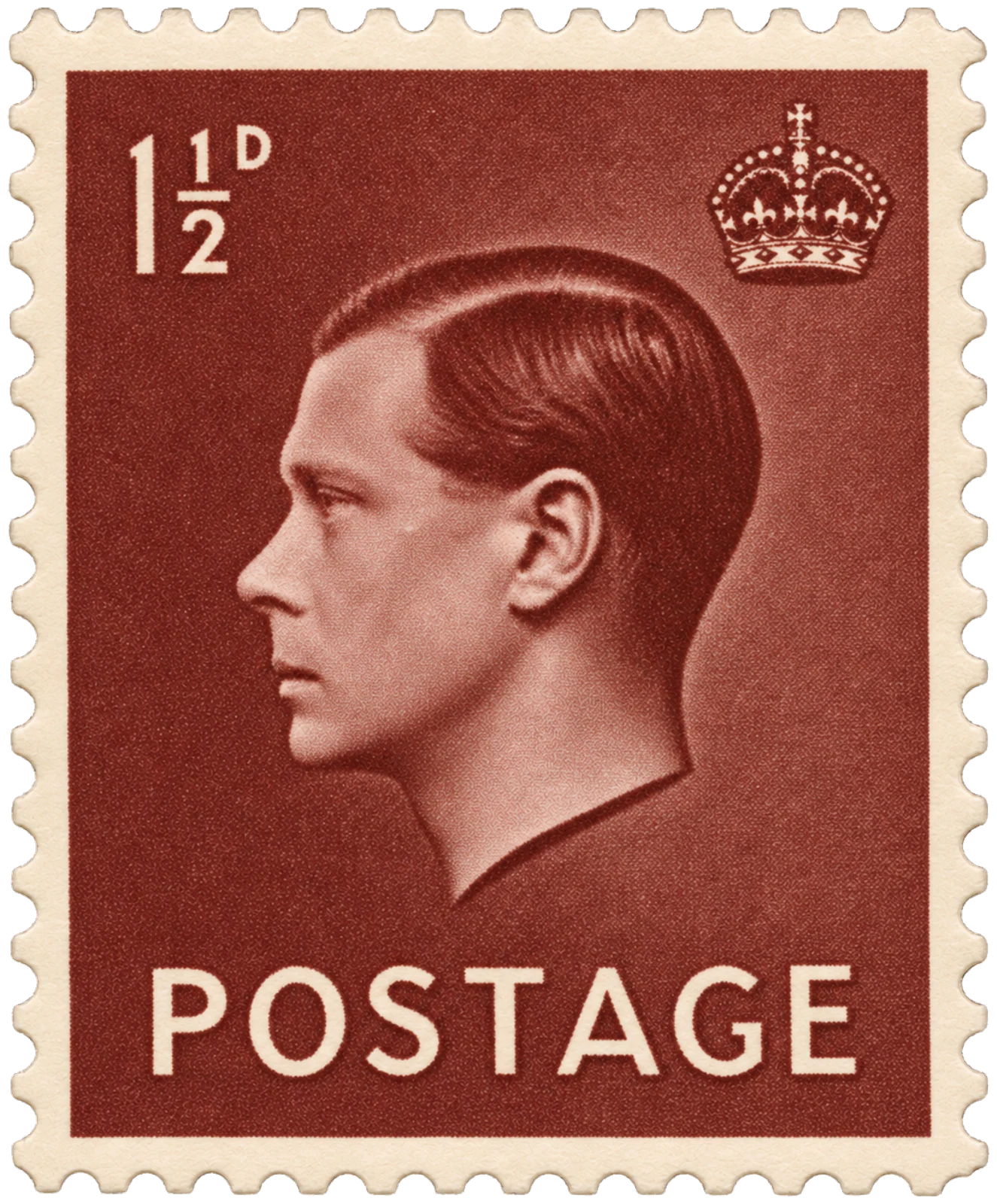
On the stamp you were exploring
Edward VIII · 1½d red-brown · 1 September 1936
Brown’s proposal supplied the starting point for the layout of this 1½d red-brown stamp. Harrison & Sons adapted it around Hugh Cecil’s photograph.
On the stamp you were exploring
Edward VIII · 1½d red-brown · 1 September 1936
Brown’s proposal supplied the starting point for the layout of this 1½d red-brown stamp. Harrison & Sons adapted it around Hugh Cecil’s photograph.
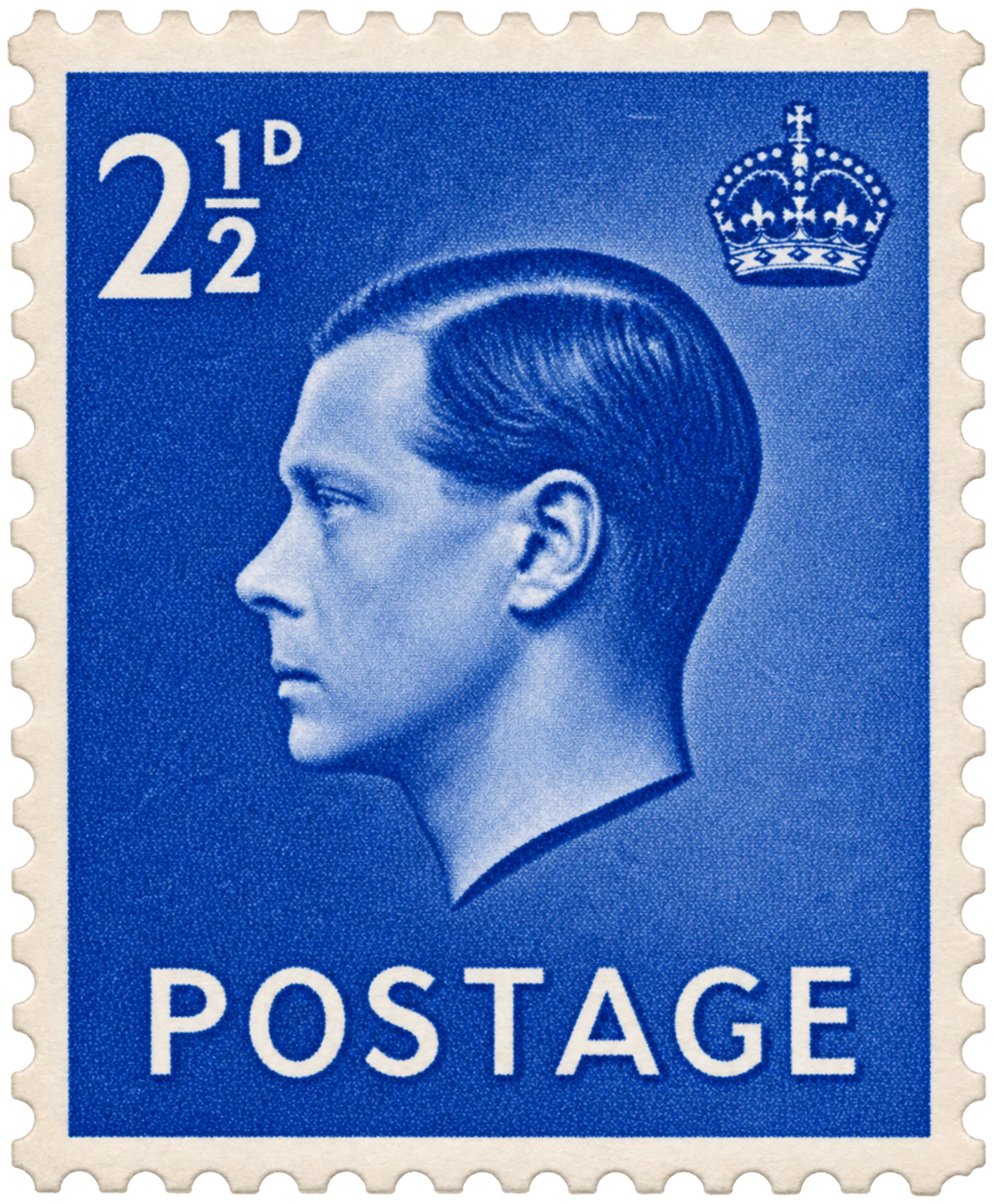
On the stamp you were exploring
Edward VIII · 2½d bright blue · 1 September 1936
Brown’s proposal supplied the starting point for the layout of this 2½d bright blue stamp. Harrison & Sons adapted it around Hugh Cecil’s photograph.
On the stamp you were exploring
Edward VIII · 2½d bright blue · 1 September 1936
Brown’s proposal supplied the starting point for the layout of this 2½d bright blue stamp. Harrison & Sons adapted it around Hugh Cecil’s photograph.
Example stamps
Click a stamp to magnify it, or follow its caption link to explore the design.
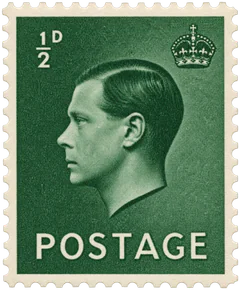
Edward VIII ½d green 1 September 1936 Layout 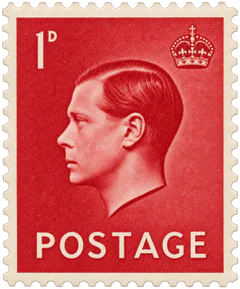
Edward VIII 1d scarlet 14 September 1936 Layout 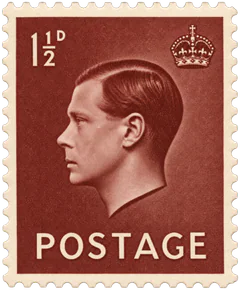
Edward VIII 1½d red-brown 1 September 1936 Layout 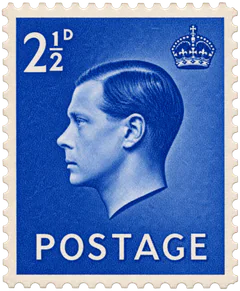
Edward VIII 2½d bright blue 1 September 1936 Layout
A collector with an idea
Brown was seventeen when he asked the Postmaster General in February 1936 whether he could submit a stamp design. He belonged to the philatelic societies of Exeter and Torquay. The reply permitted a submission but explained that distinguished artists normally supplied the competing designs. [1]
Thinking at stamp size
He developed a drawing ten times the size of a stamp and had it photographed at the intended printed size. Seeing the reduction prompted alterations before he submitted the revised work in April. It was a practical lesson in miniature design: a drawing must remain readable after it has shrunk. [1]
An idea taken into production
The Post Office passed Brown’s drawing to Harrison & Sons. The printer adapted the composition around Hugh Cecil’s photographic portrait. Brown’s contribution belongs to the layout; the issued stamp was the result of further work by others. [2, 1]
A letter from his father
Before deciding whether to reward Brown, Post Office officials made enquiries about him. The report described a comfortably situated, middle-aged retired man, and a payment was judged inappropriate. They had not realised their contributor was a teenager.
A letter sent on 26 August 1936 thanked him for his suggestions while stressing that his drawing could not be used unchanged. His father replied on 1 September, when the first three values appeared, delighted that his son’s work had helped shape the stamps. He explained that Brown had been under eighteen when he prepared the design.
Brown received no payment or public acknowledgement at that time. An article in Gibbons Stamp Monthly in January 1937 brought his part to public attention, and the national press picked up the story. An internal Post Office note called the article fair but favoured staying quiet. [1]