
Bradbury Wilkinson
Engravers and security printers
The same skills that made a banknote difficult to copy could turn a stamp into a finely engraved miniature. Bradbury Wilkinson worked across that world of secure printed documents.
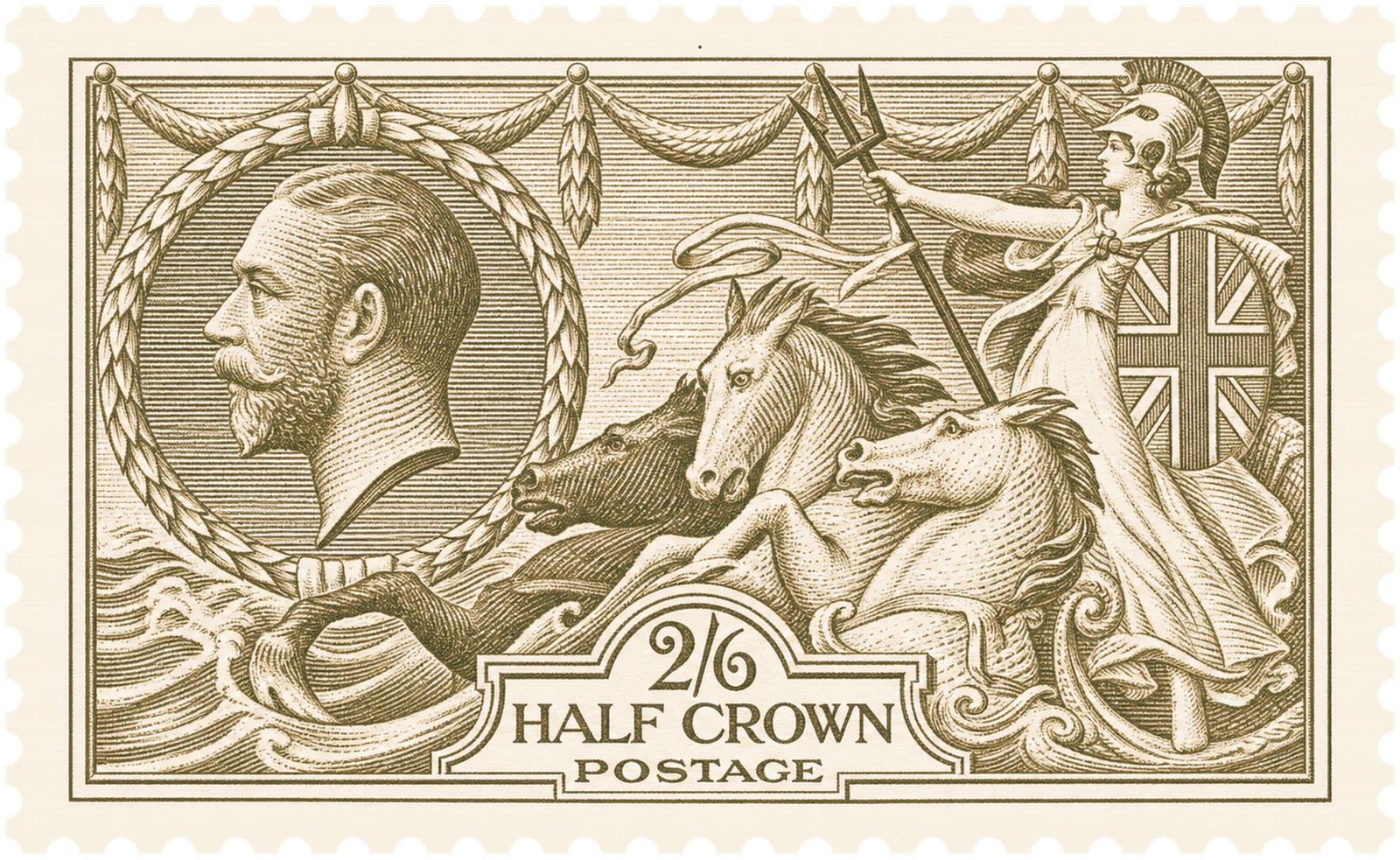
On the stamp you were exploring
George V · 2s 6d olive-brown · 1918
Bradbury Wilkinson & Co. produced this 2s 6d by recess printing. The same broad design also appears in other printers’ issues; compare the documented printing features.
On the stamp you were exploring
George V · 2s 6d olive-brown · 1918
Bradbury Wilkinson & Co. produced this 2s 6d by recess printing. The same broad design also appears in other printers’ issues; compare the documented printing features.
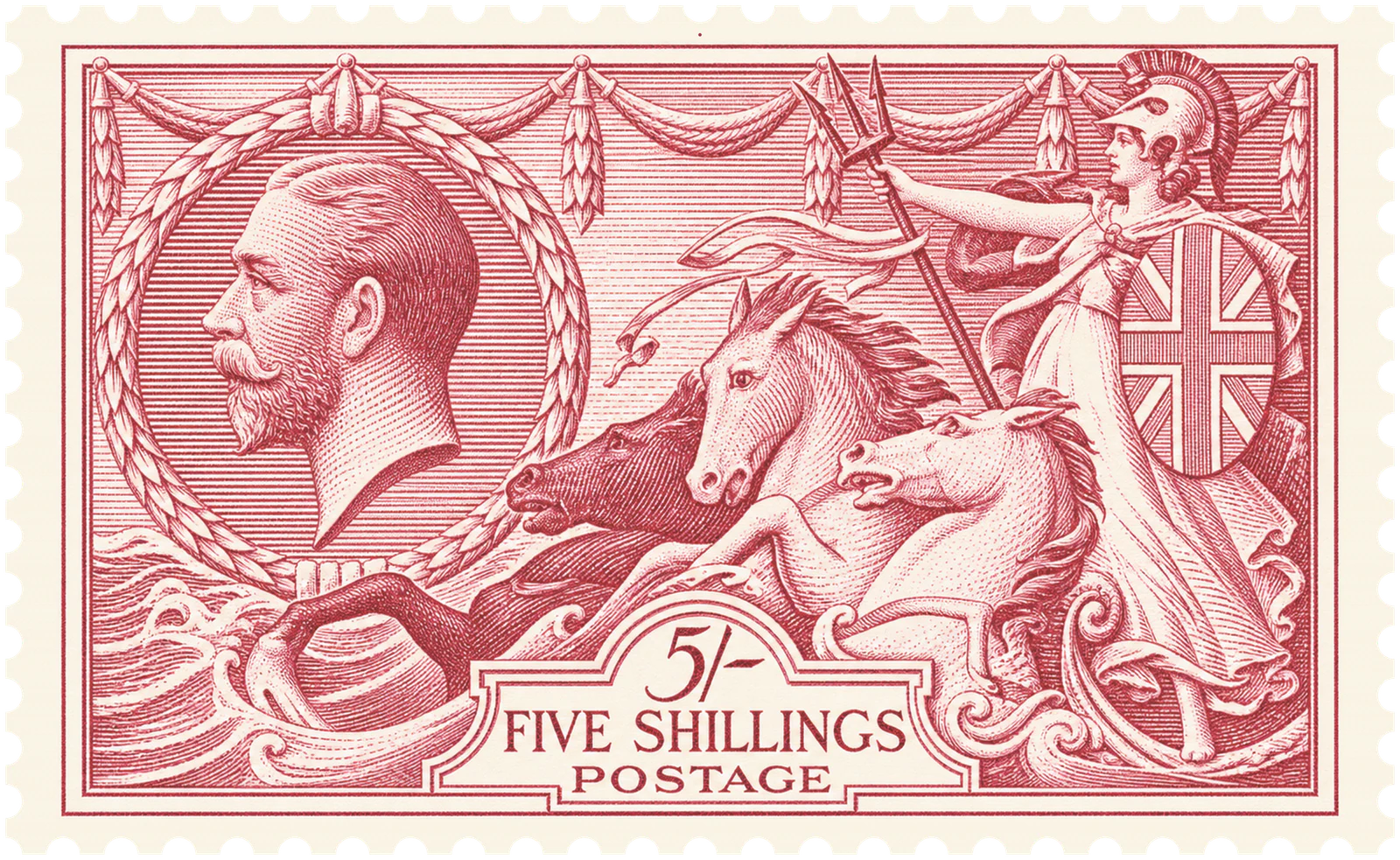
On the stamp you were exploring
George V · 5s rose-red · 1919
Bradbury Wilkinson & Co. produced this 5s by recess printing. The same broad design also appears in other printers’ issues; compare the documented printing features.
On the stamp you were exploring
George V · 5s rose-red · 1919
Bradbury Wilkinson & Co. produced this 5s by recess printing. The same broad design also appears in other printers’ issues; compare the documented printing features.
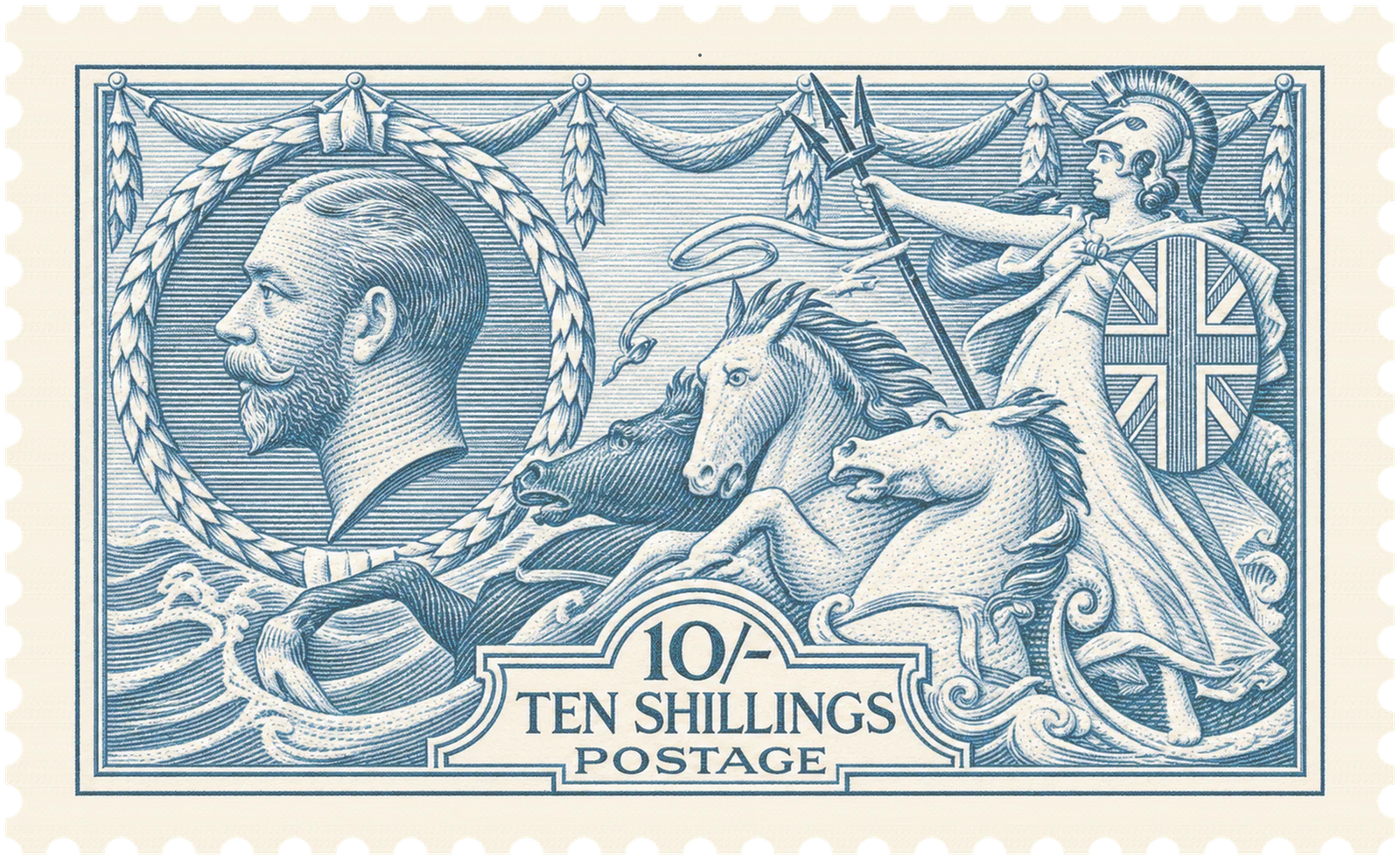
On the stamp you were exploring
George V · 10s dull grey-blue · 1919
Bradbury Wilkinson & Co. produced this 10s by recess printing. The same broad design also appears in other printers’ issues; compare the documented printing features.
On the stamp you were exploring
George V · 10s dull grey-blue · 1919
Bradbury Wilkinson & Co. produced this 10s by recess printing. The same broad design also appears in other printers’ issues; compare the documented printing features.
A specialised printing business
Henry Bradbury formed a partnership with the engineer Robert W. Wilkinson. The firm produced stamps as well as chequebooks, bonds and share certificates for customers in different countries. Fine engraving served both appearance and security: the image had to reproduce accurately while resisting casual imitation. [1]
The Seahorse connection
Bradbury Wilkinson continued the George V Seahorse designs after De La Rue. The portrait and maritime scene remained recognisable, while the printer’s work belongs to its own catalogue group. The design’s creator, the engraver of the original die and the firm making a later printing are separate credits. [2]
A factory in the community
The company moved to the Merton area in 1919 and built a large security-printing complex on Burlington Road. By the 1920s it was among the largest local employers. Production continued there into the 1980s; the works were demolished and replaced by a supermarket in 1987. [1]