
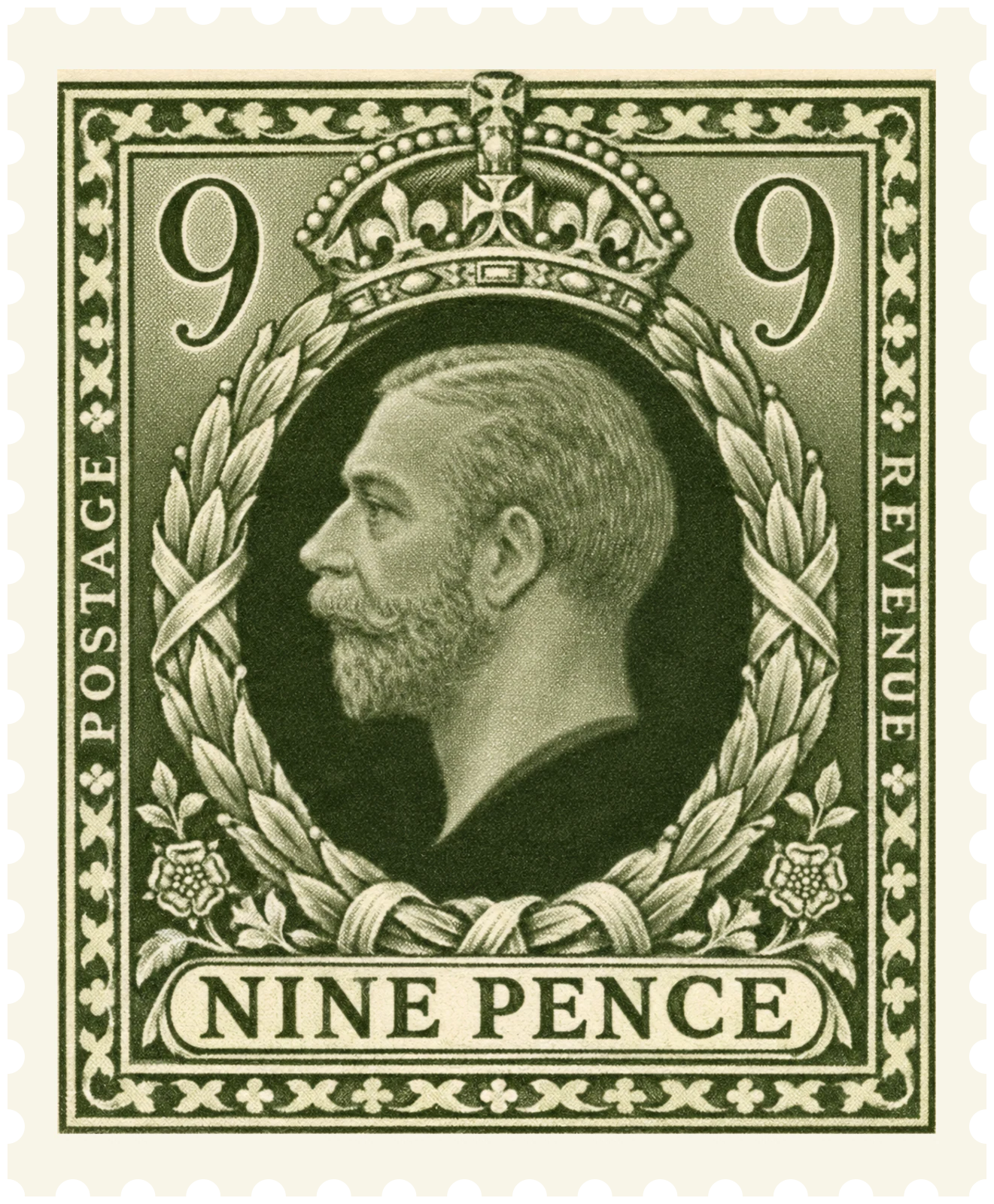
The design of the 9d deep olive-green
King George V · Great Britain · Harrison & Sons · 1935 · Small format
A gap that belongs in the album
There is no issued George V photogravure sixpenny to place before this ninepenny. Technical problems with inking delayed that value, while work on proposed sevenpenny and eightpenny stamps ceased after the King’s death. The eleven-value set is complete without them. [1]
The ninepenny and fourpenny reached post offices together on 2 December 1935. The fivepenny, tenpenny and shilling followed in February 1936, after George V’s death. The ninepenny therefore appeared before the lower-valued fivepenny that precedes it in an album arranged by denomination. [2, 1]
George VI’s photogravure sixpenny, sevenpenny and eightpenny eventually appeared in 1939. [1]
A rejected idea finds a home
George W. Eve’s wreath frame began in the prolonged preparation of a proposed fourpenny. That version was not issued, but the design was not abandoned altogether. Work resumed in 1913 for the ninepenny, tenpenny and shilling. The frame was combined with Medal Head II, the smaller portrait engraving prepared for the available space, and adapted to each denomination. [3]
More than twenty years later, Harrison adapted the wreath and inherited likeness for photogravure. The new dark background belongs to that change of process; the decision to give these values Eve’s frame dates from the earlier letterpress programme. [4]
A colour change with a purpose
Olive-green replaced agate on the ninepenny in 1922 to improve the visibility of cancellations—the marks applied to show that stamps have been used. The Post Office kept the existing portrait and wreath frame. [3]
That change belonged to 1922, before photogravure arrived. The later ninepenny continued in deep olive-green, retaining the practical choice alongside the older wreath design. [3, 5]
A laurel wreath tied with ribbons
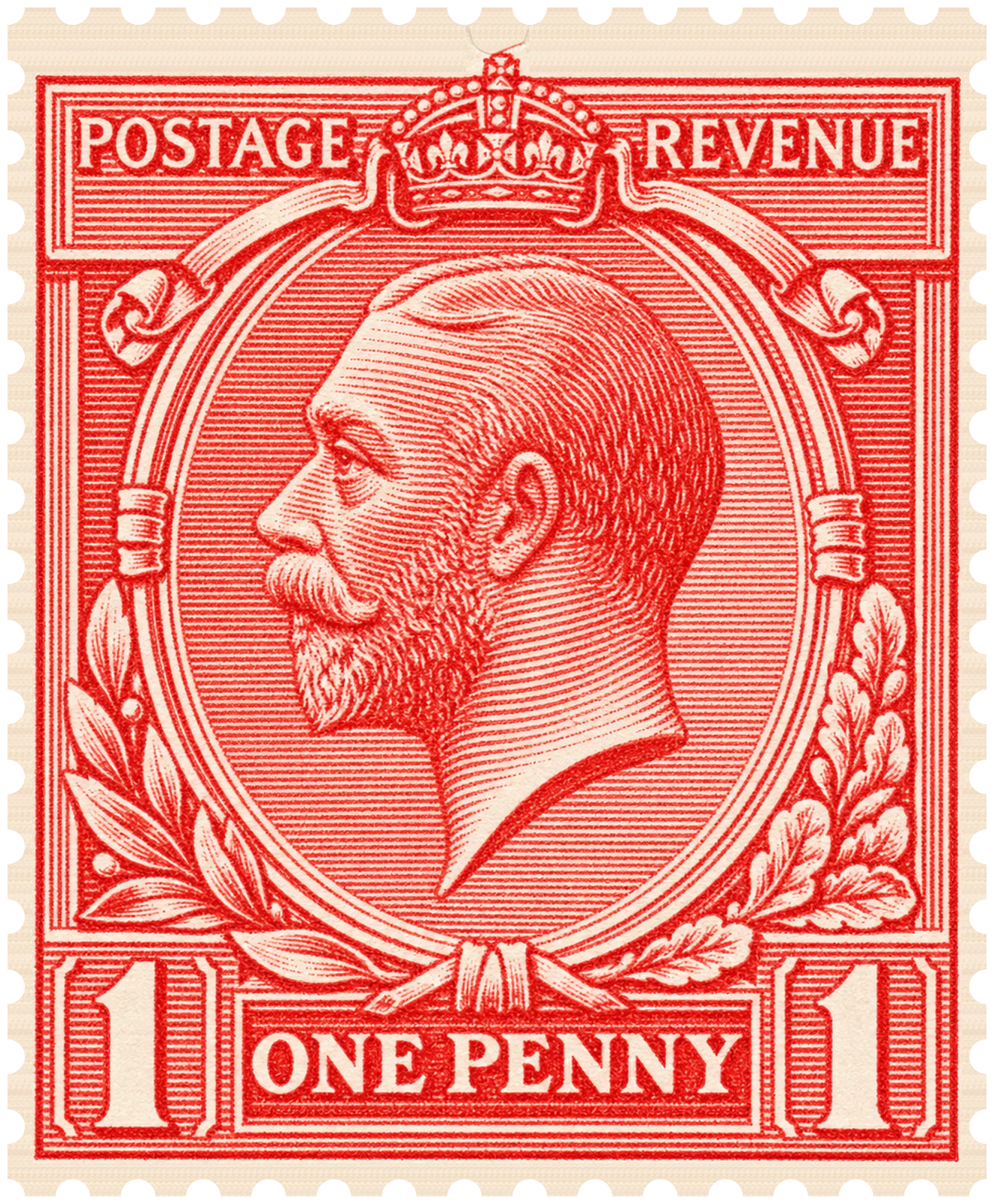
Long pointed leaves form a close oval around the King. Pale ribbons cross the branches part-way up and meet in a bow below the portrait. The wreath is more continuous than the separate sprays in Mackennal’s penny design.
The laurel leaves form a slimmer, more evenly spaced wreath than the thick bundles on the earlier Downey penny. Laurel is a traditional emblem of victory and honour. [6, 7]
The photogravure frame retains Eve’s wreath arrangement from the earlier ninepenny, tenpenny and shilling. [3, 4]
Click either stamp to magnify
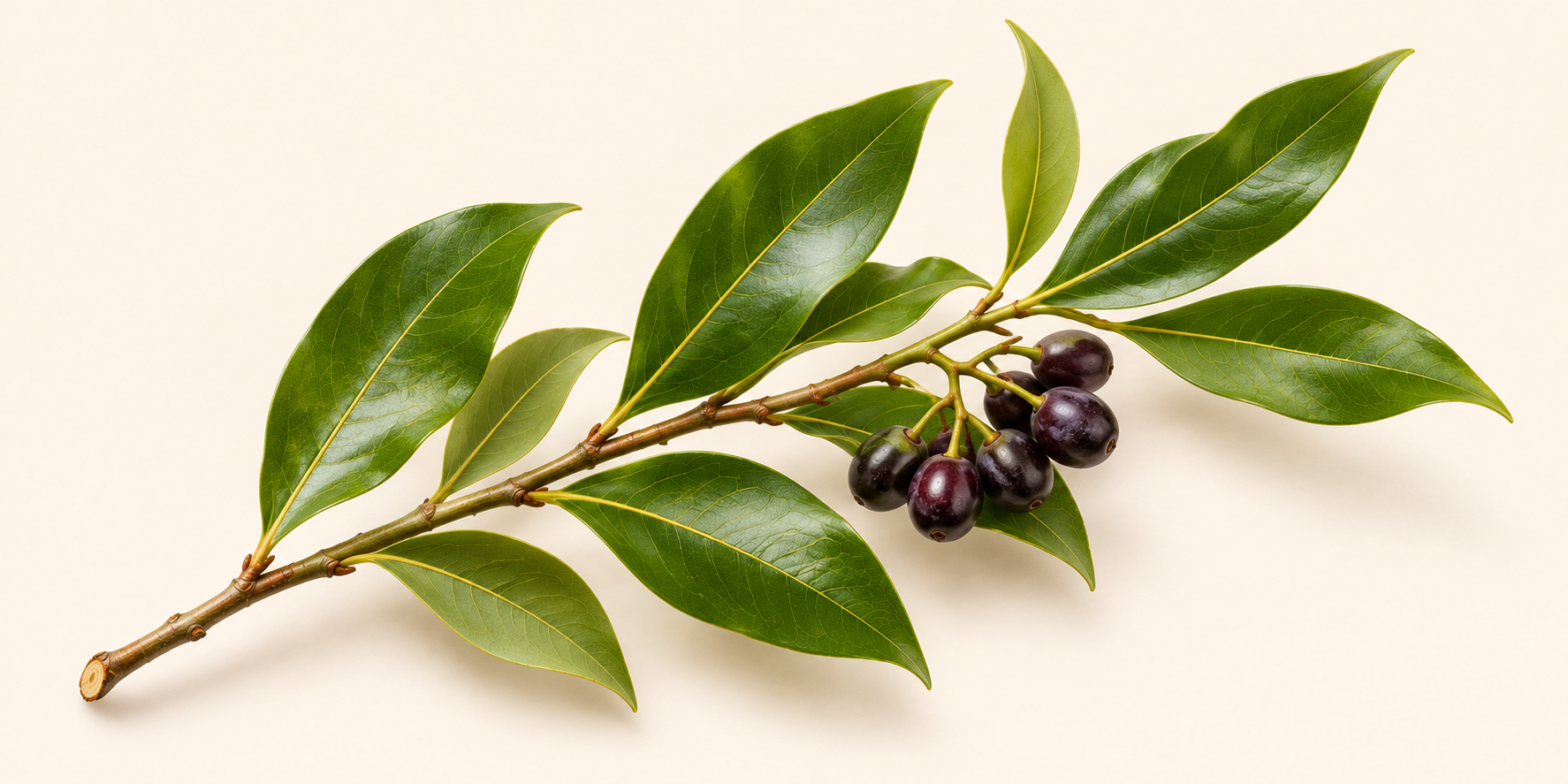
Image information
Click image to magnify
Illustration of a laurel branch with glossy pointed green leaves and dark berries.
- Credit
- Stunning Stamps · 2026
- Notes
- Digitally constructed
The small flowers at the foot
The lower corners contain floral groups beside the bow and value panel: a rose, thistle and shamrock. They are the traditional plant emblems of England, Scotland and Ireland. Their small scale makes them easy to overlook beside the much larger wreath. [8]
Look for the rounded petals of the rose, the compact thistle head and the shamrock’s cluster of leaves.
Wales has no separate emblem in this arrangement. The three-plant grouping belongs to an older tradition of national symbolism, shaped by Wales’s incorporation into the Kingdom of England. The royal shield on Edward VII’s fivepenny likewise has no separate Welsh quarter. [9, 10]
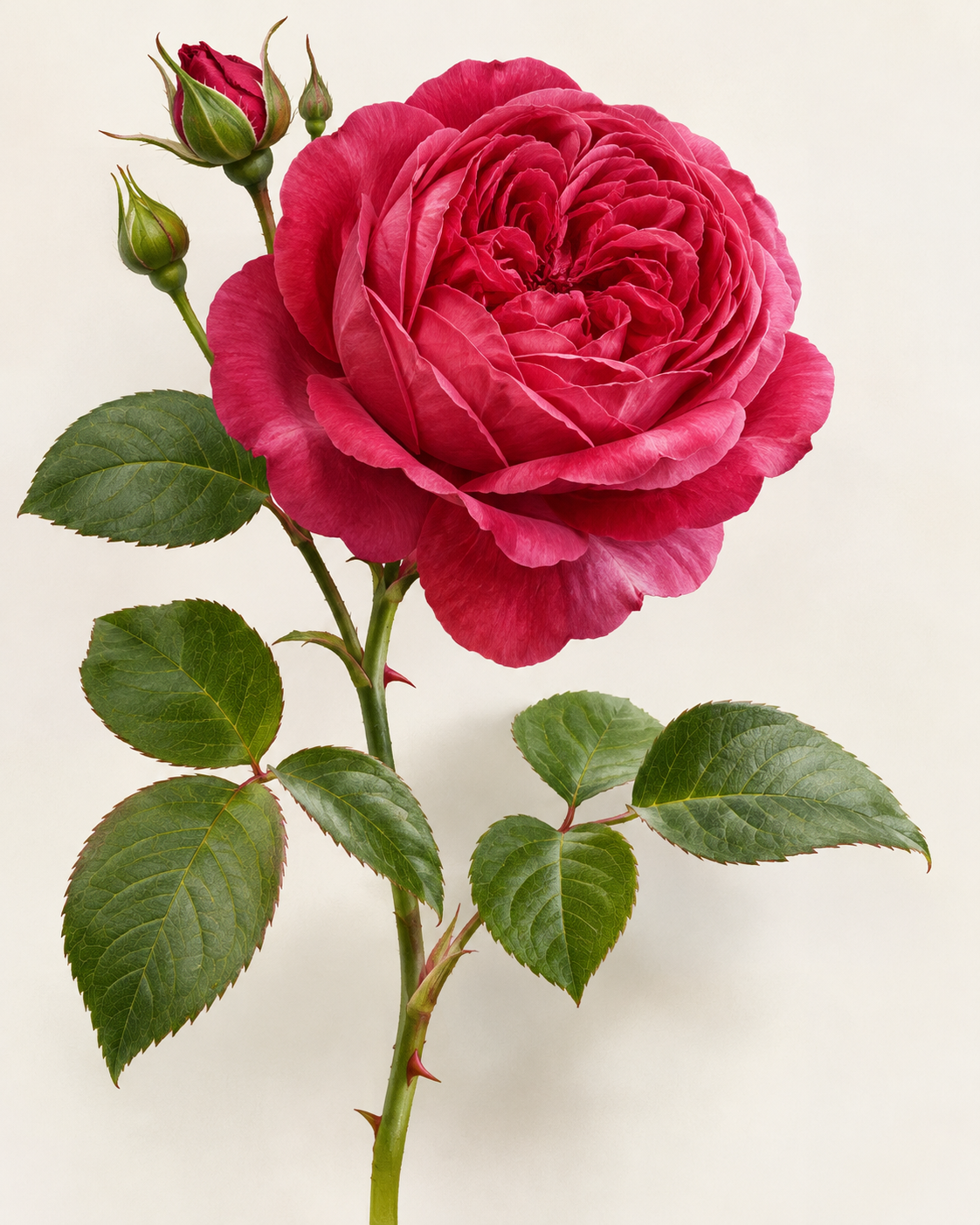
Image information
Click image to magnify
Red rose with layered petals, buds and green leaves.
- Credit
- Stunning Stamps · 2026
- Notes
- Digitally reconstructed

Image information
Click image to magnify
Purple thistle flower with a spiny head and pointed green leaves.
- Credit
- Stunning Stamps · 2026
- Notes
- Digitally reconstructed
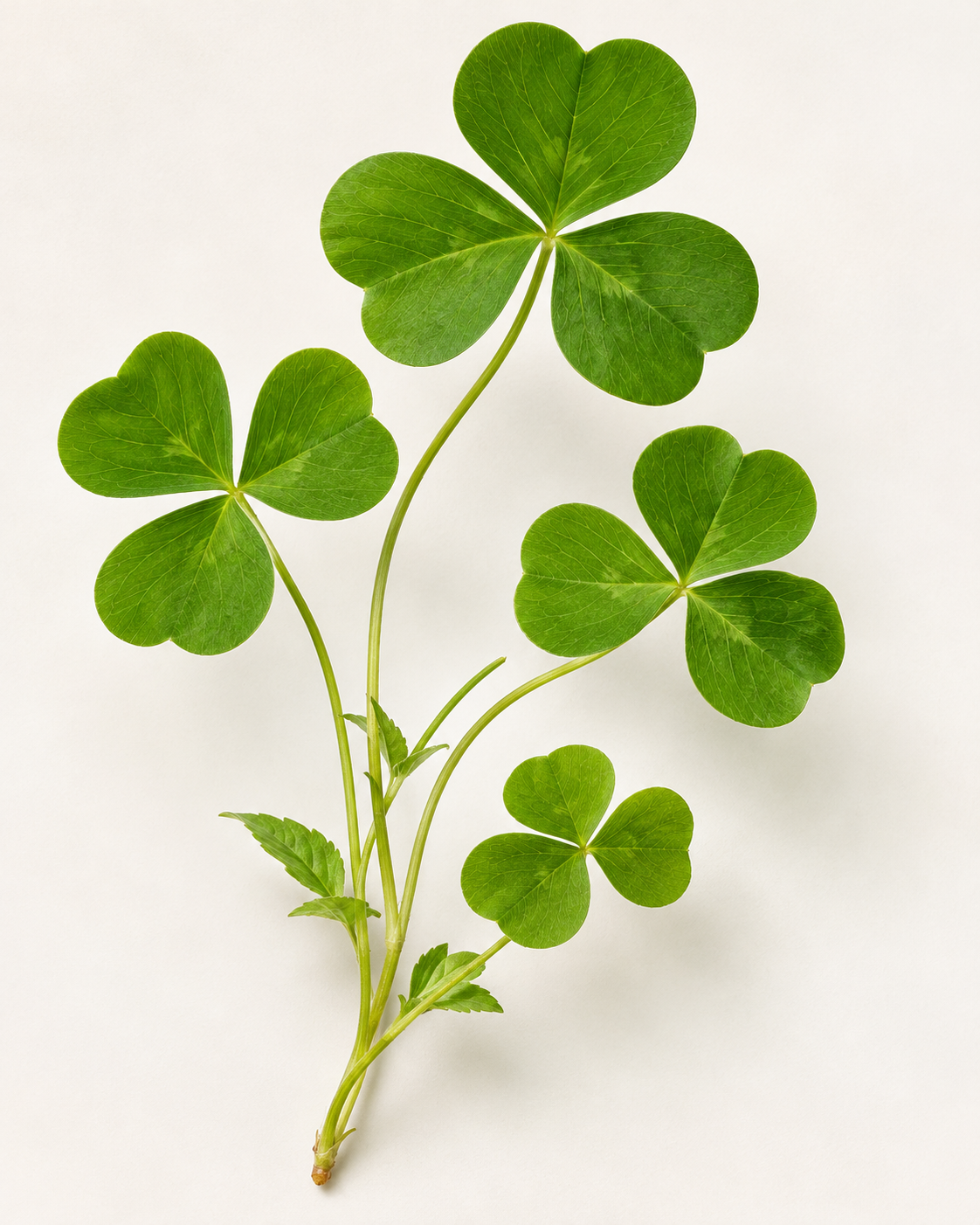
Image information
Click image to magnify
Green shamrock sprigs with groups of three leaflets.
- Credit
- Stunning Stamps · 2026
- Notes
- Digitally reconstructed
George VI’s low-value definitives later included a daffodil for Wales alongside the rose, thistle and shamrock. [11]
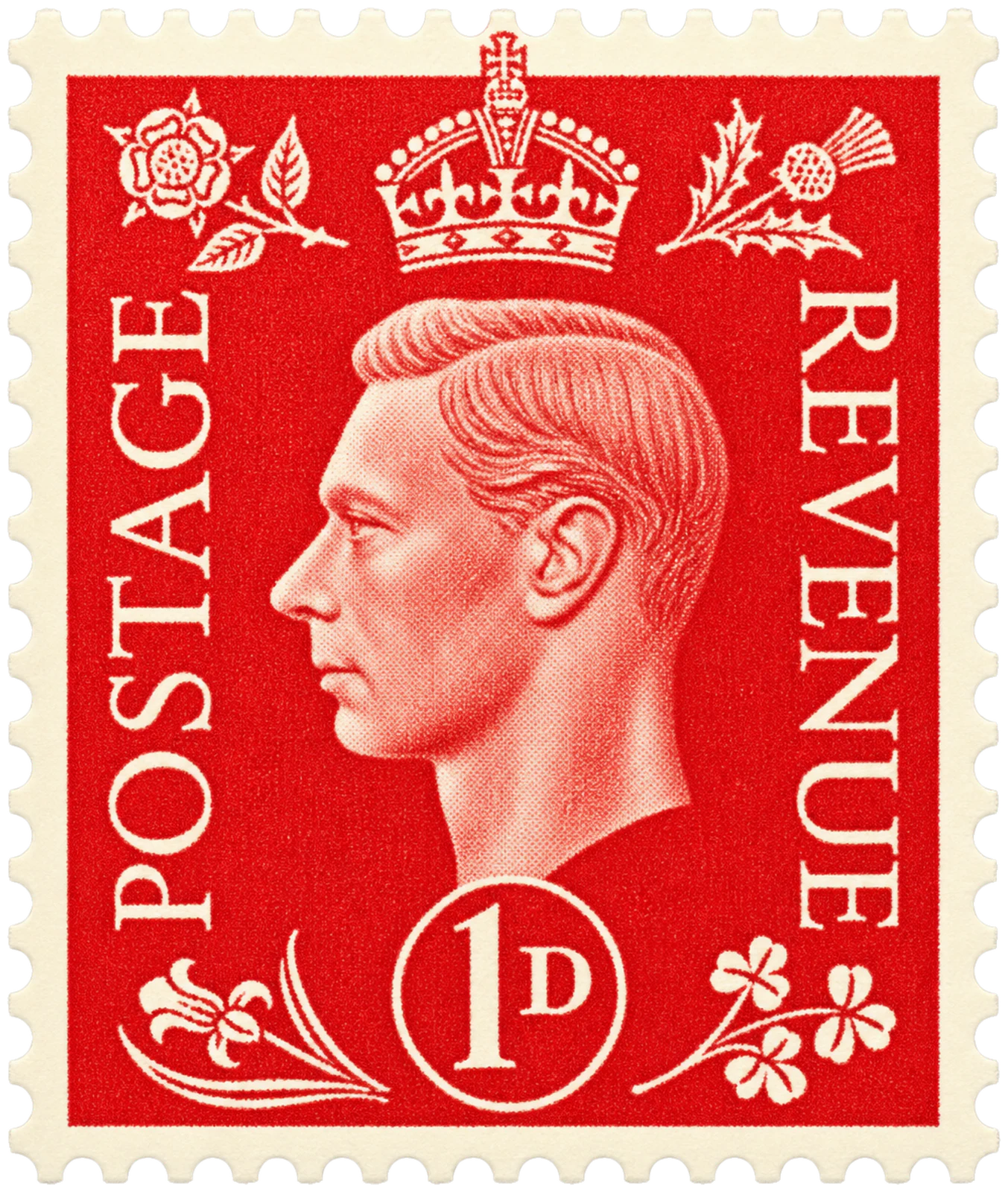
The later reign includes all four national floral emblems.
Click the stamp to magnify
The older portrait behind the new printing
George V’s first small stamps used a photograph by W. & D. Downey, showing his face turned towards the viewer. The printed likeness disappointed him and attracted public criticism. A profile offered a fresh start, but changing the head also meant reconsidering the frames around it. [3, 12]
The need for a smaller portrait emerged during the troubled preparation of the fourpenny: the Coinage Head crowded George W. Eve’s wreath frame. The King preferred Mackennal’s medal portrait, so J. A. C. Harrison returned to that sculptural model and engraved a fresh, smaller head in March–April 1913. Known as Medal Head II, it fitted Eve’s pillar and wreath designs for the higher values. [3]
The South African medal shown here illustrates the sculptural source. The medal dates from 1910; “II” identifies the later stamp engraving. The earlier Medal Head (I) appears on the letterpress 1d and 2½d, while the Coinage Head appears on the ½d, 1½d, 2d, 3d and 4d. [3, 13]
These names distinguish the earlier letterpress engravings. Harrison & Sons later adapted the inherited likeness and its setting for photogravure; the new printing was not a fresh sitting by the King. [4]
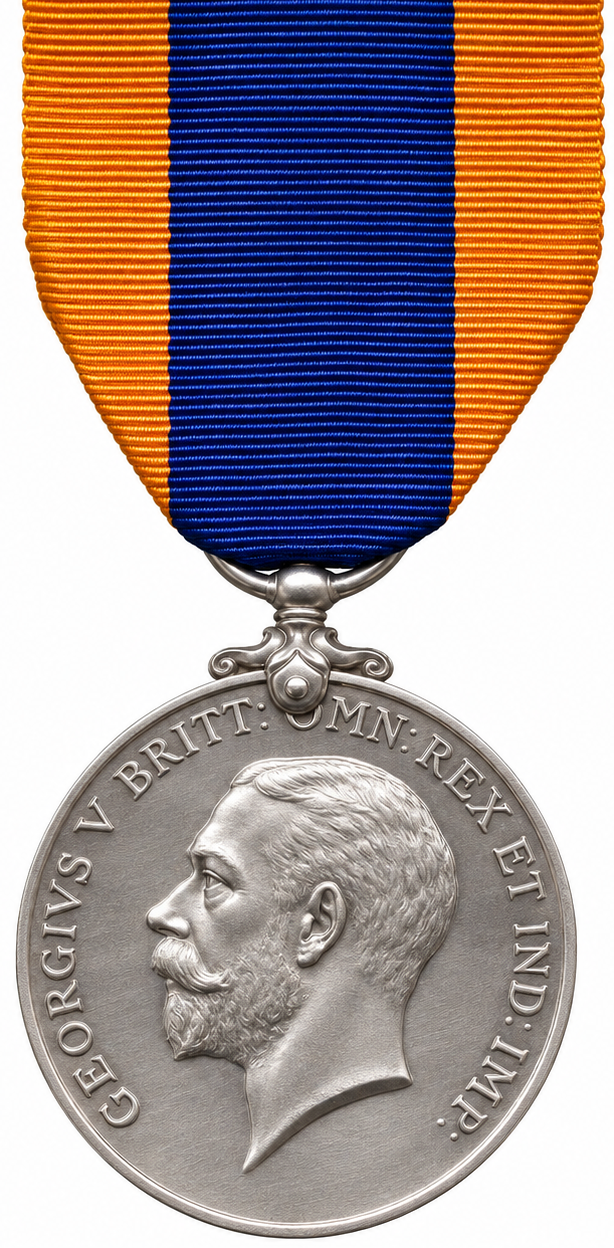
Image information
Click image to magnify
The front of the silver-coloured South African medal, showing George V’s bare head facing left beneath a blue ribbon with orange borders.
- Credit
- Stunning Stamps · 2026
- Notes
- Digitally reconstructed
More room for the perforations
The first photogravure designs left too little room for reliable perforating, so the printed image was reduced. “Large”, “intermediate” and “small” describe the design inside the stamp, not different overall stamp sizes. [14]
The 9d was issued only in the small design, represented here by the 1935 stamp. The reduction changes the space around the design, rather than introducing a different portrait or frame. [14]
A better-looking stamp—but was it a new design?
The photogravure series adapted George V’s existing profile designs, continuing Mackennal’s likeness. Harrison & Sons changed the treatment of the portrait for the new printing process. [4]
The Post Office wanted a better-looking everyday stamp. When photogravure was considered, Harrison’s quoted price was £2,500 a year above the cost of retaining letterpress. Appearance mattered enough for the experiments to go ahead. [14]
The new printing won praise, but the familiar design divided opinion. The trade journal Printing commended Harrison’s work while asking for more pictorial stamps: “we now have the process, we want the design”. Better printing and a better design were not necessarily the same achievement. [14]
Compare the two versions. The lined background of the letterpress stamp gives way to a darker, more continuous oval, while the family resemblance remains in the portrait and ornament. The new process changed how an established design looked. [4]
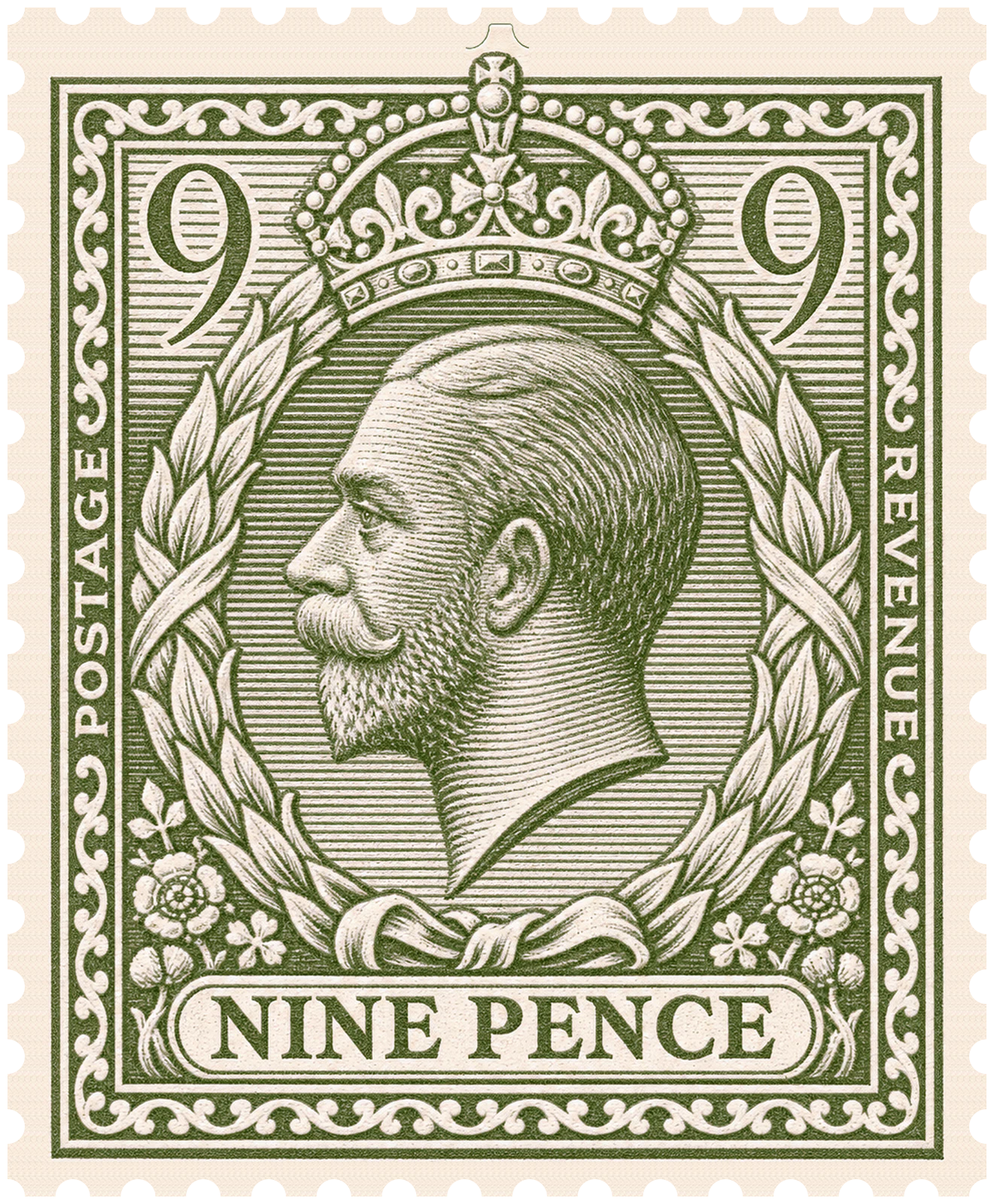
Click either stamp to magnify
Colour held in tiny cells
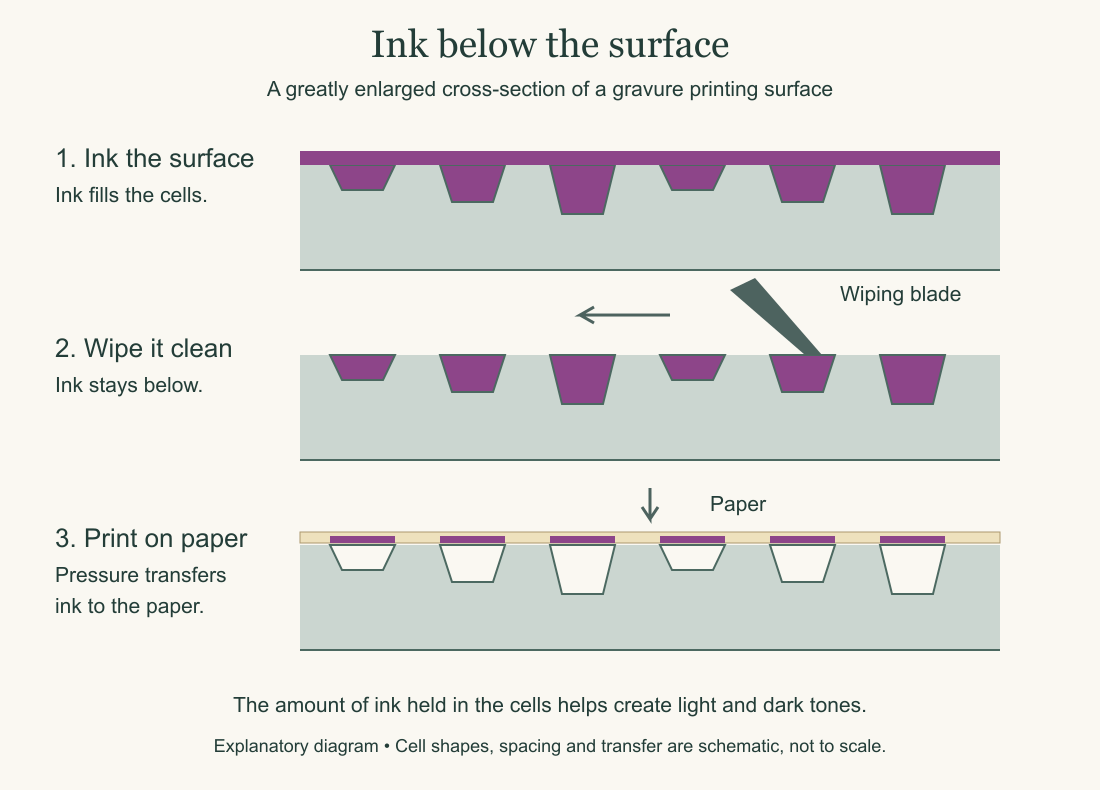
Image information
Click image to magnify
Three-stage cross-section: ink fills recessed cells, a wiping blade clears the surface, then paper receives the ink under pressure.
- Credit
- Stunning Stamps · 2026
- Notes
- Digitally constructed explanatory diagram. Cell shapes, spacing and ink transfer are schematic, not to scale. This does not reproduce the microscopic texture of an original stamp.
A photogravure stamp is built from tiny pockets of ink. A photographic process prepares the image on a printing cylinder, whose microscopic recessed cells hold the ink. A blade wipes the cylinder’s surface clean, leaving ink in the cells to transfer to the paper. [14]
The earlier letterpress stamps were printed from raised surfaces. On original photogravure stamps, magnification can reveal the fine pattern of cells that held the ink. Their size and depth controlled how much ink reached the paper, producing the different tones. [14]
Deep olive-green ink forms the portrait and frame. Unprinted paper supplies the pale lettering and highlights. Unprinted paper supplies the lightest parts of the face, lettering and foliage.
Lettering for postage, revenue and value
POSTAGE reads upwards on the left border, while REVENUE reads downwards on the right. The two words name the stamp’s postal and fiscal functions. Revenue use means paying a tax or duty on a document; it is separate from paying to carry a letter. [15]
NINE PENCE fills the panel beneath the portrait. The value is repeated in the two upper corners beside the crown. The close wreath leaves narrow spaces at either side for the vertical inscriptions. Compare it with the more open sprays beneath the portrait on the penny.
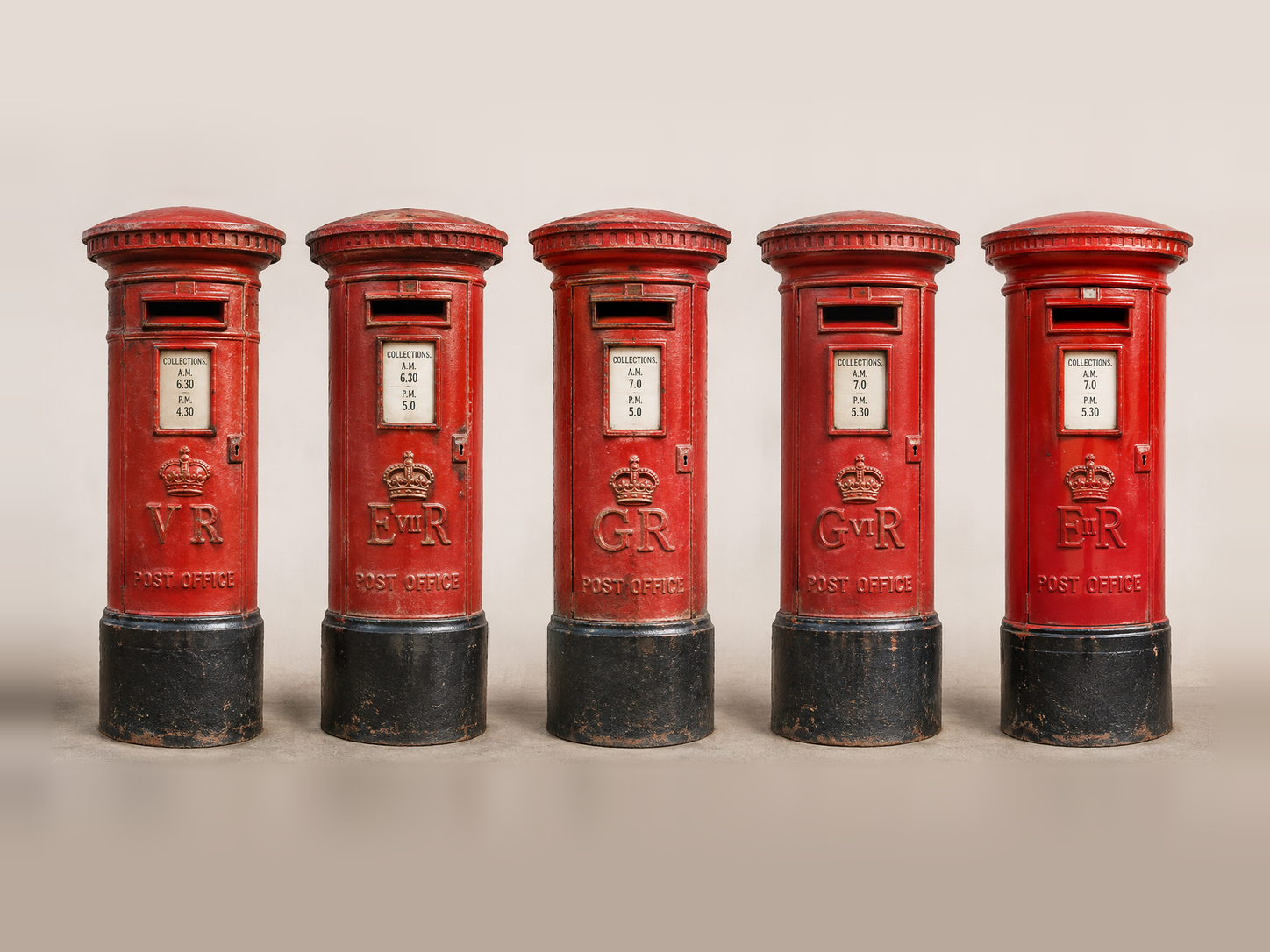
Image information
Click image to magnify
Illustration of five red pillar boxes with royal cyphers.
- Credit
- Stunning Stamps · 2026
- Notes
- Digitally reconstructed
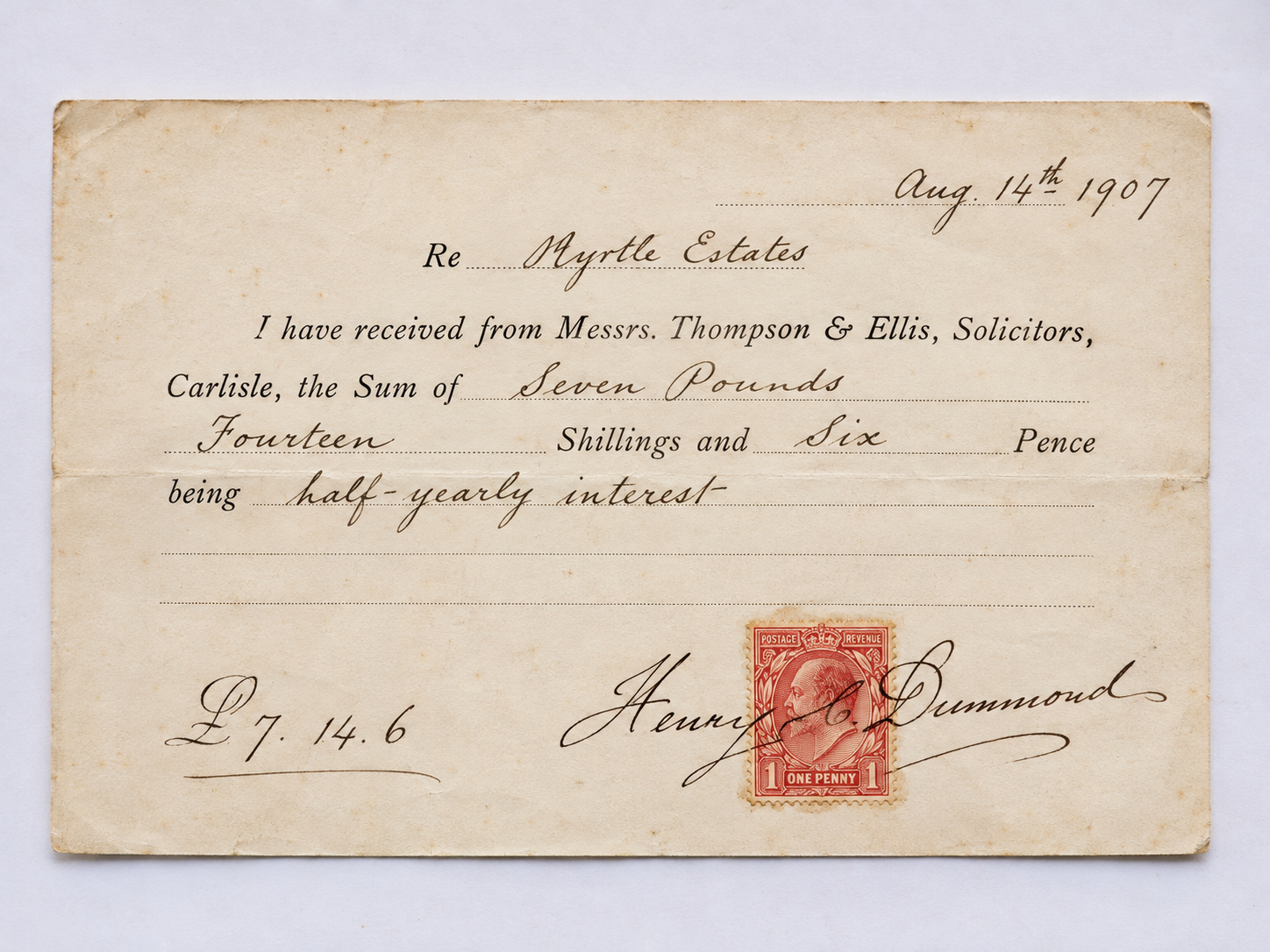
Image information
Click image to magnify
Illustration of a handwritten receipt with an Edward VII penny stamp cancelled by a signature.
- Credit
- Stunning Stamps · 2026
- Notes
- Digitally constructed
The crown above the head
A crown occupies the centre at the top. Rounded ornaments follow its arches above a patterned band, and a small cross completes the outline.
The crown sits in the frame above the King’s bare head. The wreath rises to meet its lower edge, leaving the value figures visible on each side.
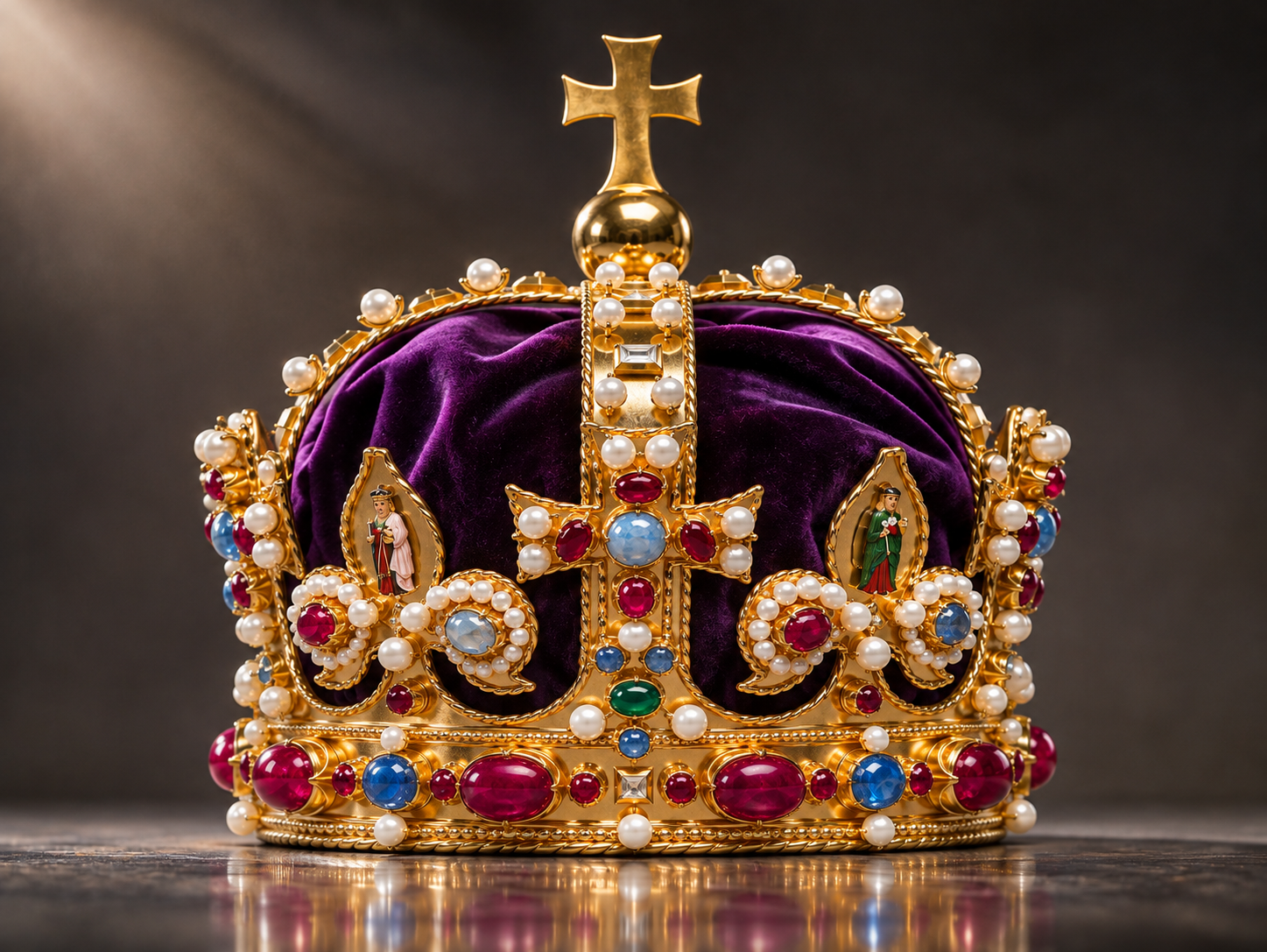
Image information
Click image to magnify
Gold Tudor royal crown with jewels, pearls, small figures and a purple cap.
- Credit
- Stunning Stamps · 2026
- Notes
- Digitally constructed
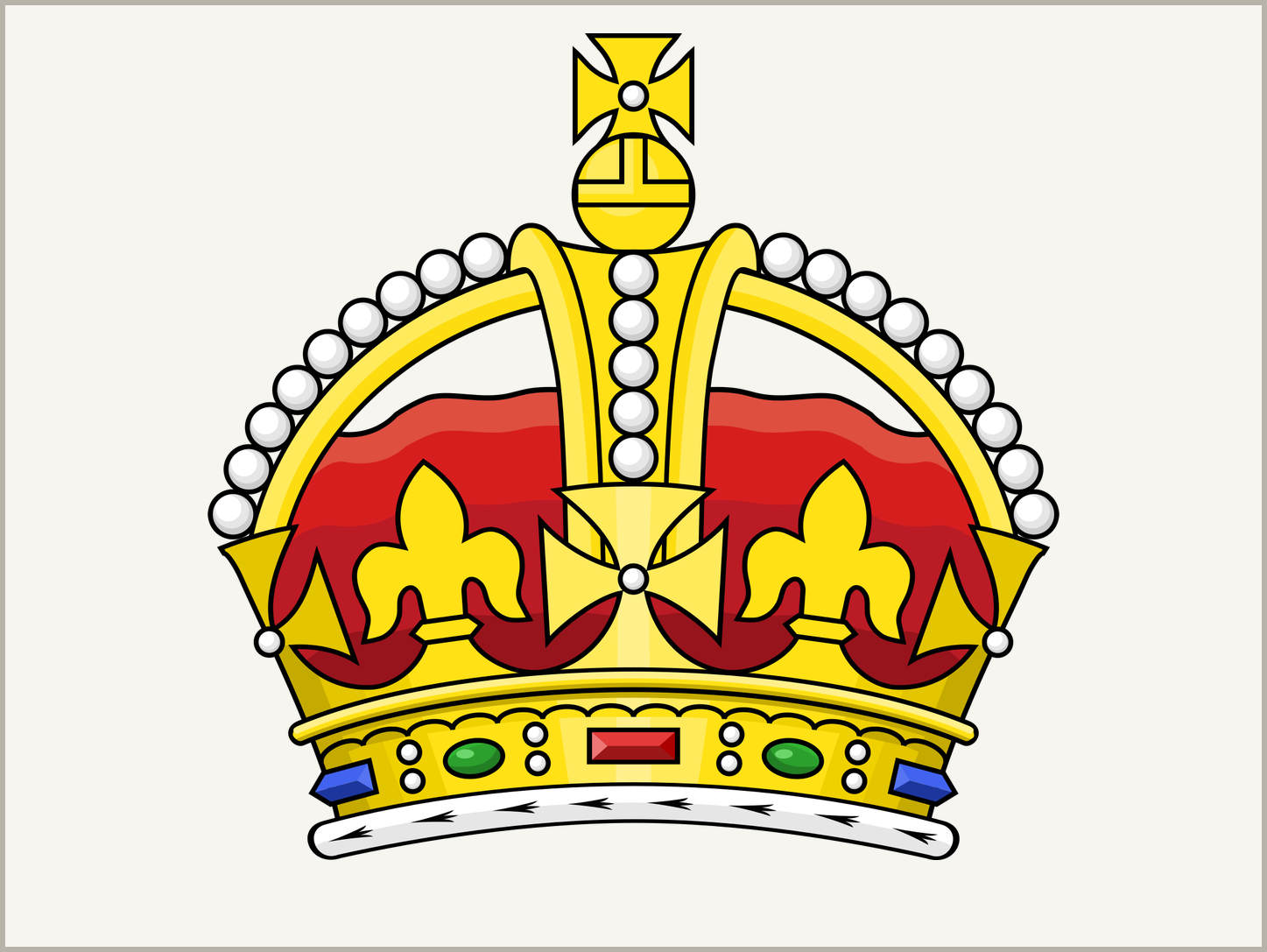
Image information
Click image to magnify
Heraldic Tudor Crown with rounded arches, a cross and orb, red cap, crosses and fleurs-de-lis.
- Credit
- Dgp4004 · Wikimedia Commons · CC0
A new process needed a new factory
Harrison & Sons adapted Mackennal’s existing royal portrait and George W. Eve’s frame for photogravure. [16, 17, 18]
Harrison & Sons acquired premises at High Wycombe, installed equipment and trained staff for the new production. Trials and preparations took longer than planned. The Post Office still needed a steady supply of everyday stamps while that work continued, so the existing letterpress issues remained in production. The first photogravure definitive, the penny-halfpenny, finally appeared in August 1934. [14, 5]
The other denominations followed over the next eighteen months. This gradual release explains why “the 1934 issue” includes stamps first sold in 1935 and 1936. The final fivepenny, tenpenny and shilling reached post offices after George V’s death, completing the issued range with eleven values. [14, 5]
Image information
Click image to magnify
Decorative blue, green and white advertisement for Mander Brothers printing inks, Wolverhampton.
- Credit
- Stunning Stamps · 2026
- Notes
- Digitally constructed
Sources
- Giles Allen, Proposed King George V Memorial Stamps, Postal Museum stamp history, 1993, pp.1–8
- British Stamp Market Values 2020, p. 31: George V photogravure issue dates
- Alan N. Moorcroft, The King's Head, RPSL display, 25 February 2010
- The Postal Museum: Edward VIII accession designs, p.4 — the adaptation of George V designs for photogravure
- Collect GB Stamps: Definitive 1934–36, individual issue dates
- David Thompson: The George V Profile Stamps, STAMPS, 26 March 1988; illustrated reprint, Mekeel’s & Stamps, 9 November 2018, p. 19
- Deirdre Larkin, The Metropolitan Museum of Art: Green Victory, 27 January 2012
- David Thompson, The George V Profile Stamps, parts 32–34 (1988; illustrated reprint): frames and national flowers
- House of Lords Constitution Committee: The Union and devolution — the incorporation of Wales
- The Royal Family: Royal Standard — the quarterings and Wales
- The Postal Museum: Designing a Royal Stamp — George VI and the four national flowers
- Charles Goodwyn, Great Britain – King George V, Royal Philatelic Collection display, 17 September 1998
- Royal Museums Greenwich: Union of South Africa Commemoration Medal, MED2384, made 1910
- Glenn H Morgan, 75 years of GB stamps by photogravure, British Philatelic Bulletin, August 2009
- The Postal Museum: British Empire Exhibition stamp history, p.16 — postage stamps and receipt duty
- Buckinghamshire Council: Harrison & Sons printworks
- Royal Philatelic Society London: The King’s Head, 2010
- The Postal Museum: Edward VIII accession design history, 1936
← Return to the 9d deep olive-green stamp
Last reviewed · Facts checked