
Owen Jones
Architect, designer and writer on ornament · 1809–1874
Owen Jones brought his study of colour and ornament to buildings, books and everyday printed objects. His work for De La Rue included the design of Britain’s two-shilling stamp.
On the stamp you were exploring
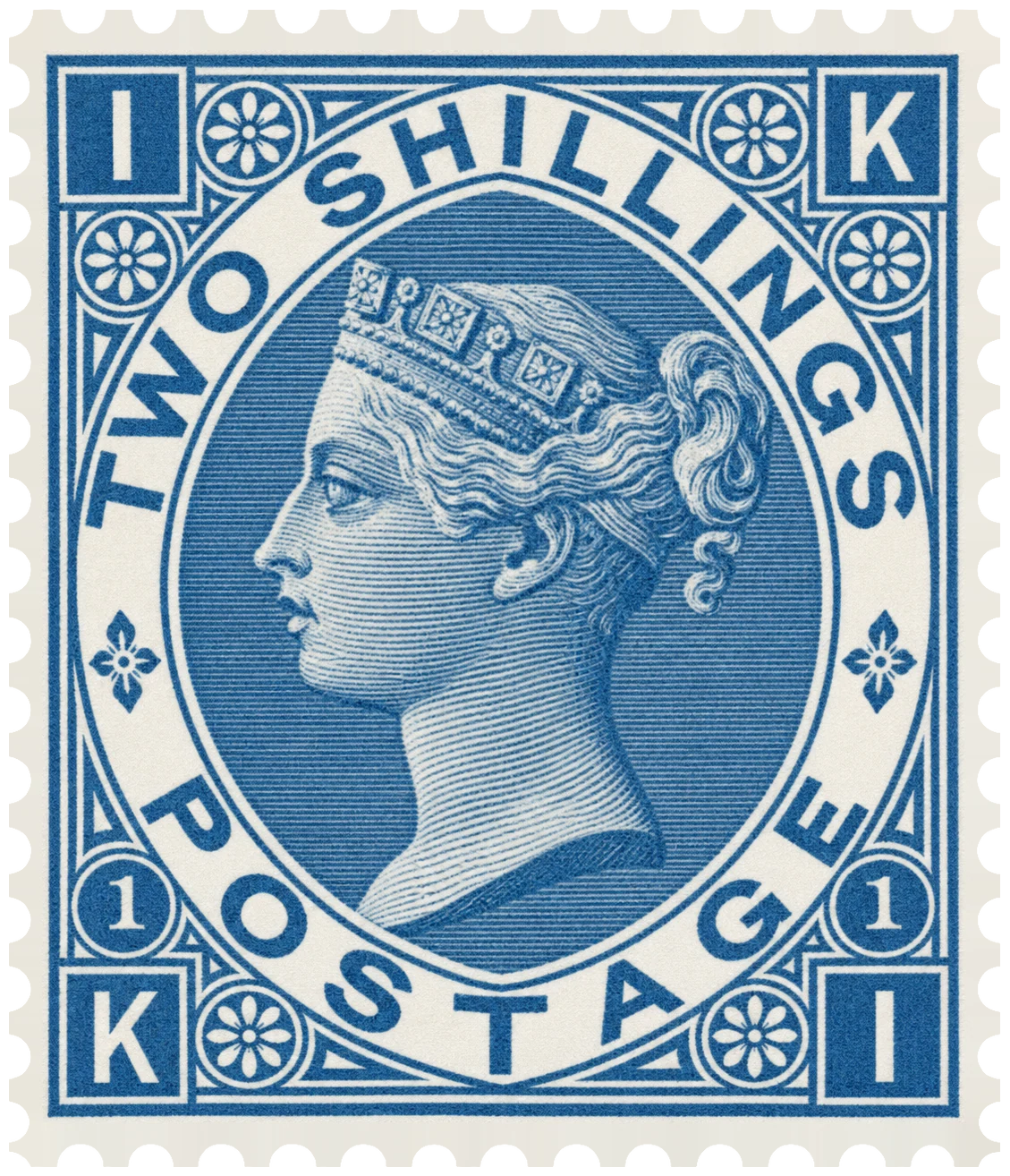
Victoria · 2s blue · 1867
Owen Jones designed the pointed-oval setting of the 1867 two-shilling blue. The portrait was inherited from the earlier surface-printed issues; the design credit does not make Jones its original portrait engraver.
On the stamp you were exploring
Victoria · 2s blue · 1867
Owen Jones designed the pointed-oval setting of the 1867 two-shilling blue. The portrait was inherited from the earlier surface-printed issues; the design credit does not make Jones its original portrait engraver.
On the stamp you were exploring
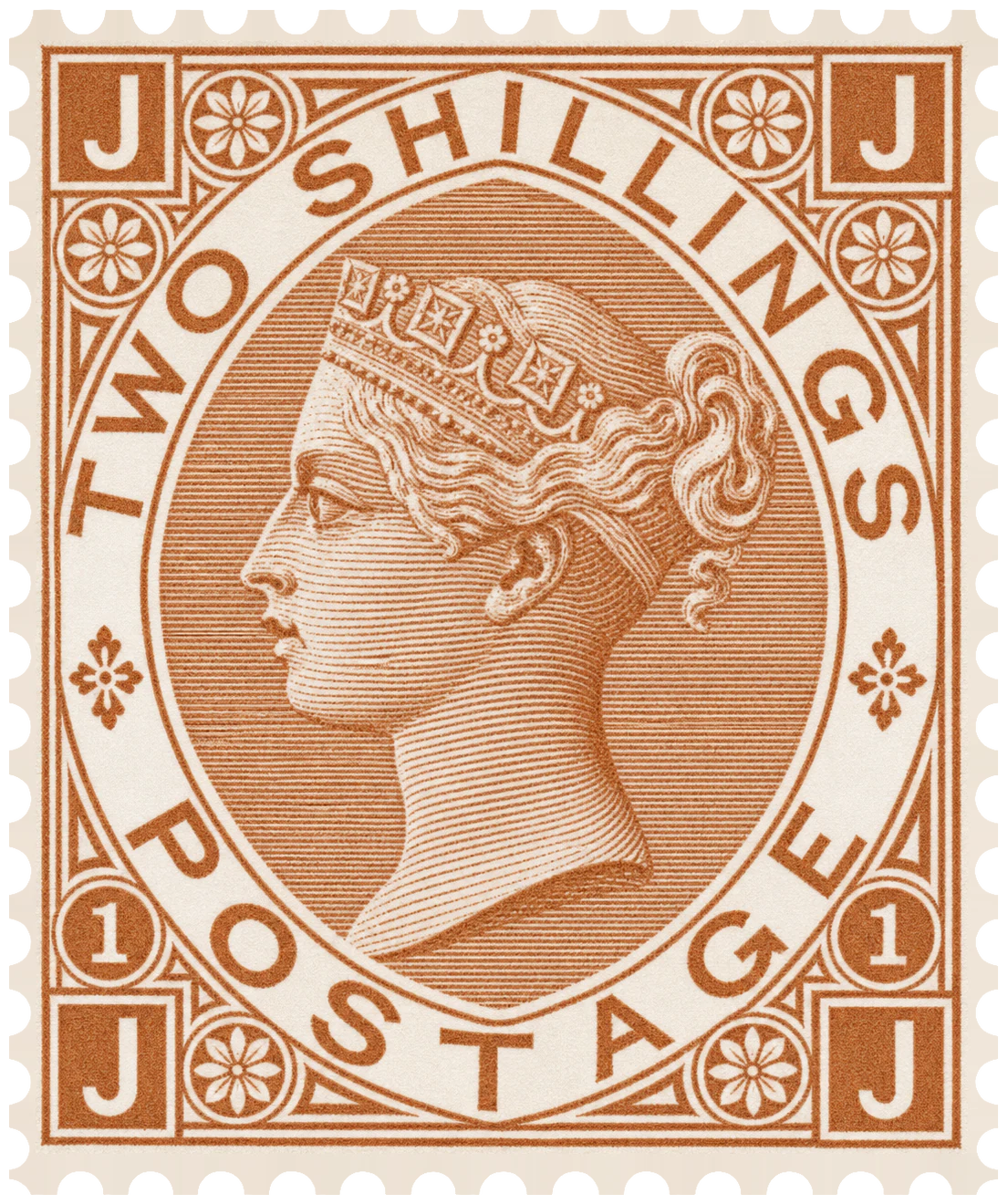
Victoria · 2s brown · 1880
The 1880 two-shilling brown retained Owen Jones’s design from the 1867 blue issue. It was a later printing of that design, not a new commission to Jones, who had died in 1874.
On the stamp you were exploring
Victoria · 2s brown · 1880
The 1880 two-shilling brown retained Owen Jones’s design from the 1867 blue issue. It was a later printing of that design, not a new commission to Jones, who had died in 1874.
On the stamp you were exploring
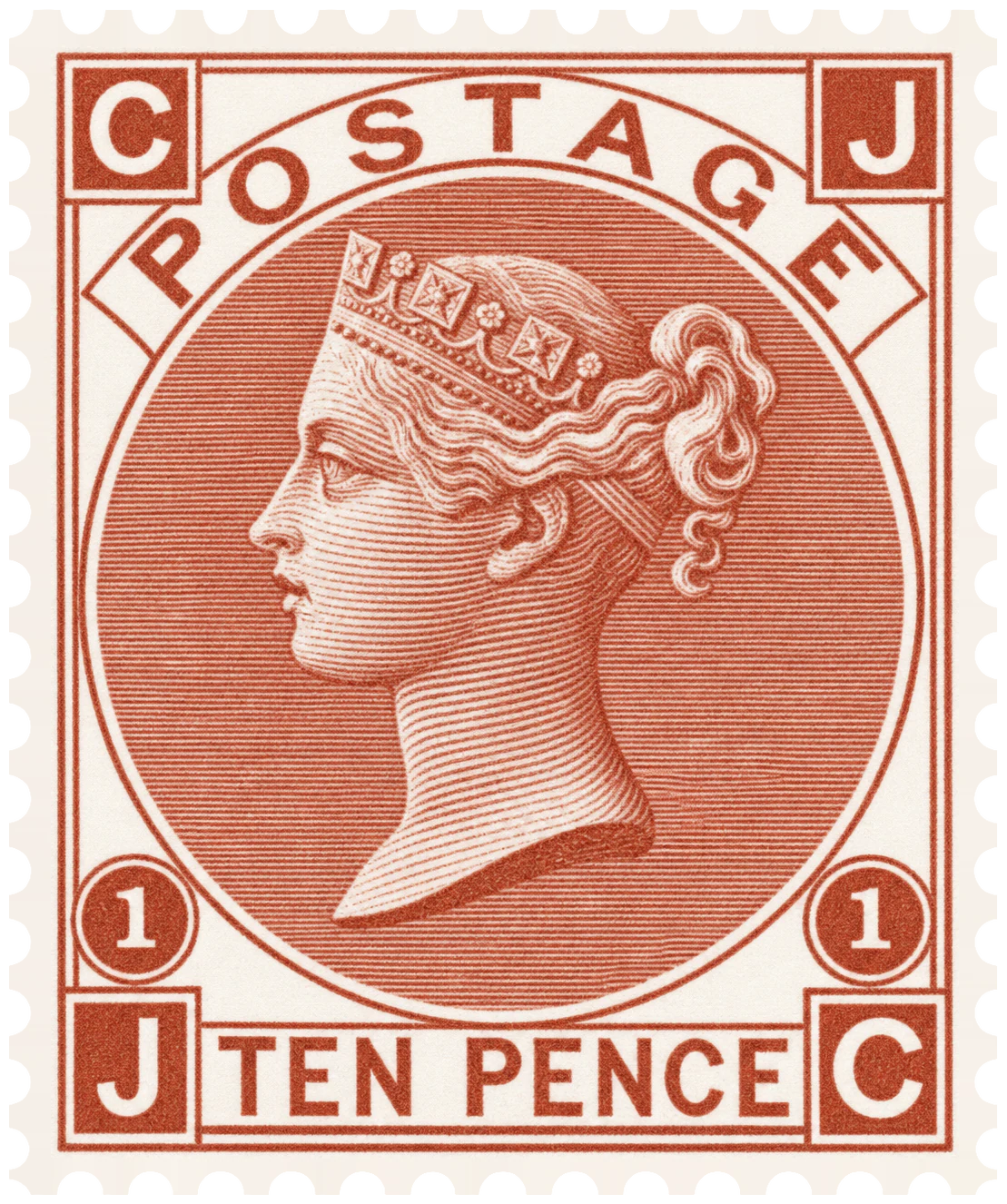
Victoria · 10d red-brown · 1867
Owen Jones designed the tenpence introduced in 1867. Its royal portrait was inherited from Joubert’s earlier surface-printed engraving; this stamp-design credit does not make Jones the original portrait engraver.
On the stamp you were exploring
Victoria · 10d red-brown · 1867
Owen Jones designed the tenpence introduced in 1867. Its royal portrait was inherited from Joubert’s earlier surface-printed engraving; this stamp-design credit does not make Jones the original portrait engraver.
On the stamp you were exploring
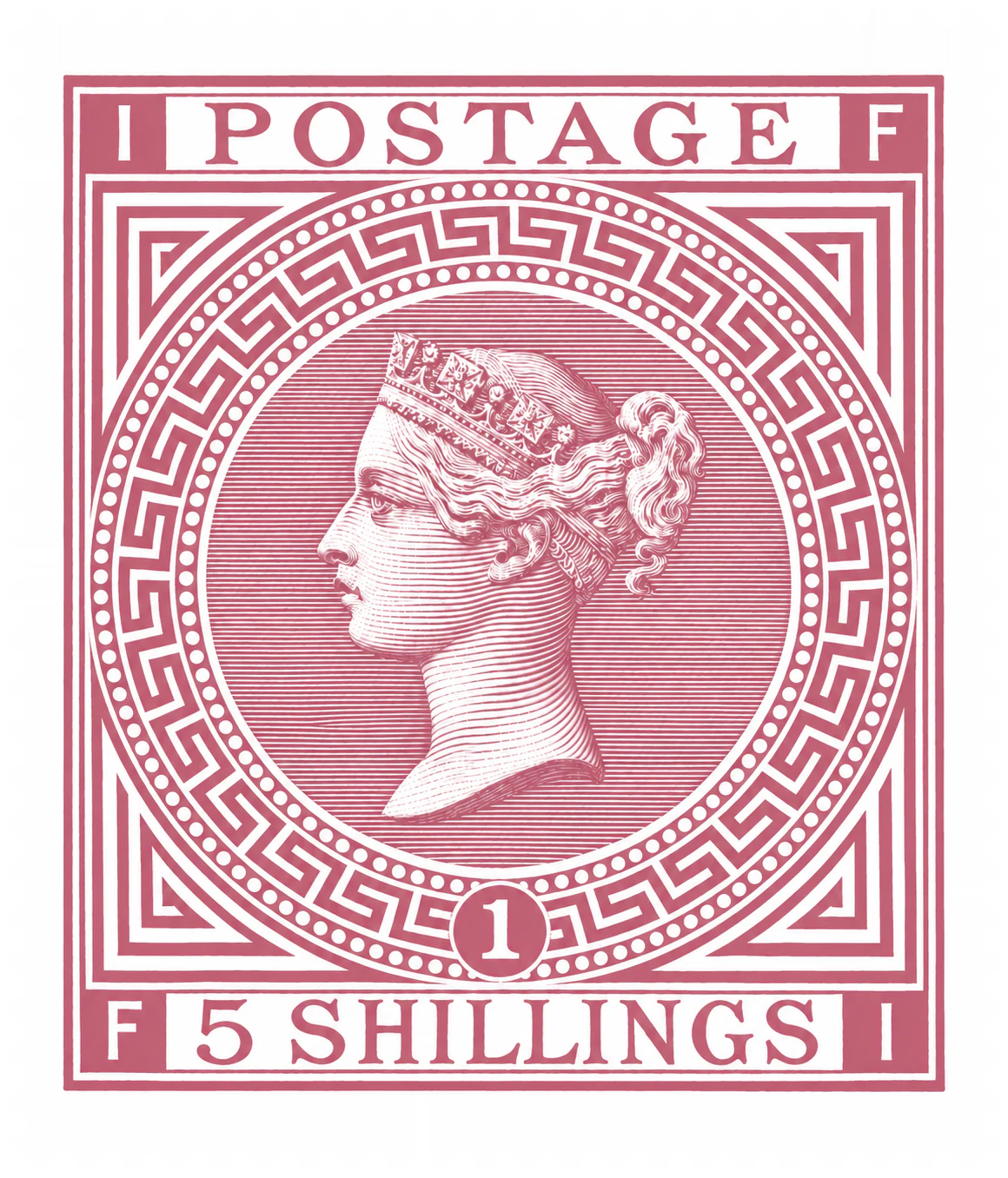
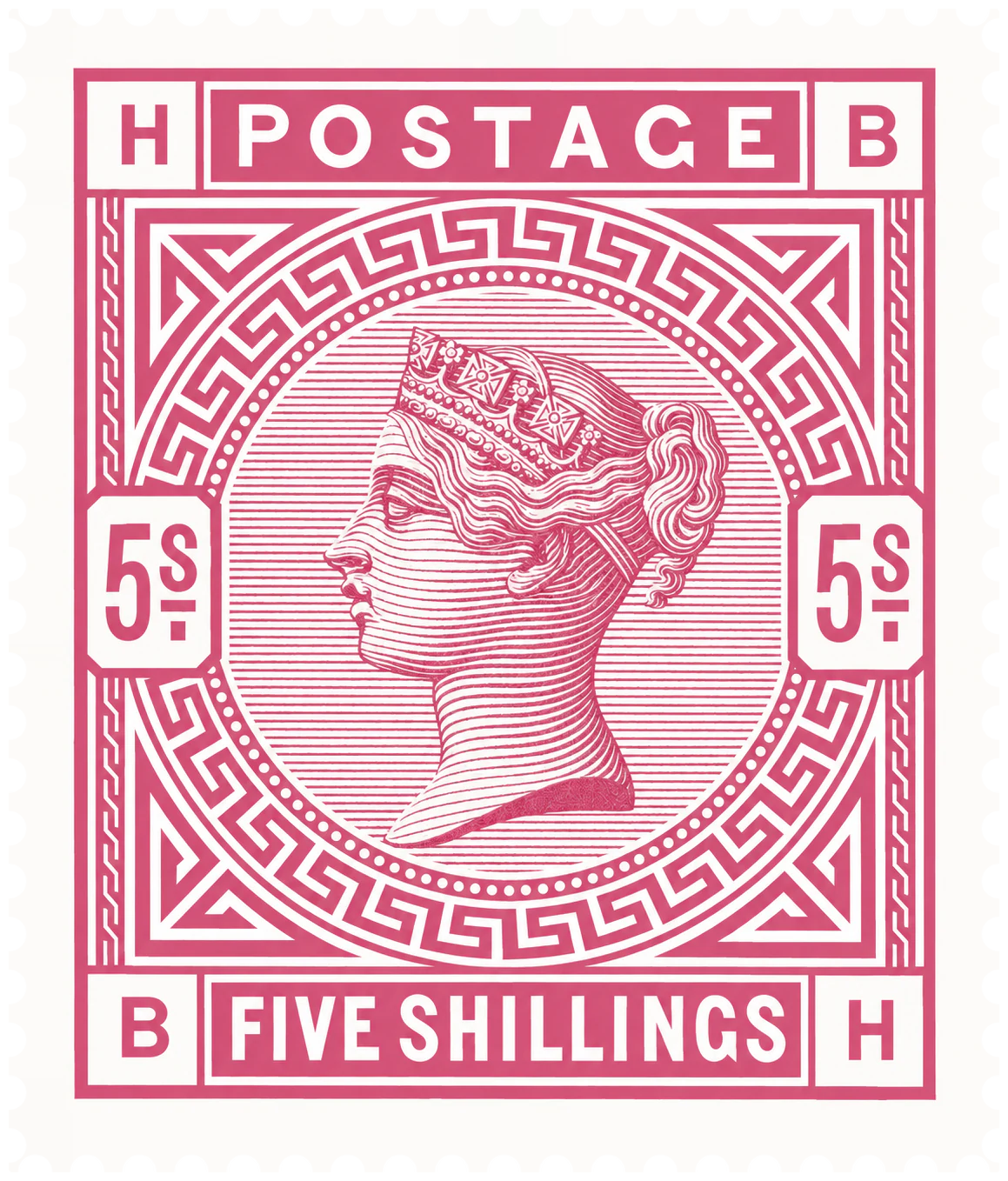
Victoria · 5s rose · 1867
Owen Jones designed the five-shilling introduced in 1867, with its Greek-key border and larger format. The royal portrait was inherited from Joubert’s earlier surface-printed engraving; the stamp-design credit is distinct from the origin of the likeness.
On the stamp you were exploring
Victoria · 5s rose · 1884
Owen Jones designed the earlier five-shilling of 1867. Its Greek-key ornament provides the design ancestry of the 1884 rose, whose inscriptions and frame were rearranged by De La Rue. This is an inherited ornamental connection, not a new commission to Jones, who died in 1874.
Example stamps
Click a stamp to magnify it, or follow its caption link to explore the design.
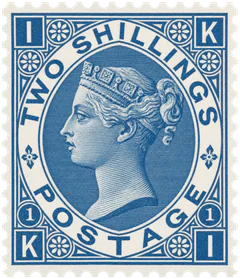
Victoria 2s blue 1867 Stamp design 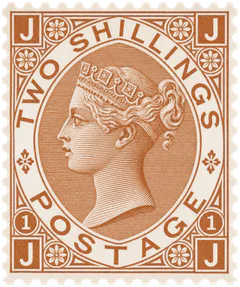
Victoria 2s brown 1880 Stamp design 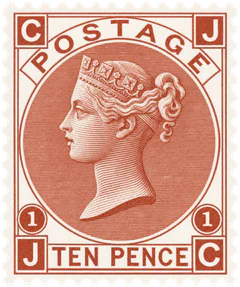
Victoria 10d red-brown 1867 Stamp design 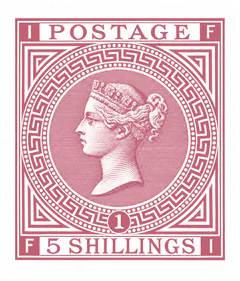
Victoria 5s rose 1867 Stamp design 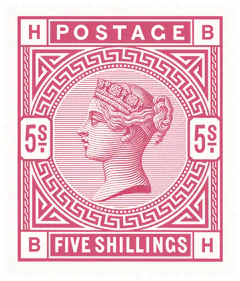
Victoria 5s rose 1884 Earlier ornamental design
Colour at the Crystal Palace
Jones trained as an architect and studied ornament while travelling through Europe and the eastern Mediterranean. At Granada’s Alhambra, he and Jules Goury recorded the decoration in drawings and casts. Jones later applied his understanding of colour on a far larger scale, devising the interior colour scheme of the Crystal Palace for the Great Exhibition of 1851. [1]
Learning from ornament
The Grammar of Ornament appeared in 1856. Its colour plates brought together examples from different cultures, accompanied by principles for making designs. Jones encouraged designers to understand the underlying relationships of form, colour and purpose, rather than simply borrowing a decorative pattern. [1, 2]
Working with De La Rue
Jones collaborated with De La Rue from the mid-1840s. His designs ranged from playing cards and calendars to diaries, packaging and postage stamps. Reading’s Special Collections preserve material from this working relationship, including signed designs. The archive also documents his work on the garter-and-buckle trademark for Huntley & Palmers biscuit packaging. [2]
The two-shilling stamp
The Royal Philatelic Society’s account credits Jones with the 10d, 2s and 5s designs introduced in 1867. The two-shilling appeared first in blue and later in brown. This design credit is distinct from the earlier royal portrait: Joubert’s surface-printed likeness followed Corbould’s drawing after Wyon’s medal. [3, 4, 5]
Sources
- Victoria and Albert Museum — Owen Jones and The Grammar of Ornament
- University of Reading Special Collections — Owen Jones, architect and designer, related collections
- Robert B. Galland — The First Low Value Surface Printed Postage Stamps of Great Britain 1855–1880 (RPSL, 2014), p. 21
- Robert B. Galland, The First Low Value Surface Printed Postage Stamps of Great Britain, 1855–1880 (RPSL, 2014), pp. 3–4
- Douglas N. Muir, William Wyon & the Penny Black, Royal Mint Museum