
Somerset House
The government’s stamp-printing department
Some British stamps came from a government department rather than a commercial printing firm. Somerset House connects the tiny objects in an album with the machinery of taxation and public administration.
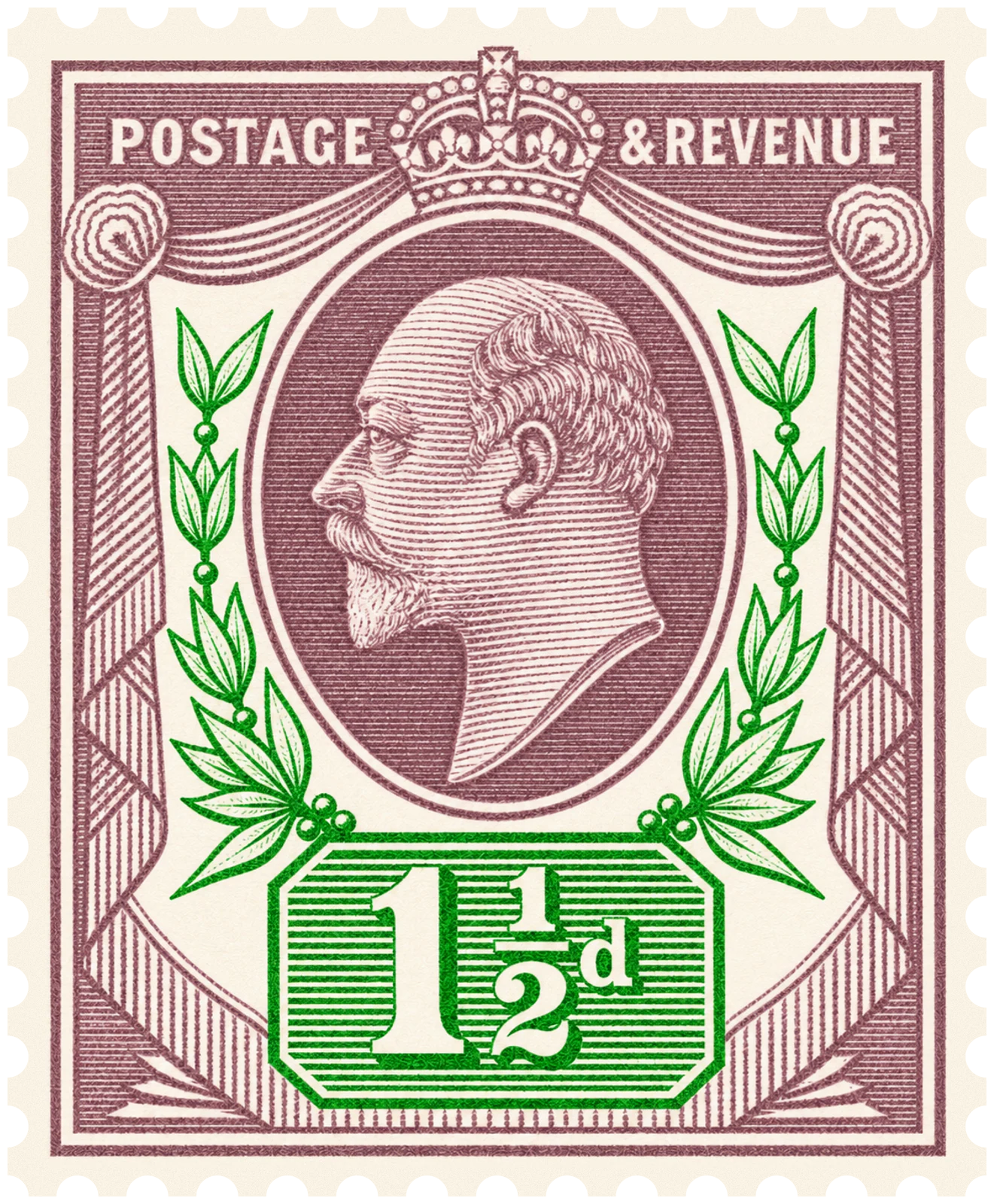
On the stamp you were exploring
Edward VII · 1½d reddish purple and green · 13 July 1911
Here “Somerset House” means the Board of Inland Revenue’s Stamping Department in London. It identifies the government printing of the Edward VII design. Similar-looking De La Rue examples belong to the earlier printing.
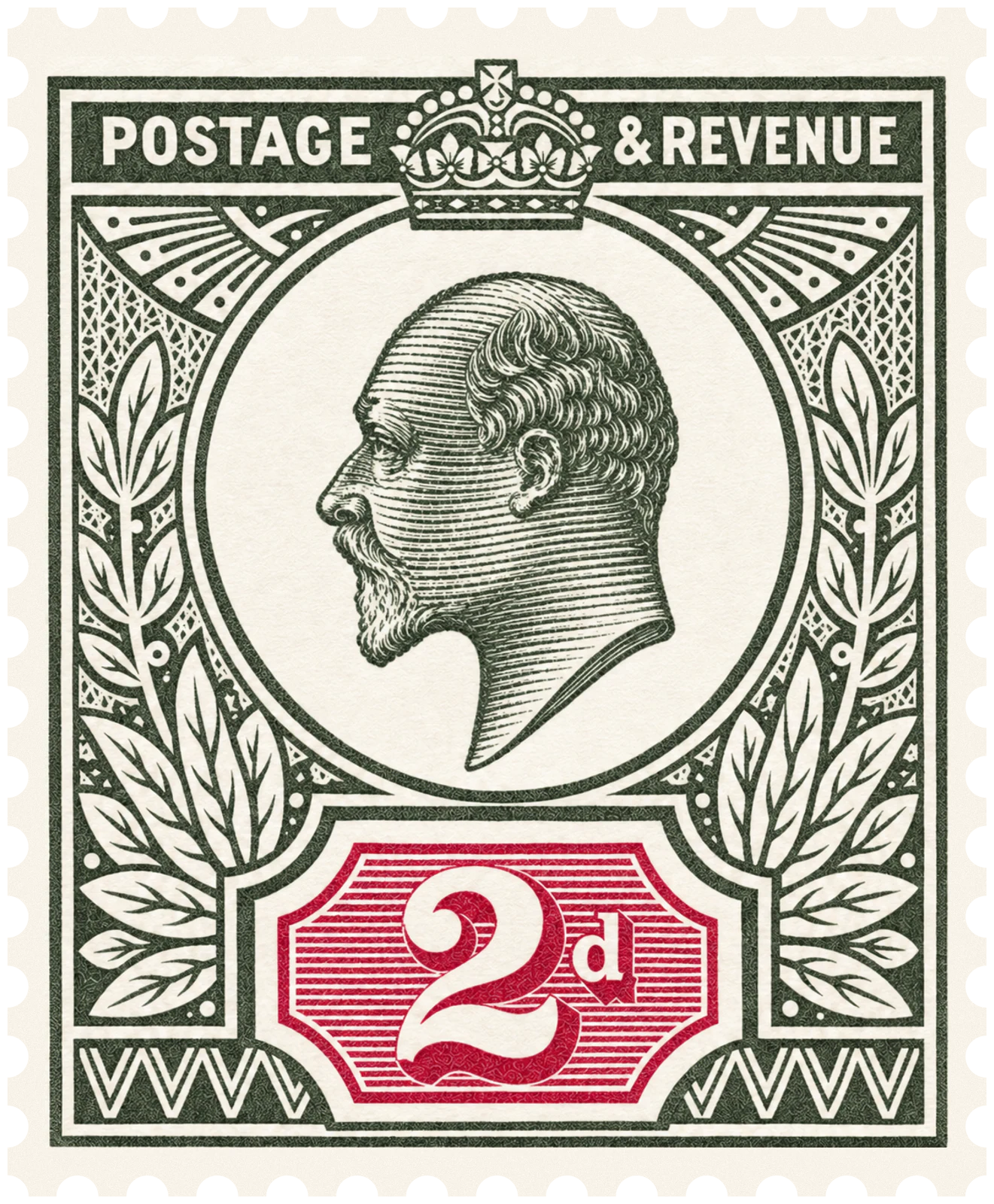
On the stamp you were exploring
Edward VII · 2d deep dull green and carmine · 8 August 1911
Here “Somerset House” means the Board of Inland Revenue’s Stamping Department in London. It identifies the government printing of the Edward VII design. Similar-looking De La Rue examples belong to the earlier printing.
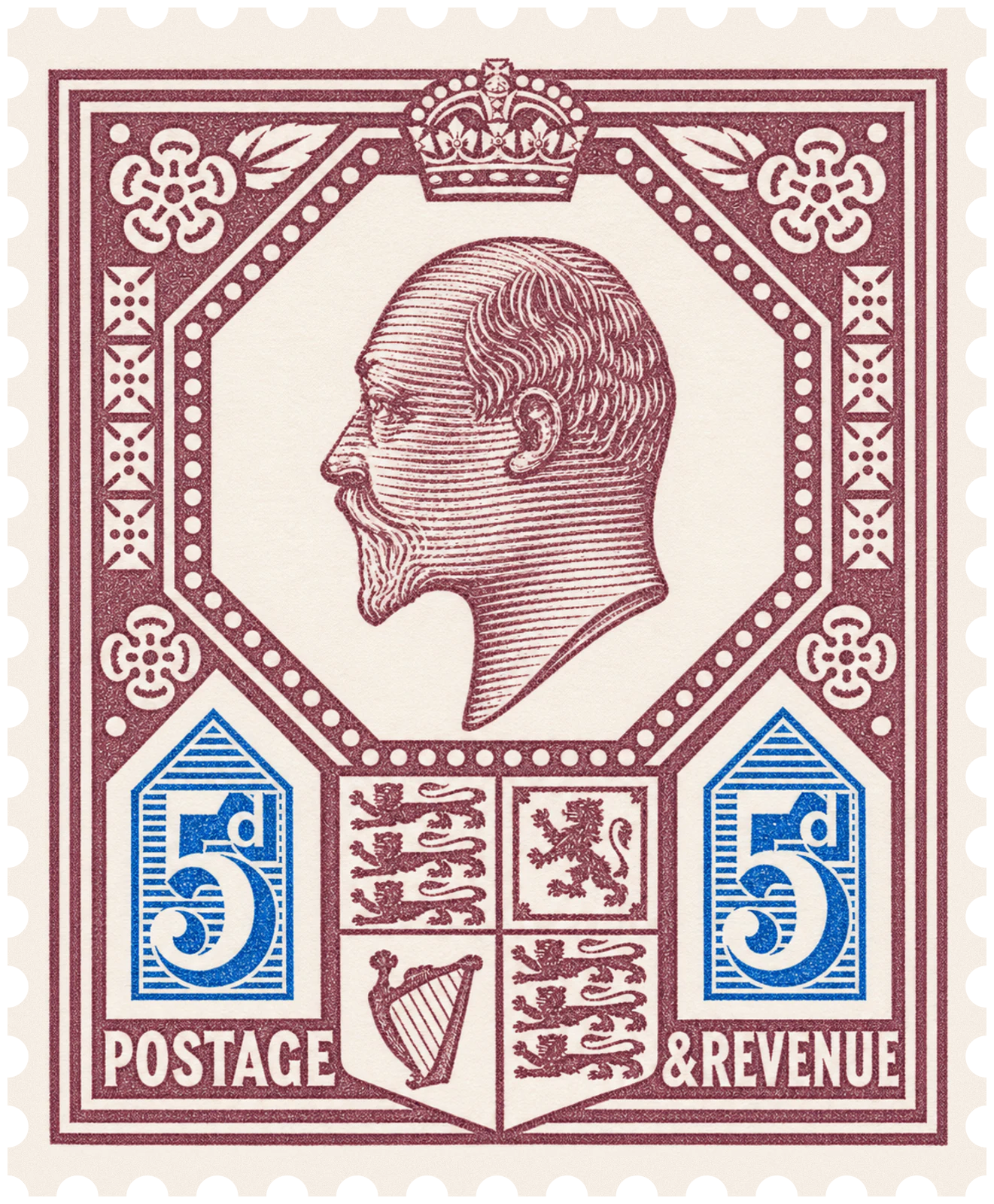
On the stamp you were exploring
Edward VII · 5d dull reddish purple and bright blue · 16 August 1911
Here “Somerset House” means the Board of Inland Revenue’s Stamping Department in London. It identifies the government printing of the Edward VII design. Similar-looking De La Rue examples belong to the earlier printing.
← Back to 5d dull reddish purple and bright blue: stamp details
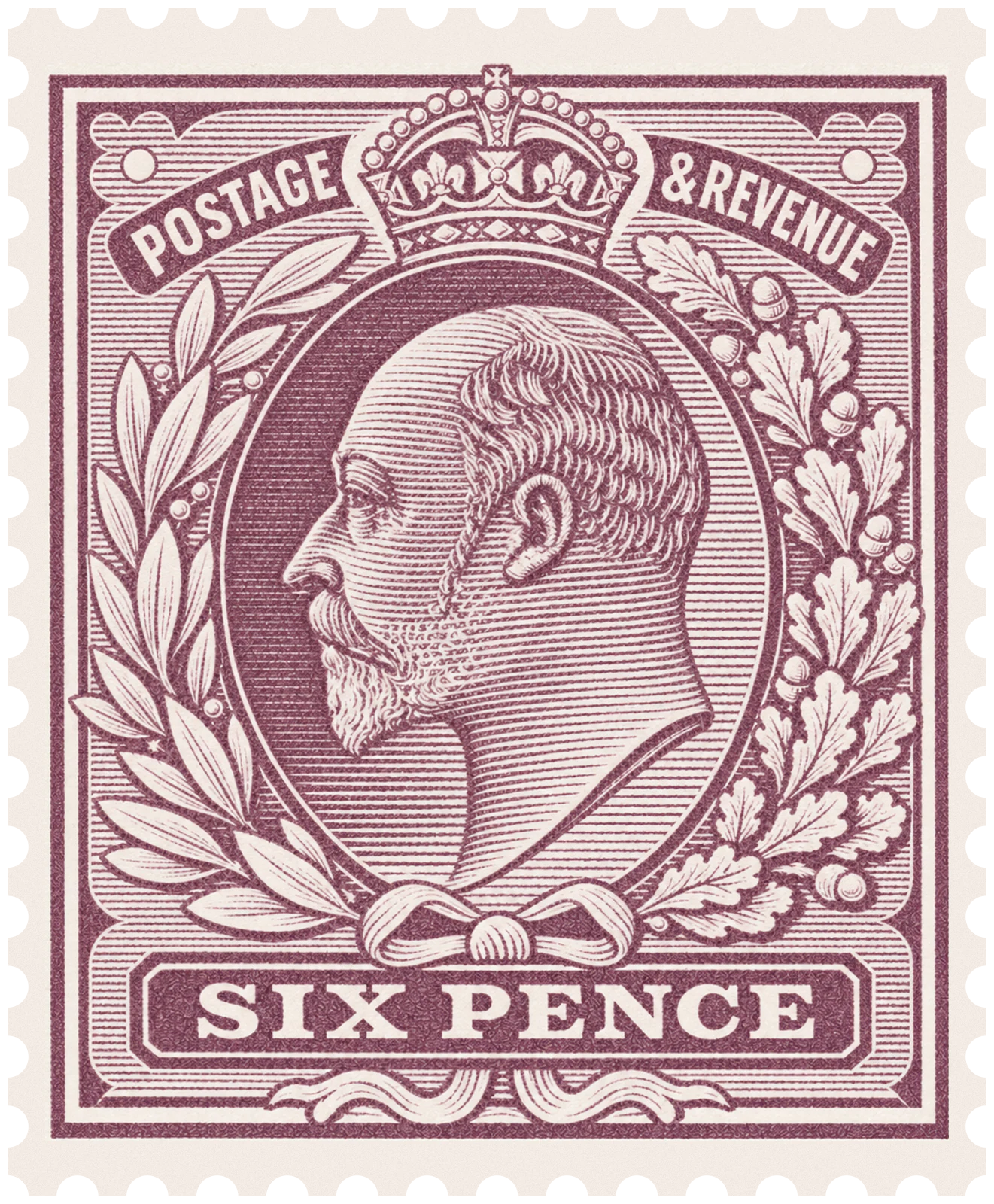
On the stamp you were exploring
Edward VII · 6d dull purple · 1911
Here “Somerset House” means the Board of Inland Revenue’s Stamping Department in London. It identifies the government printing of the Edward VII design. Similar-looking De La Rue examples belong to the earlier printing.
On the stamp you were exploring
Edward VII · 6d dull purple · 1911
Here “Somerset House” means the Board of Inland Revenue’s Stamping Department in London. It identifies the government printing of the Edward VII design. Similar-looking De La Rue examples belong to the earlier printing.
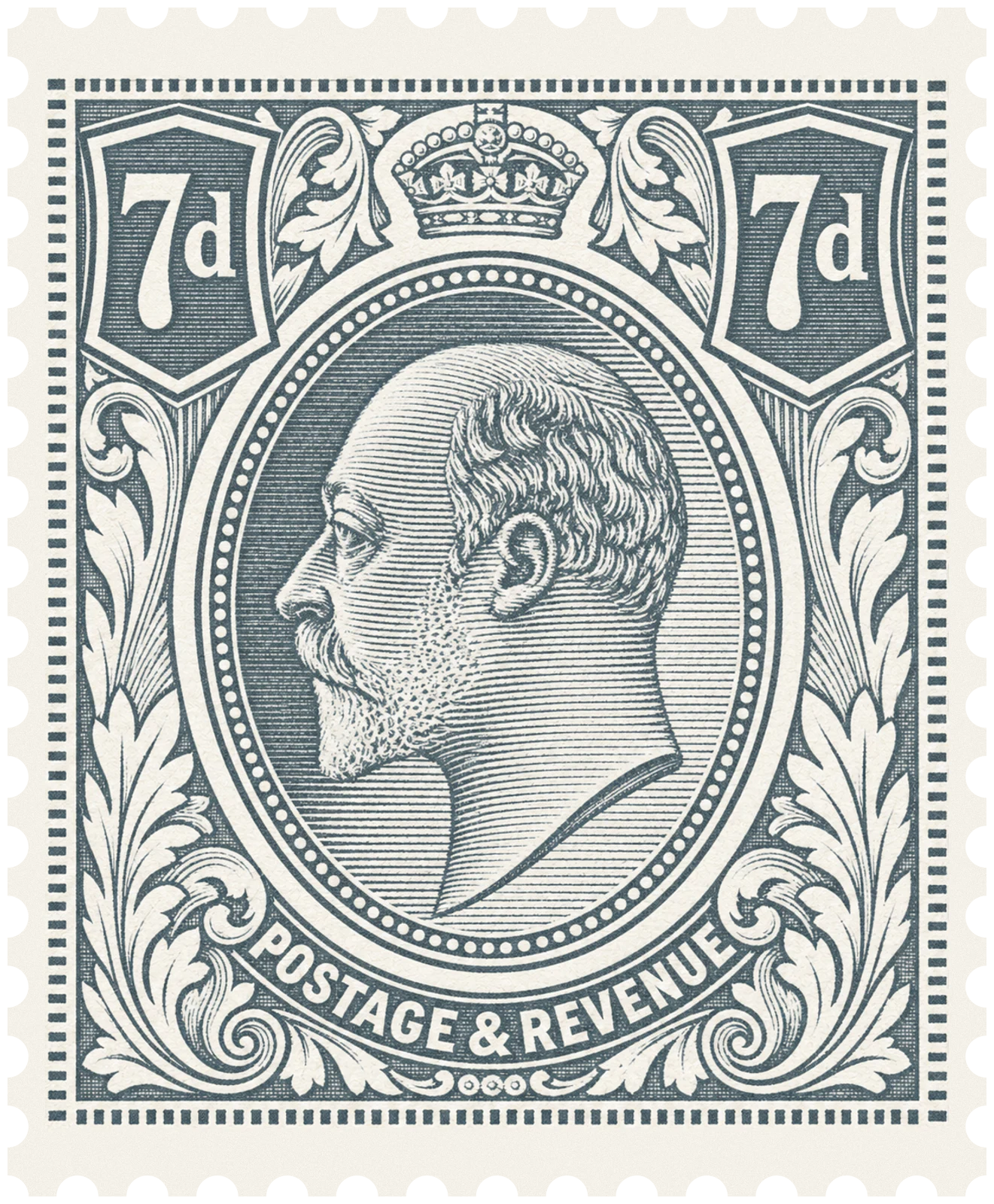
On the stamp you were exploring
Edward VII · 7d slate-grey · 1 August 1912
Here “Somerset House” means the Board of Inland Revenue’s Stamping Department in London. It identifies the government printing of the Edward VII design. Similar-looking De La Rue examples belong to the earlier printing.
On the stamp you were exploring
Edward VII · 7d slate-grey · 1 August 1912
Here “Somerset House” means the Board of Inland Revenue’s Stamping Department in London. It identifies the government printing of the Edward VII design. Similar-looking De La Rue examples belong to the earlier printing.
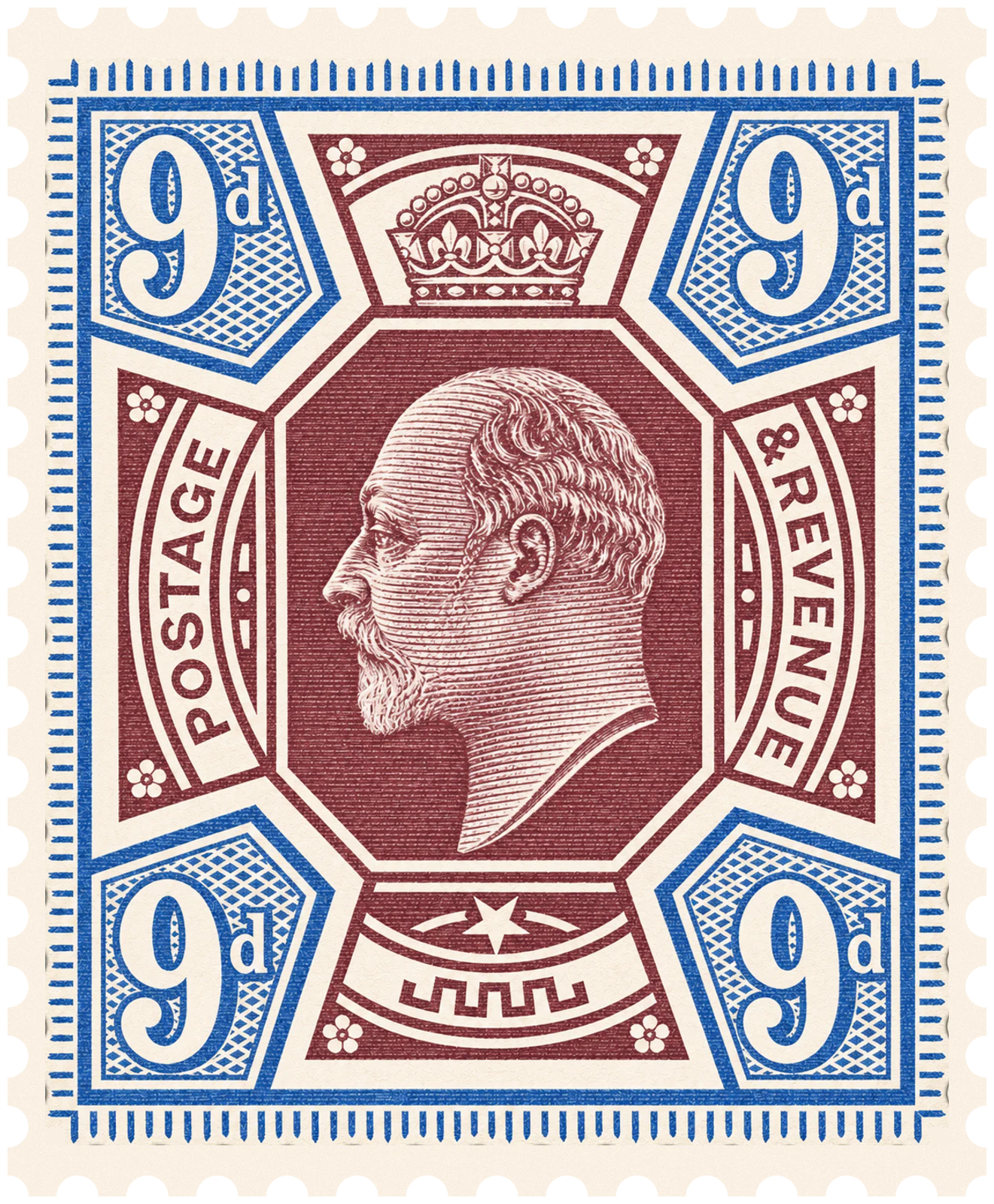
On the stamp you were exploring
Edward VII · 9d dull reddish purple and blue · 24 July 1911 (ninepenny family)
Here “Somerset House” means the Board of Inland Revenue’s Stamping Department in London. It identifies the government printing of the Edward VII design. Similar-looking De La Rue examples belong to the earlier printing.
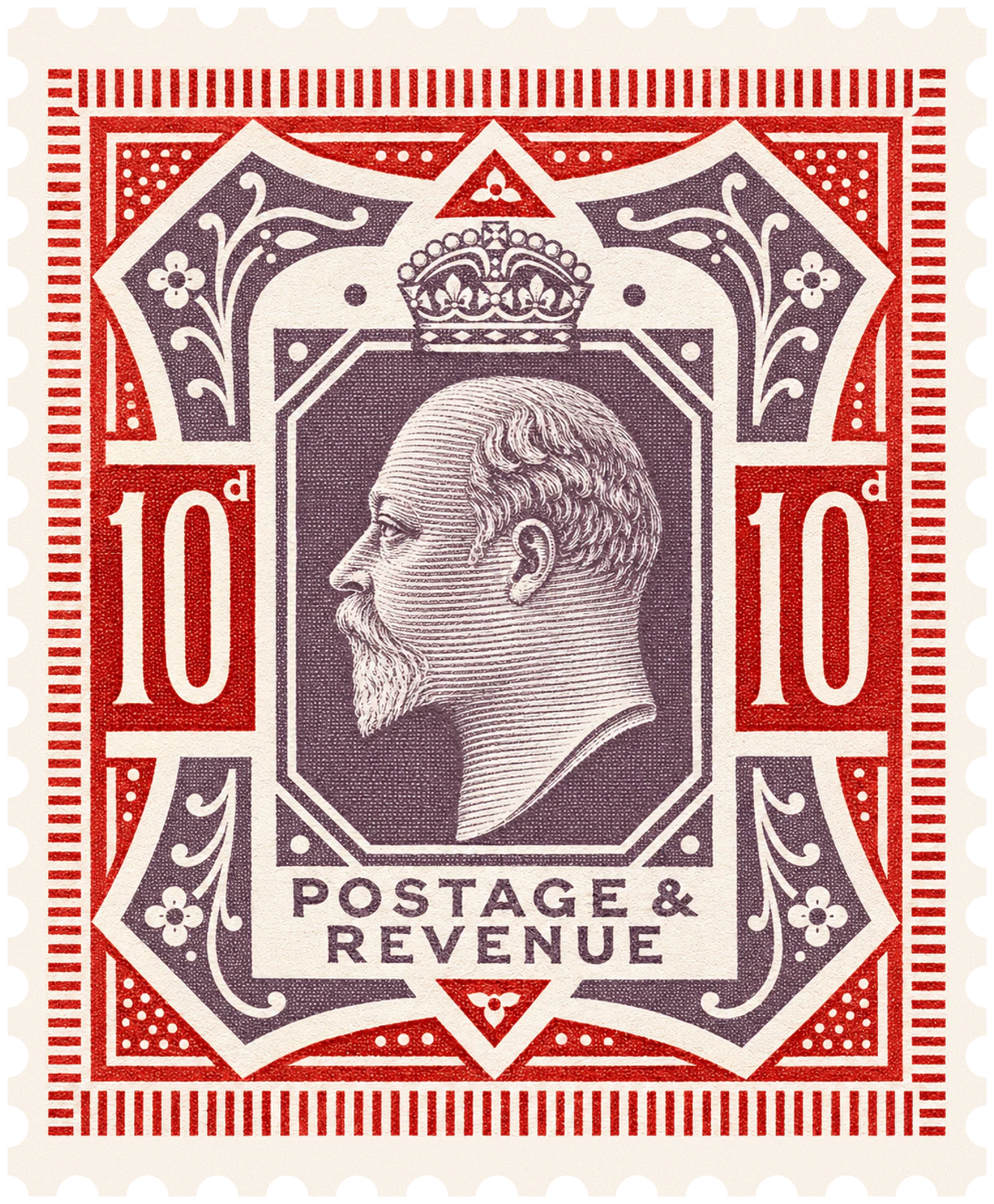
On the stamp you were exploring
Edward VII · 10d dull purple and scarlet · 1911
Here “Somerset House” means the Board of Inland Revenue’s Stamping Department in London. It identifies the government printing of the Edward VII design. Similar-looking De La Rue examples belong to the earlier printing.
On the stamp you were exploring
Edward VII · 10d dull purple and scarlet · 1911
Here “Somerset House” means the Board of Inland Revenue’s Stamping Department in London. It identifies the government printing of the Edward VII design. Similar-looking De La Rue examples belong to the earlier printing.
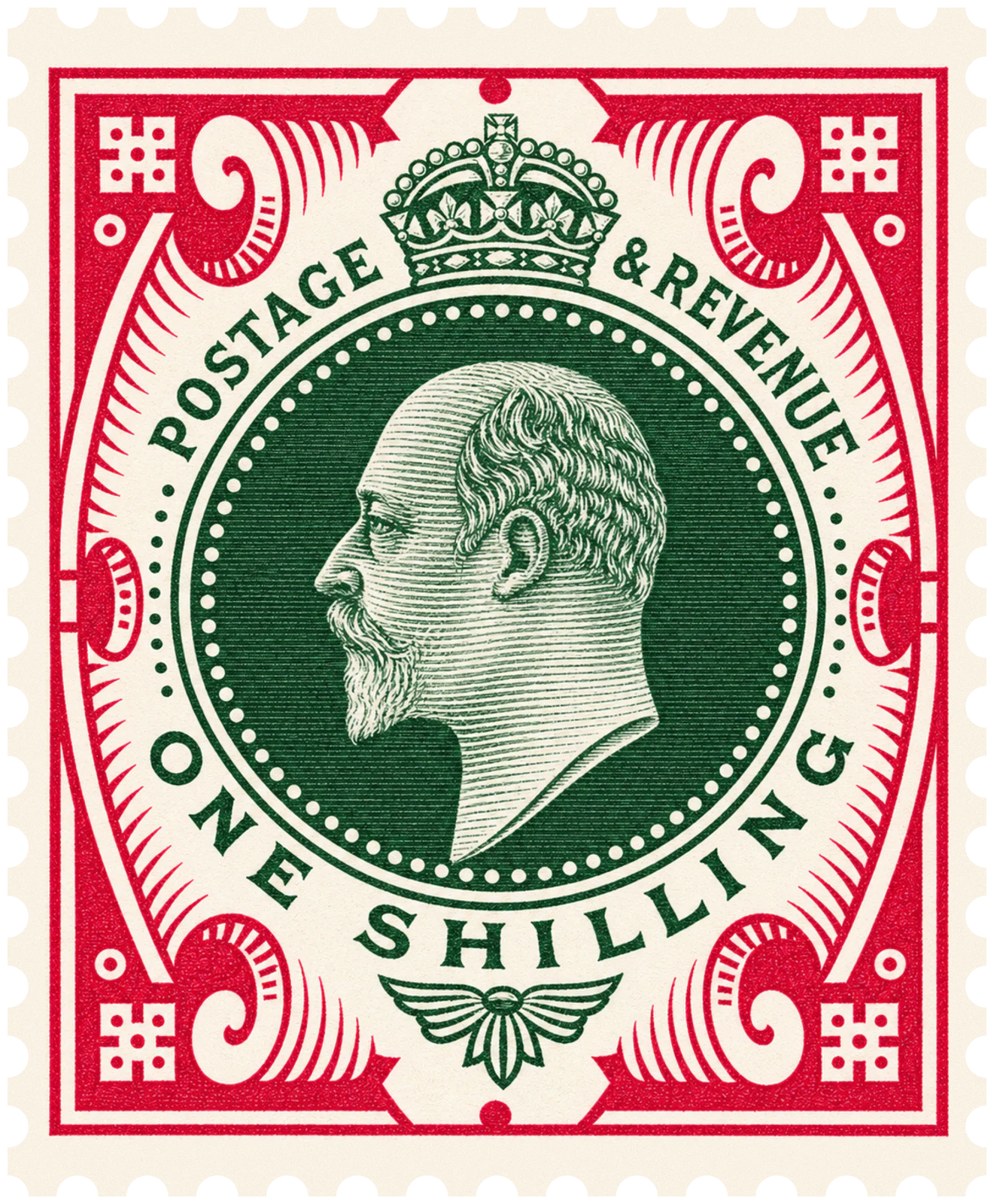
On the stamp you were exploring
Edward VII · 1s green and carmine · 19 July 1911
Here “Somerset House” means the Board of Inland Revenue’s Stamping Department in London. It identifies the government printing of the Edward VII design. Similar-looking De La Rue examples belong to the earlier printing.
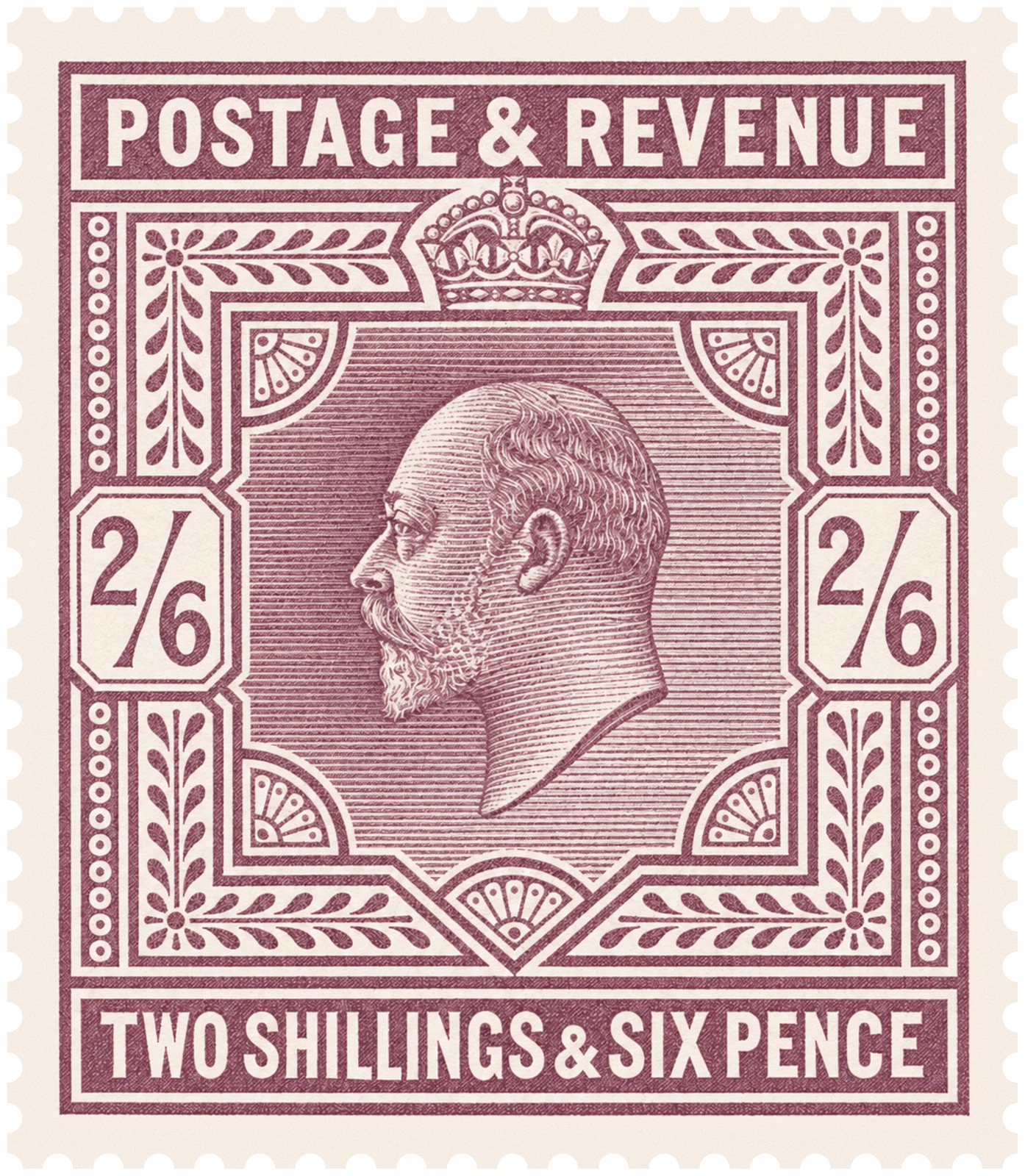
On the stamp you were exploring
Edward VII · 2s 6d dull reddish purple · September 1911
Here “Somerset House” means the Board of Inland Revenue’s Stamping Department in London. It identifies the government printing of the Edward VII design. Similar-looking De La Rue examples belong to the earlier printing.
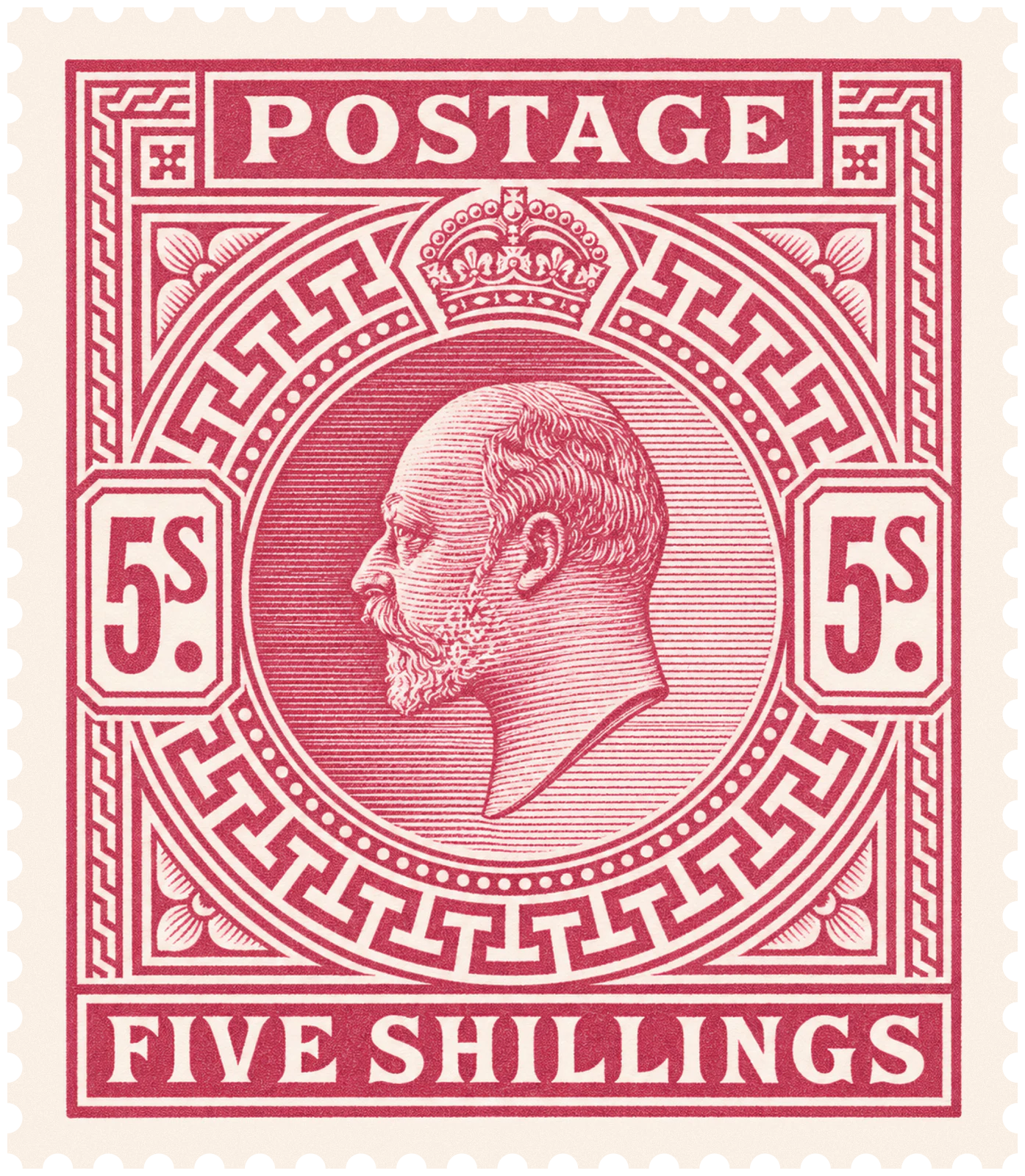
On the stamp you were exploring
Edward VII · 5s carmine · 29 February 1912
Here “Somerset House” means the Board of Inland Revenue’s Stamping Department in London. It identifies the government printing of the Edward VII design. Similar-looking De La Rue examples belong to the earlier printing.
On the stamp you were exploring
Edward VII · 5s carmine · 29 February 1912
Here “Somerset House” means the Board of Inland Revenue’s Stamping Department in London. It identifies the government printing of the Edward VII design. Similar-looking De La Rue examples belong to the earlier printing.
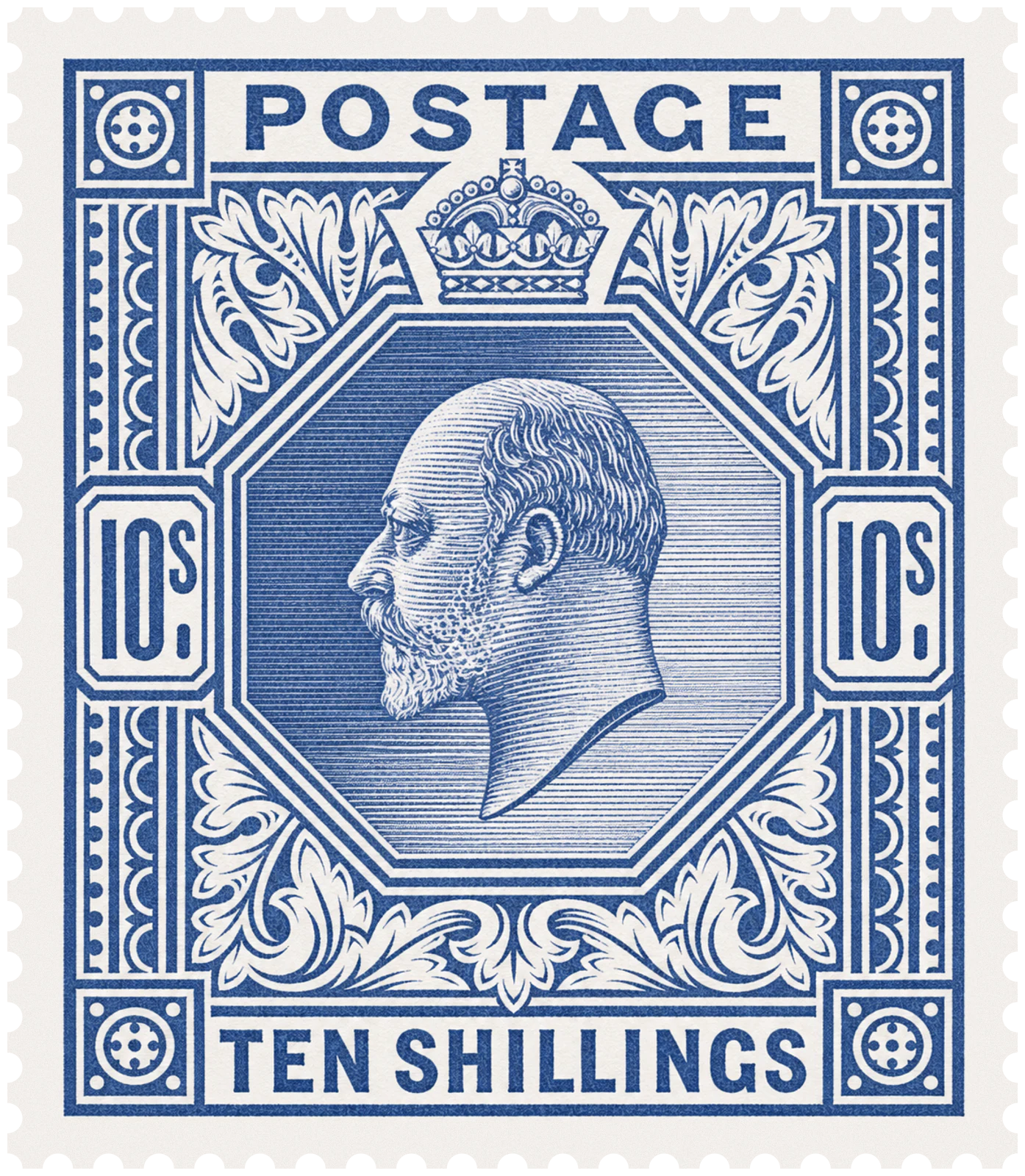
On the stamp you were exploring
Edward VII · 10s blue · 14 January 1912
Here “Somerset House” means the Board of Inland Revenue’s Stamping Department in London. It identifies the government printing of the Edward VII design. Similar-looking De La Rue examples belong to the earlier printing.
On the stamp you were exploring
Edward VII · 10s blue · 14 January 1912
Here “Somerset House” means the Board of Inland Revenue’s Stamping Department in London. It identifies the government printing of the Edward VII design. Similar-looking De La Rue examples belong to the earlier printing.
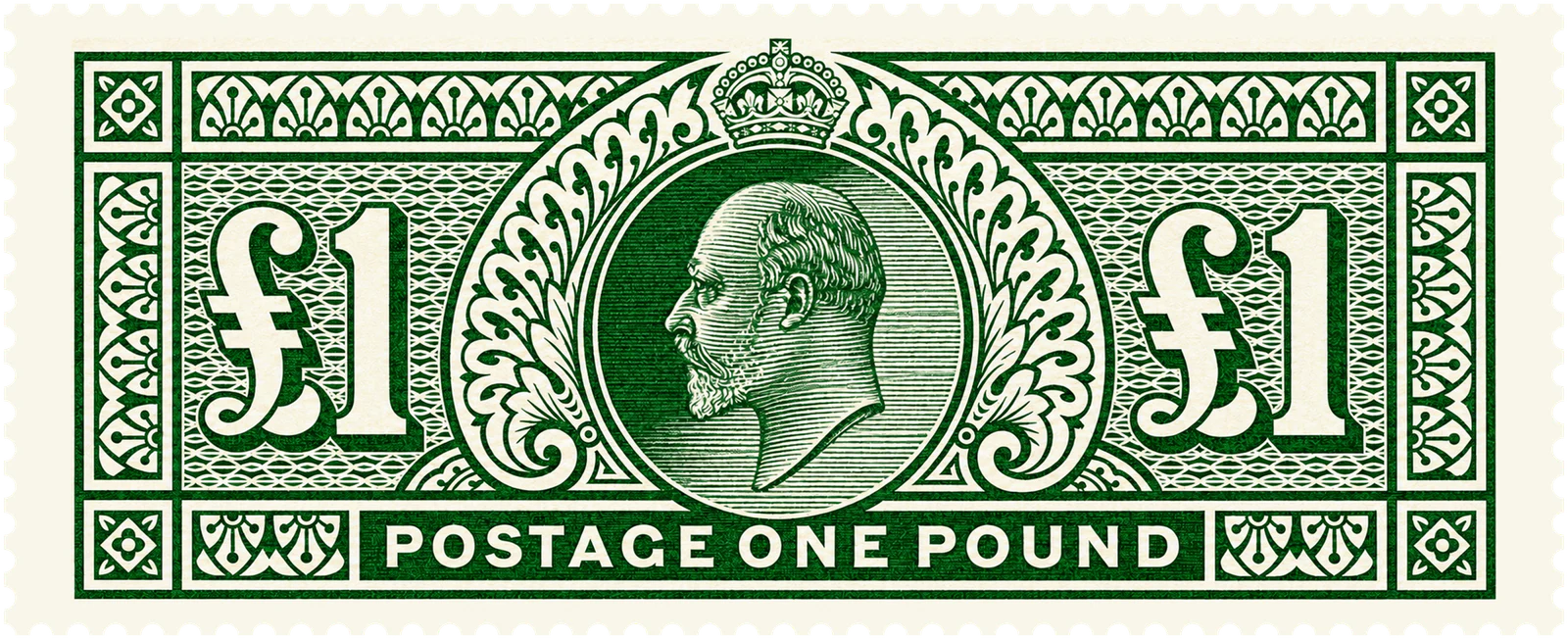
On the stamp you were exploring
Edward VII · £1 deep green · 1911
Here “Somerset House” means the Board of Inland Revenue’s Stamping Department in London. It identifies the government printing of the Edward VII design. Similar-looking De La Rue examples belong to the earlier printing.
On the stamp you were exploring
Edward VII · £1 deep green · 1911
Here “Somerset House” means the Board of Inland Revenue’s Stamping Department in London. It identifies the government printing of the Edward VII design. Similar-looking De La Rue examples belong to the earlier printing.
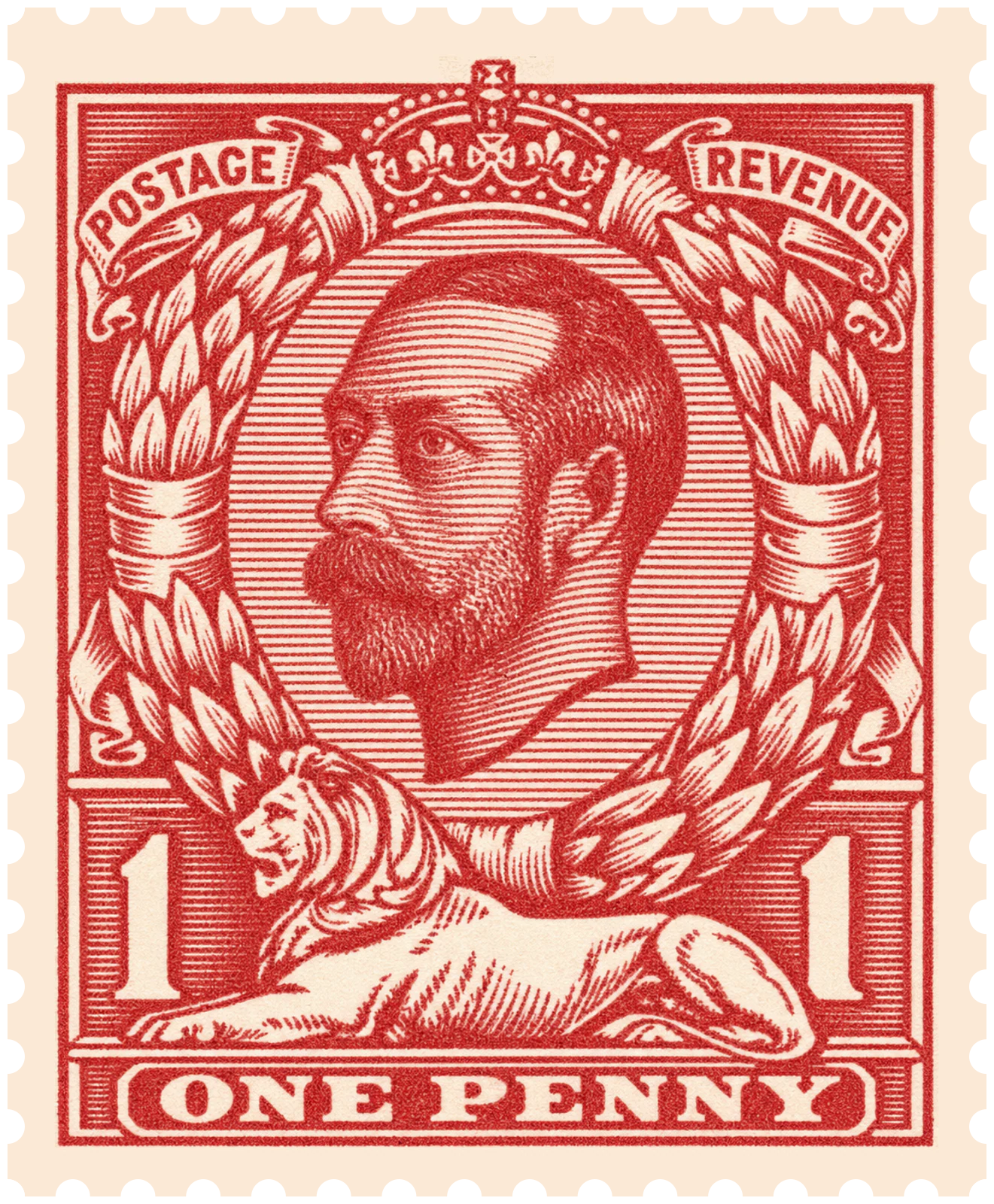
On the stamp you were exploring
George V · 1d carmine-red · 22 June 1911
This page groups the die and watermark, which occur in the production history of both Harrison & Sons and Somerset House. Attached controls usually help distinguish the printings: Somerset House normally used a stop after the letter, while Harrison omitted it. Rare exceptions are recorded.
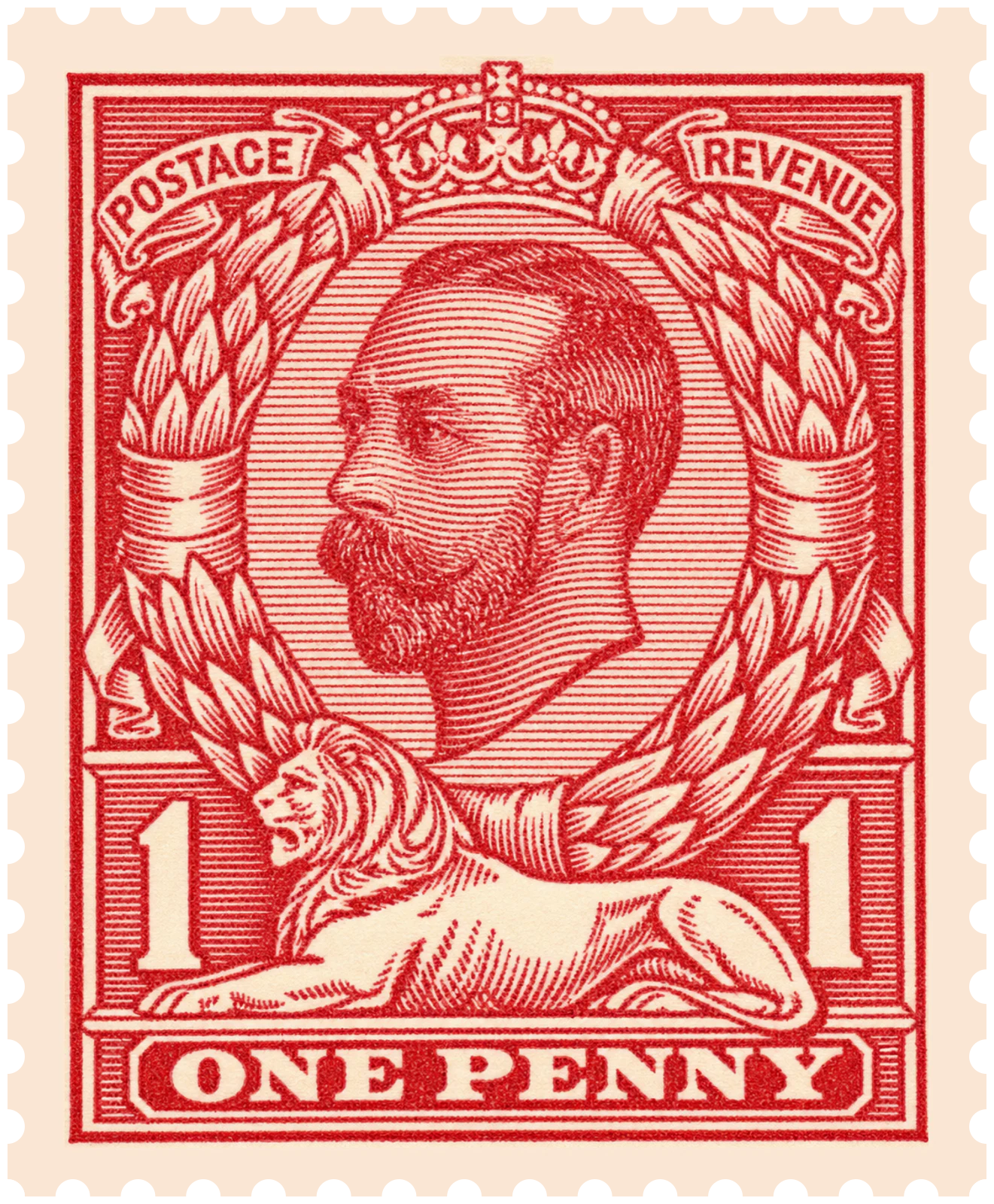
On the stamp you were exploring
George V · 1d carmine · 1911
This page groups the die and watermark, which occur in the production history of both Harrison & Sons and Somerset House. Attached controls help distinguish printings: Somerset House uses a stop after the letter; Harrison omits it.
On the stamp you were exploring
George V · 1d carmine · 1911
This page groups the die and watermark, which occur in the production history of both Harrison & Sons and Somerset House. Attached controls help distinguish printings: Somerset House uses a stop after the letter; Harrison omits it.
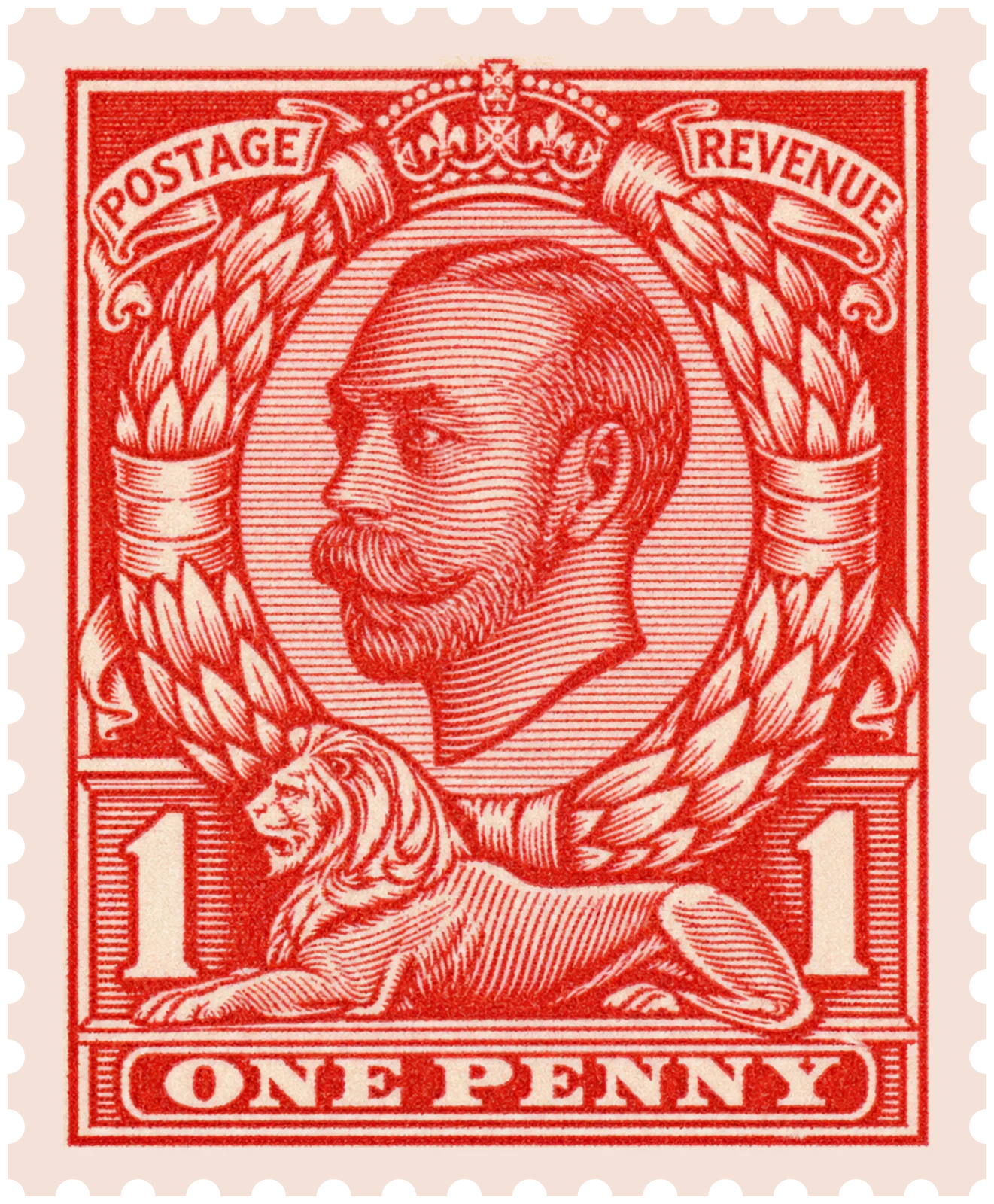
On the stamp you were exploring
George V · 1d scarlet · January 1912
This page groups the die and watermark, which occur in the production history of both Harrison & Sons and Somerset House. Attached controls help distinguish printings: Somerset House uses a stop after the letter; Harrison omits it.
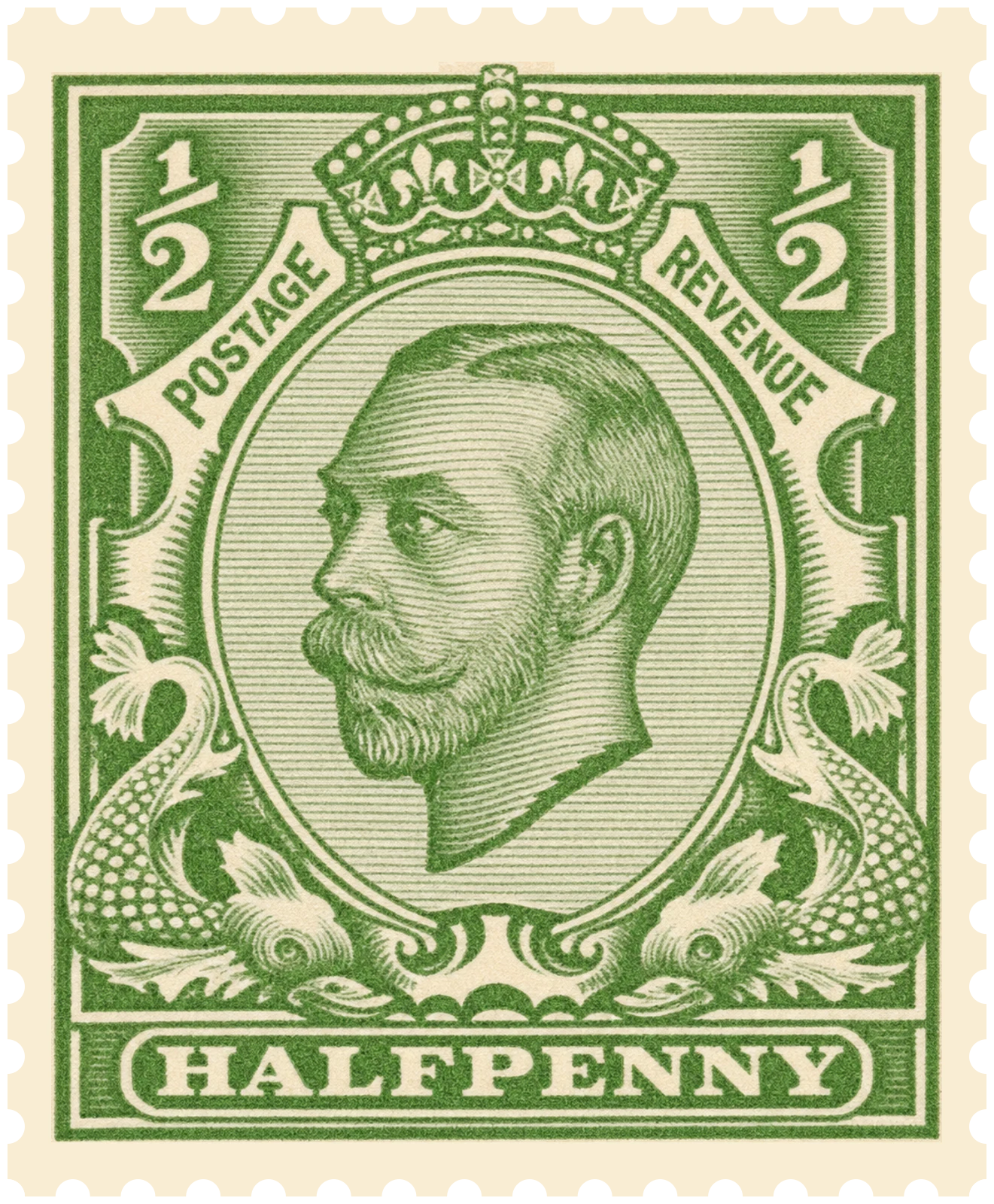
On the stamp you were exploring
George V · ½d green · 1912
This page groups the die and watermark, which occur in the production history of both Harrison & Sons and Somerset House. Attached controls help distinguish printings: Somerset House uses a stop after the letter; Harrison omits it.
On the stamp you were exploring
George V · ½d green · 1912
This page groups the die and watermark, which occur in the production history of both Harrison & Sons and Somerset House. Attached controls help distinguish printings: Somerset House uses a stop after the letter; Harrison omits it.
On the stamp you were exploring
George V · 1d scarlet · 1912
This page groups the die and watermark, which occur in the production history of both Harrison & Sons and Somerset House. Attached controls help distinguish printings: Somerset House uses a stop after the letter; Harrison omits it.
On the stamp you were exploring
George V · 1d scarlet · 1912
This page groups the die and watermark, which occur in the production history of both Harrison & Sons and Somerset House. Attached controls help distinguish printings: Somerset House uses a stop after the letter; Harrison omits it.
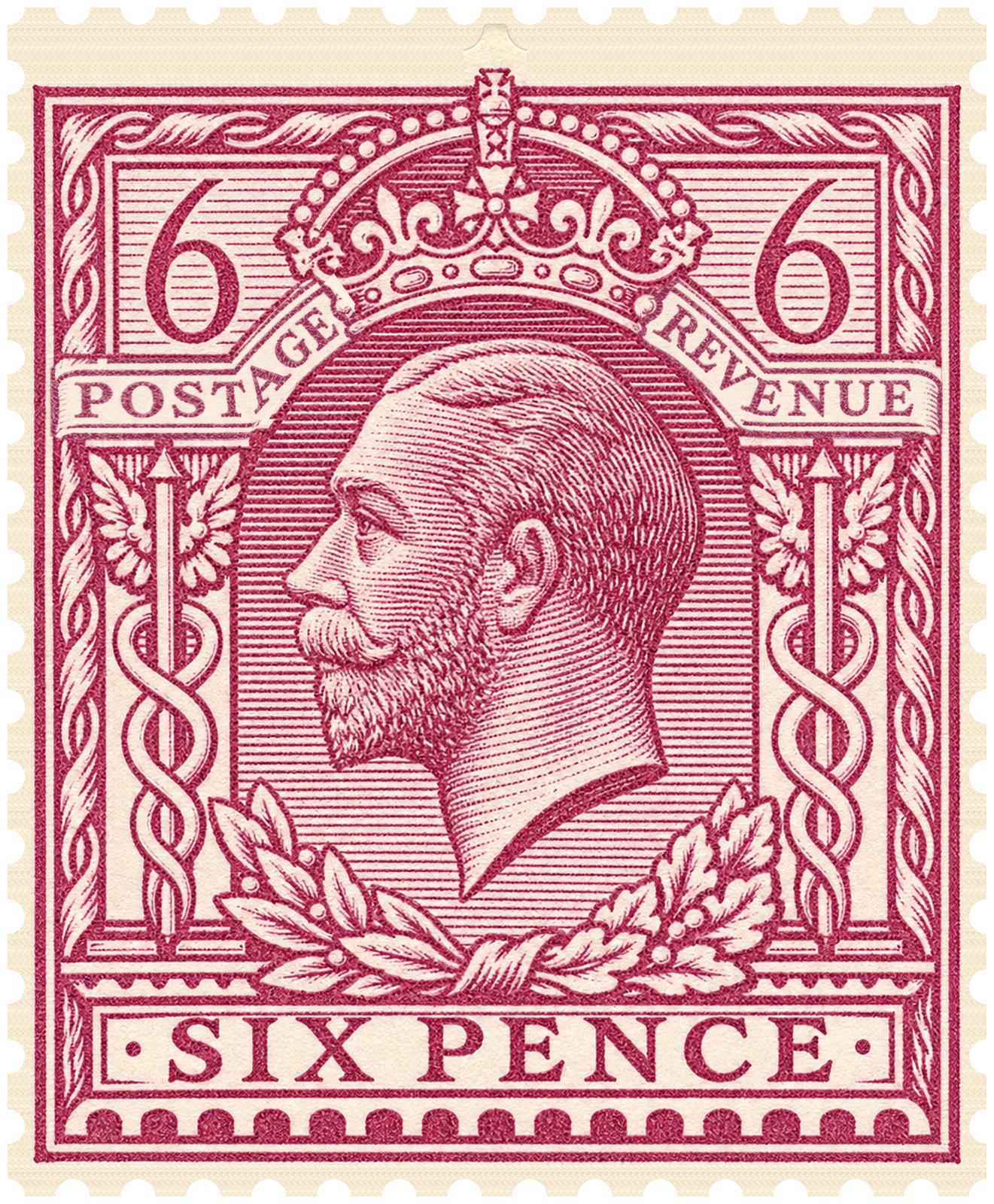
On the stamp you were exploring
George V · 6d reddish-purple · 1 August 1913 (originally dull purple; reddish-purple introduced later that month)
Somerset House identifies the government stamp-printing operation. It produced the Royal Cypher sixpence in both gauges shown here.
On the stamp you were exploring
George V · 6d reddish-purple · 1 August 1913 (originally dull purple; reddish-purple introduced later that month)
Somerset House identifies the government stamp-printing operation. It produced the Royal Cypher sixpence in both gauges shown here.
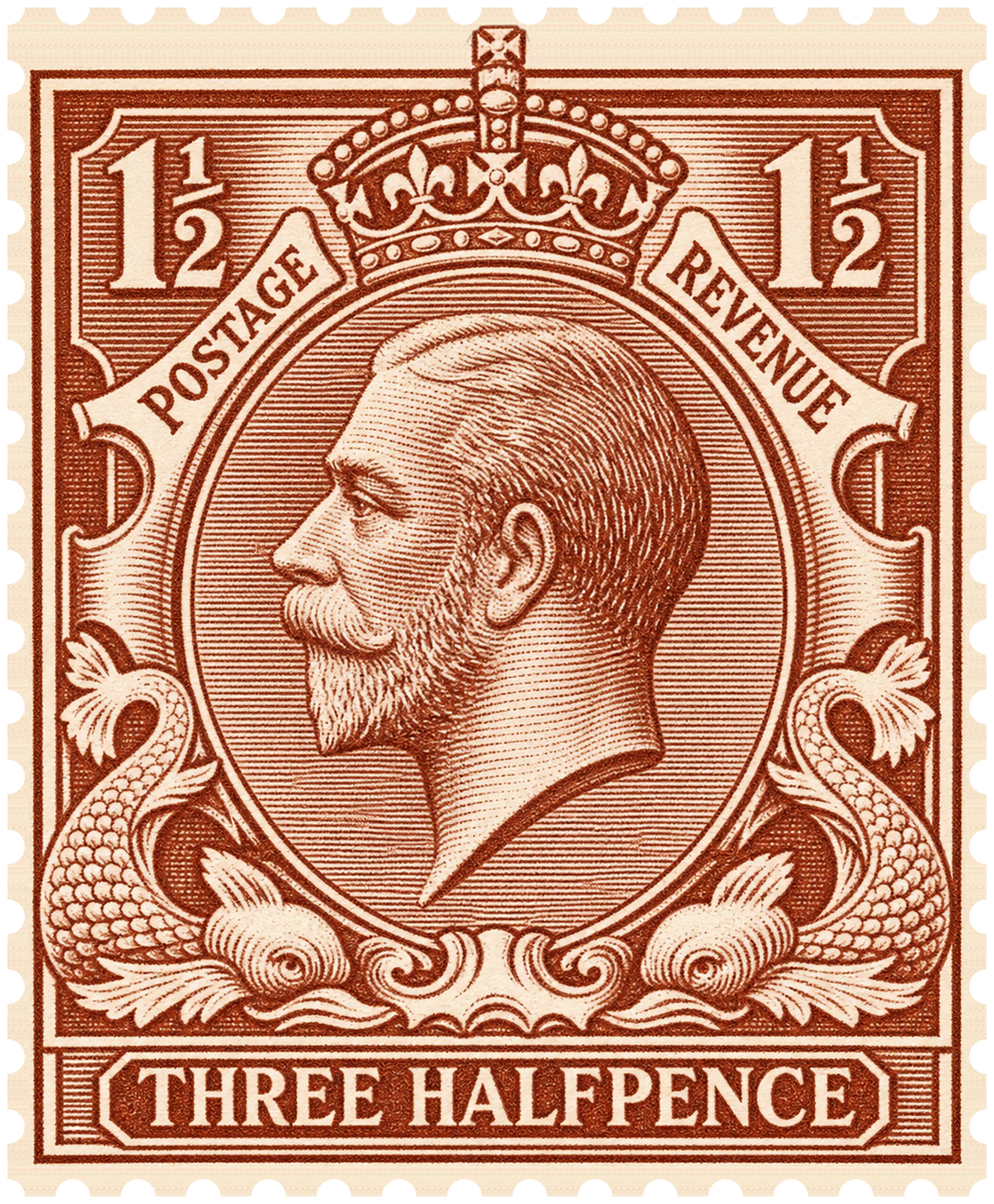
On the stamp you were exploring
George V · 1½d red-brown · Introduced 1924–1926
Waterlow was the main printer. The E.26 control records the Somerset House emergency printing associated with the General Strike. Harrison’s later letterpress continuation belongs to the transition from 1934.
On the stamp you were exploring
George V · 1½d red-brown · Introduced 1924–1926
Waterlow was the main printer. The E.26 control records the Somerset House emergency printing associated with the General Strike. Harrison’s later letterpress continuation belongs to the transition from 1934.
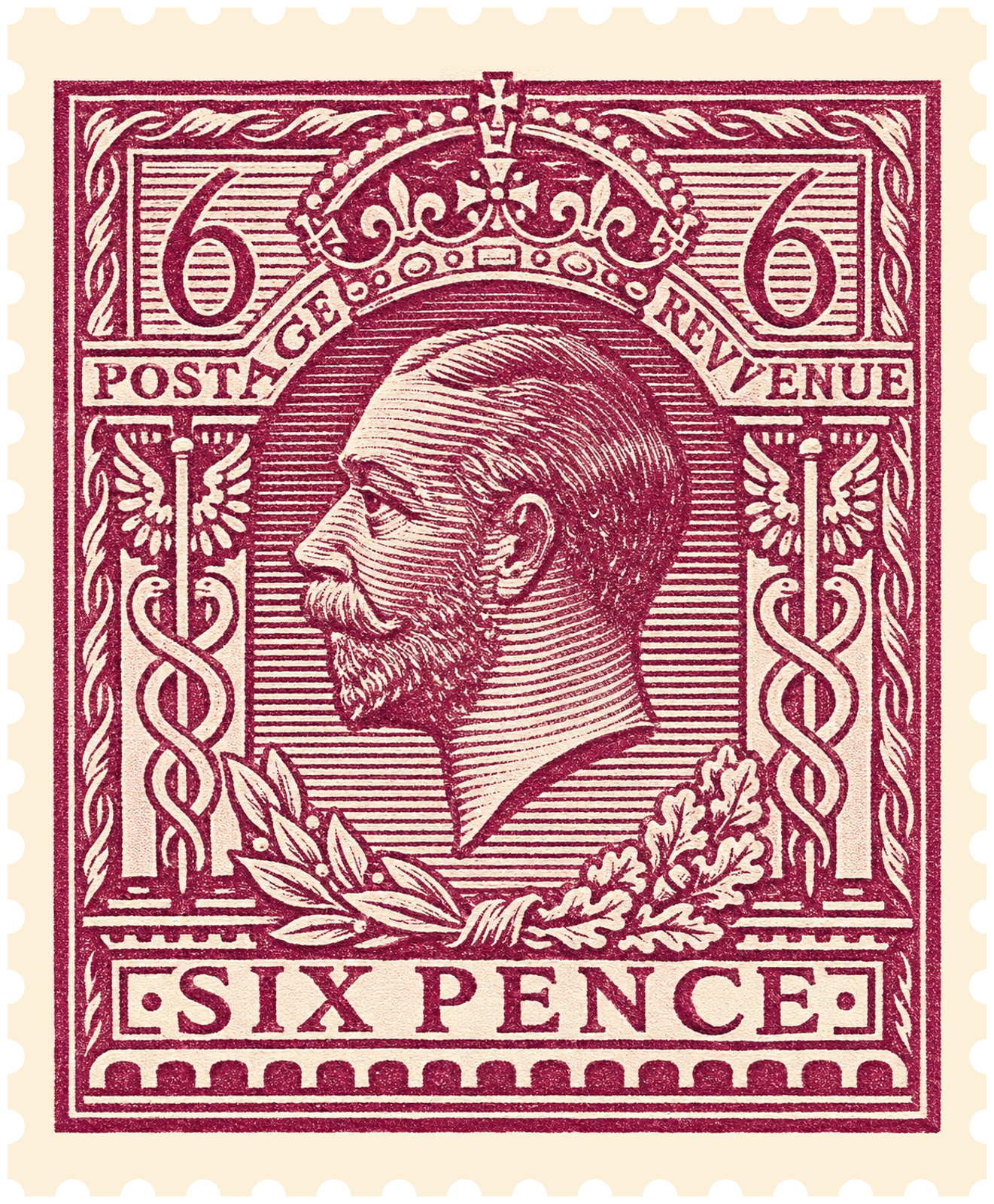
On the stamp you were exploring
George V · 6d reddish-purple · Introduced 1924–1926
Somerset House produced the sixpence during Waterlow’s main low-value contract. Harrison later continued the value. This entry groups the paper type across that production history; it is not a single-printer shade listing.
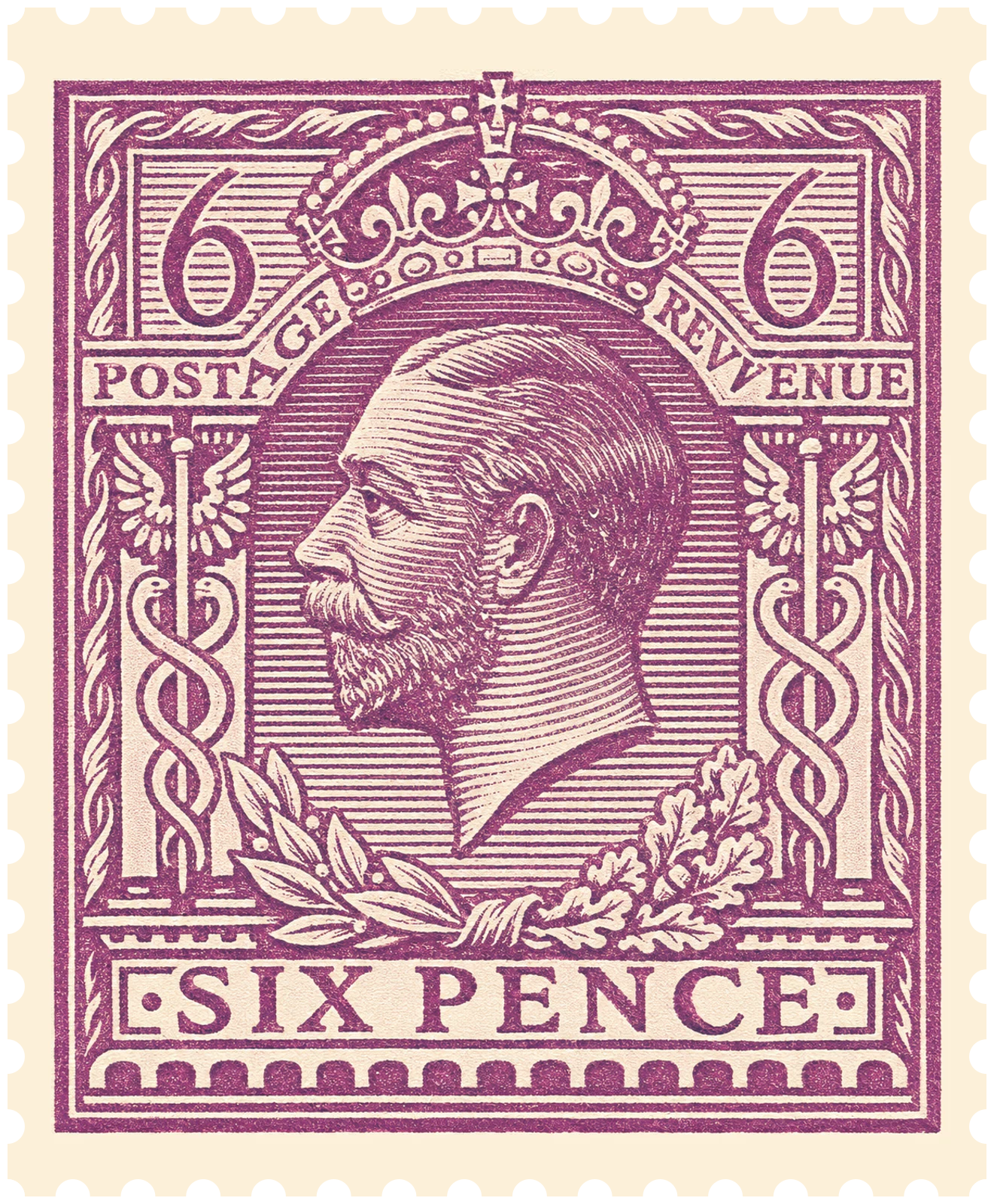
On the stamp you were exploring
George V · 6d purple · Introduced 1924–1926
Somerset House produced the sixpence during Waterlow’s main low-value contract. Harrison later continued the value. This entry groups the paper type across that production history; it is not a single-printer shade listing.
On the stamp you were exploring
George V · 6d purple · Introduced 1924–1926
Somerset House produced the sixpence during Waterlow’s main low-value contract. Harrison later continued the value. This entry groups the paper type across that production history; it is not a single-printer shade listing.
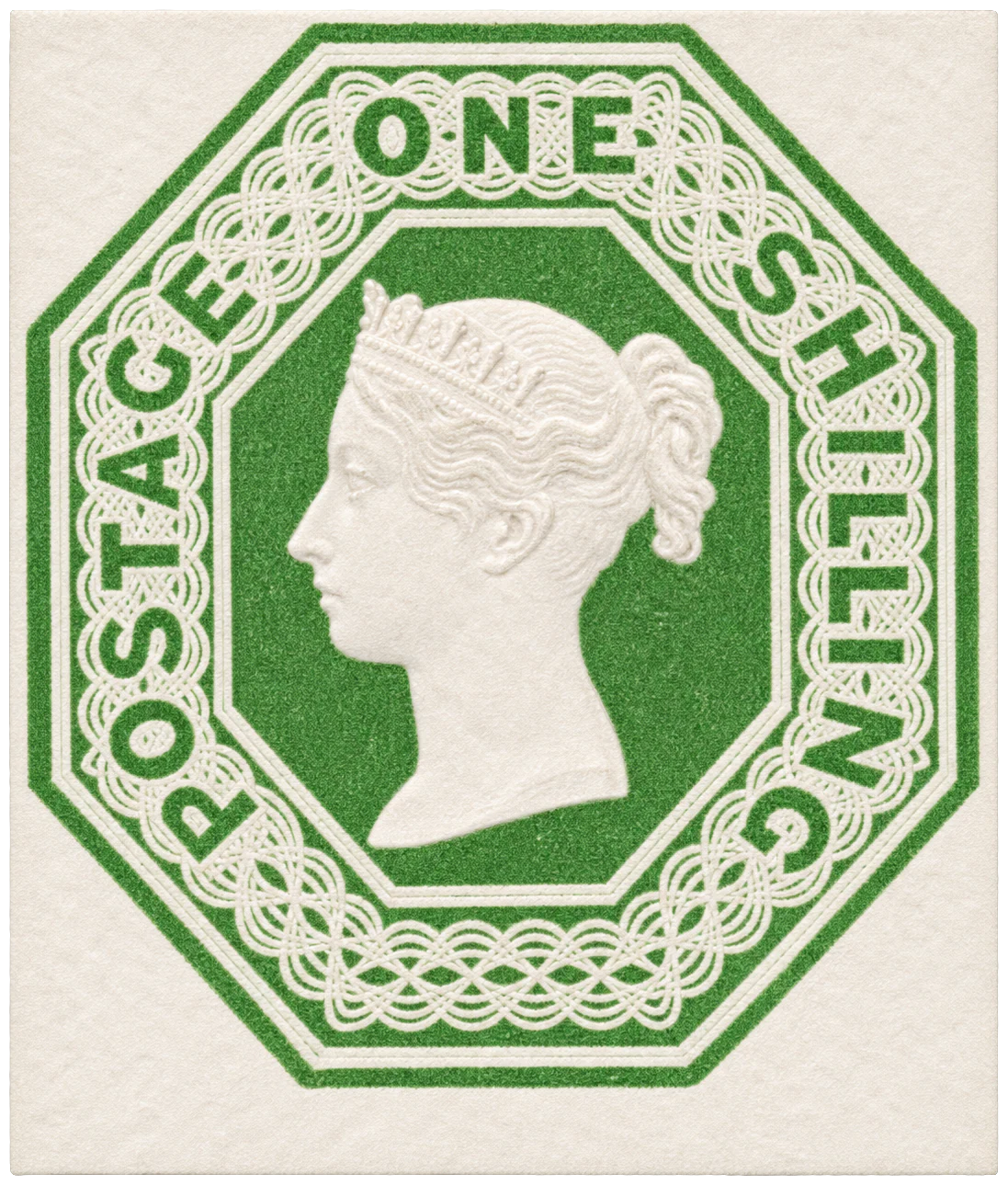
On the stamp you were exploring
Victoria · 1s green · 1847
The Stamping Department of the Board of Stamps and Taxes at Somerset House produced the 1847 embossed shilling, striking each embossed impression separately.
On the stamp you were exploring
Victoria · 1s green · 1847
The Stamping Department of the Board of Stamps and Taxes at Somerset House produced the 1847 embossed shilling, striking each embossed impression separately.
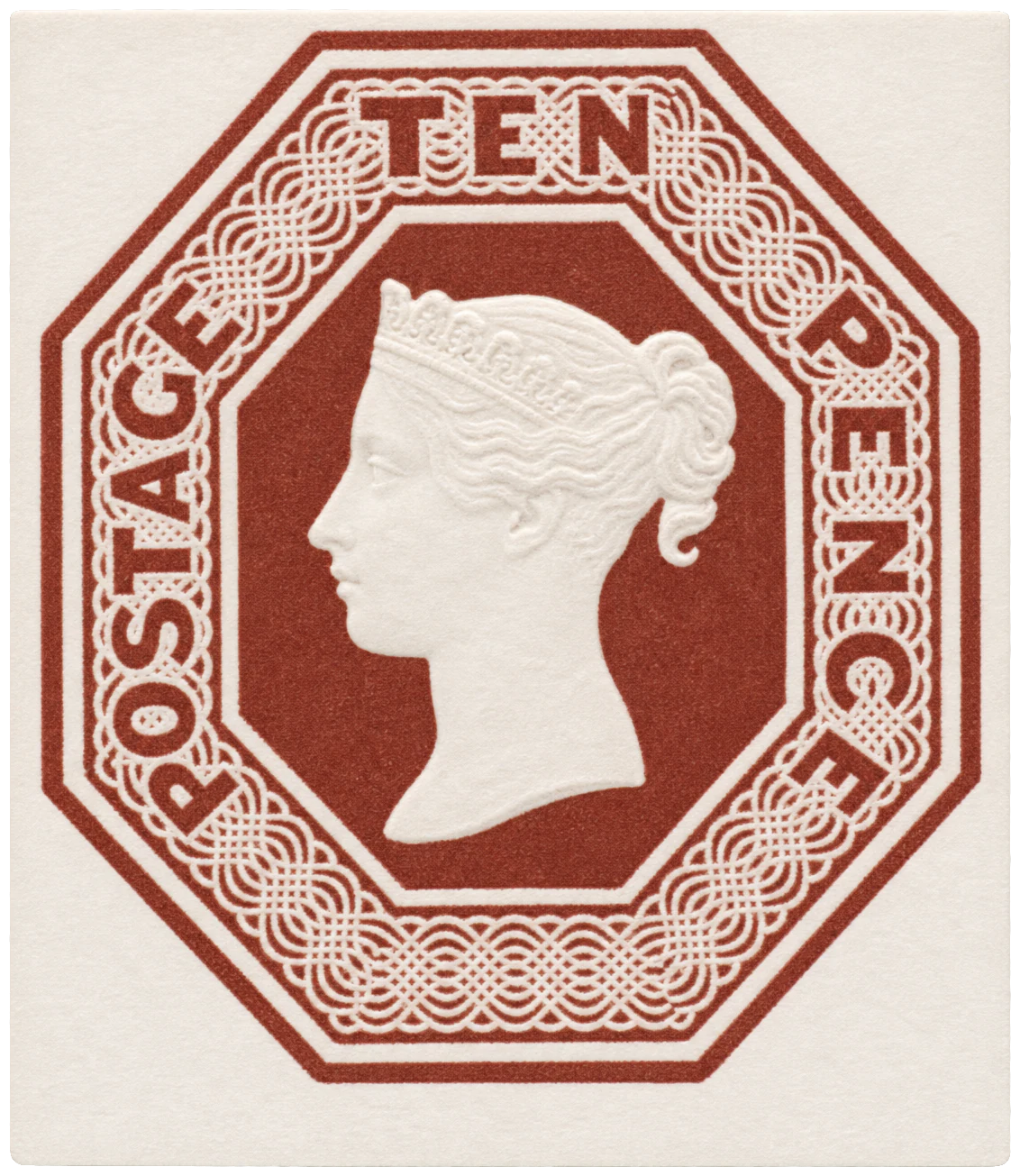
On the stamp you were exploring
Victoria · 10d brown · 1848
The Board of Stamps and Taxes’ Stamping Department at Somerset House produced the 1848 embossed tenpence, striking each impression separately.
On the stamp you were exploring
Victoria · 10d brown · 1848
The Board of Stamps and Taxes’ Stamping Department at Somerset House produced the 1848 embossed tenpence, striking each impression separately.
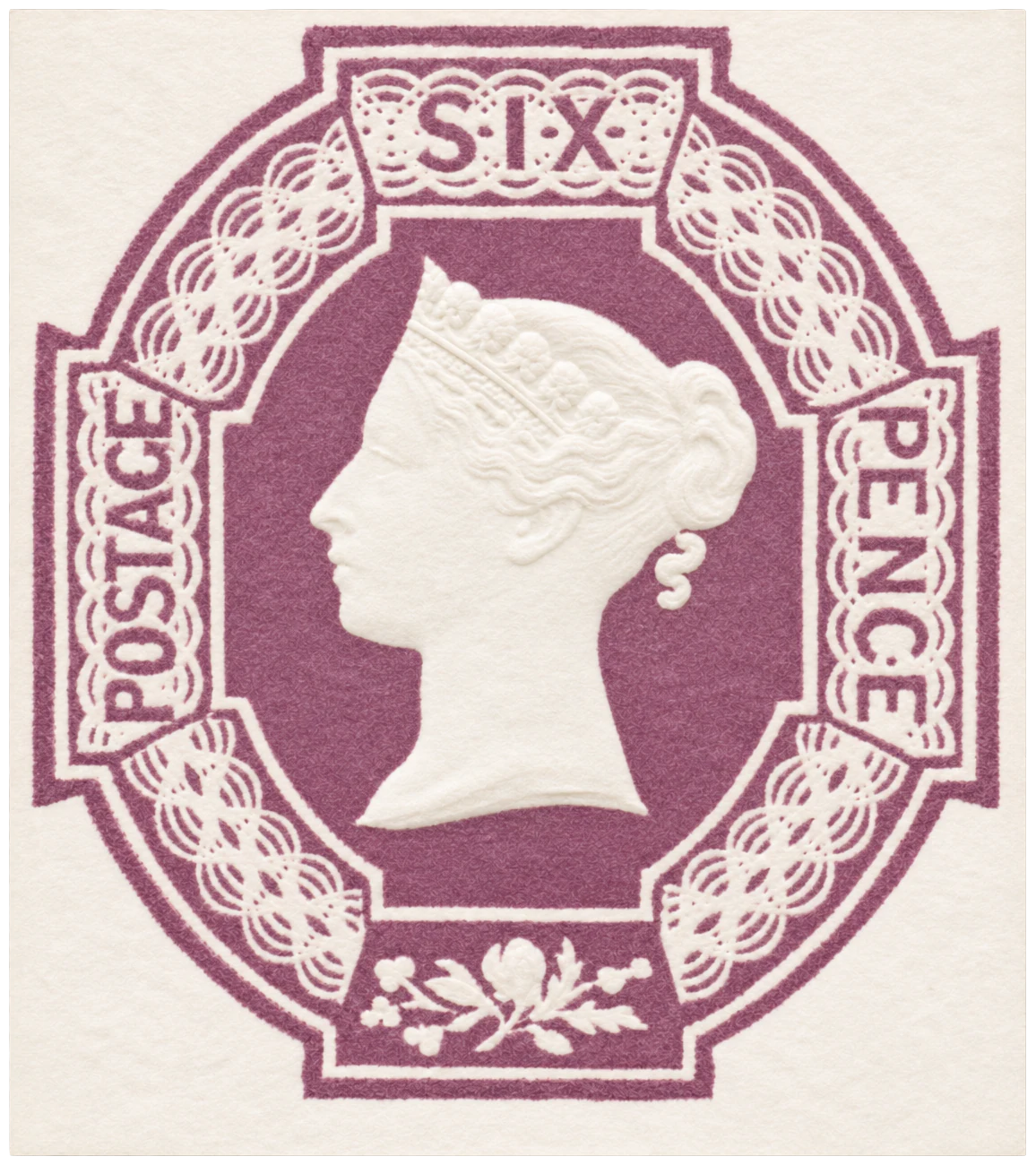
On the stamp you were exploring
Victoria · 6d mauve/purple · 1854
The Inland Revenue’s Stamping Department at Somerset House produced the 1854 embossed sixpence, striking each embossed impression separately.
On the stamp you were exploring
Victoria · 6d mauve/purple · 1854
The Inland Revenue’s Stamping Department at Somerset House produced the 1854 embossed sixpence, striking each embossed impression separately.
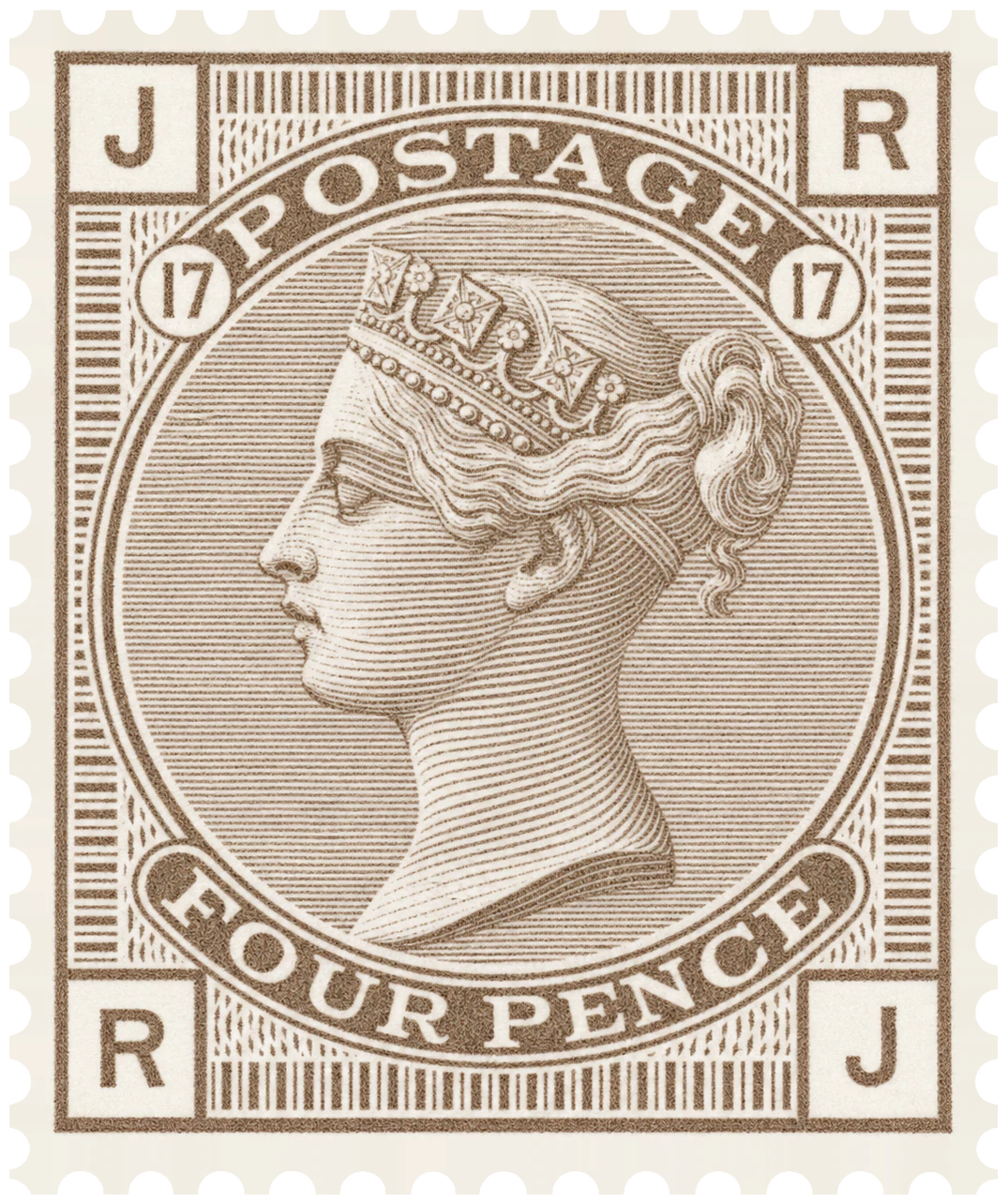
On the stamp you were exploring
Victoria · 4d grey-brown · 1880
The grey-brown fourpenny belongs to the 1880 transfer of perforating from Somerset House to De La Rue. The government department had perforated De La Rue’s printed sheets; the contractor then took over that finishing work. This is a perforating credit, while De La Rue remains the printer.
On the stamp you were exploring
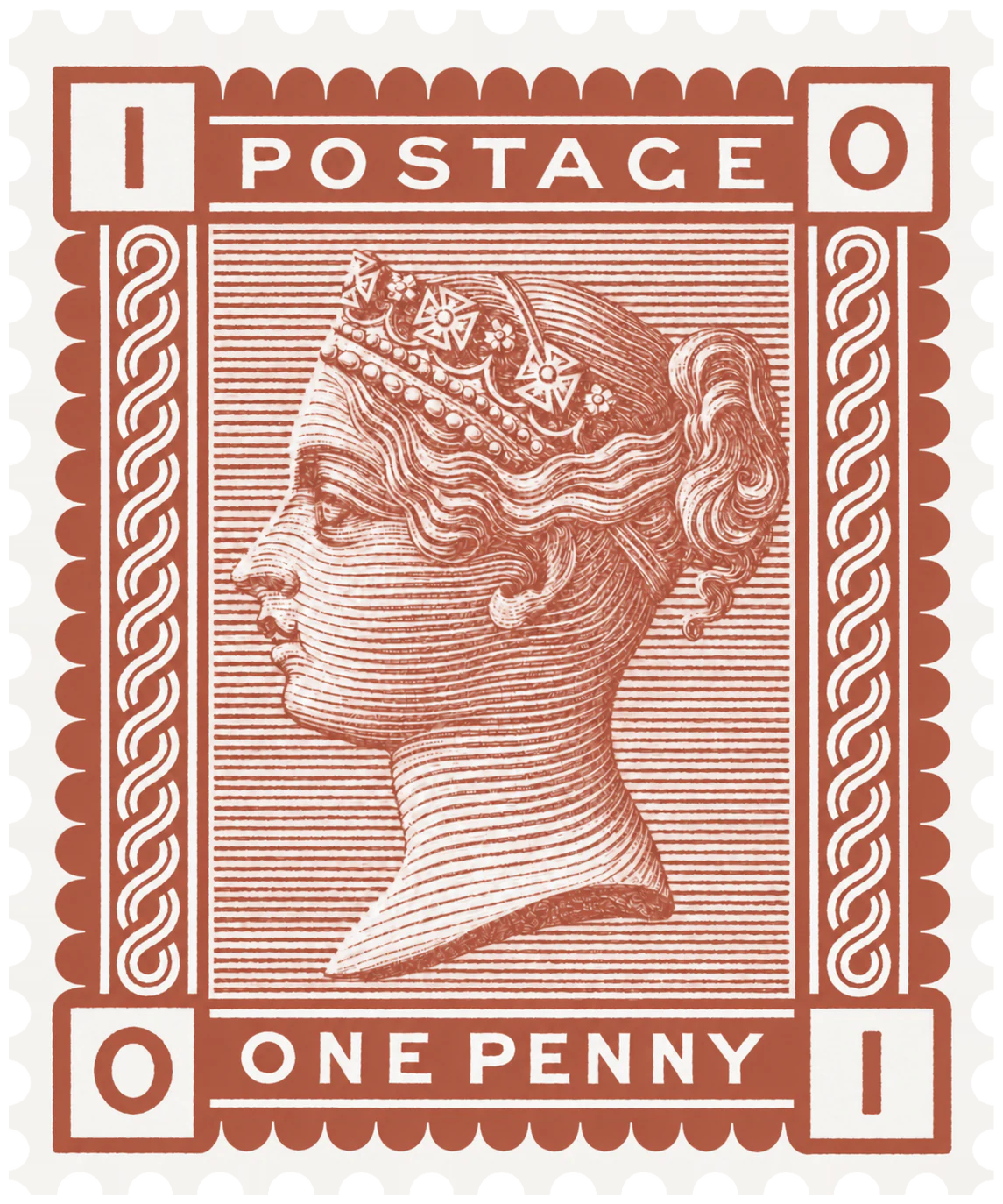
Victoria · 1d Venetian red · 1880
Somerset House perforated the early printings of the Venetian-red penny issued in January 1880. The machines moved to De La Rue between June and the end of August; from September 1880 De La Rue supplied the finished perforated stamps. De La Rue was the printer throughout. This is a production-period distinction, not a claim that the illustrated stamp can be dated to either operator.
A department, not a private firm
Somerset House is the name collectors use for the government printing operation associated with the Inland Revenue’s Stamping Department. It dealt with postage stamps alongside other stamped documents. Stamping and supplying documents was an important administrative task: a small printed mark could show that money had been paid to the state. [1]
Working alongside contractors
In the early George V period the department worked within a system that also employed commercial contractors. The archive records the Harrison contract beginning in January 1911 and the division of stamp-supply responsibilities. Edward VII stamps continued to be manufactured after his death while new designs were introduced. [1]
A change of control in 1914
A committee recommended bringing stamp production and distribution back under the Post Office. In March 1914 the Inland Revenue staff doing this work at Somerset House came under the Post Office Stores Department; demanding, storing and issuing adhesive stamps transferred from 1 April. The familiar collector’s name thus spans an administrative change. [1]