
Perkins Bacon
Engraved stamps and security printing
Perkins Bacon reproduced finely engraved designs in large numbers. Its stamp printing used steel plates: ink filled their cut lines, and pressure transferred it to damp paper.
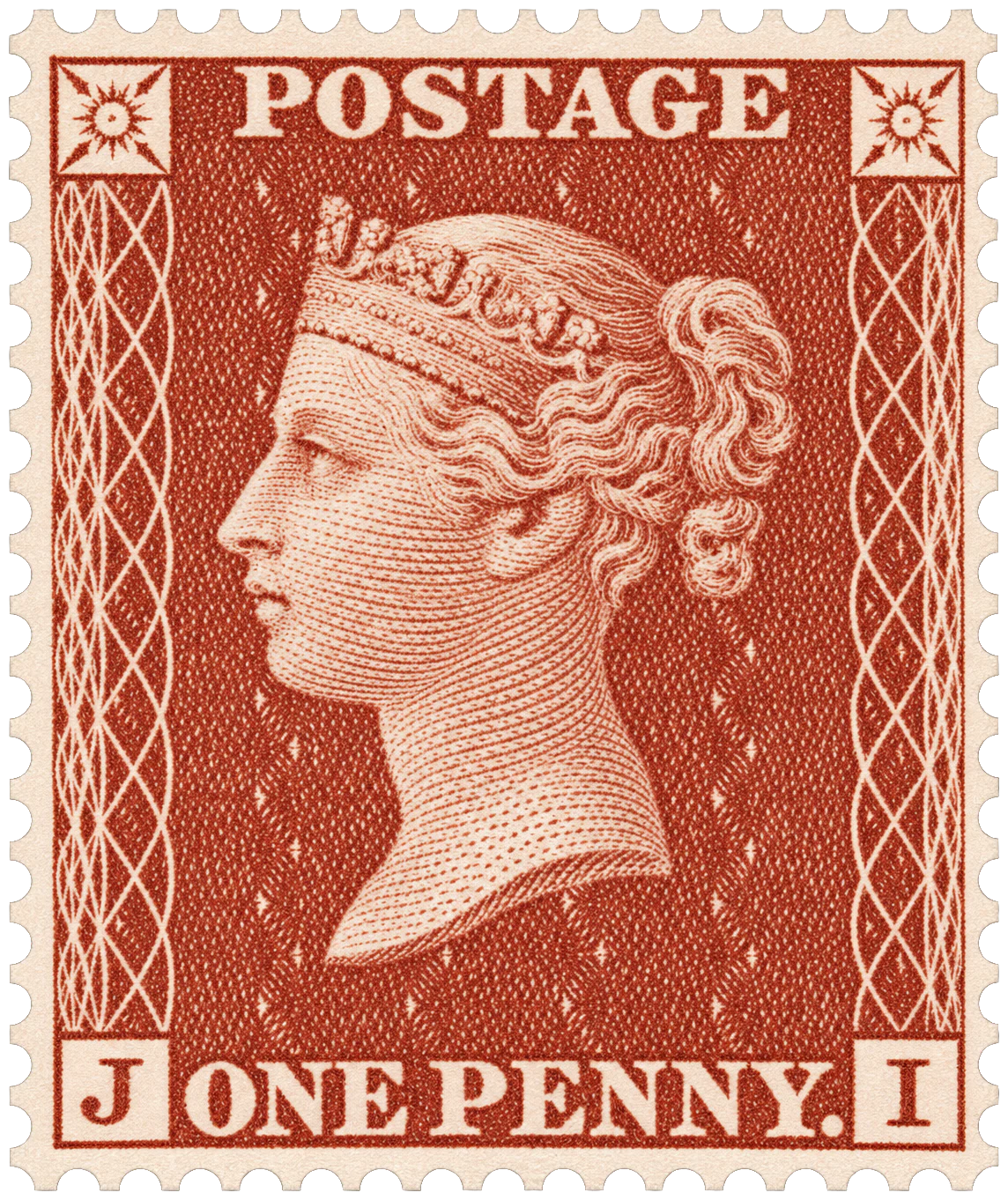
On the stamp you were exploring
Victoria · 1d red-brown · 1855
Perkins, Bacon & Co. printed these 1855 Die II Penny Reds by intaglio from engraved steel plates. The page groups the perforation 16 and perforation 14 versions.
On the stamp you were exploring
Victoria · 1d red-brown · 1855
Perkins, Bacon & Co. printed these 1855 Die II Penny Reds by intaglio from engraved steel plates. The page groups the perforation 16 and perforation 14 versions.
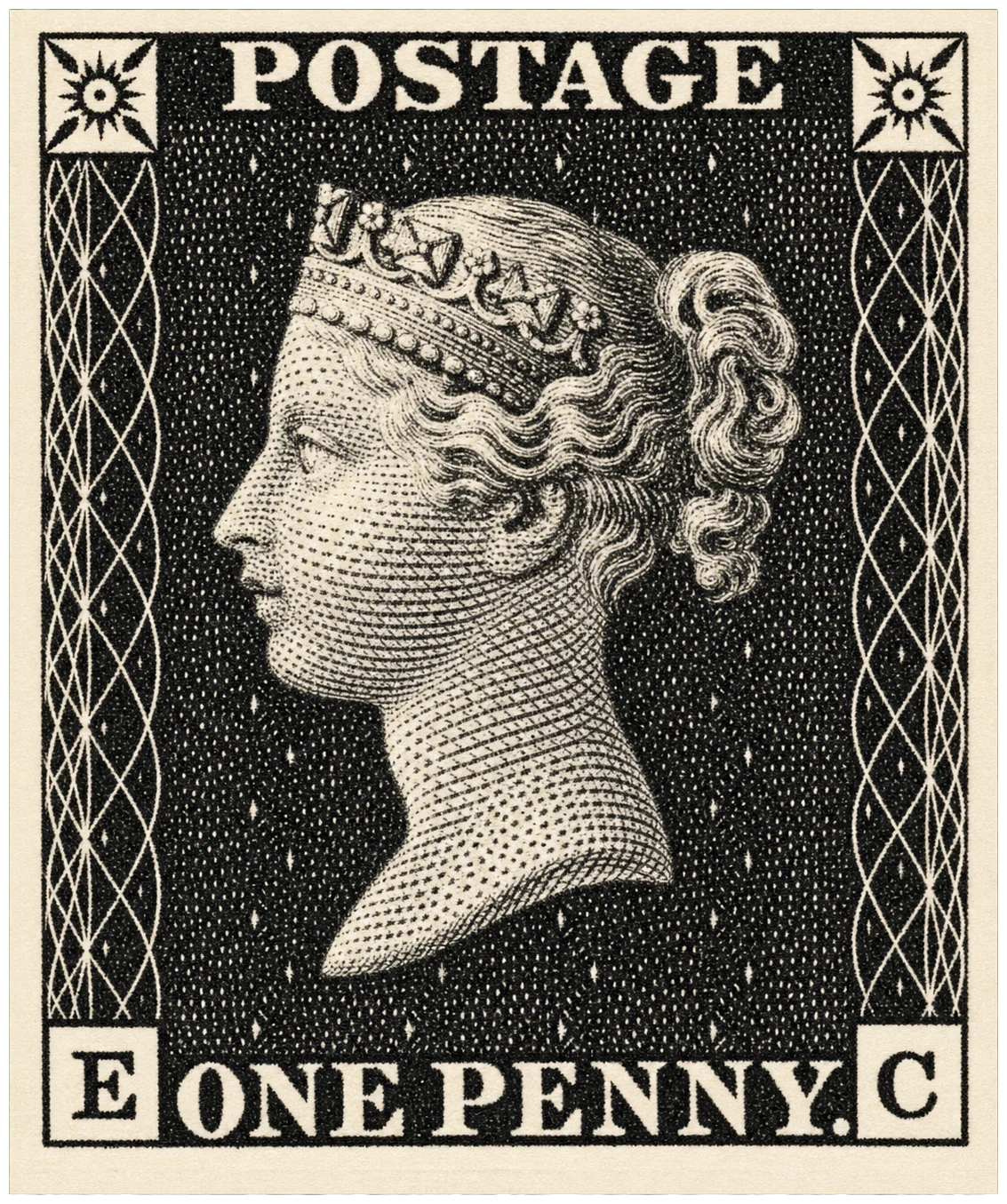
On the stamp you were exploring
Victoria · 1d black · 1840
Perkins, Bacon & Petch printed the Penny Black from engraved steel plates. The stamps were supplied imperforate.
On the stamp you were exploring
Victoria · 1d black · 1840
Perkins, Bacon & Petch printed the Penny Black from engraved steel plates. The stamps were supplied imperforate.
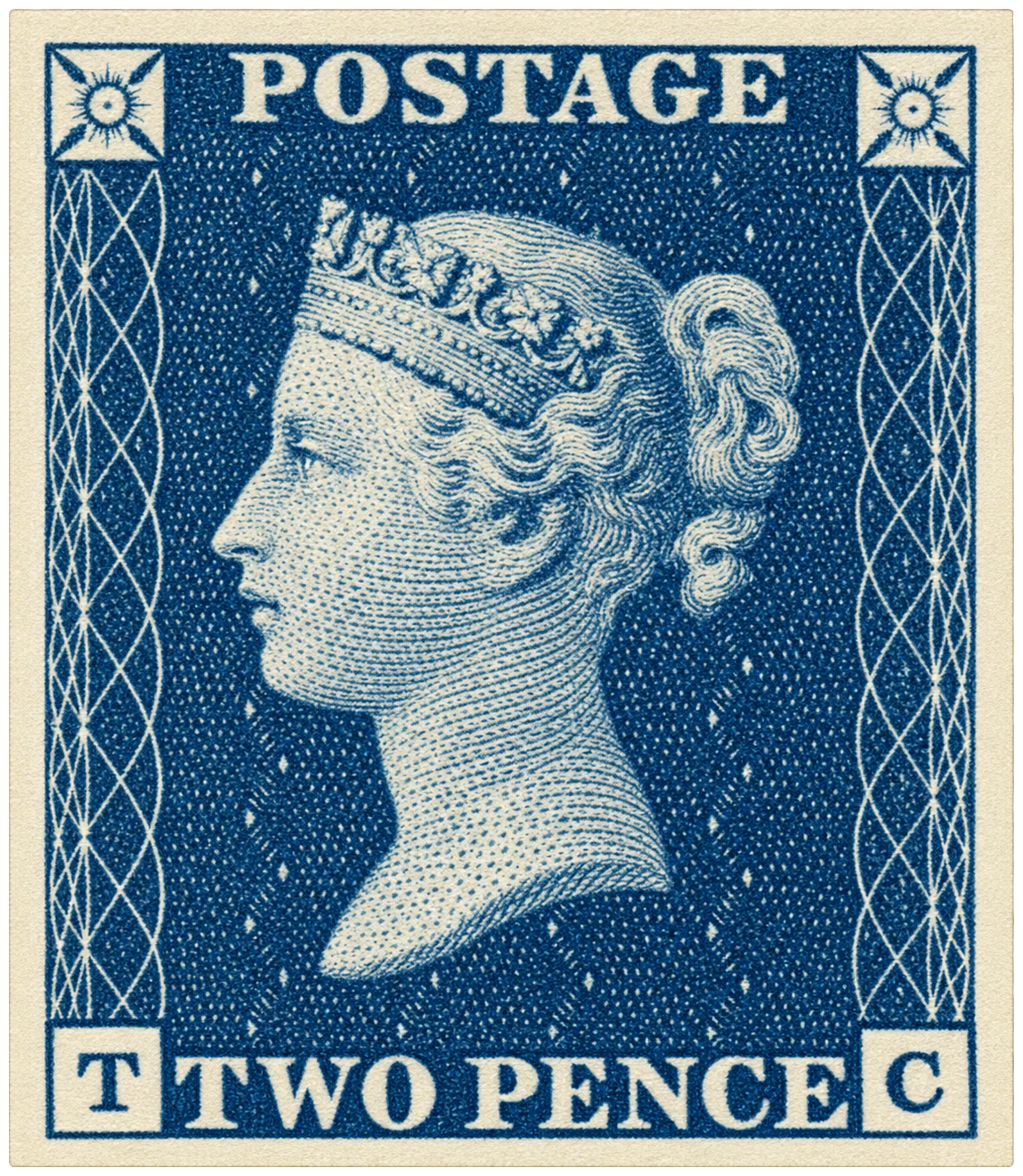
On the stamp you were exploring
Victoria · 2d blue · 1840
Perkins, Bacon & Petch printed the 1840 Twopence Blue from engraved steel plates. The stamps were supplied imperforate.
On the stamp you were exploring
Victoria · 2d blue · 1840
Perkins, Bacon & Petch printed the 1840 Twopence Blue from engraved steel plates. The stamps were supplied imperforate.
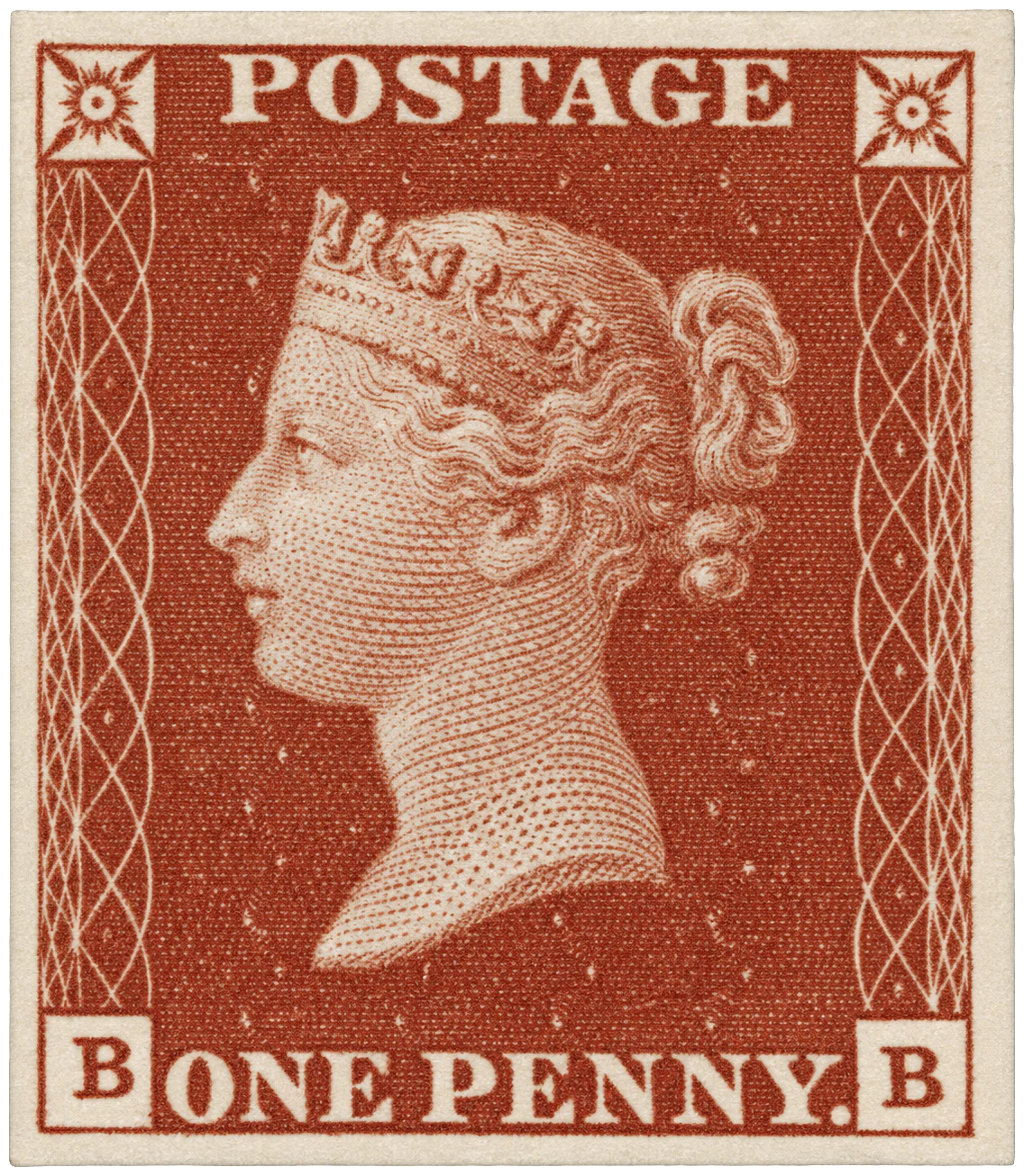
On the stamp you were exploring
Victoria · 1d red-brown · 1841
Perkins, Bacon & Petch printed the 1841 Penny Red from engraved steel plates. The stamps were supplied imperforate.
On the stamp you were exploring
Victoria · 1d red-brown · 1841
Perkins, Bacon & Petch printed the 1841 Penny Red from engraved steel plates. The stamps were supplied imperforate.
On the stamp you were exploring
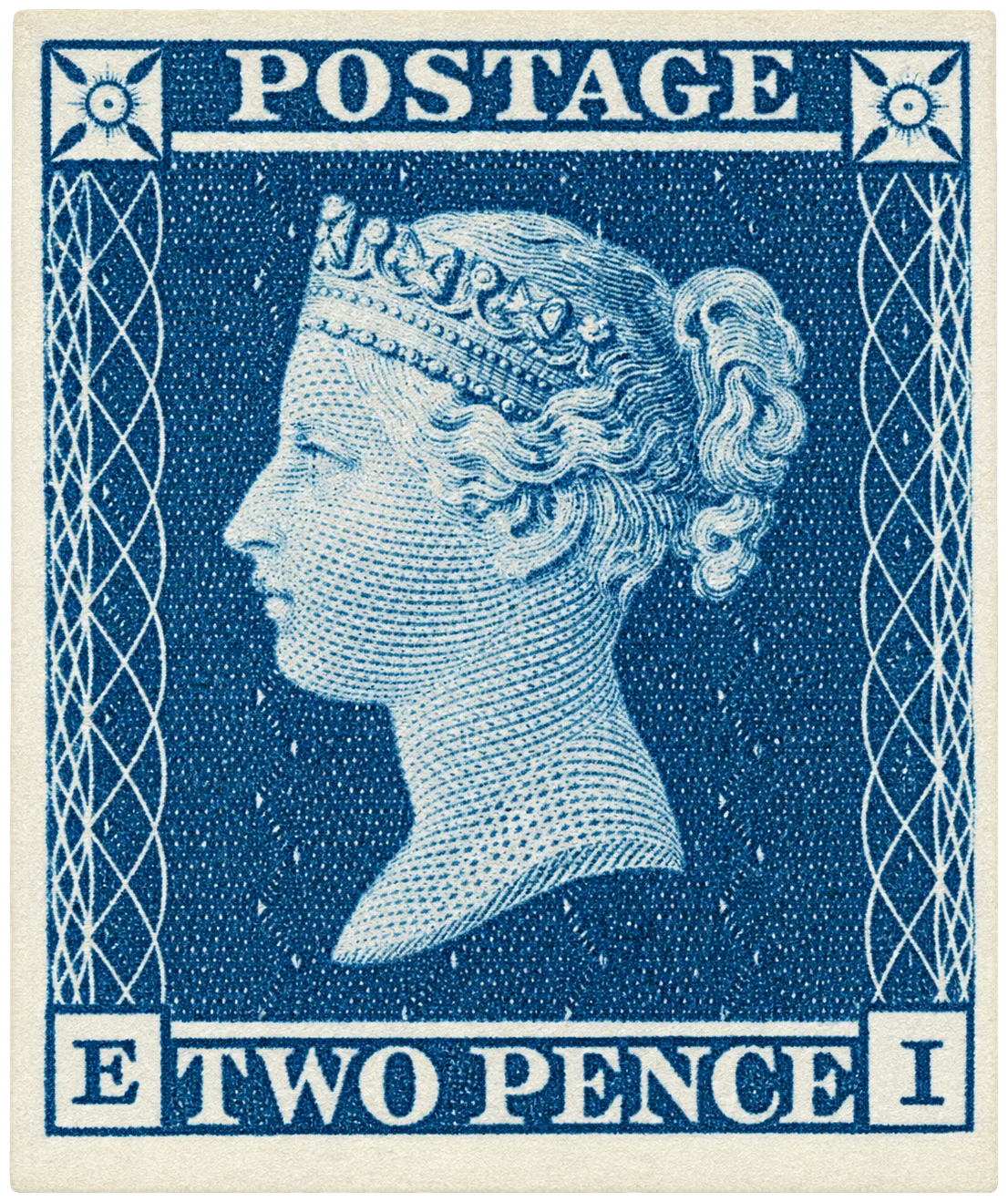
Victoria · 2d blue · 1841
Perkins, Bacon & Petch printed the 1841 Twopence Blue from engraved steel plates. The stamps were supplied imperforate.
On the stamp you were exploring
Victoria · 2d blue · 1841
Perkins, Bacon & Petch printed the 1841 Twopence Blue from engraved steel plates. The stamps were supplied imperforate.
On the stamp you were exploring
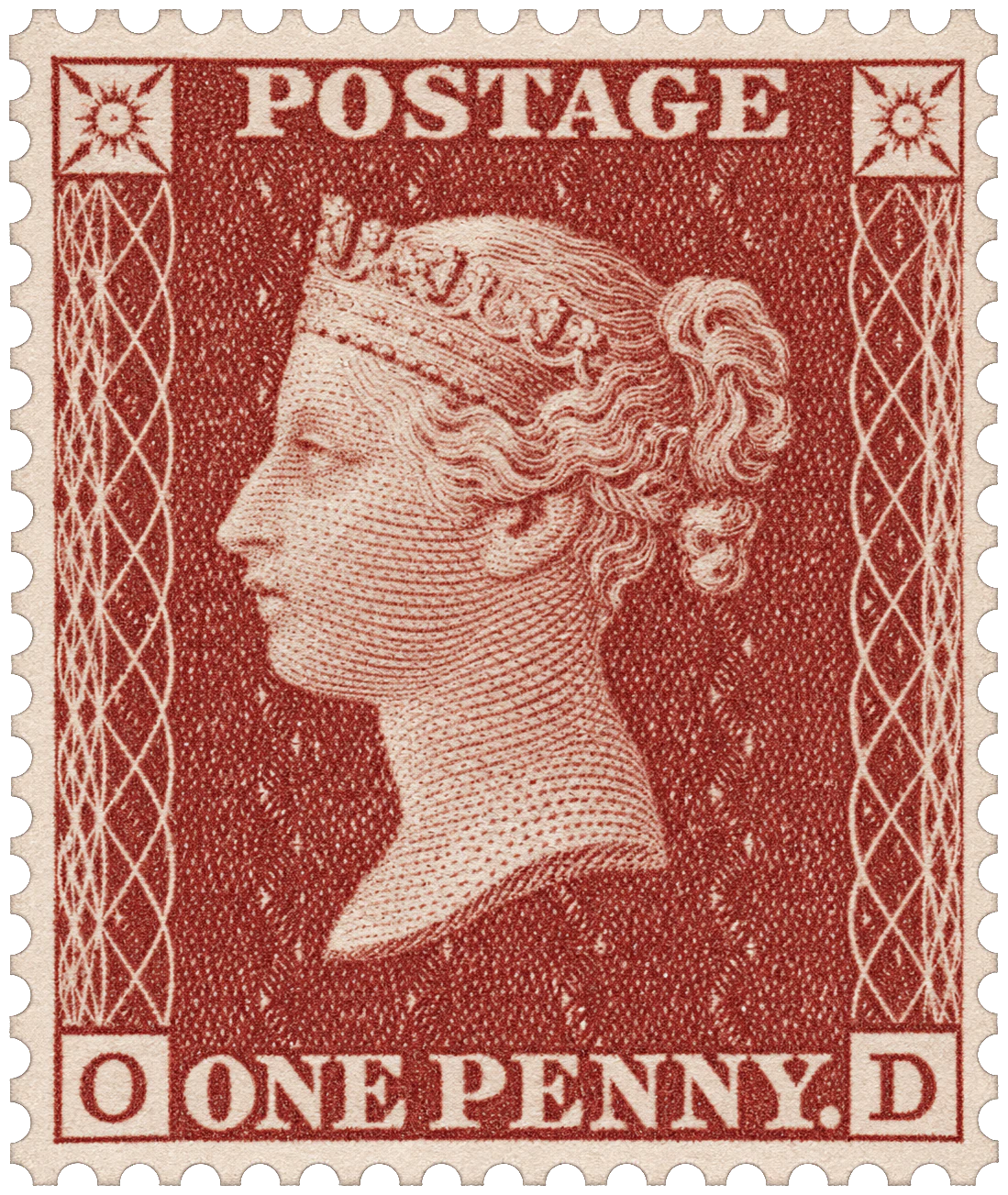
Victoria · 1d red-brown · 1854
Perkins, Bacon & Co. printed the Die I Penny Reds of 1854–1855. Perforating was carried out separately at Somerset House.
On the stamp you were exploring
Victoria · 1d red-brown · 1854
Perkins, Bacon & Co. printed the Die I Penny Reds of 1854–1855. Perforating was carried out separately at Somerset House.
On the stamp you were exploring
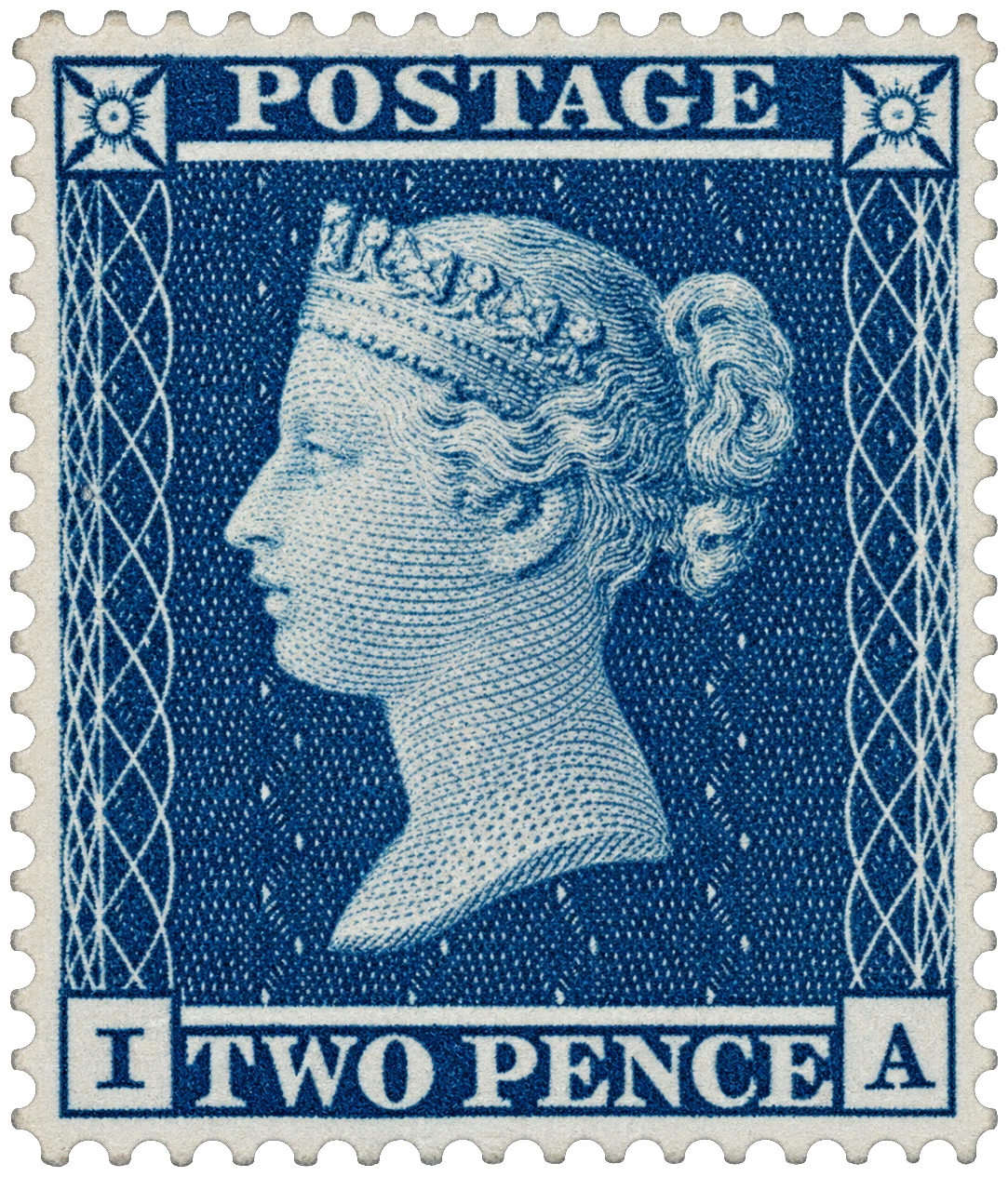
Victoria · 2d deep blue · 1854
Perkins, Bacon & Co. printed the Two Pence Blues of 1854 and 1855. Perforating was carried out separately at Somerset House.
On the stamp you were exploring
Victoria · 2d deep blue · 1854
Perkins, Bacon & Co. printed the Two Pence Blues of 1854 and 1855. Perforating was carried out separately at Somerset House.
On the stamp you were exploring
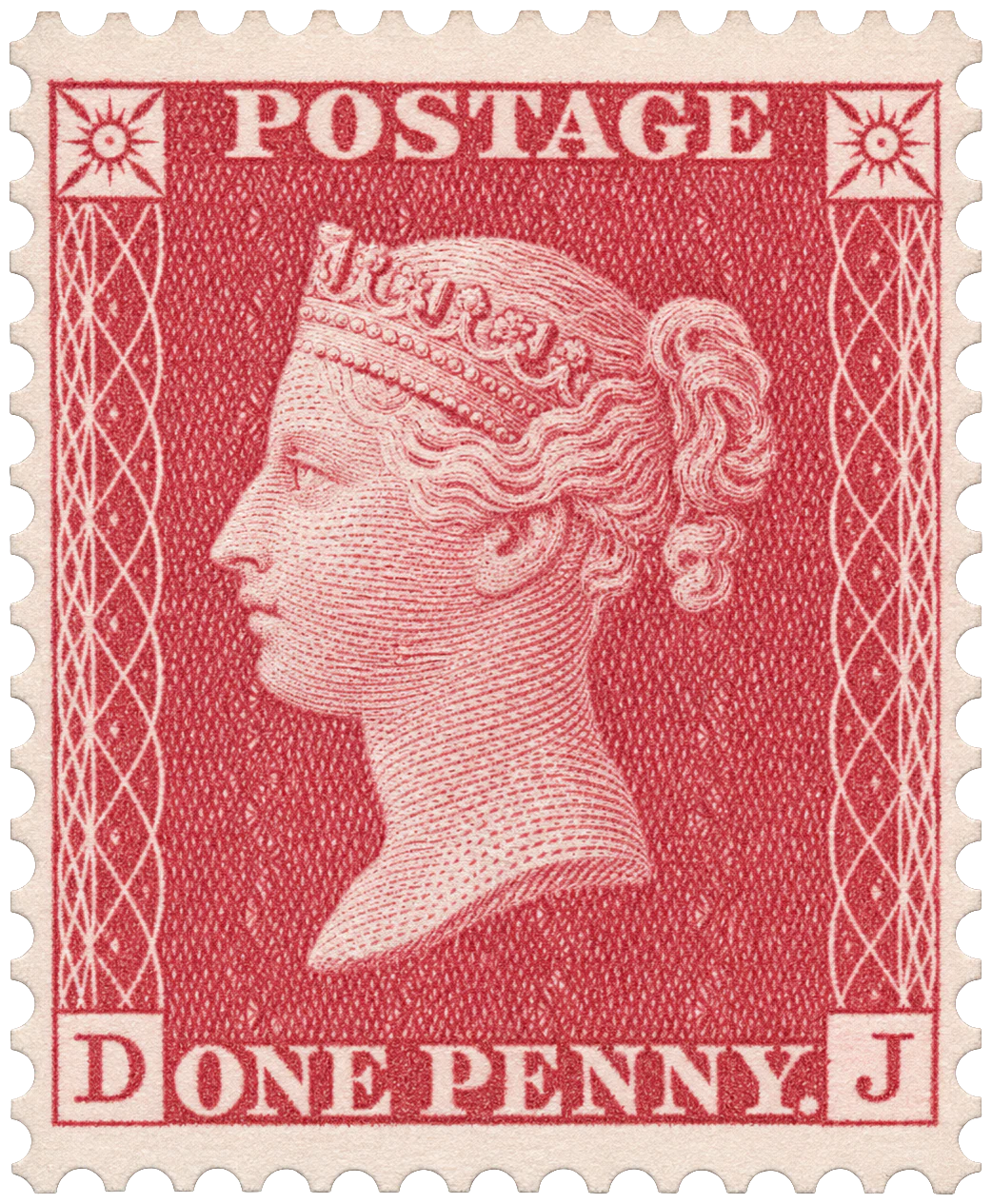
Victoria · 1d rose-red · 1857
Perkins, Bacon & Co. printed the rose-red Die II Penny Reds of 1857. This page groups the perforation 14 and perforation 16 versions.
On the stamp you were exploring
Victoria · 1d rose-red · 1857
Perkins, Bacon & Co. printed the rose-red Die II Penny Reds of 1857. This page groups the perforation 14 and perforation 16 versions.
On the stamp you were exploring
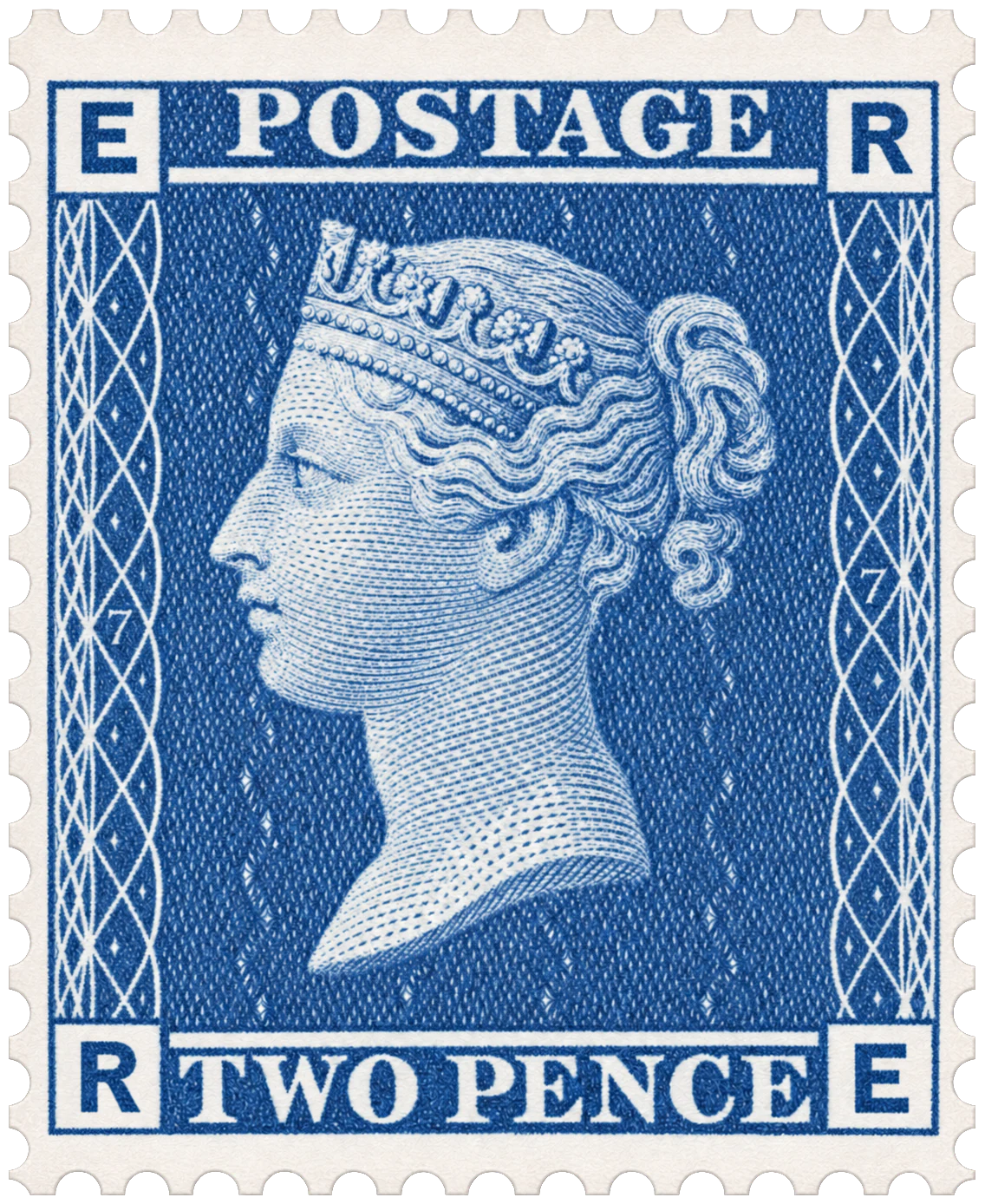
Victoria · 2d blue · 1858
Perkins, Bacon & Co. printed the 1858 Two Pence Blue with thick white lines from engraved steel plates. Its four corner letters and small plate numbers were incorporated into the printed design.
On the stamp you were exploring
Victoria · 2d blue · 1858
Perkins, Bacon & Co. printed the 1858 Two Pence Blue with thick white lines from engraved steel plates. Its four corner letters and small plate numbers were incorporated into the printed design.
On the stamp you were exploring
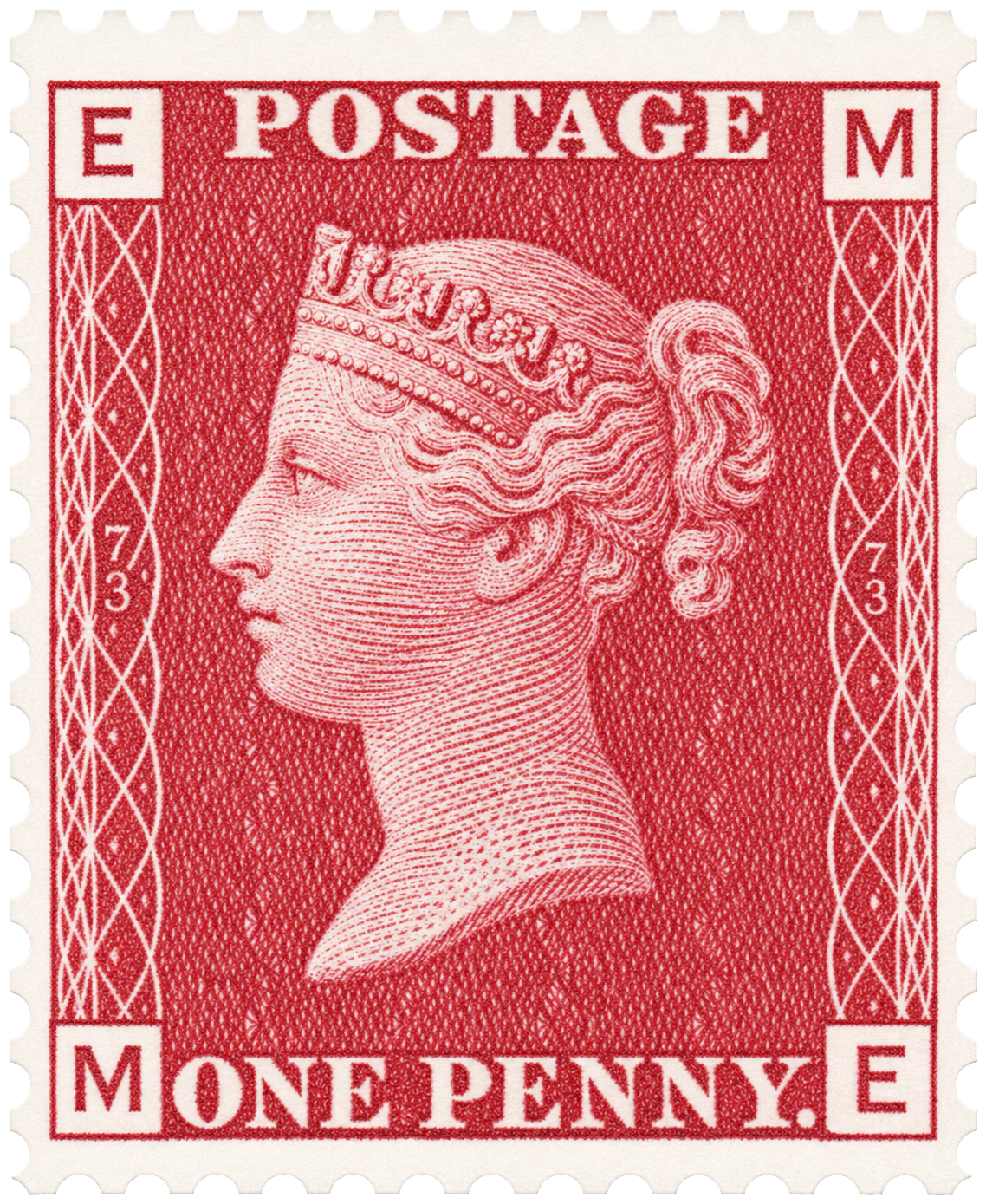
Victoria · 1d rose-red · 1864
Perkins, Bacon & Co. printed the 1864 four-letter Penny Red from engraved steel plates. Its four corner letters and small plate numbers were incorporated into the printed design.
On the stamp you were exploring
Victoria · 1d rose-red · 1864
Perkins, Bacon & Co. printed the 1864 four-letter Penny Red from engraved steel plates. Its four corner letters and small plate numbers were incorporated into the printed design.
On the stamp you were exploring
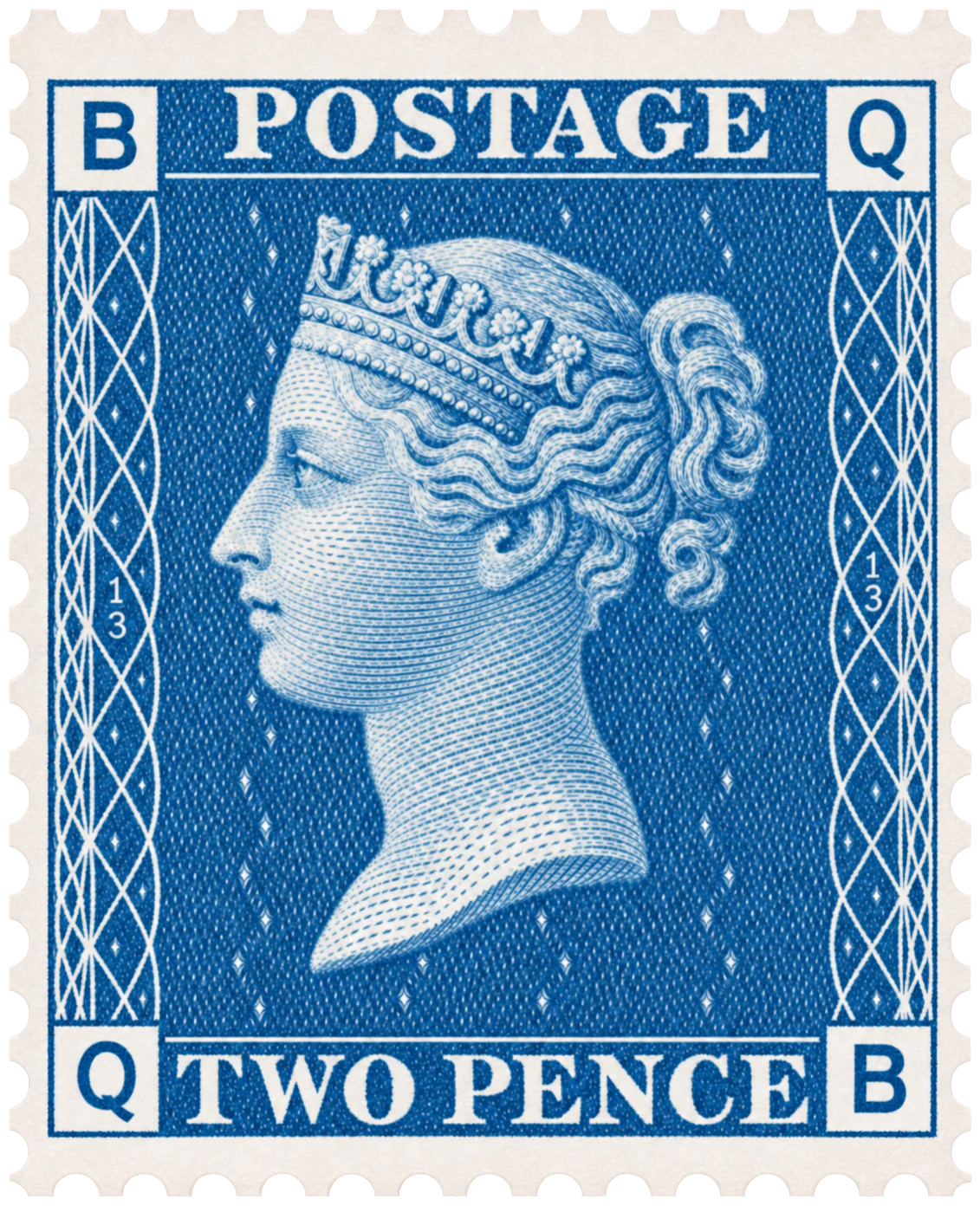
Victoria · 2d blue · 1869
Perkins, Bacon & Co. printed the 1869 Two Pence Blue with thin white lines from engraved steel plates. Its four corner letters and small plate numbers were incorporated into the printed design.
On the stamp you were exploring
Victoria · 2d blue · 1869
Perkins, Bacon & Co. printed the 1869 Two Pence Blue with thin white lines from engraved steel plates. Its four corner letters and small plate numbers were incorporated into the printed design.
On the stamp you were exploring
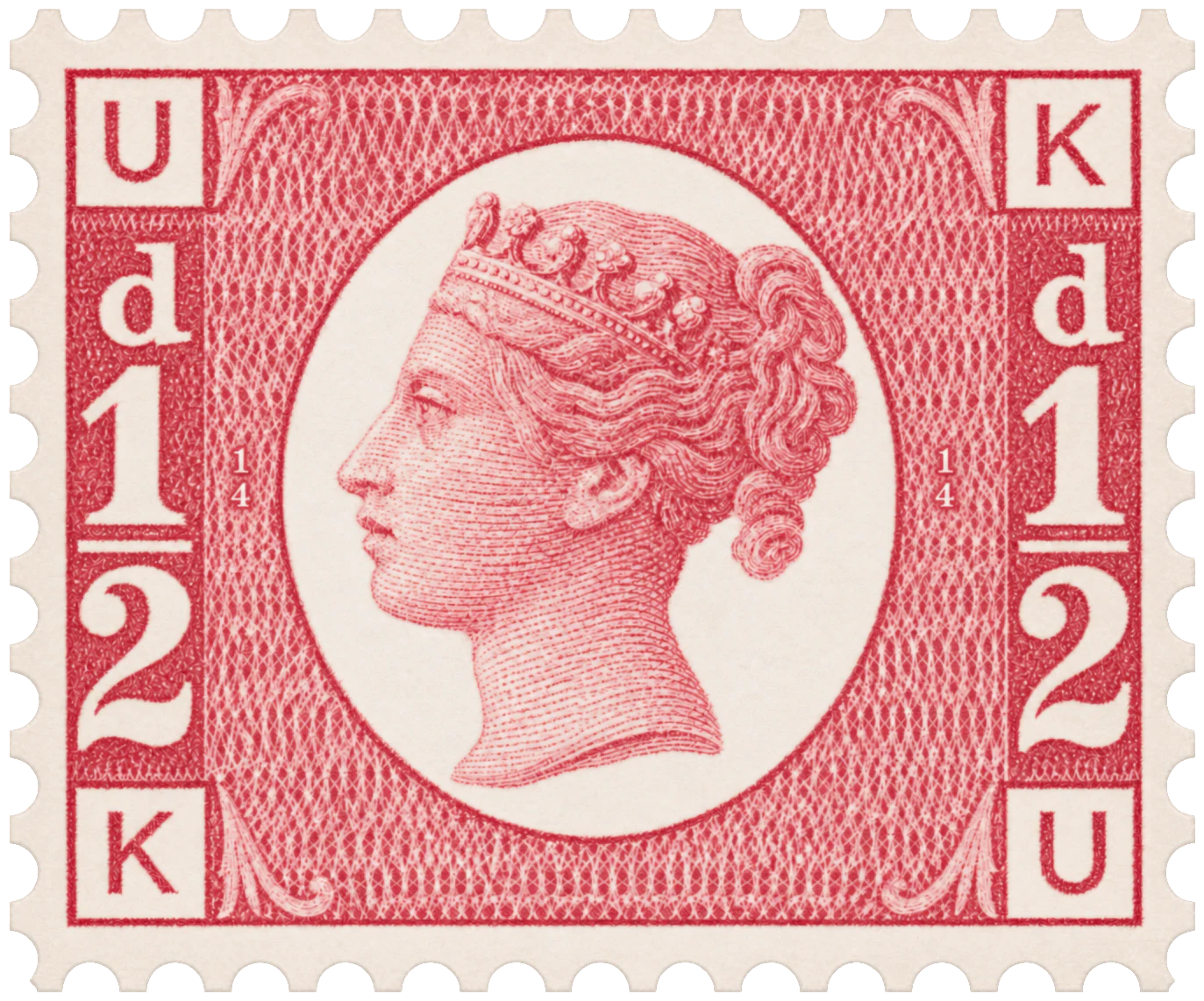
Victoria · ½d rose-red · 1870
Perkins, Bacon & Co. printed the halfpenny Bantam from engraved steel plates of 480 impressions. The illustration represents plate 14, used from 1876, retaining the design introduced in 1870.
On the stamp you were exploring
Victoria · ½d rose-red · 1870
Perkins, Bacon & Co. printed the halfpenny Bantam from engraved steel plates of 480 impressions. The illustration represents plate 14, used from 1876, retaining the design introduced in 1870.
On the stamp you were exploring
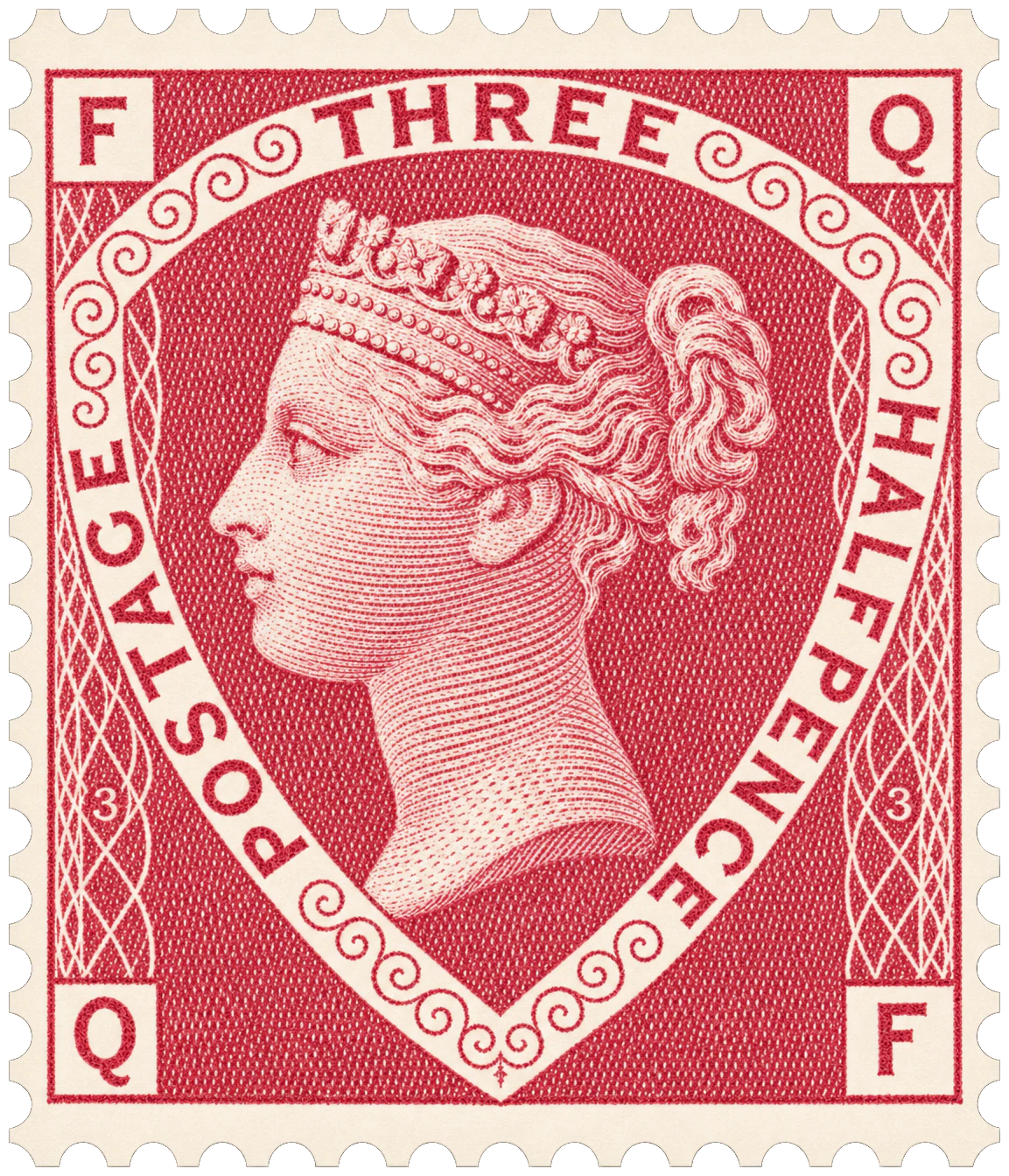
Victoria · 1½d rose-red · 1870
Perkins, Bacon & Co. adapted the Penny Red’s Die II into the three-halfpenny design in 1860 and printed the issued rose-red stamps from 1870. The illustration represents plate 3, first used in 1874, with small plate numbers in the side borders.
Names on the partnership
The company’s changing names record changes in its partners. Henry Petch joined in 1834, producing the style Perkins, Bacon & Petch. After his death, the firm became Perkins, Bacon & Co. in 1852. [1]
Hands and machinery
In ordinary intaglio printing, workers rubbed ink into the engraving and cleaned the plate’s flat surface, finishing with the hand. Damp paper was then pressed into the recessed lines. The printed sheets were gummed and dried.
The firm also experimented with mechanisation. In 1855, printing plates bearing the revised Die II Penny Red portrait were tried on a steam press. The experimental use of a plate must be distinguished from the identity of an ordinary issued stamp. [2]