
J. A. C. Harrison
1872–1955 · Engraver
A designer supplied the idea, but an engraver had to make it printable. J. A. C. Harrison’s tiny lines helped turn royal portraits and crowded scenes into stamps.
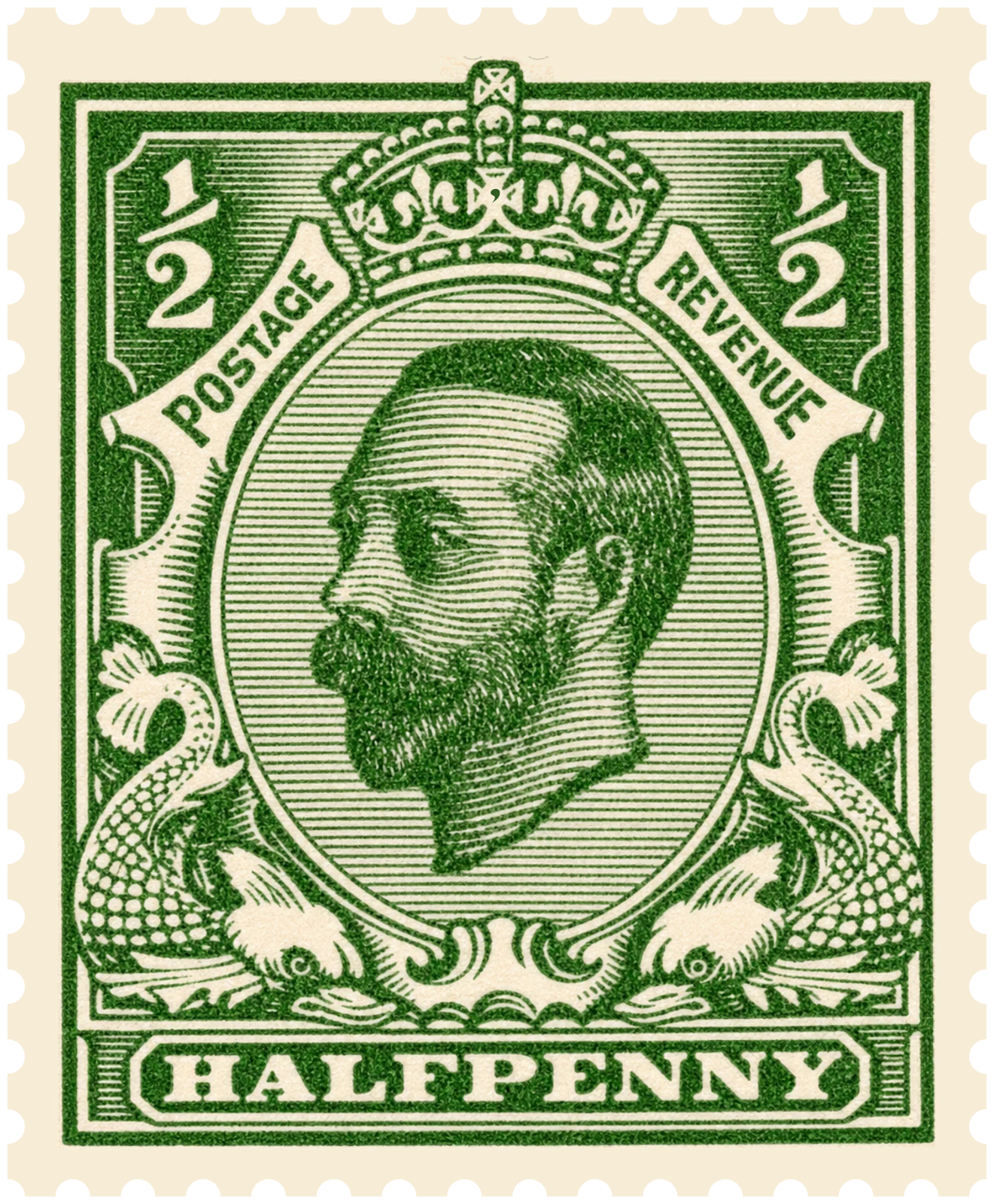
On the stamp you were exploring
George V · ½d green · 22 June 1911
Harrison translated the Downey photographic likeness into the stamp portrait engraving used for this ½d green design.
On the stamp you were exploring
George V · ½d green · 22 June 1911
Harrison translated the Downey photographic likeness into the stamp portrait engraving used for this ½d green design.
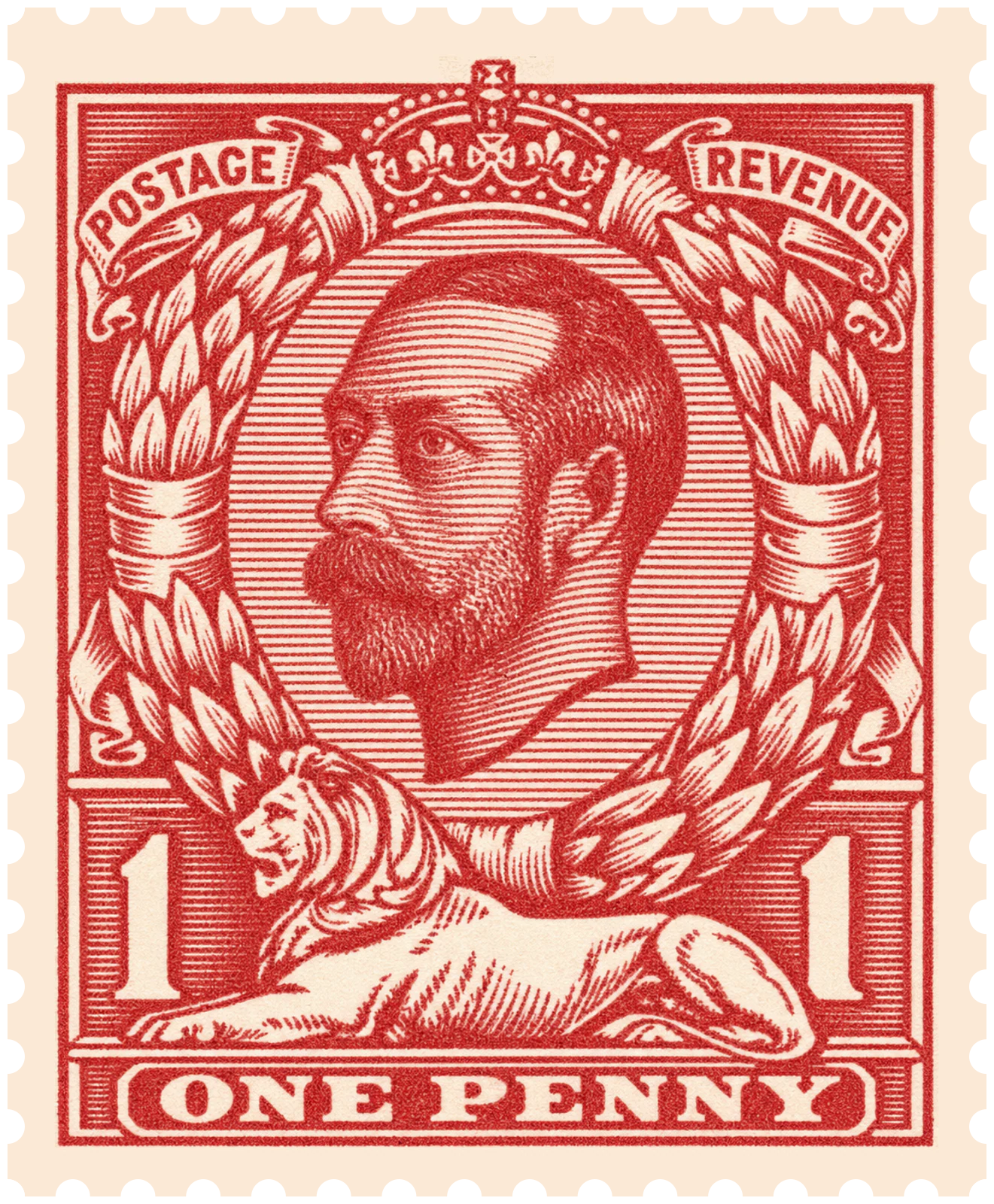
On the stamp you were exploring
George V · 1d carmine-red · 22 June 1911
Harrison translated the Downey photographic likeness into the stamp portrait engraving used for this 1d carmine-red design.
On the stamp you were exploring
George V · 1d carmine-red · 22 June 1911
Harrison translated the Downey photographic likeness into the stamp portrait engraving used for this 1d carmine-red design.
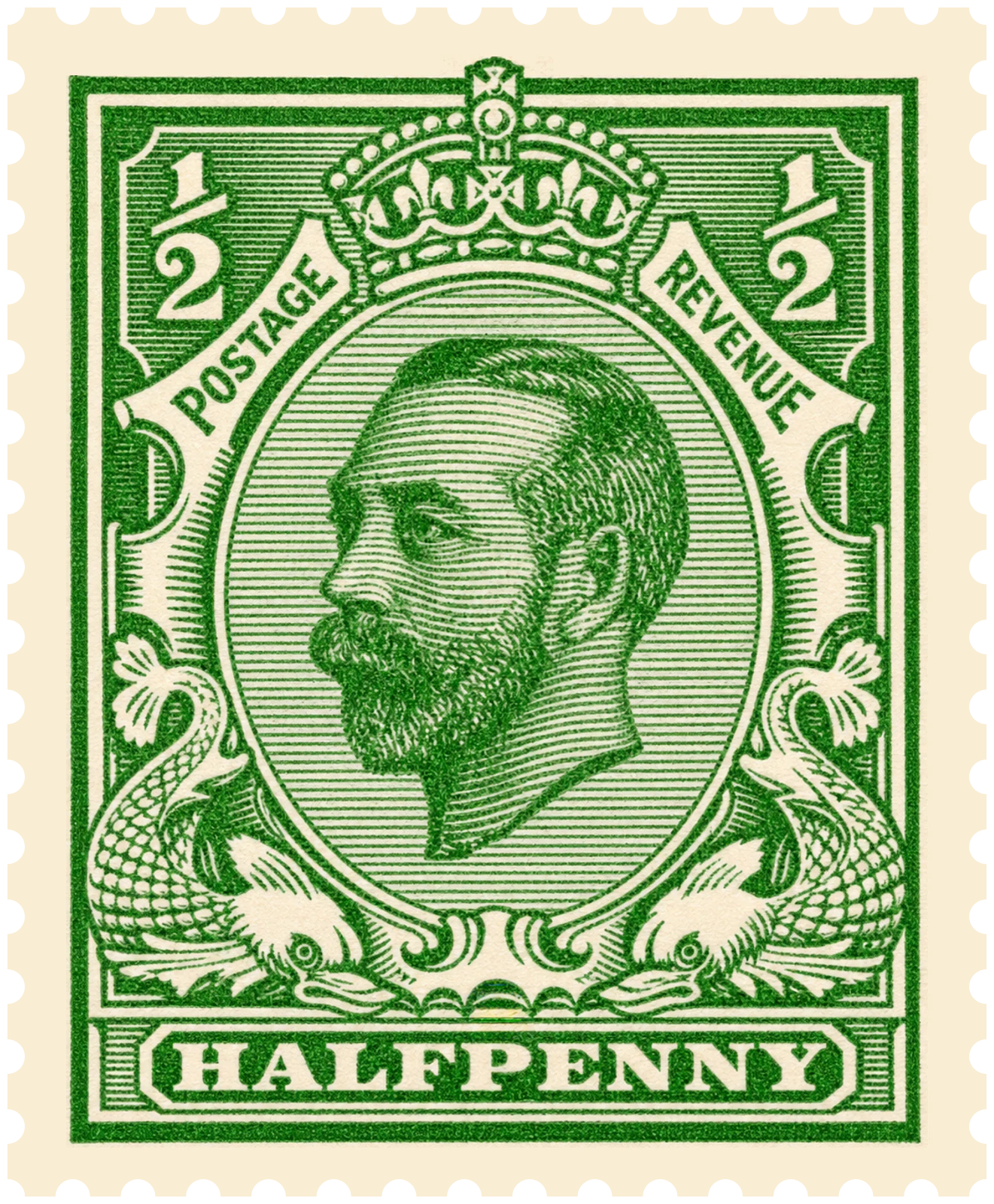
On the stamp you were exploring
George V · ½d green · 1911
Harrison translated the Downey photographic likeness into the stamp portrait engraving used for this ½d green design.
On the stamp you were exploring
George V · ½d green · 1911
Harrison translated the Downey photographic likeness into the stamp portrait engraving used for this ½d green design.
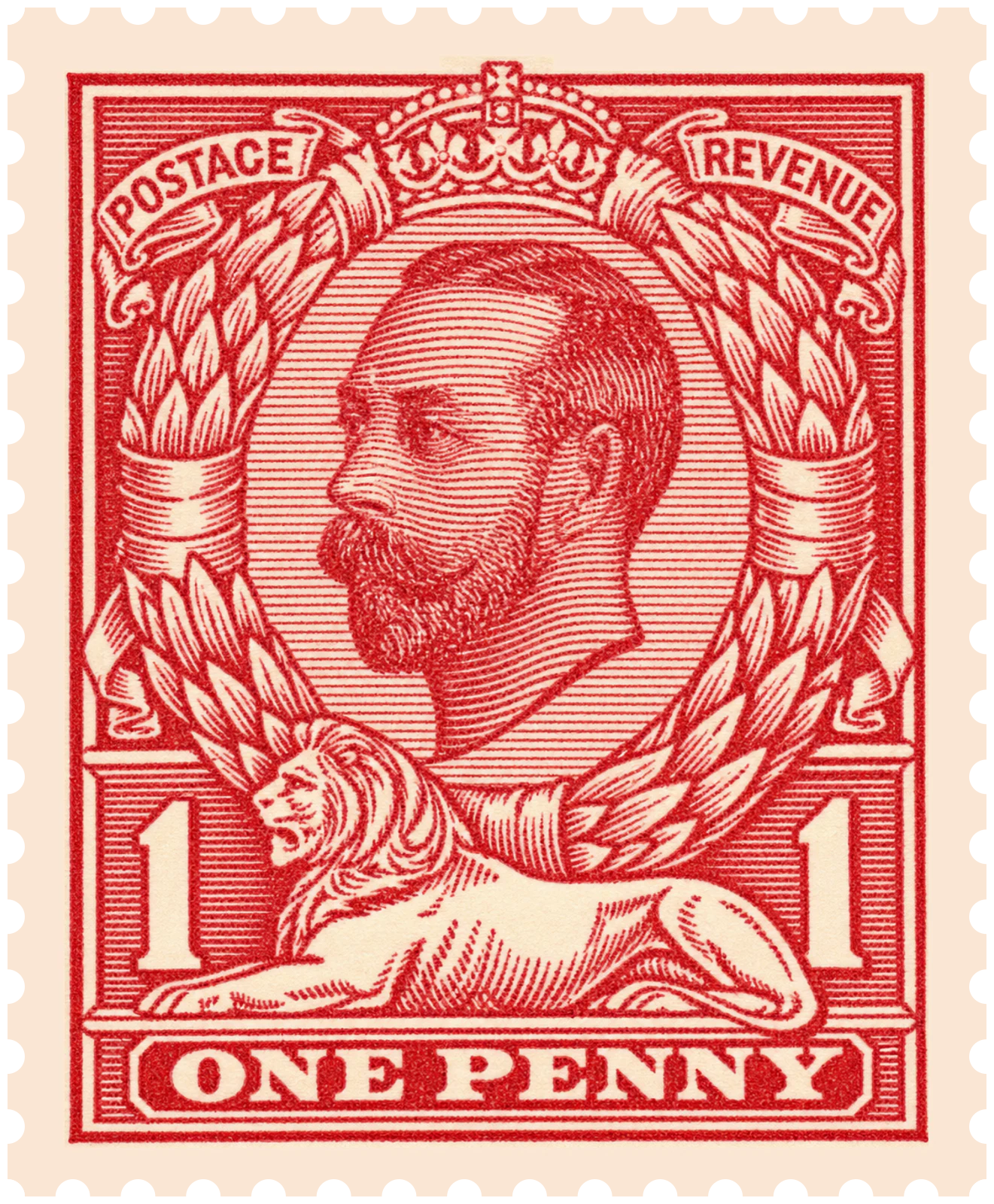
On the stamp you were exploring
George V · 1d carmine · 1911
Harrison translated the Downey photographic likeness into the stamp portrait engraving used for this 1d carmine design.
On the stamp you were exploring
George V · 1d carmine · 1911
Harrison translated the Downey photographic likeness into the stamp portrait engraving used for this 1d carmine design.
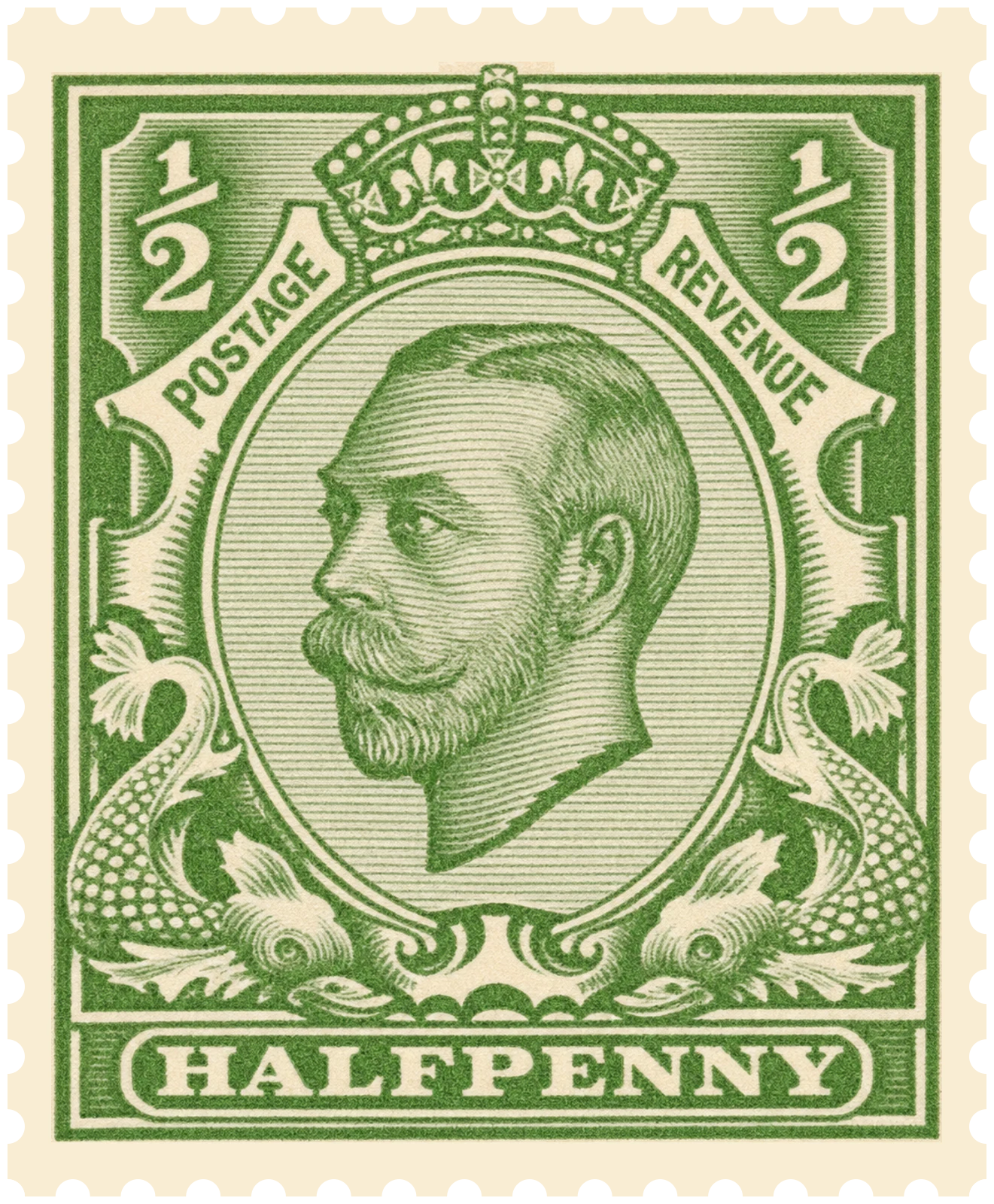
On the stamp you were exploring
George V · ½d green · January 1912
Harrison translated the Downey photographic likeness into the stamp portrait engraving used for this ½d green design.
On the stamp you were exploring
George V · ½d green · January 1912
Harrison translated the Downey photographic likeness into the stamp portrait engraving used for this ½d green design.
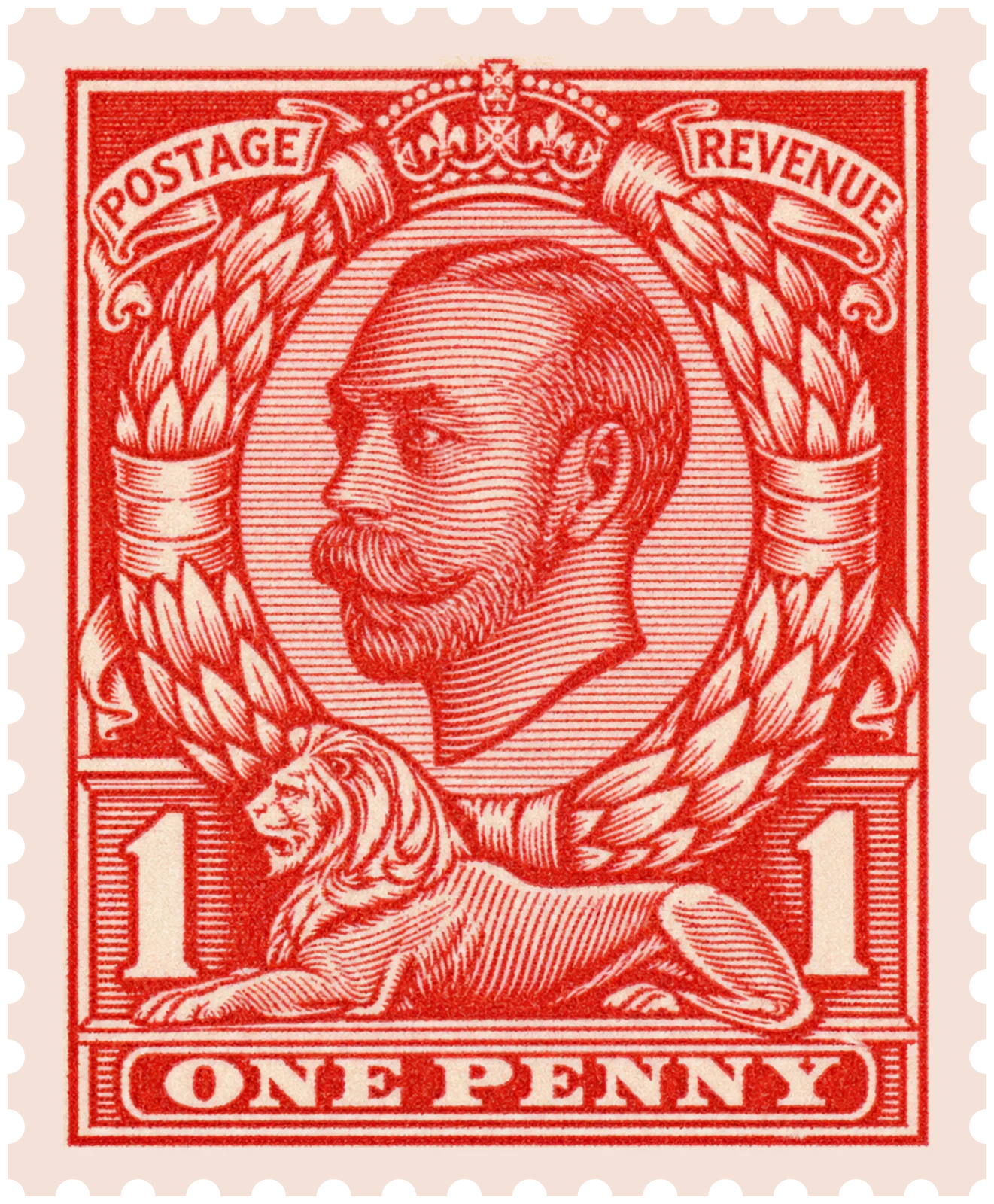
On the stamp you were exploring
George V · 1d scarlet · January 1912
Harrison translated the Downey photographic likeness into the stamp portrait engraving used for this 1d scarlet design.
On the stamp you were exploring
George V · 1d scarlet · January 1912
Harrison translated the Downey photographic likeness into the stamp portrait engraving used for this 1d scarlet design.
On the stamp you were exploring
George V · ½d green · September 1912
Harrison translated the Downey photographic likeness into the stamp portrait engraving used for this ½d green design.
On the stamp you were exploring
George V · ½d green · September 1912
Harrison translated the Downey photographic likeness into the stamp portrait engraving used for this ½d green design.
On the stamp you were exploring
George V · 1d scarlet · September 1912
Harrison translated the Downey photographic likeness into the stamp portrait engraving used for this 1d scarlet design.
On the stamp you were exploring
George V · 1d scarlet · September 1912
Harrison translated the Downey photographic likeness into the stamp portrait engraving used for this 1d scarlet design.
On the stamp you were exploring
George V · ½d green · 1912
Harrison translated the Downey photographic likeness into the stamp portrait engraving used for this ½d green design.
On the stamp you were exploring
George V · ½d green · 1912
Harrison translated the Downey photographic likeness into the stamp portrait engraving used for this ½d green design.
On the stamp you were exploring
George V · 1d scarlet · 1912
Harrison translated the Downey photographic likeness into the stamp portrait engraving used for this 1d scarlet design.
On the stamp you were exploring
George V · 1d scarlet · 1912
Harrison translated the Downey photographic likeness into the stamp portrait engraving used for this 1d scarlet design.
On the stamp you were exploring
George V · ½d green · 1912
Harrison translated the Downey photographic likeness into the stamp portrait engraving used for this ½d green design.
On the stamp you were exploring
George V · ½d green · 1912
Harrison translated the Downey photographic likeness into the stamp portrait engraving used for this ½d green design.
On the stamp you were exploring
George V · 1d scarlet · 1912
Harrison translated the Downey photographic likeness into the stamp portrait engraving used for this 1d scarlet design.
On the stamp you were exploring
George V · 1d scarlet · 1912
Harrison translated the Downey photographic likeness into the stamp portrait engraving used for this 1d scarlet design.
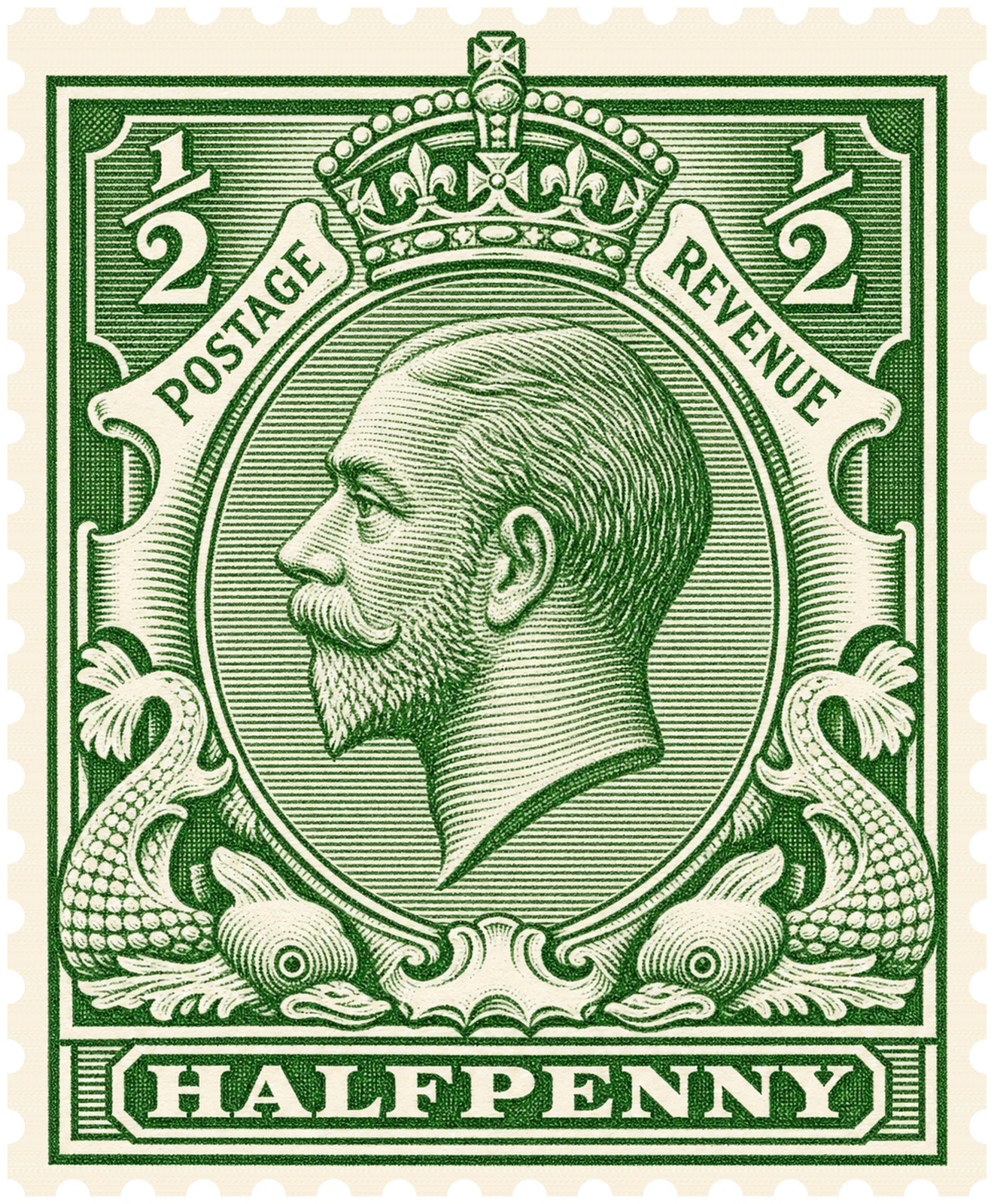
On the stamp you were exploring
George V · ½d green · 16 January 1913
Harrison prepared the stamp engraving from Mackennal’s royal model for the profile designs. His contribution was translating the likeness into printable lines, rather than printing this ½d green issue.
On the stamp you were exploring
George V · ½d green · 16 January 1913
Harrison prepared the stamp engraving from Mackennal’s royal model for the profile designs. His contribution was translating the likeness into printable lines, rather than printing this ½d green issue.
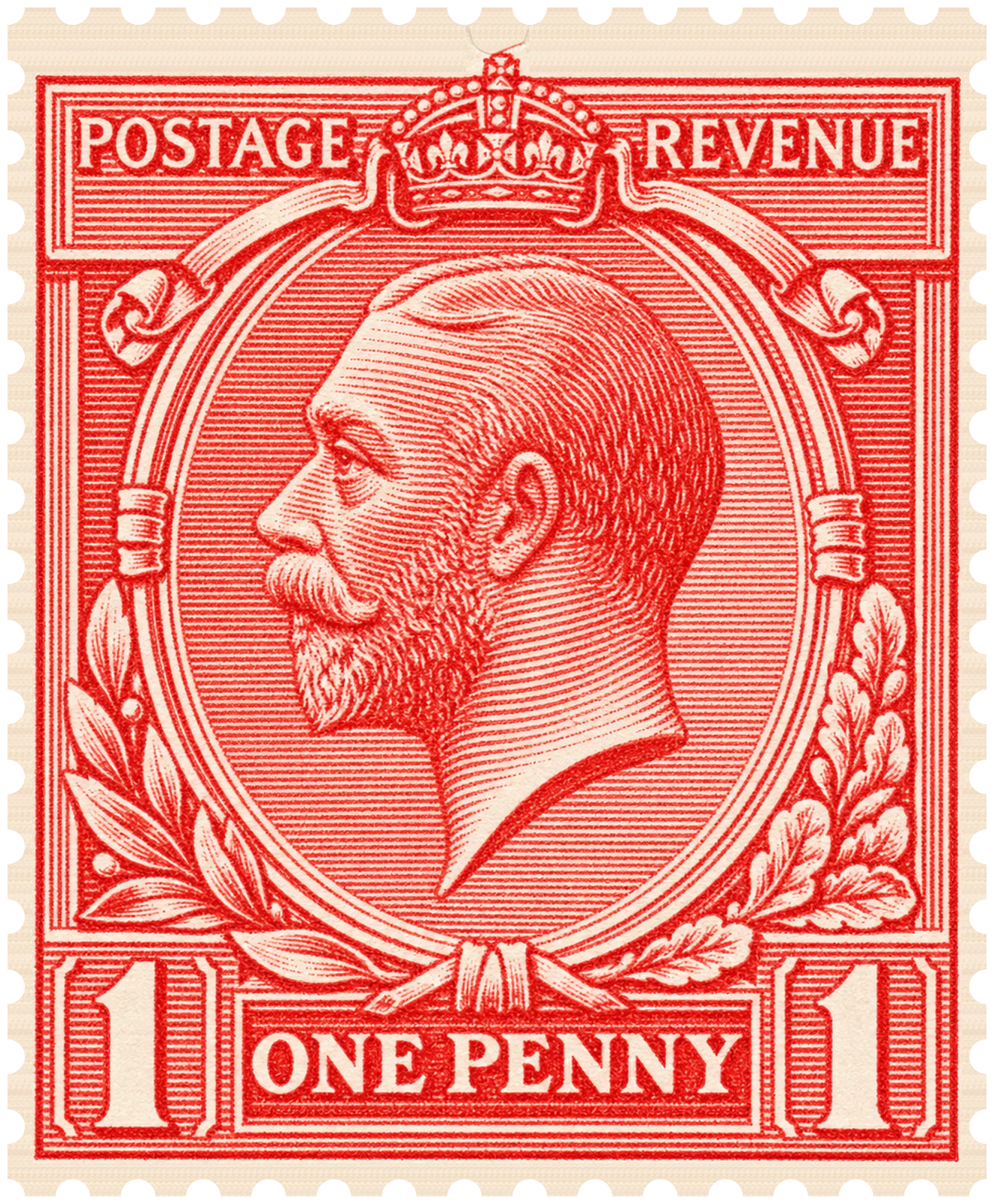
On the stamp you were exploring
George V · 1d scarlet · 8 October 1912
Harrison prepared the stamp engraving from Mackennal’s royal model for the profile designs. His contribution was translating the likeness into printable lines, rather than printing this 1d scarlet issue.
On the stamp you were exploring
George V · 1d scarlet · 8 October 1912
Harrison prepared the stamp engraving from Mackennal’s royal model for the profile designs. His contribution was translating the likeness into printable lines, rather than printing this 1d scarlet issue.
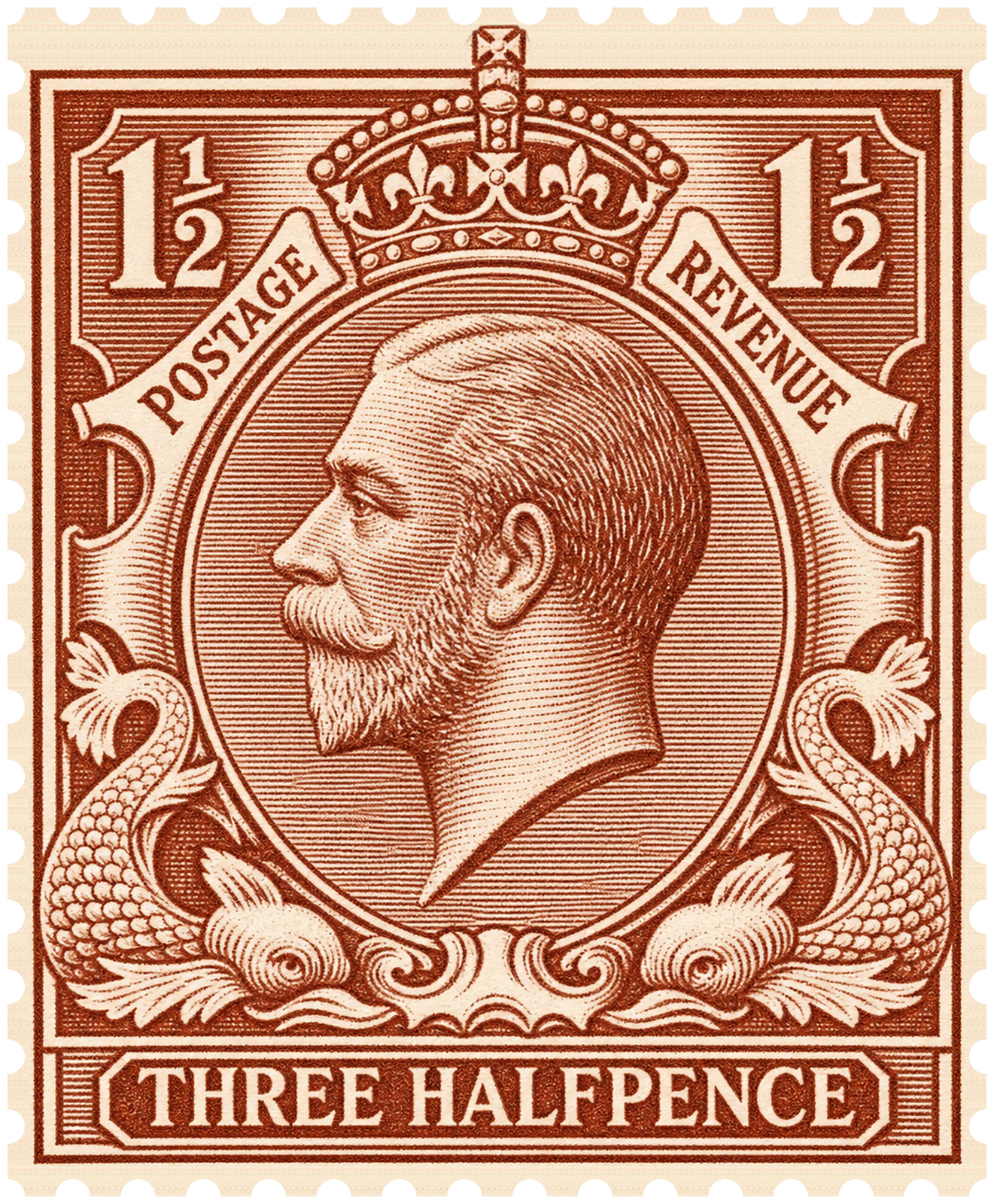
On the stamp you were exploring
George V · 1½d red-brown · 15 October 1912
Harrison prepared the stamp engraving from Mackennal’s royal model for the profile designs. His contribution was translating the likeness into printable lines, rather than printing this 1½d red-brown issue.
On the stamp you were exploring
George V · 1½d red-brown · 15 October 1912
Harrison prepared the stamp engraving from Mackennal’s royal model for the profile designs. His contribution was translating the likeness into printable lines, rather than printing this 1½d red-brown issue.
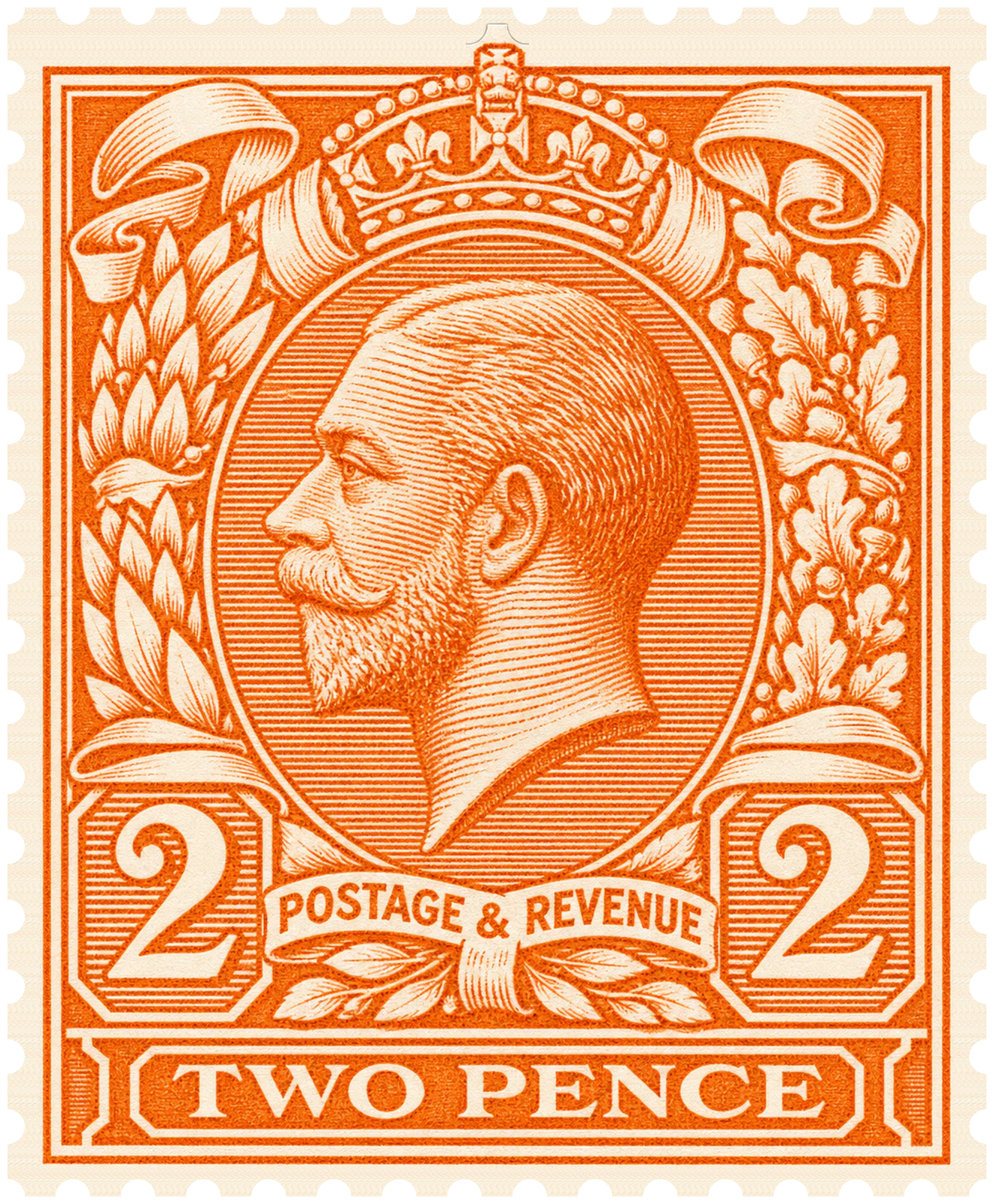
On the stamp you were exploring
George V · 2d orange · 21 August 1912
Harrison prepared the stamp engraving from Mackennal’s royal model for the profile designs. His contribution was translating the likeness into printable lines, rather than printing this 2d orange issue.
On the stamp you were exploring
George V · 2d orange · 21 August 1912
Harrison prepared the stamp engraving from Mackennal’s royal model for the profile designs. His contribution was translating the likeness into printable lines, rather than printing this 2d orange issue.
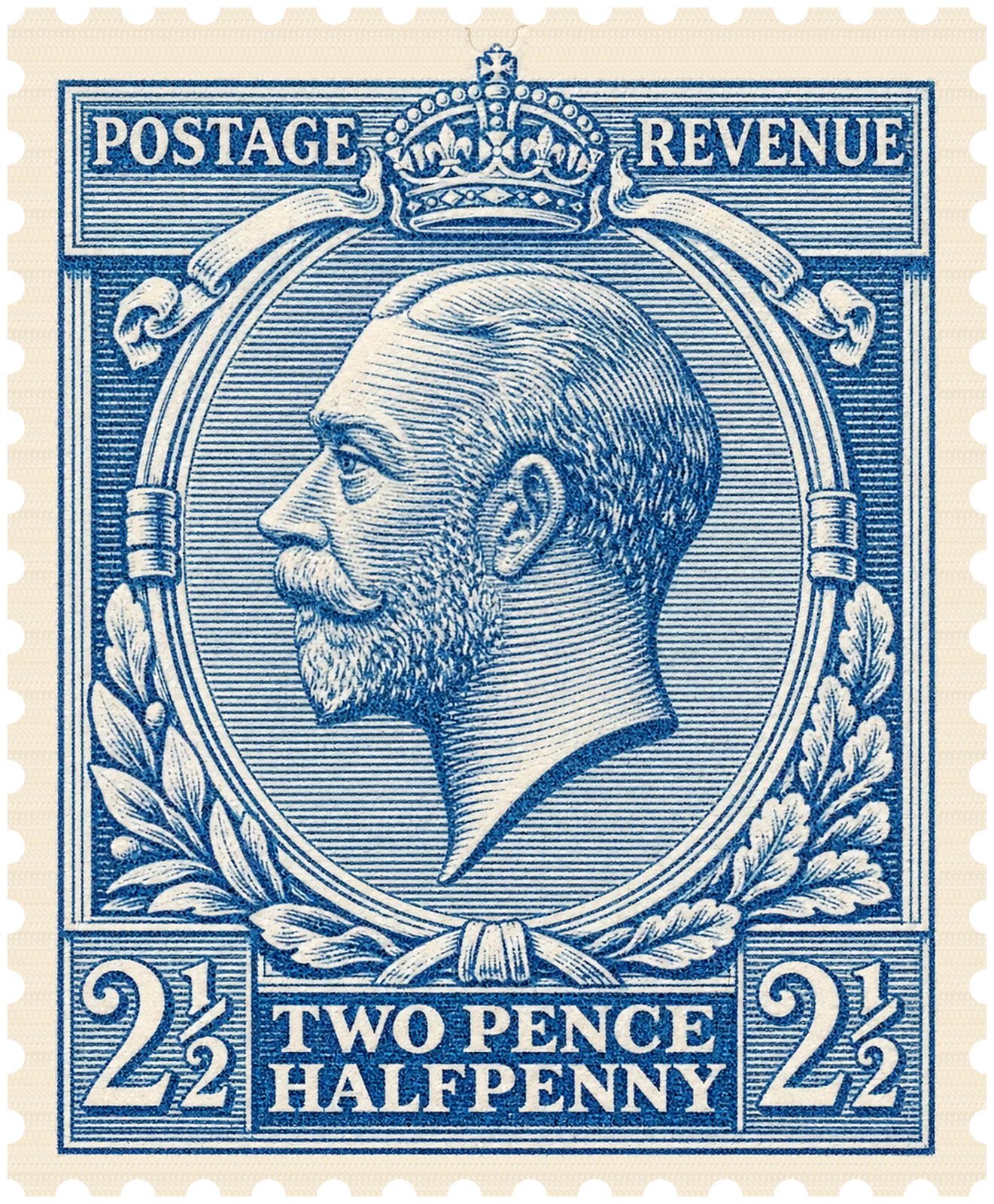
On the stamp you were exploring
George V · 2½d blue · 18 October 1912
Harrison prepared the stamp engraving from Mackennal’s royal model for the profile designs. His contribution was translating the likeness into printable lines, rather than printing this 2½d blue issue.
On the stamp you were exploring
George V · 2½d blue · 18 October 1912
Harrison prepared the stamp engraving from Mackennal’s royal model for the profile designs. His contribution was translating the likeness into printable lines, rather than printing this 2½d blue issue.
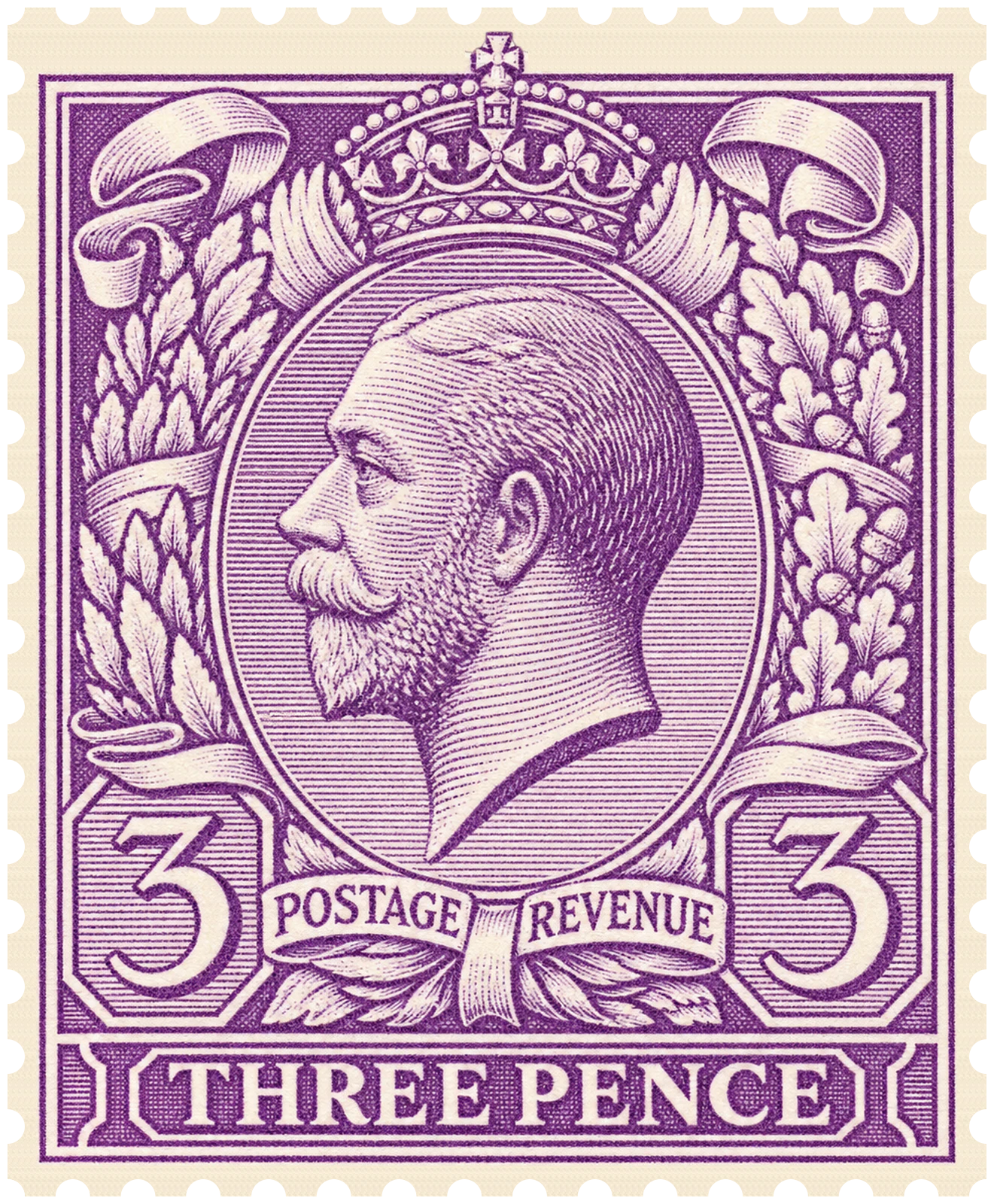
On the stamp you were exploring
George V · 3d violet · 8 October 1912
Harrison prepared the stamp engraving from Mackennal’s royal model for the profile designs. His contribution was translating the likeness into printable lines, rather than printing this 3d violet issue.
On the stamp you were exploring
George V · 3d violet · 8 October 1912
Harrison prepared the stamp engraving from Mackennal’s royal model for the profile designs. His contribution was translating the likeness into printable lines, rather than printing this 3d violet issue.
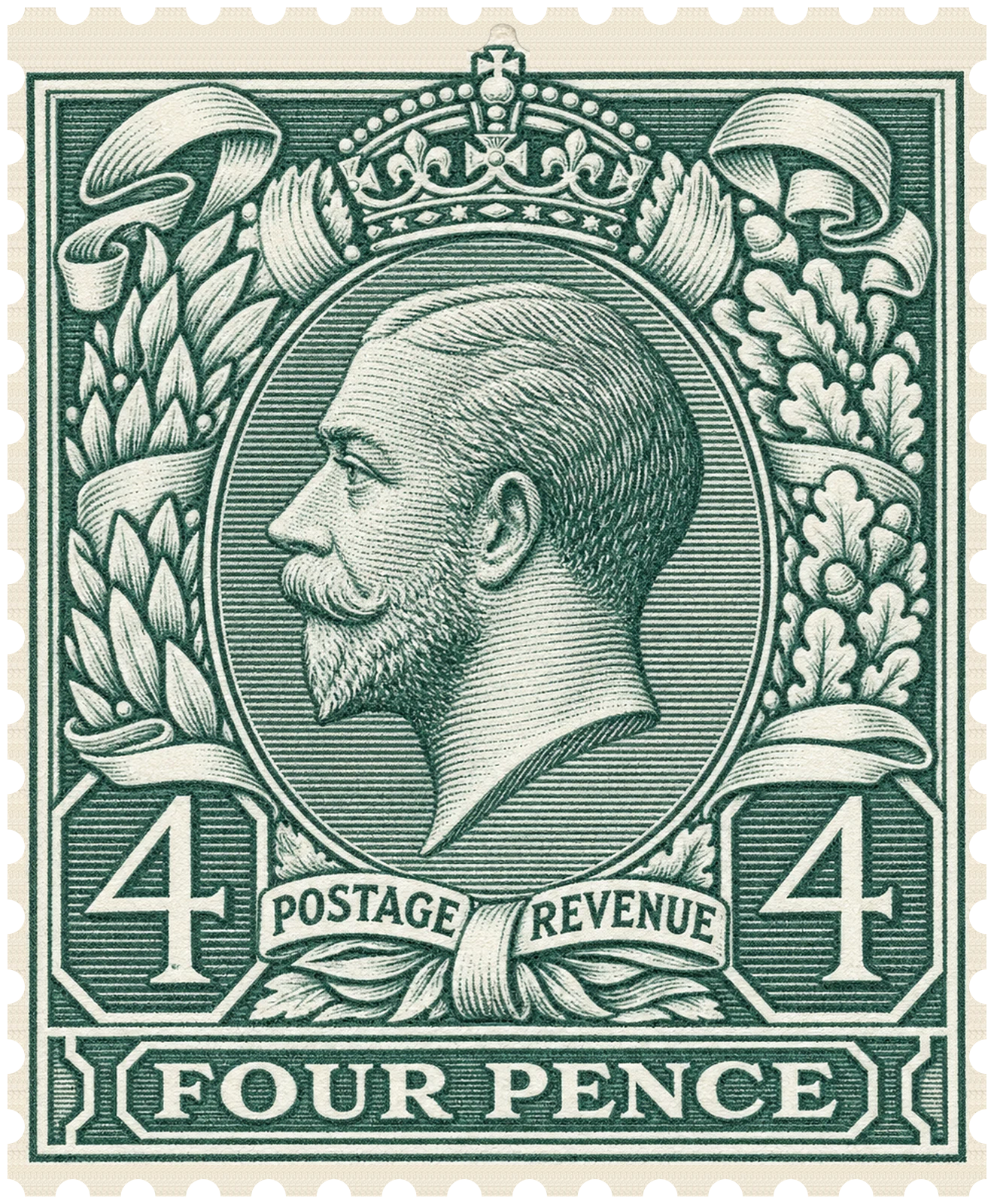
On the stamp you were exploring
George V · 4d grey-green · January 1913
Harrison prepared the stamp engraving from Mackennal’s royal model for the profile designs. His contribution was translating the likeness into printable lines, rather than printing this 4d grey-green issue.
On the stamp you were exploring
George V · 4d grey-green · January 1913
Harrison prepared the stamp engraving from Mackennal’s royal model for the profile designs. His contribution was translating the likeness into printable lines, rather than printing this 4d grey-green issue.
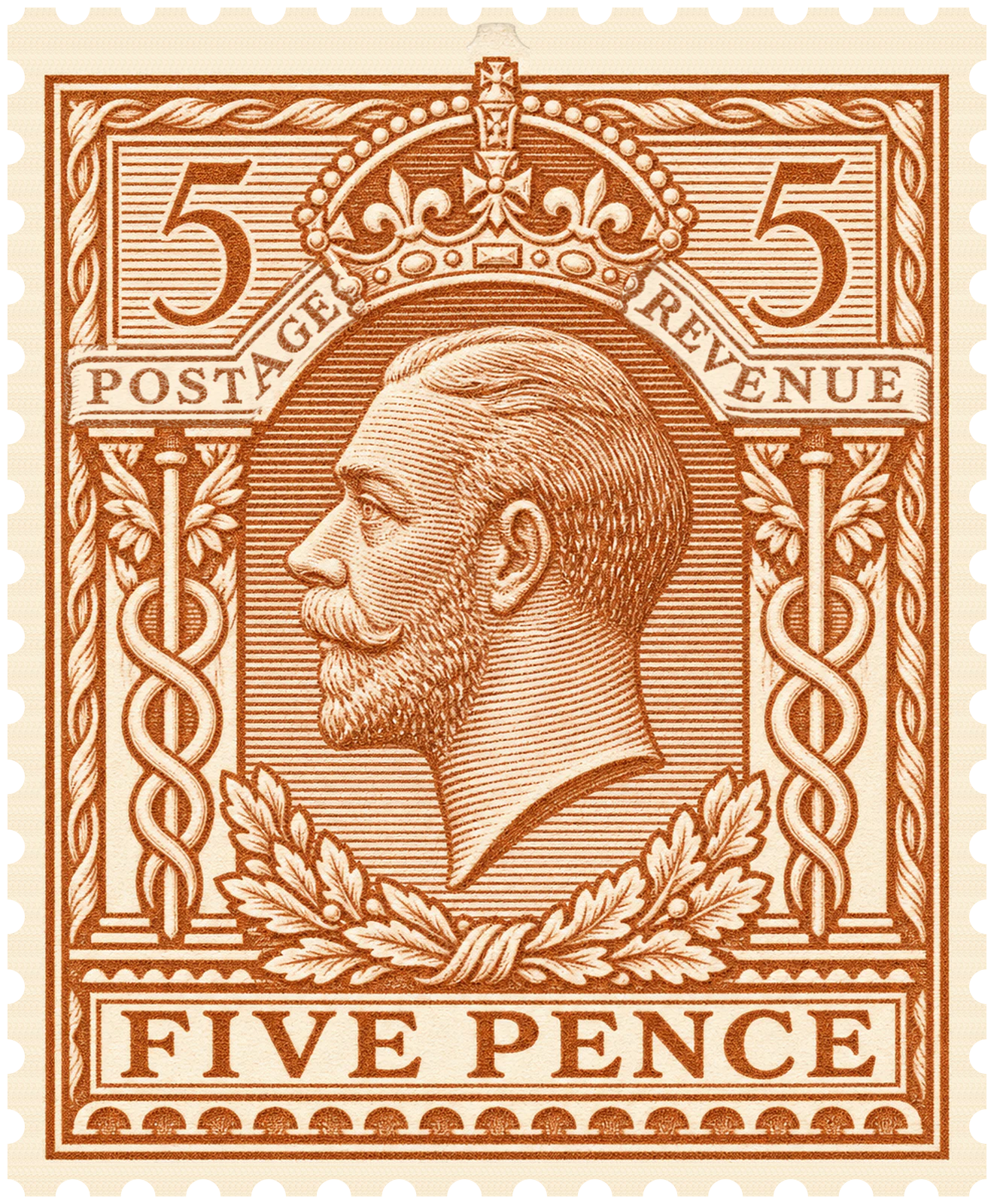
On the stamp you were exploring
George V · 5d yellow-brown · 30 June 1913
Harrison prepared the stamp engraving from Mackennal’s royal model for the profile designs. His contribution was translating the likeness into printable lines, rather than printing this 5d yellow-brown issue.
On the stamp you were exploring
George V · 5d yellow-brown · 30 June 1913
Harrison prepared the stamp engraving from Mackennal’s royal model for the profile designs. His contribution was translating the likeness into printable lines, rather than printing this 5d yellow-brown issue.
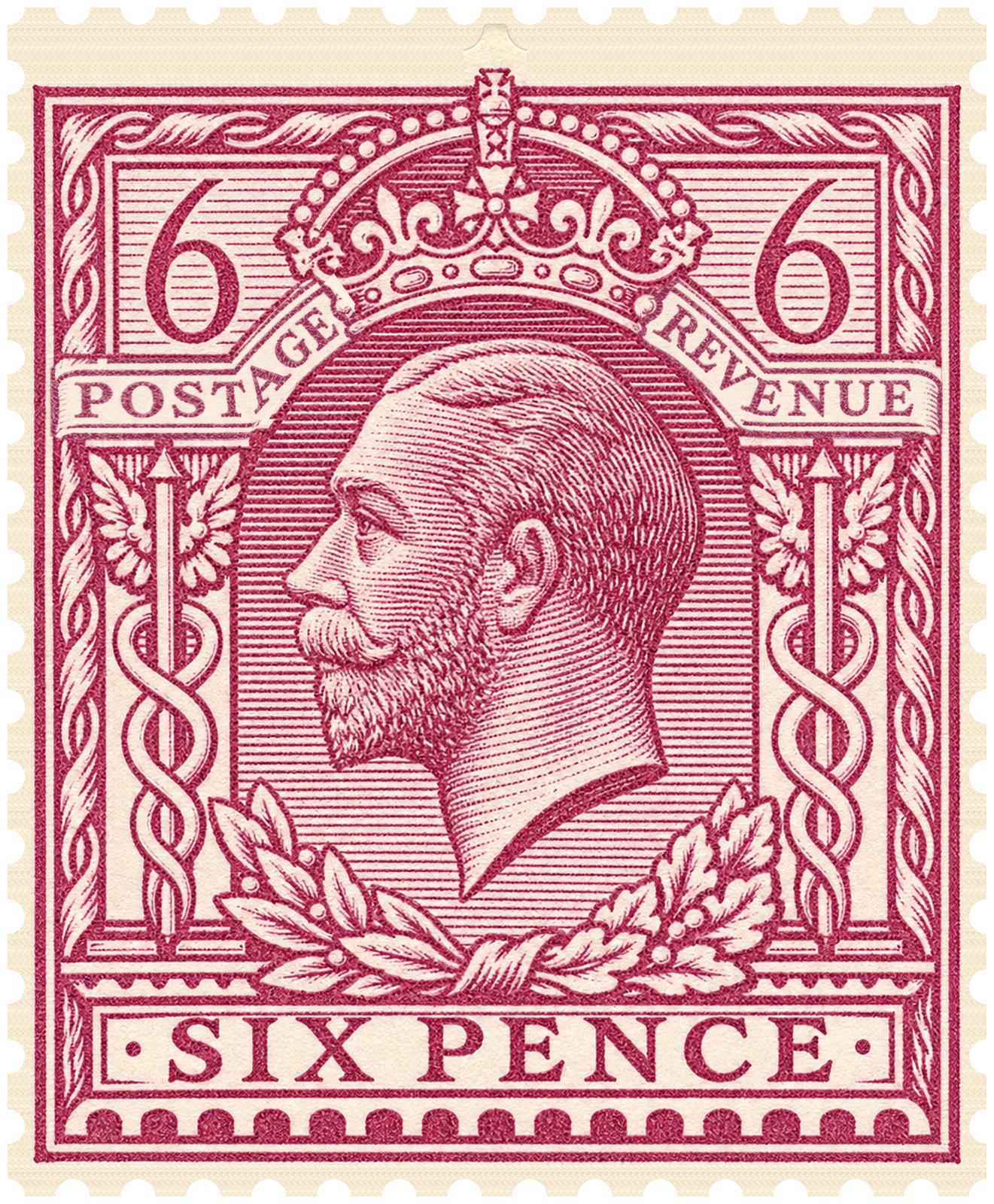
On the stamp you were exploring
George V · 6d reddish-purple · 1 August 1913 (originally dull purple; reddish-purple introduced later that month)
Harrison prepared the stamp engraving from Mackennal’s royal model for the profile designs. His contribution was translating the likeness into printable lines, rather than printing this 6d reddish-purple issue.
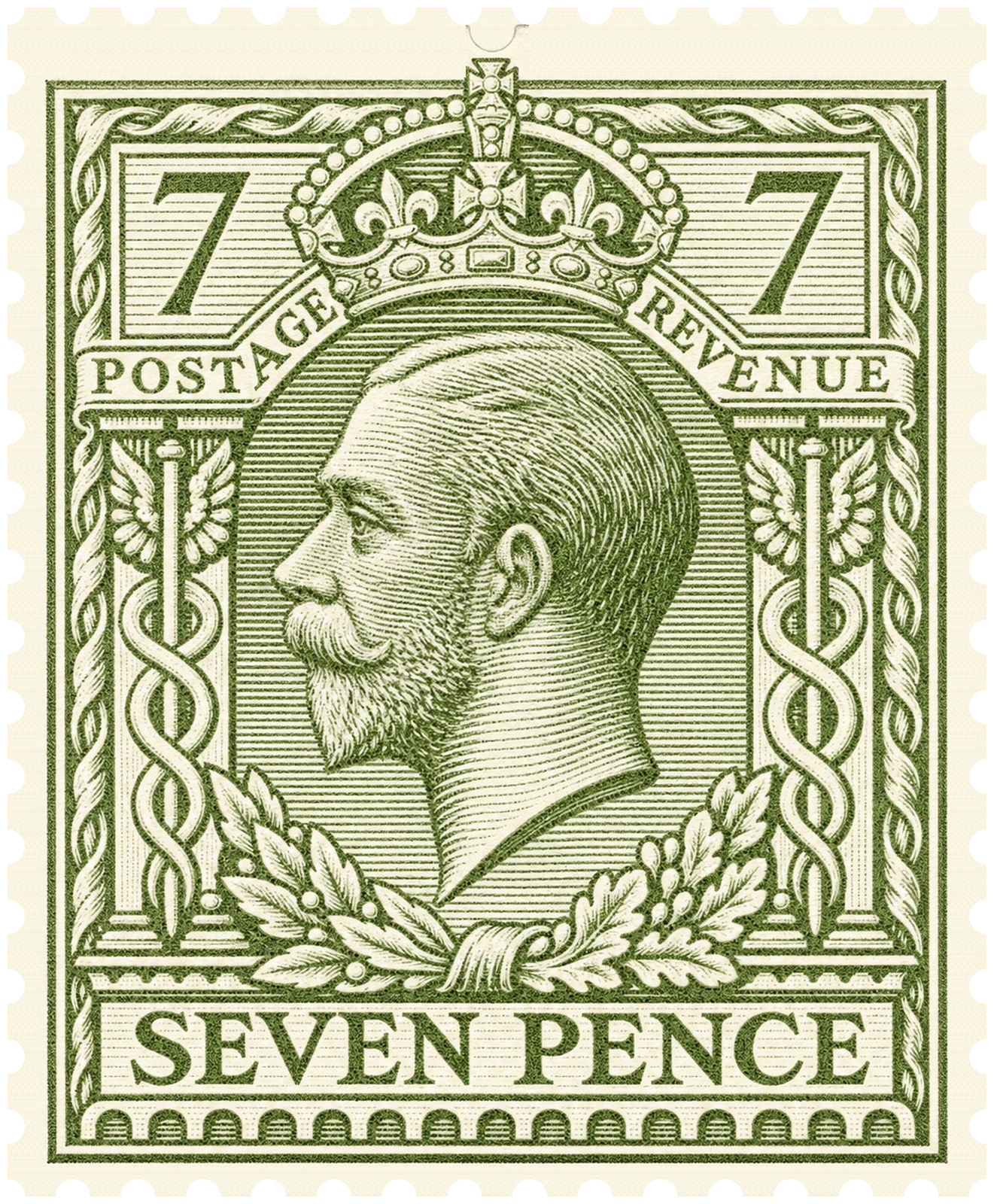
On the stamp you were exploring
George V · 7d olive-green · 1 August 1913
Harrison prepared the stamp engraving from Mackennal’s royal model for the profile designs. His contribution was translating the likeness into printable lines, rather than printing this 7d olive-green issue.
On the stamp you were exploring
George V · 7d olive-green · 1 August 1913
Harrison prepared the stamp engraving from Mackennal’s royal model for the profile designs. His contribution was translating the likeness into printable lines, rather than printing this 7d olive-green issue.
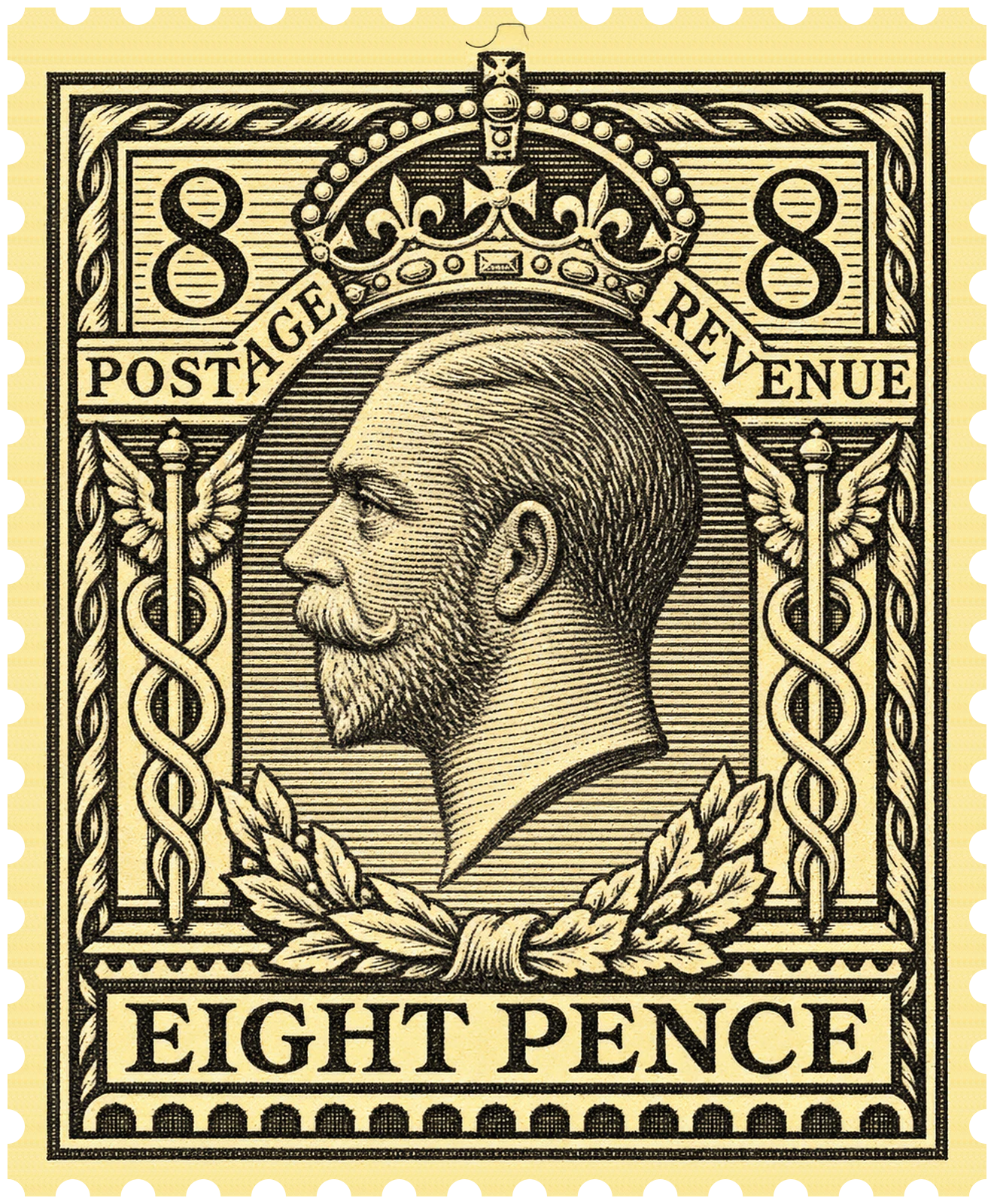
On the stamp you were exploring
George V · 8d black on yellow · 1 August 1913
Harrison prepared the stamp engraving from Mackennal’s royal model for the profile designs. His contribution was translating the likeness into printable lines, rather than printing this 8d black on yellow issue.
On the stamp you were exploring
George V · 8d black on yellow · 1 August 1913
Harrison prepared the stamp engraving from Mackennal’s royal model for the profile designs. His contribution was translating the likeness into printable lines, rather than printing this 8d black on yellow issue.
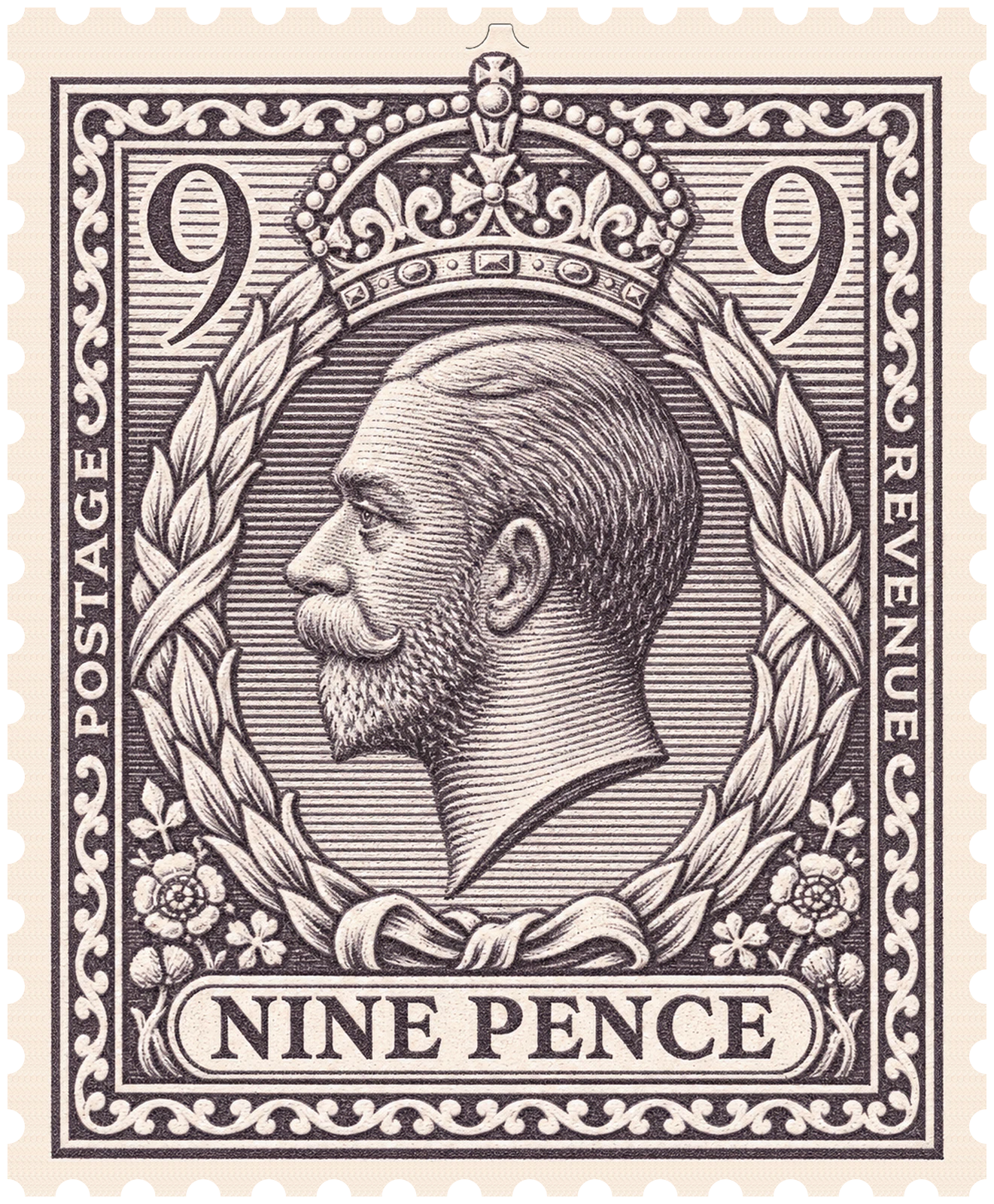
On the stamp you were exploring
George V · 9d agate · 1913-06-30
Harrison prepared the stamp engraving from Mackennal’s royal model for the profile designs. His contribution was translating the likeness into printable lines, rather than printing this 9d agate issue.
On the stamp you were exploring
George V · 9d agate · 1913-06-30
Harrison prepared the stamp engraving from Mackennal’s royal model for the profile designs. His contribution was translating the likeness into printable lines, rather than printing this 9d agate issue.
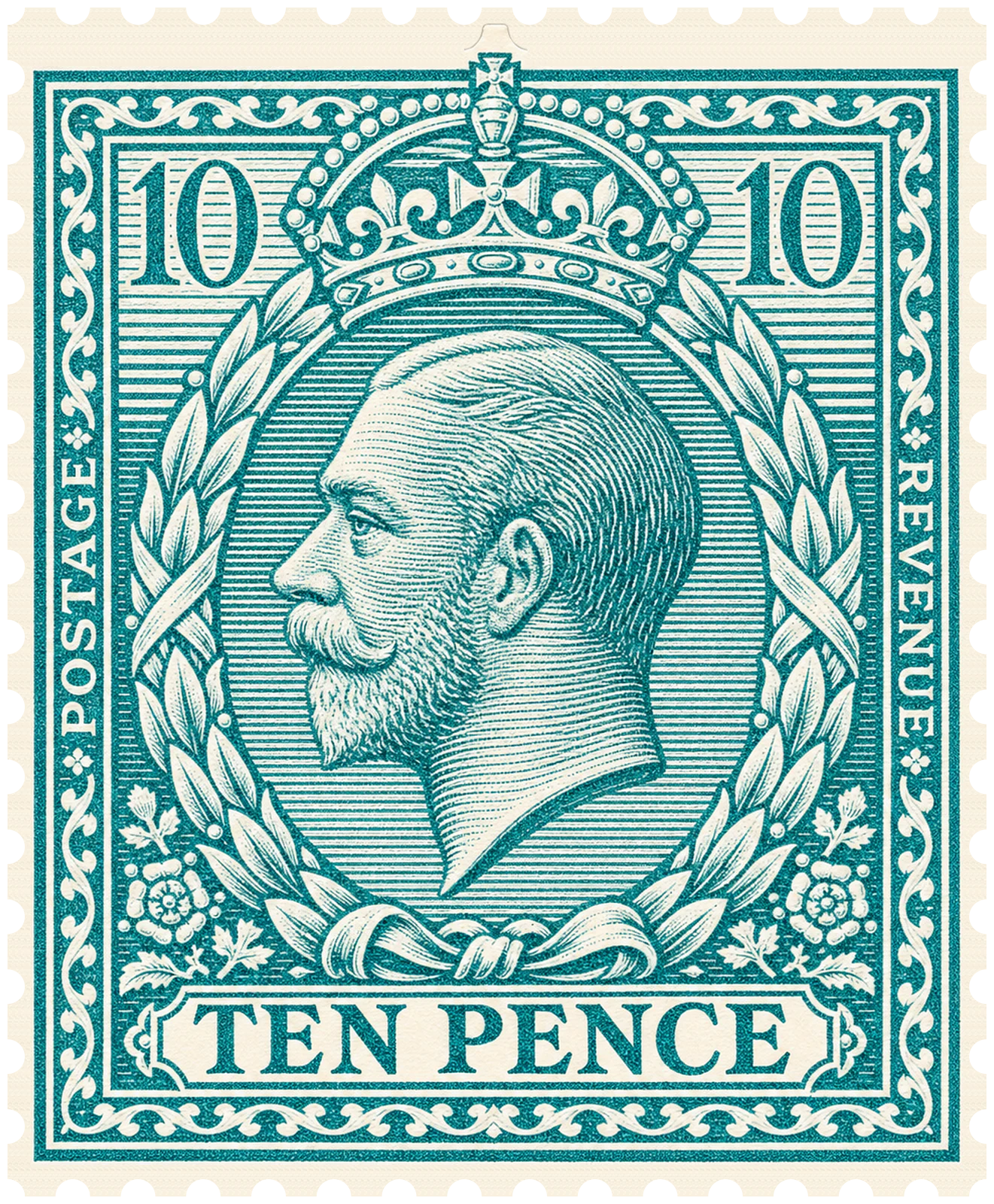
On the stamp you were exploring
George V · 10d turquoise-blue · from 1914
Harrison prepared the stamp engraving from Mackennal’s royal model for the profile designs. His contribution was translating the likeness into printable lines, rather than printing this 10d turquoise-blue issue.
On the stamp you were exploring
George V · 10d turquoise-blue · from 1914
Harrison prepared the stamp engraving from Mackennal’s royal model for the profile designs. His contribution was translating the likeness into printable lines, rather than printing this 10d turquoise-blue issue.
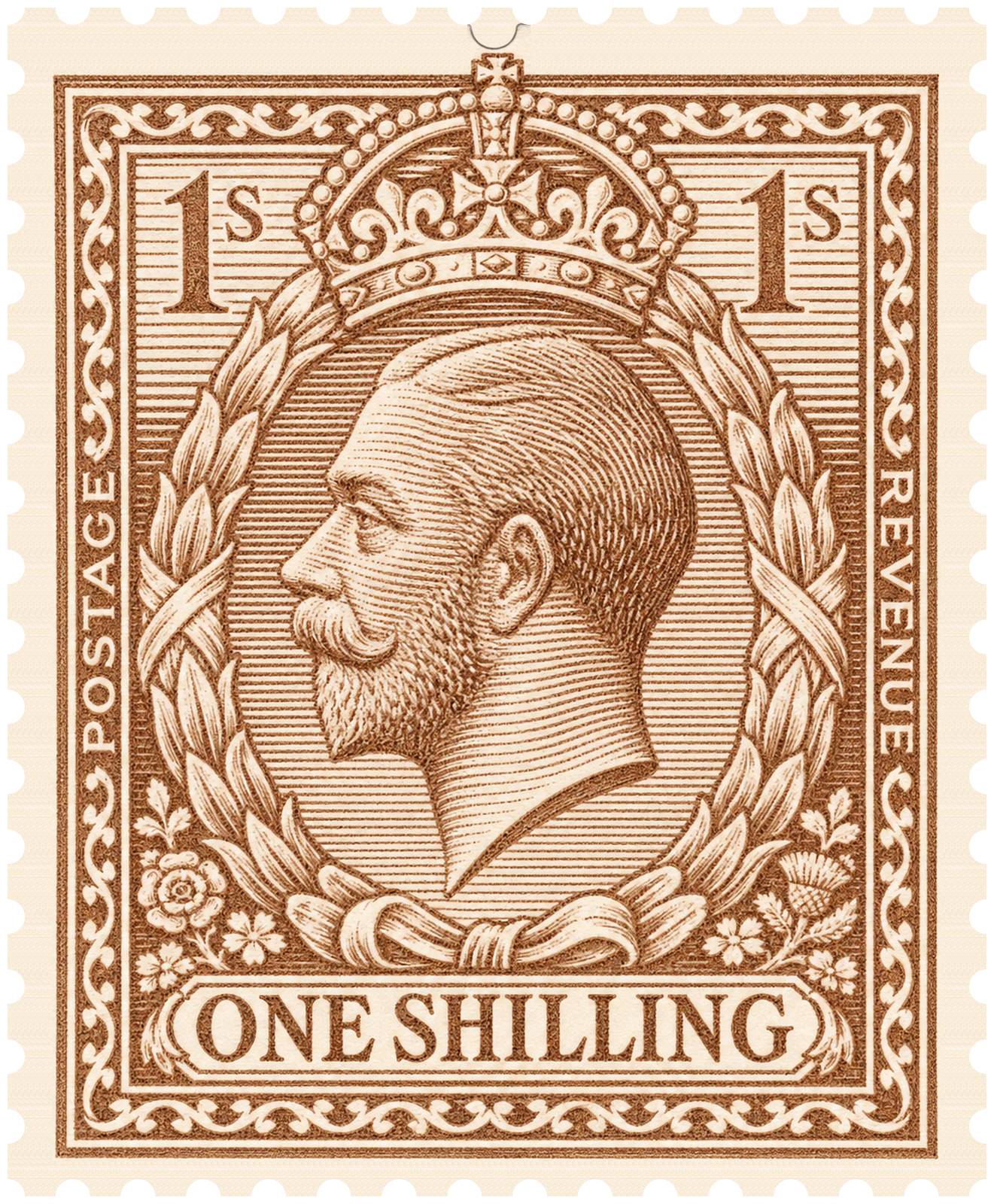
On the stamp you were exploring
George V · 1s bistre-brown · from 1914
Harrison prepared the stamp engraving from Mackennal’s royal model for the profile designs. His contribution was translating the likeness into printable lines, rather than printing this 1s bistre-brown issue.
On the stamp you were exploring
George V · 1s bistre-brown · from 1914
Harrison prepared the stamp engraving from Mackennal’s royal model for the profile designs. His contribution was translating the likeness into printable lines, rather than printing this 1s bistre-brown issue.
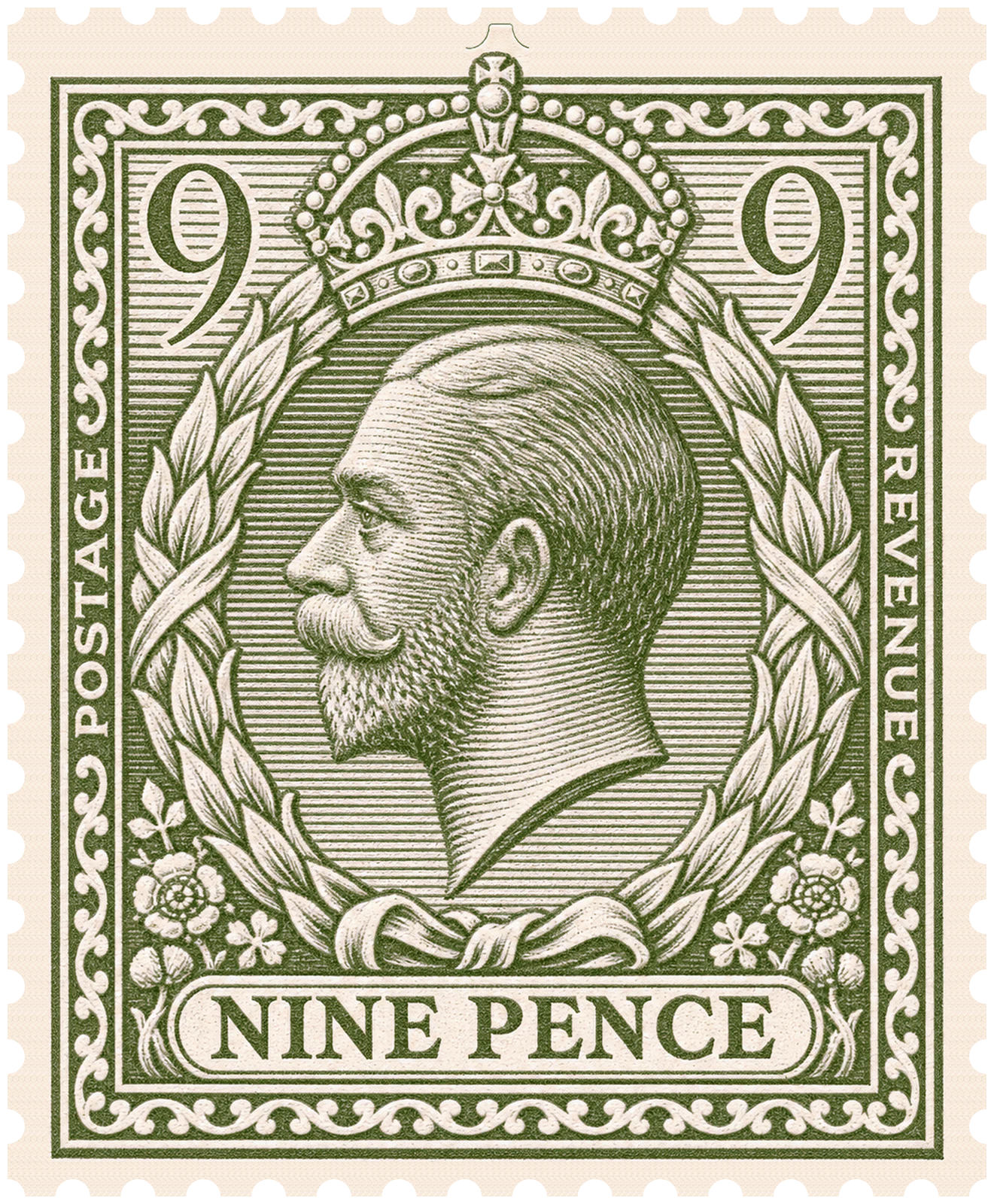
On the stamp you were exploring
George V · 9d olive-green · 1922
Harrison prepared the stamp engraving from Mackennal’s royal model for the profile designs. His contribution was translating the likeness into printable lines, rather than printing this 9d olive-green issue.
On the stamp you were exploring
George V · 9d olive-green · 1922
Harrison prepared the stamp engraving from Mackennal’s royal model for the profile designs. His contribution was translating the likeness into printable lines, rather than printing this 9d olive-green issue.
On the stamp you were exploring
George V · ½d bright green · August 1913
Harrison prepared the stamp engraving from Mackennal’s royal model for the profile designs. His contribution was translating the likeness into printable lines, rather than printing this ½d bright green issue.
On the stamp you were exploring
George V · ½d bright green · August 1913
Harrison prepared the stamp engraving from Mackennal’s royal model for the profile designs. His contribution was translating the likeness into printable lines, rather than printing this ½d bright green issue.
On the stamp you were exploring
George V · 1d dull scarlet · August 1913
Harrison prepared the stamp engraving from Mackennal’s royal model for the profile designs. His contribution was translating the likeness into printable lines, rather than printing this 1d dull scarlet issue.
On the stamp you were exploring
George V · 1d dull scarlet · August 1913
Harrison prepared the stamp engraving from Mackennal’s royal model for the profile designs. His contribution was translating the likeness into printable lines, rather than printing this 1d dull scarlet issue.
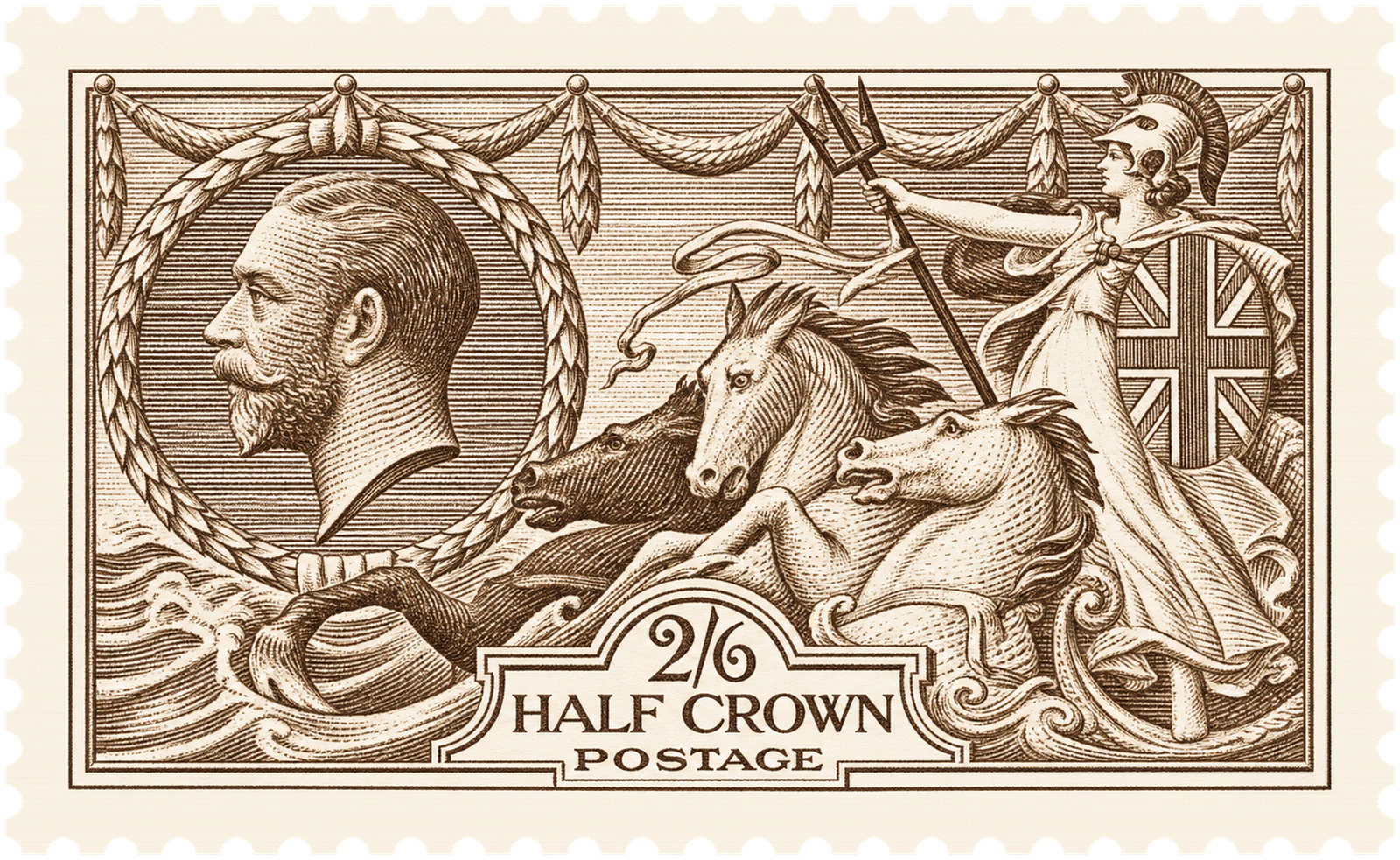
On the stamp you were exploring
George V · 2s 6d sepia-brown · 30 June 1913
Harrison engraved the original Seahorse die underlying this 2s 6d sepia-brown design. This is an original-engraving credit, not an attribution of every later printing or re-engraving to his hand.
On the stamp you were exploring
George V · 2s 6d sepia-brown · 30 June 1913
Harrison engraved the original Seahorse die underlying this 2s 6d sepia-brown design. This is an original-engraving credit, not an attribution of every later printing or re-engraving to his hand.
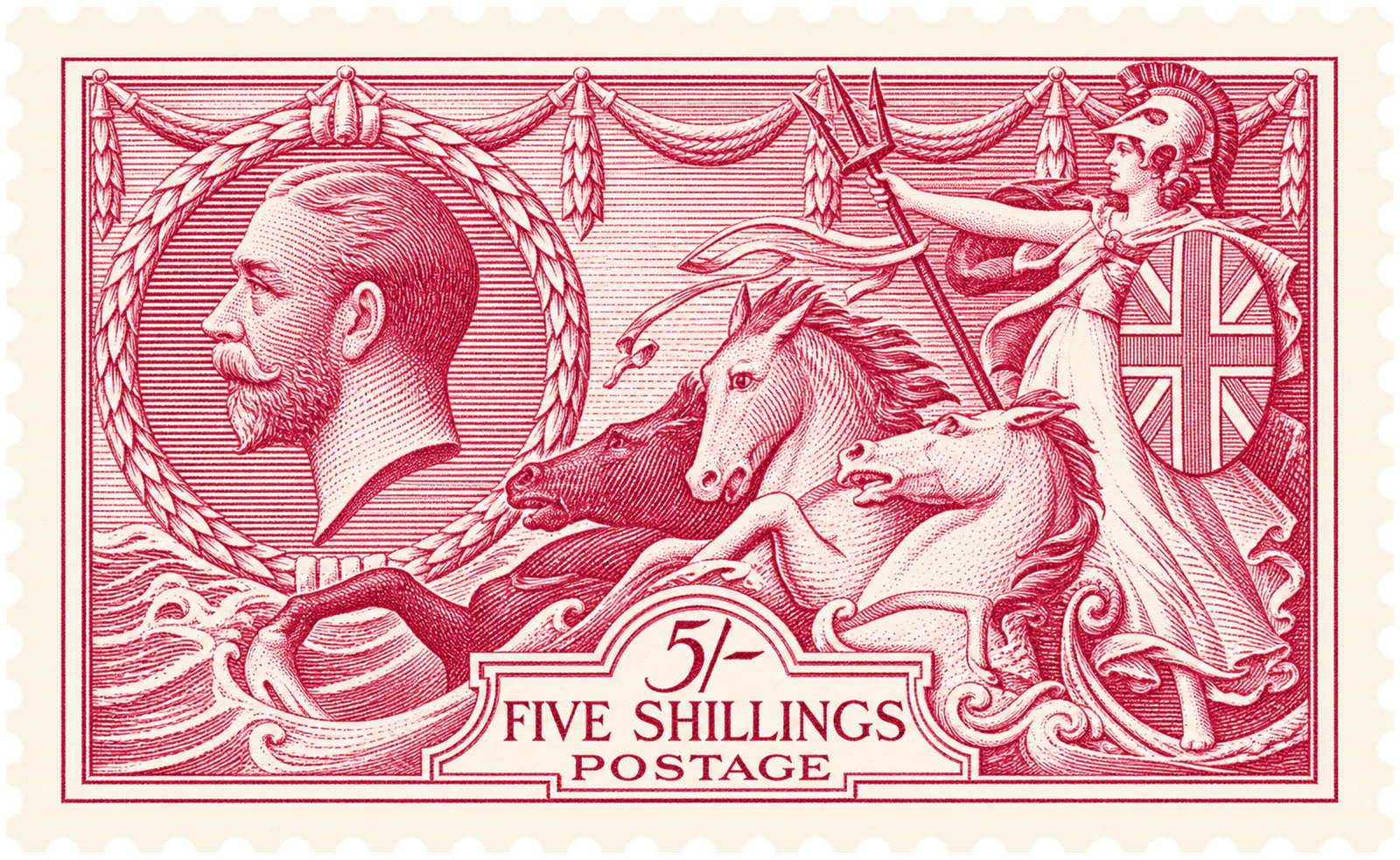
On the stamp you were exploring
George V · 5s rose-carmine · 30 June 1913 (sources differ)
Harrison engraved the original Seahorse die underlying this 5s rose-carmine design. This is an original-engraving credit, not an attribution of every later printing or re-engraving to his hand.
On the stamp you were exploring
George V · 5s rose-carmine · 30 June 1913 (sources differ)
Harrison engraved the original Seahorse die underlying this 5s rose-carmine design. This is an original-engraving credit, not an attribution of every later printing or re-engraving to his hand.
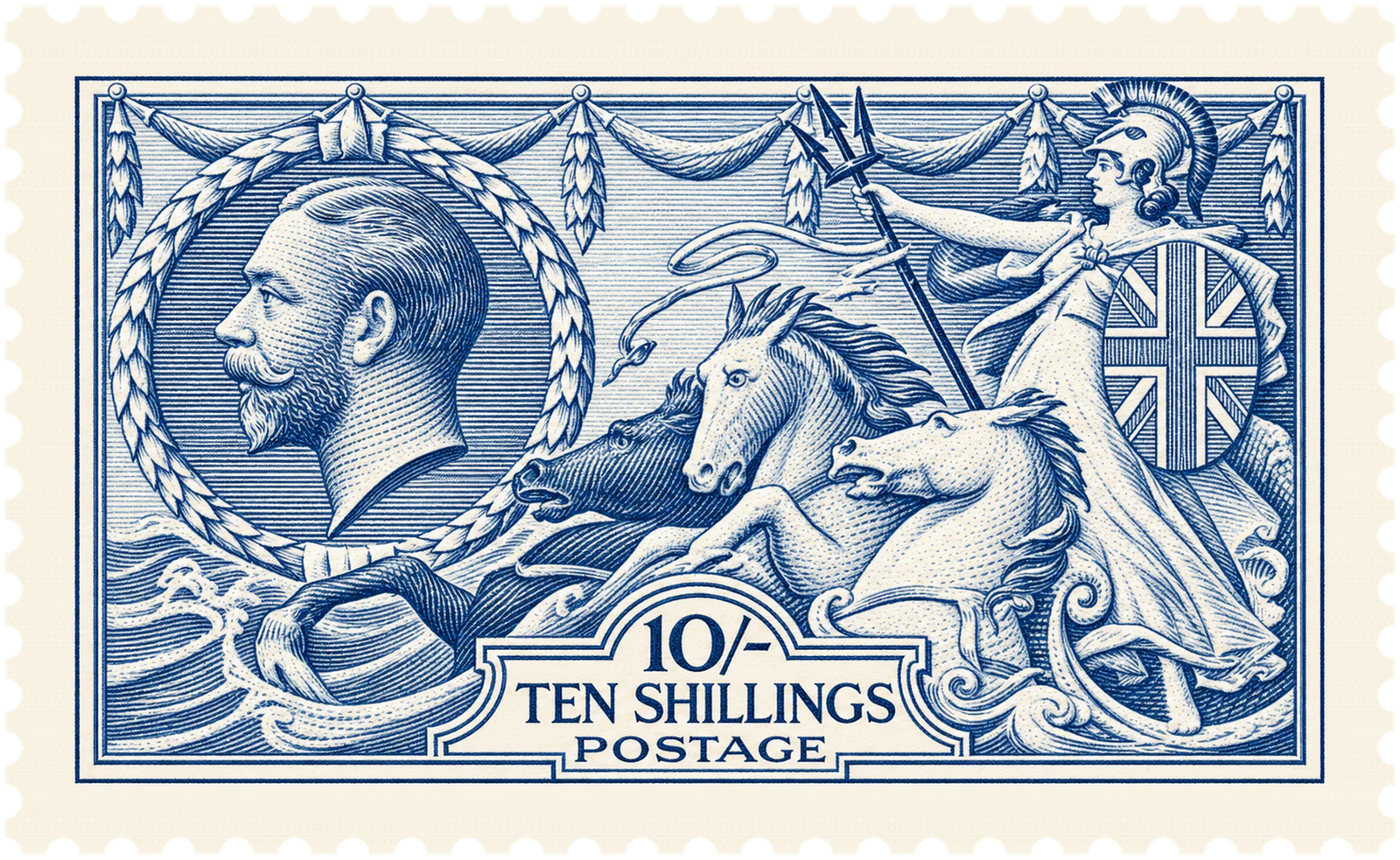
On the stamp you were exploring
George V · 10s indigo-blue · 1 August 1913
Harrison engraved the original Seahorse die underlying this 10s indigo-blue design. This is an original-engraving credit, not an attribution of every later printing or re-engraving to his hand.
On the stamp you were exploring
George V · 10s indigo-blue · 1 August 1913
Harrison engraved the original Seahorse die underlying this 10s indigo-blue design. This is an original-engraving credit, not an attribution of every later printing or re-engraving to his hand.
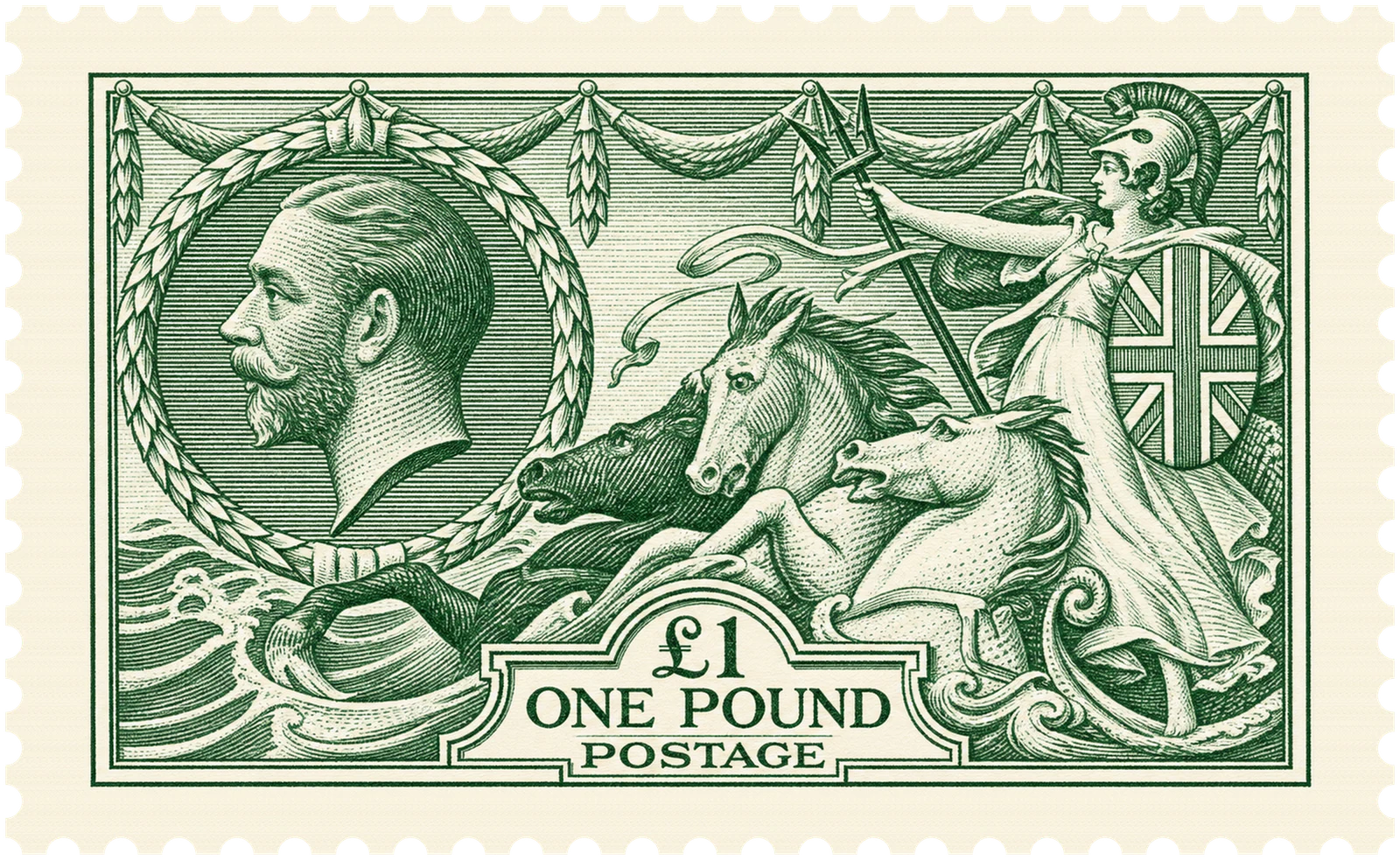
On the stamp you were exploring
George V · £1 green · 1 August 1913
Harrison engraved the original Seahorse die underlying this £1 green design. This is an original-engraving credit, not an attribution of every later printing or re-engraving to his hand.
On the stamp you were exploring
George V · £1 green · 1 August 1913
Harrison engraved the original Seahorse die underlying this £1 green design. This is an original-engraving credit, not an attribution of every later printing or re-engraving to his hand.
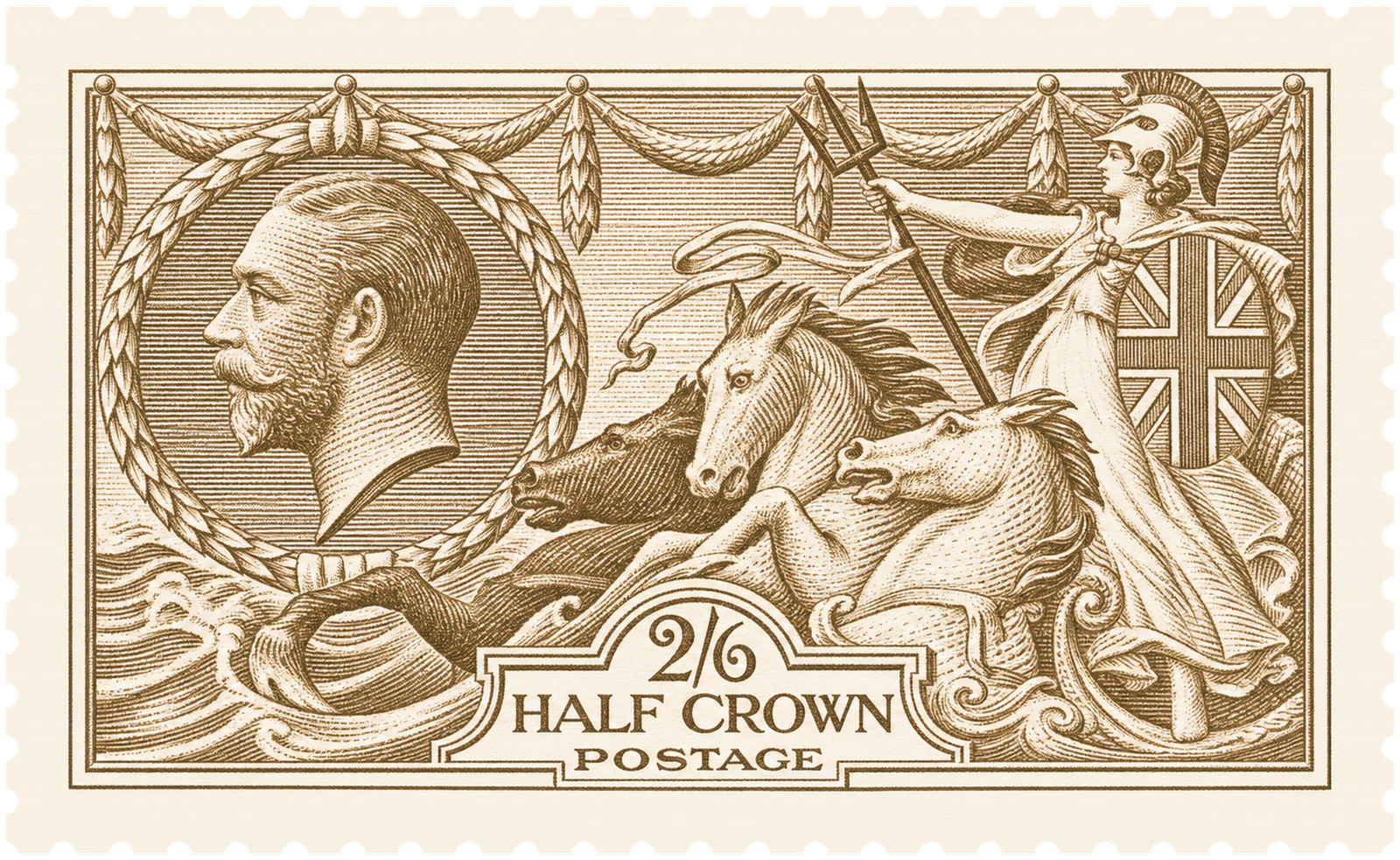
On the stamp you were exploring
George V · 2s 6d yellow-brown · 1915
Harrison engraved the original Seahorse die underlying this 2s 6d yellow-brown design. This is an original-engraving credit, not an attribution of every later printing or re-engraving to his hand.
On the stamp you were exploring
George V · 2s 6d yellow-brown · 1915
Harrison engraved the original Seahorse die underlying this 2s 6d yellow-brown design. This is an original-engraving credit, not an attribution of every later printing or re-engraving to his hand.
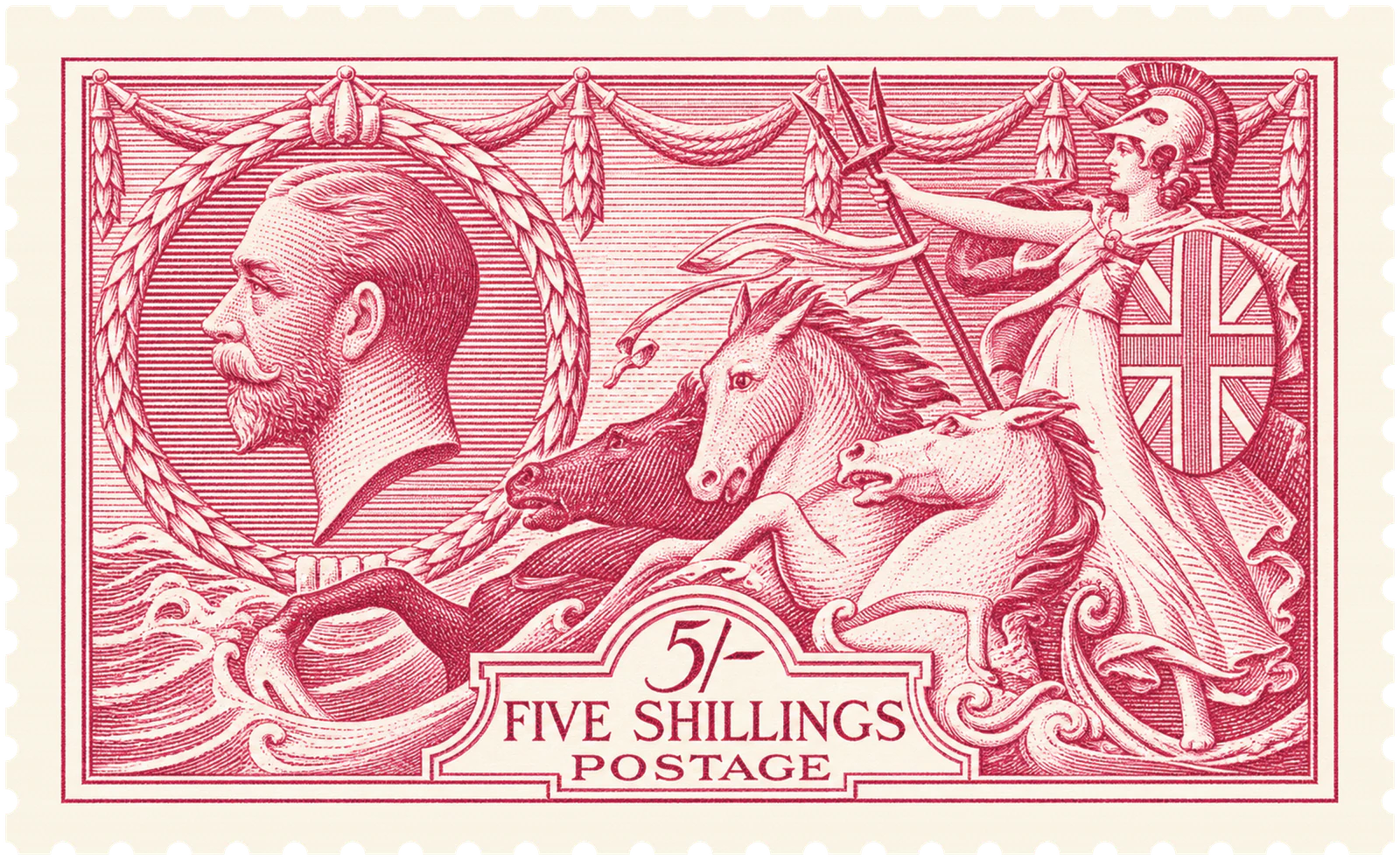
On the stamp you were exploring
George V · 5s bright carmine · 1915
Harrison engraved the original Seahorse die underlying this 5s bright carmine design. This is an original-engraving credit, not an attribution of every later printing or re-engraving to his hand.
On the stamp you were exploring
George V · 5s bright carmine · 1915
Harrison engraved the original Seahorse die underlying this 5s bright carmine design. This is an original-engraving credit, not an attribution of every later printing or re-engraving to his hand.
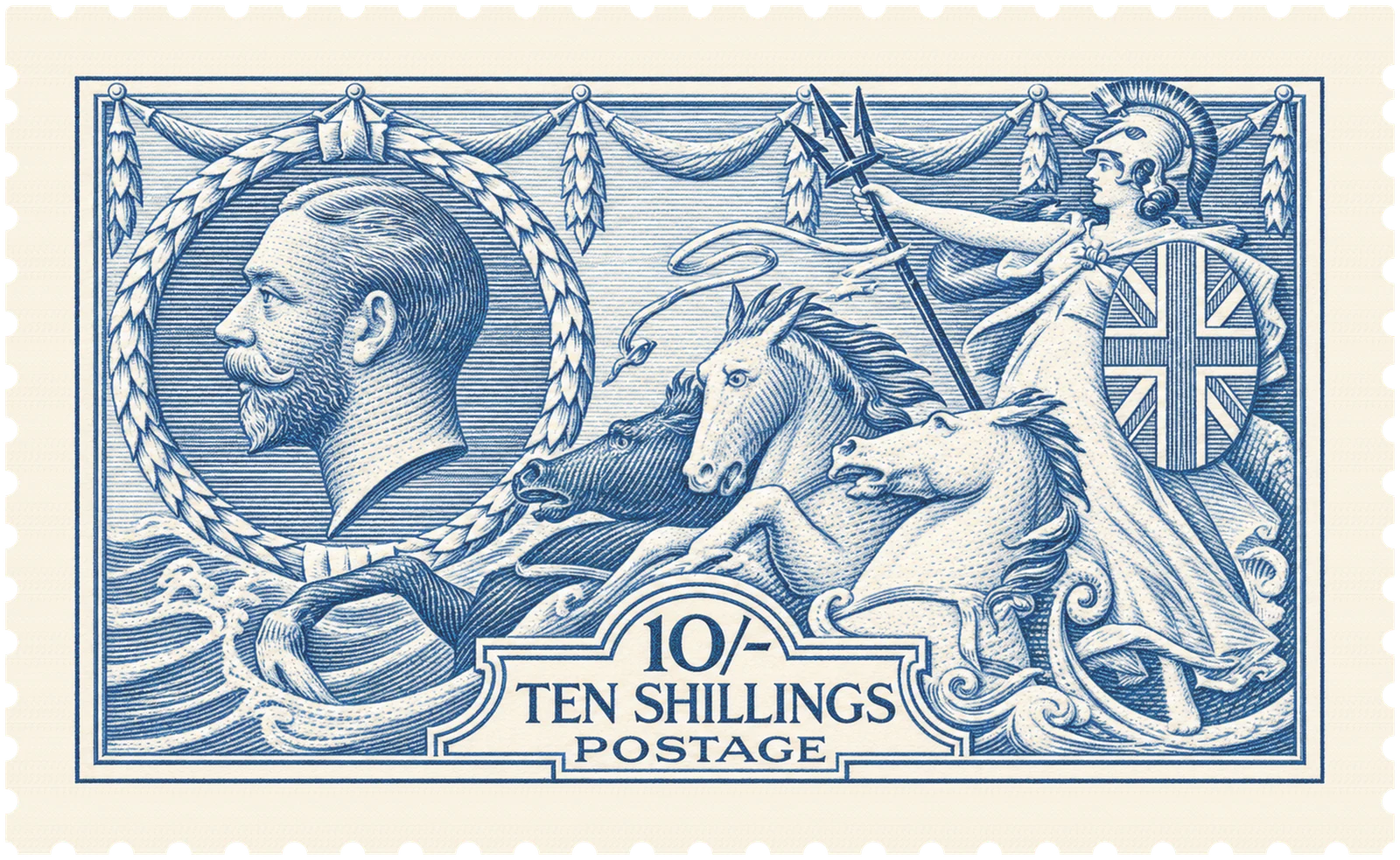
On the stamp you were exploring
George V · 10s deep blue · 1915
Harrison engraved the original Seahorse die underlying this 10s deep blue design. This is an original-engraving credit, not an attribution of every later printing or re-engraving to his hand.
On the stamp you were exploring
George V · 10s deep blue · 1915
Harrison engraved the original Seahorse die underlying this 10s deep blue design. This is an original-engraving credit, not an attribution of every later printing or re-engraving to his hand.
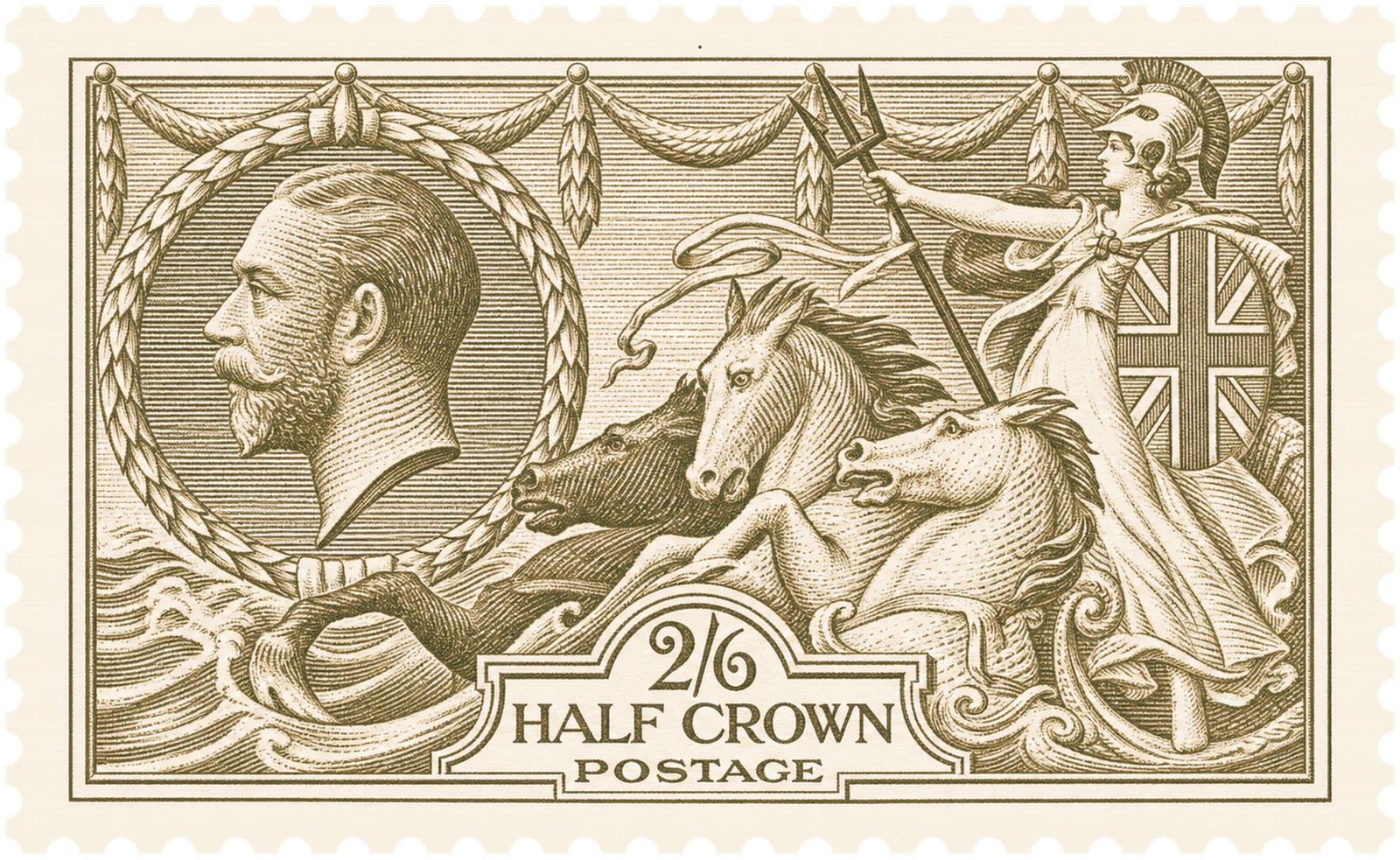
On the stamp you were exploring
George V · 2s 6d olive-brown · 1918
Harrison engraved the original Seahorse die underlying this 2s 6d olive-brown design. This is an original-engraving credit, not an attribution of every later printing or re-engraving to his hand.
On the stamp you were exploring
George V · 2s 6d olive-brown · 1918
Harrison engraved the original Seahorse die underlying this 2s 6d olive-brown design. This is an original-engraving credit, not an attribution of every later printing or re-engraving to his hand.
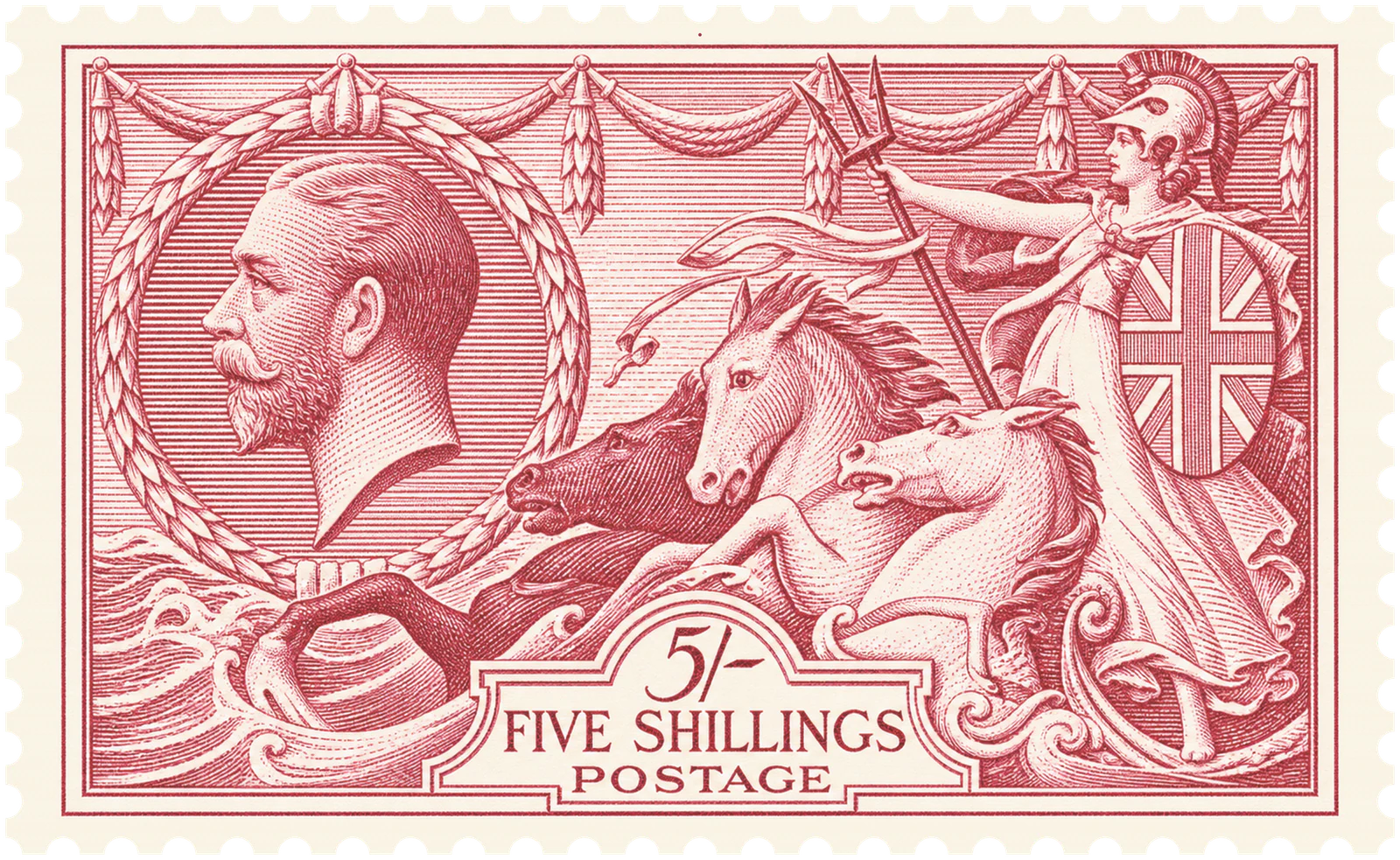
On the stamp you were exploring
George V · 5s rose-red · 1919
Harrison engraved the original Seahorse die underlying this 5s rose-red design. This is an original-engraving credit, not an attribution of every later printing or re-engraving to his hand.
On the stamp you were exploring
George V · 5s rose-red · 1919
Harrison engraved the original Seahorse die underlying this 5s rose-red design. This is an original-engraving credit, not an attribution of every later printing or re-engraving to his hand.
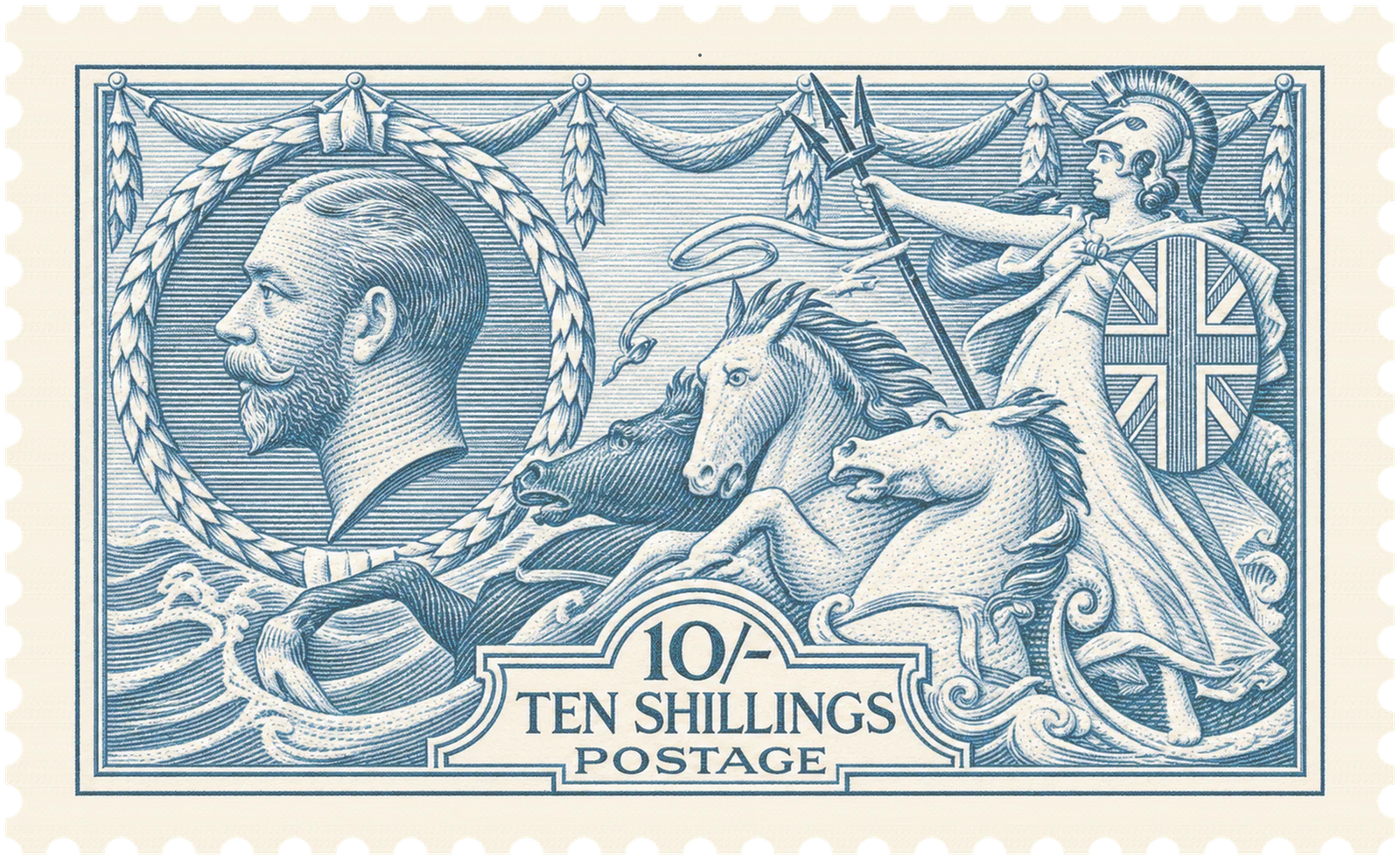
On the stamp you were exploring
George V · 10s dull grey-blue · 1919
Harrison engraved the original Seahorse die underlying this 10s dull grey-blue design. This is an original-engraving credit, not an attribution of every later printing or re-engraving to his hand.
On the stamp you were exploring
George V · 10s dull grey-blue · 1919
Harrison engraved the original Seahorse die underlying this 10s dull grey-blue design. This is an original-engraving credit, not an attribution of every later printing or re-engraving to his hand.
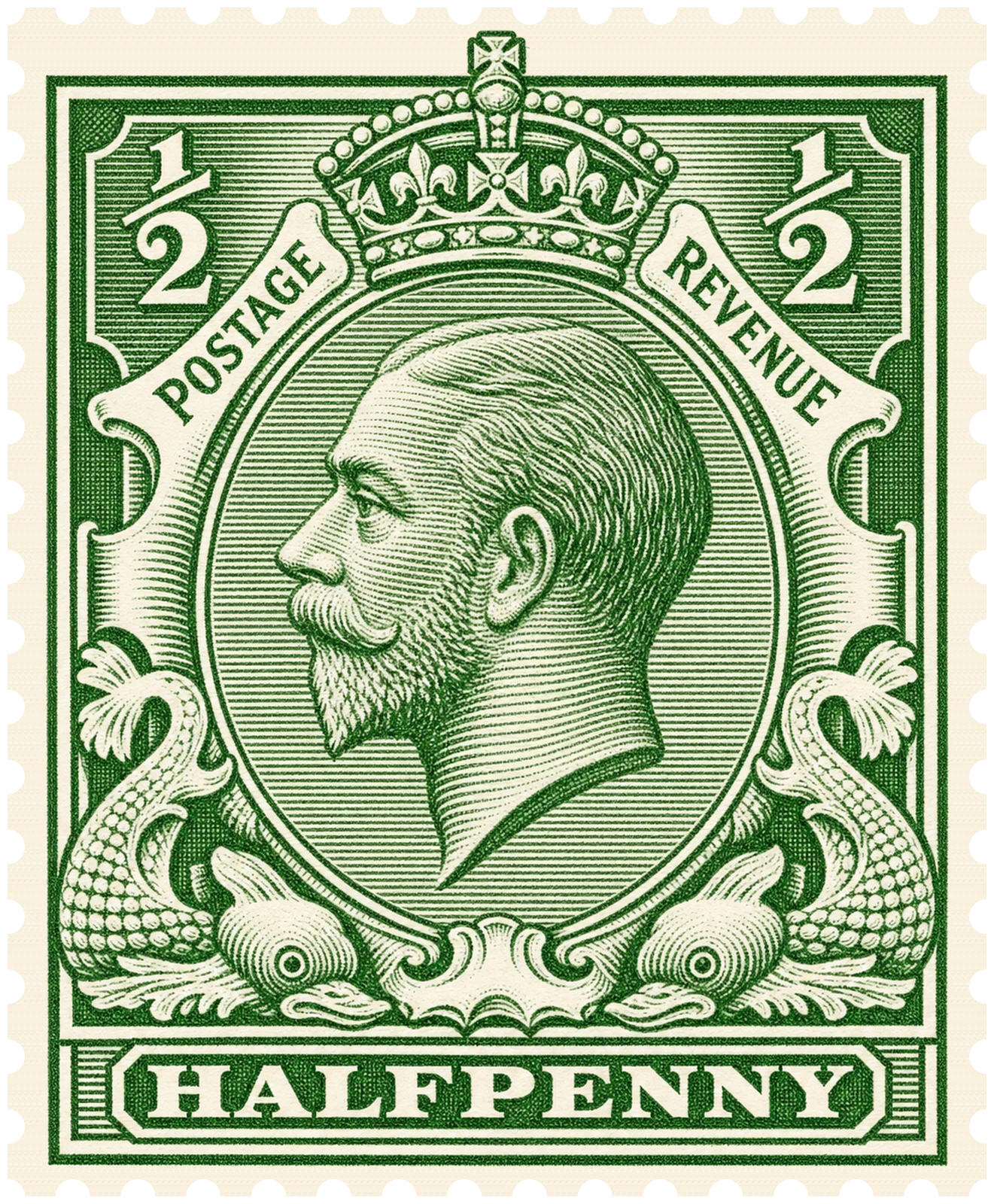
On the stamp you were exploring
George V · ½d green · Introduced 1924–1926
Harrison prepared the stamp engraving from Mackennal’s royal model for the profile designs. His contribution was translating the likeness into printable lines, rather than printing this ½d green issue.
On the stamp you were exploring
George V · ½d green · Introduced 1924–1926
Harrison prepared the stamp engraving from Mackennal’s royal model for the profile designs. His contribution was translating the likeness into printable lines, rather than printing this ½d green issue.
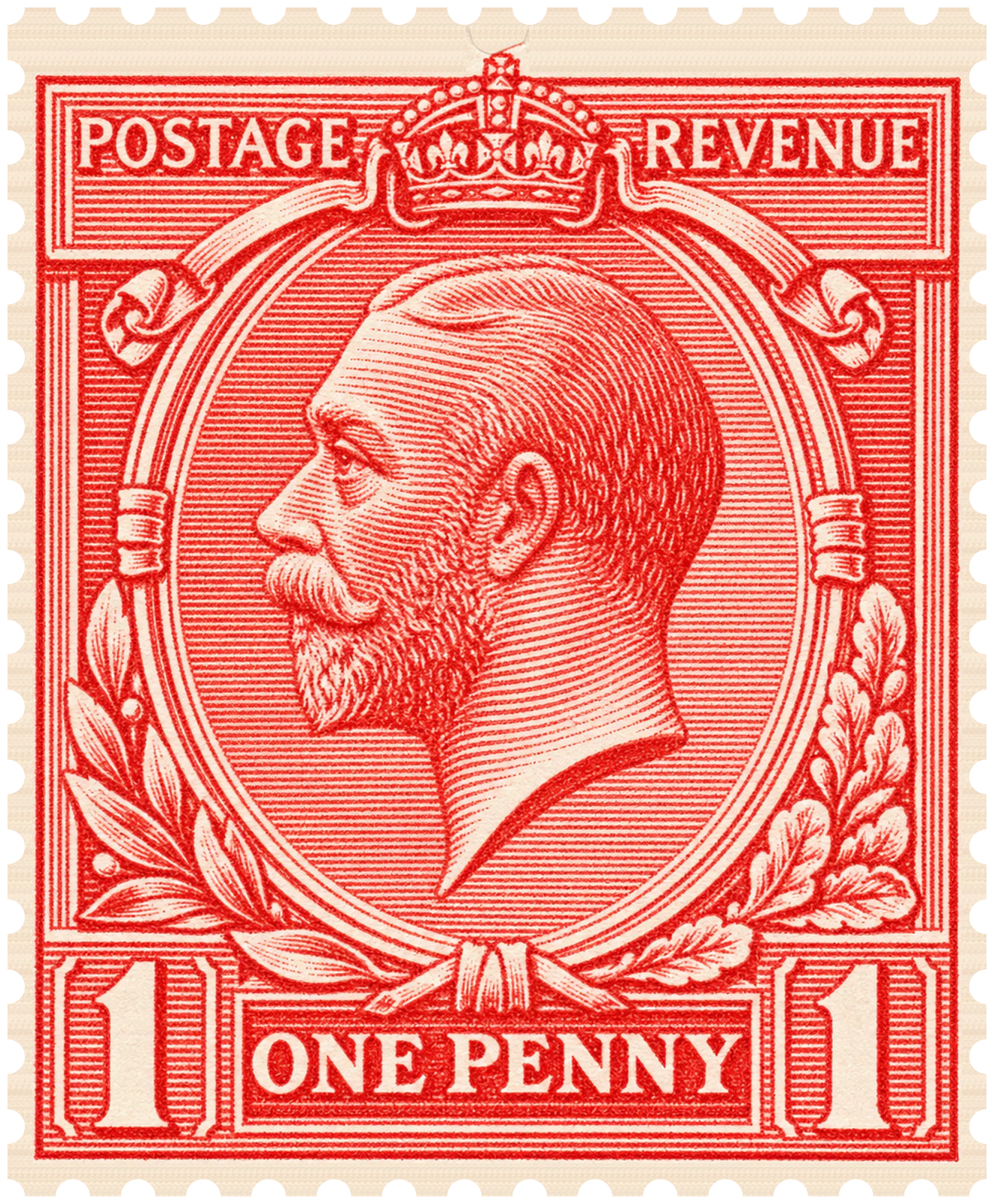
On the stamp you were exploring
George V · 1d scarlet · Introduced 1924–1926
Harrison prepared the stamp engraving from Mackennal’s royal model for the profile designs. His contribution was translating the likeness into printable lines, rather than printing this 1d scarlet issue.
On the stamp you were exploring
George V · 1d scarlet · Introduced 1924–1926
Harrison prepared the stamp engraving from Mackennal’s royal model for the profile designs. His contribution was translating the likeness into printable lines, rather than printing this 1d scarlet issue.
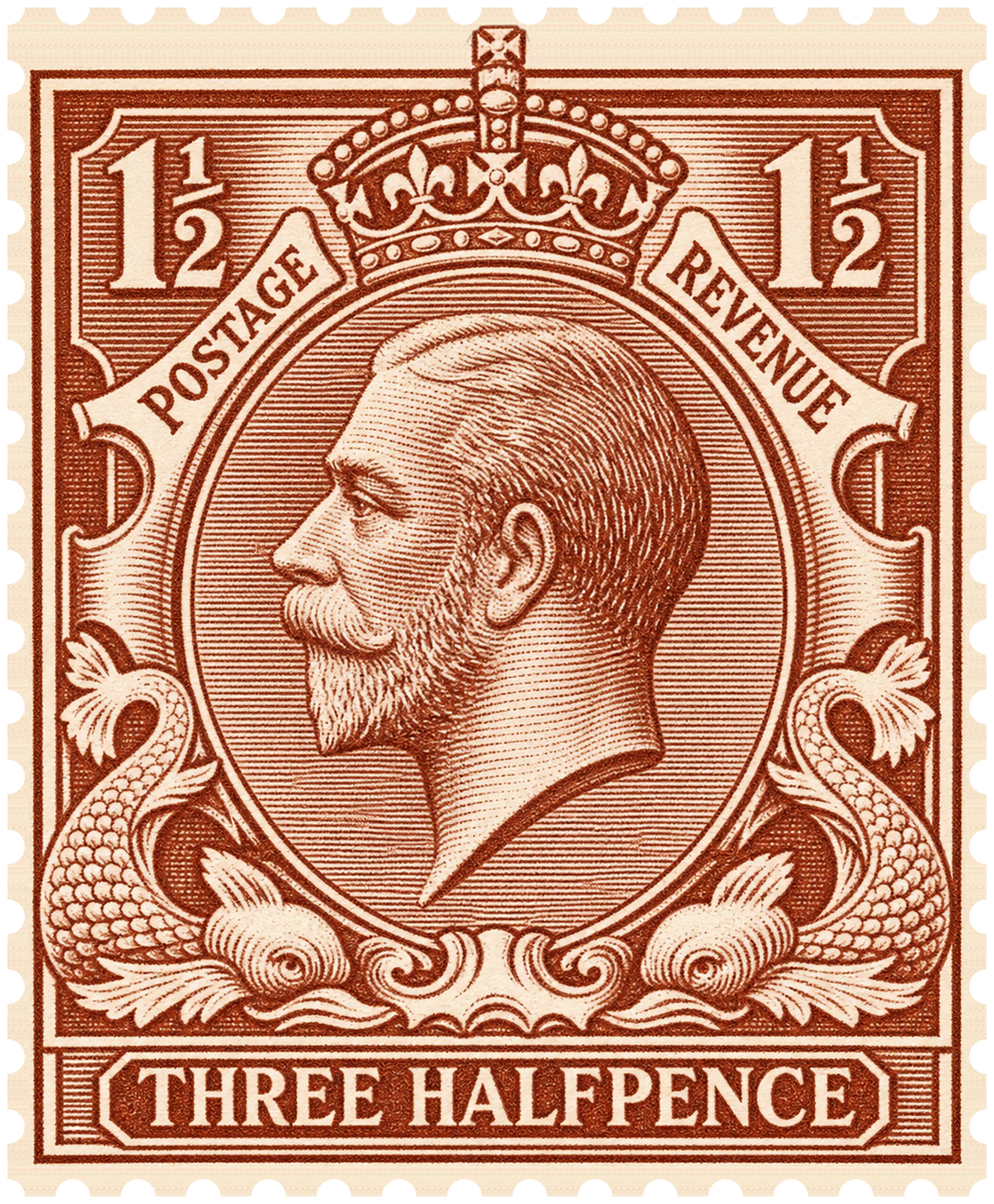
On the stamp you were exploring
George V · 1½d red-brown · Introduced 1924–1926
Harrison prepared the stamp engraving from Mackennal’s royal model for the profile designs. His contribution was translating the likeness into printable lines, rather than printing this 1½d red-brown issue.
On the stamp you were exploring
George V · 1½d red-brown · Introduced 1924–1926
Harrison prepared the stamp engraving from Mackennal’s royal model for the profile designs. His contribution was translating the likeness into printable lines, rather than printing this 1½d red-brown issue.
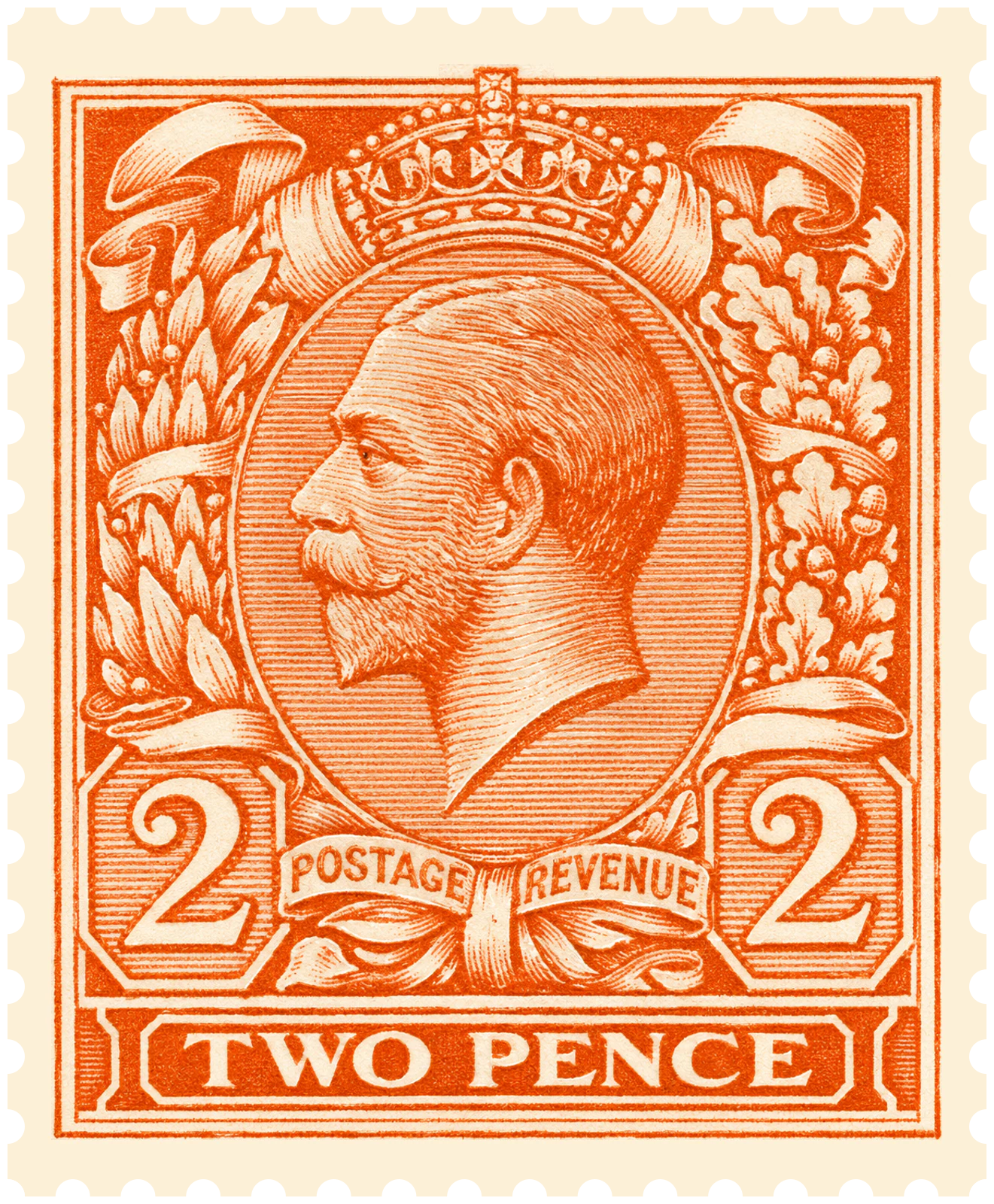
On the stamp you were exploring
George V · 2d orange · Introduced 1924–1926
Harrison prepared the stamp engraving from Mackennal’s royal model for the profile designs. His contribution was translating the likeness into printable lines, rather than printing this 2d orange issue.
On the stamp you were exploring
George V · 2d orange · Introduced 1924–1926
Harrison prepared the stamp engraving from Mackennal’s royal model for the profile designs. His contribution was translating the likeness into printable lines, rather than printing this 2d orange issue.
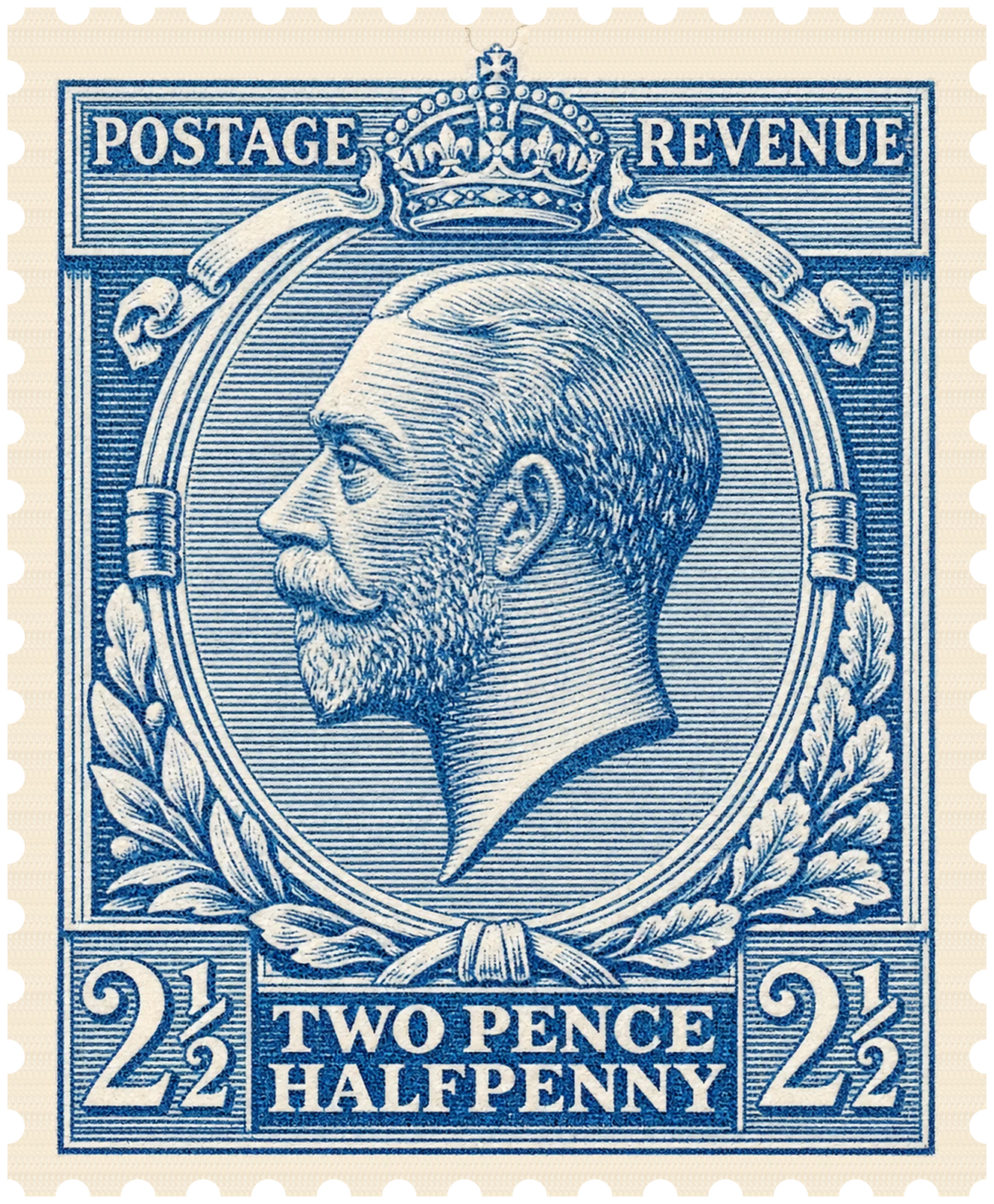
On the stamp you were exploring
George V · 2½d blue · Introduced 1924–1926
Harrison prepared the stamp engraving from Mackennal’s royal model for the profile designs. His contribution was translating the likeness into printable lines, rather than printing this 2½d blue issue.
On the stamp you were exploring
George V · 2½d blue · Introduced 1924–1926
Harrison prepared the stamp engraving from Mackennal’s royal model for the profile designs. His contribution was translating the likeness into printable lines, rather than printing this 2½d blue issue.
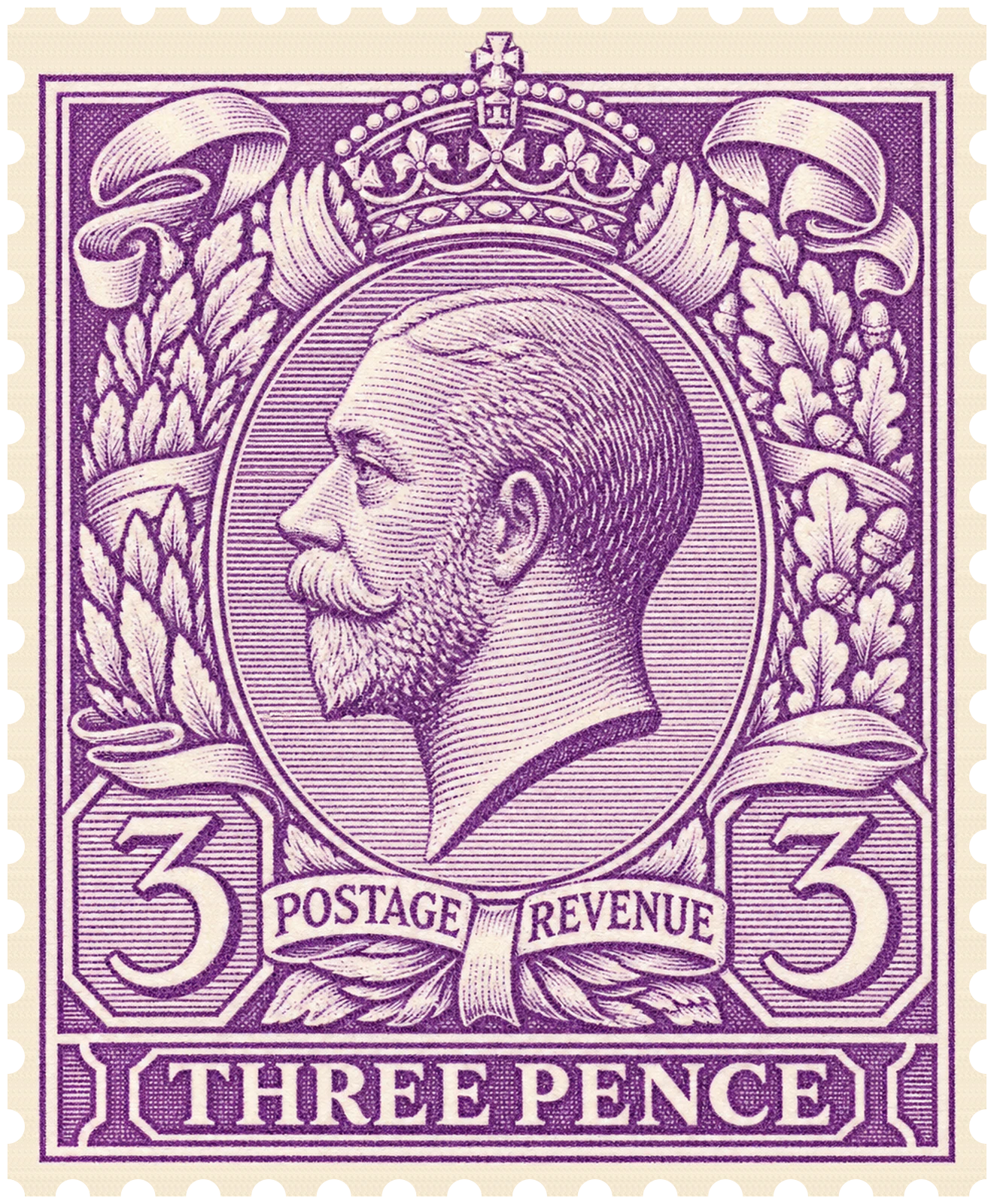
On the stamp you were exploring
George V · 3d violet · Introduced 1924–1926
Harrison prepared the stamp engraving from Mackennal’s royal model for the profile designs. His contribution was translating the likeness into printable lines, rather than printing this 3d violet issue.
On the stamp you were exploring
George V · 3d violet · Introduced 1924–1926
Harrison prepared the stamp engraving from Mackennal’s royal model for the profile designs. His contribution was translating the likeness into printable lines, rather than printing this 3d violet issue.
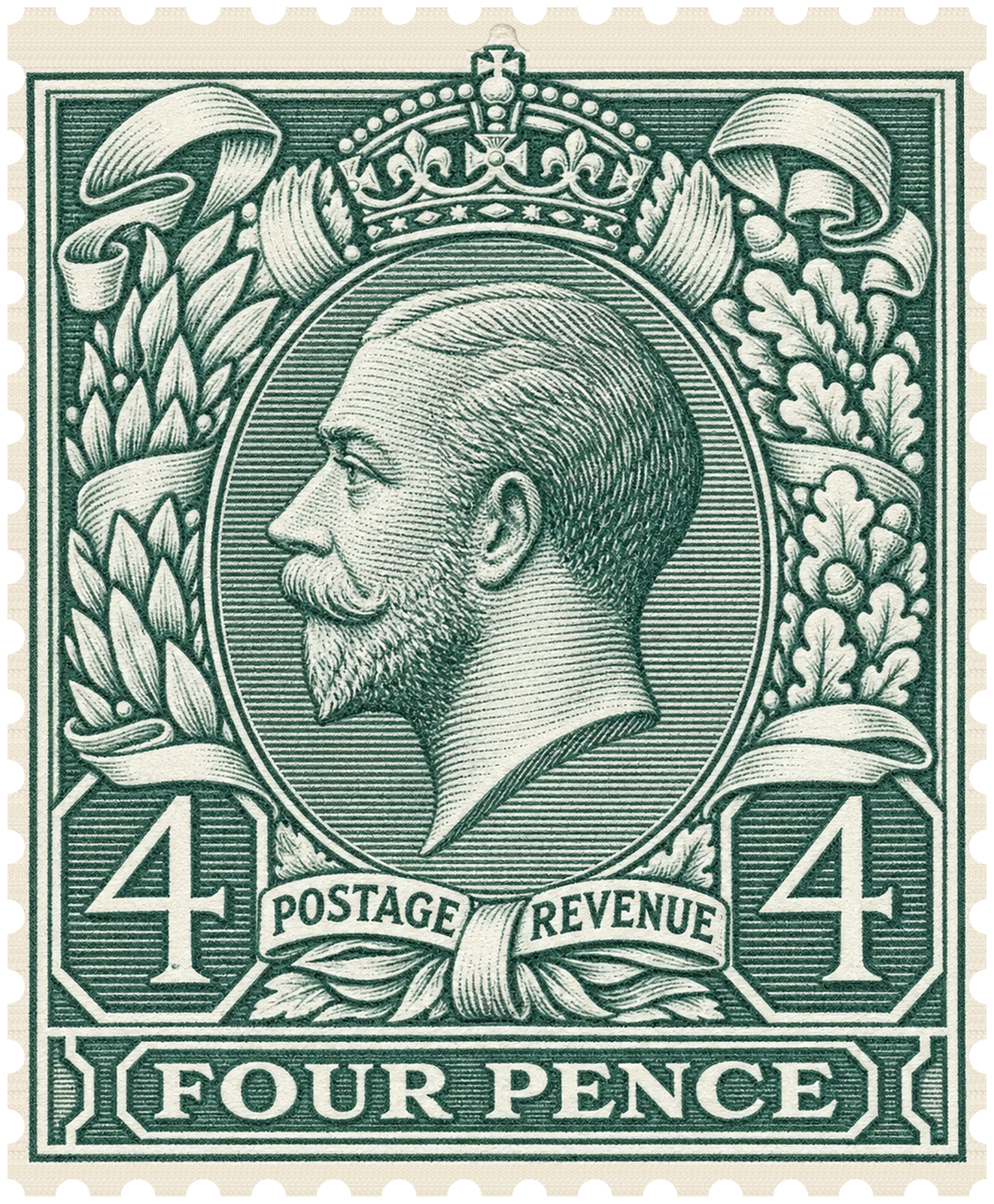
On the stamp you were exploring
George V · 4d grey-green · Introduced 1924–1926
Harrison prepared the stamp engraving from Mackennal’s royal model for the profile designs. His contribution was translating the likeness into printable lines, rather than printing this 4d grey-green issue.
On the stamp you were exploring
George V · 4d grey-green · Introduced 1924–1926
Harrison prepared the stamp engraving from Mackennal’s royal model for the profile designs. His contribution was translating the likeness into printable lines, rather than printing this 4d grey-green issue.
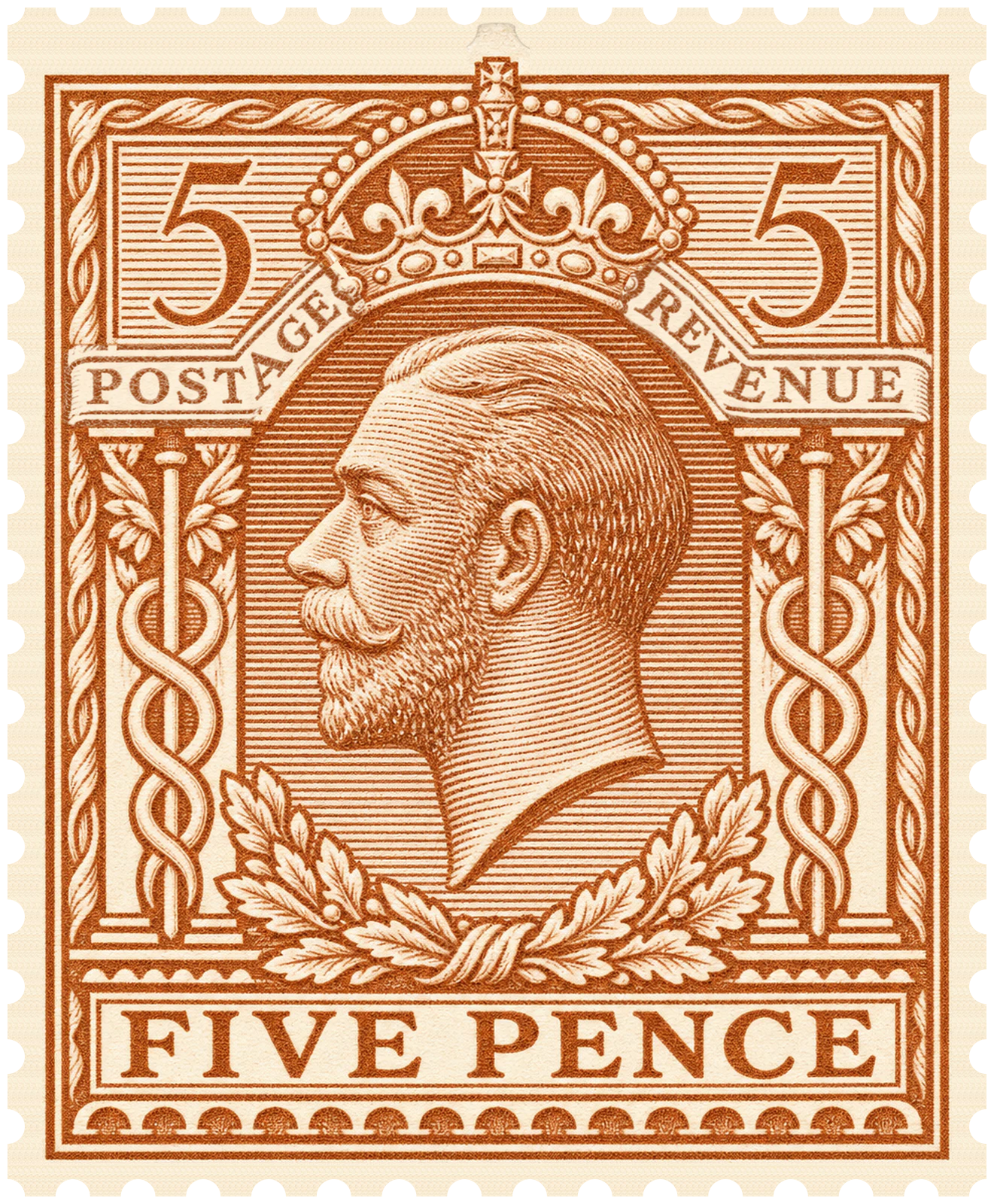
On the stamp you were exploring
George V · 5d brown · Introduced 1924–1926
Harrison prepared the stamp engraving from Mackennal’s royal model for the profile designs. His contribution was translating the likeness into printable lines, rather than printing this 5d brown issue.
On the stamp you were exploring
George V · 5d brown · Introduced 1924–1926
Harrison prepared the stamp engraving from Mackennal’s royal model for the profile designs. His contribution was translating the likeness into printable lines, rather than printing this 5d brown issue.
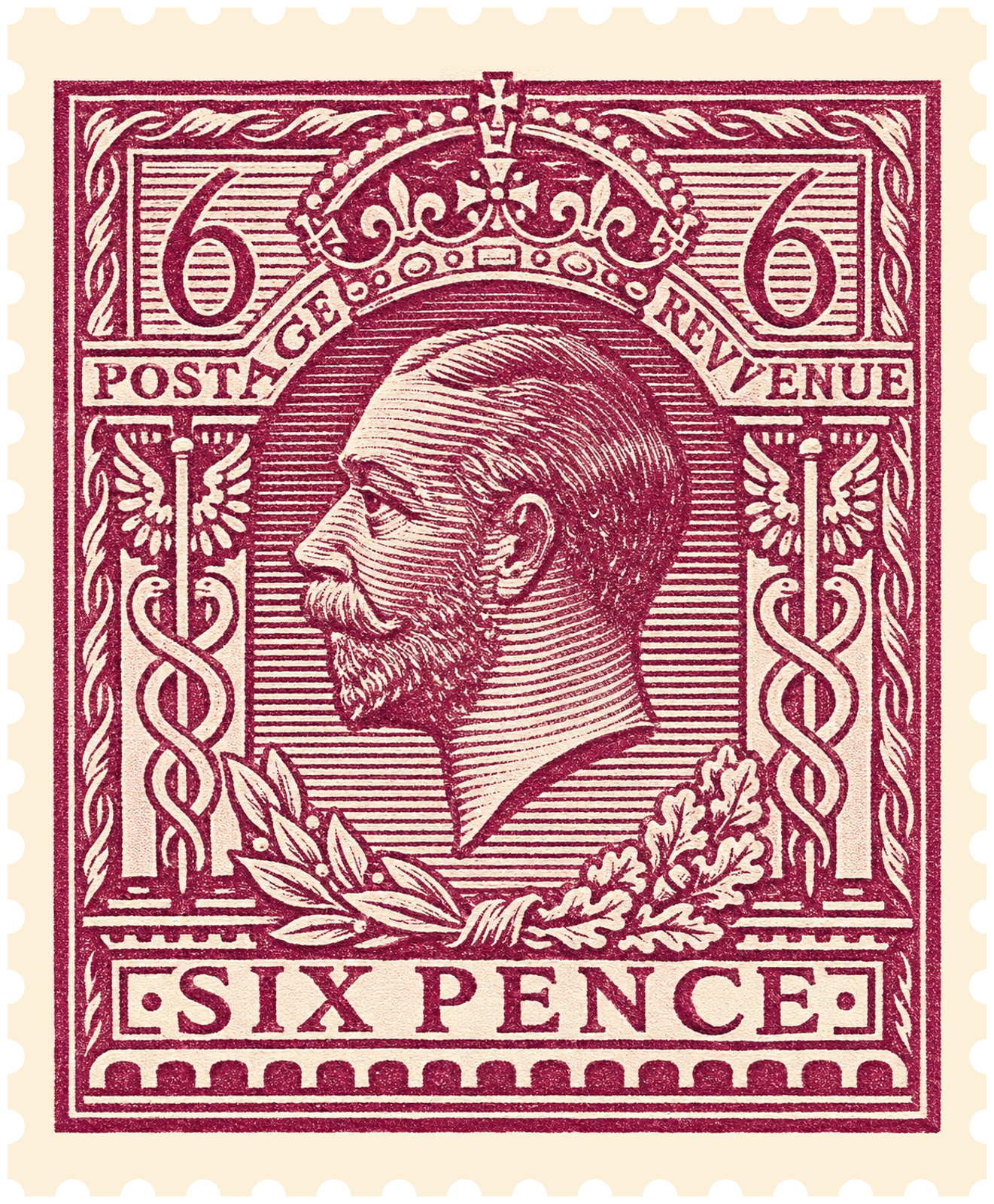
On the stamp you were exploring
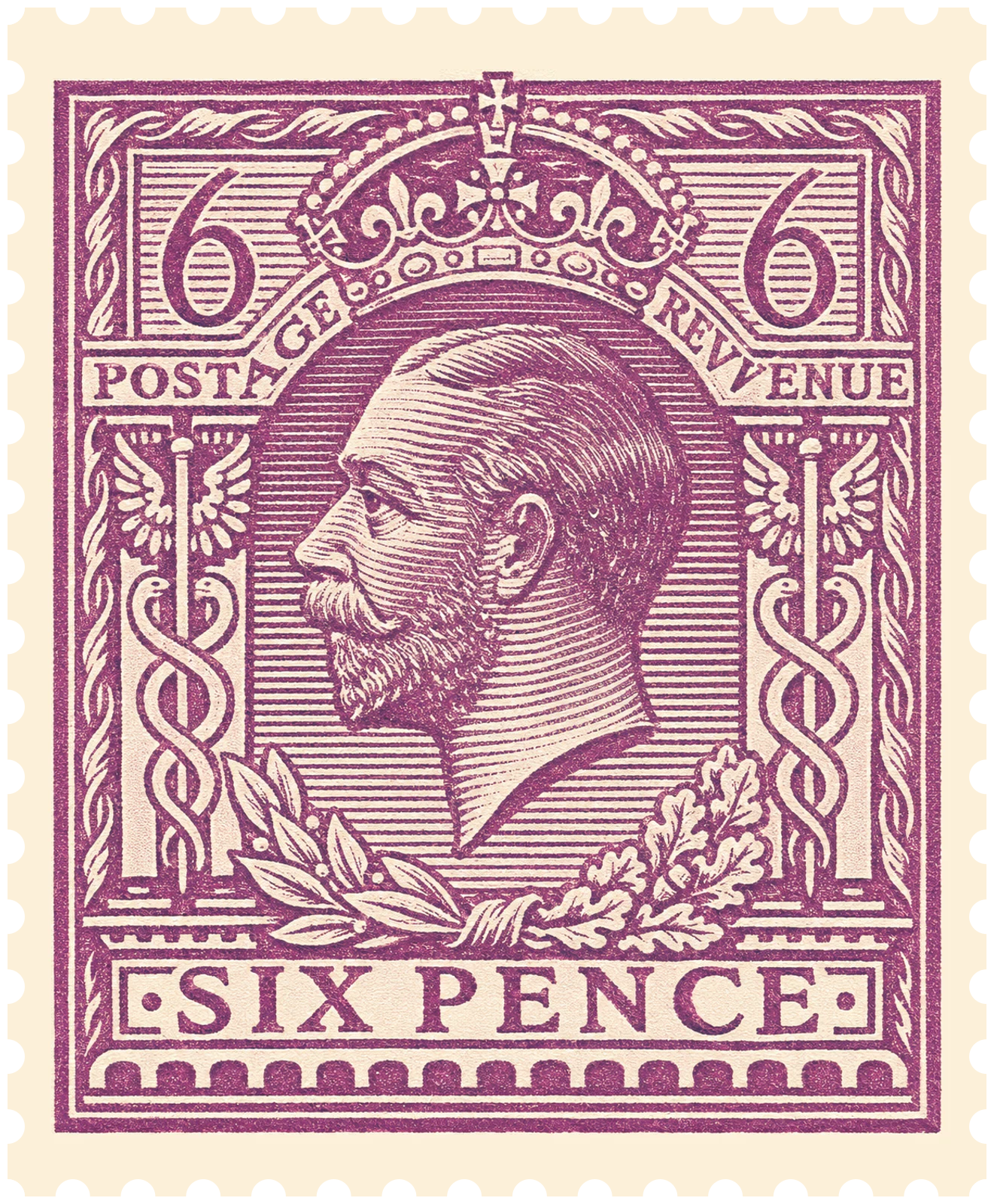
George V · 6d reddish-purple · Introduced 1924–1926
Harrison prepared the stamp engraving from Mackennal’s royal model for the profile designs. His contribution was translating the likeness into printable lines, rather than printing this 6d reddish-purple issue.
On the stamp you were exploring
George V · 6d reddish-purple · Introduced 1924–1926
Harrison prepared the stamp engraving from Mackennal’s royal model for the profile designs. His contribution was translating the likeness into printable lines, rather than printing this 6d reddish-purple issue.
On the stamp you were exploring
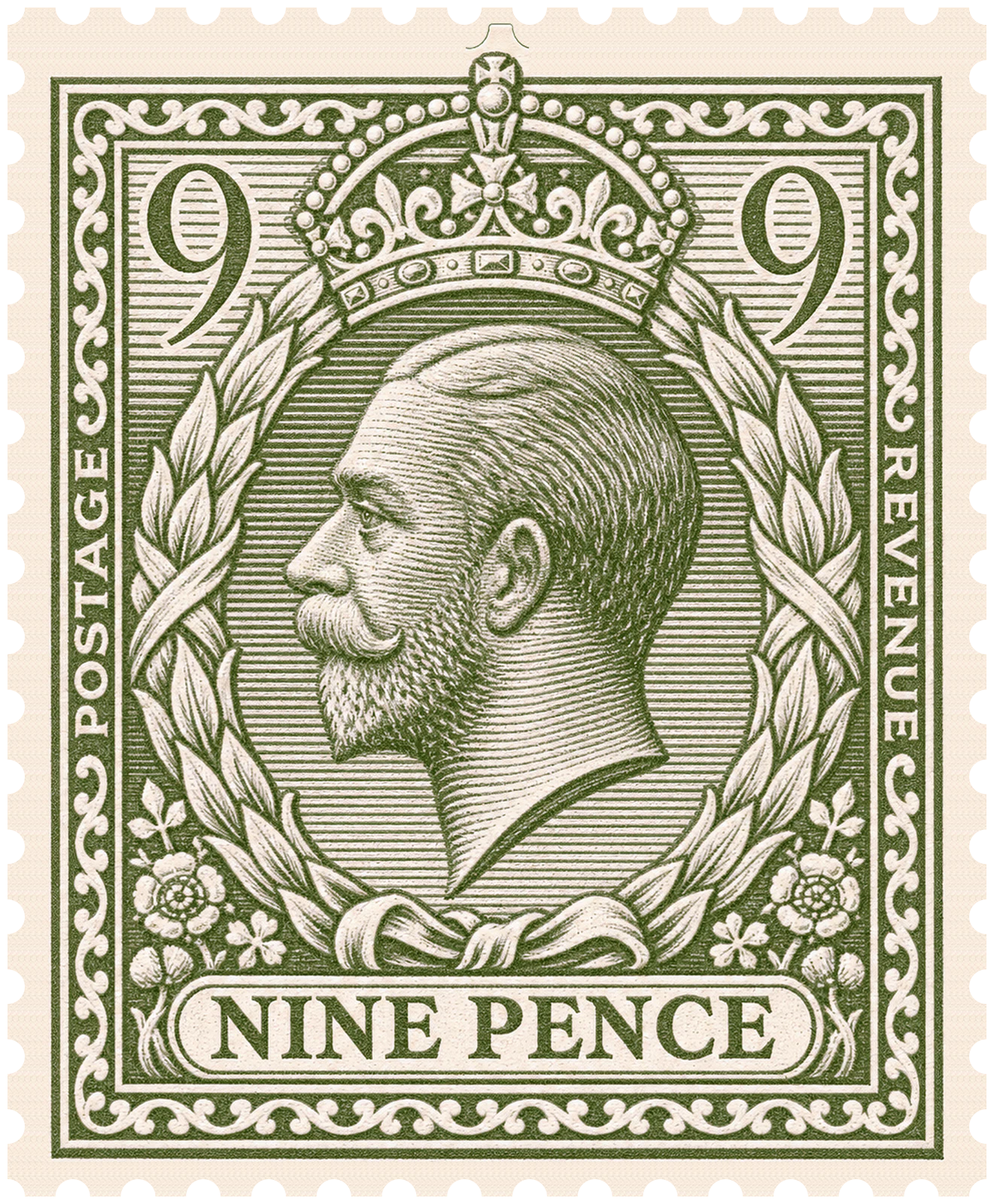
George V · 6d purple · Introduced 1924–1926
Harrison prepared the stamp engraving from Mackennal’s royal model for the profile designs. His contribution was translating the likeness into printable lines, rather than printing this 6d purple issue.
On the stamp you were exploring
George V · 6d purple · Introduced 1924–1926
Harrison prepared the stamp engraving from Mackennal’s royal model for the profile designs. His contribution was translating the likeness into printable lines, rather than printing this 6d purple issue.
On the stamp you were exploring
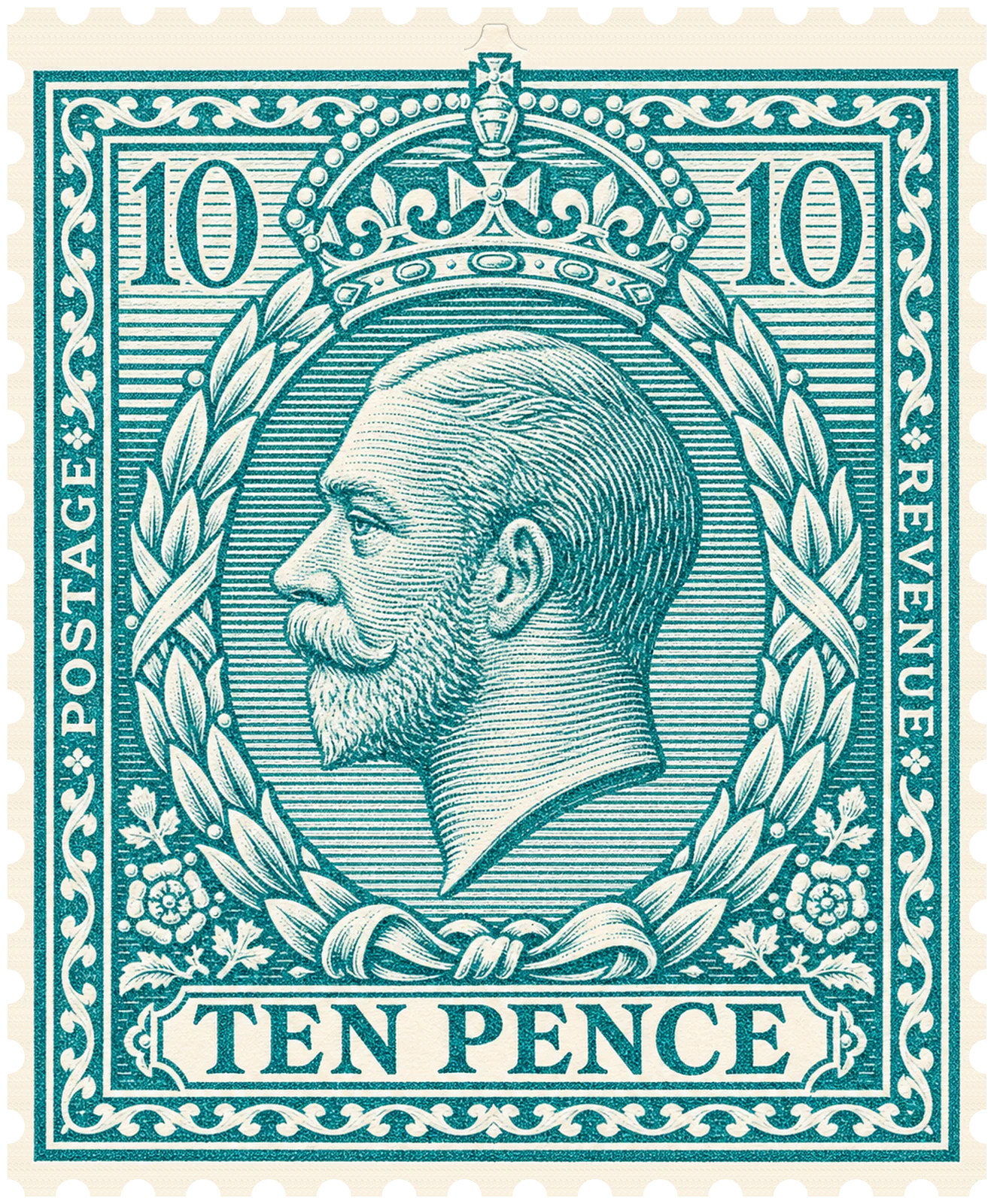
George V · 9d olive-green · Introduced 1924–1926
Harrison prepared the stamp engraving from Mackennal’s royal model for the profile designs. His contribution was translating the likeness into printable lines, rather than printing this 9d olive-green issue.
On the stamp you were exploring
George V · 9d olive-green · Introduced 1924–1926
Harrison prepared the stamp engraving from Mackennal’s royal model for the profile designs. His contribution was translating the likeness into printable lines, rather than printing this 9d olive-green issue.
On the stamp you were exploring
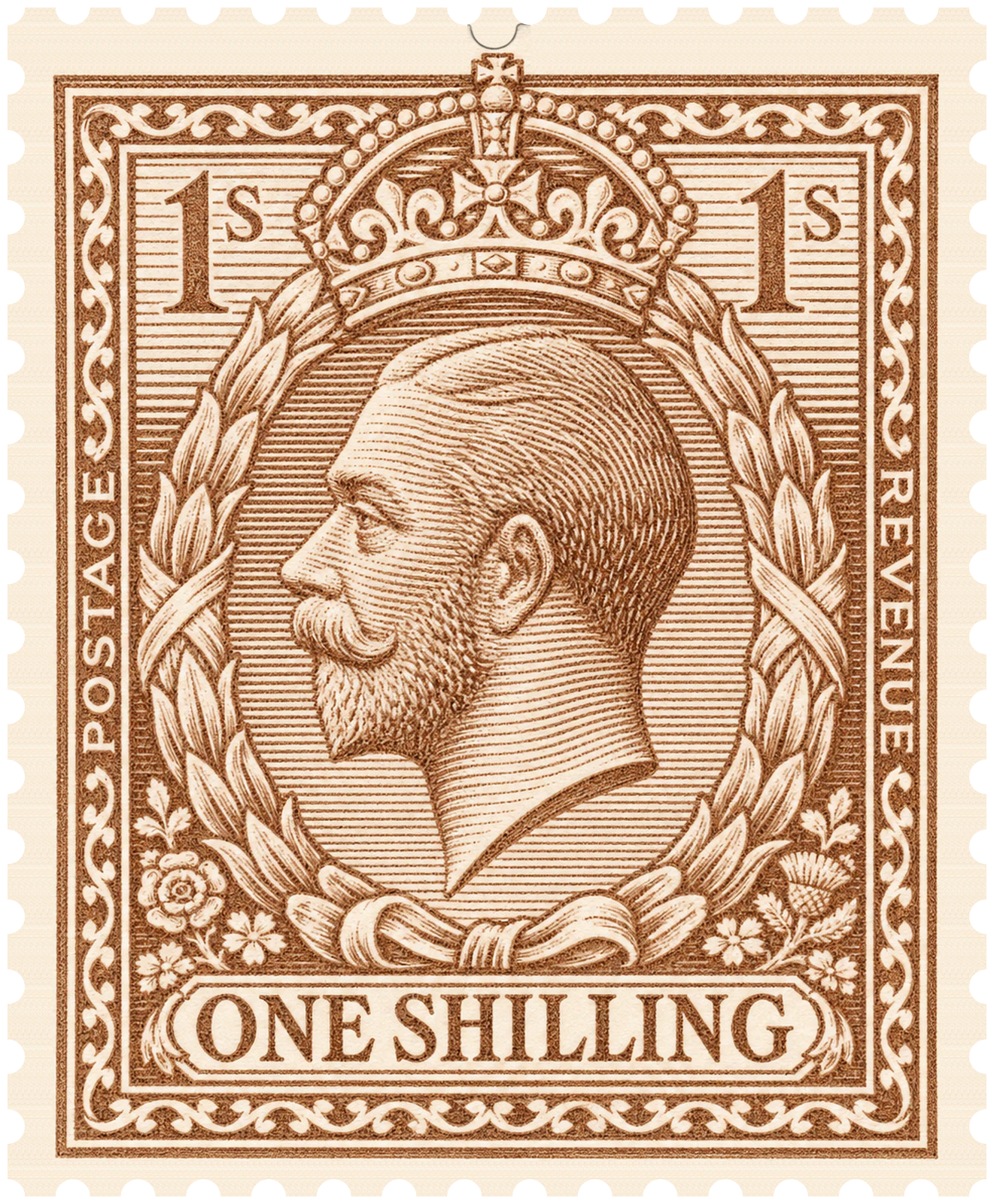
George V · 10d turquoise-blue · Introduced 1924–1926
Harrison prepared the stamp engraving from Mackennal’s royal model for the profile designs. His contribution was translating the likeness into printable lines, rather than printing this 10d turquoise-blue issue.
On the stamp you were exploring
George V · 10d turquoise-blue · Introduced 1924–1926
Harrison prepared the stamp engraving from Mackennal’s royal model for the profile designs. His contribution was translating the likeness into printable lines, rather than printing this 10d turquoise-blue issue.
On the stamp you were exploring
George V · 1s bistre-brown · Introduced 1924–1926
Harrison prepared the stamp engraving from Mackennal’s royal model for the profile designs. His contribution was translating the likeness into printable lines, rather than printing this 1s bistre-brown issue.
On the stamp you were exploring
George V · 1s bistre-brown · Introduced 1924–1926
Harrison prepared the stamp engraving from Mackennal’s royal model for the profile designs. His contribution was translating the likeness into printable lines, rather than printing this 1s bistre-brown issue.
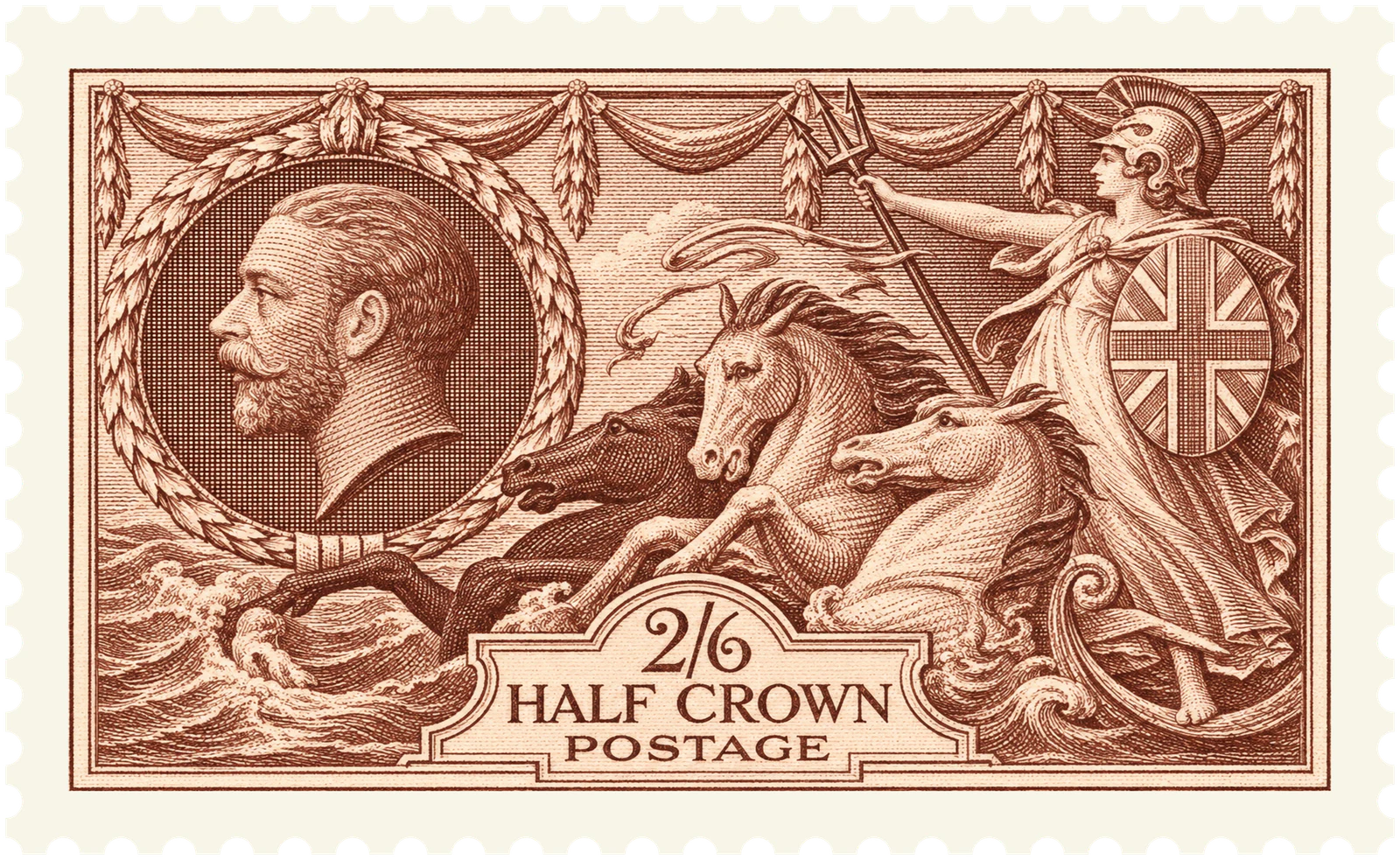
On the stamp you were exploring
George V · 2s 6d reddish-brown · 1934
Harrison engraved the original Seahorse die underlying this 2s 6d reddish-brown design. This is an original-engraving credit, not an attribution of every later printing or re-engraving to his hand.
On the stamp you were exploring
George V · 2s 6d reddish-brown · 1934
Harrison engraved the original Seahorse die underlying this 2s 6d reddish-brown design. This is an original-engraving credit, not an attribution of every later printing or re-engraving to his hand.
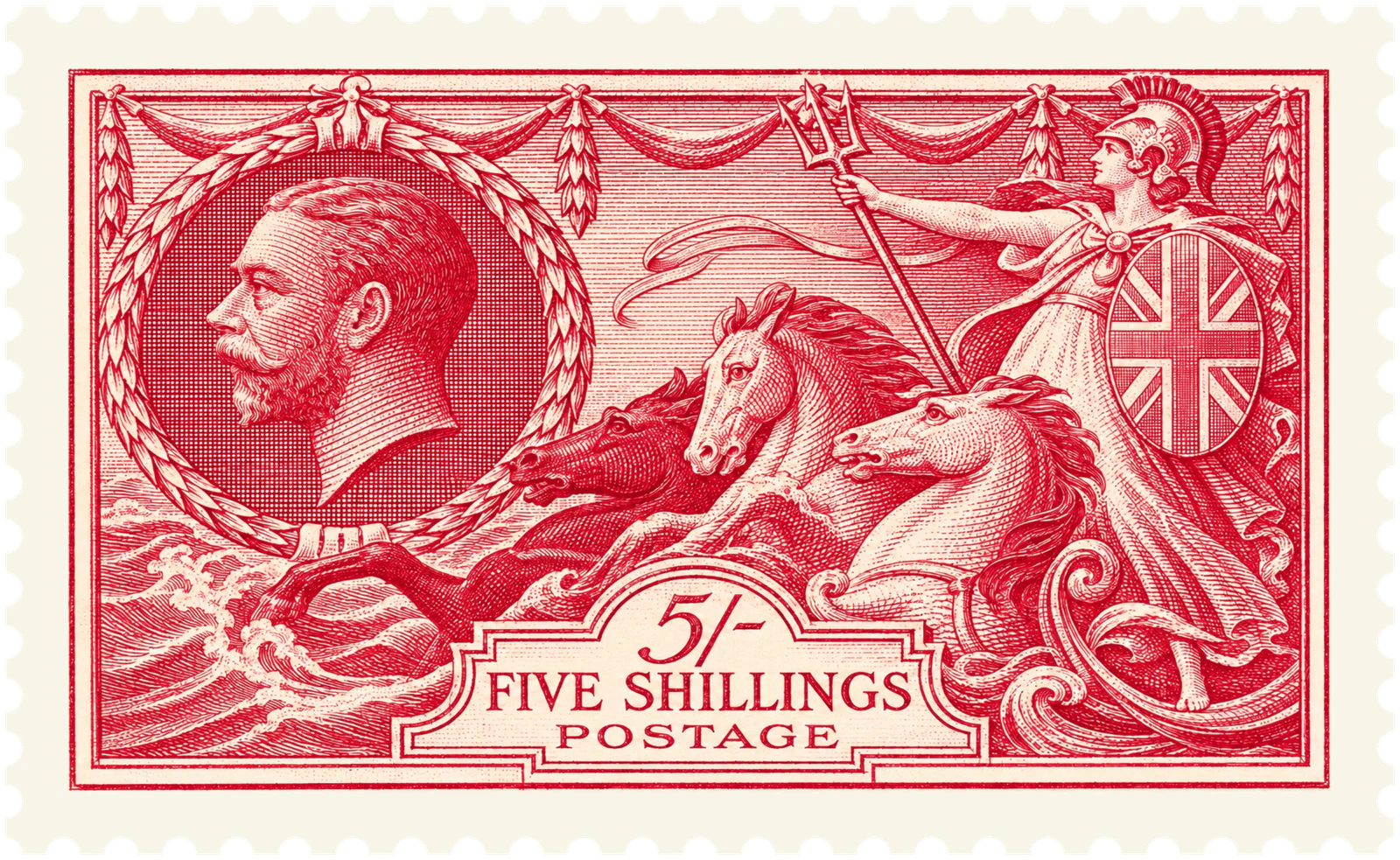
On the stamp you were exploring
George V · 5s bright rose-red · 1934
Harrison engraved the original Seahorse die underlying this 5s bright rose-red design. This is an original-engraving credit, not an attribution of every later printing or re-engraving to his hand.
On the stamp you were exploring
George V · 5s bright rose-red · 1934
Harrison engraved the original Seahorse die underlying this 5s bright rose-red design. This is an original-engraving credit, not an attribution of every later printing or re-engraving to his hand.
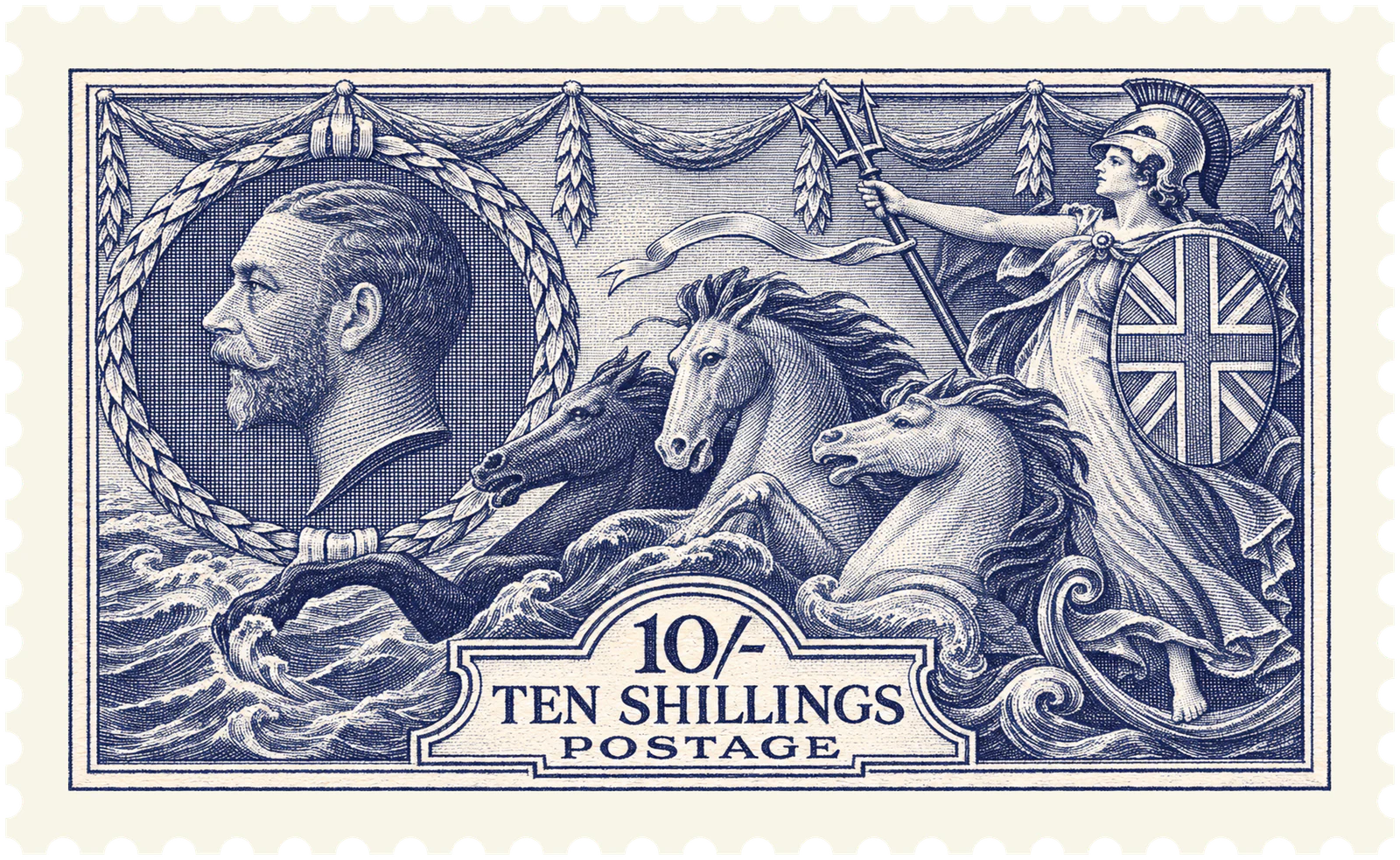
On the stamp you were exploring
George V · 10s indigo · 1934
Harrison engraved the original Seahorse die underlying this 10s indigo design. This is an original-engraving credit, not an attribution of every later printing or re-engraving to his hand.
On the stamp you were exploring
George V · 10s indigo · 1934
Harrison engraved the original Seahorse die underlying this 10s indigo design. This is an original-engraving credit, not an attribution of every later printing or re-engraving to his hand.
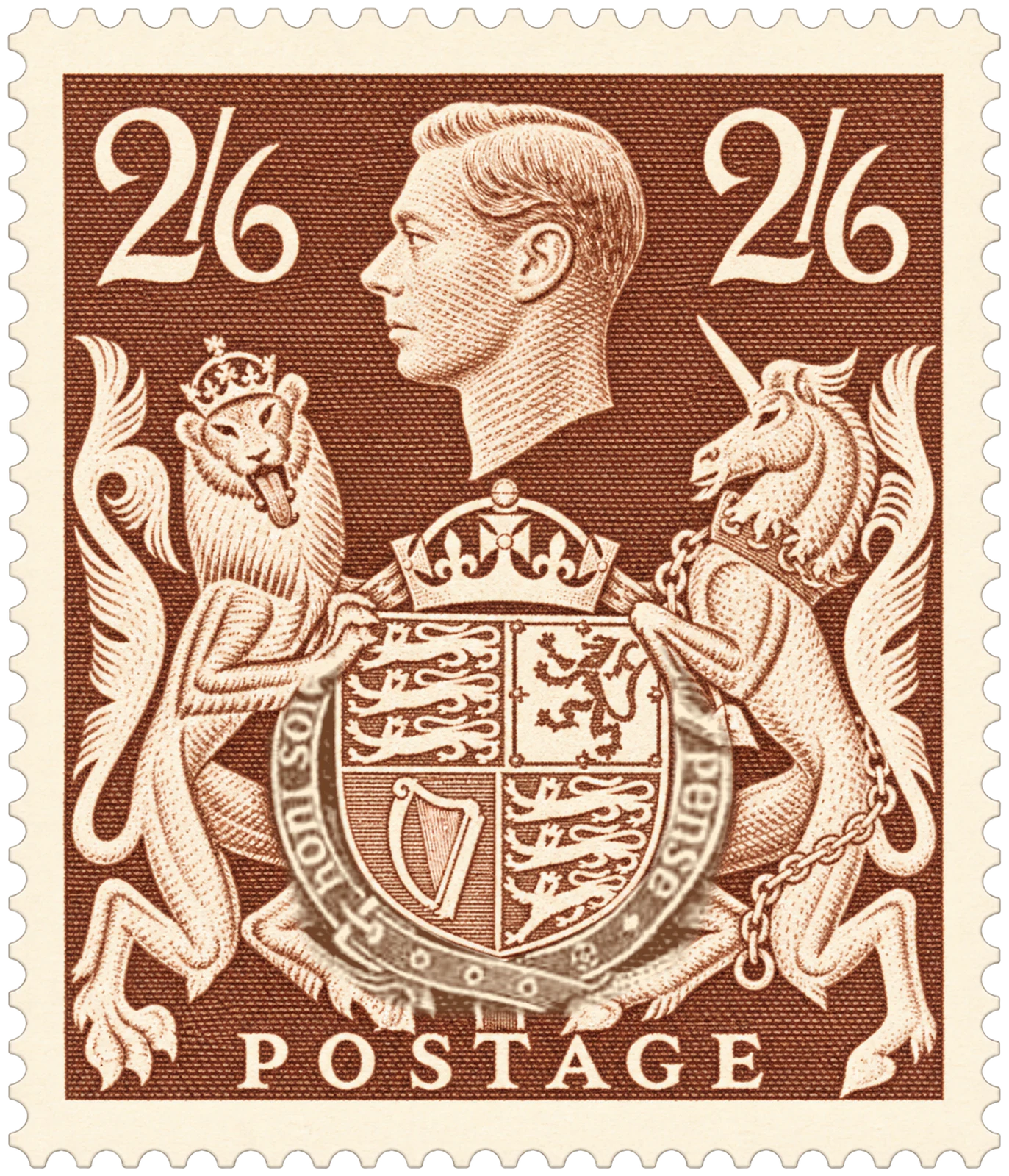
On the stamp you were exploring
George VI · 2s 6d brown · 4 September 1939
Harrison engraved the original George VI high-value design used for this 2s 6d brown stamp. This credit is distinct from the company that printed the stamps.
On the stamp you were exploring
George VI · 2s 6d brown · 4 September 1939
Harrison engraved the original George VI high-value design used for this 2s 6d brown stamp. This credit is distinct from the company that printed the stamps.
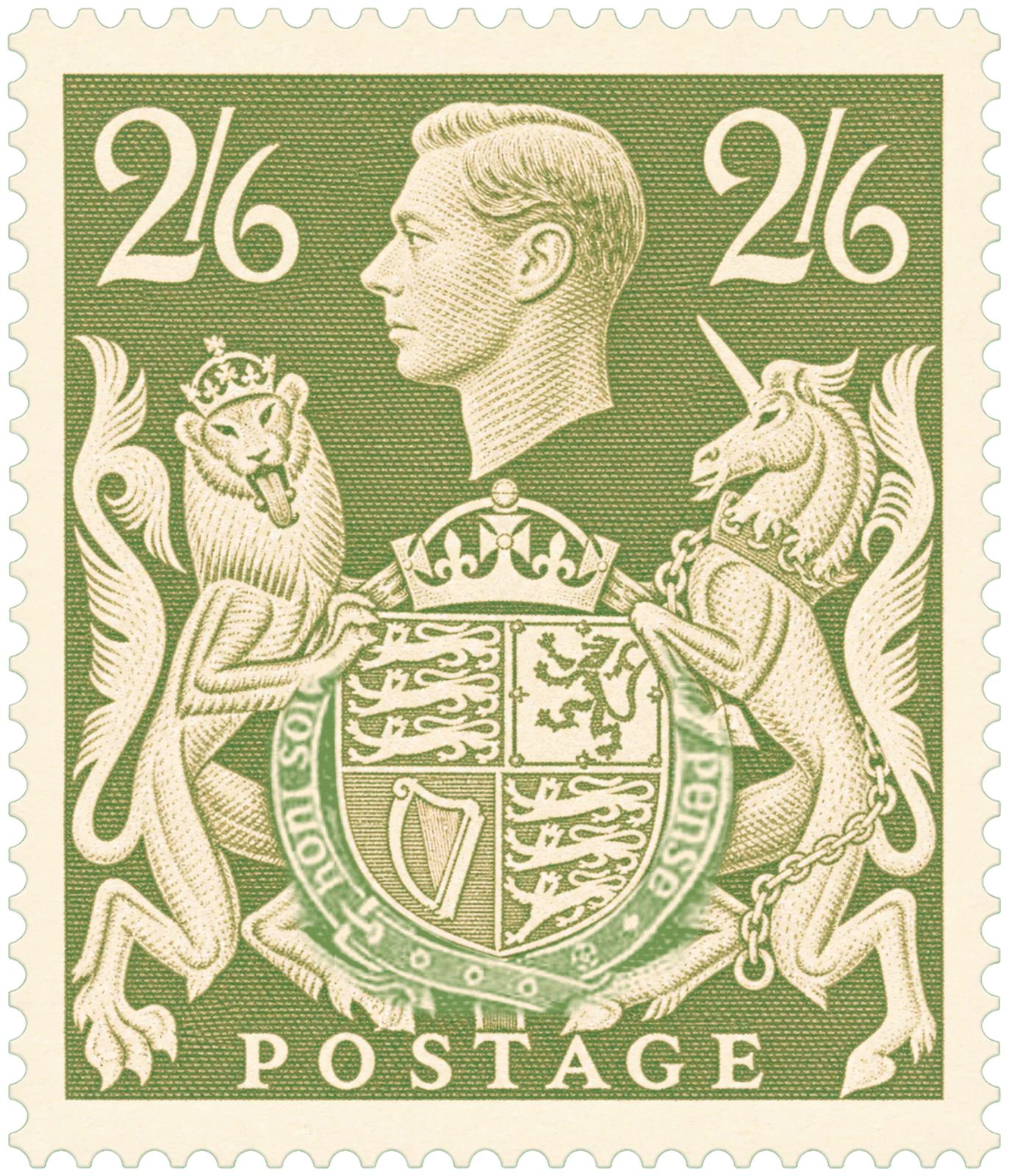
On the stamp you were exploring
George VI · 2s 6d yellow-green · 9 March 1942
Harrison engraved the original George VI high-value design used for this 2s 6d yellow-green stamp. This credit is distinct from the company that printed the stamps.
On the stamp you were exploring
George VI · 2s 6d yellow-green · 9 March 1942
Harrison engraved the original George VI high-value design used for this 2s 6d yellow-green stamp. This credit is distinct from the company that printed the stamps.
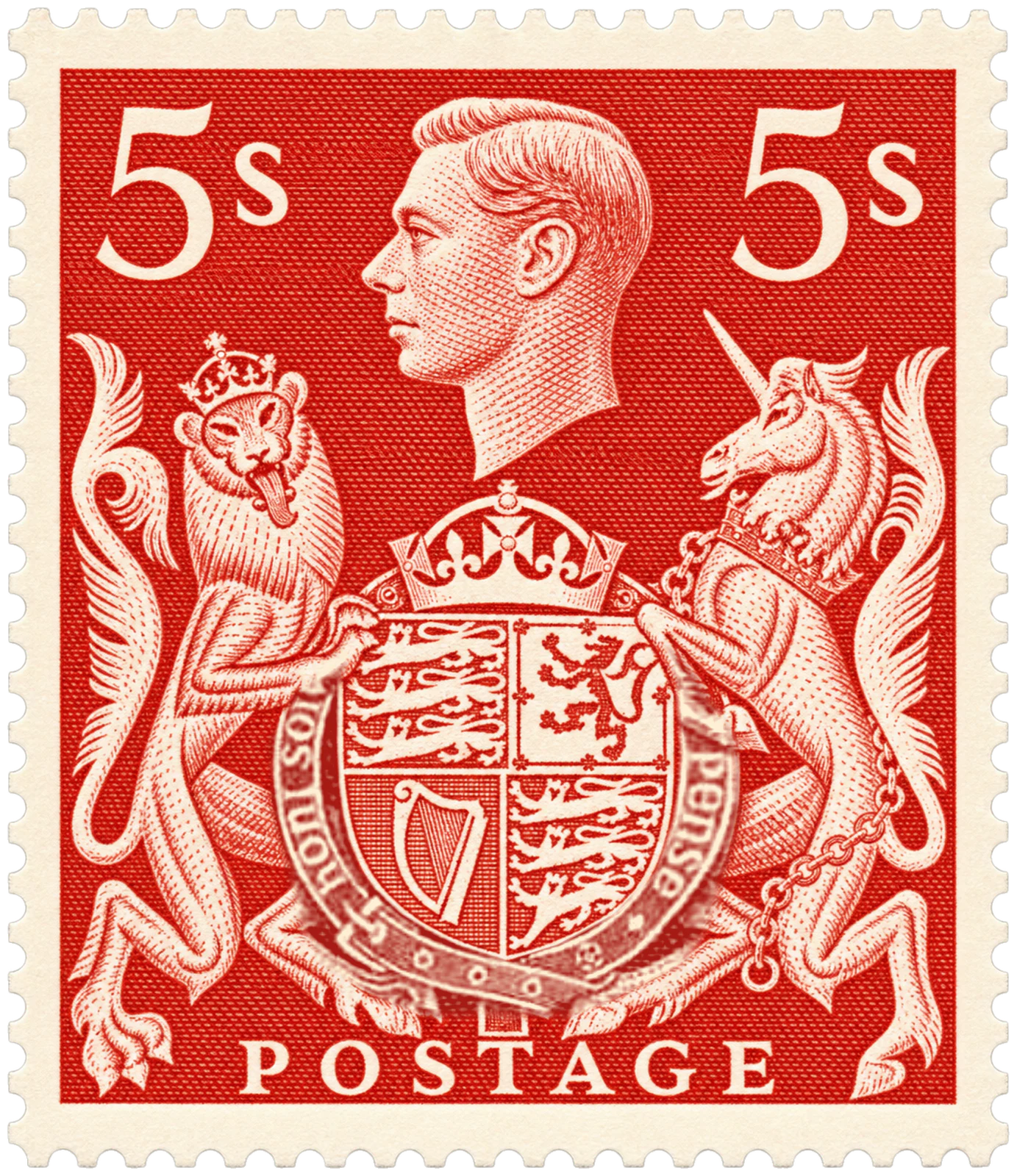
On the stamp you were exploring
George VI · 5s red · 21 August 1939
Harrison engraved the original George VI high-value design used for this 5s red stamp. This credit is distinct from the company that printed the stamps.
On the stamp you were exploring
George VI · 5s red · 21 August 1939
Harrison engraved the original George VI high-value design used for this 5s red stamp. This credit is distinct from the company that printed the stamps.
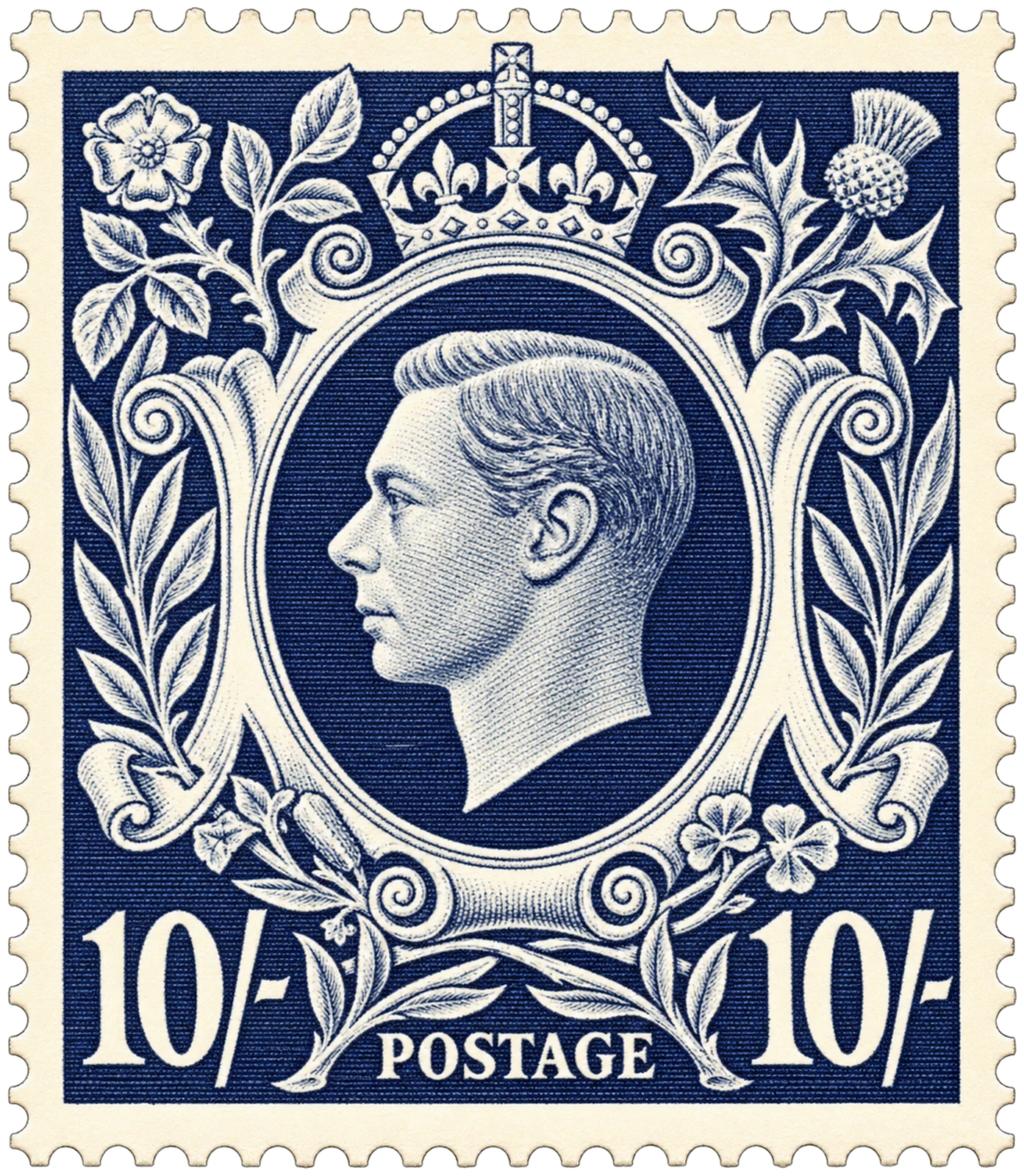
On the stamp you were exploring
George VI · 10s dark blue · 30 October 1939
Harrison engraved the original George VI high-value design used for this 10s dark blue stamp. This credit is distinct from the company that printed the stamps.
On the stamp you were exploring
George VI · 10s dark blue · 30 October 1939
Harrison engraved the original George VI high-value design used for this 10s dark blue stamp. This credit is distinct from the company that printed the stamps.
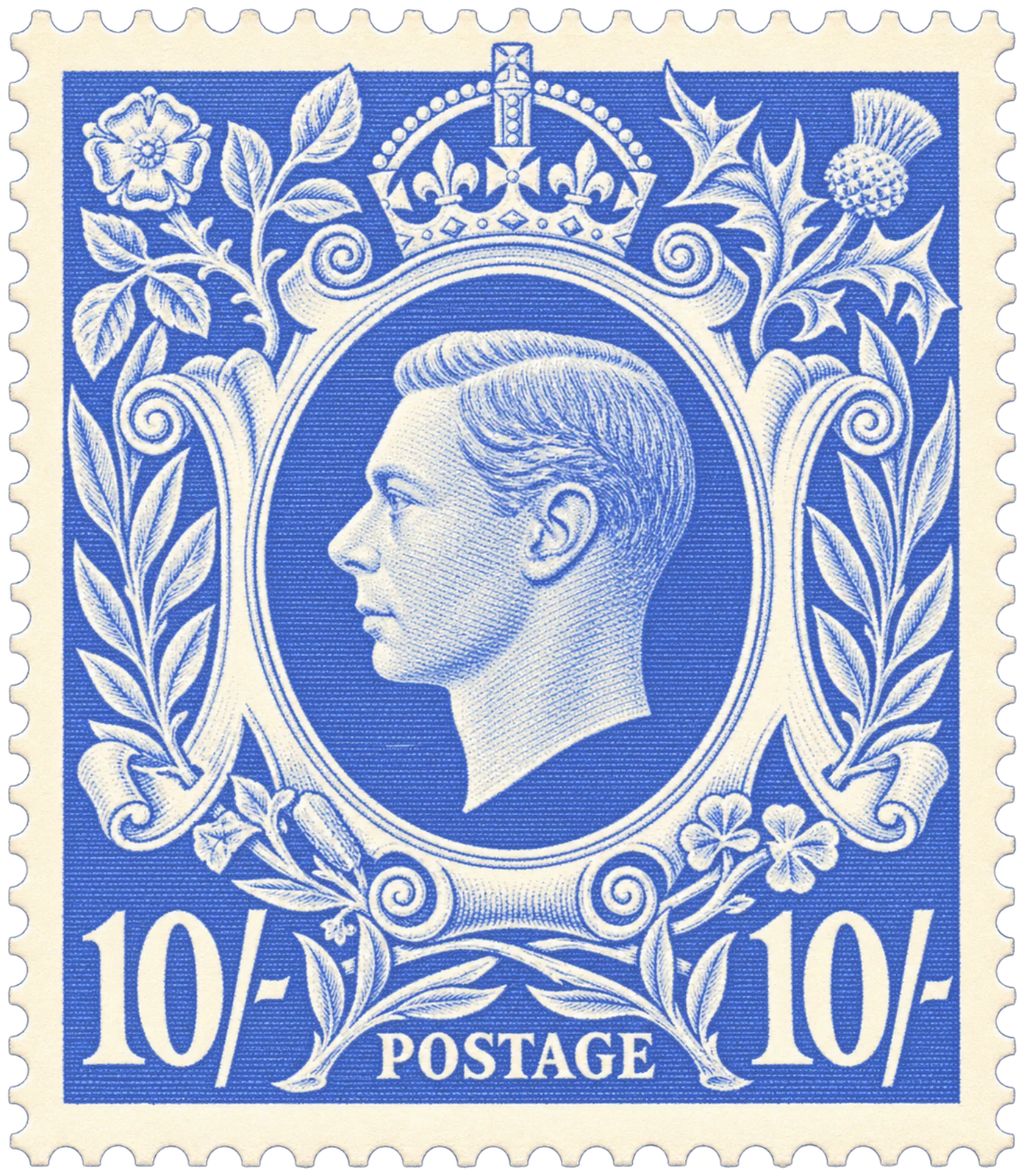
On the stamp you were exploring
George VI · 10s ultramarine · 30 November 1942
Harrison engraved the original George VI high-value design used for this 10s ultramarine stamp. This credit is distinct from the company that printed the stamps.
On the stamp you were exploring
George VI · 10s ultramarine · 30 November 1942
Harrison engraved the original George VI high-value design used for this 10s ultramarine stamp. This credit is distinct from the company that printed the stamps.
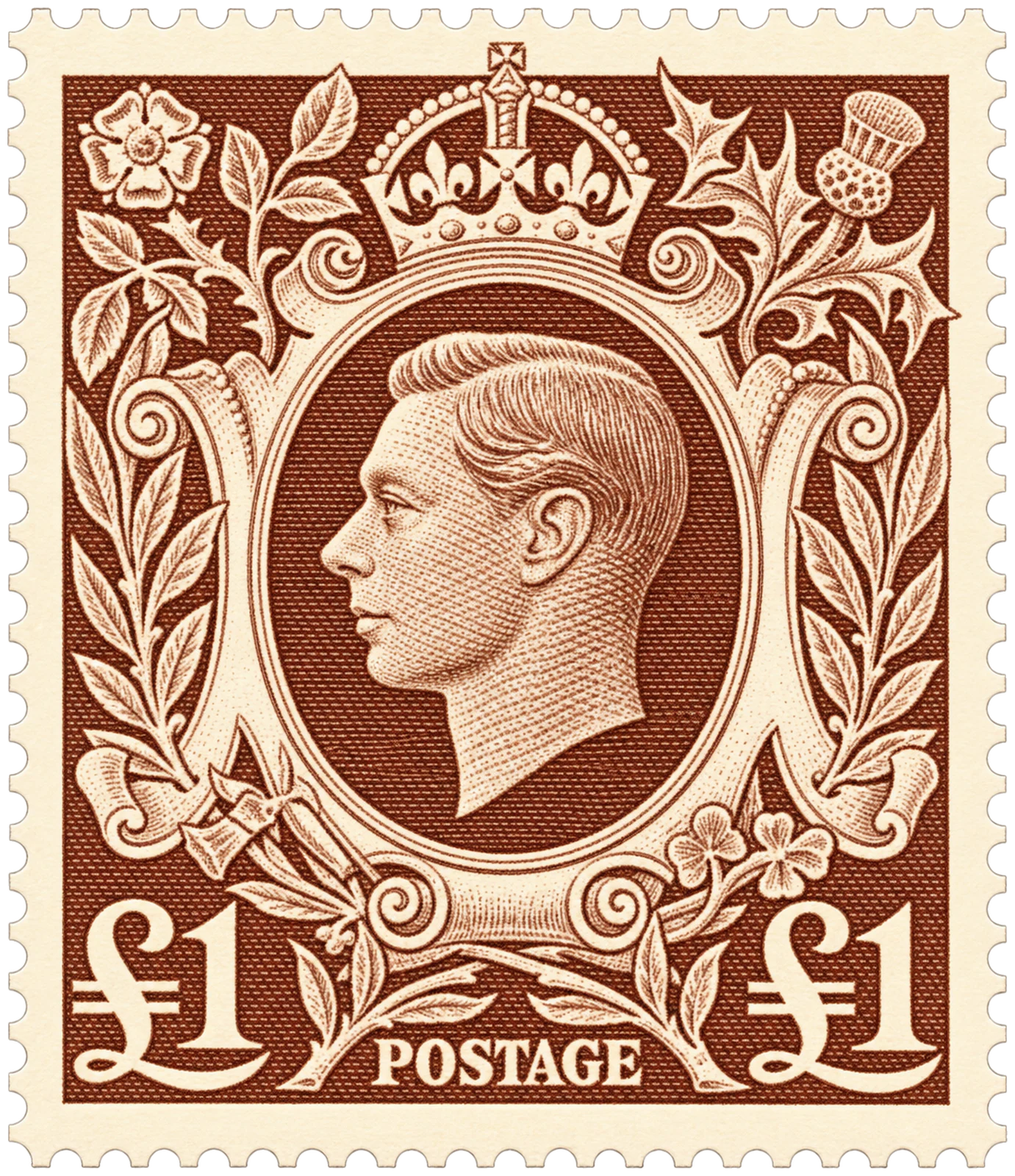
On the stamp you were exploring
George VI · £1 brown · 1 October 1948
Harrison engraved the original George VI high-value design used for this £1 brown stamp. The £1 value adaptation was carried out by Waterlow & Sons.
On the stamp you were exploring
George VI · £1 brown · 1 October 1948
Harrison engraved the original George VI high-value design used for this £1 brown stamp. The £1 value adaptation was carried out by Waterlow & Sons.
Example stamps
Representative examples from 61 stamps associated with this person. Click a stamp to magnify it, or follow its caption link to explore the design.
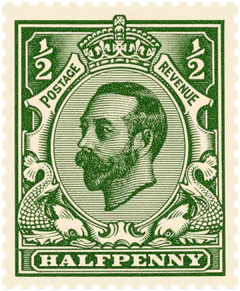
George V ½d green 22 June 1911 Portrait engraving 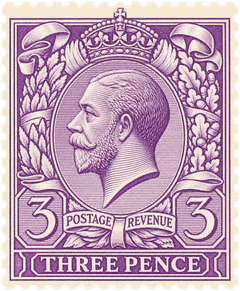
George V 3d violet 8 October 1912 Portrait engraving 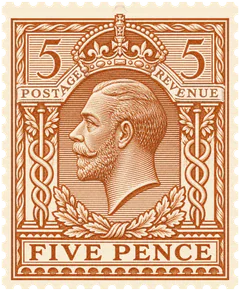
George V 5d yellow-brown 30 June 1913 Portrait engraving 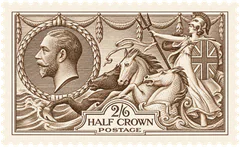
George V 2s 6d sepia-brown 30 June 1913 Original die engraving 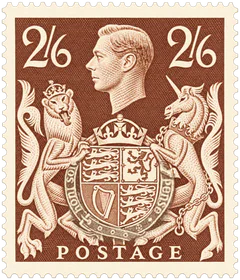
George VI 2s 6d brown 4 September 1939 Original engraving 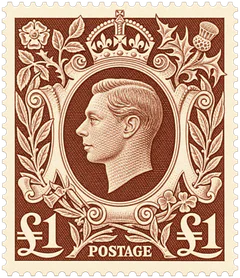
George VI £1 brown 1 October 1948 Original engraving
Learning at the bench
Born in Manchester in 1872, Harrison was the son of an engraver. He began his apprenticeship at thirteen and made his first engraving at fourteen. The craft required close control of a cutting tool: lines of different width, depth and spacing could suggest light, shadow and texture. [1]
Portraits made from lines
Harrison translated George V’s photographic or modelled likenesses into stamp engravings and engraved the original Seahorse design. He later worked on George VI’s earlier high values. An original die is the engraved master from which printing tools can be made; a later printer’s use of that design does not prove a new personal commission to the original engraver. [2, 3]
Tools that outlived their owner
After the First World War Harrison became Waterlow’s chief portrait engraver. He continued making bookplates after retirement; his last was made for his son when he was eighty-two. In 1985 his son donated engraving tools to the National Postal Museum, preserving something of the working life behind the stamps. [1]