
Harrison & Sons
The printers behind generations of everyday stamps
A stamp begins as artwork, but a printer must turn that image into millions of small, dependable copies. Harrison & Sons helped make photogravure part of everyday British life: a process capable of reproducing a softly shaded royal portrait alongside crisp lettering.
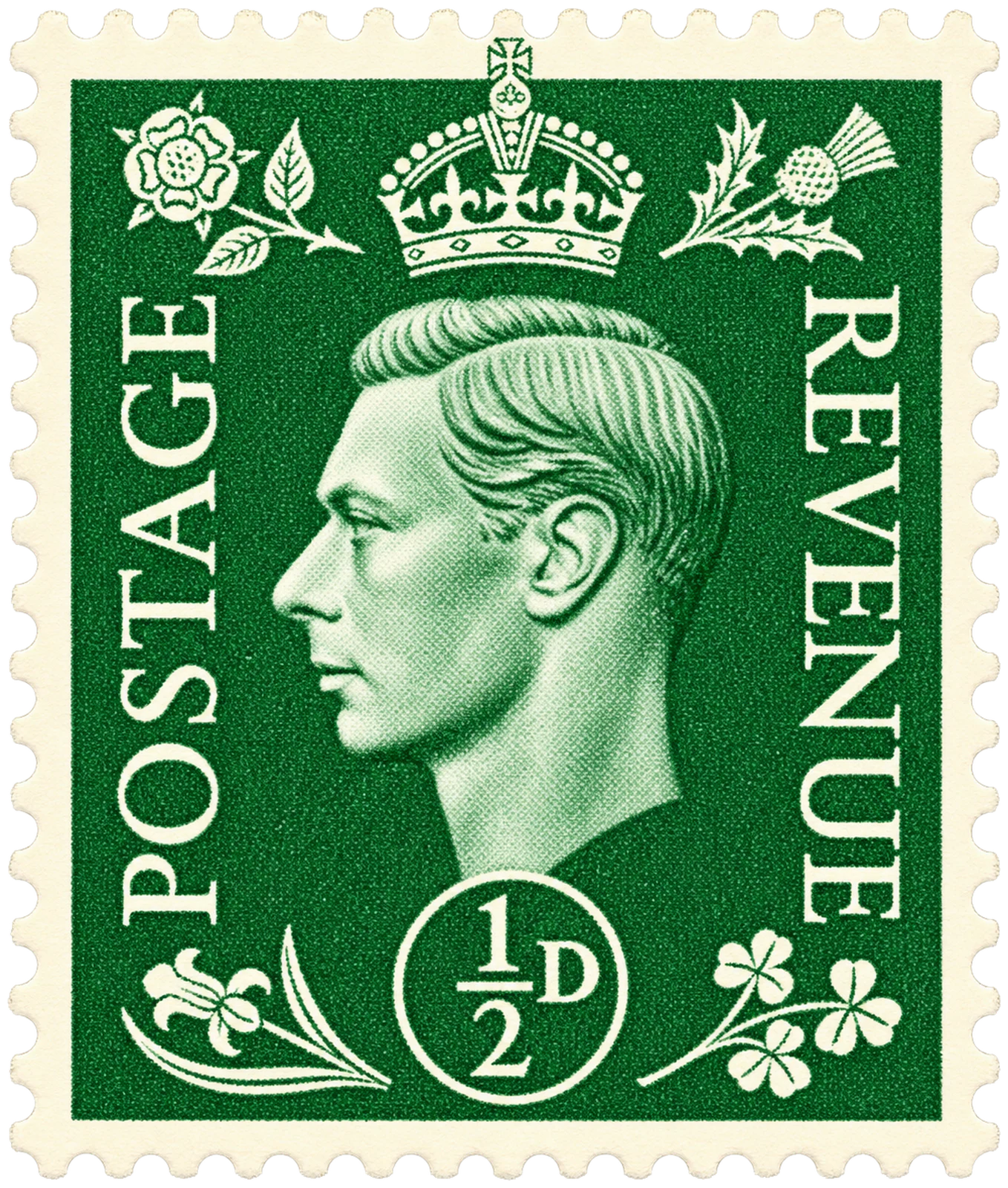
On the stamp you were exploring
George VI · ½d green · 10 May 1937
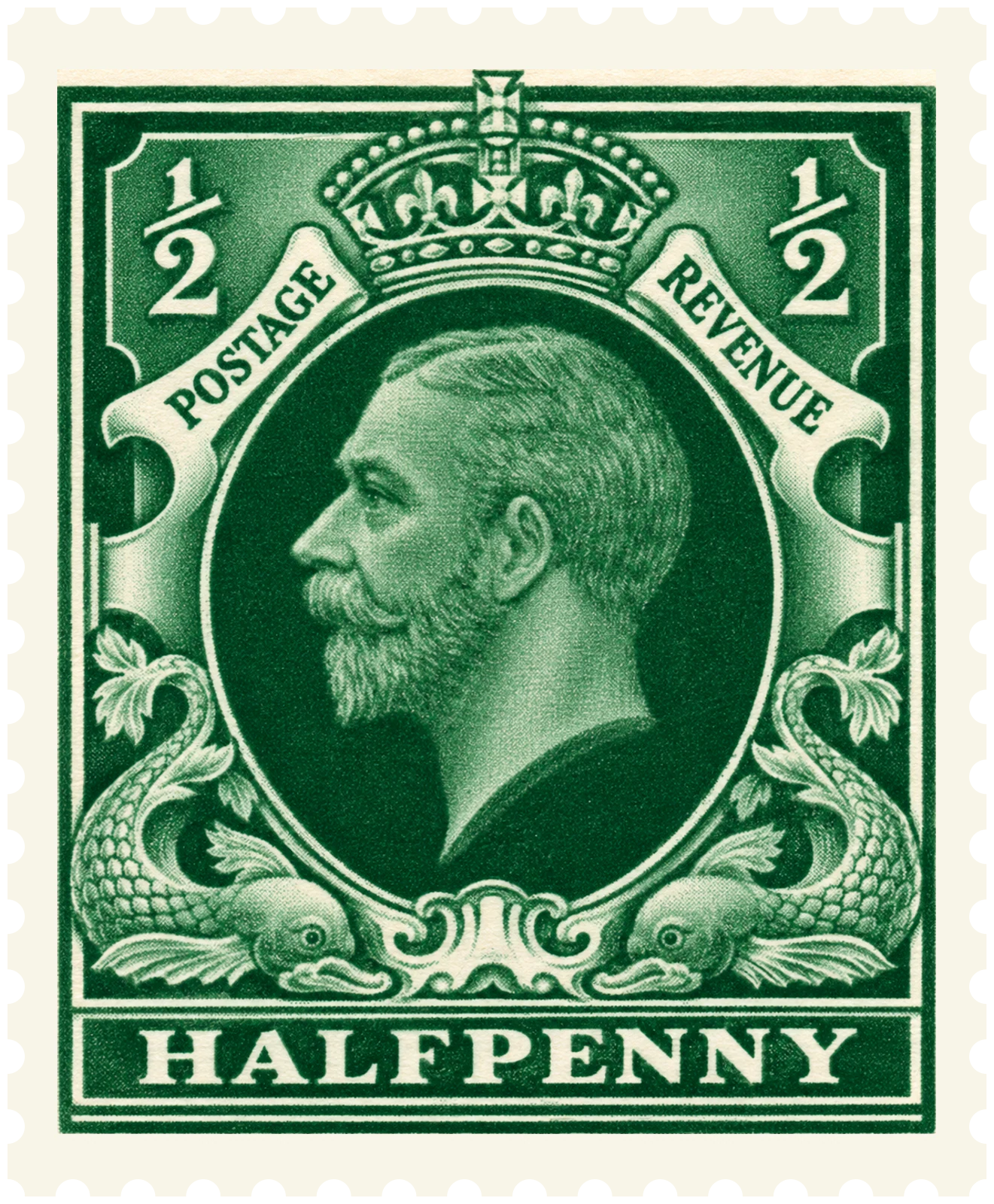
Harrison & Sons printed this halfpenny by photogravure, using recessed cells in a printing cylinder to reproduce the shaded portrait and its frame. The firm printed all of George VI’s low-value definitives; the Post Office even prepared emergency alternatives because it depended on this single gravure supplier.
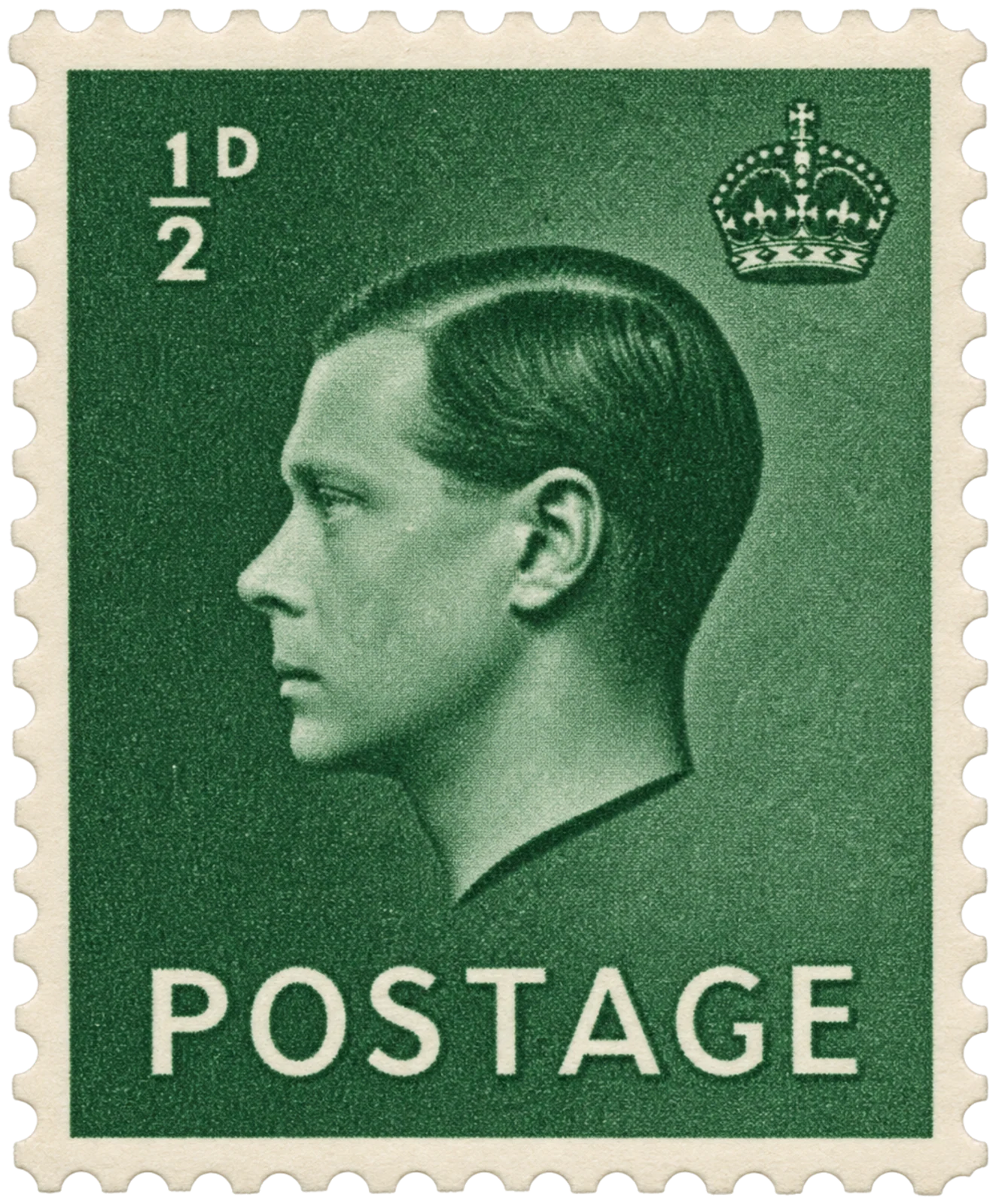
On the stamp you were exploring
Edward VIII · ½d green · 1 September 1936
Harrison & Sons adapted the layout and printed this ½d green Edward VIII stamp by photogravure. Recessed cells in printing cylinders reproduced the photographic tones as well as the surrounding colour and lettering.
On the stamp you were exploring
Edward VIII · ½d green · 1 September 1936
Harrison & Sons adapted the layout and printed this ½d green Edward VIII stamp by photogravure. Recessed cells in printing cylinders reproduced the photographic tones as well as the surrounding colour and lettering.
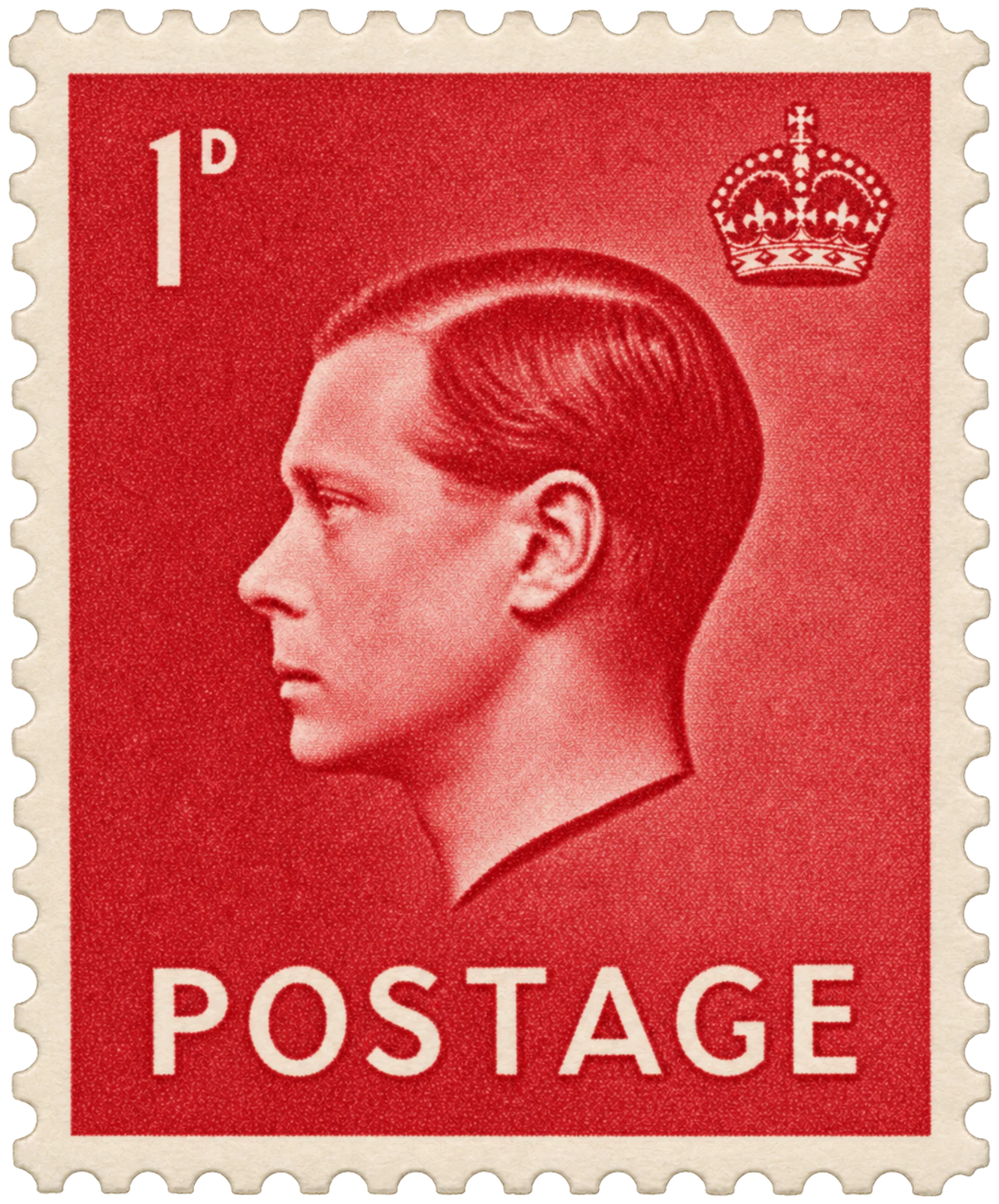
On the stamp you were exploring
Edward VIII · 1d scarlet · 14 September 1936
Harrison & Sons adapted the layout and printed this 1d scarlet Edward VIII stamp by photogravure. Recessed cells in printing cylinders reproduced the photographic tones as well as the surrounding colour and lettering.
On the stamp you were exploring
Edward VIII · 1d scarlet · 14 September 1936
Harrison & Sons adapted the layout and printed this 1d scarlet Edward VIII stamp by photogravure. Recessed cells in printing cylinders reproduced the photographic tones as well as the surrounding colour and lettering.
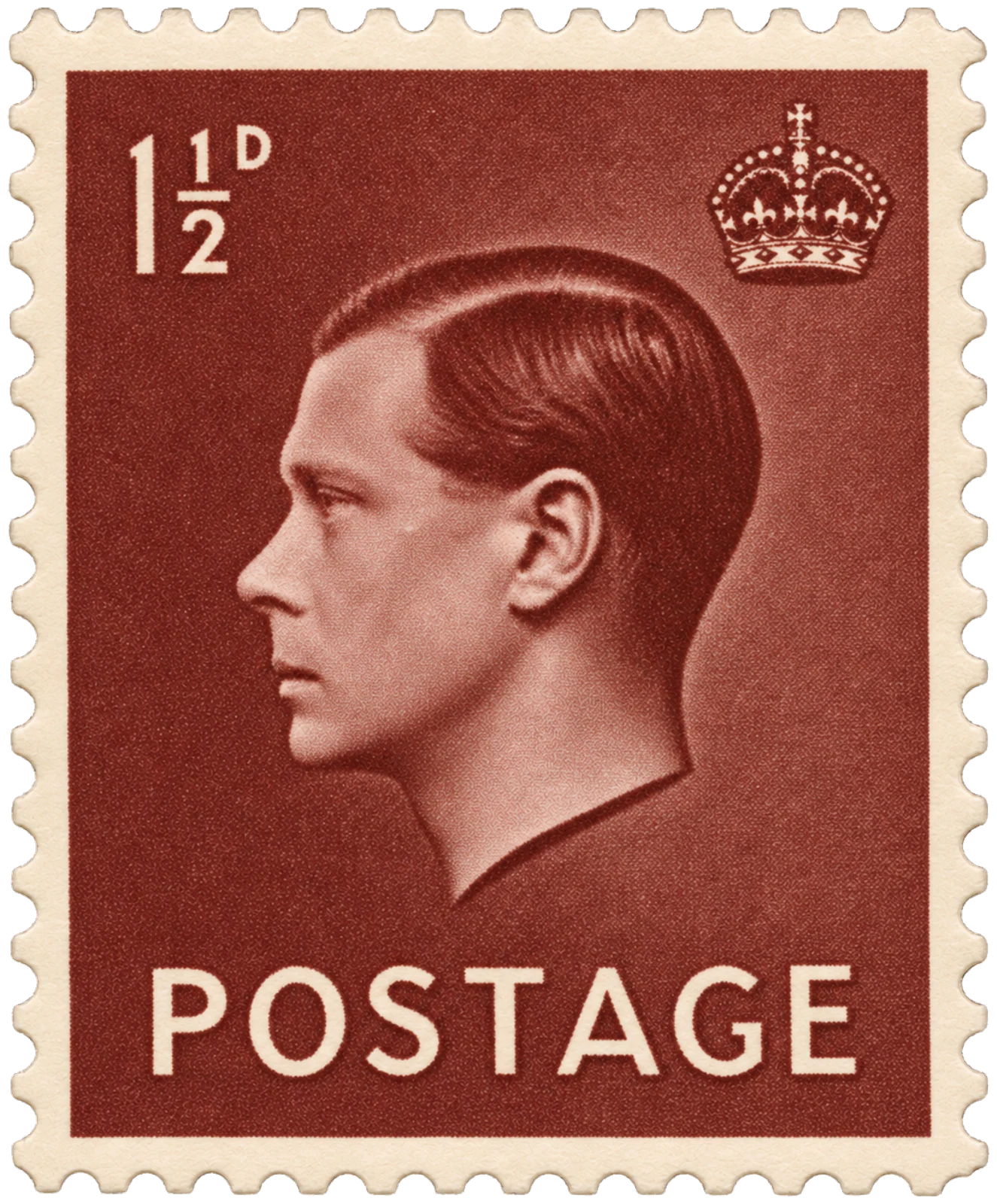
On the stamp you were exploring
Edward VIII · 1½d red-brown · 1 September 1936
Harrison & Sons adapted the layout and printed this 1½d red-brown Edward VIII stamp by photogravure. Recessed cells in printing cylinders reproduced the photographic tones as well as the surrounding colour and lettering.
On the stamp you were exploring
Edward VIII · 1½d red-brown · 1 September 1936
Harrison & Sons adapted the layout and printed this 1½d red-brown Edward VIII stamp by photogravure. Recessed cells in printing cylinders reproduced the photographic tones as well as the surrounding colour and lettering.
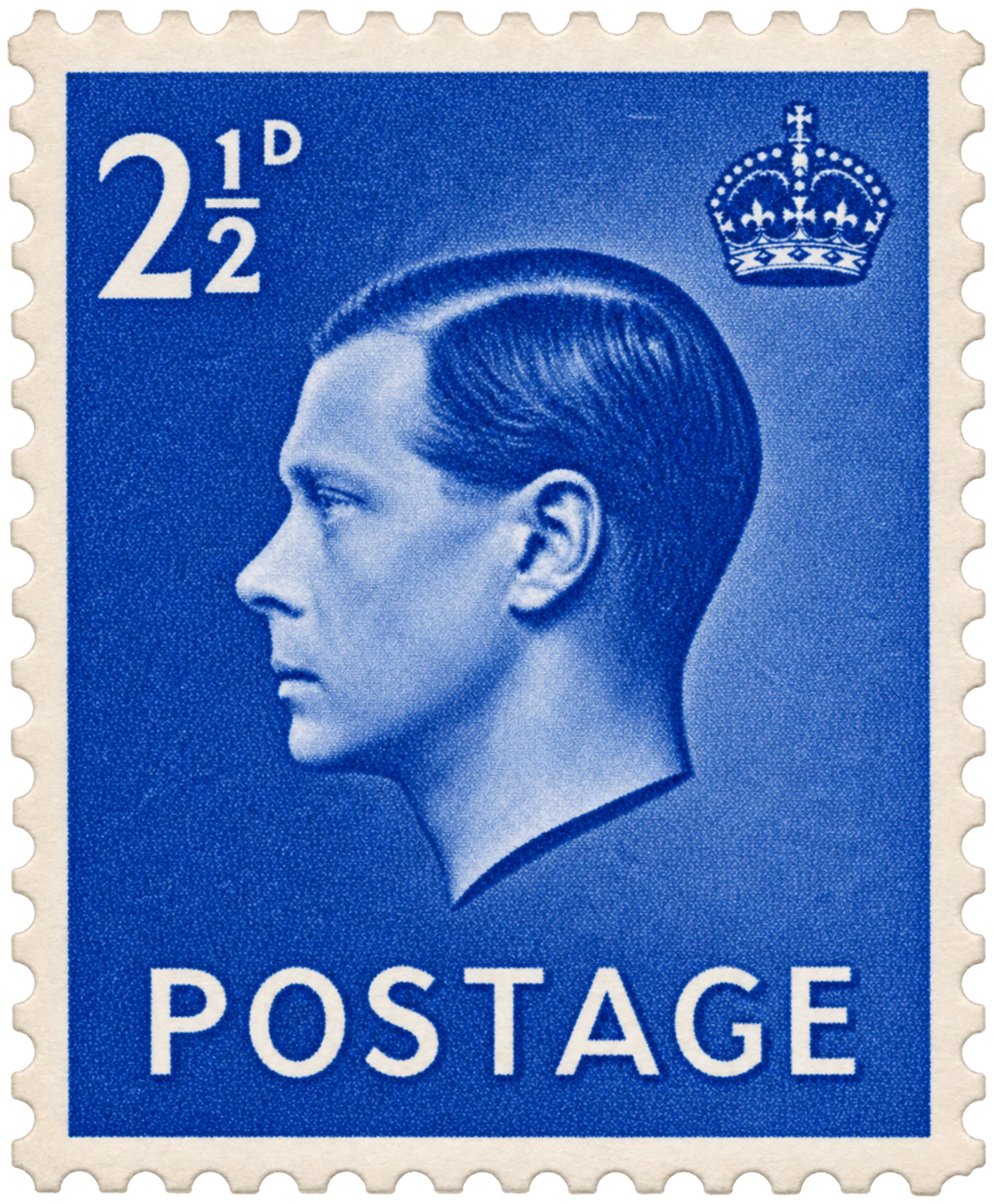
On the stamp you were exploring
Edward VIII · 2½d bright blue · 1 September 1936
Harrison & Sons adapted the layout and printed this 2½d bright blue Edward VIII stamp by photogravure. Recessed cells in printing cylinders reproduced the photographic tones as well as the surrounding colour and lettering.
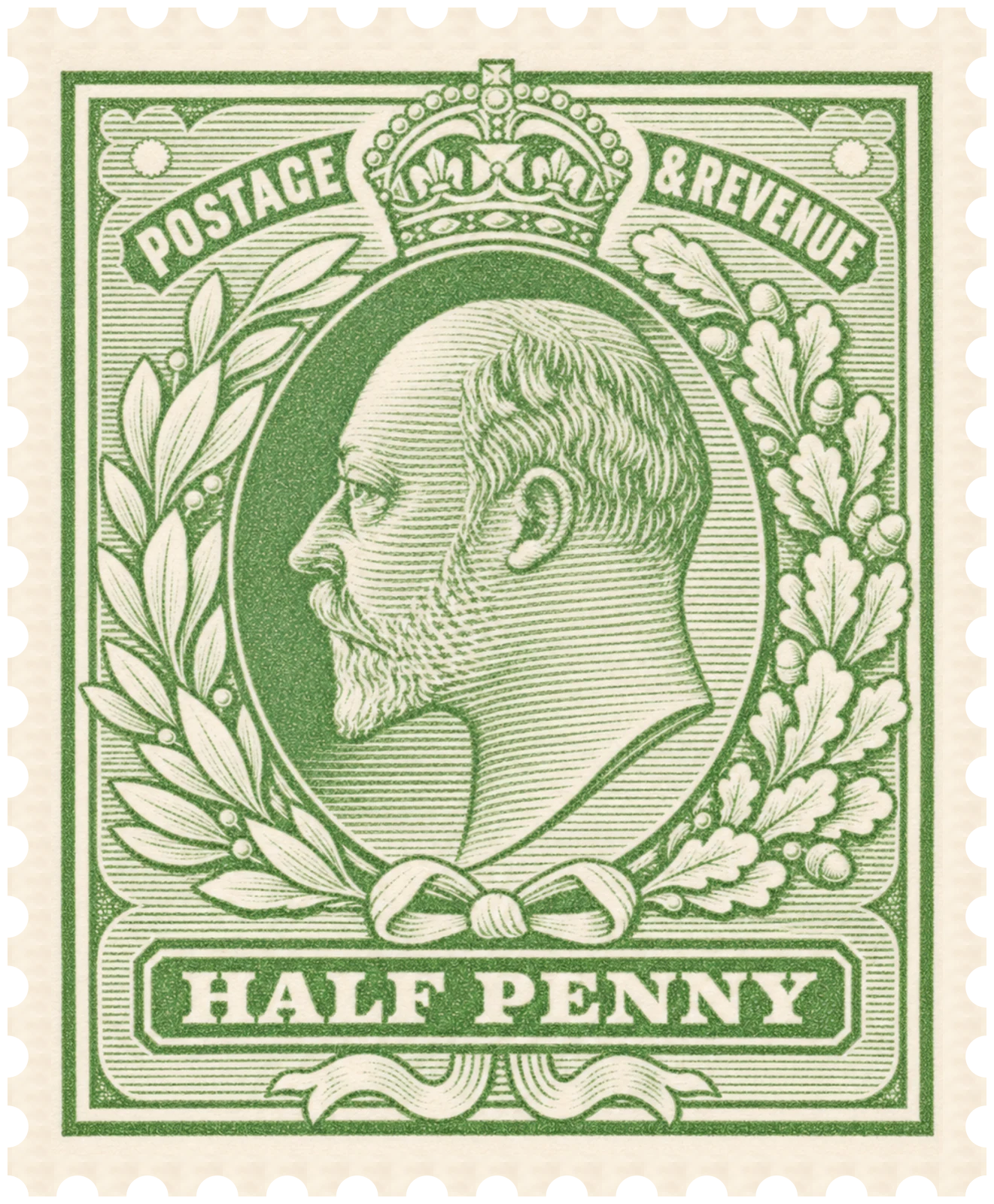
On the stamp you were exploring
Edward VII · ½d dull yellow-green · 1911
Harrison & Sons took over the contract from 1 January 1911. This page pairs its two perforation versions of the Edward VII design; neither is a De La Rue printing.
On the stamp you were exploring
Edward VII · ½d dull yellow-green · 1911
Harrison & Sons took over the contract from 1 January 1911. This page pairs its two perforation versions of the Edward VII design; neither is a De La Rue printing.
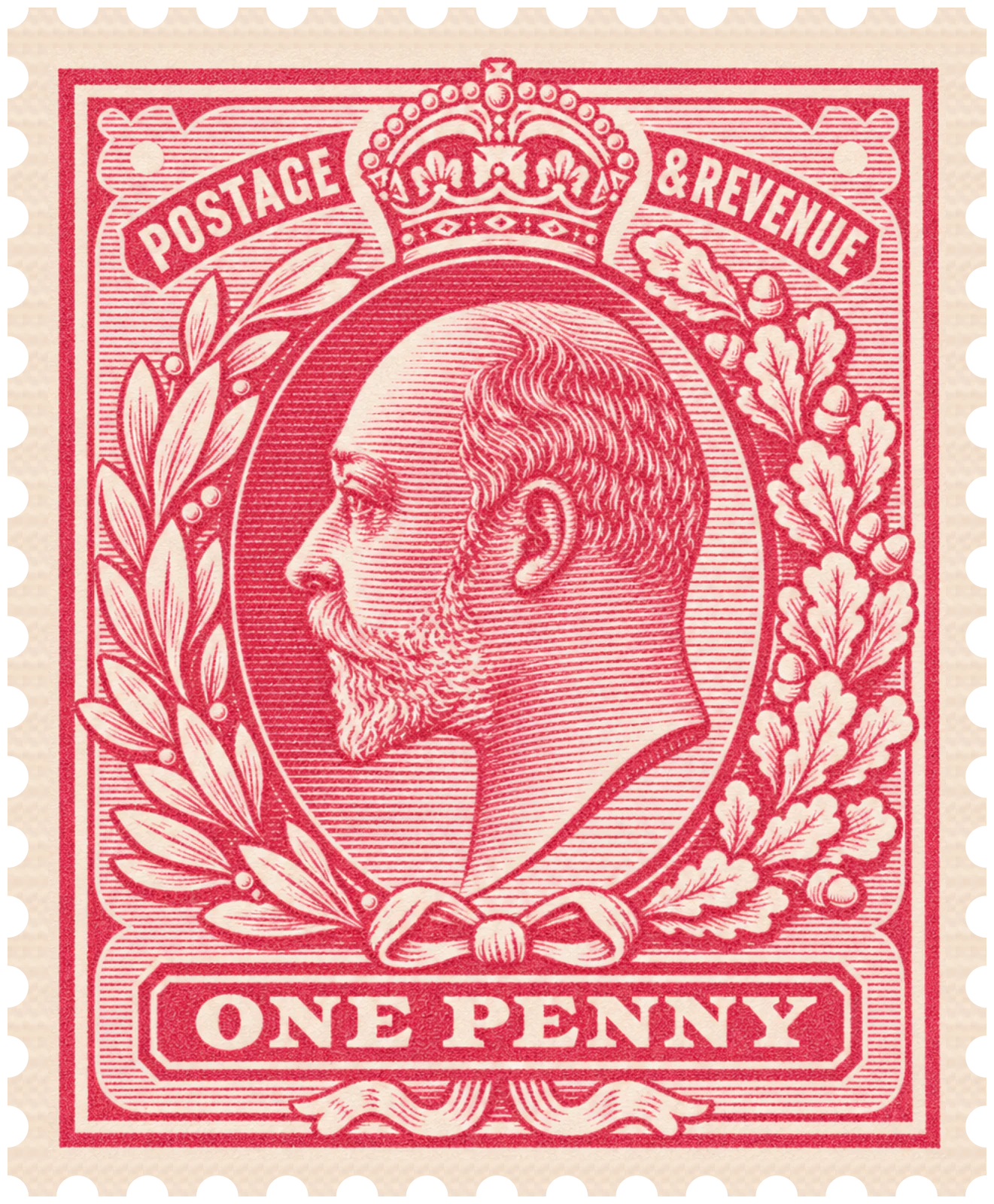
On the stamp you were exploring
Edward VII · 1d rose-red · 1911-05-04
Harrison & Sons took over the contract from 1 January 1911. This page pairs its two perforation versions of the Edward VII design; neither is a De La Rue printing.
On the stamp you were exploring
Edward VII · 1d rose-red · 1911-05-04
Harrison & Sons took over the contract from 1 January 1911. This page pairs its two perforation versions of the Edward VII design; neither is a De La Rue printing.
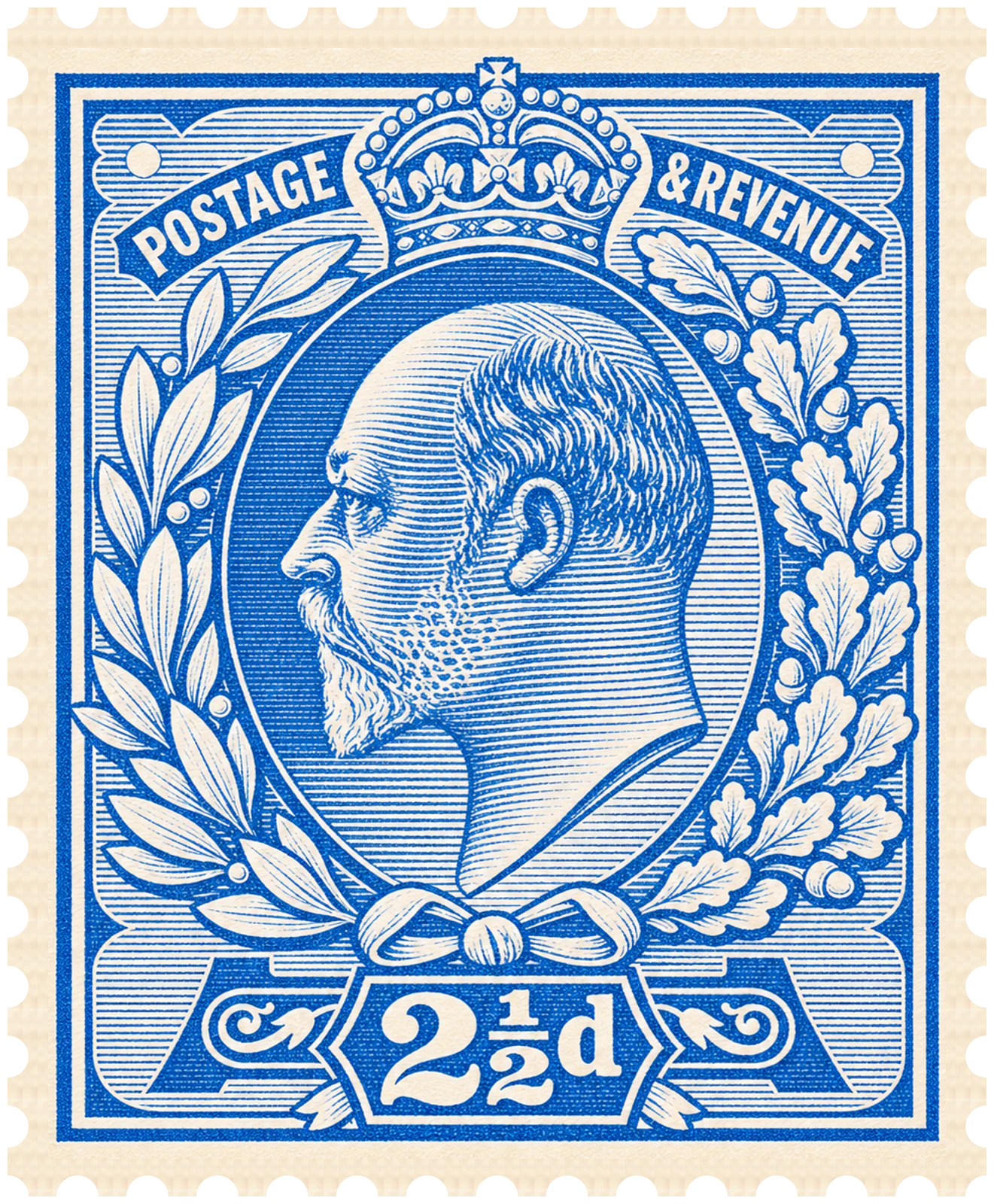
On the stamp you were exploring
Edward VII · 2½d bright blue · 1911-07-10
Harrison & Sons took over the contract from 1 January 1911. This page pairs its two perforation versions of the Edward VII design; neither is a De La Rue printing.
On the stamp you were exploring
Edward VII · 2½d bright blue · 1911-07-10
Harrison & Sons took over the contract from 1 January 1911. This page pairs its two perforation versions of the Edward VII design; neither is a De La Rue printing.
On the stamp you were exploring
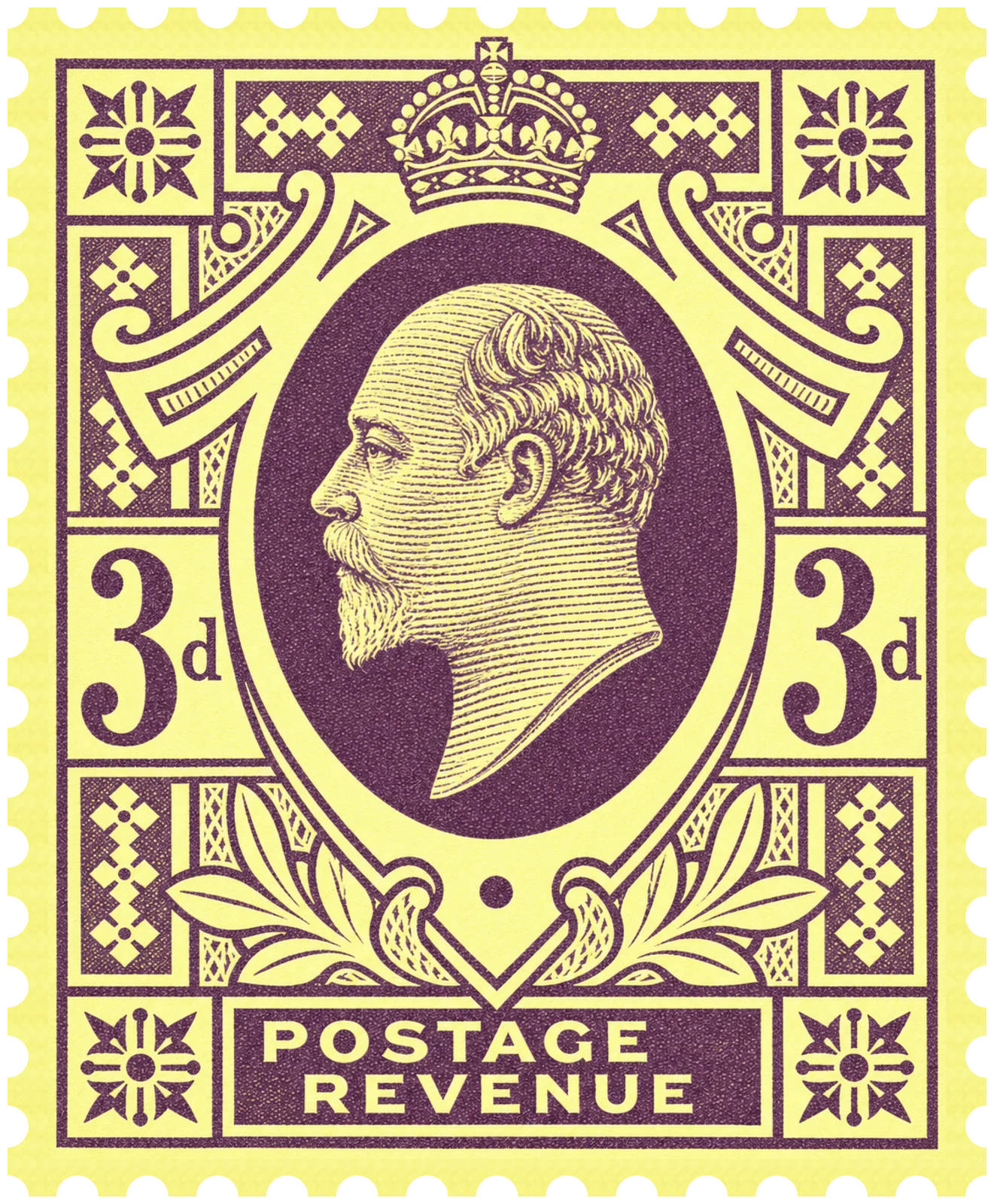
Edward VII · 3d purple on lemon · 1911
Harrison & Sons took over the contract from 1 January 1911. This page pairs its two perforation versions of the Edward VII design; neither is a De La Rue printing.
On the stamp you were exploring
Edward VII · 3d purple on lemon · 1911
Harrison & Sons took over the contract from 1 January 1911. This page pairs its two perforation versions of the Edward VII design; neither is a De La Rue printing.
On the stamp you were exploring
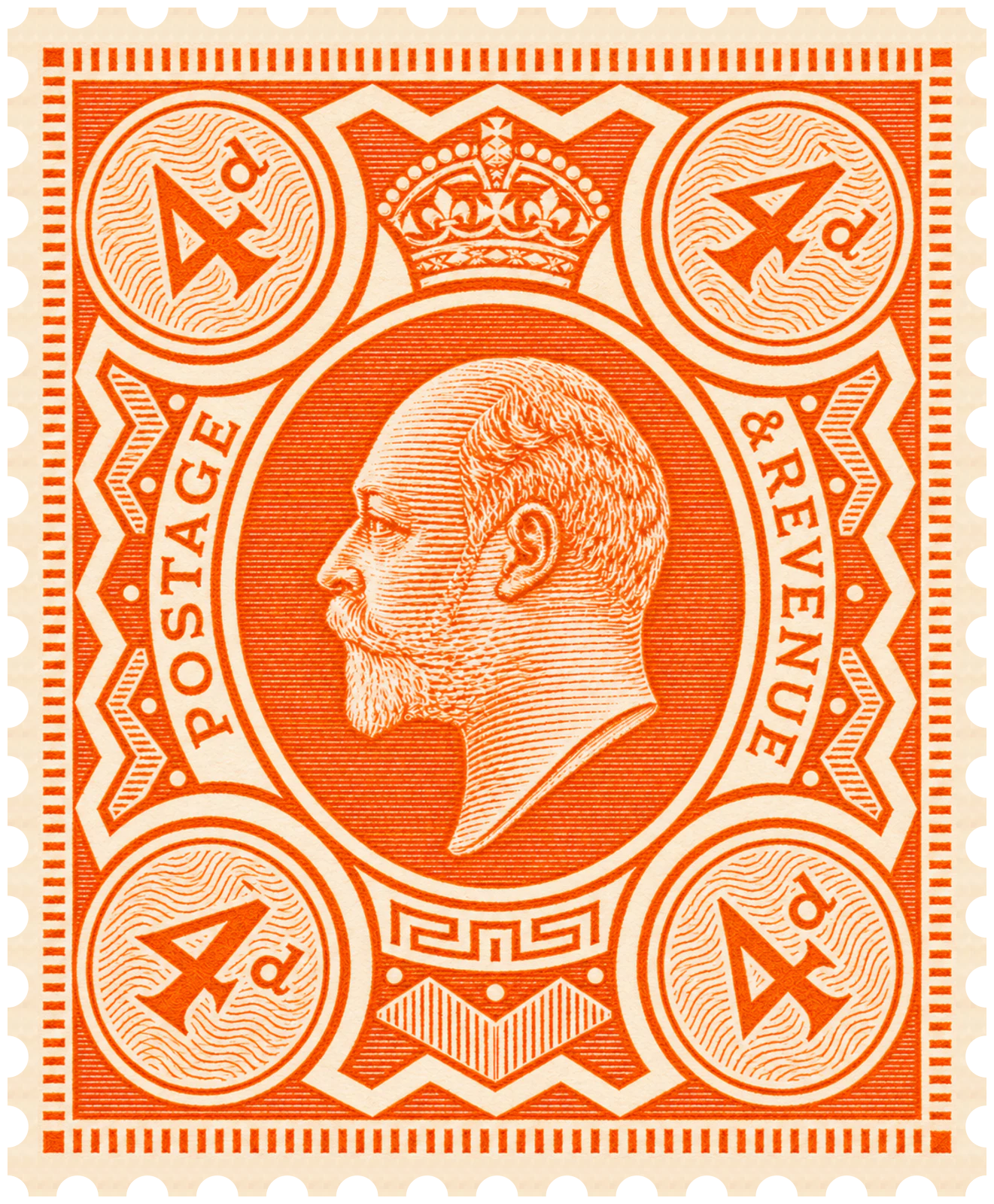
Edward VII · 4d bright orange · 1911-07-16
Harrison & Sons took over the contract from 1 January 1911. This page pairs its two perforation versions of the Edward VII design; neither is a De La Rue printing.
On the stamp you were exploring
Edward VII · 4d bright orange · 1911-07-16
Harrison & Sons took over the contract from 1 January 1911. This page pairs its two perforation versions of the Edward VII design; neither is a De La Rue printing.
On the stamp you were exploring
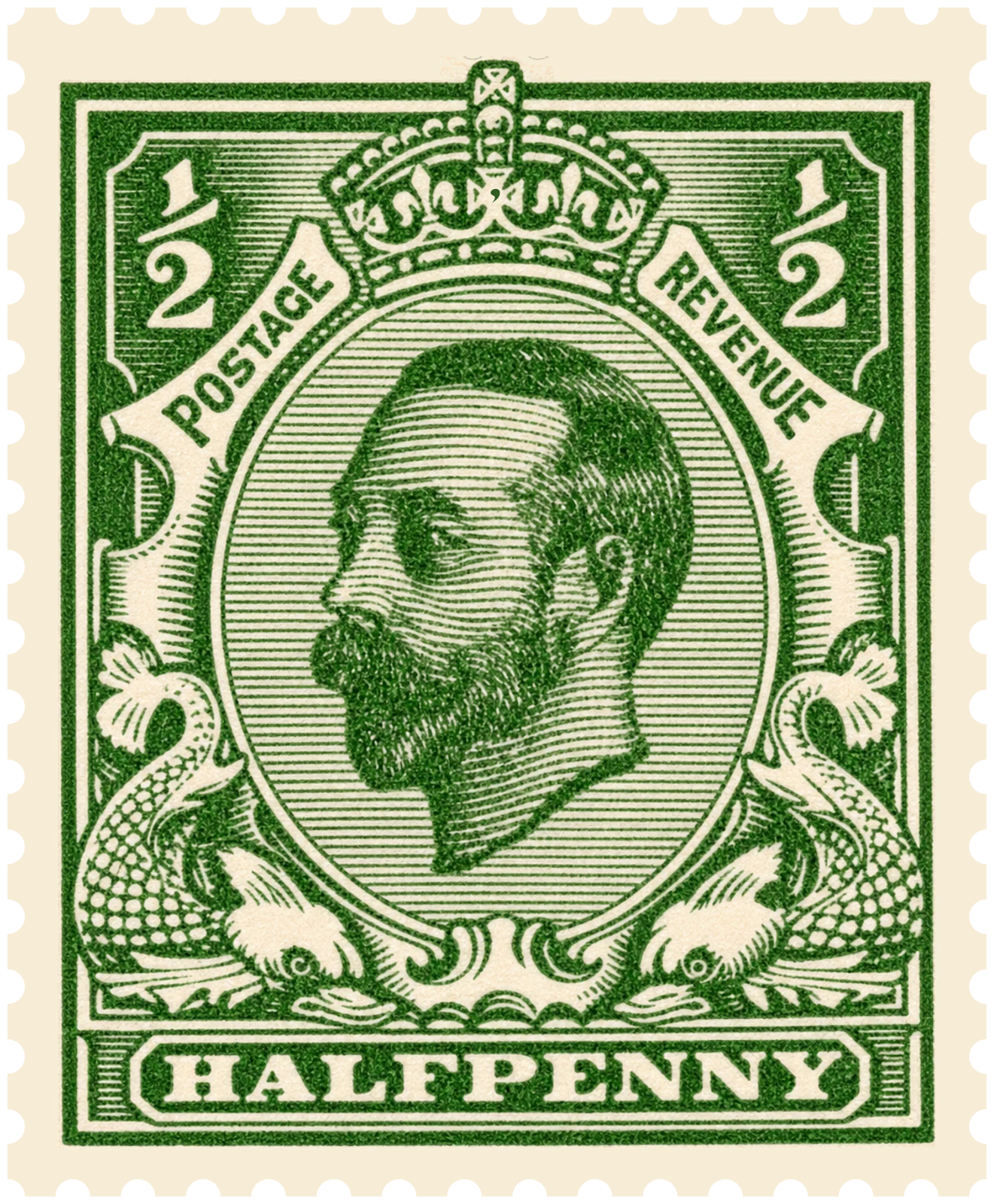
George V · ½d green · 22 June 1911
This ½d Die 1A, Imperial Crown issue is attributed to Harrison & Sons. Somerset House also printed other Downey Head varieties, normally identifiable on surviving marginal controls by a stop after the control letter.
On the stamp you were exploring
George V · ½d green · 22 June 1911
This ½d Die 1A, Imperial Crown issue is attributed to Harrison & Sons. Somerset House also printed other Downey Head varieties, normally identifiable on surviving marginal controls by a stop after the control letter.
On the stamp you were exploring
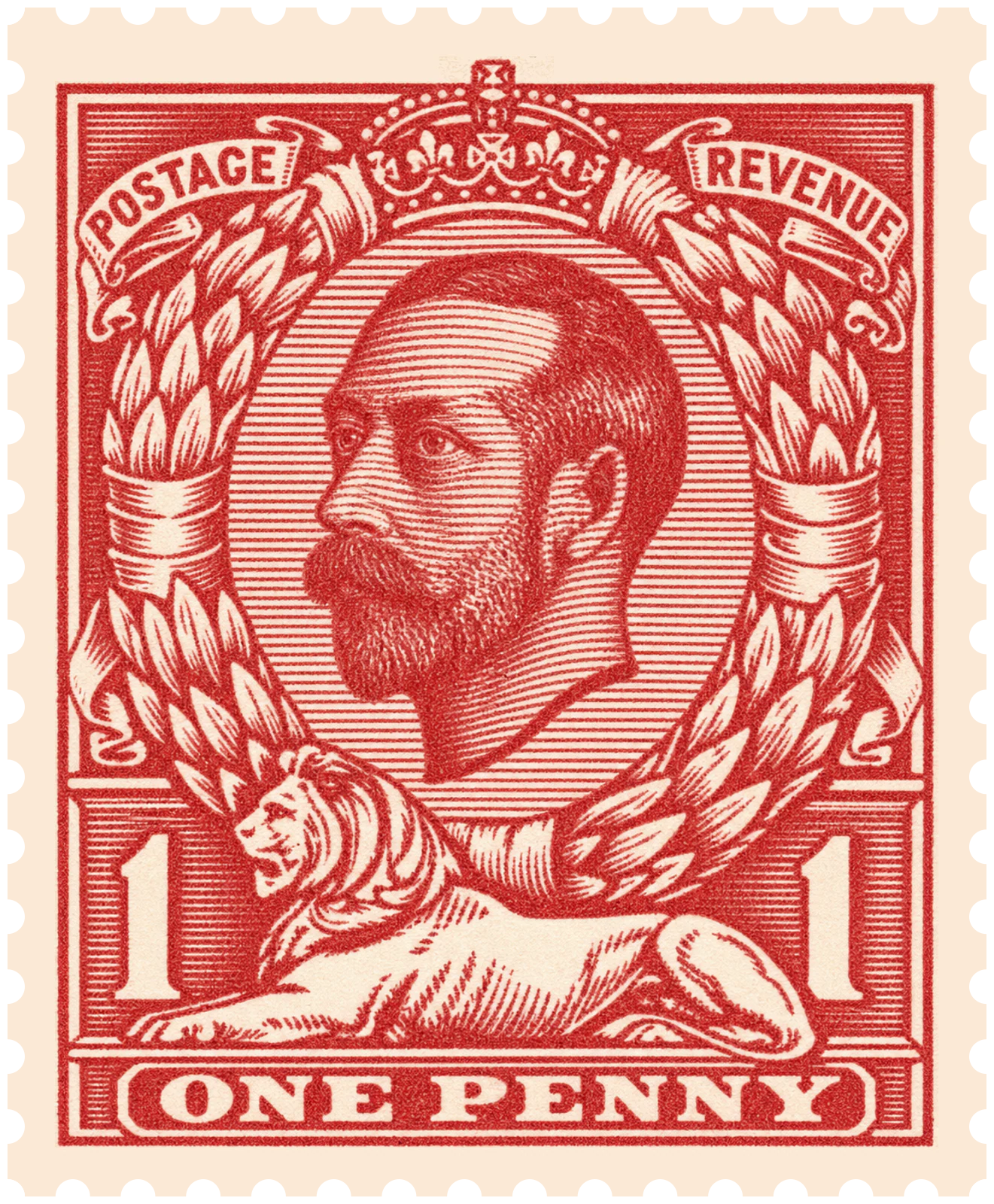
George V · 1d carmine-red · 22 June 1911
This page groups the die and watermark, which occur in the production history of both Harrison & Sons and Somerset House. Attached controls usually help distinguish the printings: Somerset House normally used a stop after the letter, while Harrison omitted it. Rare exceptions are recorded.
On the stamp you were exploring
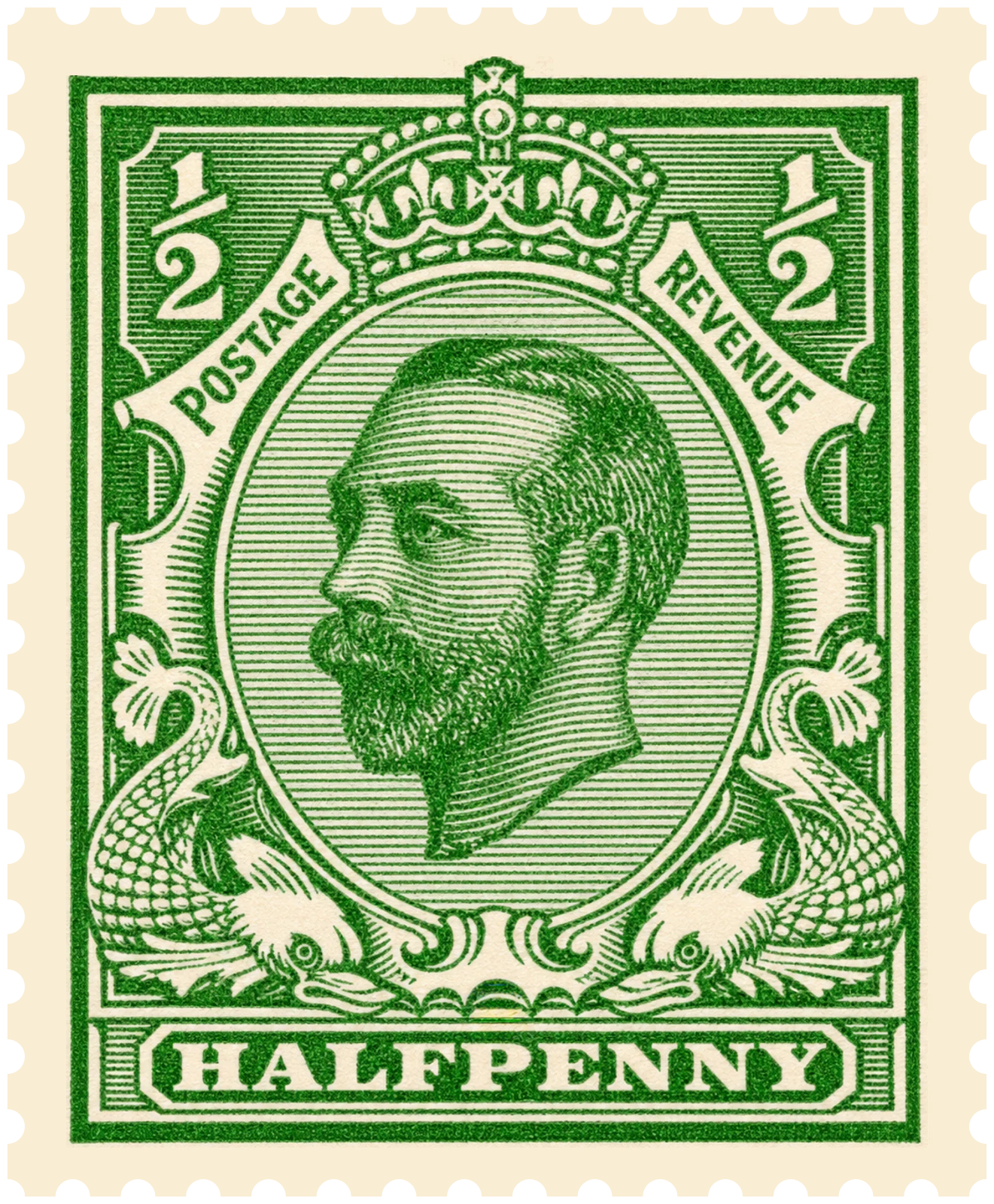
George V · ½d green · 1911
The ½d Die 1B on Imperial Crown paper is recorded with Harrison & Sons controls A 11, in close and wide settings. Somerset House printed other Downey varieties, but its production of this particular combination has not been established by the sources cited here.
On the stamp you were exploring
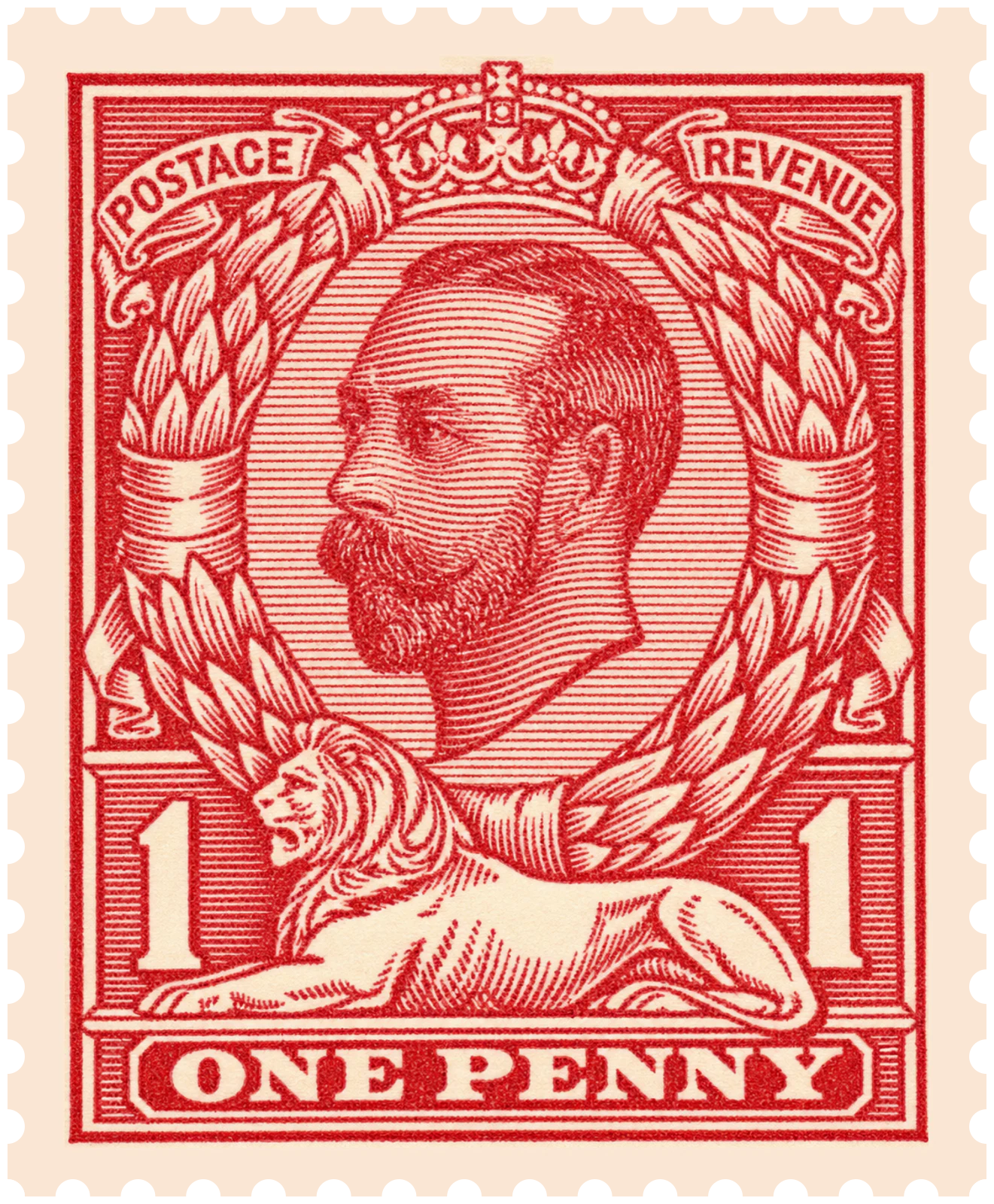
George V · 1d carmine · 1911
This page groups the die and watermark, which occur in the production history of both Harrison & Sons and Somerset House. Attached controls help distinguish printings: Somerset House uses a stop after the letter; Harrison omits it.
On the stamp you were exploring
George V · 1d carmine · 1911
This page groups the die and watermark, which occur in the production history of both Harrison & Sons and Somerset House. Attached controls help distinguish printings: Somerset House uses a stop after the letter; Harrison omits it.
On the stamp you were exploring
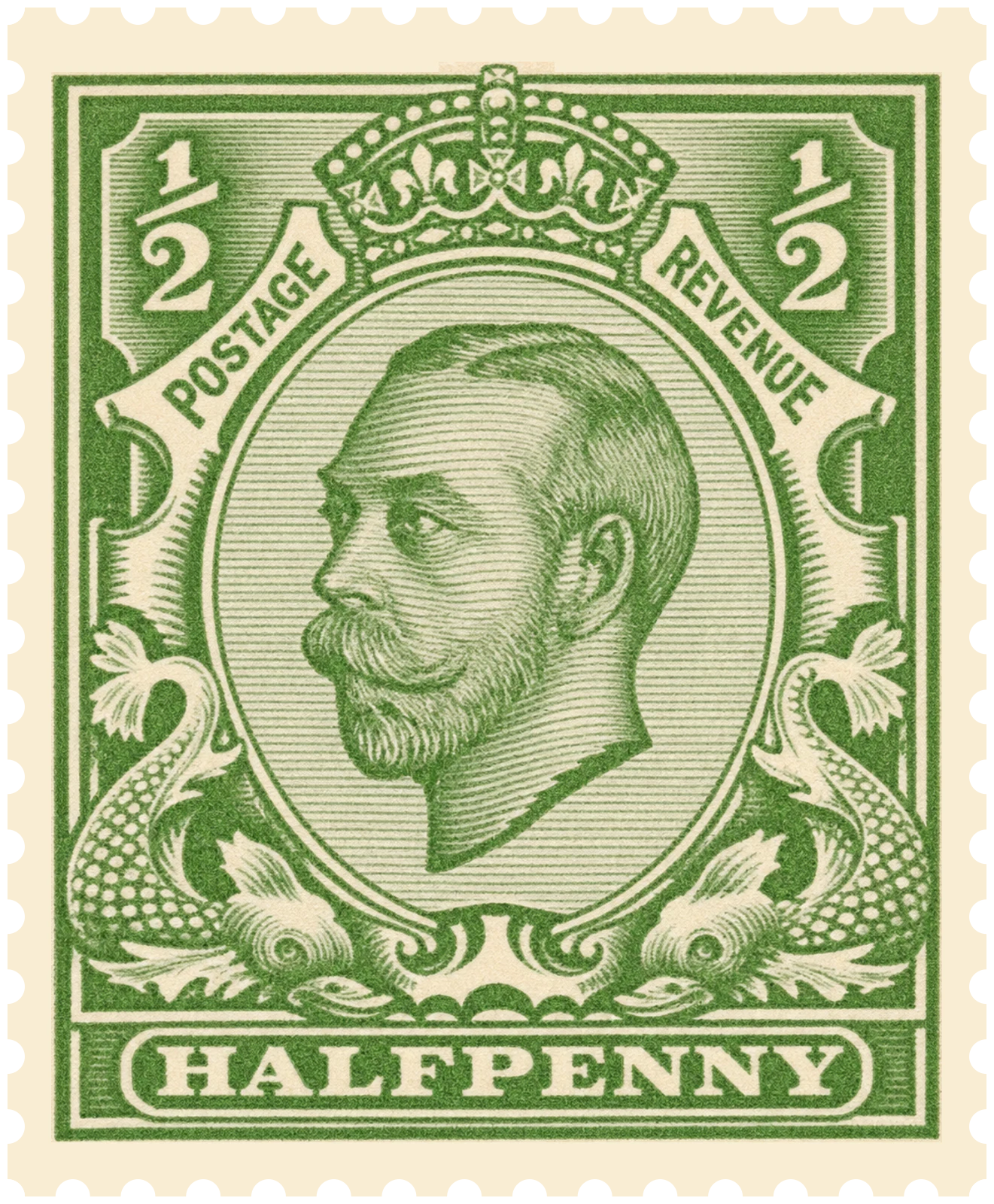
George V · ½d green · January 1912
This Die 2 Imperial Crown halfpenny was printed by Harrison & Sons. Somerset House printed other Downey Head varieties; its marginal controls normally include a stop after the letter, while Harrison controls omit it.
On the stamp you were exploring
George V · ½d green · January 1912
This Die 2 Imperial Crown halfpenny was printed by Harrison & Sons. Somerset House printed other Downey Head varieties; its marginal controls normally include a stop after the letter, while Harrison controls omit it.
On the stamp you were exploring
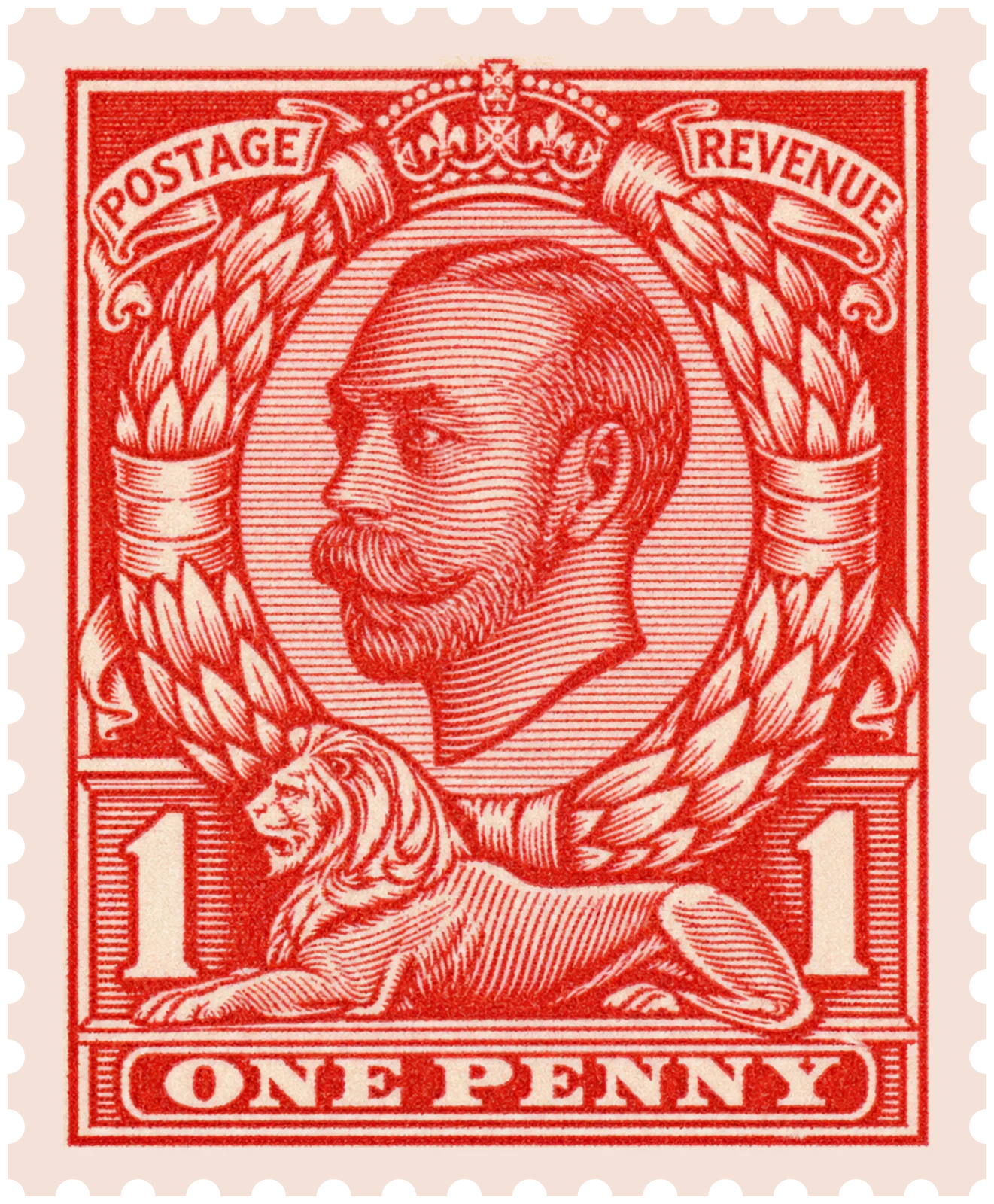
George V · 1d scarlet · January 1912
This page groups the die and watermark, which occur in the production history of both Harrison & Sons and Somerset House. Attached controls help distinguish printings: Somerset House uses a stop after the letter; Harrison omits it.
On the stamp you were exploring
George V · ½d green · September 1912
Harrison & Sons printed this group. The engraver J. A. C. Harrison was a different person, unrelated to the printing firm.
On the stamp you were exploring
George V · ½d green · September 1912
Harrison & Sons printed this group. The engraver J. A. C. Harrison was a different person, unrelated to the printing firm.
On the stamp you were exploring
George V · 1d scarlet · September 1912
Harrison & Sons printed this group. The engraver J. A. C. Harrison was a different person, unrelated to the printing firm.
On the stamp you were exploring
George V · 1d scarlet · September 1912
Harrison & Sons printed this group. The engraver J. A. C. Harrison was a different person, unrelated to the printing firm.
On the stamp you were exploring
George V · ½d green · 1912
Harrison & Sons printed this group. The engraver J. A. C. Harrison was a different person, unrelated to the printing firm.
On the stamp you were exploring
George V · ½d green · 1912
Harrison & Sons printed this group. The engraver J. A. C. Harrison was a different person, unrelated to the printing firm.
On the stamp you were exploring
George V · 1d scarlet · 1912
Harrison & Sons printed this group. The engraver J. A. C. Harrison was a different person, unrelated to the printing firm.
On the stamp you were exploring
George V · 1d scarlet · 1912
Harrison & Sons printed this group. The engraver J. A. C. Harrison was a different person, unrelated to the printing firm.
On the stamp you were exploring
George V · ½d green · 1912
This page groups the die and watermark, which occur in the production history of both Harrison & Sons and Somerset House. Attached controls help distinguish printings: Somerset House uses a stop after the letter; Harrison omits it.
On the stamp you were exploring
George V · ½d green · 1912
This page groups the die and watermark, which occur in the production history of both Harrison & Sons and Somerset House. Attached controls help distinguish printings: Somerset House uses a stop after the letter; Harrison omits it.
On the stamp you were exploring
George V · 1d scarlet · 1912
This page groups the die and watermark, which occur in the production history of both Harrison & Sons and Somerset House. Attached controls help distinguish printings: Somerset House uses a stop after the letter; Harrison omits it.
On the stamp you were exploring
George V · 1d scarlet · 1912
This page groups the die and watermark, which occur in the production history of both Harrison & Sons and Somerset House. Attached controls help distinguish printings: Somerset House uses a stop after the letter; Harrison omits it.
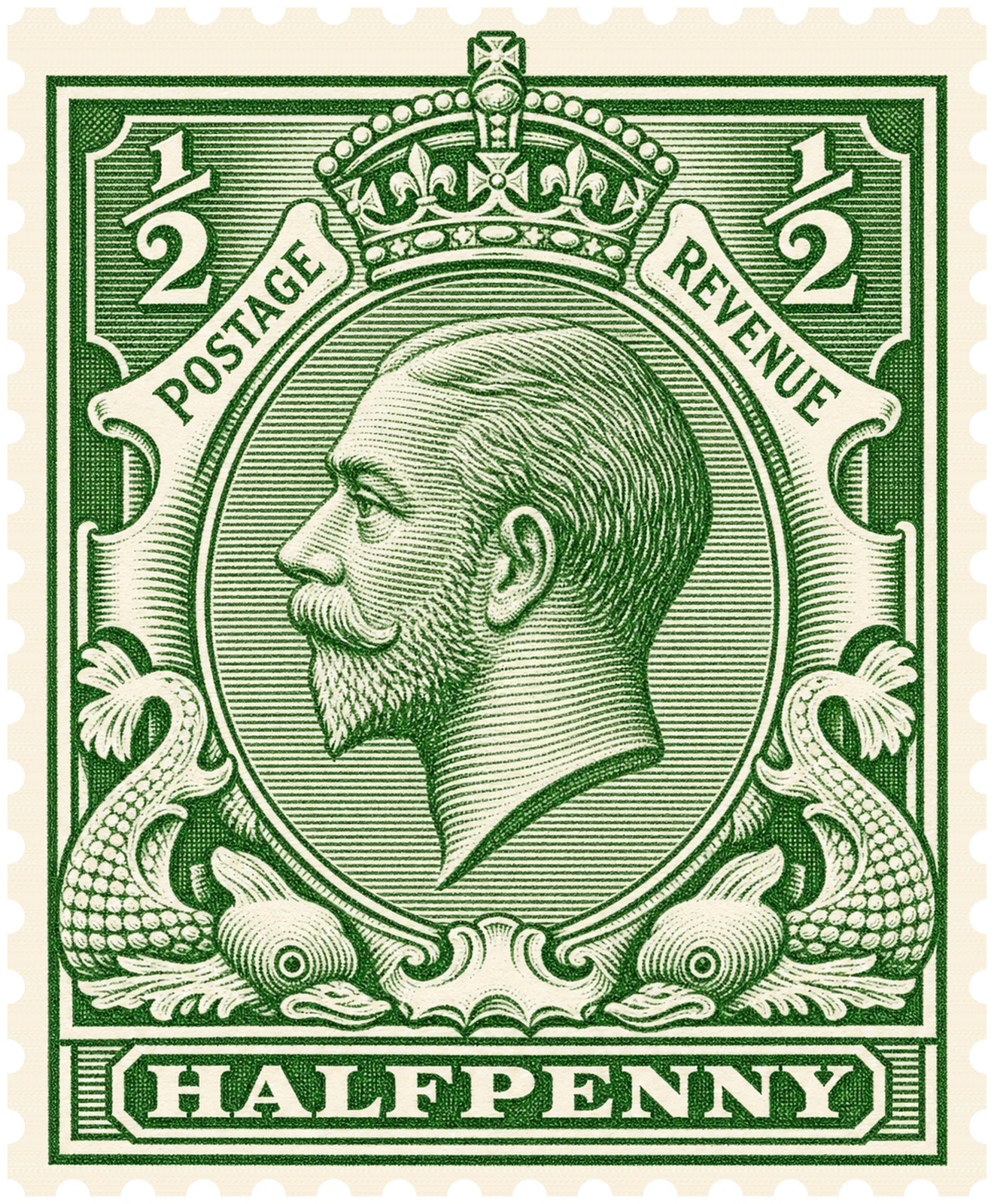
On the stamp you were exploring
George V · ½d green · 16 January 1913
Harrison & Sons printed this ½d by typography. This belongs to the Royal Cypher letterpress issue.
On the stamp you were exploring
George V · ½d green · 16 January 1913
Harrison & Sons printed this ½d by typography. This belongs to the Royal Cypher letterpress issue.
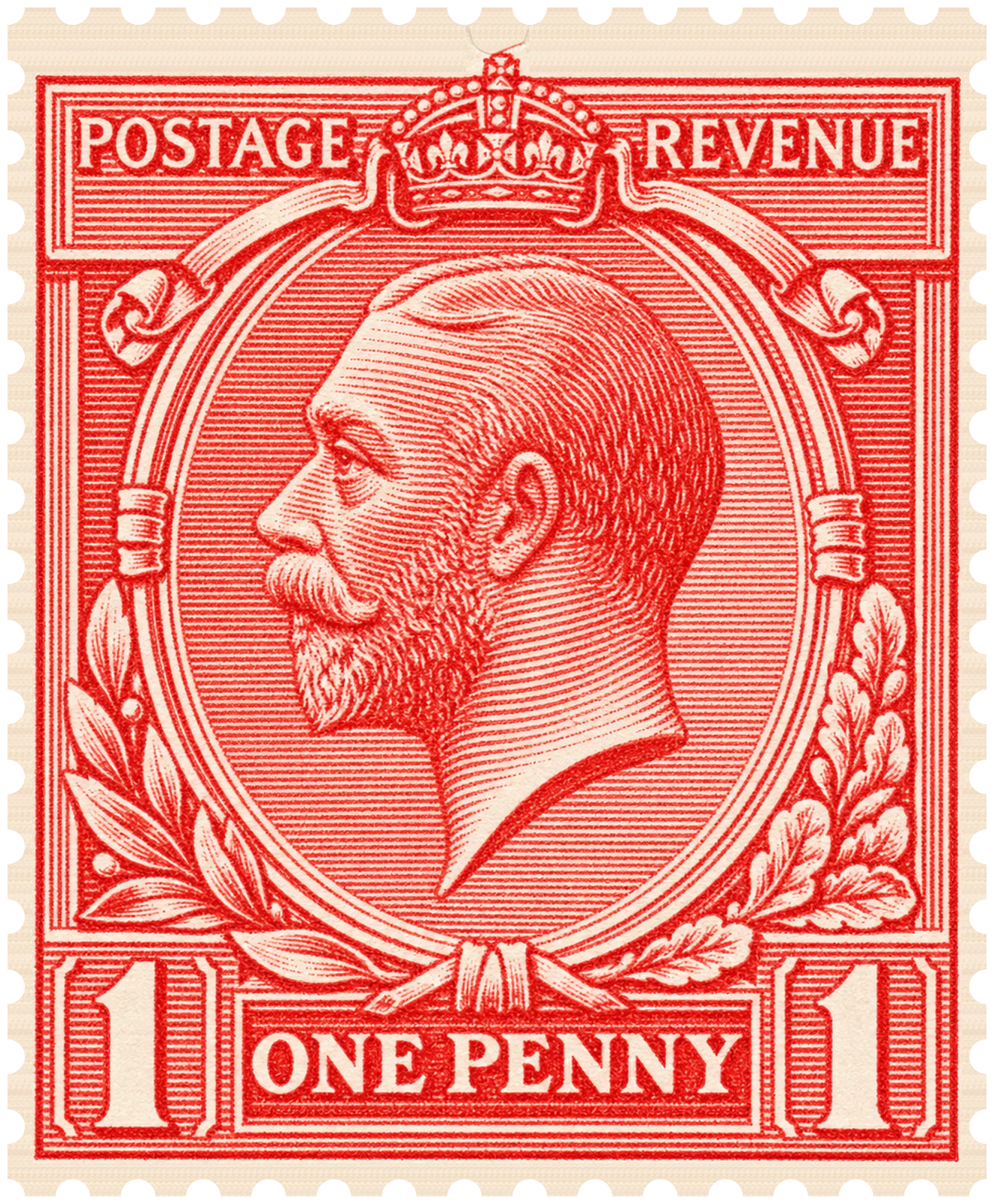
On the stamp you were exploring
George V · 1d scarlet · 8 October 1912
Harrison & Sons printed this 1d by typography. This belongs to the Royal Cypher letterpress issue.
On the stamp you were exploring
George V · 1d scarlet · 8 October 1912
Harrison & Sons printed this 1d by typography. This belongs to the Royal Cypher letterpress issue.
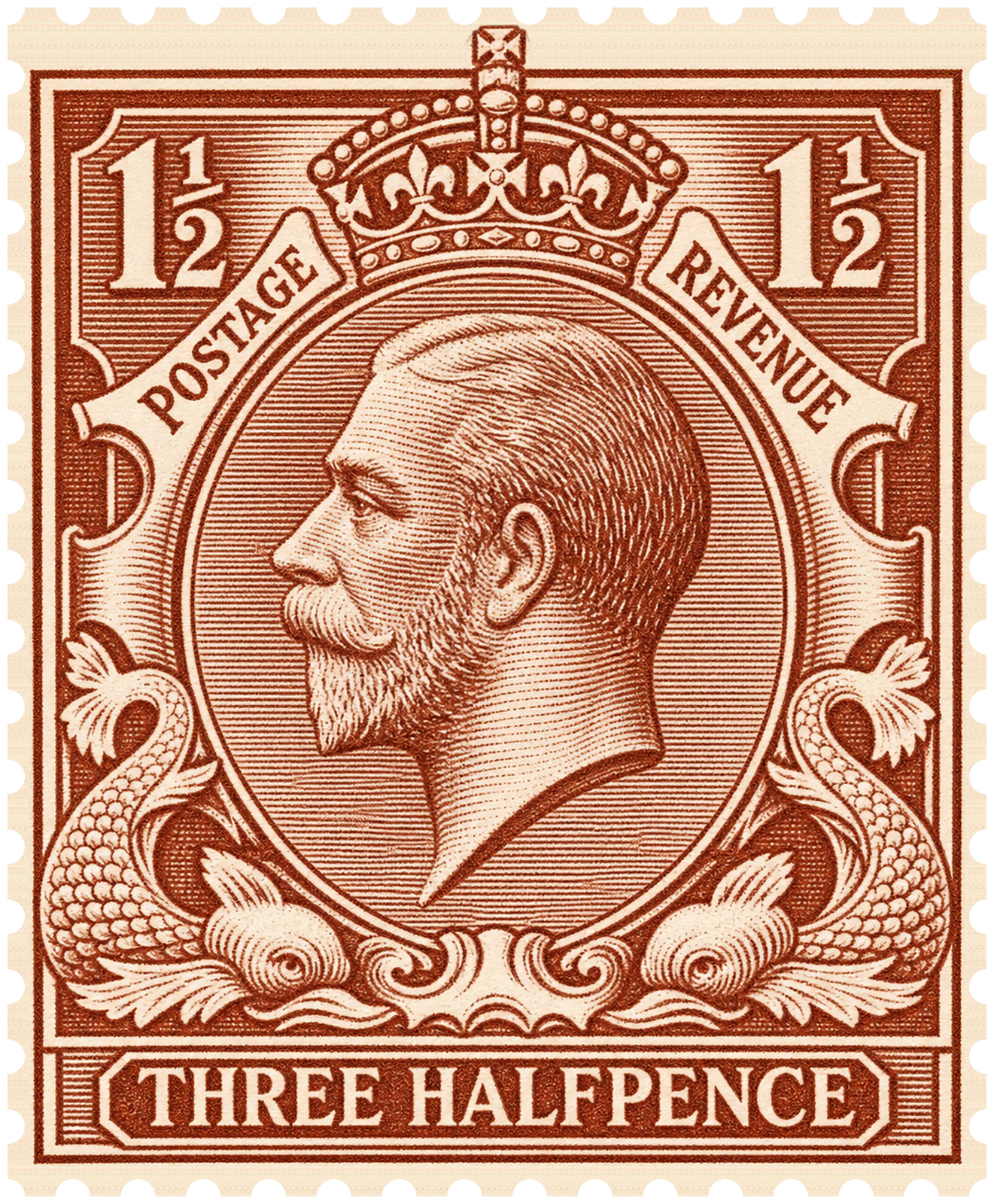
On the stamp you were exploring
George V · 1½d red-brown · 15 October 1912
Harrison & Sons printed this 1½d by typography. This belongs to the Royal Cypher letterpress issue.
On the stamp you were exploring
George V · 1½d red-brown · 15 October 1912
Harrison & Sons printed this 1½d by typography. This belongs to the Royal Cypher letterpress issue.
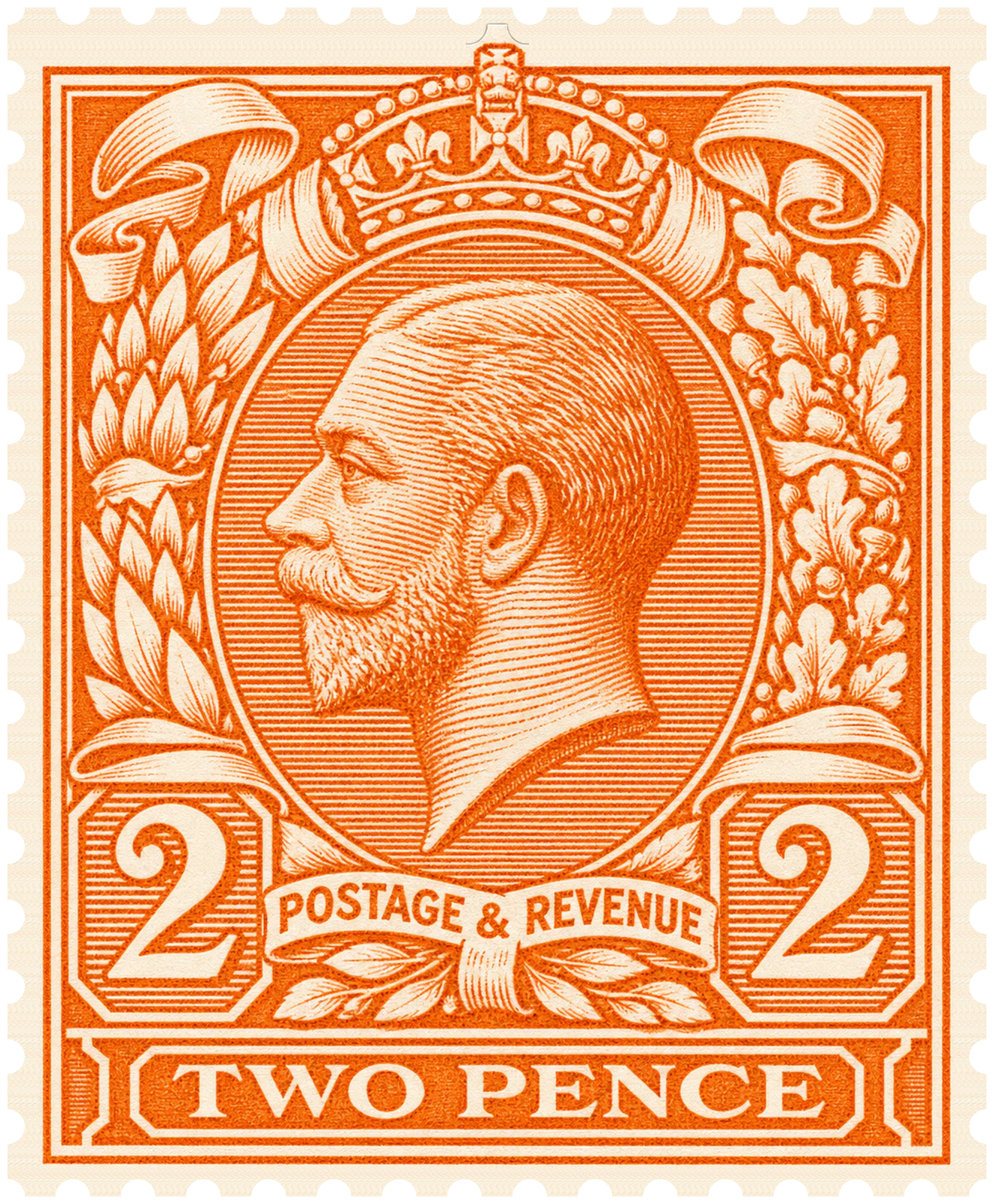
On the stamp you were exploring
George V · 2d orange · 21 August 1912
Harrison & Sons printed this 2d by typography. This belongs to the Royal Cypher letterpress issue.
On the stamp you were exploring
George V · 2d orange · 21 August 1912
Harrison & Sons printed this 2d by typography. This belongs to the Royal Cypher letterpress issue.
On the stamp you were exploring
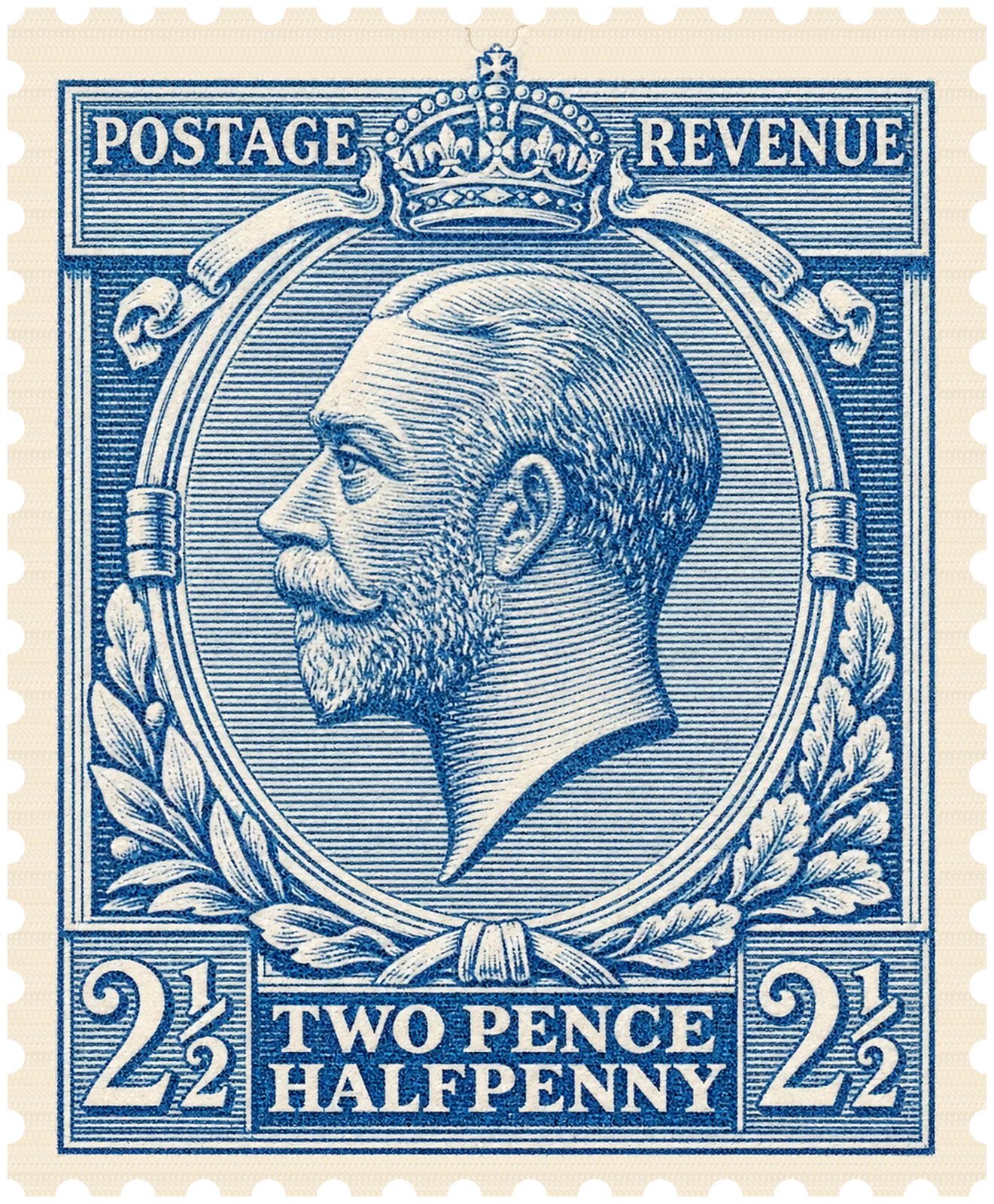
George V · 2½d blue · 18 October 1912
This page represents the Harrison & Sons printing of the Royal Cypher 2½d, produced by typography. Harrison & Sons produced most printings, but Somerset House printings are also recorded, including controls A.12 and J.17. Attached marginal controls help distinguish the establishments: Somerset House used a stop after the letter, while Harrison omitted it.
On the stamp you were exploring
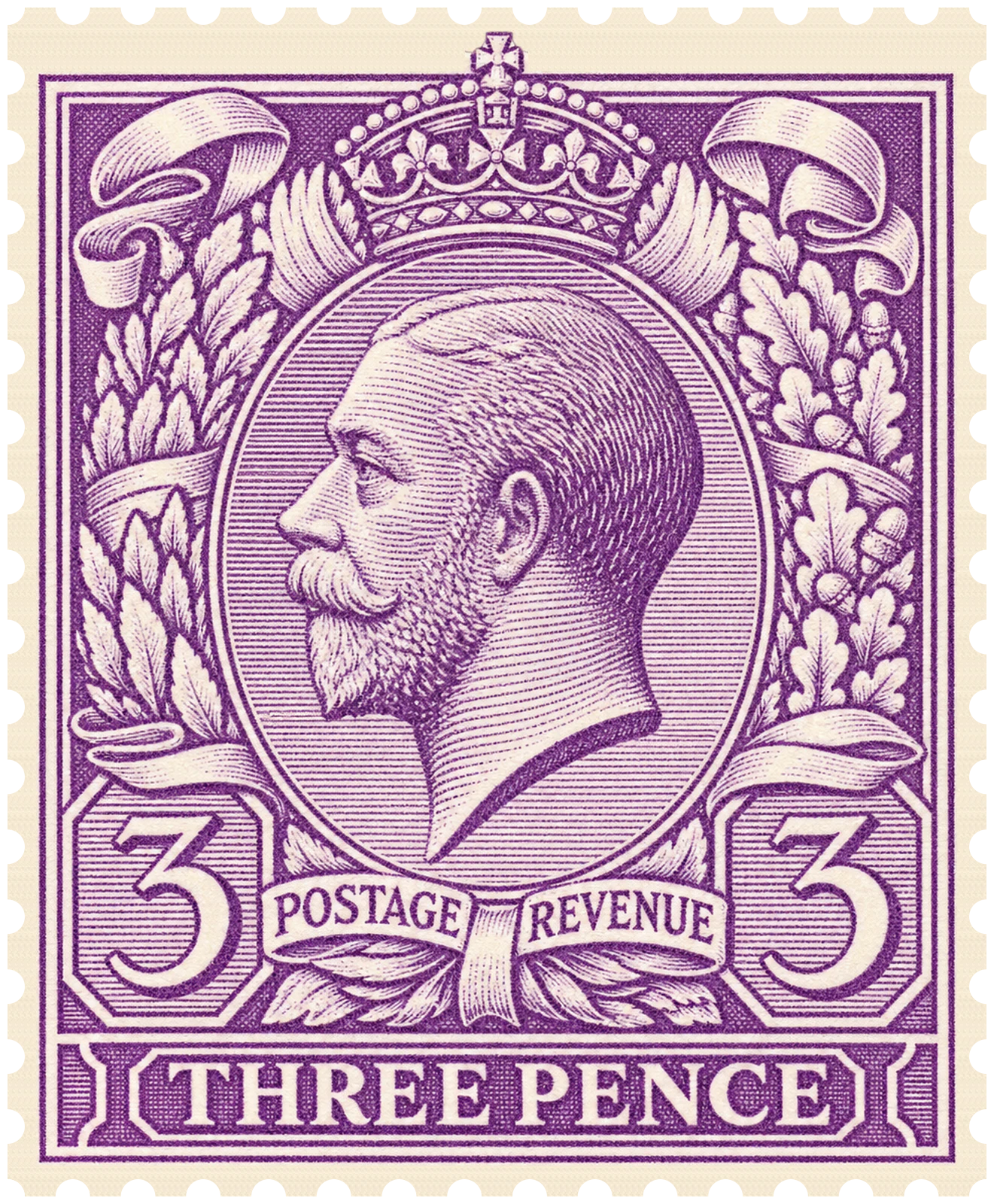
George V · 3d violet · 8 October 1912
Harrison & Sons printed this 3d by typography. This belongs to the Royal Cypher letterpress issue.
On the stamp you were exploring
George V · 3d violet · 8 October 1912
Harrison & Sons printed this 3d by typography. This belongs to the Royal Cypher letterpress issue.
On the stamp you were exploring
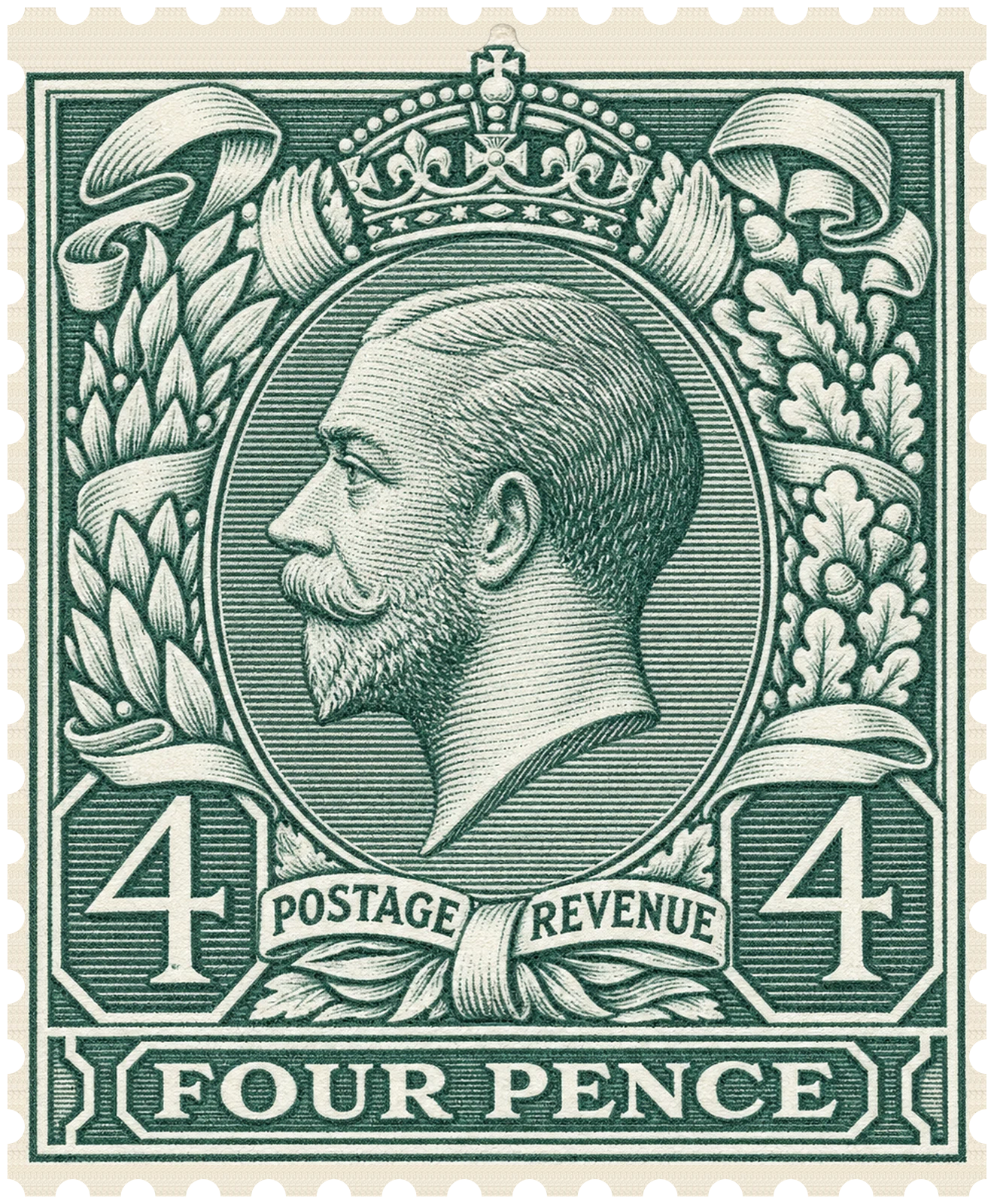
George V · 4d grey-green · January 1913
Harrison & Sons printed this 4d by typography. This belongs to the Royal Cypher letterpress issue.
On the stamp you were exploring
George V · 4d grey-green · January 1913
Harrison & Sons printed this 4d by typography. This belongs to the Royal Cypher letterpress issue.
On the stamp you were exploring
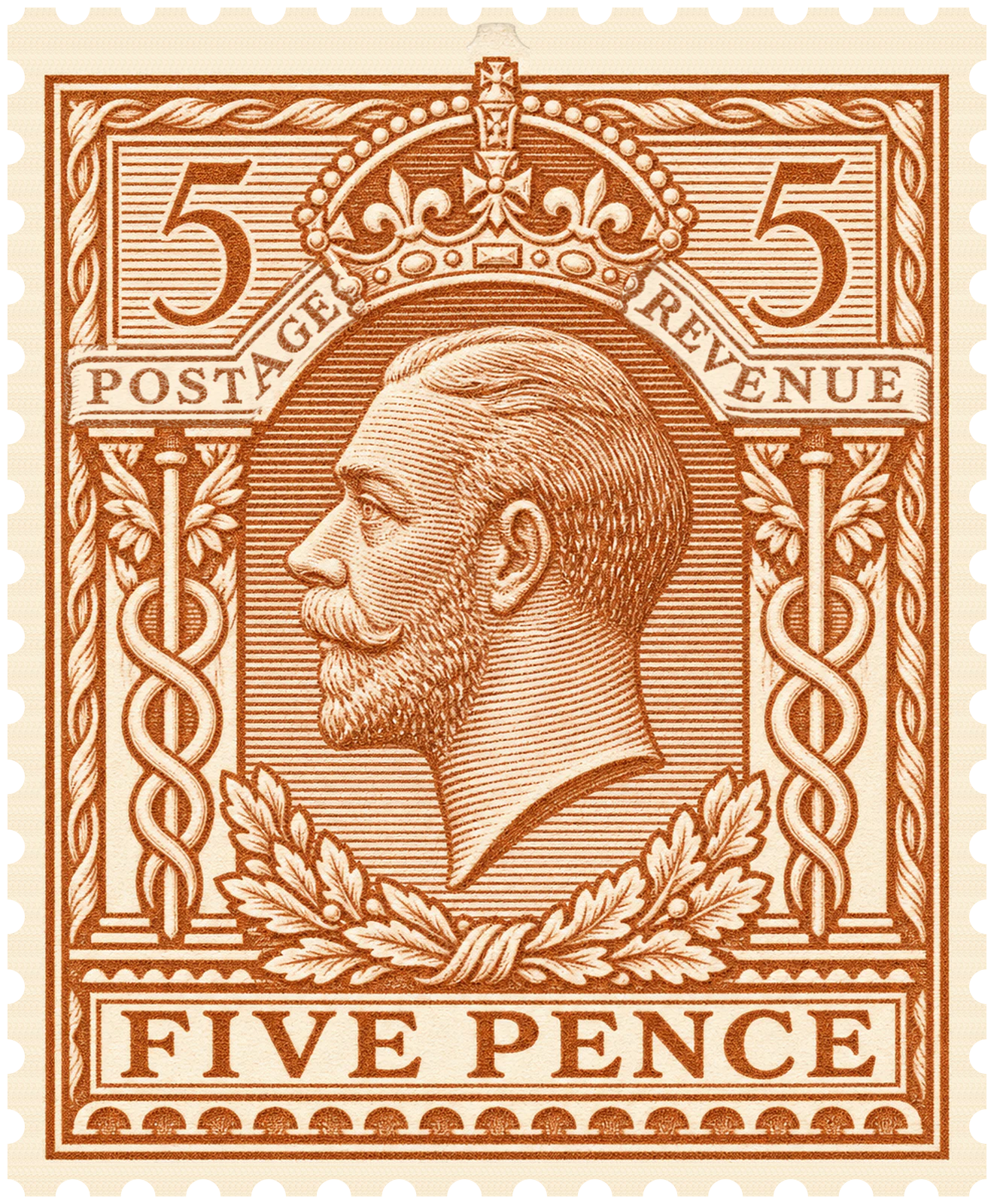
George V · 5d yellow-brown · 30 June 1913
Harrison & Sons printed this 5d by typography. This belongs to the Royal Cypher letterpress issue.
On the stamp you were exploring
George V · 5d yellow-brown · 30 June 1913
Harrison & Sons printed this 5d by typography. This belongs to the Royal Cypher letterpress issue.
On the stamp you were exploring
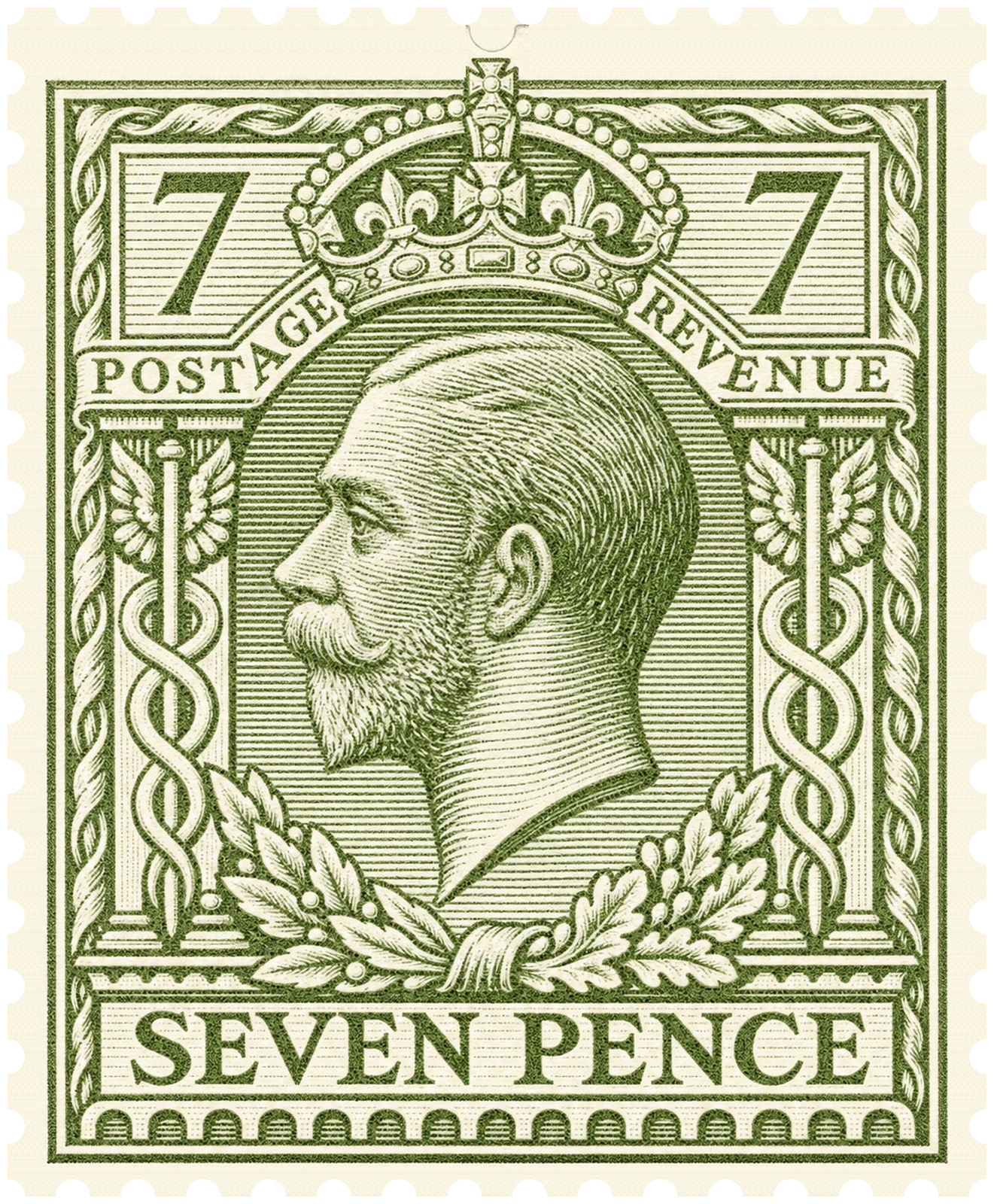
George V · 7d olive-green · 1 August 1913
This page represents the Harrison & Sons printing of the Royal Cypher 7d. The first printings were produced at Somerset House, with Harrison & Sons responsible for subsequent production. Somerset House controls include a stop after the letter, as in C.13, while Harrison controls omit it. The reconstructed illustration is not evidence identifying the printer of an original specimen.
On the stamp you were exploring
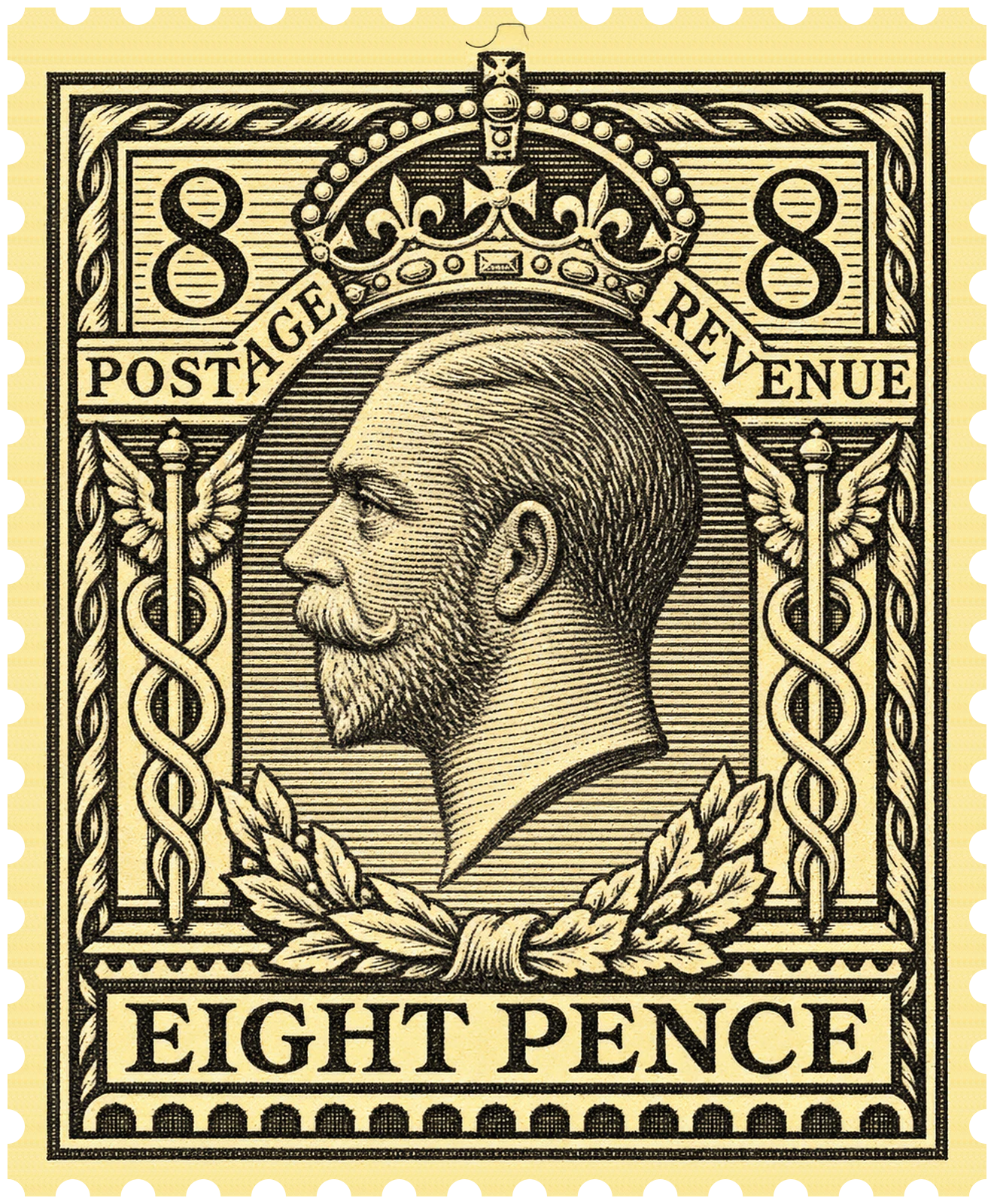
George V · 8d black on yellow · 1 August 1913
This page represents the Harrison & Sons printing of the Royal Cypher 8d. The first printings were produced at Somerset House, with Harrison & Sons responsible for subsequent production. Somerset House controls include a stop after the letter, as in C.13, while Harrison controls omit it. The reconstructed illustration is not evidence identifying the printer of an original specimen.
On the stamp you were exploring
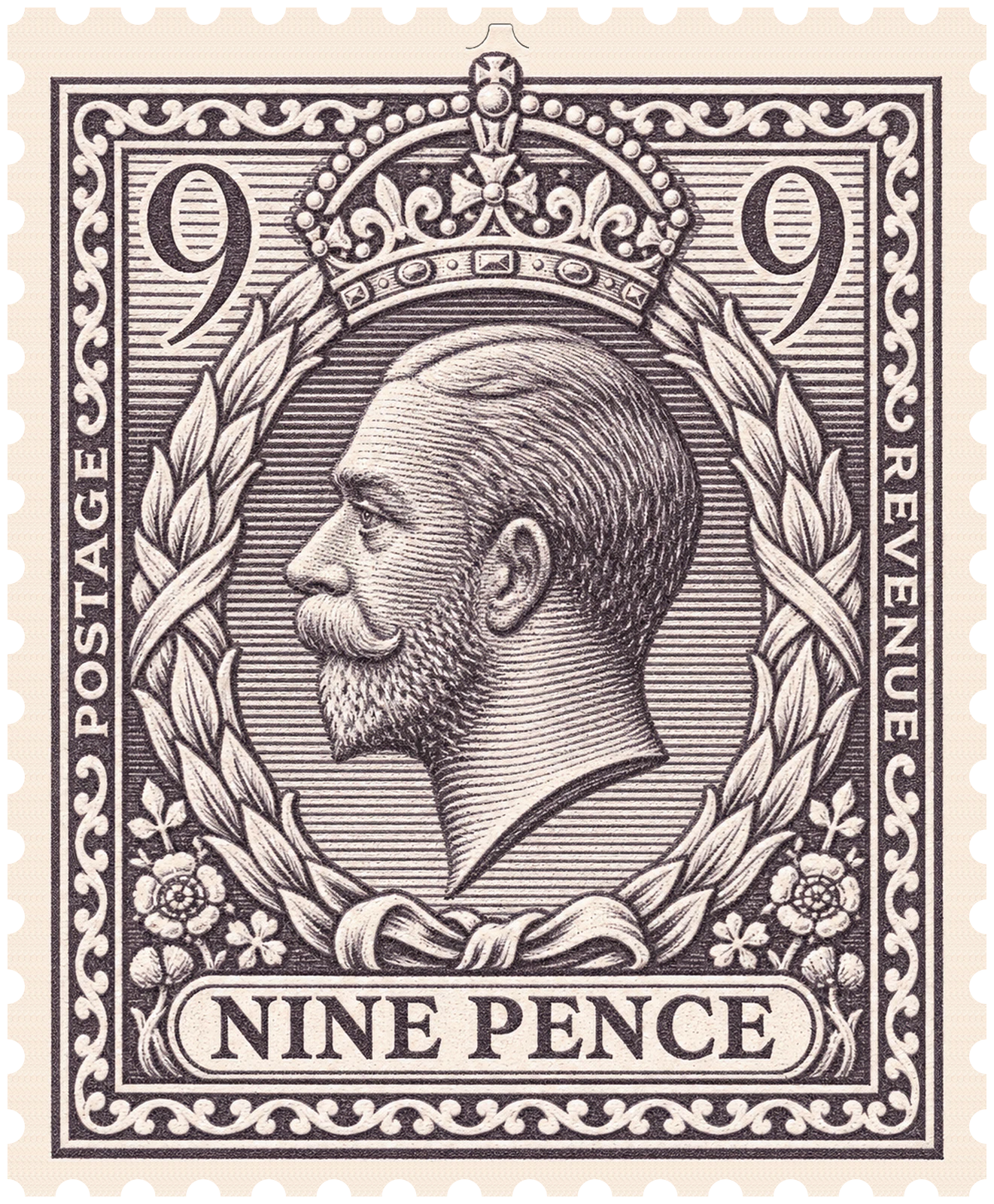
George V · 9d agate · 1913-06-30
The illustrated 9d represents Harrison & Sons’ production from 1914. Somerset House had introduced the denomination in 1913.
On the stamp you were exploring
George V · 9d agate · 1913-06-30
The illustrated 9d represents Harrison & Sons’ production from 1914. Somerset House had introduced the denomination in 1913.
On the stamp you were exploring
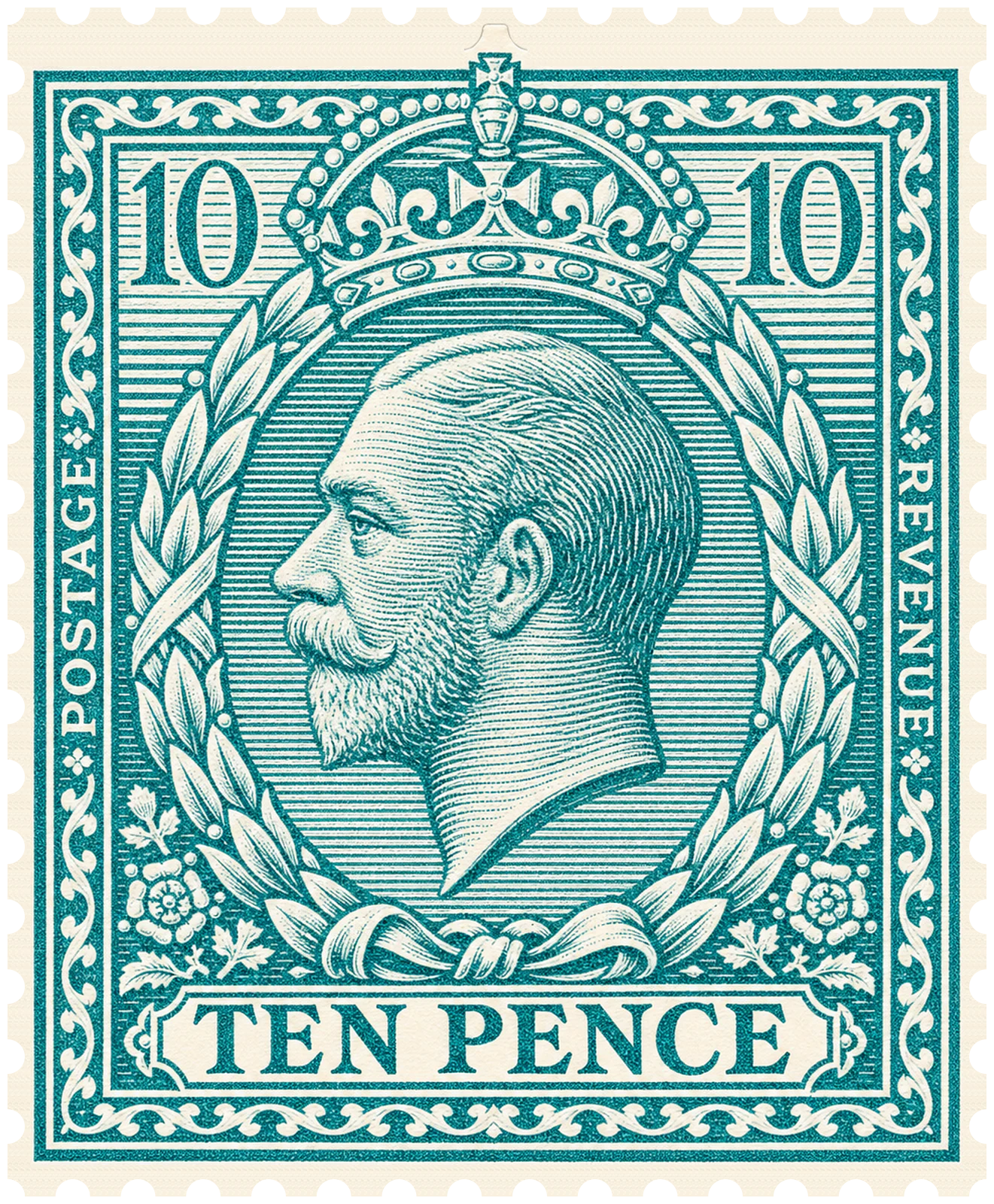
George V · 10d turquoise-blue · from 1914
The illustrated 10d represents Harrison & Sons’ production from 1914. Somerset House had introduced the denomination in 1913.
On the stamp you were exploring
George V · 10d turquoise-blue · from 1914
The illustrated 10d represents Harrison & Sons’ production from 1914. Somerset House had introduced the denomination in 1913.
On the stamp you were exploring
George V · 1s bistre-brown · from 1914
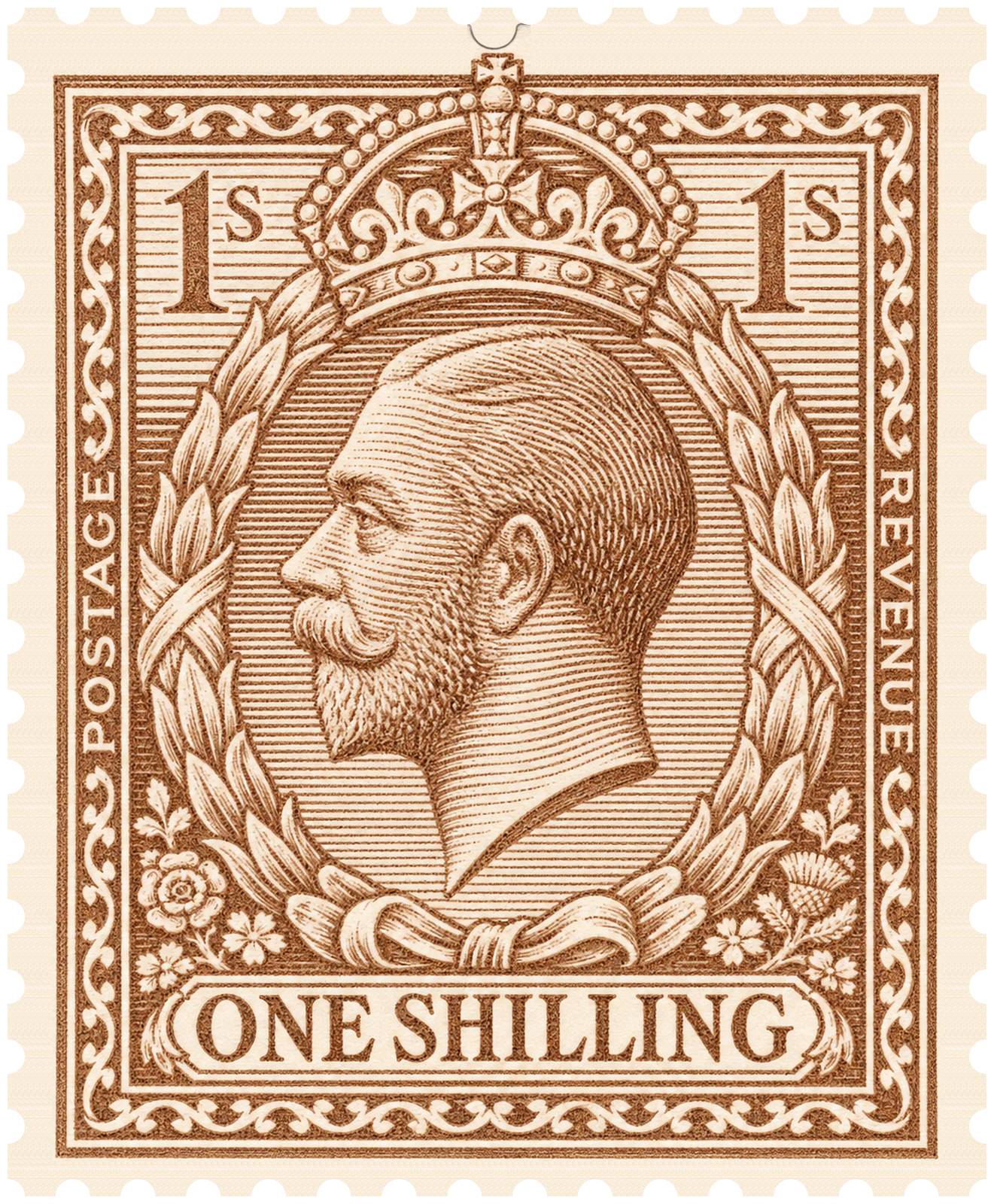
The illustrated 1s represents Harrison & Sons’ production from 1914. Somerset House had introduced the denomination in 1913.
On the stamp you were exploring
George V · 1s bistre-brown · from 1914
The illustrated 1s represents Harrison & Sons’ production from 1914. Somerset House had introduced the denomination in 1913.
On the stamp you were exploring
George V · 9d olive-green · 1922
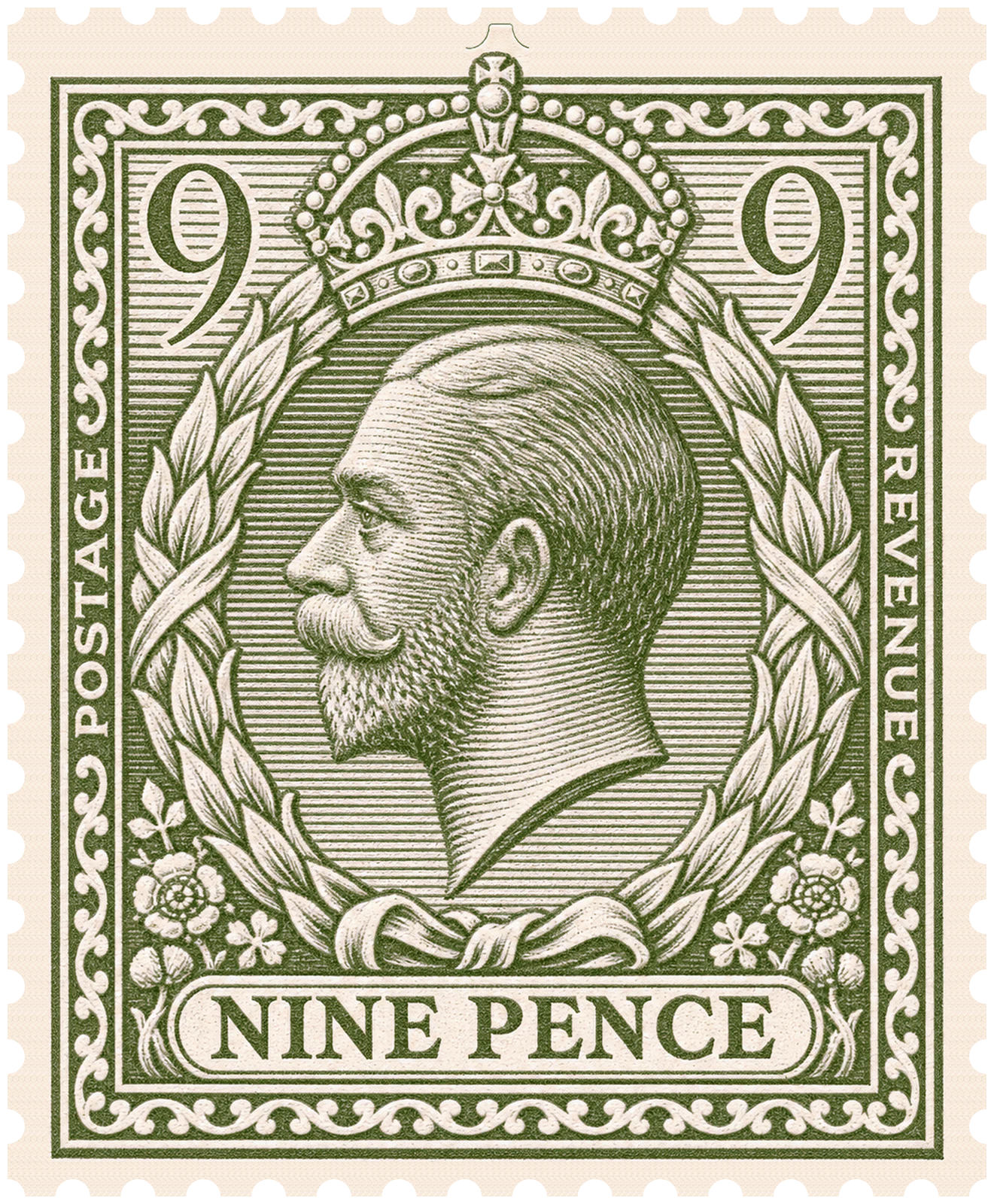
Harrison & Sons printed this 9d by typography. This belongs to the Royal Cypher letterpress issue.
On the stamp you were exploring
George V · 9d olive-green · 1922
Harrison & Sons printed this 9d by typography. This belongs to the Royal Cypher letterpress issue.
On the stamp you were exploring
George V · ½d bright green · August 1913
Harrison & Sons printed this 1913 profile-head issue. The 1913 rolls have no printer’s imprint on their leaders; the missing imprint does not imply a different printer.
On the stamp you were exploring
George V · ½d bright green · August 1913
Harrison & Sons printed this 1913 profile-head issue. The 1913 rolls have no printer’s imprint on their leaders; the missing imprint does not imply a different printer.
On the stamp you were exploring
George V · 1d dull scarlet · August 1913
Harrison & Sons printed this 1913 profile-head issue. The 1913 rolls have no printer’s imprint on their leaders; the missing imprint does not imply a different printer.
On the stamp you were exploring
George V · 1d dull scarlet · August 1913
Harrison & Sons printed this 1913 profile-head issue. The 1913 rolls have no printer’s imprint on their leaders; the missing imprint does not imply a different printer.
On the stamp you were exploring
George V · ½d green · Introduced 1924–1926
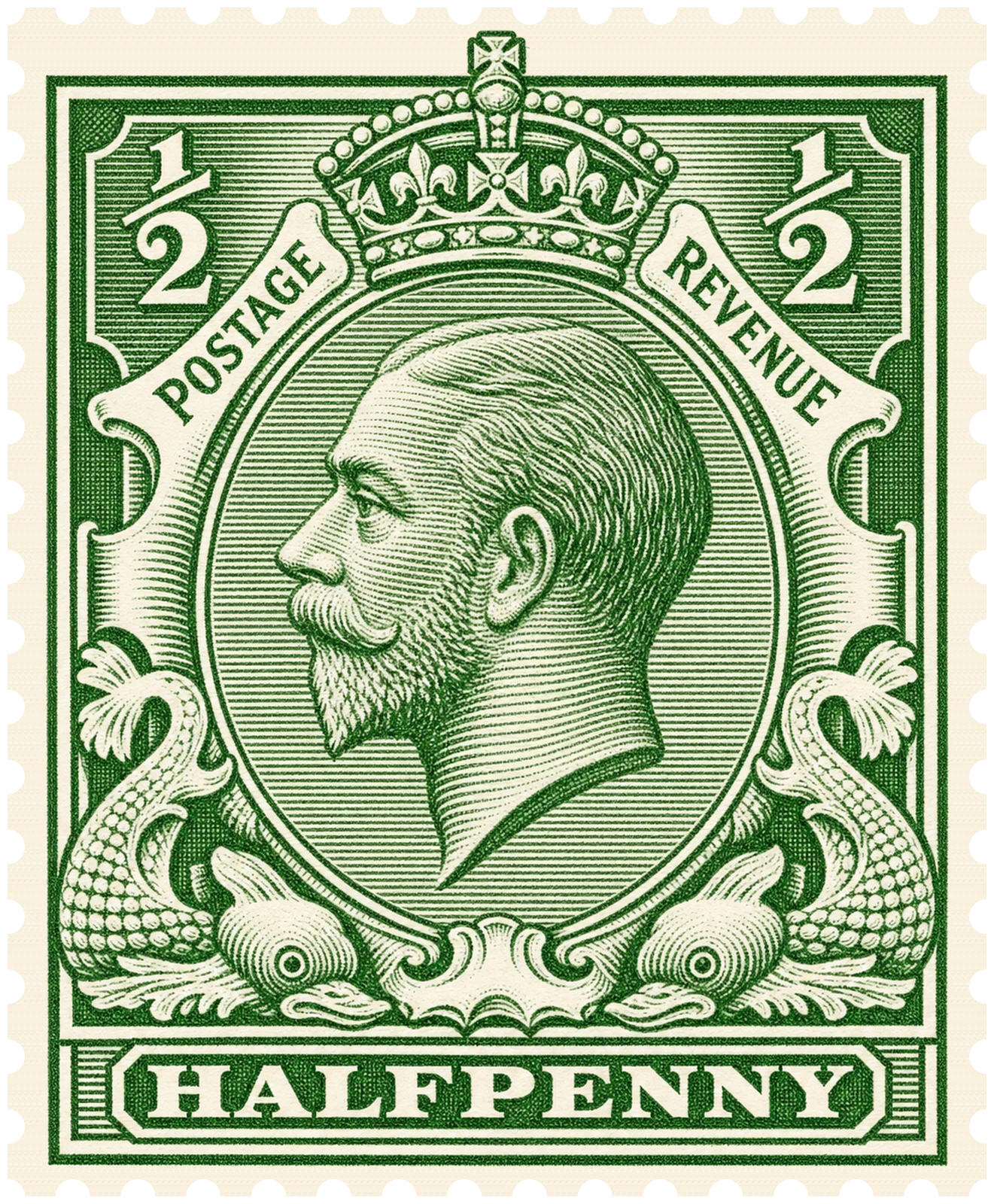
Waterlow held the main low-value contract from January 1924. Harrison regained it from January 1934, with provisional letterpress supplies continuing during the introduction of photogravure. Marginal evidence is needed for more precise attribution.
On the stamp you were exploring
George V · 1d scarlet · Introduced 1924–1926
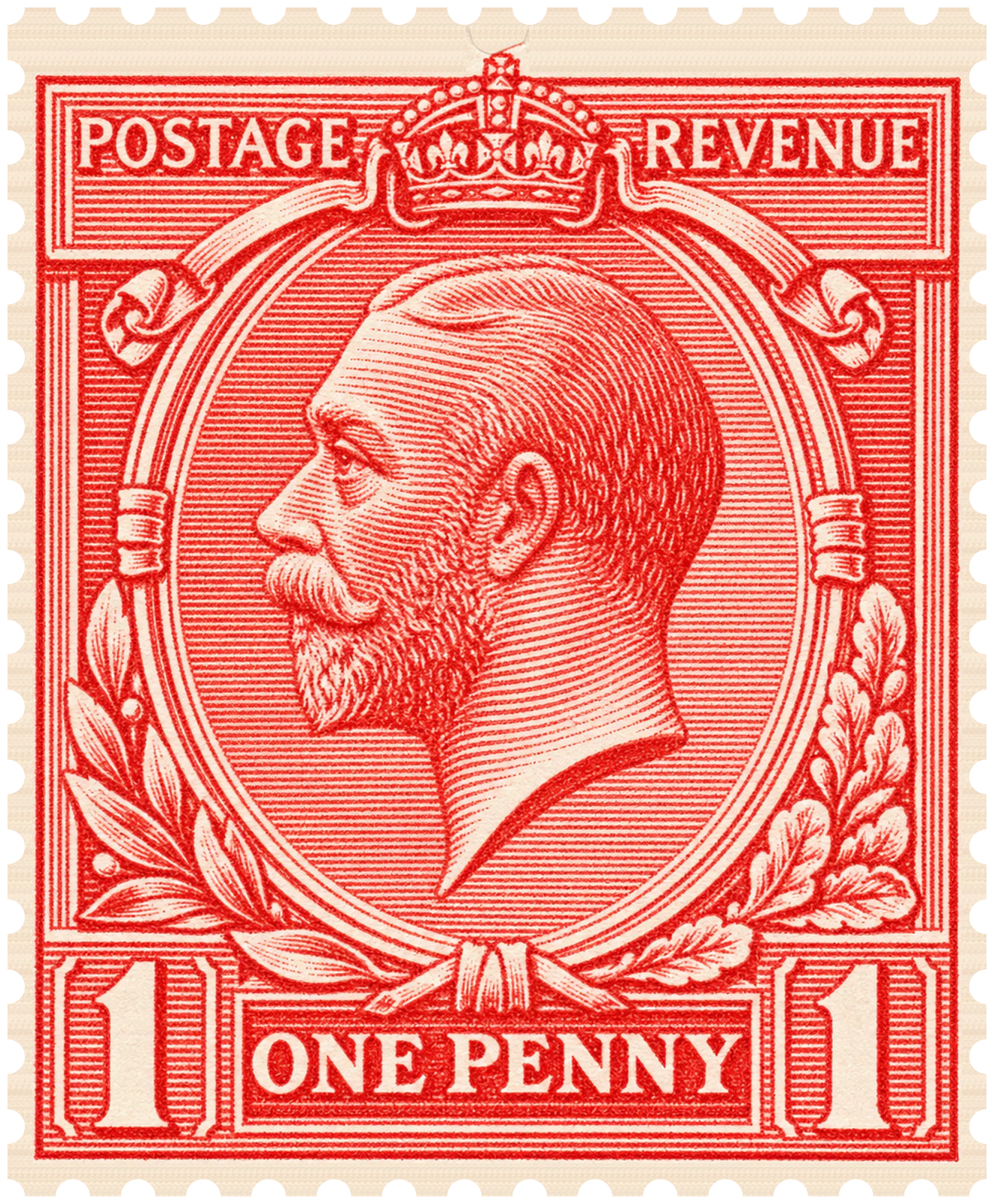
Waterlow held the main low-value contract from January 1924. Harrison regained it from January 1934, with provisional letterpress supplies continuing during the introduction of photogravure. Marginal evidence is needed for more precise attribution.
On the stamp you were exploring
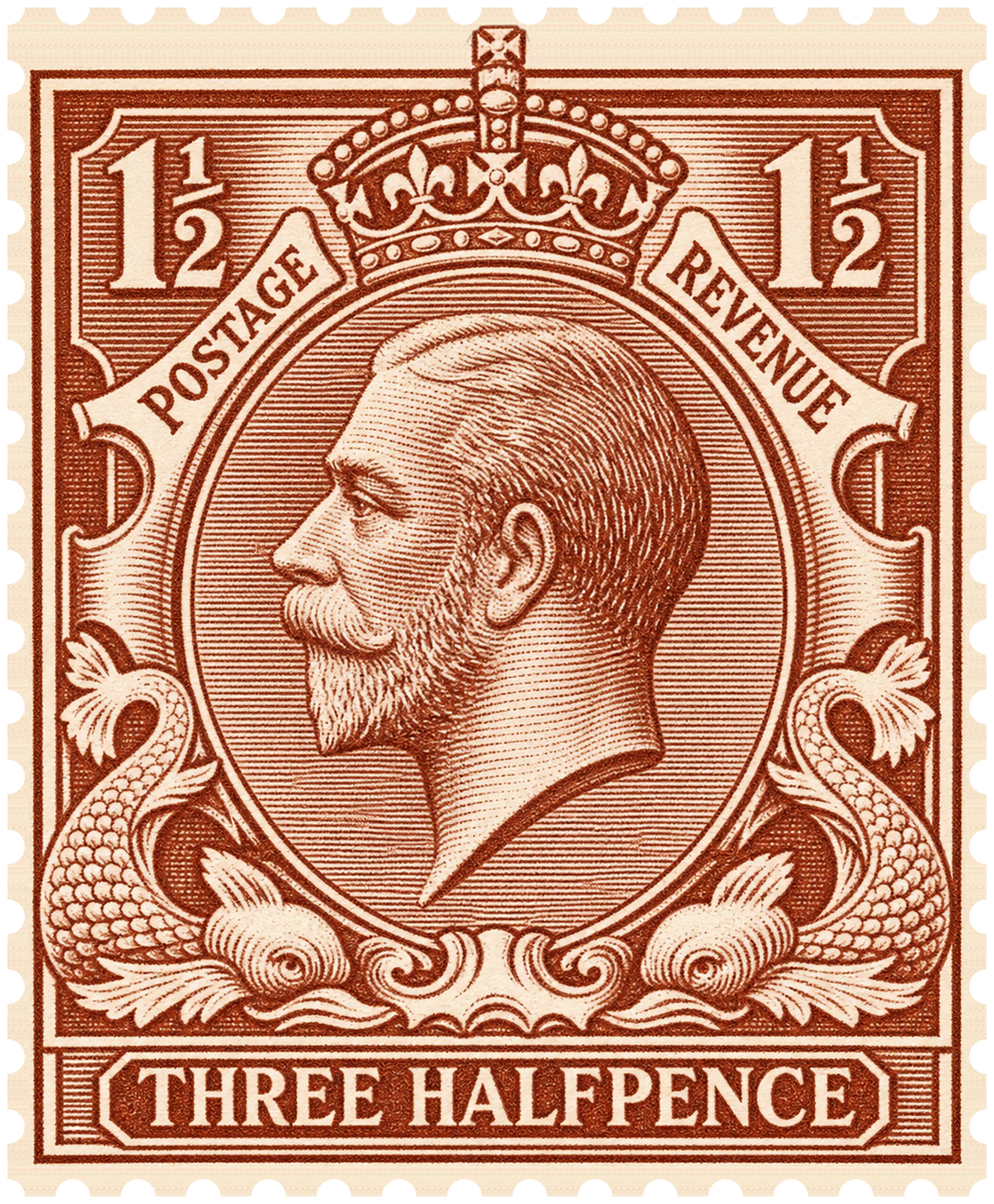
George V · 1½d red-brown · Introduced 1924–1926
Waterlow was the main printer. The E.26 control records the Somerset House emergency printing associated with the General Strike. Harrison’s later letterpress continuation belongs to the transition from 1934.
On the stamp you were exploring
George V · 1½d red-brown · Introduced 1924–1926
Waterlow was the main printer. The E.26 control records the Somerset House emergency printing associated with the General Strike. Harrison’s later letterpress continuation belongs to the transition from 1934.
On the stamp you were exploring
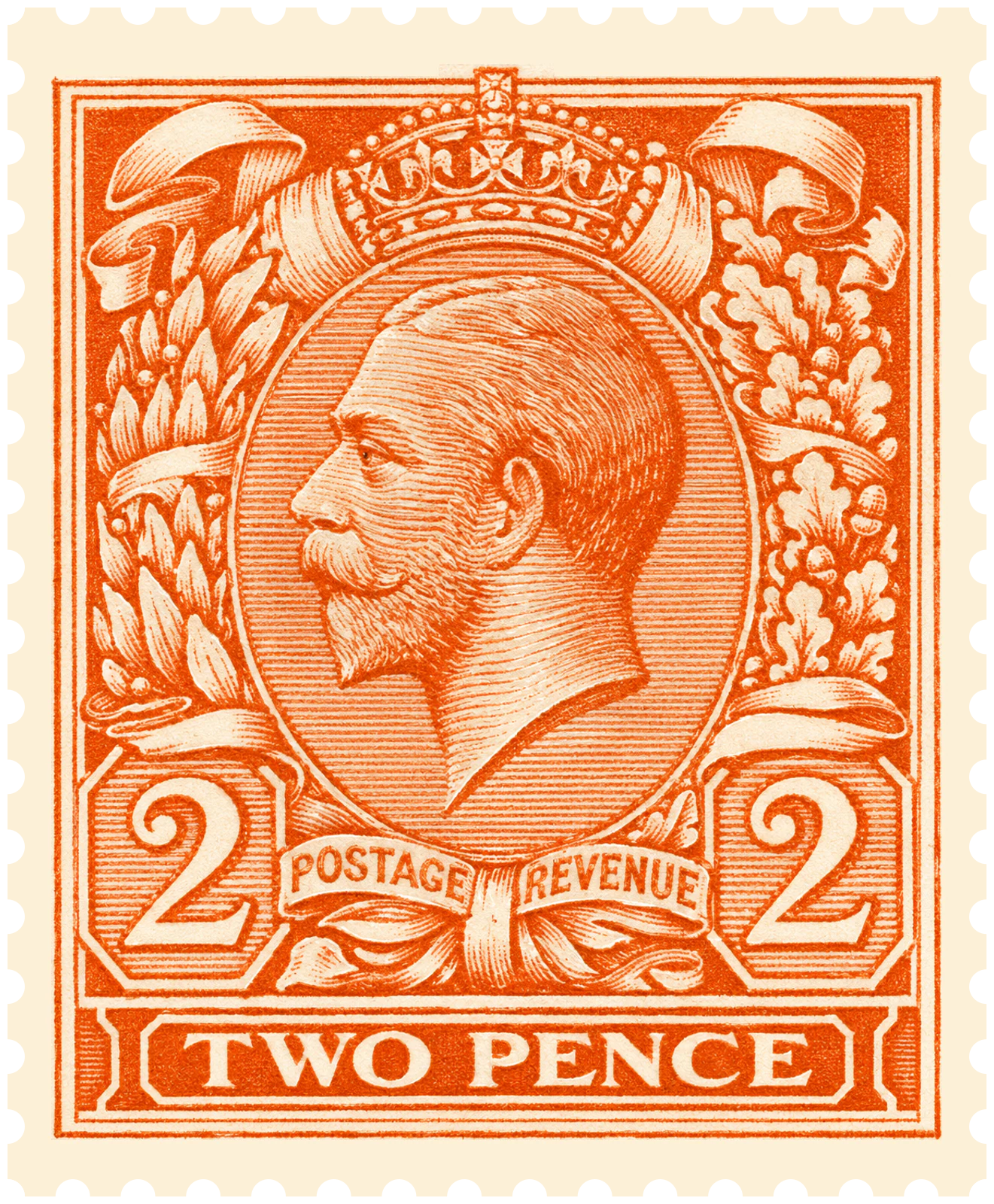
George V · 2d orange · Introduced 1924–1926
Waterlow held the main low-value contract from January 1924. Harrison regained it from January 1934, with provisional letterpress supplies continuing during the introduction of photogravure. Marginal evidence is needed for more precise attribution.
On the stamp you were exploring
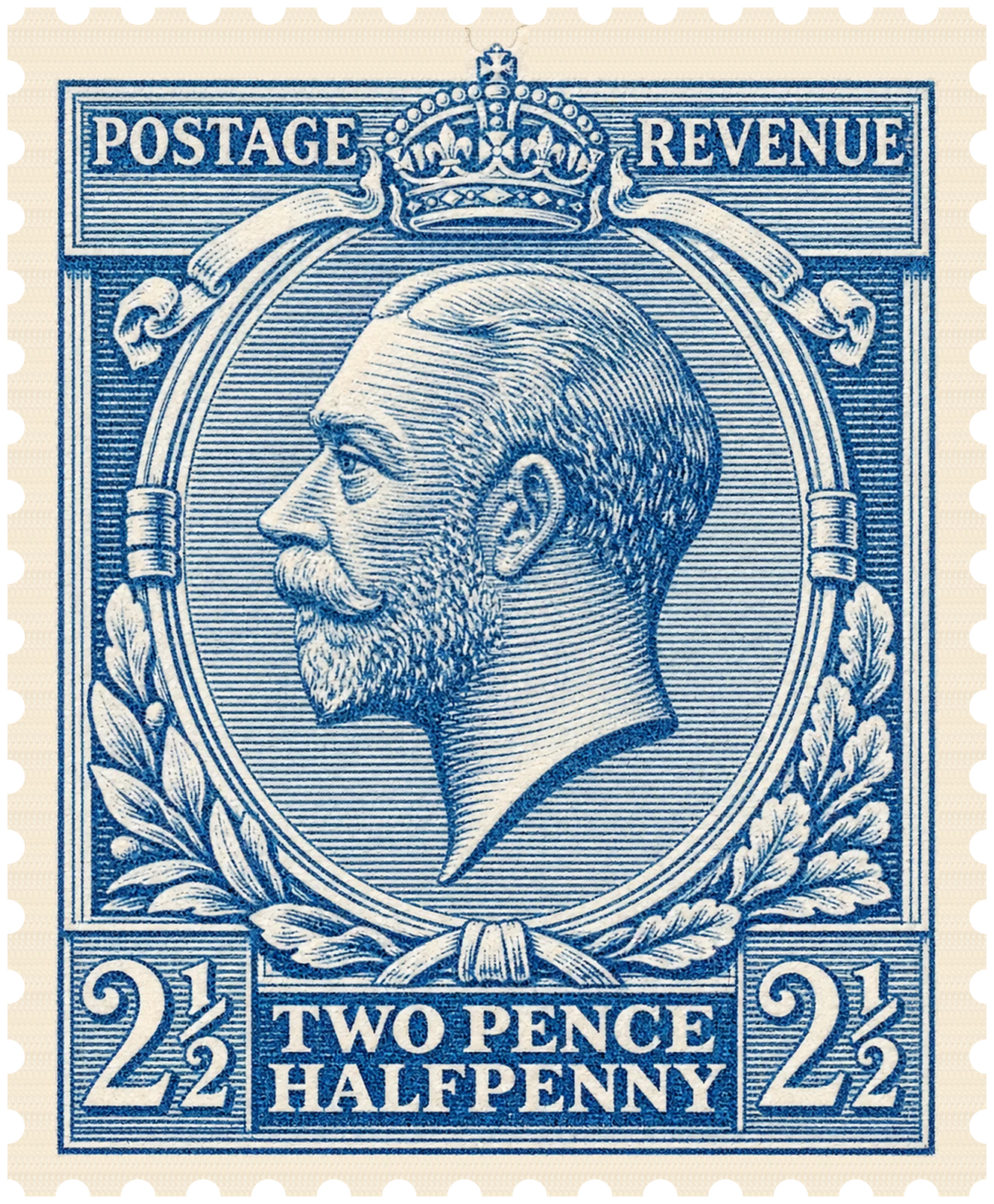
George V · 2½d blue · Introduced 1924–1926
Waterlow held the main low-value contract from January 1924. Harrison regained it from January 1934, with provisional letterpress supplies continuing during the introduction of photogravure. Marginal evidence is needed for more precise attribution.
On the stamp you were exploring
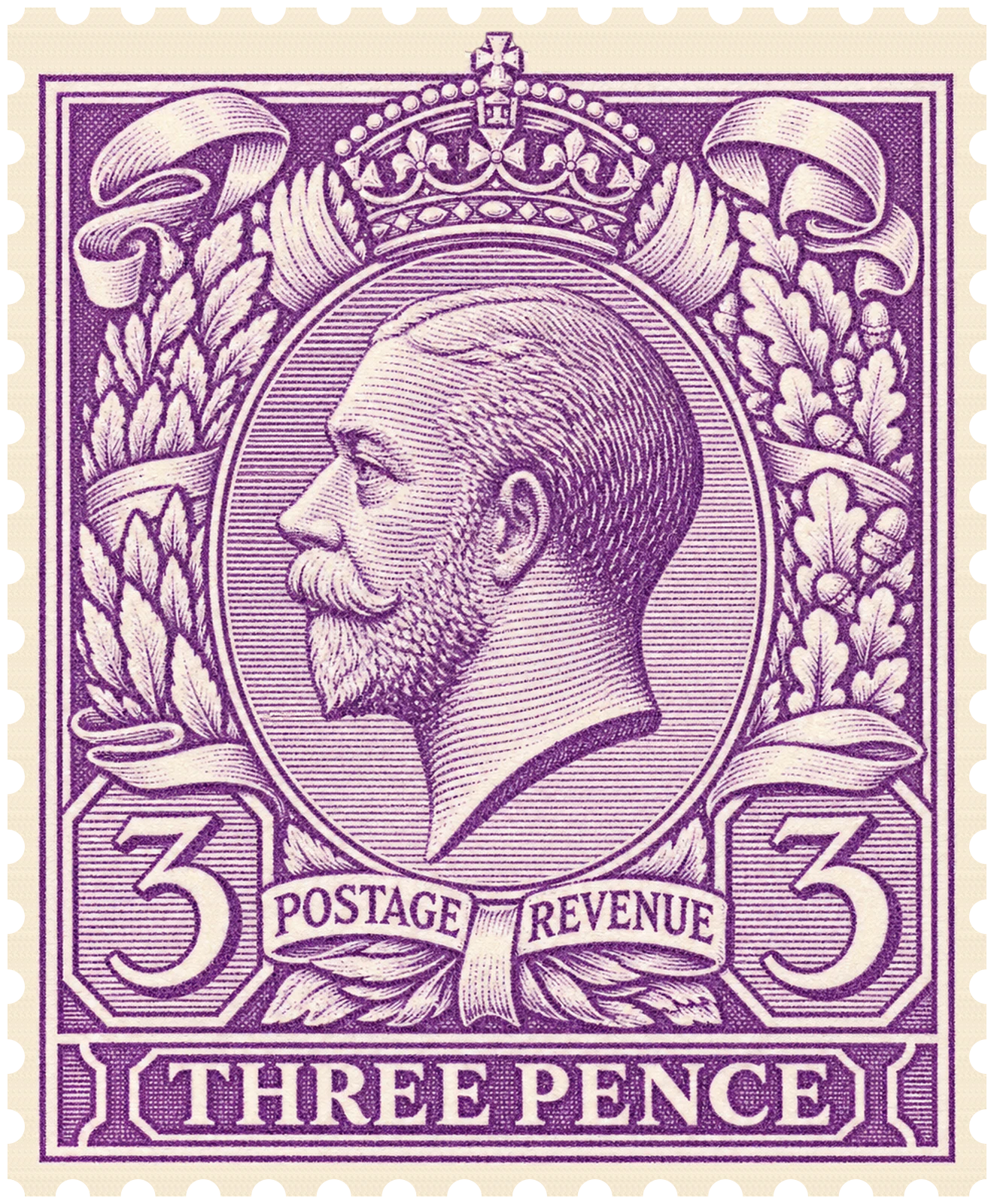
George V · 3d violet · Introduced 1924–1926
Waterlow held the main low-value contract from January 1924. Harrison regained it from January 1934, with provisional letterpress supplies continuing during the introduction of photogravure. Marginal evidence is needed for more precise attribution.
On the stamp you were exploring
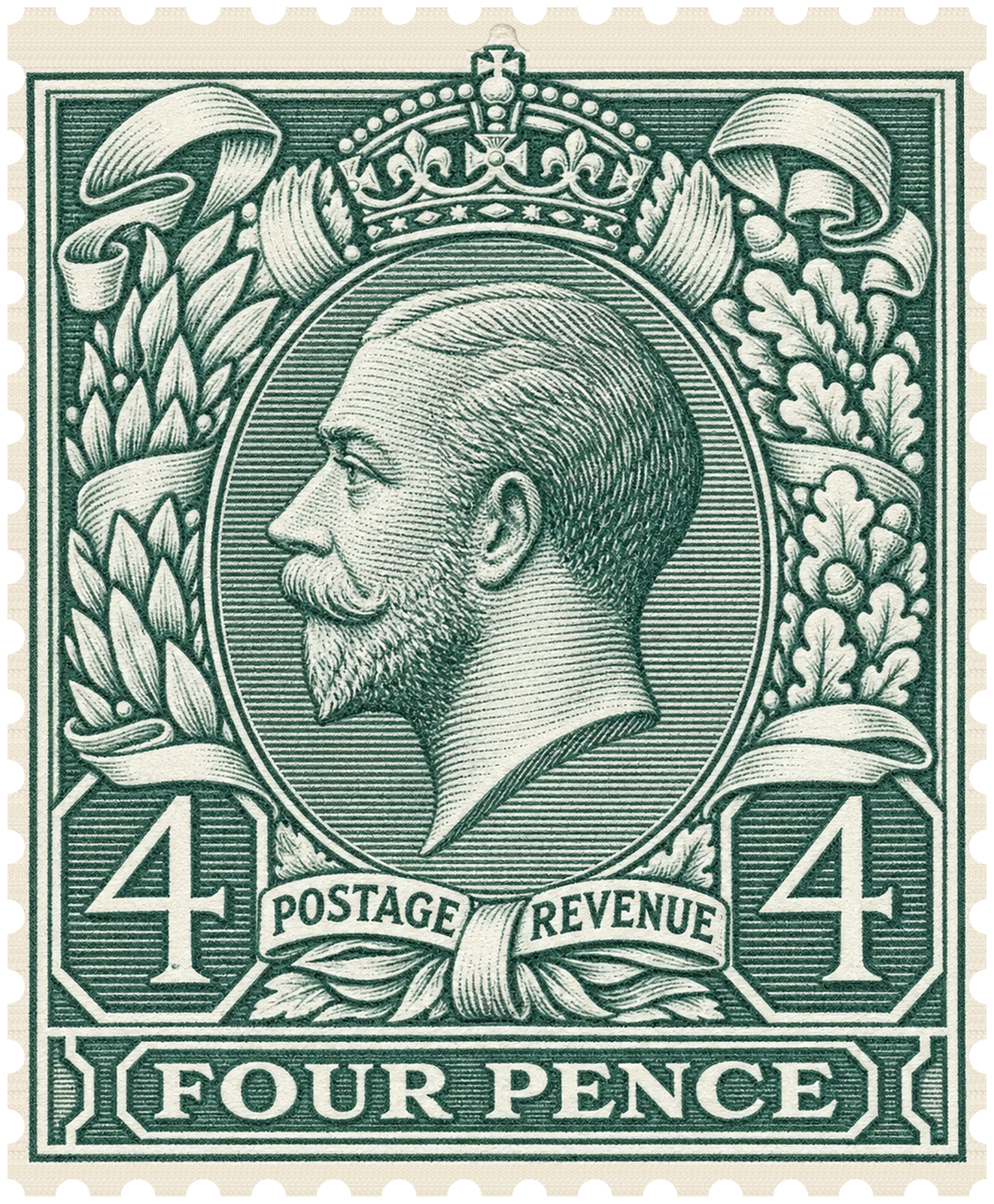
George V · 4d grey-green · Introduced 1924–1926
Waterlow held the main low-value contract from January 1924. Harrison regained it from January 1934, with provisional letterpress supplies continuing during the introduction of photogravure. Marginal evidence is needed for more precise attribution.
On the stamp you were exploring
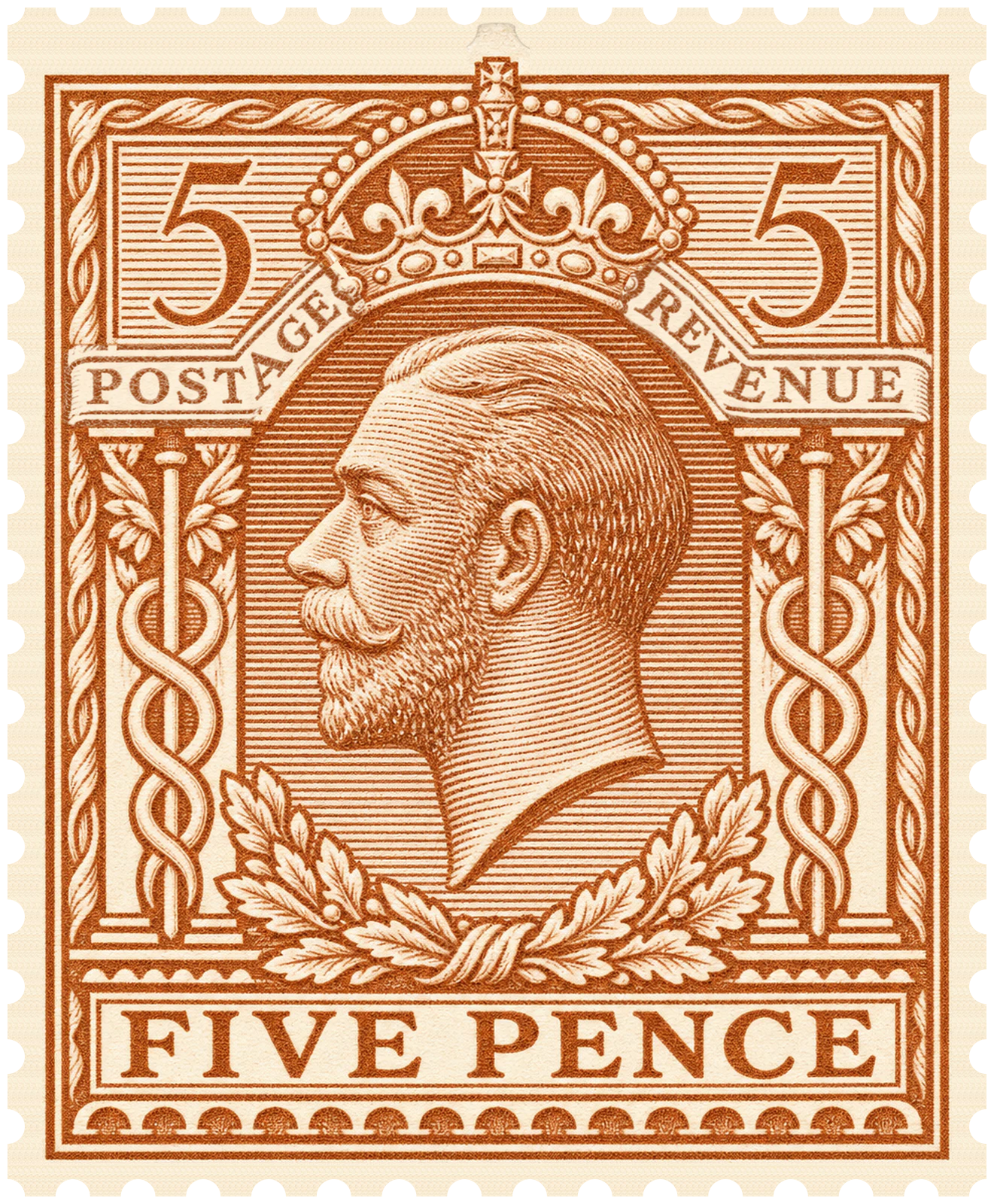
George V · 5d brown · Introduced 1924–1926
Waterlow held the main low-value contract from January 1924. Harrison regained it from January 1934, with provisional letterpress supplies continuing during the introduction of photogravure. Marginal evidence is needed for more precise attribution.
On the stamp you were exploring
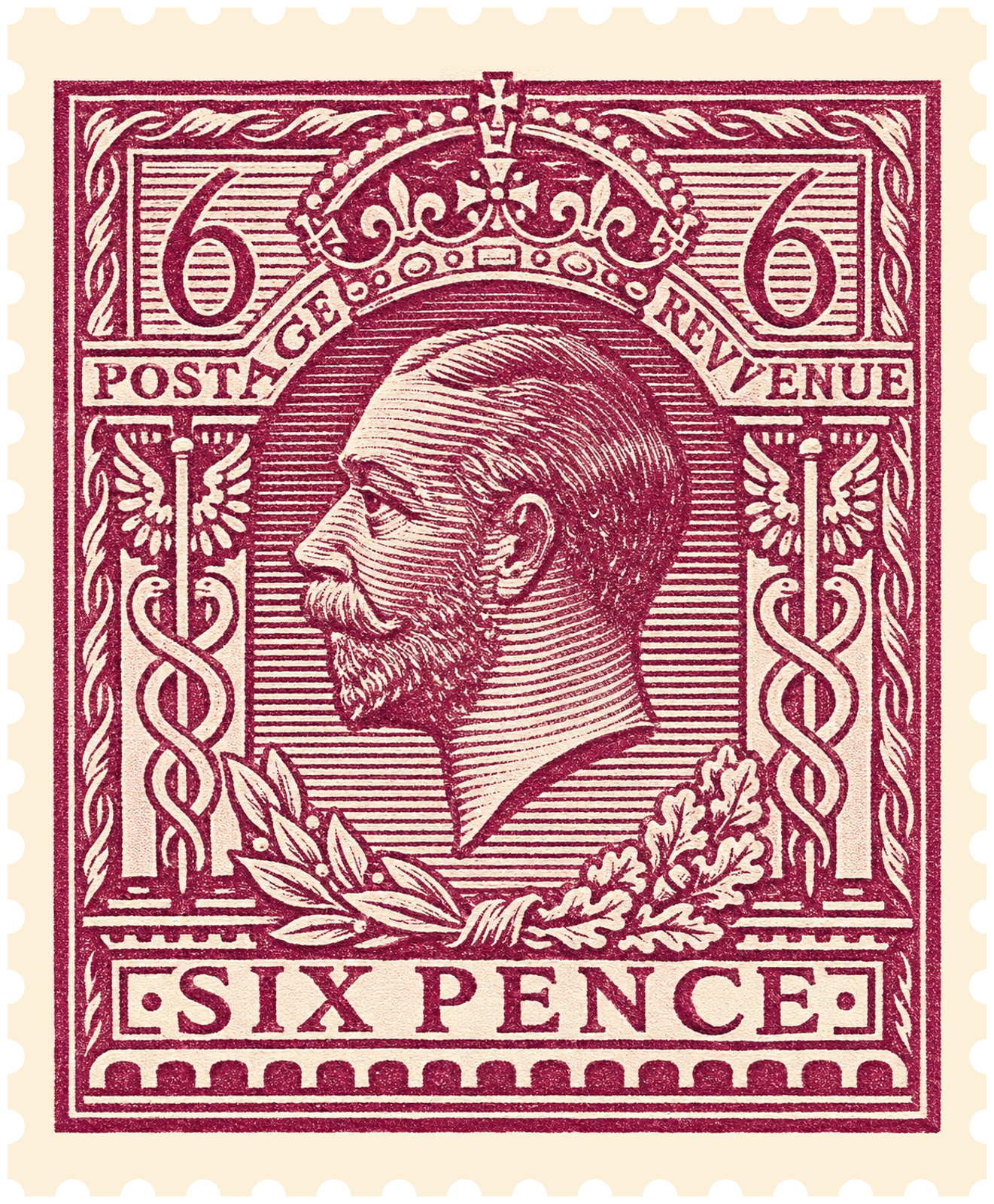
George V · 6d reddish-purple · Introduced 1924–1926
Somerset House produced the sixpence during Waterlow’s main low-value contract. Harrison later continued the value. This entry groups the paper type across that production history; it is not a single-printer shade listing.
On the stamp you were exploring
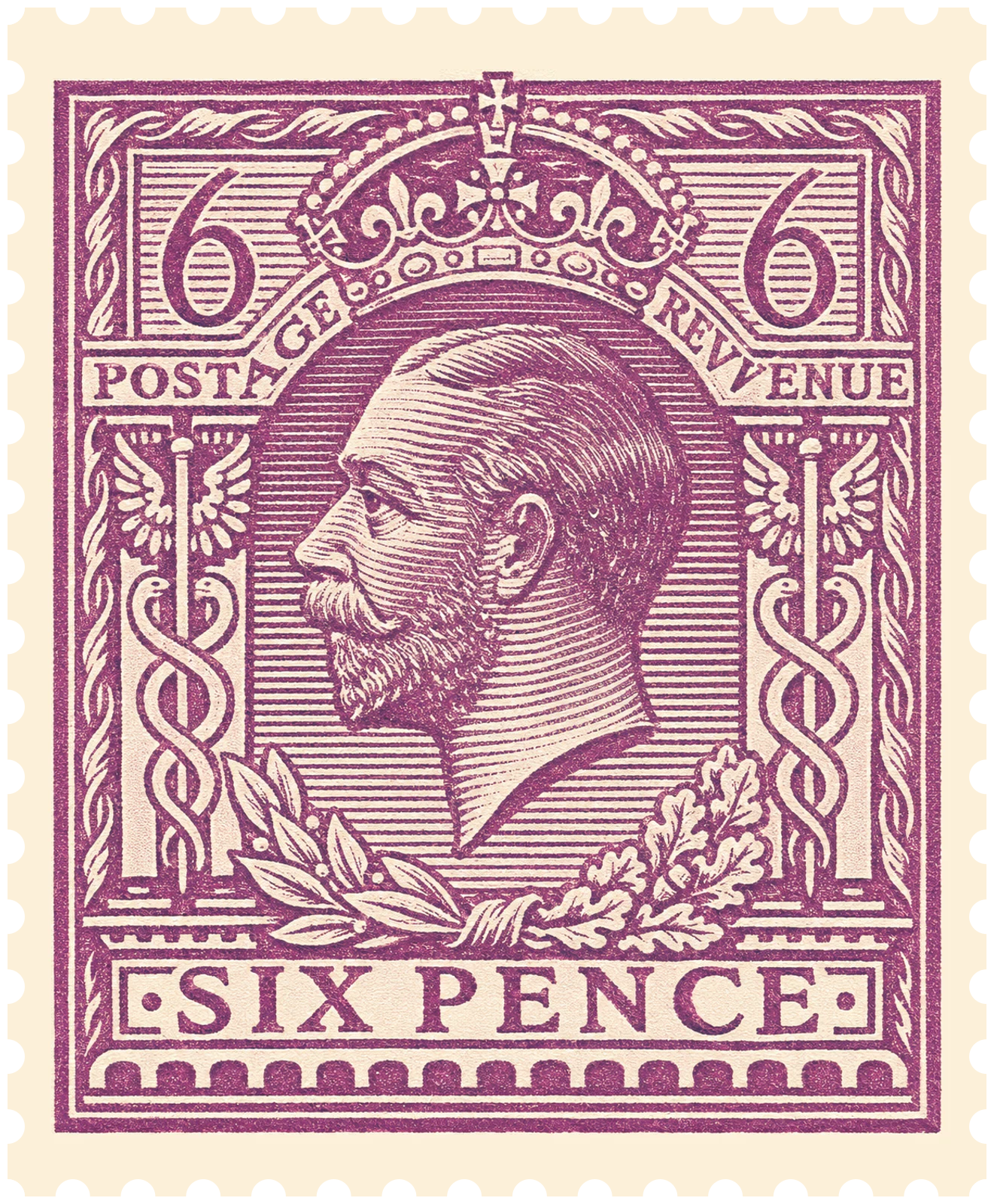
George V · 6d purple · Introduced 1924–1926
Somerset House produced the sixpence during Waterlow’s main low-value contract. Harrison later continued the value. This entry groups the paper type across that production history; it is not a single-printer shade listing.
On the stamp you were exploring
George V · 6d purple · Introduced 1924–1926
Somerset House produced the sixpence during Waterlow’s main low-value contract. Harrison later continued the value. This entry groups the paper type across that production history; it is not a single-printer shade listing.
On the stamp you were exploring
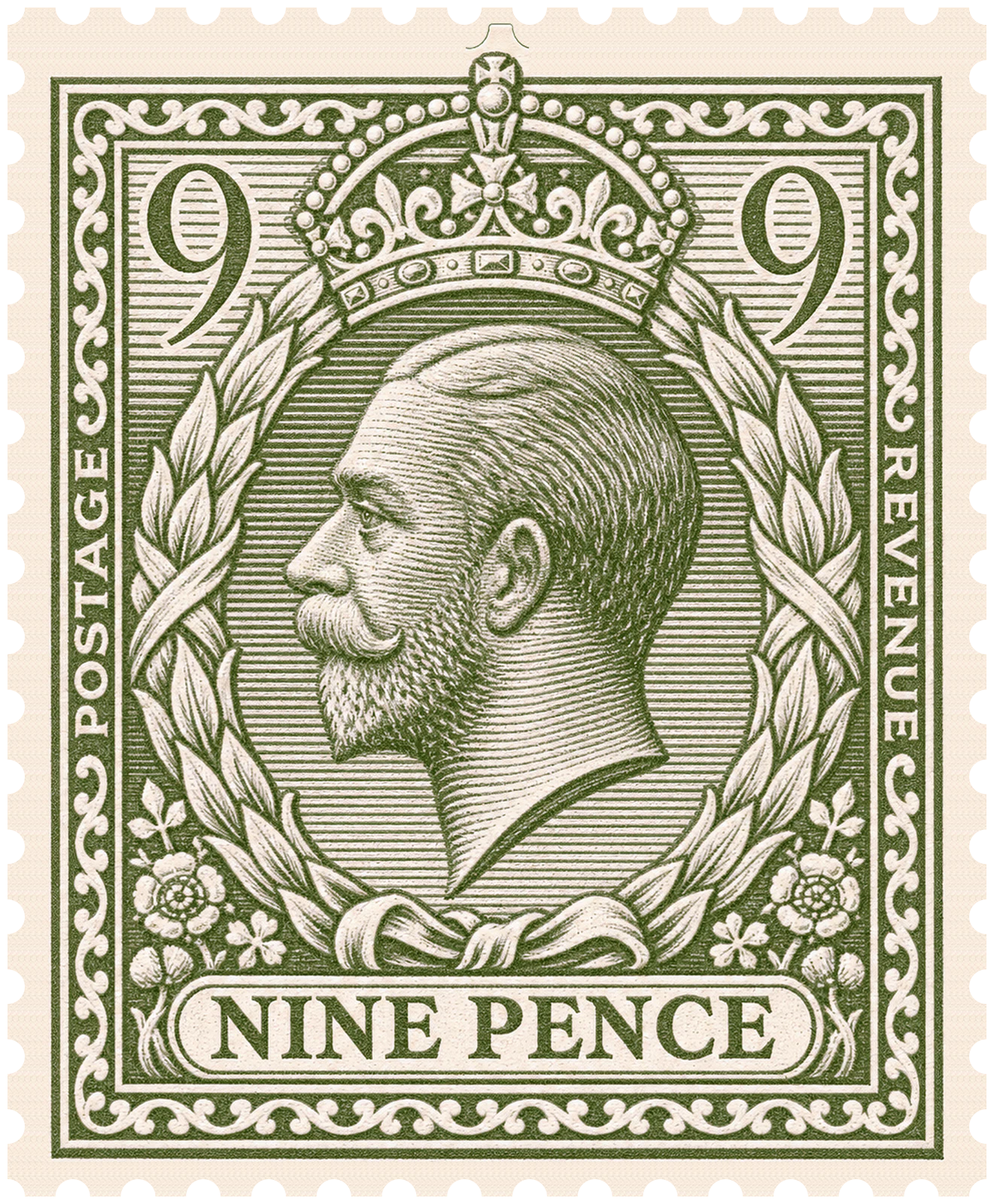
George V · 9d olive-green · Introduced 1924–1926
Waterlow held the main low-value contract from January 1924. Harrison regained it from January 1934, with provisional letterpress supplies continuing during the introduction of photogravure. Marginal evidence is needed for more precise attribution.
On the stamp you were exploring
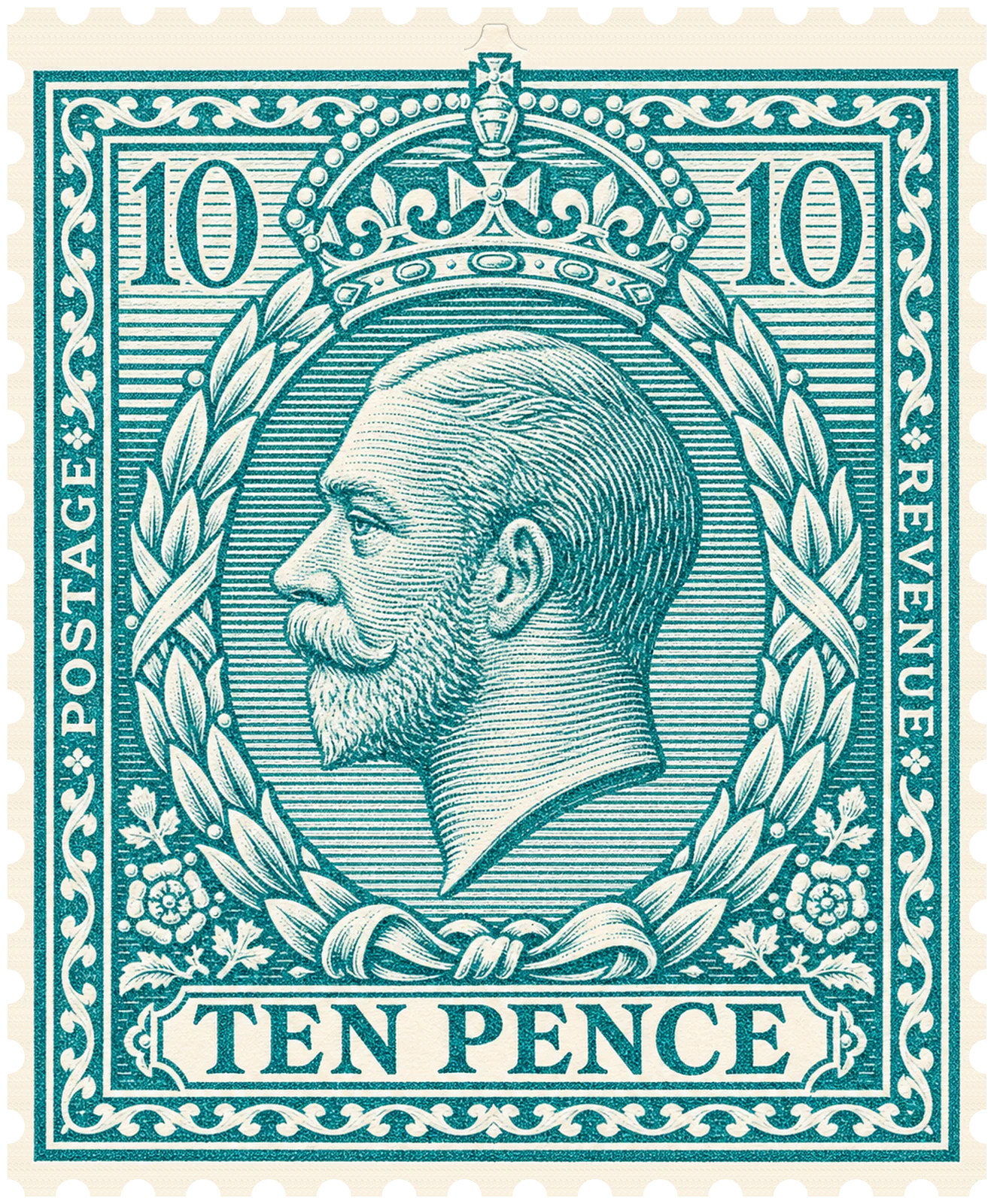
George V · 10d turquoise-blue · Introduced 1924–1926
Waterlow held the main low-value contract from January 1924. Harrison regained it from January 1934, with provisional letterpress supplies continuing during the introduction of photogravure. Marginal evidence is needed for more precise attribution.
On the stamp you were exploring
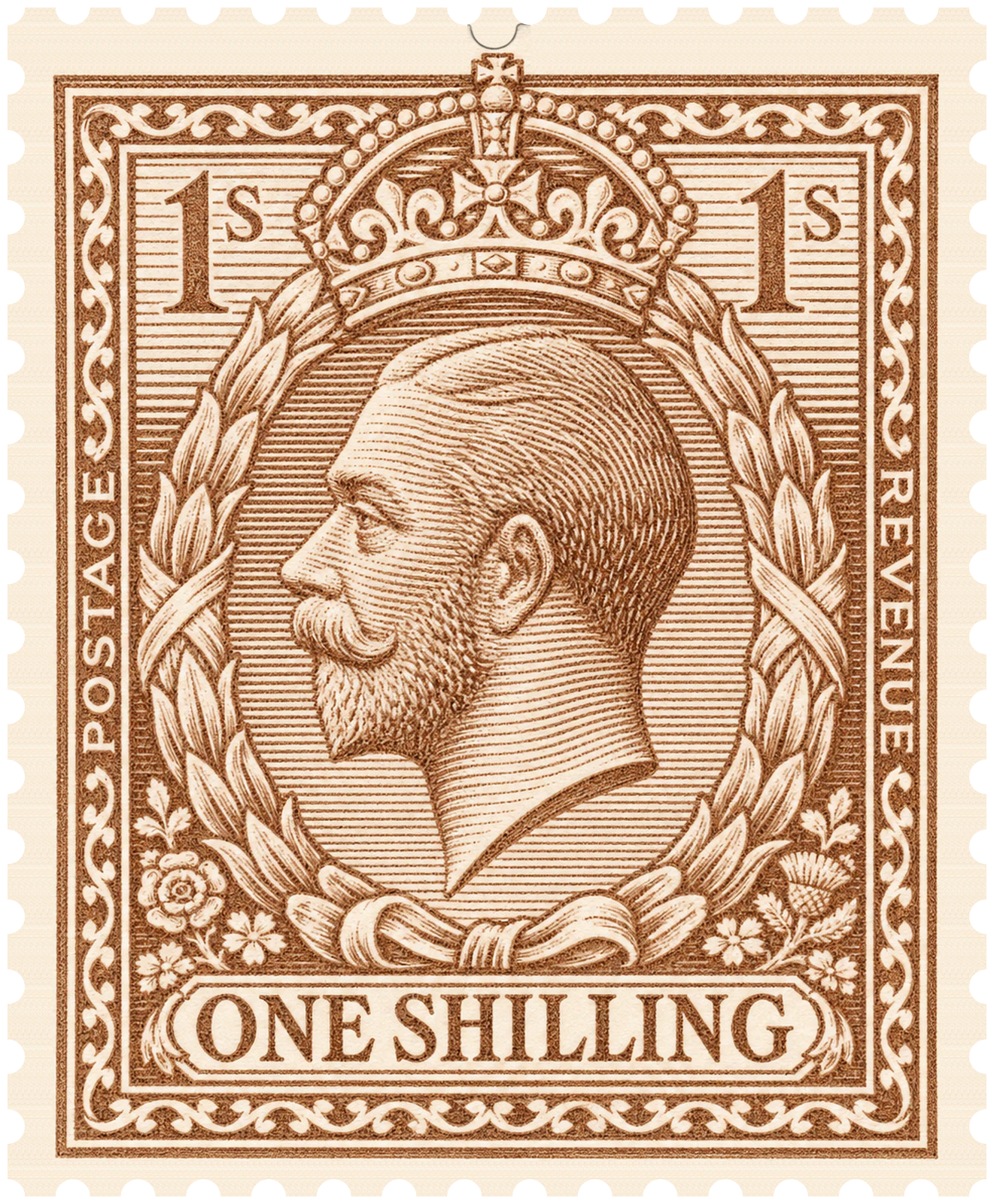
George V · 1s bistre-brown · Introduced 1924–1926
Waterlow held the main low-value contract from January 1924. Harrison regained it from January 1934, with provisional letterpress supplies continuing during the introduction of photogravure. Marginal evidence is needed for more precise attribution.
On the stamp you were exploring
George V · ½d green · 1935 · Small format
Harrison & Sons printed this ½d by photogravure. The firm’s photogravure production belongs to the 1934–1936 series.
On the stamp you were exploring
George V · ½d green · 1935 · Small format
Harrison & Sons printed this ½d by photogravure. The firm’s photogravure production belongs to the 1934–1936 series.
On the stamp you were exploring
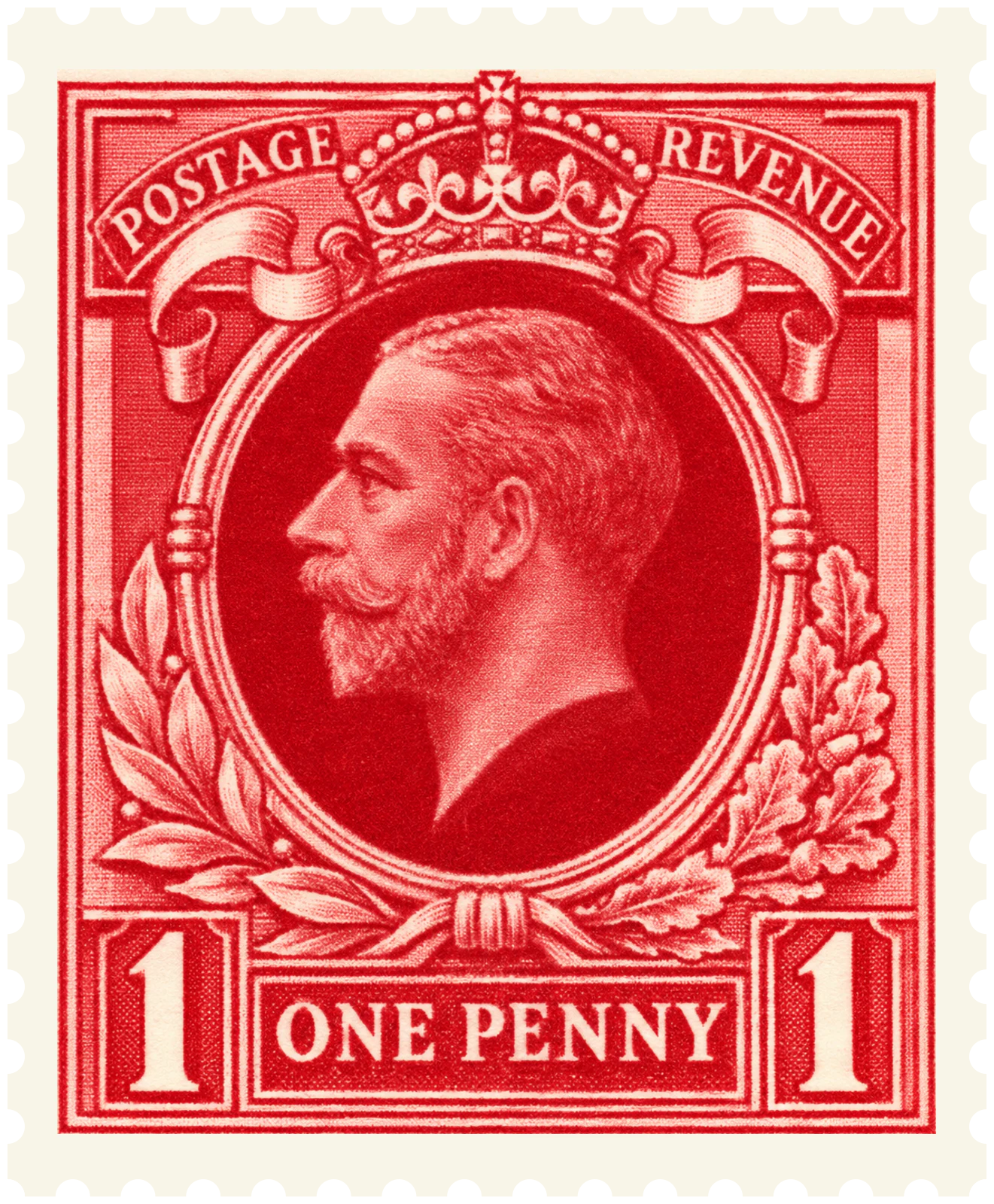
George V · 1d scarlet · 1935 · Small format
Harrison & Sons printed this 1d by photogravure. The firm’s photogravure production belongs to the 1934–1936 series.
On the stamp you were exploring
George V · 1d scarlet · 1935 · Small format
Harrison & Sons printed this 1d by photogravure. The firm’s photogravure production belongs to the 1934–1936 series.
On the stamp you were exploring
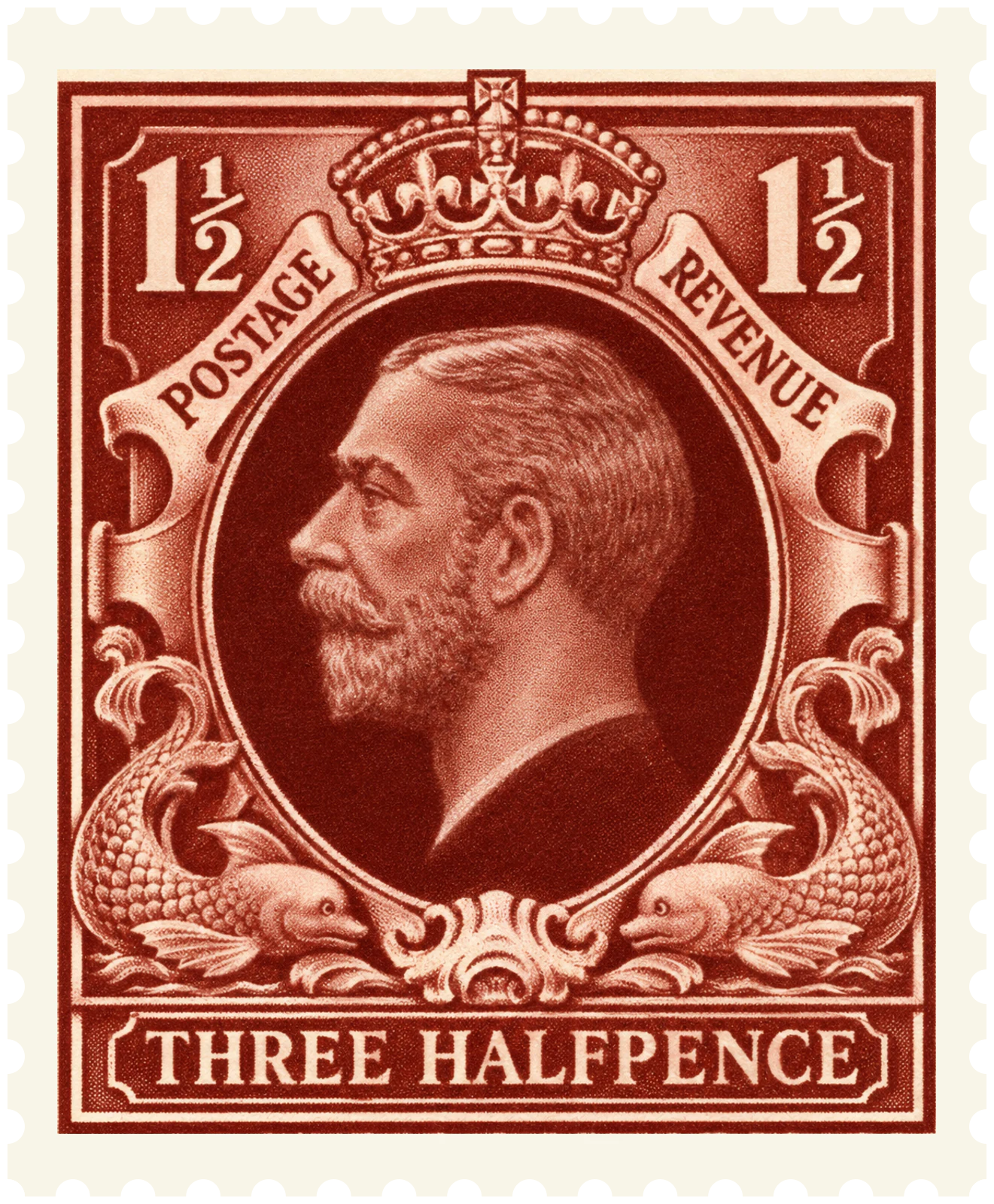
George V · 1½d red-brown · 1935 · Small format
Harrison & Sons printed this 1½d by photogravure. The firm’s photogravure production belongs to the 1934–1936 series.
On the stamp you were exploring
George V · 1½d red-brown · 1935 · Small format
Harrison & Sons printed this 1½d by photogravure. The firm’s photogravure production belongs to the 1934–1936 series.
On the stamp you were exploring
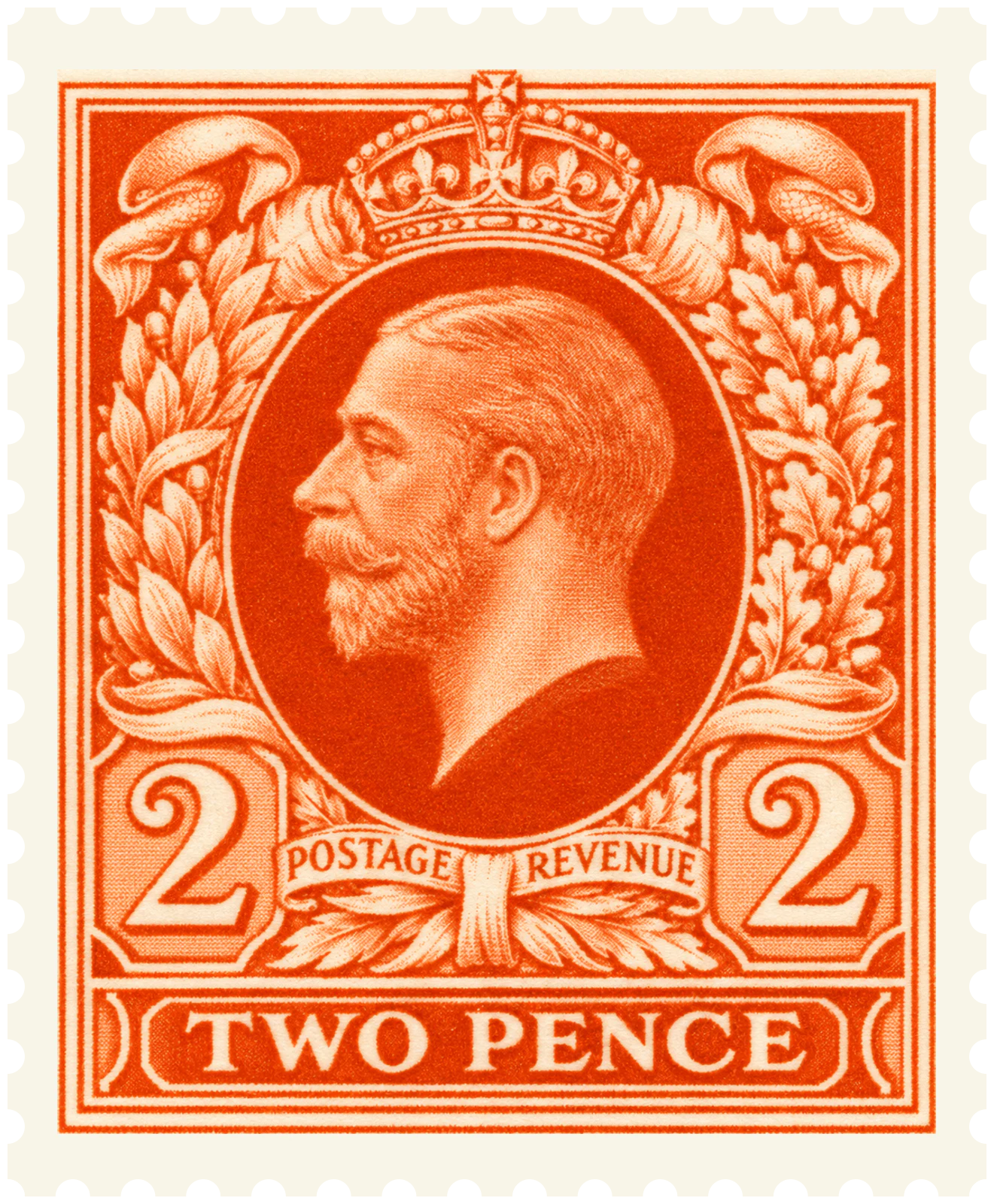
George V · 2d orange · 1935 · Small format
Harrison & Sons printed this 2d by photogravure. The firm’s photogravure production belongs to the 1934–1936 series.
On the stamp you were exploring
George V · 2d orange · 1935 · Small format
Harrison & Sons printed this 2d by photogravure. The firm’s photogravure production belongs to the 1934–1936 series.
On the stamp you were exploring
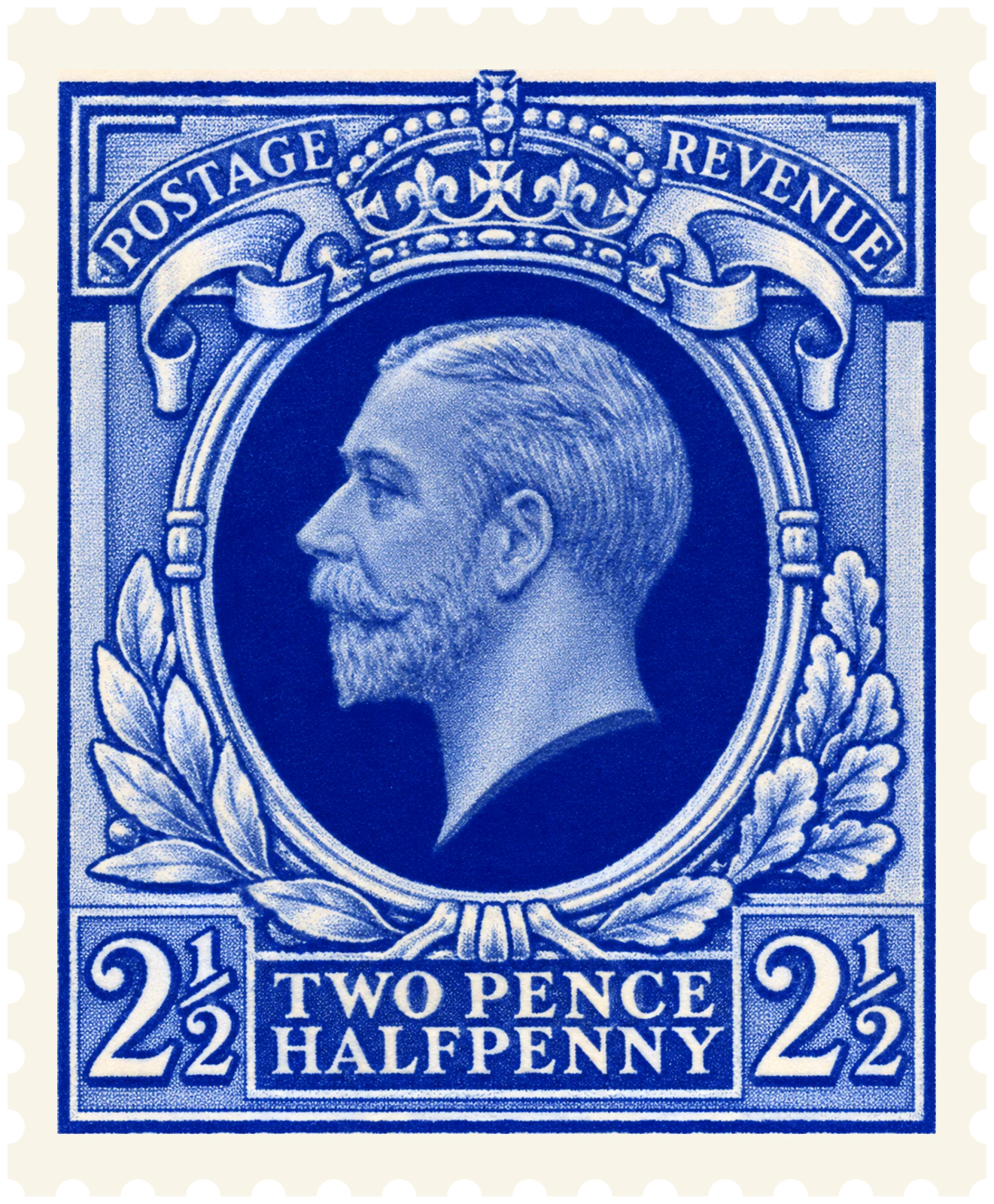
George V · 2½d ultramarine · 1935 · Small format
Harrison & Sons printed this 2½d by photogravure. The firm’s photogravure production belongs to the 1934–1936 series.
On the stamp you were exploring
George V · 2½d ultramarine · 1935 · Small format
Harrison & Sons printed this 2½d by photogravure. The firm’s photogravure production belongs to the 1934–1936 series.
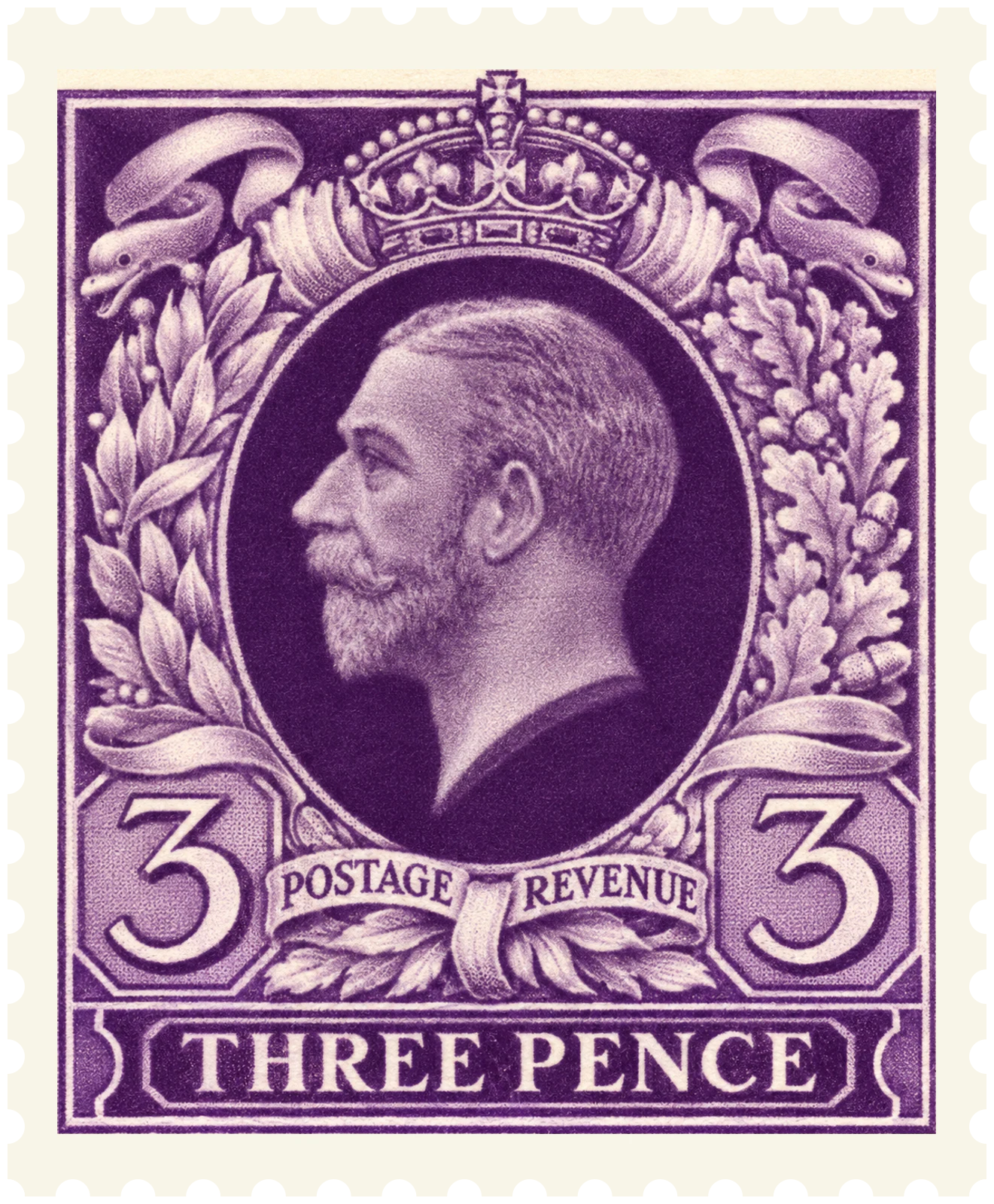
On the stamp you were exploring
George V · 3d violet · 1935 · Small format
Harrison & Sons printed this 3d by photogravure. The firm’s photogravure production belongs to the 1934–1936 series.
On the stamp you were exploring
George V · 3d violet · 1935 · Small format
Harrison & Sons printed this 3d by photogravure. The firm’s photogravure production belongs to the 1934–1936 series.
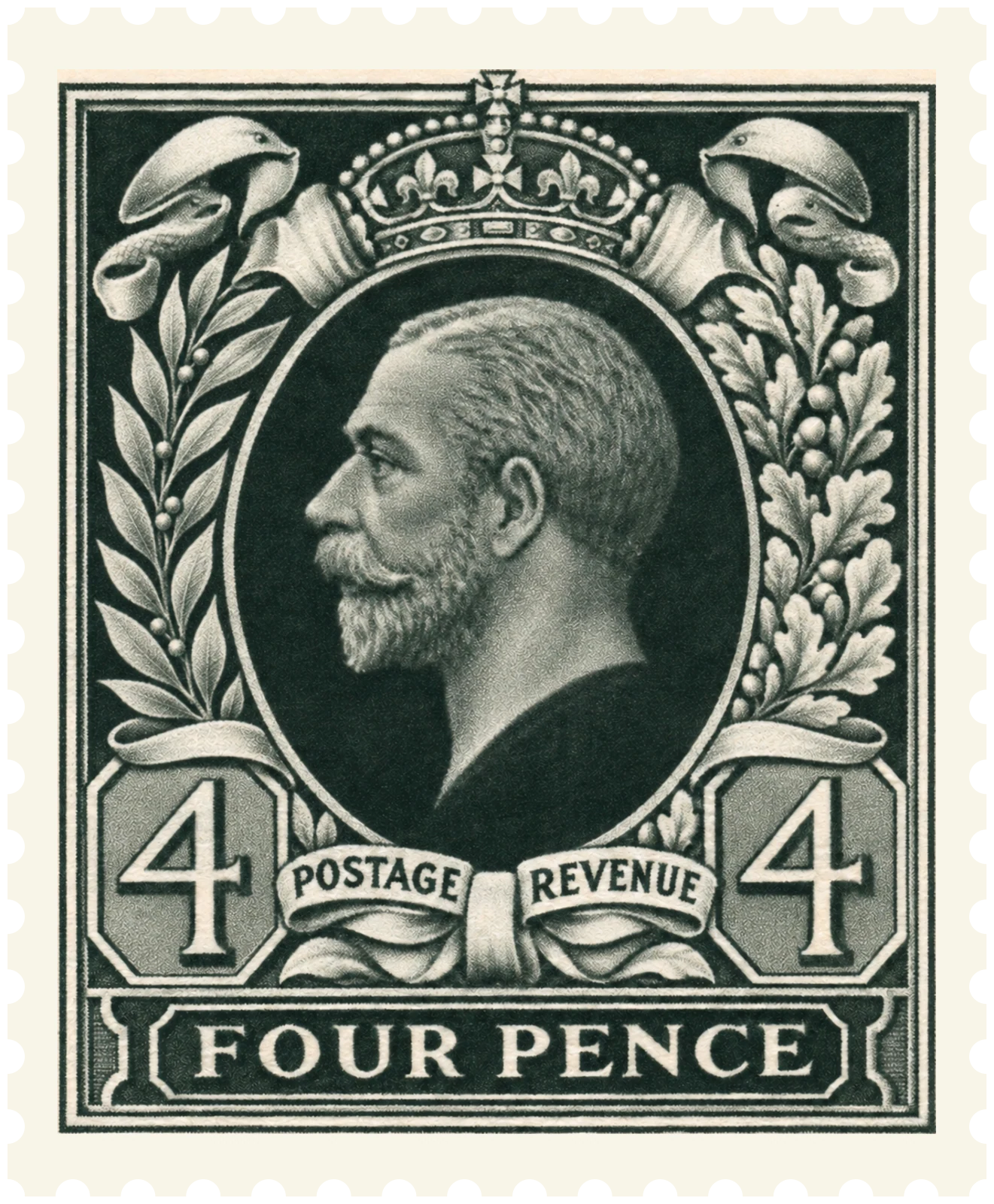
On the stamp you were exploring
George V · 4d grey-green · 1935 · Small format
Harrison & Sons printed this 4d by photogravure. The firm’s photogravure production belongs to the 1934–1936 series.
On the stamp you were exploring
George V · 4d grey-green · 1935 · Small format
Harrison & Sons printed this 4d by photogravure. The firm’s photogravure production belongs to the 1934–1936 series.
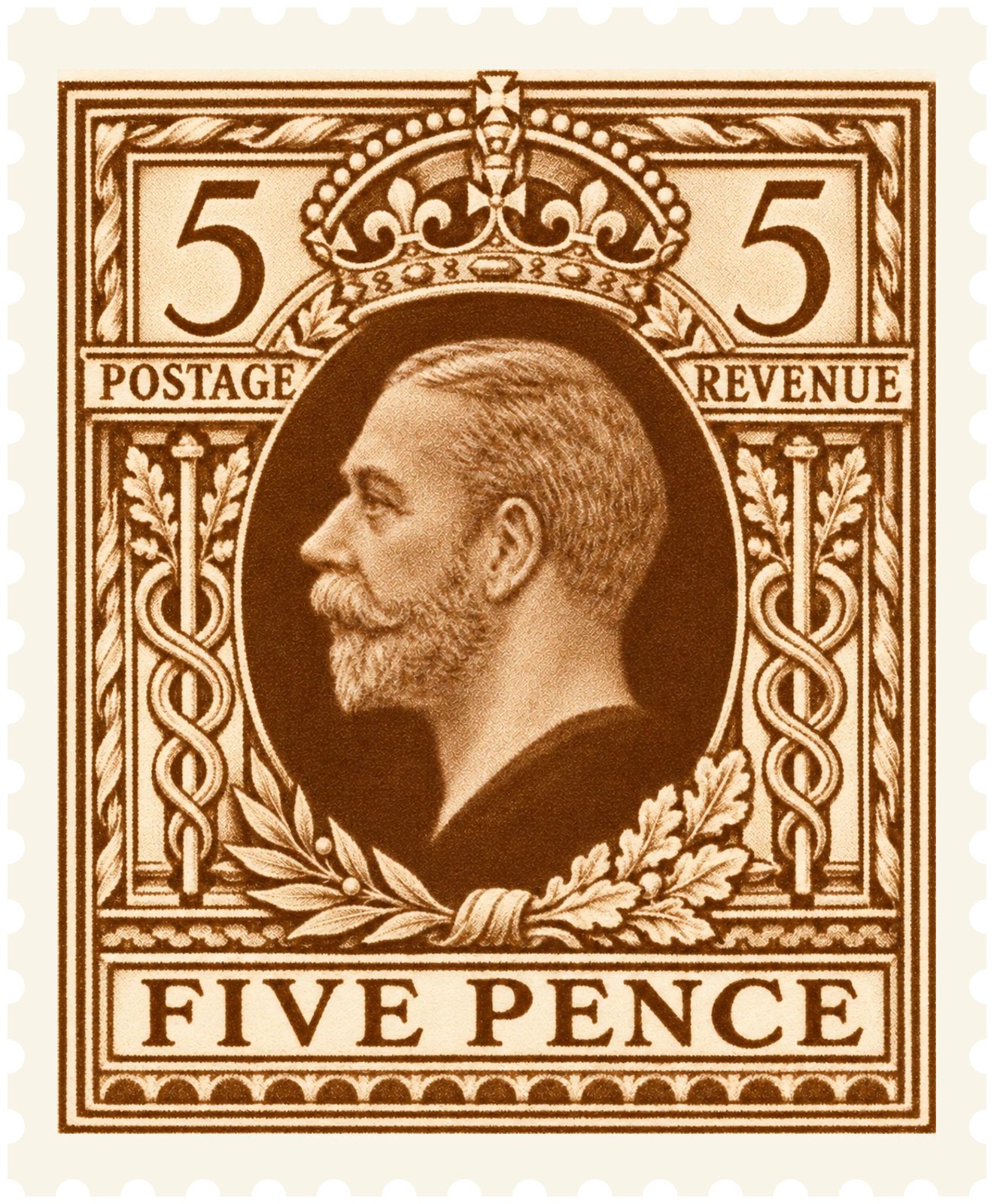
On the stamp you were exploring
George V · 5d yellow-brown · 1936 · Small format
Harrison & Sons printed this 5d by photogravure. The firm’s photogravure production belongs to the 1934–1936 series.
On the stamp you were exploring
George V · 5d yellow-brown · 1936 · Small format
Harrison & Sons printed this 5d by photogravure. The firm’s photogravure production belongs to the 1934–1936 series.
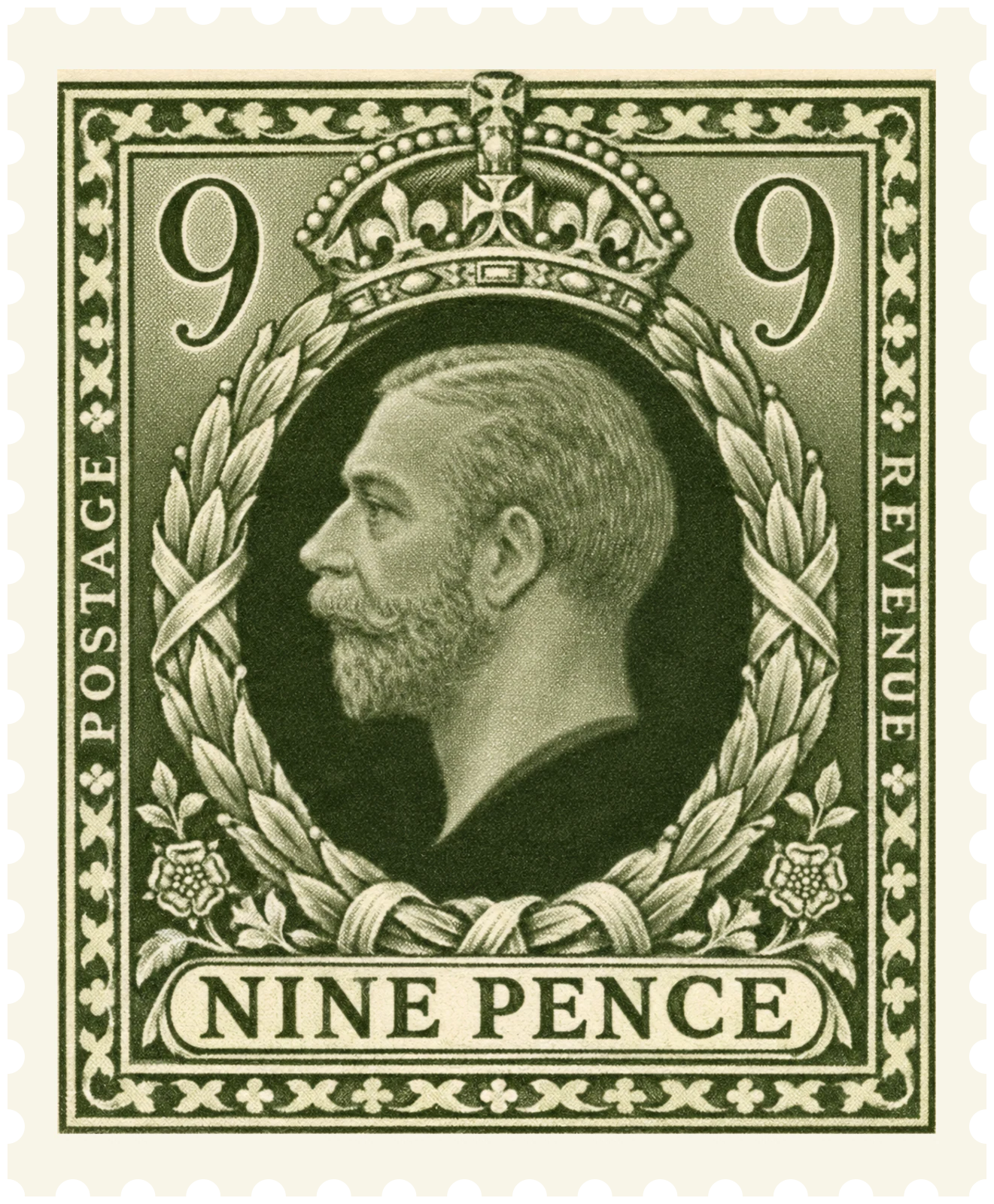
On the stamp you were exploring
George V · 9d deep olive-green · 1935 · Small format
Harrison & Sons printed this 9d by photogravure. The firm’s photogravure production belongs to the 1934–1936 series.
On the stamp you were exploring
George V · 9d deep olive-green · 1935 · Small format
Harrison & Sons printed this 9d by photogravure. The firm’s photogravure production belongs to the 1934–1936 series.
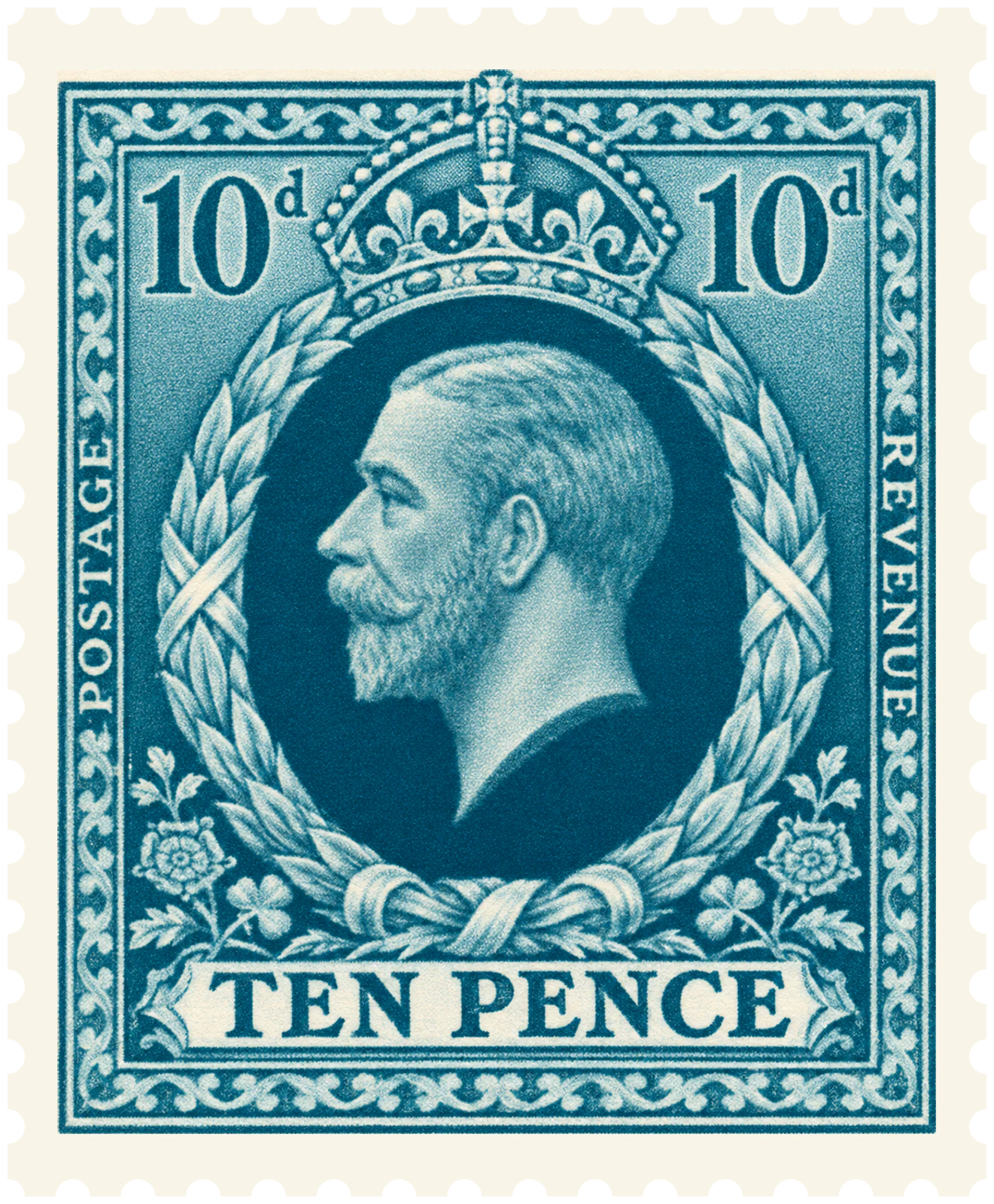
On the stamp you were exploring
George V · 10d turquoise-blue · 1936 · Small format
Harrison & Sons printed this 10d by photogravure. The firm’s photogravure production belongs to the 1934–1936 series.
On the stamp you were exploring
George V · 10d turquoise-blue · 1936 · Small format
Harrison & Sons printed this 10d by photogravure. The firm’s photogravure production belongs to the 1934–1936 series.
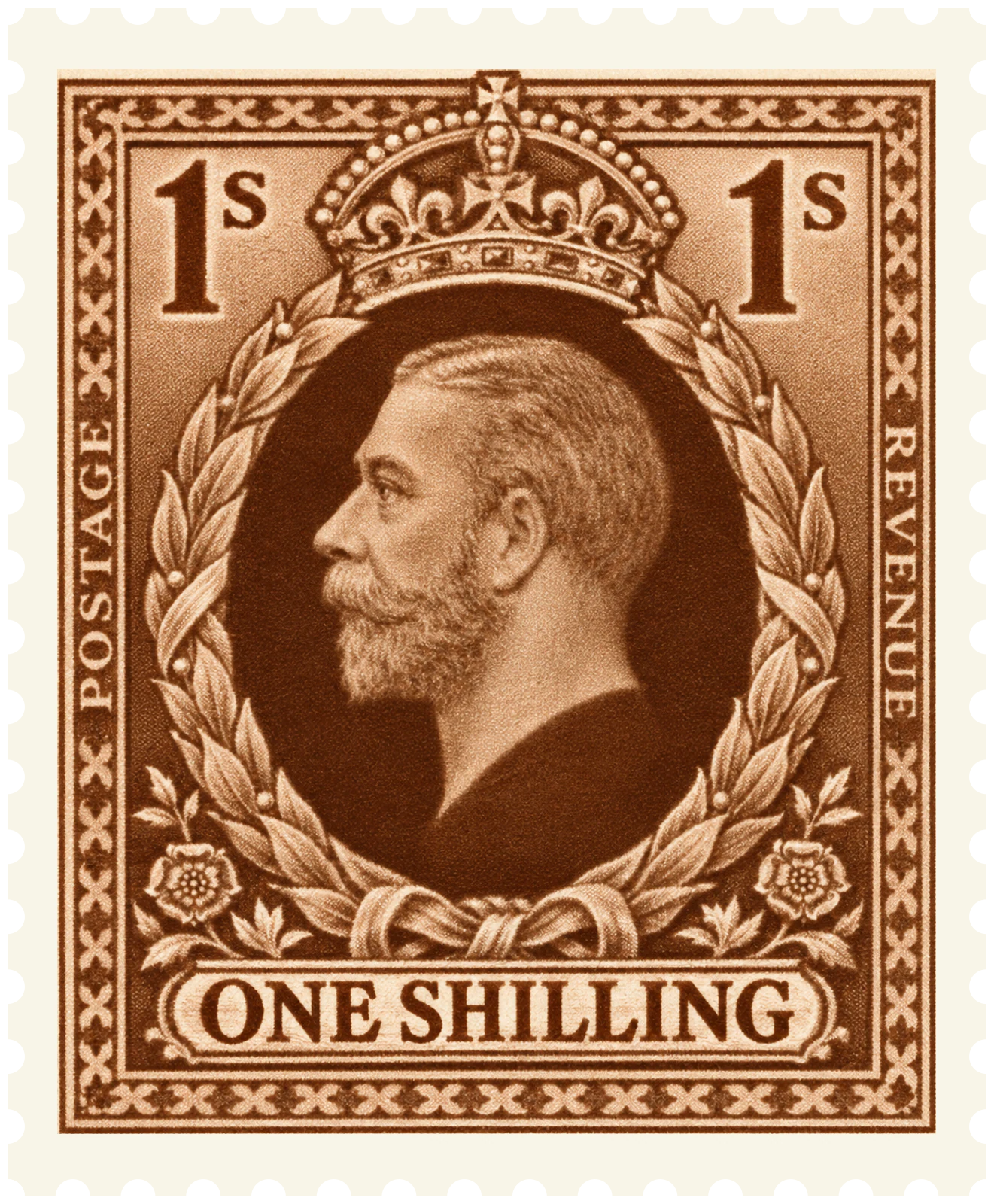
On the stamp you were exploring
George V · 1s bistre-brown · 1936 · Small format
Harrison & Sons printed this 1s by photogravure. The firm’s photogravure production belongs to the 1934–1936 series.
On the stamp you were exploring
George V · 1s bistre-brown · 1936 · Small format
Harrison & Sons printed this 1s by photogravure. The firm’s photogravure production belongs to the 1934–1936 series.
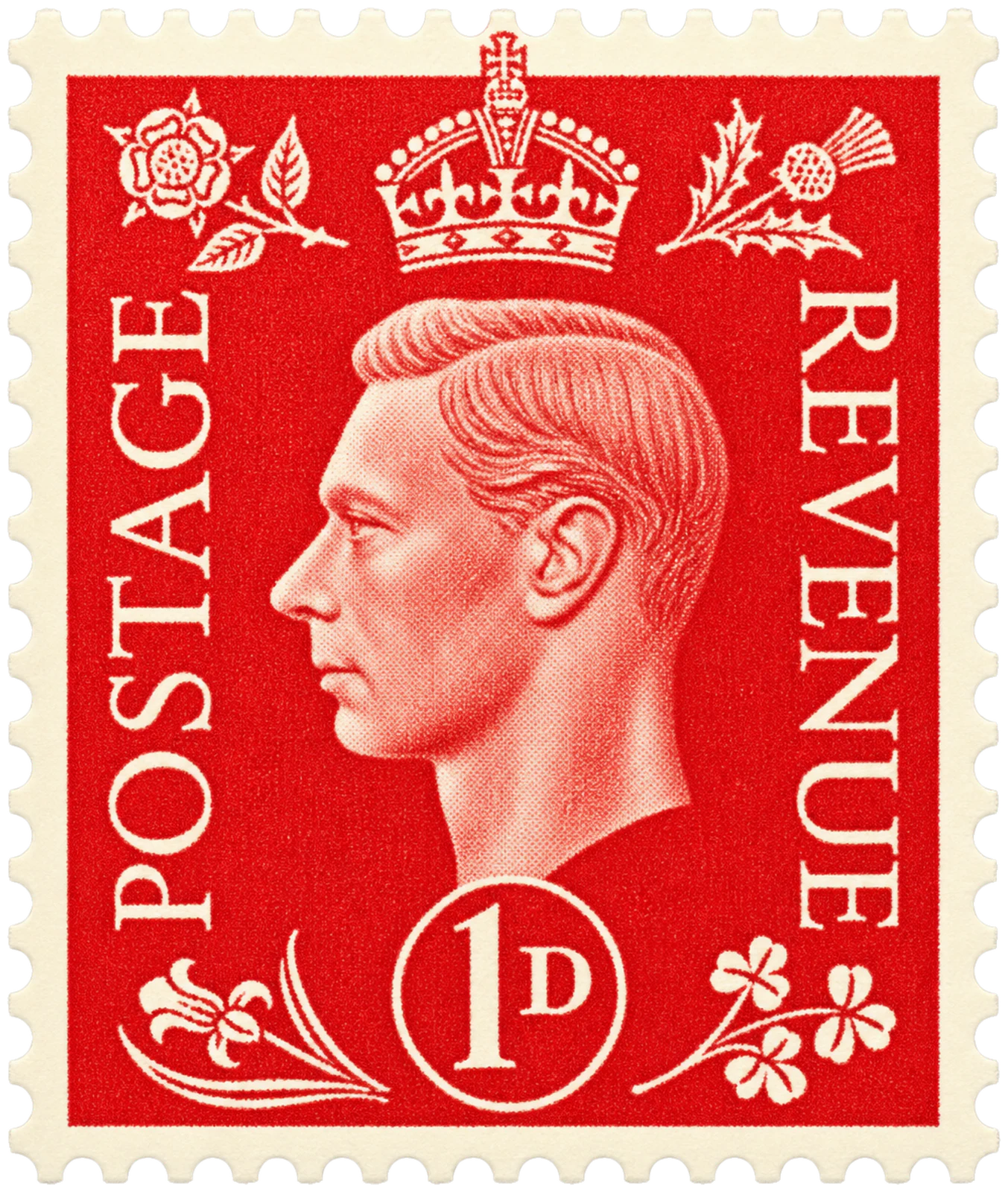
On the stamp you were exploring
George VI · 1d scarlet · 10 May 1937
Harrison & Sons printed this 1d stamp by photogravure.
On the stamp you were exploring
George VI · 1d scarlet · 10 May 1937
Harrison & Sons printed this 1d stamp by photogravure.
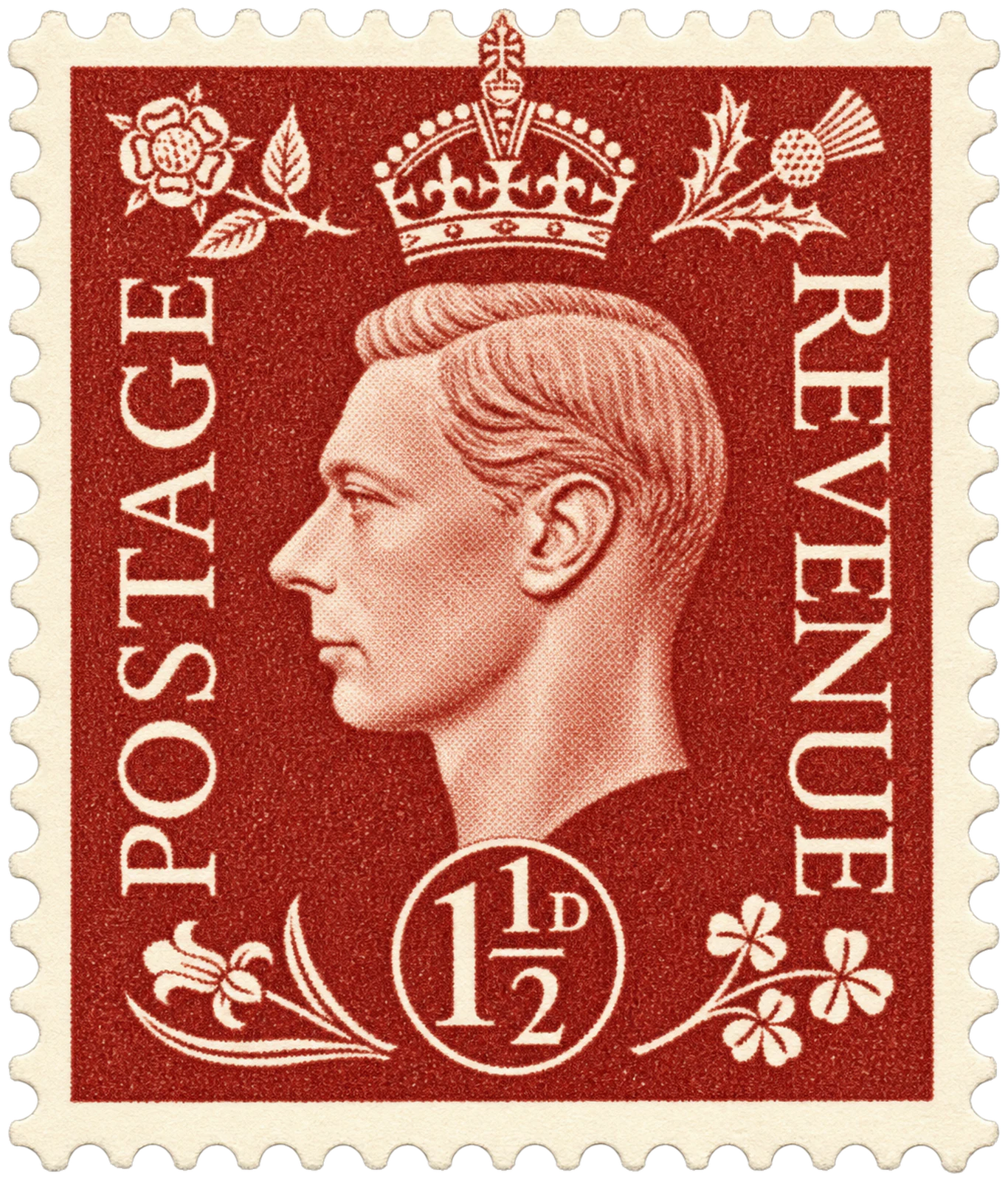
On the stamp you were exploring
George VI · 1½d red-brown · 30 July 1937
Harrison & Sons printed this 1½d stamp by photogravure.
On the stamp you were exploring
George VI · 1½d red-brown · 30 July 1937
Harrison & Sons printed this 1½d stamp by photogravure.
On the stamp you were exploring
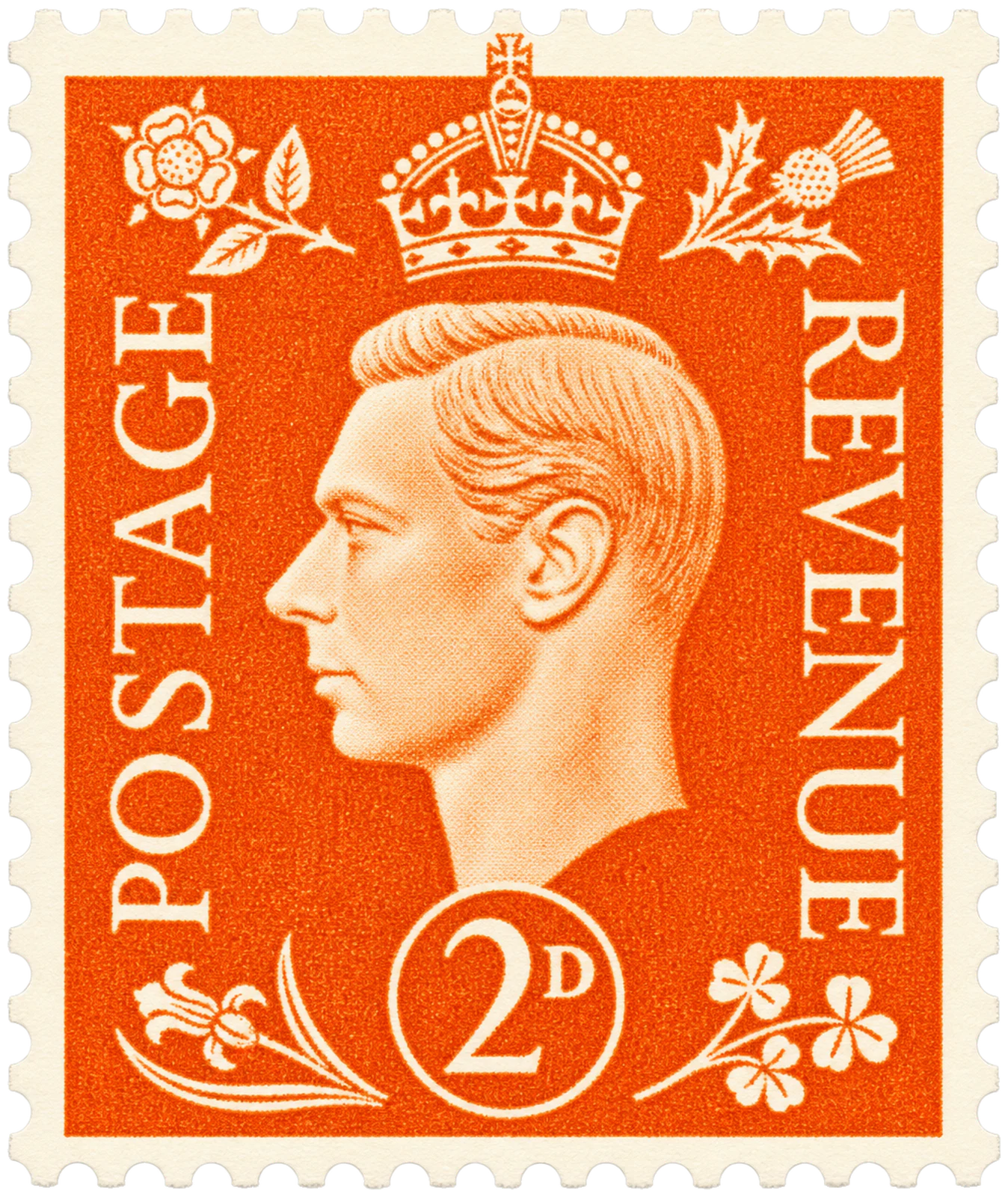
George VI · 2d orange · 31 January 1938
Harrison & Sons printed this 2d stamp by photogravure.
On the stamp you were exploring
George VI · 2d orange · 31 January 1938
Harrison & Sons printed this 2d stamp by photogravure.
On the stamp you were exploring
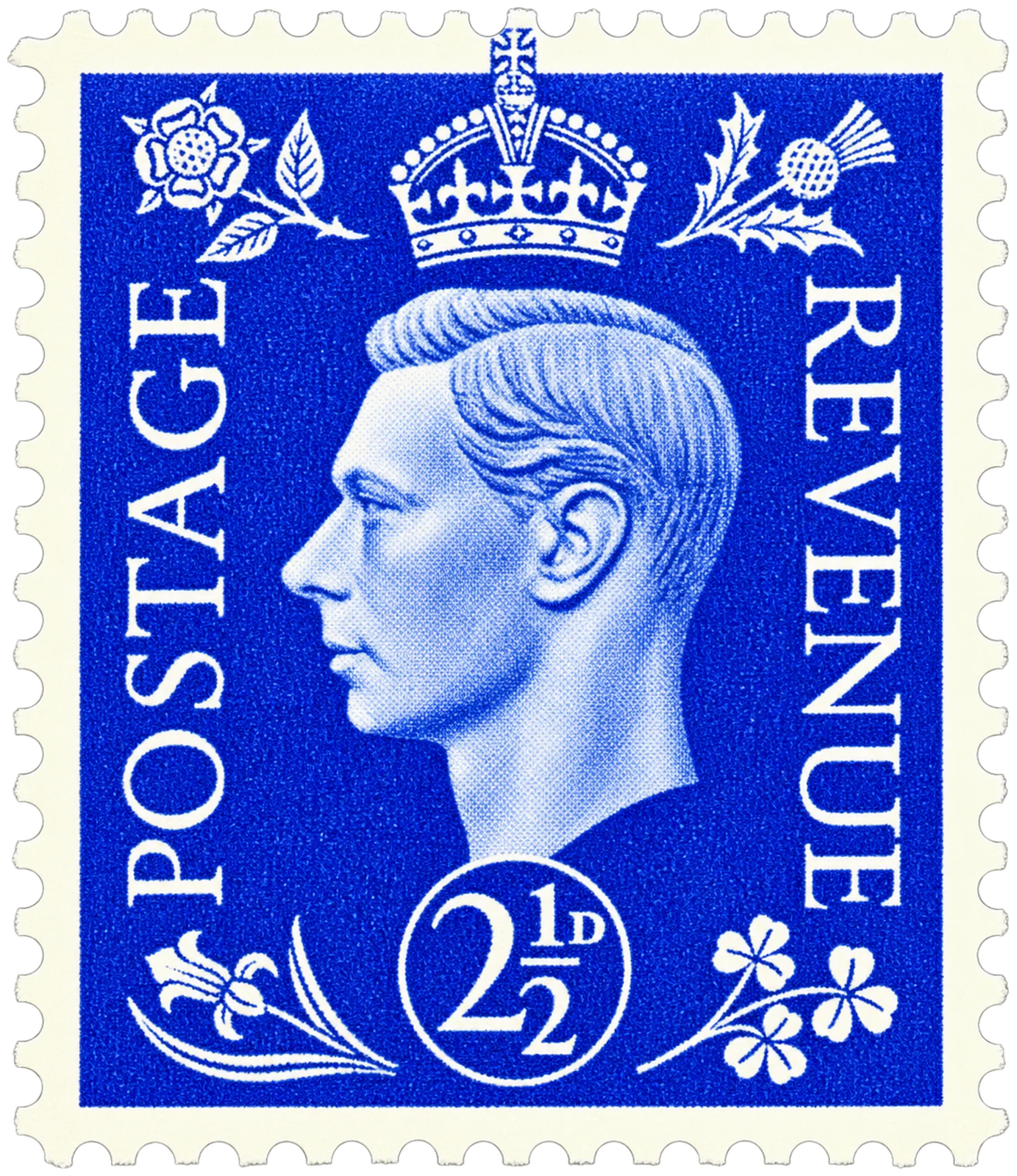
George VI · 2½d ultramarine · 10 May 1937
Harrison & Sons printed this 2½d stamp by photogravure.
On the stamp you were exploring
George VI · 2½d ultramarine · 10 May 1937
Harrison & Sons printed this 2½d stamp by photogravure.
On the stamp you were exploring
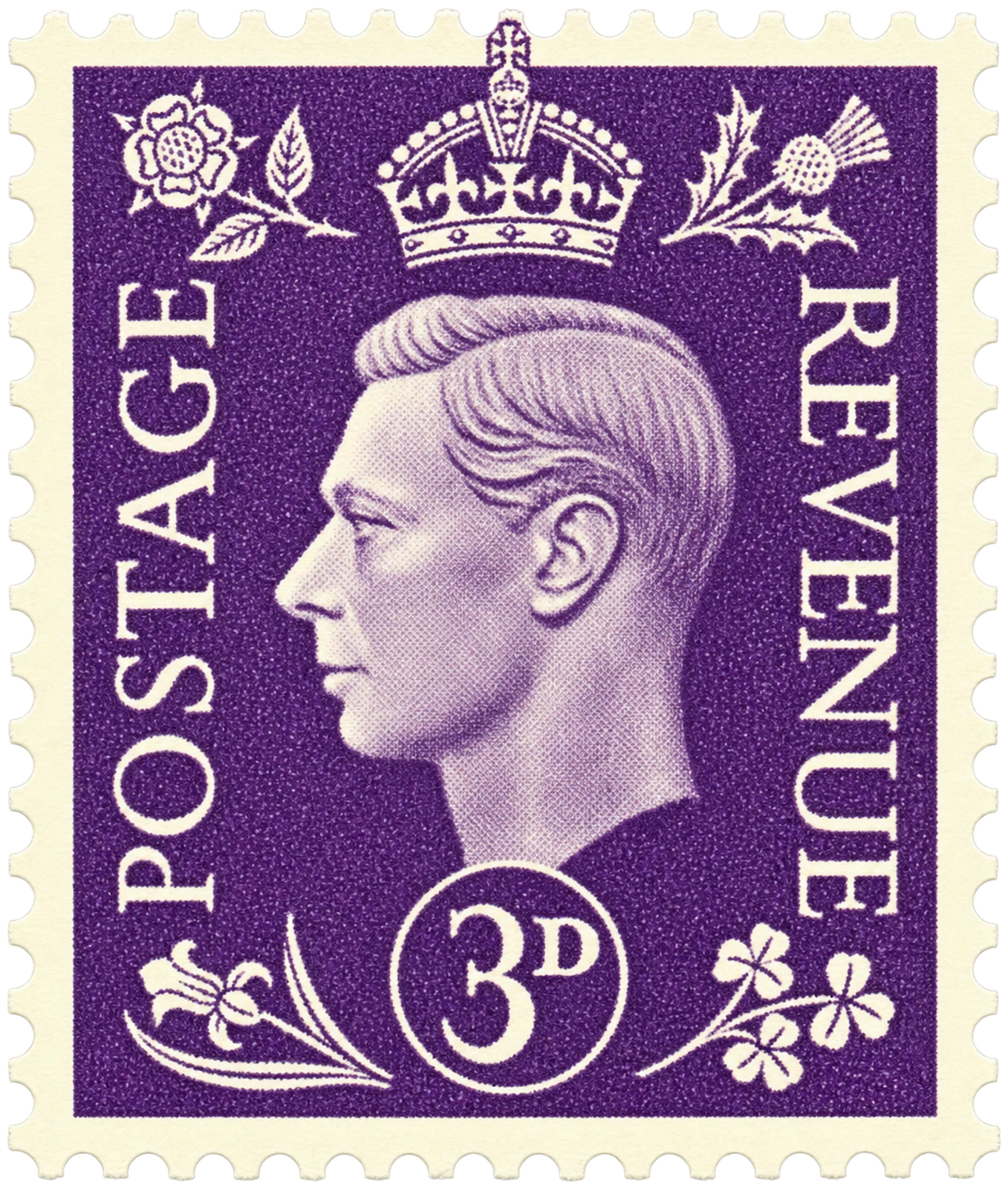
George VI · 3d violet · 31 January 1938
Harrison & Sons printed this 3d stamp by photogravure.
On the stamp you were exploring
George VI · 3d violet · 31 January 1938
Harrison & Sons printed this 3d stamp by photogravure.
On the stamp you were exploring
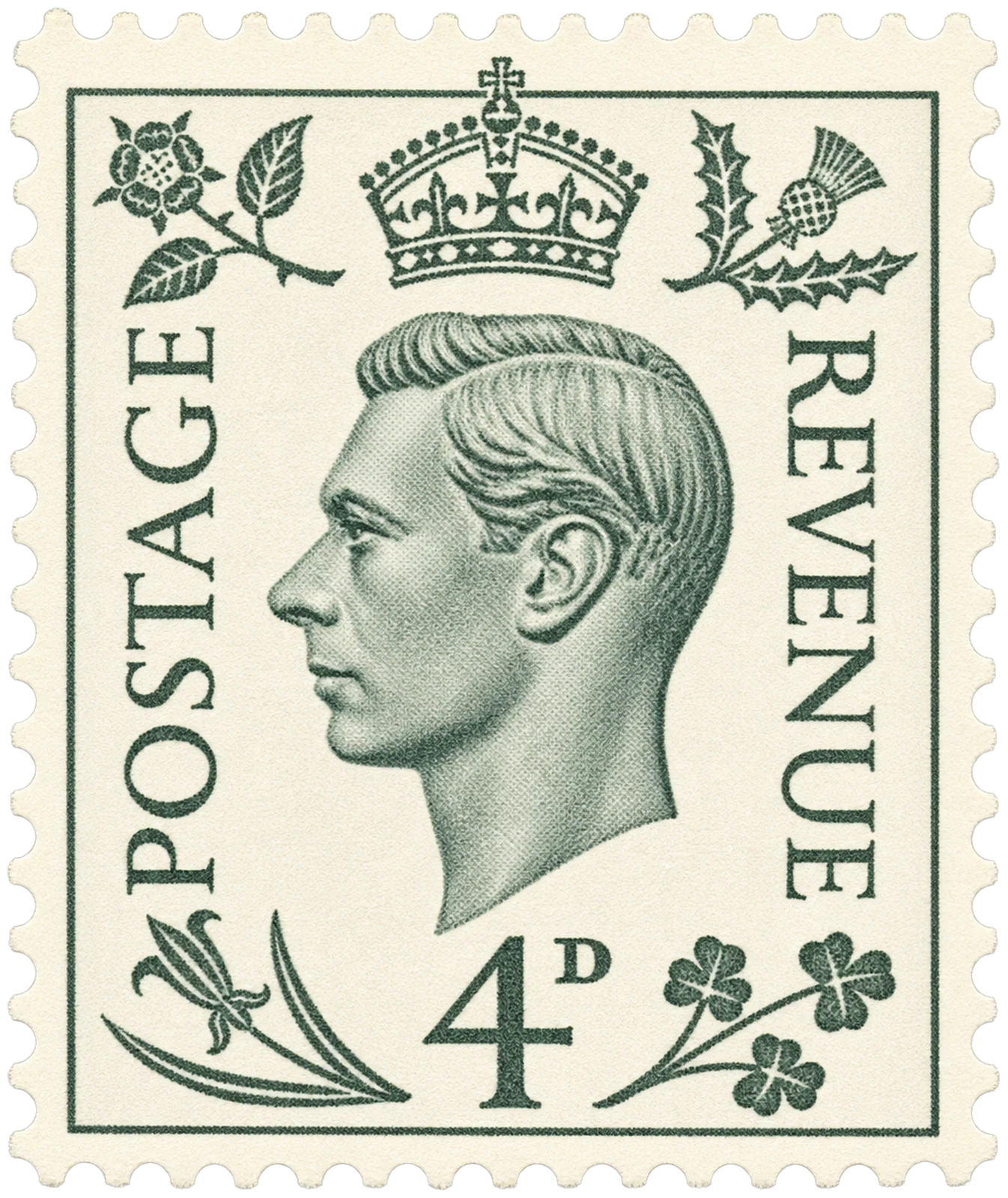
George VI · 4d grey-green · 21 November 1938
Harrison & Sons printed this 4d stamp by photogravure.
On the stamp you were exploring
George VI · 4d grey-green · 21 November 1938
Harrison & Sons printed this 4d stamp by photogravure.
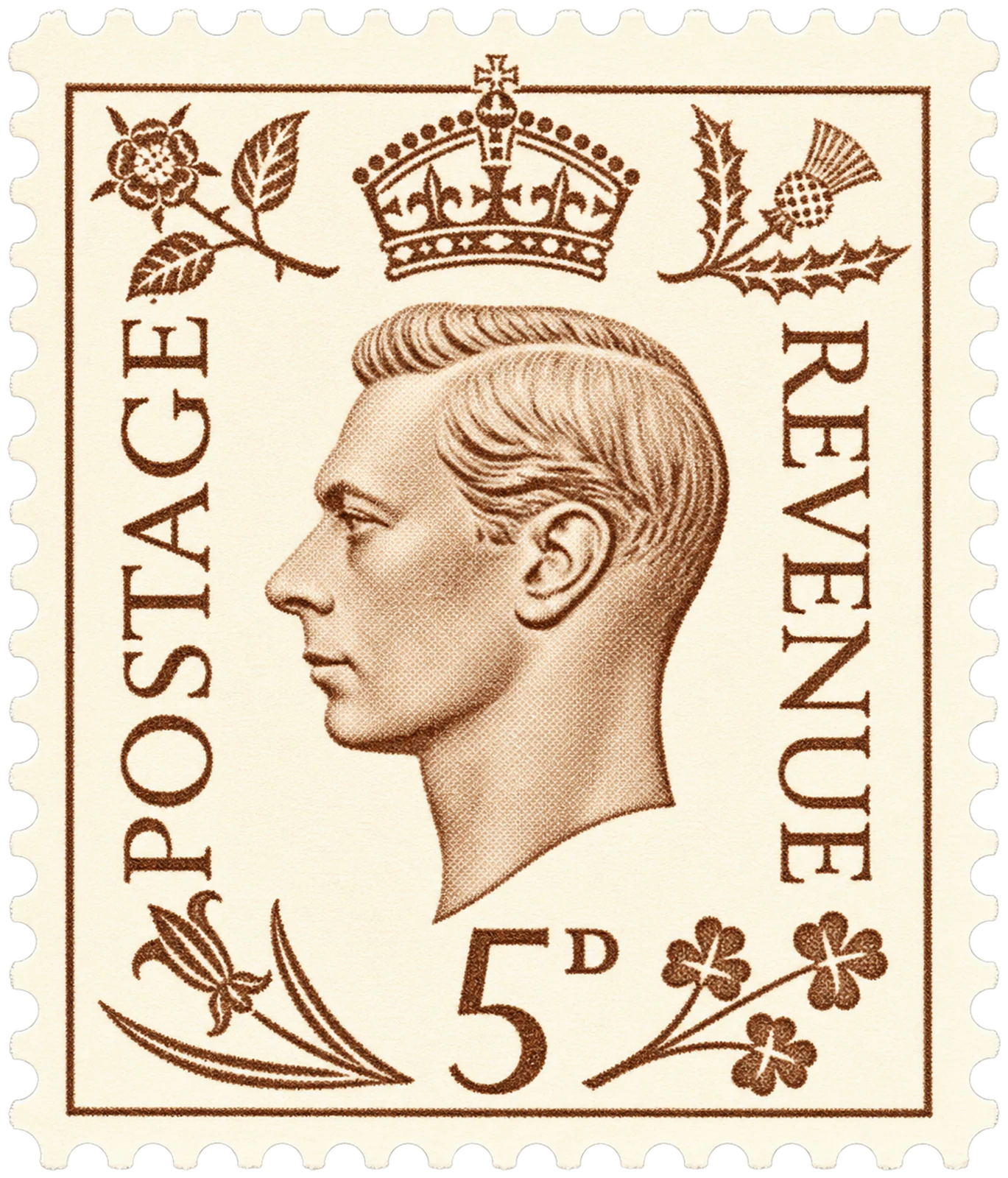
On the stamp you were exploring
George VI · 5d brown · 21 November 1938
Harrison & Sons printed this 5d stamp by photogravure.
On the stamp you were exploring
George VI · 5d brown · 21 November 1938
Harrison & Sons printed this 5d stamp by photogravure.
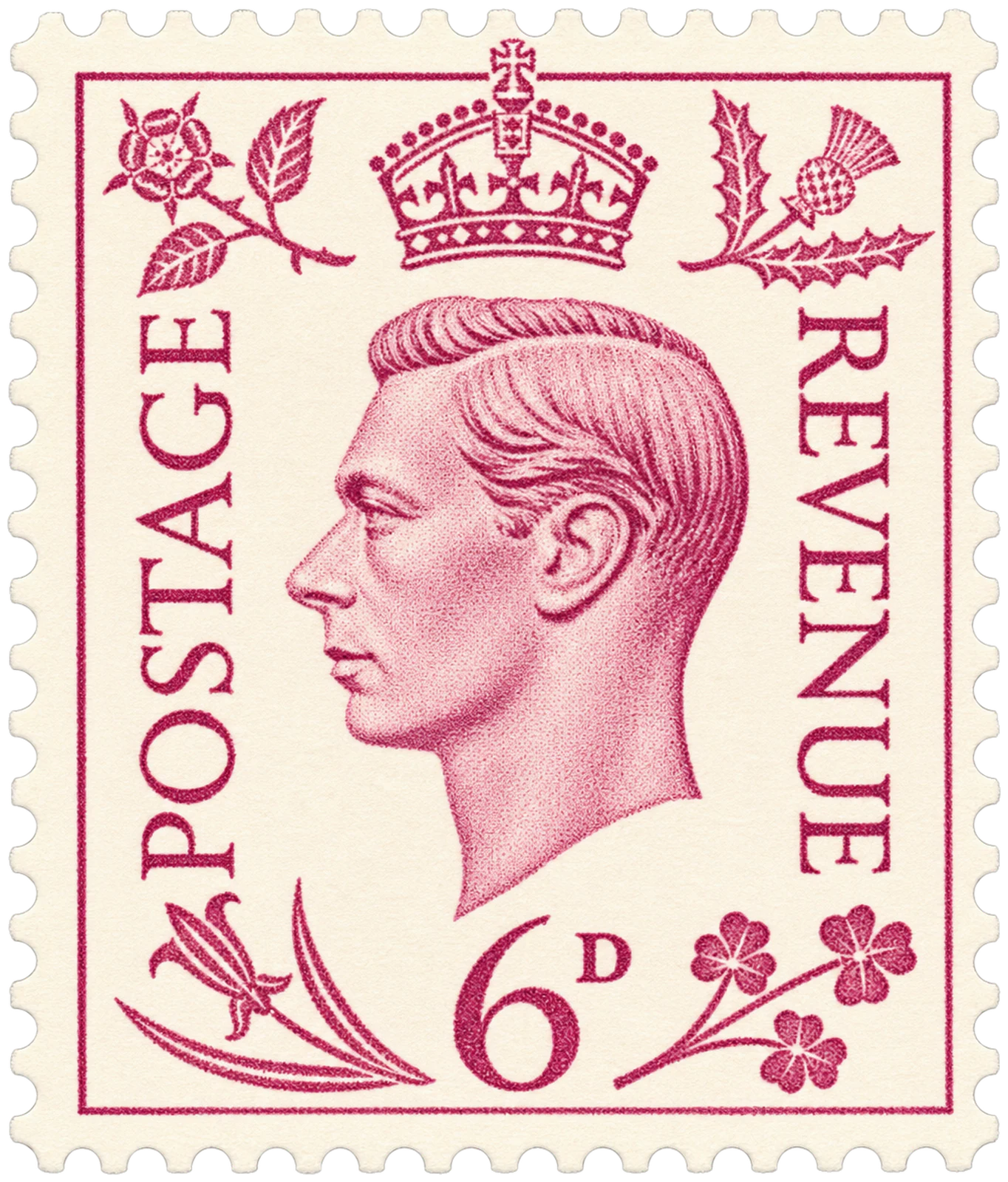
On the stamp you were exploring
George VI · 6d purple · 30 January 1939
Harrison & Sons printed this 6d stamp by photogravure.
On the stamp you were exploring
George VI · 6d purple · 30 January 1939
Harrison & Sons printed this 6d stamp by photogravure.
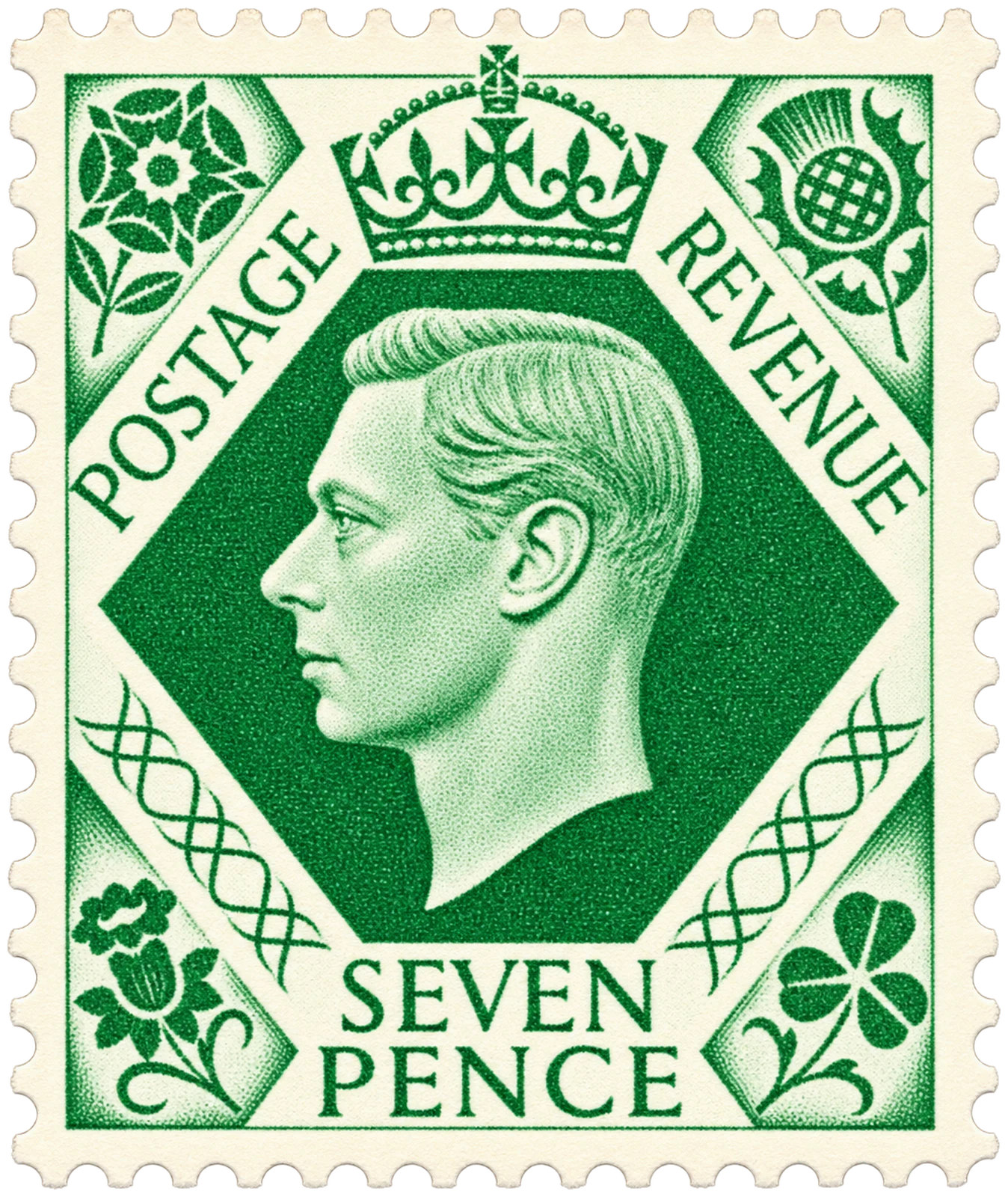
On the stamp you were exploring
George VI · 7d emerald-green · 27 February 1939
Harrison & Sons printed this 7d stamp by photogravure.
On the stamp you were exploring
George VI · 7d emerald-green · 27 February 1939
Harrison & Sons printed this 7d stamp by photogravure.
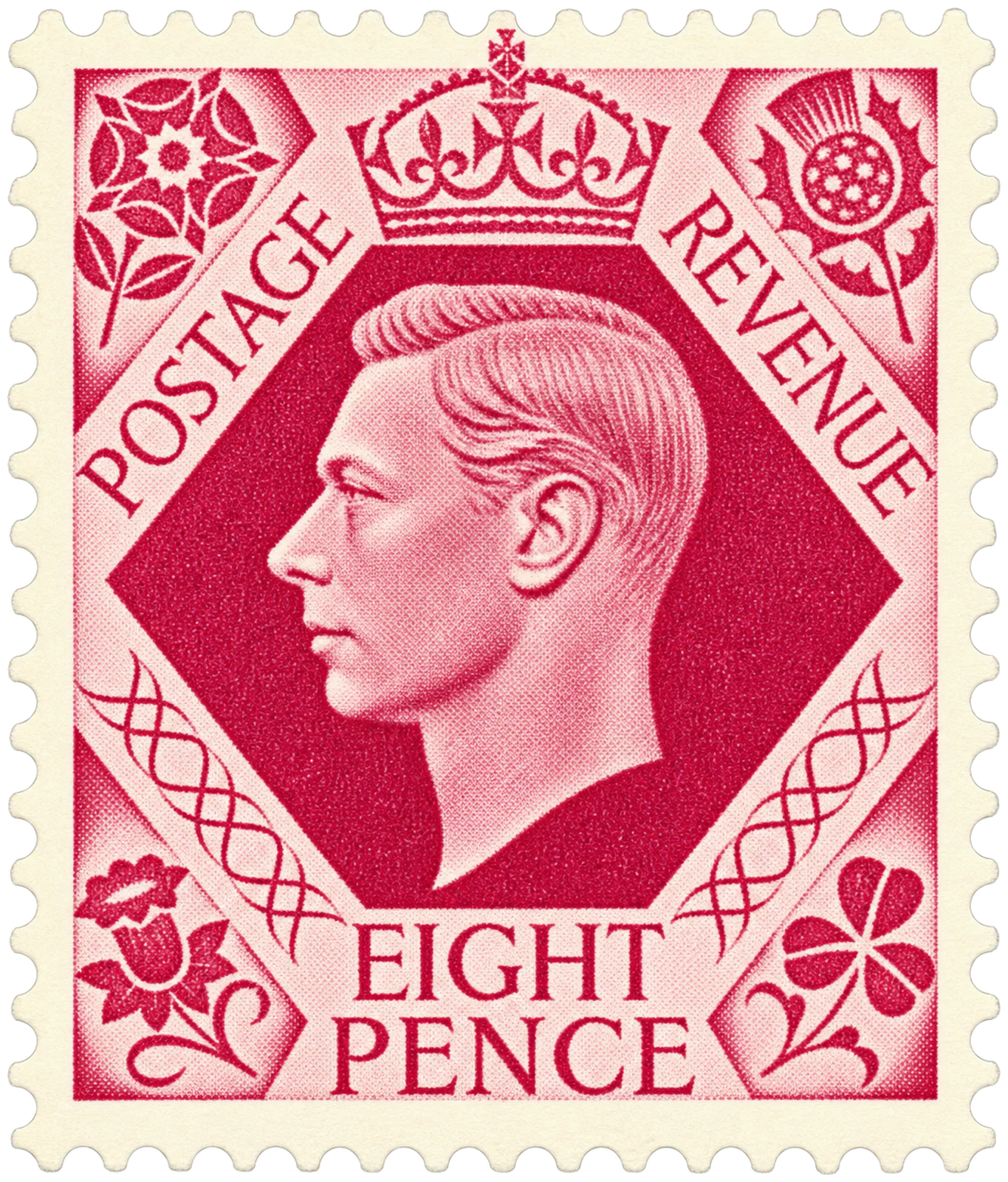
On the stamp you were exploring
George VI · 8d carmine · 27 February 1939
Harrison & Sons printed this 8d stamp by photogravure.
On the stamp you were exploring
George VI · 8d carmine · 27 February 1939
Harrison & Sons printed this 8d stamp by photogravure.
On the stamp you were exploring
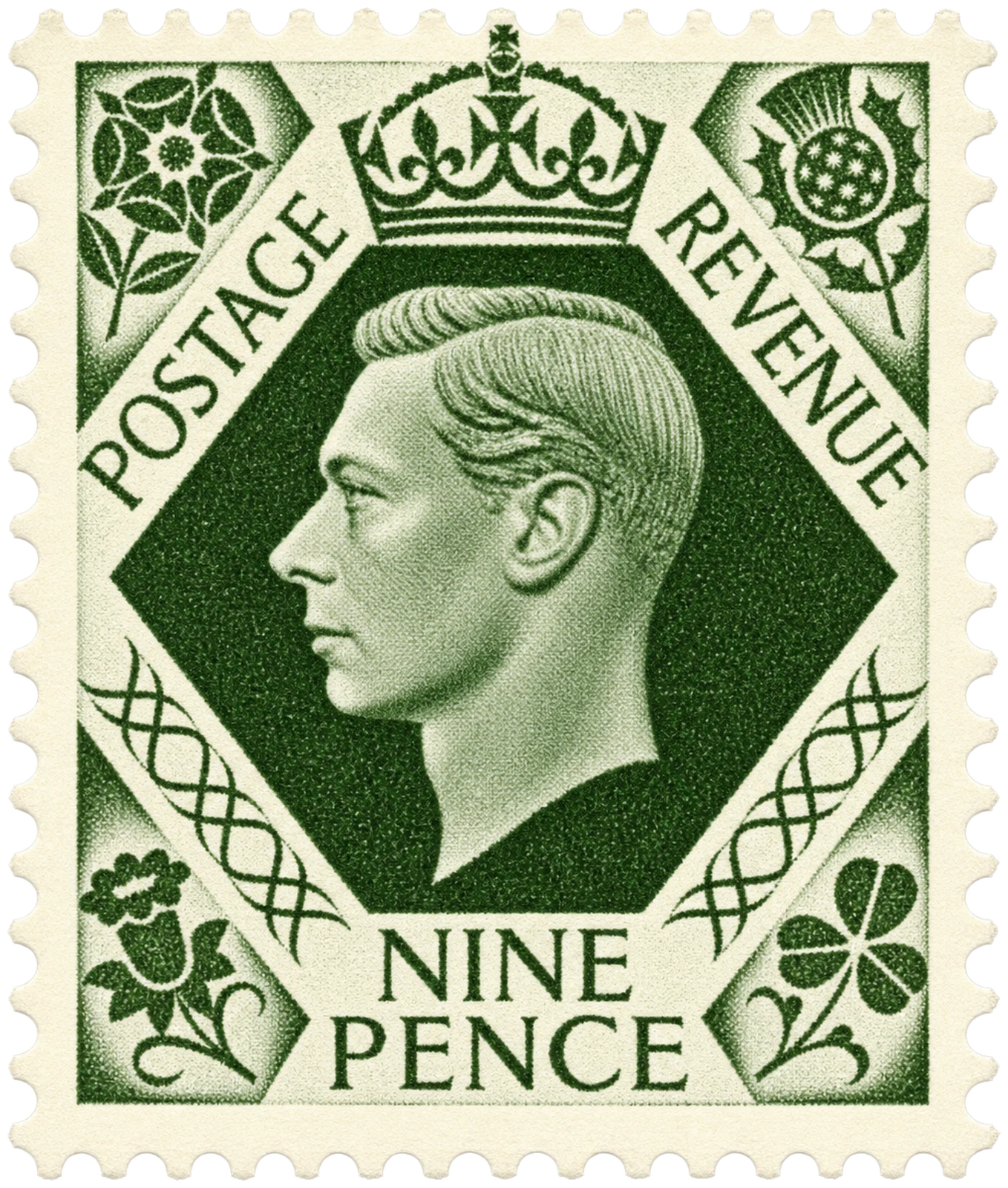
George VI · 9d deep olive-green · 1 May 1939
Harrison & Sons printed this 9d stamp by photogravure.
On the stamp you were exploring
George VI · 9d deep olive-green · 1 May 1939
Harrison & Sons printed this 9d stamp by photogravure.
On the stamp you were exploring
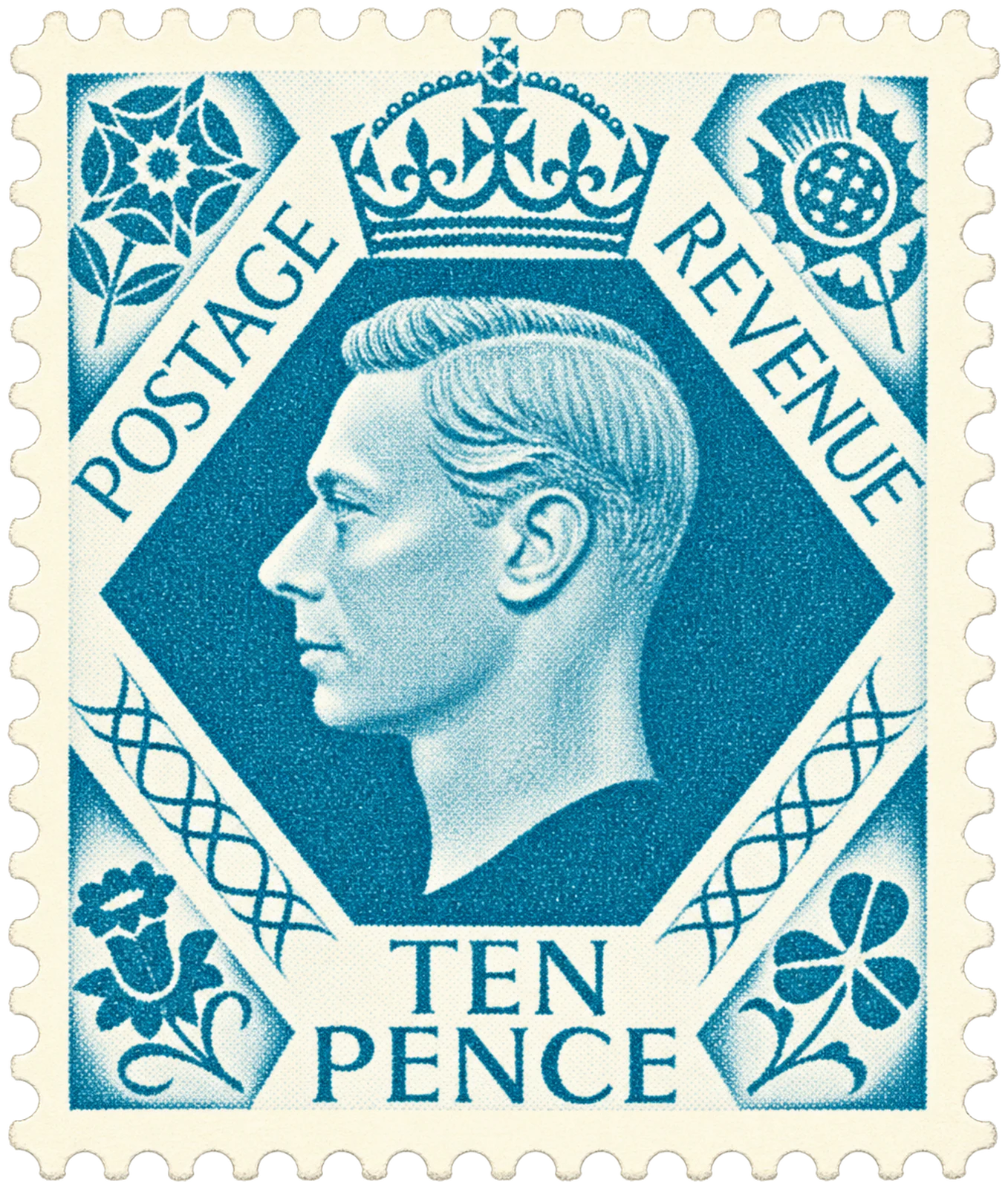
George VI · 10d turquoise-blue · 1 May 1939
Harrison & Sons printed this 10d stamp by photogravure.
On the stamp you were exploring
George VI · 10d turquoise-blue · 1 May 1939
Harrison & Sons printed this 10d stamp by photogravure.
On the stamp you were exploring
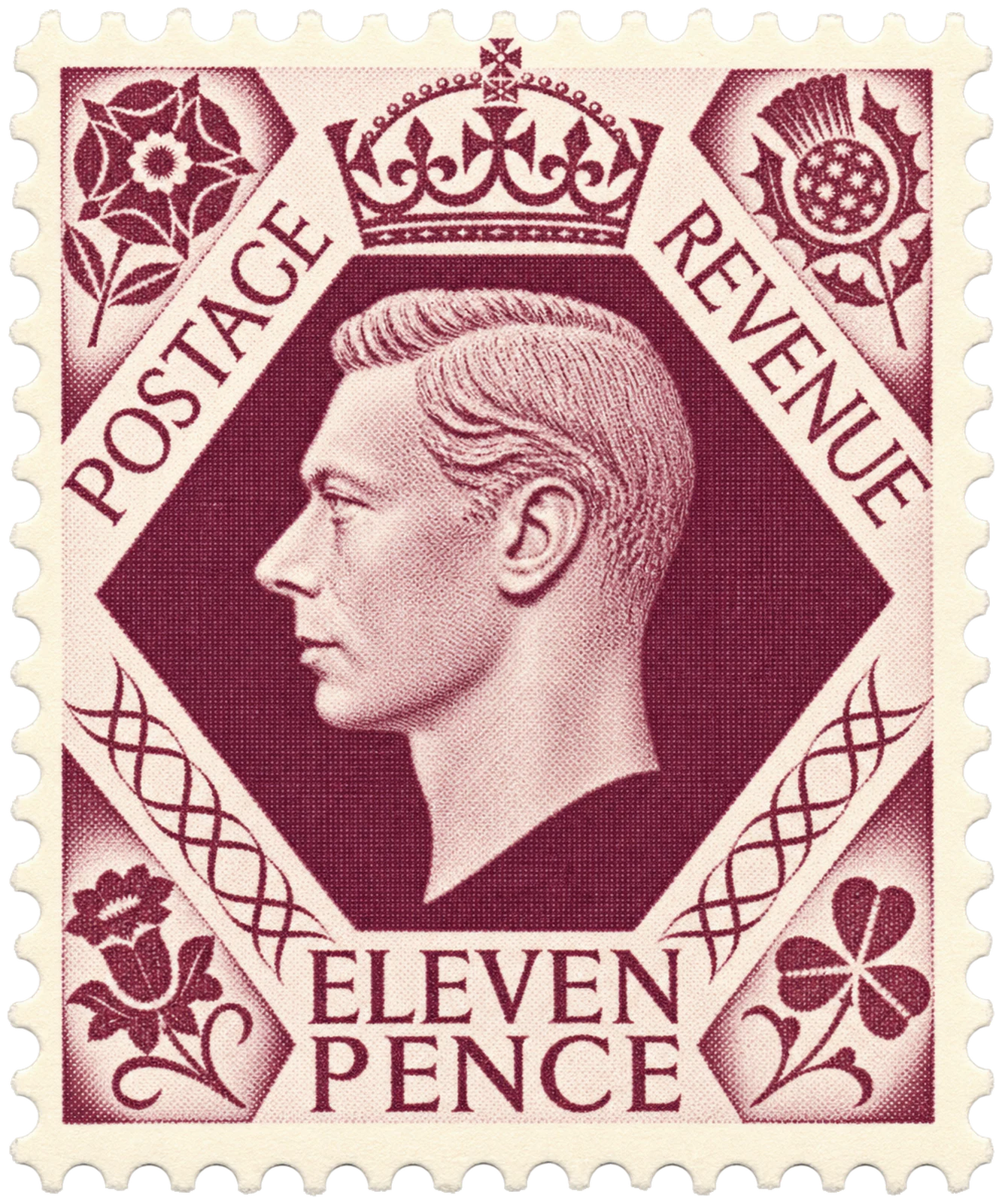
George VI · 11d plum · 29 December 1947
Harrison & Sons printed this 11d stamp by photogravure.
On the stamp you were exploring
George VI · 11d plum · 29 December 1947
Harrison & Sons printed this 11d stamp by photogravure.
On the stamp you were exploring
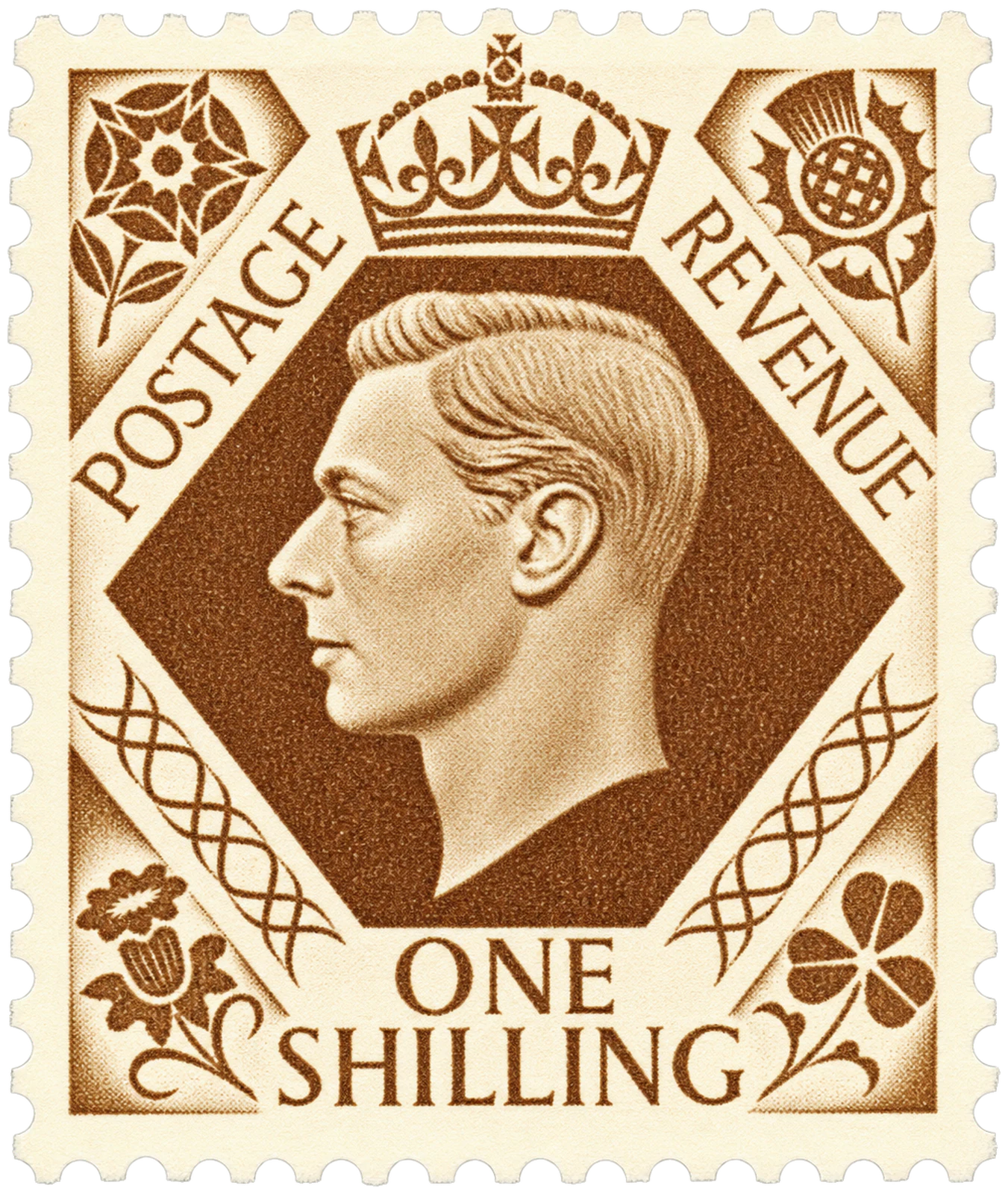
George VI · 1s bistre-brown · 1 May 1939
Harrison & Sons printed this 1s stamp by photogravure.
On the stamp you were exploring
George VI · 1s bistre-brown · 1 May 1939
Harrison & Sons printed this 1s stamp by photogravure.
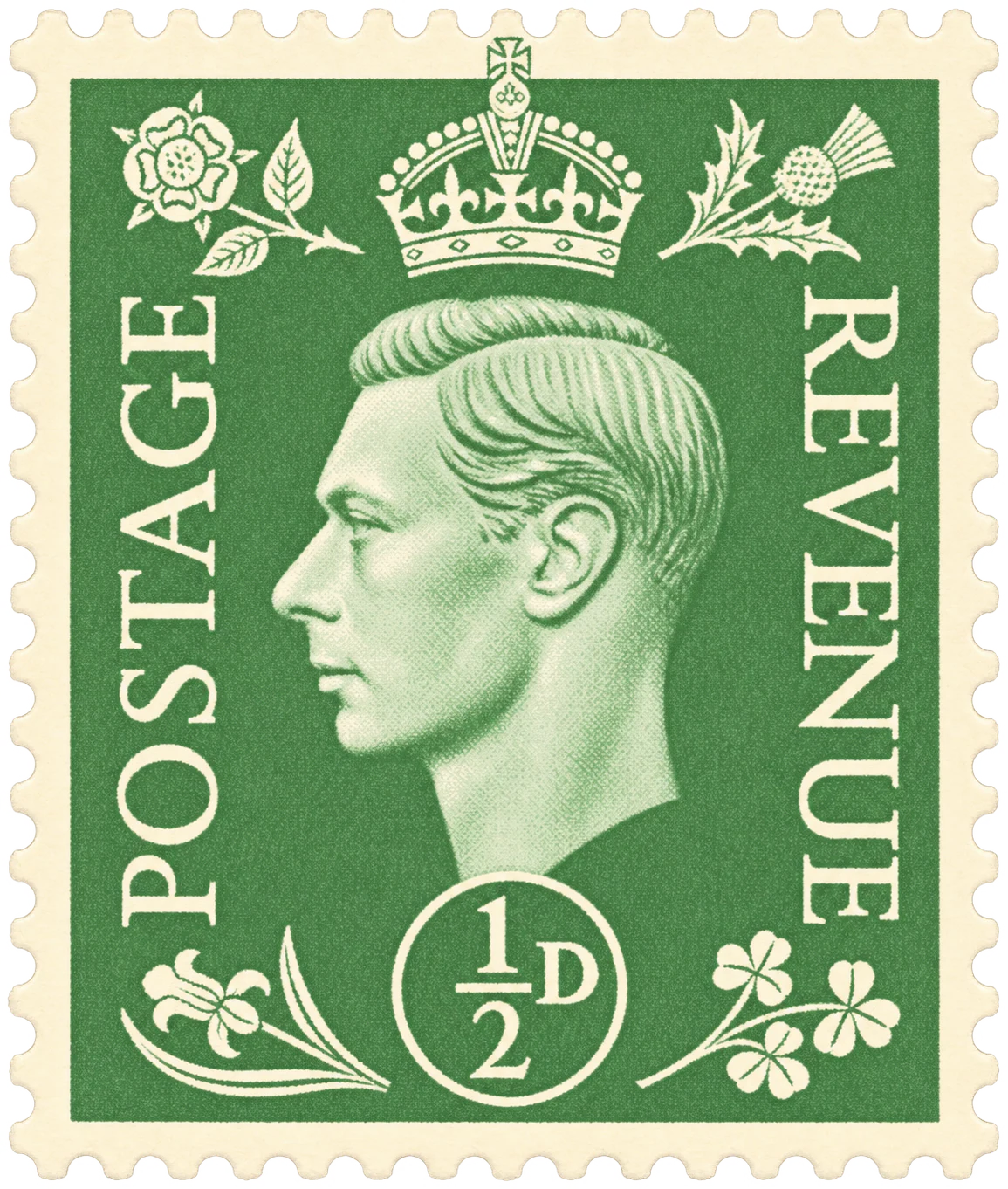
On the stamp you were exploring
George VI · ½d pale green · 1 September 1941
Harrison & Sons printed this ½d definitive by photogravure.
On the stamp you were exploring
George VI · ½d pale green · 1 September 1941
Harrison & Sons printed this ½d definitive by photogravure.
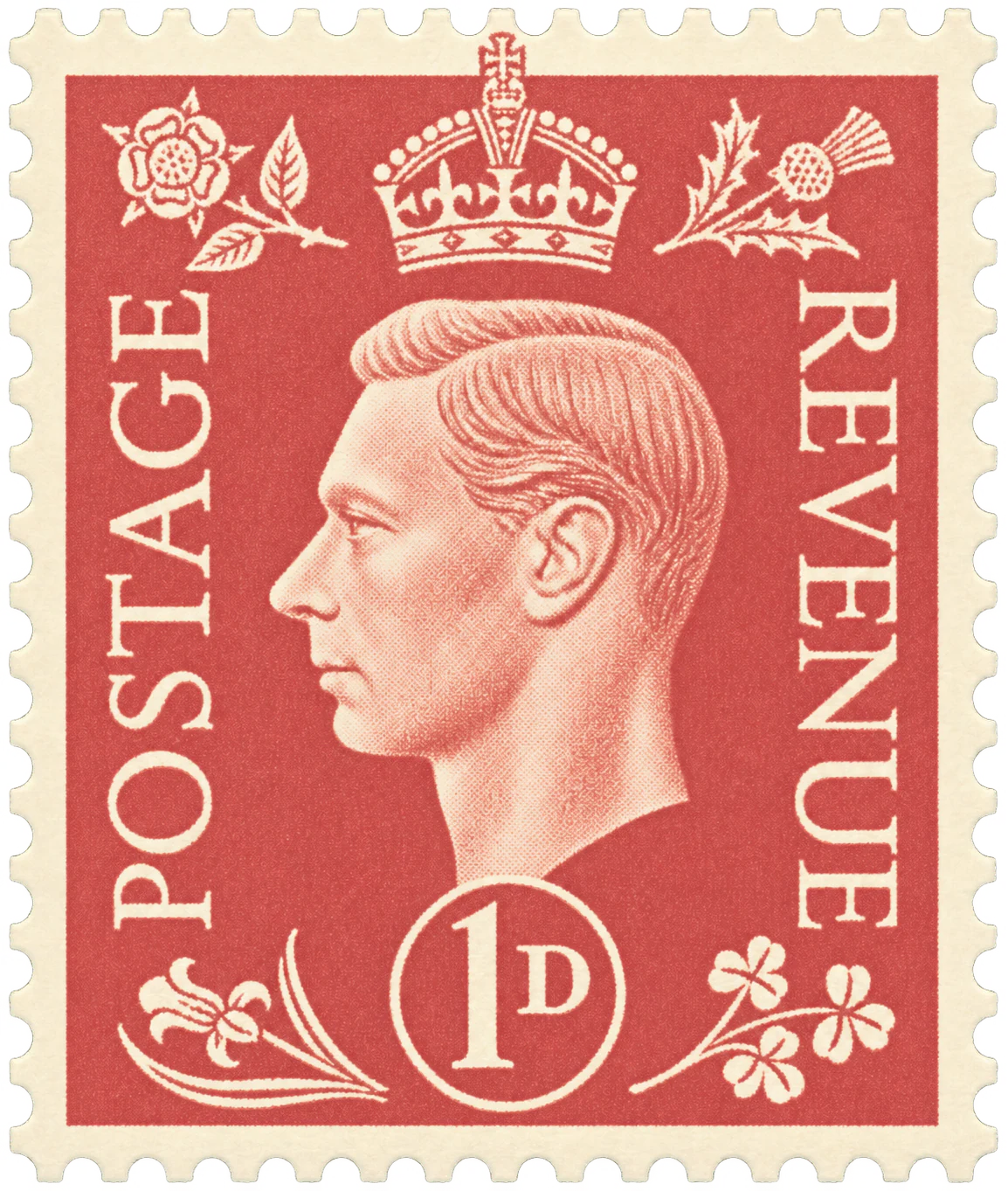
On the stamp you were exploring
George VI · 1d pale scarlet · 11 August 1941
Harrison & Sons printed this 1d definitive by photogravure.
On the stamp you were exploring
George VI · 1d pale scarlet · 11 August 1941
Harrison & Sons printed this 1d definitive by photogravure.
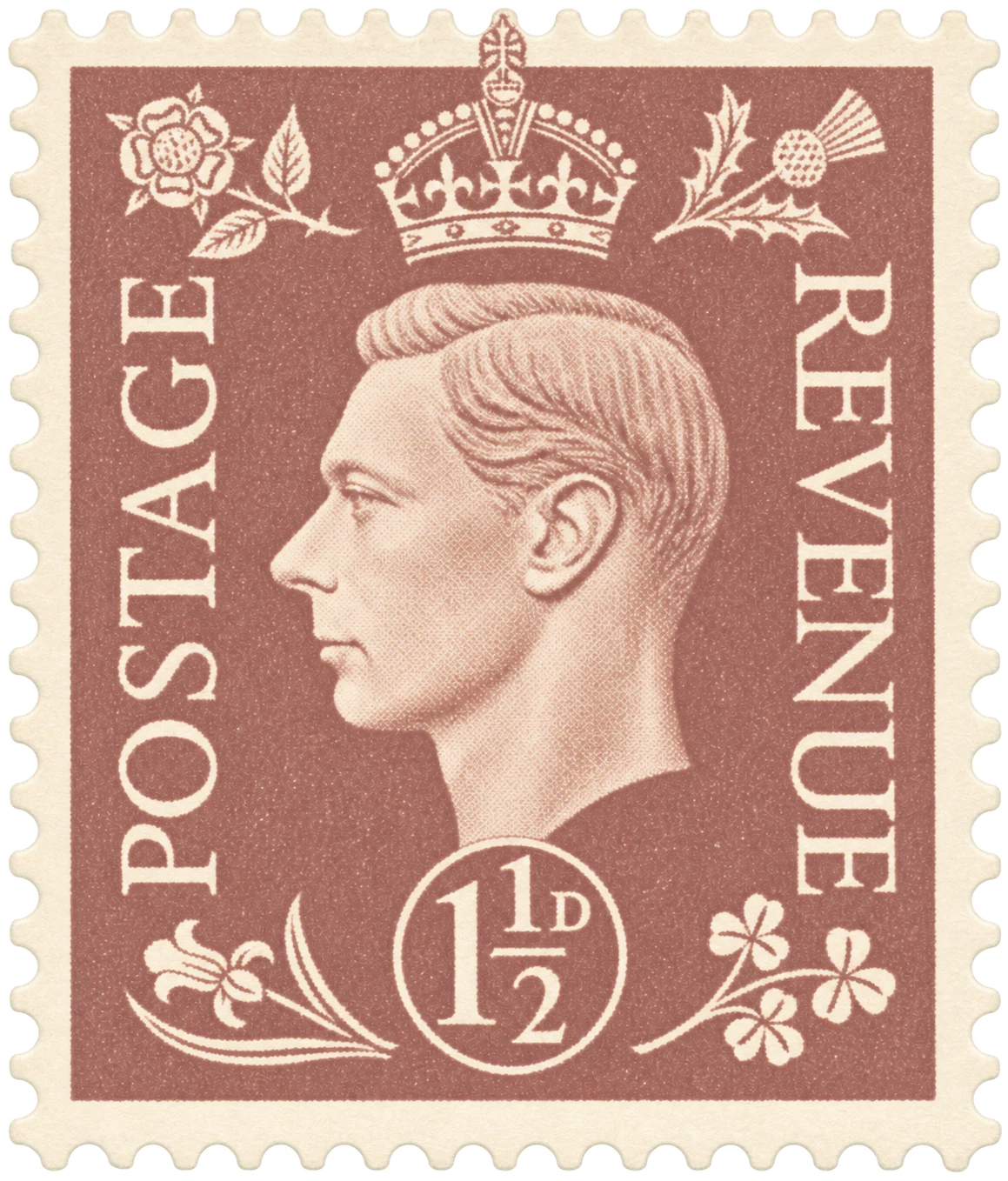
On the stamp you were exploring
George VI · 1½d pale red-brown · 28 September 1942
Harrison & Sons printed this 1½d definitive by photogravure.
On the stamp you were exploring
George VI · 1½d pale red-brown · 28 September 1942
Harrison & Sons printed this 1½d definitive by photogravure.
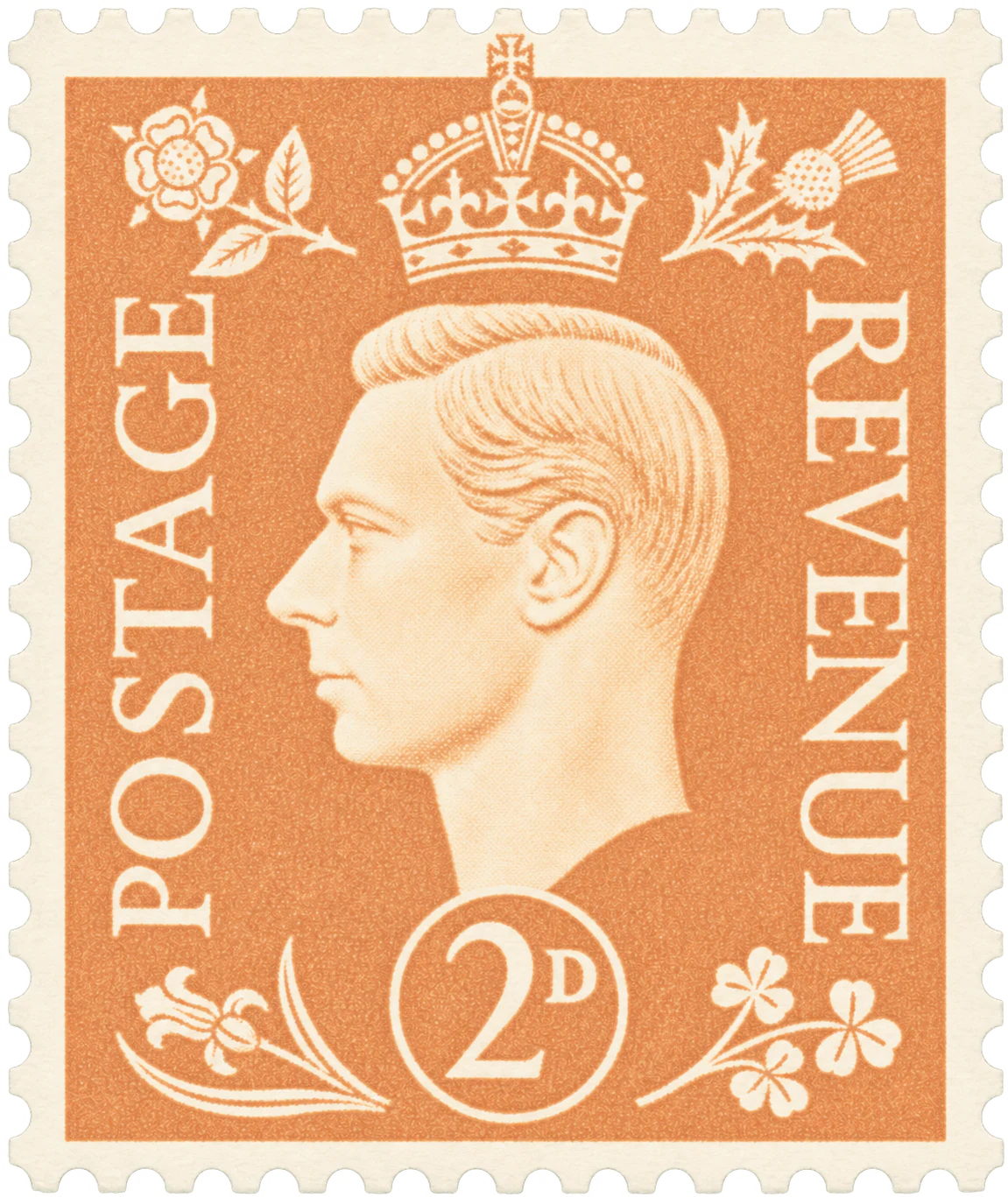
On the stamp you were exploring
George VI · 2d pale orange · 6 October 1941
Harrison & Sons printed this 2d definitive by photogravure.
On the stamp you were exploring
George VI · 2d pale orange · 6 October 1941
Harrison & Sons printed this 2d definitive by photogravure.
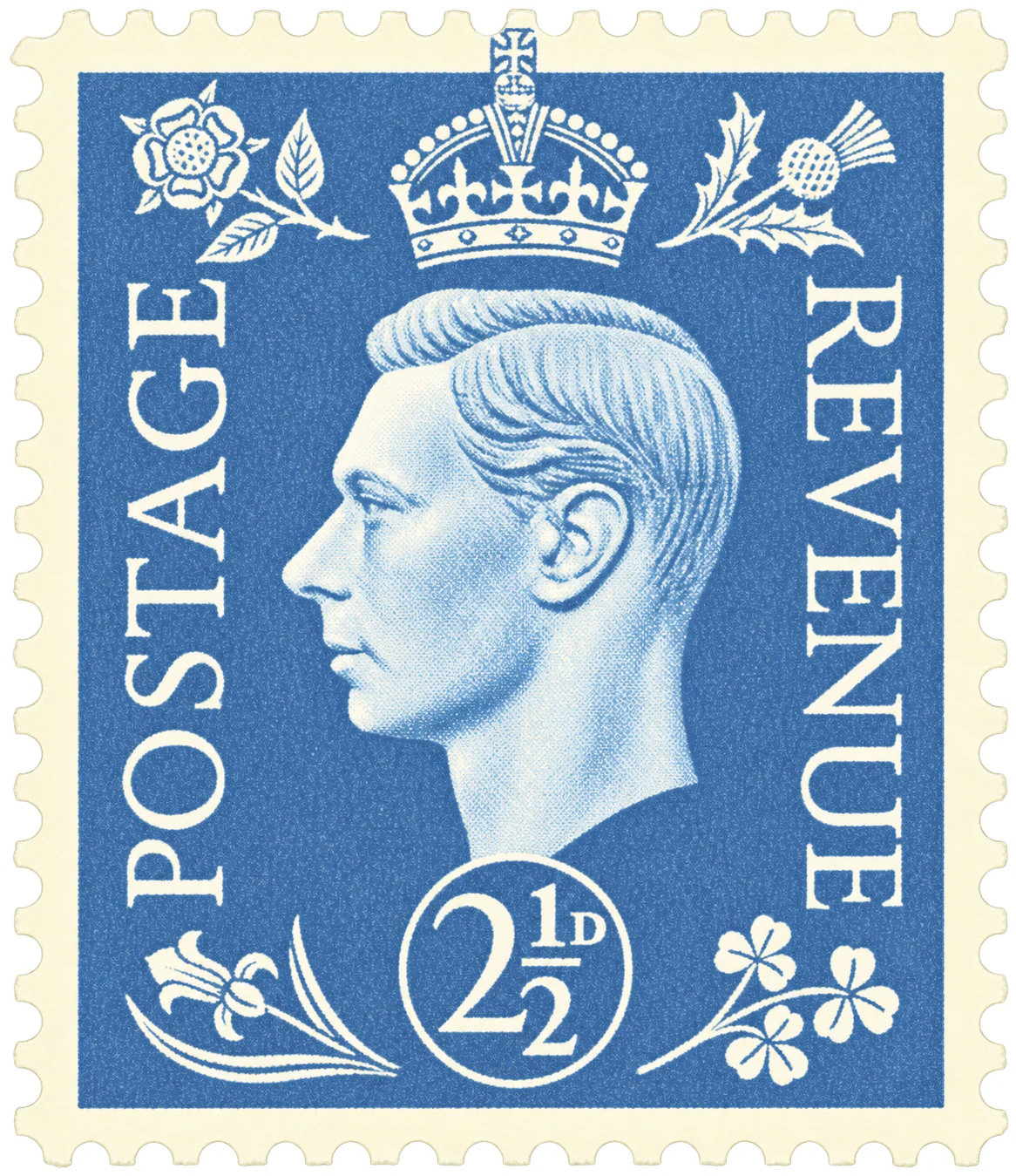
On the stamp you were exploring
George VI · 2½d light ultramarine · 21 July 1941
Harrison & Sons printed this 2½d definitive by photogravure.
On the stamp you were exploring
George VI · 2½d light ultramarine · 21 July 1941
Harrison & Sons printed this 2½d definitive by photogravure.
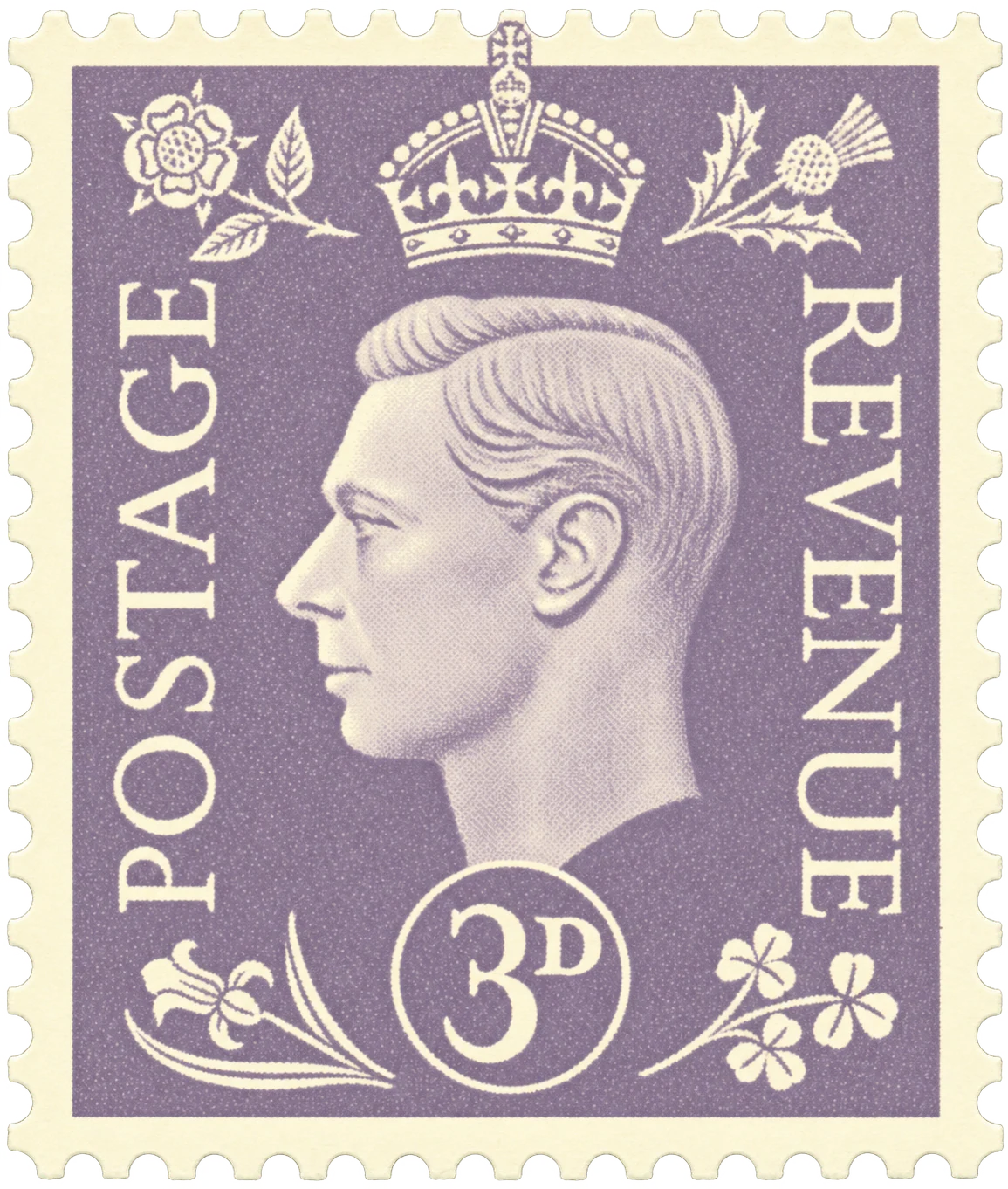
On the stamp you were exploring
George VI · 3d pale violet · 3 November 1941
Harrison & Sons printed this 3d definitive by photogravure.
On the stamp you were exploring
George VI · 3d pale violet · 3 November 1941
Harrison & Sons printed this 3d definitive by photogravure.
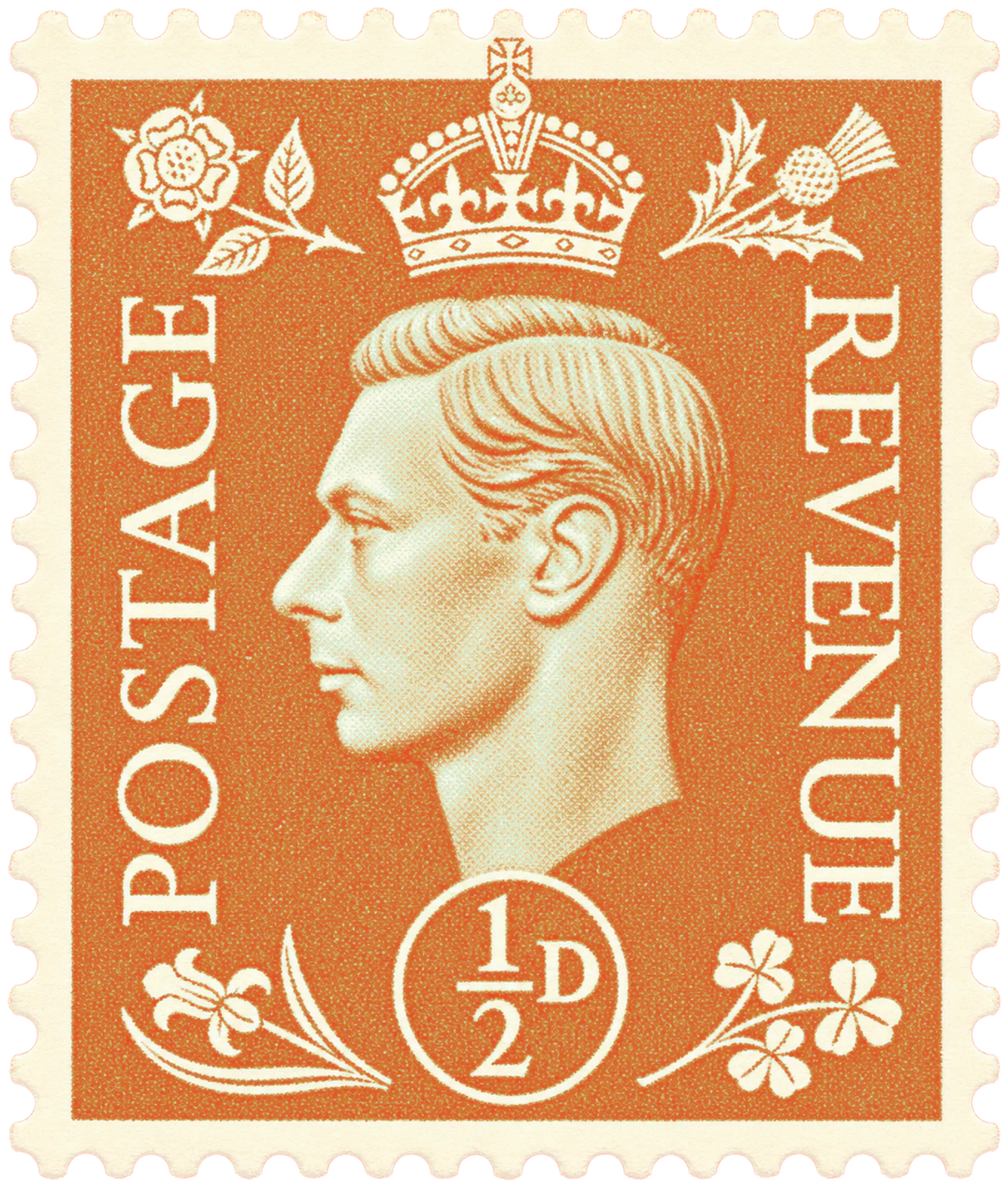
On the stamp you were exploring
George VI · ½d pale orange · 3 May 1951
Harrison & Sons printed this definitive by photogravure.
On the stamp you were exploring
George VI · ½d pale orange · 3 May 1951
Harrison & Sons printed this definitive by photogravure.
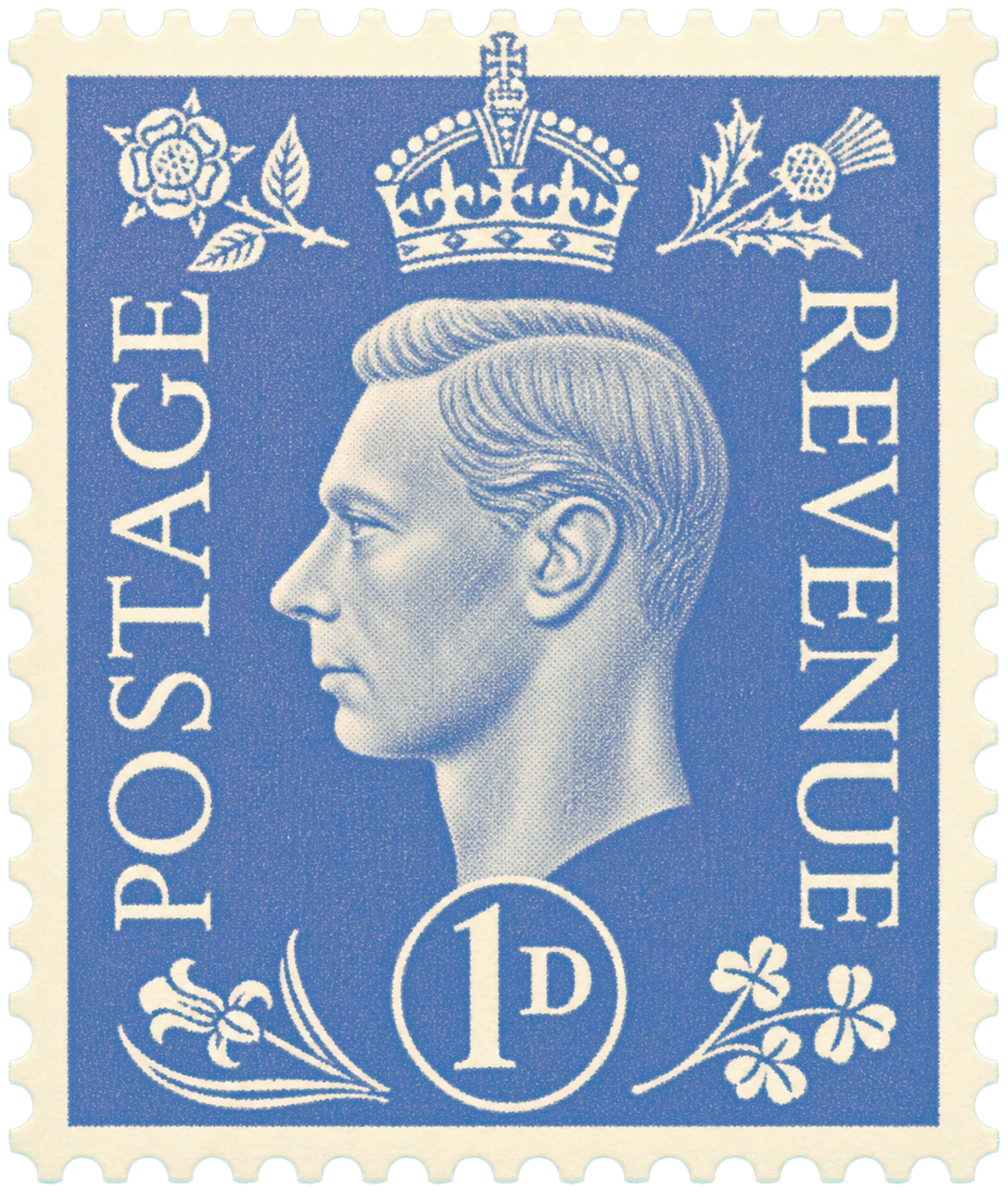
On the stamp you were exploring
George VI · 1d light ultramarine · 3 May 1951
Harrison & Sons printed this definitive by photogravure.
On the stamp you were exploring
George VI · 1d light ultramarine · 3 May 1951
Harrison & Sons printed this definitive by photogravure.
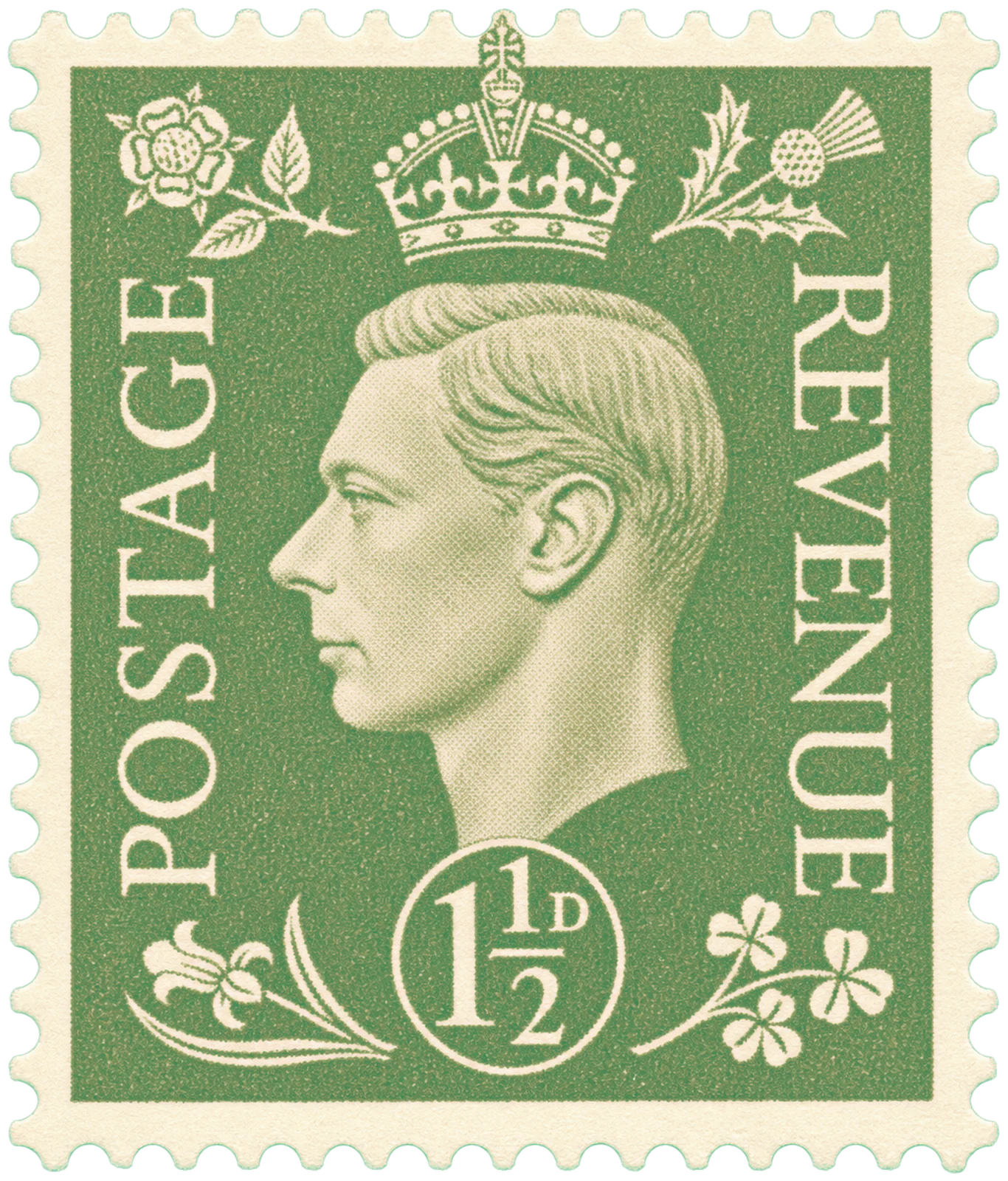
On the stamp you were exploring
George VI · 1½d pale green · 3 May 1951
Harrison & Sons printed this definitive by photogravure.
On the stamp you were exploring
George VI · 1½d pale green · 3 May 1951
Harrison & Sons printed this definitive by photogravure.
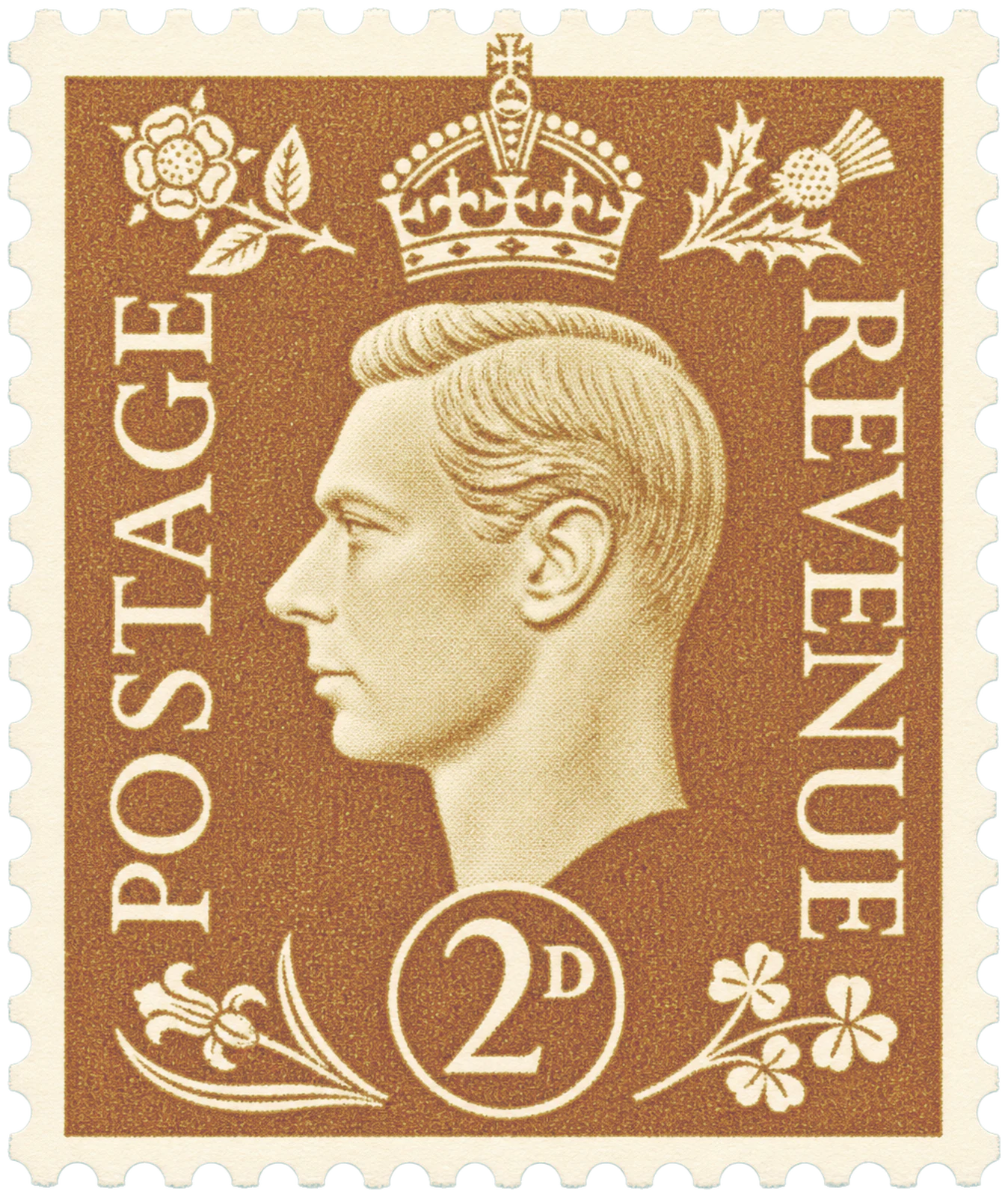
On the stamp you were exploring
George VI · 2d pale red-brown · 3 May 1951
Harrison & Sons printed this definitive by photogravure.
On the stamp you were exploring
George VI · 2d pale red-brown · 3 May 1951
Harrison & Sons printed this definitive by photogravure.
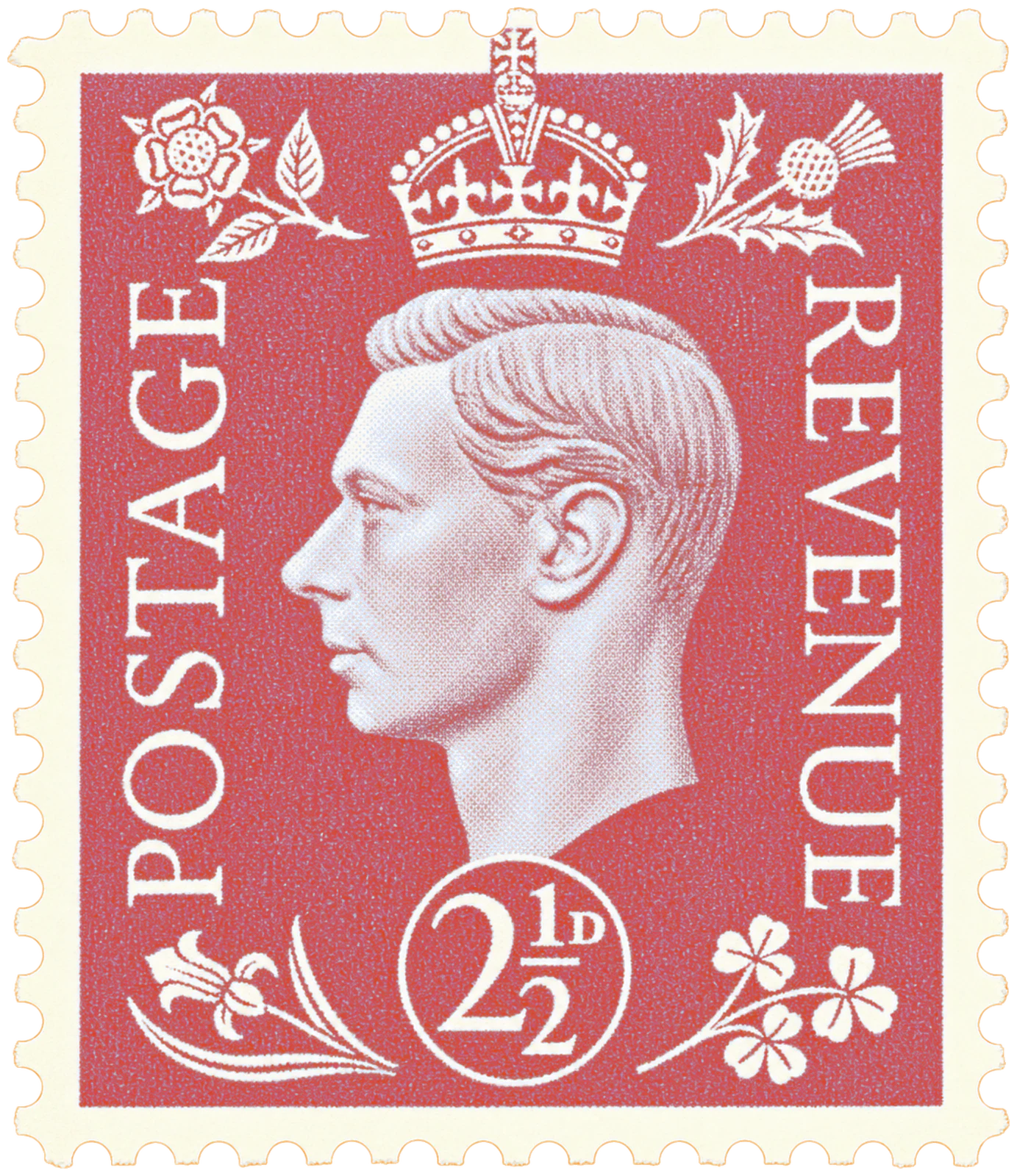
On the stamp you were exploring
George VI · 2½d pale scarlet · 3 May 1951
Harrison & Sons printed this definitive by photogravure.
On the stamp you were exploring
George VI · 2½d pale scarlet · 3 May 1951
Harrison & Sons printed this definitive by photogravure.
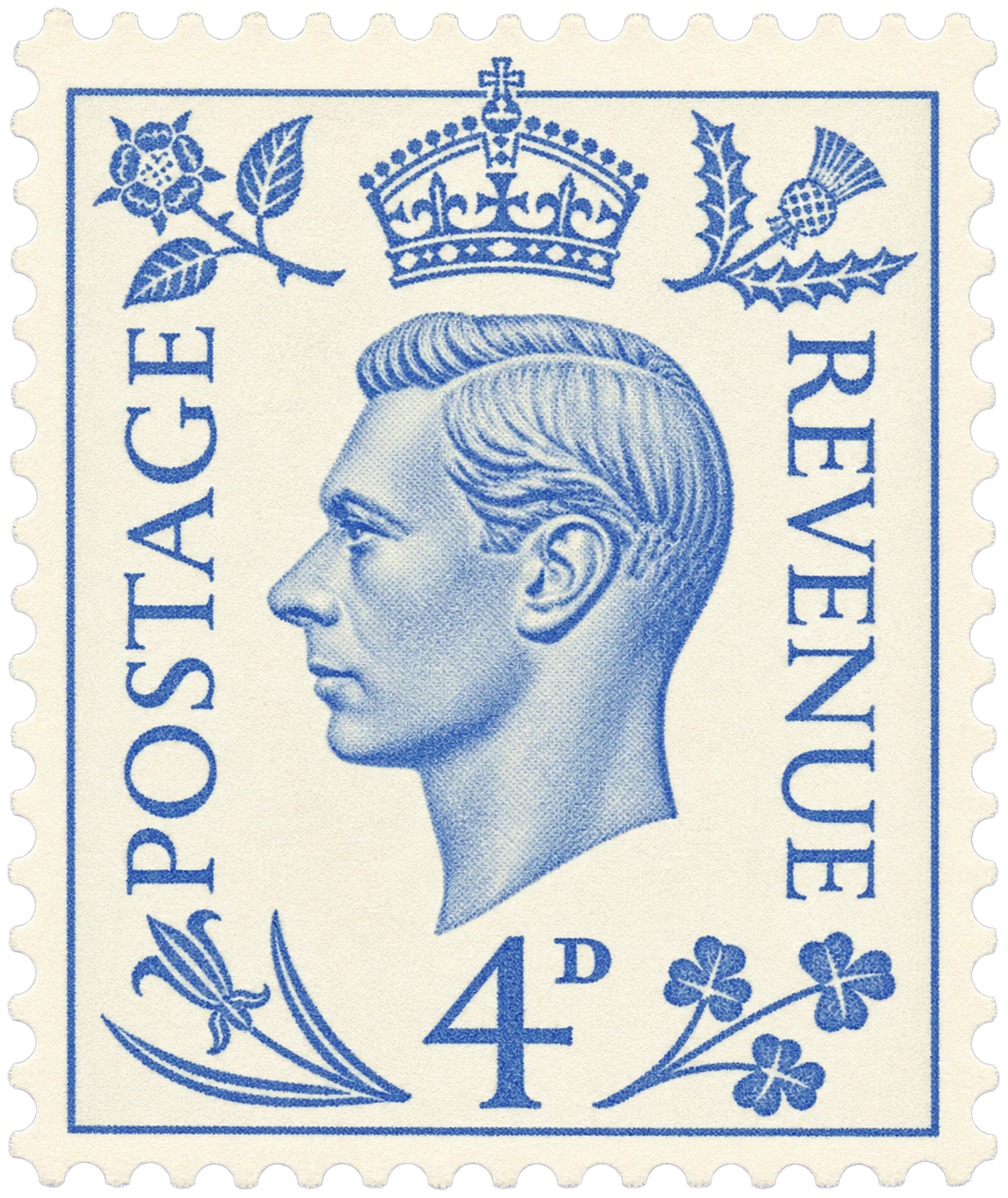
On the stamp you were exploring
George VI · 4d light ultramarine · 2 October 1950
Harrison & Sons printed this definitive by photogravure.
On the stamp you were exploring
George VI · 4d light ultramarine · 2 October 1950
Harrison & Sons printed this definitive by photogravure.
From London to High Wycombe
The firm printed secure documents as well as stamps, including passports, licences and banknotes. From premises in St Martin’s Lane, London, it expanded to Hayes in 1911 and opened a High Wycombe branch in 1933. High Wycombe became the main centre of the business. These were industrial workplaces where the artistic image had to survive the practical demands of continuous production. [1]
A new way of printing
Photogravure carries ink in tiny recessed cells on a printing cylinder. Differences in the cells create the tones seen in a portrait. Harrison’s work brought this process to Britain’s definitive stamps in 1934, during George V’s reign. It subsequently printed George VI’s low values, including the green halfpenny introduced on 10 May 1937. [2, 3, 4]
The backup stamps that never reached the post office
Reliance on one supplier worried the Post Office. Because Harrison supplied all George VI’s gravure low values, alternative letterpress designs were prepared for an emergency. The museum preserves evidence of that contingency planning, including dies, plates and proofs. The emergency postage stamps were never issued, although the design was used for postal stationery. [3]
The company’s later life
Family ownership ended with Lonrho’s takeover in 1979. De La Rue acquired the business in 1997, and the High Wycombe works closed in 2003. The company name on an old stamp description therefore opens a much longer story about British security printing. [1]