
Bertram Mackennal
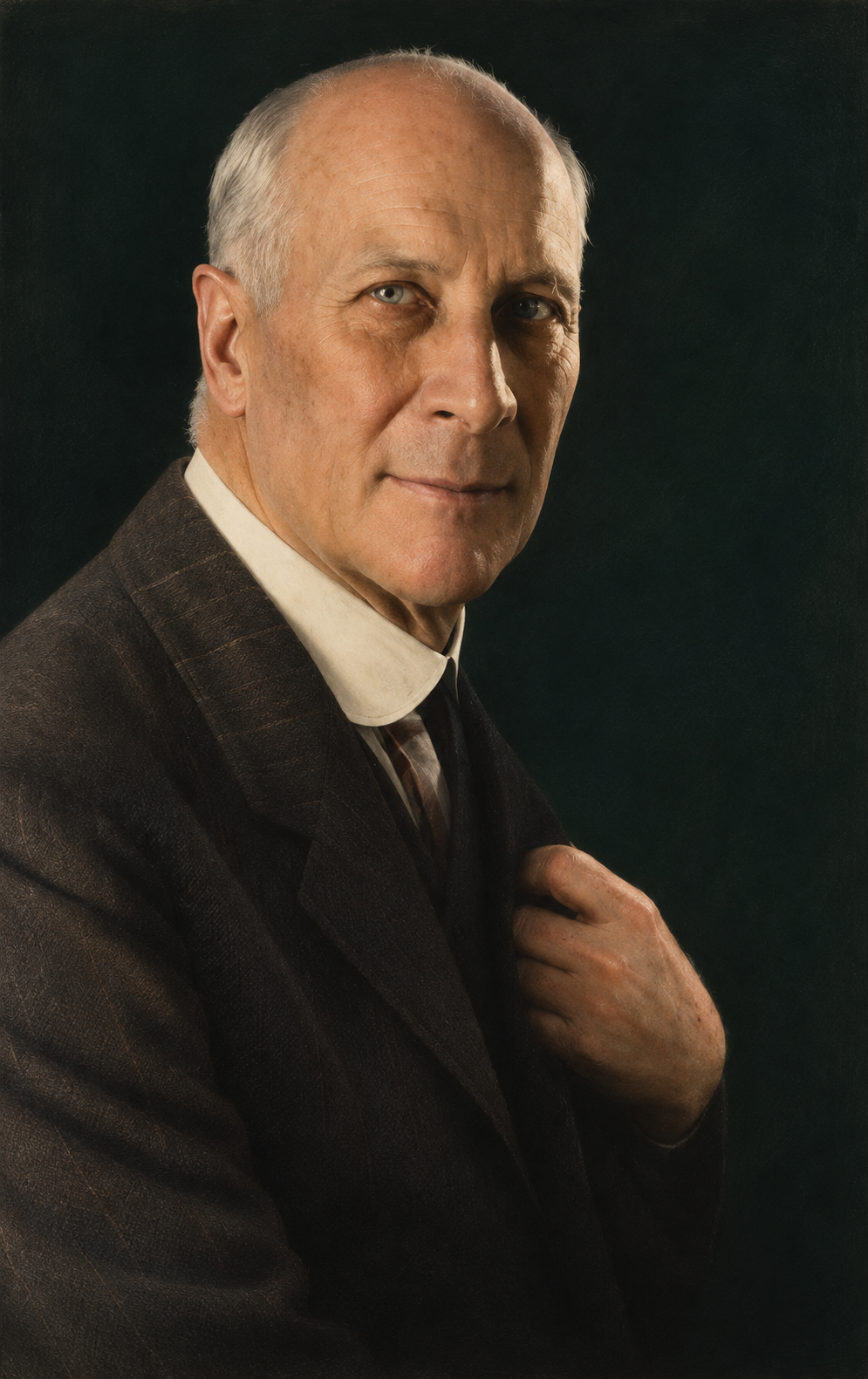
Image information
Click image to magnify
Portrait of Bertram Mackennal with receding grey-white hair, wearing a dark suit and holding his lapel.
- Credit
- Ruth Hollick, 1920s. National Library of Australia, via Wikimedia Commons.
- Notes
- Digitally reconstructed
1863–1931 · Sculptor, medallist and stamp designer
A head modelled by a sculptor can become a monument, a coin or a postage stamp. Bertram Mackennal’s work crossed all three scales.
On the stamp you were exploring
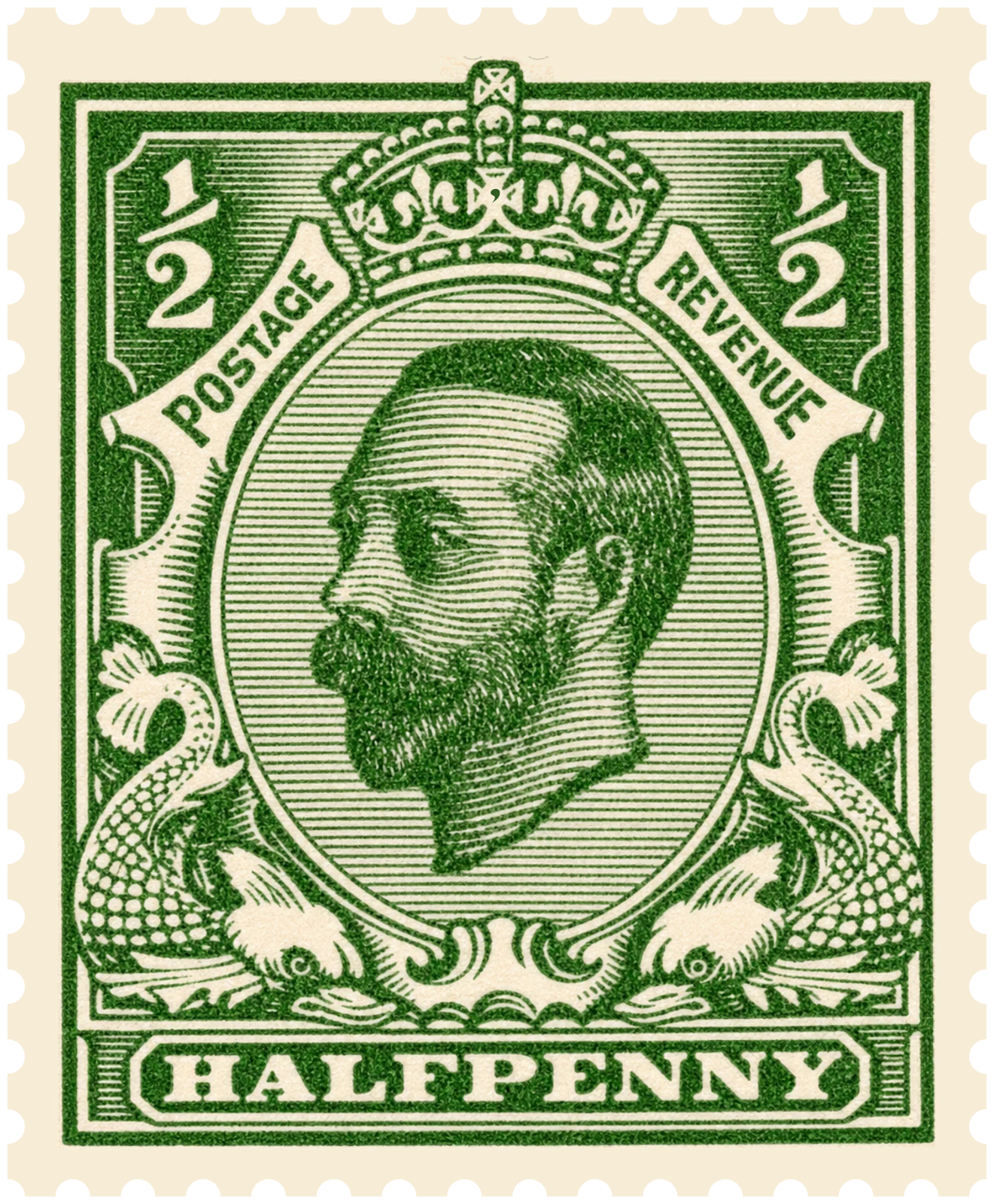
George V · ½d green · 22 June 1911
Mackennal designed the ornamental frame for this ½d green Downey Head. The royal likeness came from a Downey photograph, a separate contribution.
On the stamp you were exploring
George V · ½d green · 22 June 1911
Mackennal designed the ornamental frame for this ½d green Downey Head. The royal likeness came from a Downey photograph, a separate contribution.
On the stamp you were exploring
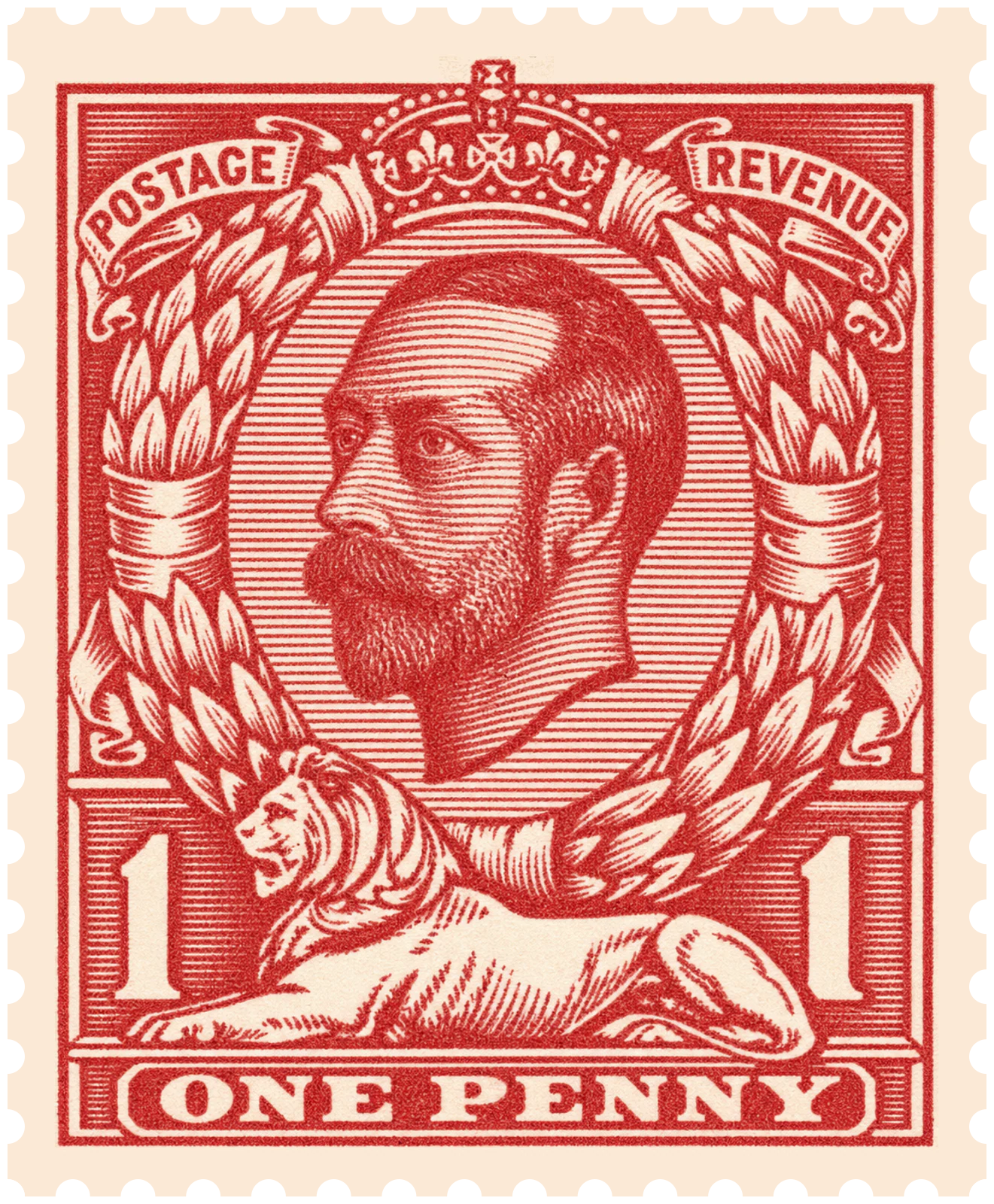
George V · 1d carmine-red · 22 June 1911
Mackennal designed the ornamental frame for this 1d carmine-red Downey Head. The royal likeness came from a Downey photograph, a separate contribution.
On the stamp you were exploring
George V · 1d carmine-red · 22 June 1911
Mackennal designed the ornamental frame for this 1d carmine-red Downey Head. The royal likeness came from a Downey photograph, a separate contribution.
On the stamp you were exploring
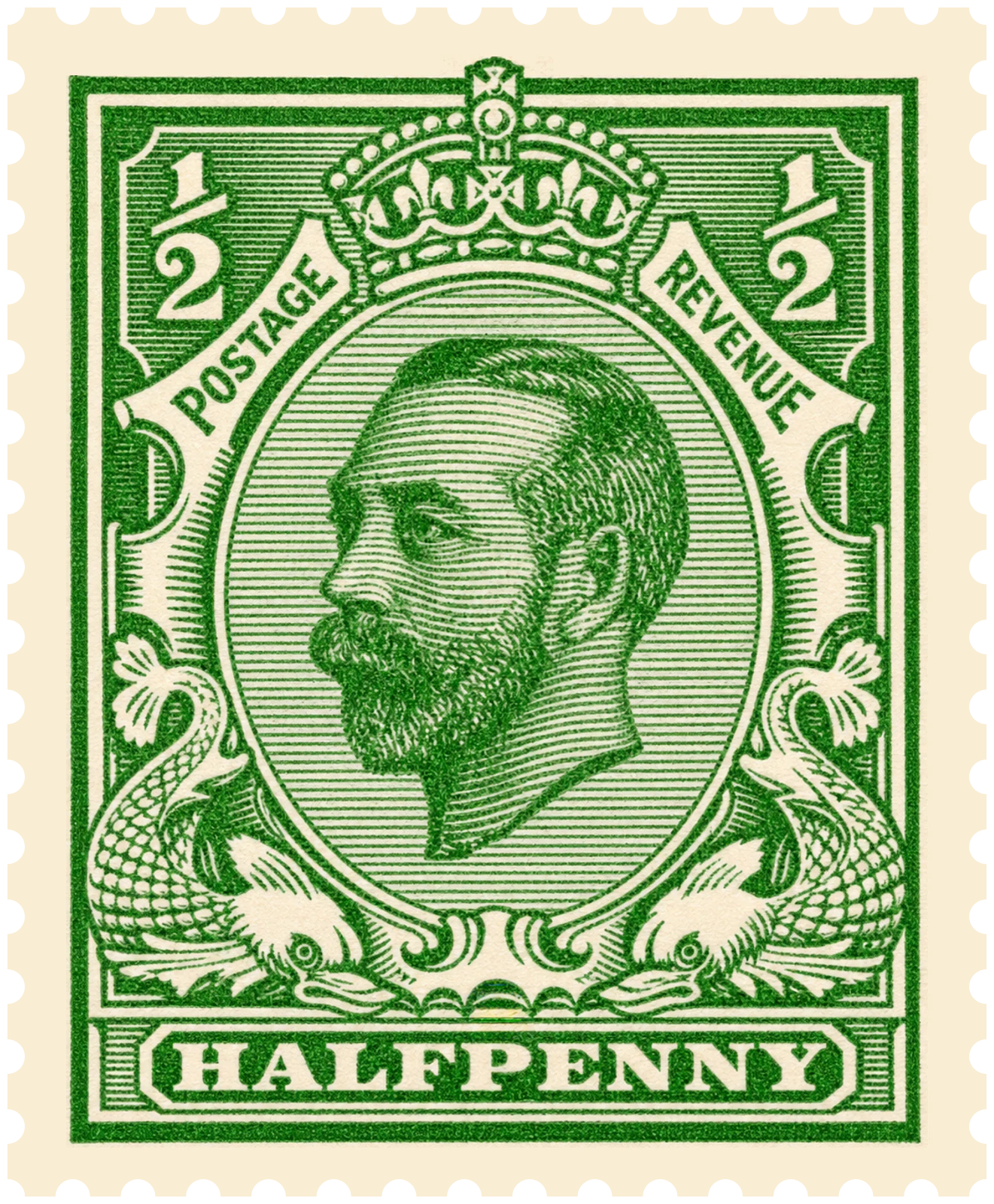
George V · ½d green · 1911
Mackennal designed the ornamental frame for this ½d green Downey Head. The royal likeness came from a Downey photograph, a separate contribution.
On the stamp you were exploring
George V · ½d green · 1911
Mackennal designed the ornamental frame for this ½d green Downey Head. The royal likeness came from a Downey photograph, a separate contribution.
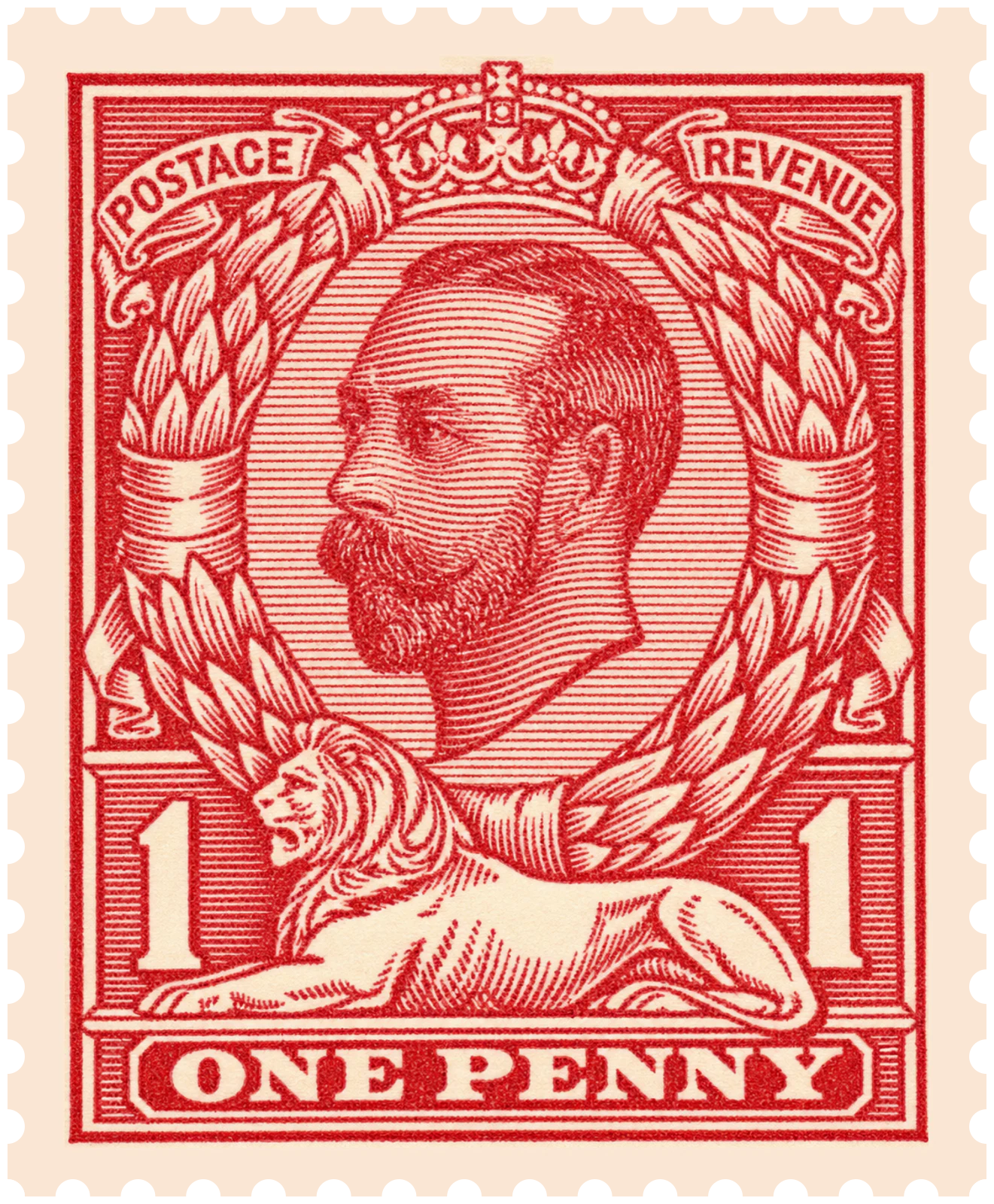
On the stamp you were exploring
George V · 1d carmine · 1911
Mackennal designed the ornamental frame for this 1d carmine Downey Head. The royal likeness came from a Downey photograph, a separate contribution.
On the stamp you were exploring
George V · 1d carmine · 1911
Mackennal designed the ornamental frame for this 1d carmine Downey Head. The royal likeness came from a Downey photograph, a separate contribution.
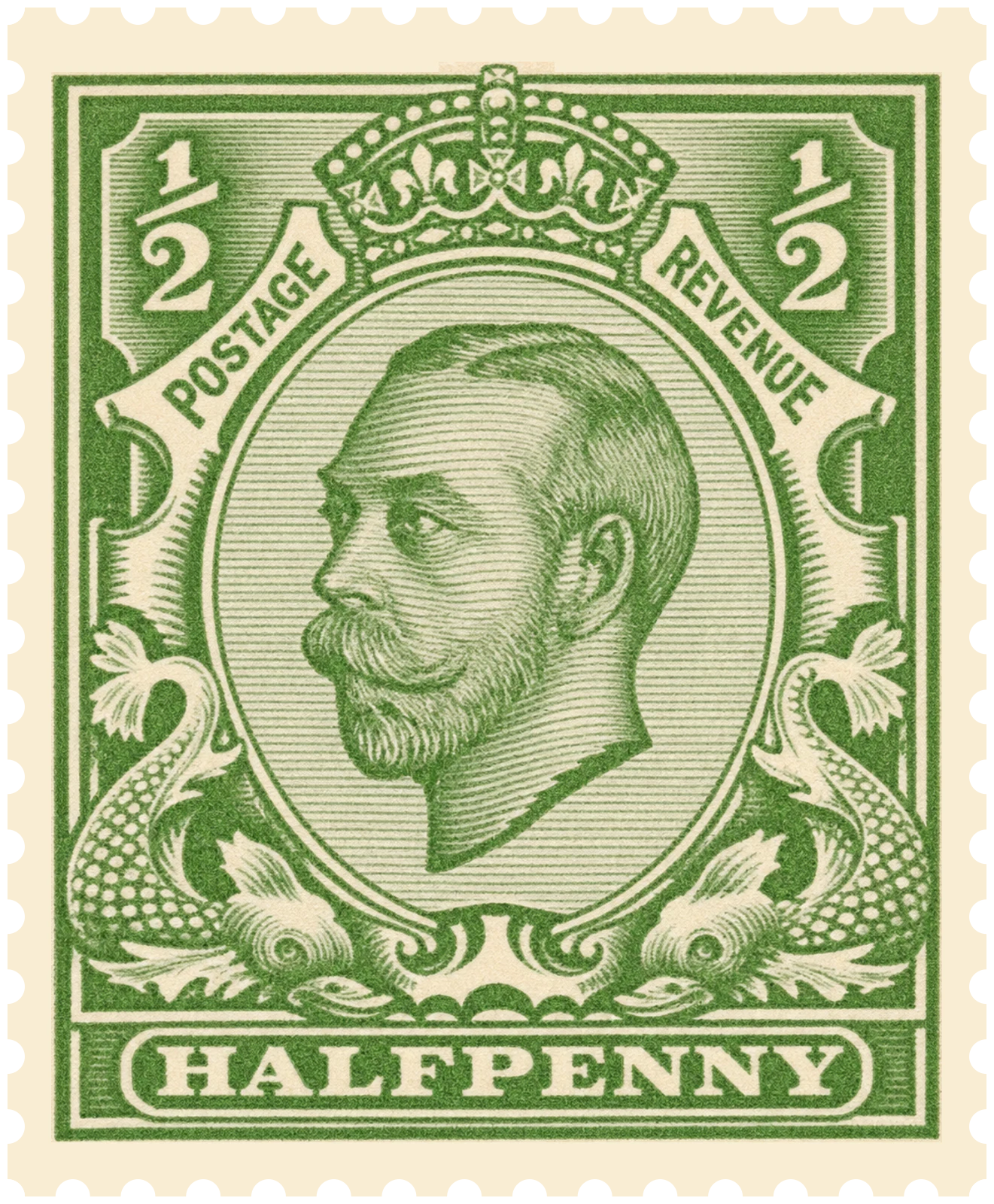
On the stamp you were exploring
George V · ½d green · January 1912
Mackennal designed the ornamental frame for this ½d green Downey Head. The royal likeness came from a Downey photograph, a separate contribution.
On the stamp you were exploring
George V · ½d green · January 1912
Mackennal designed the ornamental frame for this ½d green Downey Head. The royal likeness came from a Downey photograph, a separate contribution.
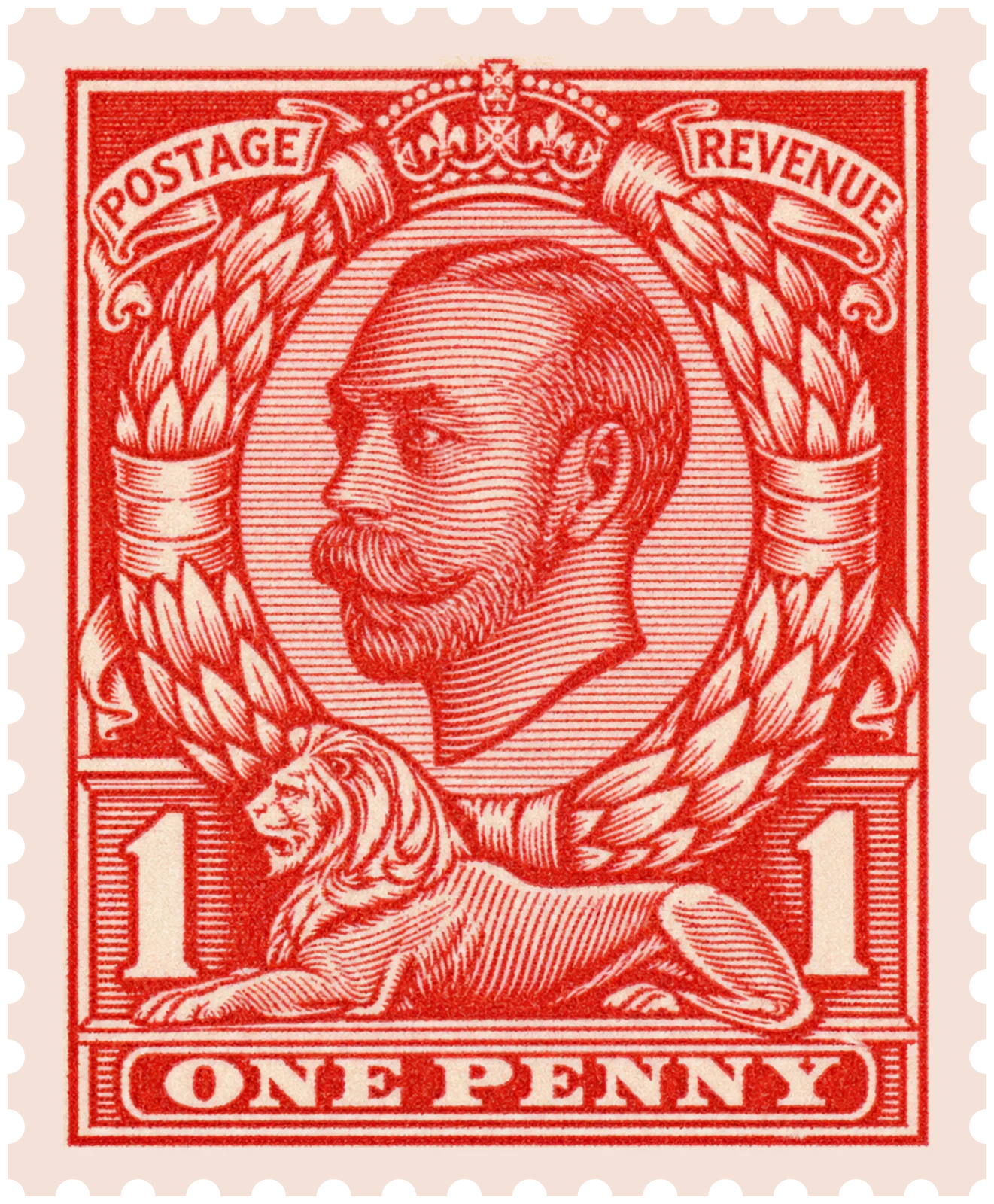
On the stamp you were exploring
George V · 1d scarlet · January 1912
Mackennal designed the ornamental frame for this 1d scarlet Downey Head. The royal likeness came from a Downey photograph, a separate contribution.
On the stamp you were exploring
George V · 1d scarlet · January 1912
Mackennal designed the ornamental frame for this 1d scarlet Downey Head. The royal likeness came from a Downey photograph, a separate contribution.
On the stamp you were exploring
George V · ½d green · September 1912
Mackennal designed the ornamental frame for this ½d green Downey Head. The royal likeness came from a Downey photograph, a separate contribution.
On the stamp you were exploring
George V · ½d green · September 1912
Mackennal designed the ornamental frame for this ½d green Downey Head. The royal likeness came from a Downey photograph, a separate contribution.
On the stamp you were exploring
George V · 1d scarlet · September 1912
Mackennal designed the ornamental frame for this 1d scarlet Downey Head. The royal likeness came from a Downey photograph, a separate contribution.
On the stamp you were exploring
George V · 1d scarlet · September 1912
Mackennal designed the ornamental frame for this 1d scarlet Downey Head. The royal likeness came from a Downey photograph, a separate contribution.
On the stamp you were exploring
George V · ½d green · 1912
Mackennal designed the ornamental frame for this ½d green Downey Head. The royal likeness came from a Downey photograph, a separate contribution.
On the stamp you were exploring
George V · ½d green · 1912
Mackennal designed the ornamental frame for this ½d green Downey Head. The royal likeness came from a Downey photograph, a separate contribution.
On the stamp you were exploring
George V · 1d scarlet · 1912
Mackennal designed the ornamental frame for this 1d scarlet Downey Head. The royal likeness came from a Downey photograph, a separate contribution.
On the stamp you were exploring
George V · 1d scarlet · 1912
Mackennal designed the ornamental frame for this 1d scarlet Downey Head. The royal likeness came from a Downey photograph, a separate contribution.
On the stamp you were exploring
George V · ½d green · 1912
Mackennal designed the ornamental frame for this ½d green Downey Head. The royal likeness came from a Downey photograph, a separate contribution.
On the stamp you were exploring
George V · ½d green · 1912
Mackennal designed the ornamental frame for this ½d green Downey Head. The royal likeness came from a Downey photograph, a separate contribution.
On the stamp you were exploring
George V · 1d scarlet · 1912
Mackennal designed the ornamental frame for this 1d scarlet Downey Head. The royal likeness came from a Downey photograph, a separate contribution.
On the stamp you were exploring
George V · 1d scarlet · 1912
Mackennal designed the ornamental frame for this 1d scarlet Downey Head. The royal likeness came from a Downey photograph, a separate contribution.
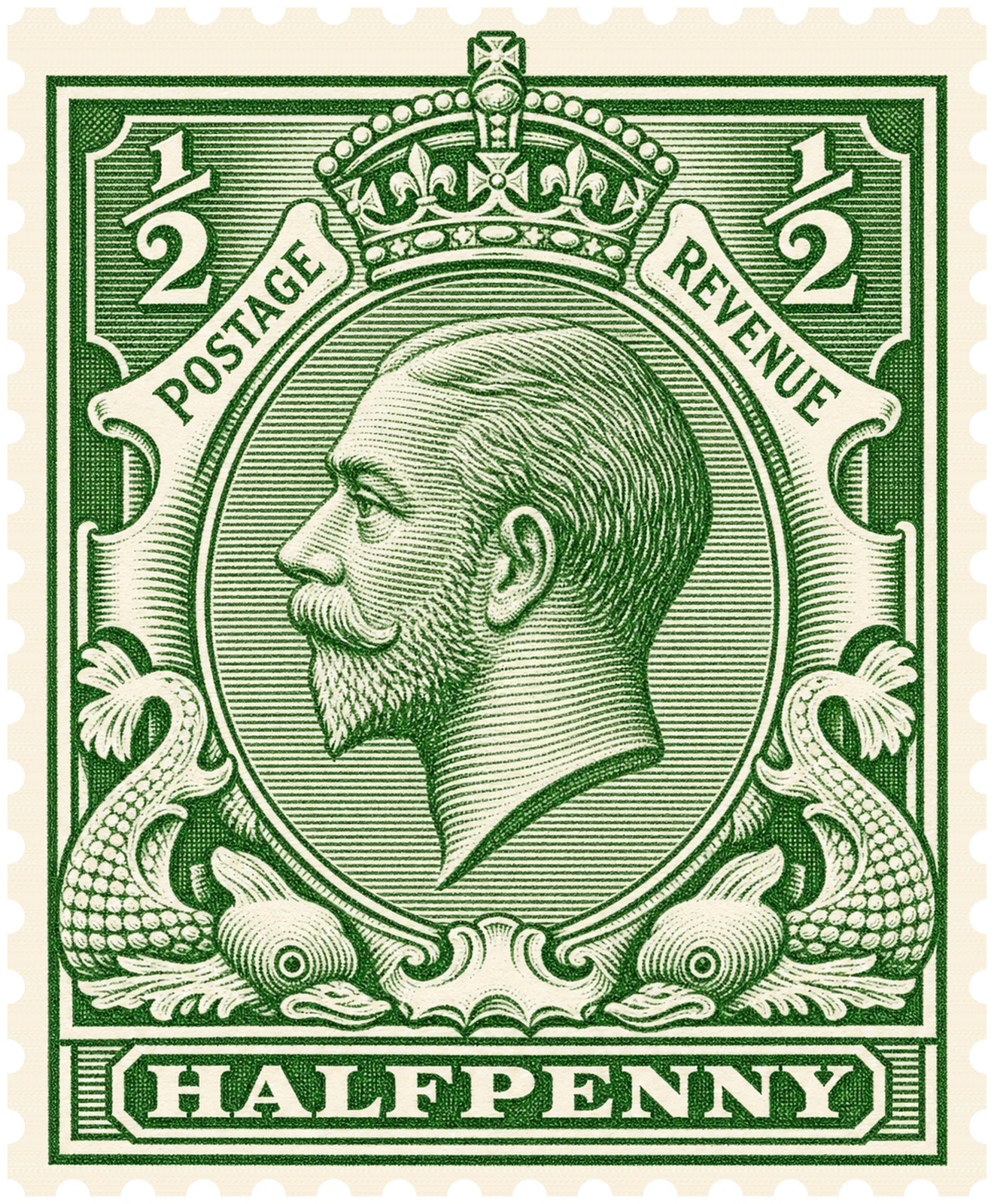
On the stamp you were exploring
George V · ½d green · 16 January 1913
This ½d green stamp continues Mackennal’s royal profile and ornamental frame. His sculptural model was translated into a printable stamp portrait.
On the stamp you were exploring
George V · ½d green · 16 January 1913
This ½d green stamp continues Mackennal’s royal profile and ornamental frame. His sculptural model was translated into a printable stamp portrait.
On the stamp you were exploring
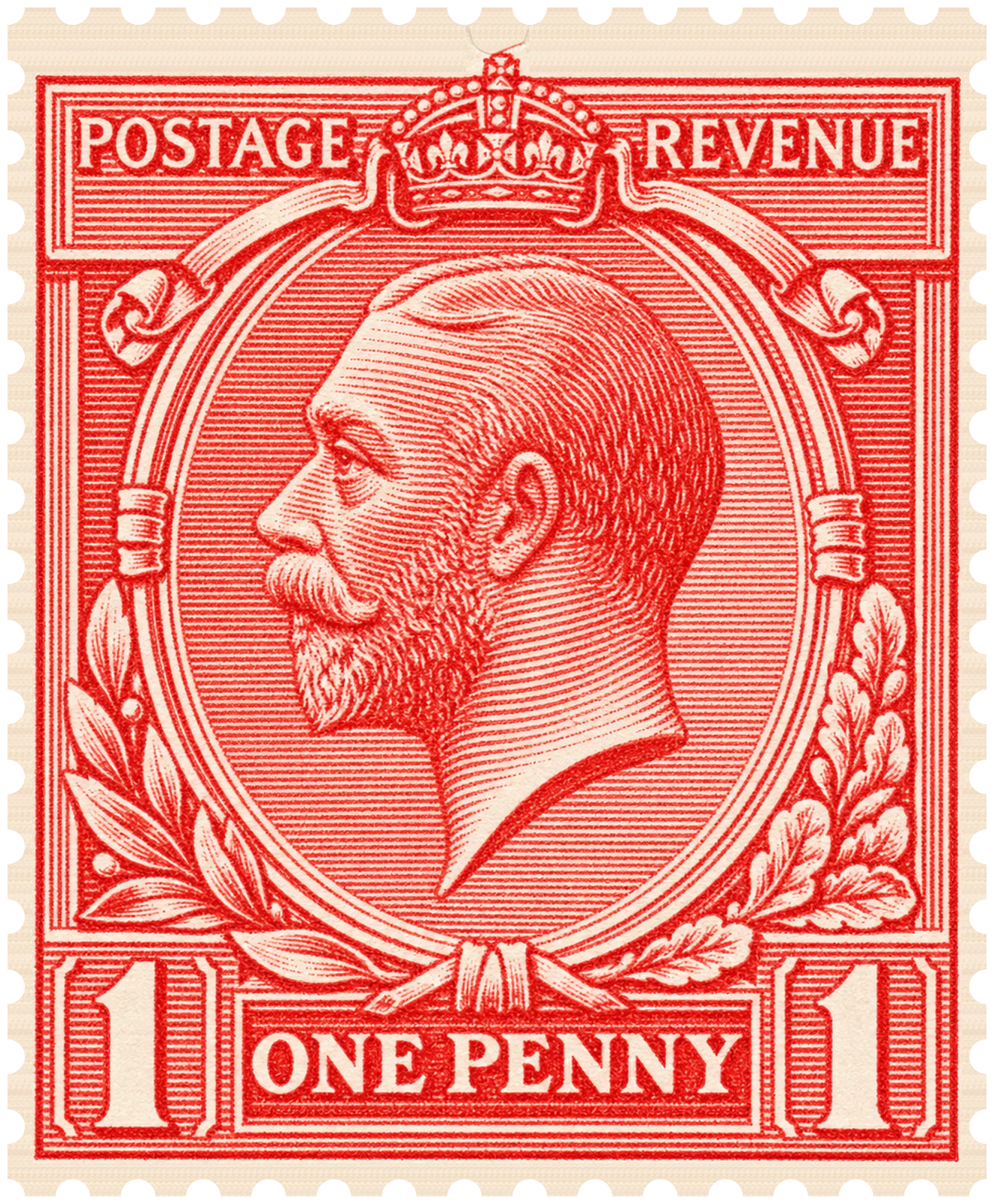
George V · 1d scarlet · 8 October 1912
This 1d scarlet stamp continues Mackennal’s royal profile and ornamental frame. His sculptural model was translated into a printable stamp portrait.
On the stamp you were exploring
George V · 1d scarlet · 8 October 1912
This 1d scarlet stamp continues Mackennal’s royal profile and ornamental frame. His sculptural model was translated into a printable stamp portrait.
On the stamp you were exploring
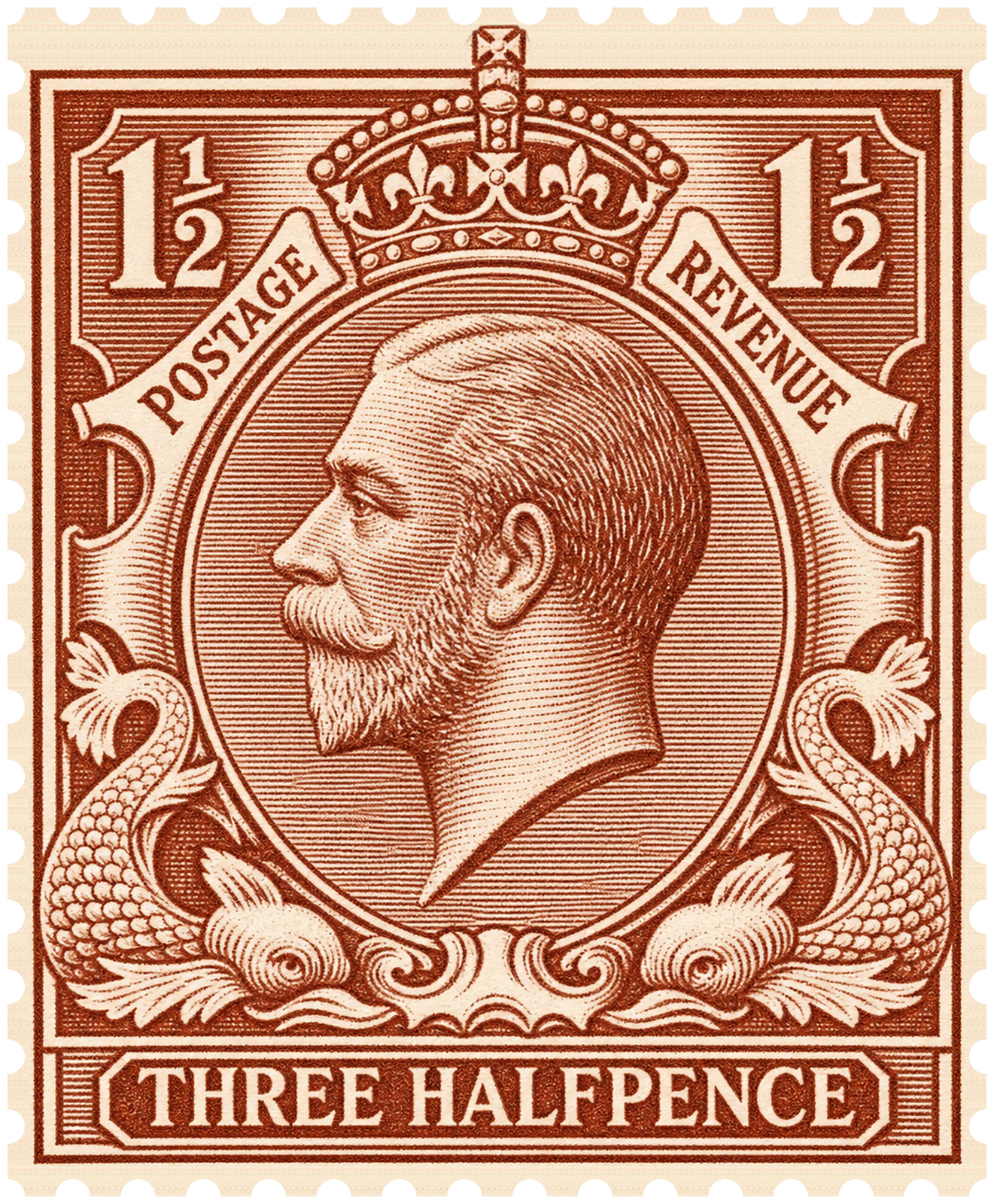
George V · 1½d red-brown · 15 October 1912
This 1½d red-brown stamp continues Mackennal’s royal profile and ornamental frame. His sculptural model was translated into a printable stamp portrait.
On the stamp you were exploring
George V · 1½d red-brown · 15 October 1912
This 1½d red-brown stamp continues Mackennal’s royal profile and ornamental frame. His sculptural model was translated into a printable stamp portrait.
On the stamp you were exploring
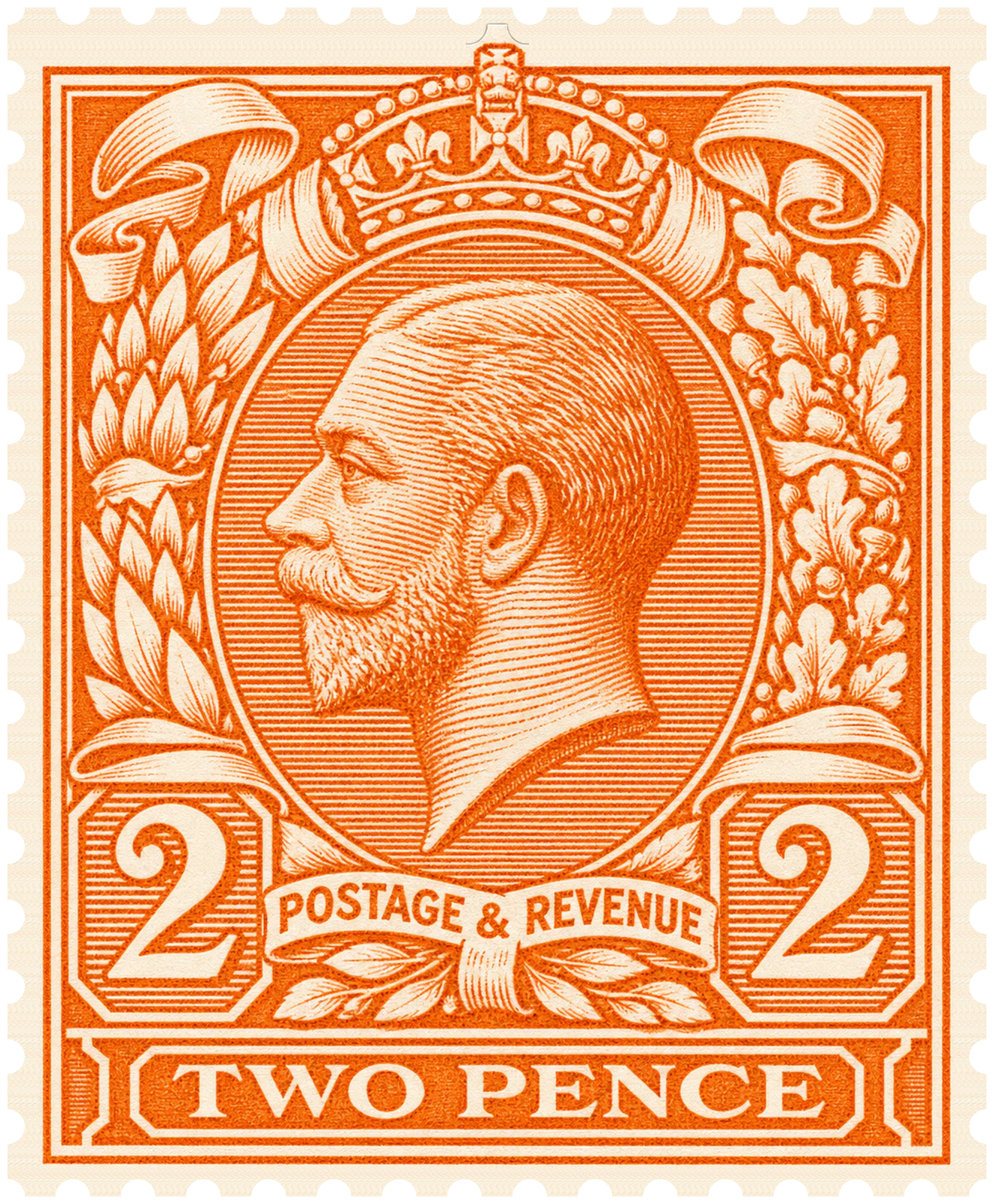
George V · 2d orange · 21 August 1912
This 2d orange stamp continues Mackennal’s royal profile and ornamental frame. His sculptural model was translated into a printable stamp portrait.
On the stamp you were exploring
George V · 2d orange · 21 August 1912
This 2d orange stamp continues Mackennal’s royal profile and ornamental frame. His sculptural model was translated into a printable stamp portrait.
On the stamp you were exploring
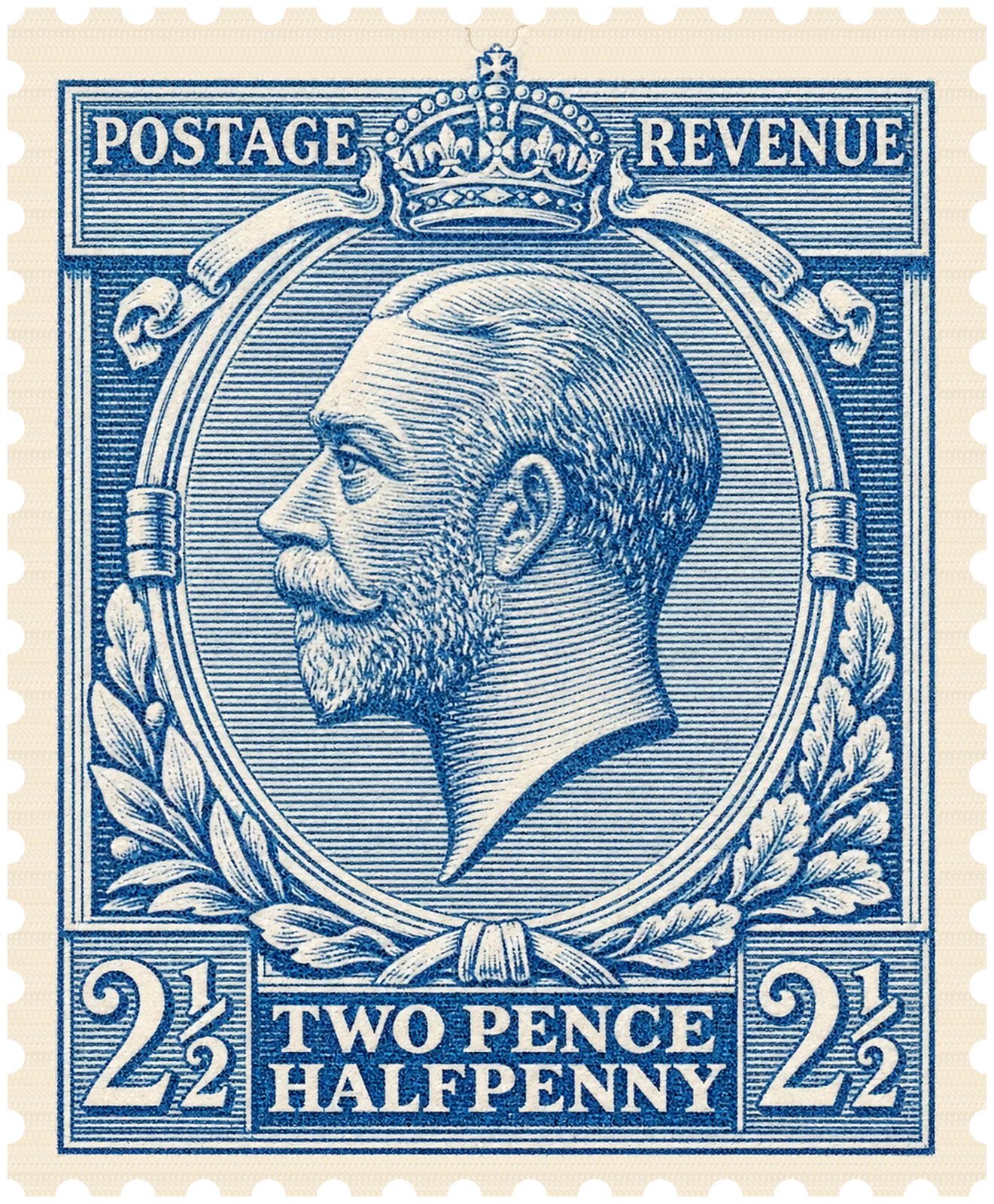
George V · 2½d blue · 18 October 1912
This 2½d blue stamp continues Mackennal’s royal profile and ornamental frame. His sculptural model was translated into a printable stamp portrait.
On the stamp you were exploring
George V · 2½d blue · 18 October 1912
This 2½d blue stamp continues Mackennal’s royal profile and ornamental frame. His sculptural model was translated into a printable stamp portrait.
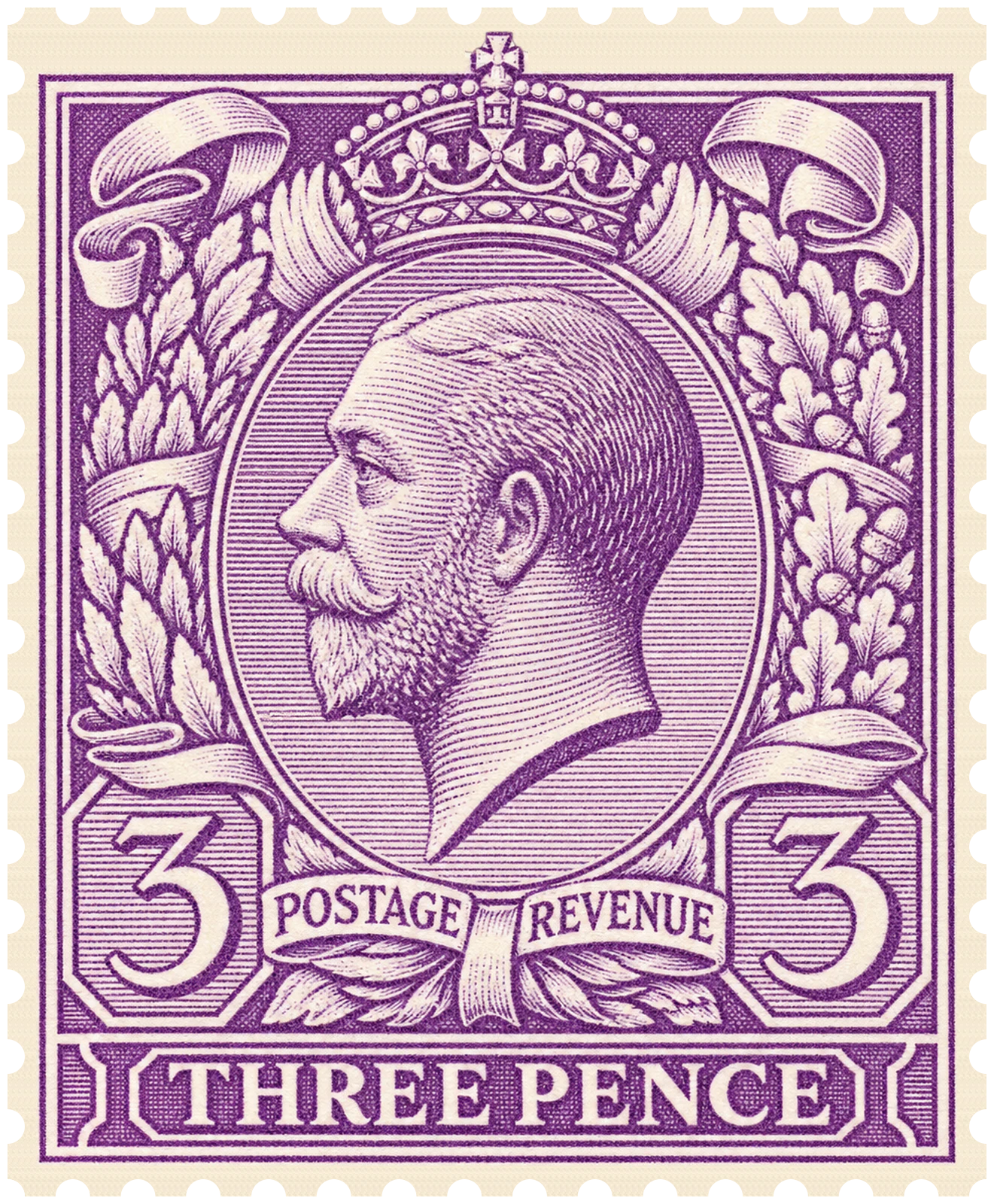
On the stamp you were exploring
George V · 3d violet · 8 October 1912
This 3d violet stamp continues Mackennal’s royal profile and ornamental frame. His sculptural model was translated into a printable stamp portrait.
On the stamp you were exploring
George V · 3d violet · 8 October 1912
This 3d violet stamp continues Mackennal’s royal profile and ornamental frame. His sculptural model was translated into a printable stamp portrait.
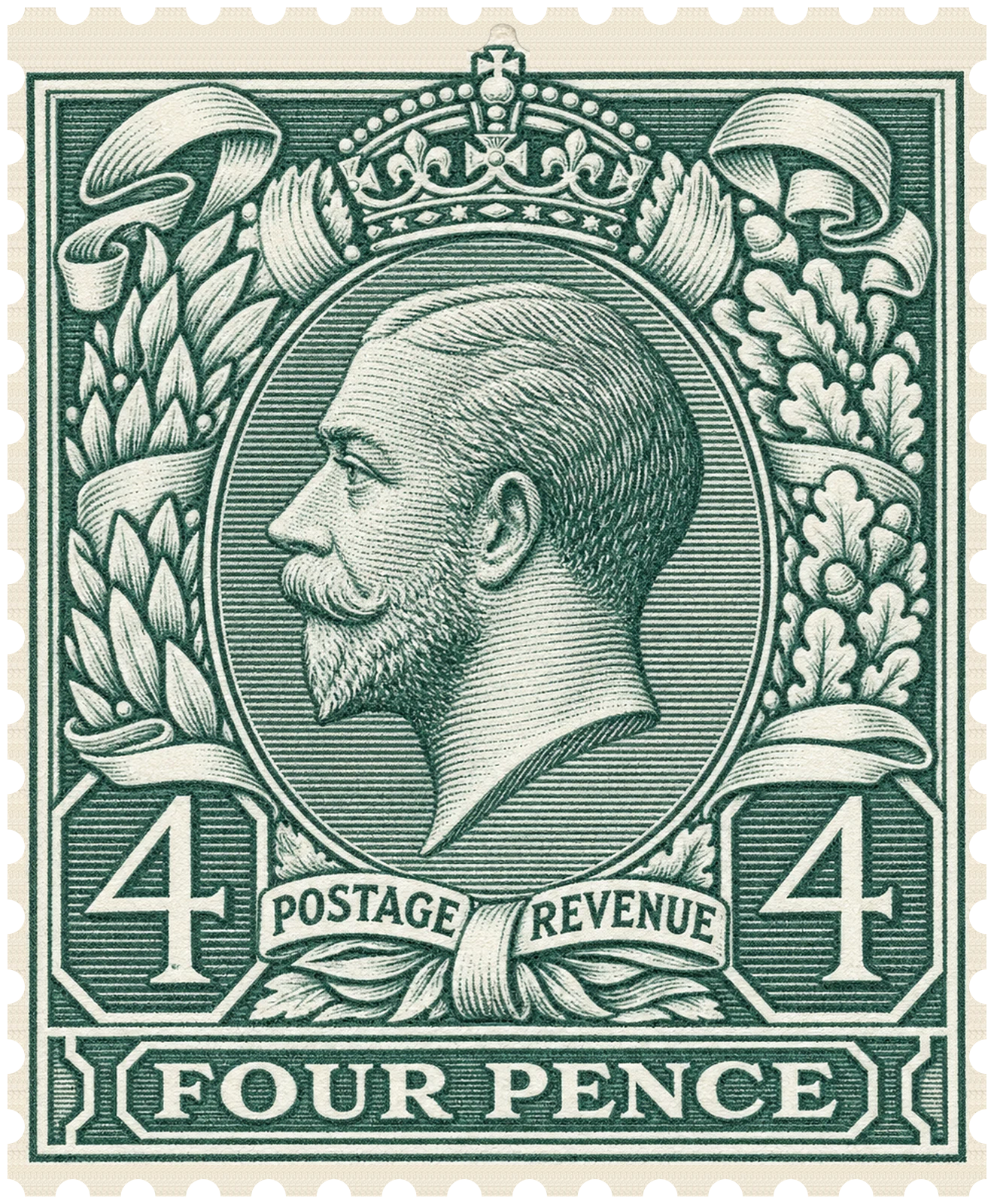
On the stamp you were exploring
George V · 4d grey-green · January 1913
This 4d grey-green stamp continues Mackennal’s royal profile and ornamental frame. His sculptural model was translated into a printable stamp portrait.
On the stamp you were exploring
George V · 4d grey-green · January 1913
This 4d grey-green stamp continues Mackennal’s royal profile and ornamental frame. His sculptural model was translated into a printable stamp portrait.
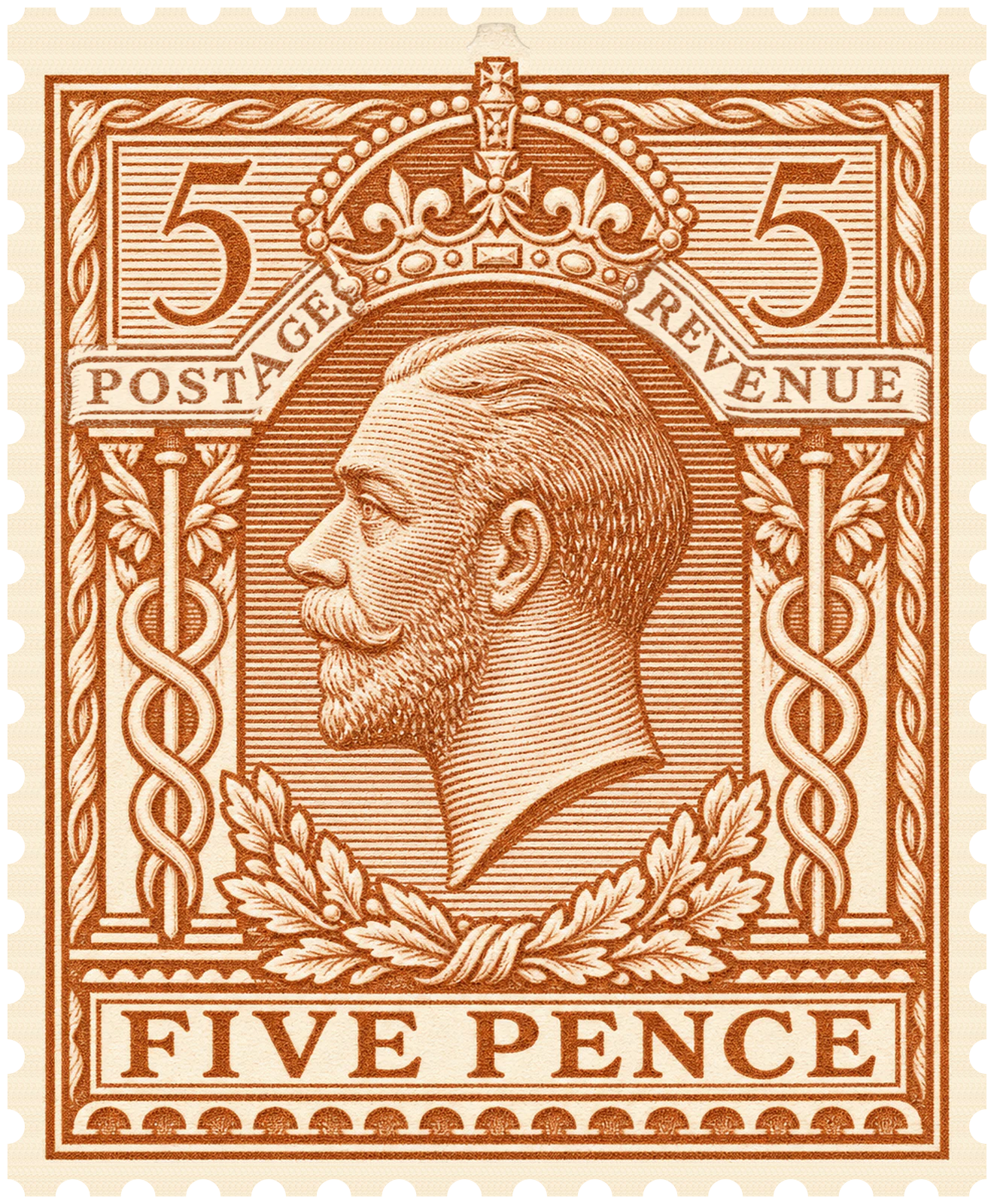
On the stamp you were exploring
George V · 5d yellow-brown · 30 June 1913
This 5d yellow-brown stamp continues Mackennal’s royal profile, within a frame derived from George W. Eve’s design. His sculptural model was translated into a printable stamp portrait.
On the stamp you were exploring
George V · 5d yellow-brown · 30 June 1913
This 5d yellow-brown stamp continues Mackennal’s royal profile, within a frame derived from George W. Eve’s design. His sculptural model was translated into a printable stamp portrait.
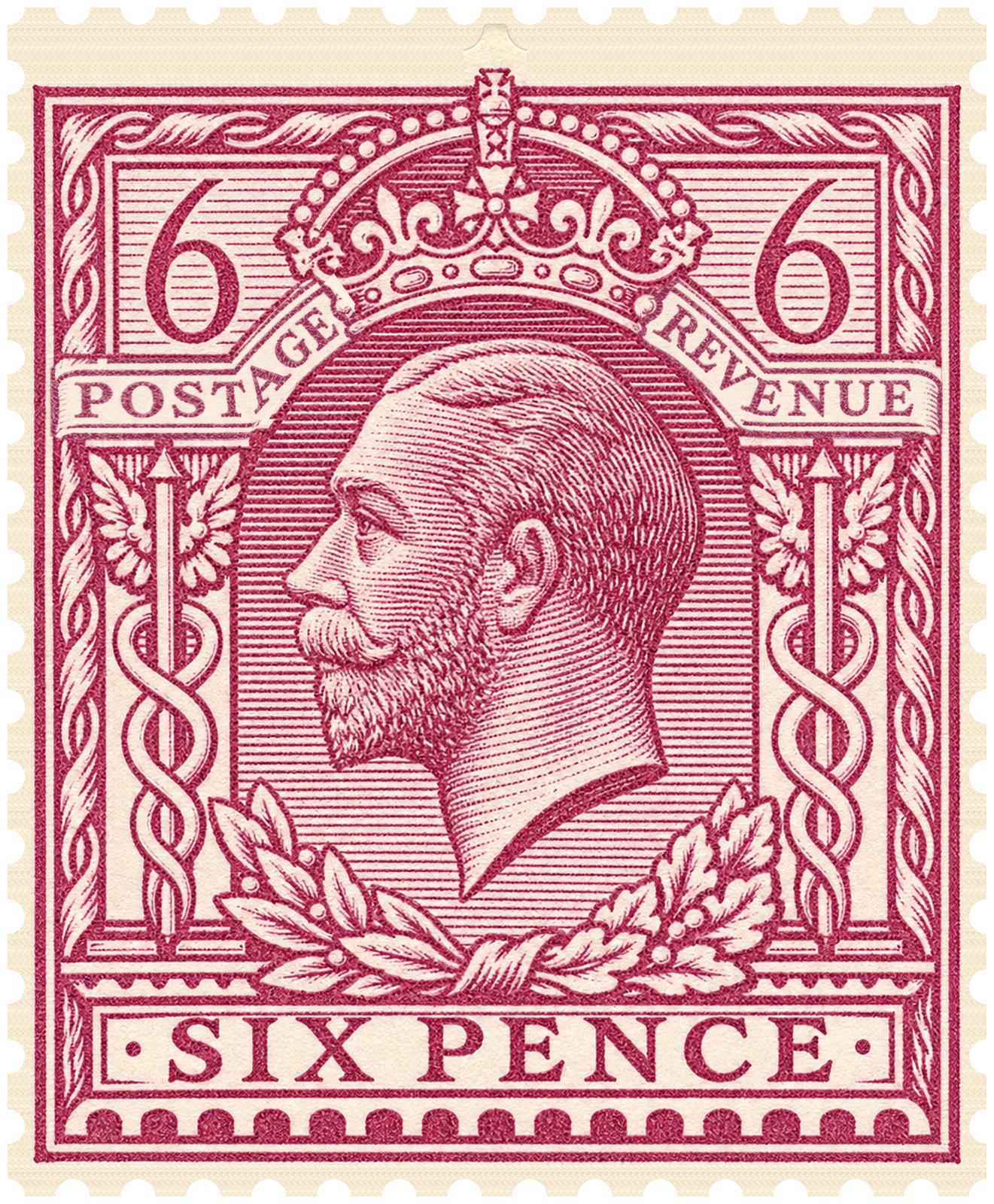
On the stamp you were exploring
George V · 6d reddish-purple · 1 August 1913 (originally dull purple; reddish-purple introduced later that month)
This 6d reddish-purple stamp continues Mackennal’s royal profile, within a frame derived from George W. Eve’s design. His sculptural model was translated into a printable stamp portrait.
On the stamp you were exploring
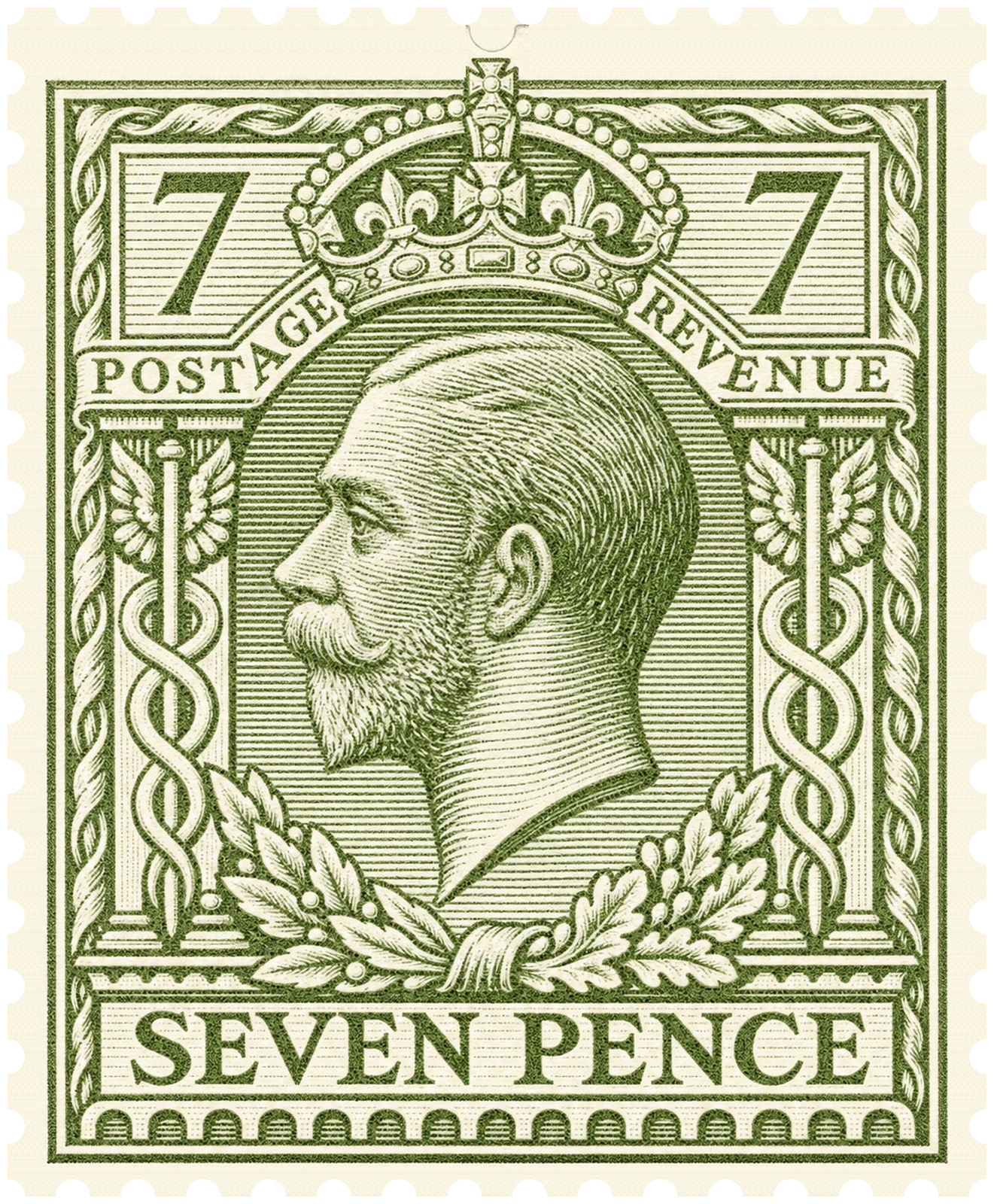
George V · 7d olive-green · 1 August 1913
This 7d olive-green stamp continues Mackennal’s royal profile, within a frame derived from George W. Eve’s design. His sculptural model was translated into a printable stamp portrait.
On the stamp you were exploring
George V · 7d olive-green · 1 August 1913
This 7d olive-green stamp continues Mackennal’s royal profile, within a frame derived from George W. Eve’s design. His sculptural model was translated into a printable stamp portrait.
On the stamp you were exploring
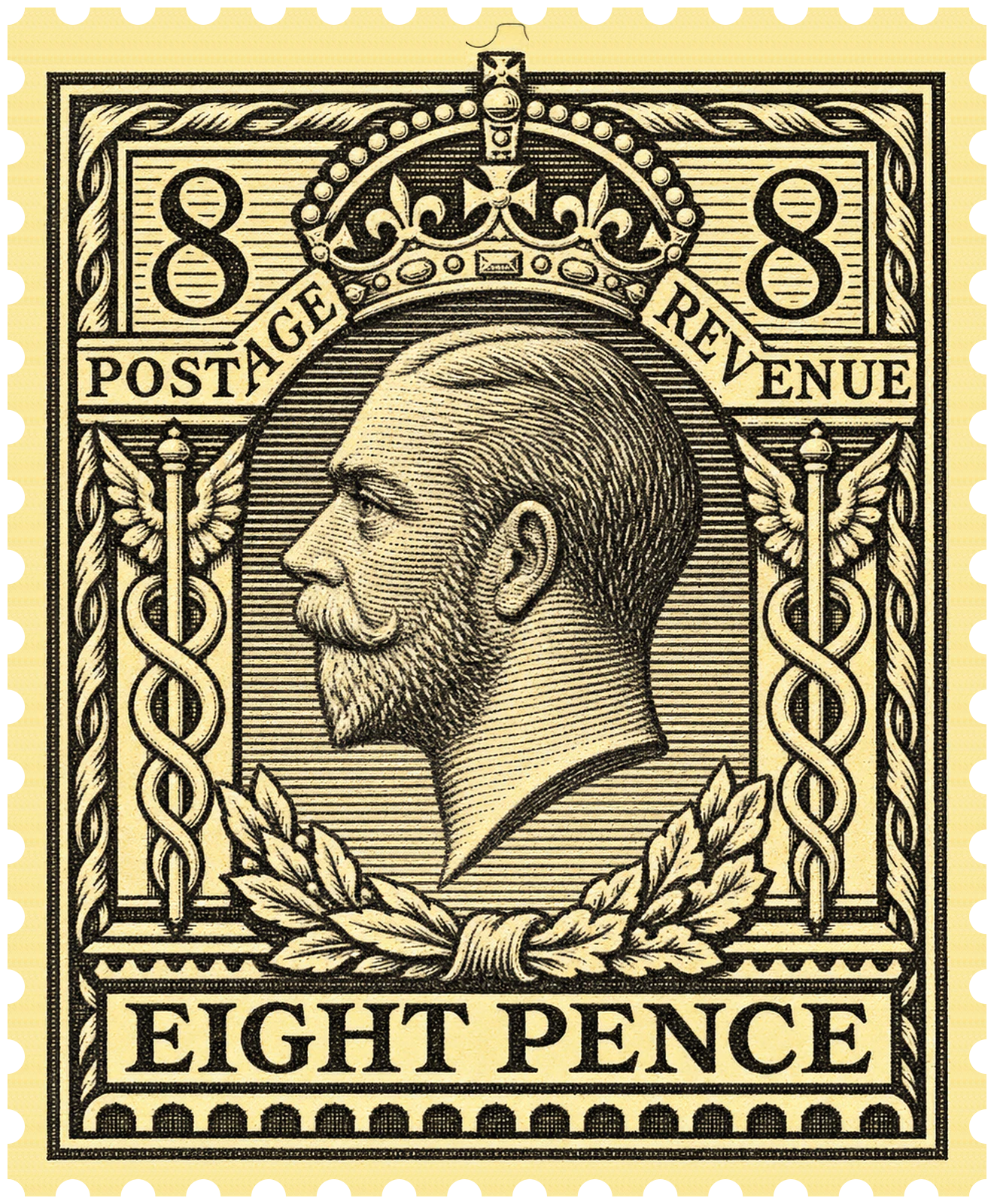
George V · 8d black on yellow · 1 August 1913
This 8d black on yellow stamp continues Mackennal’s royal profile, within a frame derived from George W. Eve’s design. His sculptural model was translated into a printable stamp portrait.
On the stamp you were exploring
George V · 8d black on yellow · 1 August 1913
This 8d black on yellow stamp continues Mackennal’s royal profile, within a frame derived from George W. Eve’s design. His sculptural model was translated into a printable stamp portrait.
On the stamp you were exploring
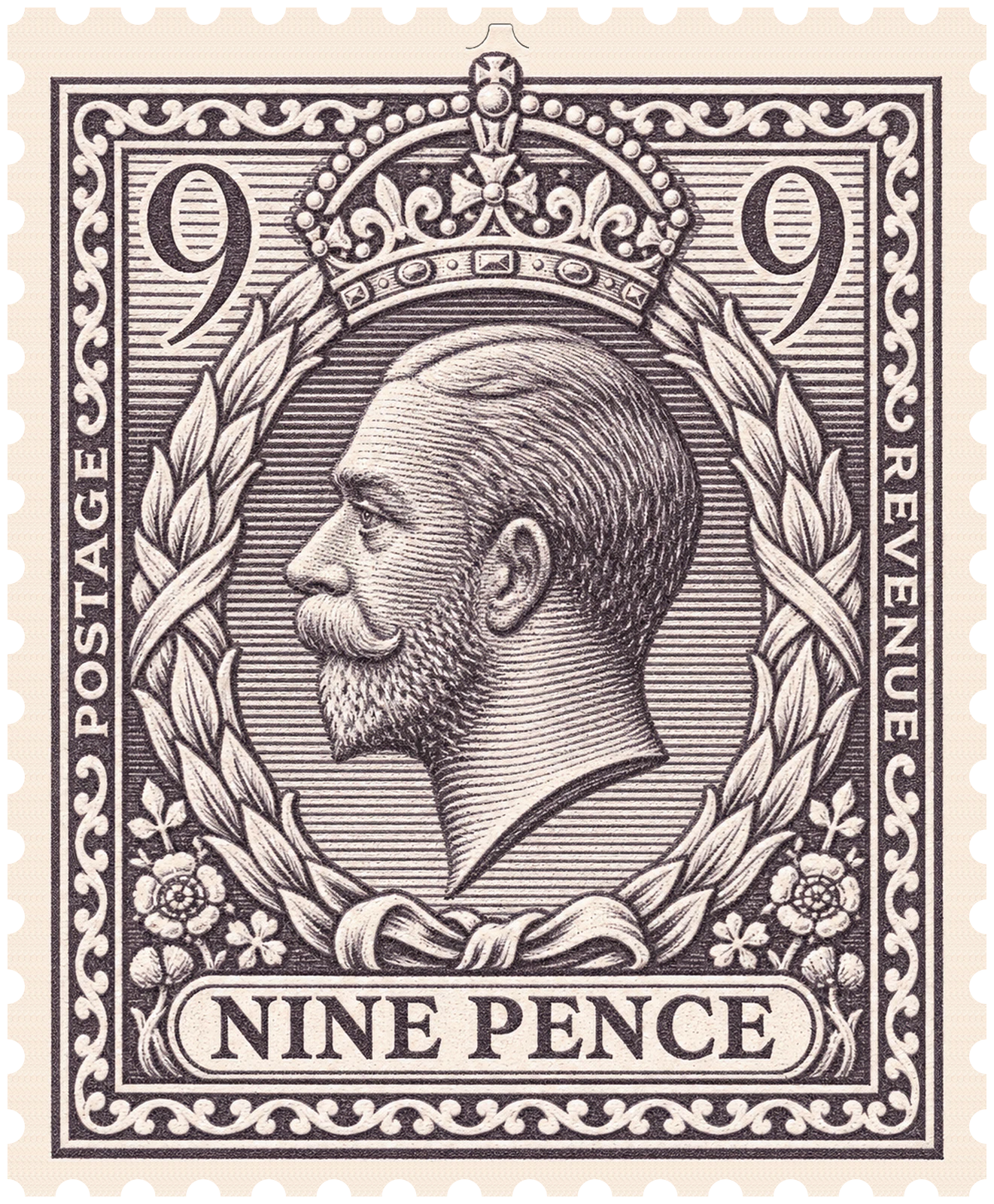
George V · 9d agate · 1913-06-30
This 9d agate stamp continues Mackennal’s royal profile, within a frame derived from George W. Eve’s design. His sculptural model was translated into a printable stamp portrait.
On the stamp you were exploring
George V · 9d agate · 1913-06-30
This 9d agate stamp continues Mackennal’s royal profile, within a frame derived from George W. Eve’s design. His sculptural model was translated into a printable stamp portrait.
On the stamp you were exploring
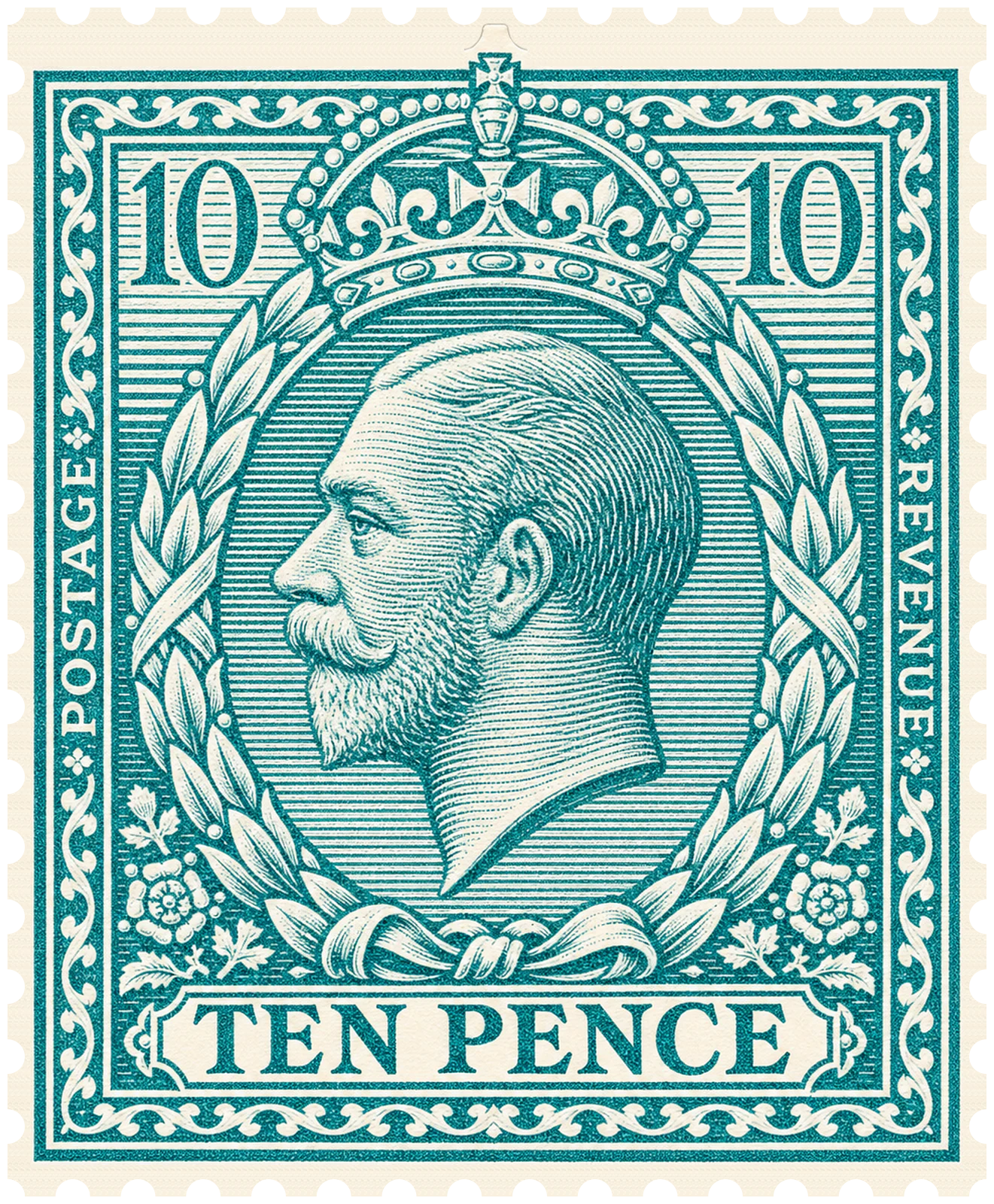
George V · 10d turquoise-blue · from 1914
This 10d turquoise-blue stamp continues Mackennal’s royal profile, within a frame derived from George W. Eve’s design. His sculptural model was translated into a printable stamp portrait.
On the stamp you were exploring
George V · 10d turquoise-blue · from 1914
This 10d turquoise-blue stamp continues Mackennal’s royal profile, within a frame derived from George W. Eve’s design. His sculptural model was translated into a printable stamp portrait.
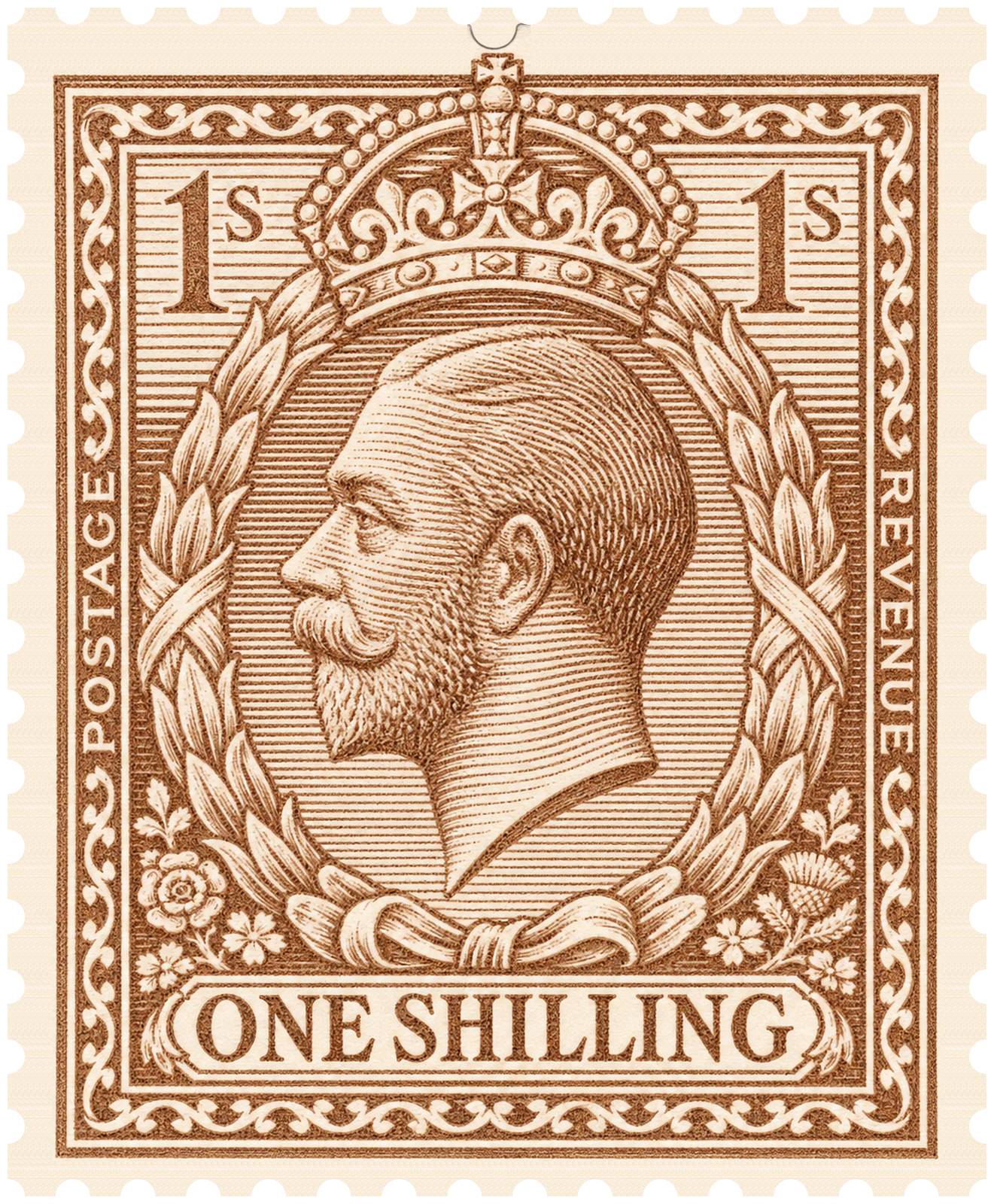
On the stamp you were exploring
George V · 1s bistre-brown · from 1914
This 1s bistre-brown stamp continues Mackennal’s royal profile, within a frame derived from George W. Eve’s design. His sculptural model was translated into a printable stamp portrait.
On the stamp you were exploring
George V · 1s bistre-brown · from 1914
This 1s bistre-brown stamp continues Mackennal’s royal profile, within a frame derived from George W. Eve’s design. His sculptural model was translated into a printable stamp portrait.
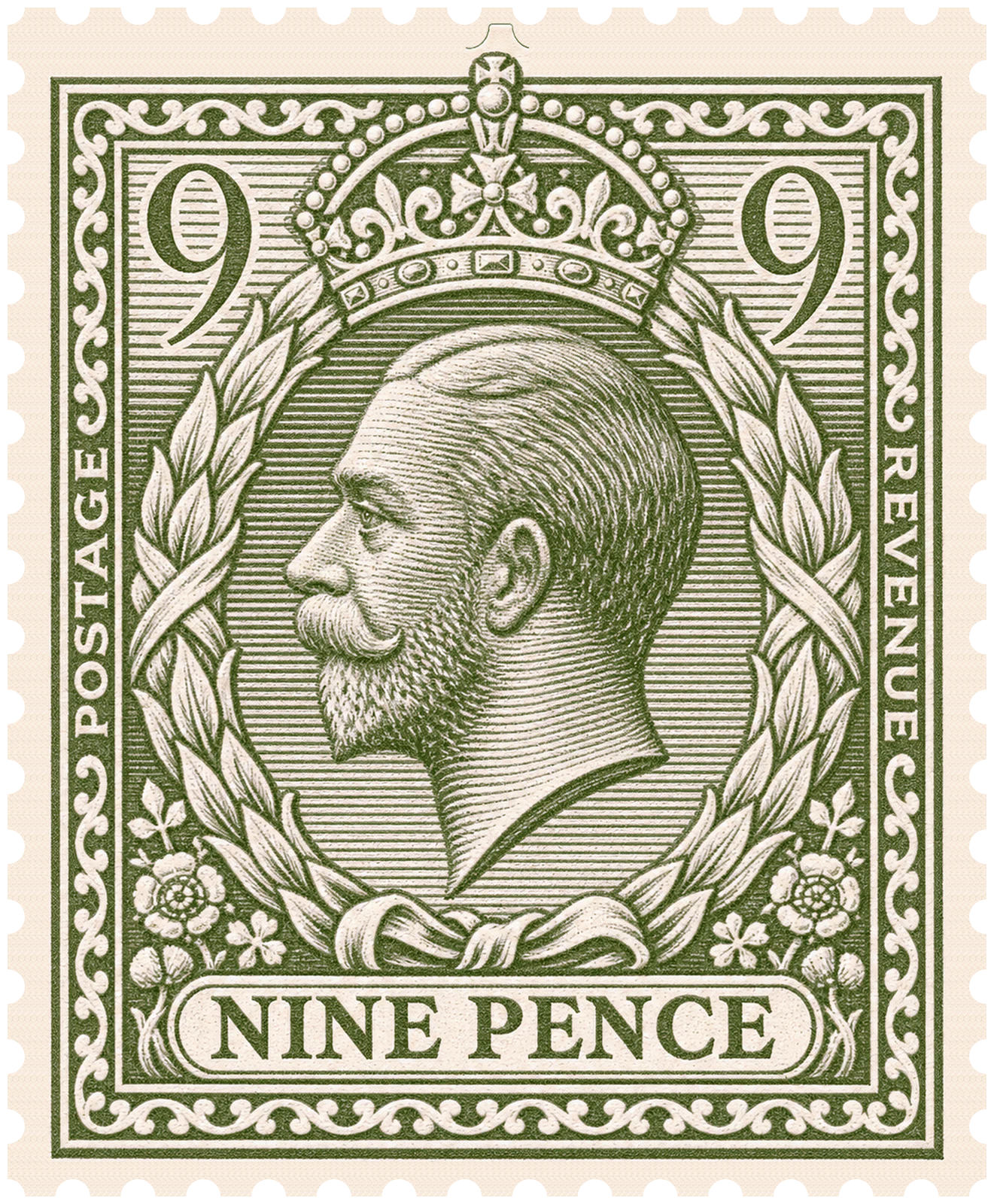
On the stamp you were exploring
George V · 9d olive-green · 1922
This 9d olive-green stamp continues Mackennal’s royal profile, within a frame derived from George W. Eve’s design. His sculptural model was translated into a printable stamp portrait.
On the stamp you were exploring
George V · 9d olive-green · 1922
This 9d olive-green stamp continues Mackennal’s royal profile, within a frame derived from George W. Eve’s design. His sculptural model was translated into a printable stamp portrait.
On the stamp you were exploring
George V · ½d bright green · August 1913
This ½d bright green stamp continues Mackennal’s royal profile and ornamental frame. His sculptural model was translated into a printable stamp portrait.
On the stamp you were exploring
George V · ½d bright green · August 1913
This ½d bright green stamp continues Mackennal’s royal profile and ornamental frame. His sculptural model was translated into a printable stamp portrait.
On the stamp you were exploring
George V · 1d dull scarlet · August 1913
This 1d dull scarlet stamp continues Mackennal’s royal profile and ornamental frame. His sculptural model was translated into a printable stamp portrait.
On the stamp you were exploring
George V · 1d dull scarlet · August 1913
This 1d dull scarlet stamp continues Mackennal’s royal profile and ornamental frame. His sculptural model was translated into a printable stamp portrait.
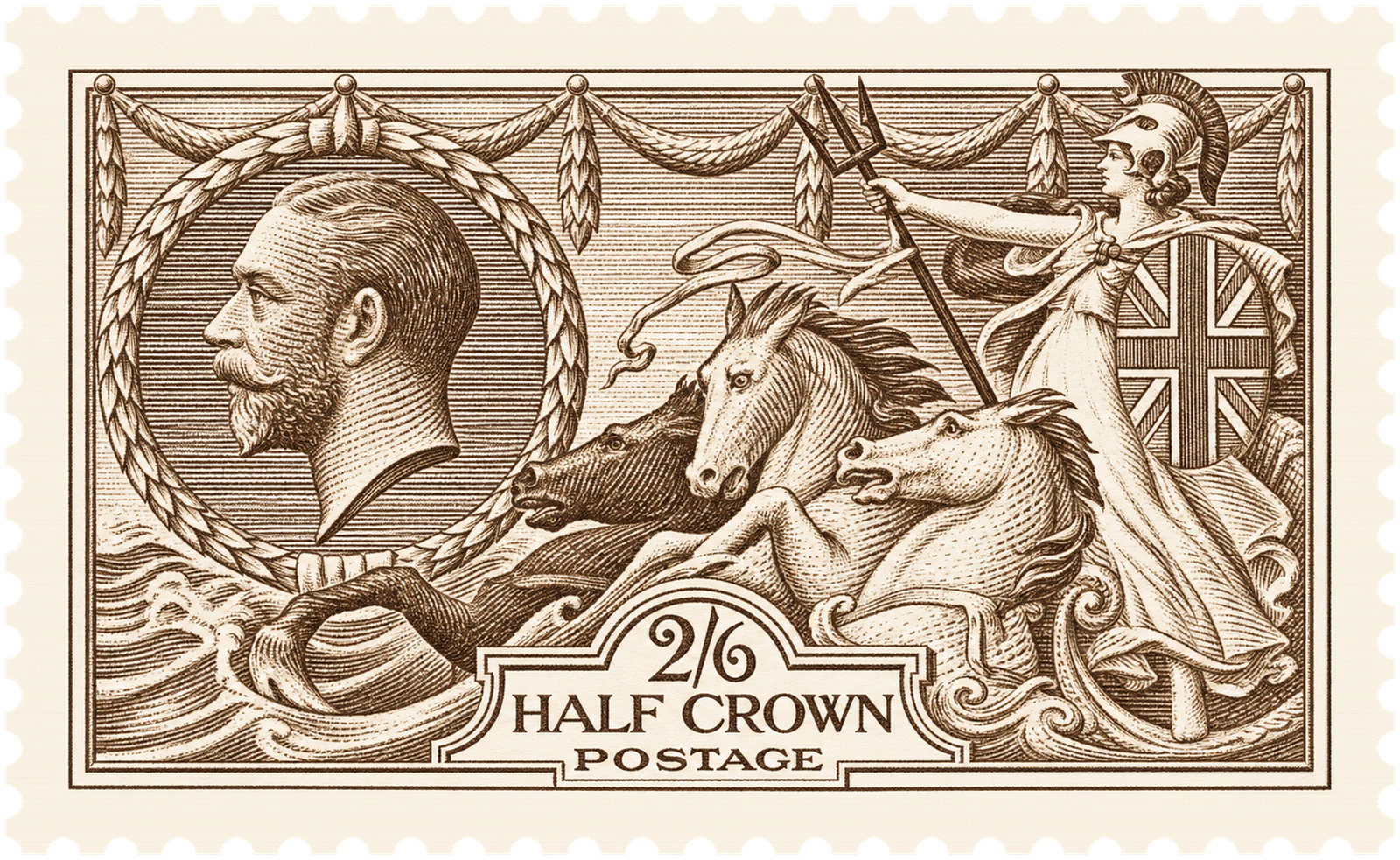
On the stamp you were exploring
George V · 2s 6d sepia-brown · 30 June 1913
Mackennal supplied the principal Seahorse composition used for this 2s 6d sepia-brown stamp: the King at the left and Britannia’s chariot at sea. This printing belongs to Waterlow Bros & Layton.
On the stamp you were exploring
George V · 2s 6d sepia-brown · 30 June 1913
Mackennal supplied the principal Seahorse composition used for this 2s 6d sepia-brown stamp: the King at the left and Britannia’s chariot at sea. This printing belongs to Waterlow Bros & Layton.
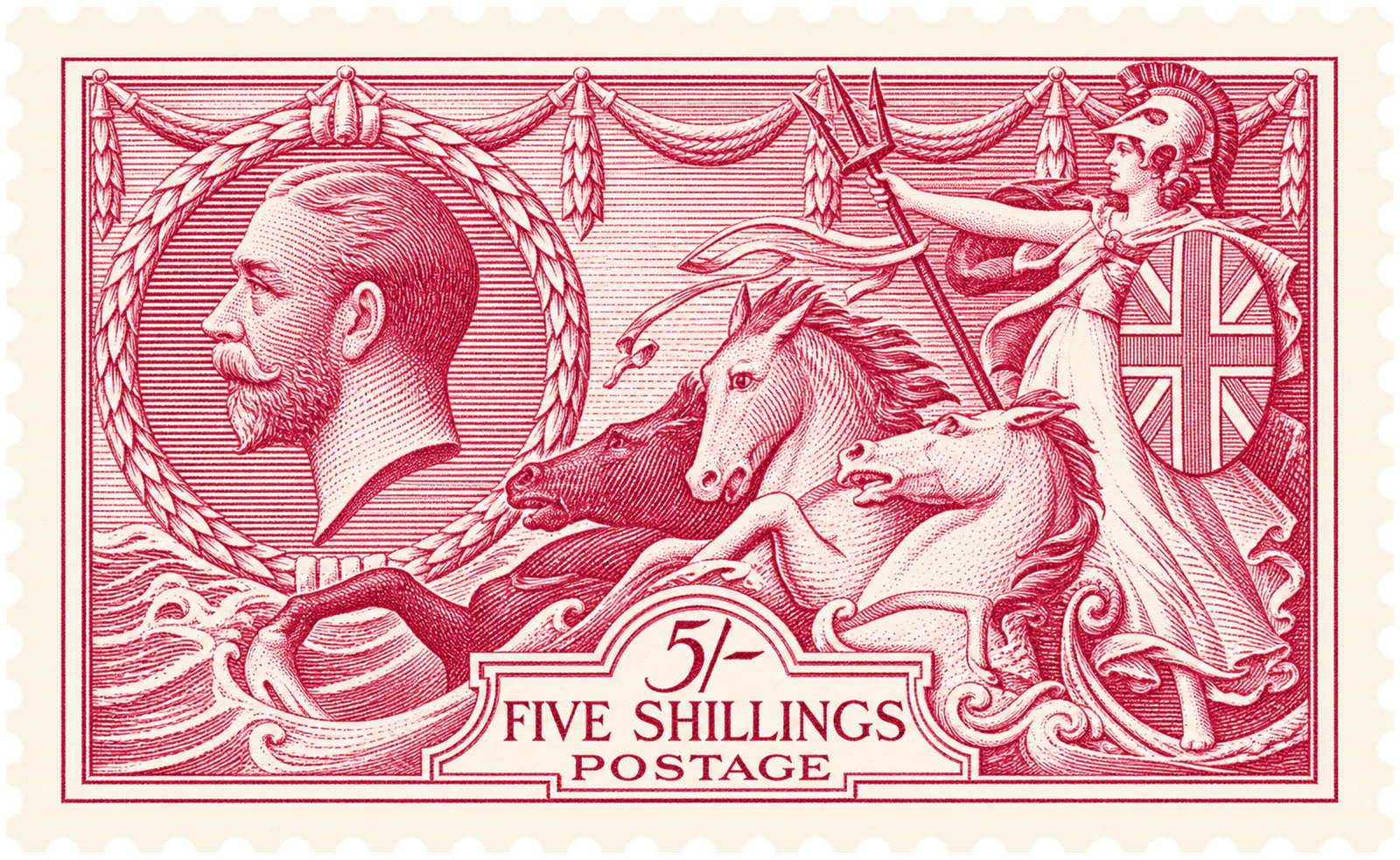
On the stamp you were exploring
George V · 5s rose-carmine · 30 June 1913 (sources differ)
Mackennal supplied the principal Seahorse composition used for this 5s rose-carmine stamp: the King at the left and Britannia’s chariot at sea. This printing belongs to Waterlow Bros & Layton.
On the stamp you were exploring
George V · 5s rose-carmine · 30 June 1913 (sources differ)
Mackennal supplied the principal Seahorse composition used for this 5s rose-carmine stamp: the King at the left and Britannia’s chariot at sea. This printing belongs to Waterlow Bros & Layton.
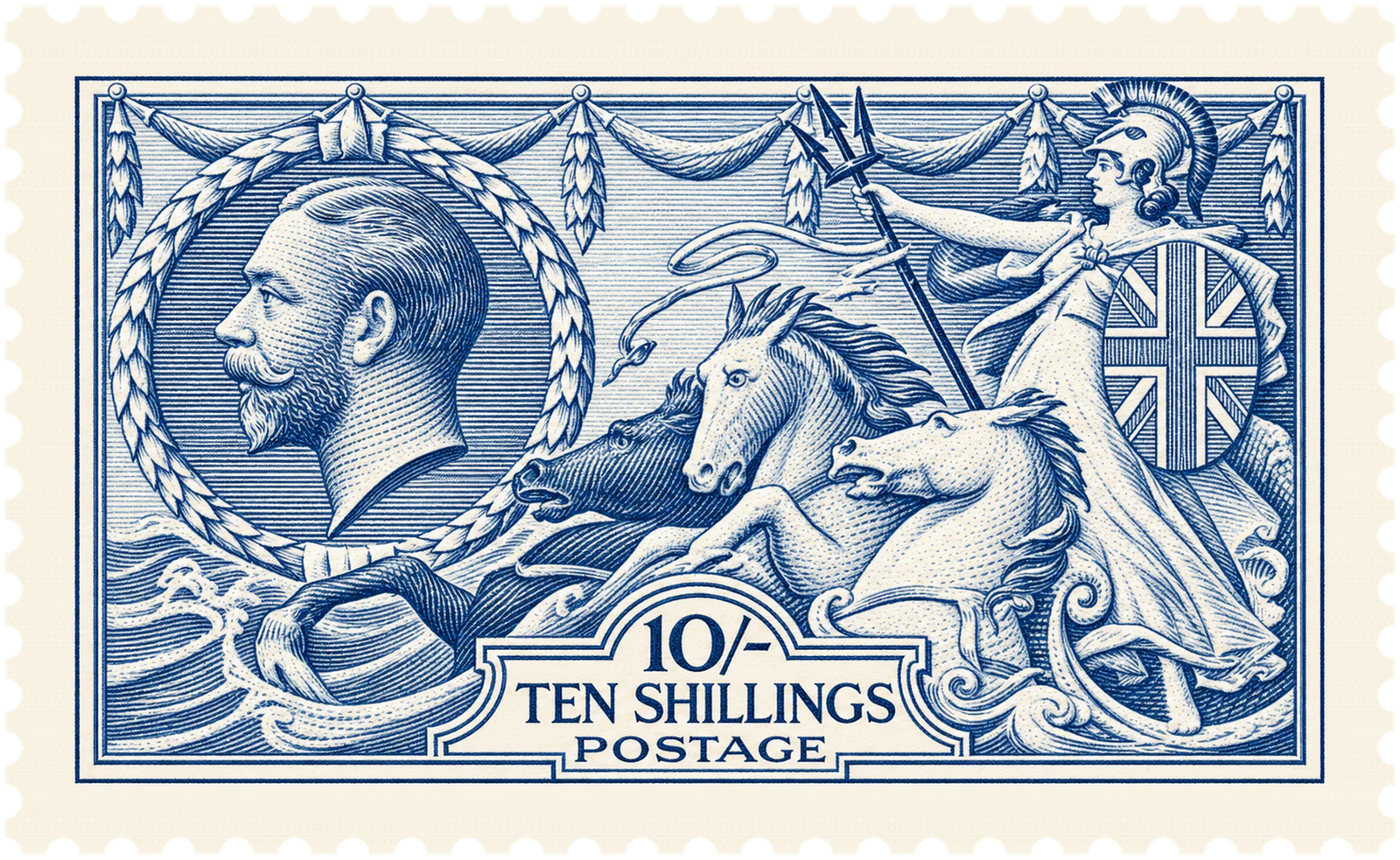
On the stamp you were exploring
George V · 10s indigo-blue · 1 August 1913
Mackennal supplied the principal Seahorse composition used for this 10s indigo-blue stamp: the King at the left and Britannia’s chariot at sea. This printing belongs to Waterlow Bros & Layton.
On the stamp you were exploring
George V · 10s indigo-blue · 1 August 1913
Mackennal supplied the principal Seahorse composition used for this 10s indigo-blue stamp: the King at the left and Britannia’s chariot at sea. This printing belongs to Waterlow Bros & Layton.
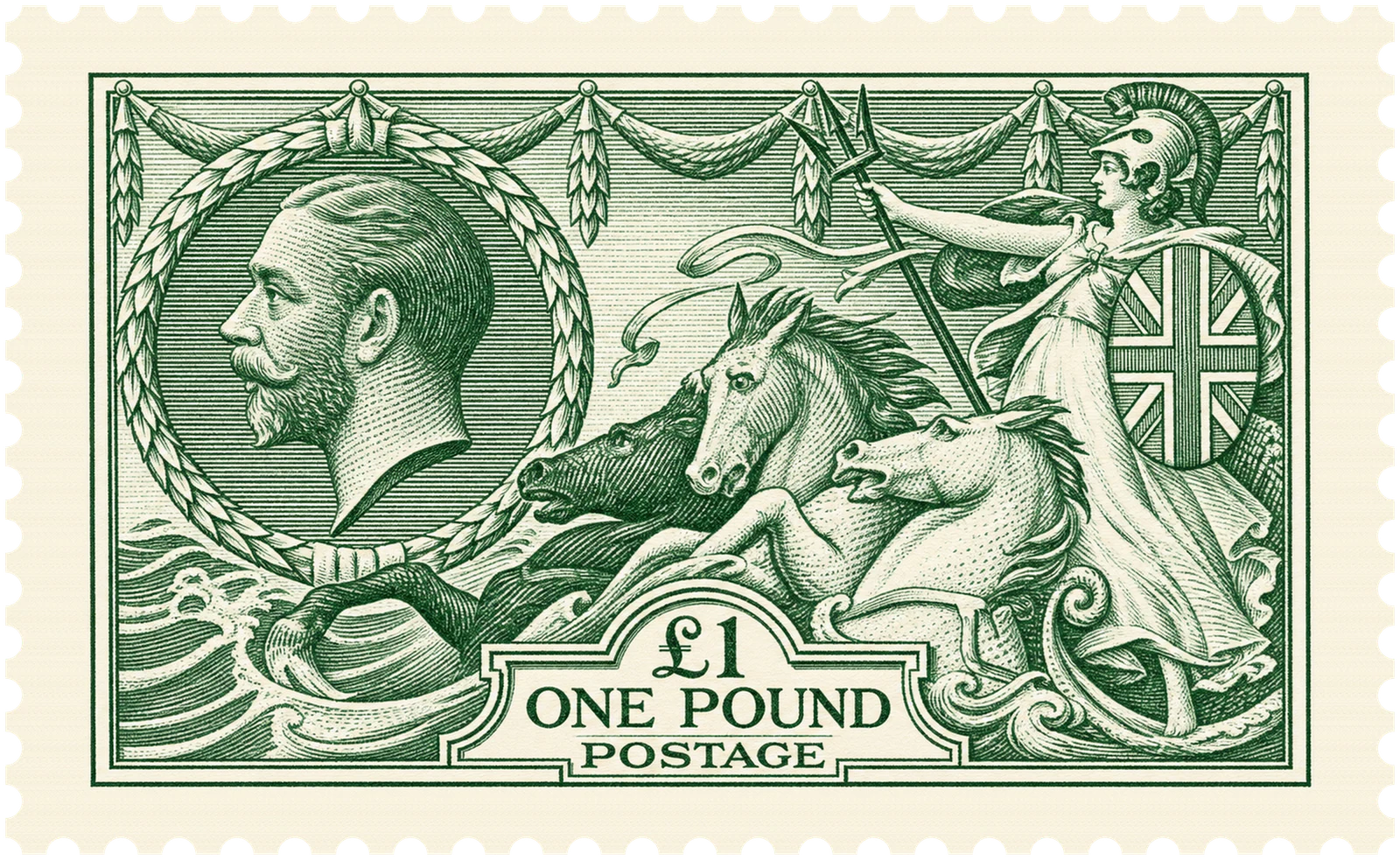
On the stamp you were exploring
George V · £1 green · 1 August 1913
Mackennal supplied the principal Seahorse composition used for this £1 green stamp: the King at the left and Britannia’s chariot at sea. This printing belongs to Waterlow Bros & Layton.
On the stamp you were exploring
George V · £1 green · 1 August 1913
Mackennal supplied the principal Seahorse composition used for this £1 green stamp: the King at the left and Britannia’s chariot at sea. This printing belongs to Waterlow Bros & Layton.
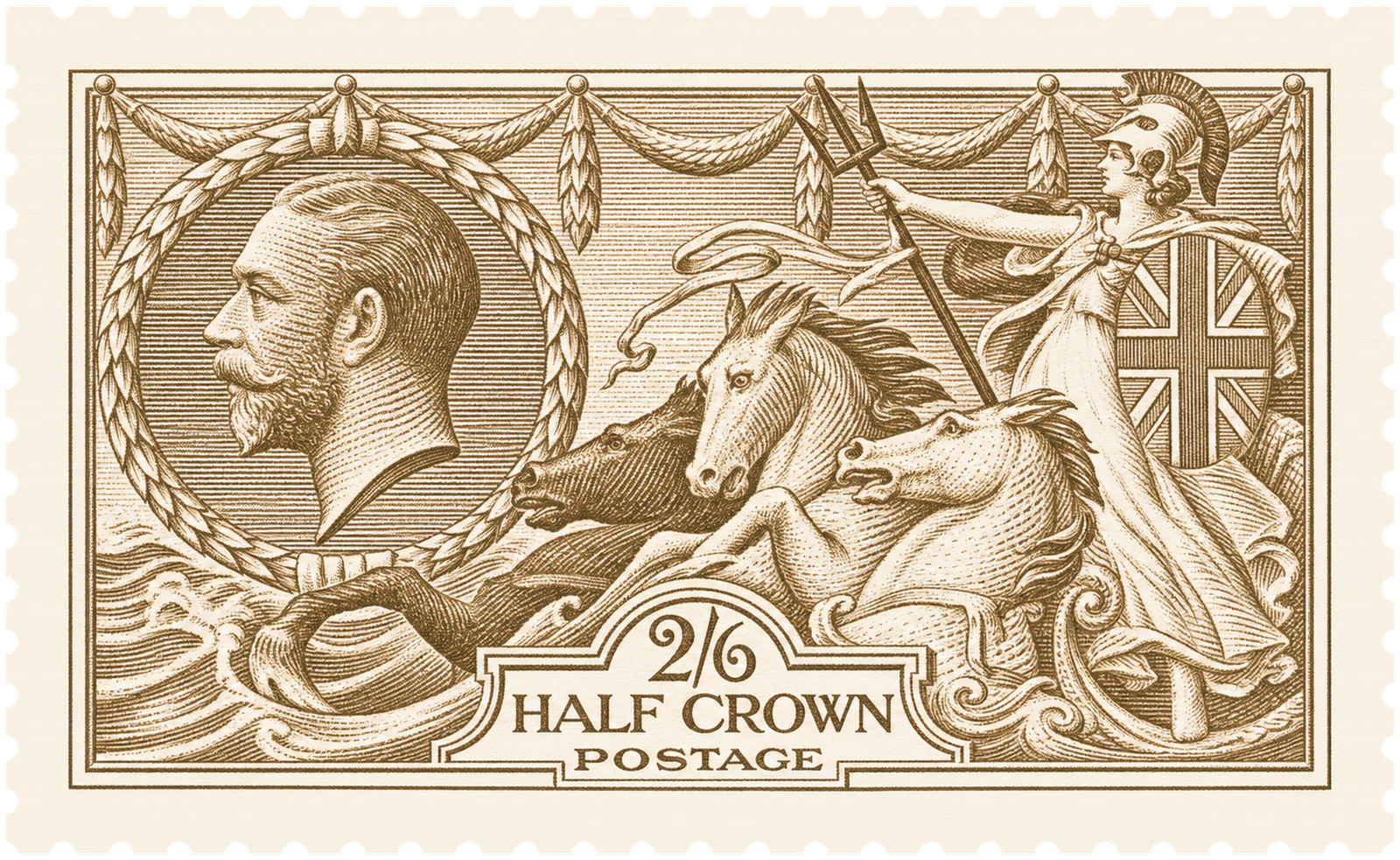
On the stamp you were exploring
George V · 2s 6d yellow-brown · 1915
Mackennal supplied the principal Seahorse composition used for this 2s 6d yellow-brown stamp: the King at the left and Britannia’s chariot at sea. This printing belongs to De La Rue & Co..
On the stamp you were exploring
George V · 2s 6d yellow-brown · 1915
Mackennal supplied the principal Seahorse composition used for this 2s 6d yellow-brown stamp: the King at the left and Britannia’s chariot at sea. This printing belongs to De La Rue & Co..
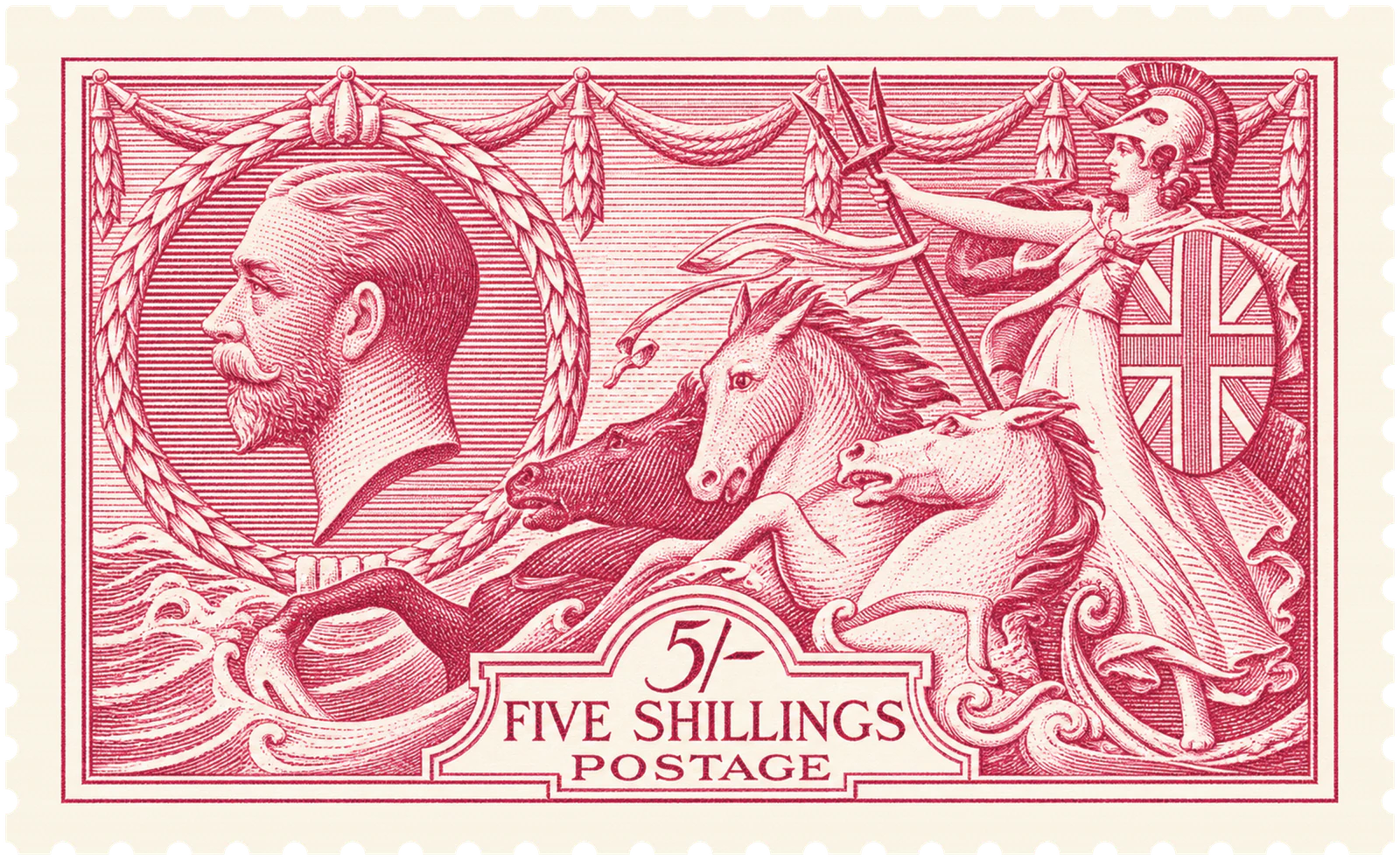
On the stamp you were exploring
George V · 5s bright carmine · 1915
Mackennal supplied the principal Seahorse composition used for this 5s bright carmine stamp: the King at the left and Britannia’s chariot at sea. This printing belongs to De La Rue & Co..
On the stamp you were exploring
George V · 5s bright carmine · 1915
Mackennal supplied the principal Seahorse composition used for this 5s bright carmine stamp: the King at the left and Britannia’s chariot at sea. This printing belongs to De La Rue & Co..
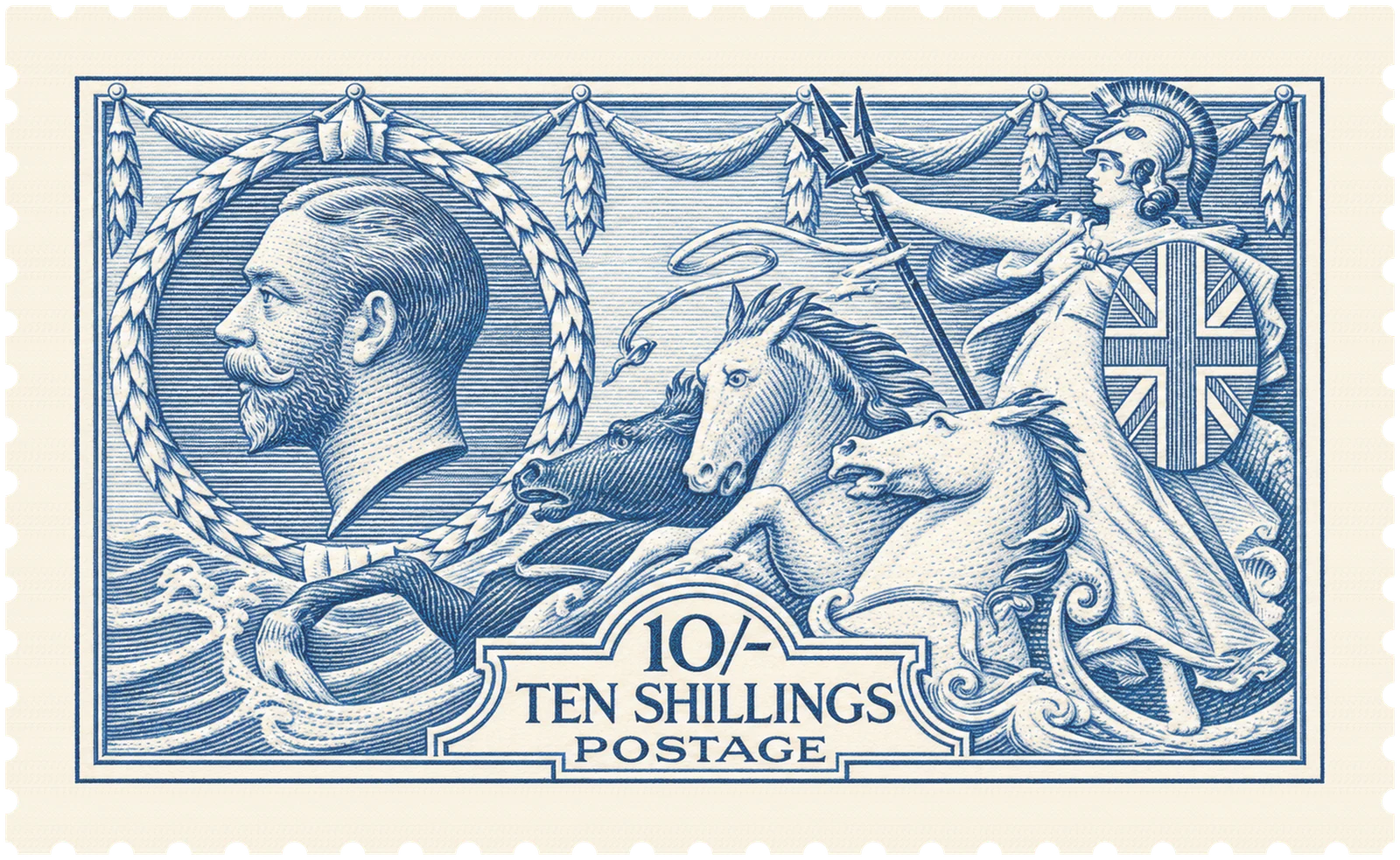
On the stamp you were exploring
George V · 10s deep blue · 1915
Mackennal supplied the principal Seahorse composition used for this 10s deep blue stamp: the King at the left and Britannia’s chariot at sea. This printing belongs to De La Rue & Co..
On the stamp you were exploring
George V · 10s deep blue · 1915
Mackennal supplied the principal Seahorse composition used for this 10s deep blue stamp: the King at the left and Britannia’s chariot at sea. This printing belongs to De La Rue & Co..
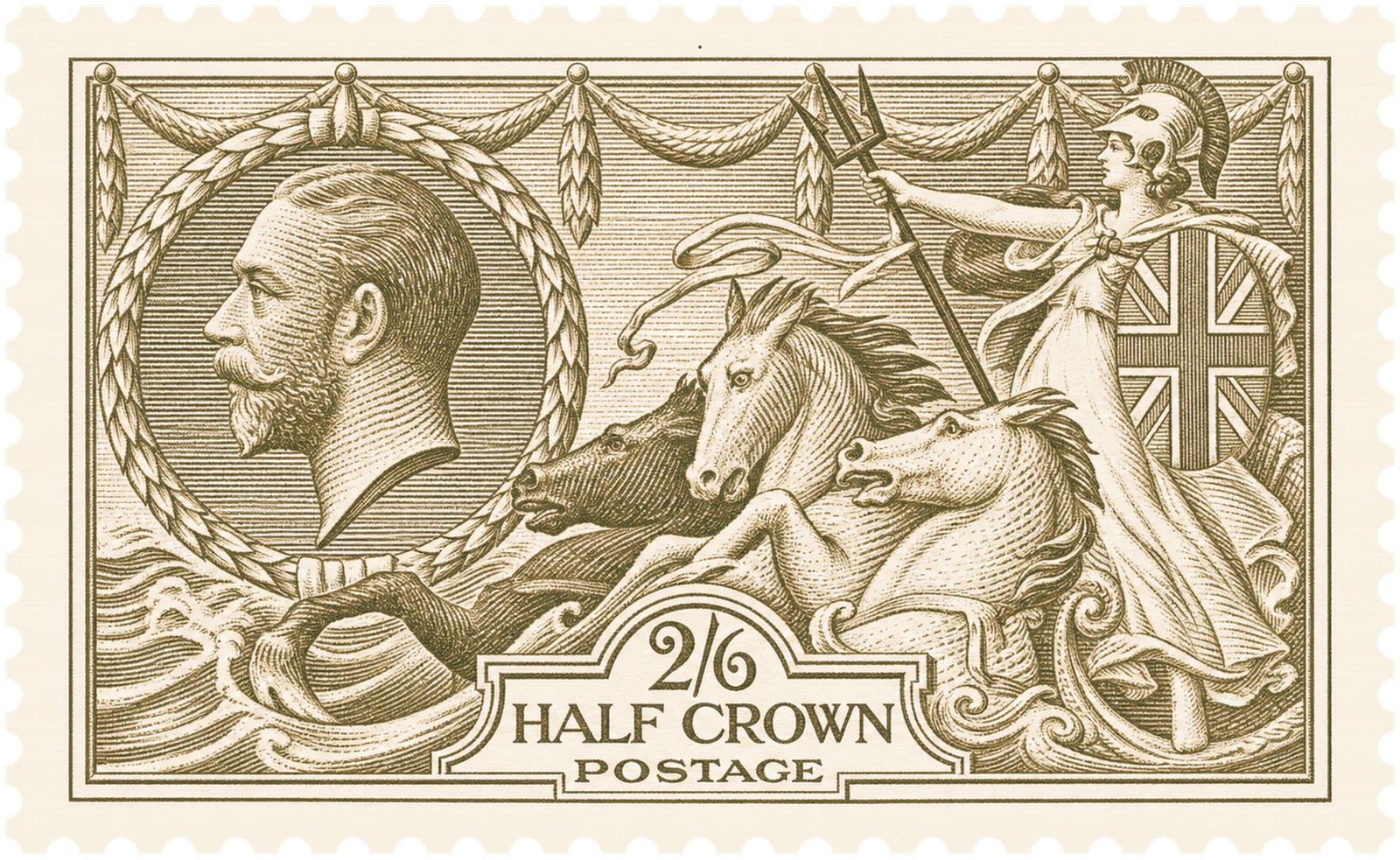
On the stamp you were exploring
George V · 2s 6d olive-brown · 1918
Mackennal supplied the principal Seahorse composition used for this 2s 6d olive-brown stamp: the King at the left and Britannia’s chariot at sea. This printing belongs to Bradbury Wilkinson & Co..
On the stamp you were exploring
George V · 2s 6d olive-brown · 1918
Mackennal supplied the principal Seahorse composition used for this 2s 6d olive-brown stamp: the King at the left and Britannia’s chariot at sea. This printing belongs to Bradbury Wilkinson & Co..
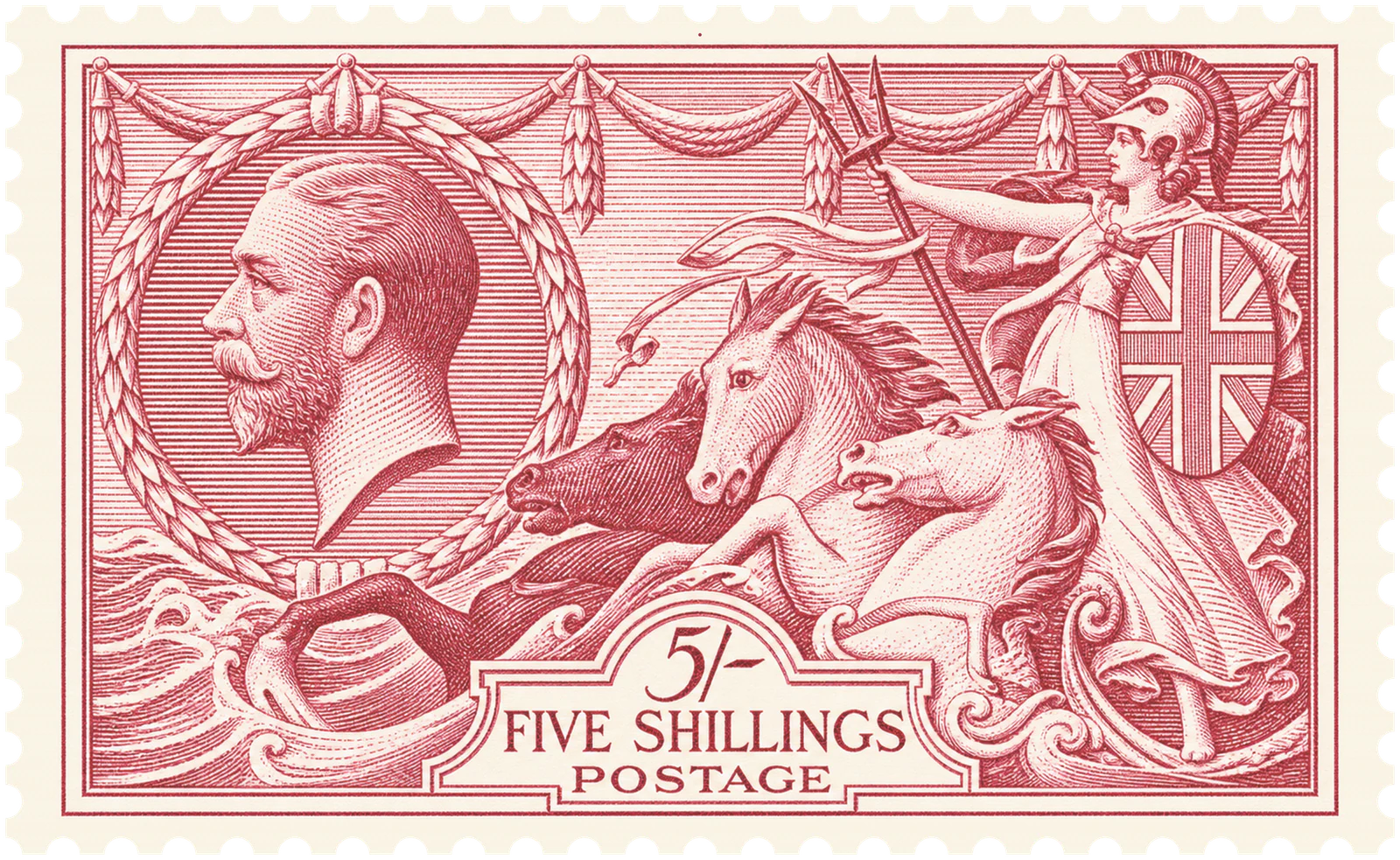
On the stamp you were exploring
George V · 5s rose-red · 1919
Mackennal supplied the principal Seahorse composition used for this 5s rose-red stamp: the King at the left and Britannia’s chariot at sea. This printing belongs to Bradbury Wilkinson & Co..
On the stamp you were exploring
George V · 5s rose-red · 1919
Mackennal supplied the principal Seahorse composition used for this 5s rose-red stamp: the King at the left and Britannia’s chariot at sea. This printing belongs to Bradbury Wilkinson & Co..
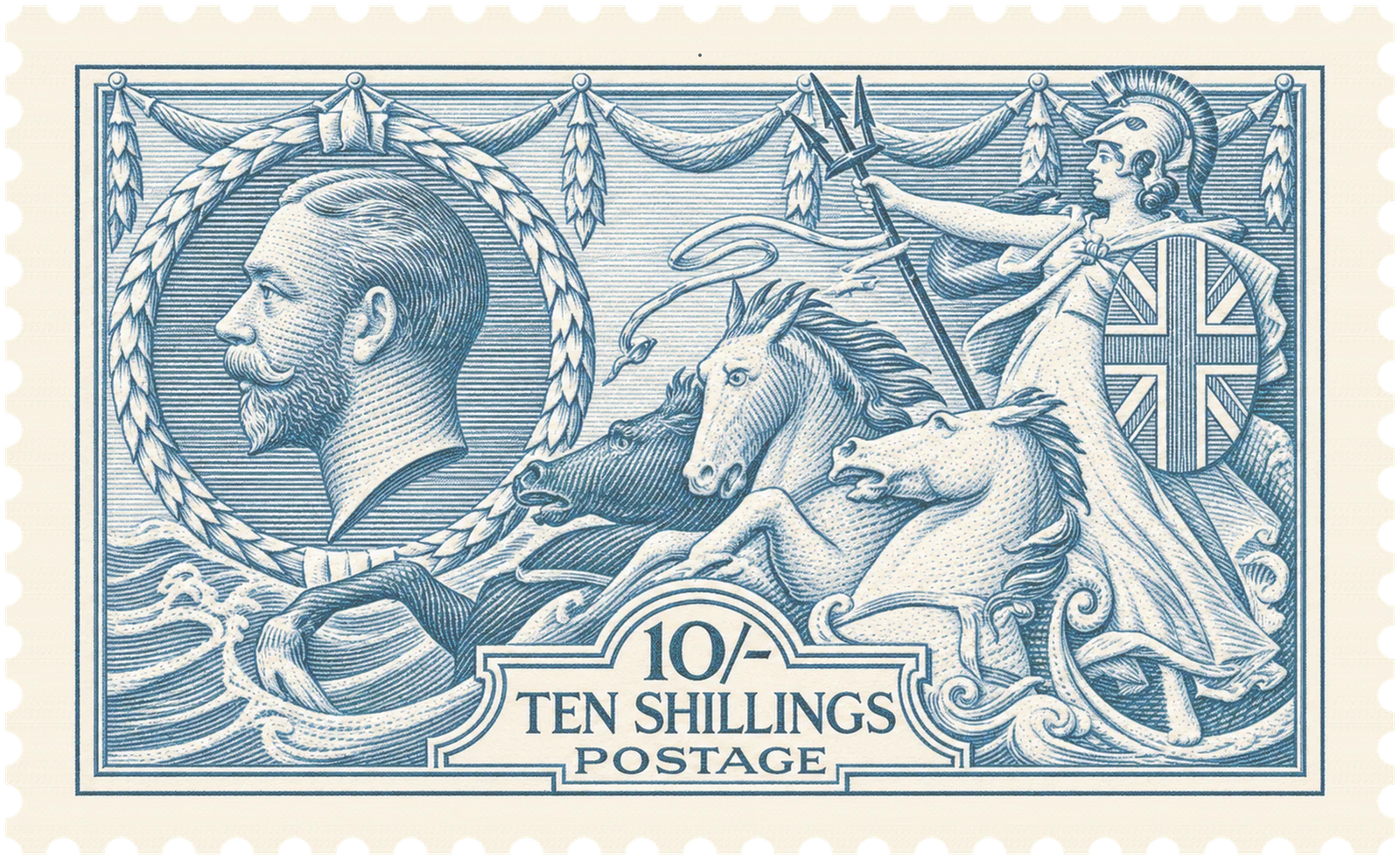
On the stamp you were exploring
George V · 10s dull grey-blue · 1919
Mackennal supplied the principal Seahorse composition used for this 10s dull grey-blue stamp: the King at the left and Britannia’s chariot at sea. This printing belongs to Bradbury Wilkinson & Co..
On the stamp you were exploring
George V · 10s dull grey-blue · 1919
Mackennal supplied the principal Seahorse composition used for this 10s dull grey-blue stamp: the King at the left and Britannia’s chariot at sea. This printing belongs to Bradbury Wilkinson & Co..
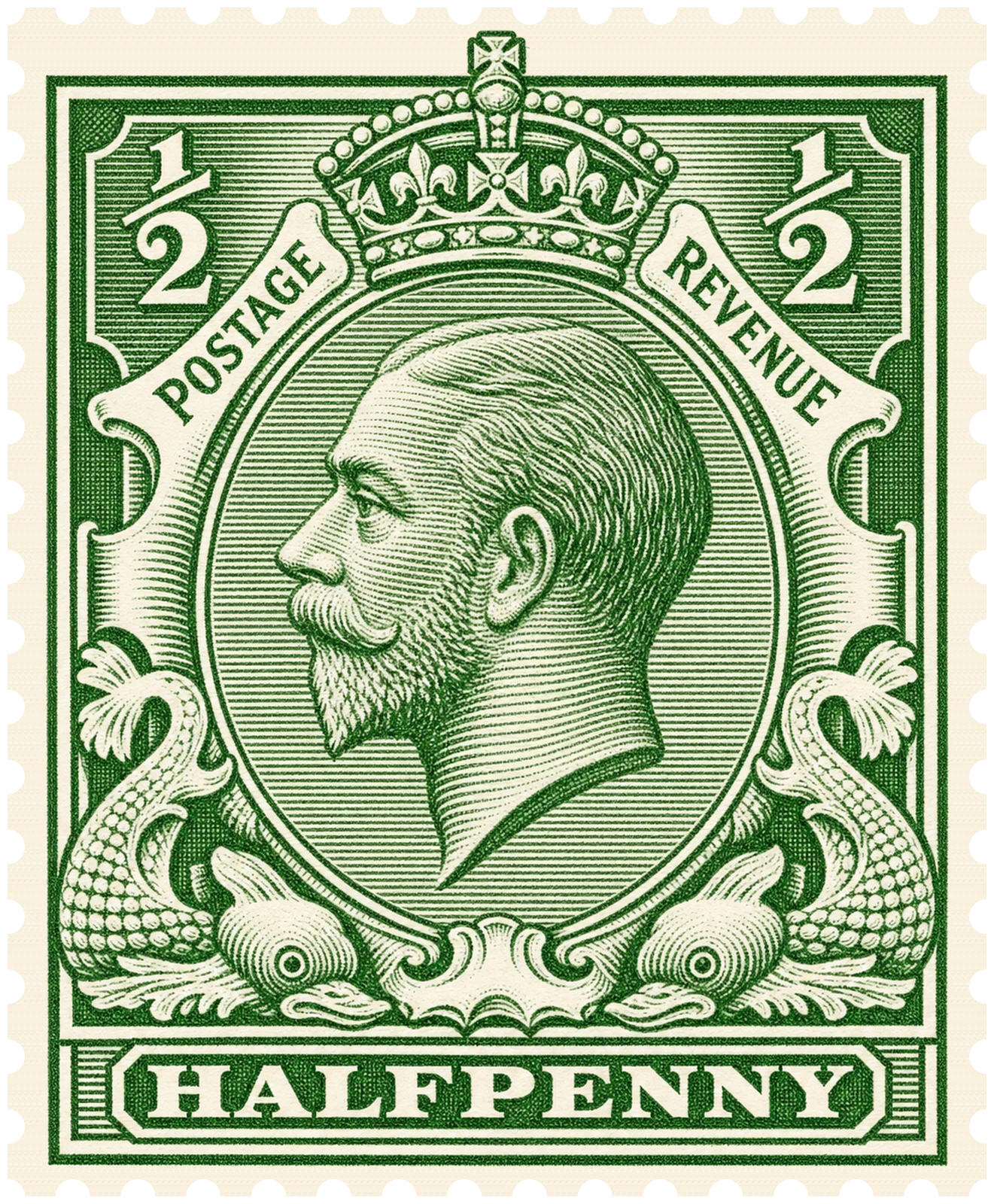
On the stamp you were exploring
George V · ½d green · Introduced 1924–1926
This ½d green stamp continues Mackennal’s royal profile and ornamental frame. His sculptural model was translated into a printable stamp portrait.
On the stamp you were exploring
George V · ½d green · Introduced 1924–1926
This ½d green stamp continues Mackennal’s royal profile and ornamental frame. His sculptural model was translated into a printable stamp portrait.
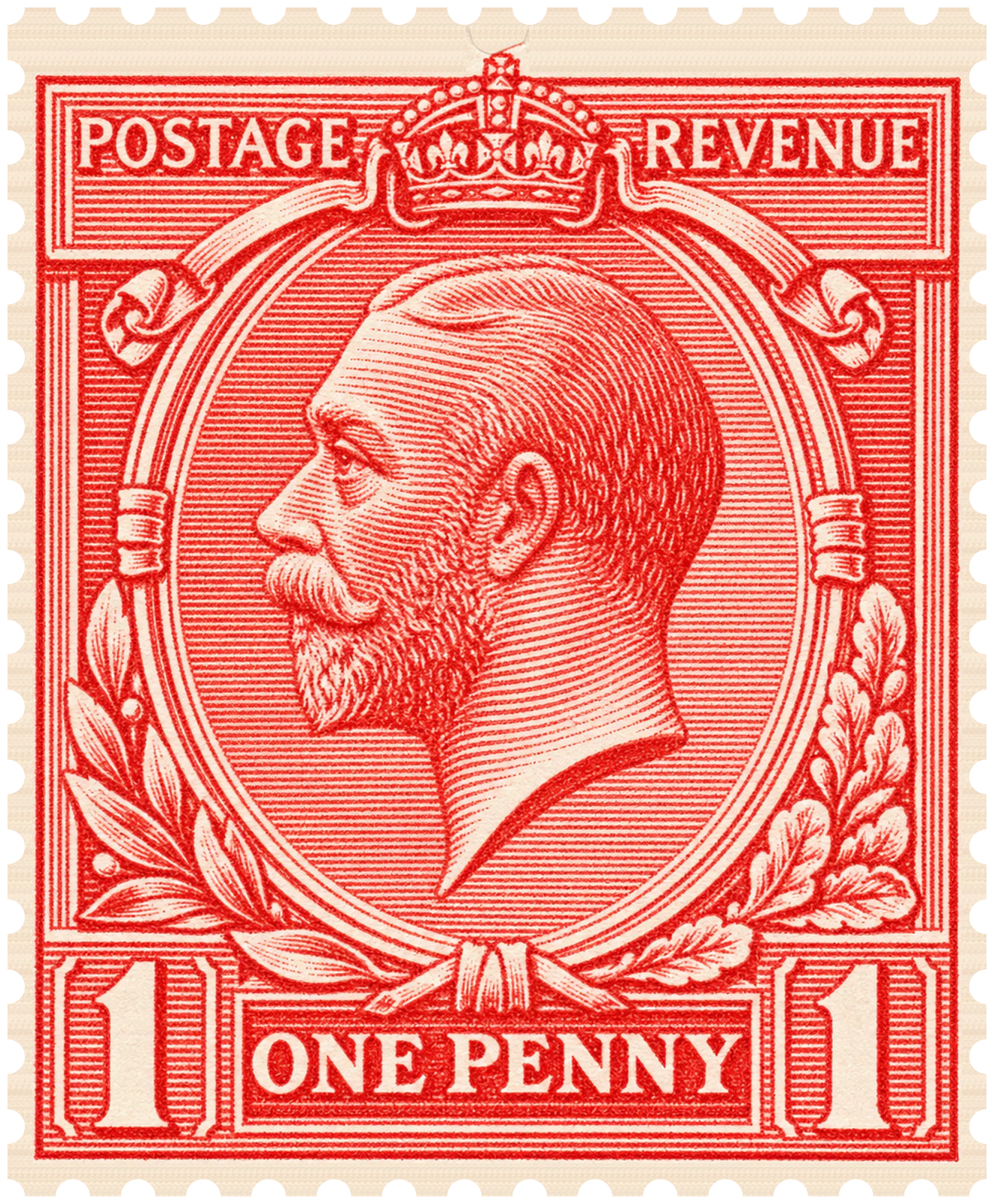
On the stamp you were exploring
George V · 1d scarlet · Introduced 1924–1926
This 1d scarlet stamp continues Mackennal’s royal profile and ornamental frame. His sculptural model was translated into a printable stamp portrait.
On the stamp you were exploring
George V · 1d scarlet · Introduced 1924–1926
This 1d scarlet stamp continues Mackennal’s royal profile and ornamental frame. His sculptural model was translated into a printable stamp portrait.
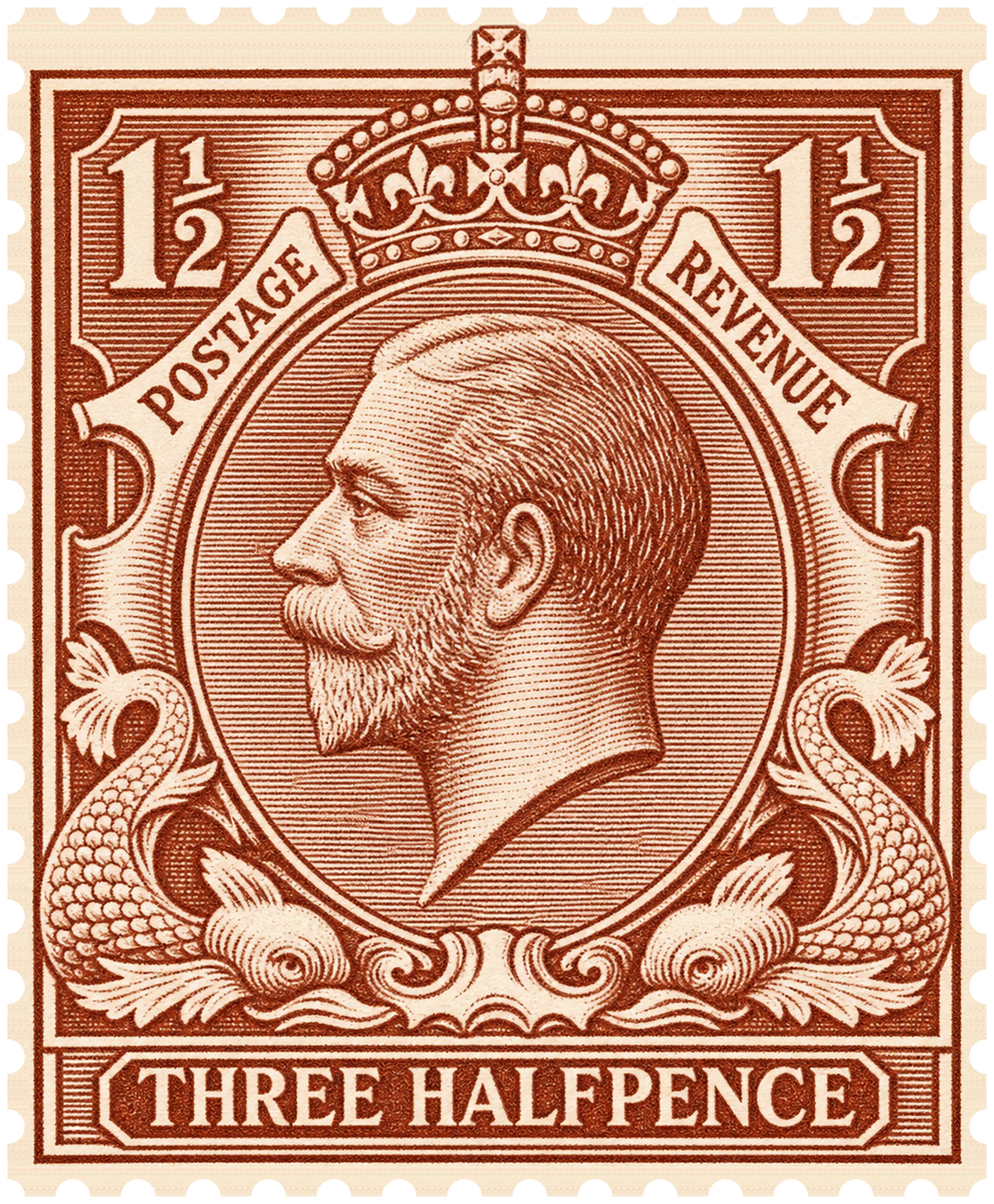
On the stamp you were exploring
George V · 1½d red-brown · Introduced 1924–1926
This 1½d red-brown stamp continues Mackennal’s royal profile and ornamental frame. His sculptural model was translated into a printable stamp portrait.
On the stamp you were exploring
George V · 1½d red-brown · Introduced 1924–1926
This 1½d red-brown stamp continues Mackennal’s royal profile and ornamental frame. His sculptural model was translated into a printable stamp portrait.
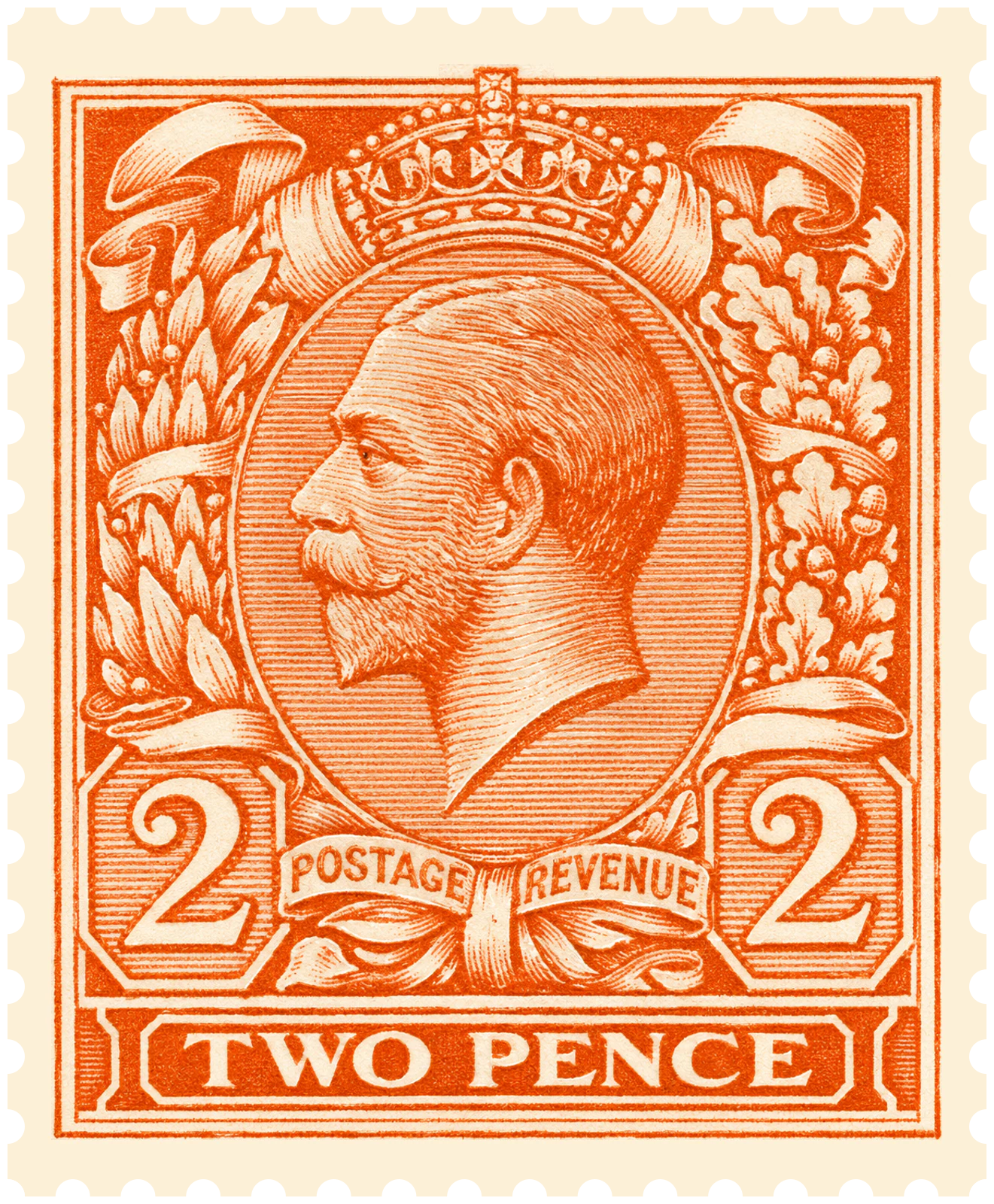
On the stamp you were exploring
George V · 2d orange · Introduced 1924–1926
This 2d orange stamp continues Mackennal’s royal profile and ornamental frame. His sculptural model was translated into a printable stamp portrait.
On the stamp you were exploring
George V · 2d orange · Introduced 1924–1926
This 2d orange stamp continues Mackennal’s royal profile and ornamental frame. His sculptural model was translated into a printable stamp portrait.
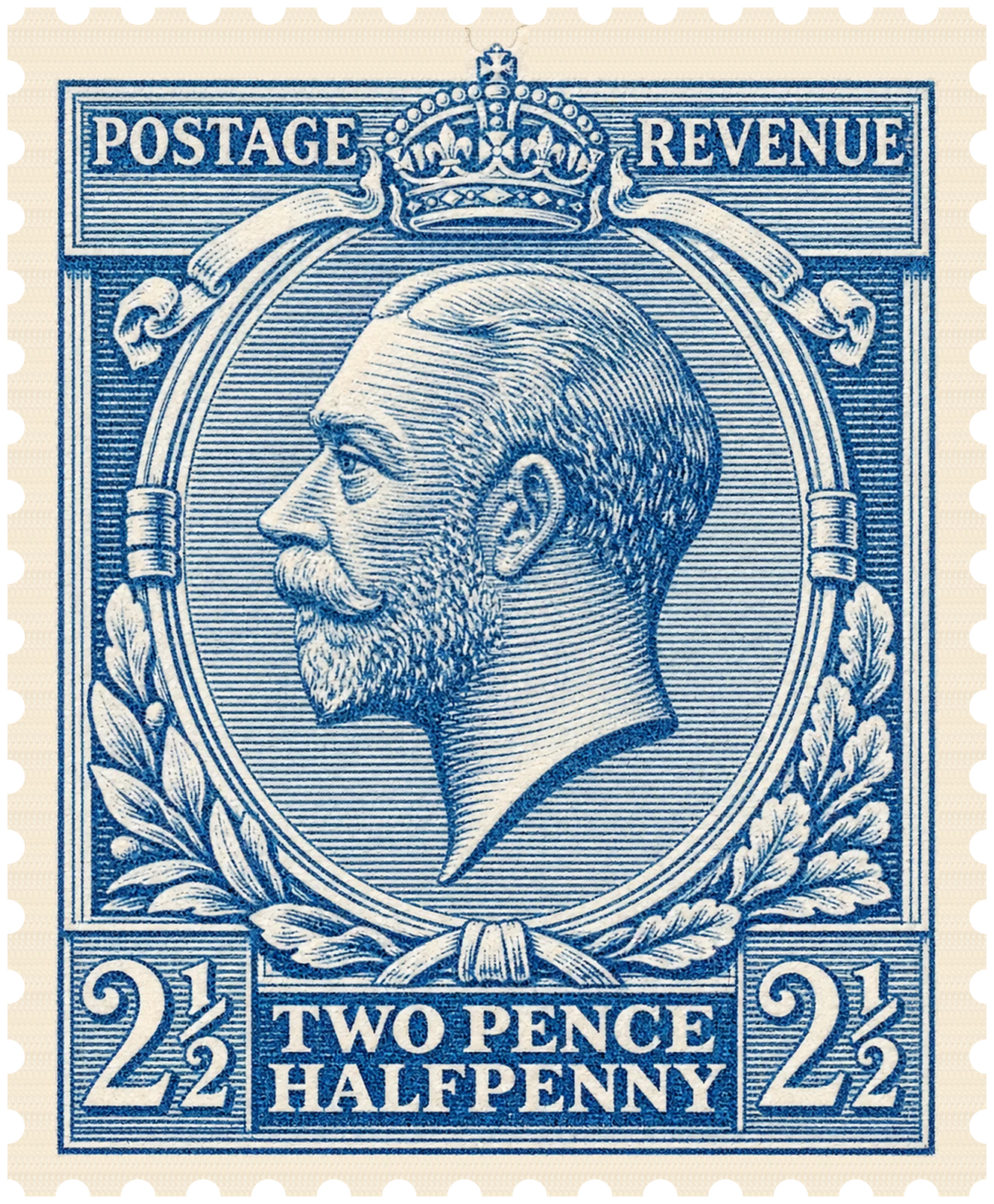
On the stamp you were exploring
George V · 2½d blue · Introduced 1924–1926
This 2½d blue stamp continues Mackennal’s royal profile and ornamental frame. His sculptural model was translated into a printable stamp portrait.
On the stamp you were exploring
George V · 2½d blue · Introduced 1924–1926
This 2½d blue stamp continues Mackennal’s royal profile and ornamental frame. His sculptural model was translated into a printable stamp portrait.
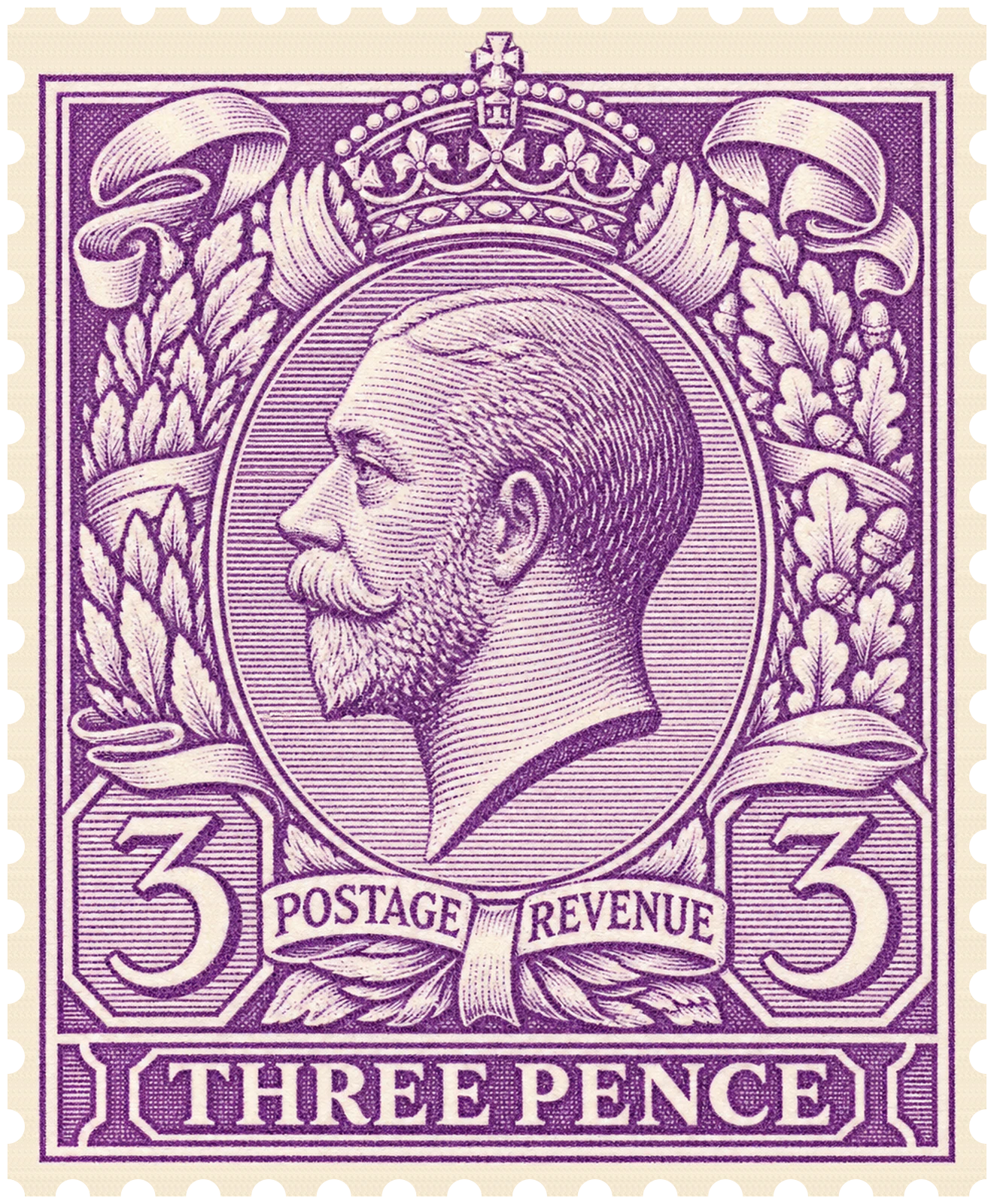
On the stamp you were exploring
George V · 3d violet · Introduced 1924–1926
This 3d violet stamp continues Mackennal’s royal profile and ornamental frame. His sculptural model was translated into a printable stamp portrait.
On the stamp you were exploring
George V · 3d violet · Introduced 1924–1926
This 3d violet stamp continues Mackennal’s royal profile and ornamental frame. His sculptural model was translated into a printable stamp portrait.
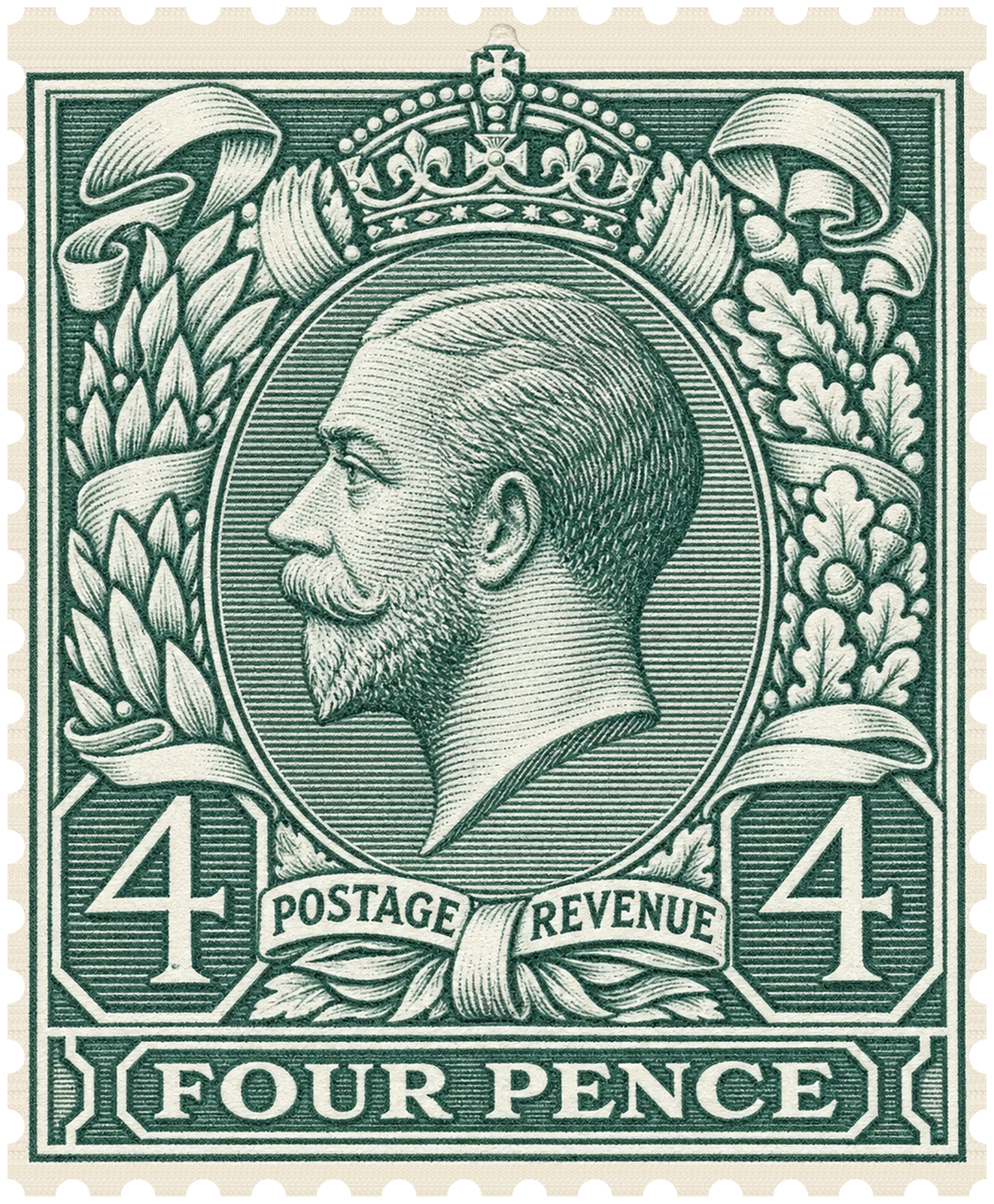
On the stamp you were exploring
George V · 4d grey-green · Introduced 1924–1926
This 4d grey-green stamp continues Mackennal’s royal profile and ornamental frame. His sculptural model was translated into a printable stamp portrait.
On the stamp you were exploring
George V · 4d grey-green · Introduced 1924–1926
This 4d grey-green stamp continues Mackennal’s royal profile and ornamental frame. His sculptural model was translated into a printable stamp portrait.
On the stamp you were exploring
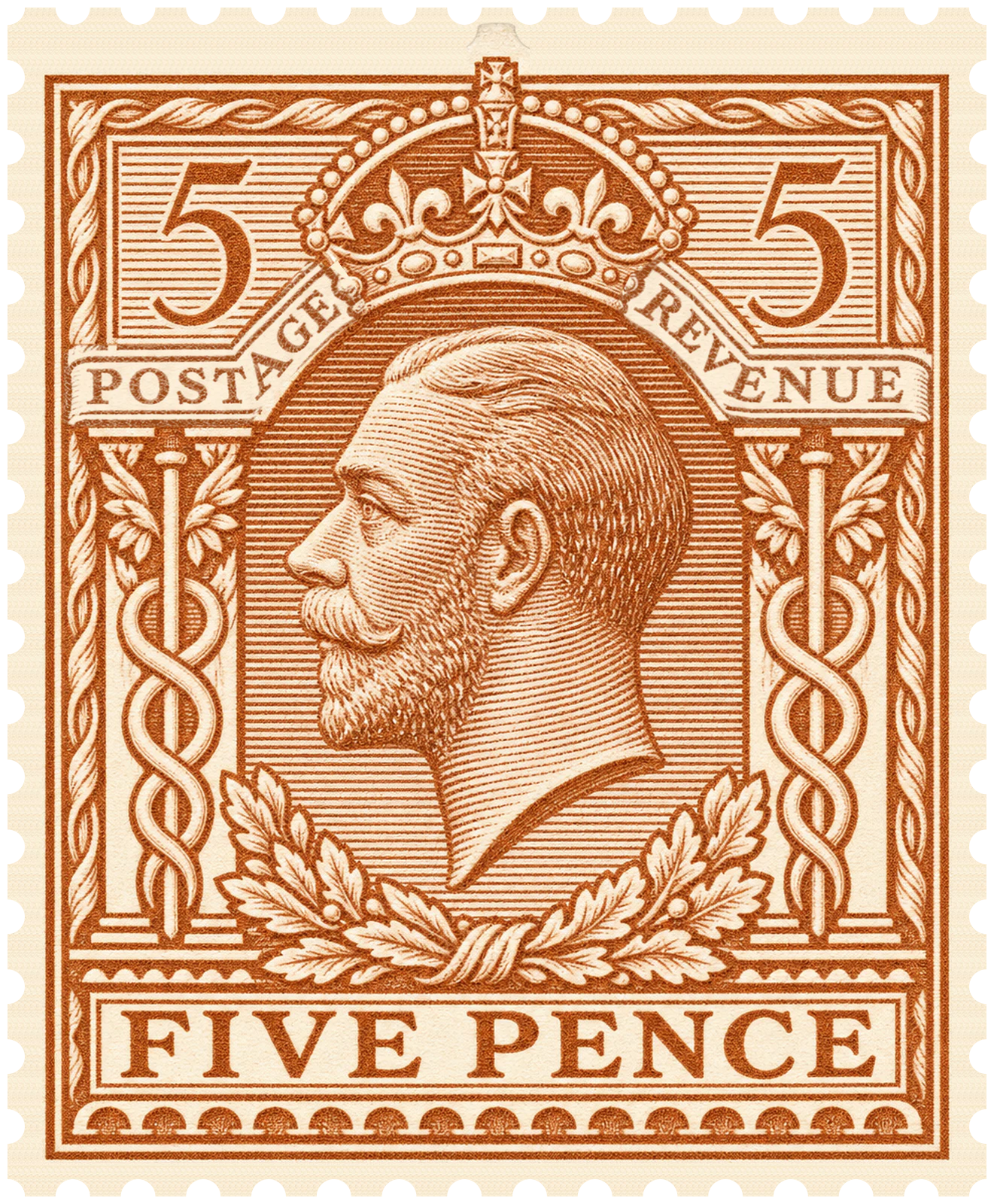
George V · 5d brown · Introduced 1924–1926
This 5d brown stamp continues Mackennal’s royal profile, within a frame derived from George W. Eve’s design. His sculptural model was translated into a printable stamp portrait.
On the stamp you were exploring
George V · 5d brown · Introduced 1924–1926
This 5d brown stamp continues Mackennal’s royal profile, within a frame derived from George W. Eve’s design. His sculptural model was translated into a printable stamp portrait.
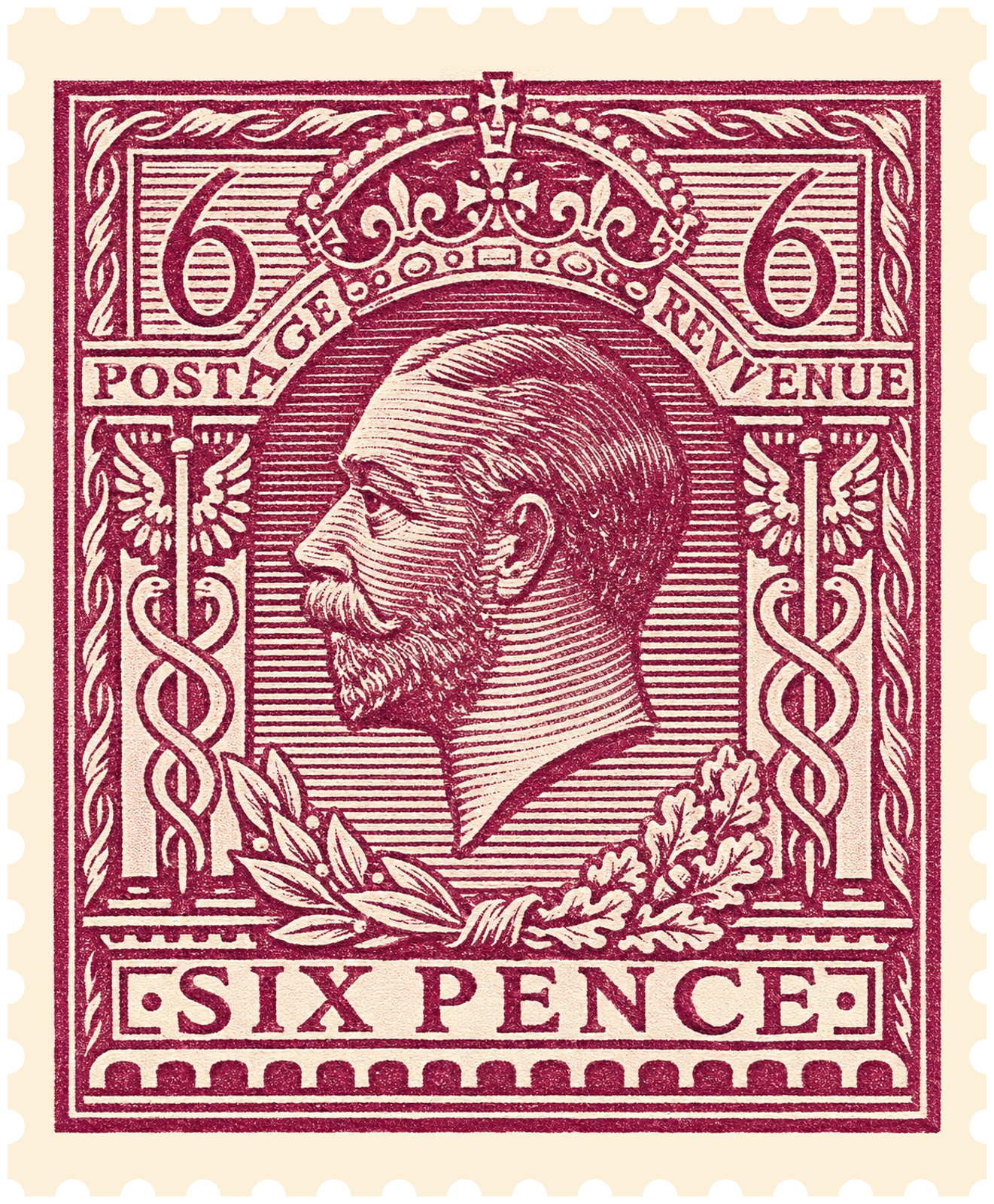
On the stamp you were exploring
George V · 6d reddish-purple · Introduced 1924–1926
This 6d reddish-purple stamp continues Mackennal’s royal profile, within a frame derived from George W. Eve’s design. His sculptural model was translated into a printable stamp portrait.
On the stamp you were exploring
George V · 6d reddish-purple · Introduced 1924–1926
This 6d reddish-purple stamp continues Mackennal’s royal profile, within a frame derived from George W. Eve’s design. His sculptural model was translated into a printable stamp portrait.
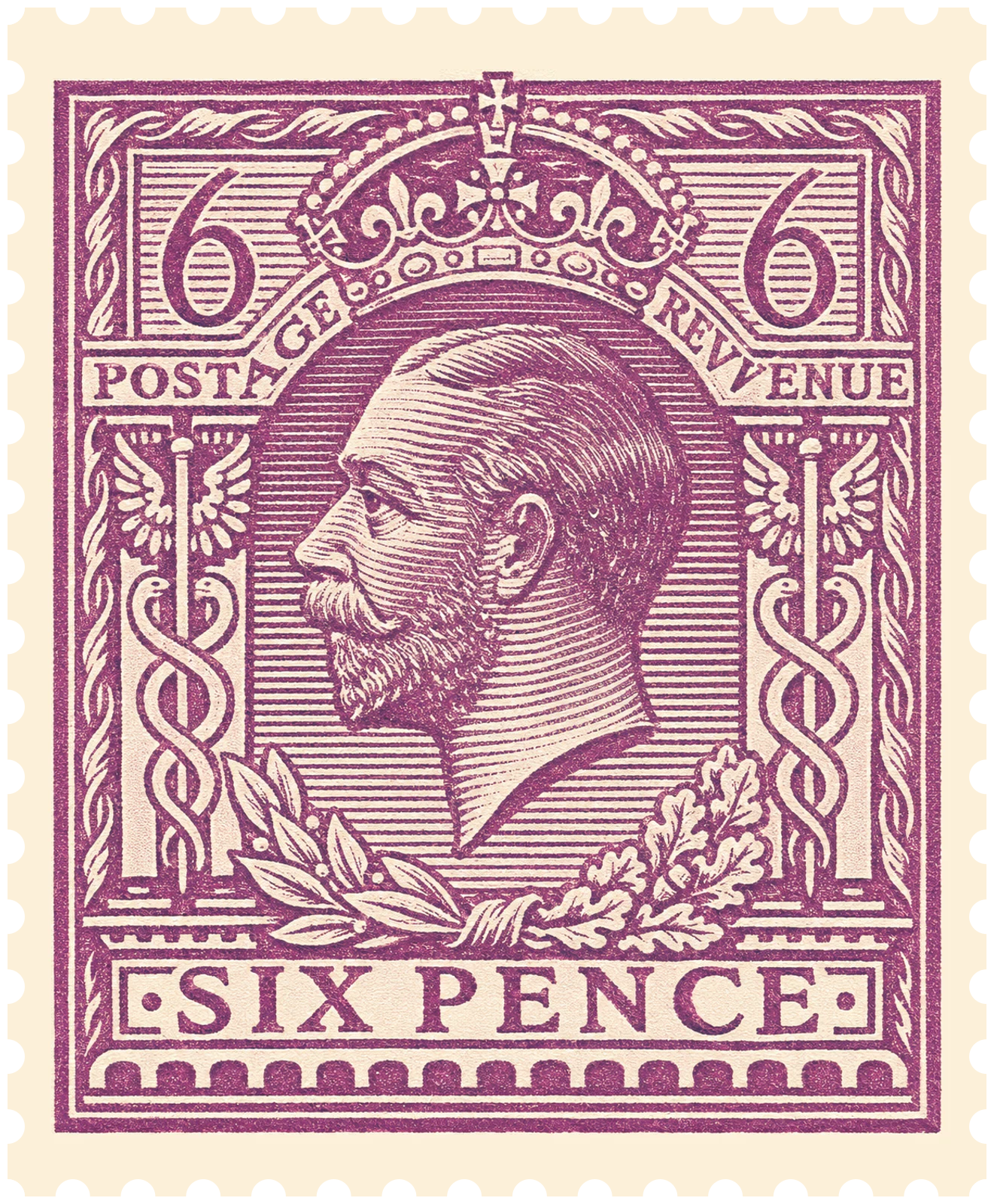
On the stamp you were exploring
George V · 6d purple · Introduced 1924–1926
This 6d purple stamp continues Mackennal’s royal profile, within a frame derived from George W. Eve’s design. His sculptural model was translated into a printable stamp portrait.
On the stamp you were exploring
George V · 6d purple · Introduced 1924–1926
This 6d purple stamp continues Mackennal’s royal profile, within a frame derived from George W. Eve’s design. His sculptural model was translated into a printable stamp portrait.
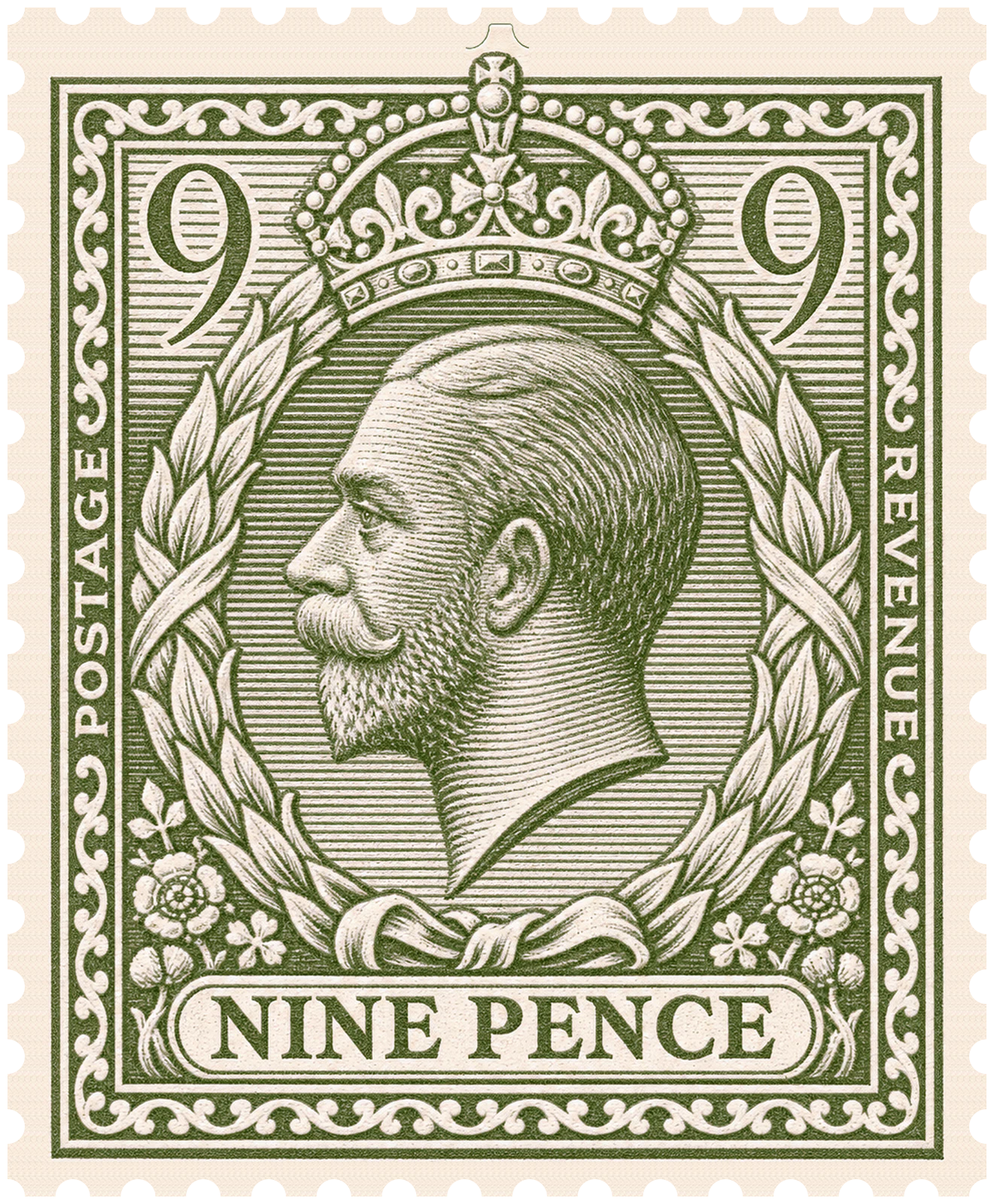
On the stamp you were exploring
George V · 9d olive-green · Introduced 1924–1926
This 9d olive-green stamp continues Mackennal’s royal profile, within a frame derived from George W. Eve’s design. His sculptural model was translated into a printable stamp portrait.
On the stamp you were exploring
George V · 9d olive-green · Introduced 1924–1926
This 9d olive-green stamp continues Mackennal’s royal profile, within a frame derived from George W. Eve’s design. His sculptural model was translated into a printable stamp portrait.
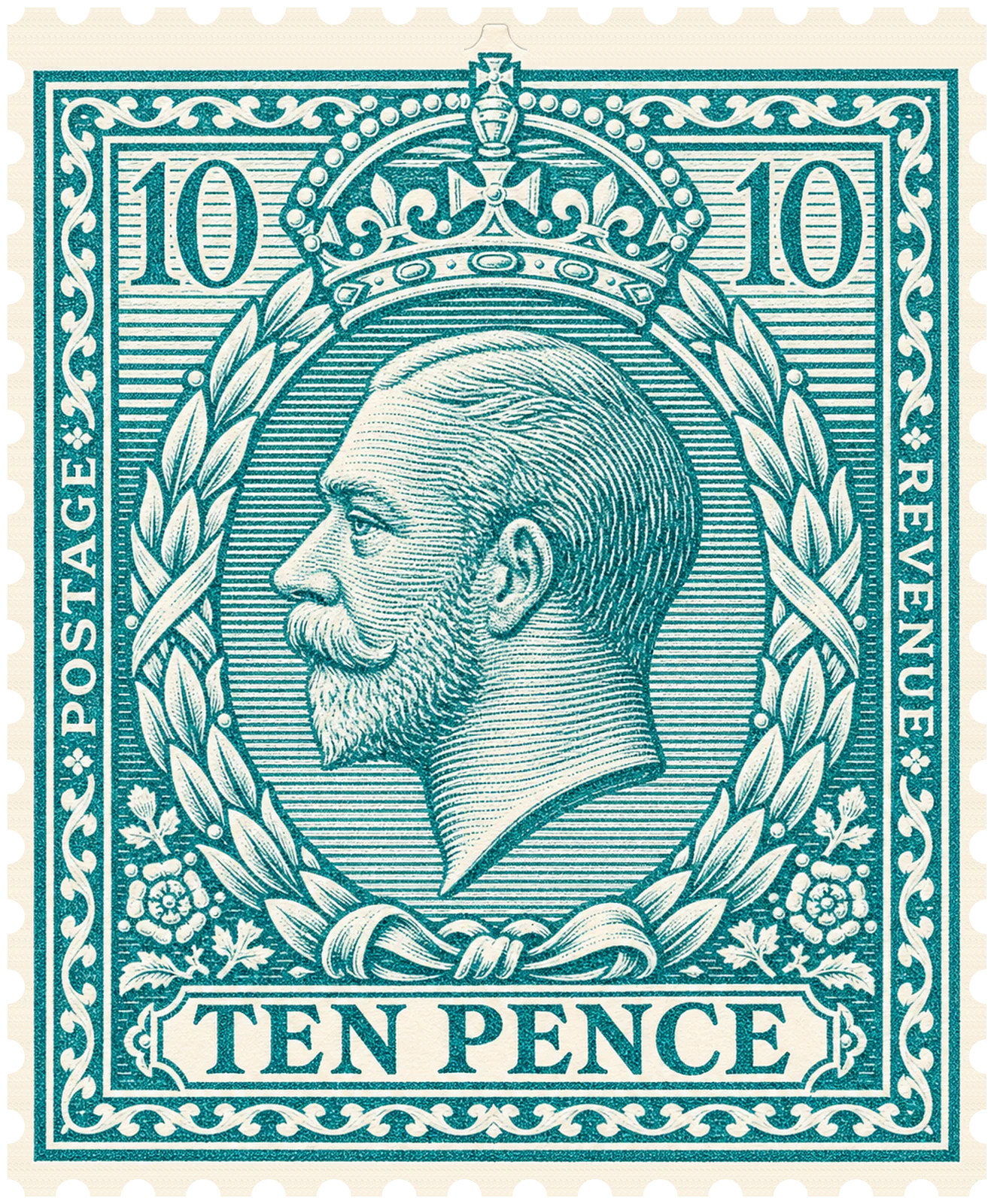
On the stamp you were exploring
George V · 10d turquoise-blue · Introduced 1924–1926
This 10d turquoise-blue stamp continues Mackennal’s royal profile, within a frame derived from George W. Eve’s design. His sculptural model was translated into a printable stamp portrait.
On the stamp you were exploring
George V · 10d turquoise-blue · Introduced 1924–1926
This 10d turquoise-blue stamp continues Mackennal’s royal profile, within a frame derived from George W. Eve’s design. His sculptural model was translated into a printable stamp portrait.
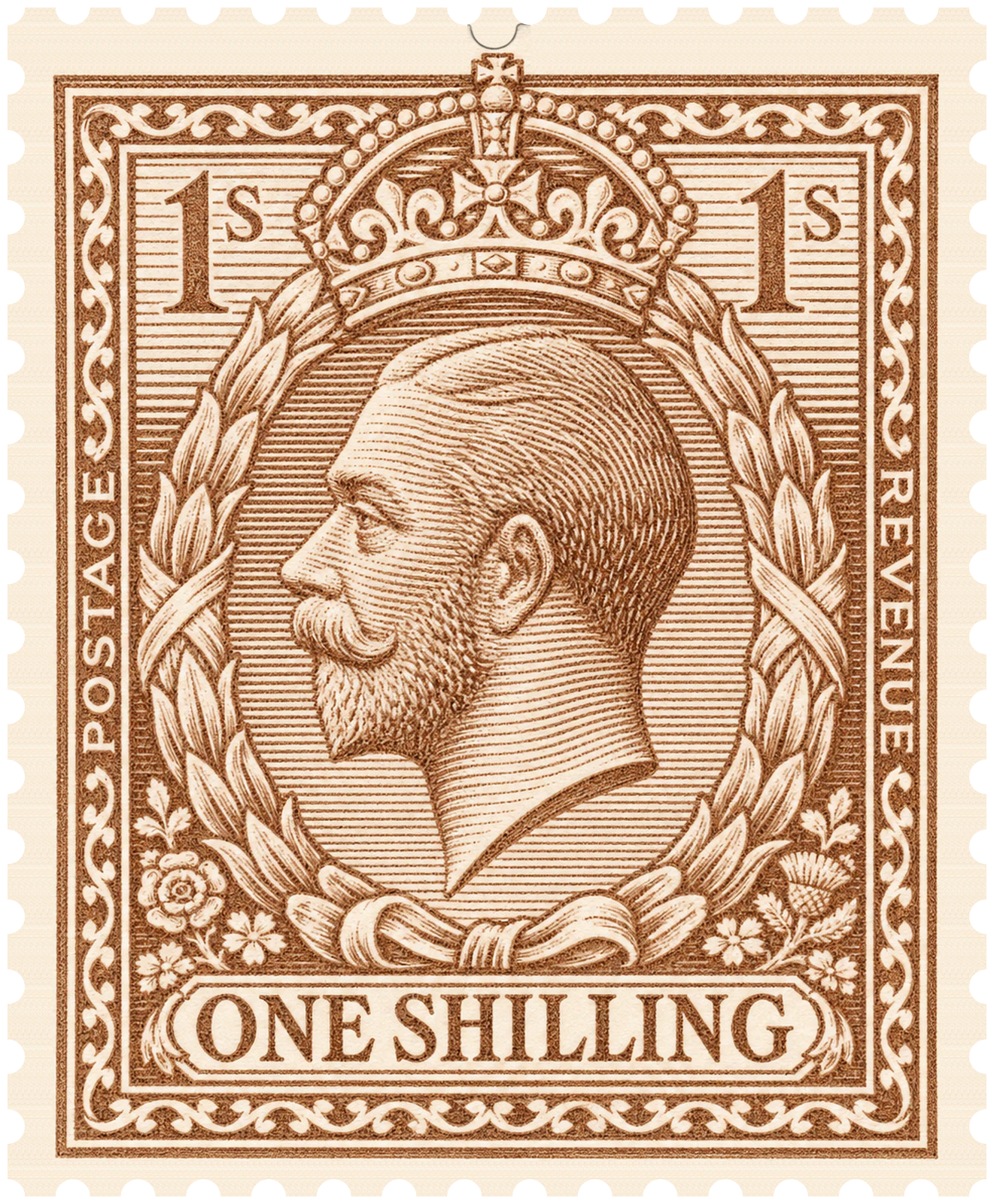
On the stamp you were exploring
George V · 1s bistre-brown · Introduced 1924–1926
This 1s bistre-brown stamp continues Mackennal’s royal profile, within a frame derived from George W. Eve’s design. His sculptural model was translated into a printable stamp portrait.
On the stamp you were exploring
George V · 1s bistre-brown · Introduced 1924–1926
This 1s bistre-brown stamp continues Mackennal’s royal profile, within a frame derived from George W. Eve’s design. His sculptural model was translated into a printable stamp portrait.
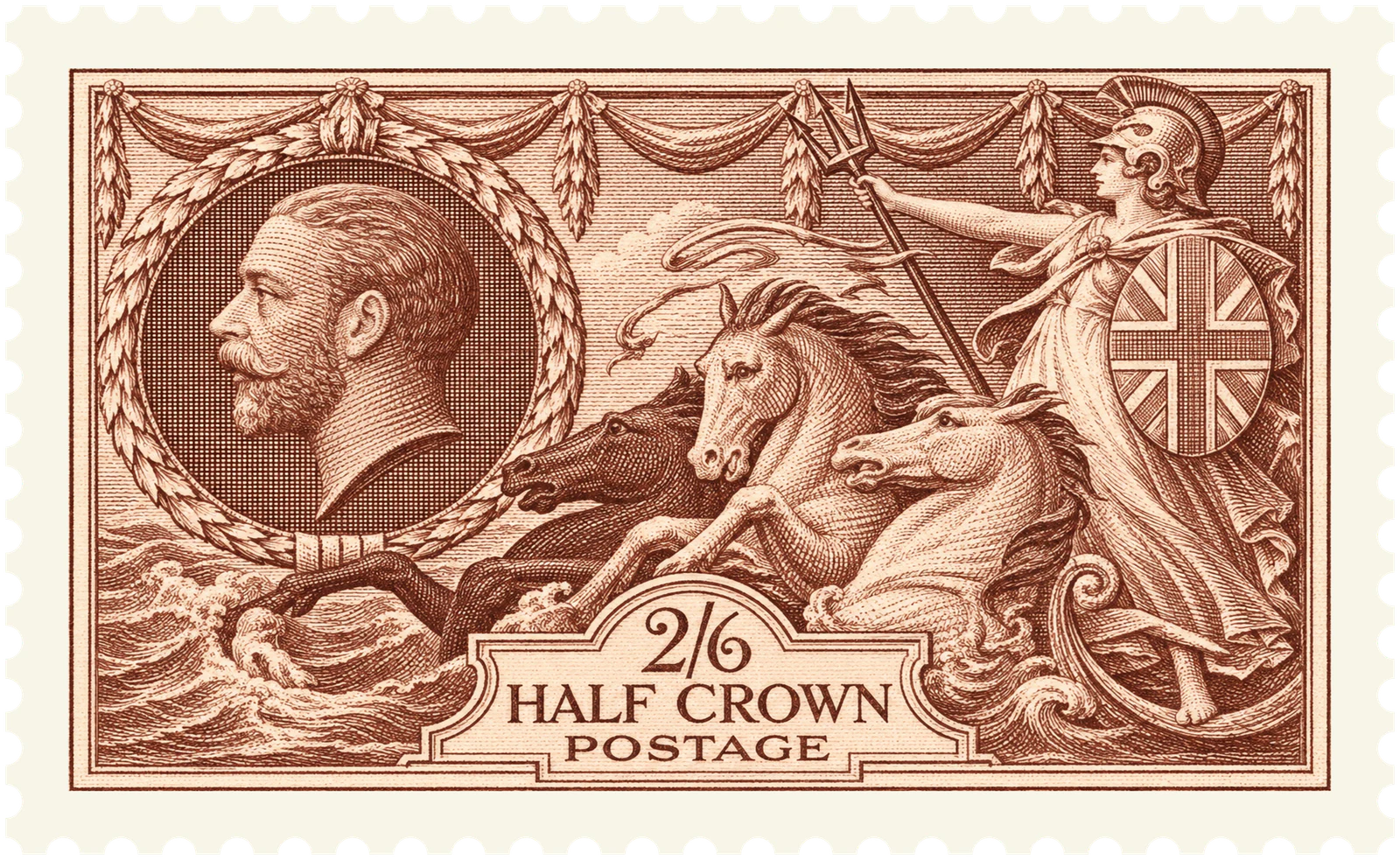
On the stamp you were exploring
George V · 2s 6d reddish-brown · 1934
Mackennal supplied the principal Seahorse composition used for this 2s 6d reddish-brown stamp: the King at the left and Britannia’s chariot at sea. This printing belongs to Waterlow & Sons.
On the stamp you were exploring
George V · 2s 6d reddish-brown · 1934
Mackennal supplied the principal Seahorse composition used for this 2s 6d reddish-brown stamp: the King at the left and Britannia’s chariot at sea. This printing belongs to Waterlow & Sons.
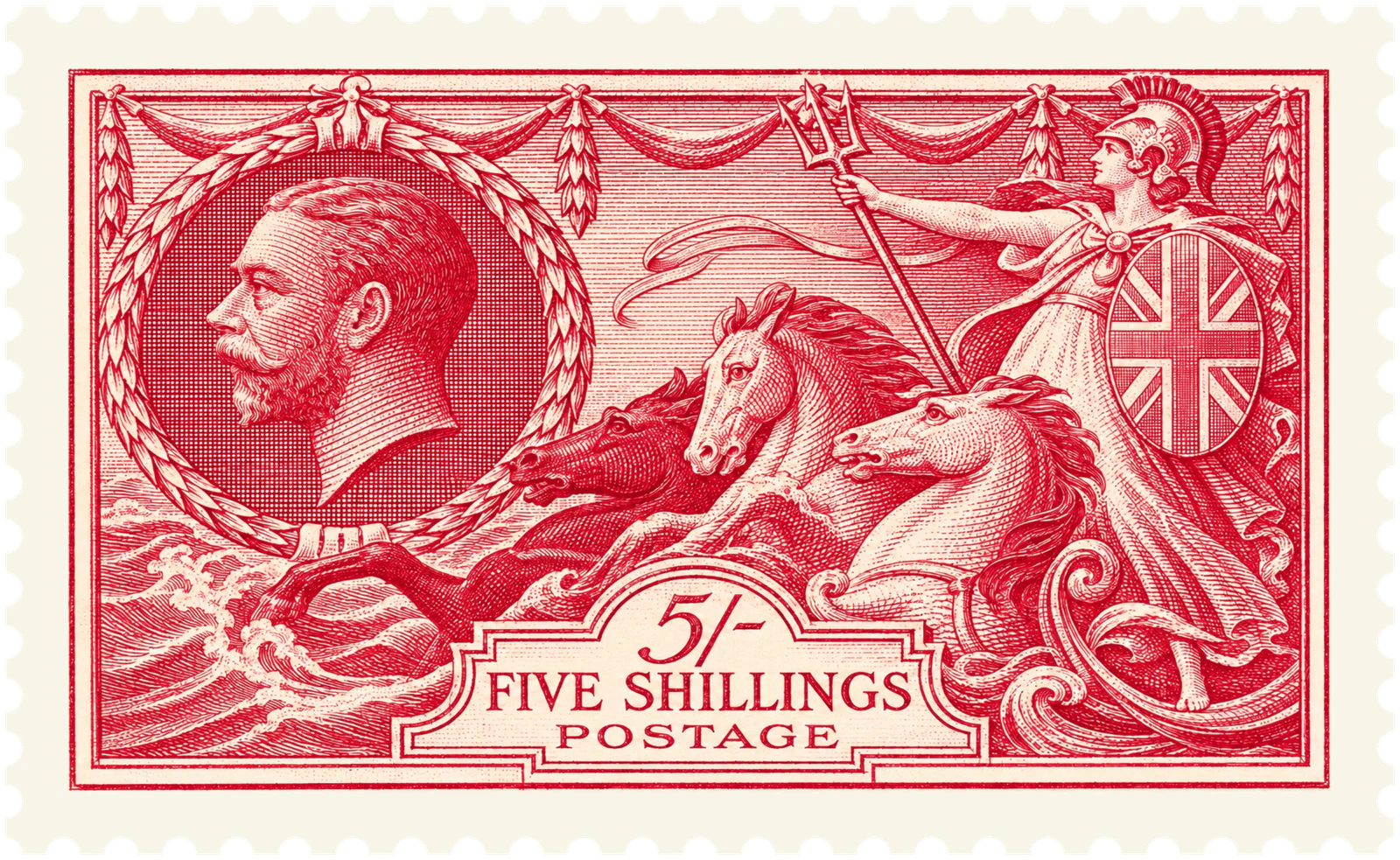
On the stamp you were exploring
George V · 5s bright rose-red · 1934
Mackennal supplied the principal Seahorse composition used for this 5s bright rose-red stamp: the King at the left and Britannia’s chariot at sea. This printing belongs to Waterlow & Sons.
On the stamp you were exploring
George V · 5s bright rose-red · 1934
Mackennal supplied the principal Seahorse composition used for this 5s bright rose-red stamp: the King at the left and Britannia’s chariot at sea. This printing belongs to Waterlow & Sons.
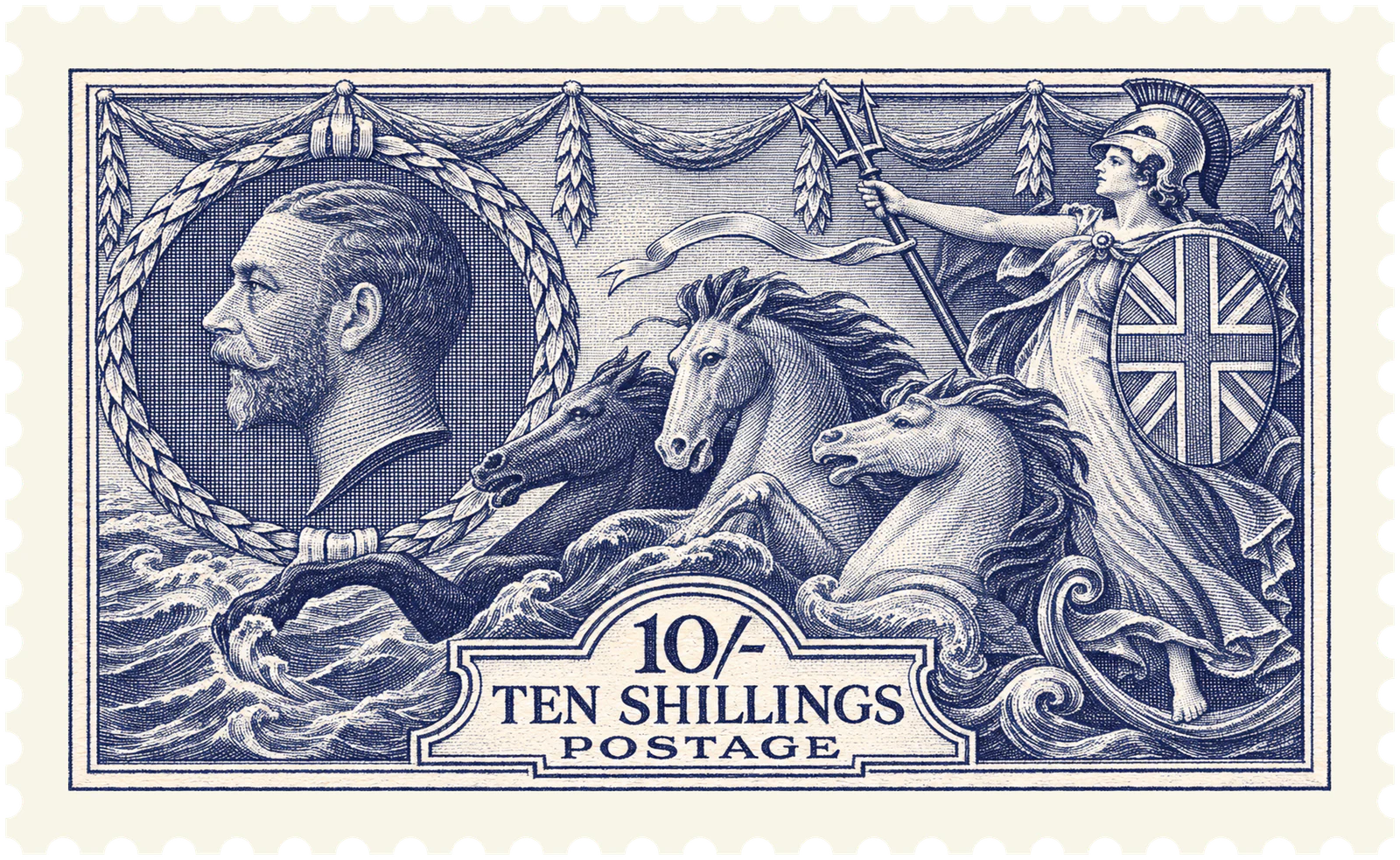
On the stamp you were exploring
George V · 10s indigo · 1934
Mackennal supplied the principal Seahorse composition used for this 10s indigo stamp: the King at the left and Britannia’s chariot at sea. This printing belongs to Waterlow & Sons.
On the stamp you were exploring
George V · 10s indigo · 1934
Mackennal supplied the principal Seahorse composition used for this 10s indigo stamp: the King at the left and Britannia’s chariot at sea. This printing belongs to Waterlow & Sons.
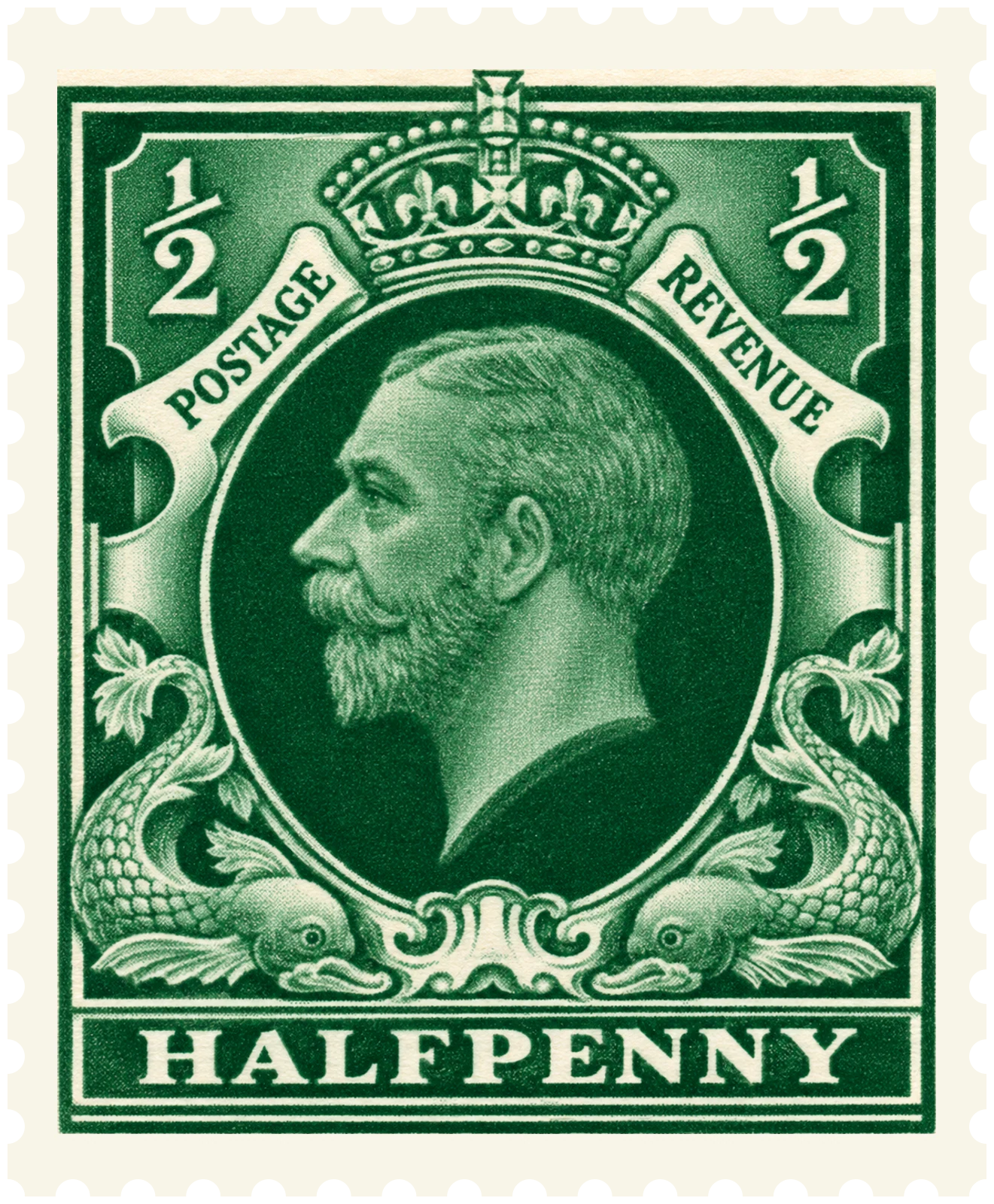
On the stamp you were exploring
George V · ½d green · 1935 · Small format
This ½d green stamp continues Mackennal’s royal profile and ornamental frame. Harrison & Sons adapted the established design for photogravure; this was not a new portrait commission.
On the stamp you were exploring
George V · ½d green · 1935 · Small format
This ½d green stamp continues Mackennal’s royal profile and ornamental frame. Harrison & Sons adapted the established design for photogravure; this was not a new portrait commission.
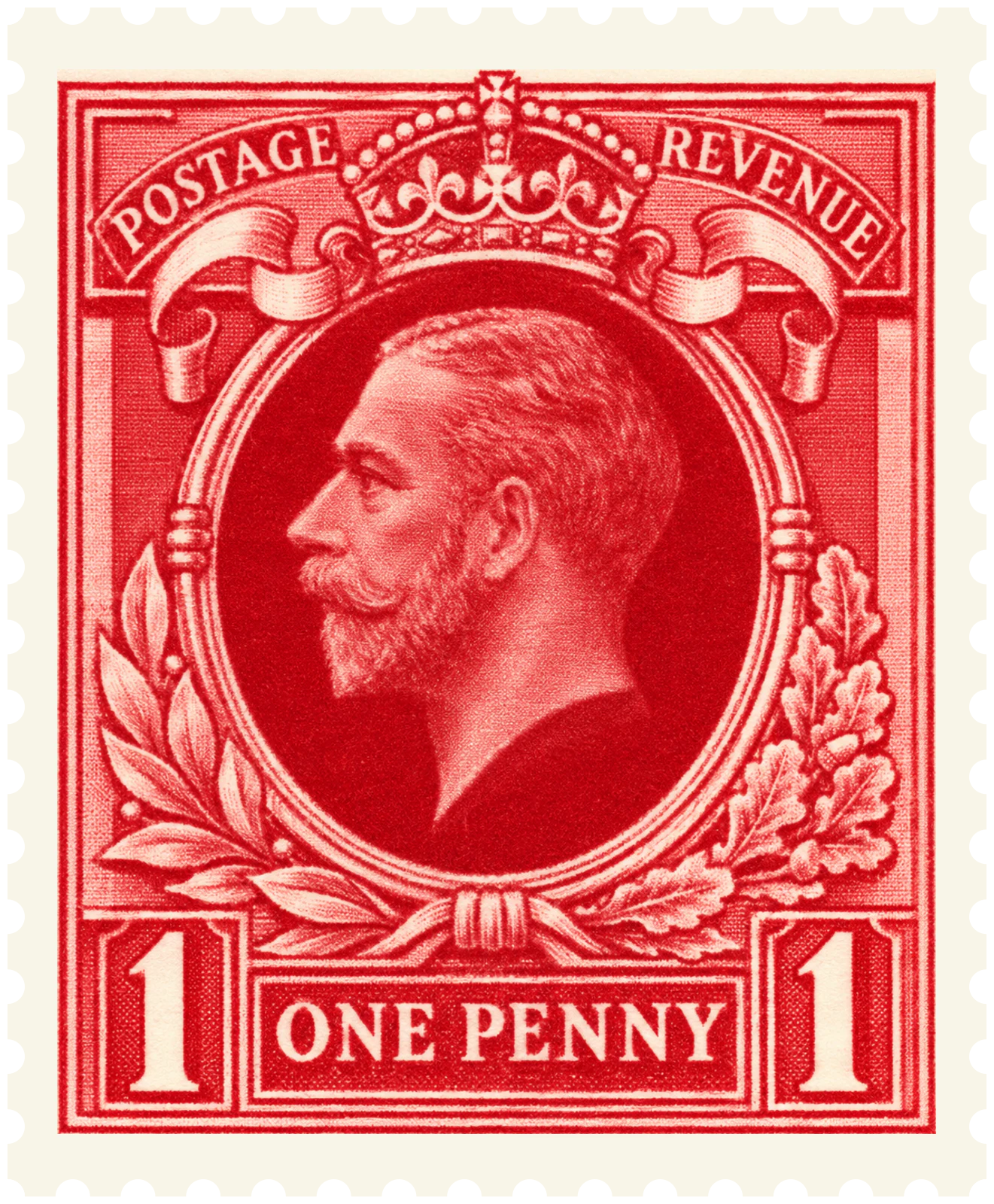
On the stamp you were exploring
George V · 1d scarlet · 1935 · Small format
This 1d scarlet stamp continues Mackennal’s royal profile and ornamental frame. Harrison & Sons adapted the established design for photogravure; this was not a new portrait commission.
On the stamp you were exploring
George V · 1d scarlet · 1935 · Small format
This 1d scarlet stamp continues Mackennal’s royal profile and ornamental frame. Harrison & Sons adapted the established design for photogravure; this was not a new portrait commission.
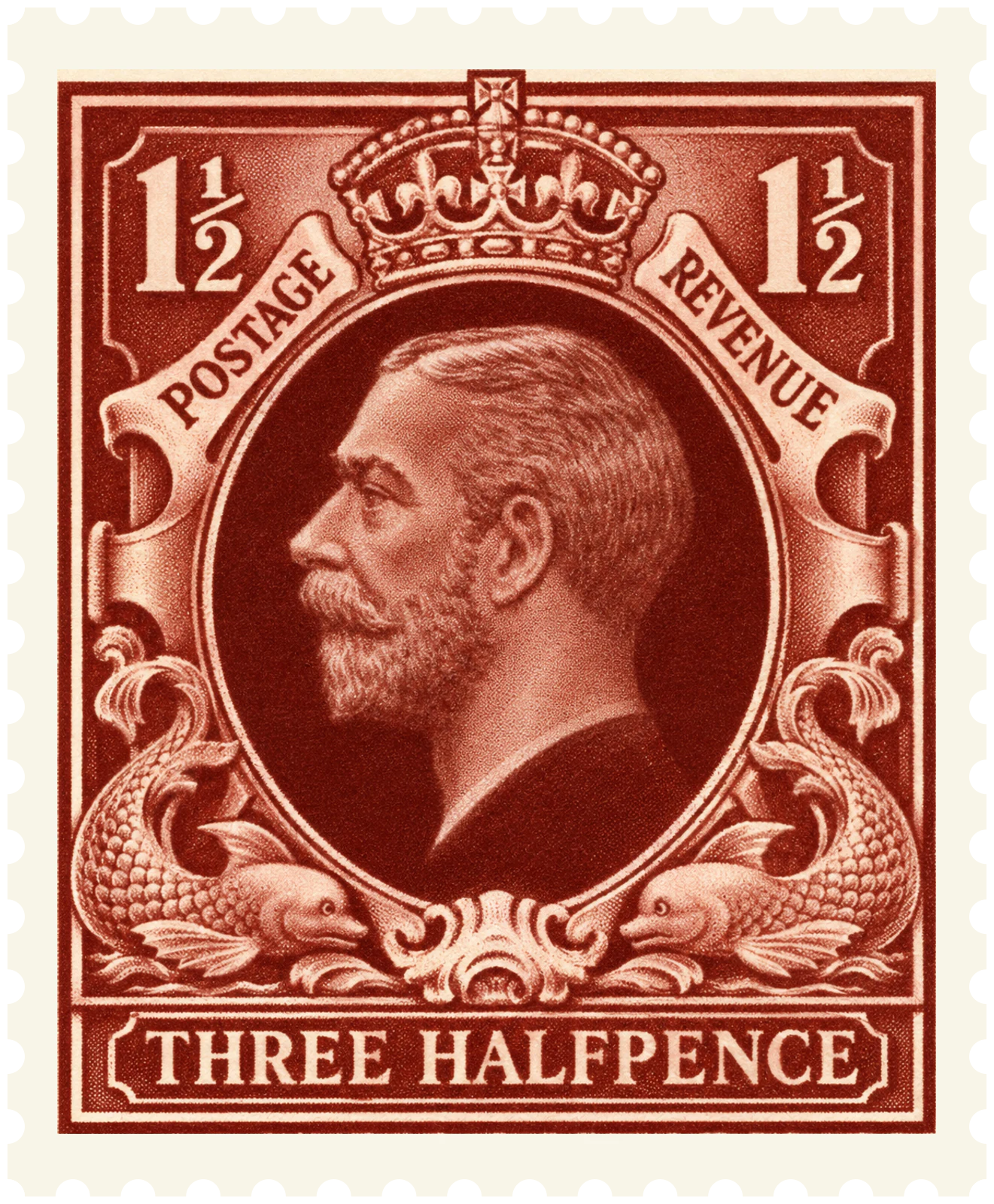
On the stamp you were exploring
George V · 1½d red-brown · 1935 · Small format
This 1½d red-brown stamp continues Mackennal’s royal profile and ornamental frame. Harrison & Sons adapted the established design for photogravure; this was not a new portrait commission.
On the stamp you were exploring
George V · 1½d red-brown · 1935 · Small format
This 1½d red-brown stamp continues Mackennal’s royal profile and ornamental frame. Harrison & Sons adapted the established design for photogravure; this was not a new portrait commission.
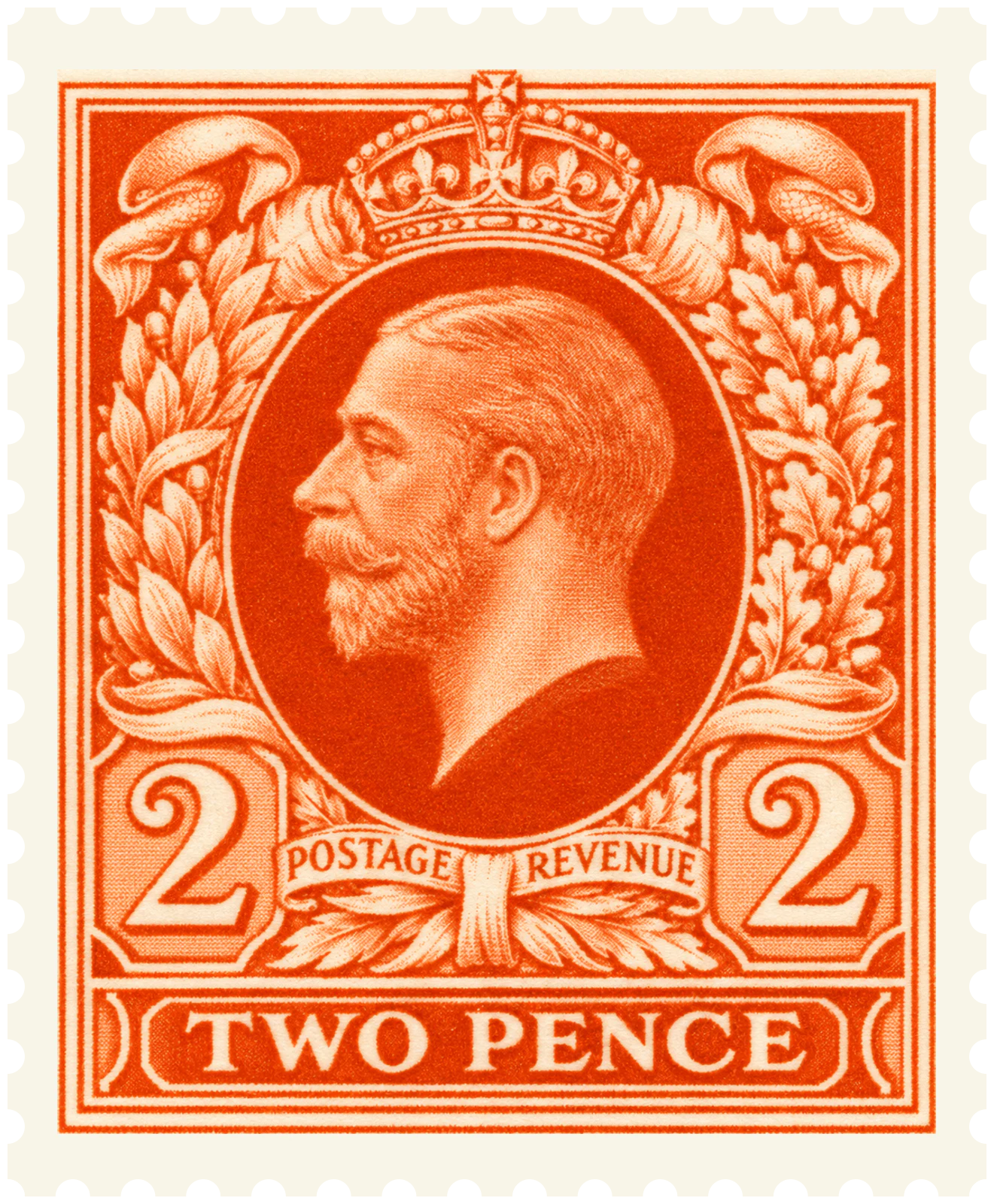
On the stamp you were exploring
George V · 2d orange · 1935 · Small format
This 2d orange stamp continues Mackennal’s royal profile and ornamental frame. Harrison & Sons adapted the established design for photogravure; this was not a new portrait commission.
On the stamp you were exploring
George V · 2d orange · 1935 · Small format
This 2d orange stamp continues Mackennal’s royal profile and ornamental frame. Harrison & Sons adapted the established design for photogravure; this was not a new portrait commission.
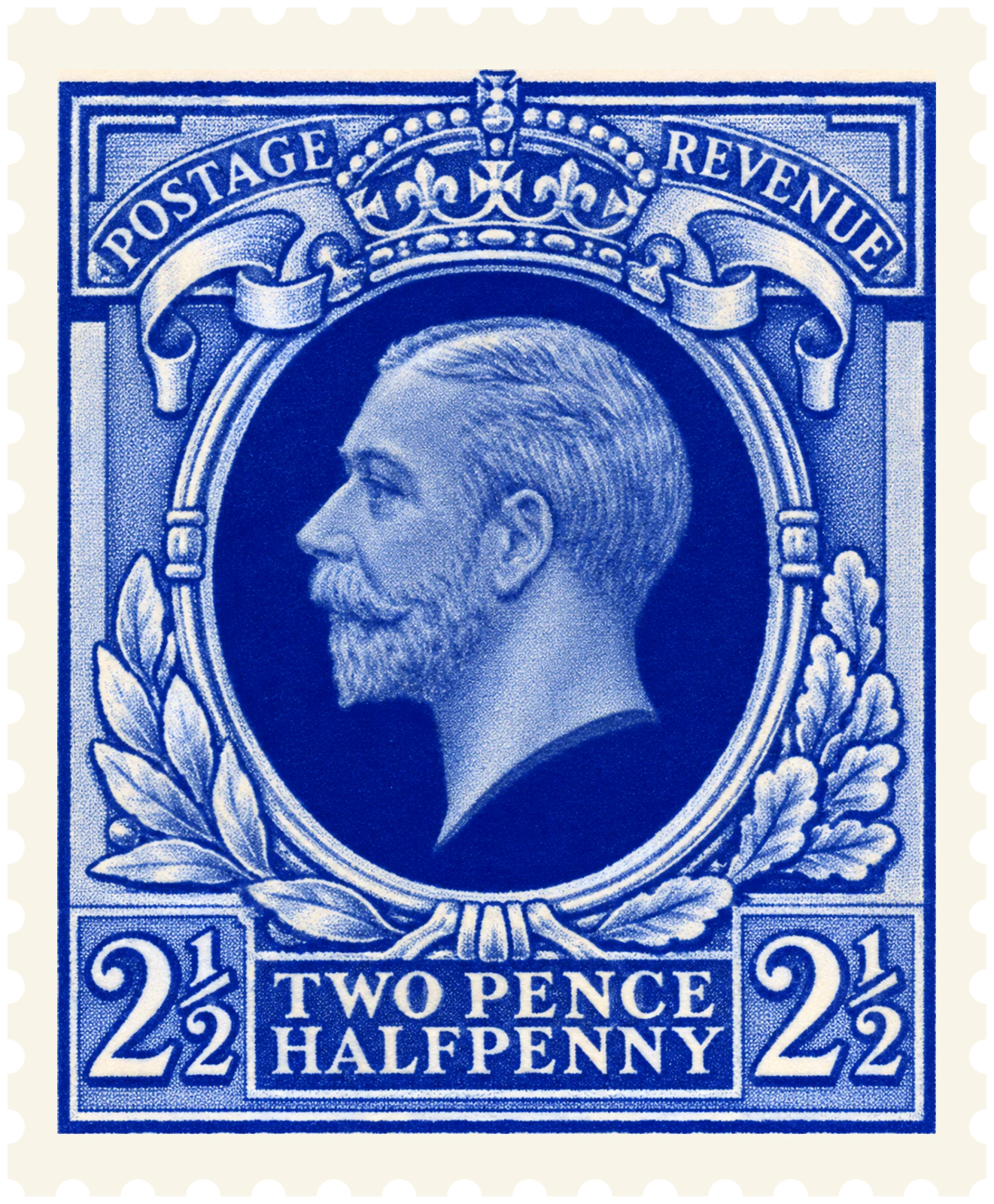
On the stamp you were exploring
George V · 2½d ultramarine · 1935 · Small format
This 2½d ultramarine stamp continues Mackennal’s royal profile and ornamental frame. Harrison & Sons adapted the established design for photogravure; this was not a new portrait commission.
On the stamp you were exploring
George V · 2½d ultramarine · 1935 · Small format
This 2½d ultramarine stamp continues Mackennal’s royal profile and ornamental frame. Harrison & Sons adapted the established design for photogravure; this was not a new portrait commission.
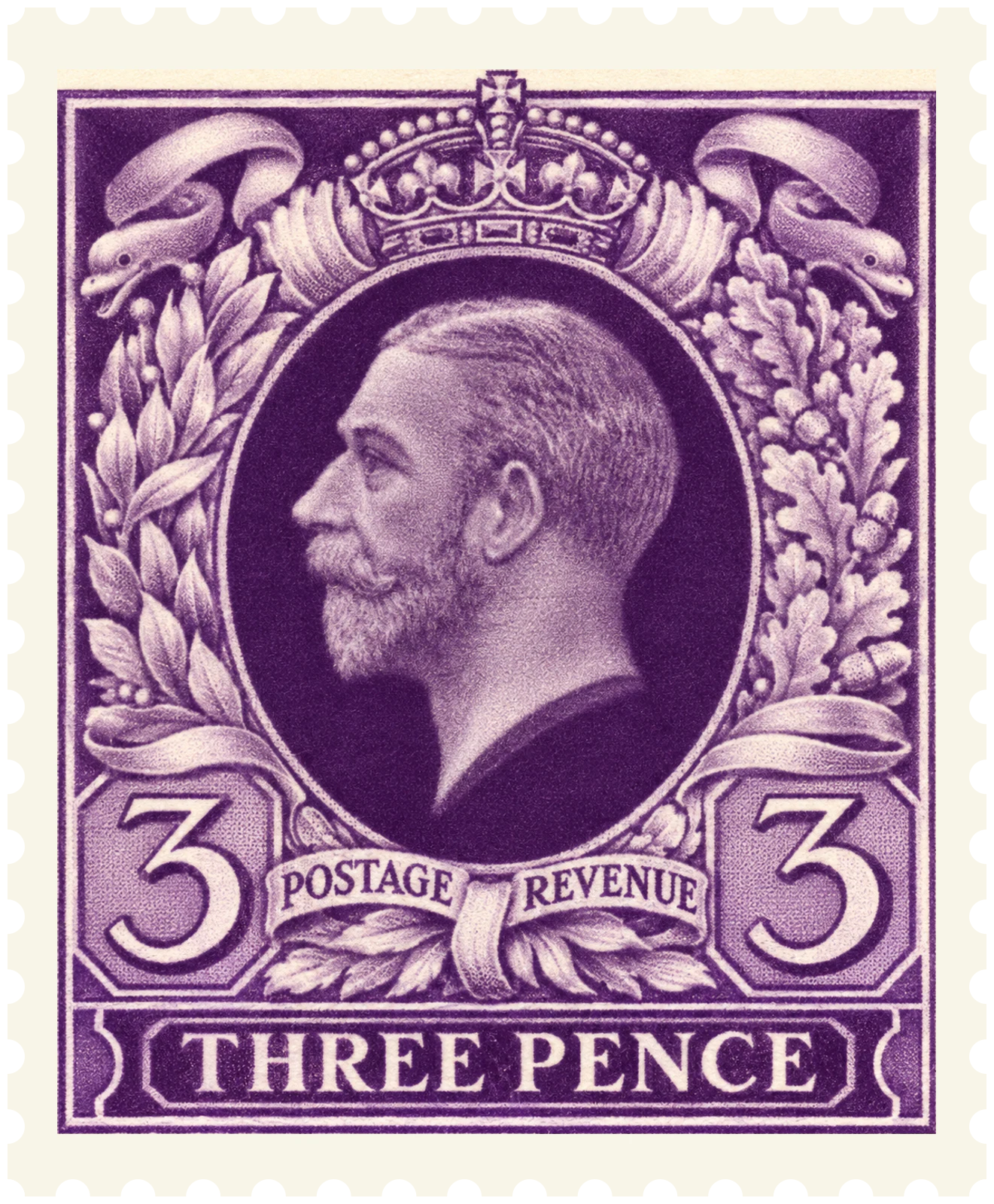
On the stamp you were exploring
George V · 3d violet · 1935 · Small format
This 3d violet stamp continues Mackennal’s royal profile and ornamental frame. Harrison & Sons adapted the established design for photogravure; this was not a new portrait commission.
On the stamp you were exploring
George V · 3d violet · 1935 · Small format
This 3d violet stamp continues Mackennal’s royal profile and ornamental frame. Harrison & Sons adapted the established design for photogravure; this was not a new portrait commission.
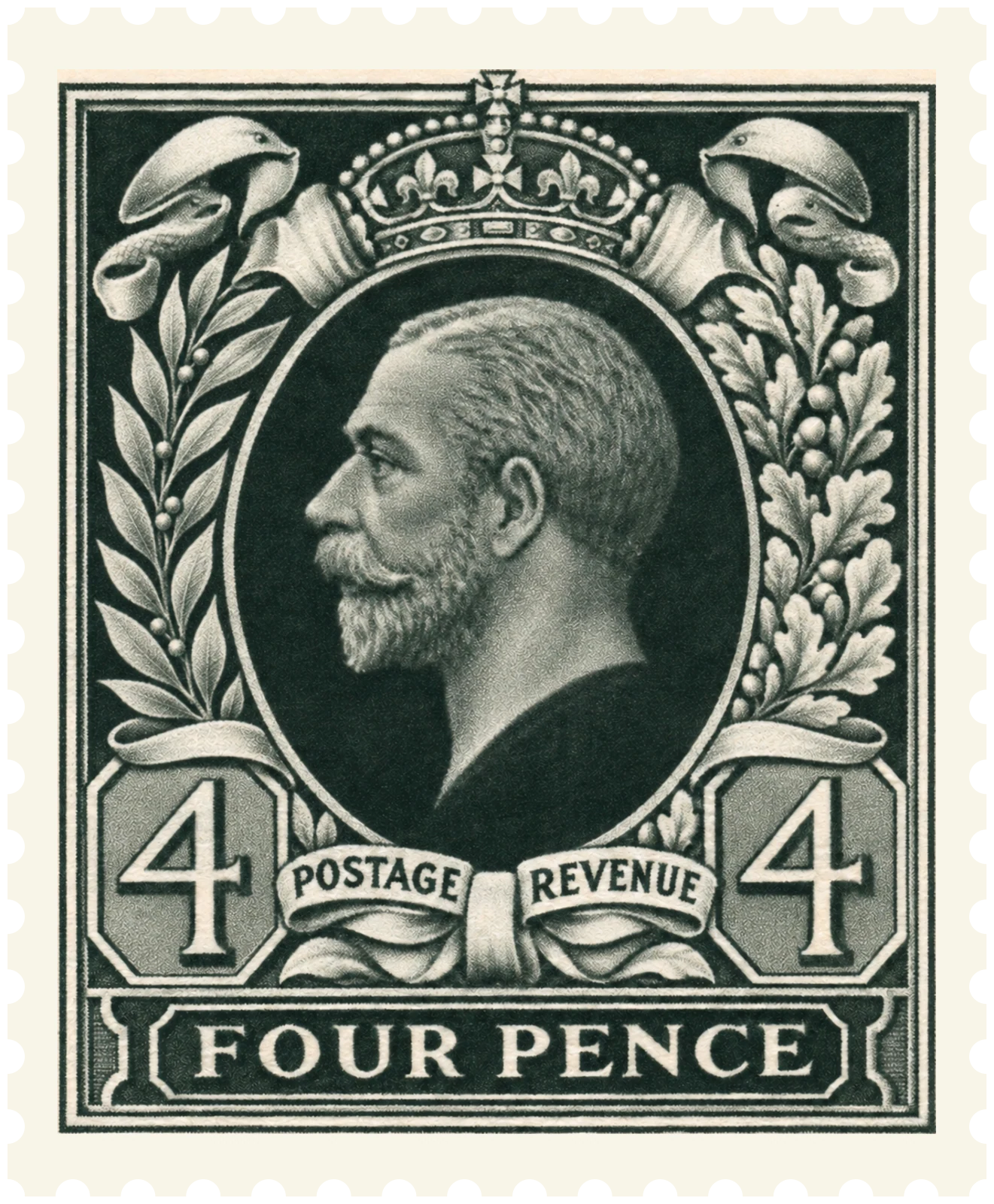
On the stamp you were exploring
George V · 4d grey-green · 1935 · Small format
This 4d grey-green stamp continues Mackennal’s royal profile and ornamental frame. Harrison & Sons adapted the established design for photogravure; this was not a new portrait commission.
On the stamp you were exploring
George V · 4d grey-green · 1935 · Small format
This 4d grey-green stamp continues Mackennal’s royal profile and ornamental frame. Harrison & Sons adapted the established design for photogravure; this was not a new portrait commission.
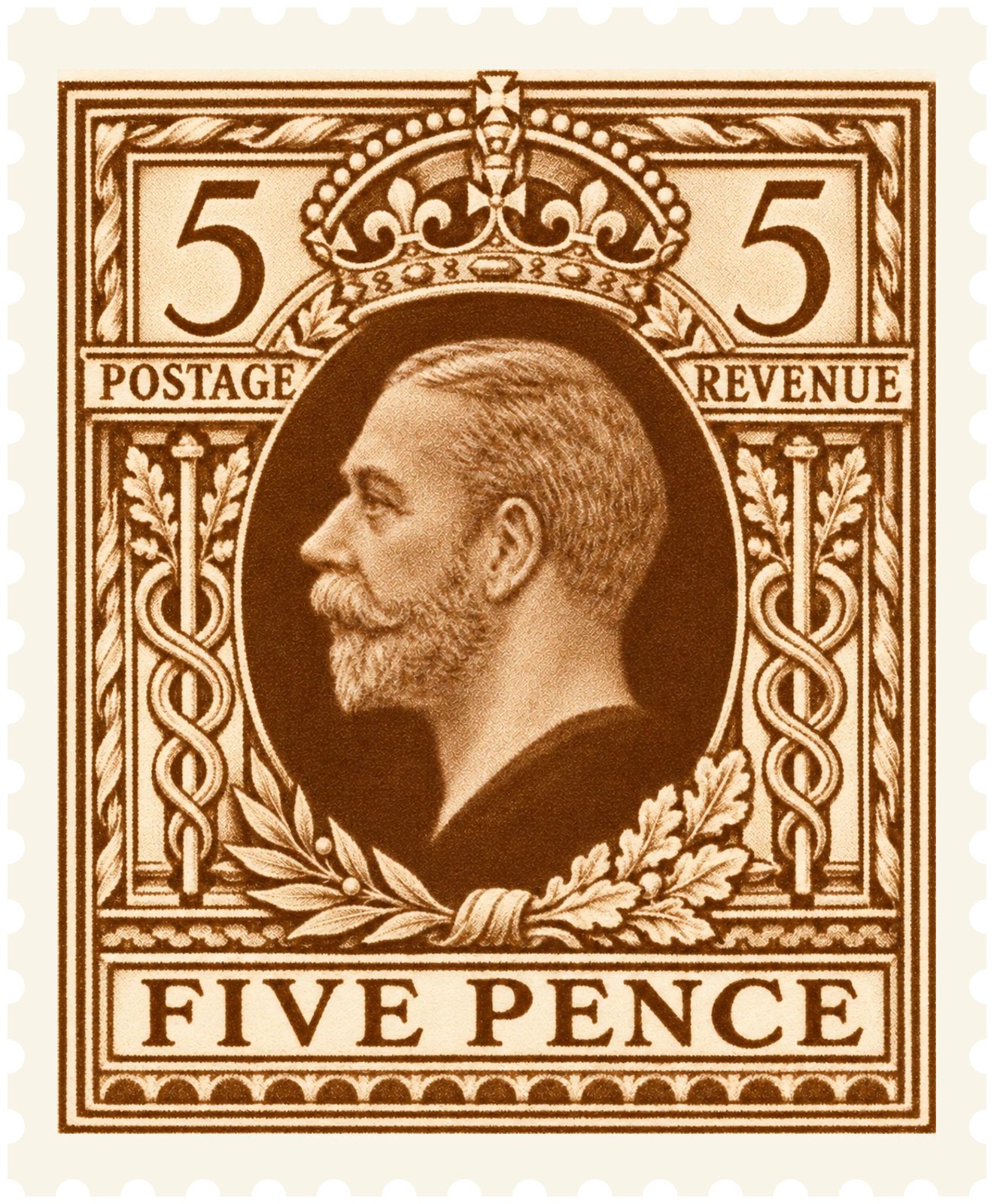
On the stamp you were exploring
George V · 5d yellow-brown · 1936 · Small format
This 5d yellow-brown stamp continues Mackennal’s royal profile, within a frame derived from George W. Eve’s design. Harrison & Sons adapted the established design for photogravure; this was not a new portrait commission.
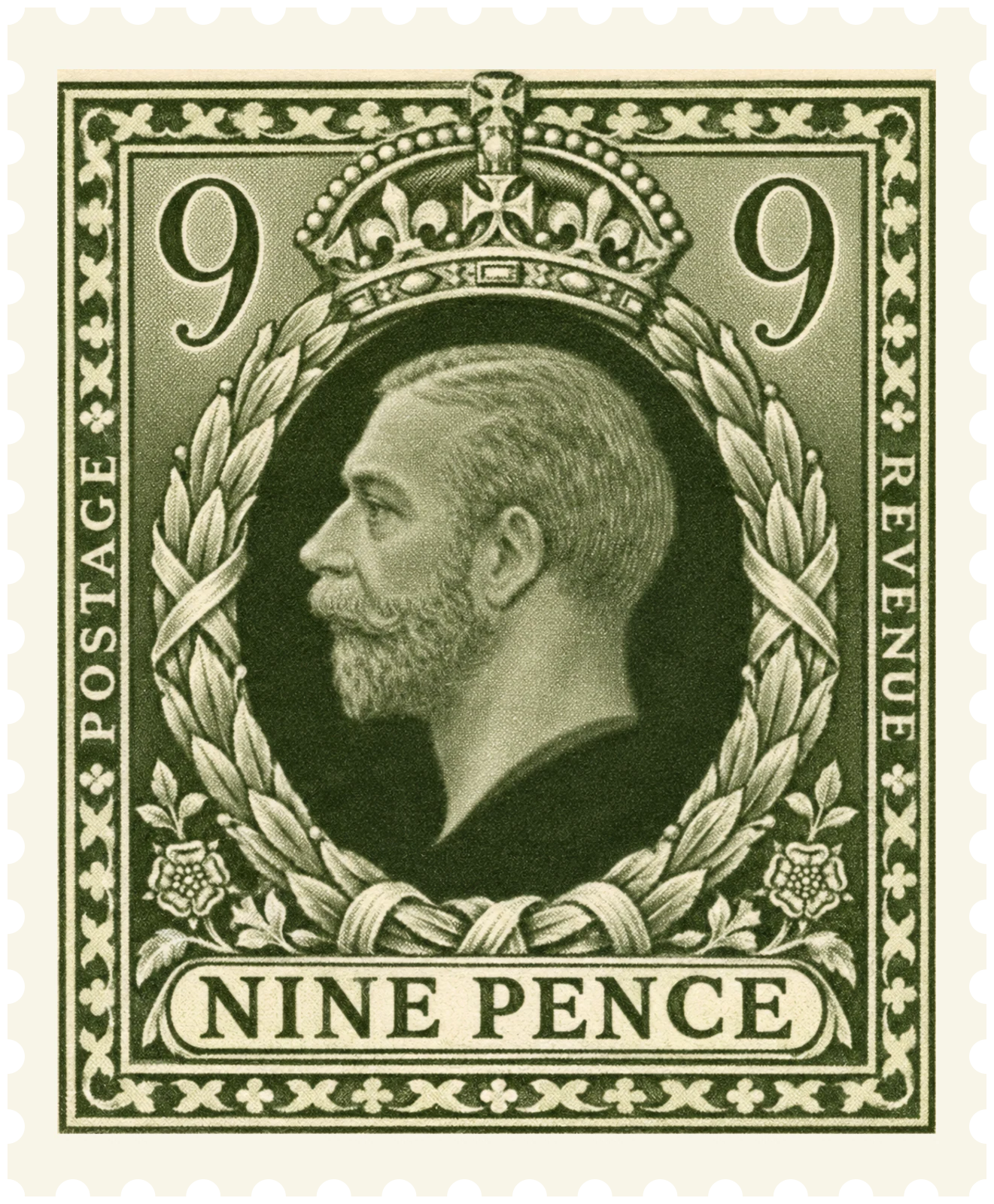
On the stamp you were exploring
George V · 9d deep olive-green · 1935 · Small format
This 9d deep olive-green stamp continues Mackennal’s royal profile, within a frame derived from George W. Eve’s design. Harrison & Sons adapted the established design for photogravure; this was not a new portrait commission.
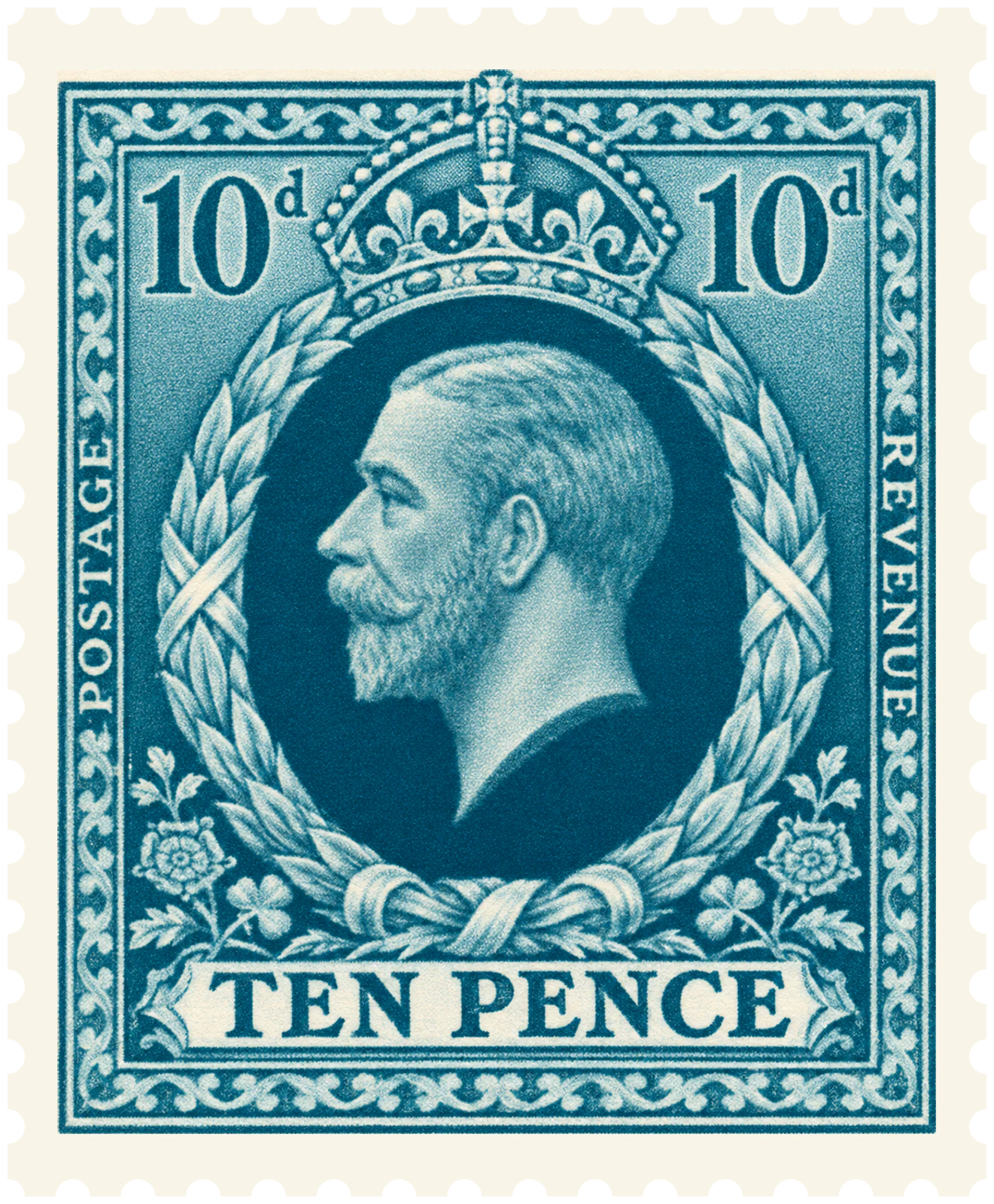
On the stamp you were exploring
George V · 10d turquoise-blue · 1936 · Small format
This 10d turquoise-blue stamp continues Mackennal’s royal profile, within a frame derived from George W. Eve’s design. Harrison & Sons adapted the established design for photogravure; this was not a new portrait commission.
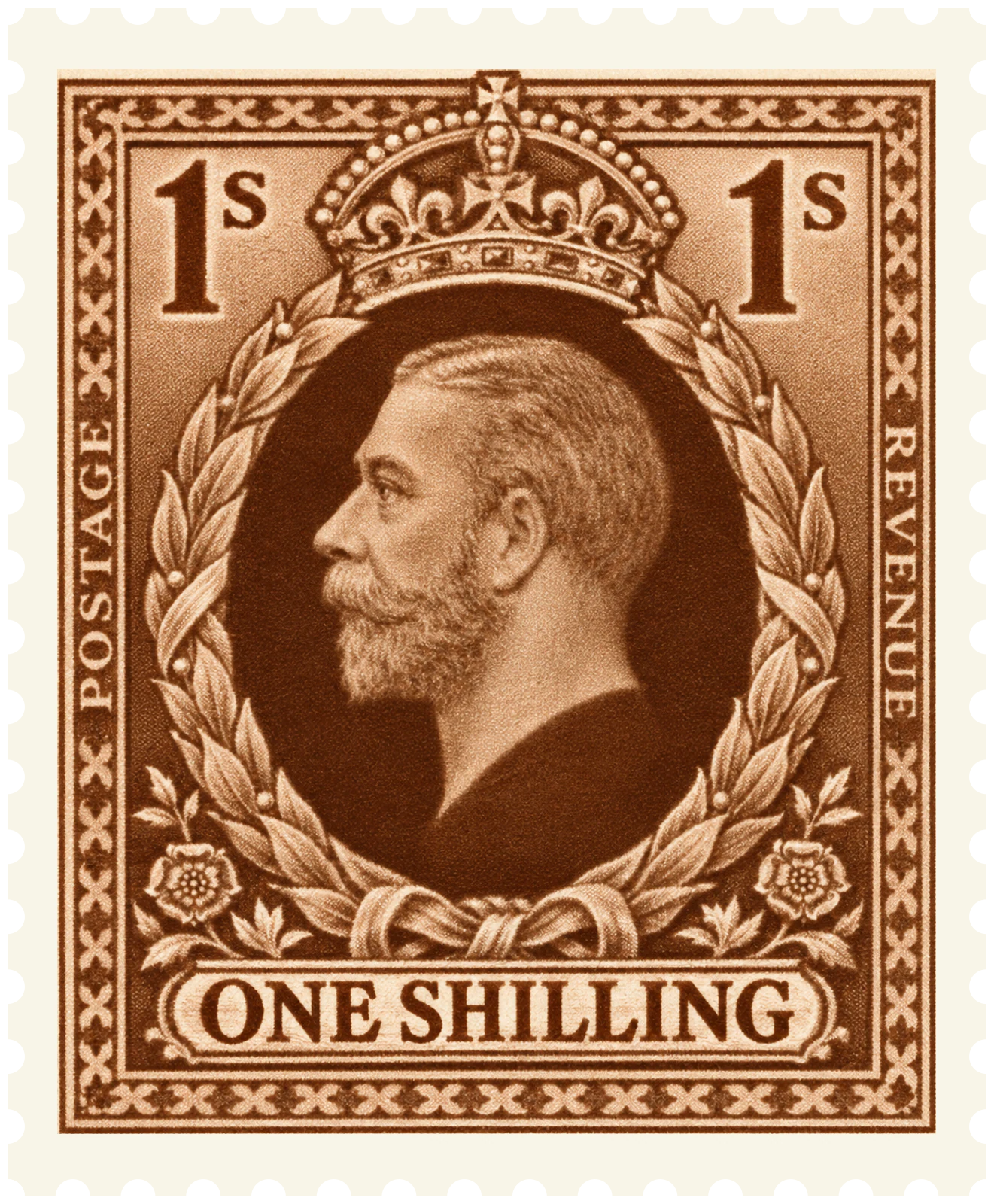
On the stamp you were exploring
George V · 1s bistre-brown · 1936 · Small format
This 1s bistre-brown stamp continues Mackennal’s royal profile, within a frame derived from George W. Eve’s design. Harrison & Sons adapted the established design for photogravure; this was not a new portrait commission.
Example stamps
Representative examples from 66 stamps associated with this person. Click a stamp to magnify it, or follow its caption link to explore the design.
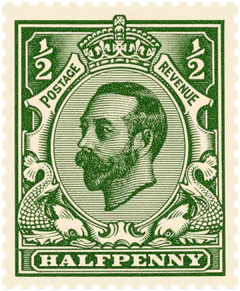
George V ½d green 22 June 1911 Frame 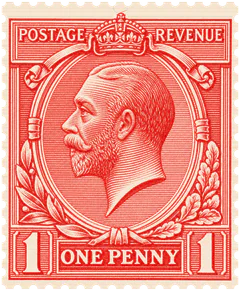
George V 1d scarlet 8 October 1912 Portrait model and frame 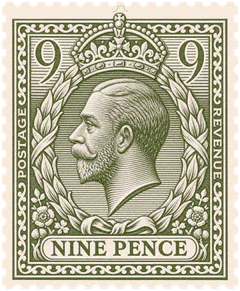
George V 9d olive-green 1922 Portrait model 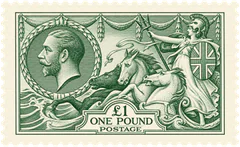
George V £1 green 1 August 1913 Principal design 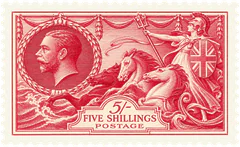
George V 5s bright rose-red 1934 Principal design 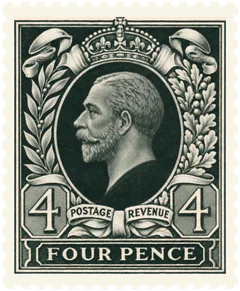
George V 4d grey-green 1935 · Small format Portrait model and frame
From Melbourne to London
Mackennal was born in Melbourne in 1863. His father worked as an architectural modeller, and the young artist trained at the National Gallery School. He left Australia in 1882 expecting work with the sculptor Marshall Wood, only to arrive after Wood had died. Establishing a career abroad required a new start. [1]
More than a portrait
His contributions to George V stamps included ornamental frames, profile models and the Seahorse design. Some stamp portraits were adapted from coinage or medal work. The engraver then translated a model’s relief and shadow into printable lines: sculptor and engraver performed different tasks. [2]
Recognition in Britain
Mackennal’s career included major public sculpture and royal commissions. He was knighted in 1921 and elected a Royal Academician in 1922, becoming a prominent Australian-born artist in Britain. His stamps put part of that work into the hands of people who might never visit a sculpture exhibition. [1]