
The Tudor Crown
From royal treasure to stamp motif
A tiny crown above a king’s portrait opens a much larger story: a lost royal treasure, a symbol reproduced on stamps, and an emblem chosen again by Charles III. Follow its arches from the Tudor court to the corner of a stamp.
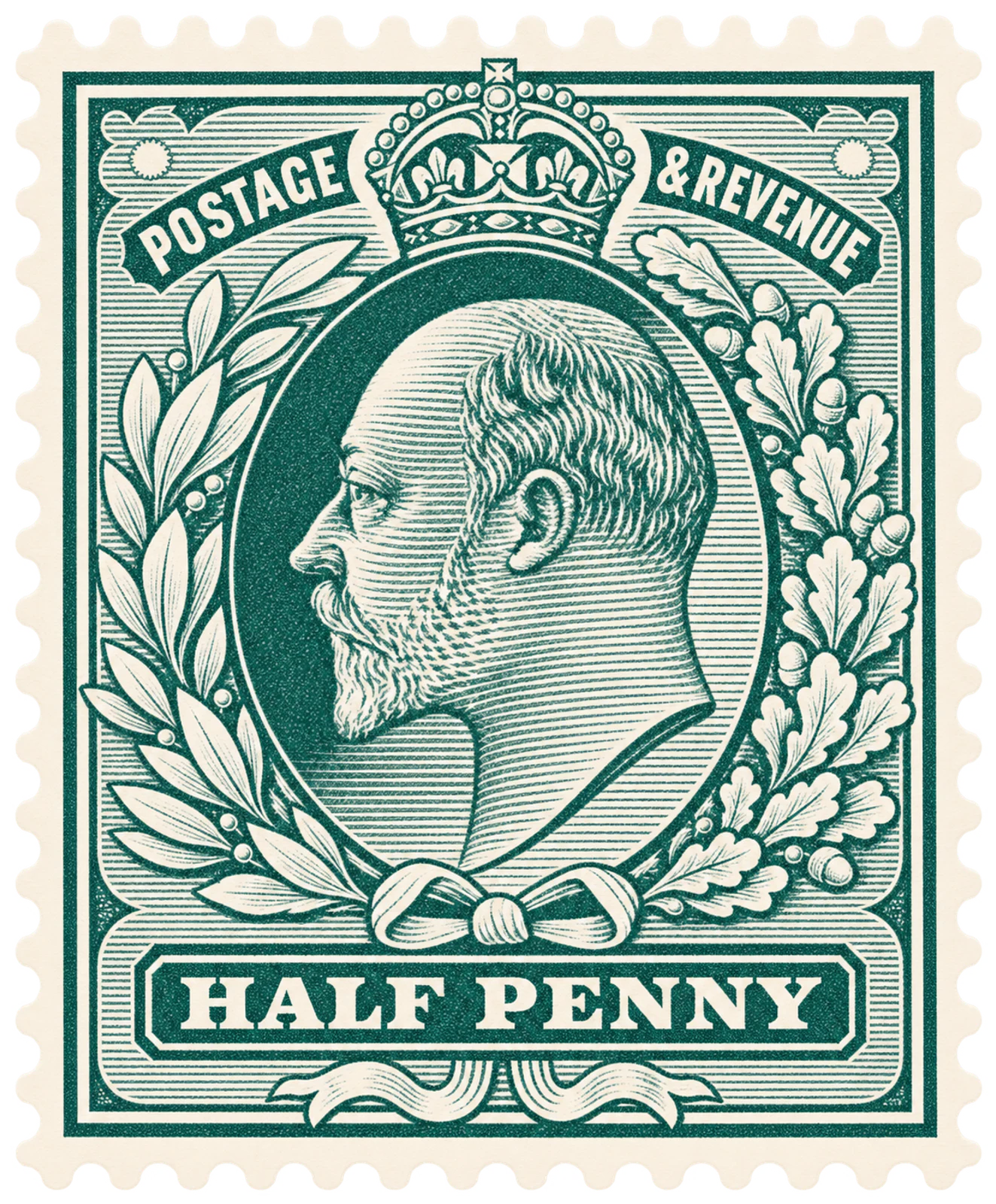
On the stamp you were exploring
Edward VII · ½d blue-green · 1 January 1902
The crown discussion on your Edward VII ½d blue-green stamp led here. Compare the small printed emblem with the enlarged heraldic pattern below. The jewelled illustration explains the older historical object; it is not the model from which this stamp was engraved.
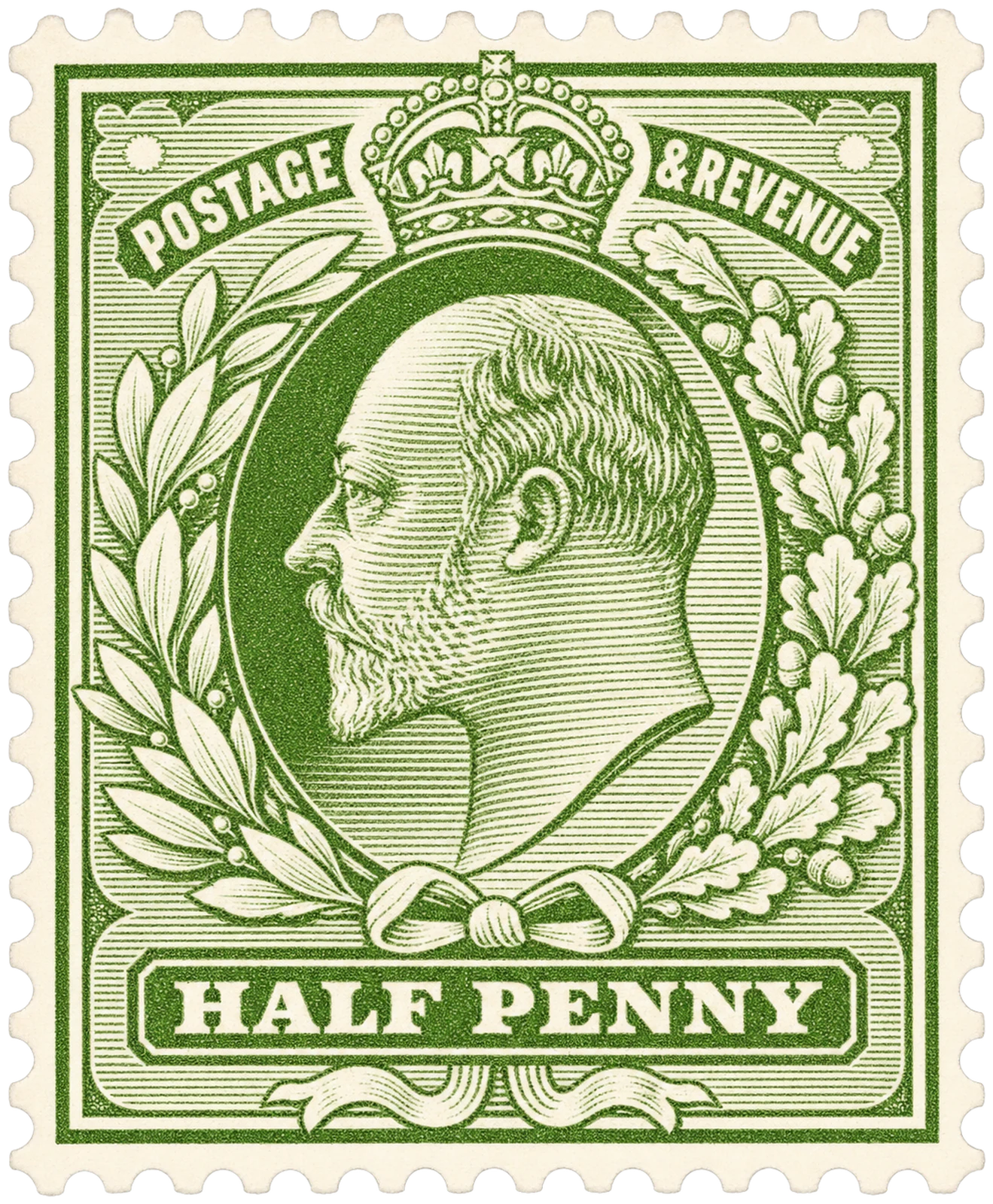
On the stamp you were exploring
Edward VII · ½d yellowish-green · 26 November 1904 — colour replacement
The crown discussion on your Edward VII ½d yellowish-green stamp led here. Compare the small printed emblem with the enlarged heraldic pattern below. The jewelled illustration explains the older historical object; it is not the model from which this stamp was engraved.
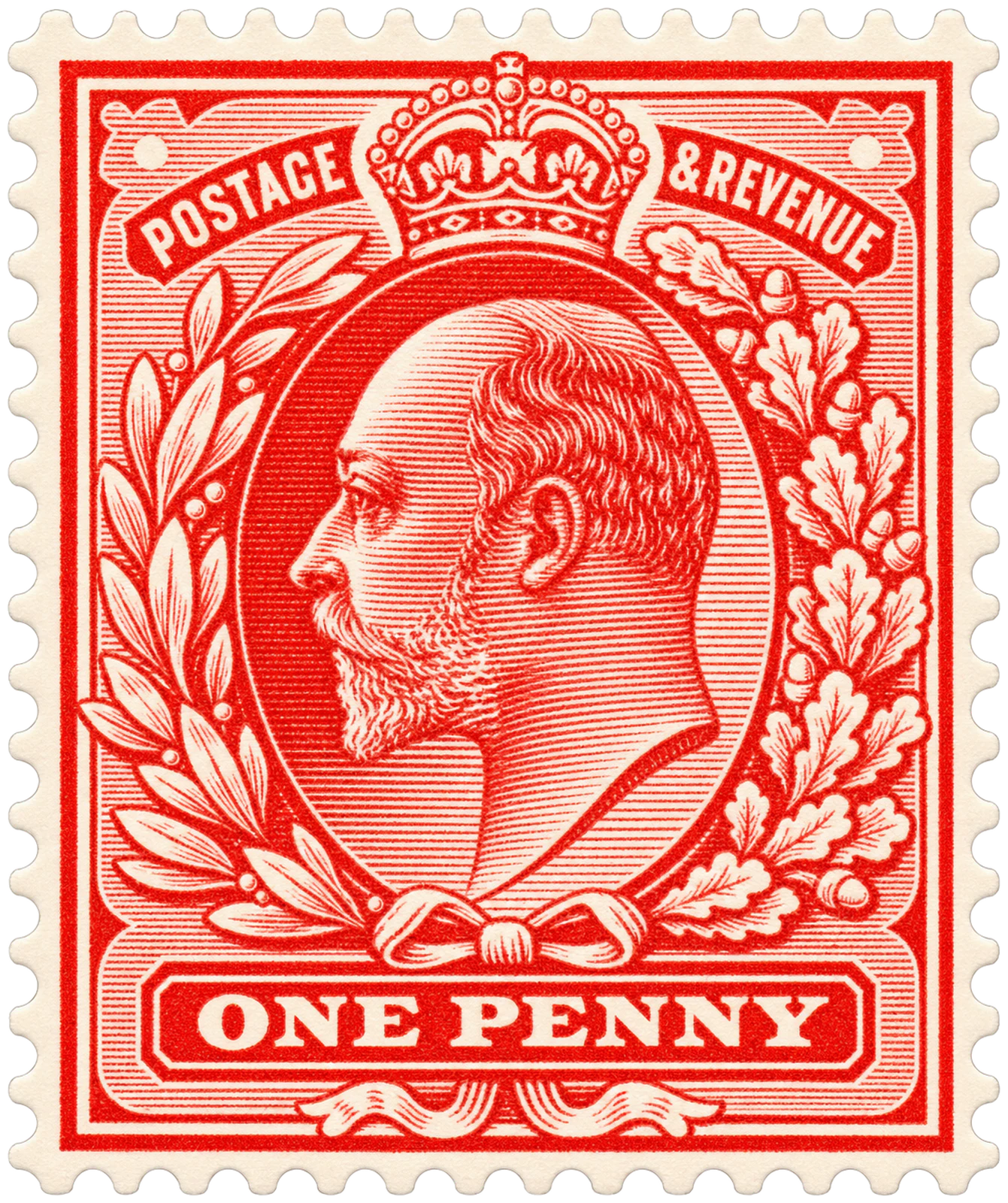
On the stamp you were exploring
Edward VII · 1d scarlet · 1 January 1902
The crown discussion on your Edward VII 1d scarlet stamp led here. Compare the small printed emblem with the enlarged heraldic pattern below. The jewelled illustration explains the older historical object; it is not the model from which this stamp was engraved.
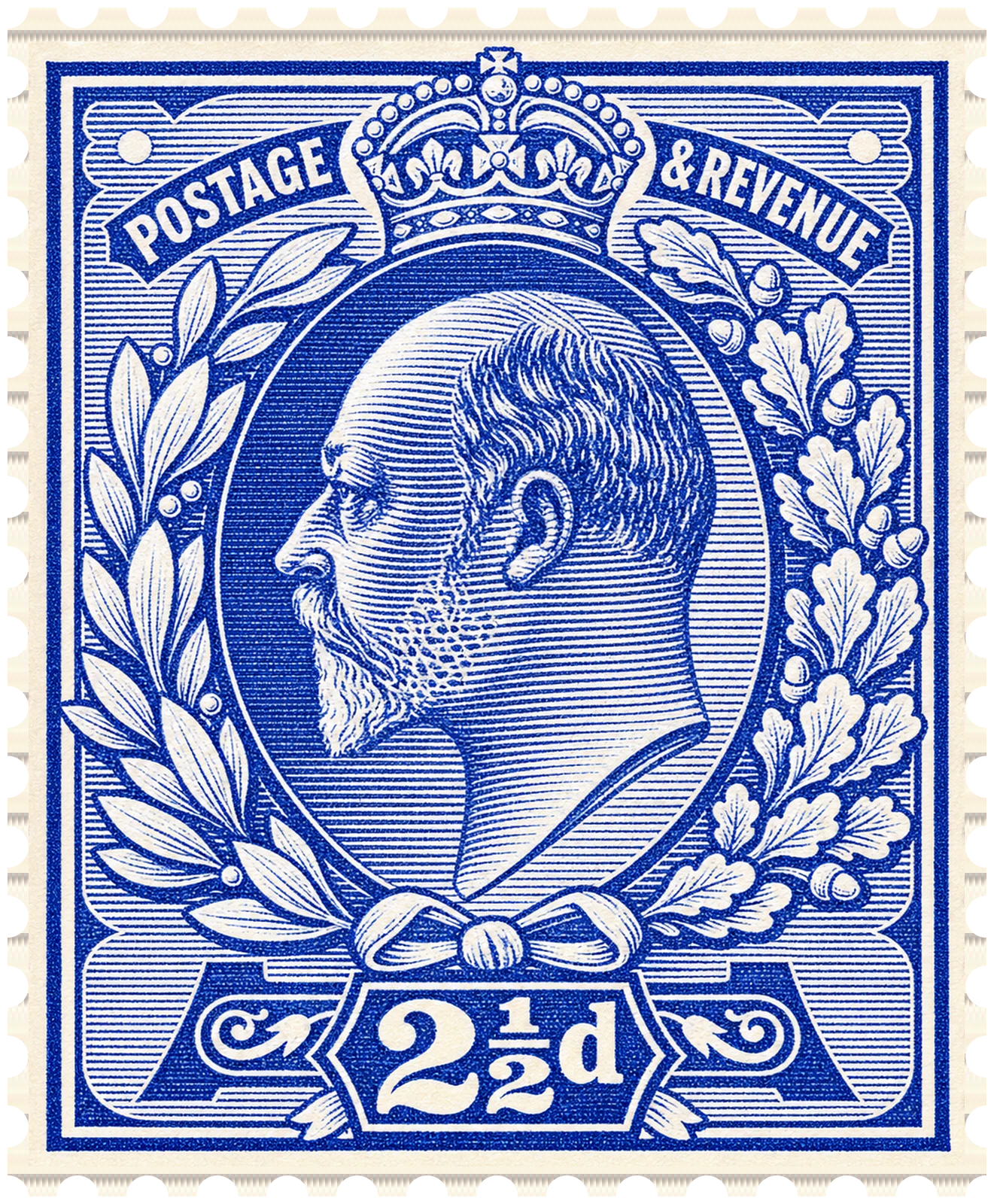
On the stamp you were exploring
Edward VII · 2½d ultramarine · 1 January 1902
The crown discussion on your Edward VII 2½d ultramarine stamp led here. Compare the small printed emblem with the enlarged heraldic pattern below. The jewelled illustration explains the older historical object; it is not the model from which this stamp was engraved.
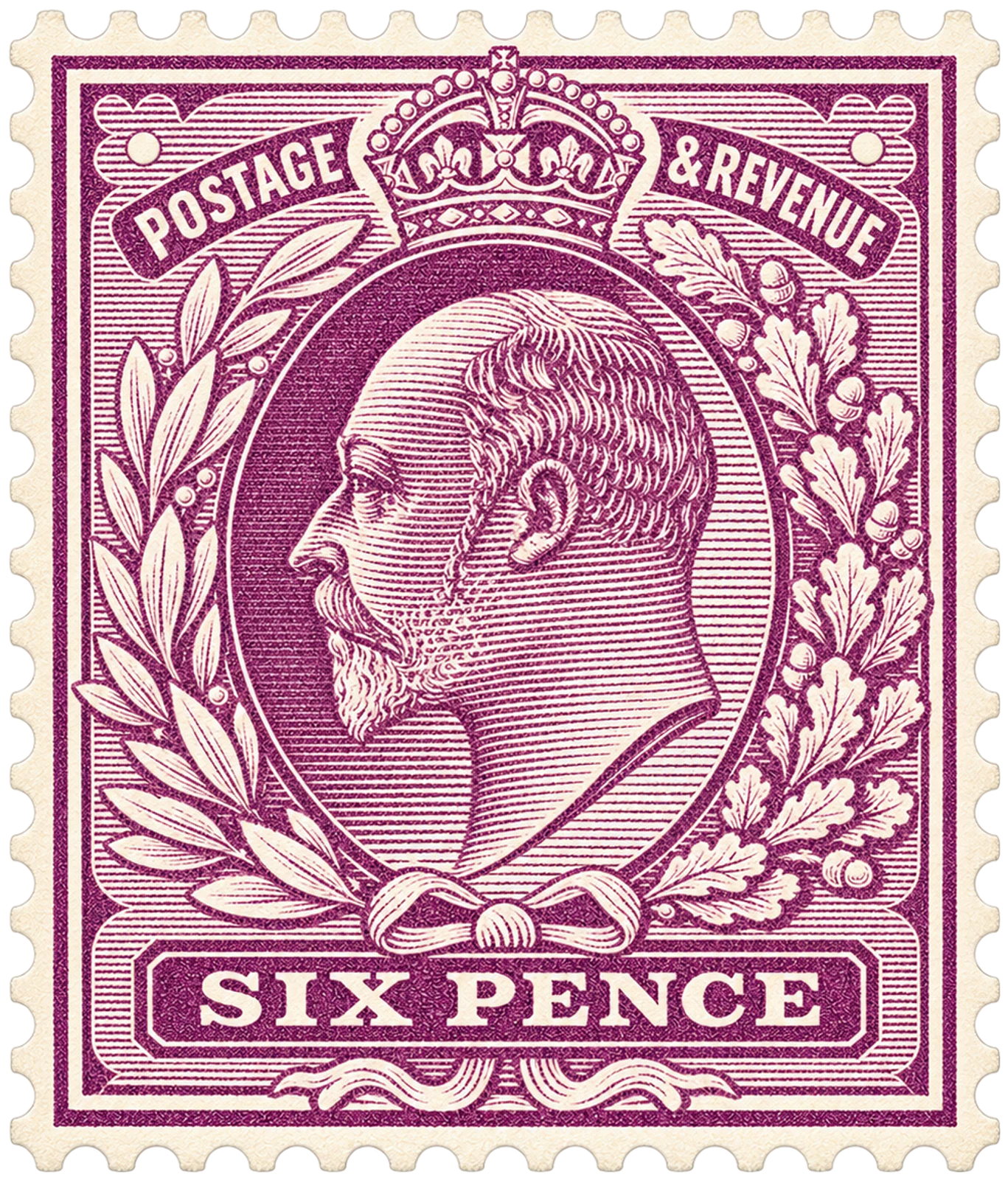
On the stamp you were exploring
Edward VII · 6d dull purple · 1902-01-01
The crown discussion on your Edward VII 6d dull purple stamp led here. Compare the small printed emblem with the enlarged heraldic pattern below. The jewelled illustration explains the older historical object; it is not the model from which this stamp was engraved.
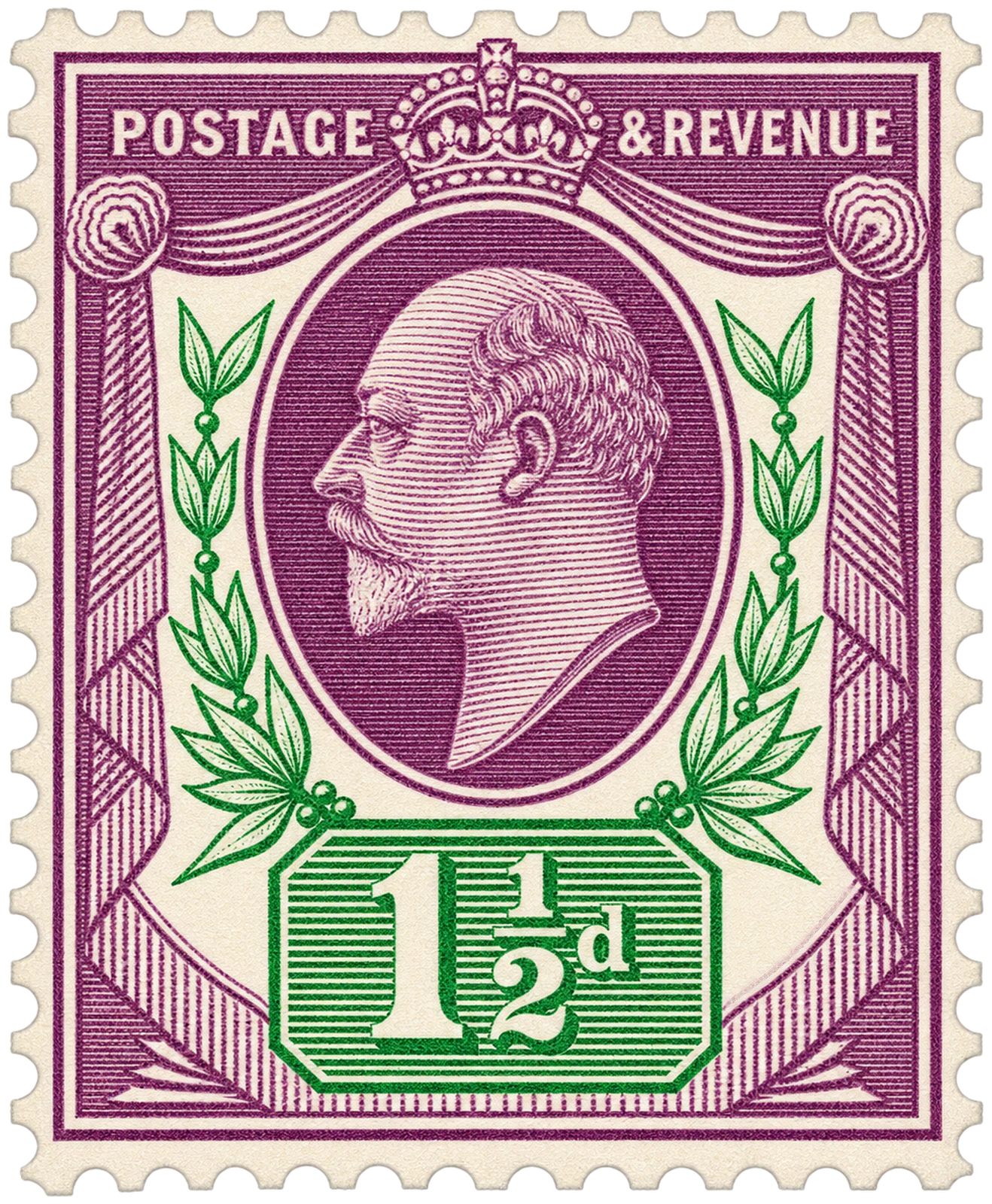
On the stamp you were exploring
Edward VII · 1½d purple and green · 21 March 1902
The crown discussion on your Edward VII 1½d purple and green stamp led here. Compare the small printed emblem with the enlarged heraldic pattern below. The jewelled illustration explains the older historical object; it is not the model from which this stamp was engraved.
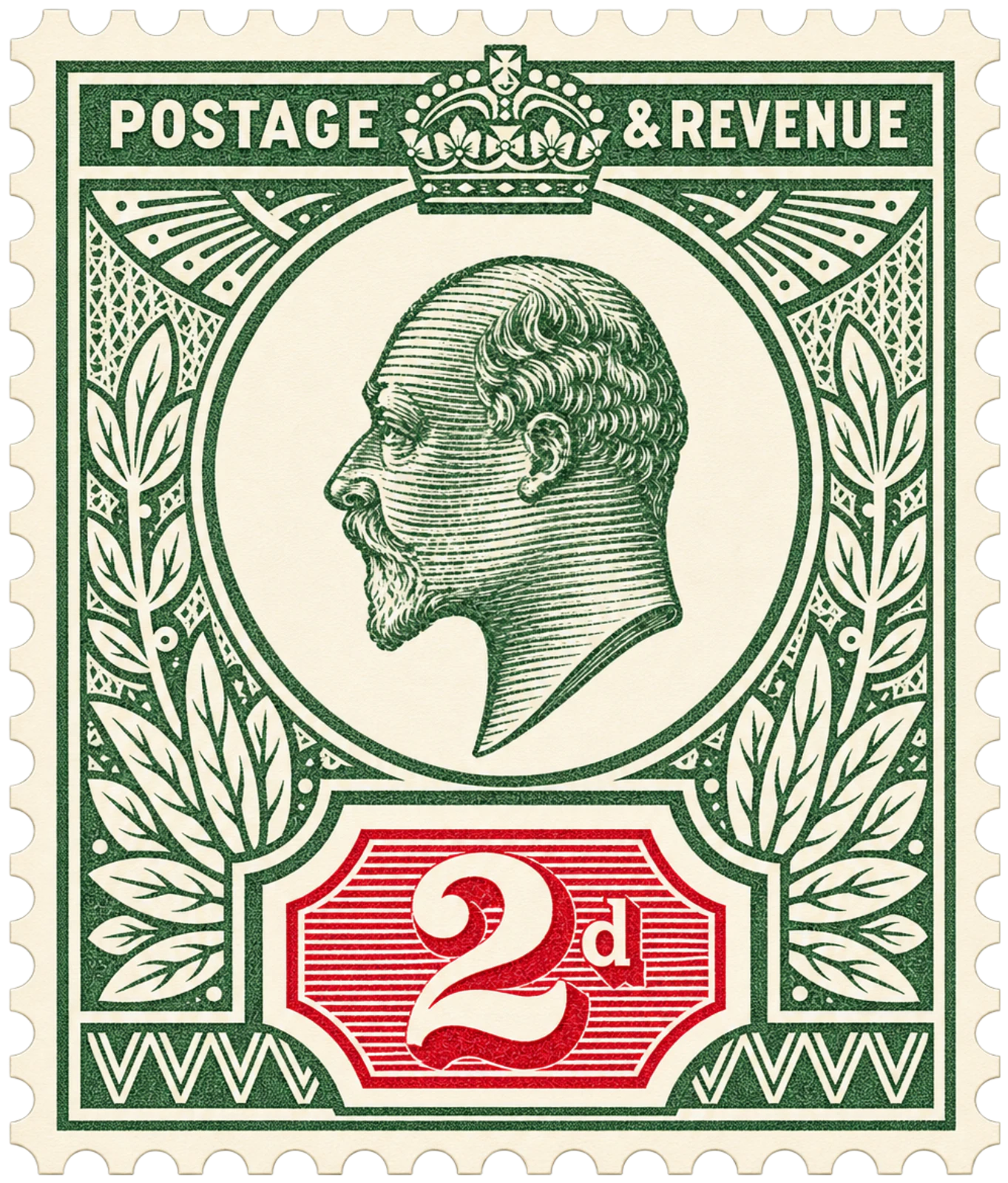
On the stamp you were exploring
Edward VII · 2d grey-green and carmine-red · 1902-03-25
The crown discussion on your Edward VII 2d grey-green and carmine-red stamp led here. Compare the small printed emblem with the enlarged heraldic pattern below. The jewelled illustration explains the older historical object; it is not the model from which this stamp was engraved.
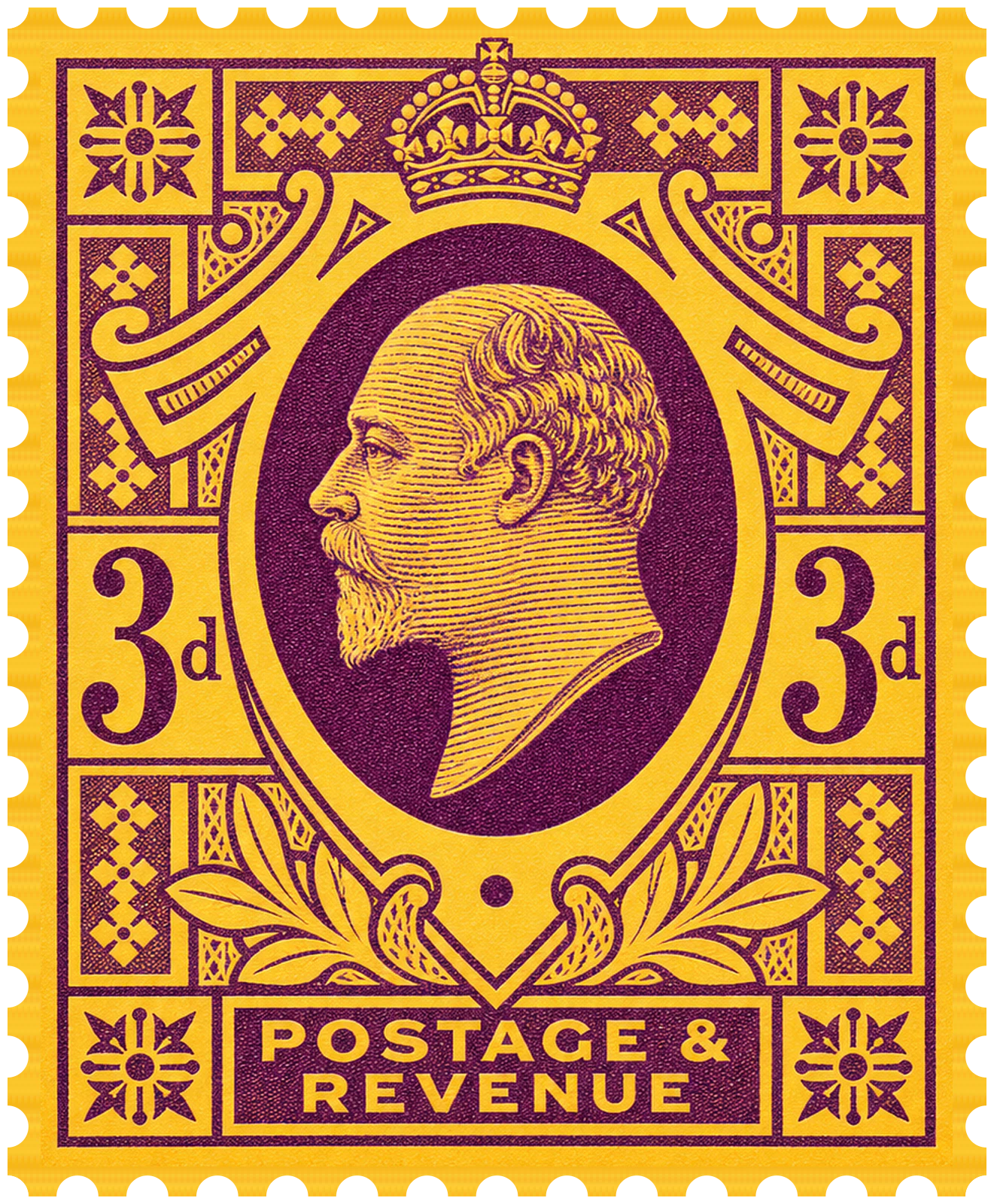
On the stamp you were exploring
Edward VII · 3d dull purple on orange-yellow · 20 March 1902
The crown discussion on your Edward VII 3d dull purple on orange-yellow stamp led here. Compare the small printed emblem with the enlarged heraldic pattern below. The jewelled illustration explains the older historical object; it is not the model from which this stamp was engraved.
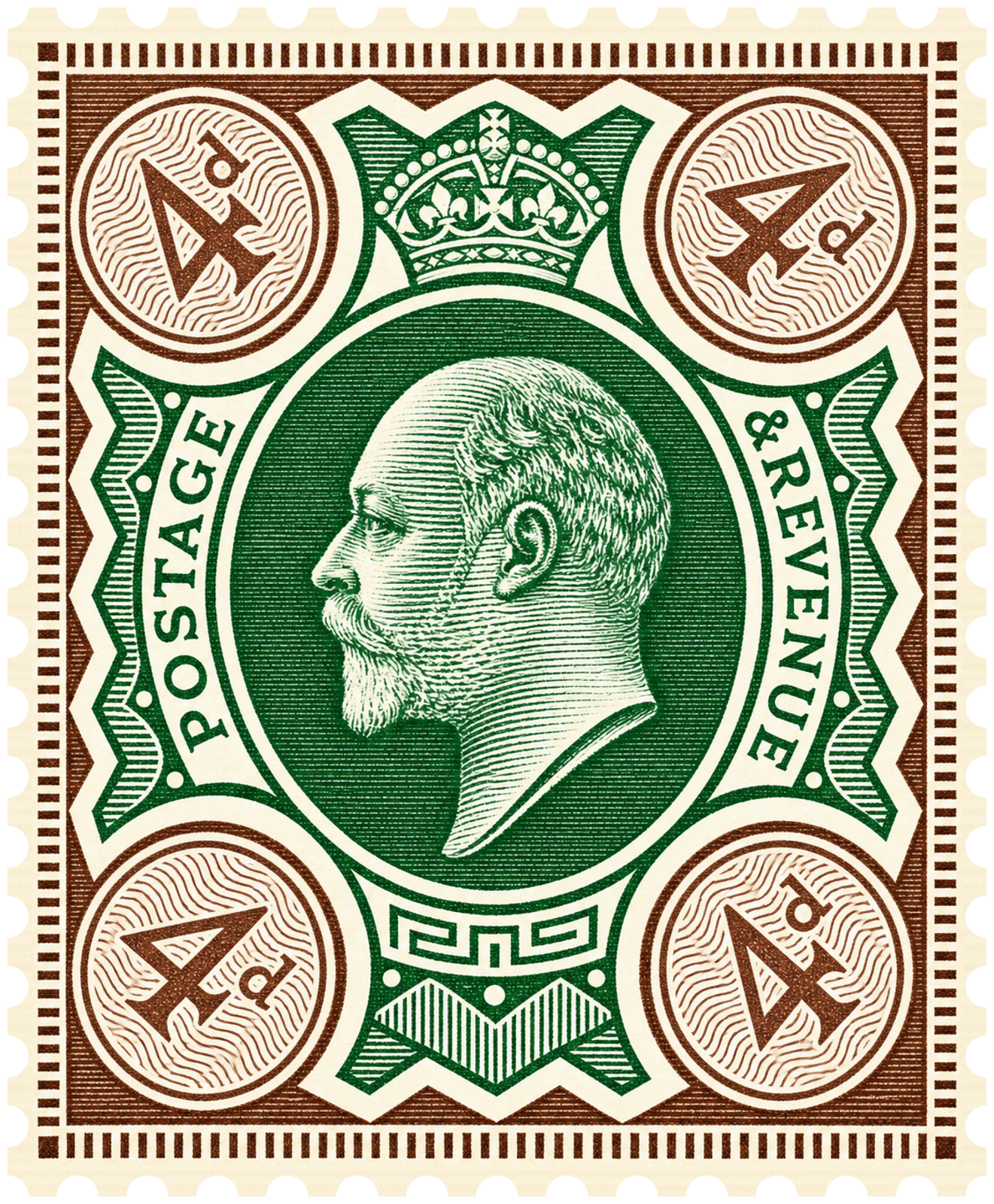
On the stamp you were exploring
Edward VII · 4d green and grey-brown · 27 March 1902
The crown discussion on your Edward VII 4d green and grey-brown stamp led here. Compare the small printed emblem with the enlarged heraldic pattern below. The jewelled illustration explains the older historical object; it is not the model from which this stamp was engraved.
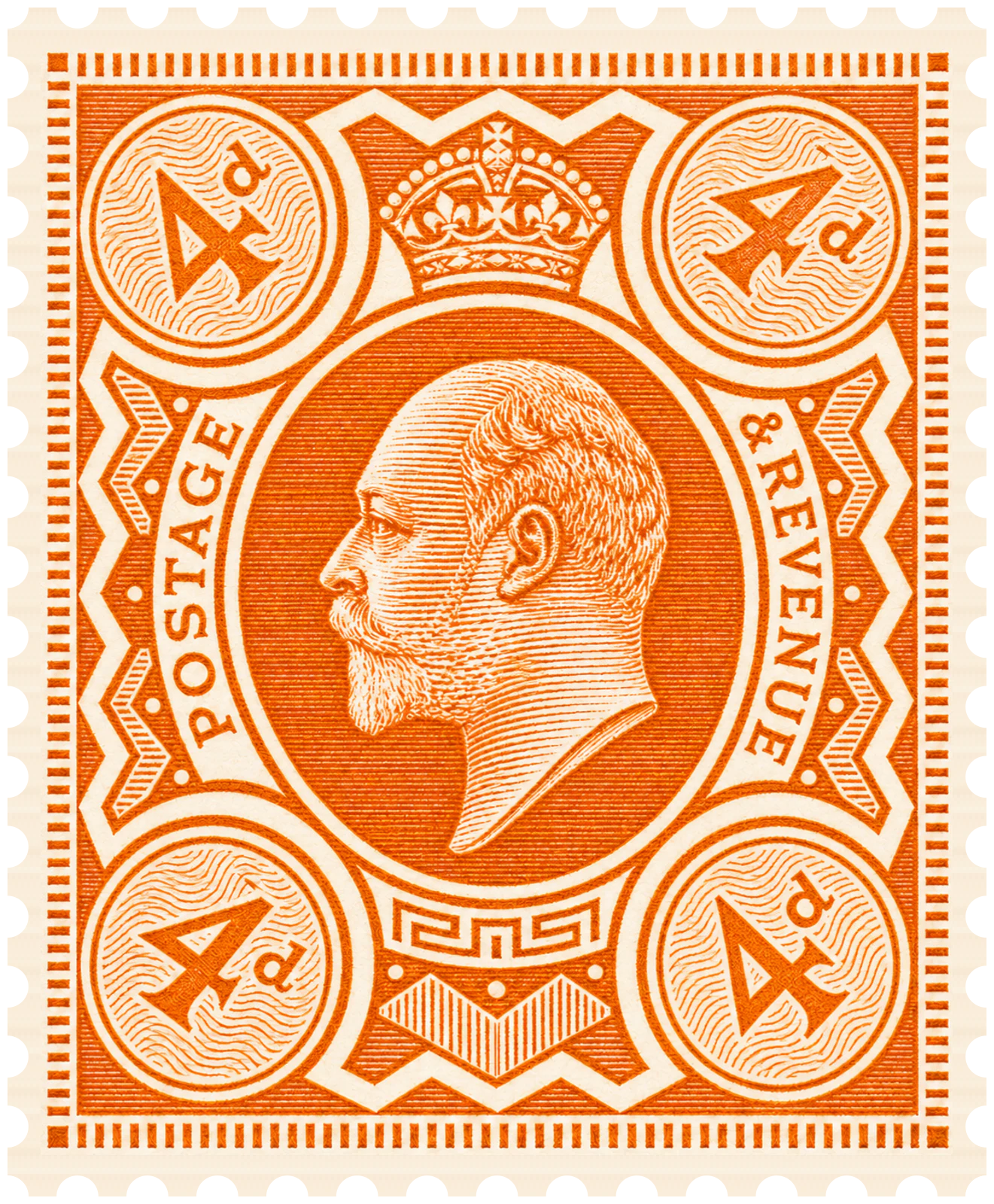
On the stamp you were exploring
Edward VII · 4d orange · 1 November 1909
The crown discussion on your Edward VII 4d orange stamp led here. Compare the small printed emblem with the enlarged heraldic pattern below. The jewelled illustration explains the older historical object; it is not the model from which this stamp was engraved.
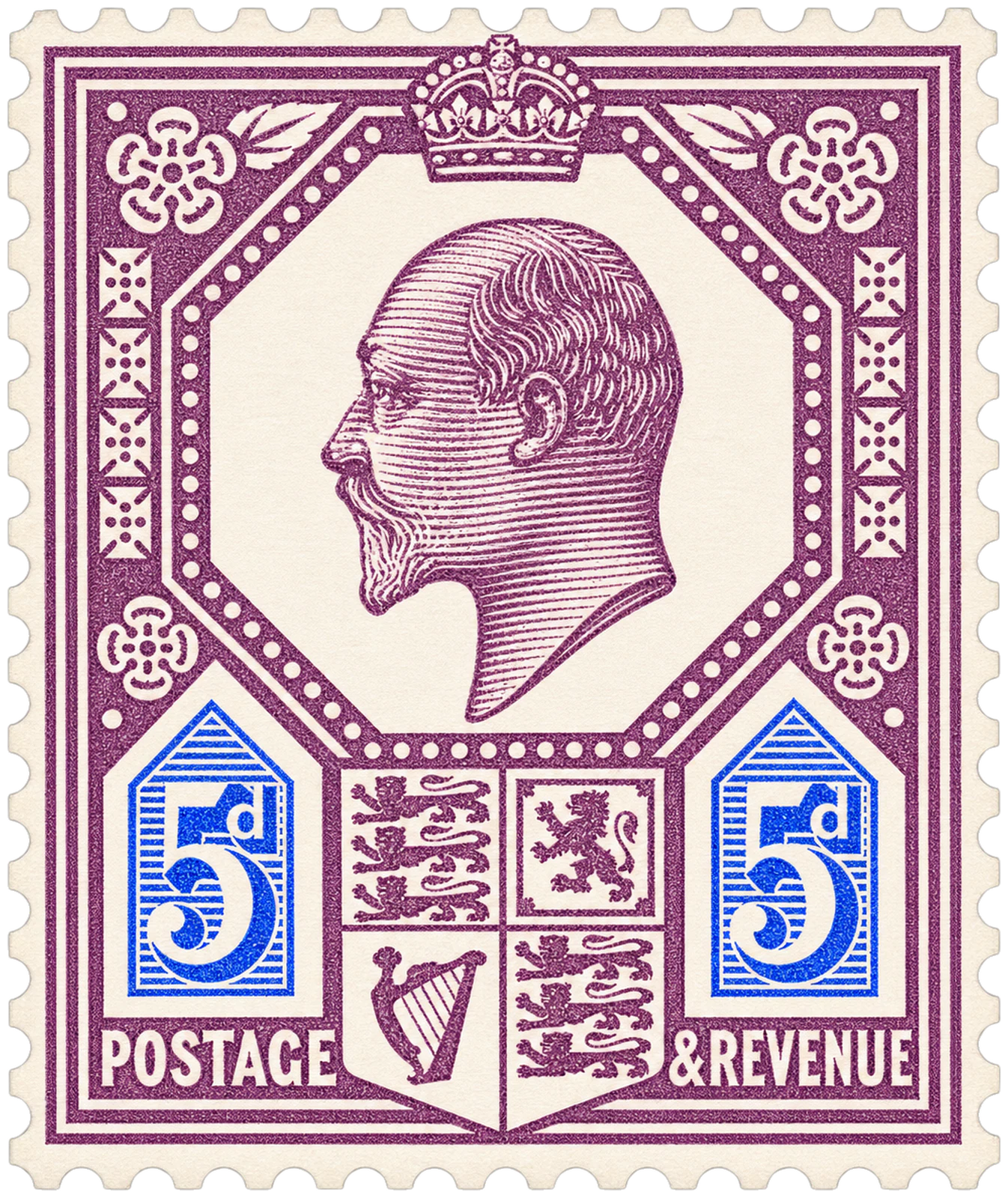
On the stamp you were exploring
Edward VII · 5d dull purple and ultramarine · 14 May 1902
The crown discussion on your Edward VII 5d dull purple and ultramarine stamp led here. Compare the small printed emblem with the enlarged heraldic pattern below. The jewelled illustration explains the older historical object; it is not the model from which this stamp was engraved.
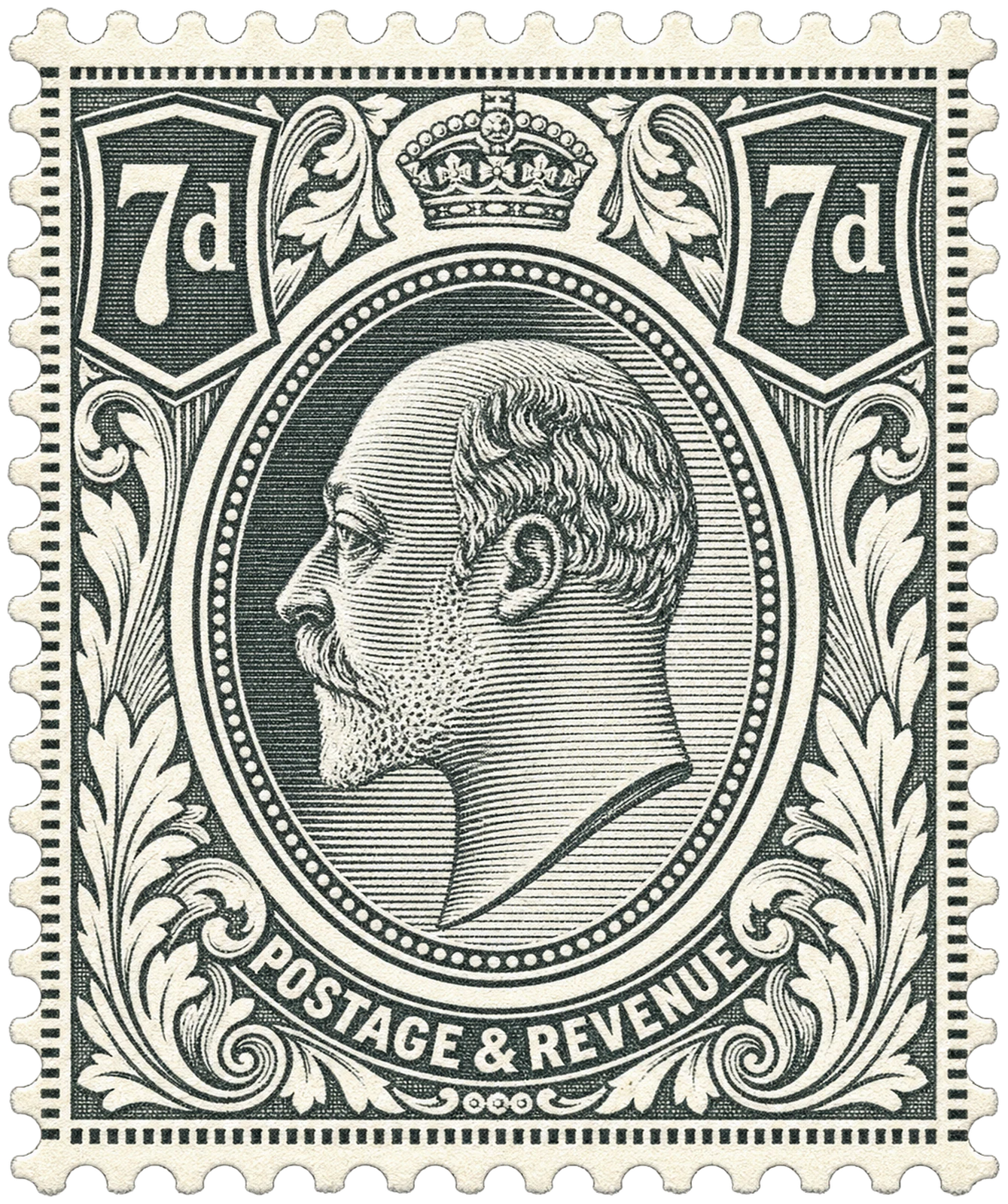
On the stamp you were exploring
Edward VII · 7d grey-black · 4 May 1910
The crown discussion on your Edward VII 7d grey-black stamp led here. Compare the small printed emblem with the enlarged heraldic pattern below. The jewelled illustration explains the older historical object; it is not the model from which this stamp was engraved.
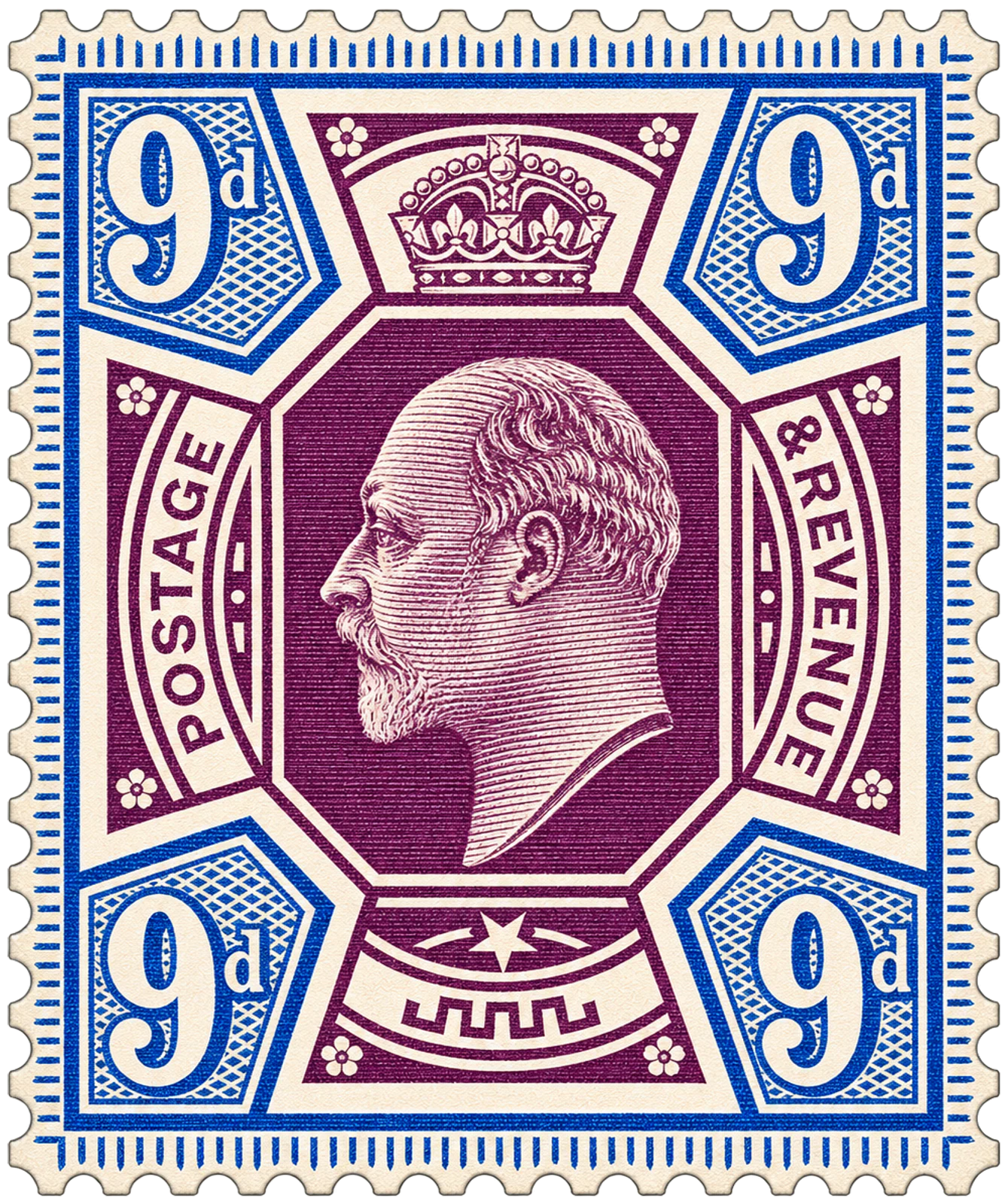
On the stamp you were exploring
Edward VII · 9d dull purple and ultramarine · 7 April 1902
The crown discussion on your Edward VII 9d dull purple and ultramarine stamp led here. Compare the small printed emblem with the enlarged heraldic pattern below. The jewelled illustration explains the older historical object; it is not the model from which this stamp was engraved.
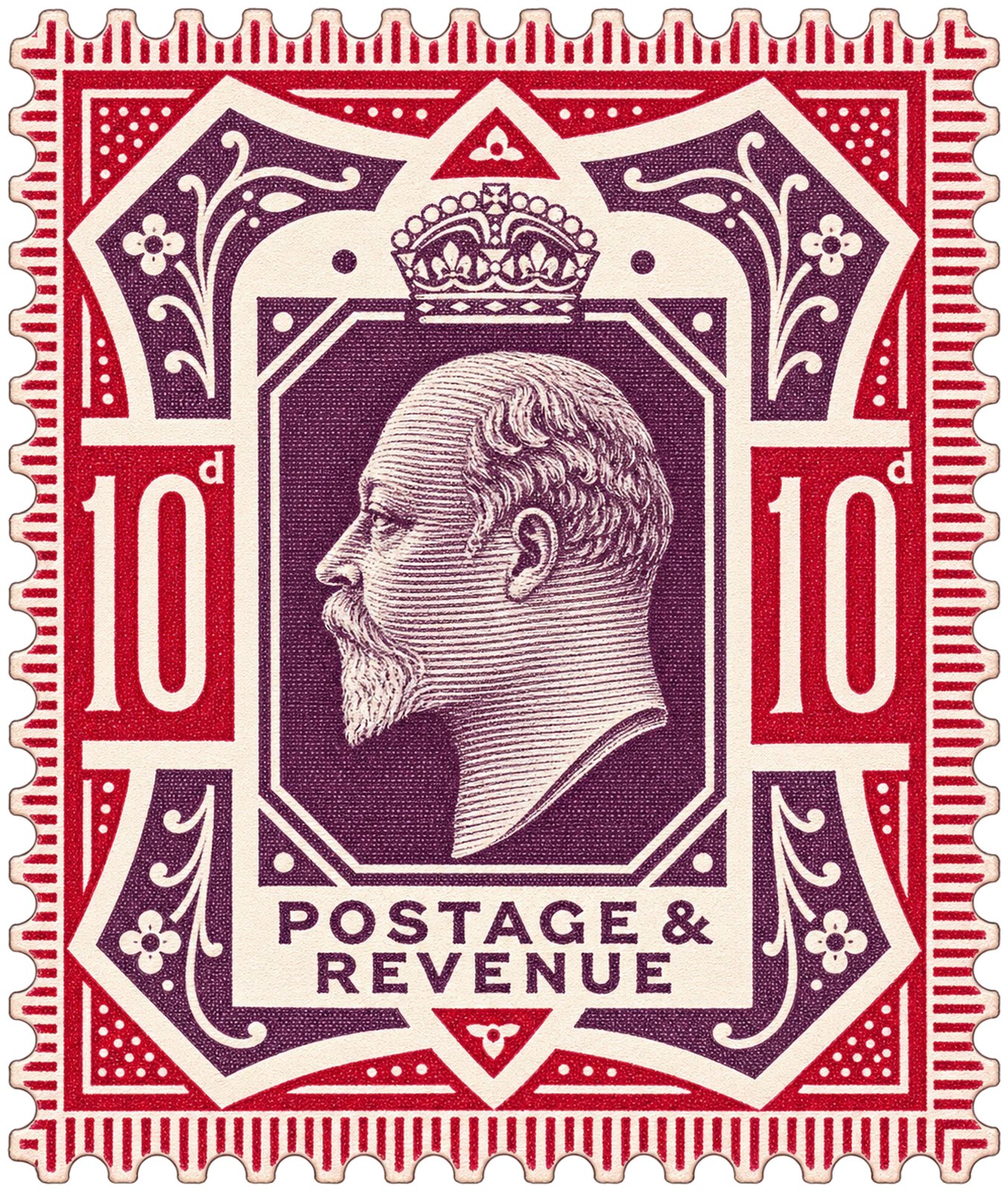
On the stamp you were exploring
Edward VII · 10d dull purple and carmine · 3 July 1902
The crown discussion on your Edward VII 10d dull purple and carmine stamp led here. Compare the small printed emblem with the enlarged heraldic pattern below. The jewelled illustration explains the older historical object; it is not the model from which this stamp was engraved.
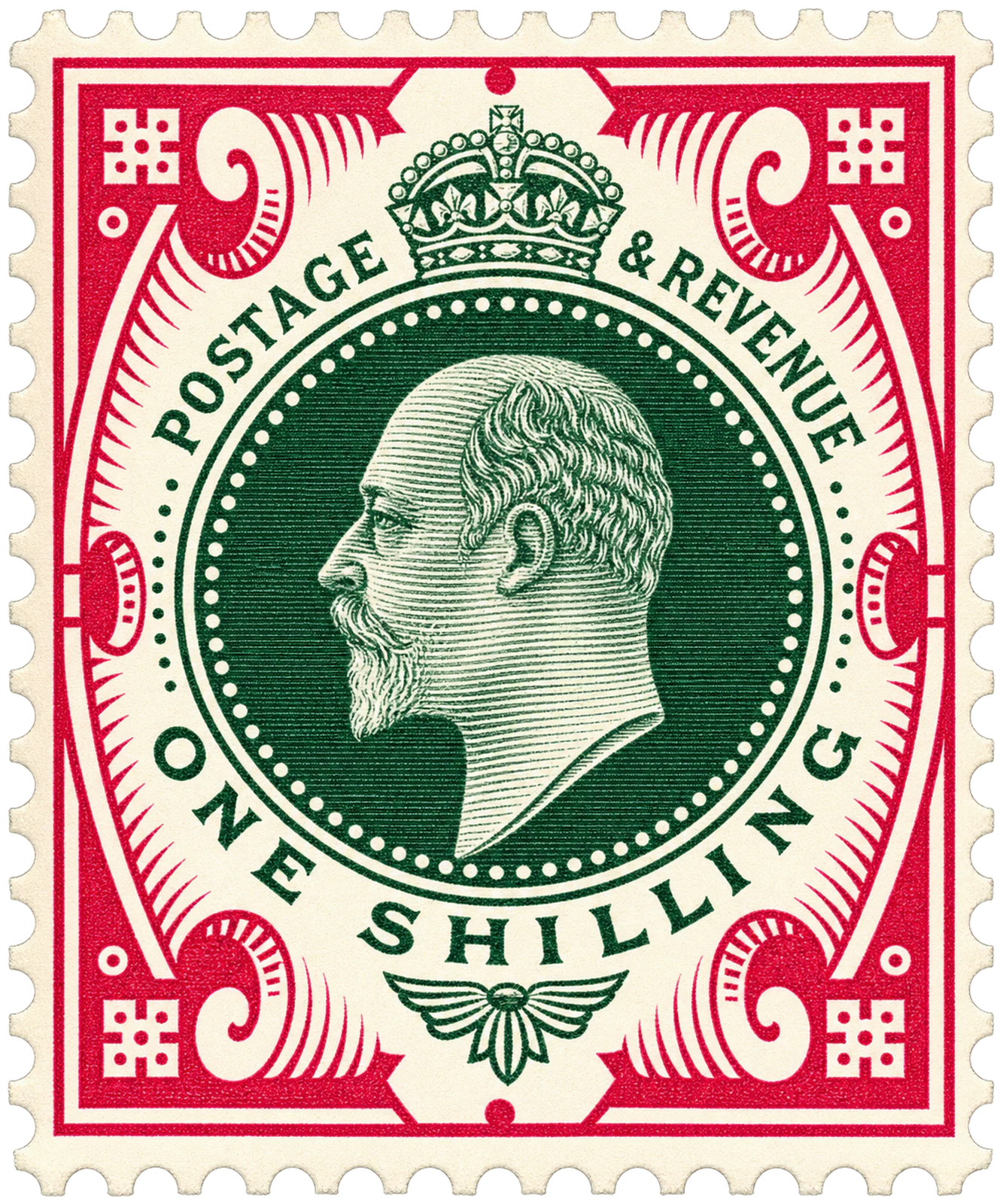
On the stamp you were exploring
Edward VII · 1s dull green and carmine · 24 March 1902
The crown discussion on your Edward VII 1s dull green and carmine stamp led here. Compare the small printed emblem with the enlarged heraldic pattern below. The jewelled illustration explains the older historical object; it is not the model from which this stamp was engraved.
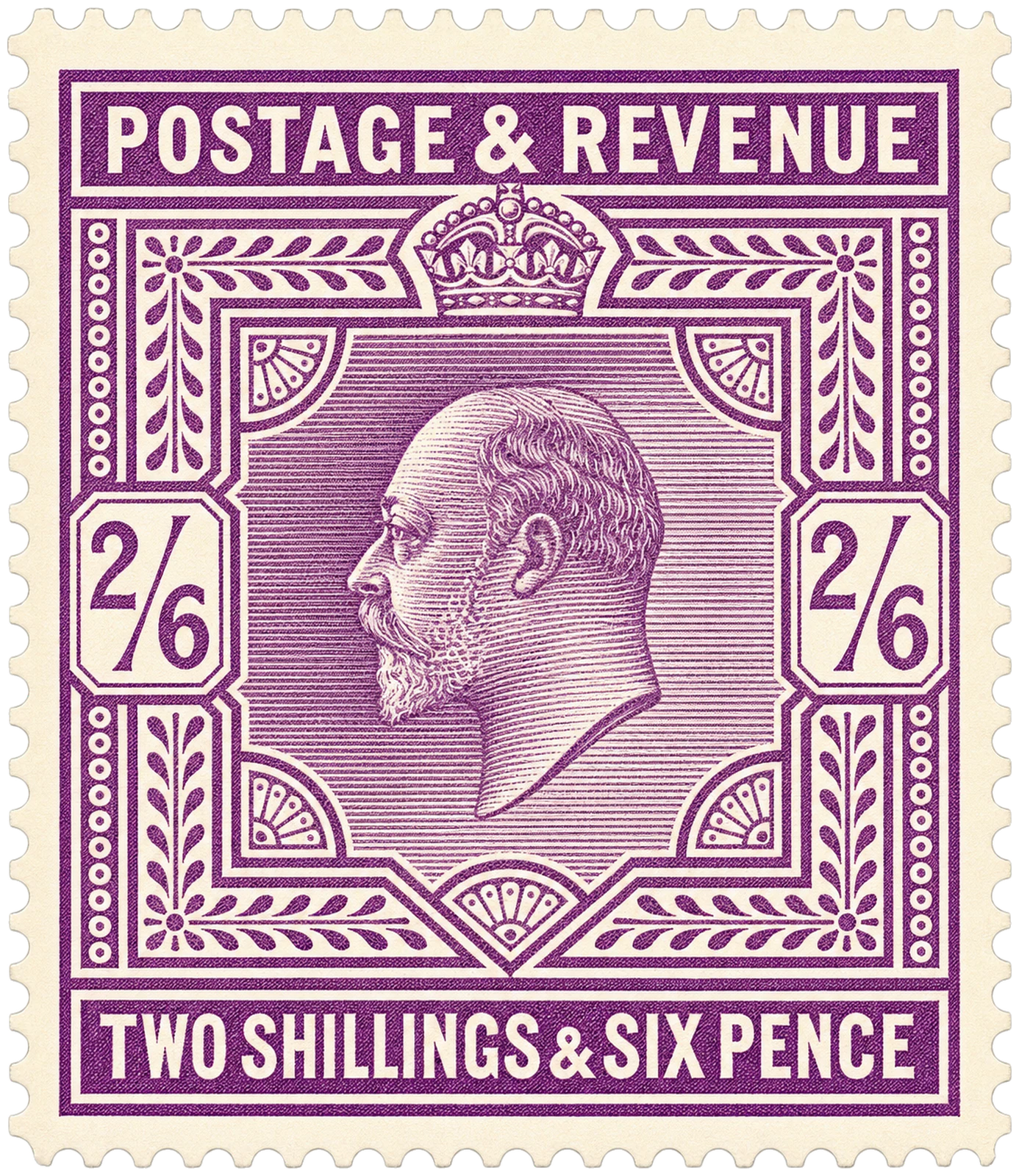
On the stamp you were exploring
Edward VII · 2s 6d lilac · 5 April 1902
The crown discussion on your Edward VII 2s 6d lilac stamp led here. Compare the small printed emblem with the enlarged heraldic pattern below. The jewelled illustration explains the older historical object; it is not the model from which this stamp was engraved.
On the stamp you were exploring
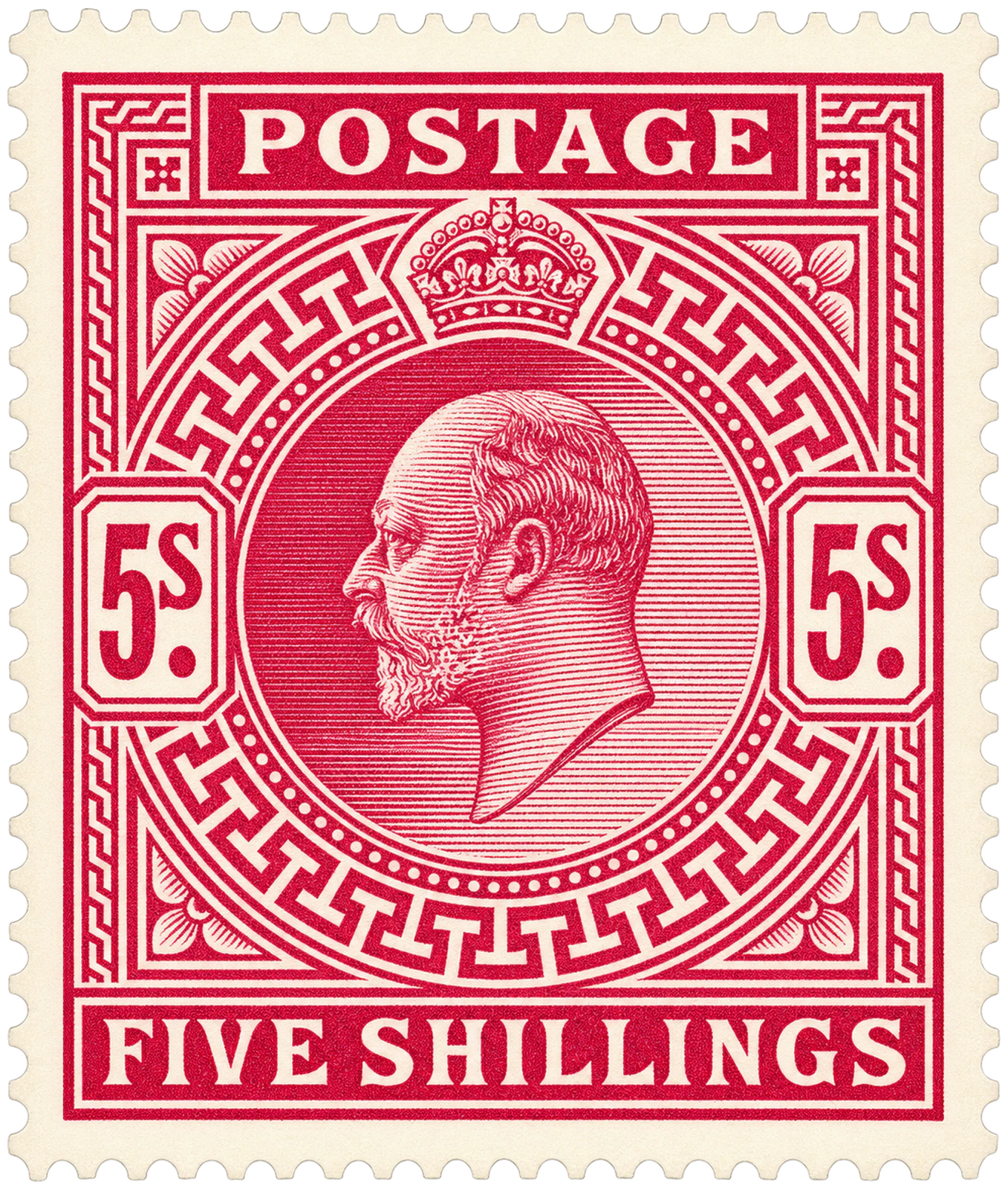
Edward VII · 5s bright carmine · 5 April 1902
The crown discussion on your Edward VII 5s bright carmine stamp led here. Compare the small printed emblem with the enlarged heraldic pattern below. The jewelled illustration explains the older historical object; it is not the model from which this stamp was engraved.
On the stamp you were exploring
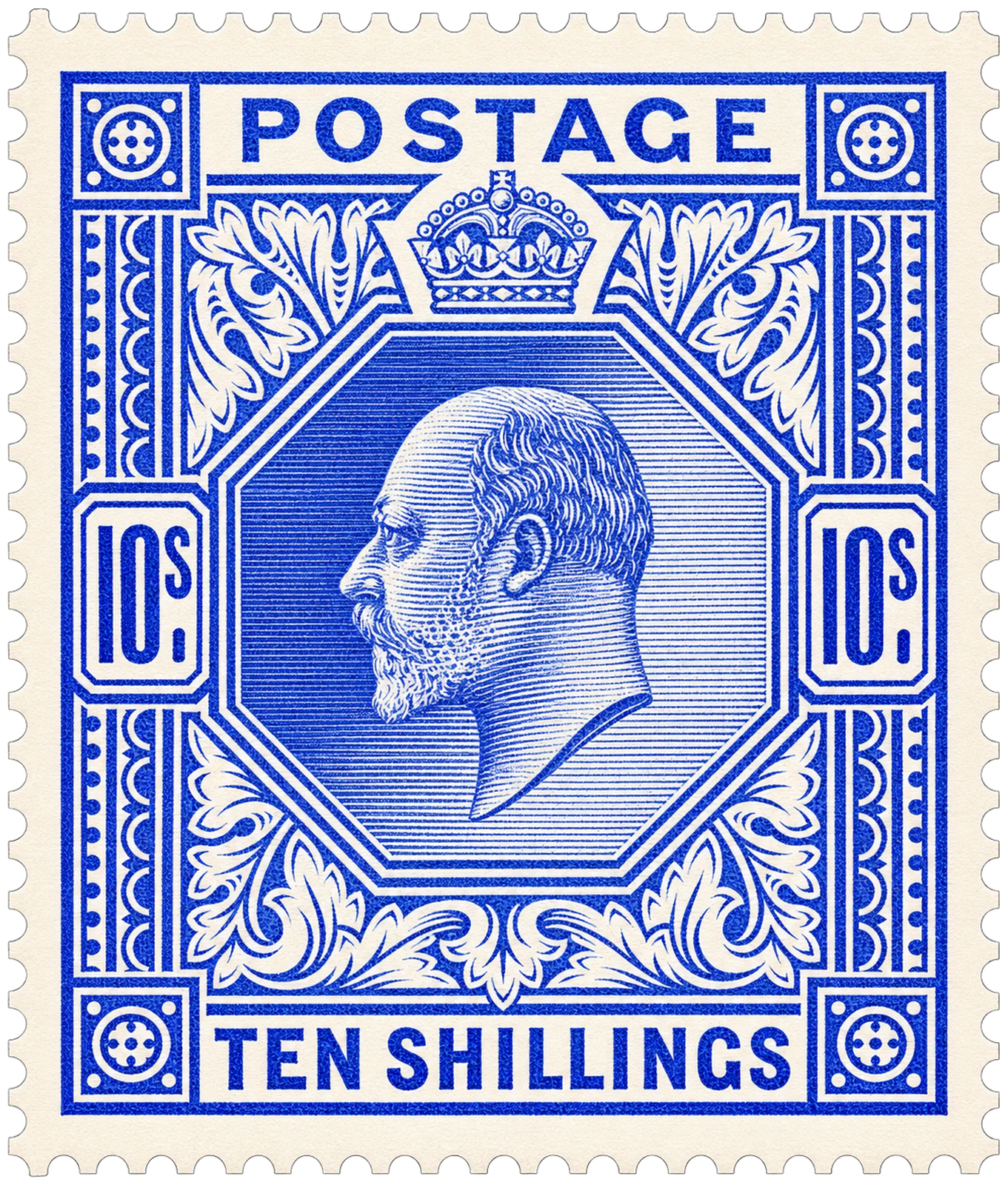
Edward VII · 10s ultramarine · 5 April 1902
The crown discussion on your Edward VII 10s ultramarine stamp led here. Compare the small printed emblem with the enlarged heraldic pattern below. The jewelled illustration explains the older historical object; it is not the model from which this stamp was engraved.
On the stamp you were exploring
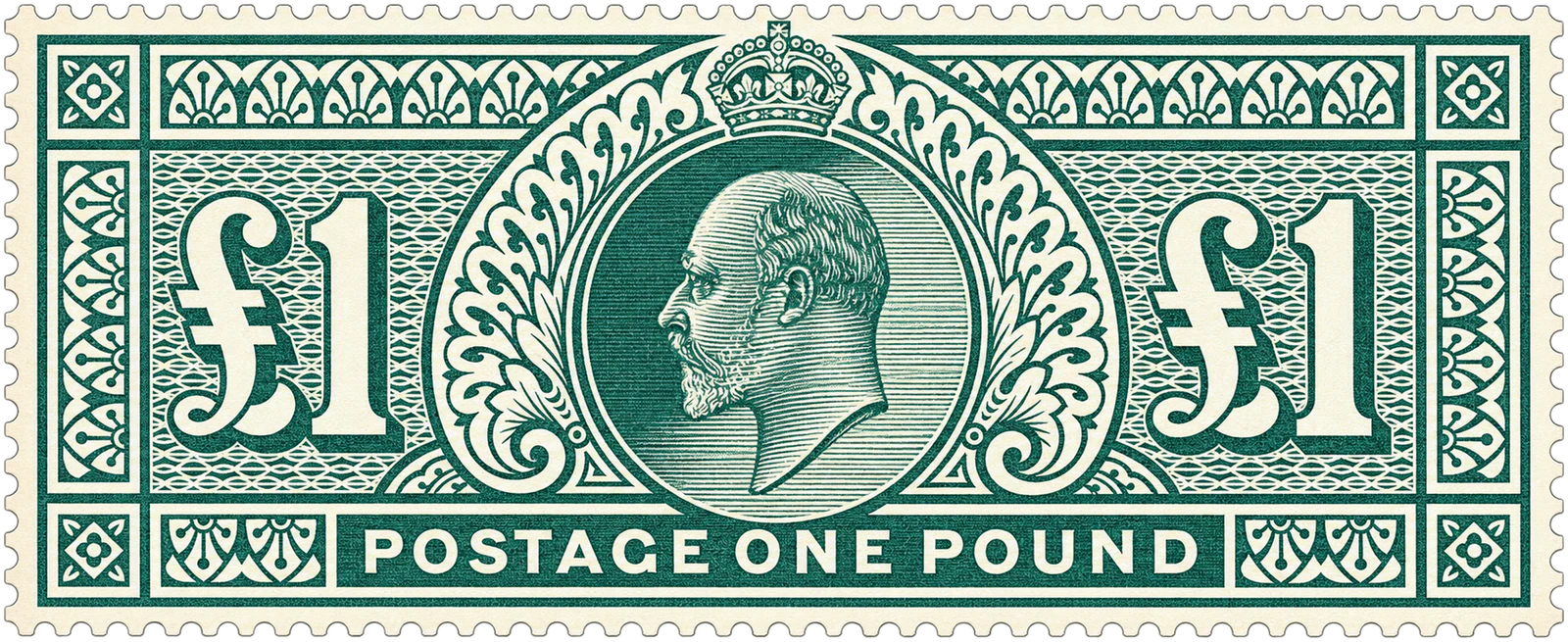
Edward VII · £1 dull blue-green · 1902 — reported as 16 July by Fulcher and 16 June by Voller
The crown discussion on your Edward VII £1 dull blue-green stamp led here. Compare the small printed emblem with the enlarged heraldic pattern below. The jewelled illustration explains the older historical object; it is not the model from which this stamp was engraved.
On the stamp you were exploring
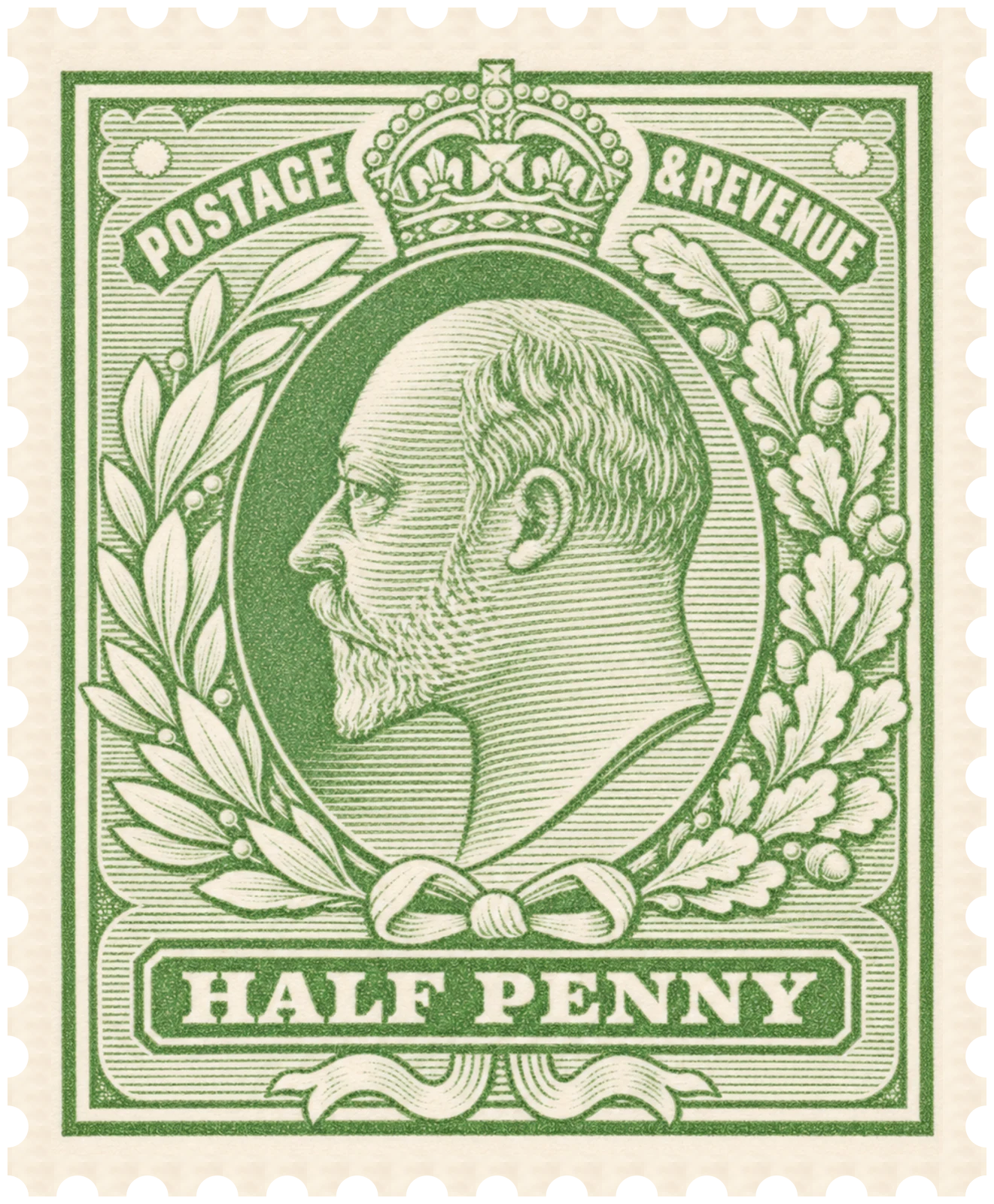
Edward VII · ½d dull yellow-green · 1911
The crown discussion on your Edward VII ½d dull yellow-green stamp led here. Compare the small printed emblem with the enlarged heraldic pattern below. The jewelled illustration explains the older historical object; it is not the model from which this stamp was engraved.
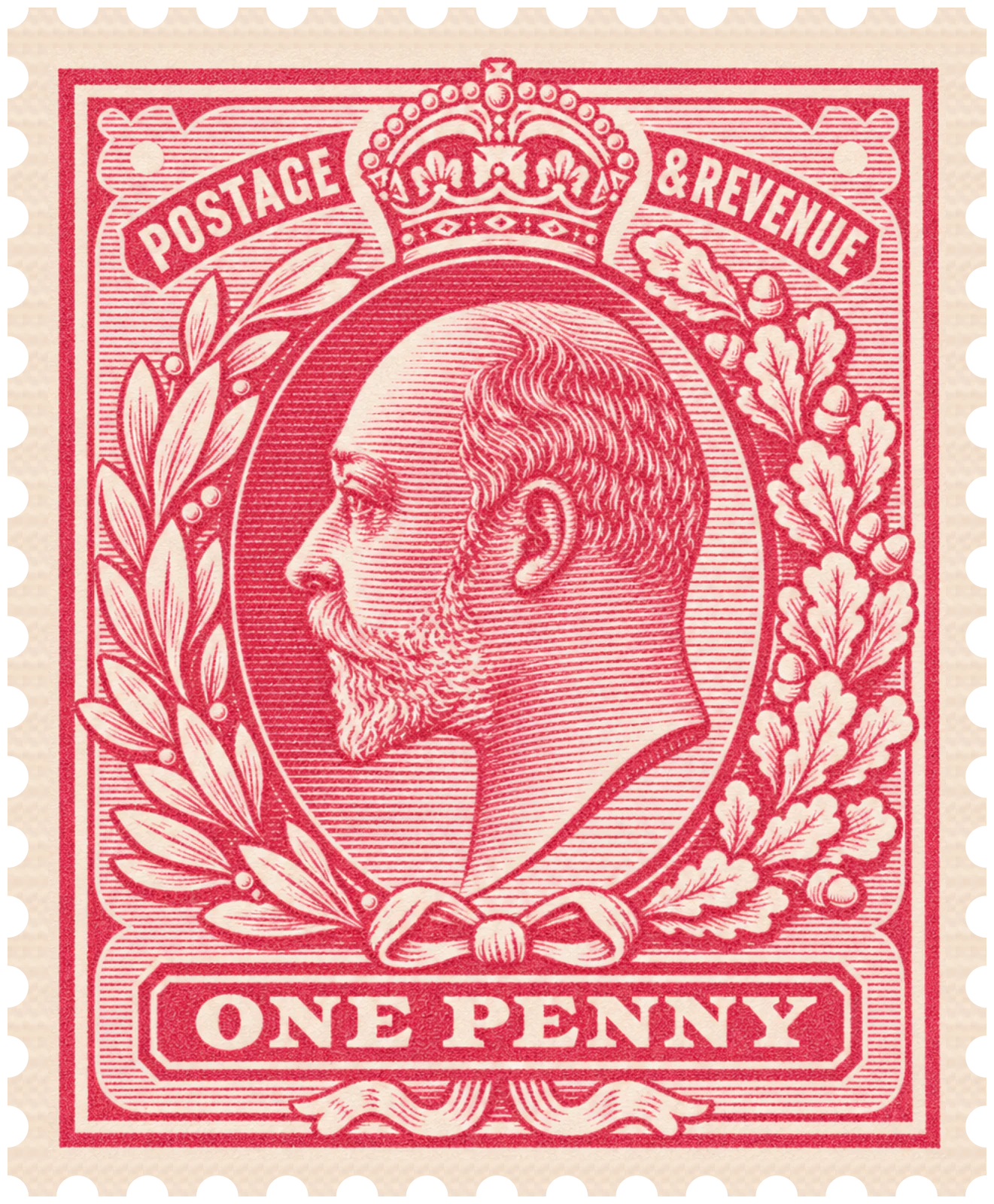
On the stamp you were exploring
Edward VII · 1d rose-red · 1911-05-04
The crown discussion on your Edward VII 1d rose-red stamp led here. Compare the small printed emblem with the enlarged heraldic pattern below. The jewelled illustration explains the older historical object; it is not the model from which this stamp was engraved.
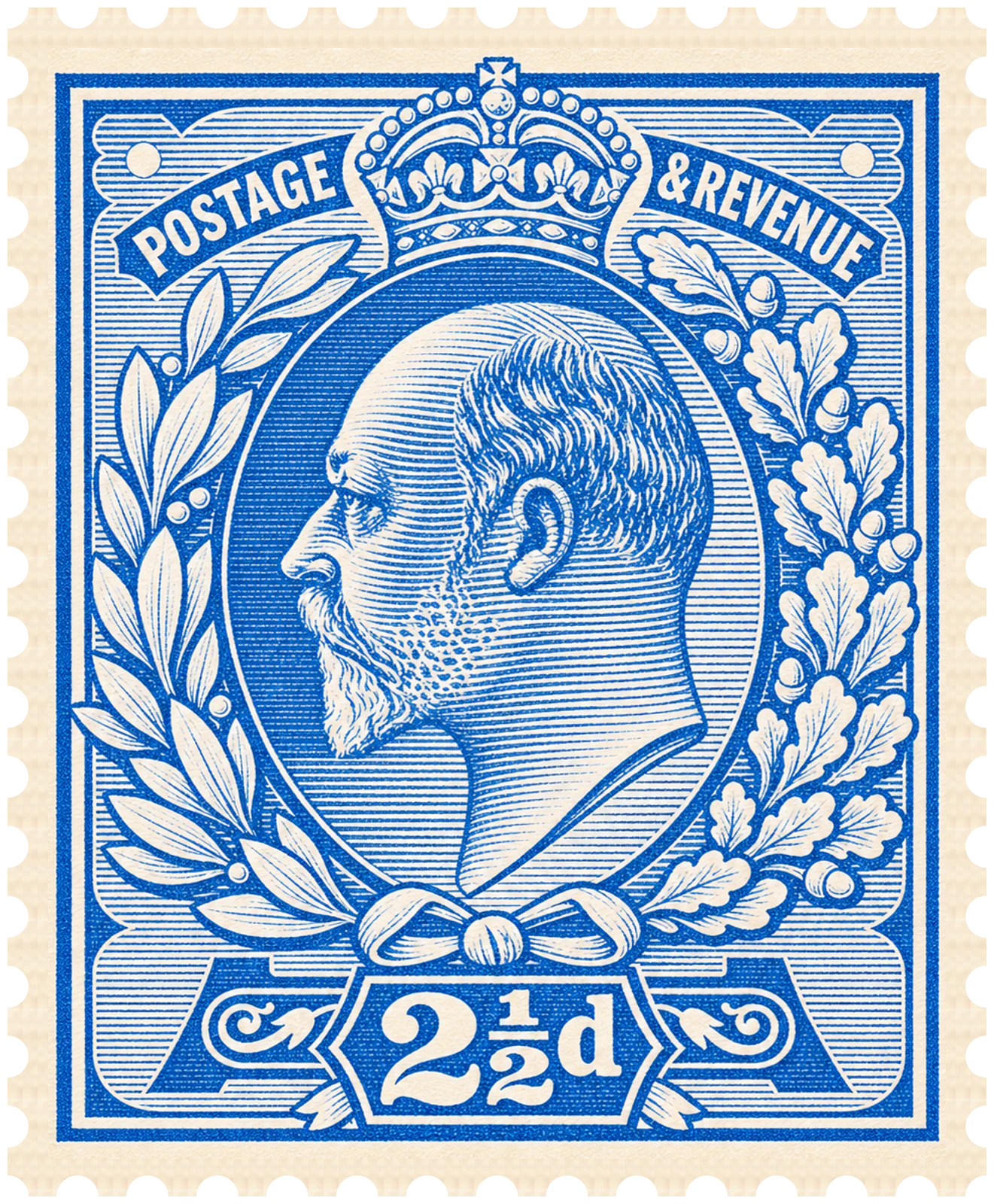
On the stamp you were exploring
Edward VII · 2½d bright blue · 1911-07-10
The crown discussion on your Edward VII 2½d bright blue stamp led here. Compare the small printed emblem with the enlarged heraldic pattern below. The jewelled illustration explains the older historical object; it is not the model from which this stamp was engraved.
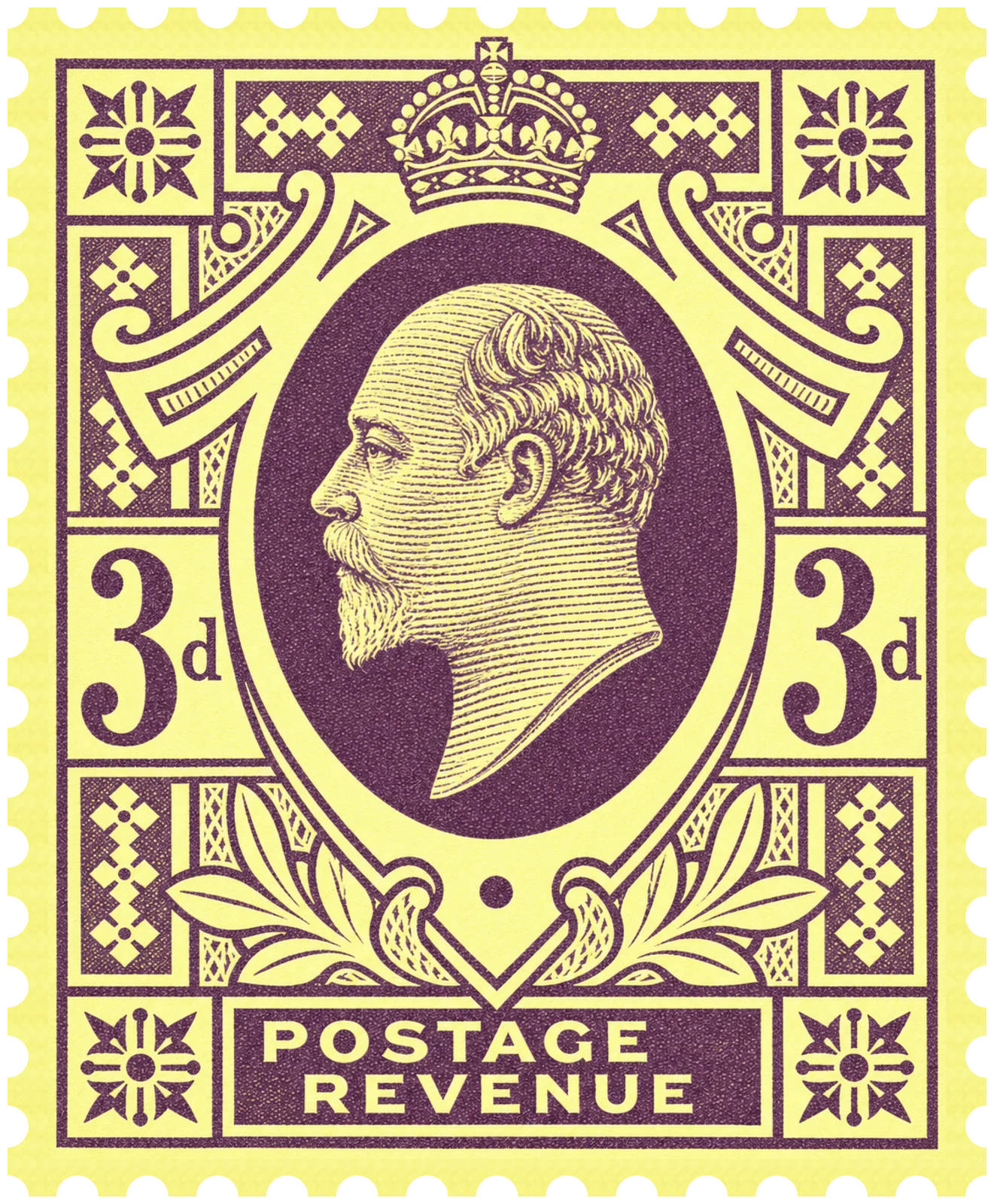
On the stamp you were exploring
Edward VII · 3d purple on lemon · 1911
The crown discussion on your Edward VII 3d purple on lemon stamp led here. Compare the small printed emblem with the enlarged heraldic pattern below. The jewelled illustration explains the older historical object; it is not the model from which this stamp was engraved.
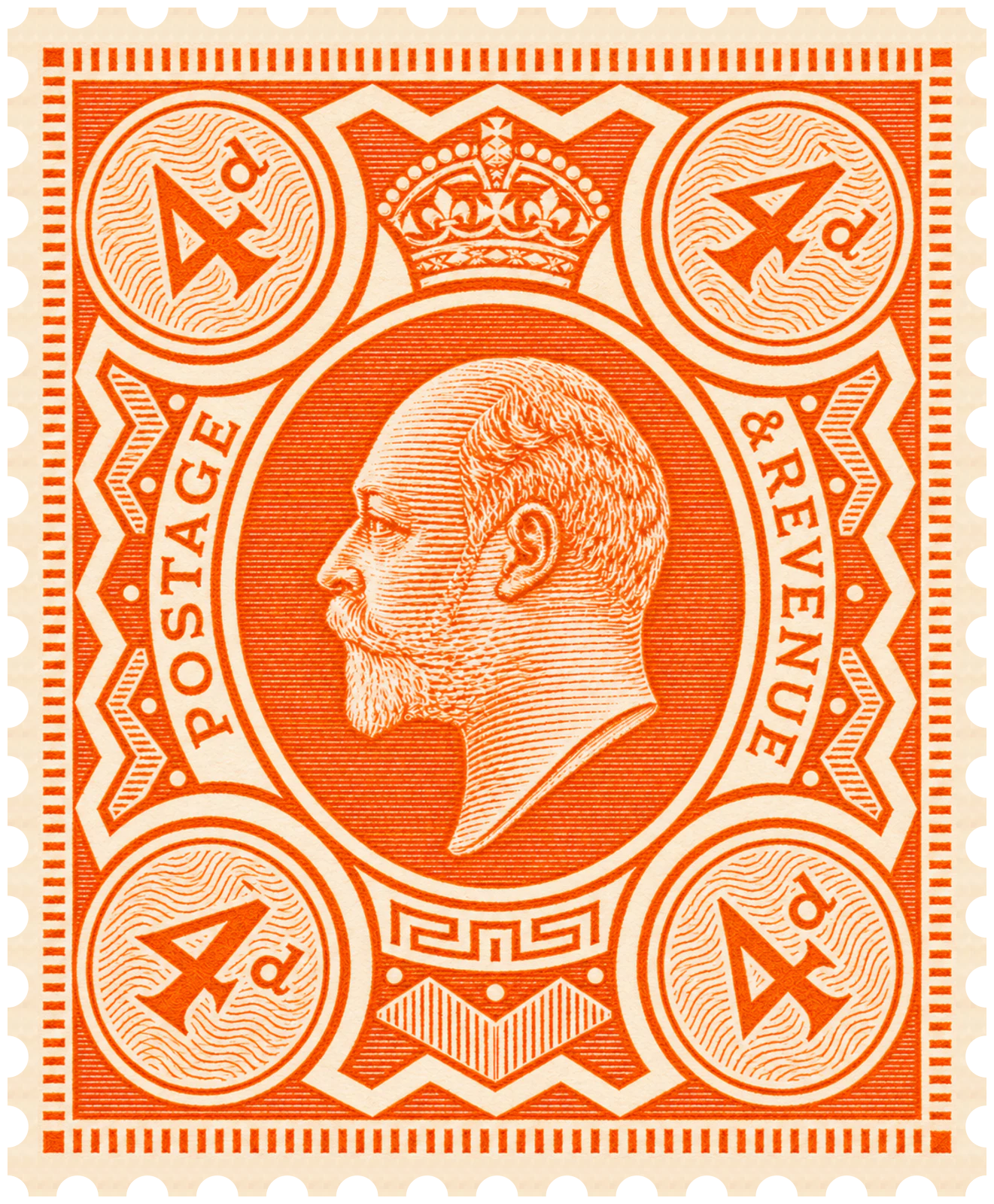
On the stamp you were exploring
Edward VII · 4d bright orange · 1911-07-16
The crown discussion on your Edward VII 4d bright orange stamp led here. Compare the small printed emblem with the enlarged heraldic pattern below. The jewelled illustration explains the older historical object; it is not the model from which this stamp was engraved.
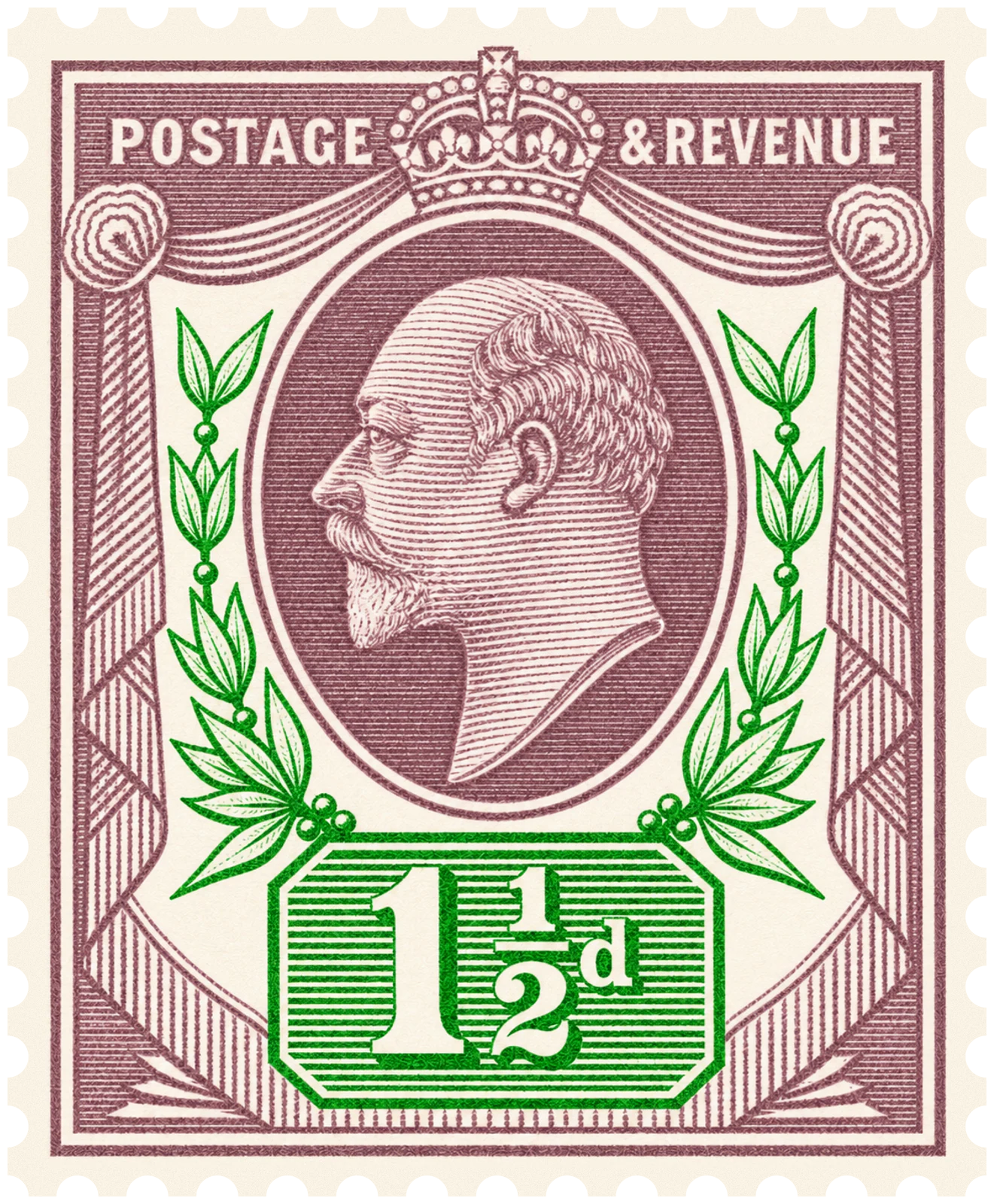
On the stamp you were exploring
Edward VII · 1½d reddish purple and green · 13 July 1911
The crown discussion on your Edward VII 1½d reddish purple and green stamp led here. Compare the small printed emblem with the enlarged heraldic pattern below. The jewelled illustration explains the older historical object; it is not the model from which this stamp was engraved.
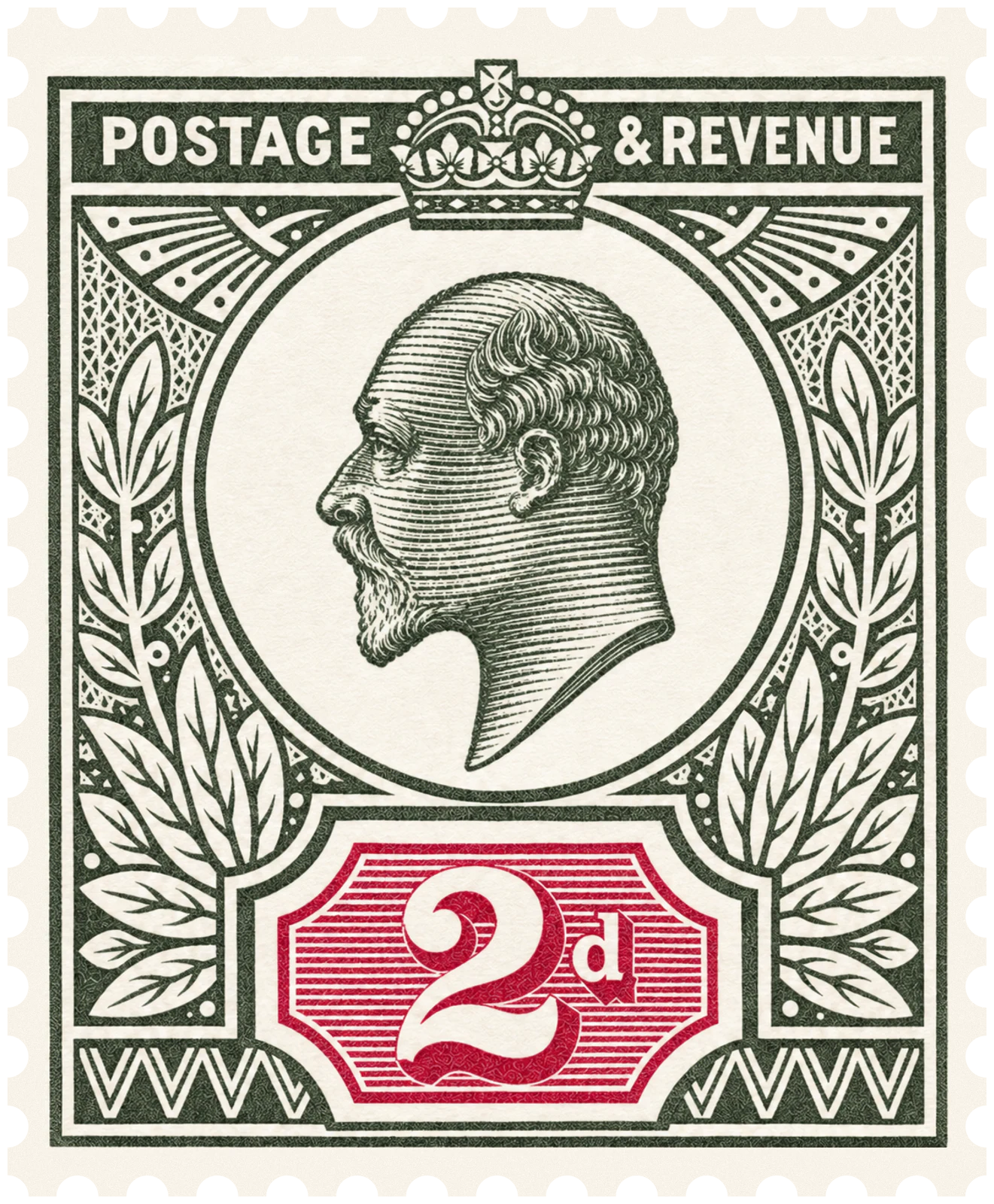
On the stamp you were exploring
Edward VII · 2d deep dull green and carmine · 8 August 1911
The crown discussion on your Edward VII 2d deep dull green and carmine stamp led here. Compare the small printed emblem with the enlarged heraldic pattern below. The jewelled illustration explains the older historical object; it is not the model from which this stamp was engraved.
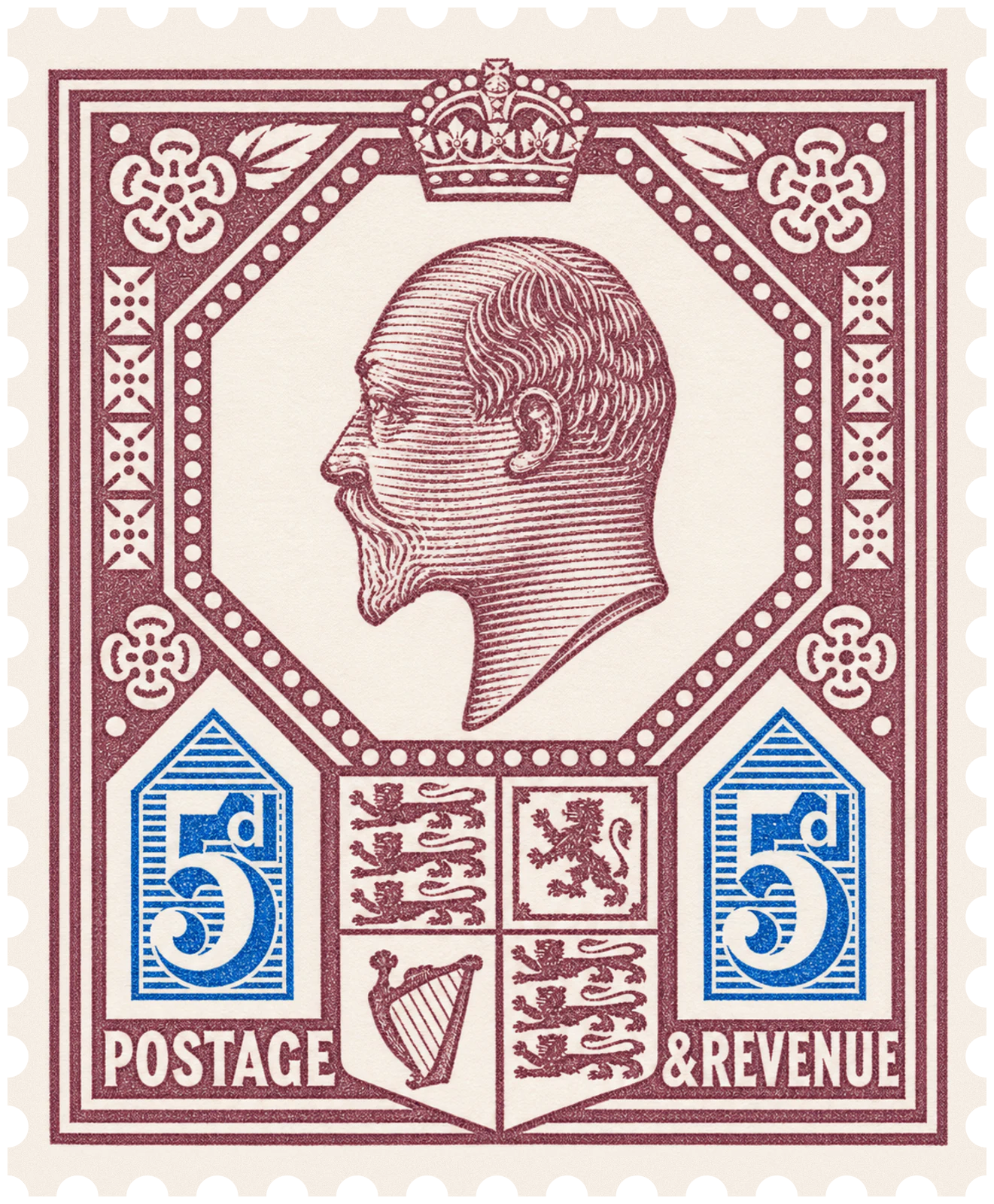
On the stamp you were exploring
Edward VII · 5d dull reddish purple and bright blue · 16 August 1911
The crown discussion on your Edward VII 5d dull reddish purple and bright blue stamp led here. Compare the small printed emblem with the enlarged heraldic pattern below. The jewelled illustration explains the older historical object; it is not the model from which this stamp was engraved.
← Back to 5d dull reddish purple and bright blue: stamp details
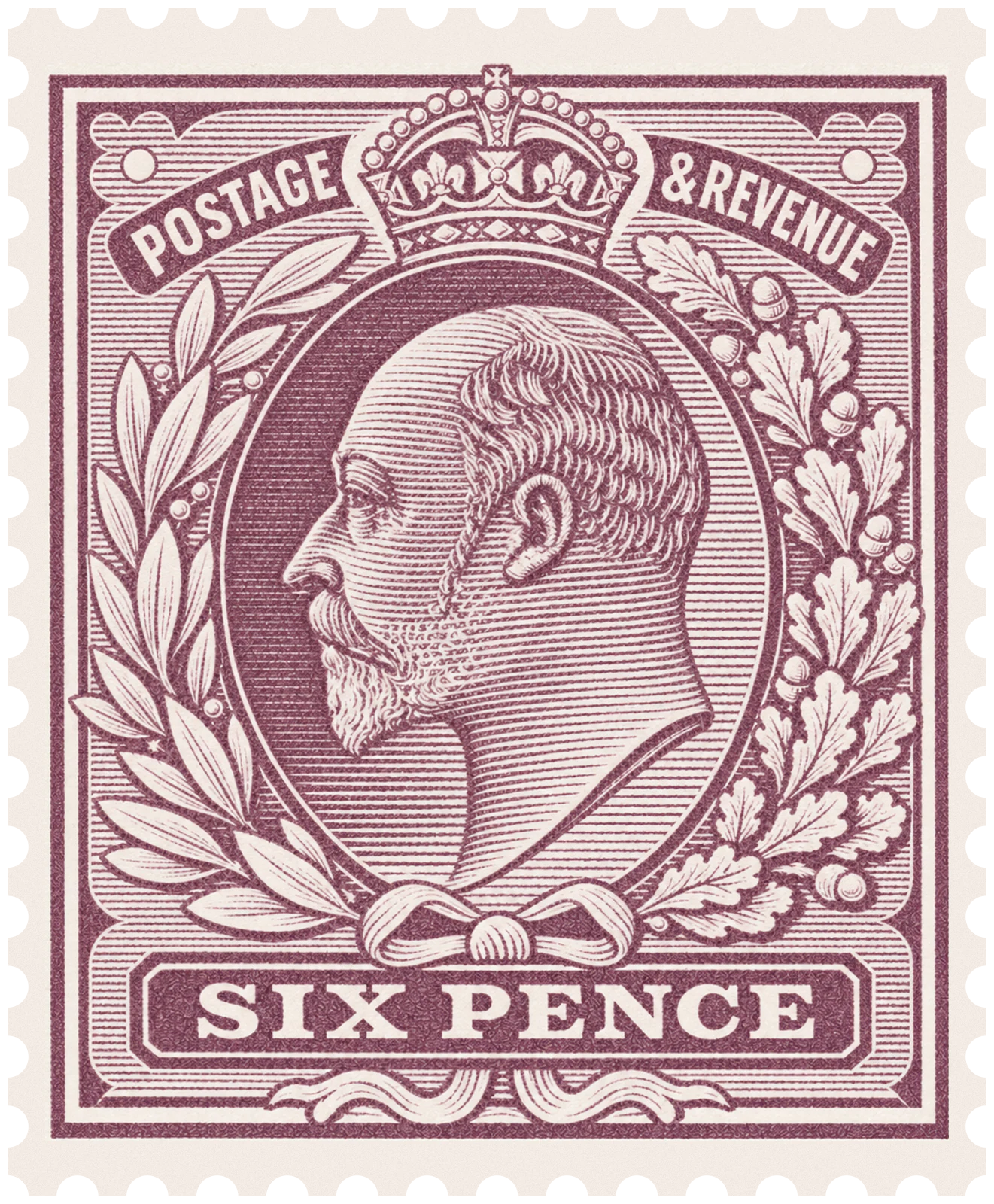
On the stamp you were exploring
Edward VII · 6d dull purple · 1911
The crown discussion on your Edward VII 6d dull purple stamp led here. Compare the small printed emblem with the enlarged heraldic pattern below. The jewelled illustration explains the older historical object; it is not the model from which this stamp was engraved.
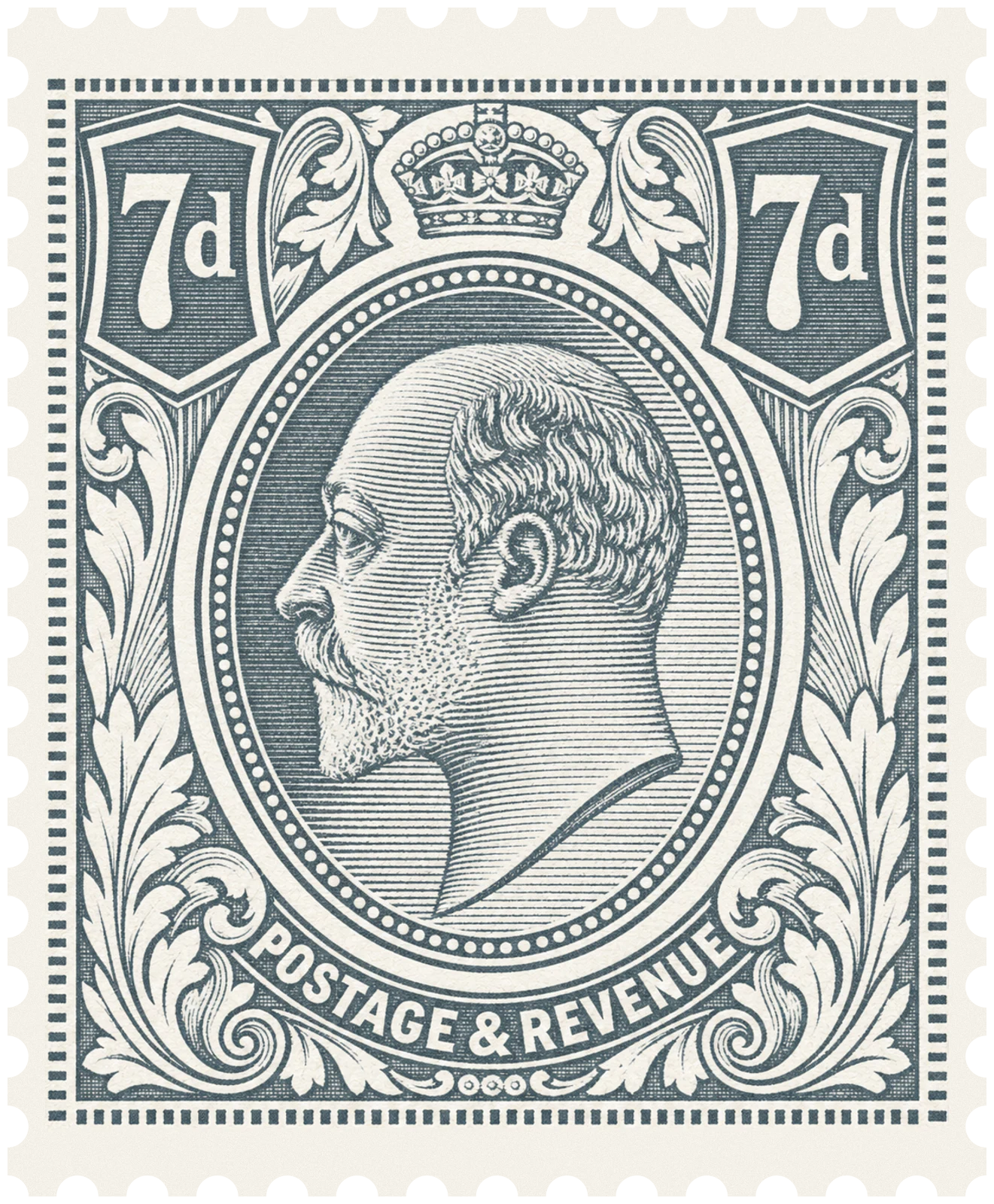
On the stamp you were exploring
Edward VII · 7d slate-grey · 1 August 1912
The crown discussion on your Edward VII 7d slate-grey stamp led here. Compare the small printed emblem with the enlarged heraldic pattern below. The jewelled illustration explains the older historical object; it is not the model from which this stamp was engraved.
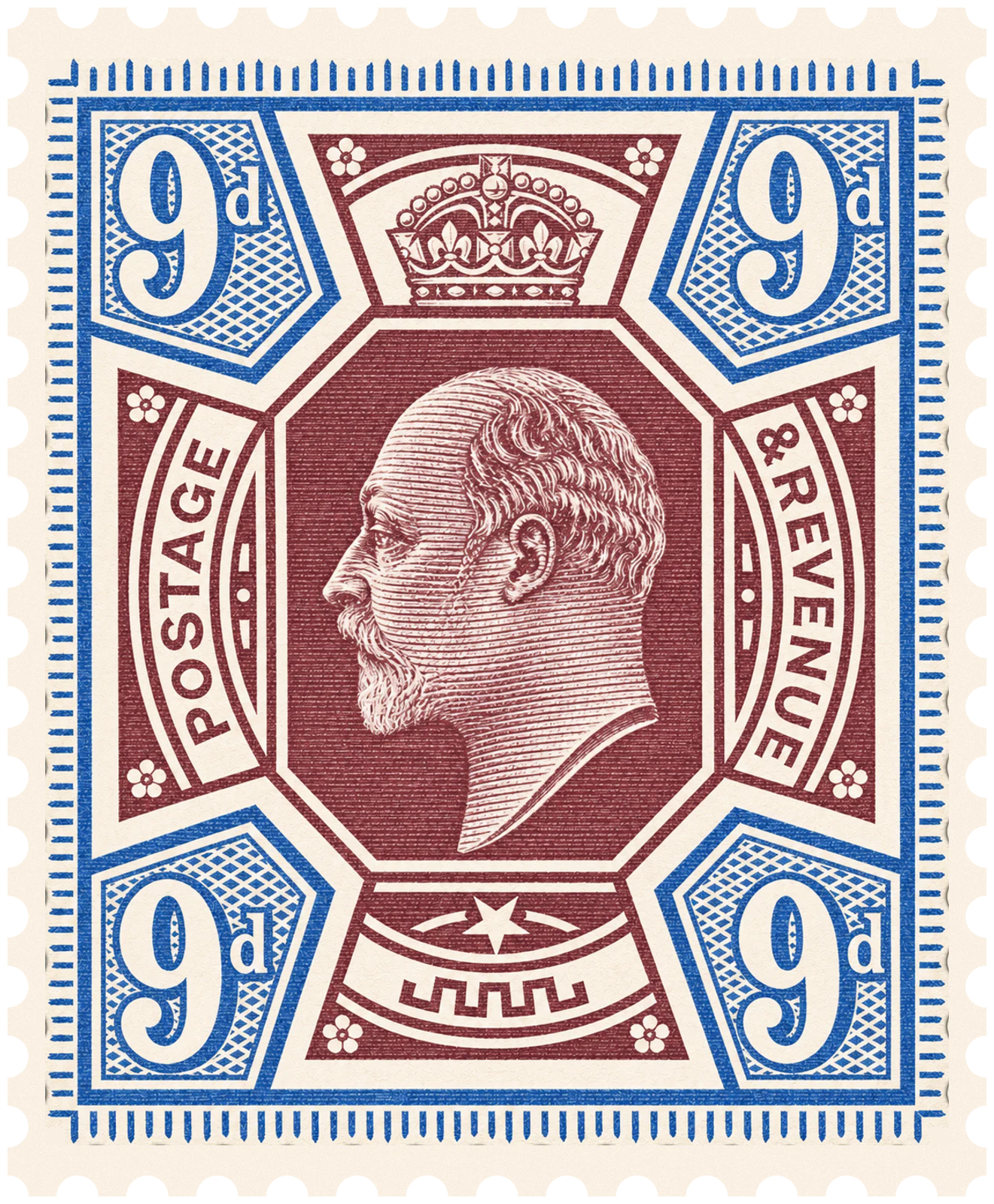
On the stamp you were exploring
Edward VII · 9d dull reddish purple and blue · 24 July 1911 (ninepenny family)
The crown discussion on your Edward VII 9d dull reddish purple and blue stamp led here. Compare the small printed emblem with the enlarged heraldic pattern below. The jewelled illustration explains the older historical object; it is not the model from which this stamp was engraved.
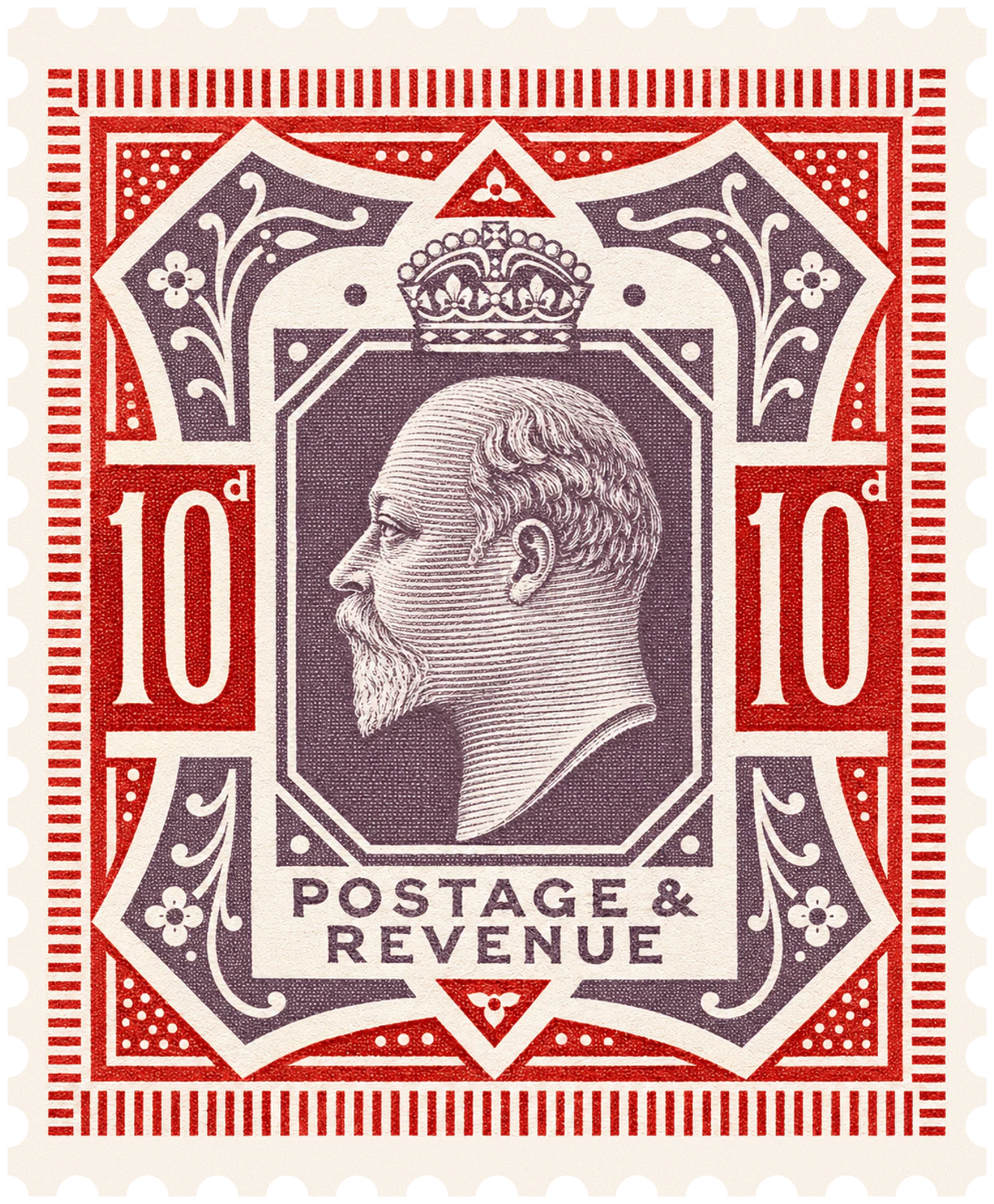
On the stamp you were exploring
Edward VII · 10d dull purple and scarlet · 1911
The crown discussion on your Edward VII 10d dull purple and scarlet stamp led here. Compare the small printed emblem with the enlarged heraldic pattern below. The jewelled illustration explains the older historical object; it is not the model from which this stamp was engraved.
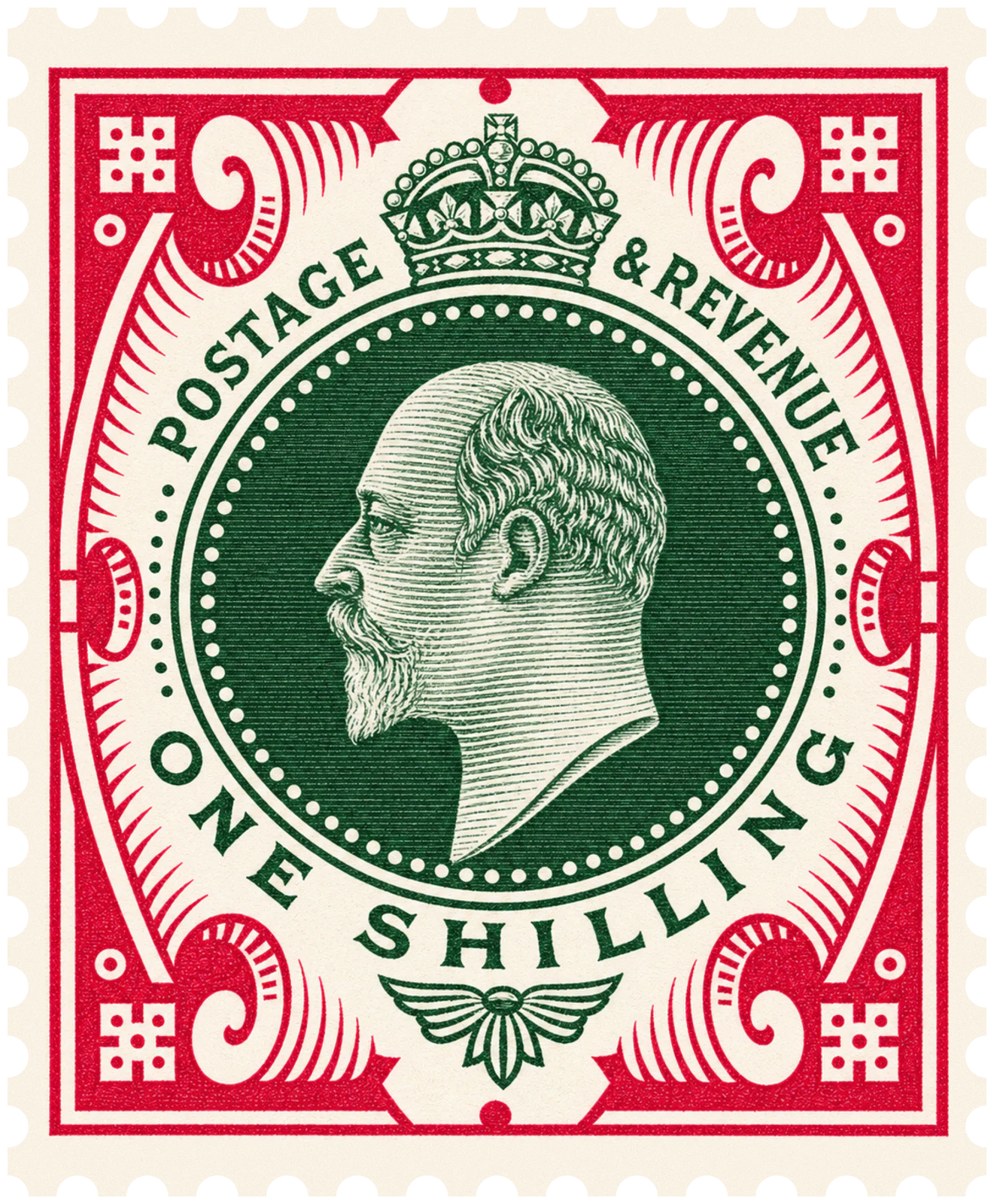
On the stamp you were exploring
Edward VII · 1s green and carmine · 19 July 1911
The crown discussion on your Edward VII 1s green and carmine stamp led here. Compare the small printed emblem with the enlarged heraldic pattern below. The jewelled illustration explains the older historical object; it is not the model from which this stamp was engraved.
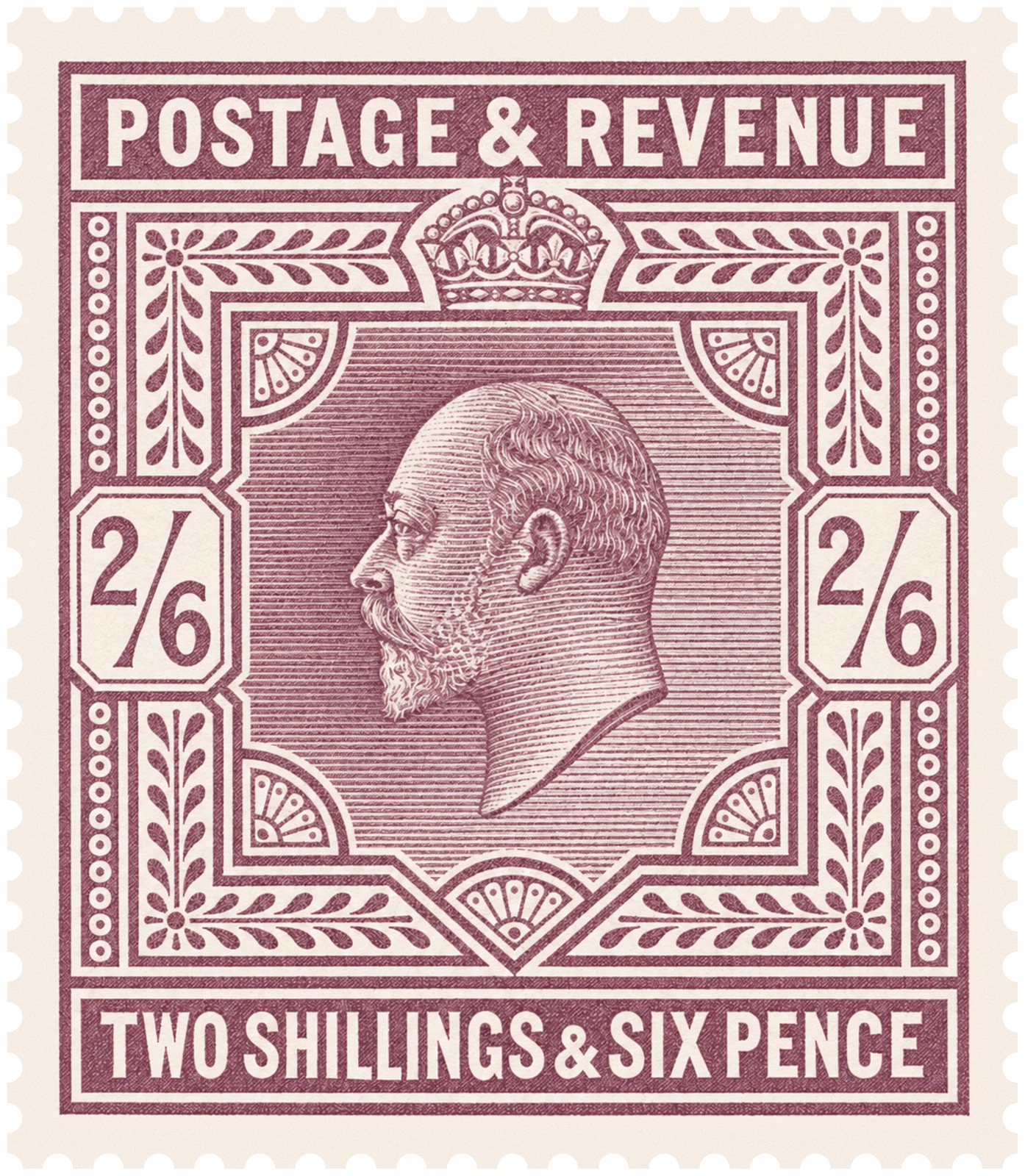
On the stamp you were exploring
Edward VII · 2s 6d dull reddish purple · September 1911
The crown discussion on your Edward VII 2s 6d dull reddish purple stamp led here. Compare the small printed emblem with the enlarged heraldic pattern below. The jewelled illustration explains the older historical object; it is not the model from which this stamp was engraved.
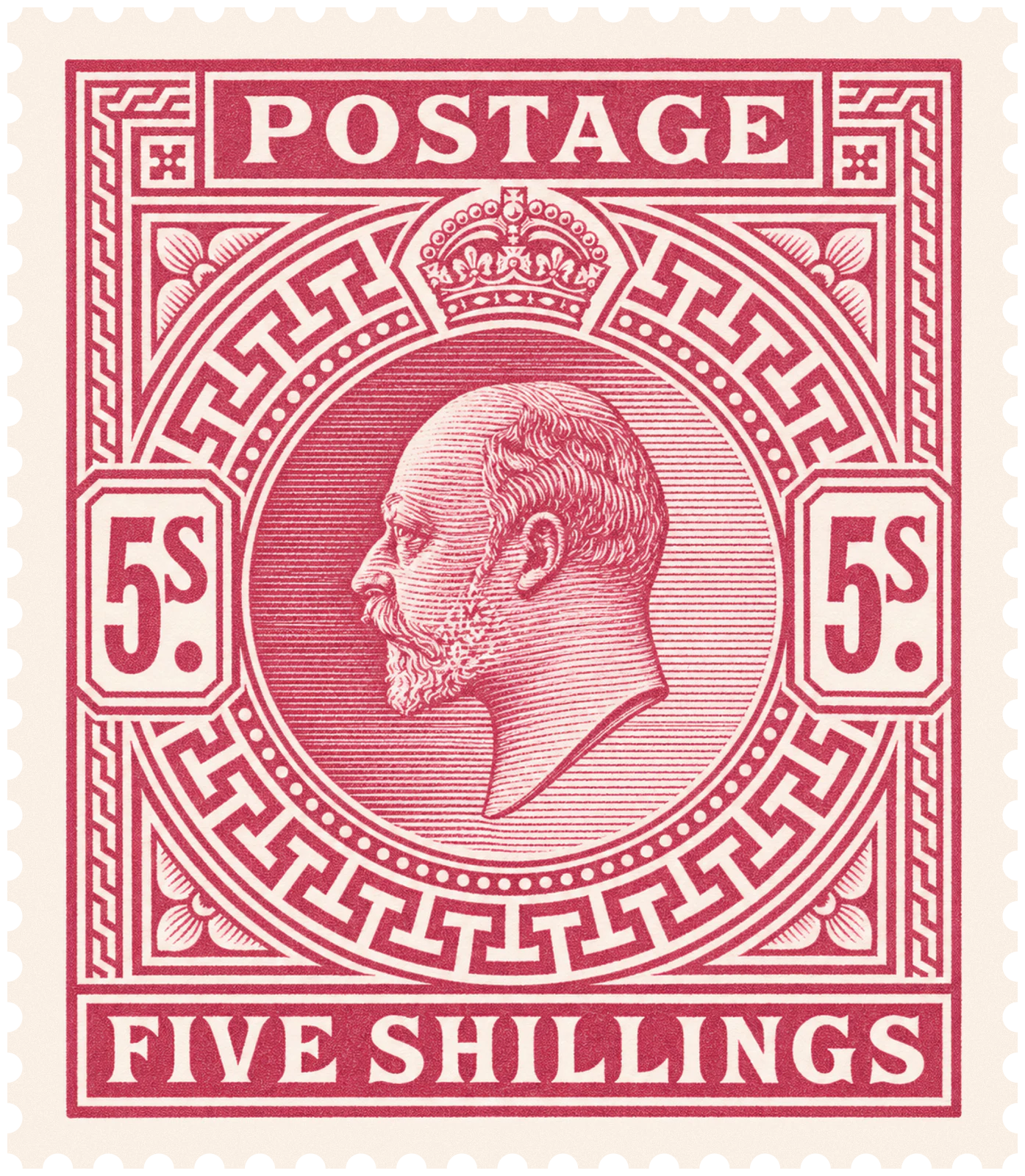
On the stamp you were exploring
Edward VII · 5s carmine · 29 February 1912
The crown discussion on your Edward VII 5s carmine stamp led here. Compare the small printed emblem with the enlarged heraldic pattern below. The jewelled illustration explains the older historical object; it is not the model from which this stamp was engraved.
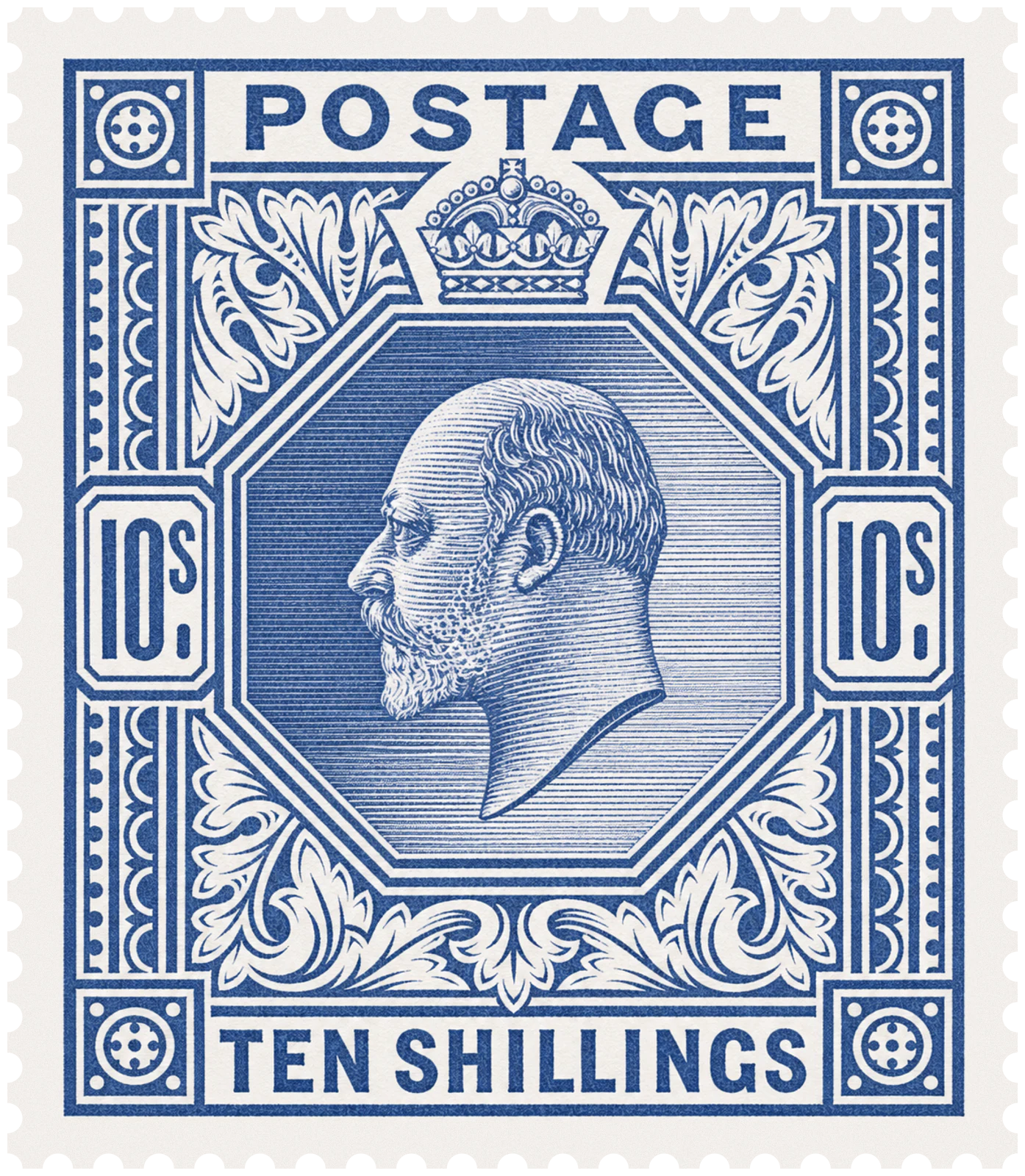
On the stamp you were exploring
Edward VII · 10s blue · 14 January 1912
The crown discussion on your Edward VII 10s blue stamp led here. Compare the small printed emblem with the enlarged heraldic pattern below. The jewelled illustration explains the older historical object; it is not the model from which this stamp was engraved.
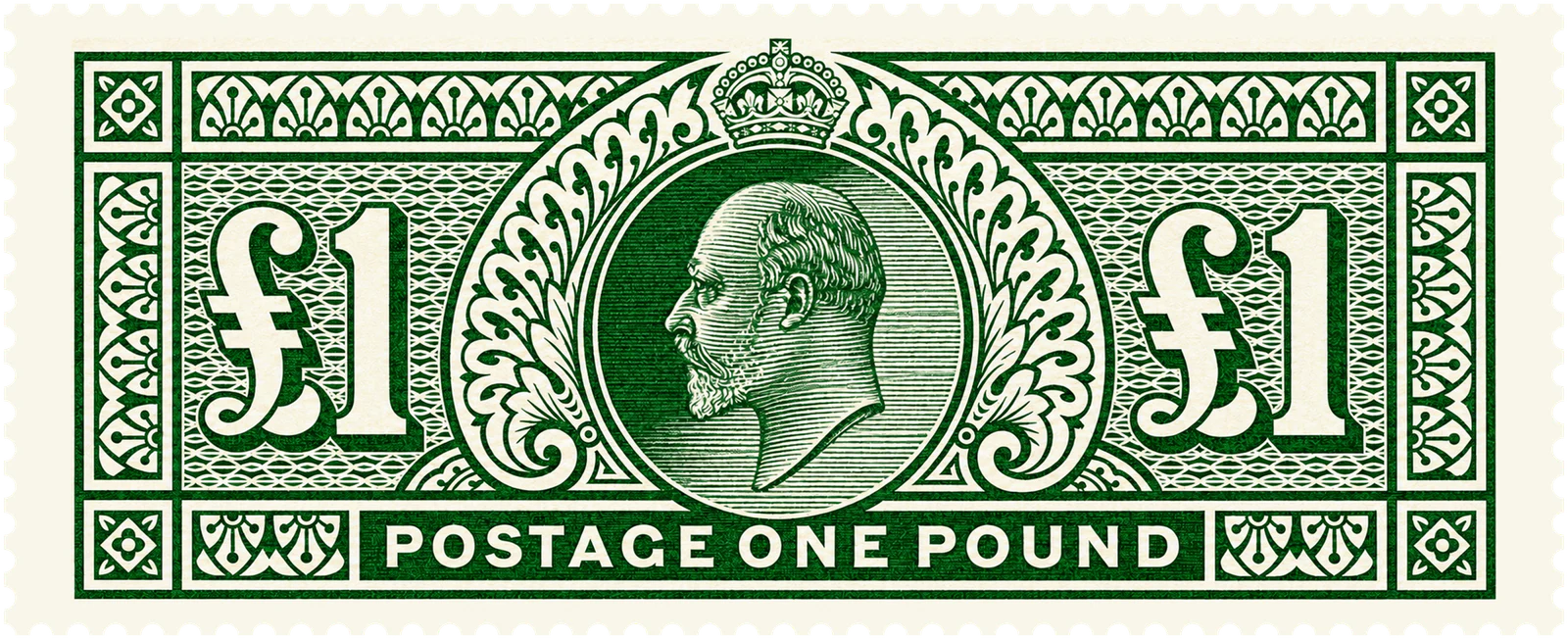
On the stamp you were exploring
Edward VII · £1 deep green · 1911
The crown discussion on your Edward VII £1 deep green stamp led here. Compare the small printed emblem with the enlarged heraldic pattern below. The jewelled illustration explains the older historical object; it is not the model from which this stamp was engraved.
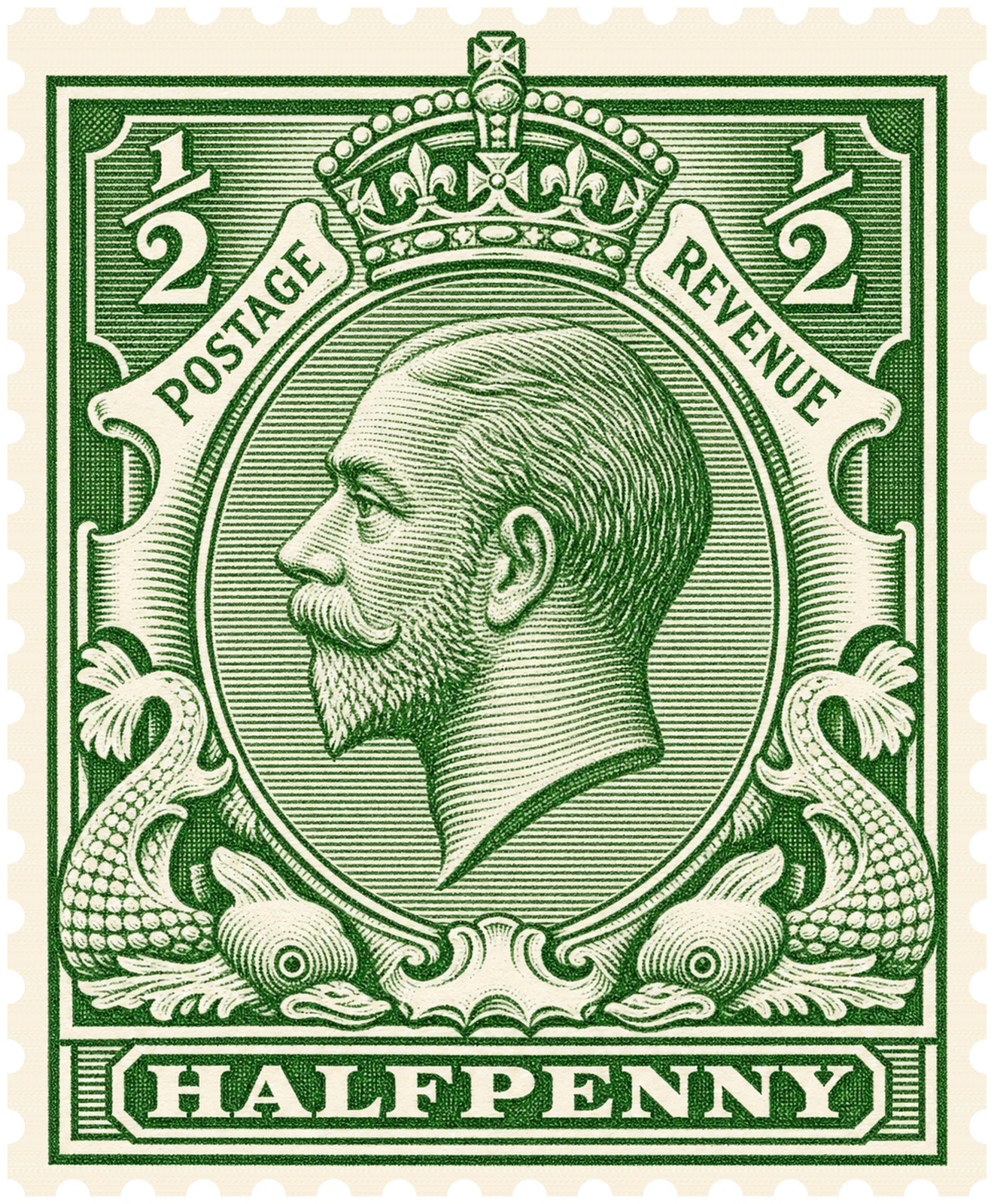
On the stamp you were exploring
George V · ½d green · 16 January 1913
The crown discussion on your George V ½d green stamp led here. Compare the small printed emblem with the enlarged heraldic pattern below. The jewelled illustration explains the older historical object; it is not the model from which this stamp was engraved.
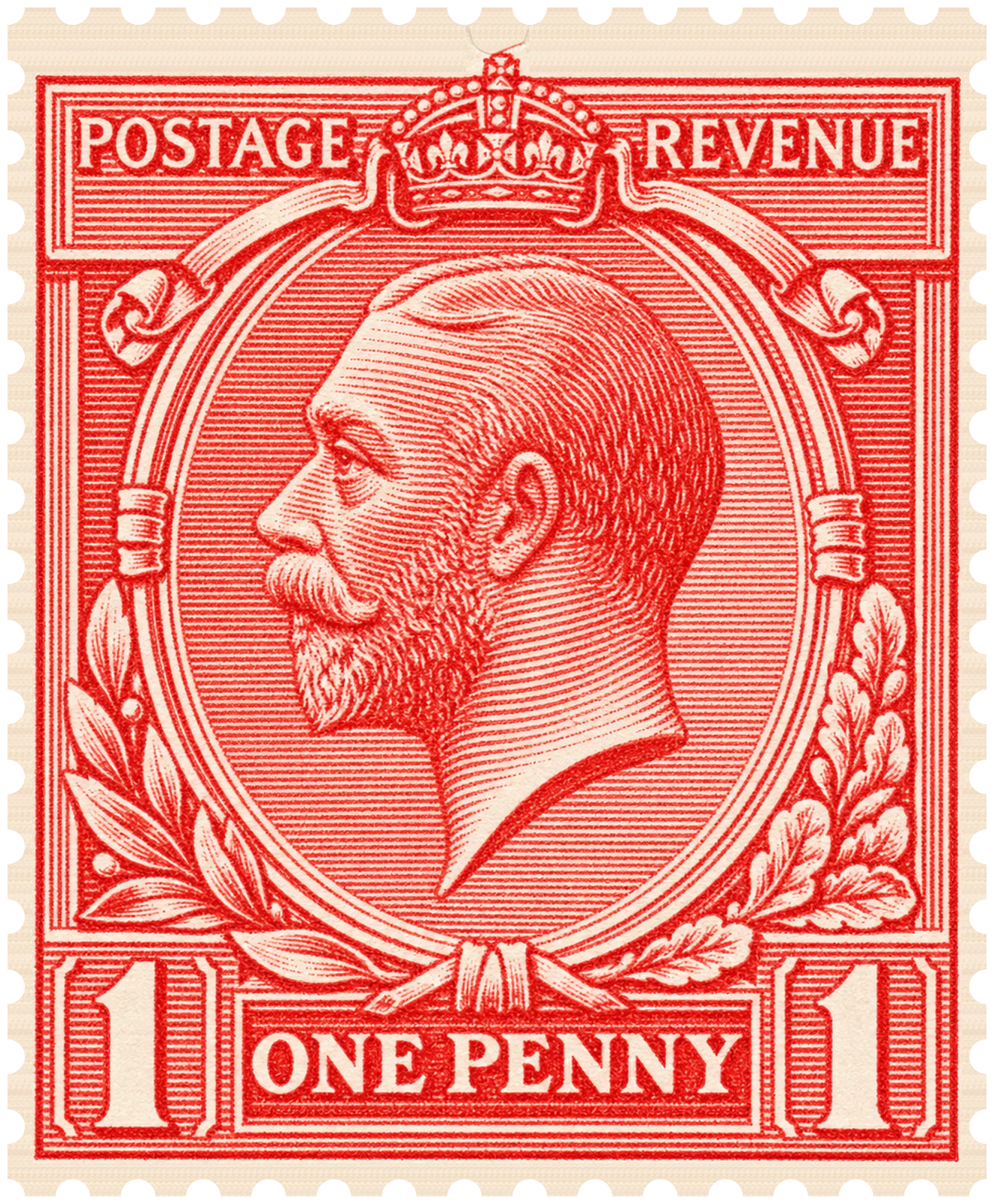
On the stamp you were exploring
George V · 1d scarlet · 8 October 1912
The crown discussion on your George V 1d scarlet stamp led here. Compare the small printed emblem with the enlarged heraldic pattern below. The jewelled illustration explains the older historical object; it is not the model from which this stamp was engraved.
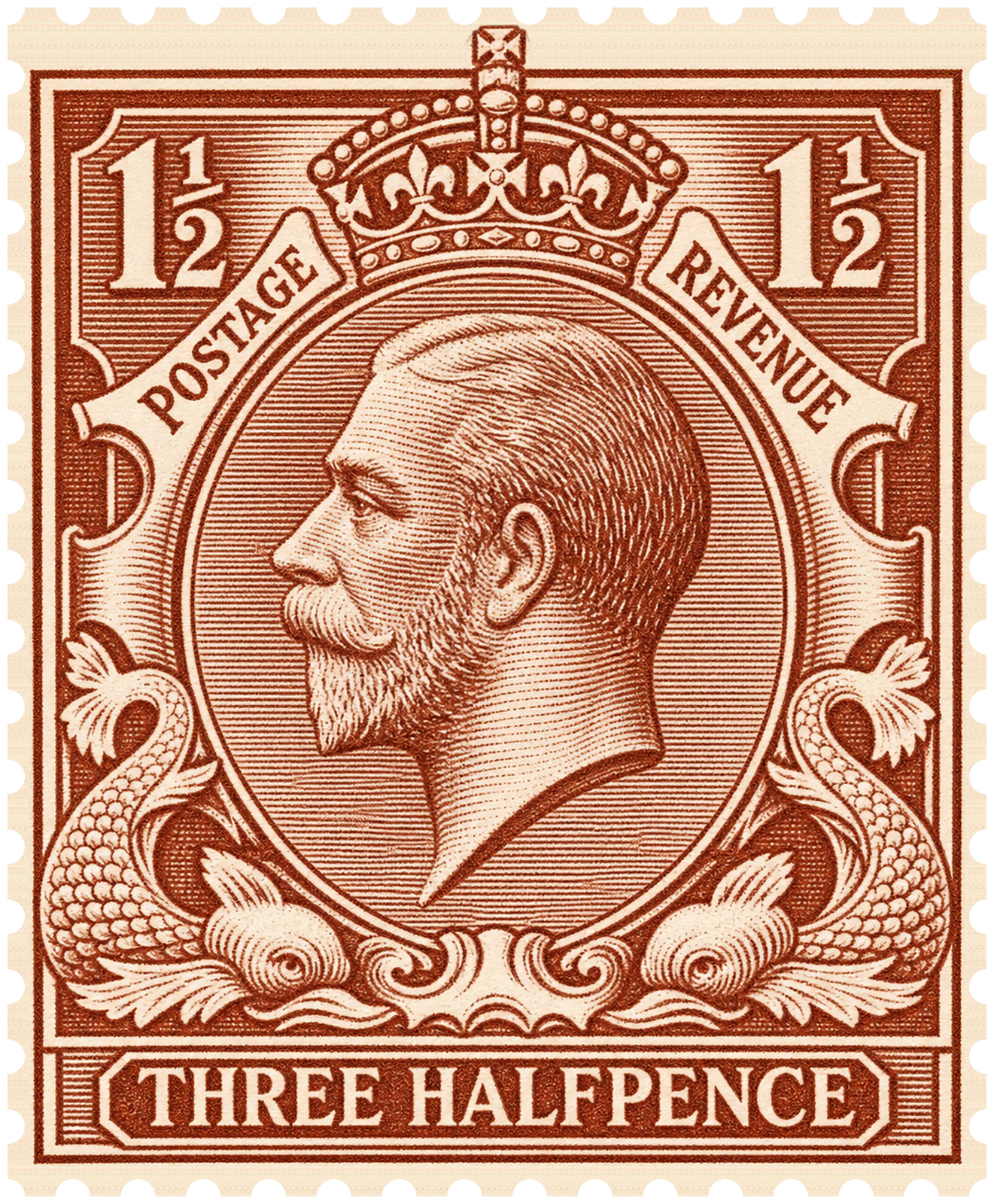
On the stamp you were exploring
George V · 1½d red-brown · 15 October 1912
The crown discussion on your George V 1½d red-brown stamp led here. Compare the small printed emblem with the enlarged heraldic pattern below. The jewelled illustration explains the older historical object; it is not the model from which this stamp was engraved.
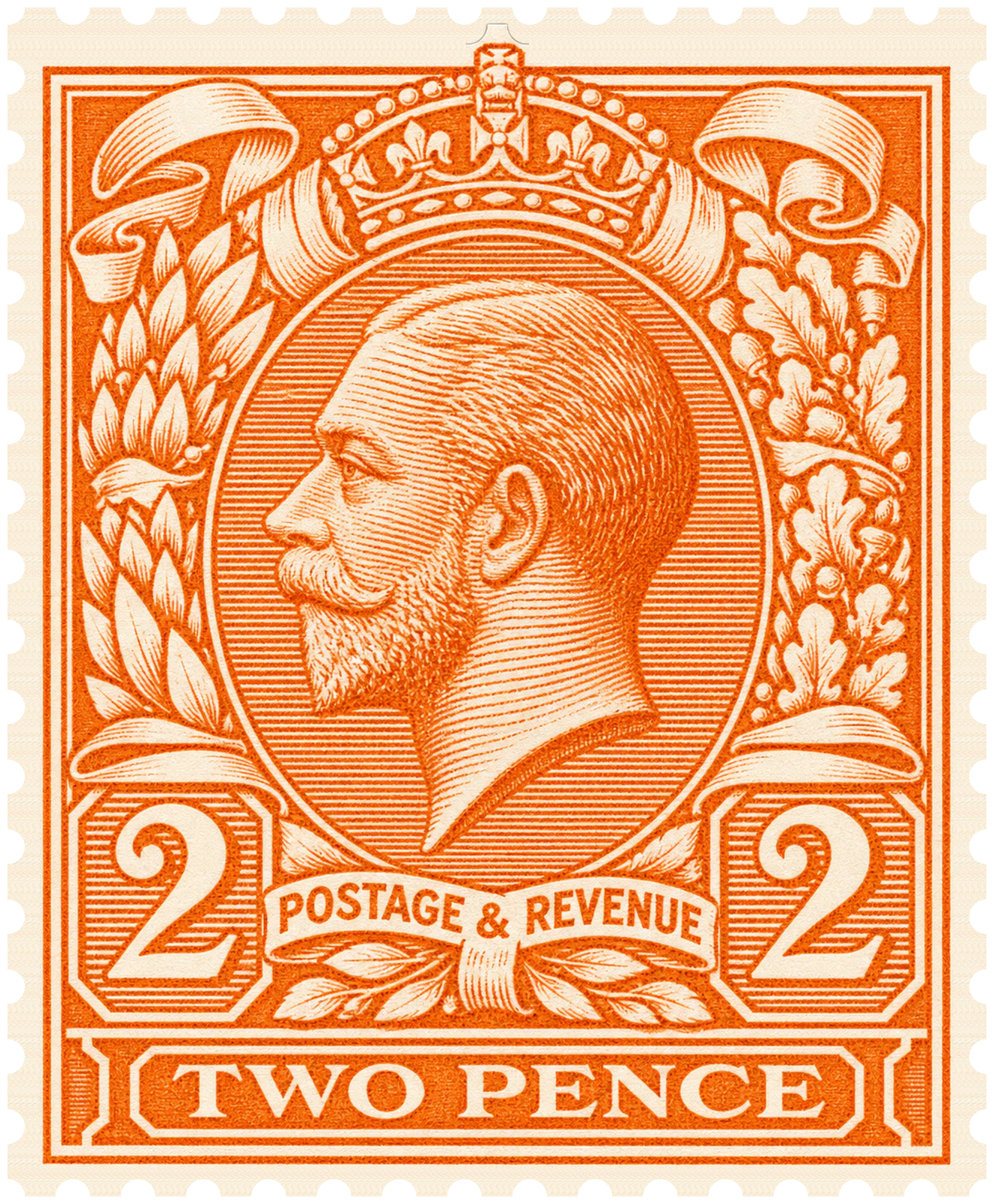
On the stamp you were exploring
George V · 2d orange · 21 August 1912
The crown discussion on your George V 2d orange stamp led here. Compare the small printed emblem with the enlarged heraldic pattern below. The jewelled illustration explains the older historical object; it is not the model from which this stamp was engraved.
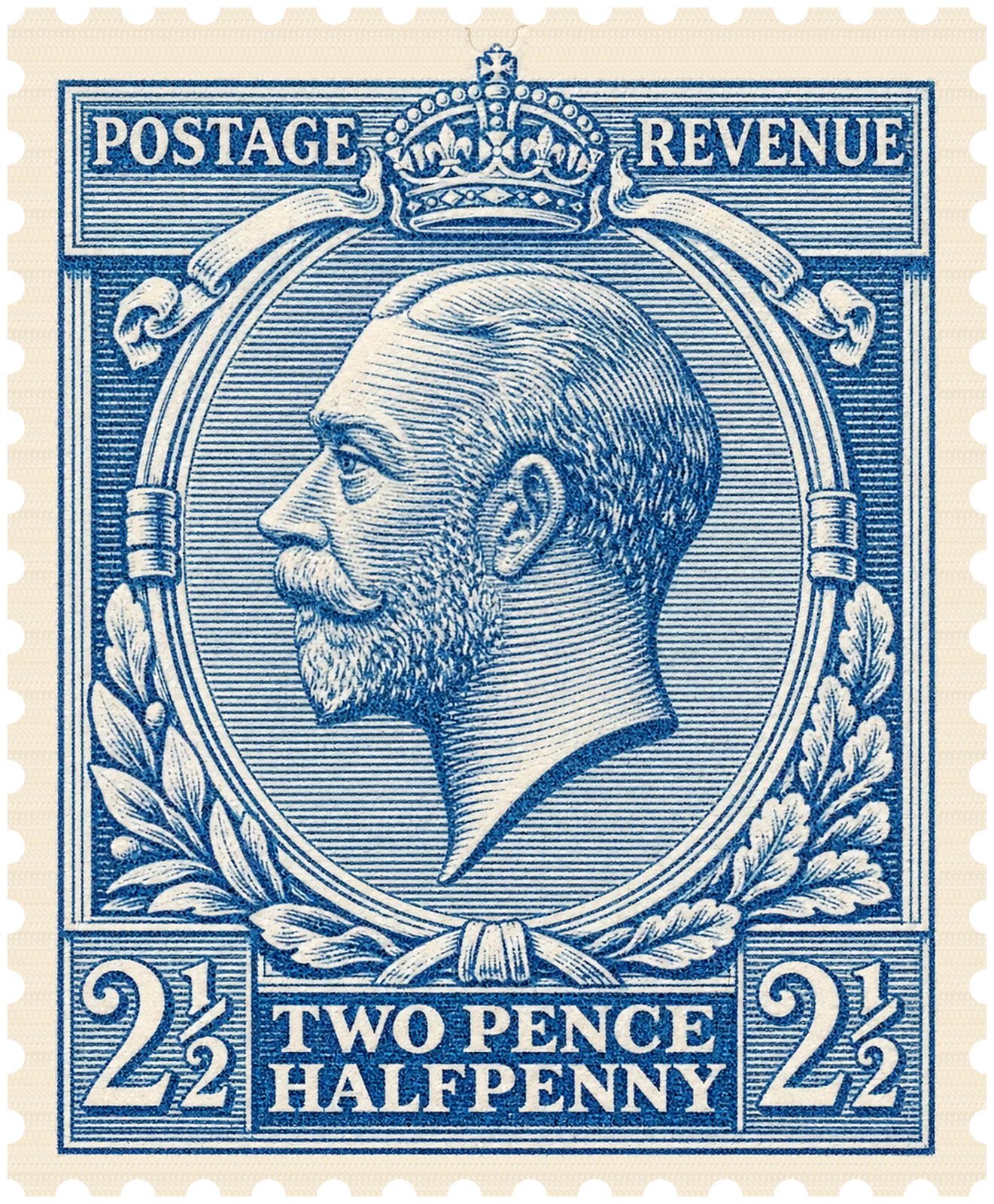
On the stamp you were exploring
George V · 2½d blue · 18 October 1912
The crown discussion on your George V 2½d blue stamp led here. Compare the small printed emblem with the enlarged heraldic pattern below. The jewelled illustration explains the older historical object; it is not the model from which this stamp was engraved.
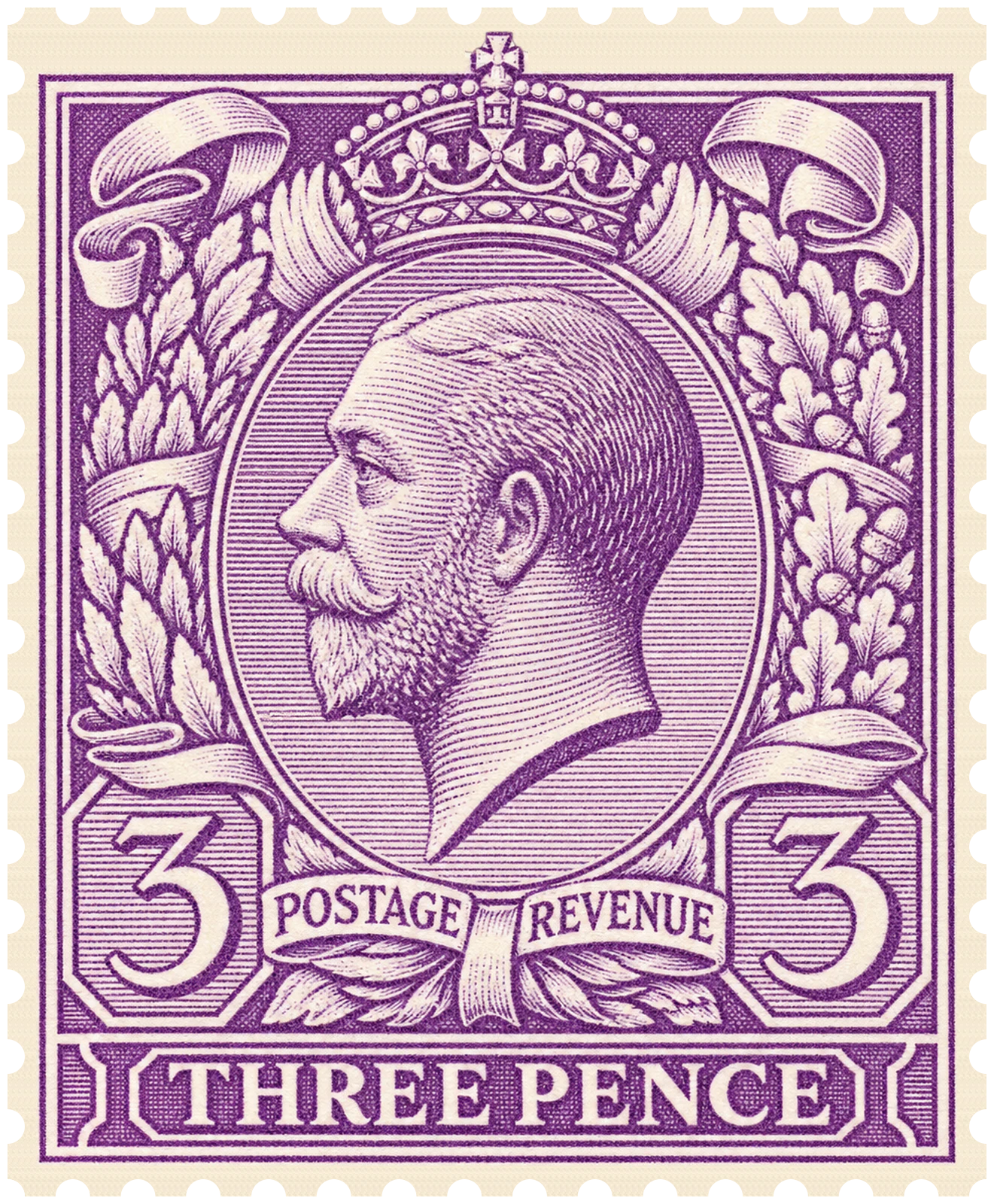
On the stamp you were exploring
George V · 3d violet · 8 October 1912
The crown discussion on your George V 3d violet stamp led here. Compare the small printed emblem with the enlarged heraldic pattern below. The jewelled illustration explains the older historical object; it is not the model from which this stamp was engraved.
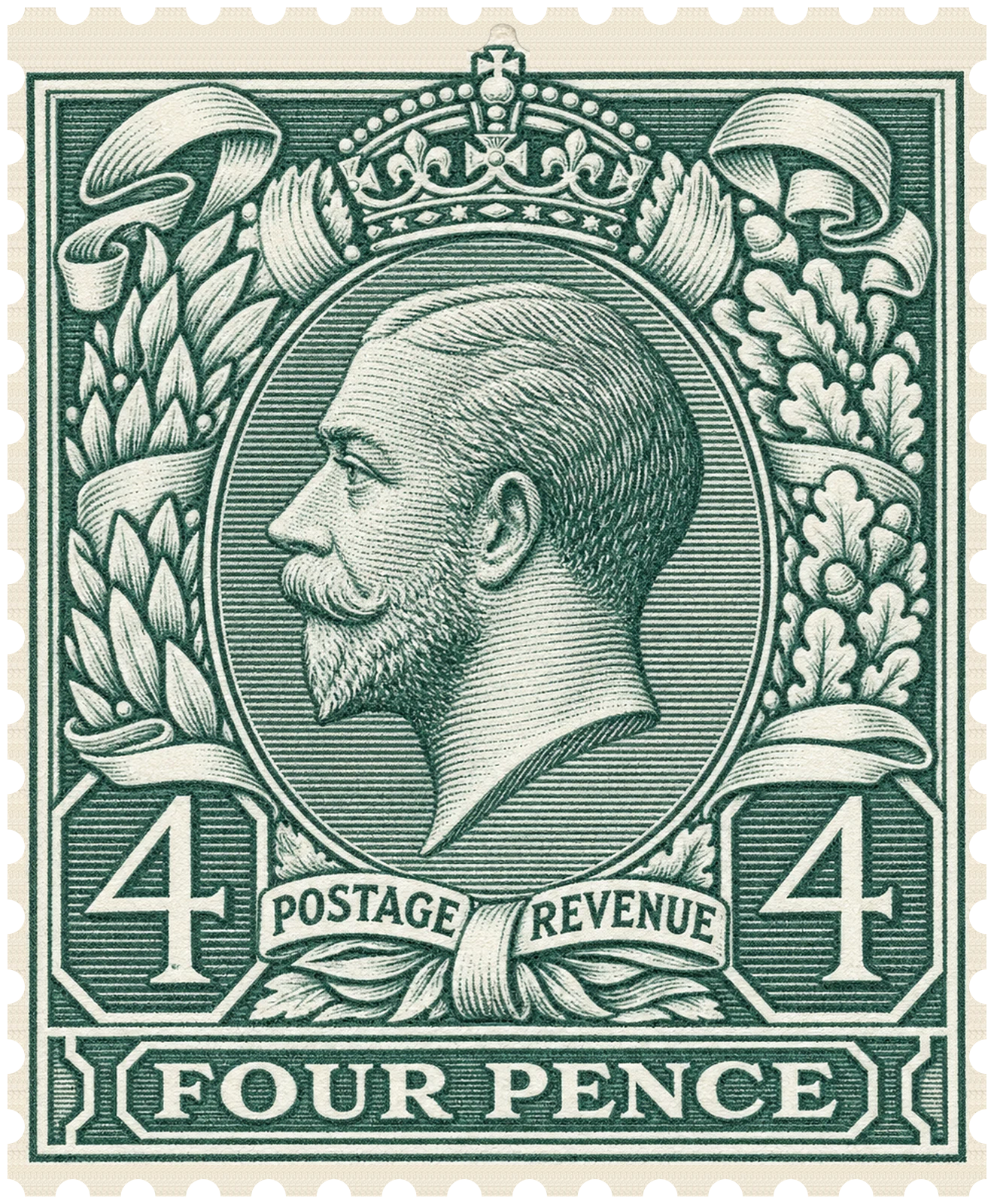
On the stamp you were exploring
George V · 4d grey-green · January 1913
The crown discussion on your George V 4d grey-green stamp led here. Compare the small printed emblem with the enlarged heraldic pattern below. The jewelled illustration explains the older historical object; it is not the model from which this stamp was engraved.
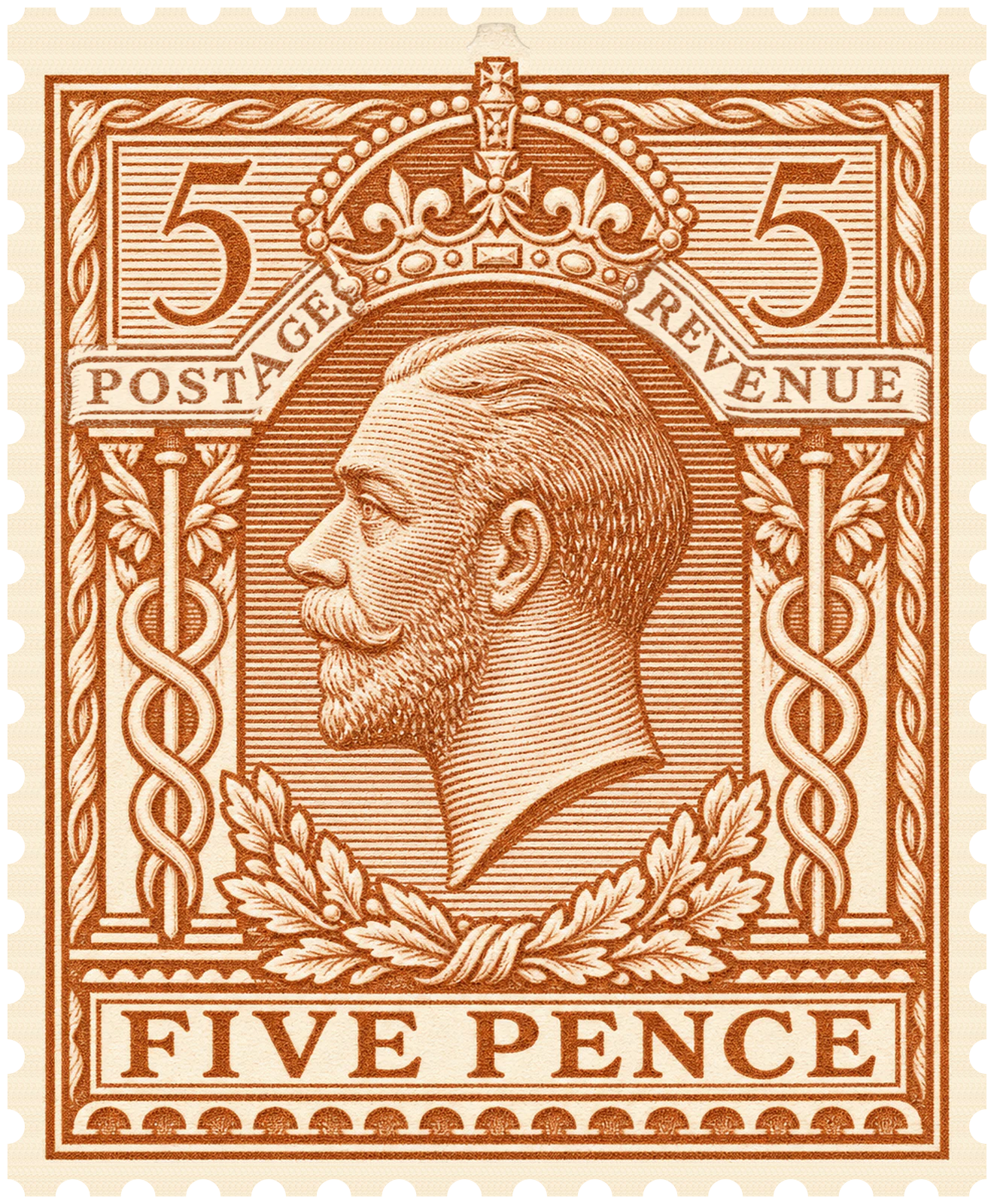
On the stamp you were exploring
George V · 5d yellow-brown · 30 June 1913
The crown discussion on your George V 5d yellow-brown stamp led here. Compare the small printed emblem with the enlarged heraldic pattern below. The jewelled illustration explains the older historical object; it is not the model from which this stamp was engraved.
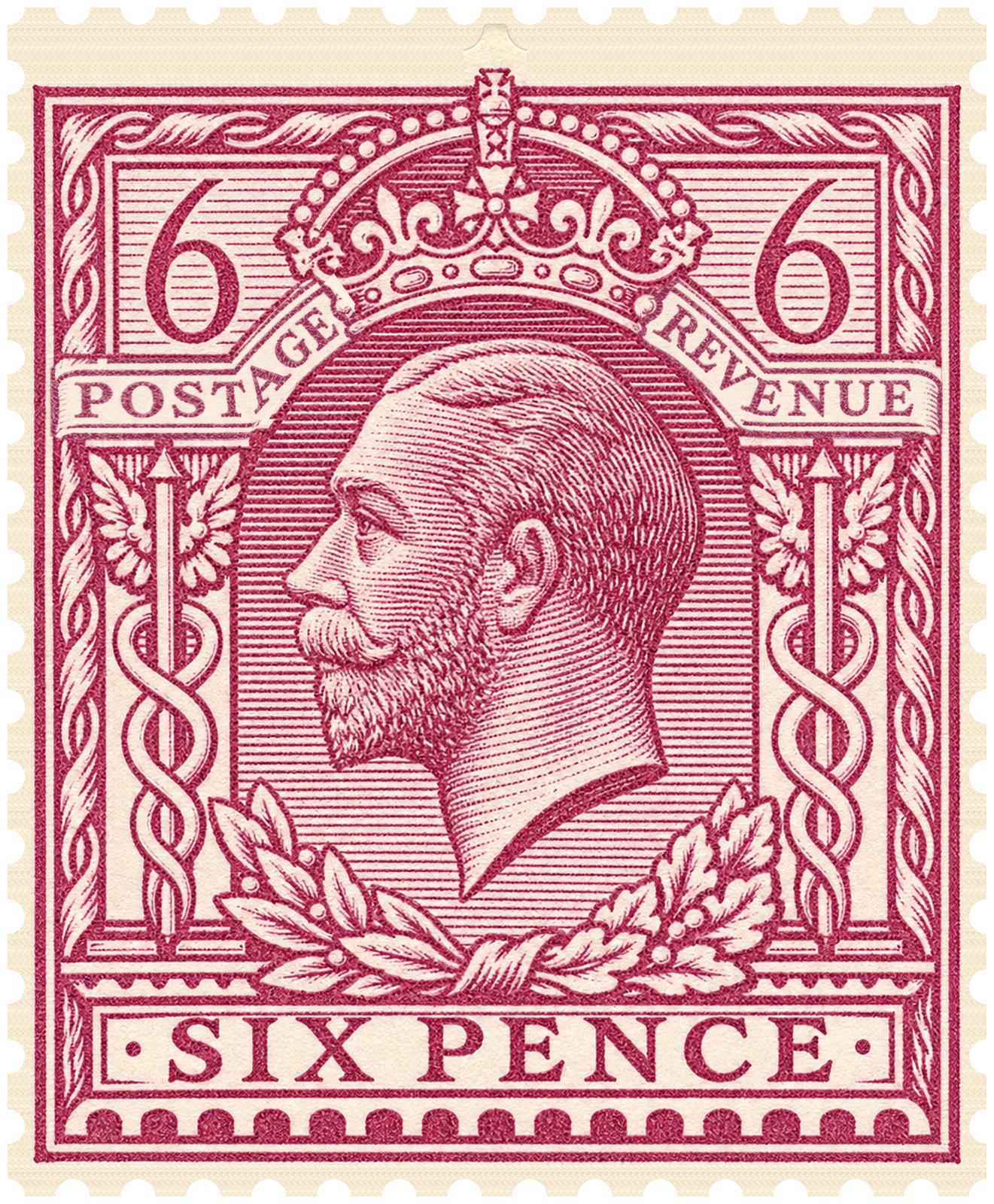
On the stamp you were exploring
George V · 6d reddish-purple · 1 August 1913 (originally dull purple; reddish-purple introduced later that month)
The crown discussion on your George V 6d reddish-purple stamp led here. Compare the small printed emblem with the enlarged heraldic pattern below. The jewelled illustration explains the older historical object; it is not the model from which this stamp was engraved.
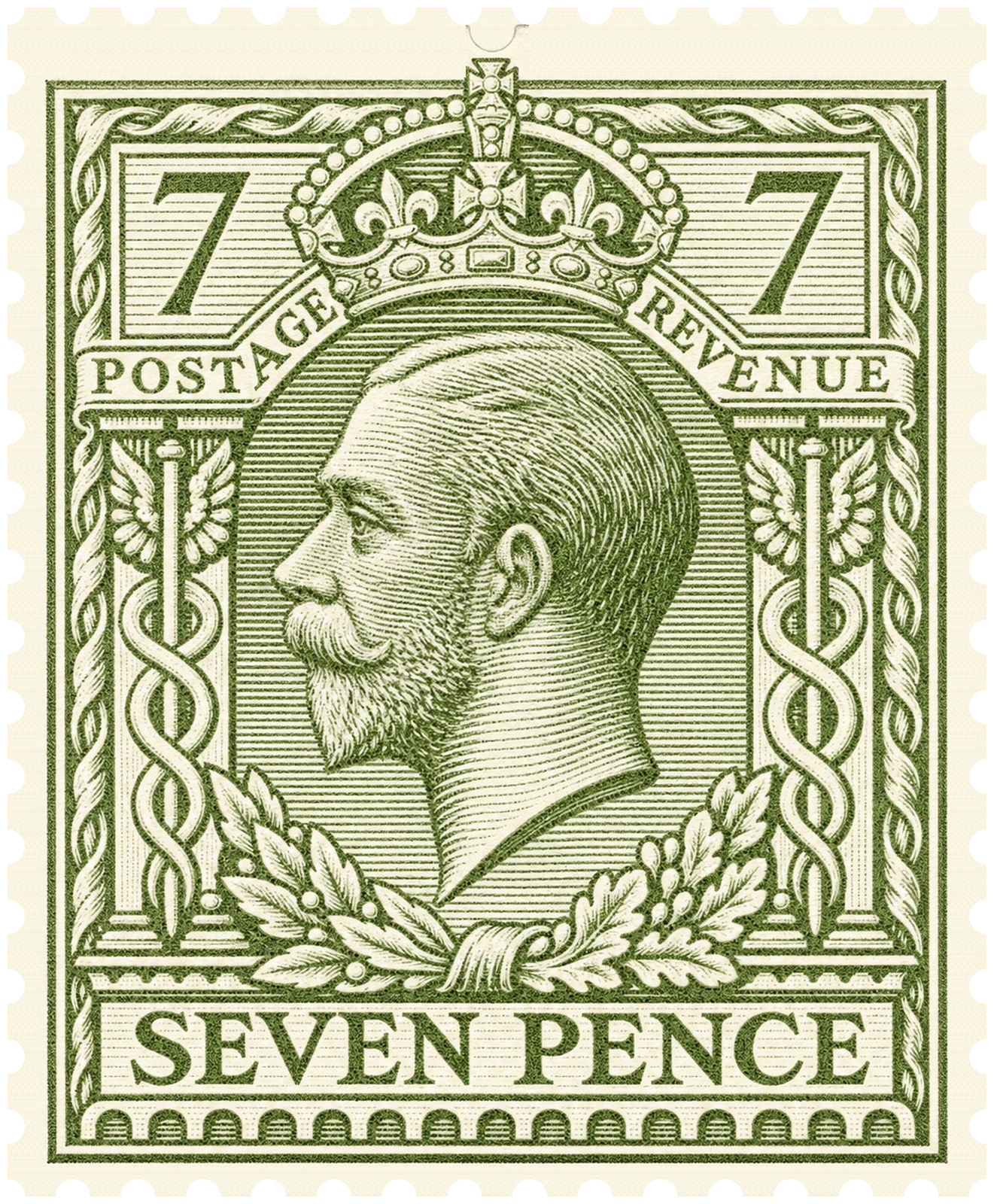
On the stamp you were exploring
George V · 7d olive-green · 1 August 1913
The crown discussion on your George V 7d olive-green stamp led here. Compare the small printed emblem with the enlarged heraldic pattern below. The jewelled illustration explains the older historical object; it is not the model from which this stamp was engraved.
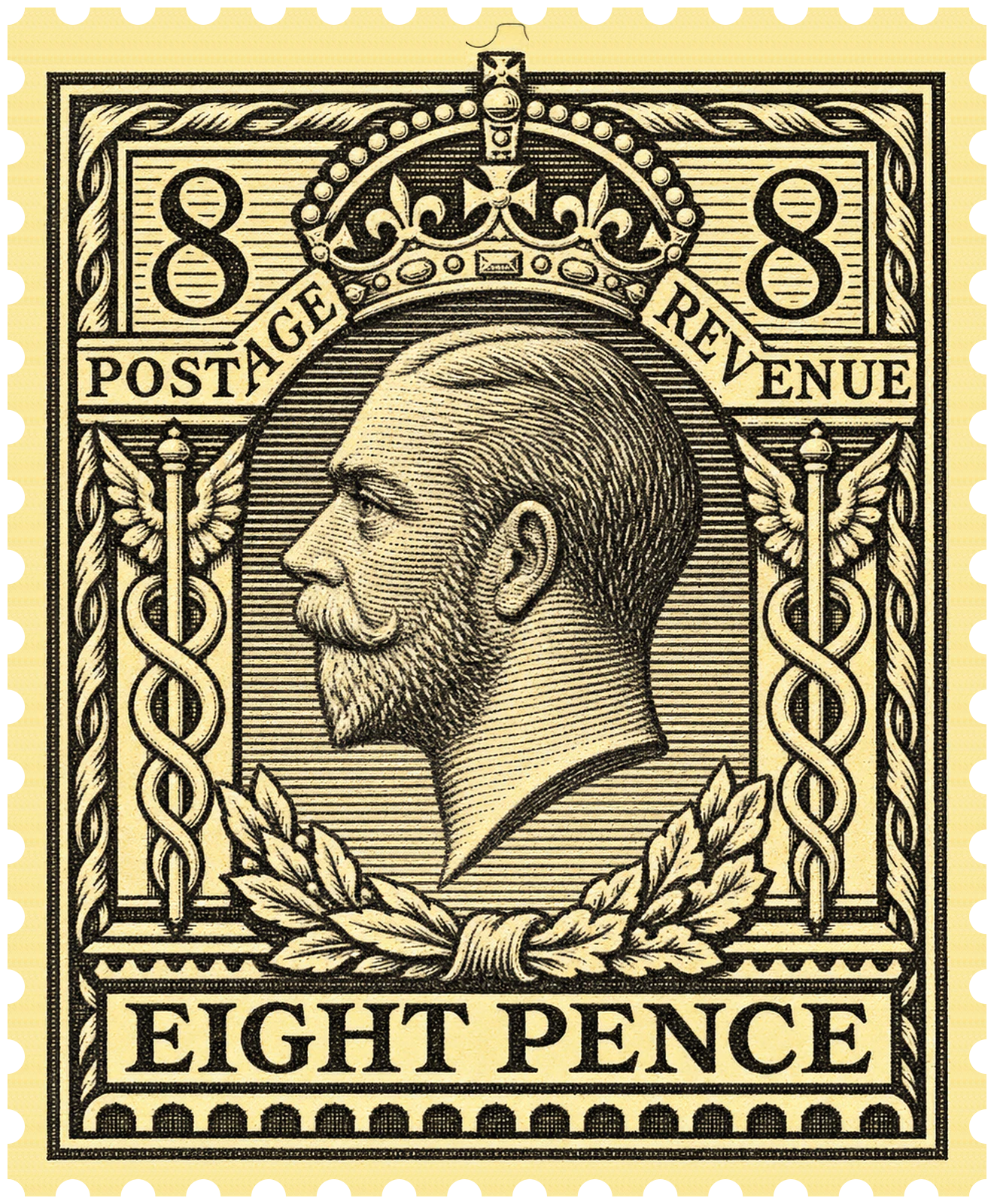
On the stamp you were exploring
George V · 8d black on yellow · 1 August 1913
The crown discussion on your George V 8d black on yellow stamp led here. Compare the small printed emblem with the enlarged heraldic pattern below. The jewelled illustration explains the older historical object; it is not the model from which this stamp was engraved.
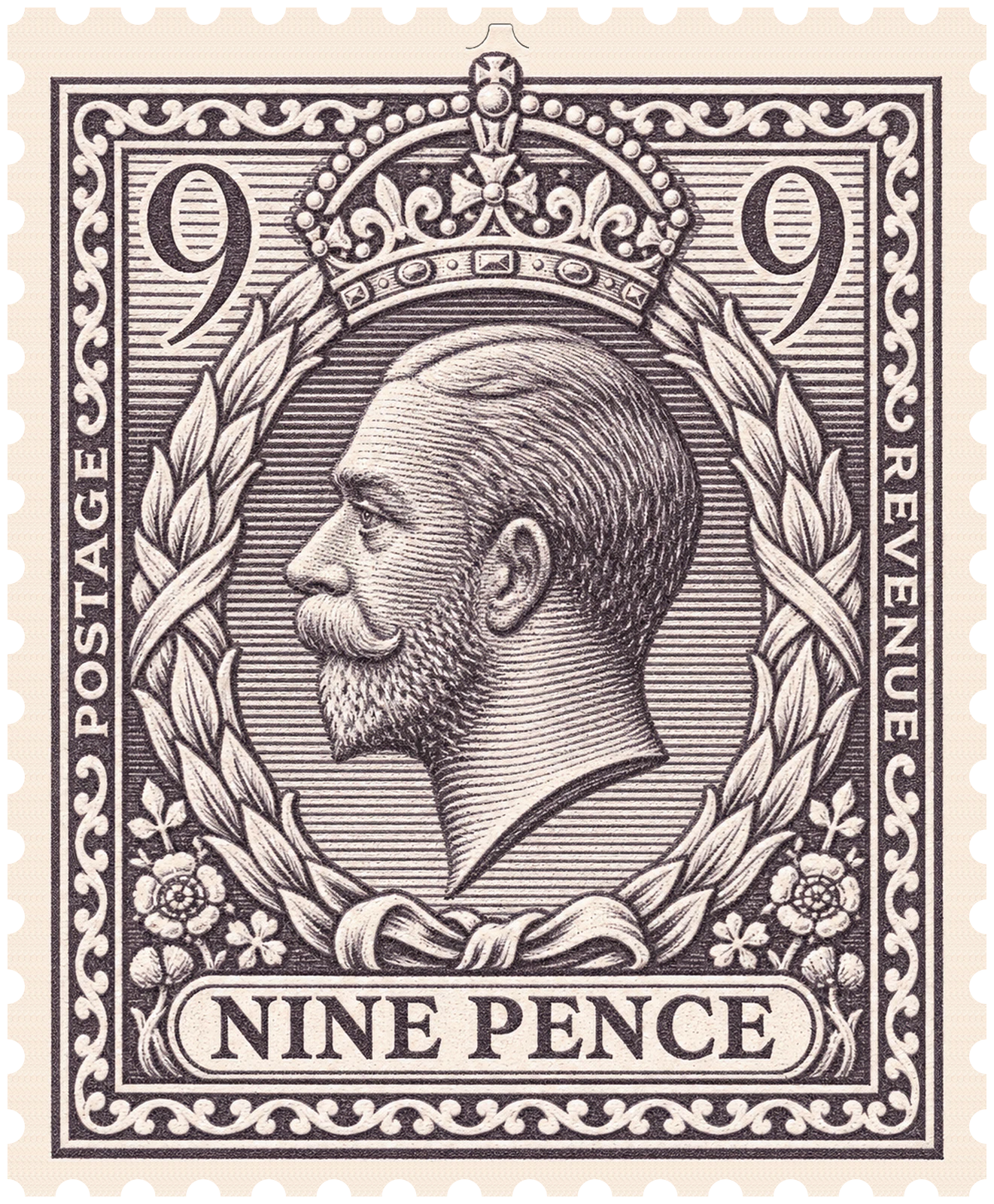
On the stamp you were exploring
George V · 9d agate · 1913-06-30
The crown discussion on your George V 9d agate stamp led here. Compare the small printed emblem with the enlarged heraldic pattern below. The jewelled illustration explains the older historical object; it is not the model from which this stamp was engraved.
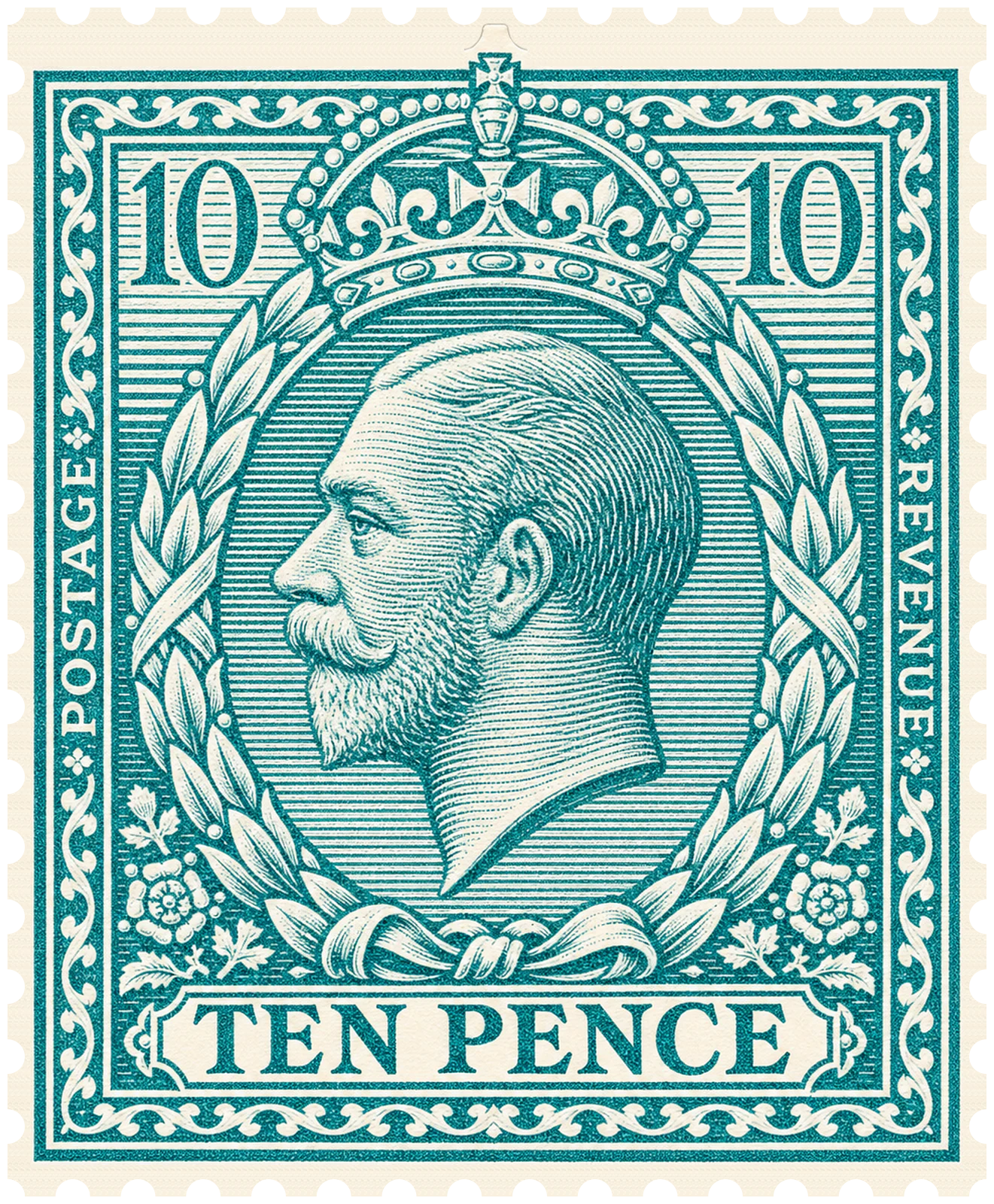
On the stamp you were exploring
George V · 10d turquoise-blue · from 1914
The crown discussion on your George V 10d turquoise-blue stamp led here. Compare the small printed emblem with the enlarged heraldic pattern below. The jewelled illustration explains the older historical object; it is not the model from which this stamp was engraved.
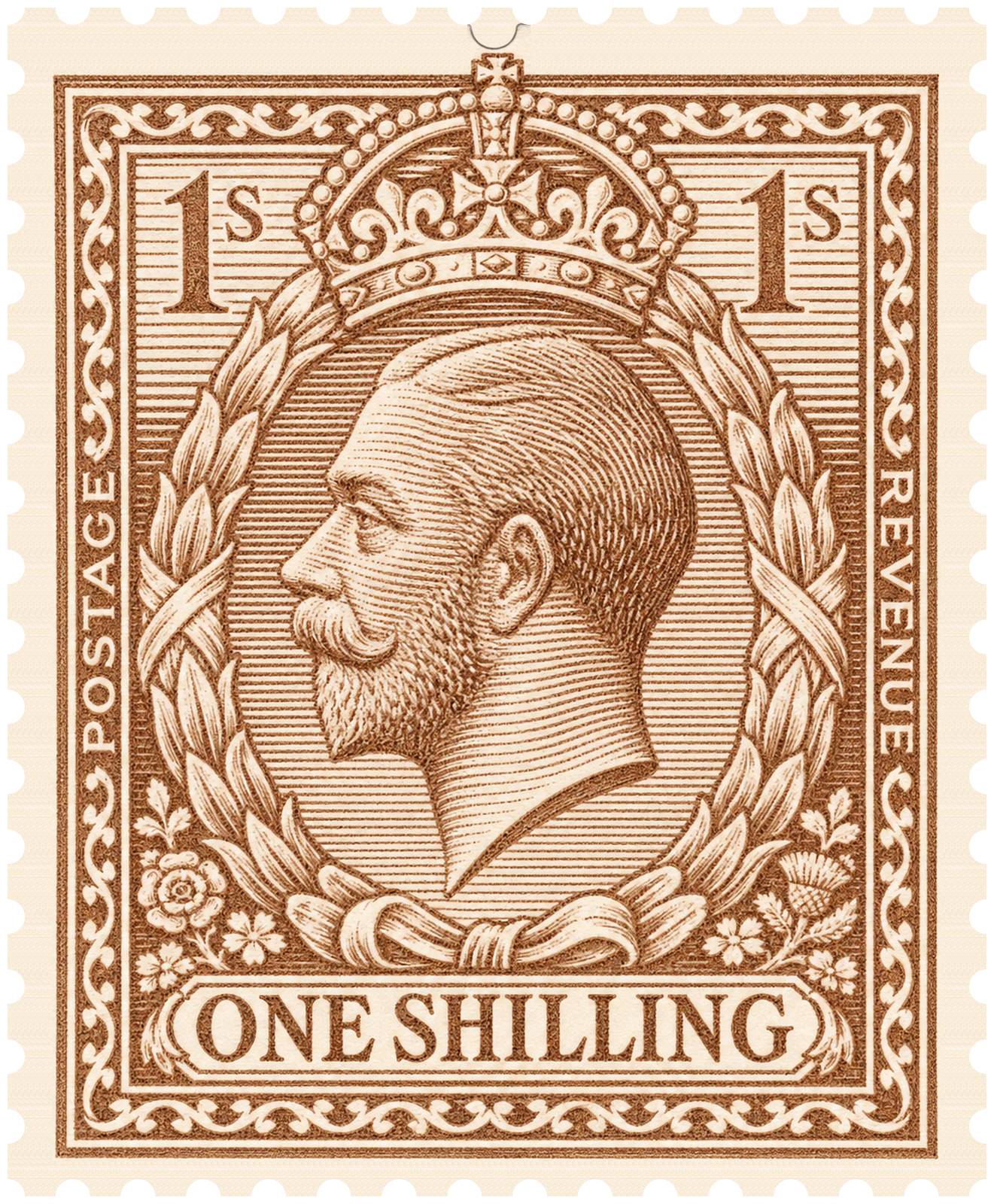
On the stamp you were exploring
George V · 1s bistre-brown · from 1914
The crown discussion on your George V 1s bistre-brown stamp led here. Compare the small printed emblem with the enlarged heraldic pattern below. The jewelled illustration explains the older historical object; it is not the model from which this stamp was engraved.
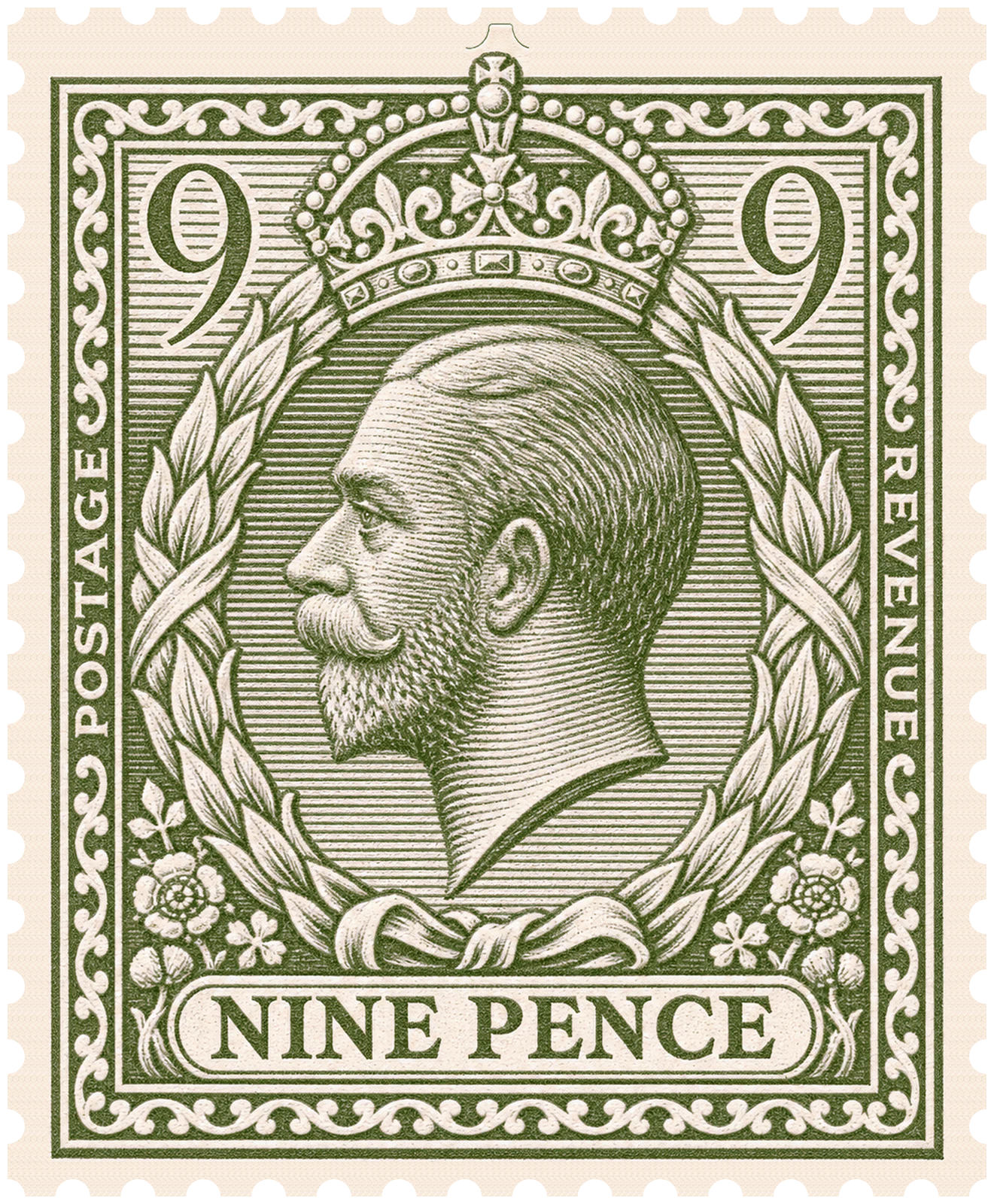
On the stamp you were exploring
George V · 9d olive-green · 1922
The crown discussion on your George V 9d olive-green stamp led here. Compare the small printed emblem with the enlarged heraldic pattern below. The jewelled illustration explains the older historical object; it is not the model from which this stamp was engraved.
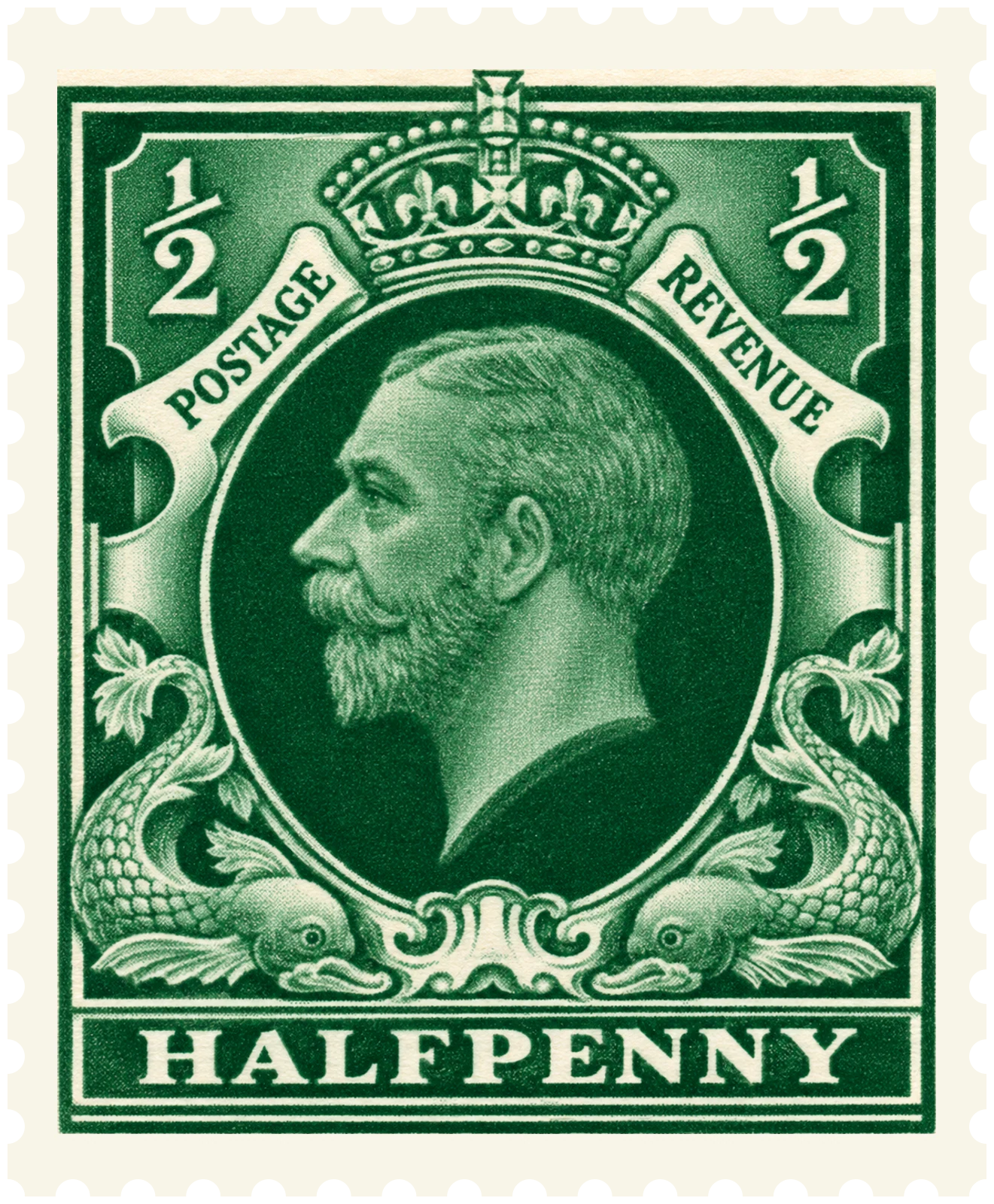
On the stamp you were exploring
George V · ½d green · 1935 · Small format
The crown discussion on your George V ½d green stamp led here. Compare the small printed emblem with the enlarged heraldic pattern below. The jewelled illustration explains the older historical object; it is not the model from which this stamp was engraved.
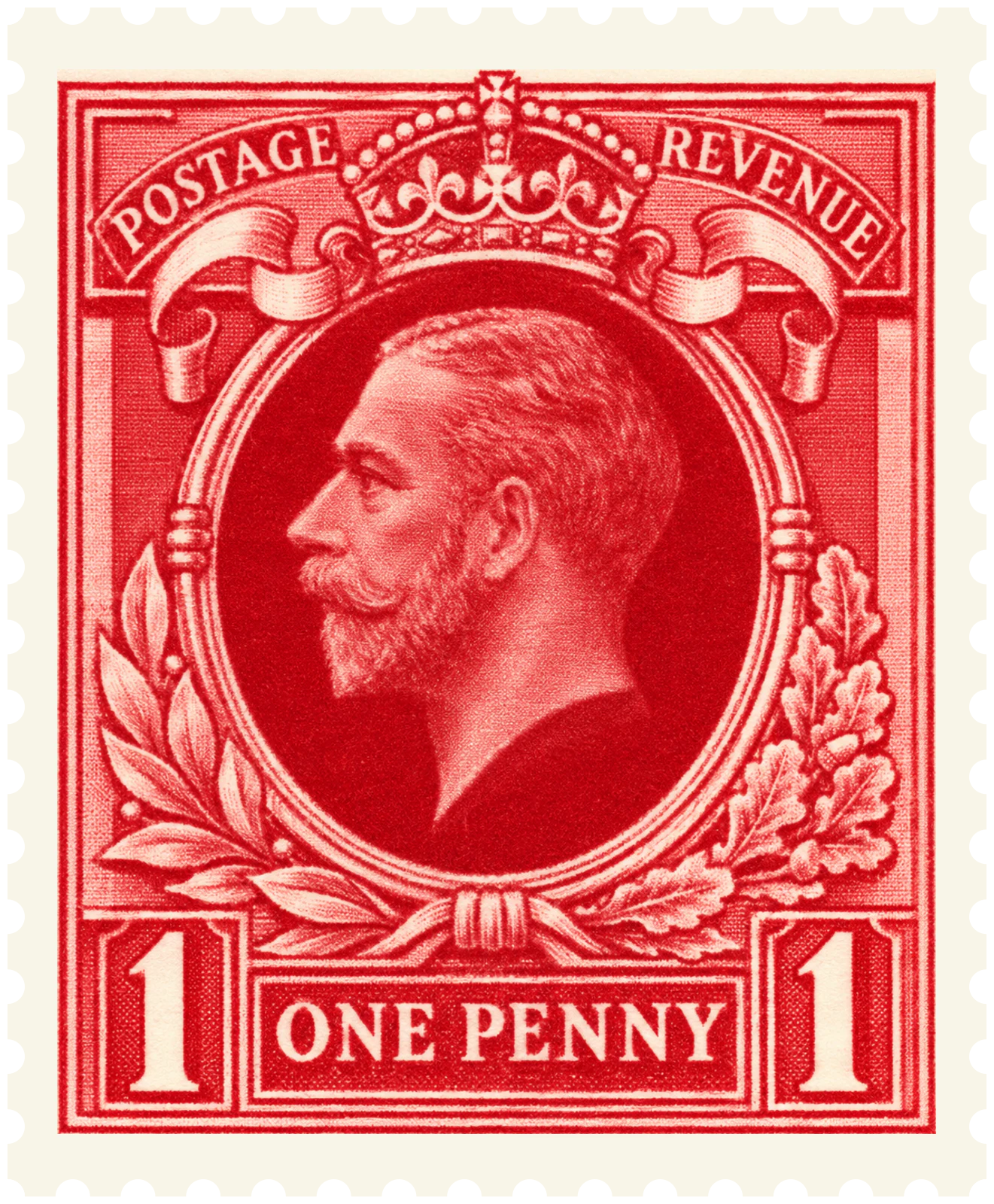
On the stamp you were exploring
George V · 1d scarlet · 1935 · Small format
The crown discussion on your George V 1d scarlet stamp led here. Compare the small printed emblem with the enlarged heraldic pattern below. The jewelled illustration explains the older historical object; it is not the model from which this stamp was engraved.
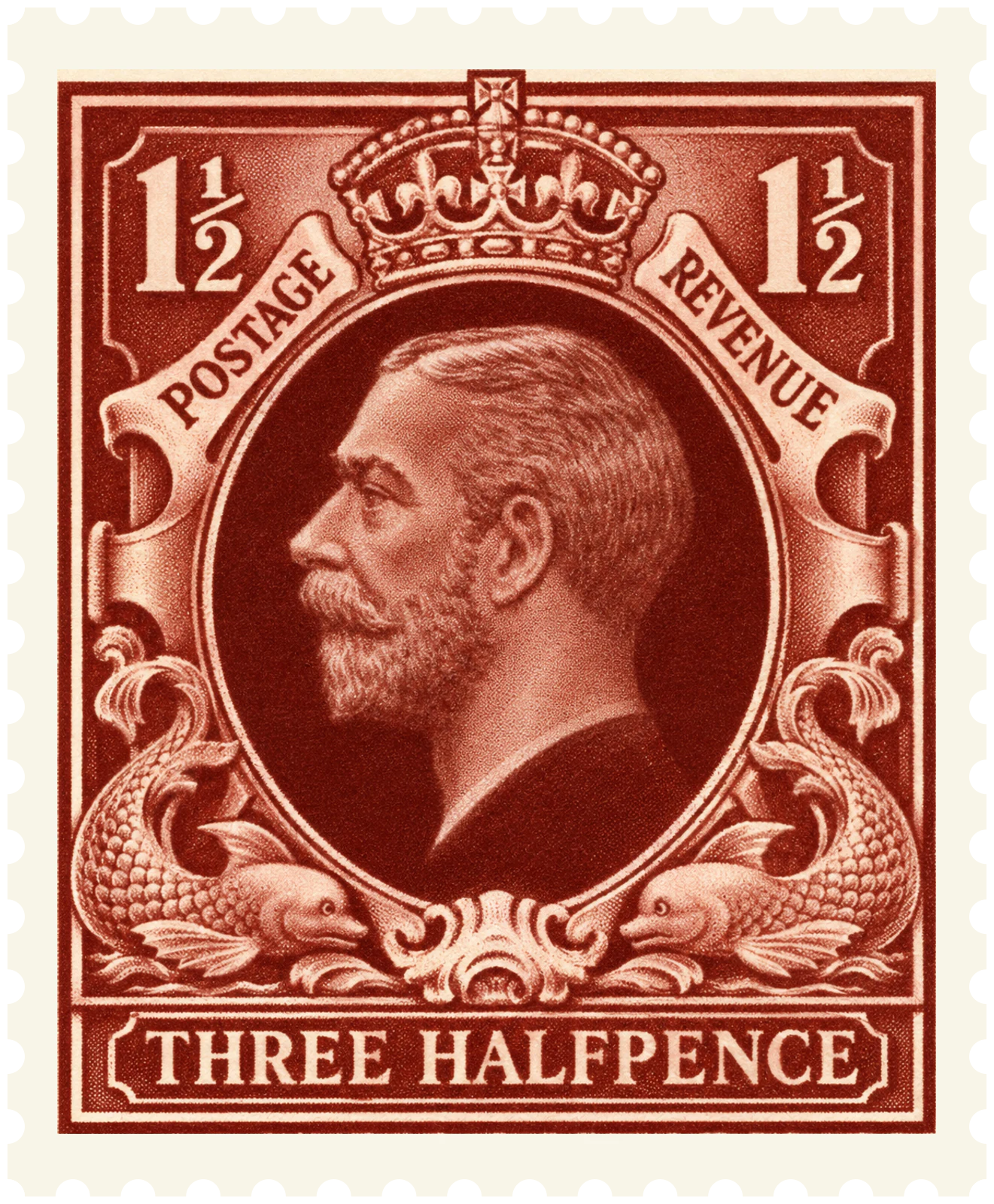
On the stamp you were exploring
George V · 1½d red-brown · 1935 · Small format
The crown discussion on your George V 1½d red-brown stamp led here. Compare the small printed emblem with the enlarged heraldic pattern below. The jewelled illustration explains the older historical object; it is not the model from which this stamp was engraved.
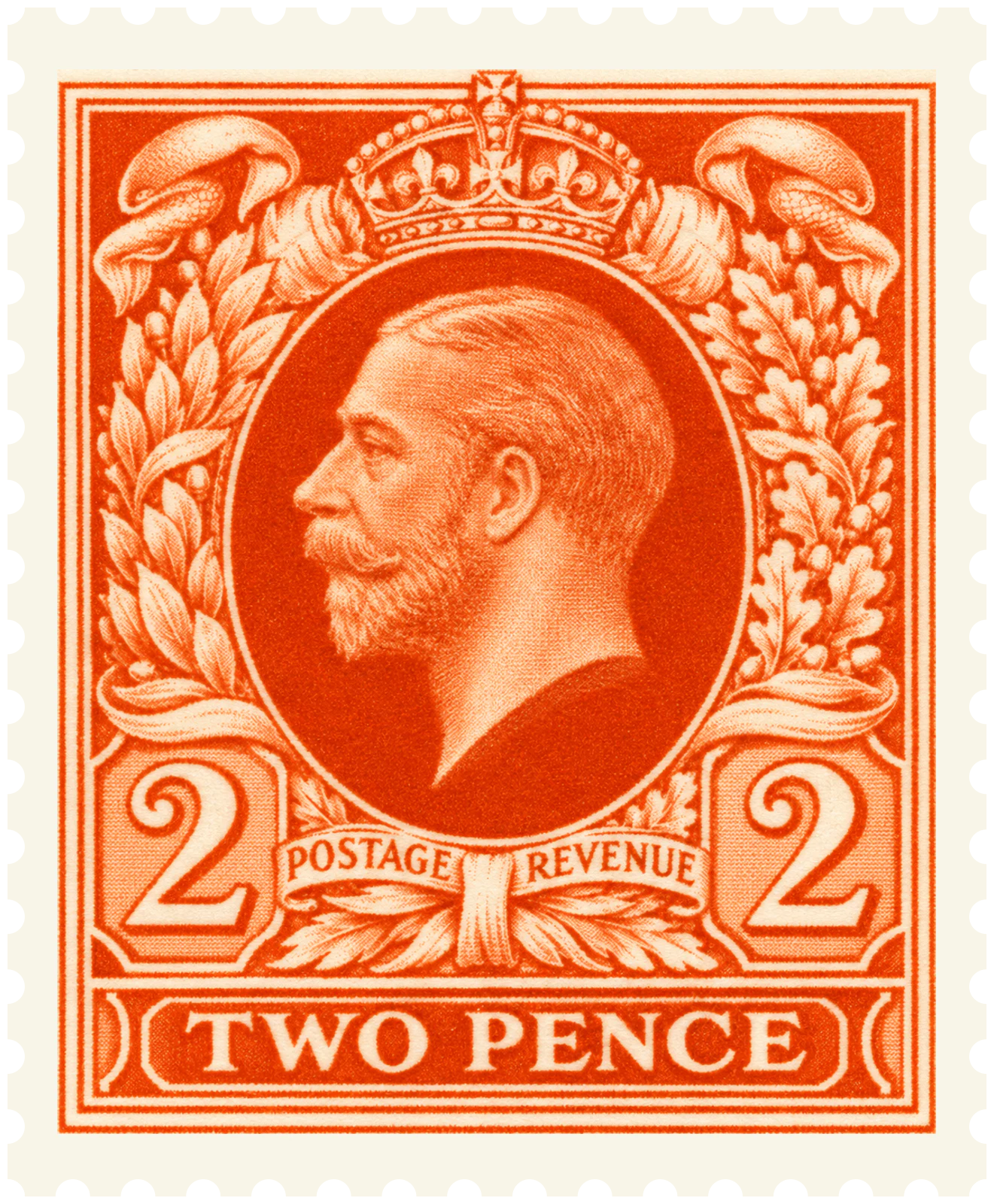
On the stamp you were exploring
George V · 2d orange · 1935 · Small format
The crown discussion on your George V 2d orange stamp led here. Compare the small printed emblem with the enlarged heraldic pattern below. The jewelled illustration explains the older historical object; it is not the model from which this stamp was engraved.
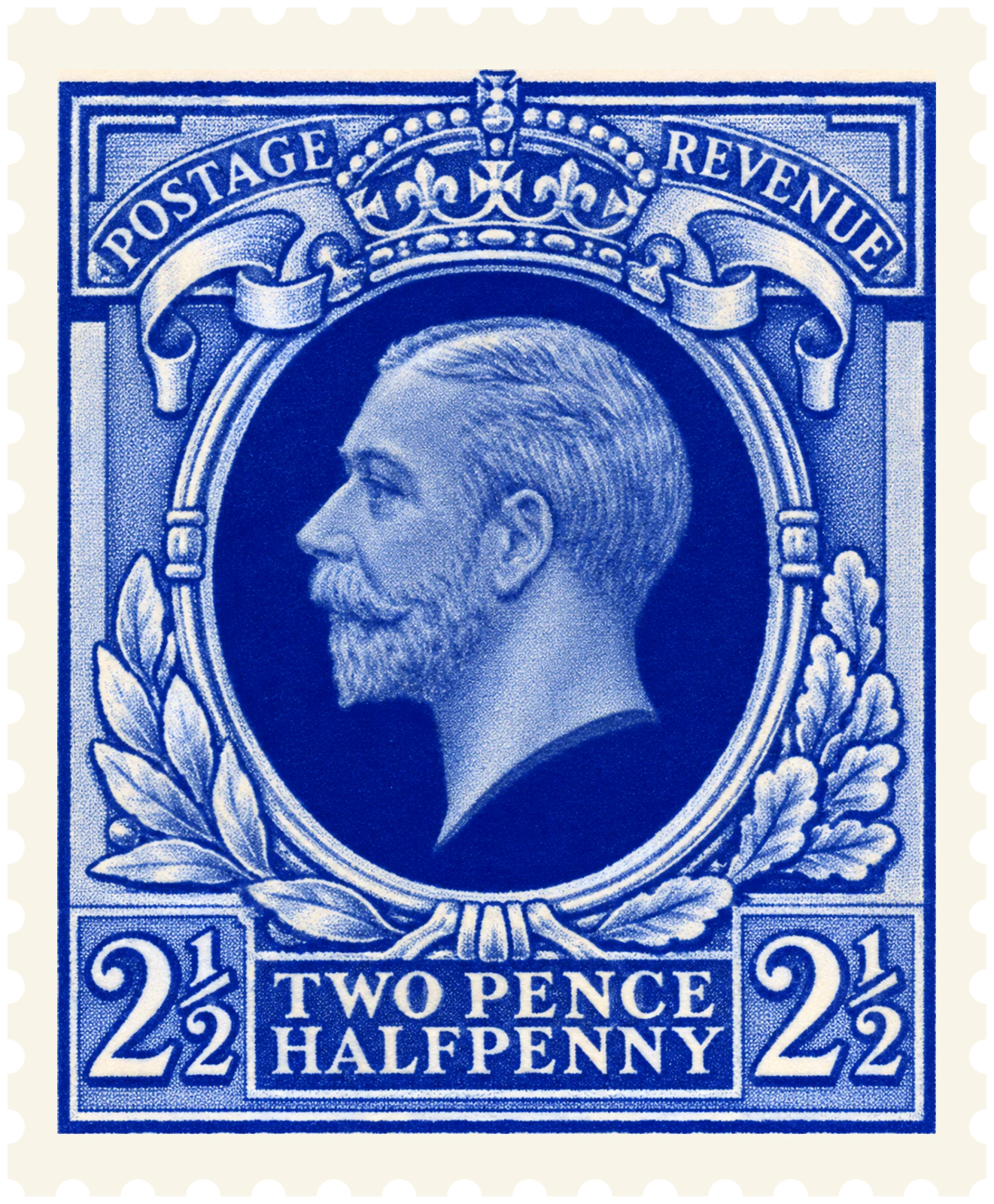
On the stamp you were exploring
George V · 2½d ultramarine · 1935 · Small format
The crown discussion on your George V 2½d ultramarine stamp led here. Compare the small printed emblem with the enlarged heraldic pattern below. The jewelled illustration explains the older historical object; it is not the model from which this stamp was engraved.
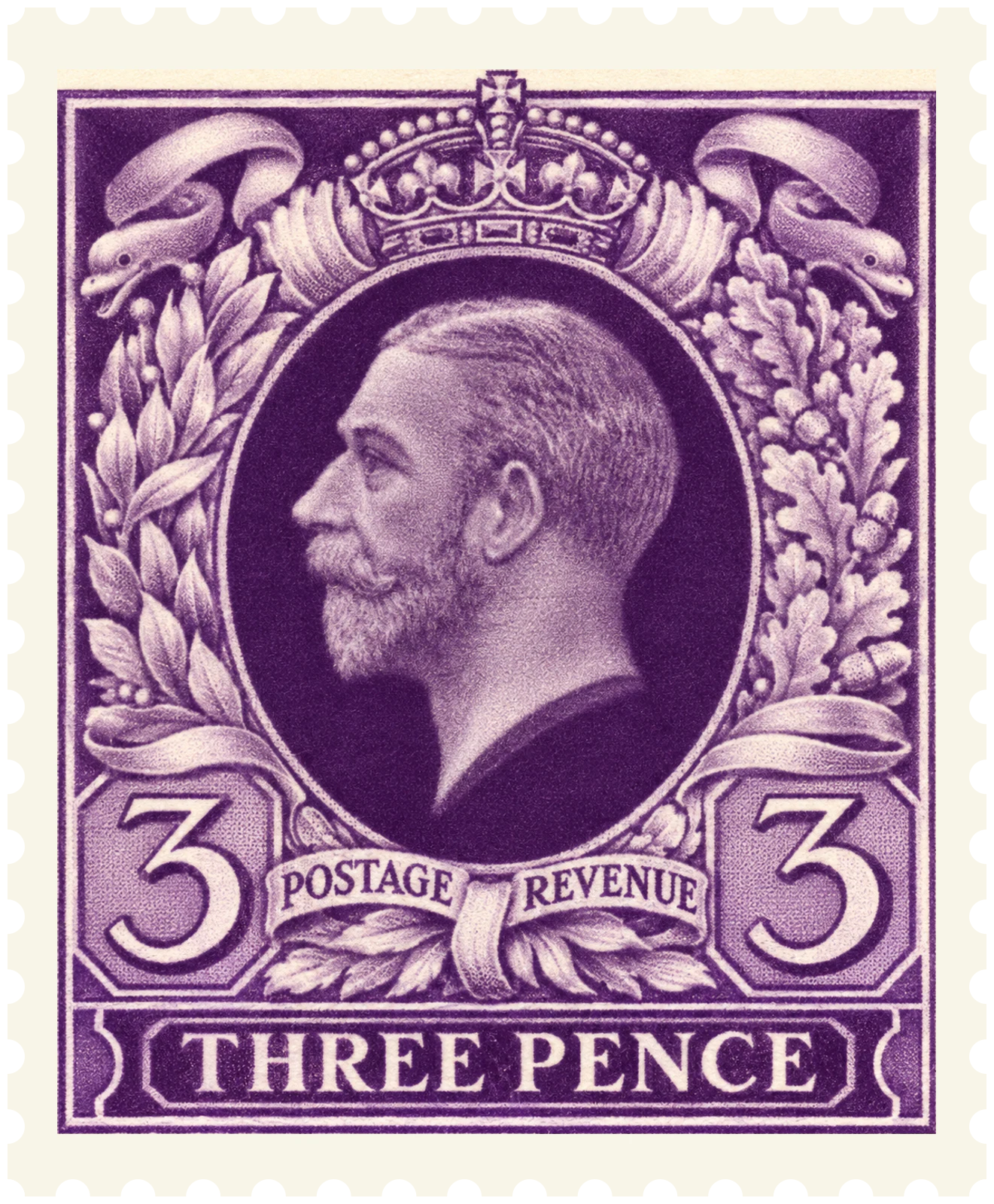
On the stamp you were exploring
George V · 3d violet · 1935 · Small format
The crown discussion on your George V 3d violet stamp led here. Compare the small printed emblem with the enlarged heraldic pattern below. The jewelled illustration explains the older historical object; it is not the model from which this stamp was engraved.
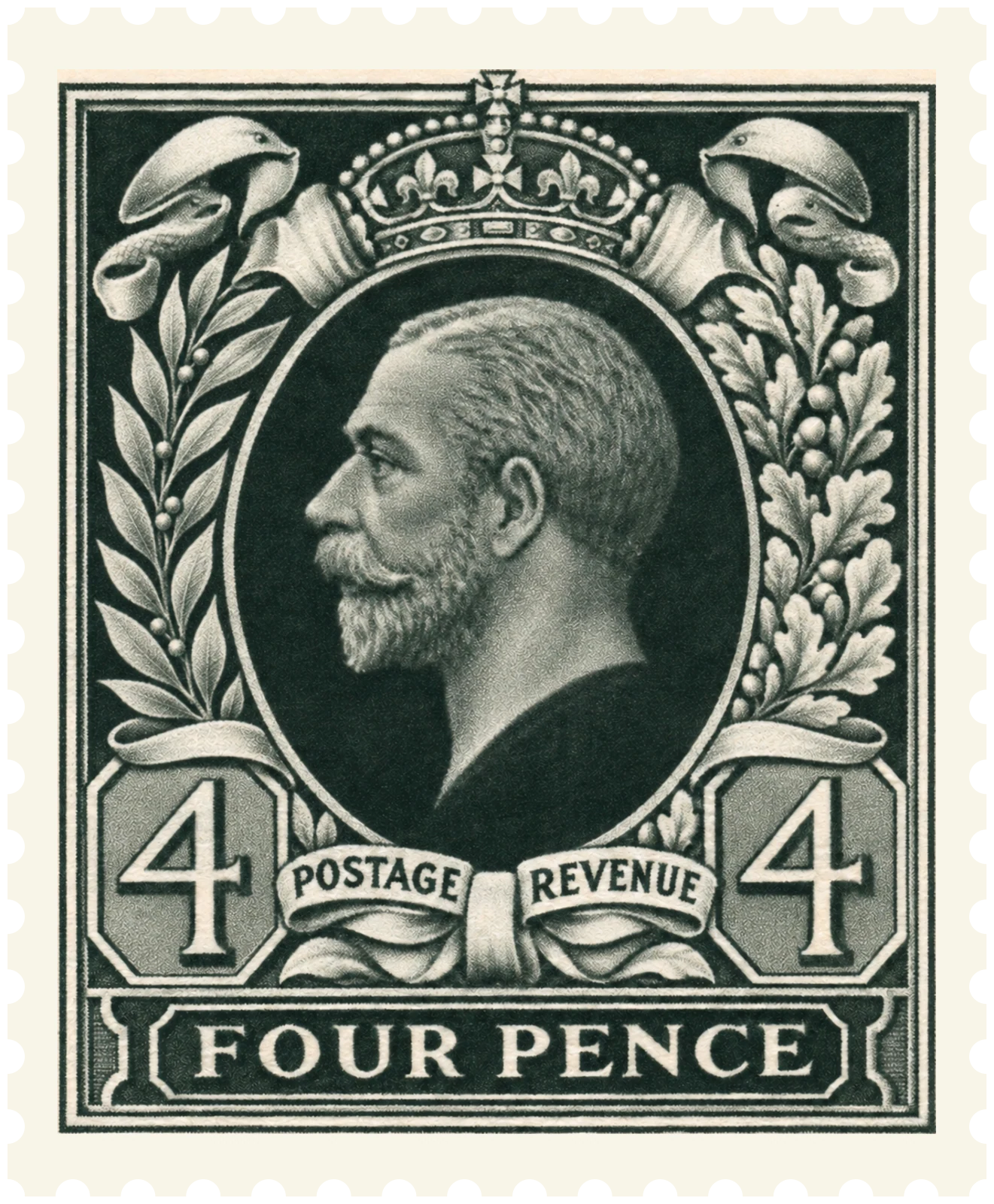
On the stamp you were exploring
George V · 4d grey-green · 1935 · Small format
The crown discussion on your George V 4d grey-green stamp led here. Compare the small printed emblem with the enlarged heraldic pattern below. The jewelled illustration explains the older historical object; it is not the model from which this stamp was engraved.
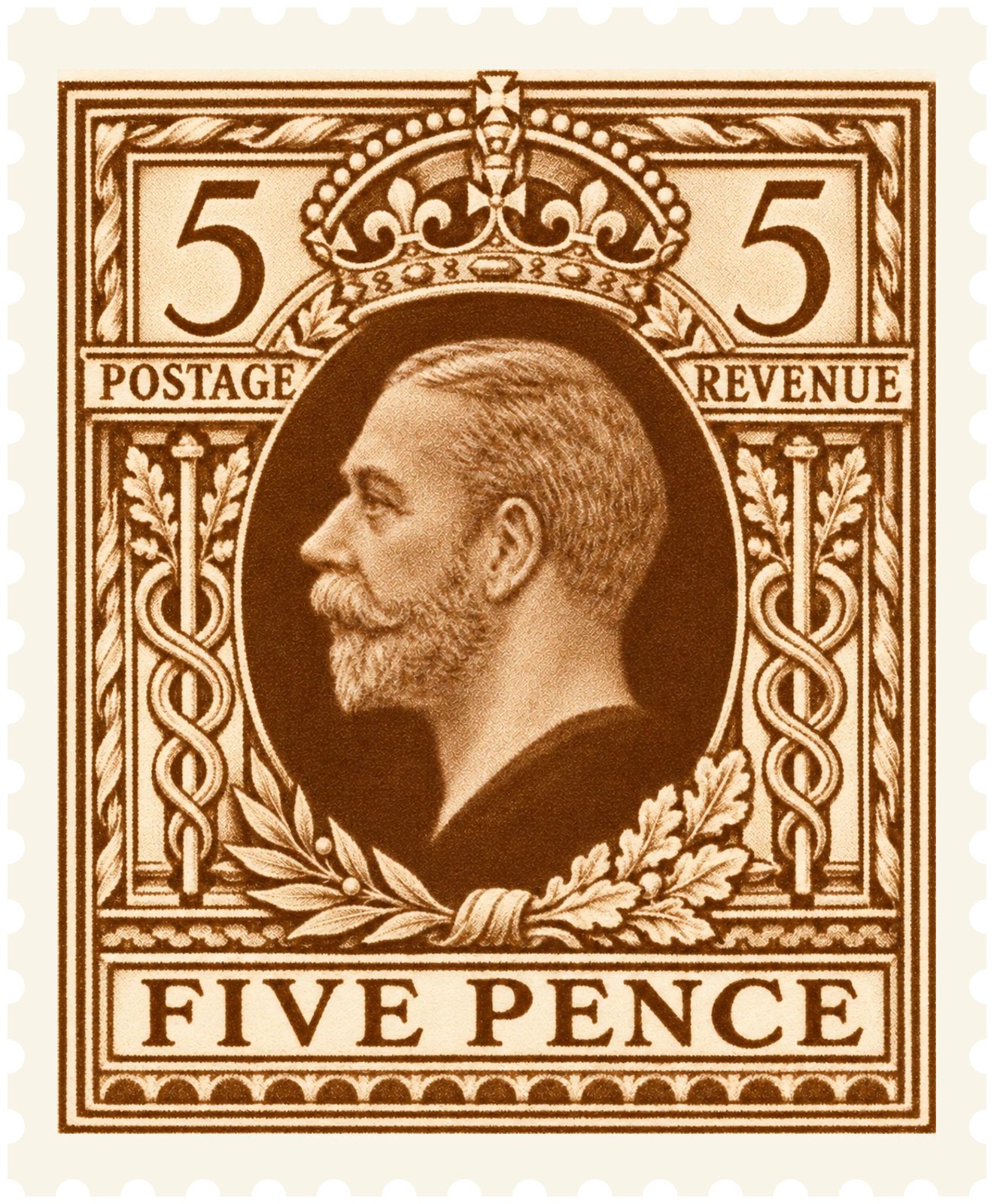
On the stamp you were exploring
George V · 5d yellow-brown · 1936 · Small format
The crown discussion on your George V 5d yellow-brown stamp led here. Compare the small printed emblem with the enlarged heraldic pattern below. The jewelled illustration explains the older historical object; it is not the model from which this stamp was engraved.
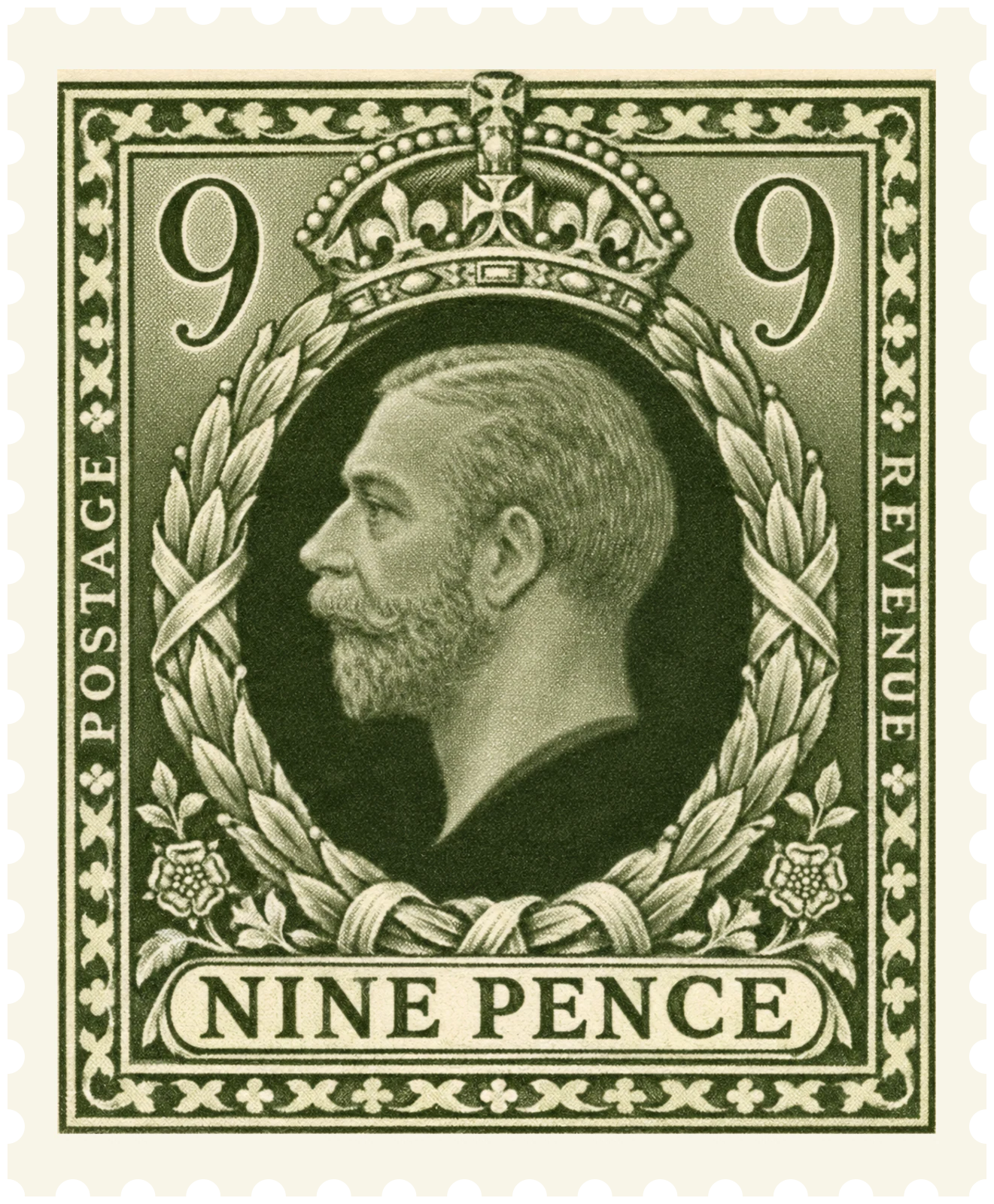
On the stamp you were exploring
George V · 9d deep olive-green · 1935 · Small format
The crown discussion on your George V 9d deep olive-green stamp led here. Compare the small printed emblem with the enlarged heraldic pattern below. The jewelled illustration explains the older historical object; it is not the model from which this stamp was engraved.
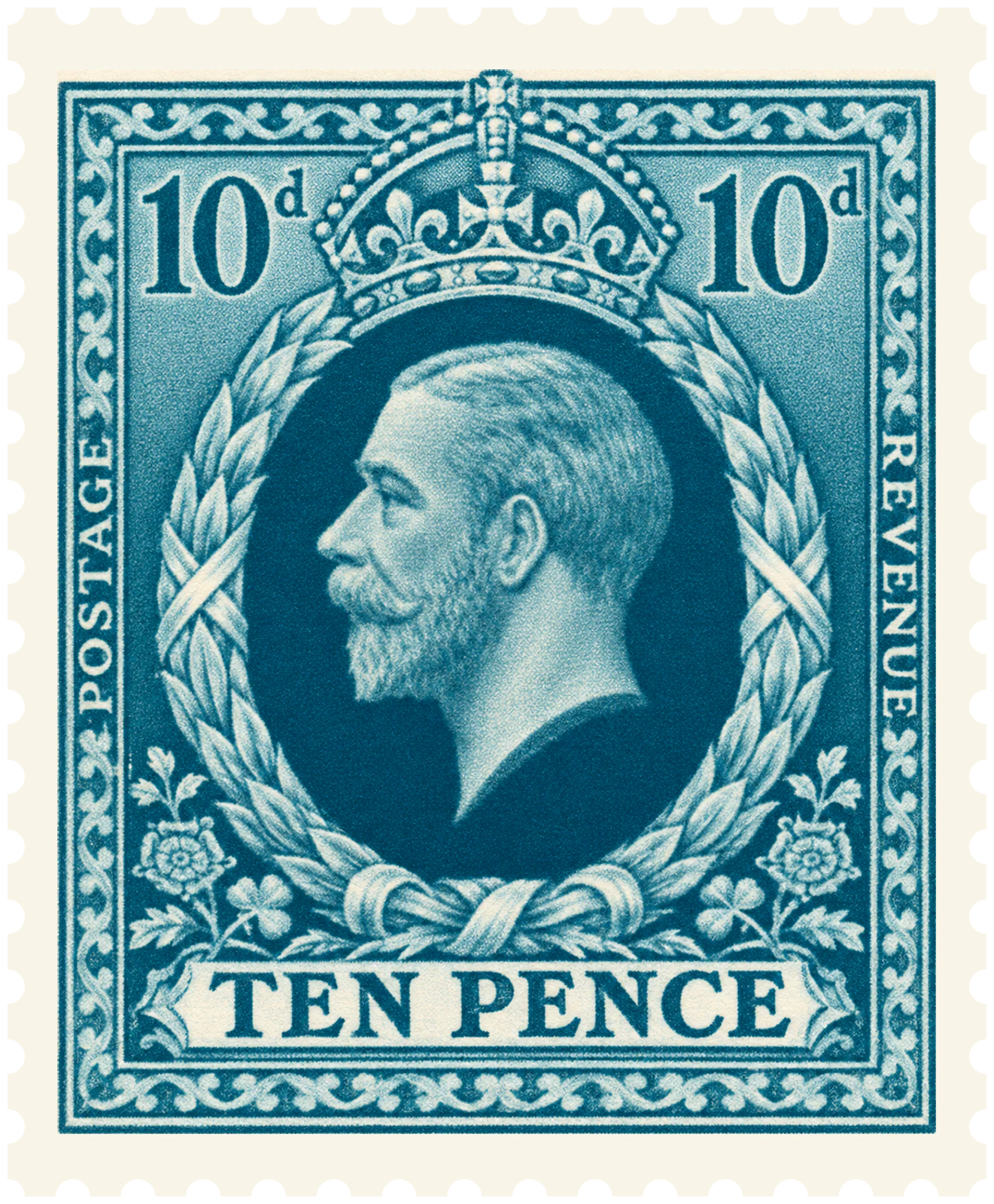
On the stamp you were exploring
George V · 10d turquoise-blue · 1936 · Small format
The crown discussion on your George V 10d turquoise-blue stamp led here. Compare the small printed emblem with the enlarged heraldic pattern below. The jewelled illustration explains the older historical object; it is not the model from which this stamp was engraved.
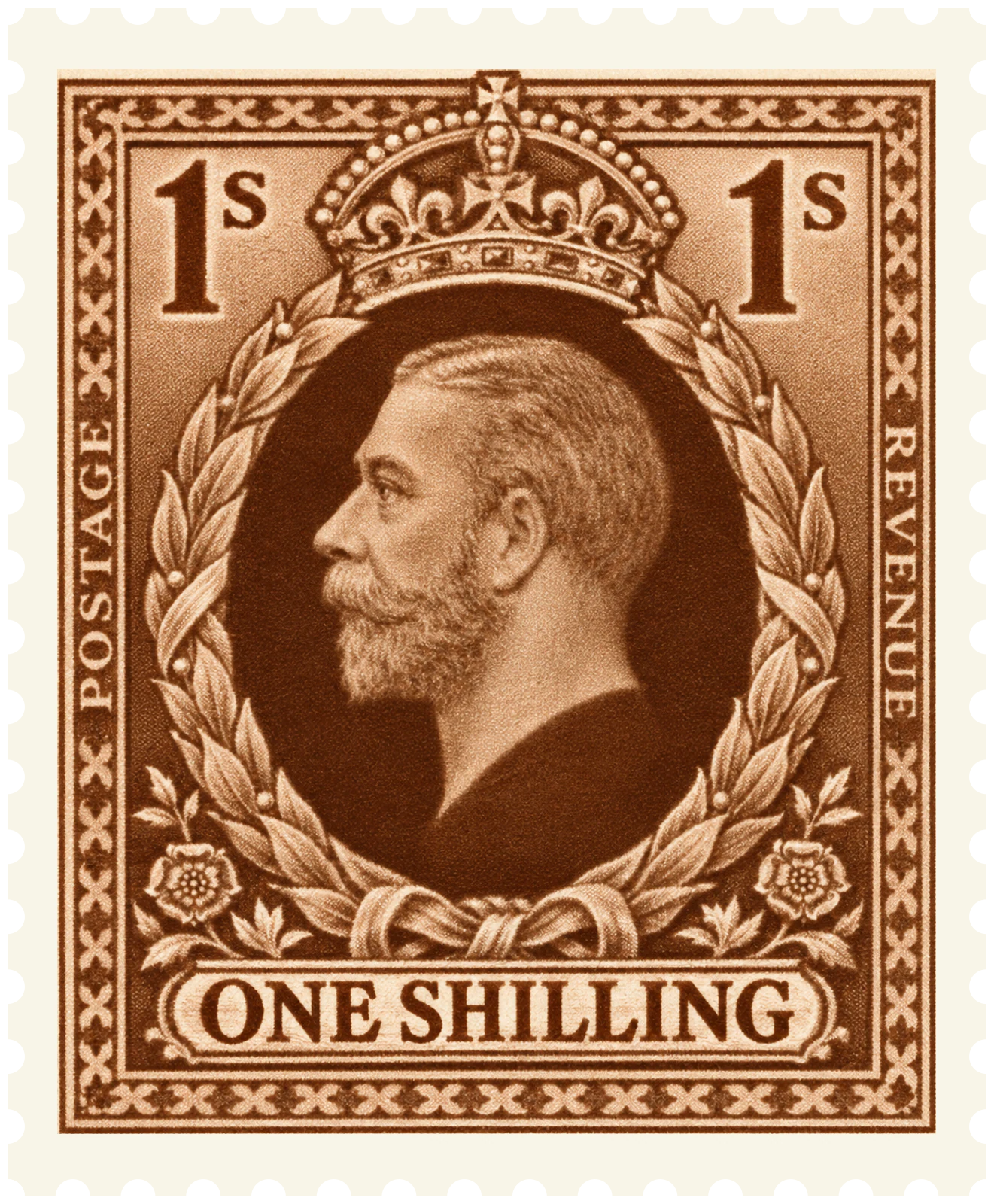
On the stamp you were exploring
George V · 1s bistre-brown · 1936 · Small format
The crown discussion on your George V 1s bistre-brown stamp led here. Compare the small printed emblem with the enlarged heraldic pattern below. The jewelled illustration explains the older historical object; it is not the model from which this stamp was engraved.
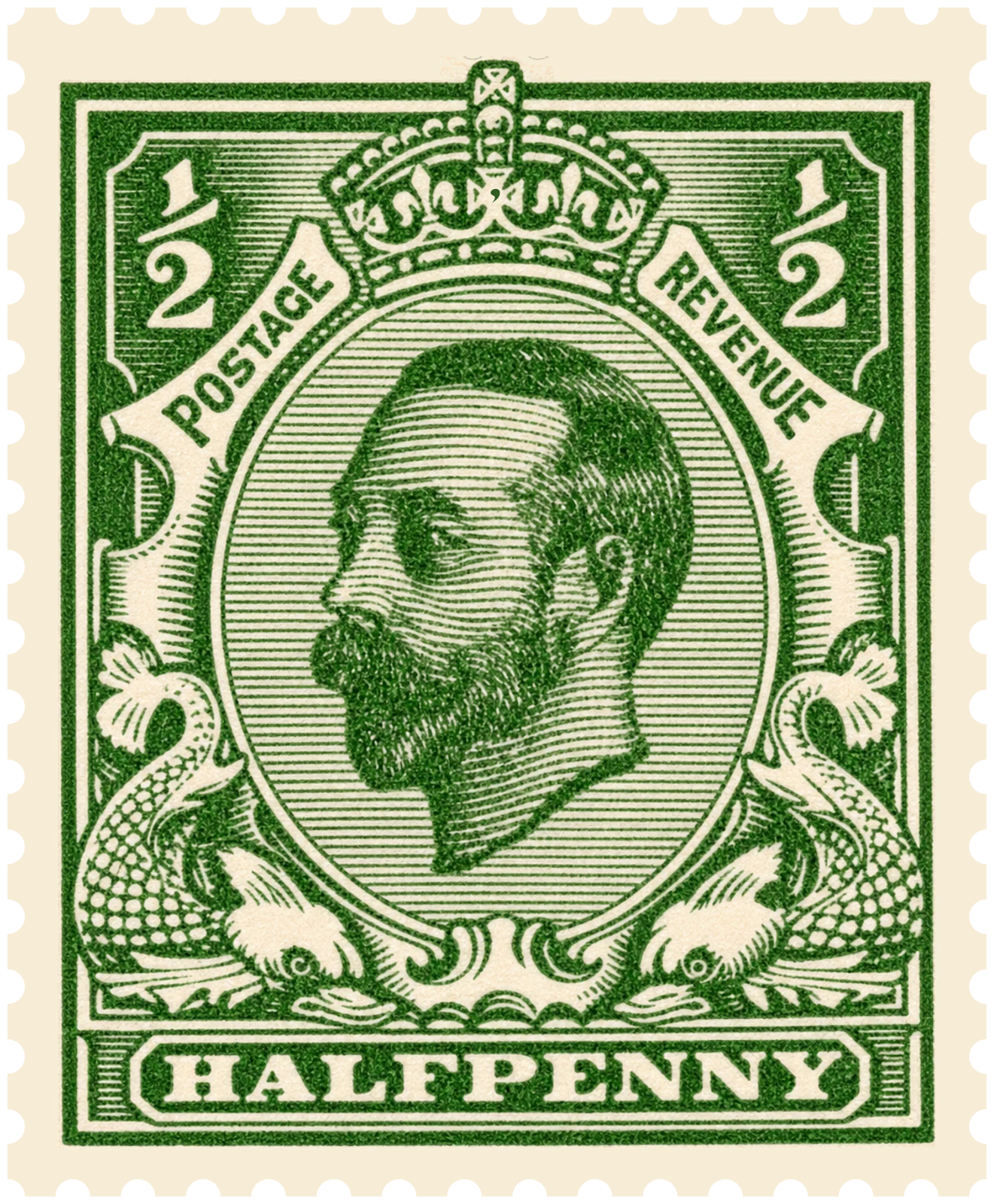
On the stamp you were exploring
George V · ½d green · 22 June 1911
The crown discussion on your George V ½d green stamp led here. Compare the small printed emblem with the enlarged heraldic pattern below. The jewelled illustration explains the older historical object; it is not the model from which this stamp was engraved.
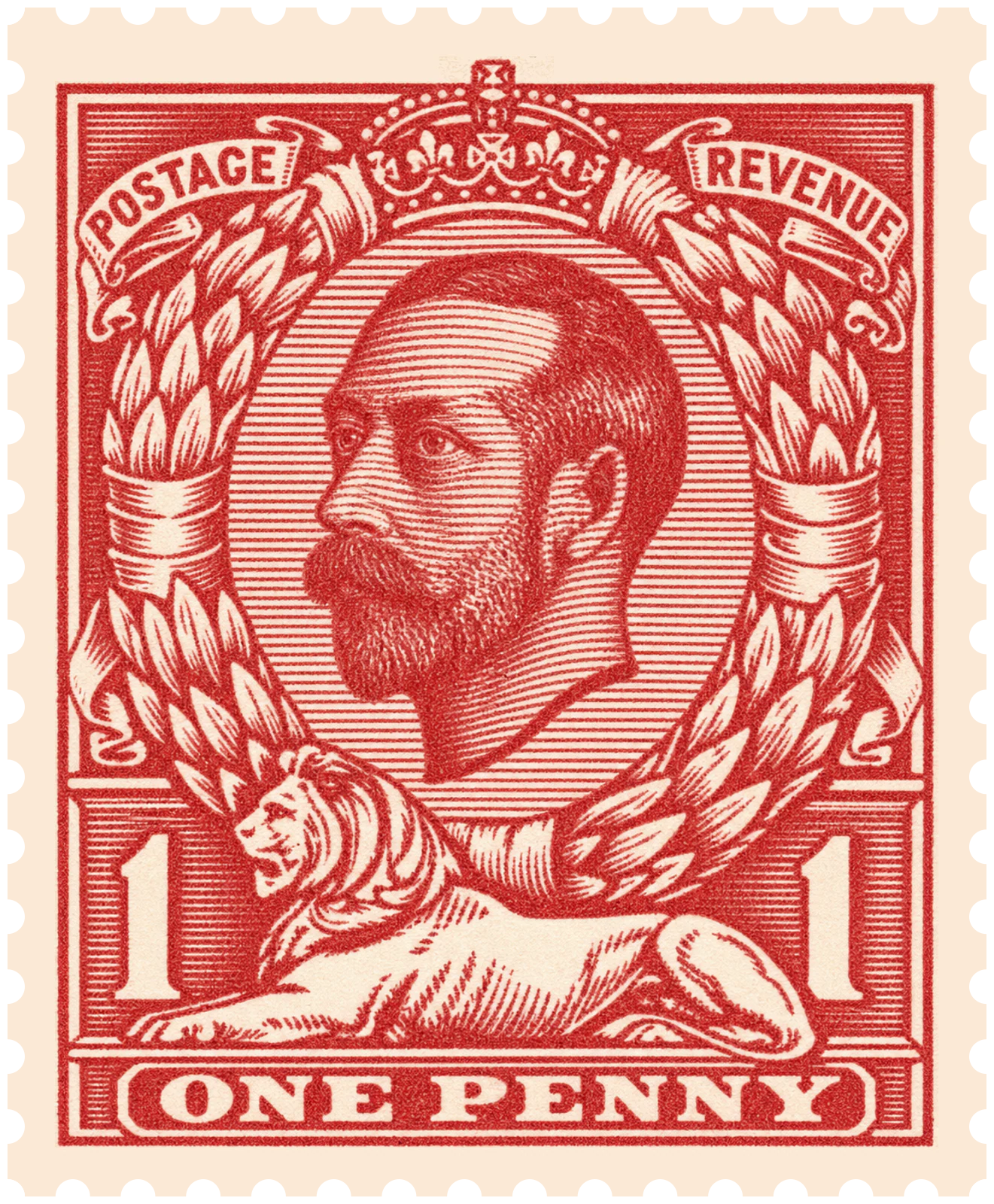
On the stamp you were exploring
George V · 1d carmine-red · 22 June 1911
The crown discussion on your George V 1d carmine-red stamp led here. Compare the small printed emblem with the enlarged heraldic pattern below. The jewelled illustration explains the older historical object; it is not the model from which this stamp was engraved.
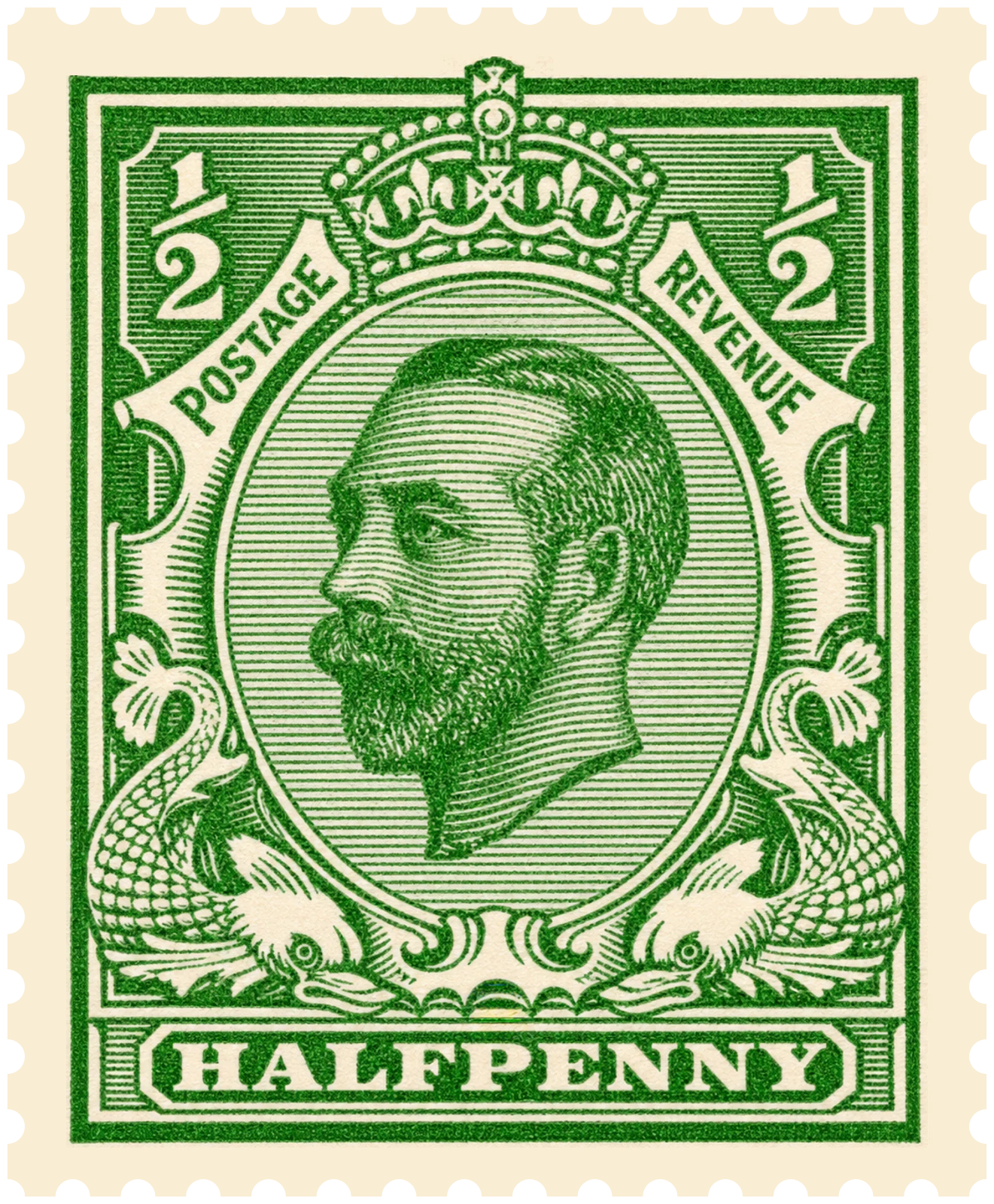
On the stamp you were exploring
George V · ½d green · 1911
The crown discussion on your George V ½d green stamp led here. Compare the small printed emblem with the enlarged heraldic pattern below. The jewelled illustration explains the older historical object; it is not the model from which this stamp was engraved.
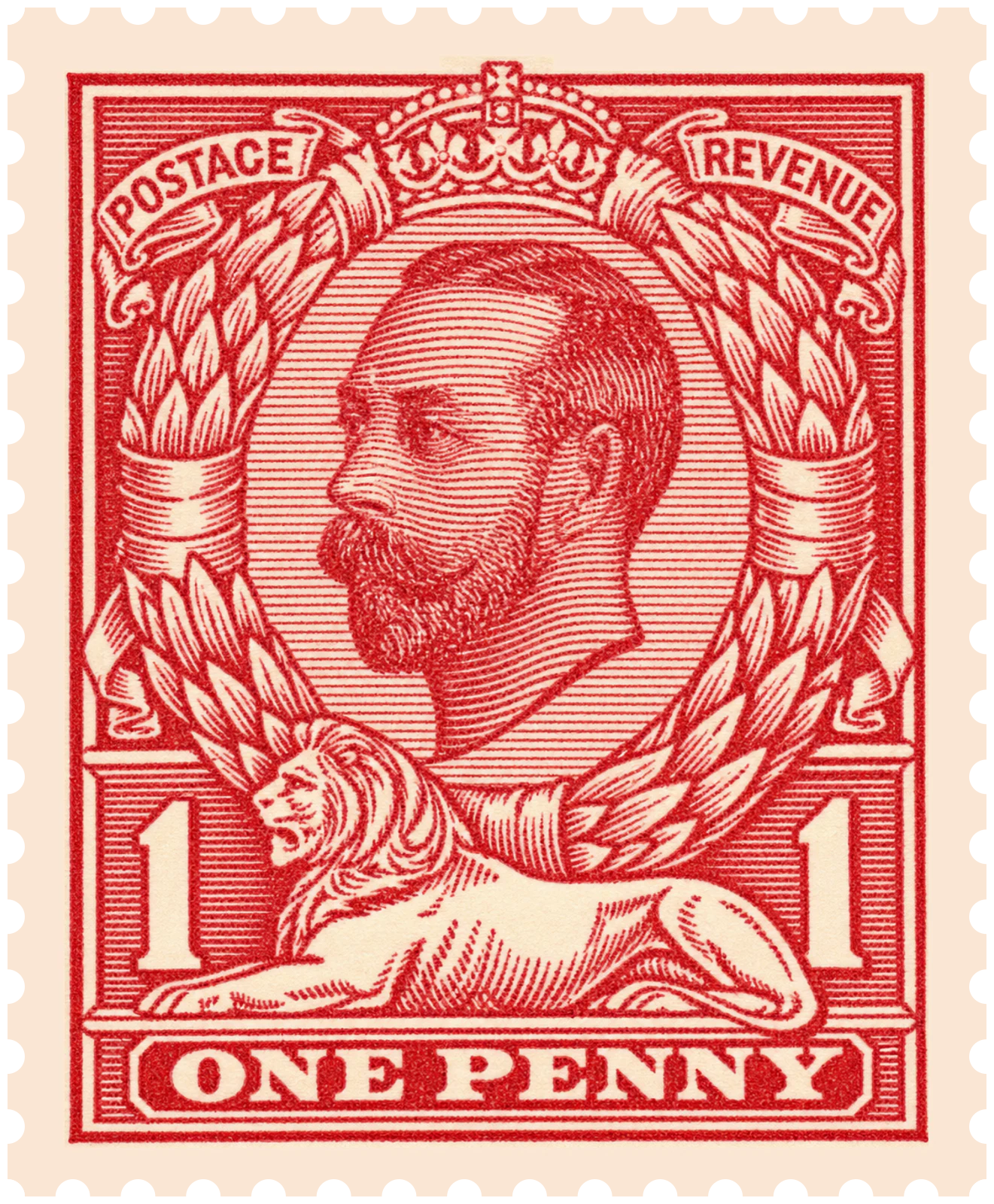
On the stamp you were exploring
George V · 1d carmine · 1911
The crown discussion on your George V 1d carmine stamp led here. Compare the small printed emblem with the enlarged heraldic pattern below. The jewelled illustration explains the older historical object; it is not the model from which this stamp was engraved.
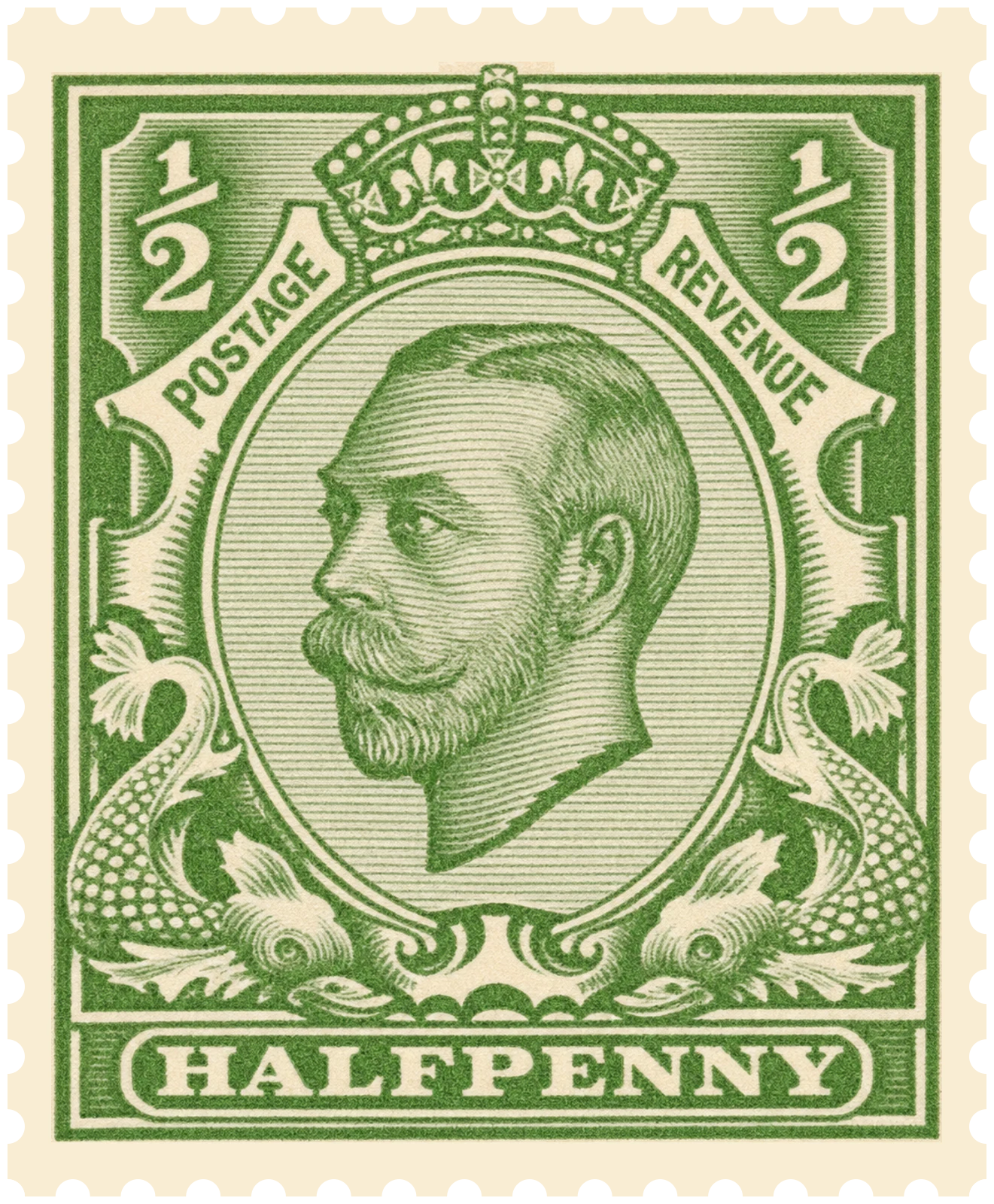
On the stamp you were exploring
George V · ½d green · January 1912
The crown discussion on your George V ½d green stamp led here. Compare the small printed emblem with the enlarged heraldic pattern below. The jewelled illustration explains the older historical object; it is not the model from which this stamp was engraved.
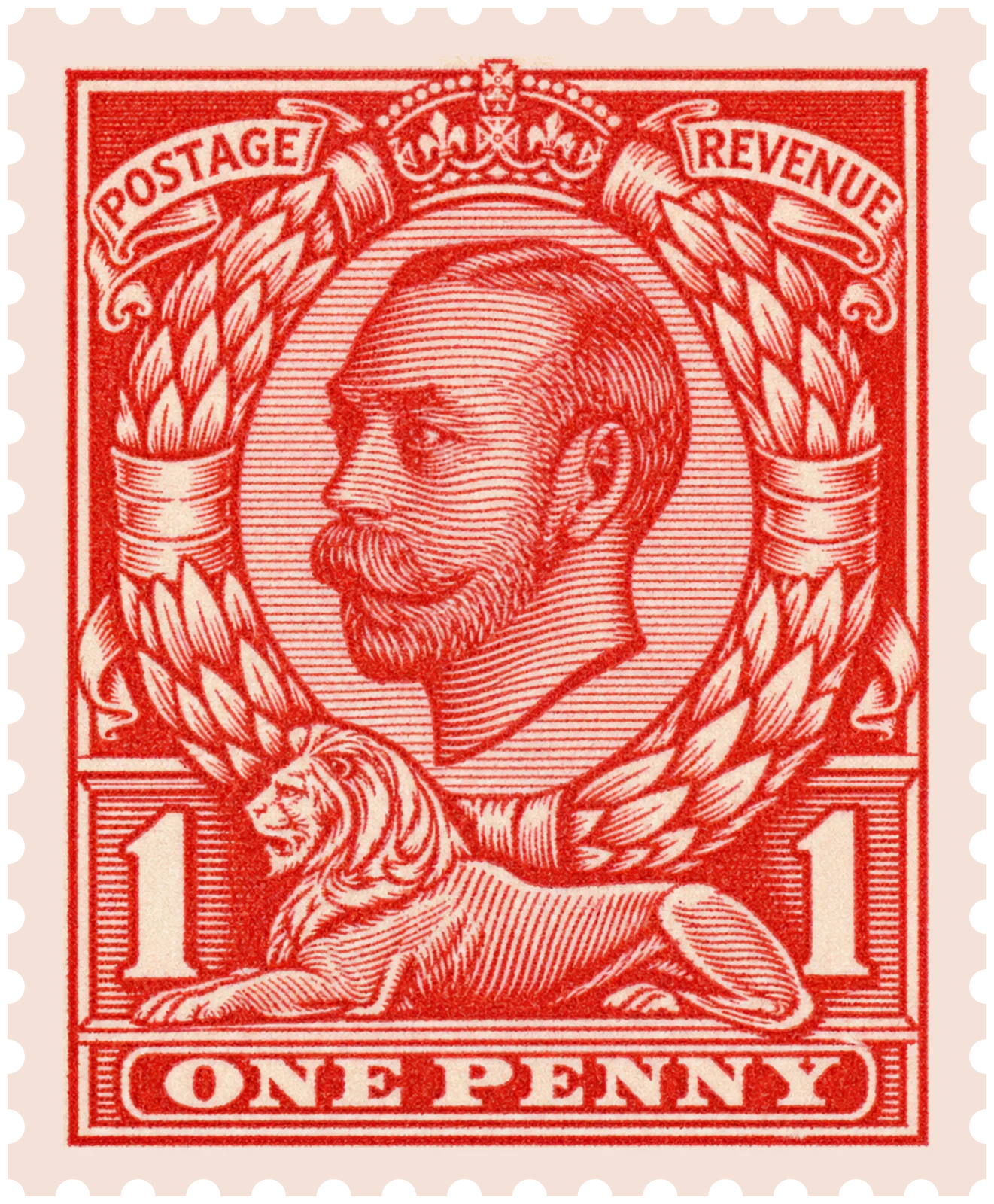
On the stamp you were exploring
George V · 1d scarlet · January 1912
The crown discussion on your George V 1d scarlet stamp led here. Compare the small printed emblem with the enlarged heraldic pattern below. The jewelled illustration explains the older historical object; it is not the model from which this stamp was engraved.
On the stamp you were exploring
George V · ½d green · September 1912
The crown discussion on your George V ½d green stamp led here. Compare the small printed emblem with the enlarged heraldic pattern below. The jewelled illustration explains the older historical object; it is not the model from which this stamp was engraved.
On the stamp you were exploring
George V · 1d scarlet · September 1912
The crown discussion on your George V 1d scarlet stamp led here. Compare the small printed emblem with the enlarged heraldic pattern below. The jewelled illustration explains the older historical object; it is not the model from which this stamp was engraved.
On the stamp you were exploring
George V · ½d green · 1912
The crown discussion on your George V ½d green stamp led here. Compare the small printed emblem with the enlarged heraldic pattern below. The jewelled illustration explains the older historical object; it is not the model from which this stamp was engraved.
On the stamp you were exploring
George V · 1d scarlet · 1912
The crown discussion on your George V 1d scarlet stamp led here. Compare the small printed emblem with the enlarged heraldic pattern below. The jewelled illustration explains the older historical object; it is not the model from which this stamp was engraved.
On the stamp you were exploring
George V · ½d green · 1912
The crown discussion on your George V ½d green stamp led here. Compare the small printed emblem with the enlarged heraldic pattern below. The jewelled illustration explains the older historical object; it is not the model from which this stamp was engraved.
On the stamp you were exploring
George V · 1d scarlet · 1912
The crown discussion on your George V 1d scarlet stamp led here. Compare the small printed emblem with the enlarged heraldic pattern below. The jewelled illustration explains the older historical object; it is not the model from which this stamp was engraved.
On the stamp you were exploring
George V · 1d scarlet · 1912
The crown discussion on your George V 1d scarlet stamp led here. Compare the small printed emblem with the enlarged heraldic pattern below. The jewelled illustration explains the older historical object; it is not the model from which this stamp was engraved.
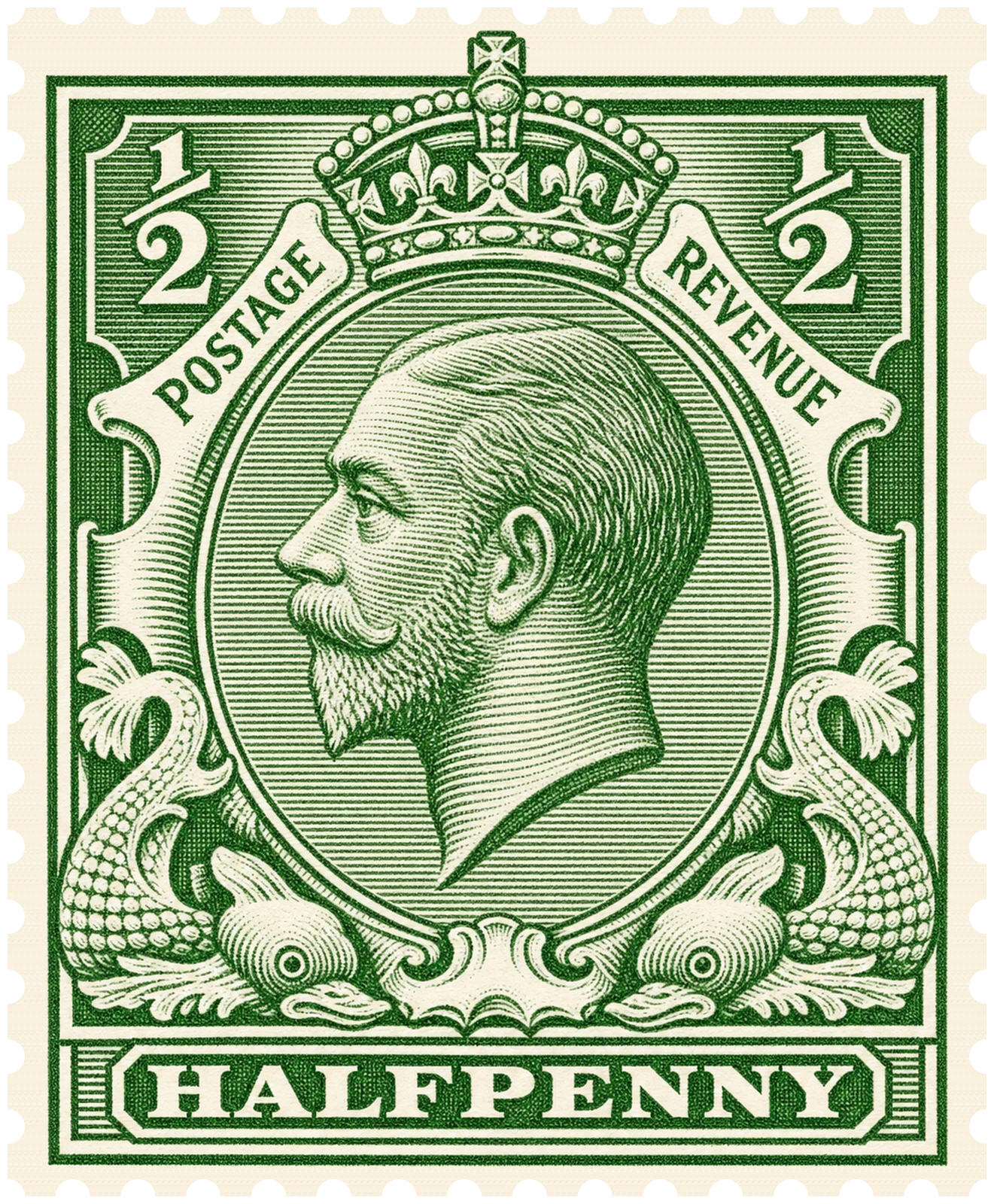
On the stamp you were exploring
George V · ½d green · Introduced 1924–1926
The crown discussion on your George V ½d green stamp led here. Compare the small printed emblem with the enlarged heraldic pattern below. The jewelled illustration explains the older historical object; it is not the model from which this stamp was engraved.
On the stamp you were exploring
George V · ½d green · Introduced 1924–1926
The crown discussion on your George V ½d green stamp led here. Compare the small printed emblem with the enlarged heraldic pattern below. The jewelled illustration explains the older historical object; it is not the model from which this stamp was engraved.
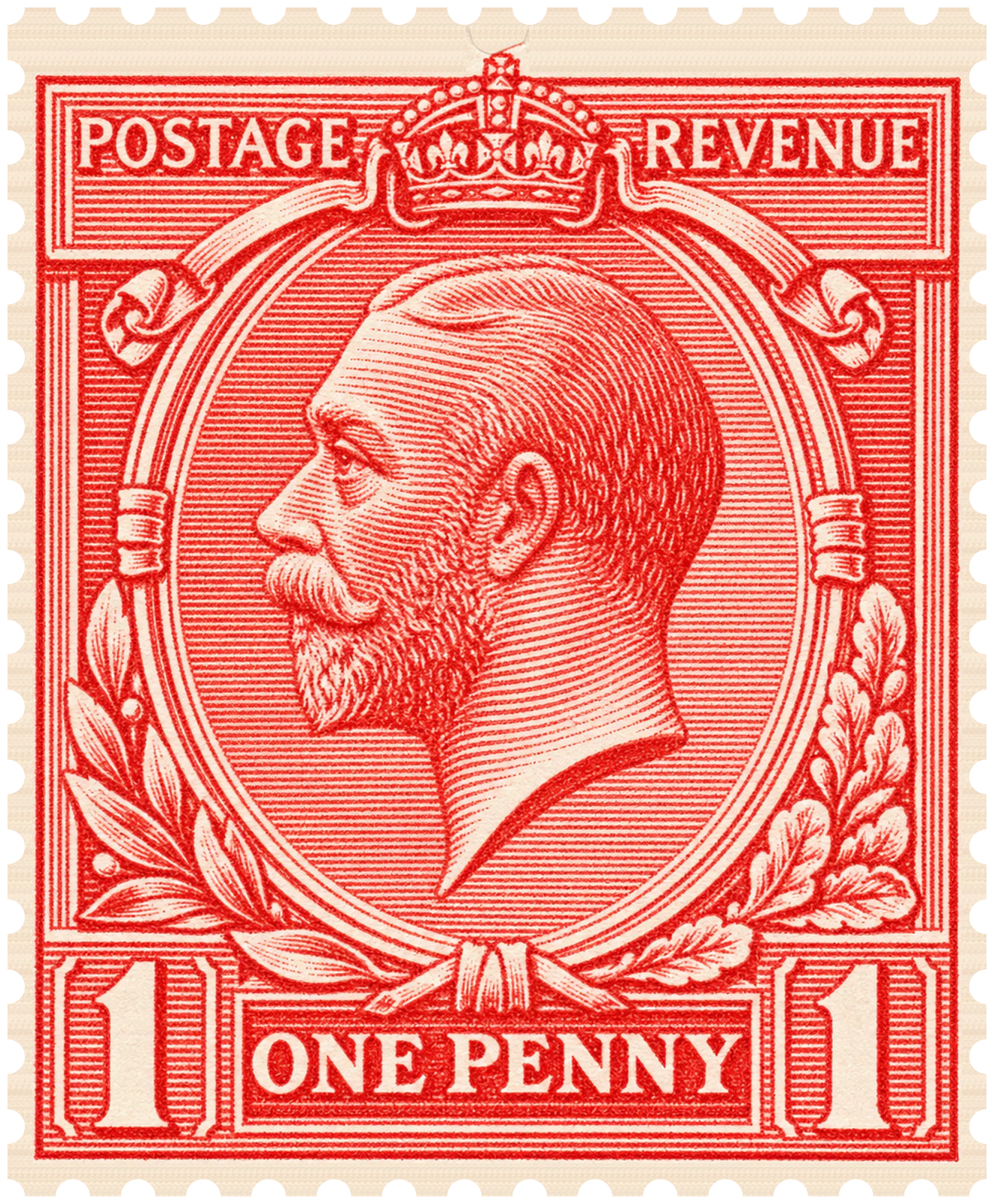
On the stamp you were exploring
George V · 1d scarlet · Introduced 1924–1926
The crown discussion on your George V 1d scarlet stamp led here. Compare the small printed emblem with the enlarged heraldic pattern below. The jewelled illustration explains the older historical object; it is not the model from which this stamp was engraved.
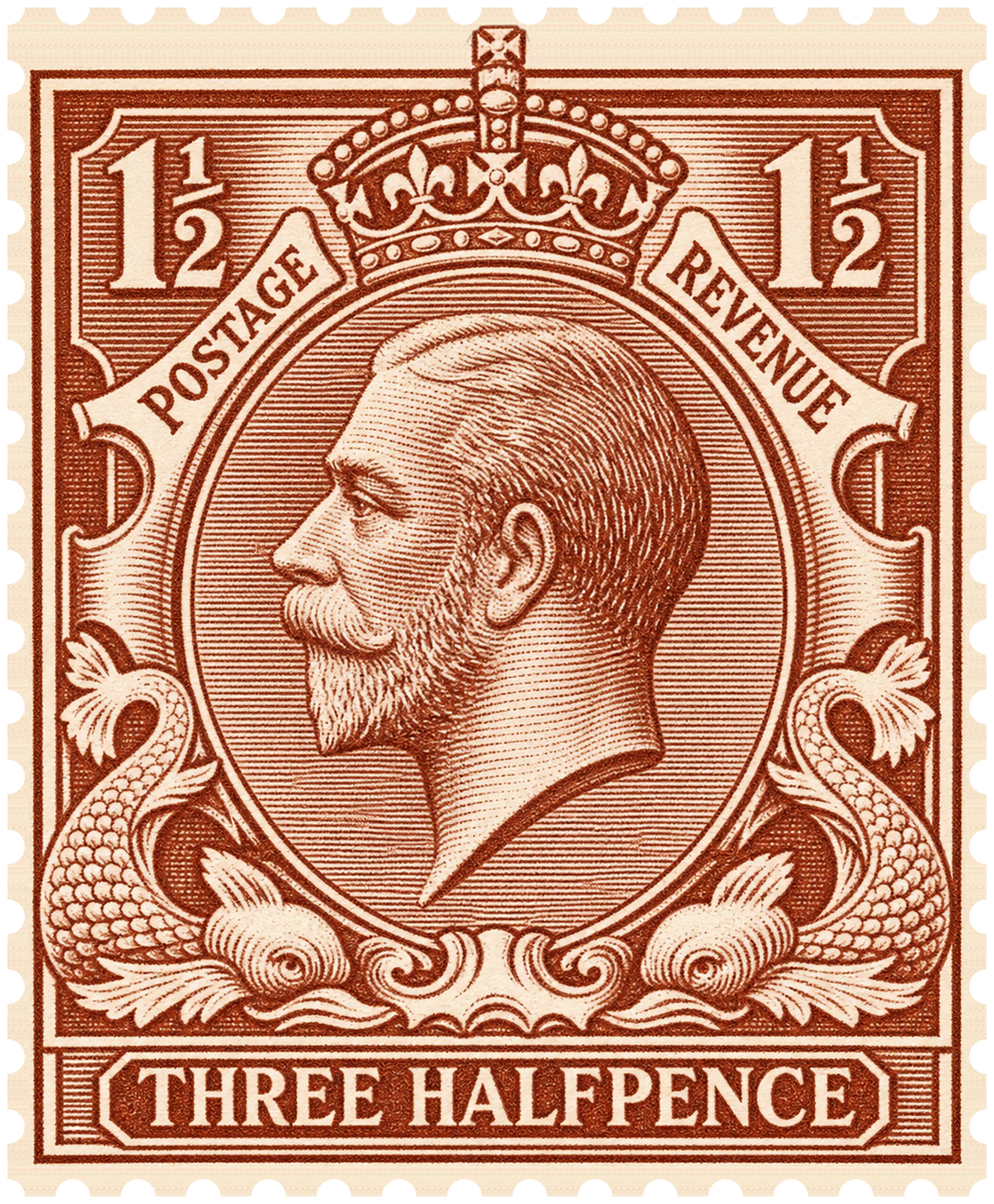
On the stamp you were exploring
George V · 1½d red-brown · Introduced 1924–1926
The crown discussion on your George V 1½d red-brown stamp led here. Compare the small printed emblem with the enlarged heraldic pattern below. The jewelled illustration explains the older historical object; it is not the model from which this stamp was engraved.
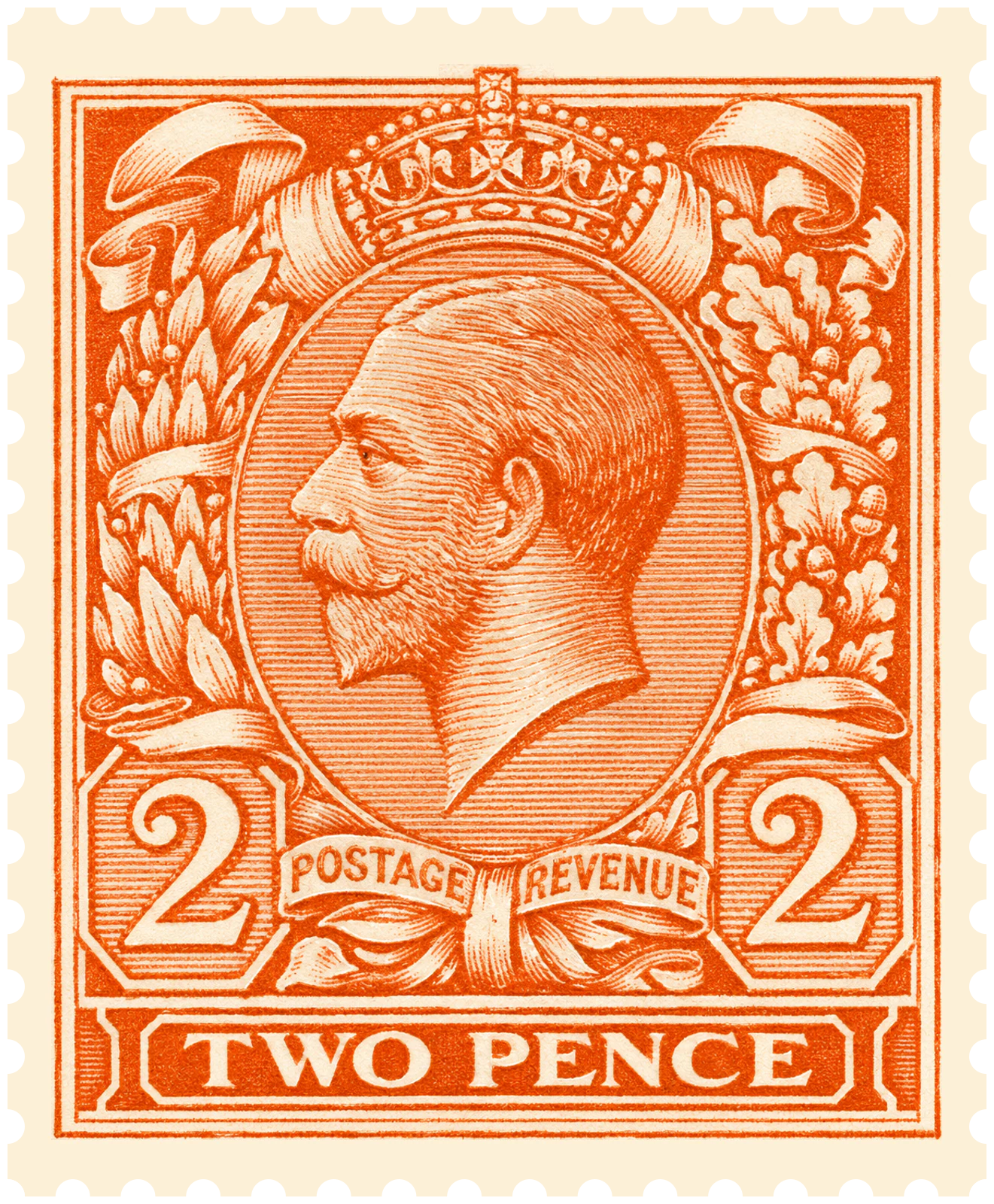
On the stamp you were exploring
George V · 2d orange · Introduced 1924–1926
The crown discussion on your George V 2d orange stamp led here. Compare the small printed emblem with the enlarged heraldic pattern below. The jewelled illustration explains the older historical object; it is not the model from which this stamp was engraved.
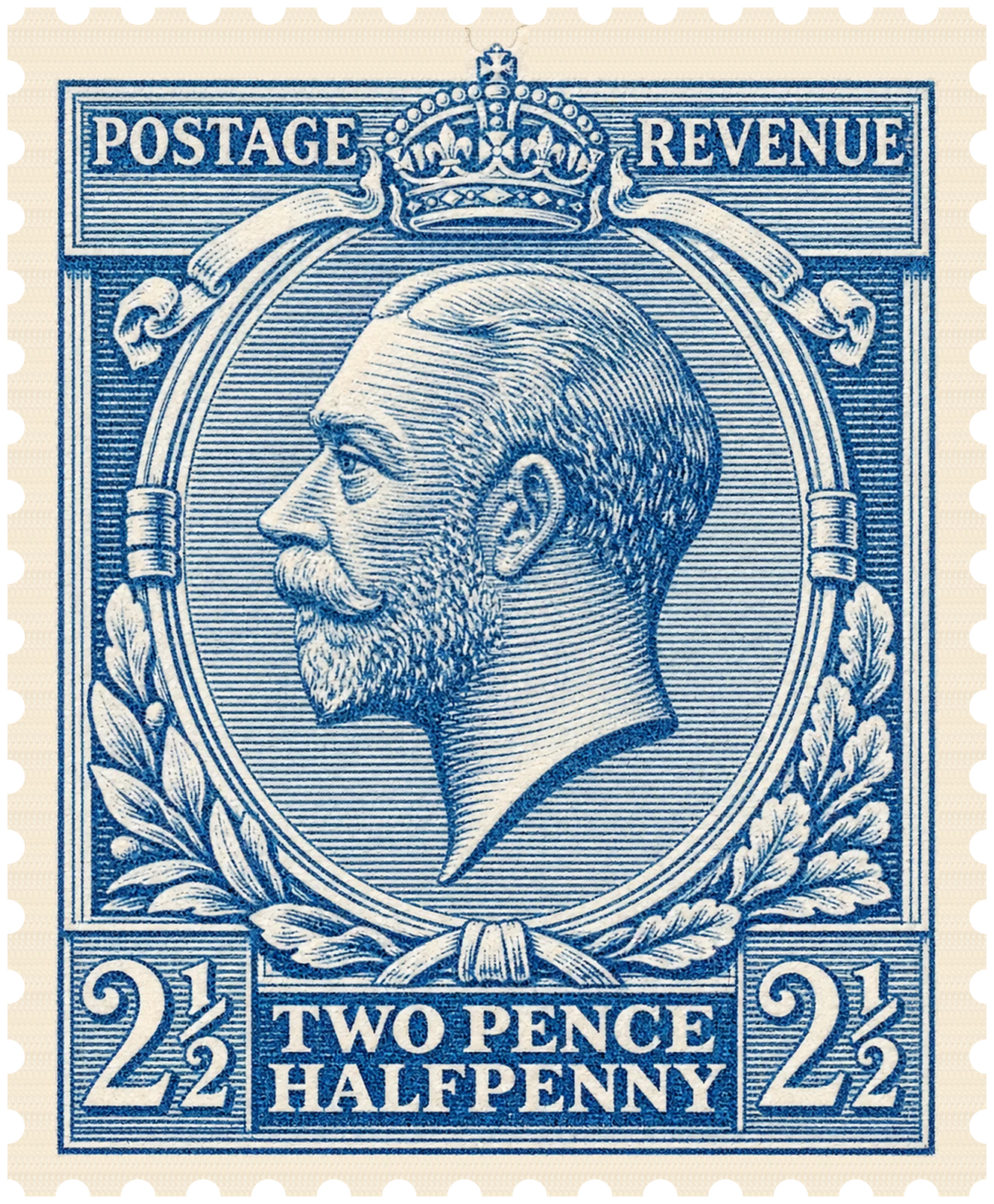
On the stamp you were exploring
George V · 2½d blue · Introduced 1924–1926
The crown discussion on your George V 2½d blue stamp led here. Compare the small printed emblem with the enlarged heraldic pattern below. The jewelled illustration explains the older historical object; it is not the model from which this stamp was engraved.
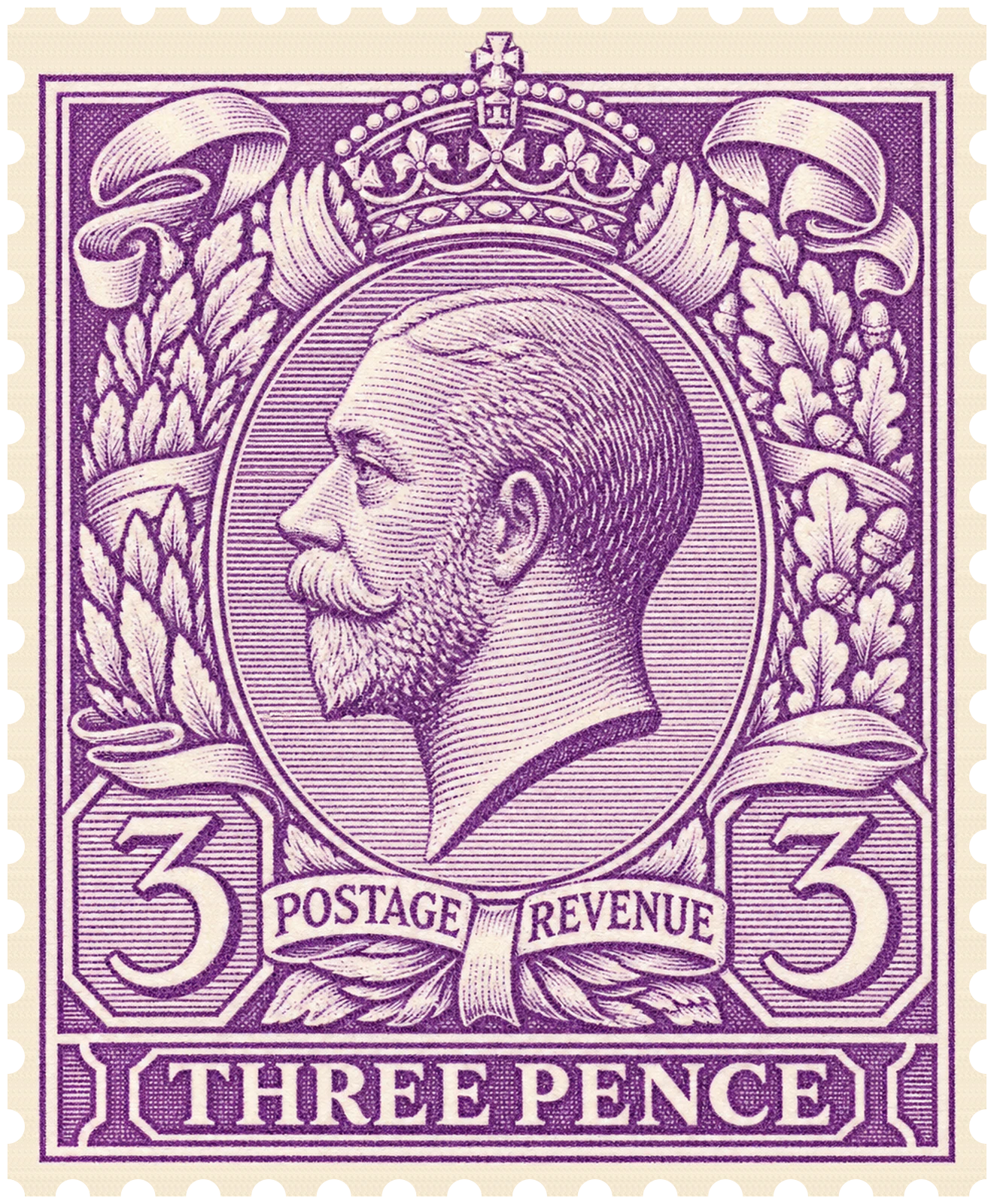
On the stamp you were exploring
George V · 3d violet · Introduced 1924–1926
The crown discussion on your George V 3d violet stamp led here. Compare the small printed emblem with the enlarged heraldic pattern below. The jewelled illustration explains the older historical object; it is not the model from which this stamp was engraved.
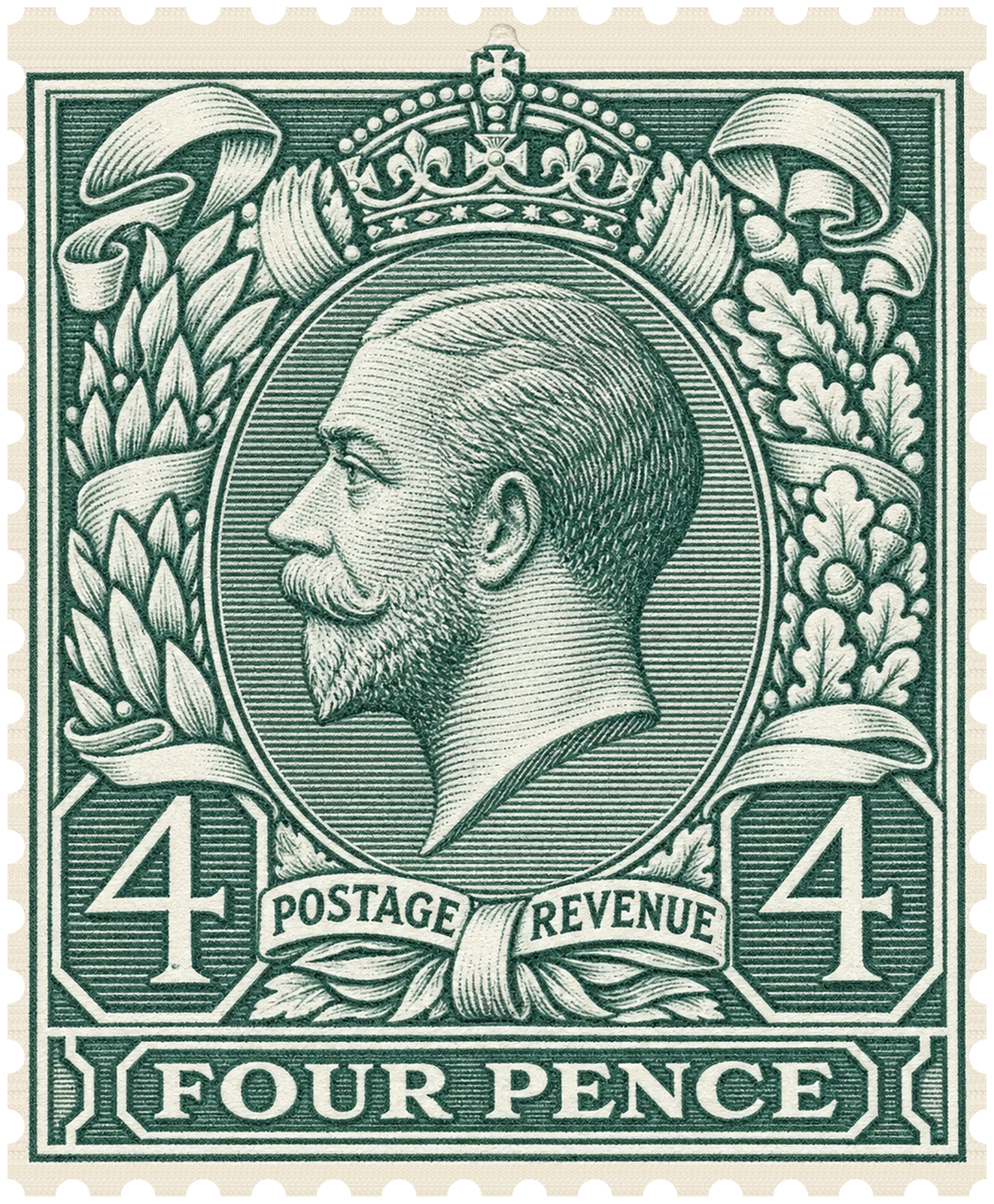
On the stamp you were exploring
George V · 4d grey-green · Introduced 1924–1926
The crown discussion on your George V 4d grey-green stamp led here. Compare the small printed emblem with the enlarged heraldic pattern below. The jewelled illustration explains the older historical object; it is not the model from which this stamp was engraved.
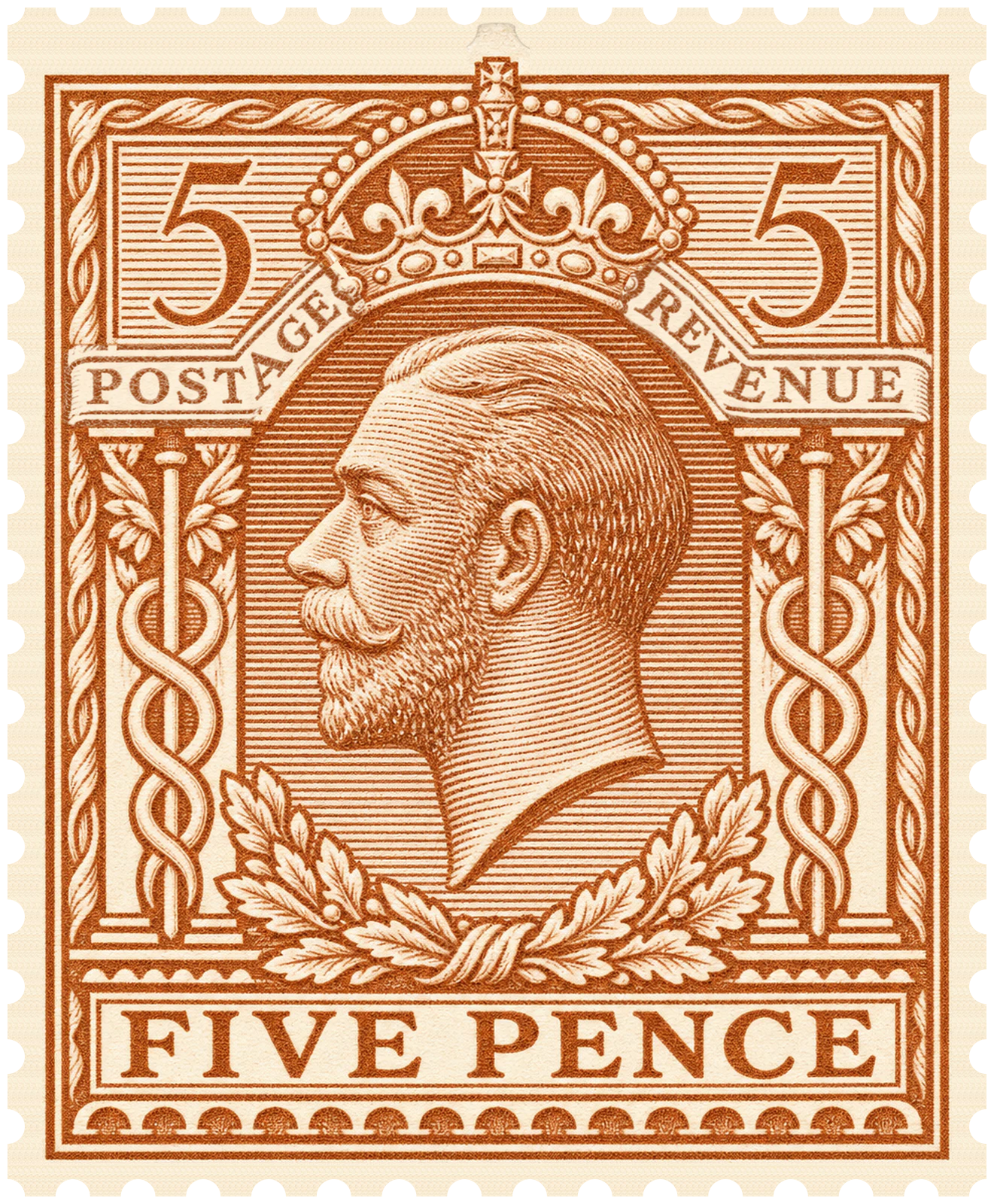
On the stamp you were exploring
George V · 5d brown · Introduced 1924–1926
The crown discussion on your George V 5d brown stamp led here. Compare the small printed emblem with the enlarged heraldic pattern below. The jewelled illustration explains the older historical object; it is not the model from which this stamp was engraved.
On the stamp you were exploring
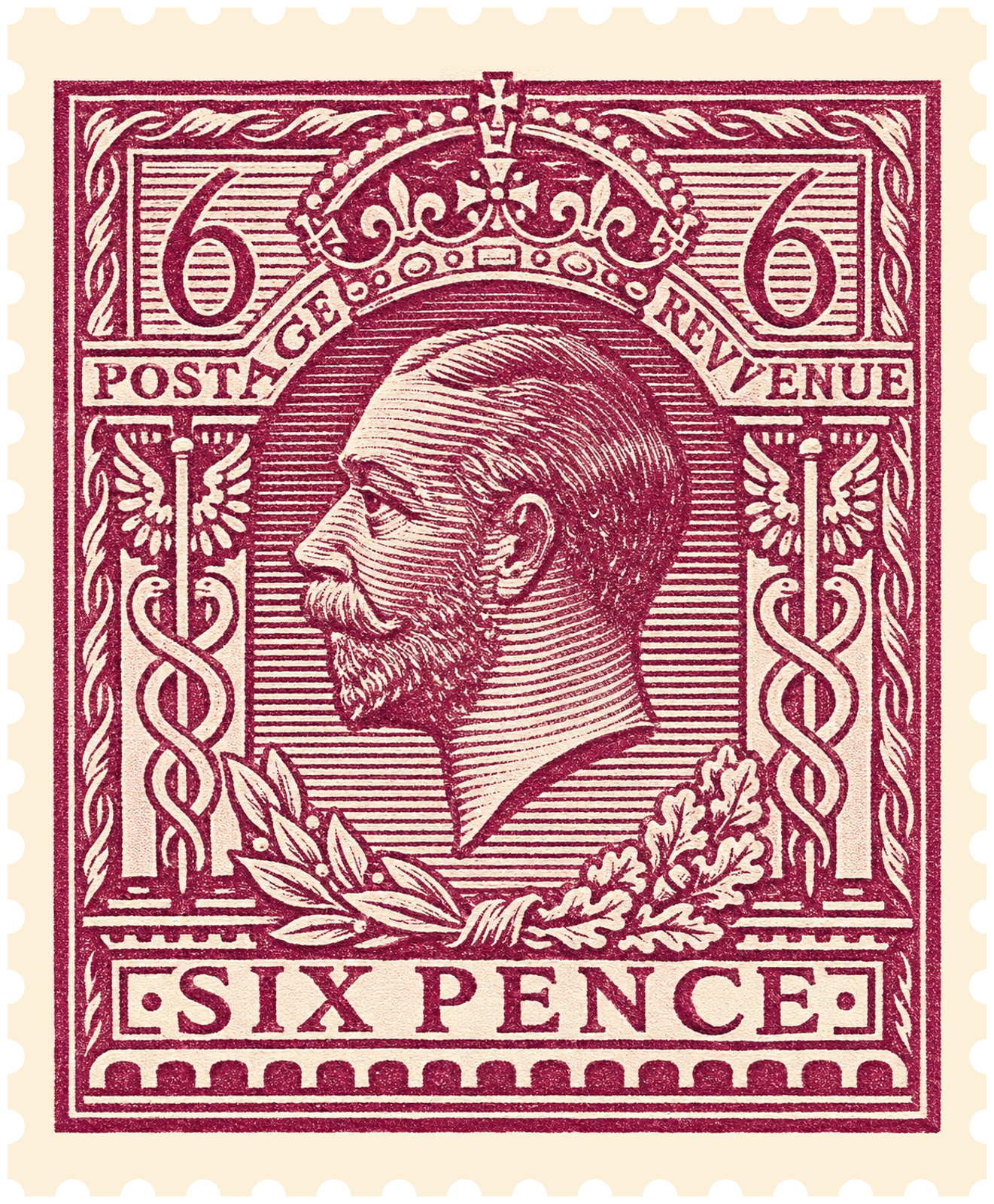
George V · 6d reddish-purple · Introduced 1924–1926
The crown discussion on your George V 6d reddish-purple stamp led here. Compare the small printed emblem with the enlarged heraldic pattern below. The jewelled illustration explains the older historical object; it is not the model from which this stamp was engraved.
On the stamp you were exploring
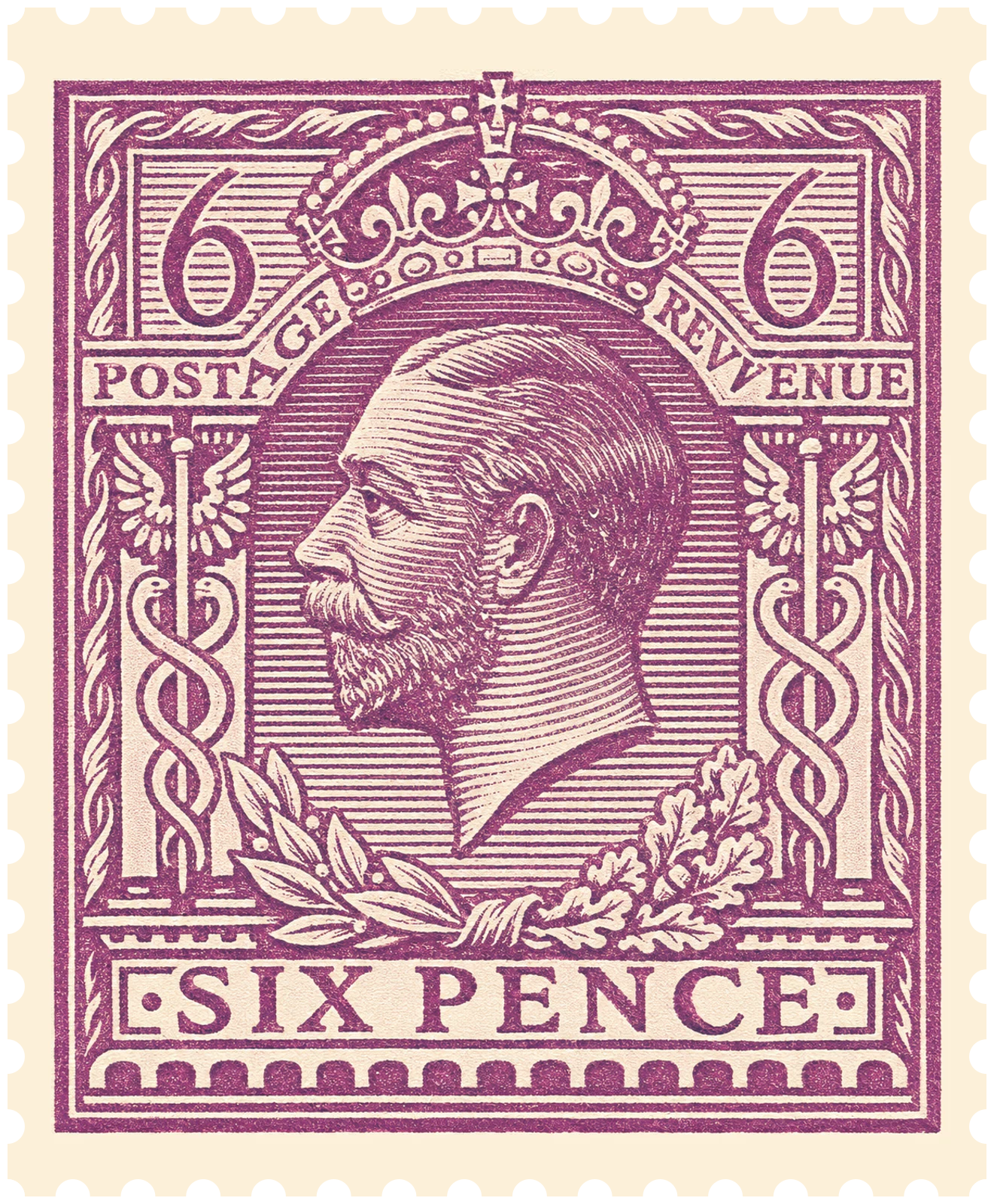
George V · 6d purple · Introduced 1924–1926
The crown discussion on your George V 6d purple stamp led here. Compare the small printed emblem with the enlarged heraldic pattern below. The jewelled illustration explains the older historical object; it is not the model from which this stamp was engraved.
On the stamp you were exploring
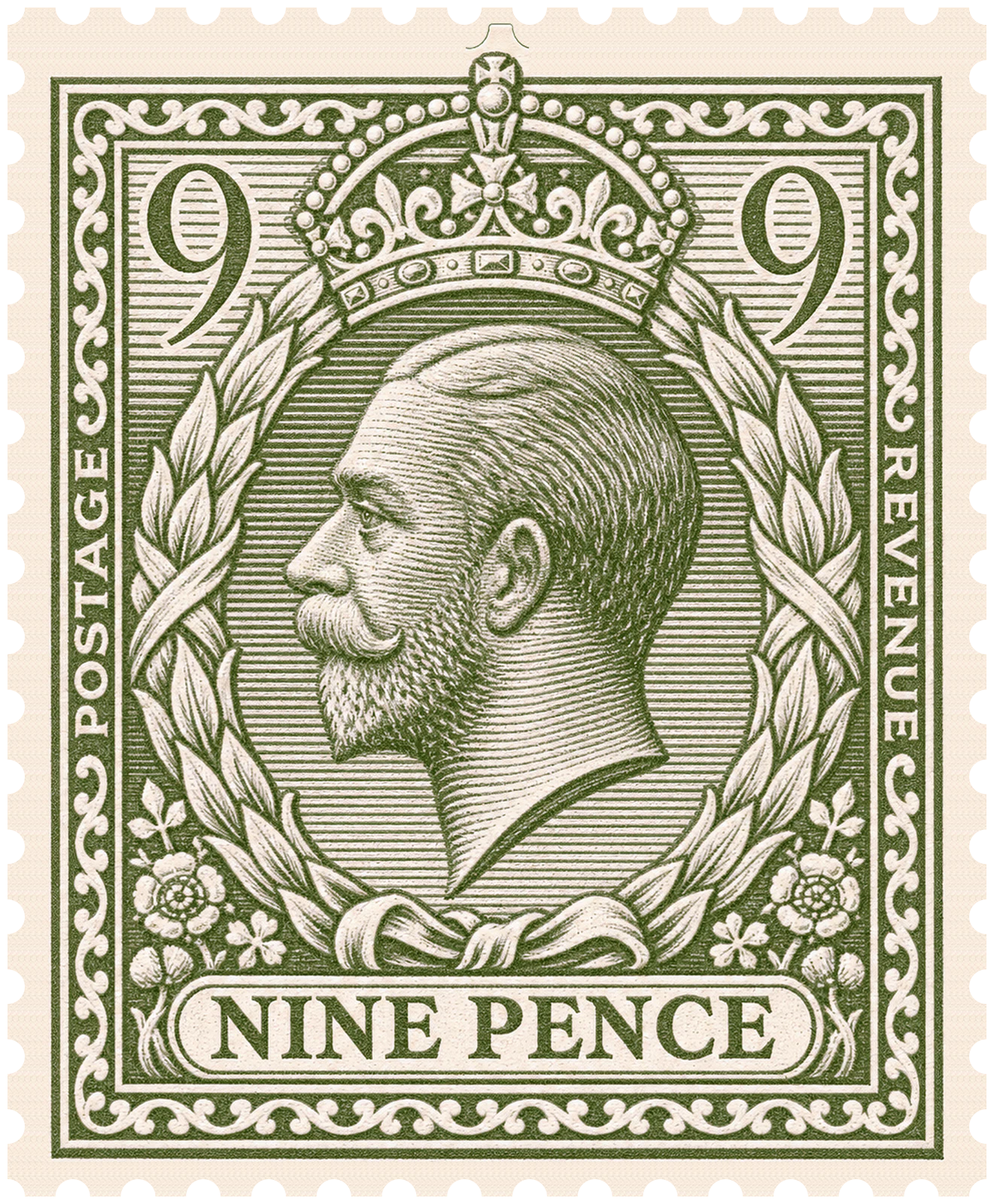
George V · 9d olive-green · Introduced 1924–1926
The crown discussion on your George V 9d olive-green stamp led here. Compare the small printed emblem with the enlarged heraldic pattern below. The jewelled illustration explains the older historical object; it is not the model from which this stamp was engraved.
On the stamp you were exploring
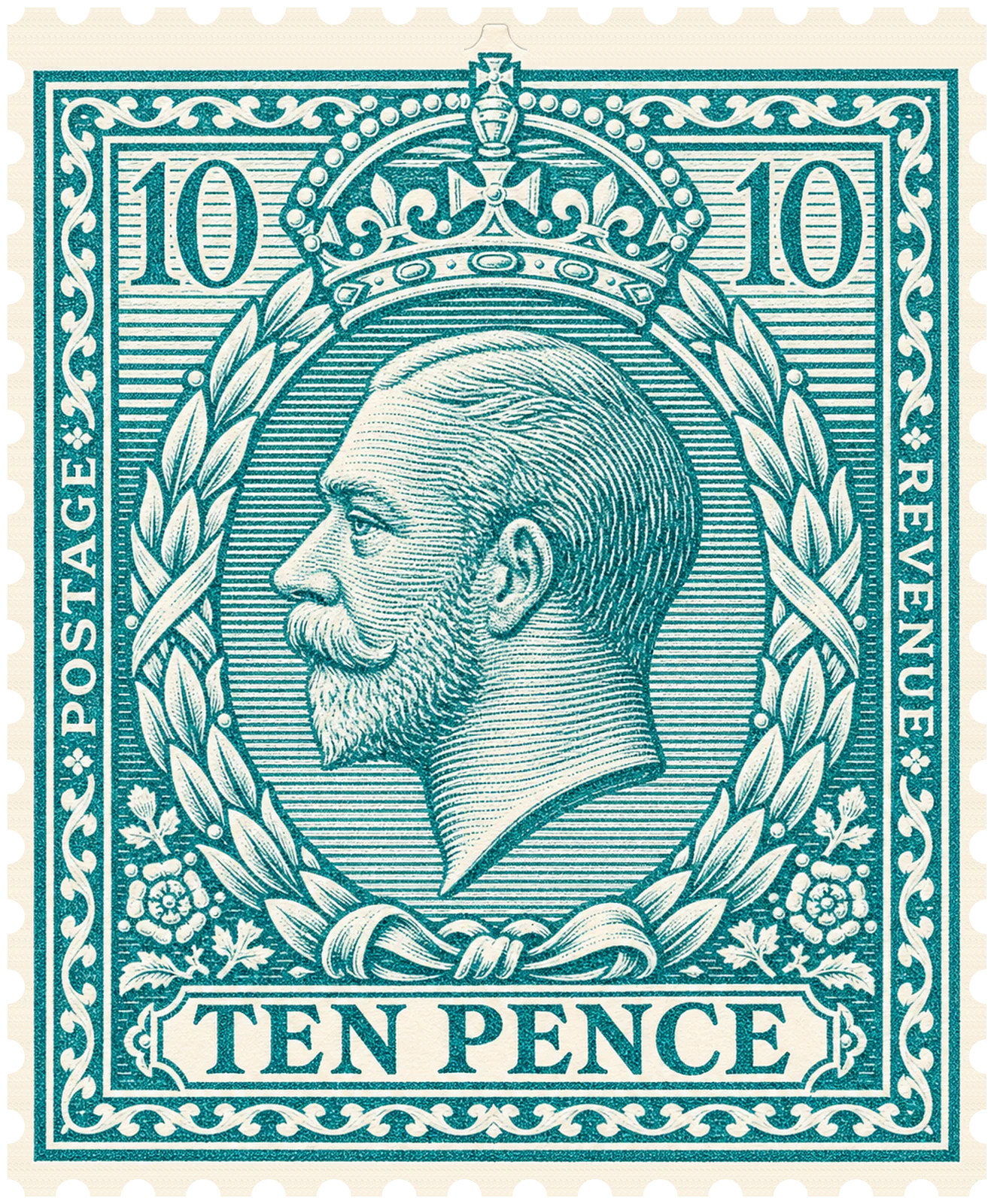
George V · 10d turquoise-blue · Introduced 1924–1926
The crown discussion on your George V 10d turquoise-blue stamp led here. Compare the small printed emblem with the enlarged heraldic pattern below. The jewelled illustration explains the older historical object; it is not the model from which this stamp was engraved.
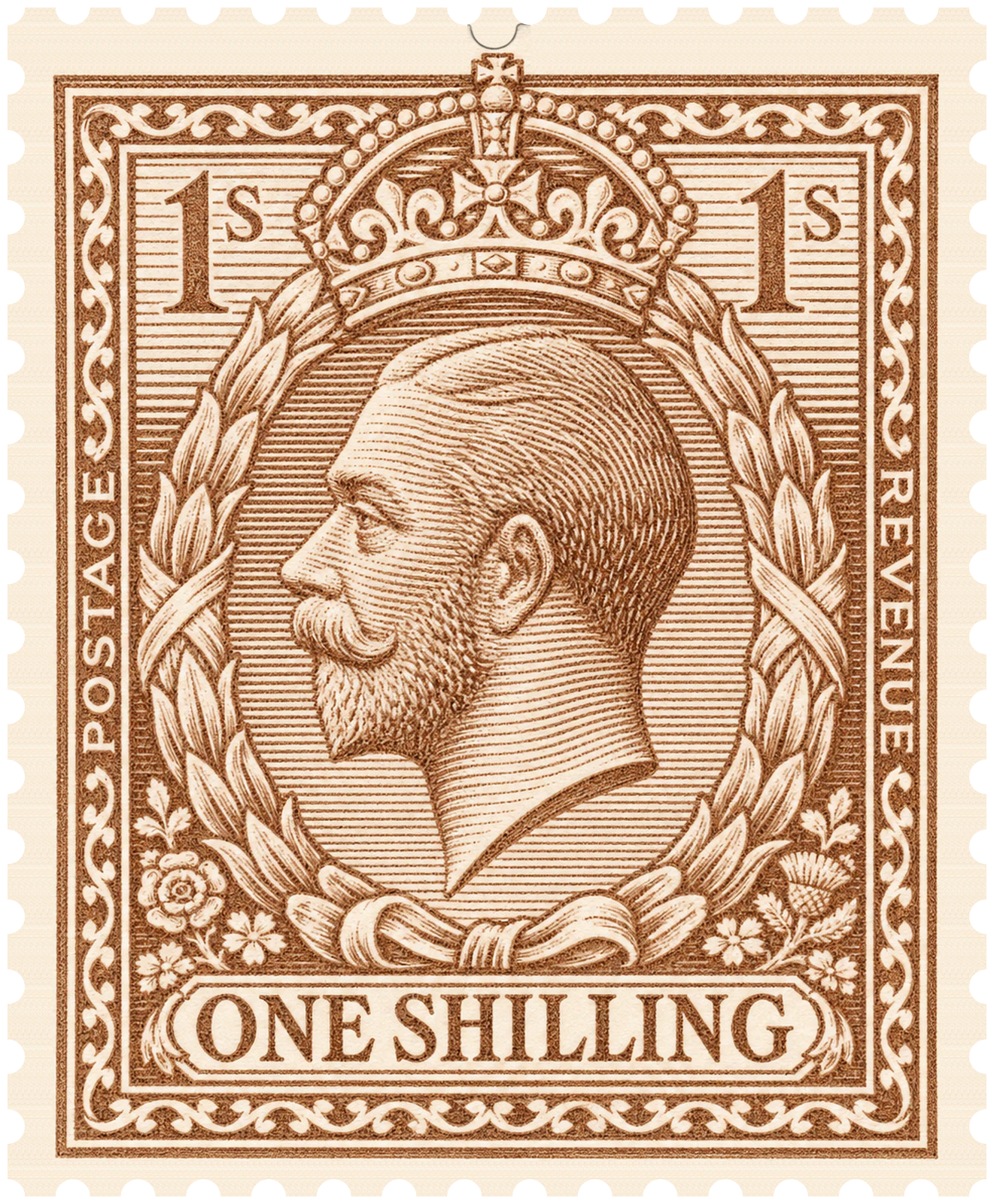
On the stamp you were exploring
George V · 1s bistre-brown · Introduced 1924–1926
The crown discussion on your George V 1s bistre-brown stamp led here. Compare the small printed emblem with the enlarged heraldic pattern below. The jewelled illustration explains the older historical object; it is not the model from which this stamp was engraved.
On the stamp you were exploring
George V · ½d bright green · August 1913
The crown discussion on your George V ½d bright green stamp led here. Compare the small printed emblem with the enlarged heraldic pattern below. The jewelled illustration explains the older historical object; it is not the model from which this stamp was engraved.
On the stamp you were exploring
George V · 1d dull scarlet · August 1913
The crown discussion on your George V 1d dull scarlet stamp led here. Compare the small printed emblem with the enlarged heraldic pattern below. The jewelled illustration explains the older historical object; it is not the model from which this stamp was engraved.
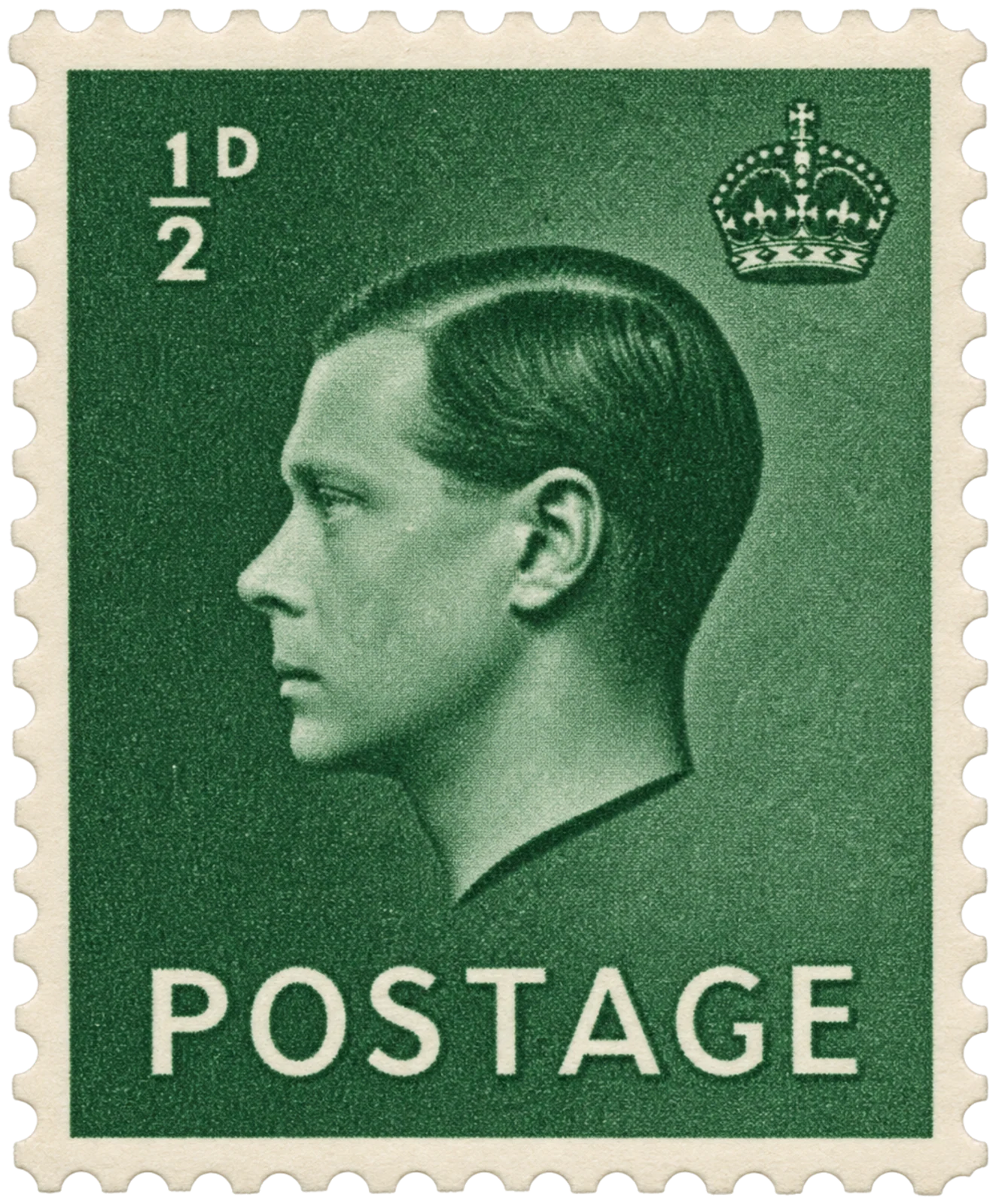
On the stamp you were exploring
Edward VIII · ½d green · 1 September 1936
The crown discussion on your Edward VIII ½d green stamp led here. Compare the small printed emblem with the enlarged heraldic pattern below. The jewelled illustration explains the older historical object; it is not the model from which this stamp was engraved.
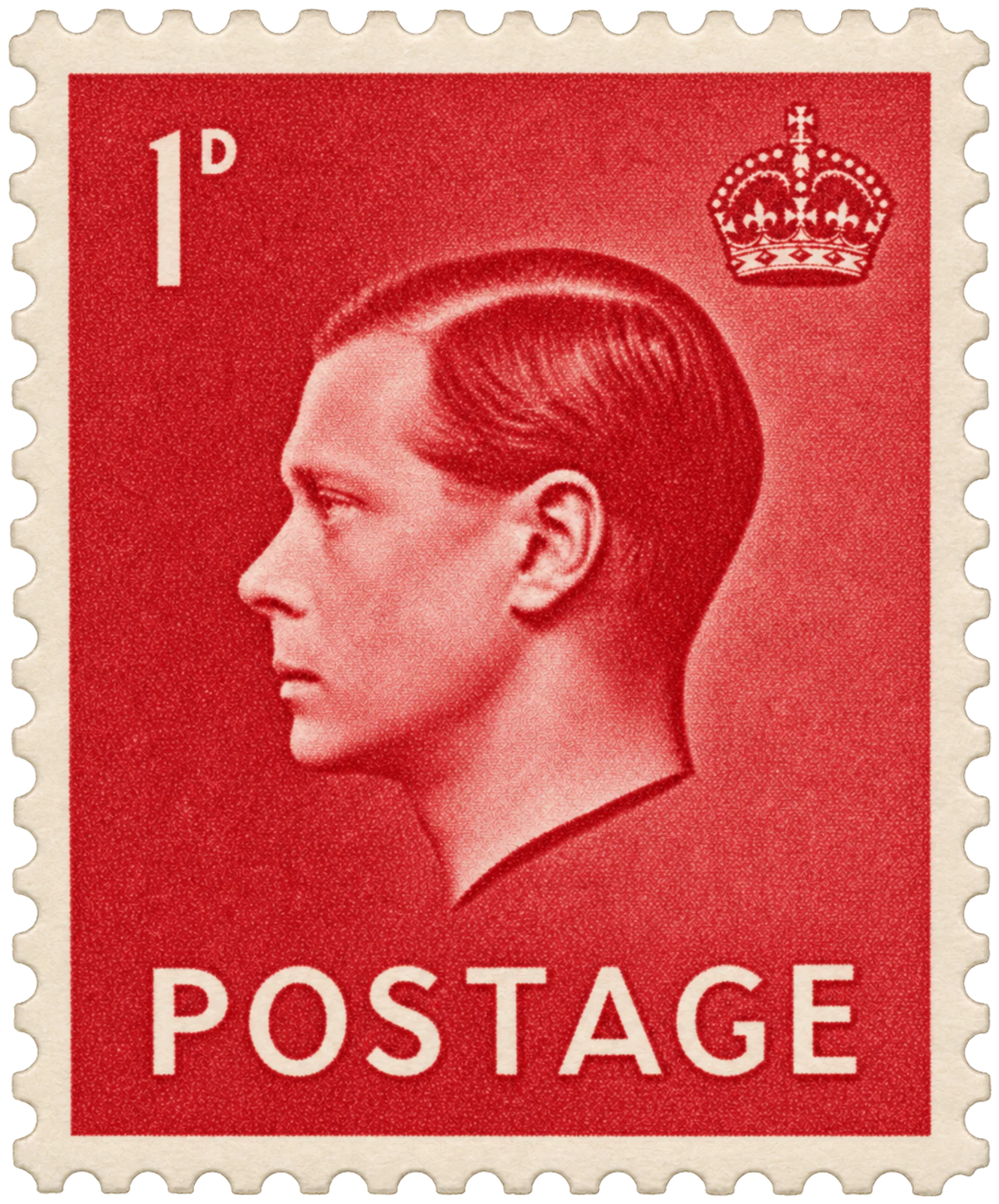
On the stamp you were exploring
Edward VIII · 1d scarlet · 14 September 1936
The crown discussion on your Edward VIII 1d scarlet stamp led here. Compare the small printed emblem with the enlarged heraldic pattern below. The jewelled illustration explains the older historical object; it is not the model from which this stamp was engraved.
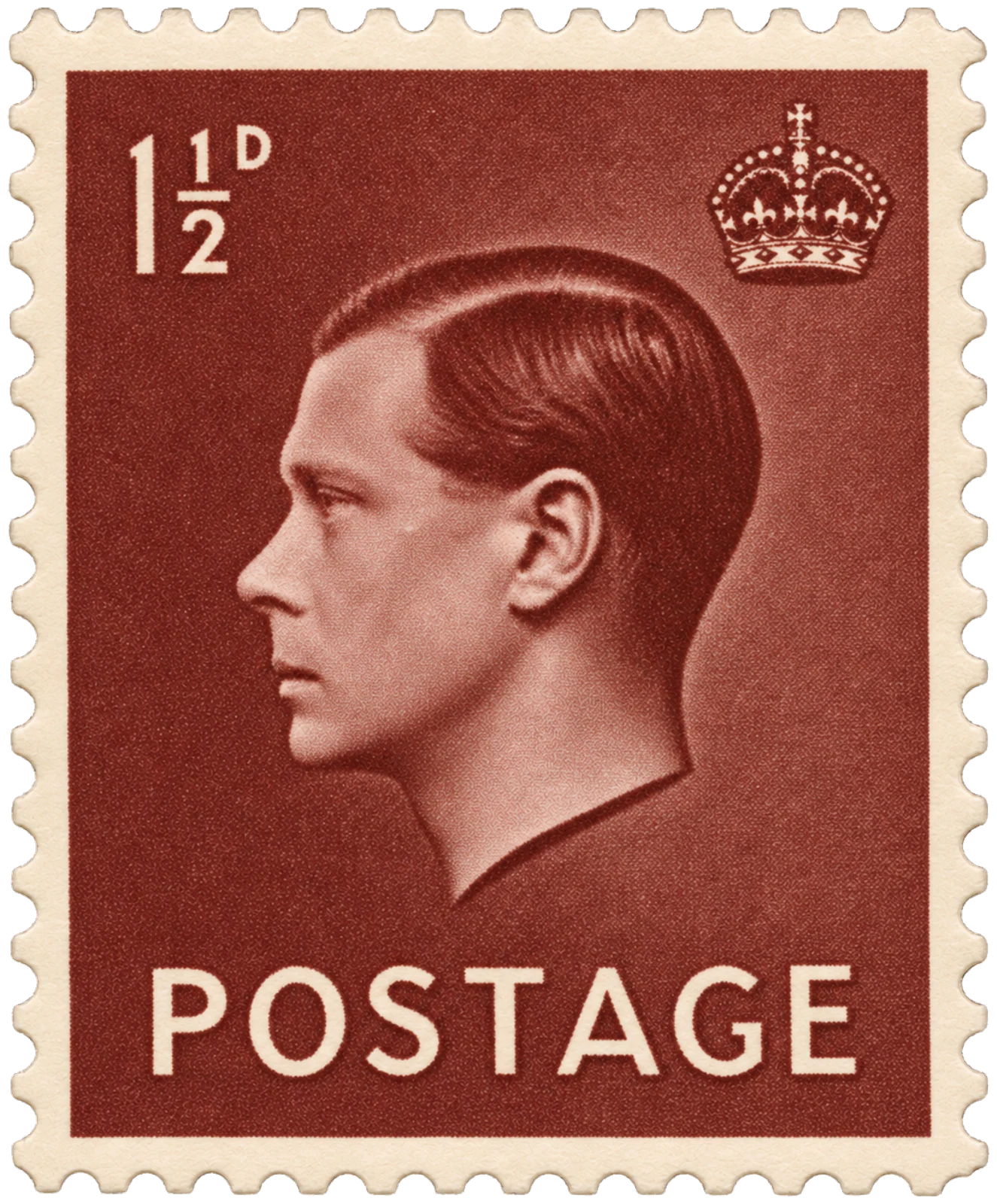
On the stamp you were exploring
Edward VIII · 1½d red-brown · 1 September 1936
The crown discussion on your Edward VIII 1½d red-brown stamp led here. Compare the small printed emblem with the enlarged heraldic pattern below. The jewelled illustration explains the older historical object; it is not the model from which this stamp was engraved.
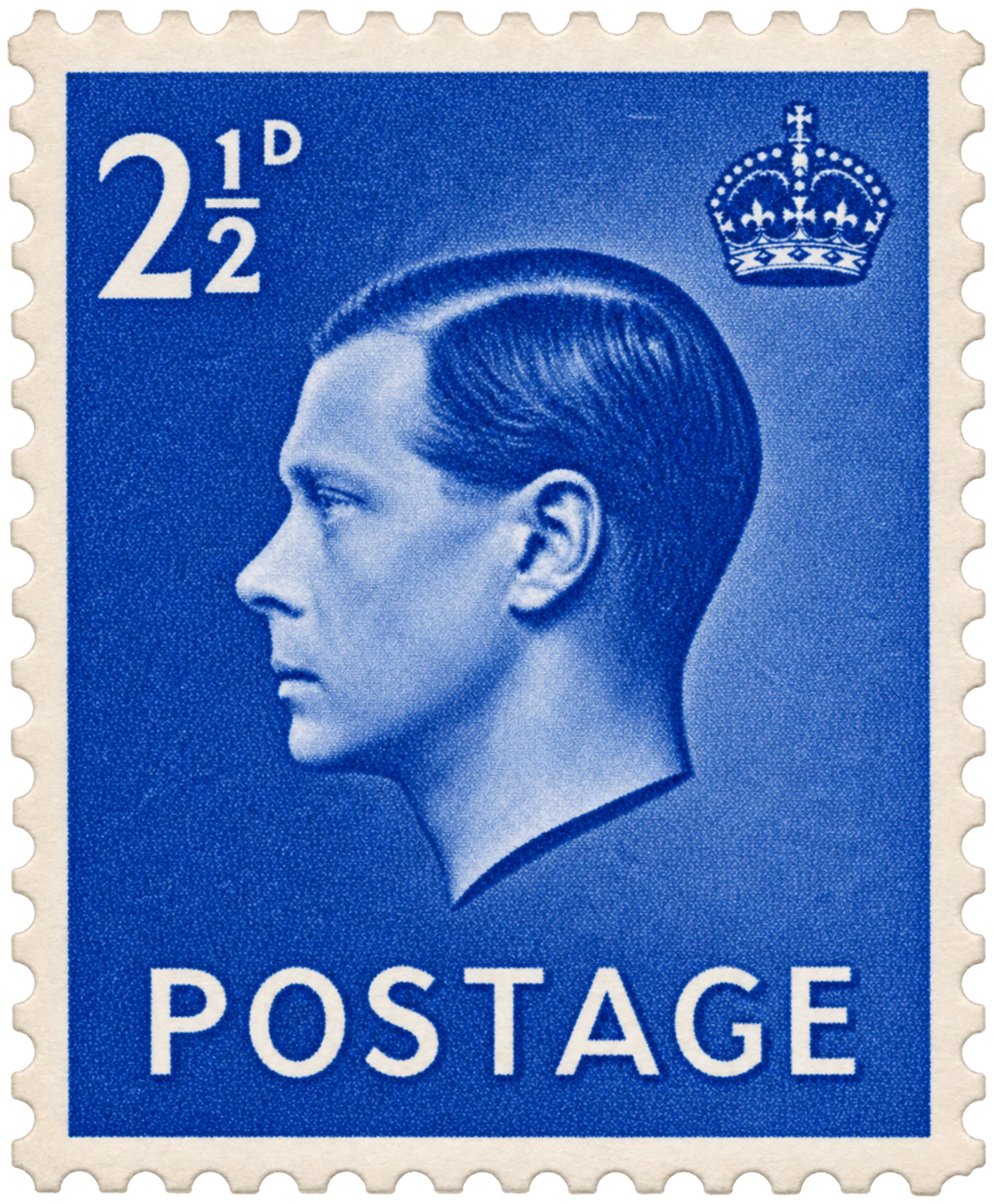
On the stamp you were exploring
Edward VIII · 2½d bright blue · 1 September 1936
The crown discussion on your Edward VIII 2½d bright blue stamp led here. Compare the small printed emblem with the enlarged heraldic pattern below. The jewelled illustration explains the older historical object; it is not the model from which this stamp was engraved.
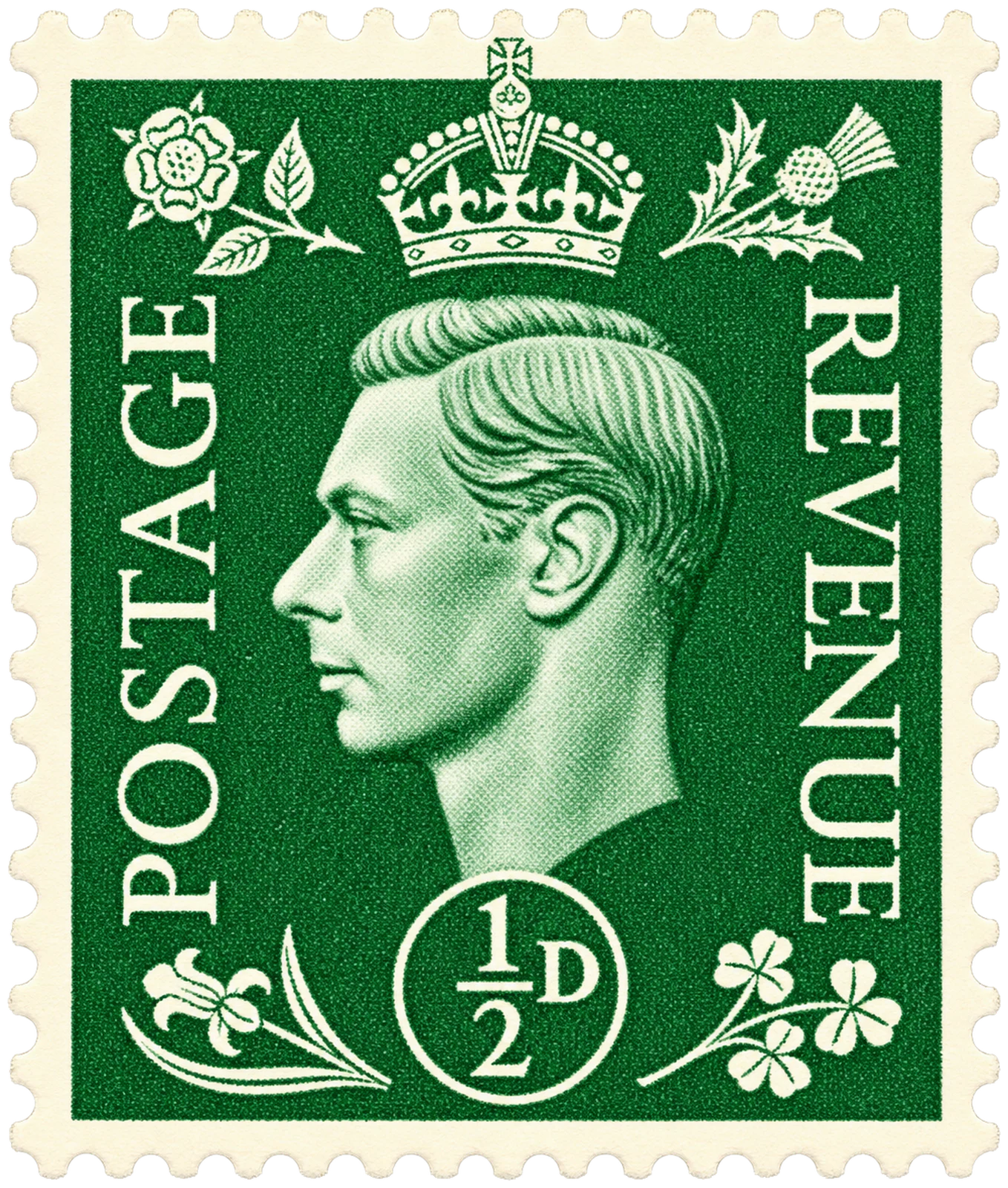
On the stamp you were exploring
George VI · ½d green · 10 May 1937
The crown discussion on your George VI ½d green stamp led here. Compare the small printed emblem with the enlarged heraldic pattern below. The jewelled illustration explains the older historical object; it is not the model from which this stamp was engraved.
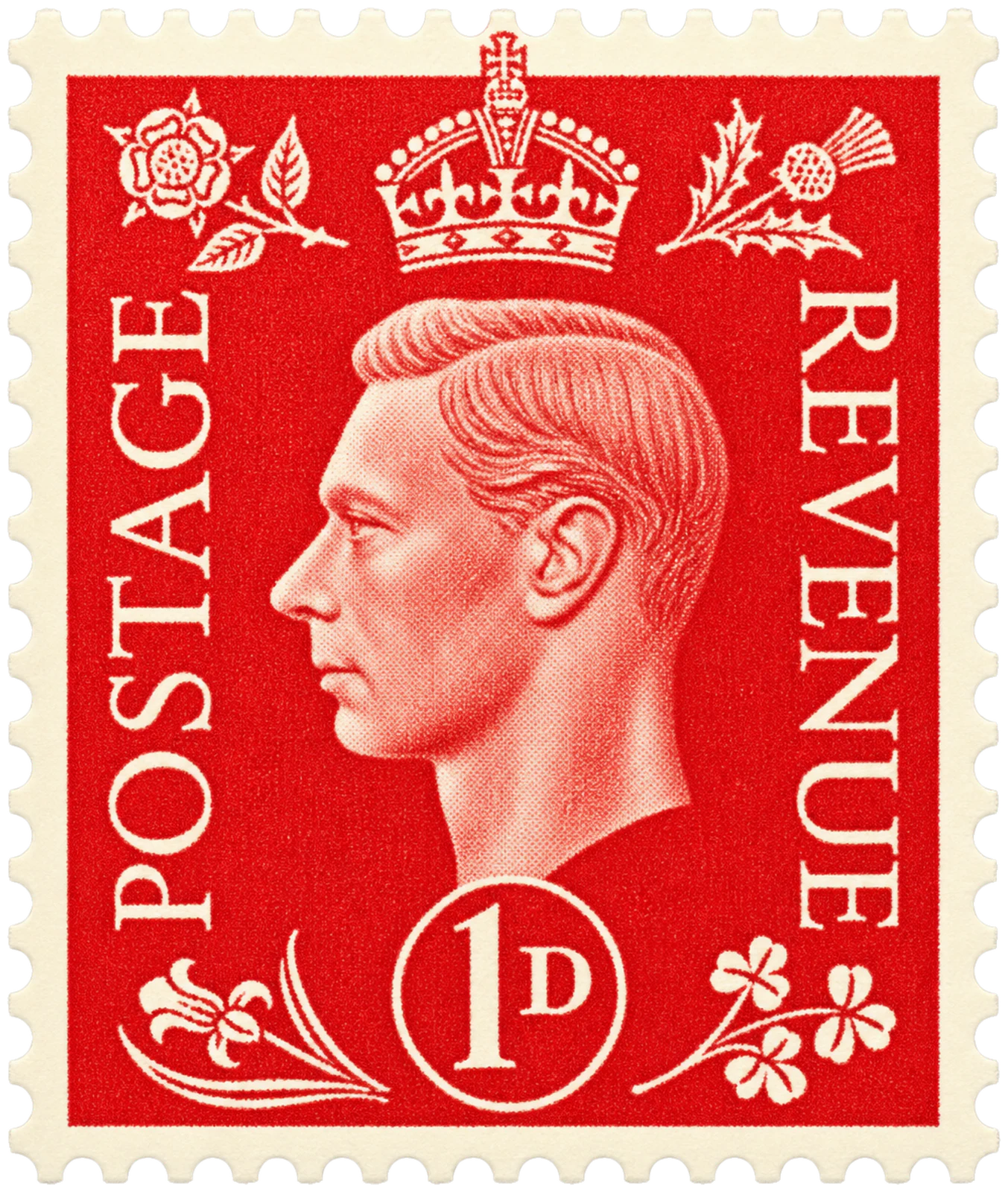
On the stamp you were exploring
George VI · 1d scarlet · 10 May 1937
The crown discussion on your George VI 1d scarlet stamp led here. Compare the small printed emblem with the enlarged heraldic pattern below. The jewelled illustration explains the older historical object; it is not the model from which this stamp was engraved.
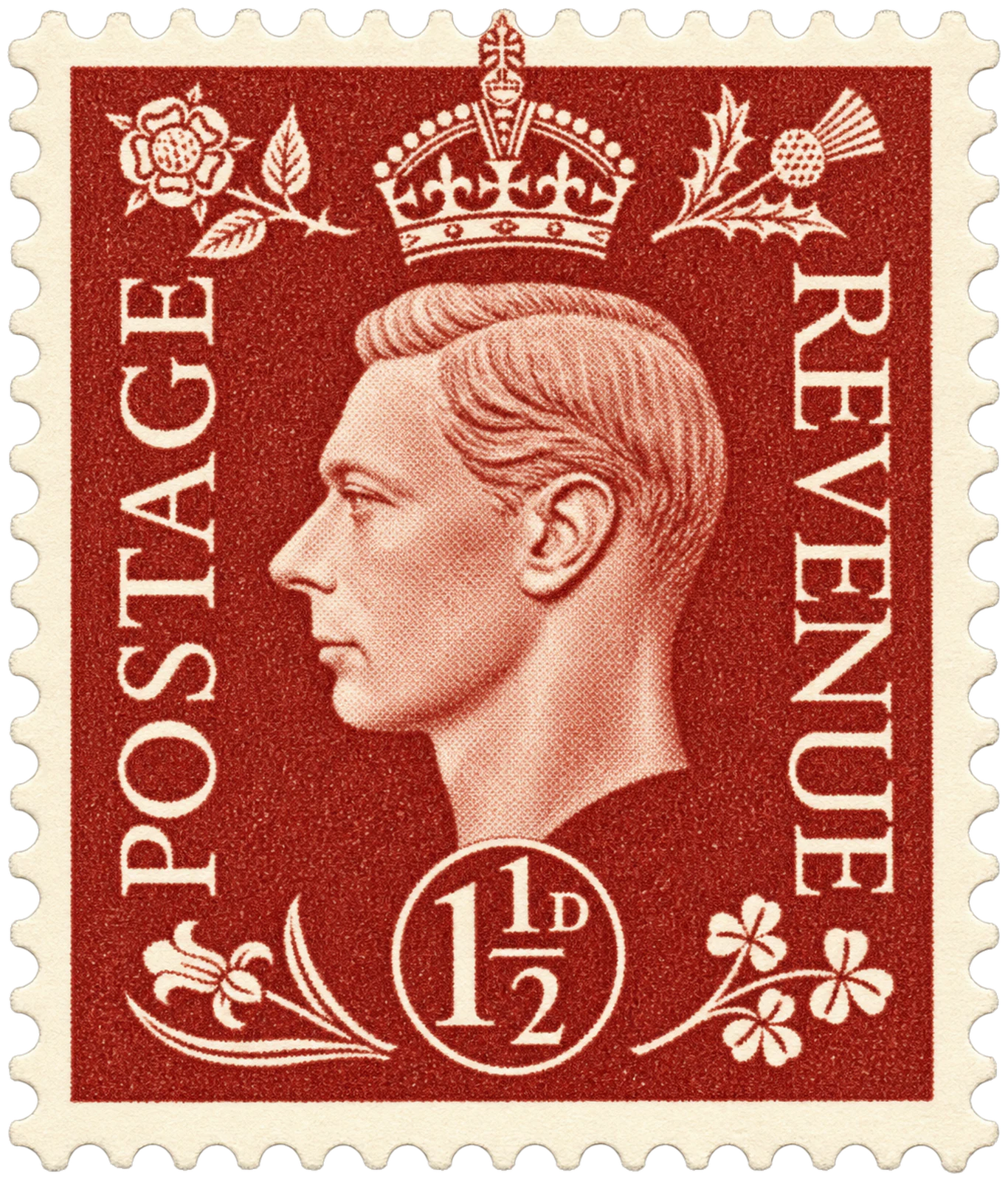
On the stamp you were exploring
George VI · 1½d red-brown · 30 July 1937
The crown discussion on your George VI 1½d red-brown stamp led here. Compare the small printed emblem with the enlarged heraldic pattern below. The jewelled illustration explains the older historical object; it is not the model from which this stamp was engraved.
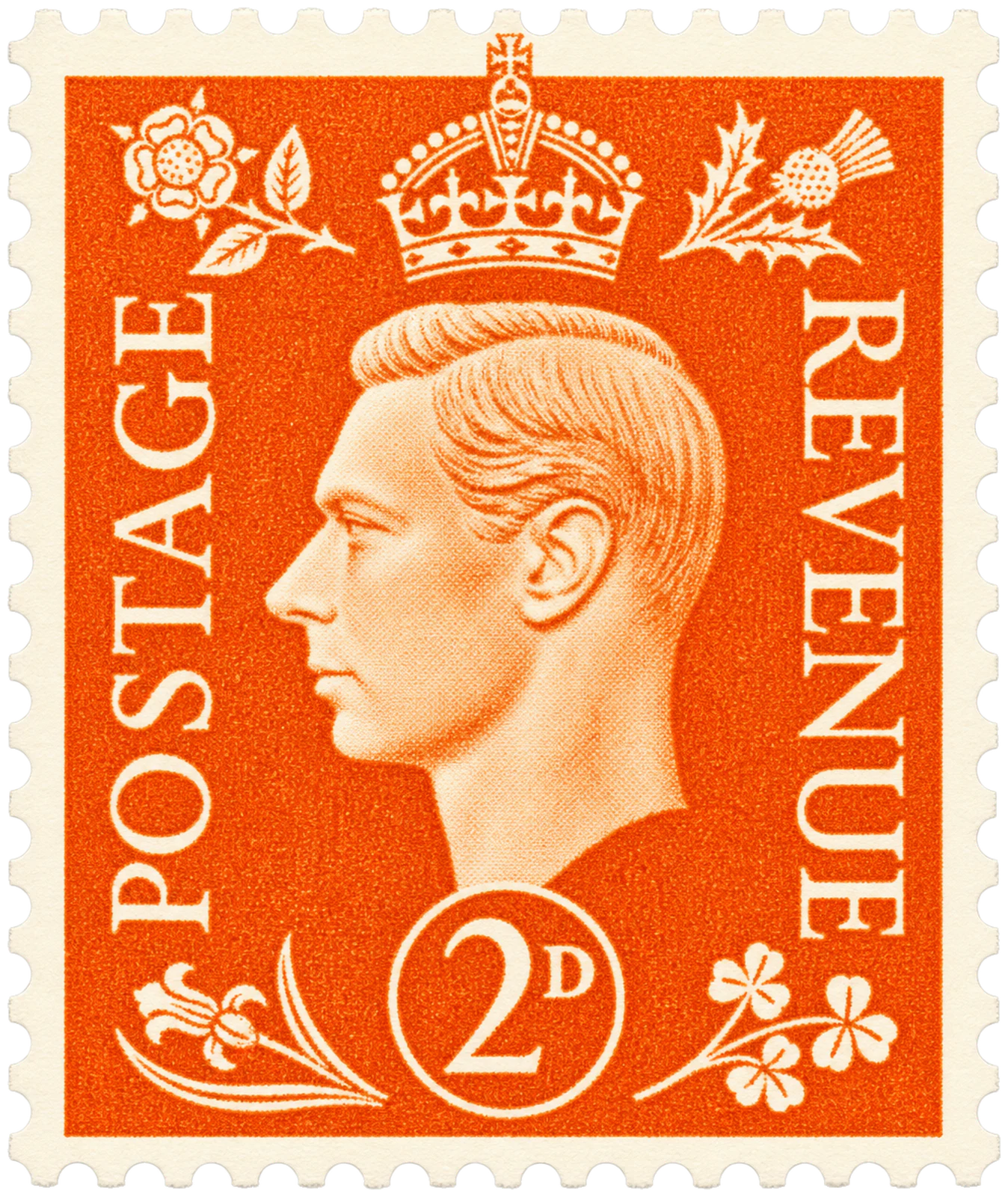
On the stamp you were exploring
George VI · 2d orange · 31 January 1938
The crown discussion on your George VI 2d orange stamp led here. Compare the small printed emblem with the enlarged heraldic pattern below. The jewelled illustration explains the older historical object; it is not the model from which this stamp was engraved.
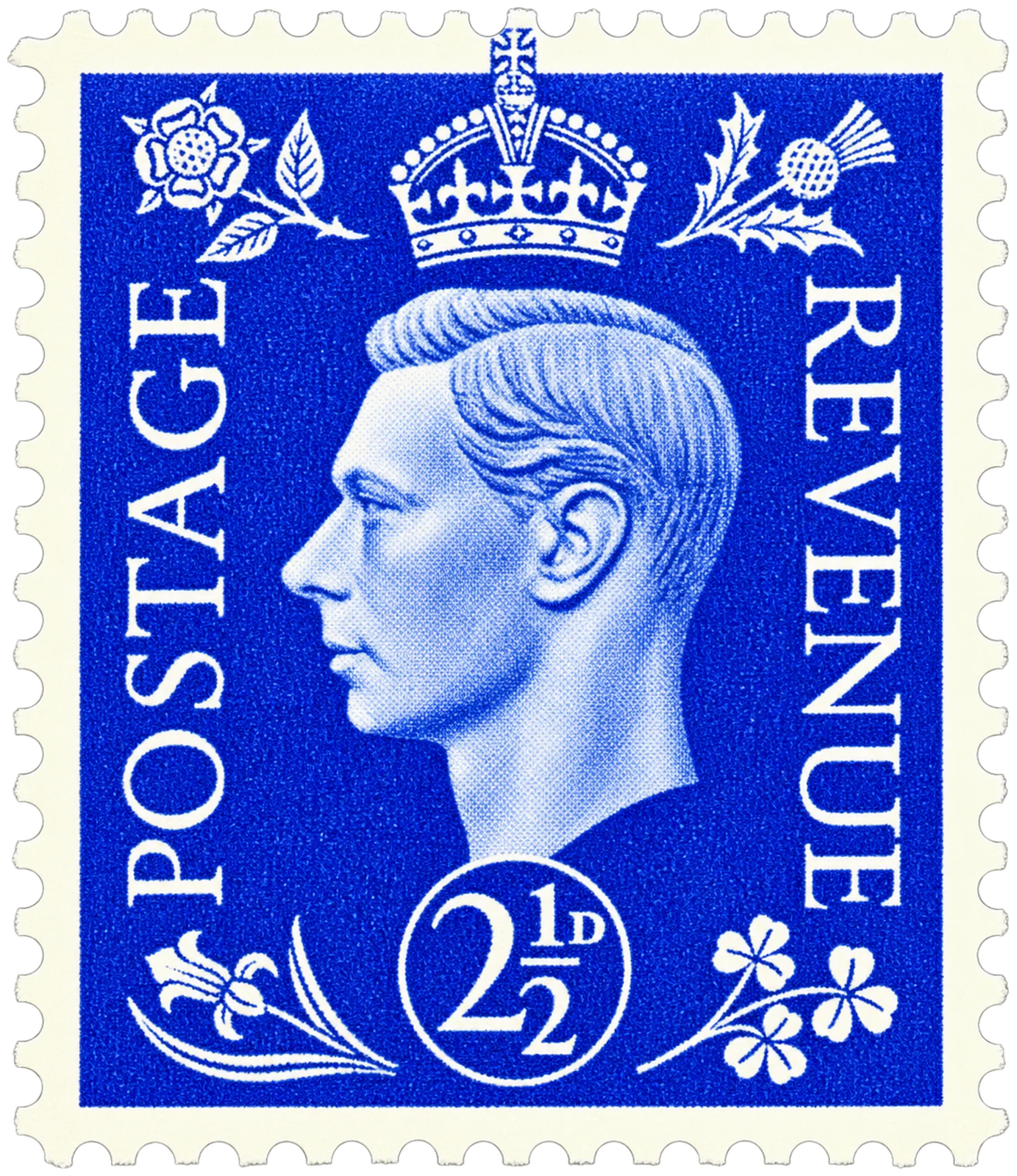
On the stamp you were exploring
George VI · 2½d ultramarine · 10 May 1937
The crown discussion on your George VI 2½d ultramarine stamp led here. Compare the small printed emblem with the enlarged heraldic pattern below. The jewelled illustration explains the older historical object; it is not the model from which this stamp was engraved.
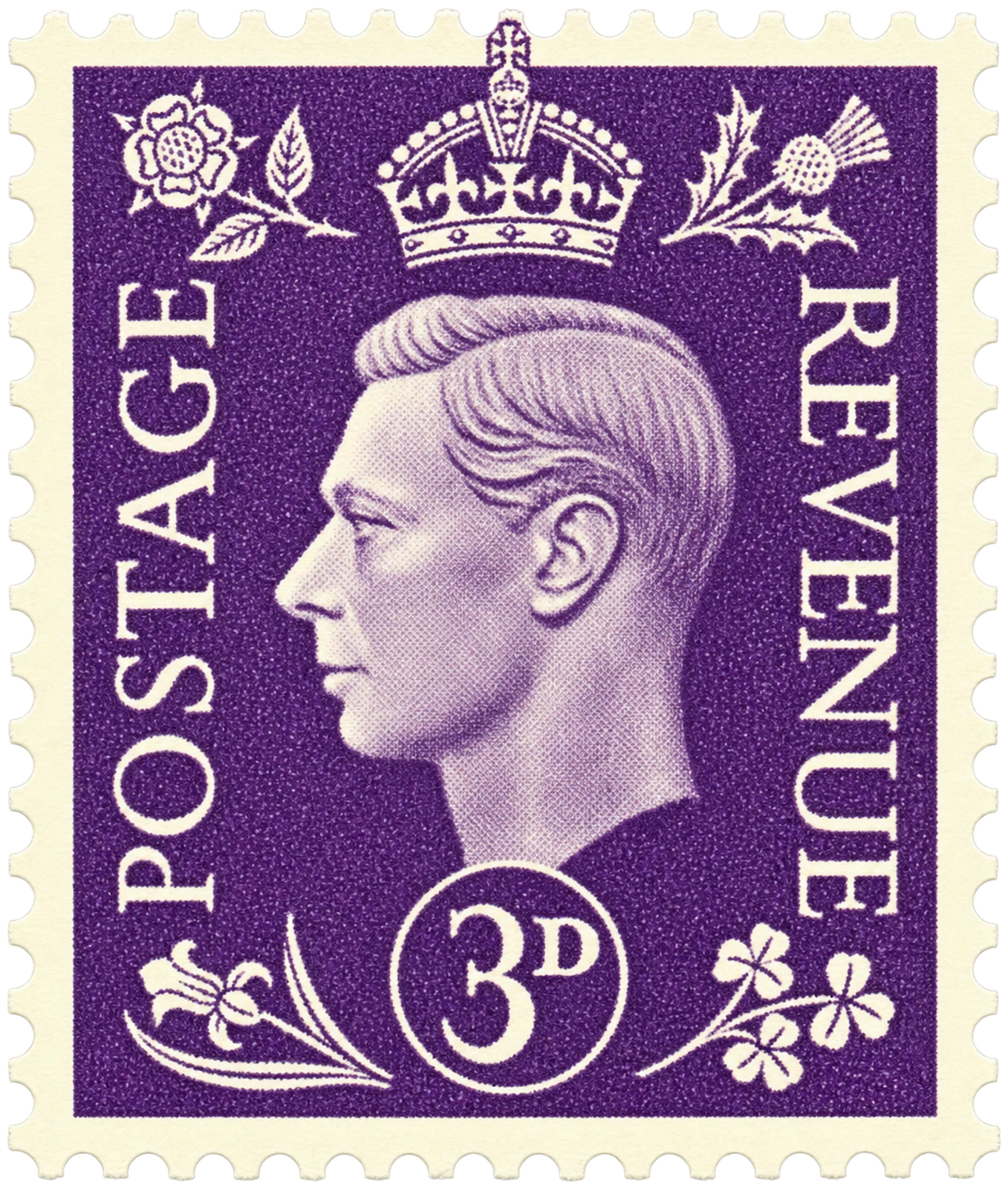
On the stamp you were exploring
George VI · 3d violet · 31 January 1938
The crown discussion on your George VI 3d violet stamp led here. Compare the small printed emblem with the enlarged heraldic pattern below. The jewelled illustration explains the older historical object; it is not the model from which this stamp was engraved.
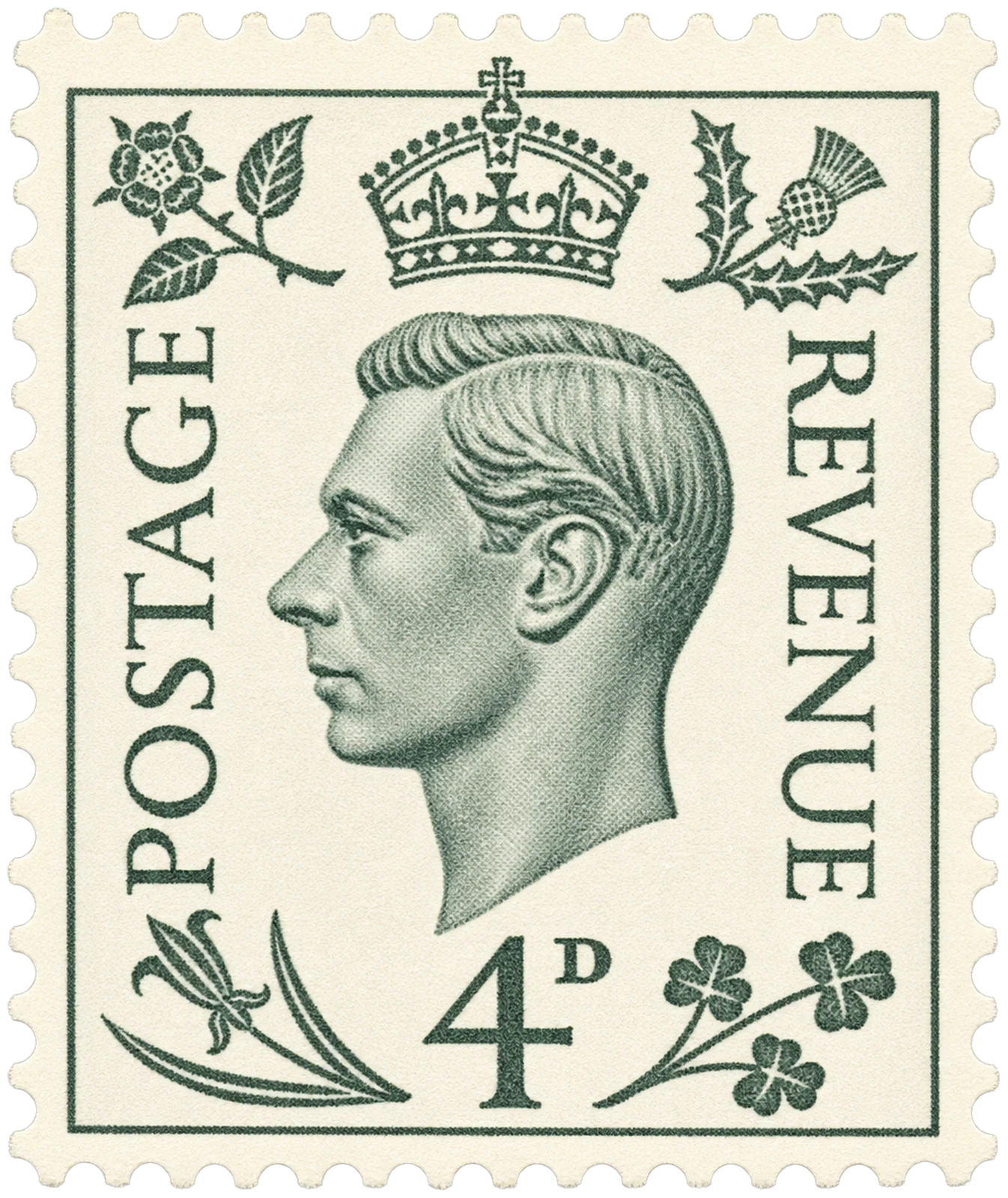
On the stamp you were exploring
George VI · 4d grey-green · 21 November 1938
The crown discussion on your George VI 4d grey-green stamp led here. Compare the small printed emblem with the enlarged heraldic pattern below. The jewelled illustration explains the older historical object; it is not the model from which this stamp was engraved.
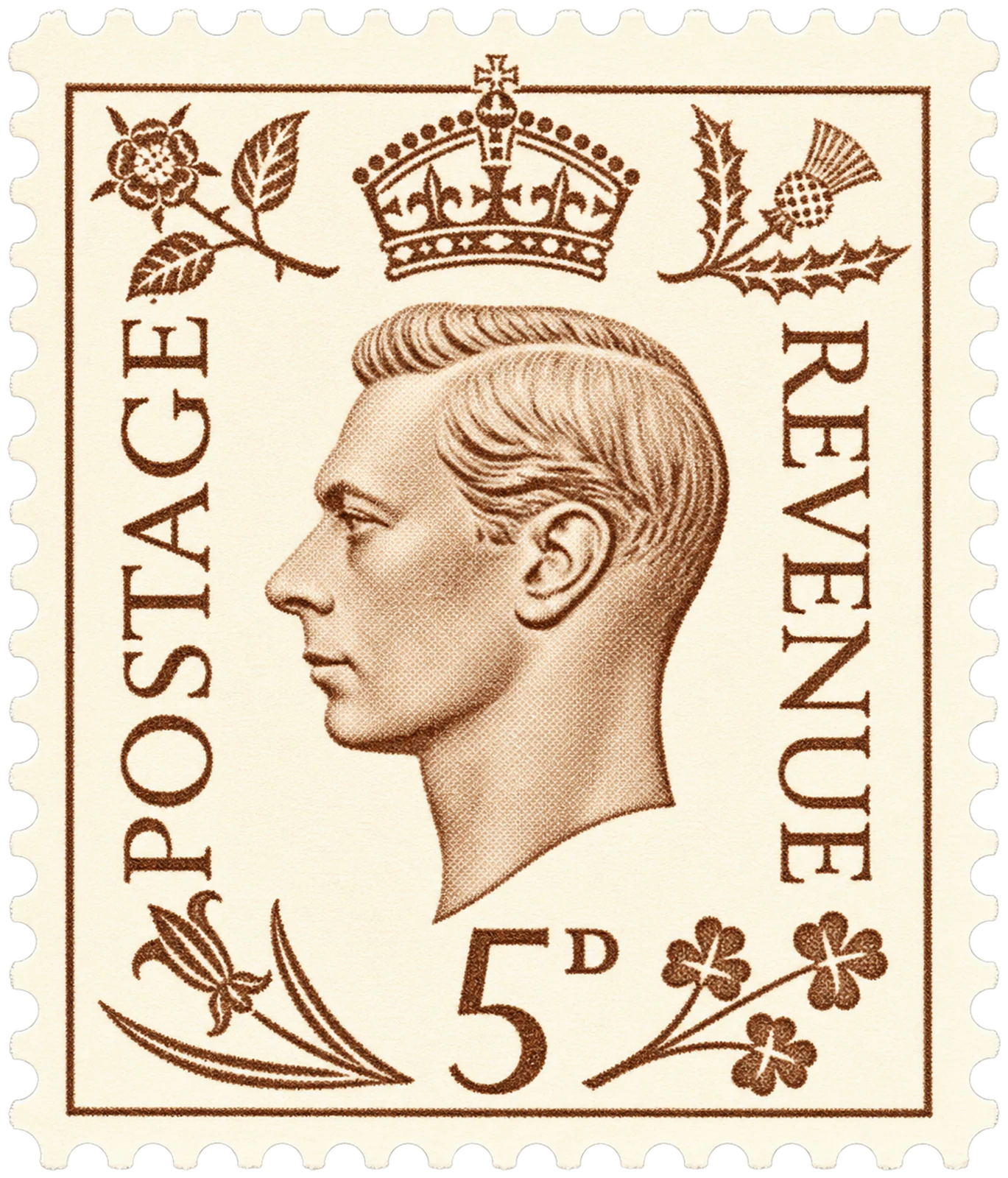
On the stamp you were exploring
George VI · 5d brown · 21 November 1938
The crown discussion on your George VI 5d brown stamp led here. Compare the small printed emblem with the enlarged heraldic pattern below. The jewelled illustration explains the older historical object; it is not the model from which this stamp was engraved.
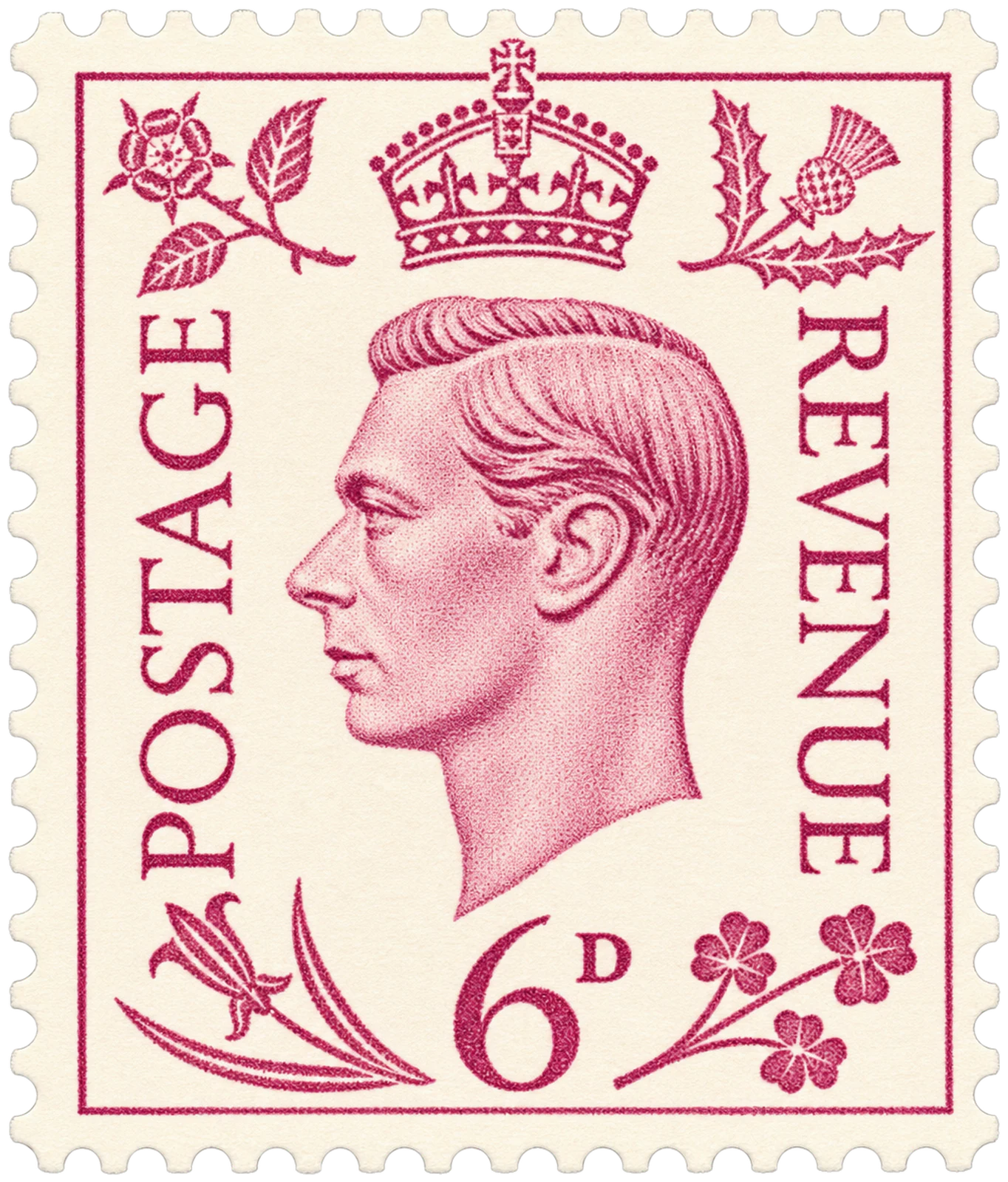
On the stamp you were exploring
George VI · 6d purple · 30 January 1939
The crown discussion on your George VI 6d purple stamp led here. Compare the small printed emblem with the enlarged heraldic pattern below. The jewelled illustration explains the older historical object; it is not the model from which this stamp was engraved.
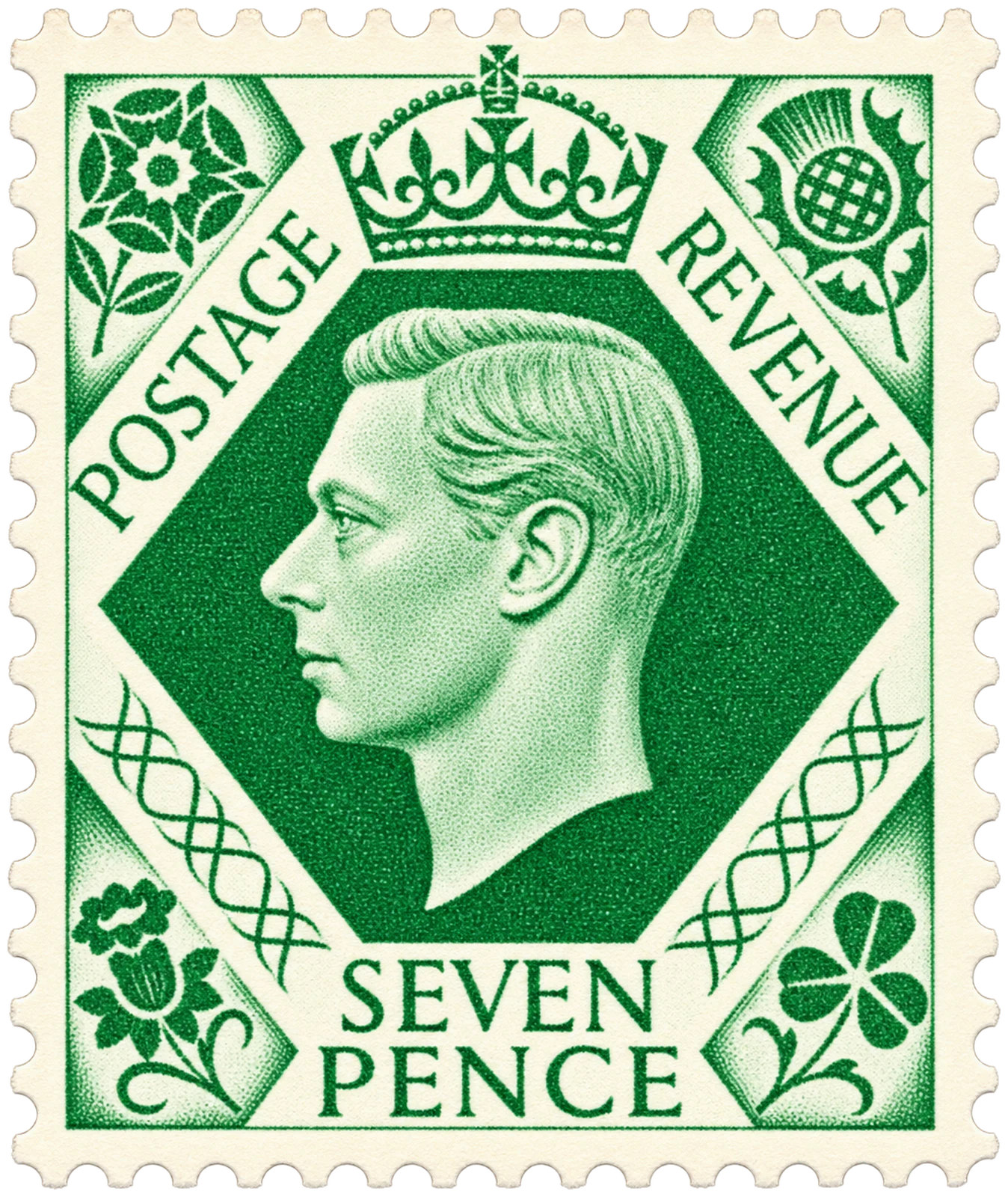
On the stamp you were exploring
George VI · 7d emerald-green · 27 February 1939
The crown discussion on your George VI 7d emerald-green stamp led here. Compare the small printed emblem with the enlarged heraldic pattern below. The jewelled illustration explains the older historical object; it is not the model from which this stamp was engraved.
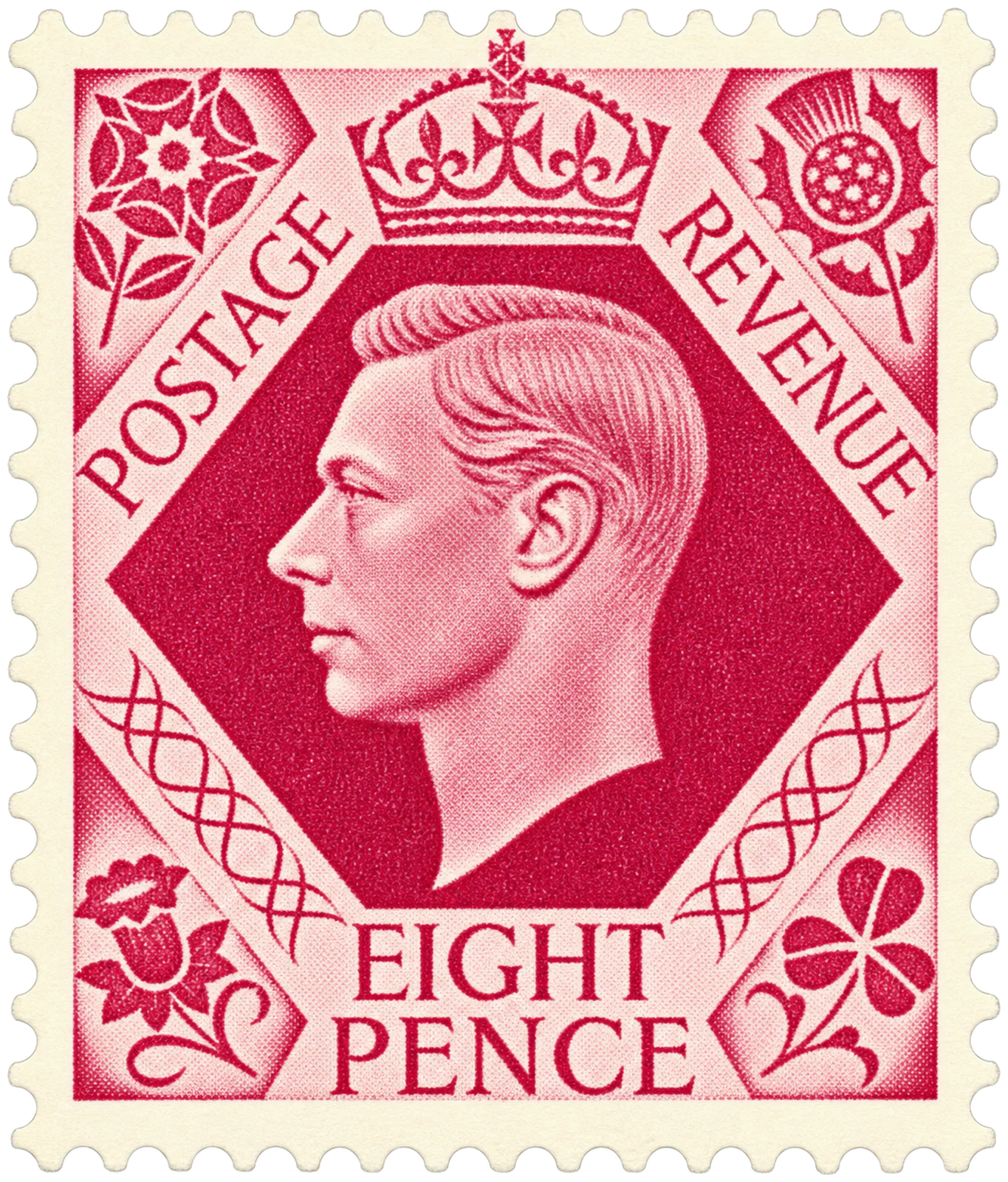
On the stamp you were exploring
George VI · 8d carmine · 27 February 1939
The crown discussion on your George VI 8d carmine stamp led here. Compare the small printed emblem with the enlarged heraldic pattern below. The jewelled illustration explains the older historical object; it is not the model from which this stamp was engraved.
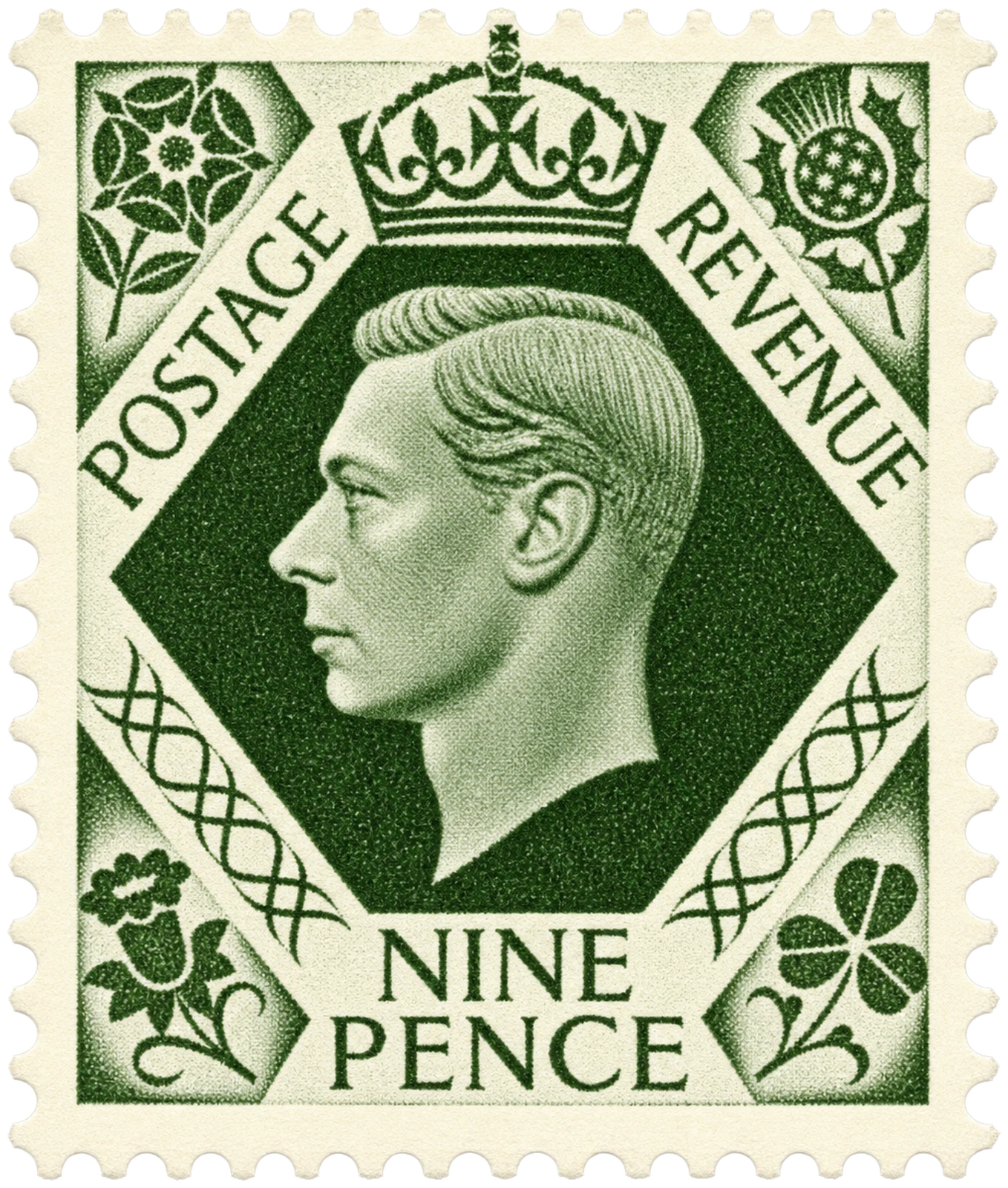
On the stamp you were exploring
George VI · 9d deep olive-green · 1 May 1939
The crown discussion on your George VI 9d deep olive-green stamp led here. Compare the small printed emblem with the enlarged heraldic pattern below. The jewelled illustration explains the older historical object; it is not the model from which this stamp was engraved.
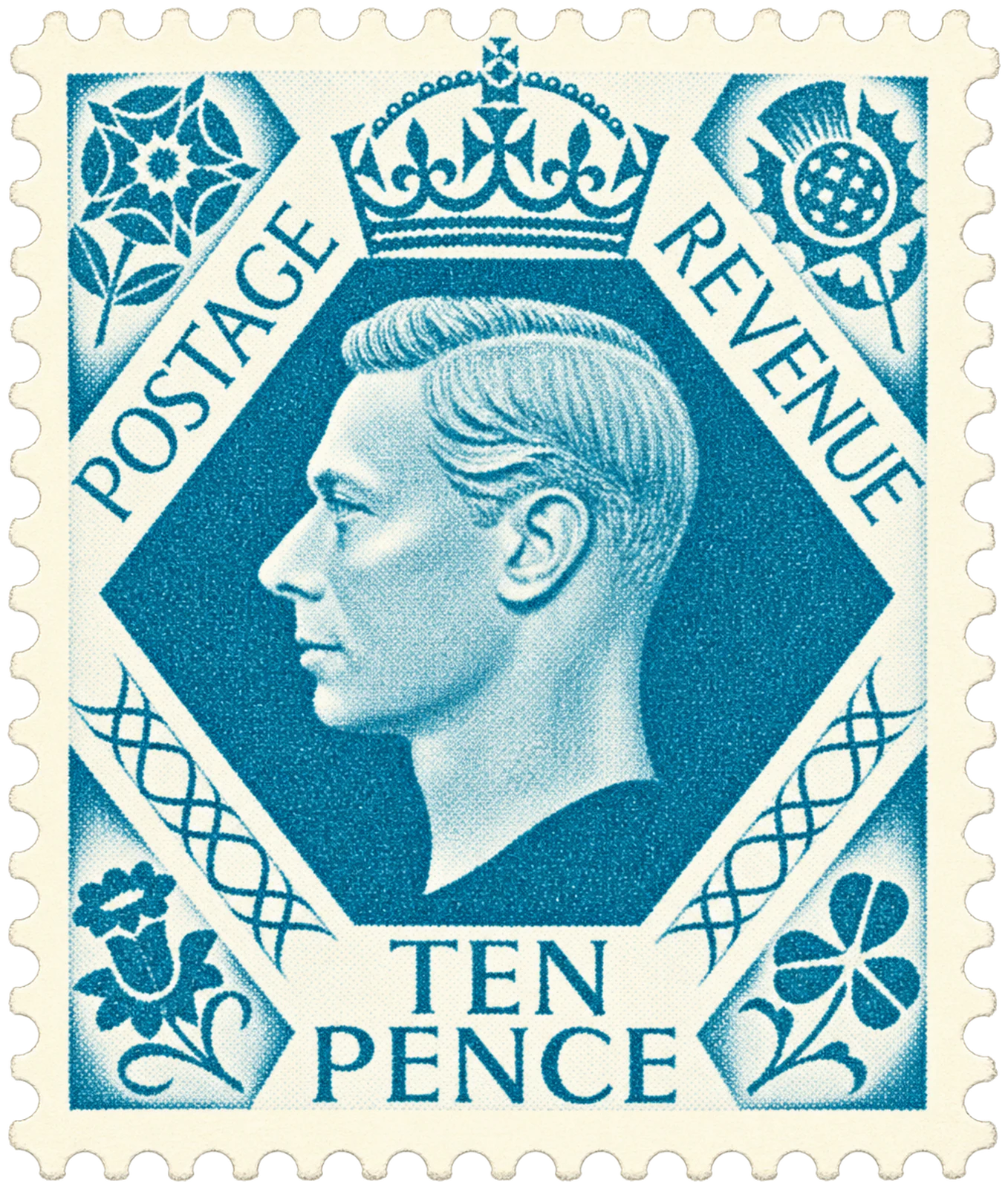
On the stamp you were exploring
George VI · 10d turquoise-blue · 1 May 1939
The crown discussion on your George VI 10d turquoise-blue stamp led here. Compare the small printed emblem with the enlarged heraldic pattern below. The jewelled illustration explains the older historical object; it is not the model from which this stamp was engraved.
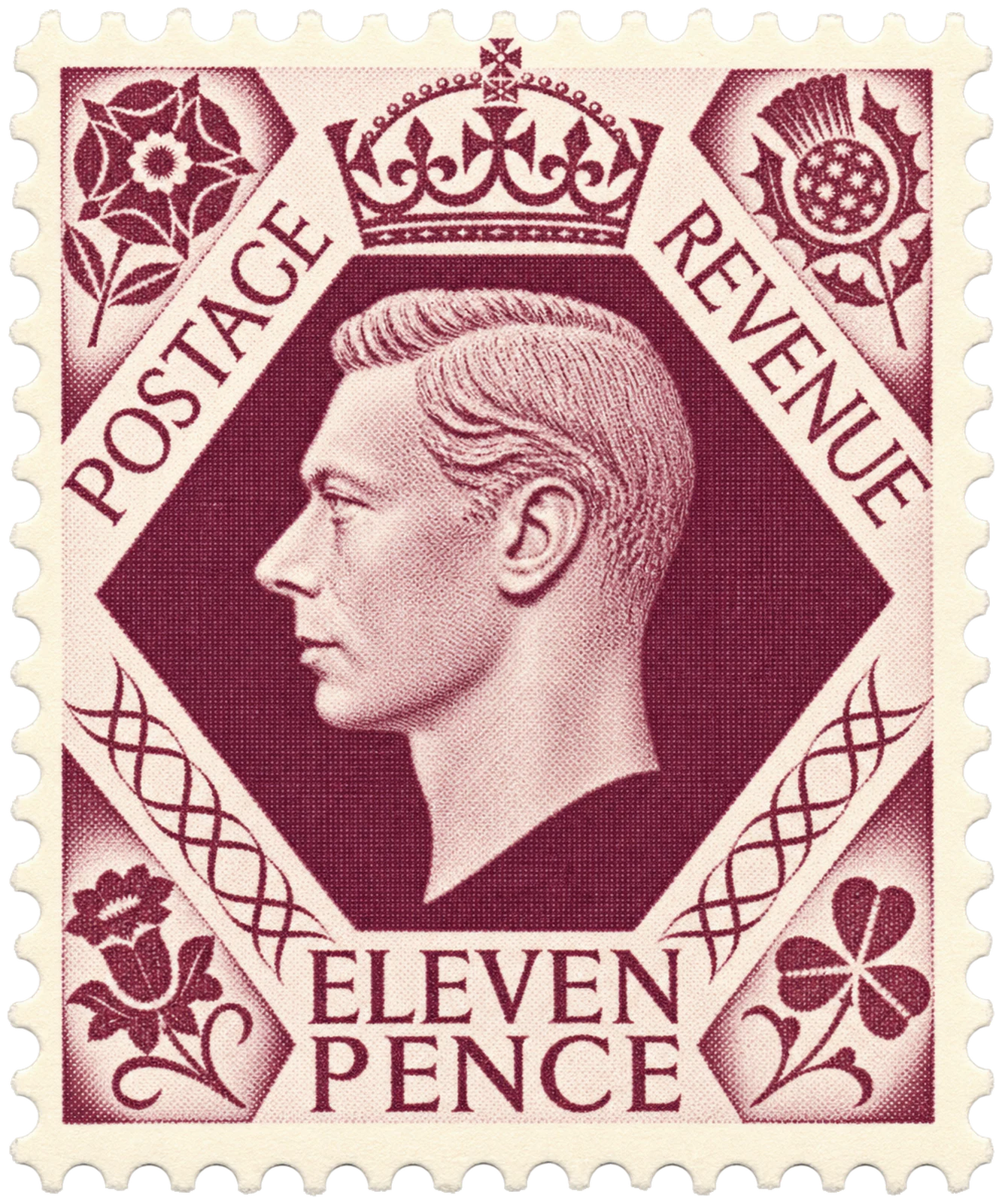
On the stamp you were exploring
George VI · 11d plum · 29 December 1947
The crown discussion on your George VI 11d plum stamp led here. Compare the small printed emblem with the enlarged heraldic pattern below. The jewelled illustration explains the older historical object; it is not the model from which this stamp was engraved.
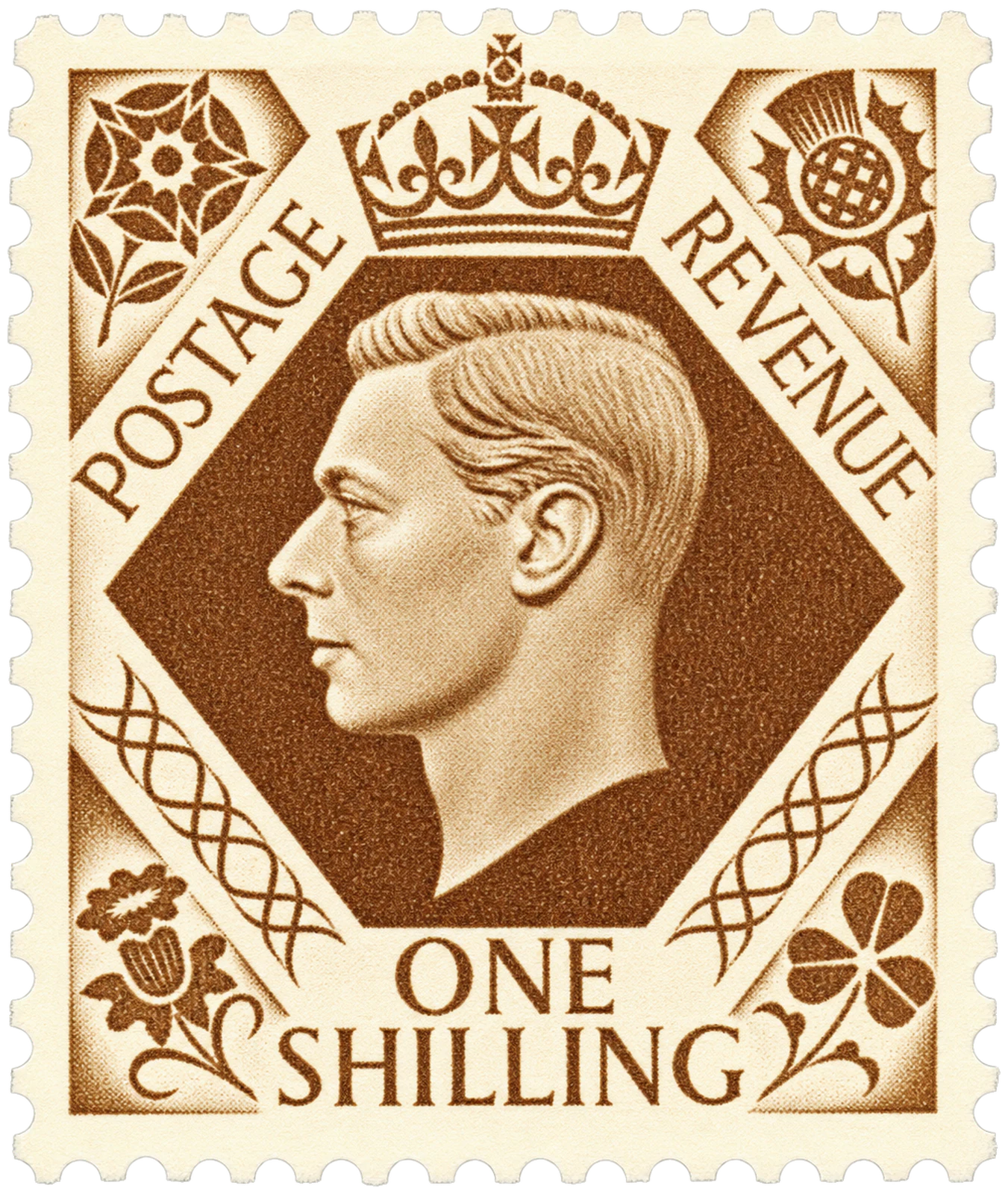
On the stamp you were exploring
George VI · 1s bistre-brown · 1 May 1939
The crown discussion on your George VI 1s bistre-brown stamp led here. Compare the small printed emblem with the enlarged heraldic pattern below. The jewelled illustration explains the older historical object; it is not the model from which this stamp was engraved.
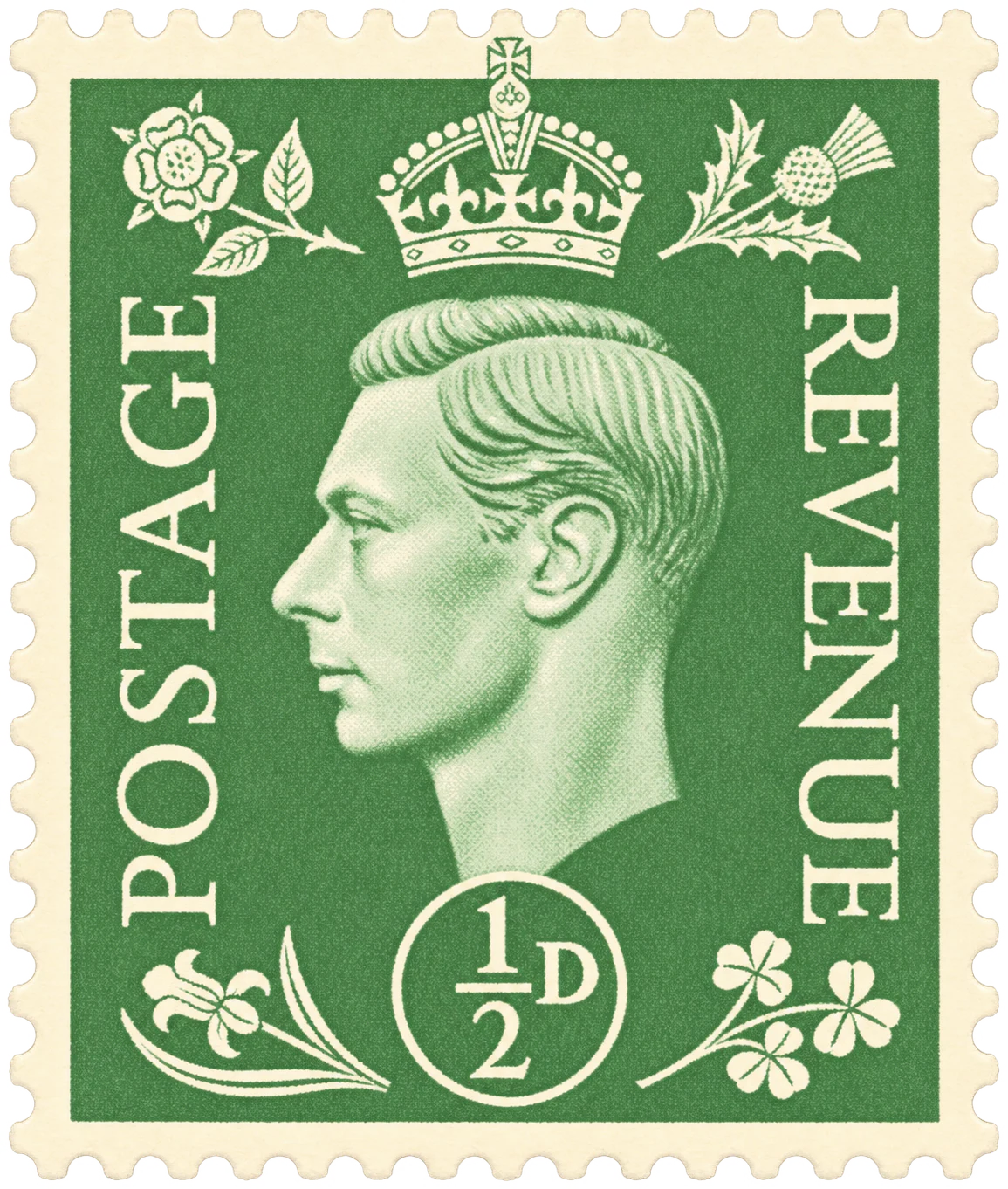
On the stamp you were exploring
George VI · ½d pale green · 1 September 1941
The crown discussion on your George VI ½d pale green stamp led here. Compare the small printed emblem with the enlarged heraldic pattern below. The jewelled illustration explains the older historical object; it is not the model from which this stamp was engraved.
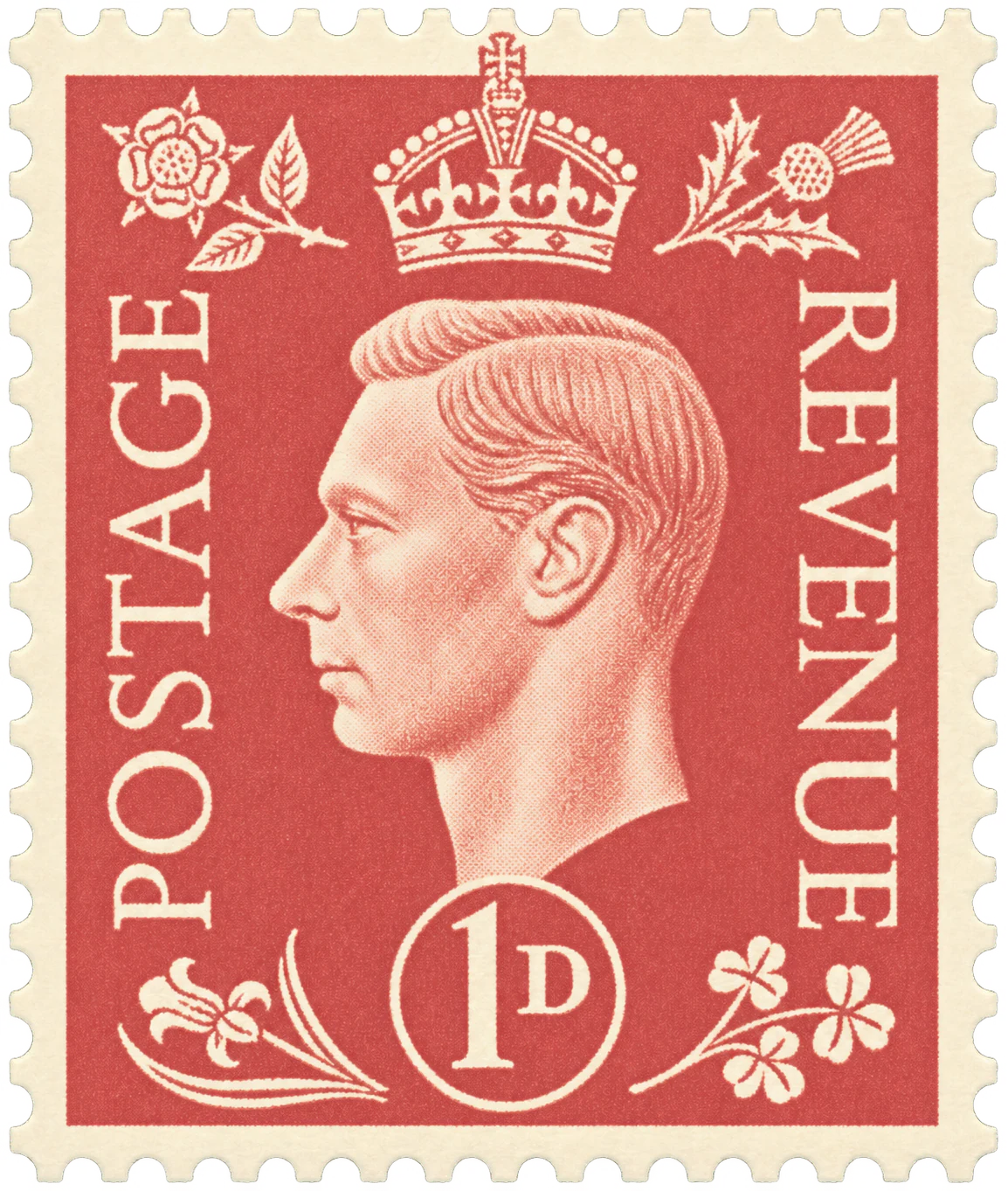
On the stamp you were exploring
George VI · 1d pale scarlet · 11 August 1941
The crown discussion on your George VI 1d pale scarlet stamp led here. Compare the small printed emblem with the enlarged heraldic pattern below. The jewelled illustration explains the older historical object; it is not the model from which this stamp was engraved.
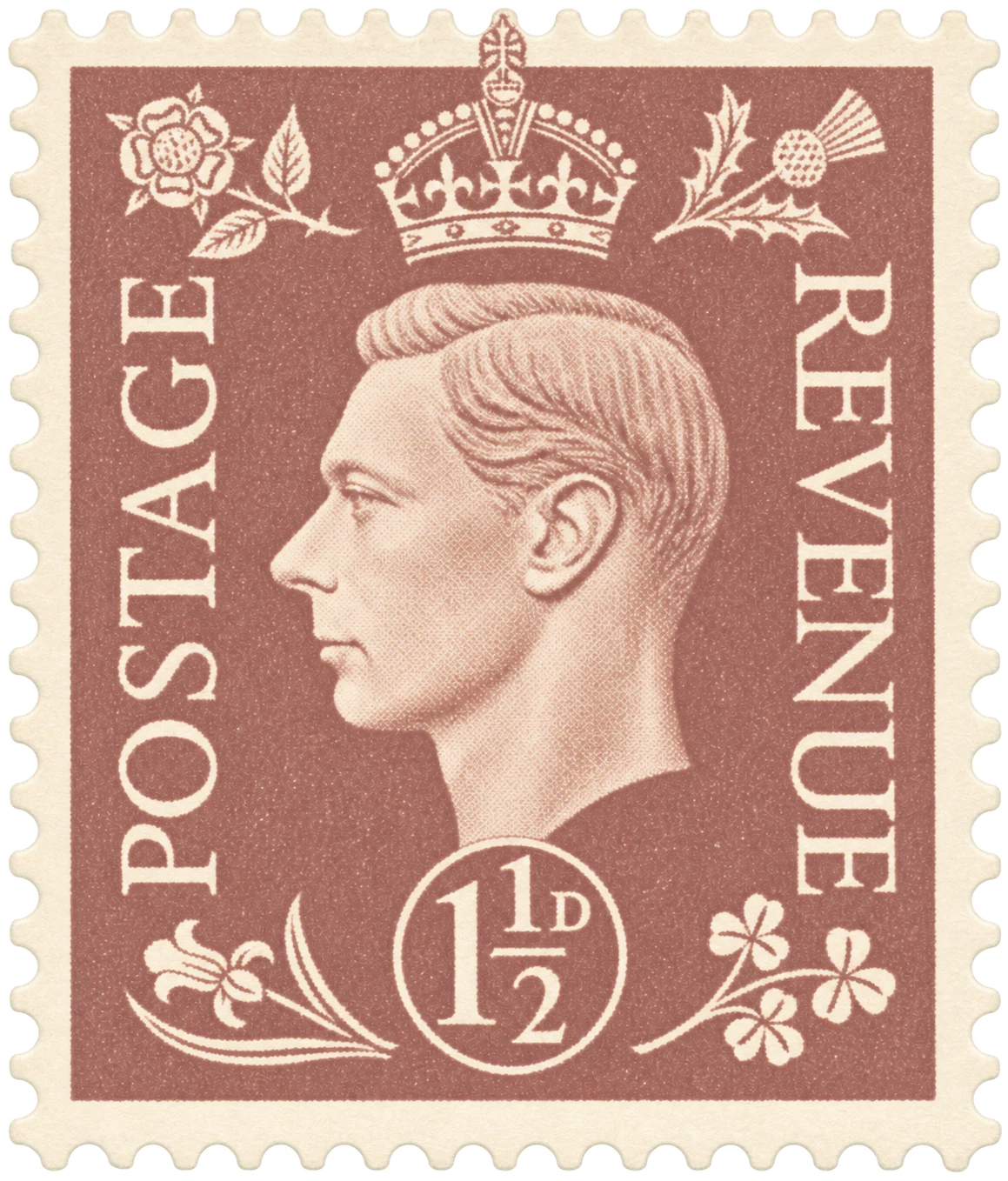
On the stamp you were exploring
George VI · 1½d pale red-brown · 28 September 1942
The crown discussion on your George VI 1½d pale red-brown stamp led here. Compare the small printed emblem with the enlarged heraldic pattern below. The jewelled illustration explains the older historical object; it is not the model from which this stamp was engraved.
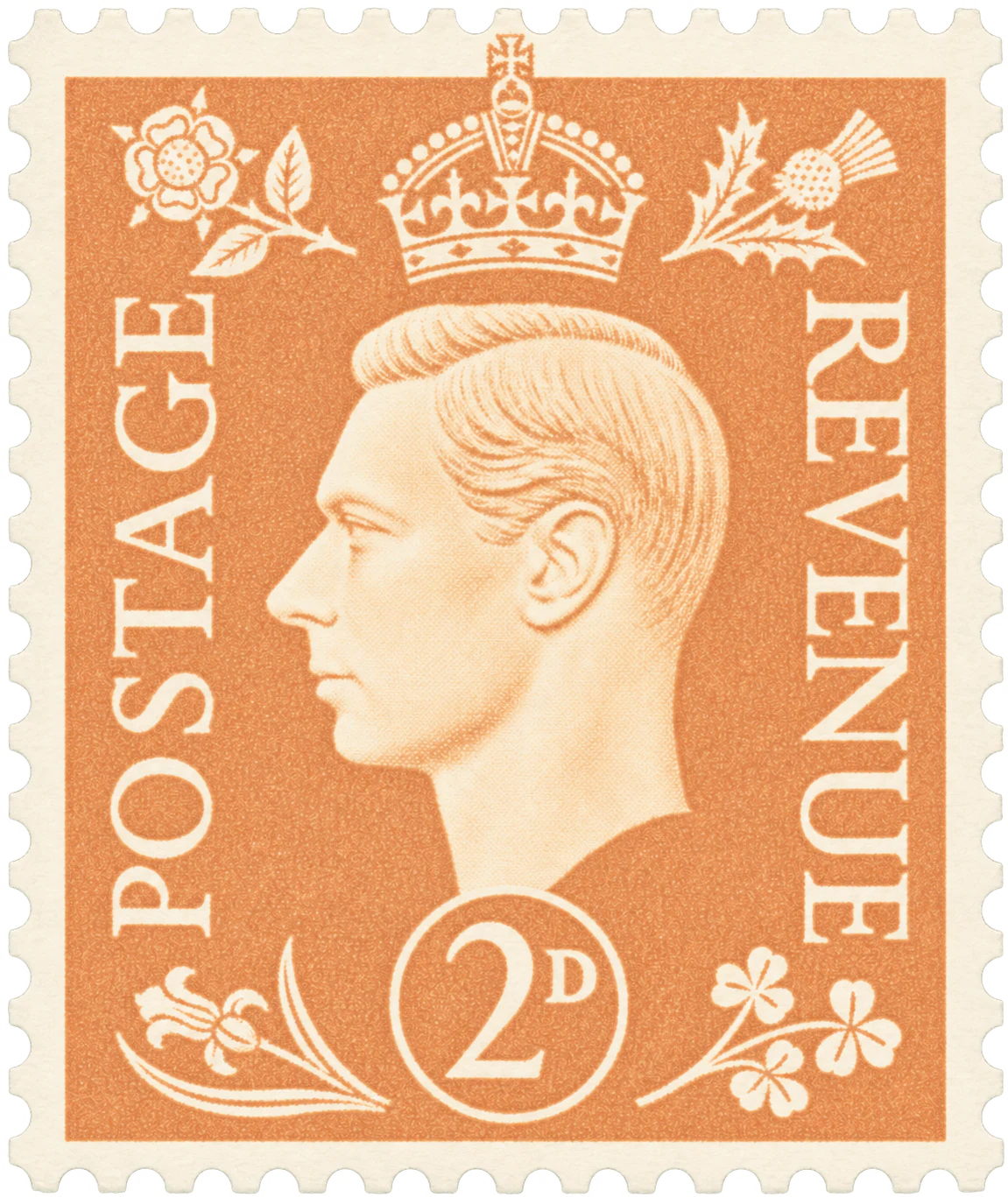
On the stamp you were exploring
George VI · 2d pale orange · 6 October 1941
The crown discussion on your George VI 2d pale orange stamp led here. Compare the small printed emblem with the enlarged heraldic pattern below. The jewelled illustration explains the older historical object; it is not the model from which this stamp was engraved.
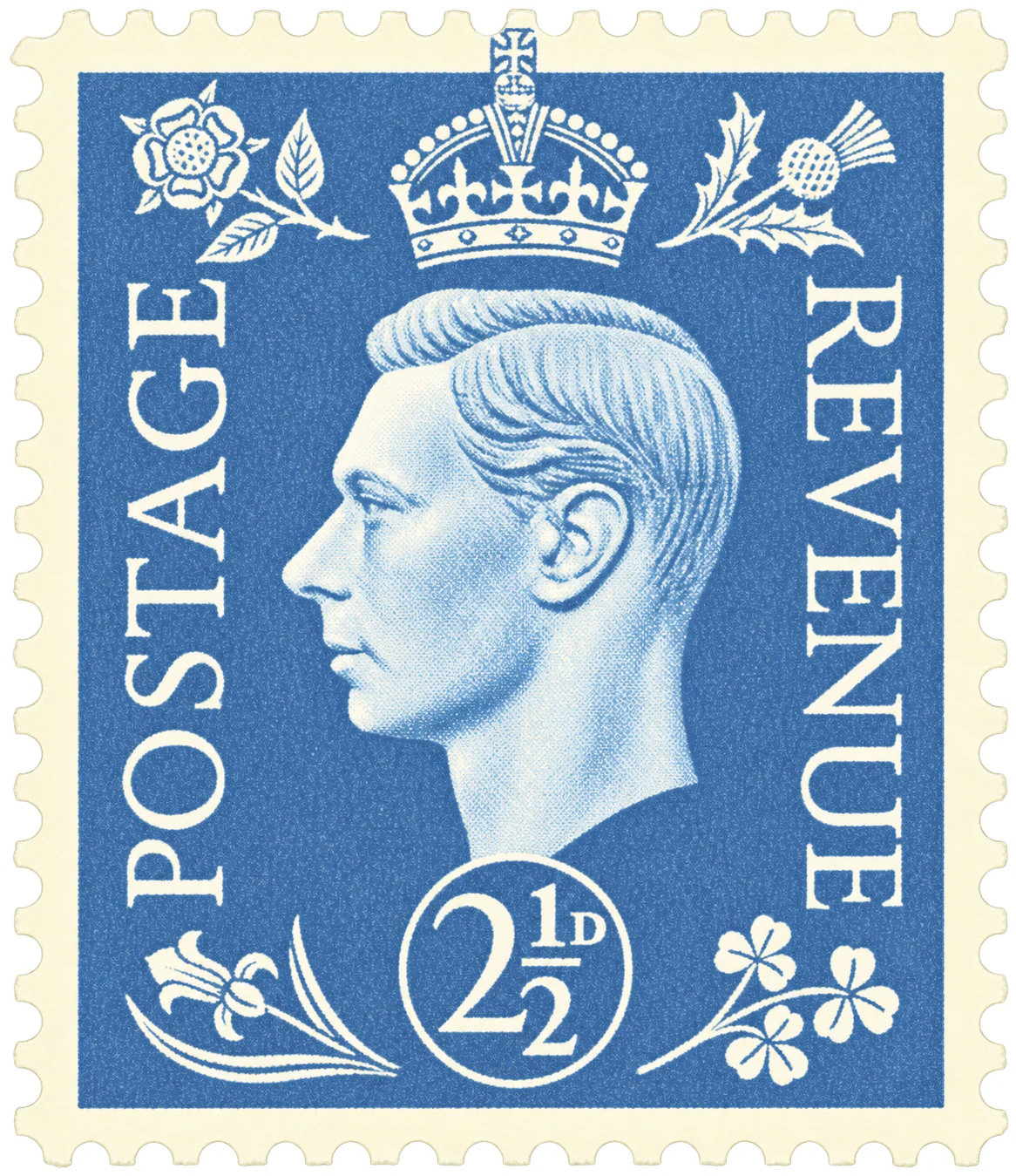
On the stamp you were exploring
George VI · 2½d light ultramarine · 21 July 1941
The crown discussion on your George VI 2½d light ultramarine stamp led here. Compare the small printed emblem with the enlarged heraldic pattern below. The jewelled illustration explains the older historical object; it is not the model from which this stamp was engraved.
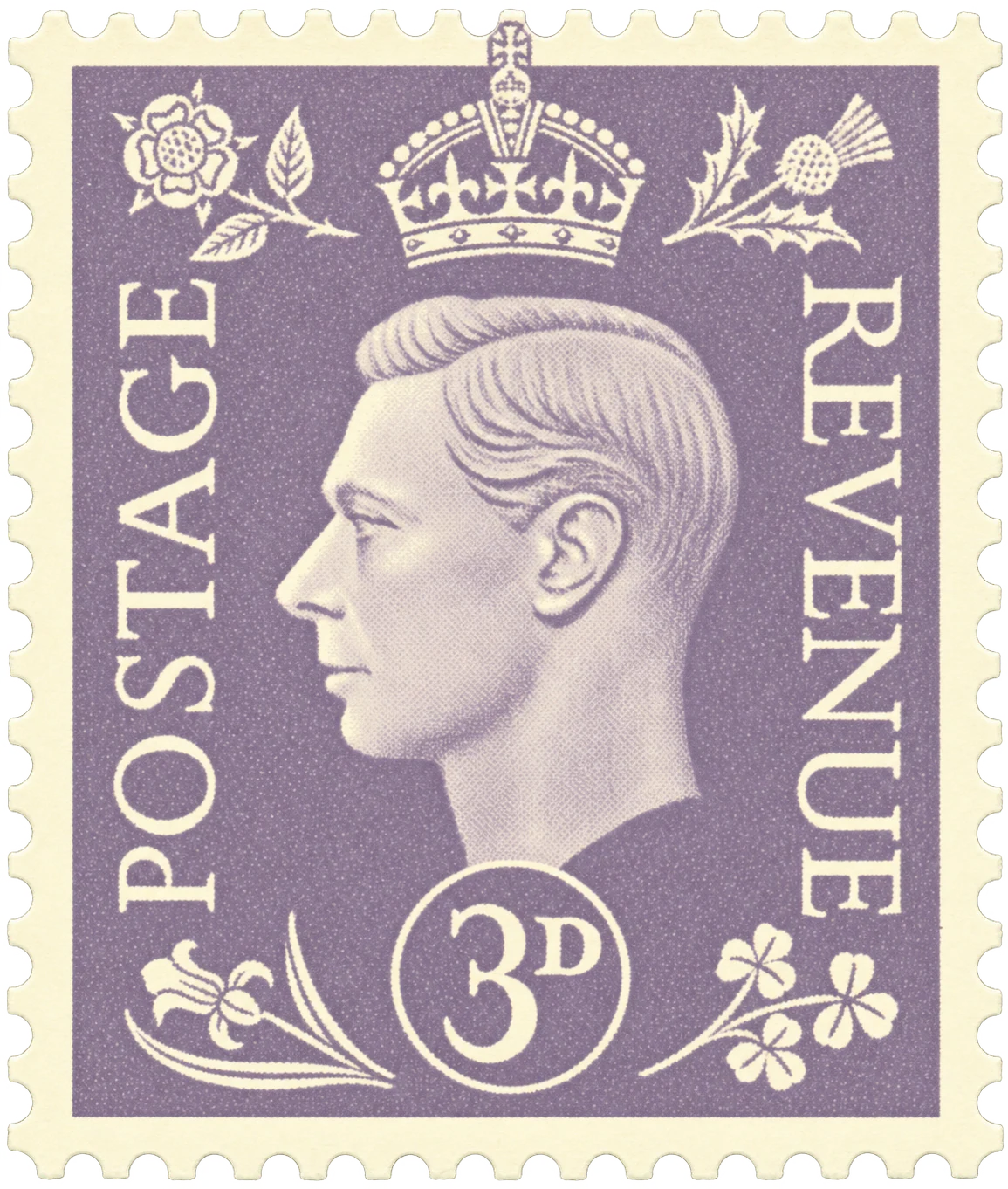
On the stamp you were exploring
George VI · 3d pale violet · 3 November 1941
The crown discussion on your George VI 3d pale violet stamp led here. Compare the small printed emblem with the enlarged heraldic pattern below. The jewelled illustration explains the older historical object; it is not the model from which this stamp was engraved.
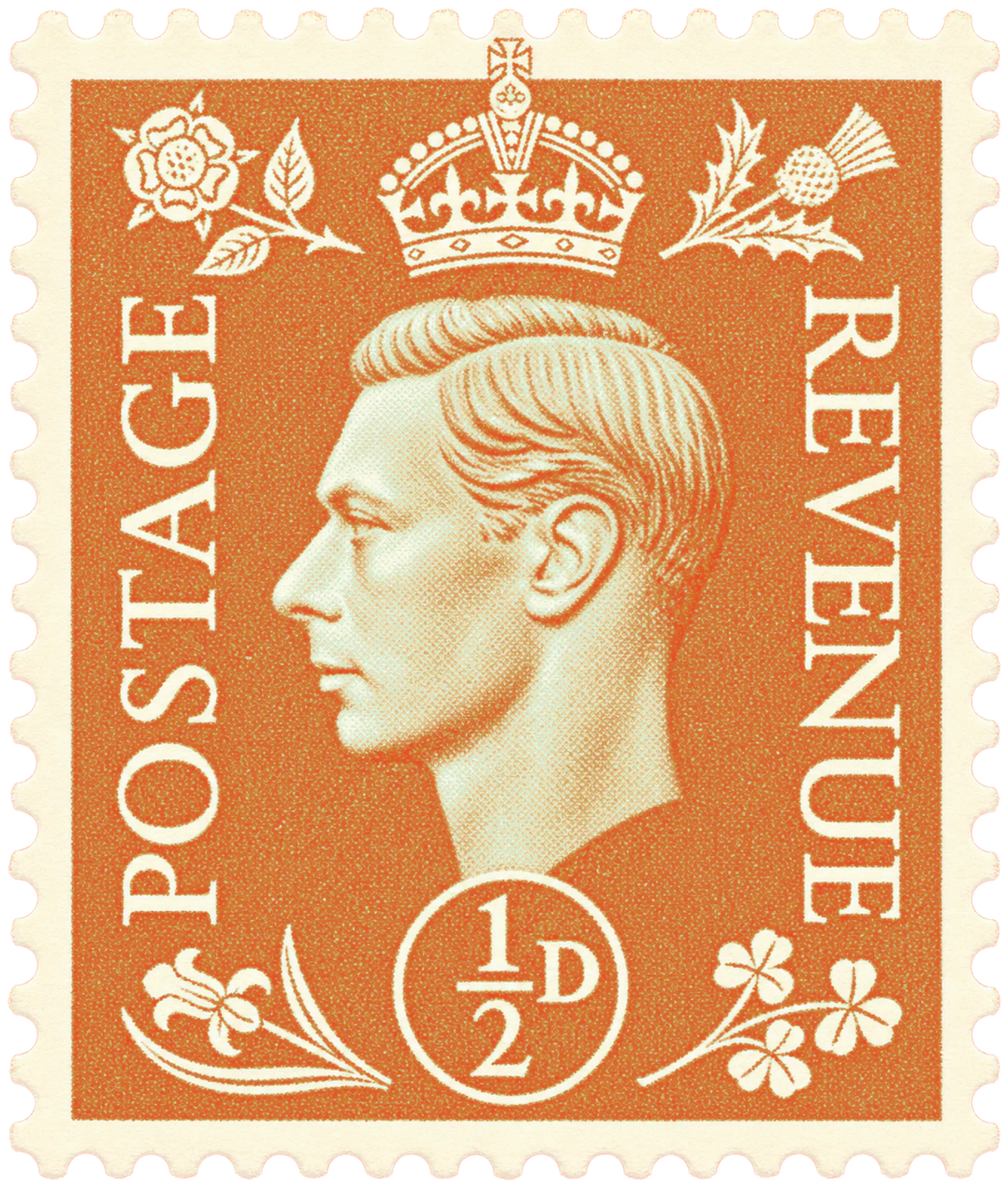
On the stamp you were exploring
George VI · ½d pale orange · 3 May 1951
The crown discussion on your George VI ½d pale orange stamp led here. Compare the small printed emblem with the enlarged heraldic pattern below. The jewelled illustration explains the older historical object; it is not the model from which this stamp was engraved.
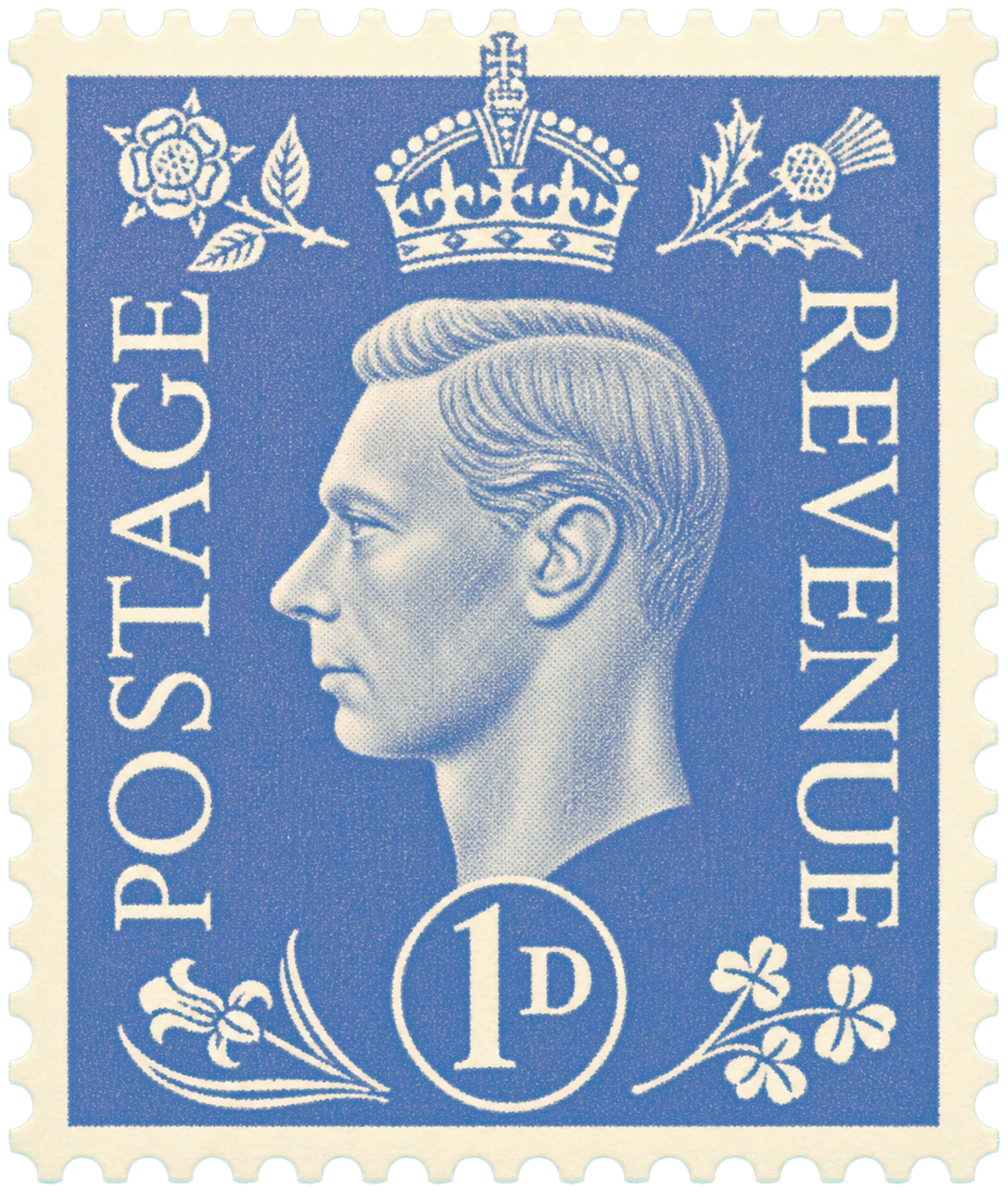
On the stamp you were exploring
George VI · 1d light ultramarine · 3 May 1951
The crown discussion on your George VI 1d light ultramarine stamp led here. Compare the small printed emblem with the enlarged heraldic pattern below. The jewelled illustration explains the older historical object; it is not the model from which this stamp was engraved.
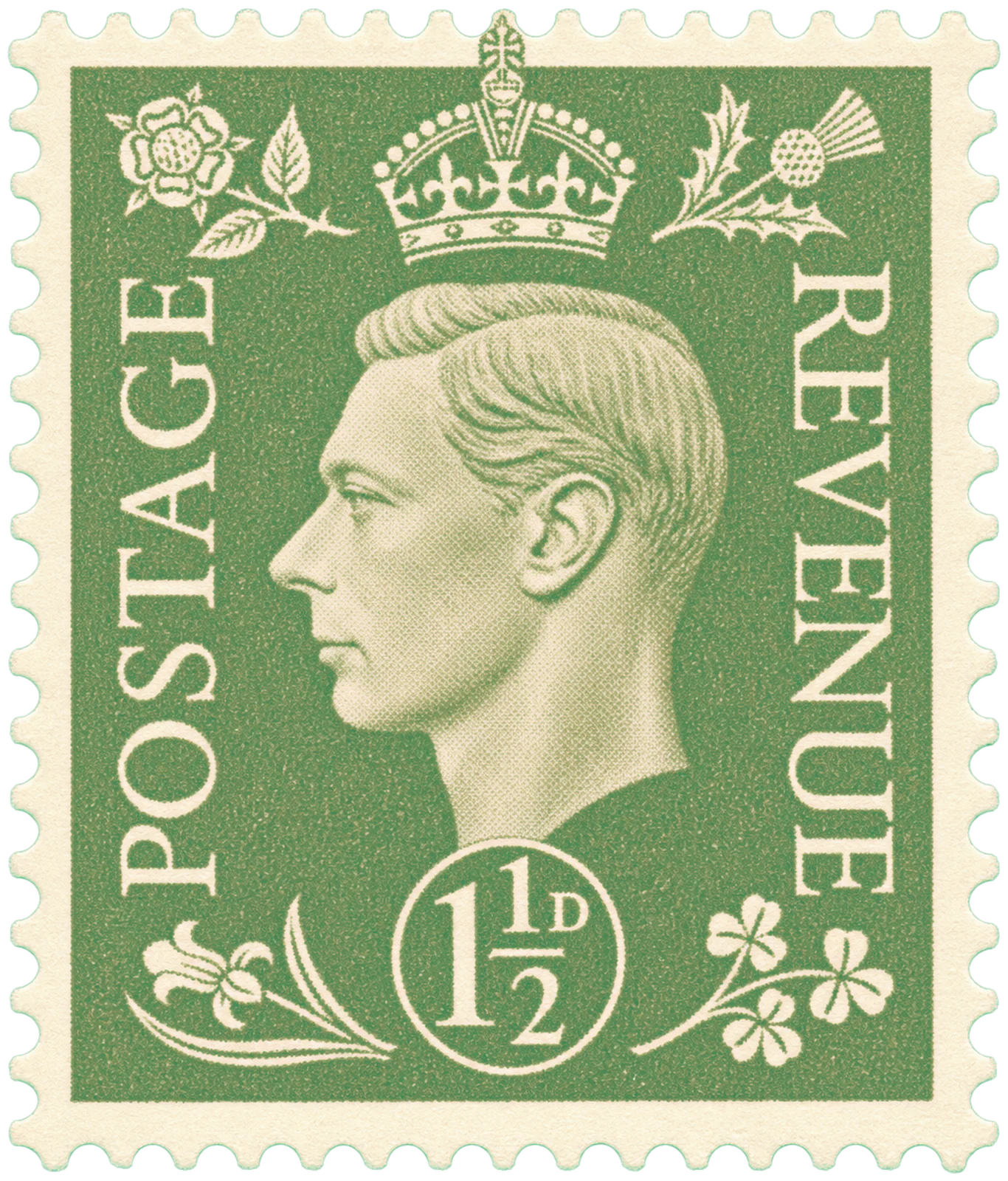
On the stamp you were exploring
George VI · 1½d pale green · 3 May 1951
The crown discussion on your George VI 1½d pale green stamp led here. Compare the small printed emblem with the enlarged heraldic pattern below. The jewelled illustration explains the older historical object; it is not the model from which this stamp was engraved.
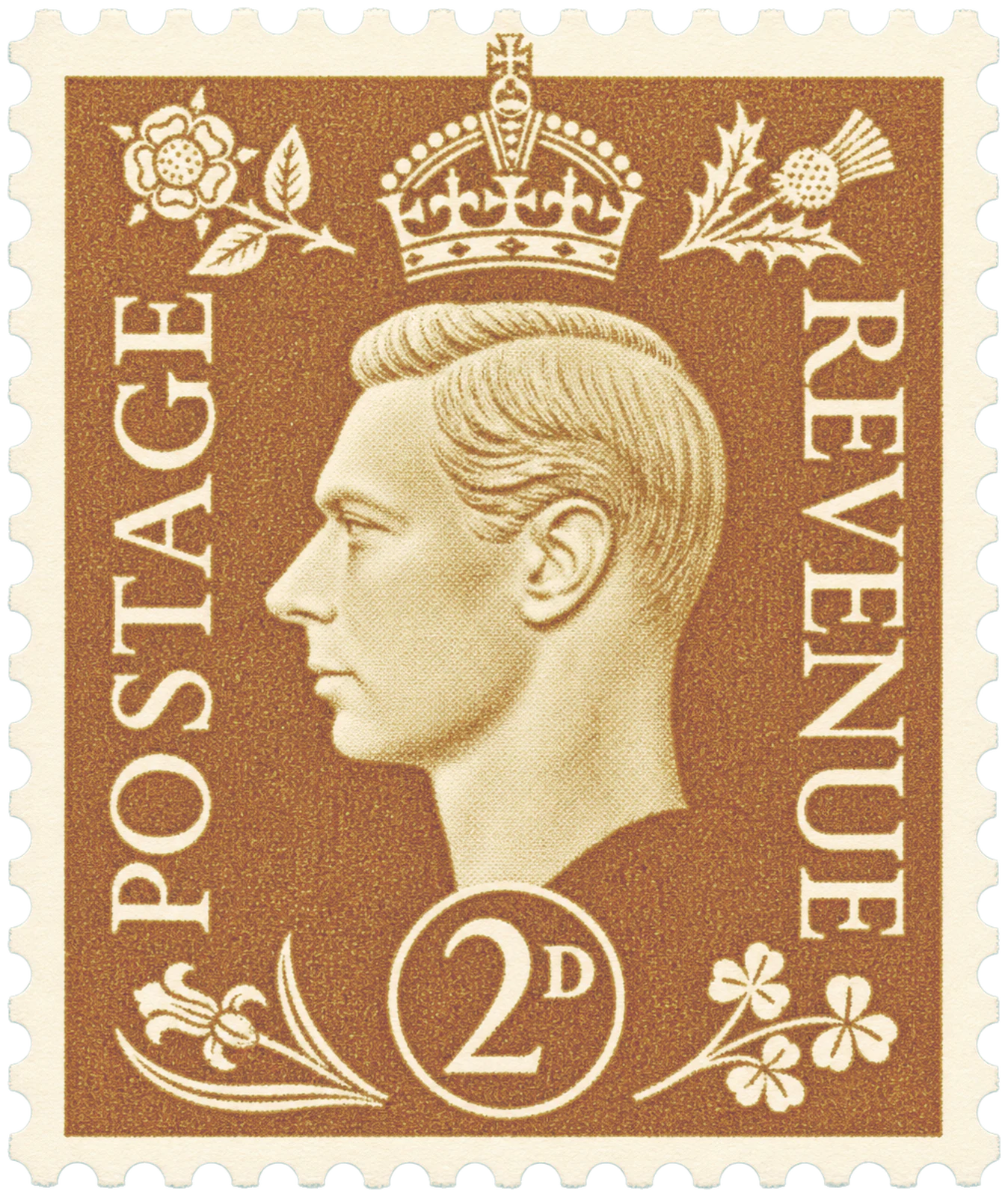
On the stamp you were exploring
George VI · 2d pale red-brown · 3 May 1951
The crown discussion on your George VI 2d pale red-brown stamp led here. Compare the small printed emblem with the enlarged heraldic pattern below. The jewelled illustration explains the older historical object; it is not the model from which this stamp was engraved.
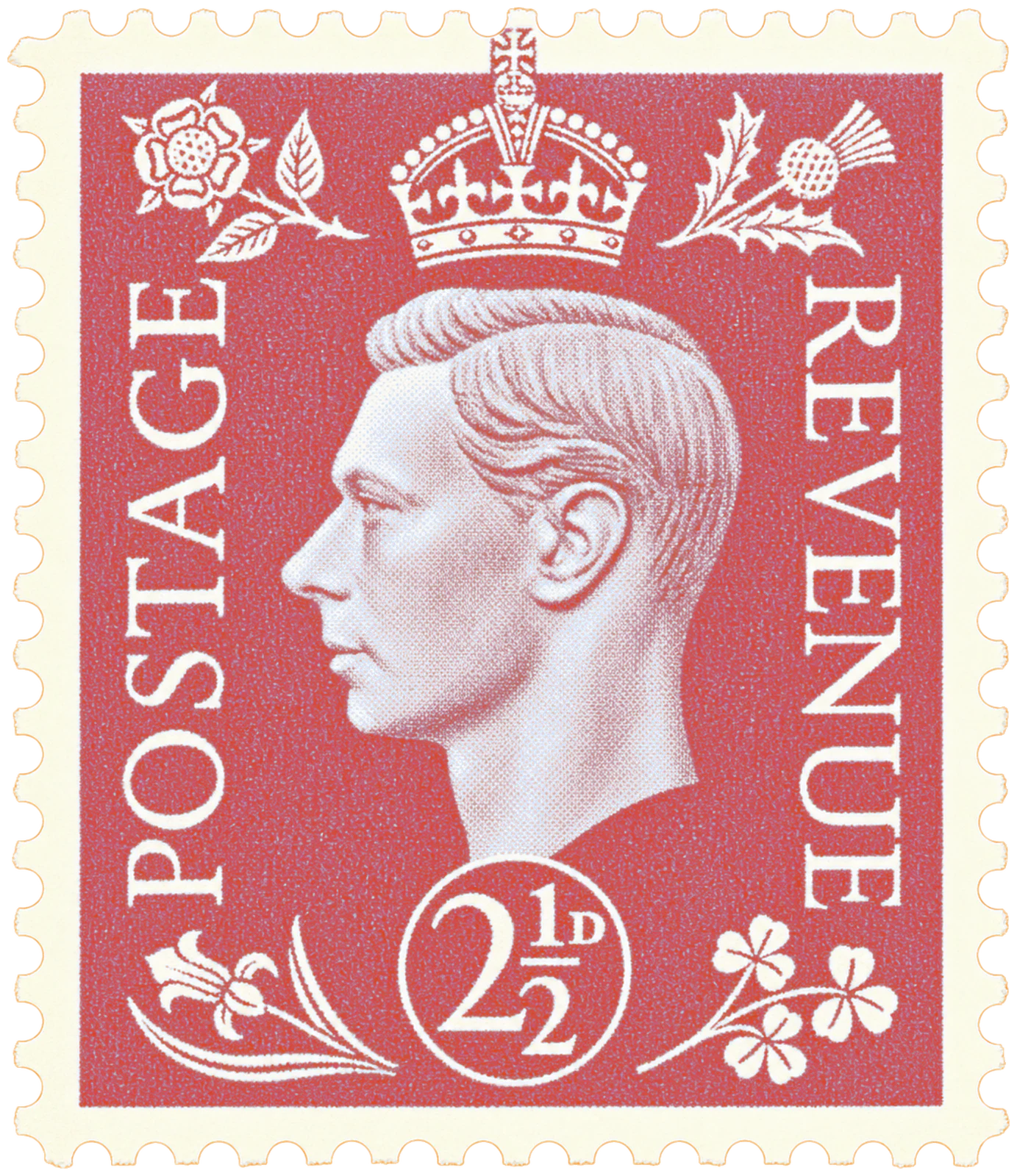
On the stamp you were exploring
George VI · 2½d pale scarlet · 3 May 1951
The crown discussion on your George VI 2½d pale scarlet stamp led here. Compare the small printed emblem with the enlarged heraldic pattern below. The jewelled illustration explains the older historical object; it is not the model from which this stamp was engraved.
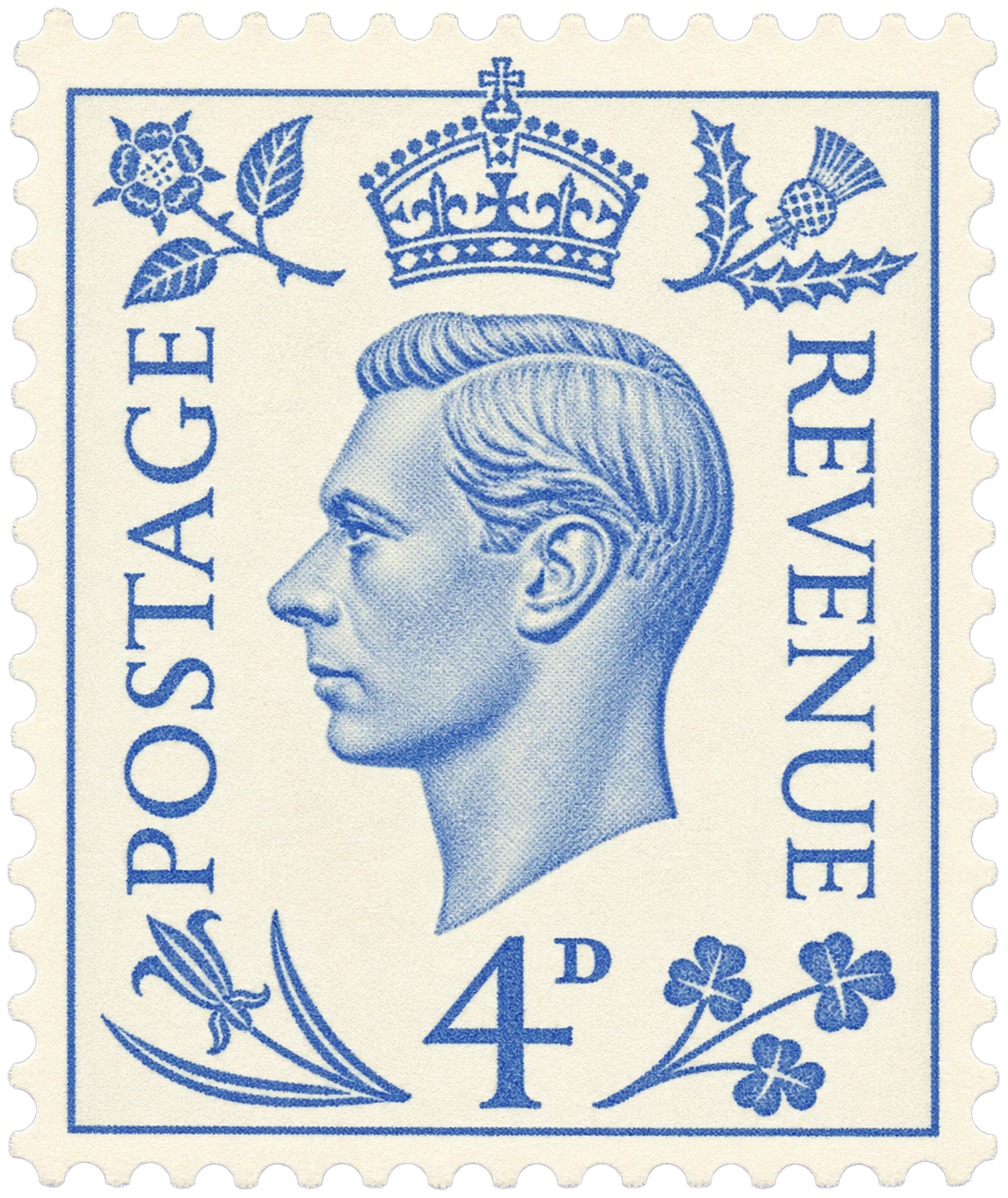
On the stamp you were exploring
George VI · 4d light ultramarine · 2 October 1950
The crown discussion on your George VI 4d light ultramarine stamp led here. Compare the small printed emblem with the enlarged heraldic pattern below. The jewelled illustration explains the older historical object; it is not the model from which this stamp was engraved.
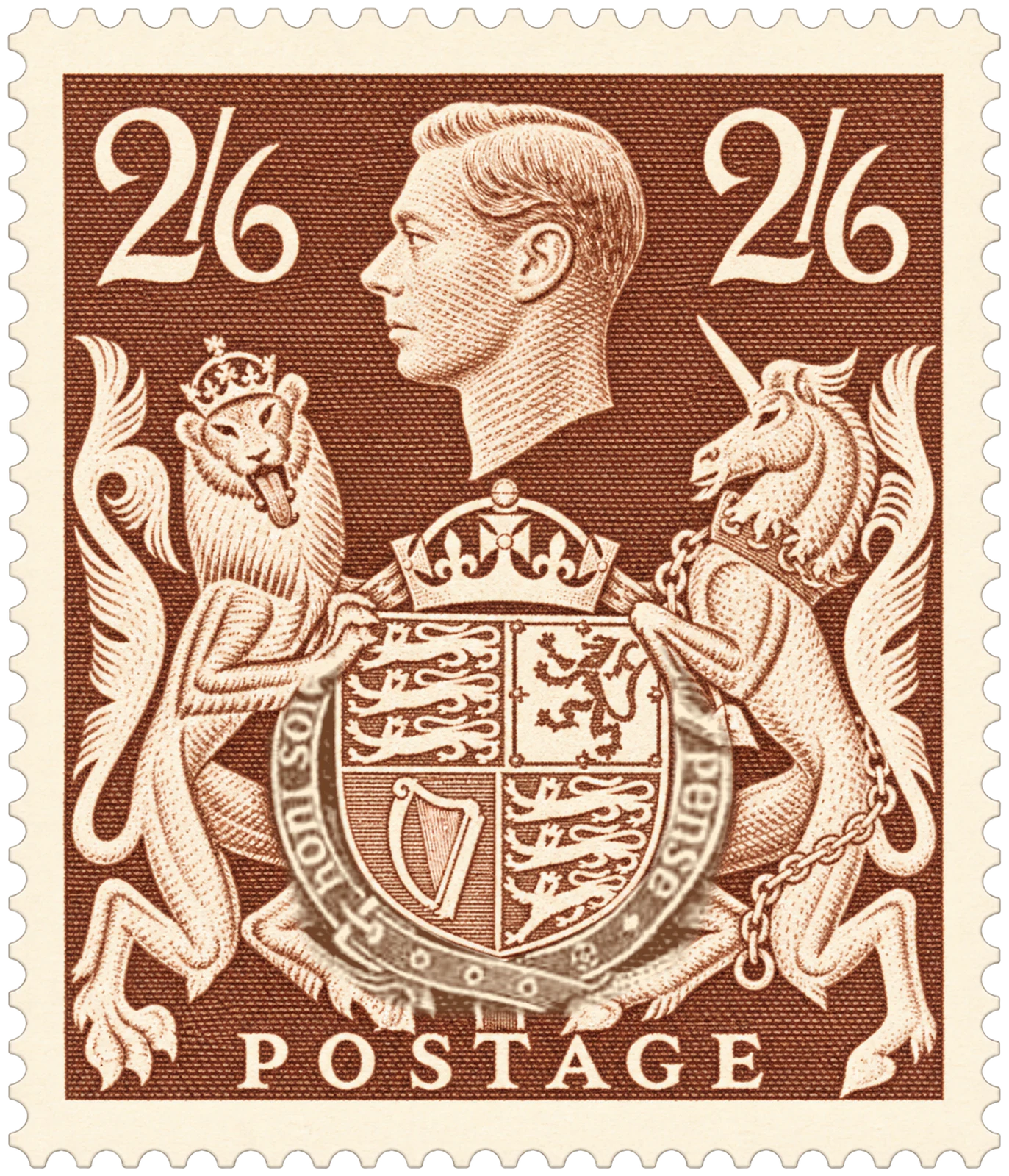
On the stamp you were exploring
George VI · 2s 6d brown · 4 September 1939
The crown discussion on your George VI 2s 6d brown stamp led here. Compare the small printed emblem with the enlarged heraldic pattern below. The jewelled illustration explains the older historical object; it is not the model from which this stamp was engraved.
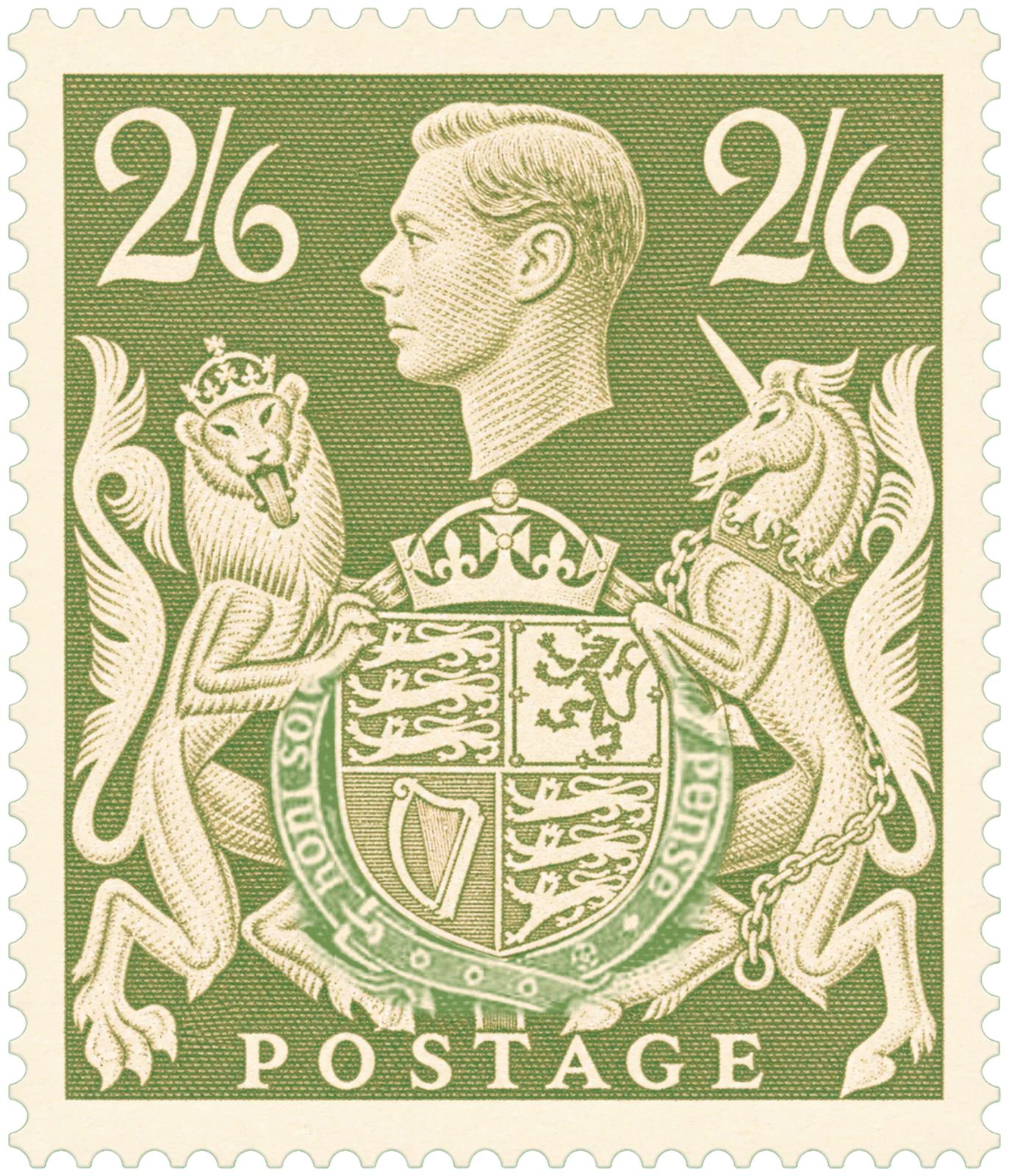
On the stamp you were exploring
George VI · 2s 6d yellow-green · 9 March 1942
The crown discussion on your George VI 2s 6d yellow-green stamp led here. Compare the small printed emblem with the enlarged heraldic pattern below. The jewelled illustration explains the older historical object; it is not the model from which this stamp was engraved.
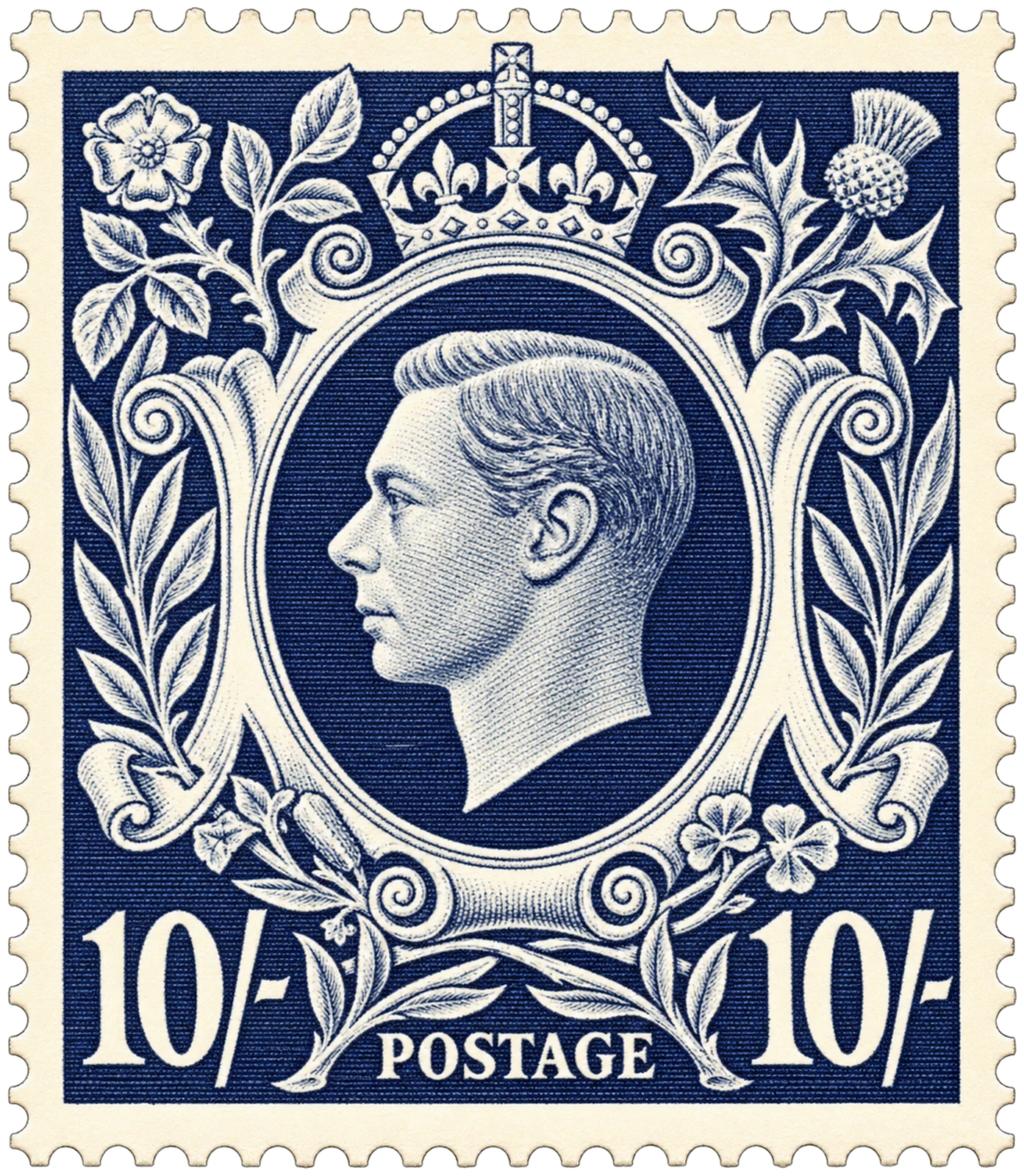
On the stamp you were exploring
George VI · 10s dark blue · 30 October 1939
The crown discussion on your George VI 10s dark blue stamp led here. Compare the small printed emblem with the enlarged heraldic pattern below. The jewelled illustration explains the older historical object; it is not the model from which this stamp was engraved.
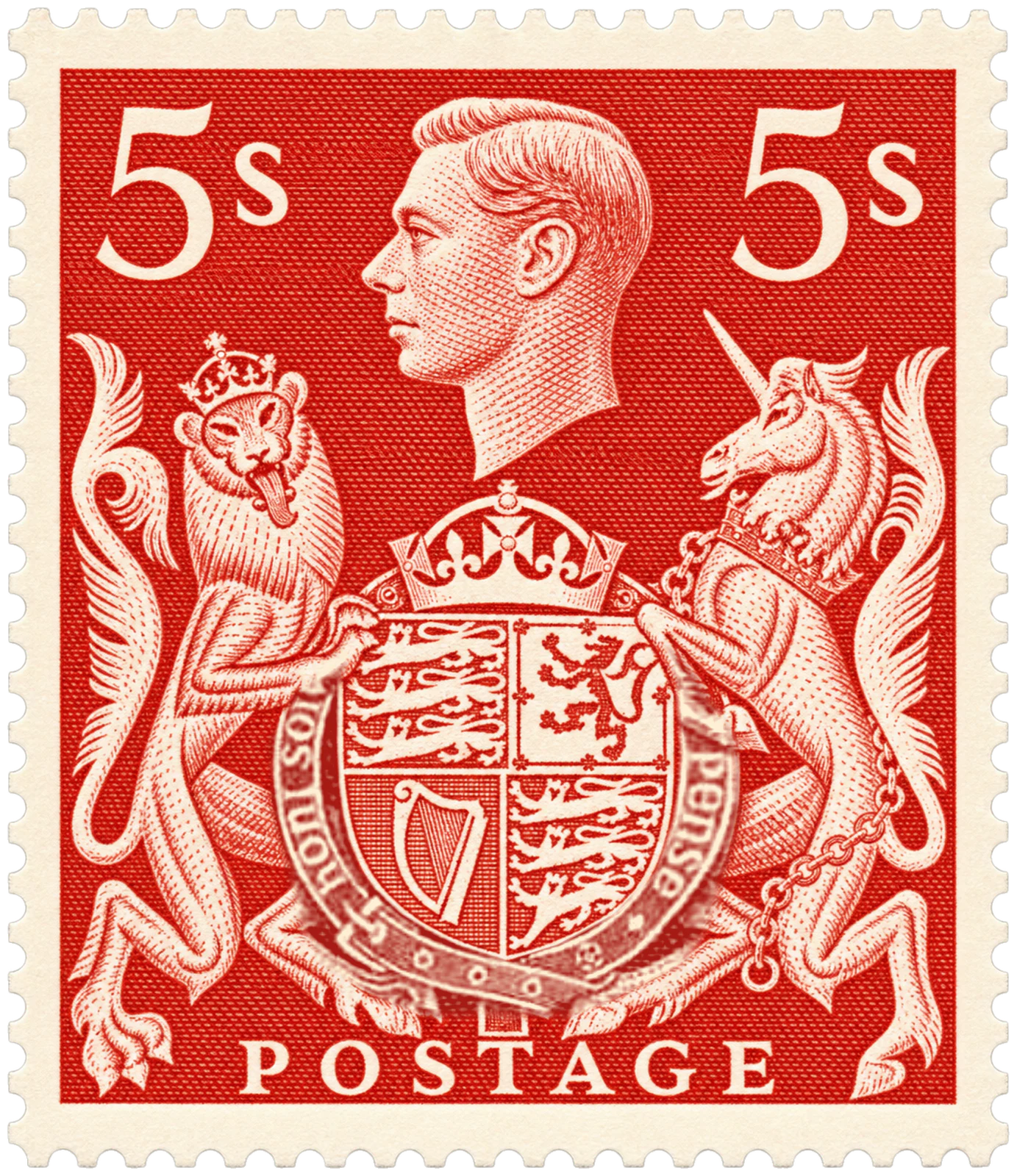
On the stamp you were exploring
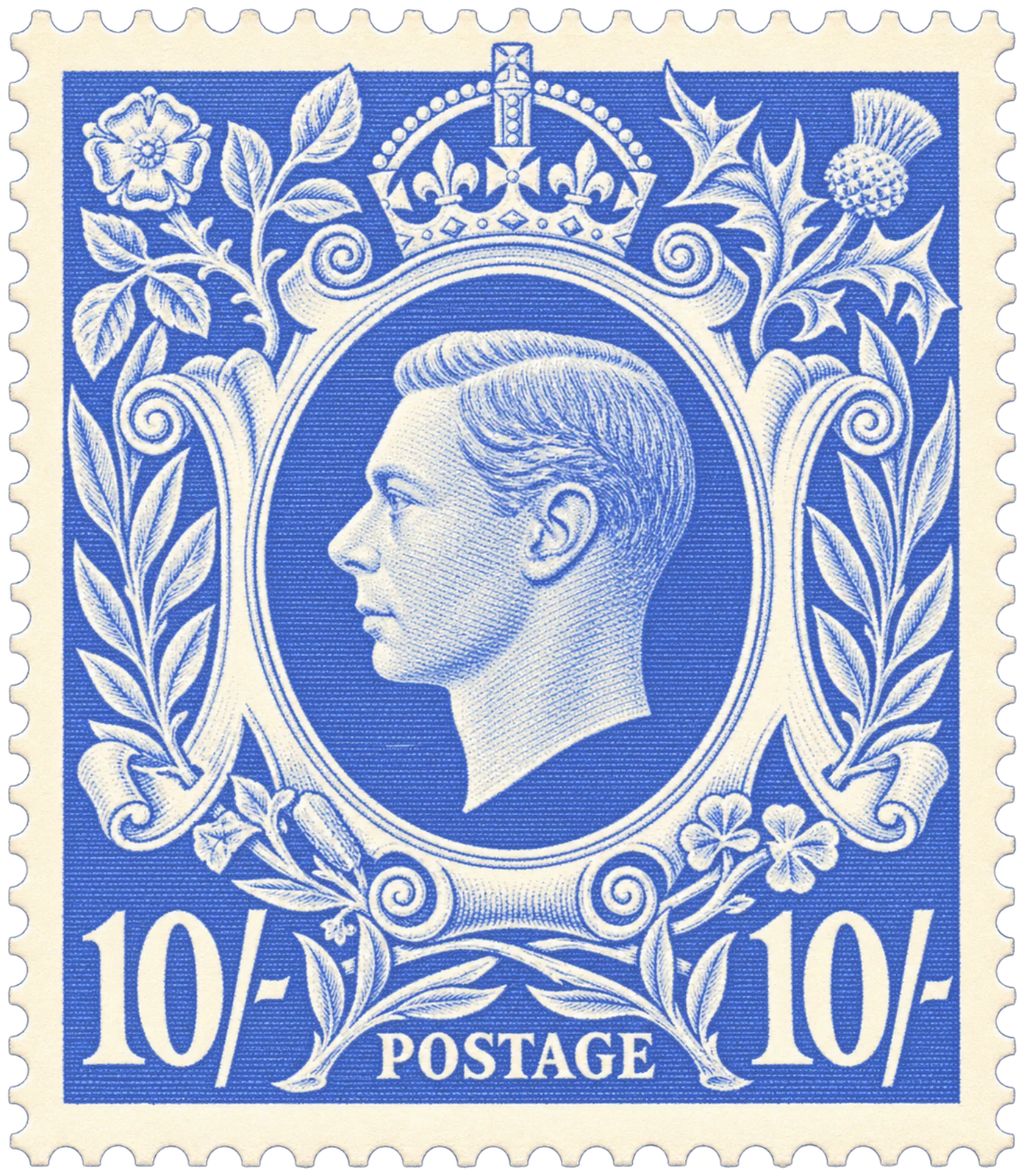
George VI · 5s red · 21 August 1939
The crown discussion on your George VI 5s red stamp led here. Compare the small printed emblem with the enlarged heraldic pattern below. The jewelled illustration explains the older historical object; it is not the model from which this stamp was engraved.
On the stamp you were exploring
George VI · 10s ultramarine · 30 November 1942
The crown discussion on your George VI 10s ultramarine stamp led here. Compare the small printed emblem with the enlarged heraldic pattern below. The jewelled illustration explains the older historical object; it is not the model from which this stamp was engraved.
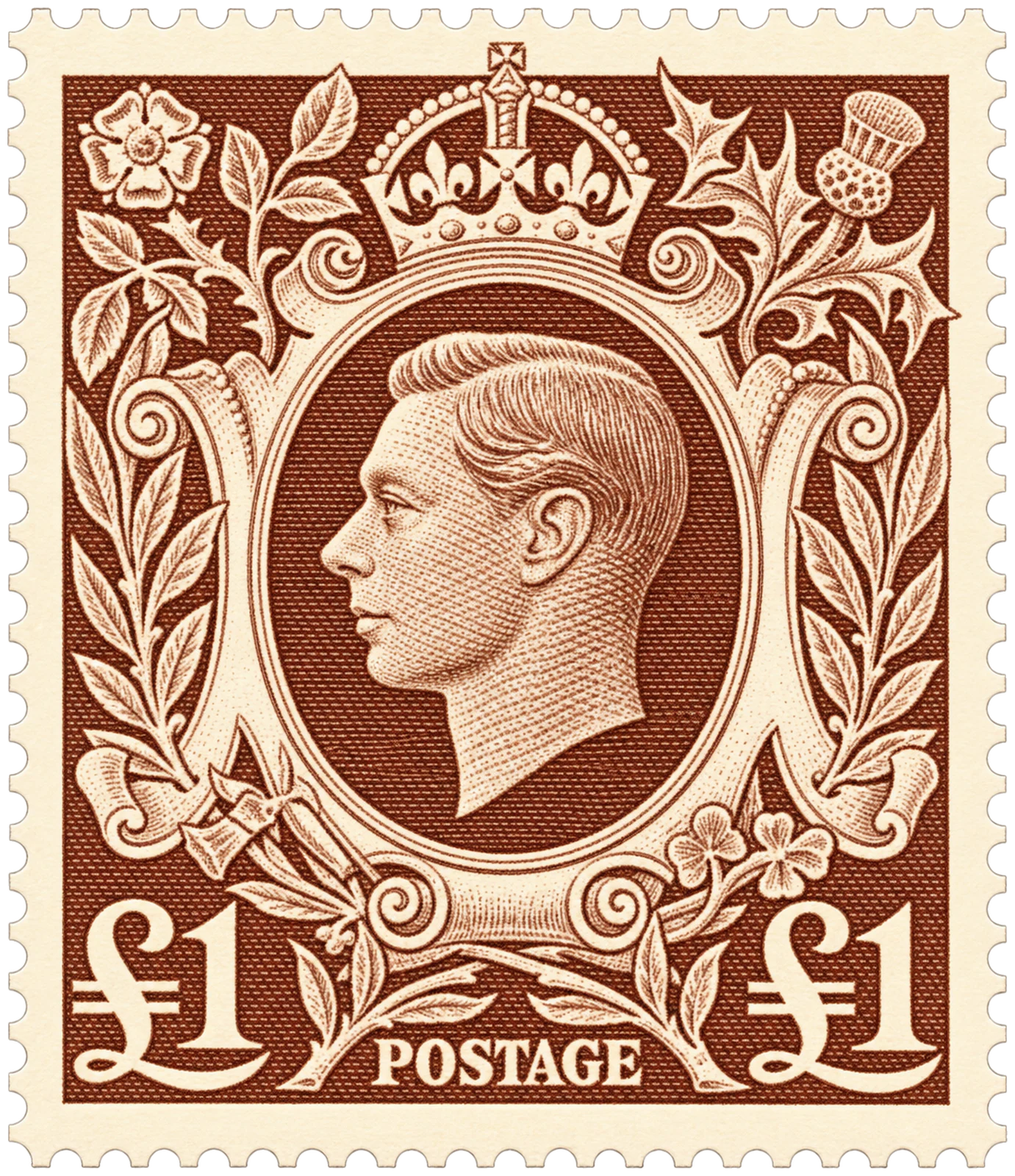
On the stamp you were exploring
George VI · £1 brown · 1 October 1948
The crown discussion on your George VI £1 brown stamp led here. Compare the small printed emblem with the enlarged heraldic pattern below. The jewelled illustration explains the older historical object; it is not the model from which this stamp was engraved.
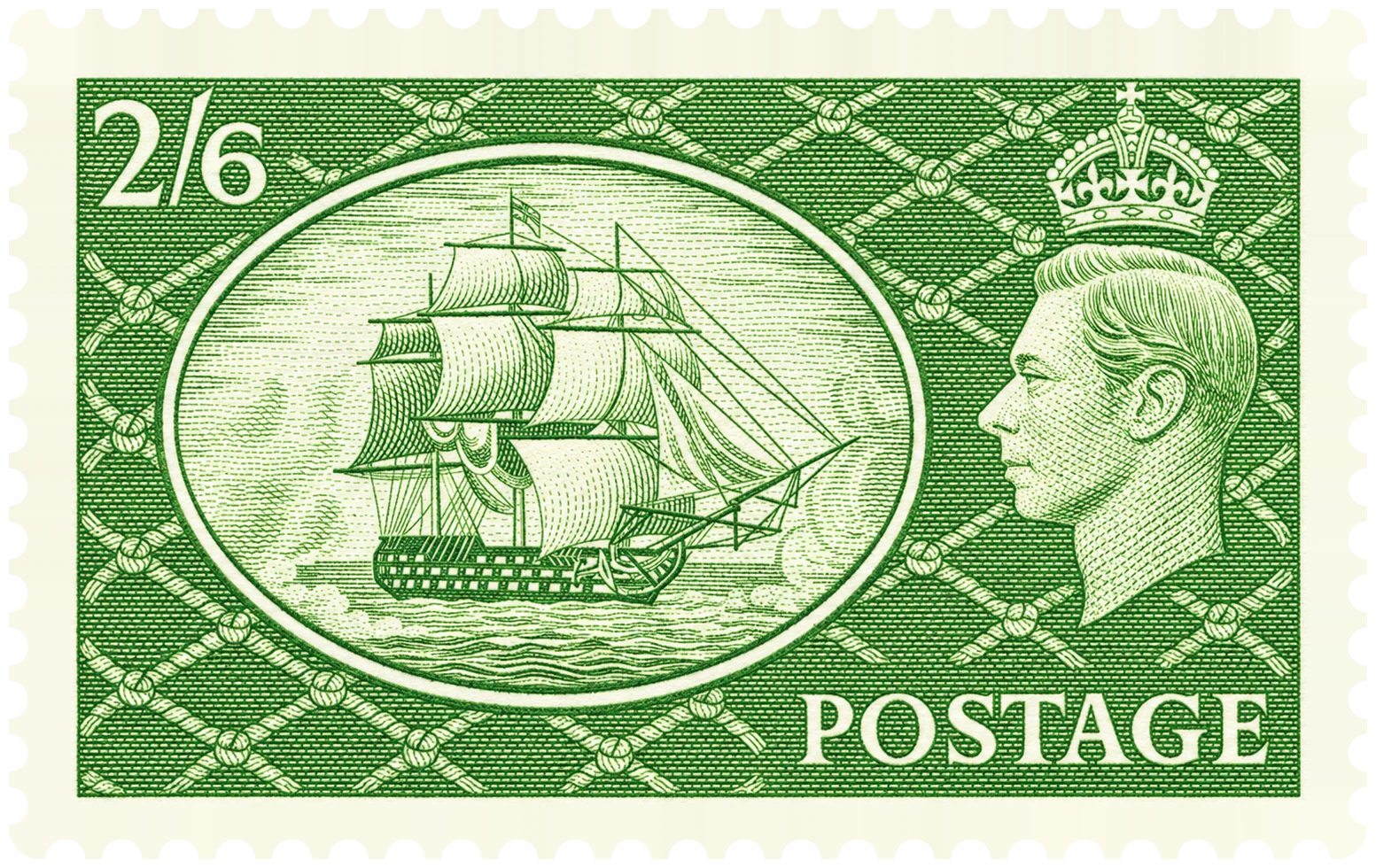
On the stamp you were exploring
George VI · 2s 6d yellow-green · 3 May 1951
The crown discussion on your George VI 2s 6d yellow-green stamp led here. Compare the small printed emblem with the enlarged heraldic pattern below. The jewelled illustration explains the older historical object; it is not the model from which this stamp was engraved.
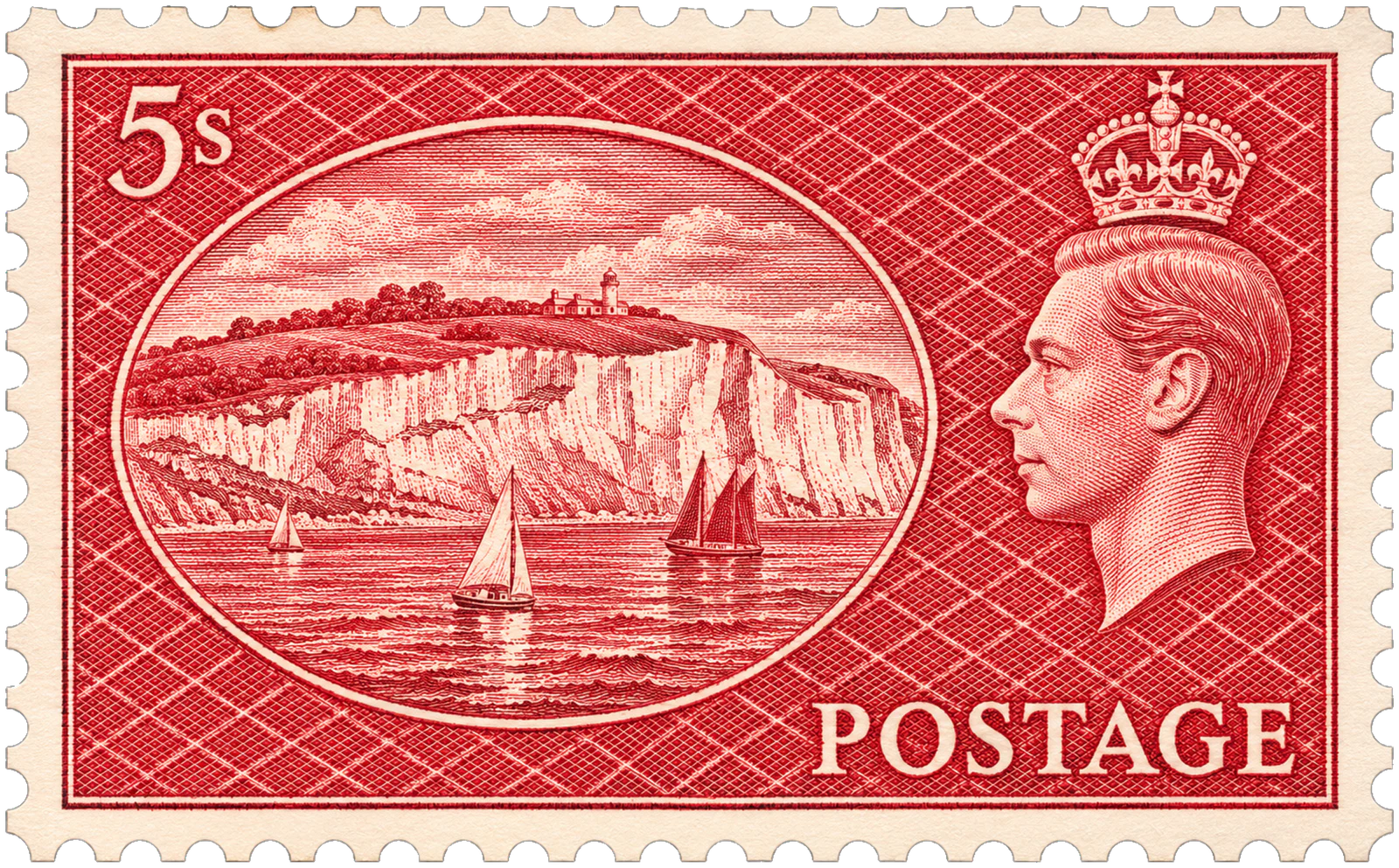
On the stamp you were exploring
George VI · 5s red · 3 May 1951
The crown discussion on your George VI 5s red stamp led here. Compare the small printed emblem with the enlarged heraldic pattern below. The jewelled illustration explains the older historical object; it is not the model from which this stamp was engraved.
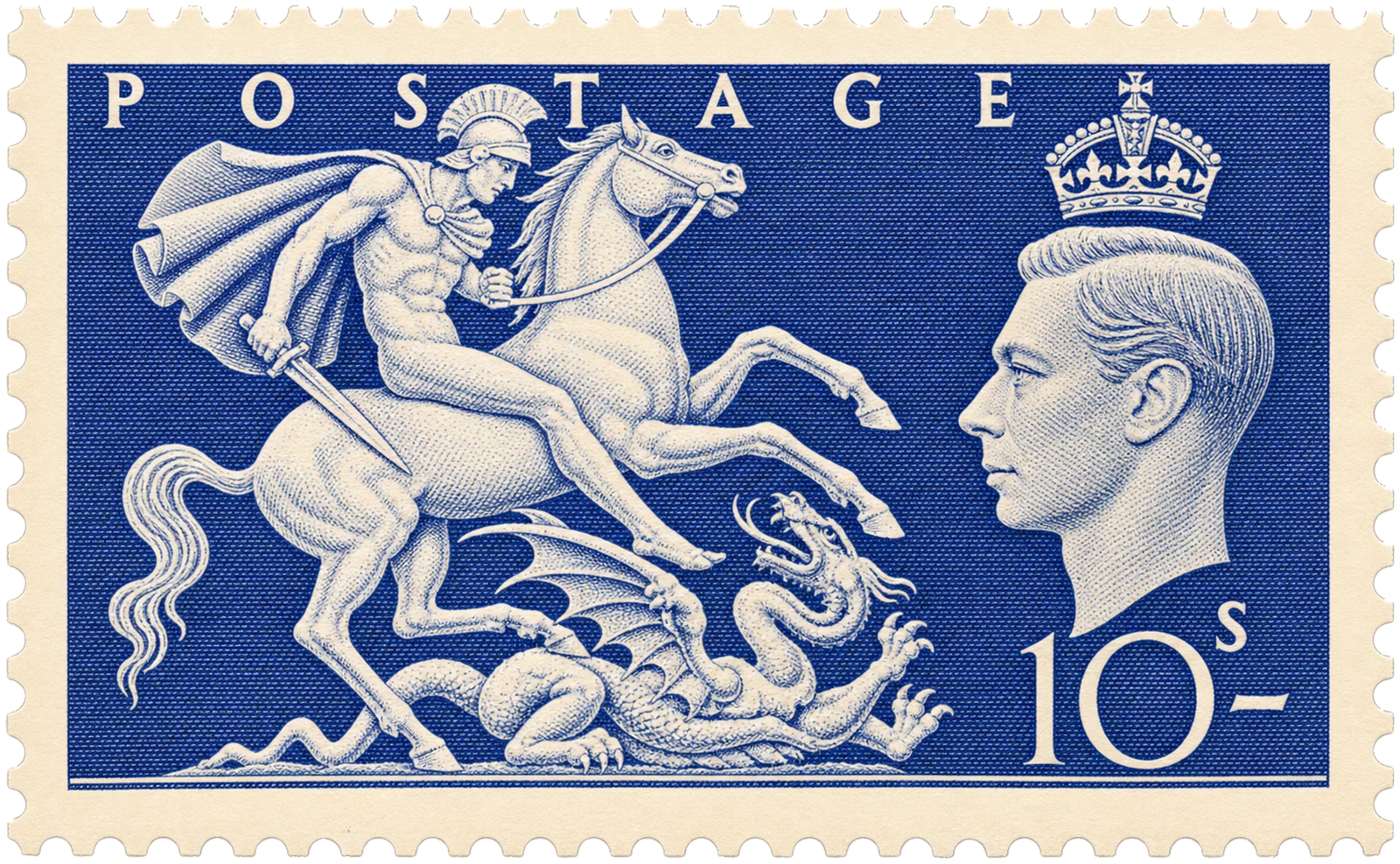
On the stamp you were exploring
George VI · 10s ultramarine · 3 May 1951
The crown discussion on your George VI 10s ultramarine stamp led here. Compare the small printed emblem with the enlarged heraldic pattern below. The jewelled illustration explains the older historical object; it is not the model from which this stamp was engraved.
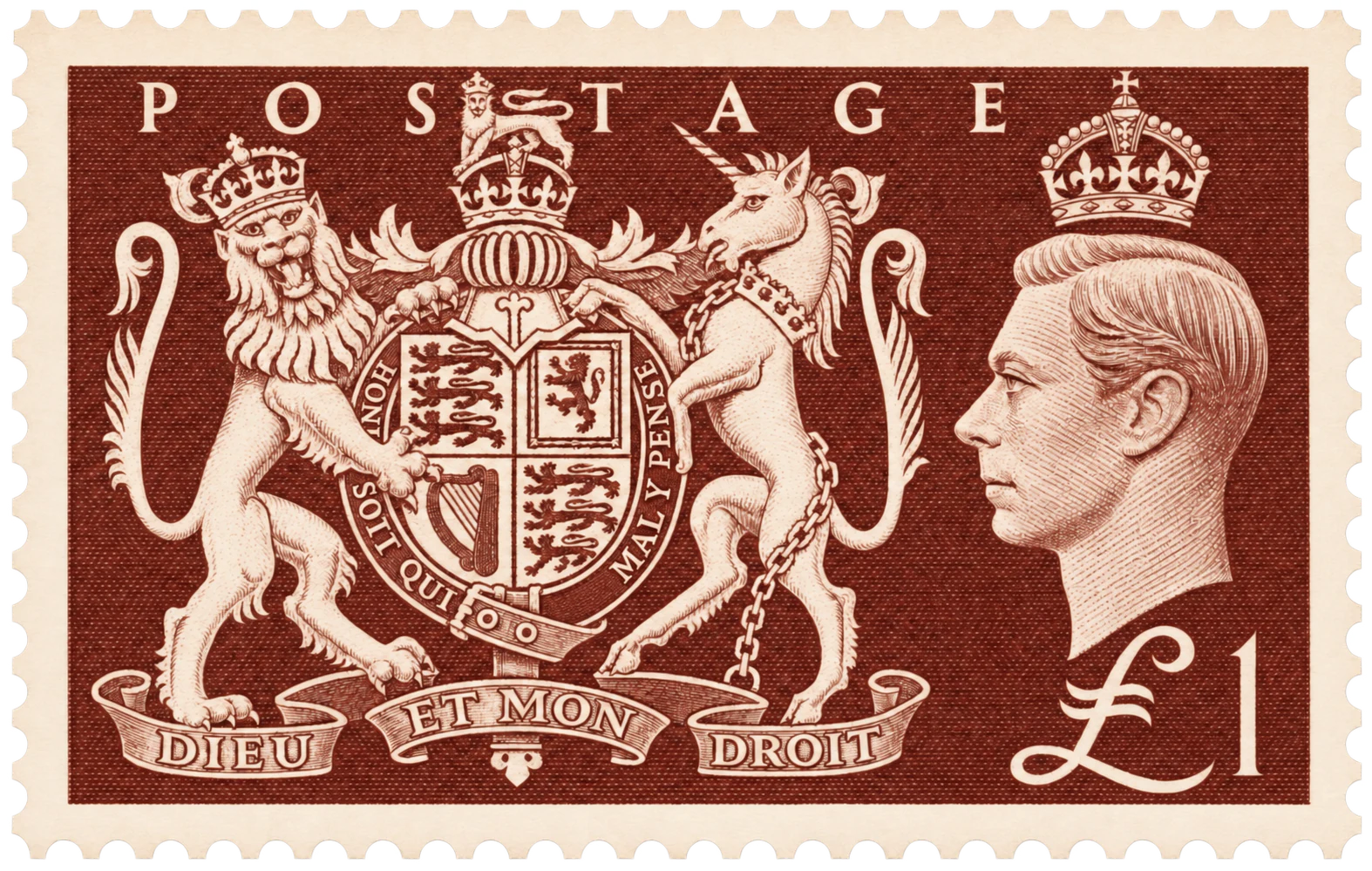
On the stamp you were exploring
George VI · £1 brown · 3 May 1951
The crown discussion on your George VI £1 brown stamp led here. Compare the small printed emblem with the enlarged heraldic pattern below. The jewelled illustration explains the older historical object; it is not the model from which this stamp was engraved.
One name, two different things
The Tudor Crown can mean a historic royal object or a later heraldic emblem. Heraldry is the language of coats of arms and related symbols. Its crown represents royal authority; it does not have to reproduce a particular surviving crown jewel.
The two illustrations help separate those ideas. The jewelled crown is digitally reconstructed. The flat emblem is a modern drawing based on the 1901 heraldic pattern, not Charles III’s exact 2022 artwork. [1, 2]

Image information
Click image to magnify
Gold Tudor royal crown with jewels, pearls, small figures and a purple cap.
- Credit
- Stunning Stamps · 2026
- Notes
- Digitally constructed
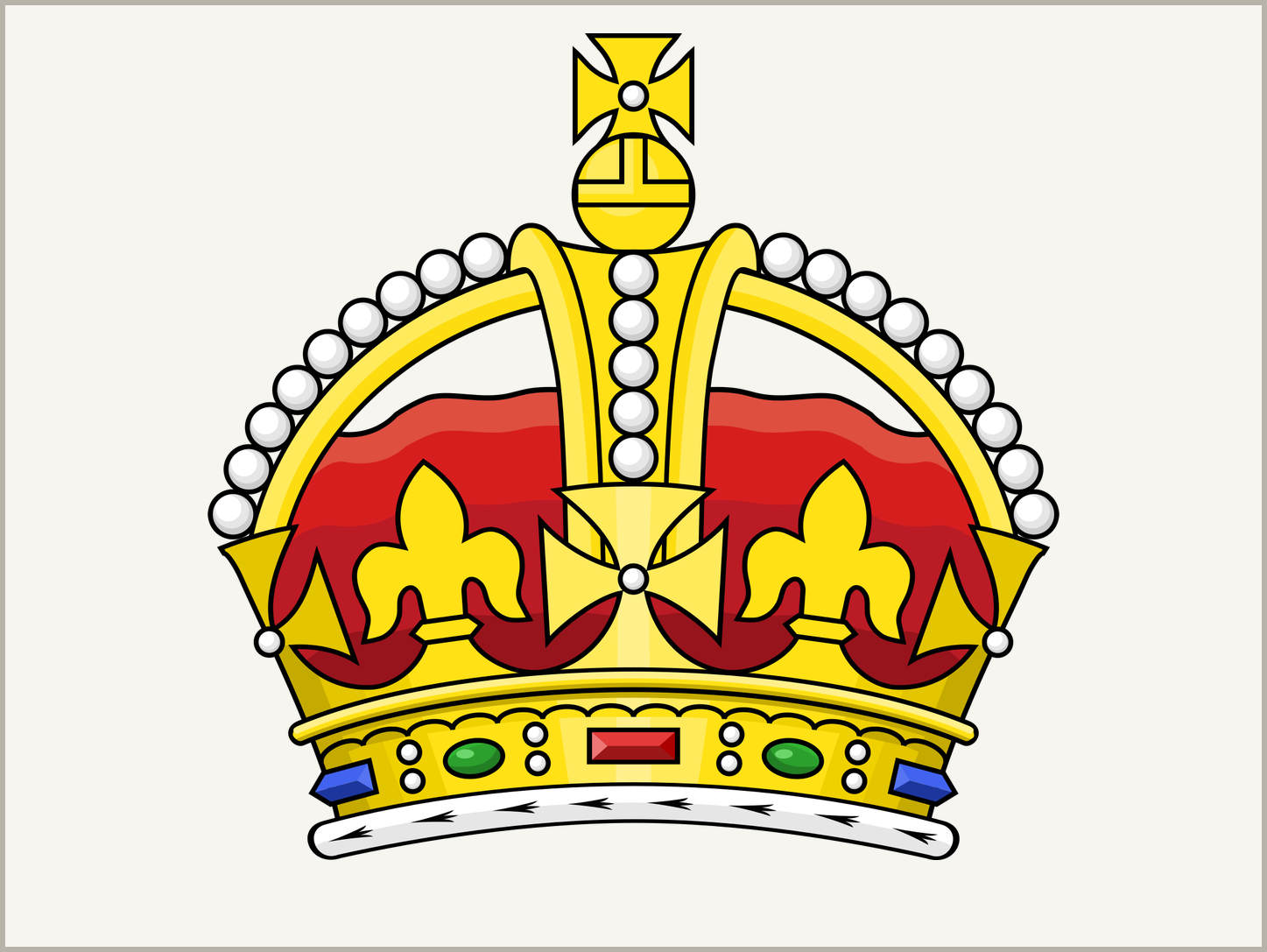
Image information
Click image to magnify
Heraldic Tudor Crown with rounded arches, a cross and orb, red cap, crosses and fleurs-de-lis.
- Credit
- Dgp4004 · Wikimedia Commons · CC0
A treasure lost in 1649
The original crown was made for either Henry VII or Henry VIII; its precise origin is uncertain. Henry VIII wore it at Hampton Court, notably for the Epiphany procession to the Chapel Royal on 6 January. It was later used at the coronations of his three children.
The crown was destroyed in 1649 after the monarchy was abolished. Written inventories recorded 344 jewels and pearls and five decorative sculptures. A portrait of Charles I painted by Daniel Mytens in 1631 also preserved its appearance. Those records helped goldsmith Harry Collins and his team make the reconstruction displayed at Hampton Court. [3]
The emblem of the Edwardian age
A symbol printed in one colour must communicate through its outline. In the heraldic Tudor Crown, rounded arches rise towards a small orb and cross. Crosses with widening arms alternate with fleurs-de-lis, stylised lily-shaped ornaments, around the band. The cap is conventionally crimson in coloured heraldic drawings.
Writing in 1909, Arthur Charles Fox-Davies described how the crown had varied between artists during Victoria’s reign. Soon after Edward VII’s accession, a War Office sealed pattern recorded the approved form for official use. His figure 642 is the historical model behind the modern heraldic drawing shown here. [4, 2]
Finding the crown on a stamp
Start with the crown’s position. On the Edward VII three-halfpenny it sits above the portrait, joining the draped frame. On Edward VIII’s spare design it stands beside the head. George VI’s pictorial high values place a crown above an uncrowned portrait. The emblem can convey royal authority even when the person shown is not wearing it.
Compare the rounded arches, the orb and cross, and the ornaments on the band. Engravers and printers simplified these details to suit very small images, so a stamp is not expected to match every pearl in a large heraldic drawing. The examples below let you inspect the motif in different compositions.
The crown in the picture and the crown in the paper
The visible crown is part of the printed artwork. A watermark is a pattern formed in the paper during manufacture. A stamp can have a crown in both places, but the two serve different purposes and need separate identification.
Use each stamp’s Watermark Info drawer for its actual paper. Names such as Imperial Crown, Simple Cypher and Multiple Crown and GVIR belong to particular catalogue classifications. A resemblance between a printed crown and a heraldic emblem does not identify the watermark.
Chosen again by Charles III
Charles III selected a cypher featuring the Tudor Crown form in 2022. A cypher is a royal monogram: his combines C, R for Rex (Latin for King), and III. The College of Arms explained that this crown differs from Elizabeth II’s emblem, whose higher, dipping arches were closer to St Edward’s Crown. The Scottish version of Charles’s cypher uses the Crown of Scotland.
The change brought the Tudor form back into official British symbolism. GOV.UK introduced its revised crown logo on 19 February 2024. That return concerns an emblem: Charles was crowned with the physical St Edward’s Crown on 6 May 2023. [5, 6, 7]
Sources
- Canadian Heritage: Royal Crown and Royal Cypher — historic heraldic crowns
- Dgp4004: 1901 pattern Tudor Crown (plain) 2D — Wikimedia Commons, CC0
- Historic Royal Palaces: Henry’s Crown
- A. C. Fox-Davies: A Complete Guide to Heraldry (1909), chapter XXII, figure 642
- College of Arms: Royal Cypher, 27 September 2022
- Government Digital Service: Updating GOV.UK’s crown, 19 February 2024
- The Coronation Roll: the coronation service, 6 May 2023
