
De La Rue
Playing cards, postage stamps and security printing
A firm that made colourful playing cards became one of the great names on British stamp album pages. Its story connects experiments in printing with the everyday task of paying for a letter.
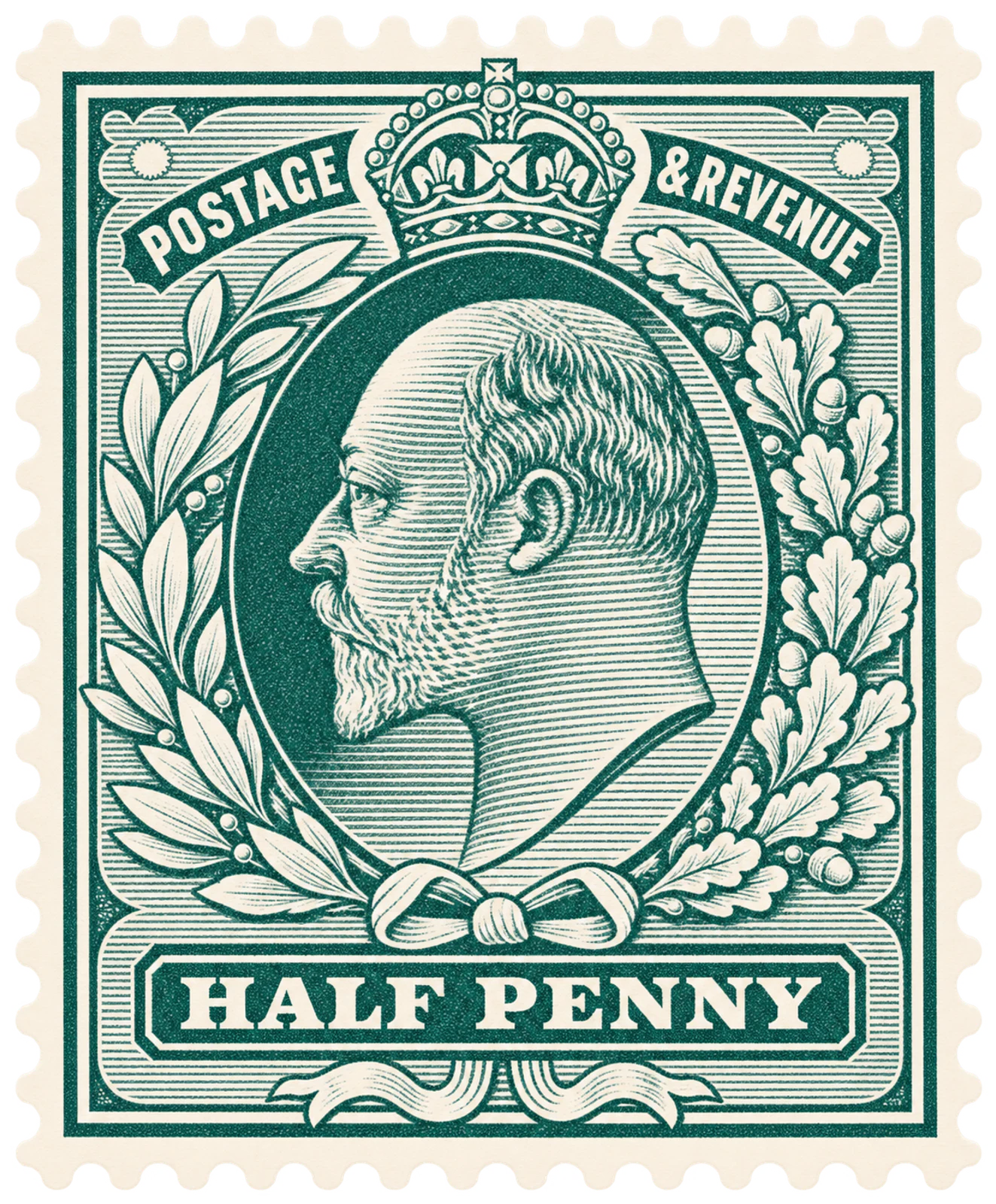
On the stamp you were exploring
Edward VII · ½d blue-green · 1 January 1902
De La Rue manufactured this ½d. Use the paper and colour description with the printer’s name: later firms continued many Edward VII designs, so the portrait alone cannot identify a De La Rue printing.
On the stamp you were exploring
Edward VII · ½d blue-green · 1 January 1902
De La Rue manufactured this ½d. Use the paper and colour description with the printer’s name: later firms continued many Edward VII designs, so the portrait alone cannot identify a De La Rue printing.
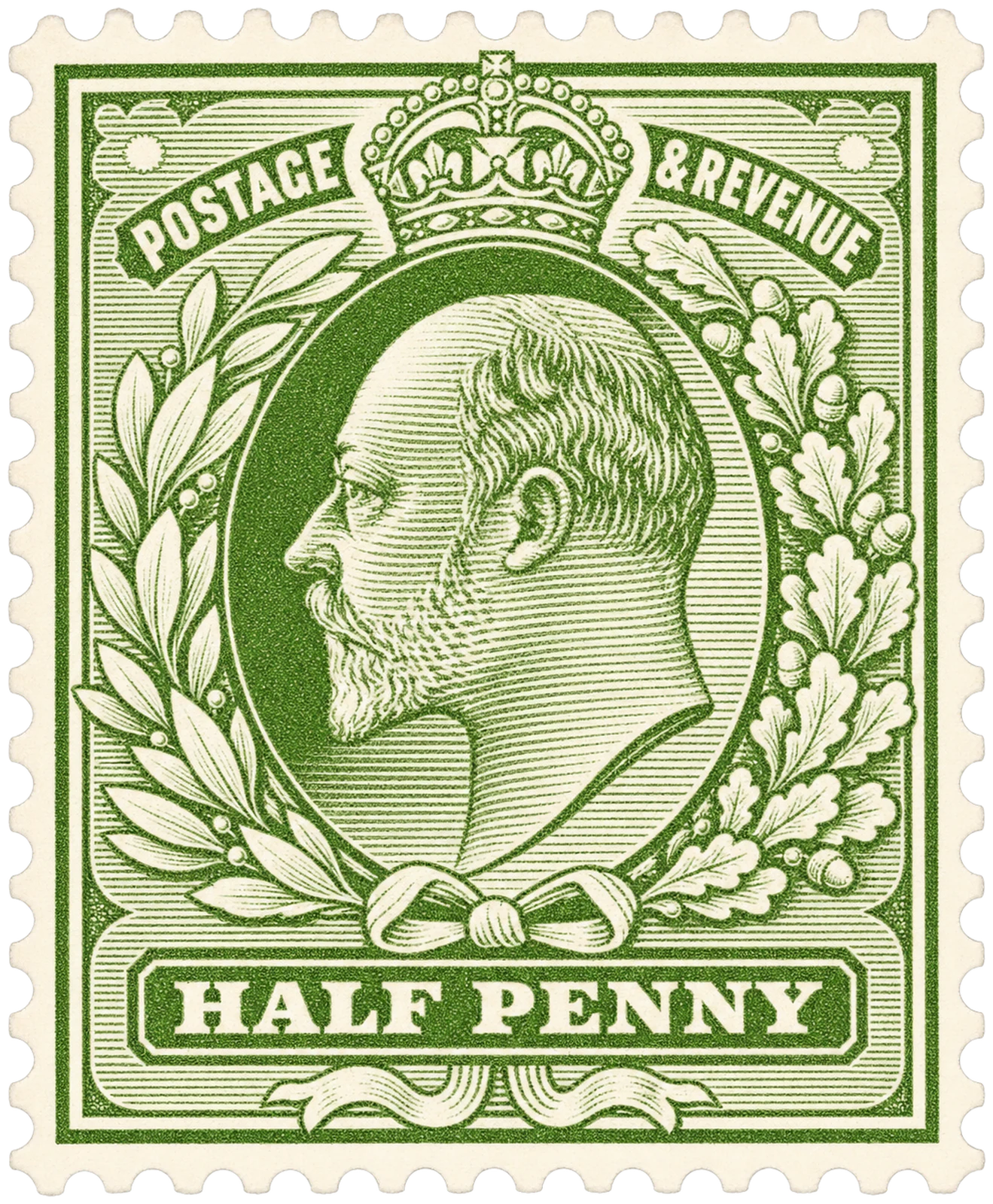
On the stamp you were exploring
Edward VII · ½d yellowish-green · 26 November 1904 — colour replacement
De La Rue & Co. printed this issue by typography. Harrison later printed Edward VII halfpennies too; the comparison above the Summary helps explain the differences.
On the stamp you were exploring
Edward VII · ½d yellowish-green · 26 November 1904 — colour replacement
De La Rue & Co. printed this issue by typography. Harrison later printed Edward VII halfpennies too; the comparison above the Summary helps explain the differences.
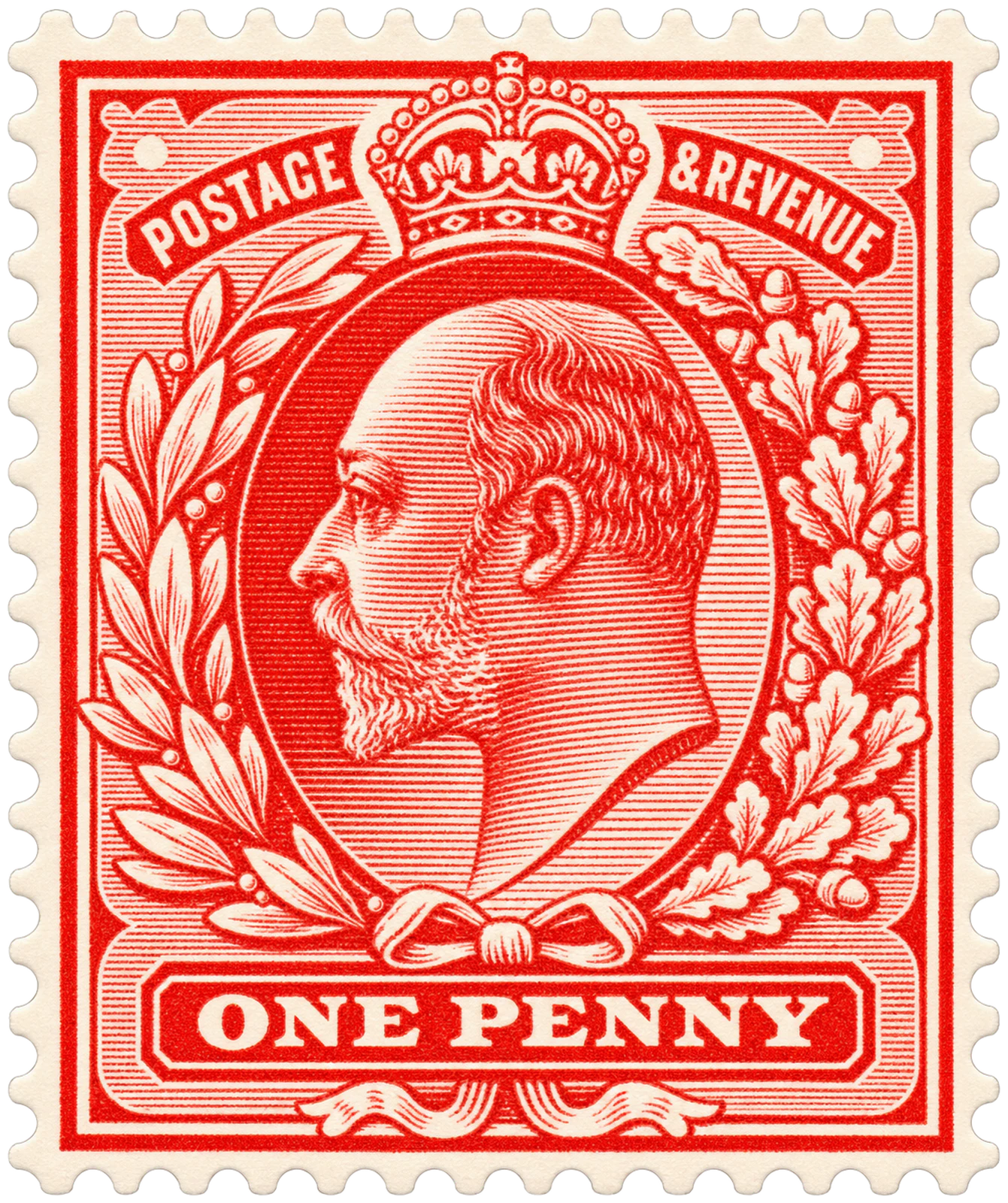
On the stamp you were exploring
Edward VII · 1d scarlet · 1 January 1902
De La Rue manufactured this 1d. Use the paper and colour description with the printer’s name: later firms continued many Edward VII designs, so the portrait alone cannot identify a De La Rue printing.
On the stamp you were exploring
Edward VII · 1d scarlet · 1 January 1902
De La Rue manufactured this 1d. Use the paper and colour description with the printer’s name: later firms continued many Edward VII designs, so the portrait alone cannot identify a De La Rue printing.
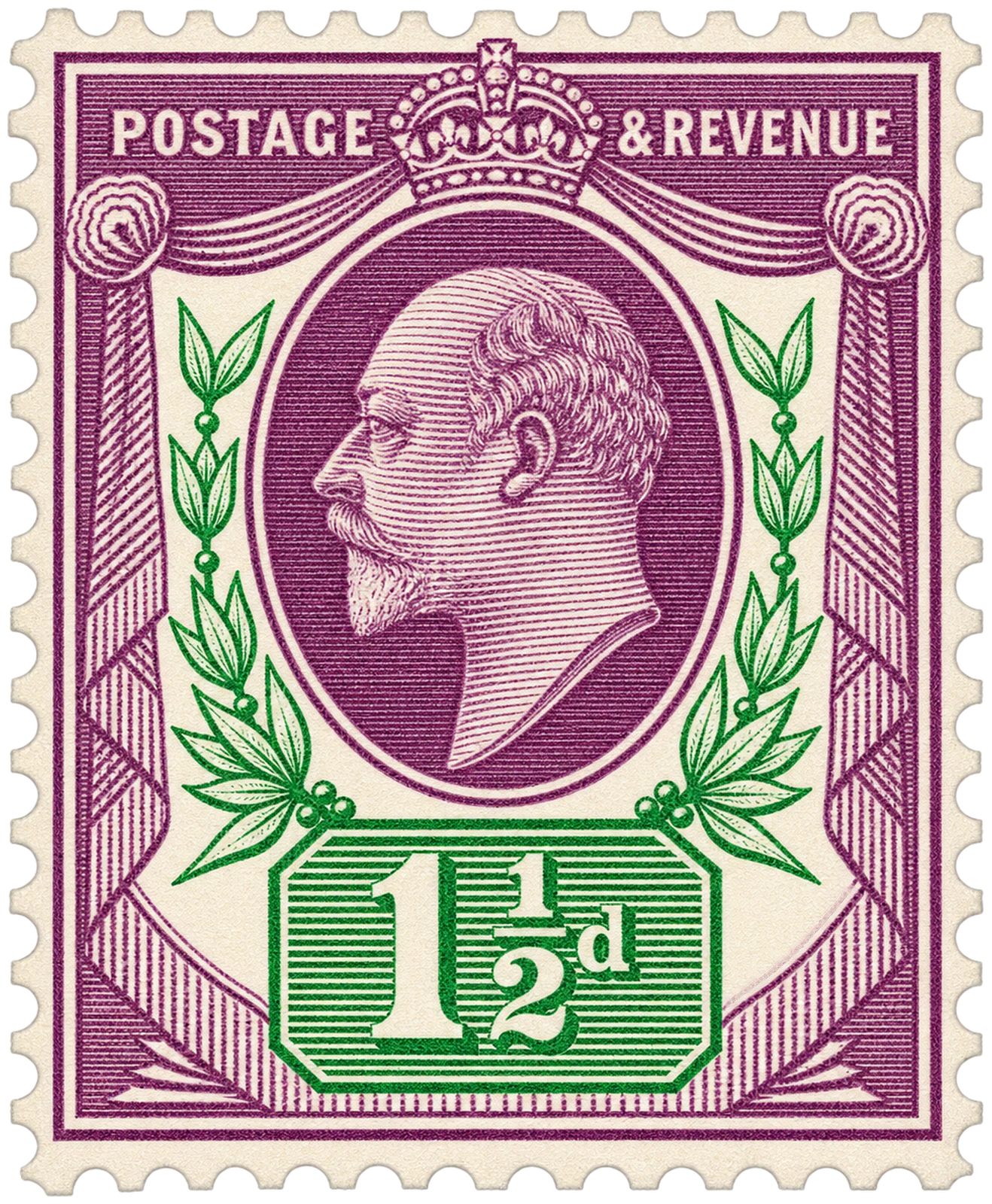
On the stamp you were exploring
Edward VII · 1½d purple and green · 21 March 1902
De La Rue manufactured this 1½d. Use the paper and colour description with the printer’s name: later firms continued many Edward VII designs, so the portrait alone cannot identify a De La Rue printing.
On the stamp you were exploring
Edward VII · 1½d purple and green · 21 March 1902
De La Rue manufactured this 1½d. Use the paper and colour description with the printer’s name: later firms continued many Edward VII designs, so the portrait alone cannot identify a De La Rue printing.
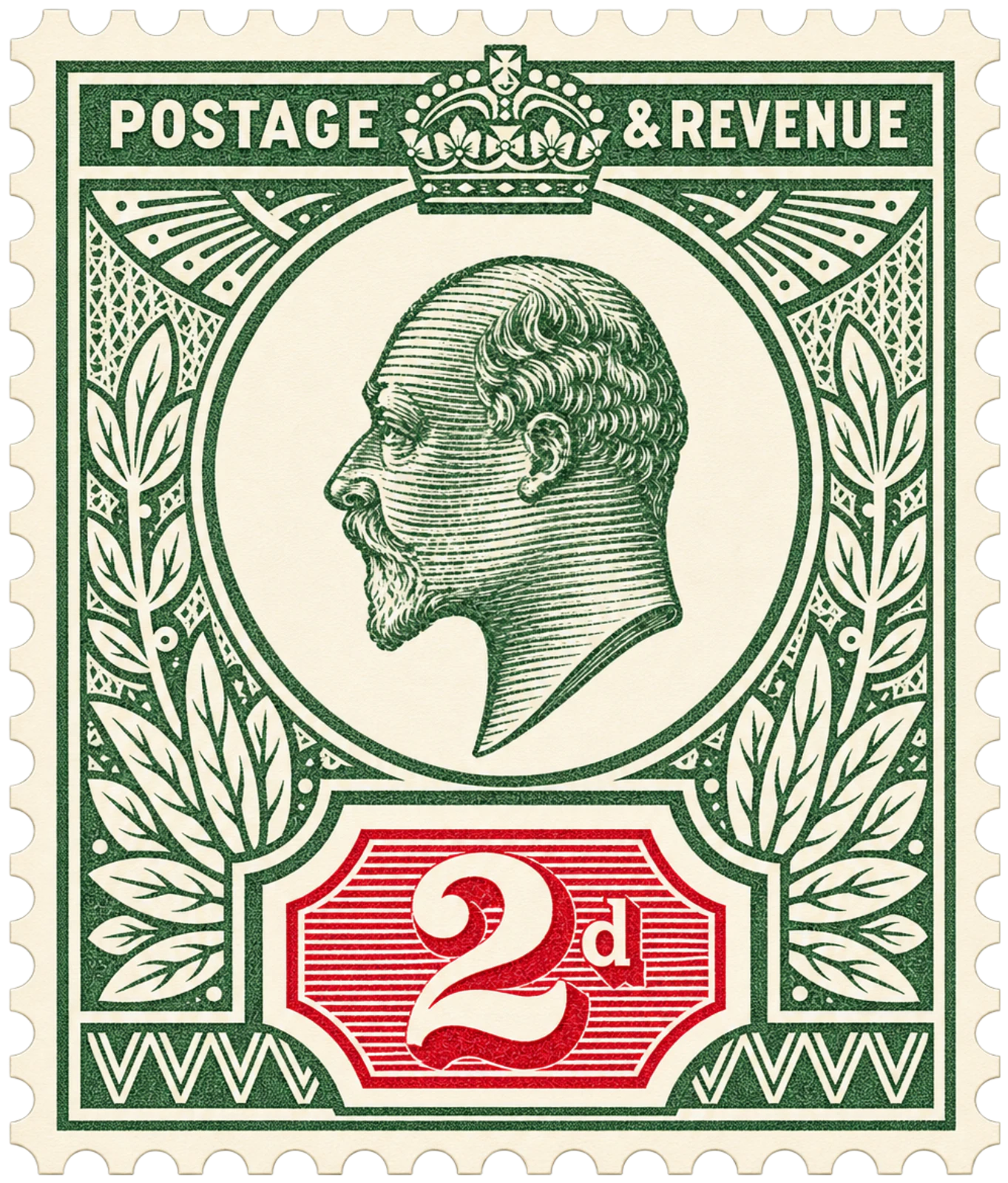
On the stamp you were exploring
Edward VII · 2d grey-green and carmine-red · 1902-03-25
De La Rue manufactured this 2d. Use the paper and colour description with the printer’s name: later firms continued many Edward VII designs, so the portrait alone cannot identify a De La Rue printing.
On the stamp you were exploring
Edward VII · 2d grey-green and carmine-red · 1902-03-25
De La Rue manufactured this 2d. Use the paper and colour description with the printer’s name: later firms continued many Edward VII designs, so the portrait alone cannot identify a De La Rue printing.
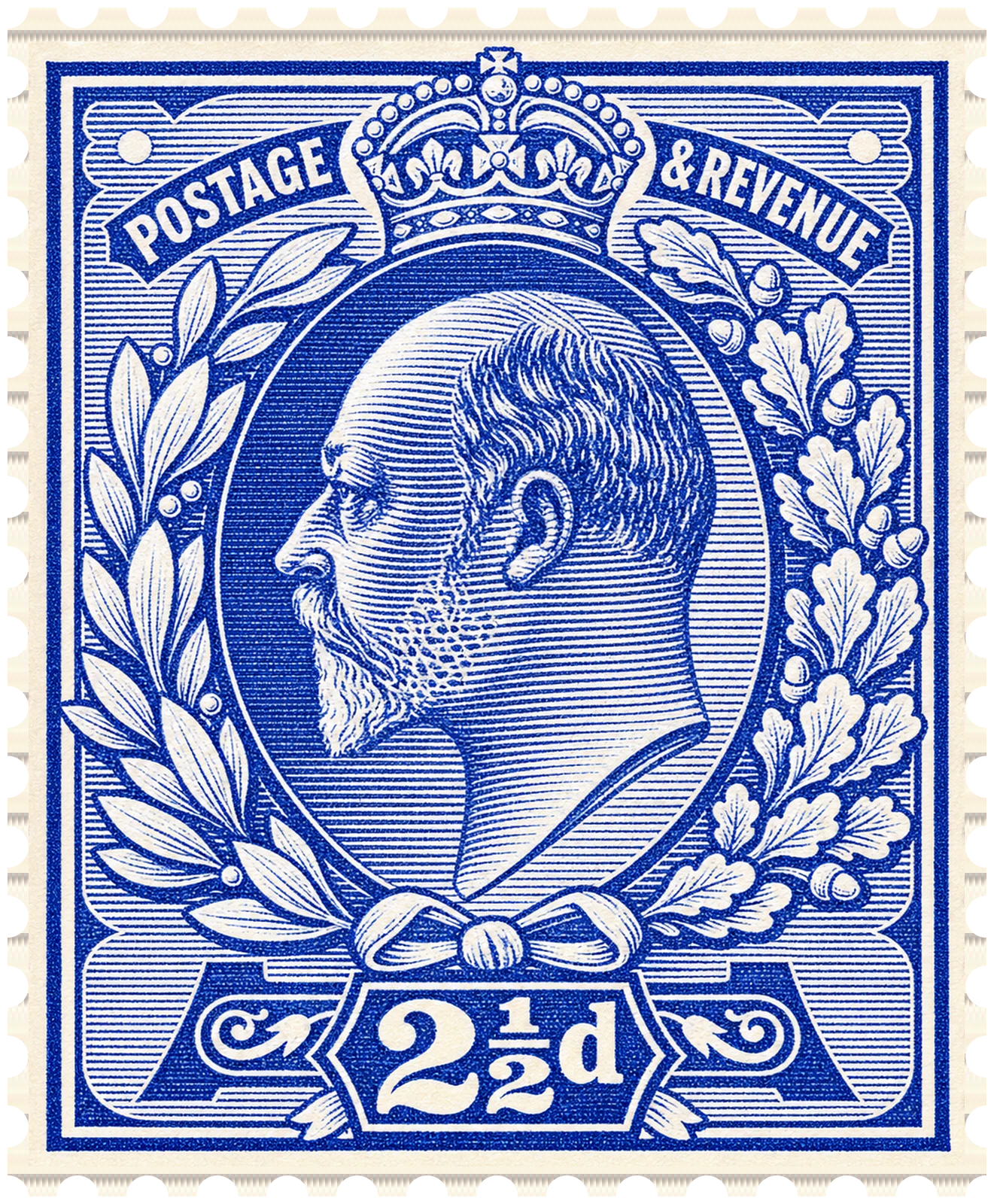
On the stamp you were exploring
Edward VII · 2½d ultramarine · 1 January 1902
De La Rue manufactured this 2½d. Use the paper and colour description with the printer’s name: later firms continued many Edward VII designs, so the portrait alone cannot identify a De La Rue printing.
On the stamp you were exploring
Edward VII · 2½d ultramarine · 1 January 1902
De La Rue manufactured this 2½d. Use the paper and colour description with the printer’s name: later firms continued many Edward VII designs, so the portrait alone cannot identify a De La Rue printing.
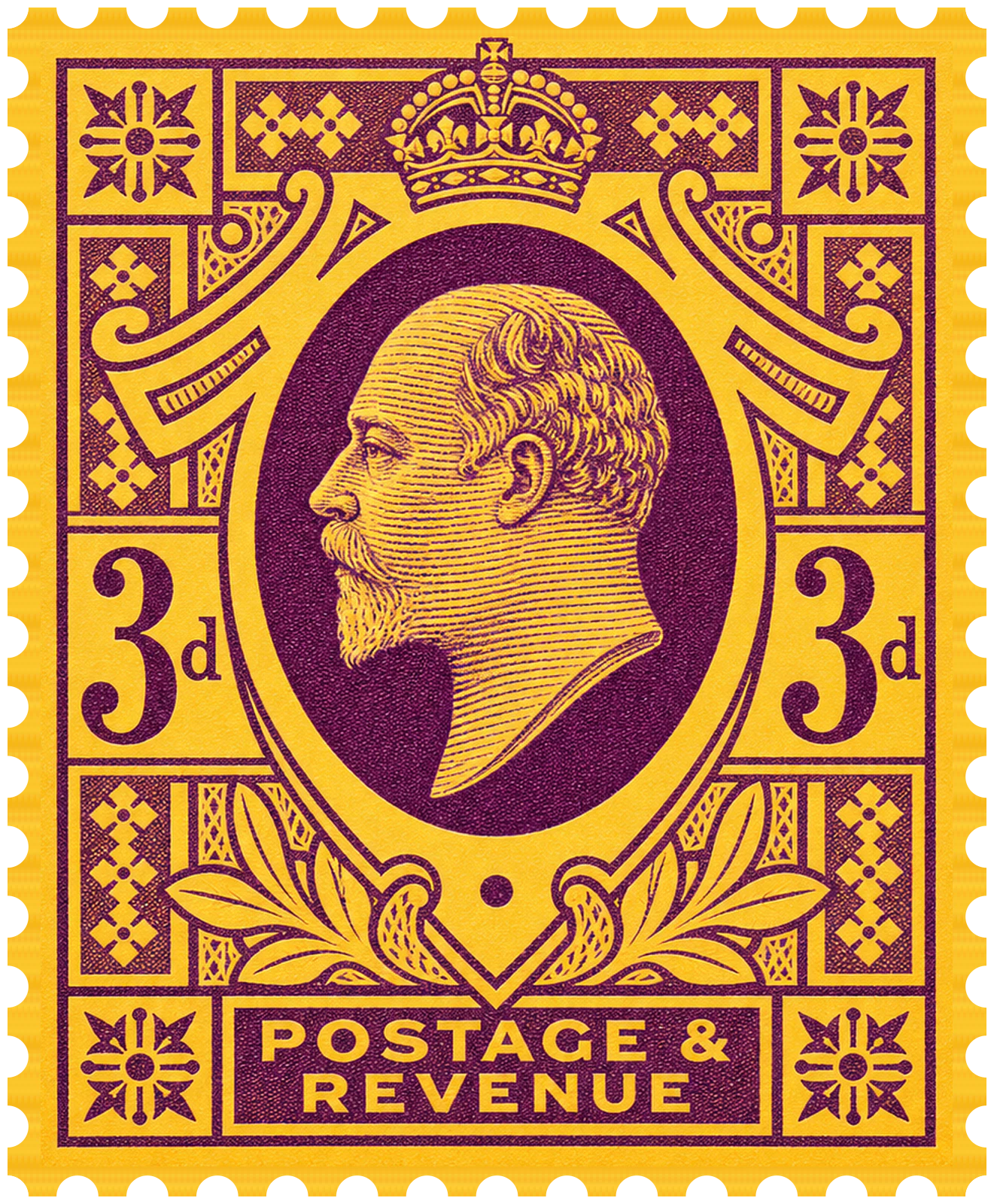
On the stamp you were exploring
Edward VII · 3d dull purple on orange-yellow · 20 March 1902
De La Rue manufactured this 3d. Use the paper and colour description with the printer’s name: later firms continued many Edward VII designs, so the portrait alone cannot identify a De La Rue printing.
On the stamp you were exploring
Edward VII · 3d dull purple on orange-yellow · 20 March 1902
De La Rue manufactured this 3d. Use the paper and colour description with the printer’s name: later firms continued many Edward VII designs, so the portrait alone cannot identify a De La Rue printing.
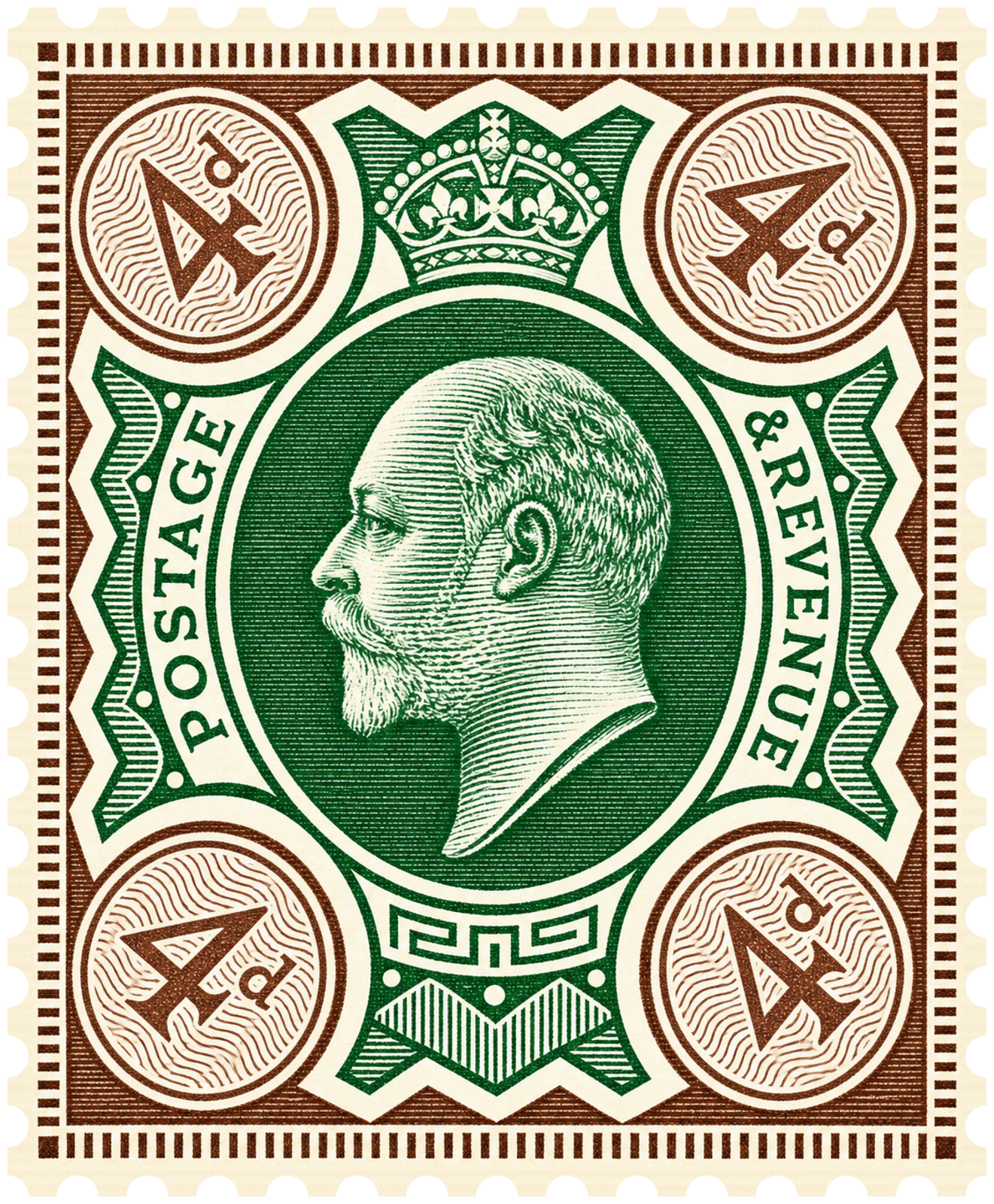
On the stamp you were exploring
Edward VII · 4d green and grey-brown · 27 March 1902
De La Rue manufactured this 4d. Use the paper and colour description with the printer’s name: later firms continued many Edward VII designs, so the portrait alone cannot identify a De La Rue printing.
On the stamp you were exploring
Edward VII · 4d green and grey-brown · 27 March 1902
De La Rue manufactured this 4d. Use the paper and colour description with the printer’s name: later firms continued many Edward VII designs, so the portrait alone cannot identify a De La Rue printing.
On the stamp you were exploring
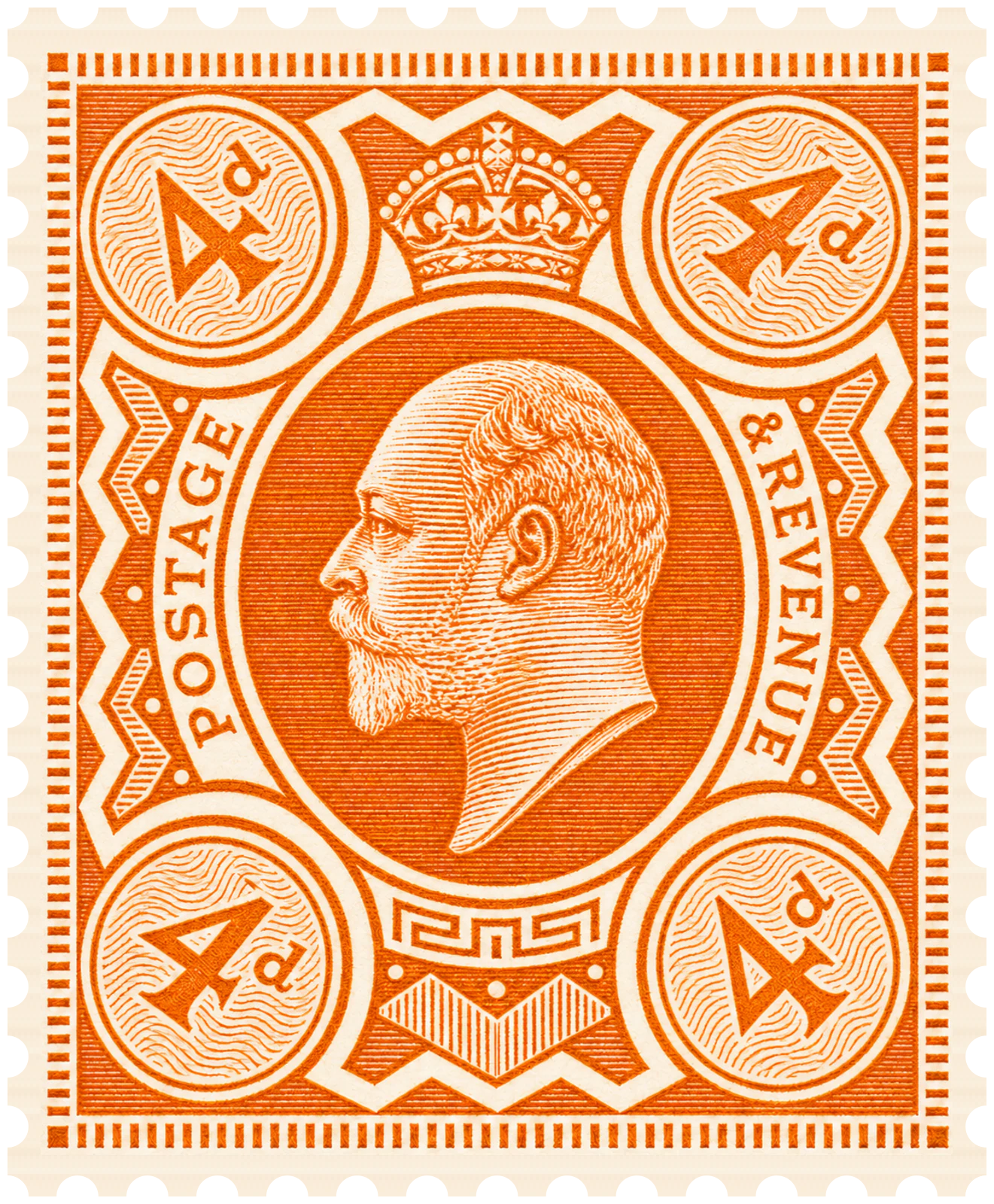
Edward VII · 4d orange · 1 November 1909
De La Rue manufactured this 4d. Use the paper and colour description with the printer’s name: later firms continued many Edward VII designs, so the portrait alone cannot identify a De La Rue printing.
On the stamp you were exploring
Edward VII · 4d orange · 1 November 1909
De La Rue manufactured this 4d. Use the paper and colour description with the printer’s name: later firms continued many Edward VII designs, so the portrait alone cannot identify a De La Rue printing.
On the stamp you were exploring
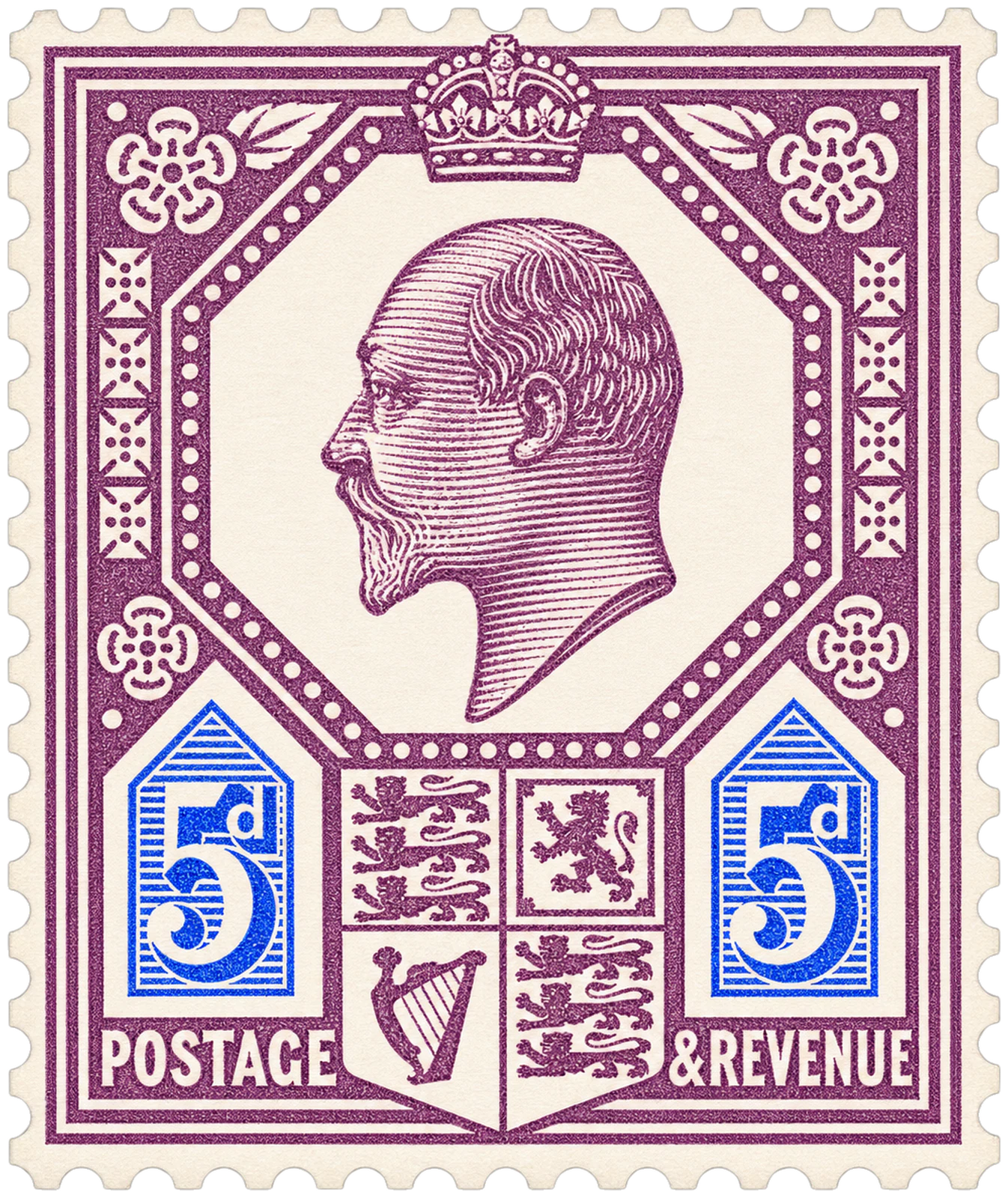
Edward VII · 5d dull purple and ultramarine · 14 May 1902
De La Rue manufactured this 5d. Use the paper and colour description with the printer’s name: later firms continued many Edward VII designs, so the portrait alone cannot identify a De La Rue printing.
On the stamp you were exploring
Edward VII · 5d dull purple and ultramarine · 14 May 1902
De La Rue manufactured this 5d. Use the paper and colour description with the printer’s name: later firms continued many Edward VII designs, so the portrait alone cannot identify a De La Rue printing.
On the stamp you were exploring
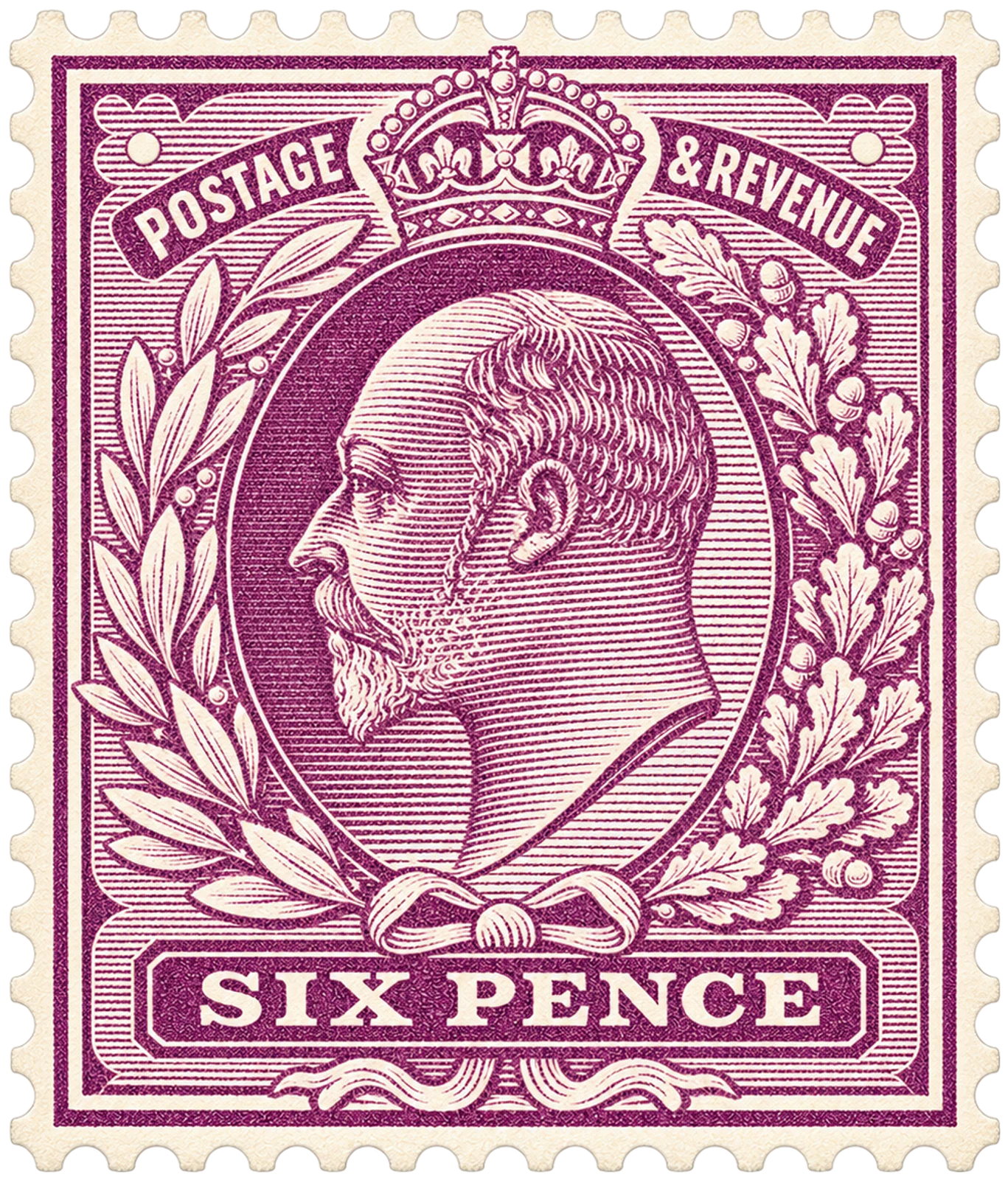
Edward VII · 6d dull purple · 1902-01-01
De La Rue manufactured this 6d. Use the paper and colour description with the printer’s name: later firms continued many Edward VII designs, so the portrait alone cannot identify a De La Rue printing.
On the stamp you were exploring
Edward VII · 6d dull purple · 1902-01-01
De La Rue manufactured this 6d. Use the paper and colour description with the printer’s name: later firms continued many Edward VII designs, so the portrait alone cannot identify a De La Rue printing.
On the stamp you were exploring
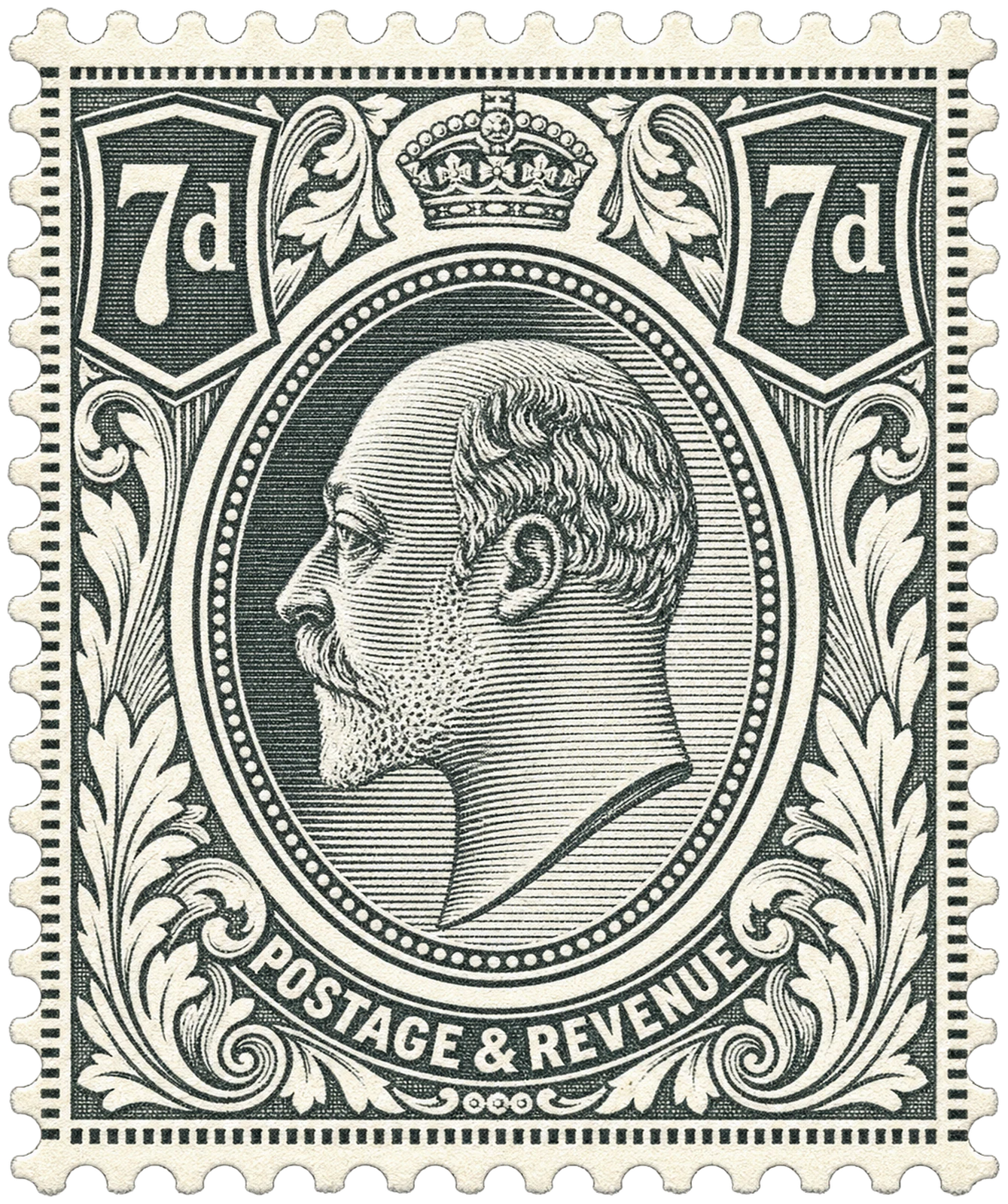
Edward VII · 7d grey-black · 4 May 1910
De La Rue manufactured this 7d. Use the paper and colour description with the printer’s name: later firms continued many Edward VII designs, so the portrait alone cannot identify a De La Rue printing.
On the stamp you were exploring
Edward VII · 7d grey-black · 4 May 1910
De La Rue manufactured this 7d. Use the paper and colour description with the printer’s name: later firms continued many Edward VII designs, so the portrait alone cannot identify a De La Rue printing.
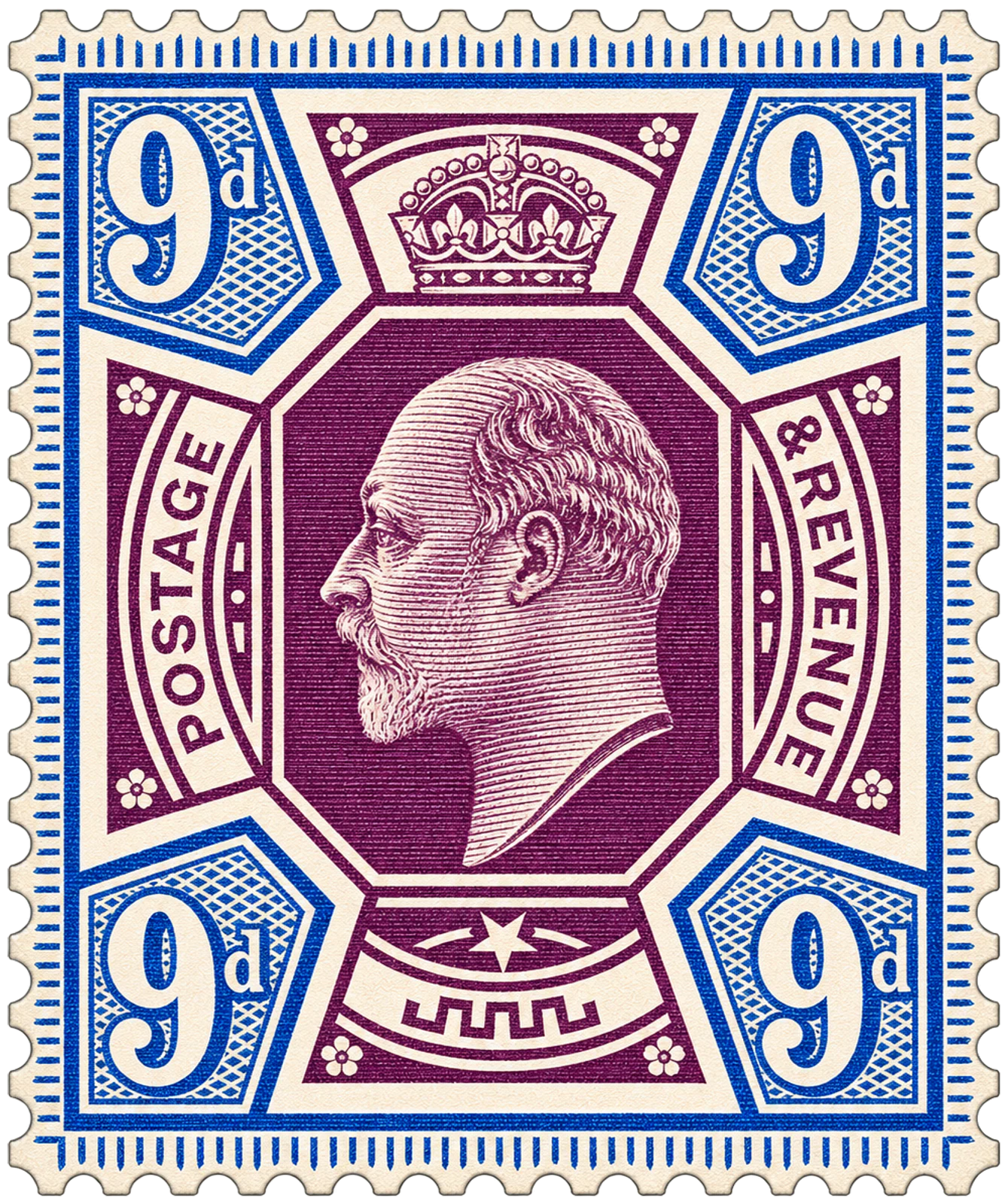
On the stamp you were exploring
Edward VII · 9d dull purple and ultramarine · 7 April 1902
De La Rue manufactured this 9d. Use the paper and colour description with the printer’s name: later firms continued many Edward VII designs, so the portrait alone cannot identify a De La Rue printing.
On the stamp you were exploring
Edward VII · 9d dull purple and ultramarine · 7 April 1902
De La Rue manufactured this 9d. Use the paper and colour description with the printer’s name: later firms continued many Edward VII designs, so the portrait alone cannot identify a De La Rue printing.
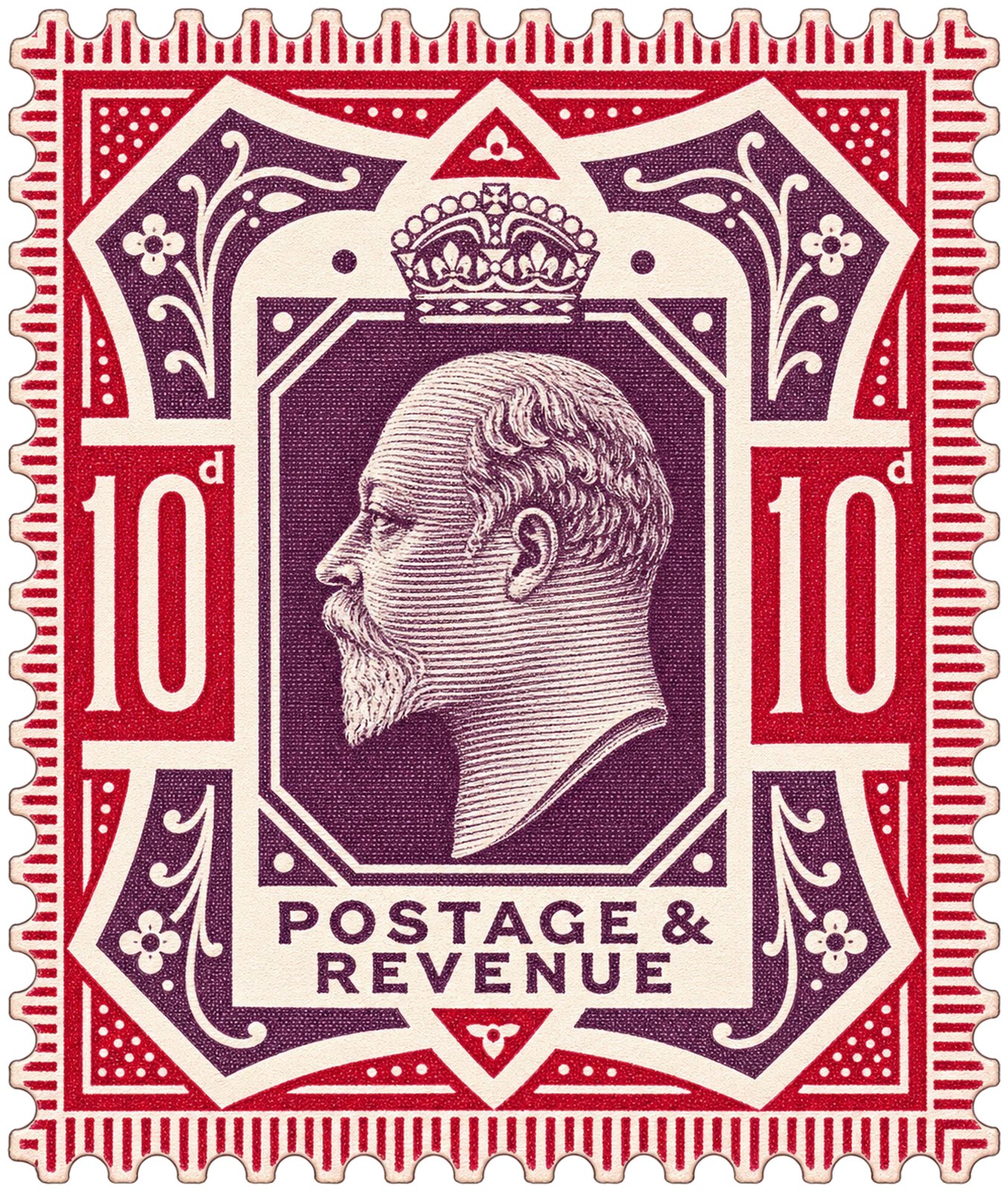
On the stamp you were exploring
Edward VII · 10d dull purple and carmine · 3 July 1902
De La Rue manufactured this 10d. Use the paper and colour description with the printer’s name: later firms continued many Edward VII designs, so the portrait alone cannot identify a De La Rue printing.
On the stamp you were exploring
Edward VII · 10d dull purple and carmine · 3 July 1902
De La Rue manufactured this 10d. Use the paper and colour description with the printer’s name: later firms continued many Edward VII designs, so the portrait alone cannot identify a De La Rue printing.
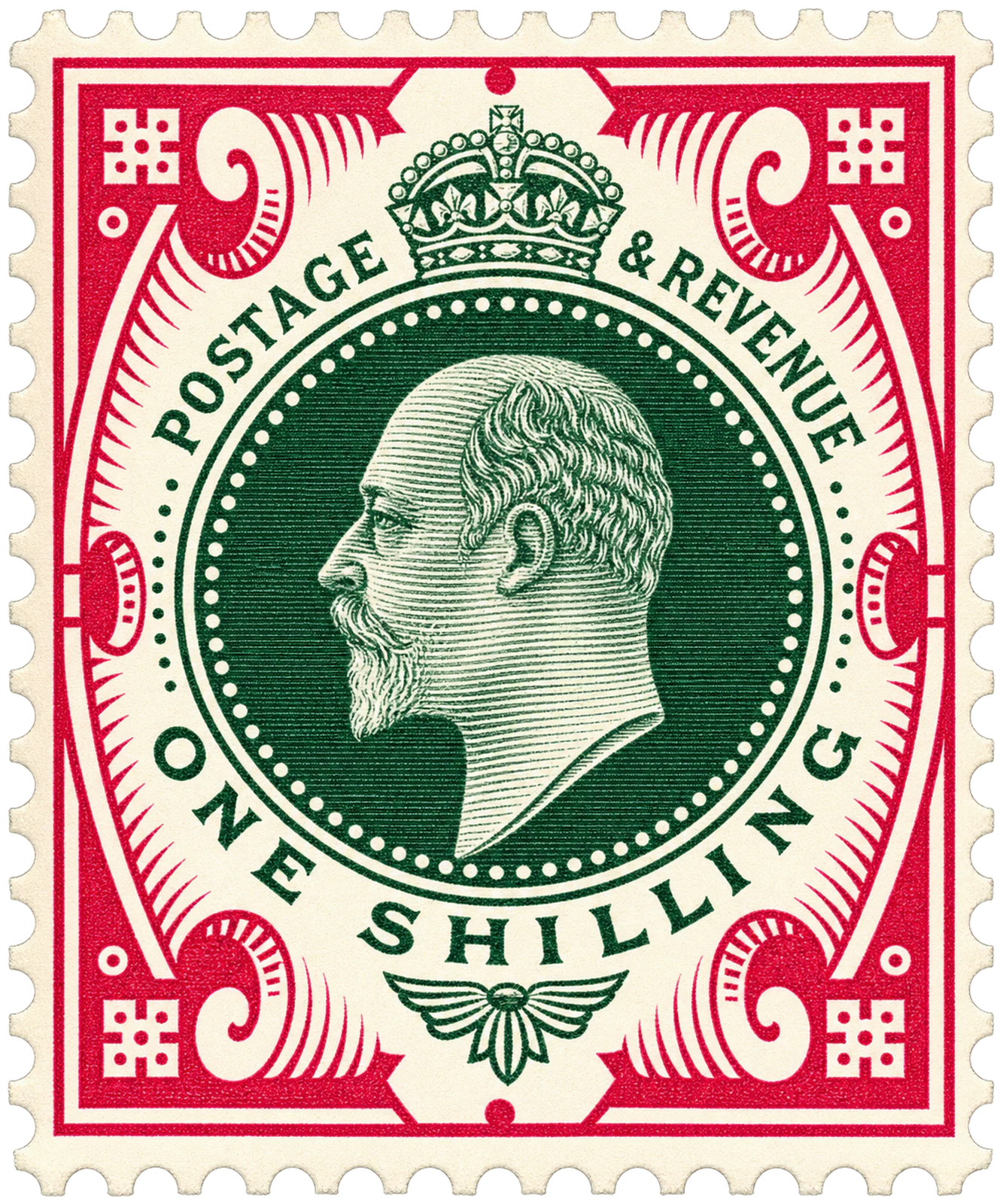
On the stamp you were exploring
Edward VII · 1s dull green and carmine · 24 March 1902
De La Rue manufactured this 1s. Use the paper and colour description with the printer’s name: later firms continued many Edward VII designs, so the portrait alone cannot identify a De La Rue printing.
On the stamp you were exploring
Edward VII · 1s dull green and carmine · 24 March 1902
De La Rue manufactured this 1s. Use the paper and colour description with the printer’s name: later firms continued many Edward VII designs, so the portrait alone cannot identify a De La Rue printing.
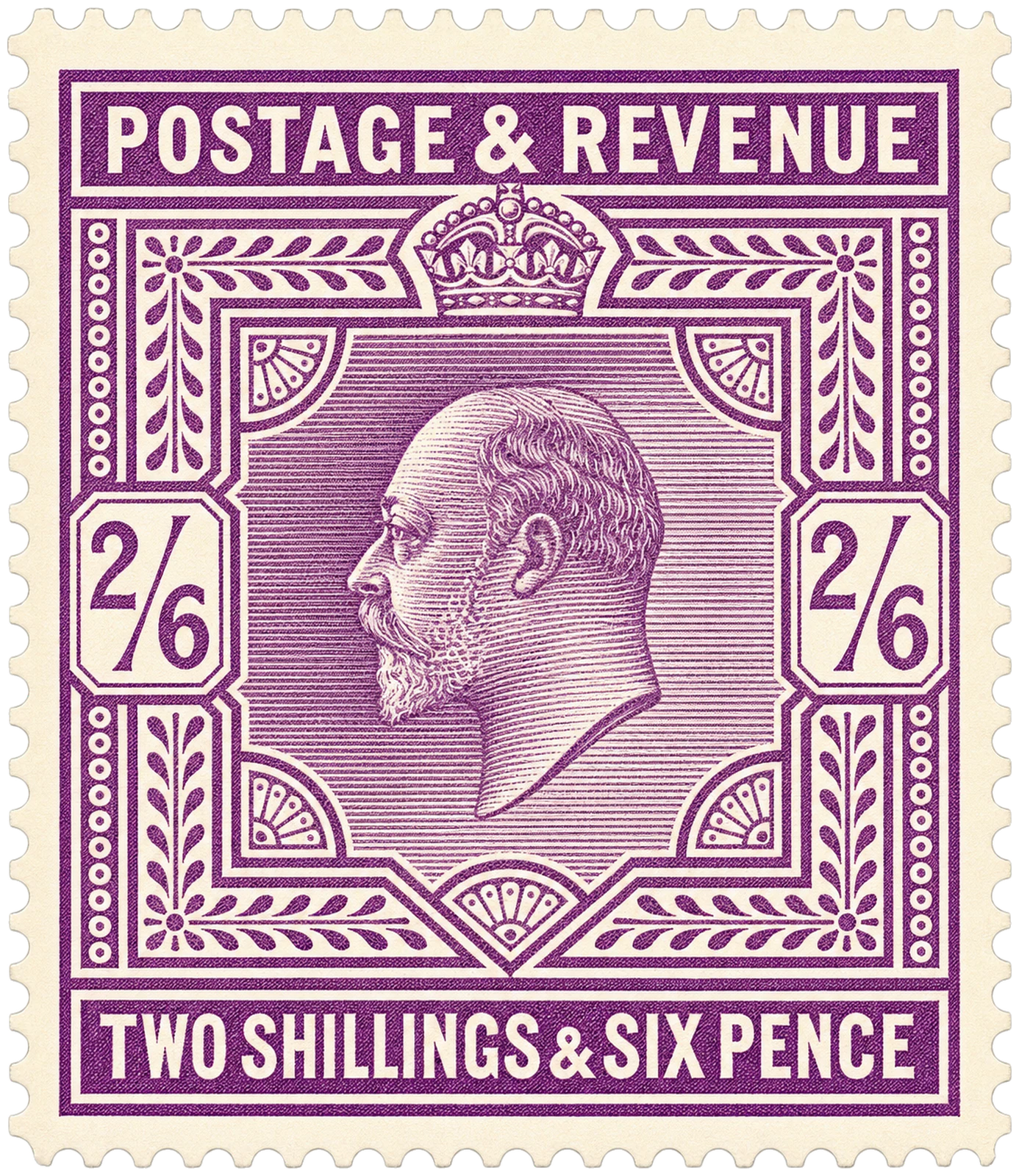
On the stamp you were exploring
Edward VII · 2s 6d lilac · 5 April 1902
De La Rue manufactured this 2s 6d. Use the paper and colour description with the printer’s name: later firms continued many Edward VII designs, so the portrait alone cannot identify a De La Rue printing.
On the stamp you were exploring
Edward VII · 2s 6d lilac · 5 April 1902
De La Rue manufactured this 2s 6d. Use the paper and colour description with the printer’s name: later firms continued many Edward VII designs, so the portrait alone cannot identify a De La Rue printing.
On the stamp you were exploring
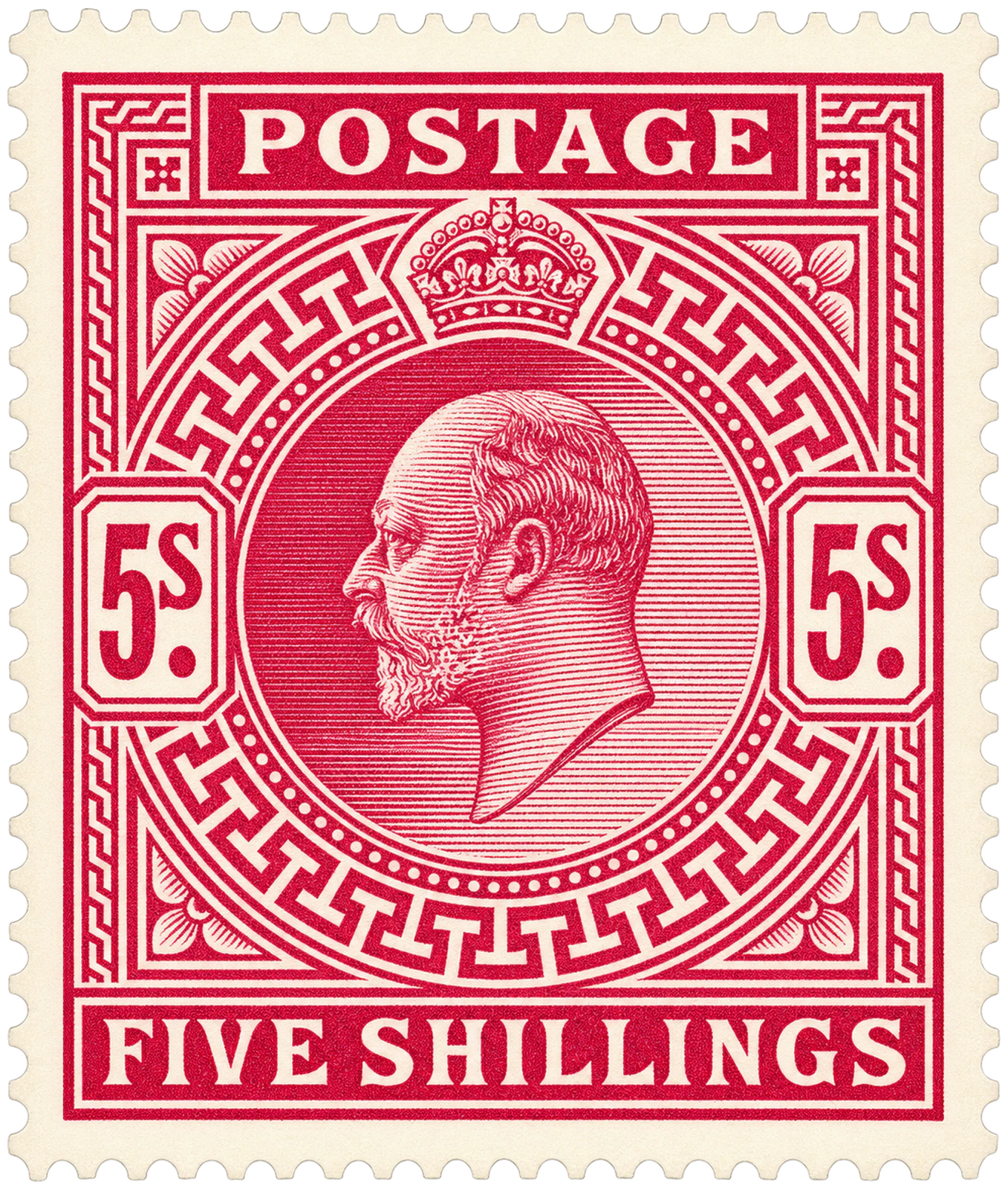
Edward VII · 5s bright carmine · 5 April 1902
De La Rue manufactured this 5s. Use the paper and colour description with the printer’s name: later firms continued many Edward VII designs, so the portrait alone cannot identify a De La Rue printing.
On the stamp you were exploring
Edward VII · 5s bright carmine · 5 April 1902
De La Rue manufactured this 5s. Use the paper and colour description with the printer’s name: later firms continued many Edward VII designs, so the portrait alone cannot identify a De La Rue printing.
On the stamp you were exploring
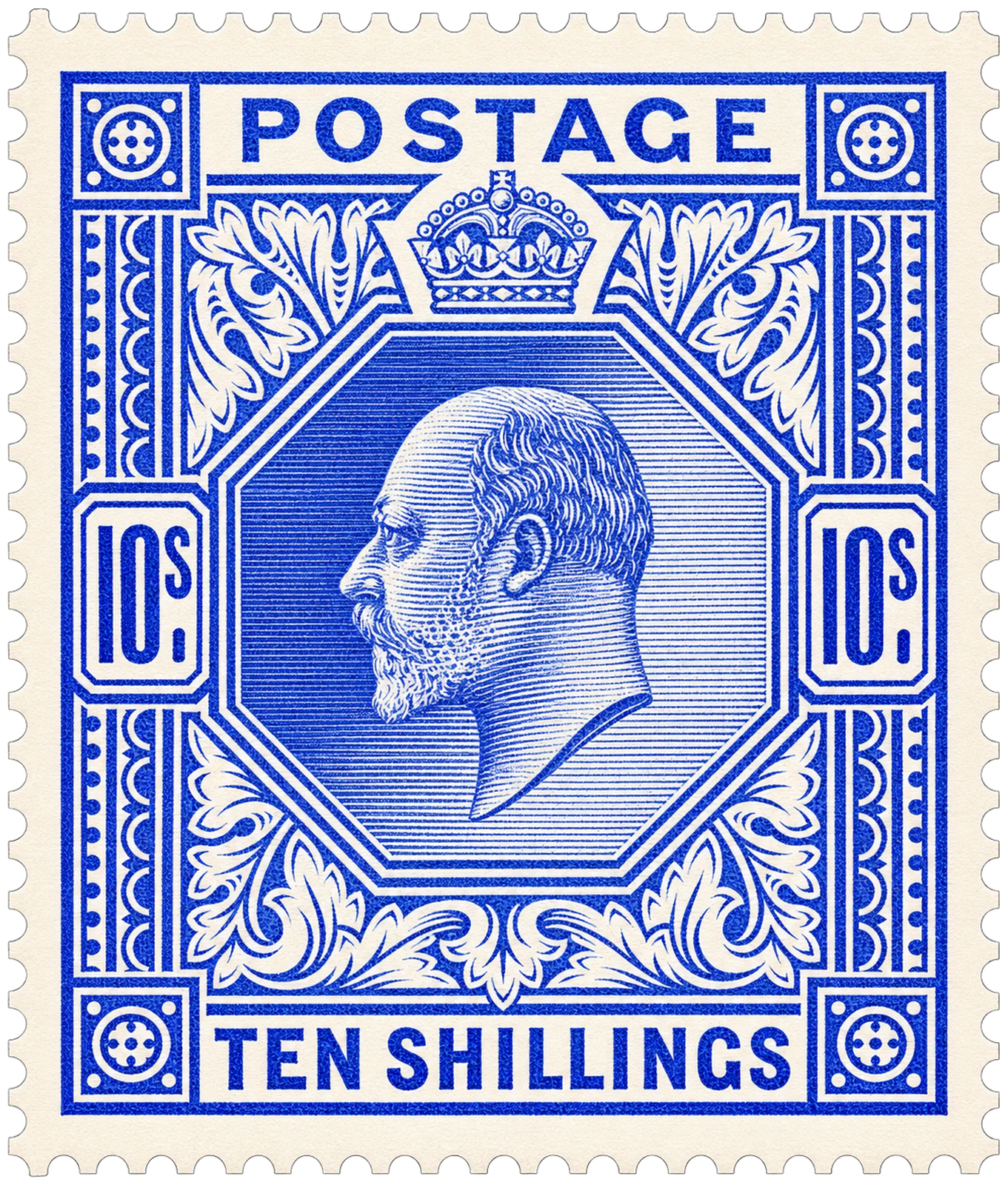
Edward VII · 10s ultramarine · 5 April 1902
De La Rue manufactured this 10s. Use the paper and colour description with the printer’s name: later firms continued many Edward VII designs, so the portrait alone cannot identify a De La Rue printing.
On the stamp you were exploring
Edward VII · 10s ultramarine · 5 April 1902
De La Rue manufactured this 10s. Use the paper and colour description with the printer’s name: later firms continued many Edward VII designs, so the portrait alone cannot identify a De La Rue printing.
On the stamp you were exploring
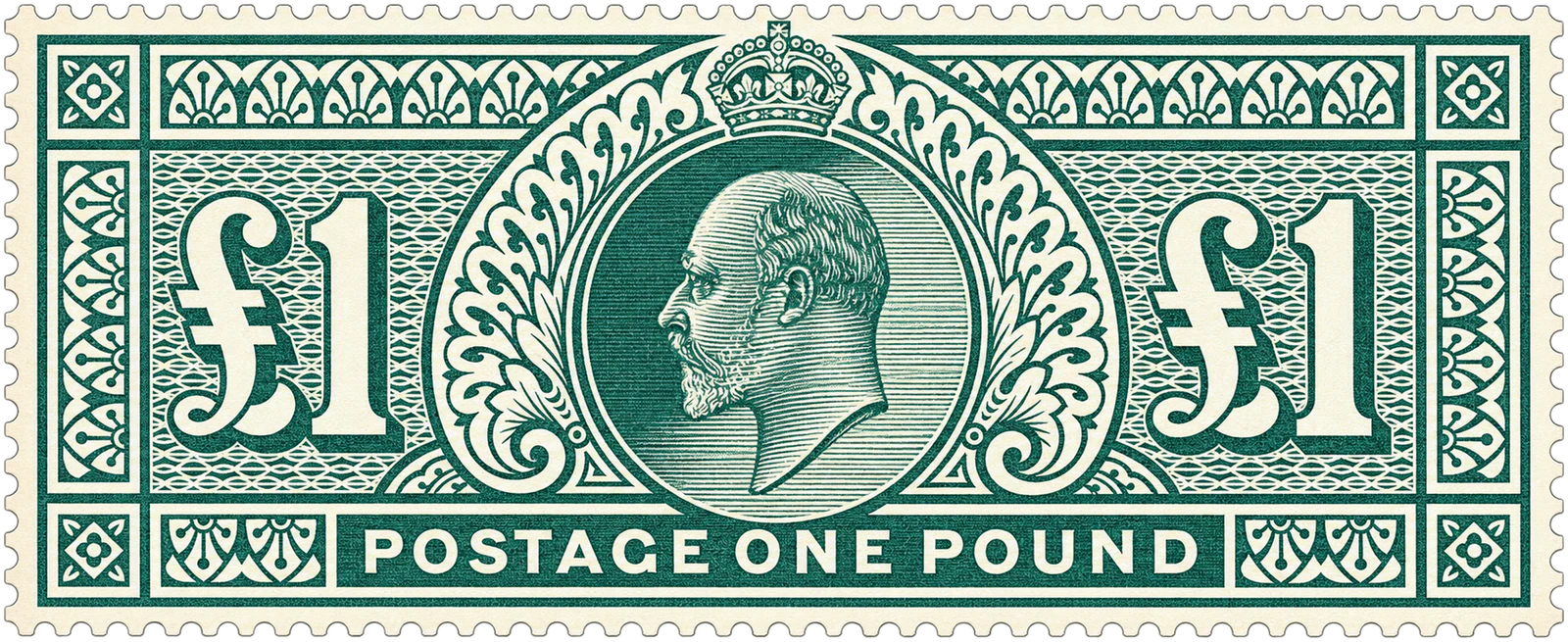
Edward VII · £1 dull blue-green · 1902 — reported as 16 July by Fulcher and 16 June by Voller
De La Rue manufactured this £1. Use the paper and colour description with the printer’s name: later firms continued many Edward VII designs, so the portrait alone cannot identify a De La Rue printing.
On the stamp you were exploring
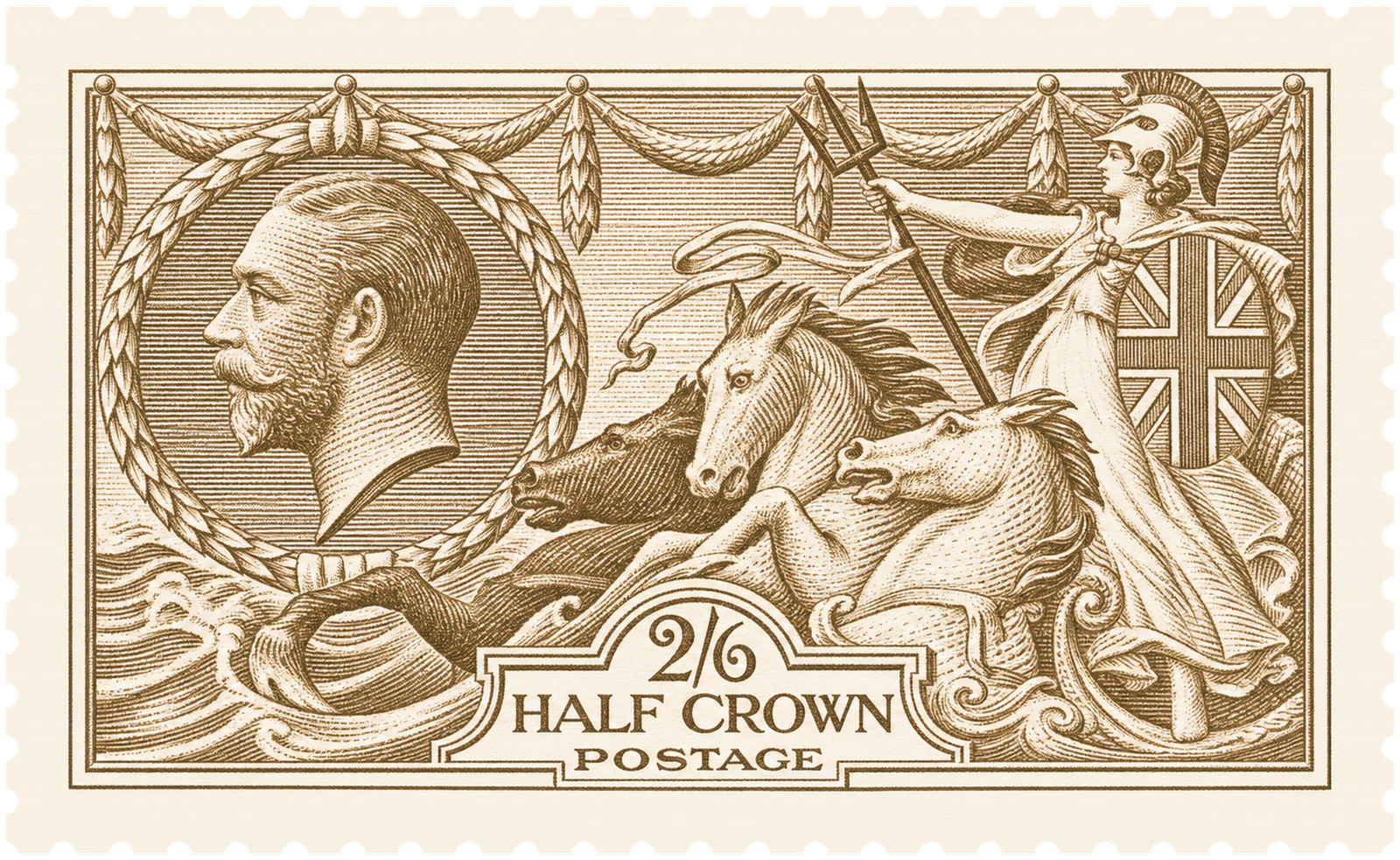
George V · 2s 6d yellow-brown · 1915
De La Rue & Co. produced this 2s 6d by recess printing. The same broad design also appears in other printers’ issues; compare the documented printing features.
On the stamp you were exploring
George V · 2s 6d yellow-brown · 1915
De La Rue & Co. produced this 2s 6d by recess printing. The same broad design also appears in other printers’ issues; compare the documented printing features.
On the stamp you were exploring
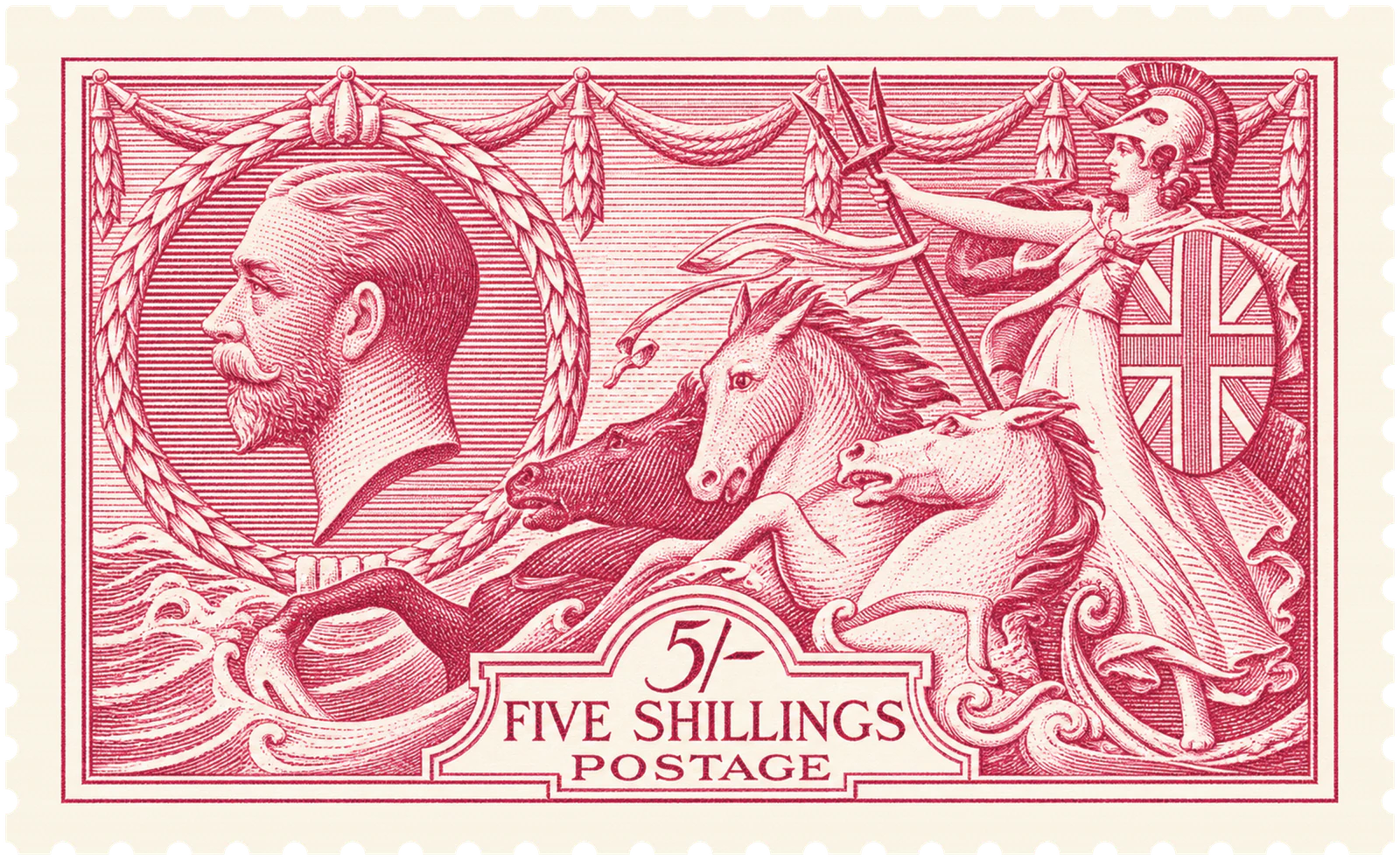
George V · 5s bright carmine · 1915
De La Rue & Co. produced this 5s by recess printing. The same broad design also appears in other printers’ issues; compare the documented printing features.
On the stamp you were exploring
George V · 5s bright carmine · 1915
De La Rue & Co. produced this 5s by recess printing. The same broad design also appears in other printers’ issues; compare the documented printing features.
On the stamp you were exploring
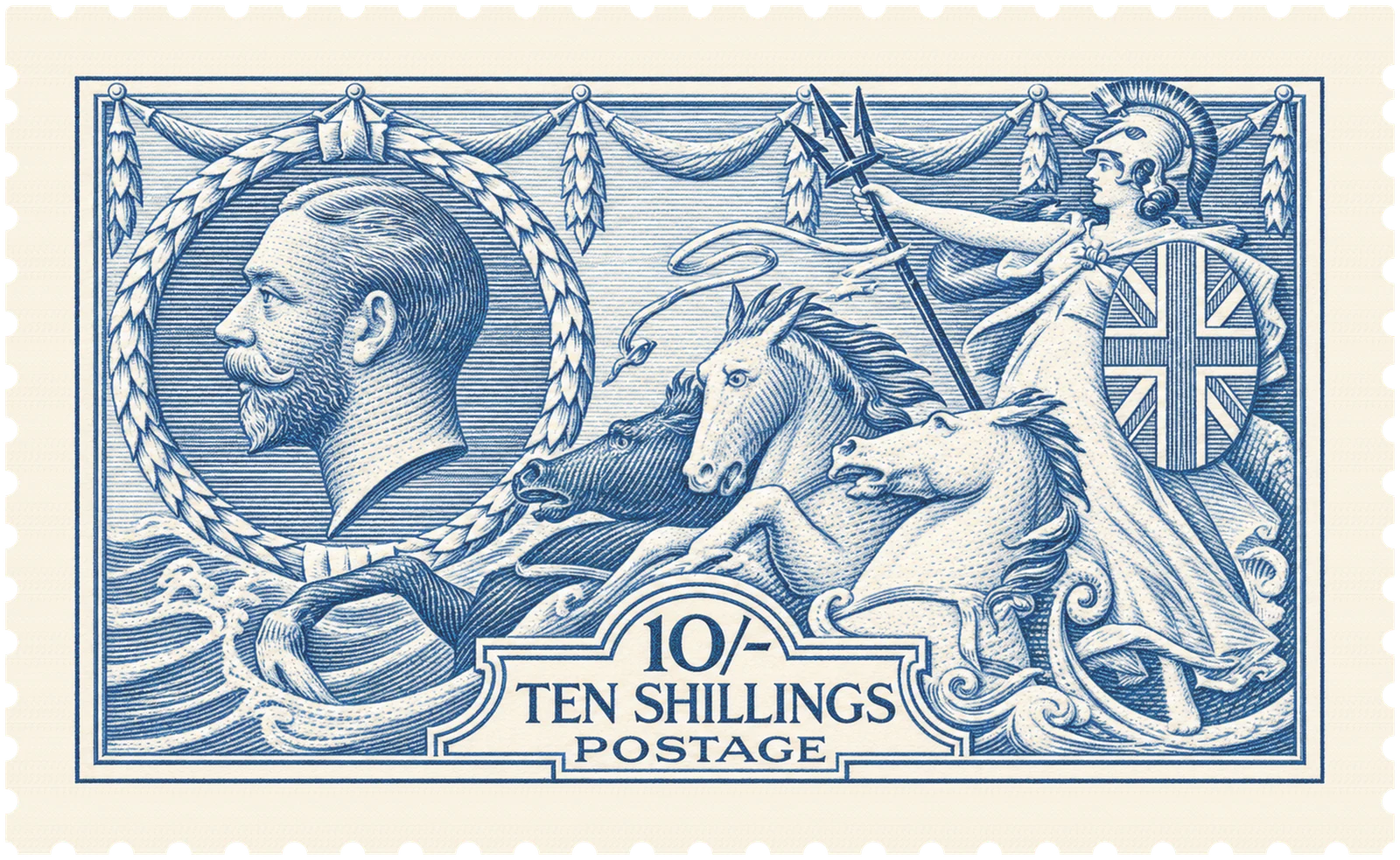
George V · 10s deep blue · 1915
De La Rue & Co. produced this 10s by recess printing. The same broad design also appears in other printers’ issues; compare the documented printing features.
On the stamp you were exploring
George V · 10s deep blue · 1915
De La Rue & Co. produced this 10s by recess printing. The same broad design also appears in other printers’ issues; compare the documented printing features.
On the stamp you were exploring
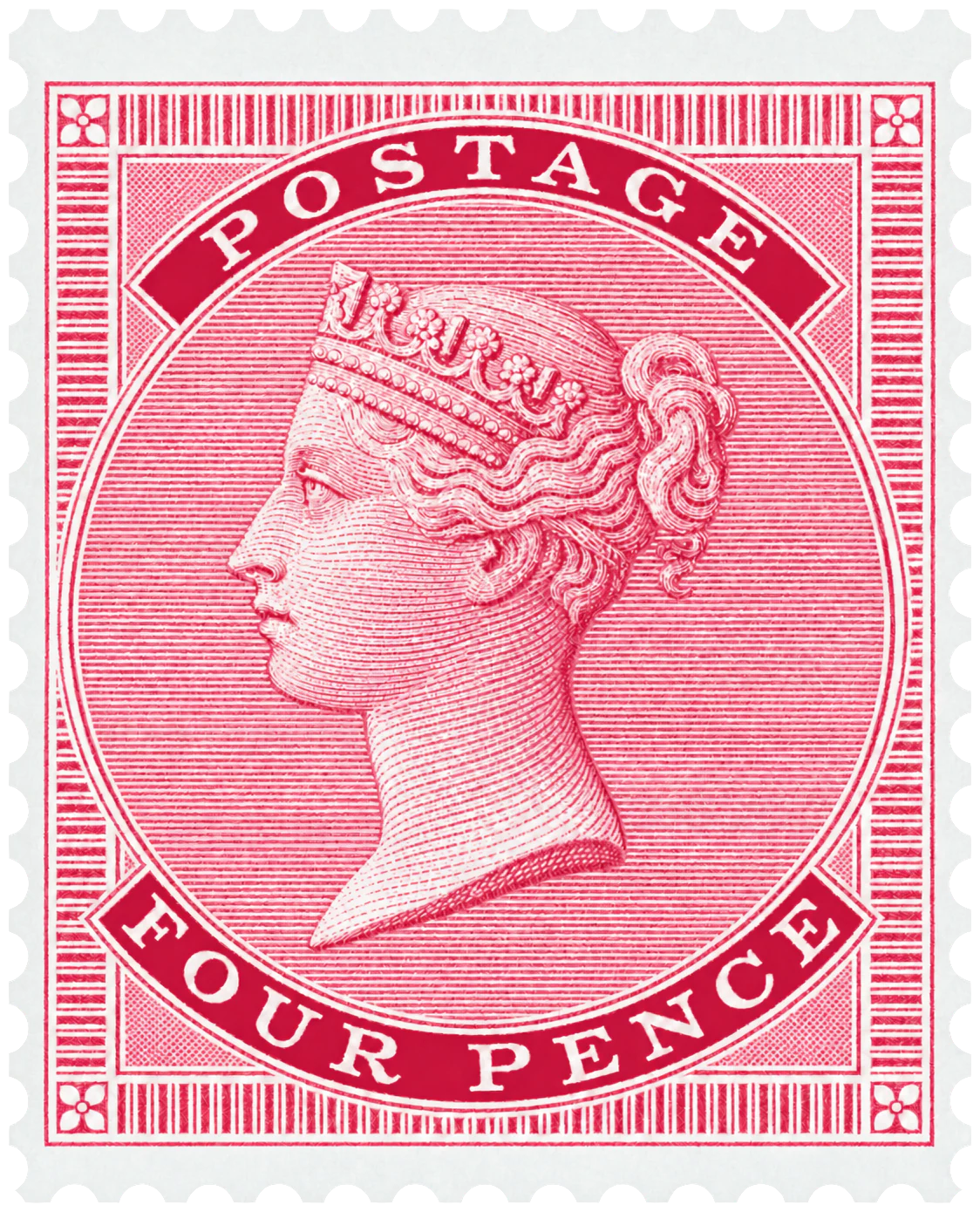
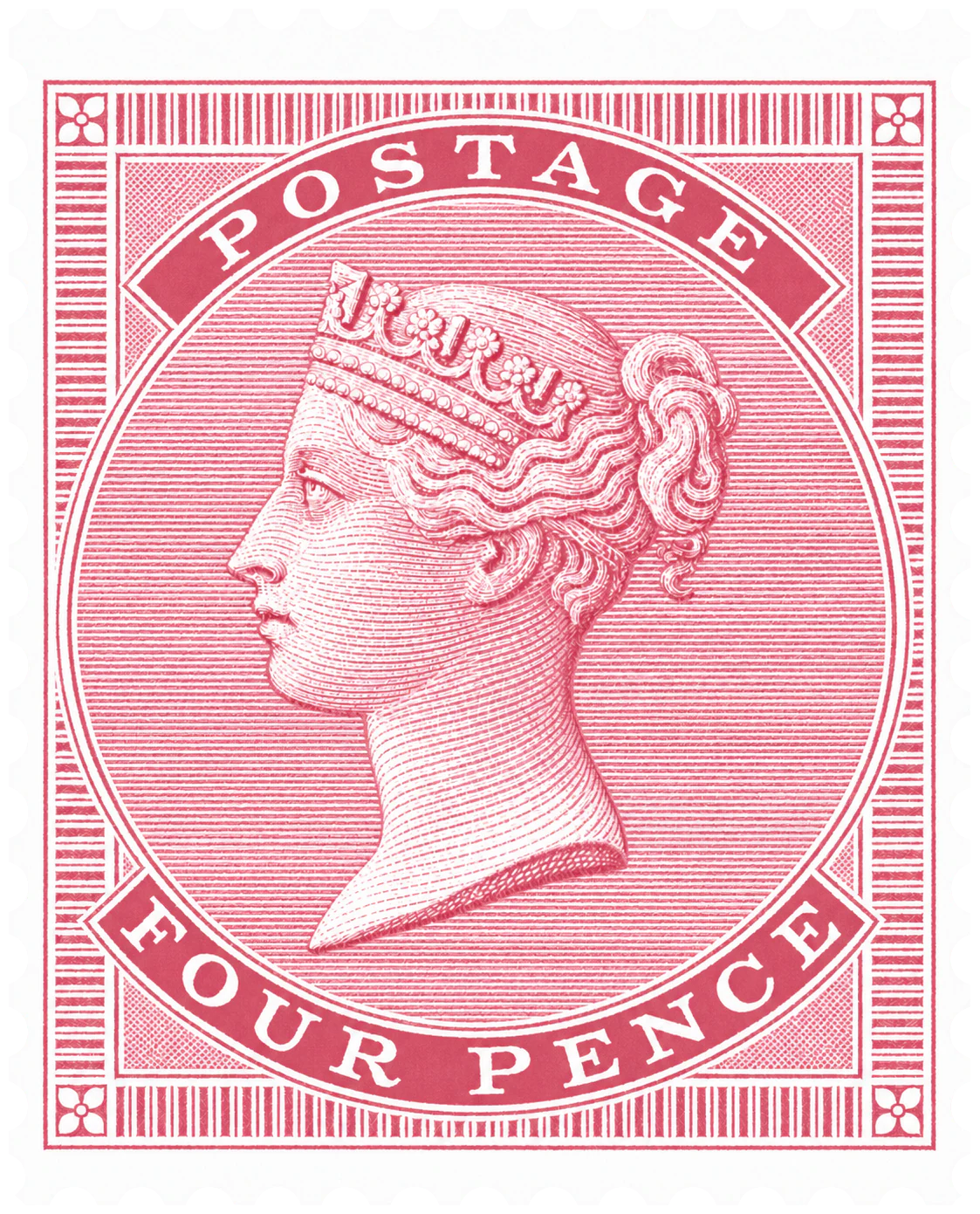
Victoria · 4d carmine · 1855
Thomas De La Rue & Co. printed the 1855 fourpenny carmine by typography, transferring ink from raised printing surfaces onto dry paper.
On the stamp you were exploring
Victoria · 4d carmine · 1855
Thomas De La Rue & Co. printed the 1855 fourpenny carmine by typography, transferring ink from raised printing surfaces onto dry paper.
On the stamp you were exploring
Victoria · 4d rose · 1856
Thomas De La Rue & Co. printed the 1856 fourpenny rose by typography, using the existing design with rose ink on ordinary white paper.
On the stamp you were exploring
Victoria · 4d rose · 1856
Thomas De La Rue & Co. printed the 1856 fourpenny rose by typography, using the existing design with rose ink on ordinary white paper.
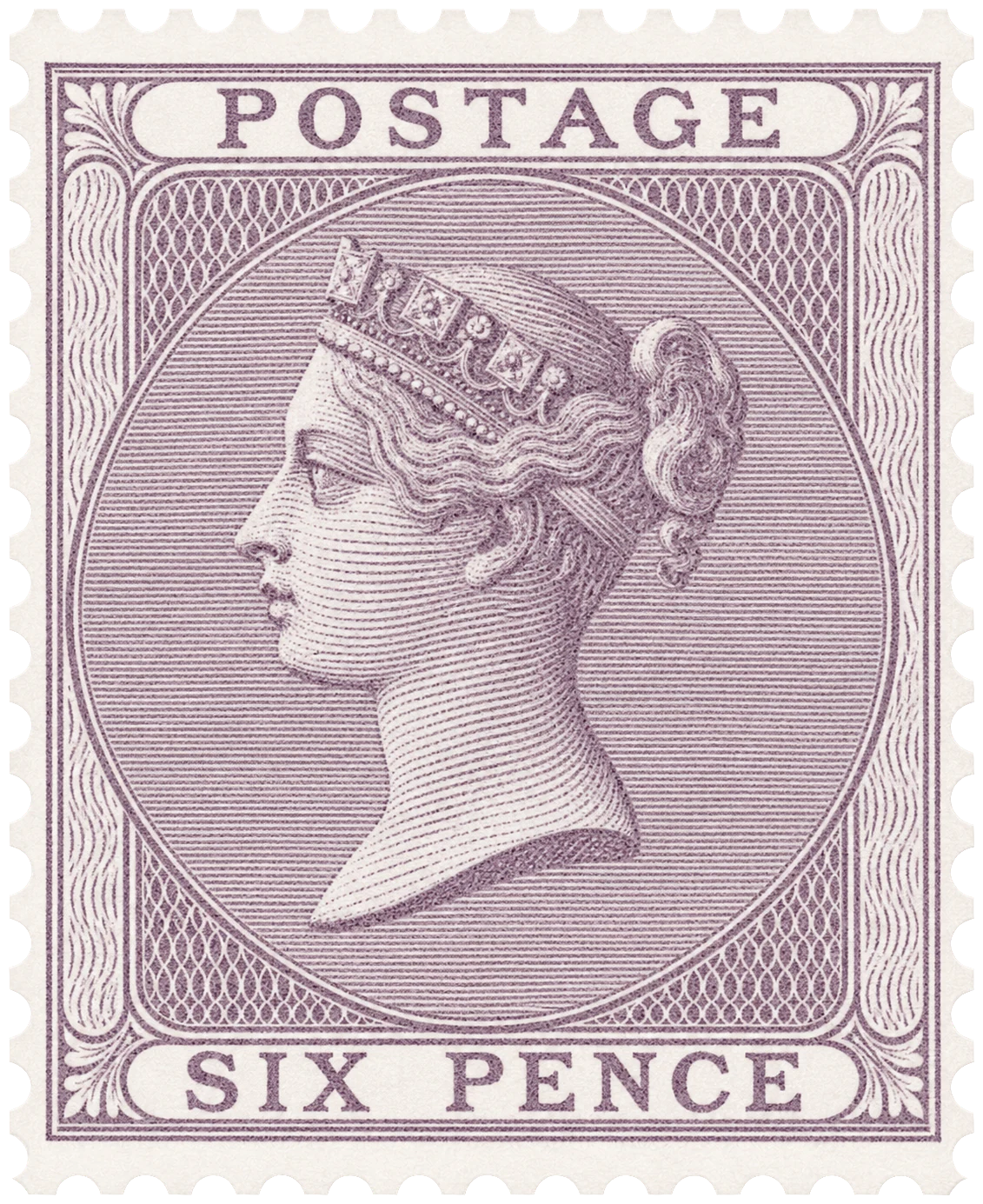
On the stamp you were exploring
Victoria · 6d lilac · 1856
Thomas De La Rue & Co. printed the 1856 sixpenny lilac by typography. Its surface-printed sheets replaced the separately struck embossed sixpence made at Somerset House.
On the stamp you were exploring
Victoria · 6d lilac · 1856
Thomas De La Rue & Co. printed the 1856 sixpenny lilac by typography. Its surface-printed sheets replaced the separately struck embossed sixpence made at Somerset House.
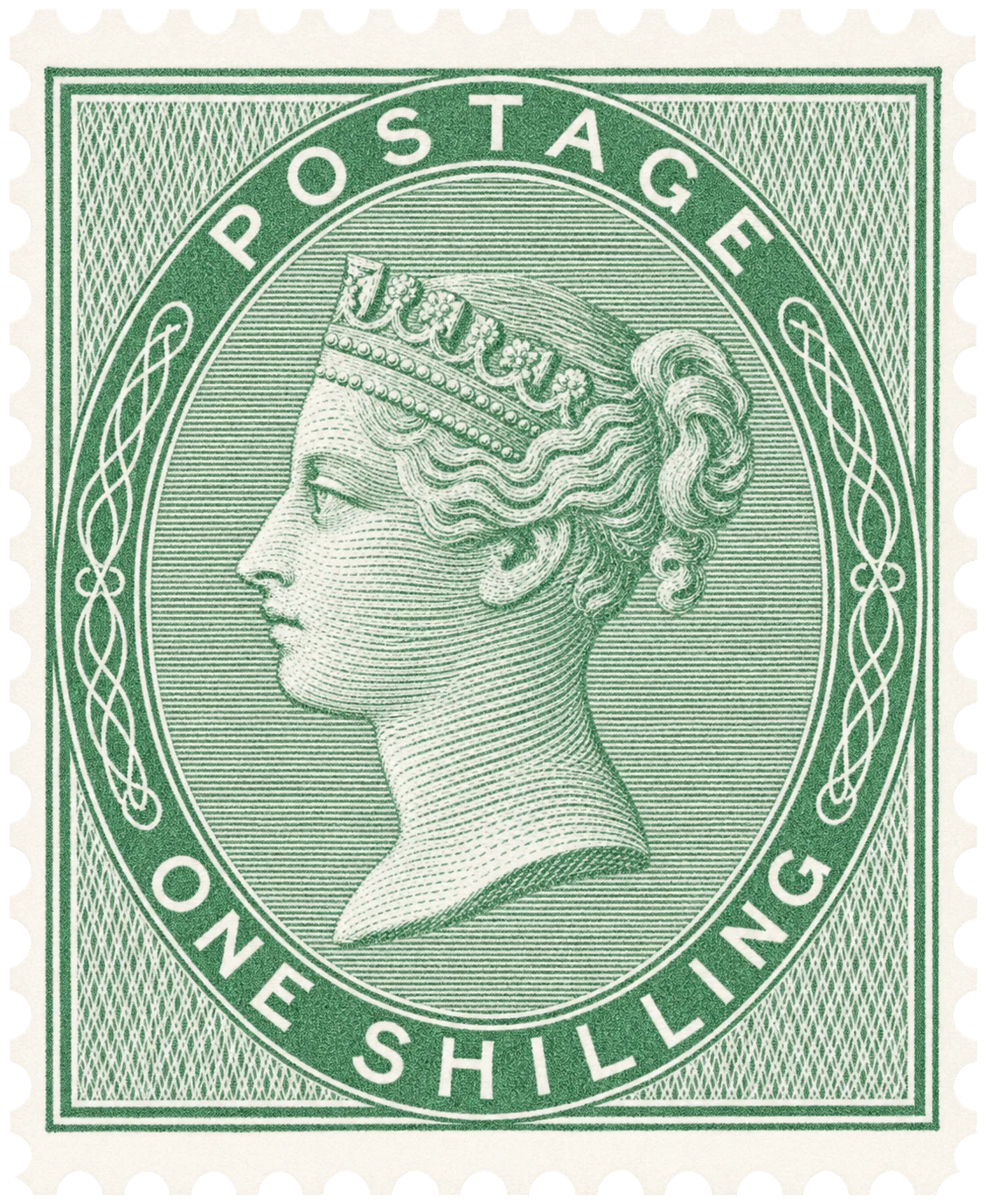
On the stamp you were exploring
Victoria · 1s green · 1856
Thomas De La Rue & Co. printed the 1856 one-shilling green by typography in sheets of 240. It replaced the separately struck embossed shilling made at Somerset House.
On the stamp you were exploring
Victoria · 1s green · 1856
Thomas De La Rue & Co. printed the 1856 one-shilling green by typography in sheets of 240. It replaced the separately struck embossed shilling made at Somerset House.
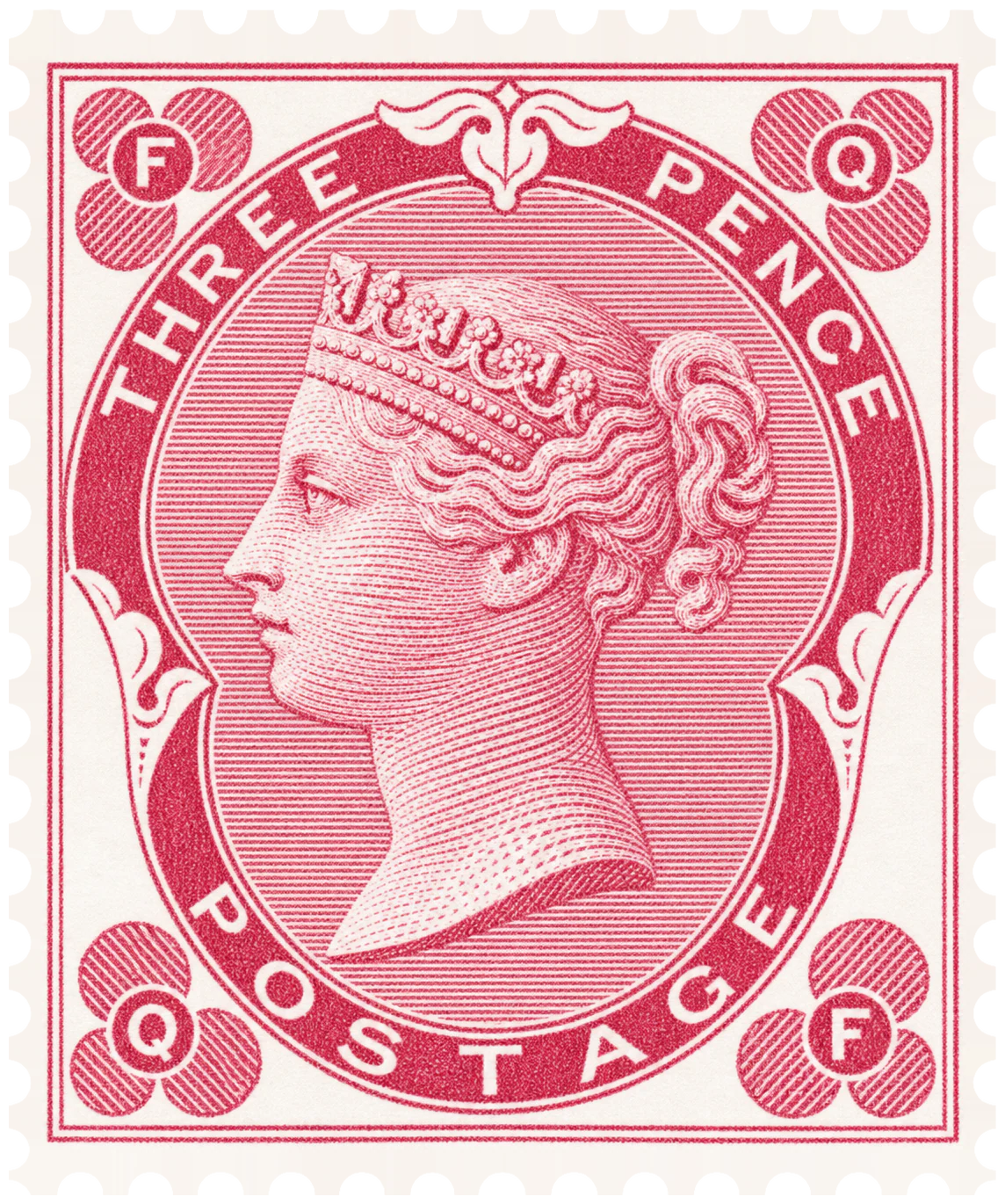
On the stamp you were exploring
Victoria · 3d bright carmine-rose · 1862
Thomas De La Rue & Co. printed the 1862 threepenny by typography. Its craftsmen removed the background ornament from the existing plate to make the new value more distinctive.
On the stamp you were exploring
Victoria · 3d bright carmine-rose · 1862
Thomas De La Rue & Co. printed the 1862 threepenny by typography. Its craftsmen removed the background ornament from the existing plate to make the new value more distinctive.
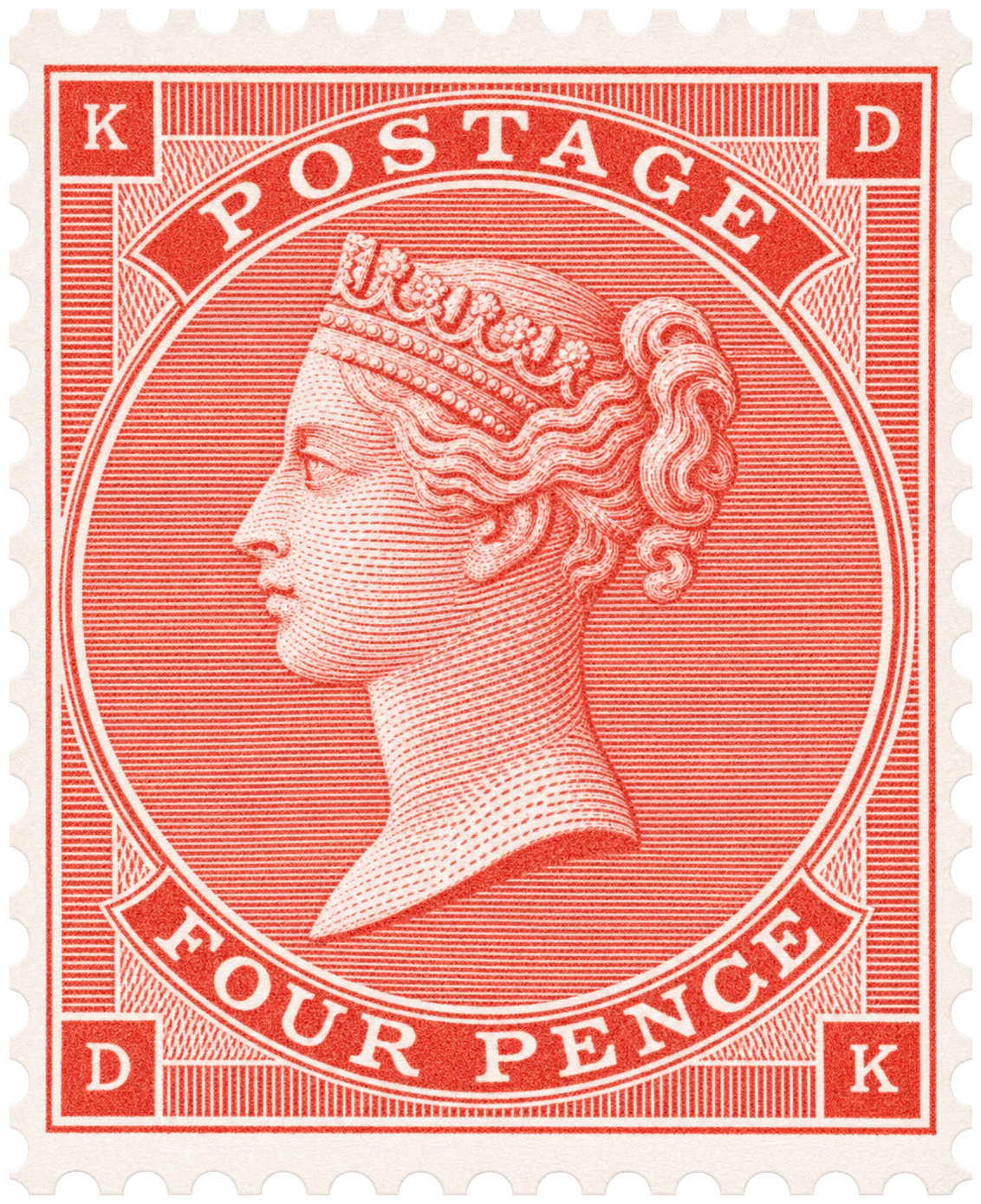
On the stamp you were exploring
Victoria · 4d bright red · 1862
Thomas De La Rue & Co. printed the 1862 fourpenny bright red by typography. The vermilion pigment required silver-faced printing plates in place of the usual copper surfaces.
On the stamp you were exploring
Victoria · 4d bright red · 1862
Thomas De La Rue & Co. printed the 1862 fourpenny bright red by typography. The vermilion pigment required silver-faced printing plates in place of the usual copper surfaces.
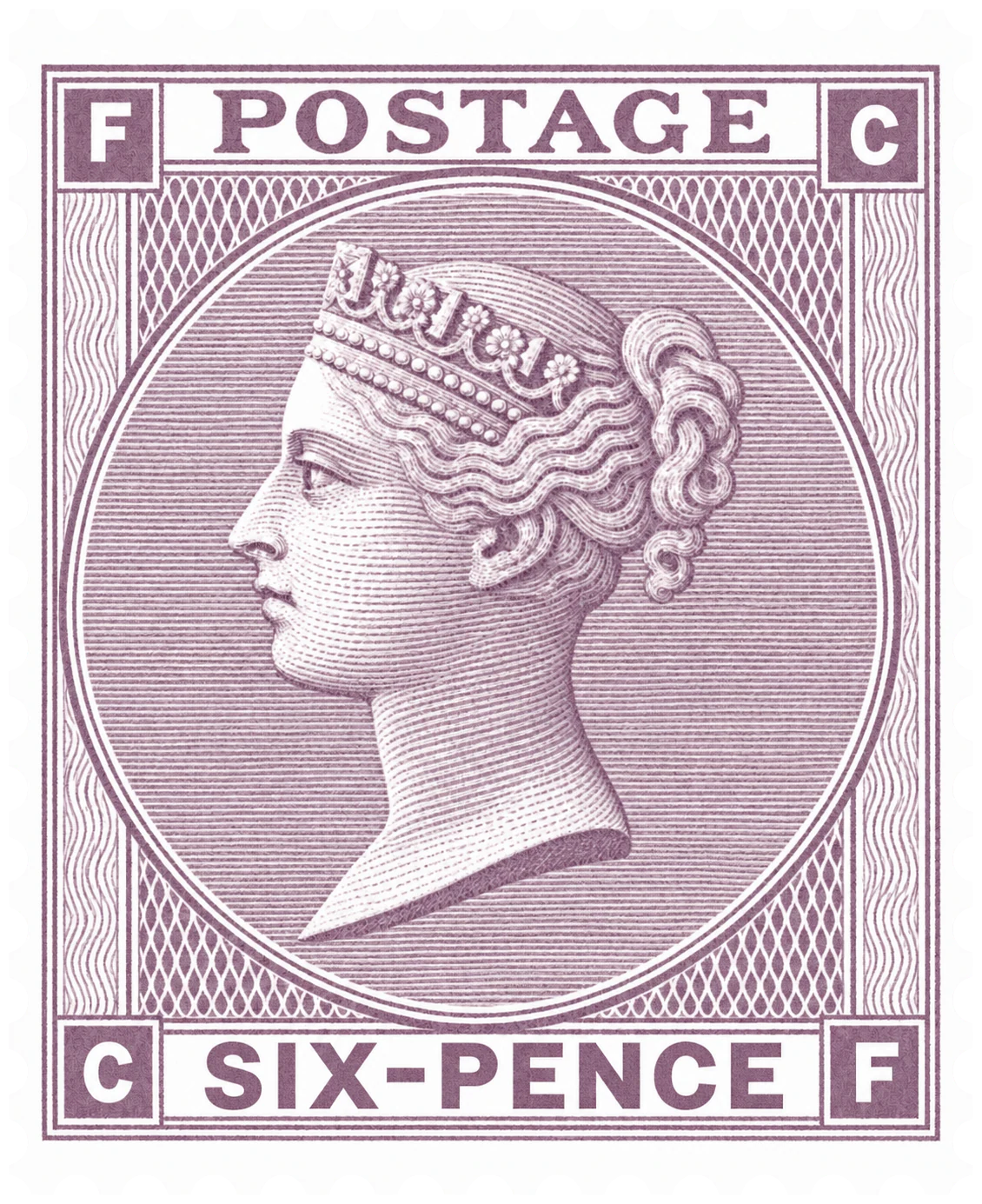
On the stamp you were exploring
Victoria · 6d lilac · 1862
Thomas De La Rue & Co. printed the 1862 sixpenny lilac by typography. The redesign added small white corner letters, revised the frame and retained the inherited royal portrait.
On the stamp you were exploring
Victoria · 6d lilac · 1862
Thomas De La Rue & Co. printed the 1862 sixpenny lilac by typography. The redesign added small white corner letters, revised the frame and retained the inherited royal portrait.
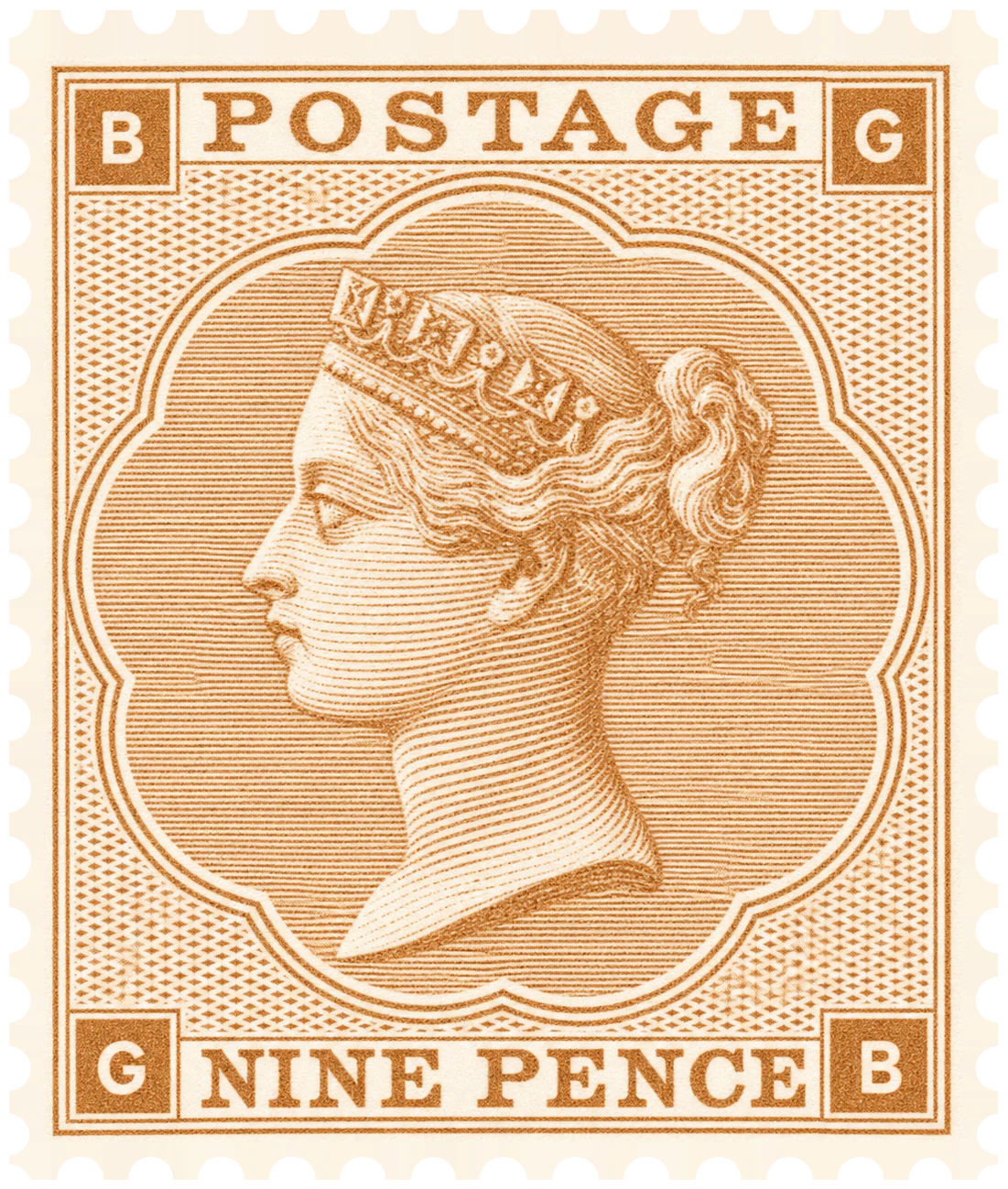
On the stamp you were exploring
Victoria · 9d bistre · 1862
Thomas De La Rue & Co. printed the 1862 ninepenny by typography. The ordinary issue came from plate 2; the later plate 3 with corner hairlines did not enter regular production.
On the stamp you were exploring
Victoria · 9d bistre · 1862
Thomas De La Rue & Co. printed the 1862 ninepenny by typography. The ordinary issue came from plate 2; the later plate 3 with corner hairlines did not enter regular production.
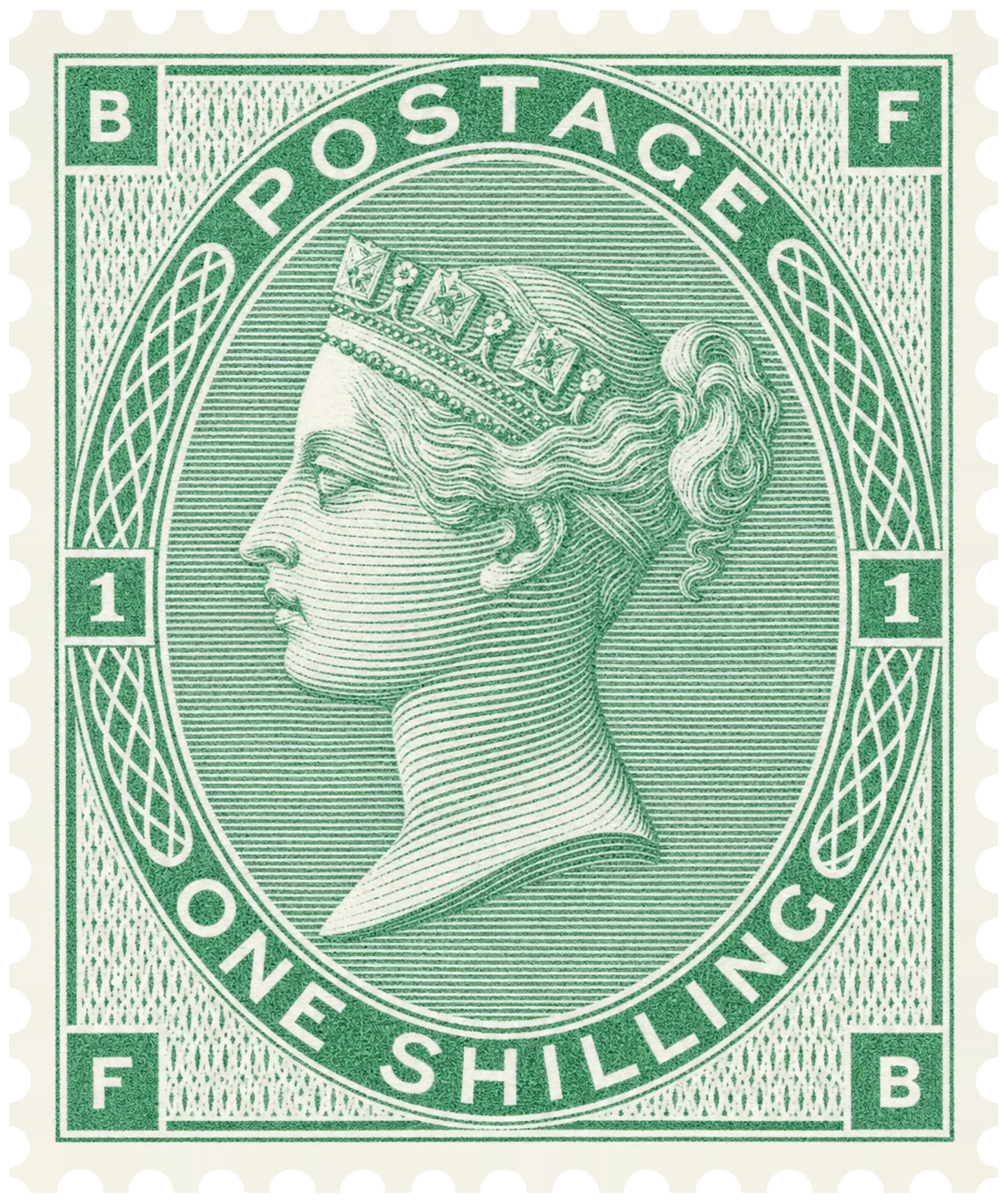
On the stamp you were exploring
Victoria · 1s green · 1862
Thomas De La Rue & Co. printed the 1862 one-shilling green by typography. The ordinary stamp shows the numeral 1, although its printing plate was numbered 2 in the sheet margins.
On the stamp you were exploring
Victoria · 1s green · 1862
Thomas De La Rue & Co. printed the 1862 one-shilling green by typography. The ordinary stamp shows the numeral 1, although its printing plate was numbered 2 in the sheet margins.
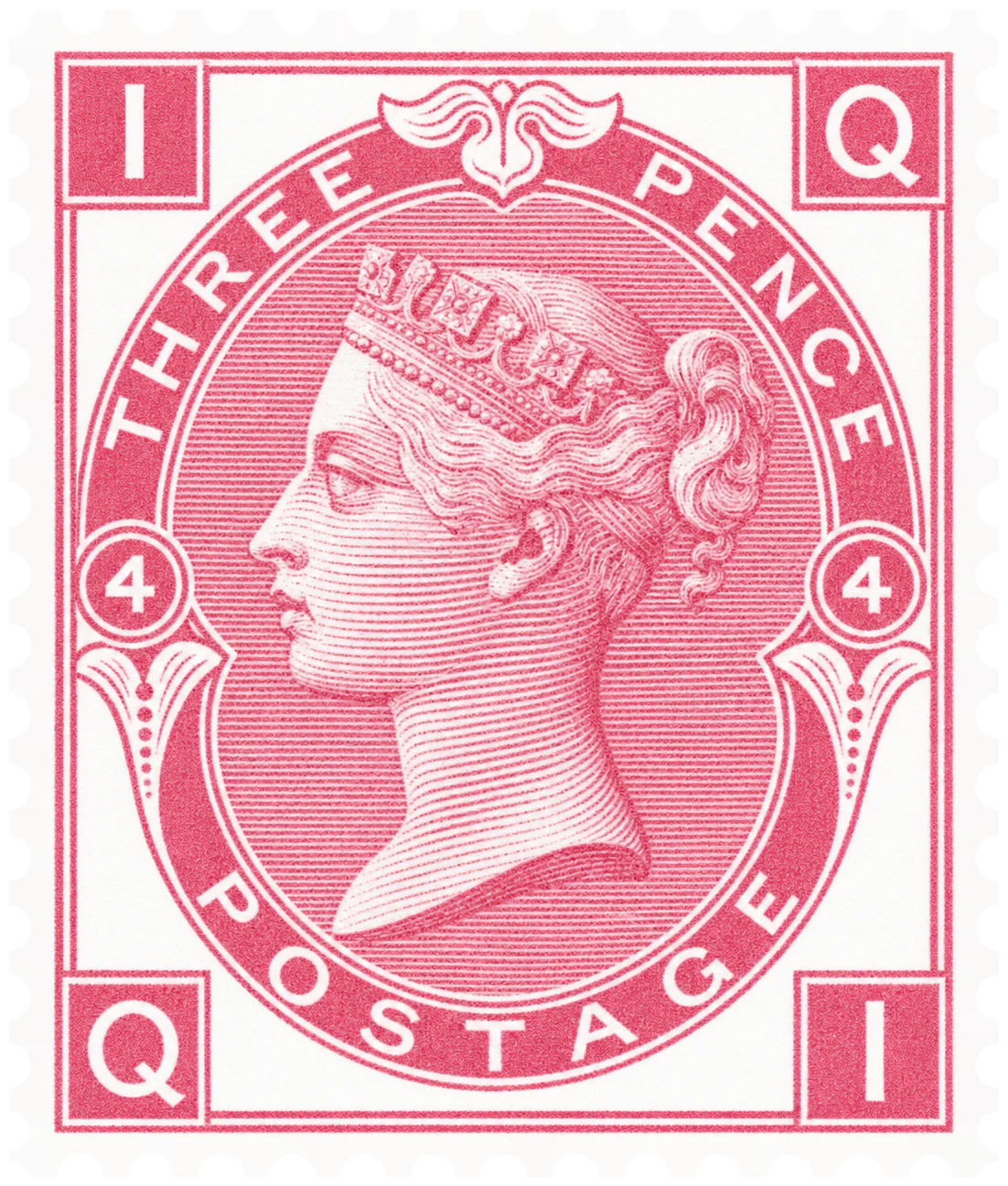
On the stamp you were exploring
Victoria · 3d rose · 1865
Thomas De La Rue & Co. printed the 1865 threepenny rose by typography. The revised design enlarged the corner letters and placed the printing plate number within the familiar curved frame.
On the stamp you were exploring
Victoria · 3d rose · 1865
Thomas De La Rue & Co. printed the 1865 threepenny rose by typography. The revised design enlarged the corner letters and placed the printing plate number within the familiar curved frame.
On the stamp you were exploring
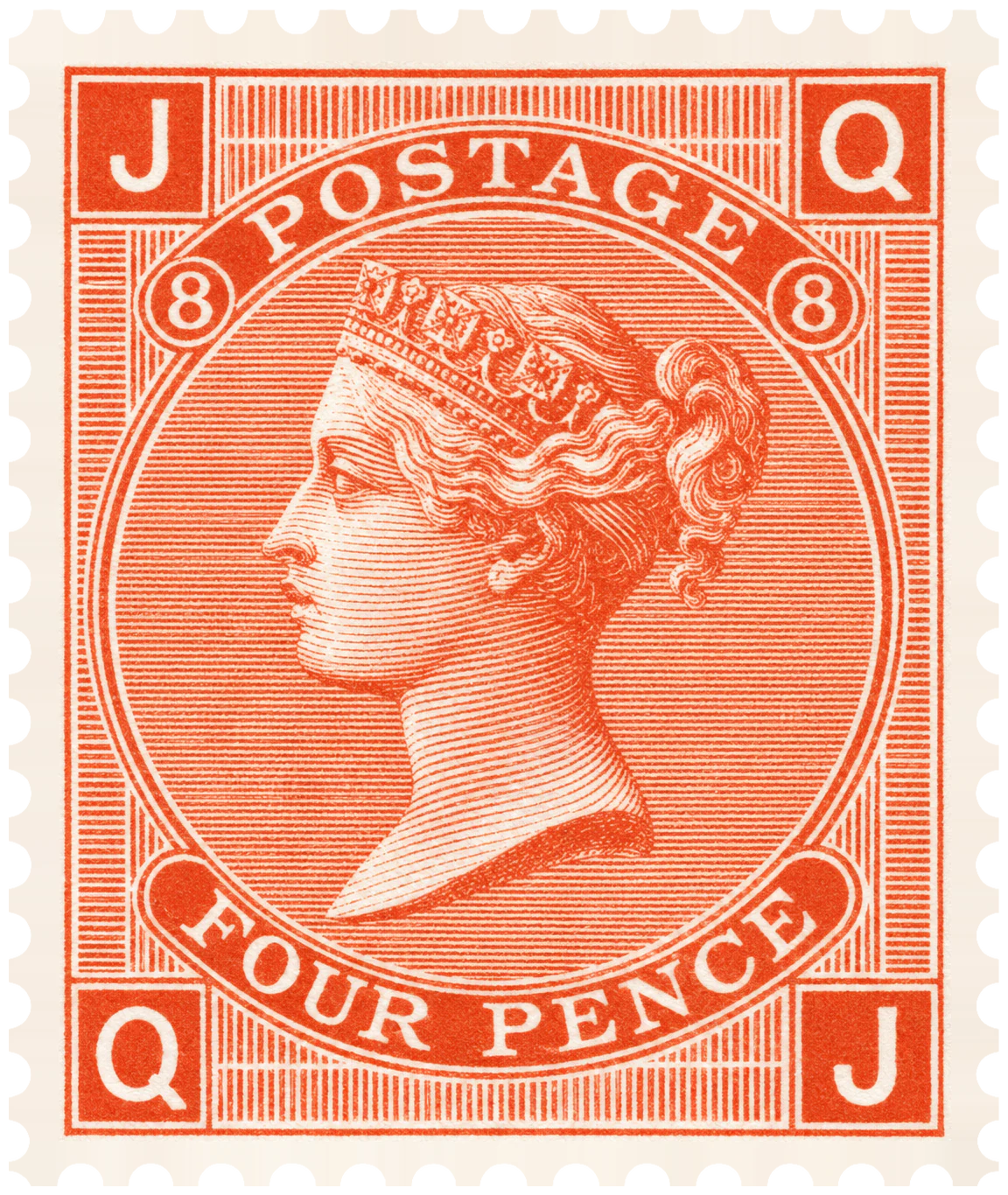
Victoria · 4d vermilion · 1865
Thomas De La Rue & Co. printed the 1865 fourpenny vermilion by typography. The revised design enlarged the corner letters and added visible plate numbers; the vermilion pigment required silver-faced printing plates.
On the stamp you were exploring
Victoria · 4d vermilion · 1865
Thomas De La Rue & Co. printed the 1865 fourpenny vermilion by typography. The revised design enlarged the corner letters and added visible plate numbers; the vermilion pigment required silver-faced printing plates.
On the stamp you were exploring
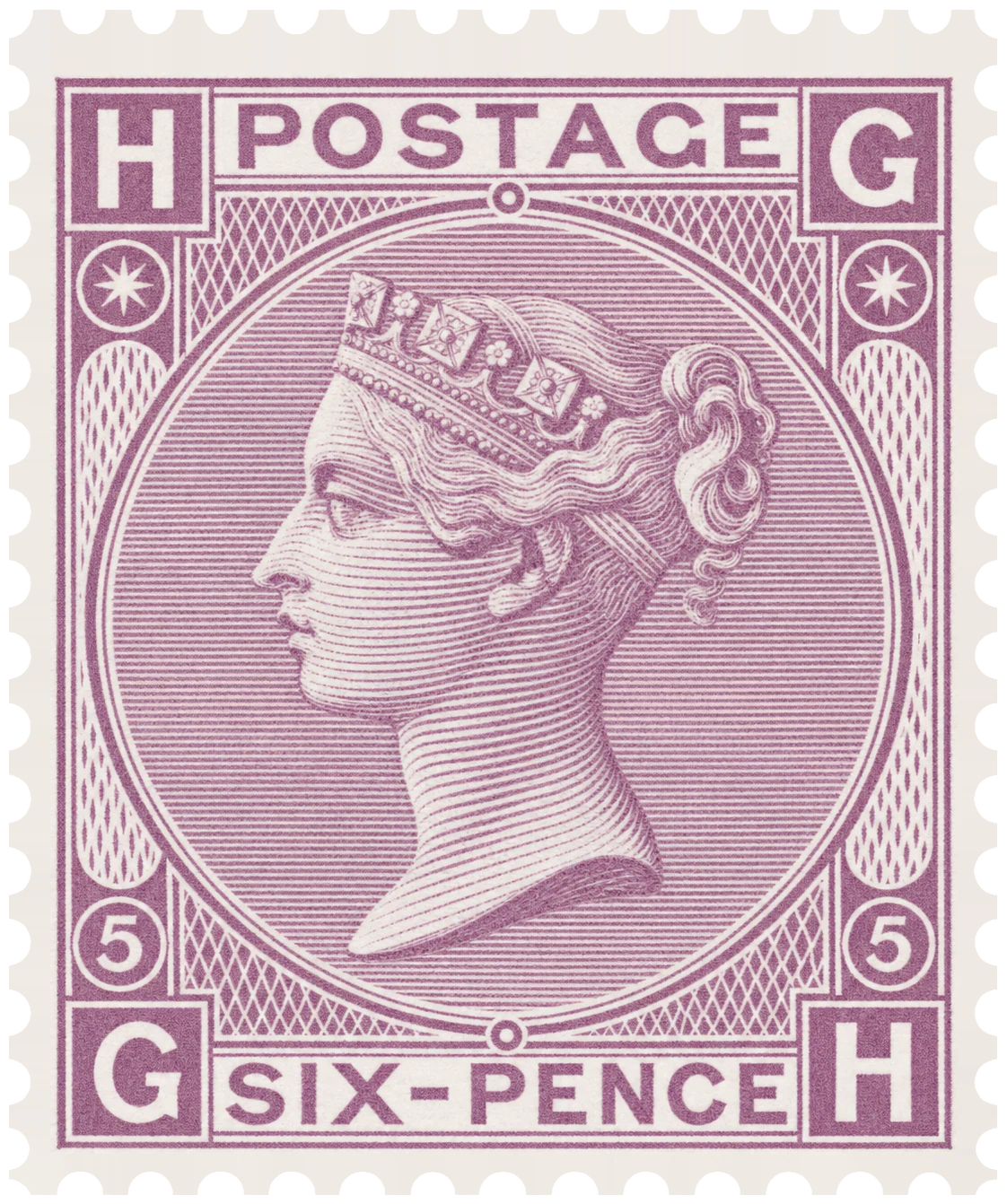
Victoria · 6d lilac · 1865
Thomas De La Rue & Co. printed the 1865 sixpenny lilac by typography. The revised design enlarged the corner letters and placed the printing plate number beside the inherited royal portrait.
On the stamp you were exploring
Victoria · 6d lilac · 1865
Thomas De La Rue & Co. printed the 1865 sixpenny lilac by typography. The revised design enlarged the corner letters and placed the printing plate number beside the inherited royal portrait.
On the stamp you were exploring
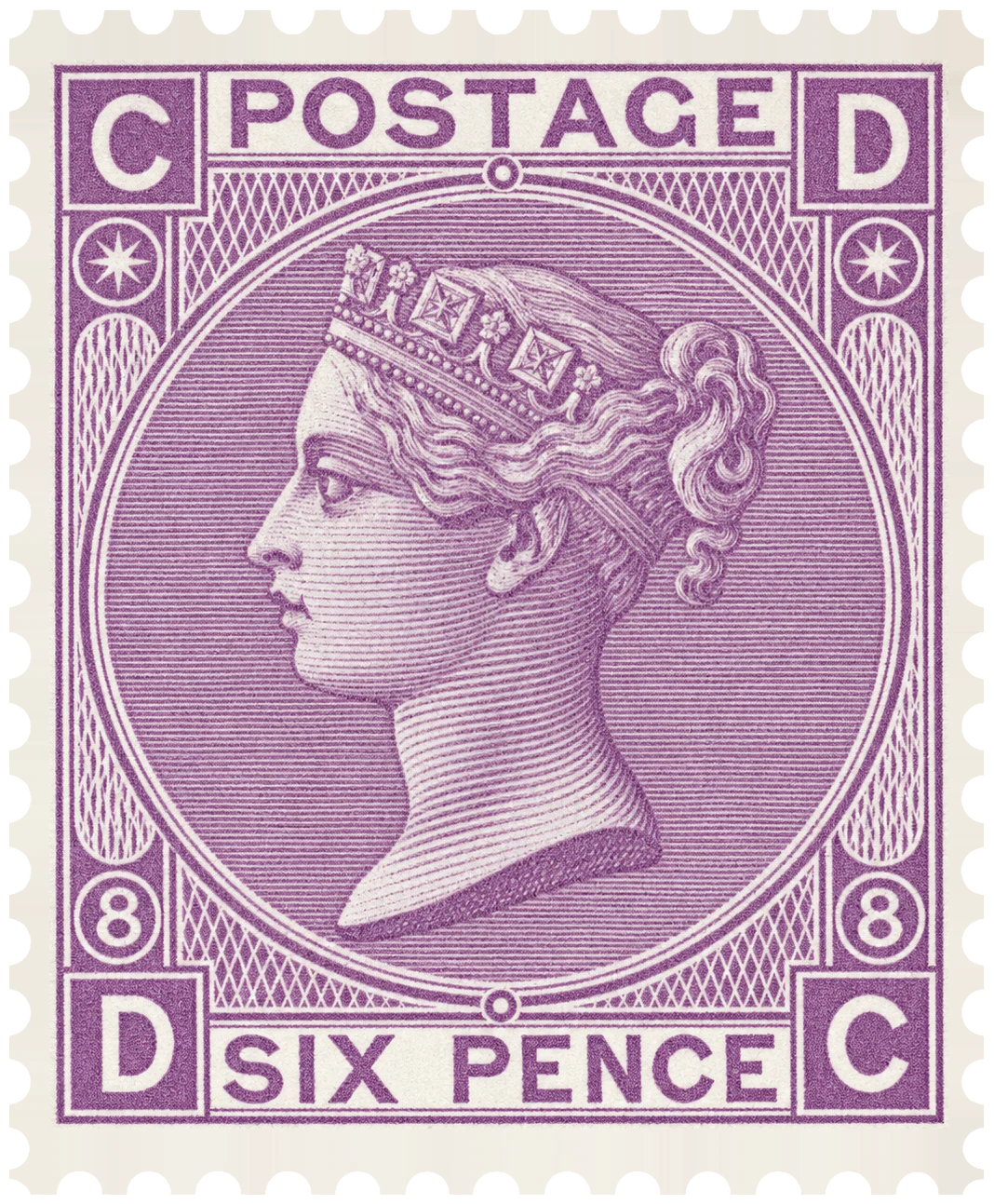
Victoria · 6d mauve · 1869
Thomas De La Rue & Co. printed the 1869 sixpenny mauve by typography. Its revised die omitted the hyphen from SIX PENCE while retaining the established portrait and large white corner letters.
On the stamp you were exploring
Victoria · 6d mauve · 1869
Thomas De La Rue & Co. printed the 1869 sixpenny mauve by typography. Its revised die omitted the hyphen from SIX PENCE while retaining the established portrait and large white corner letters.
On the stamp you were exploring
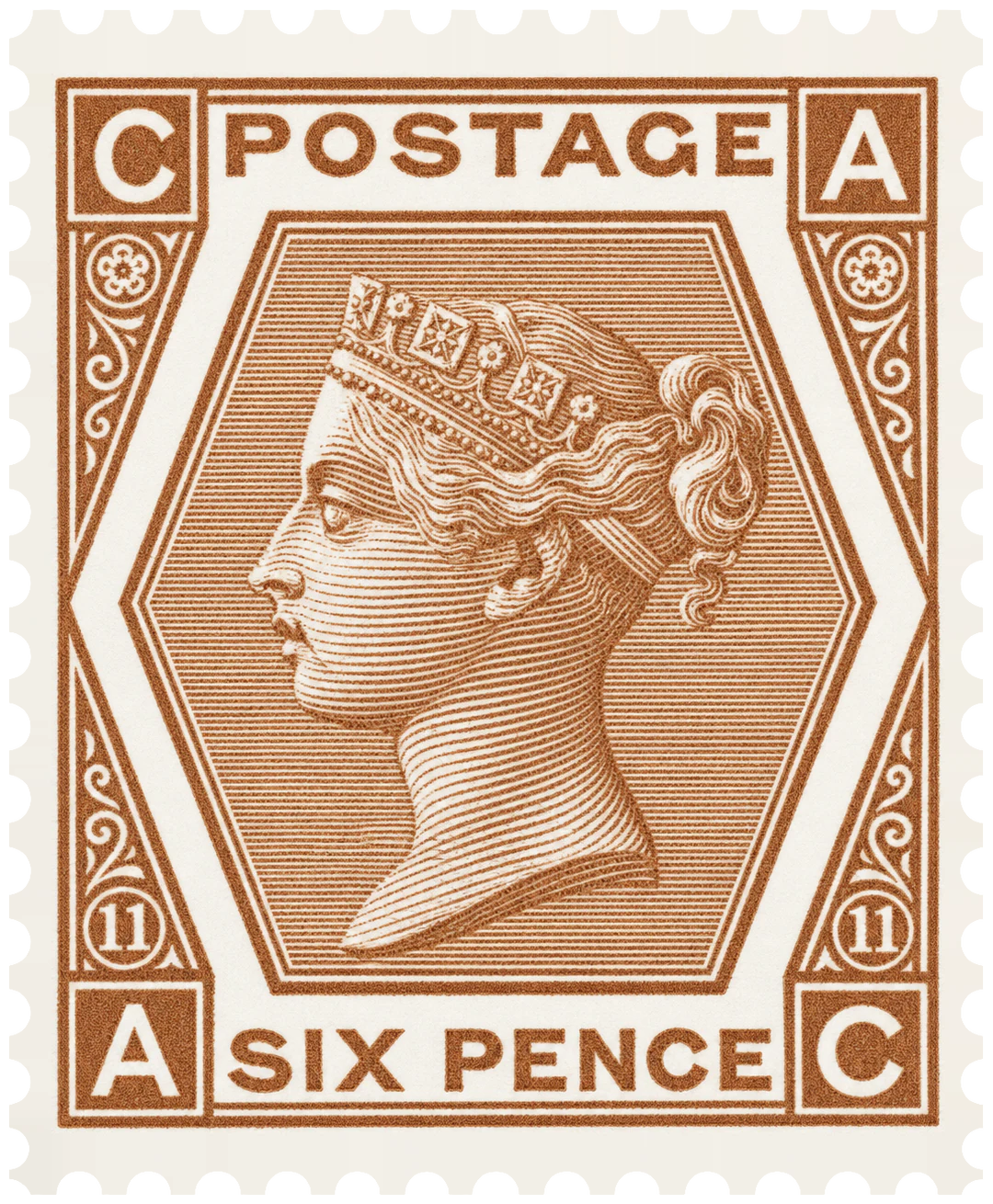
Victoria · 6d chestnut · 1872
Thomas De La Rue & Co. printed the 1872 sixpenny chestnut by typography. Its new hexagonal frame and brown ink distinguished the value while retaining the earlier royal portrait.
On the stamp you were exploring
Victoria · 6d chestnut · 1872
Thomas De La Rue & Co. printed the 1872 sixpenny chestnut by typography. Its new hexagonal frame and brown ink distinguished the value while retaining the earlier royal portrait.
On the stamp you were exploring
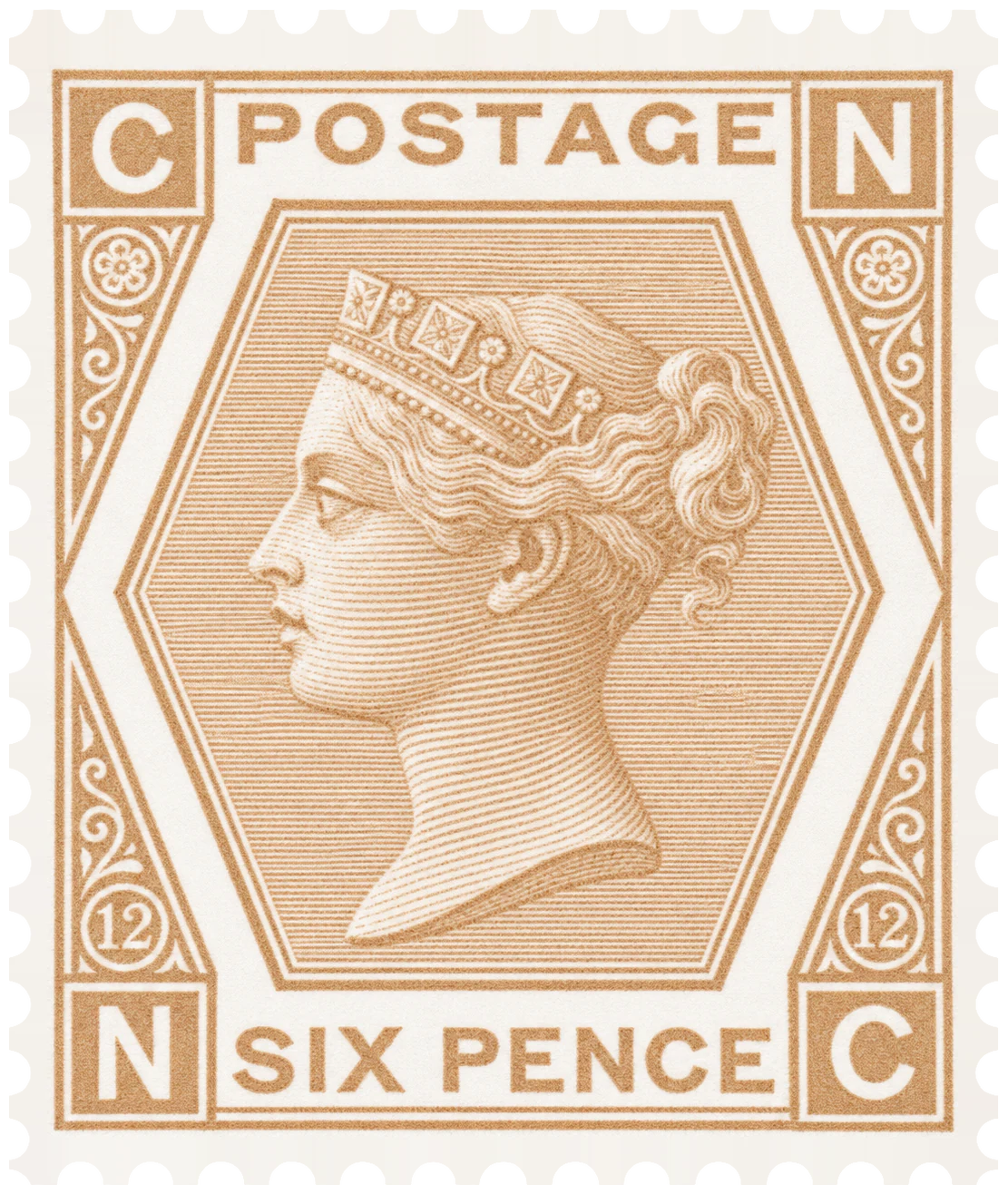
Victoria · 6d pale buff · 1872
Thomas De La Rue & Co. printed the 1872 sixpenny pale buff by typography, using the hexagonal design previously printed in chestnut. The colour change retained the established portrait and frame.
On the stamp you were exploring
Victoria · 6d pale buff · 1872
Thomas De La Rue & Co. printed the 1872 sixpenny pale buff by typography, using the hexagonal design previously printed in chestnut. The colour change retained the established portrait and frame.
On the stamp you were exploring
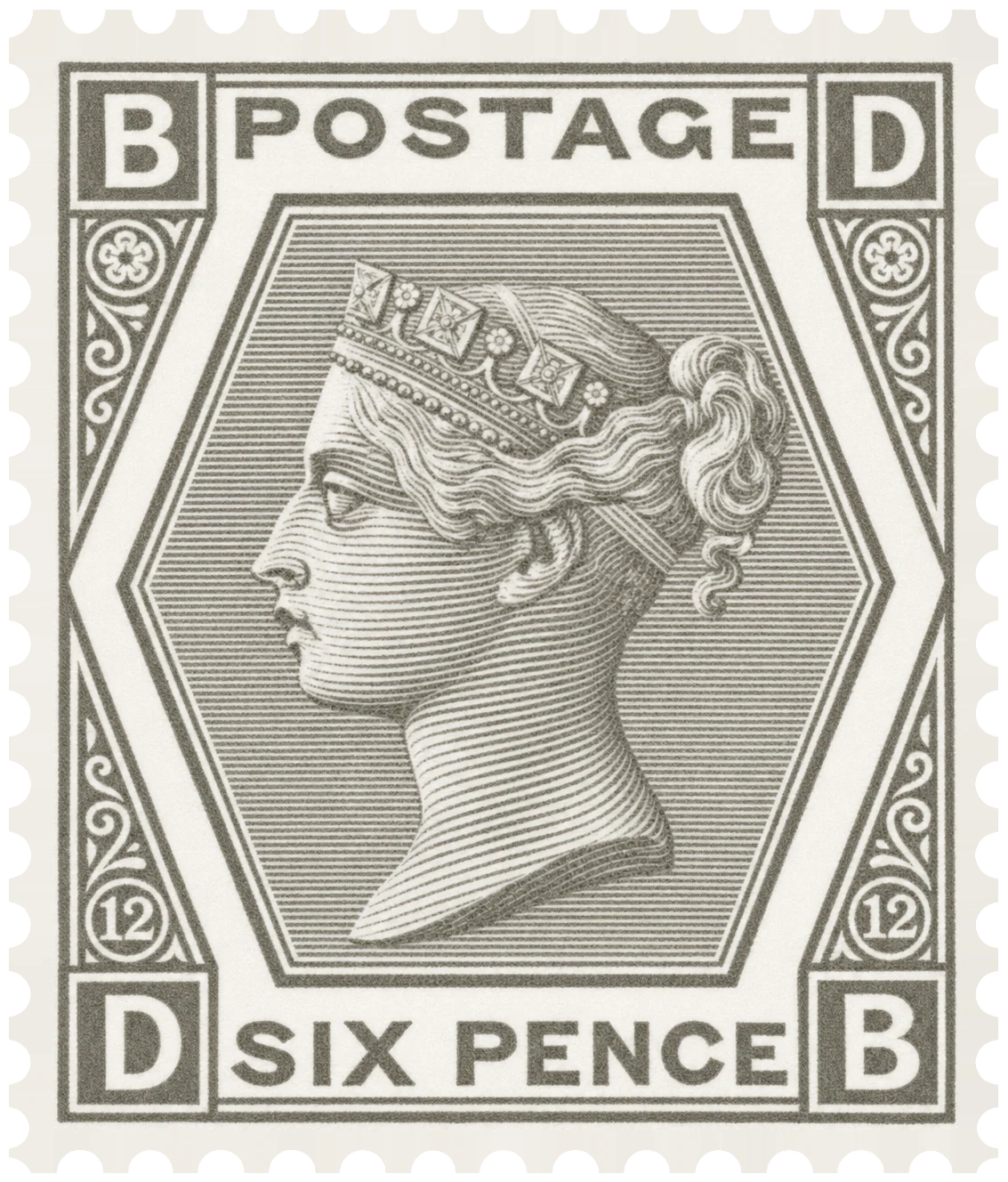
Victoria · 6d grey · 1873
Thomas De La Rue & Co. printed the 1873 sixpenny grey by typography. Plate 12 retained the hexagonal frame and white corner letters of the earlier buff printing, with a change of ink.
On the stamp you were exploring
Victoria · 6d grey · 1873
Thomas De La Rue & Co. printed the 1873 sixpenny grey by typography. Plate 12 retained the hexagonal frame and white corner letters of the earlier buff printing, with a change of ink.
On the stamp you were exploring
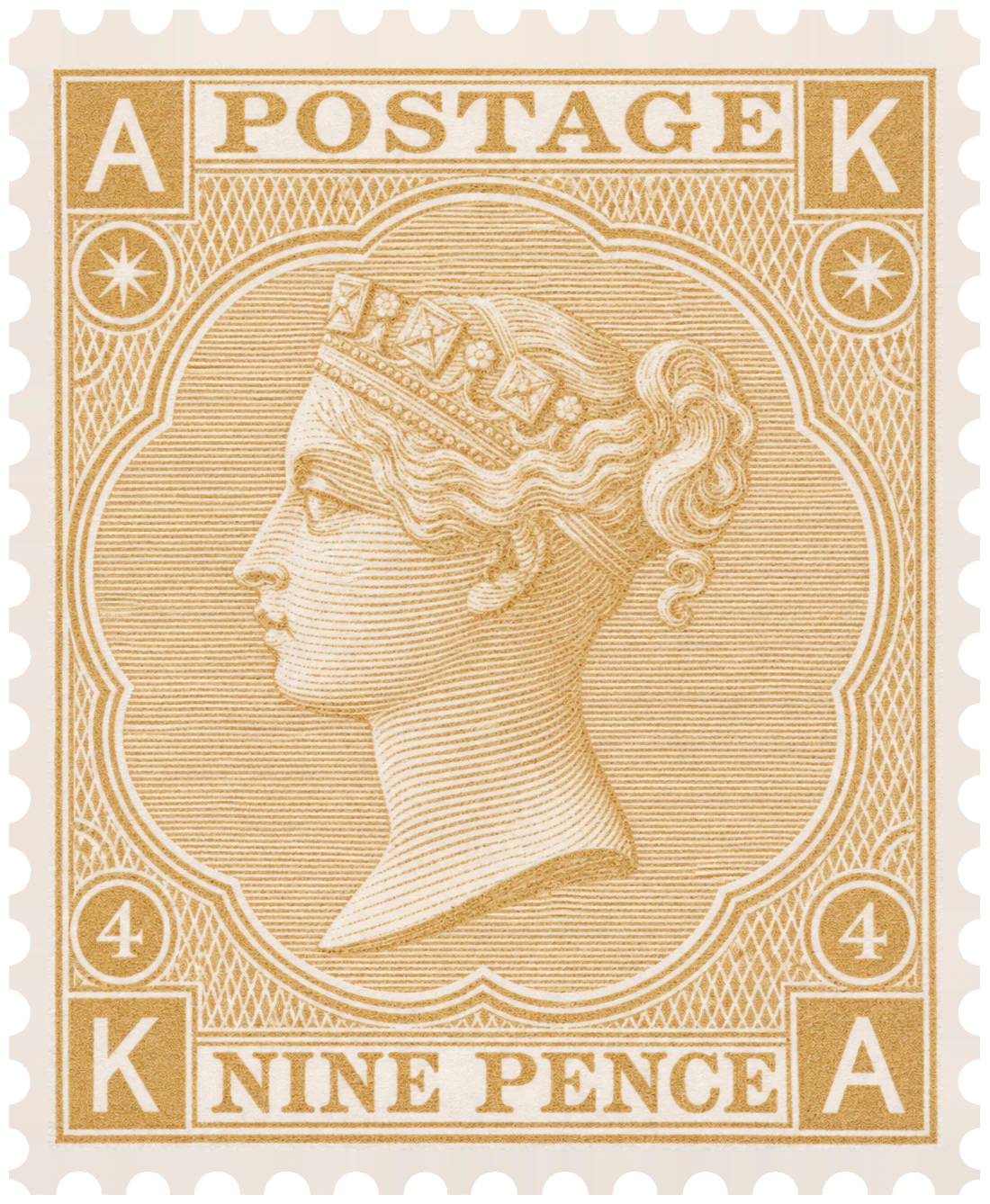
Victoria · 9d straw · 1865
Thomas De La Rue & Co. printed the 1865 ninepenny straw by typography. The revised design retained the distinctive curved frame, enlarged the corner letters and incorporated visible plate numbers.
On the stamp you were exploring
Victoria · 9d straw · 1865
Thomas De La Rue & Co. printed the 1865 ninepenny straw by typography. The revised design retained the distinctive curved frame, enlarged the corner letters and incorporated visible plate numbers.
On the stamp you were exploring
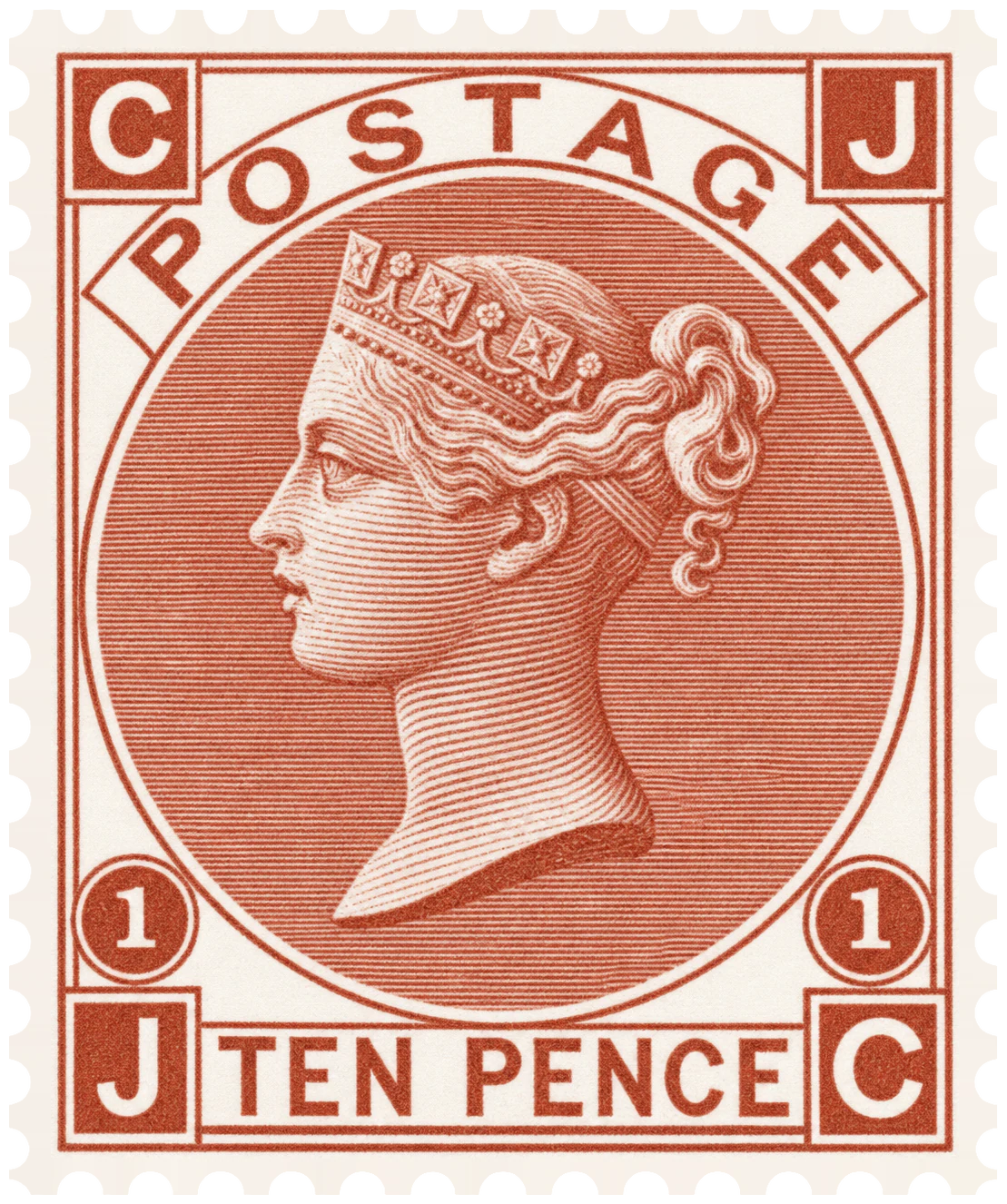
Victoria · 10d red-brown · 1867
Thomas De La Rue & Co. printed the 1867 tenpenny red-brown by typography, replacing the earlier embossed issue. The new setting for the inherited portrait included plain spandrels, large white corner letters and visible plate numbers.
On the stamp you were exploring
Victoria · 10d red-brown · 1867
Thomas De La Rue & Co. printed the 1867 tenpenny red-brown by typography, replacing the earlier embossed issue. The new setting for the inherited portrait included plain spandrels, large white corner letters and visible plate numbers.
On the stamp you were exploring
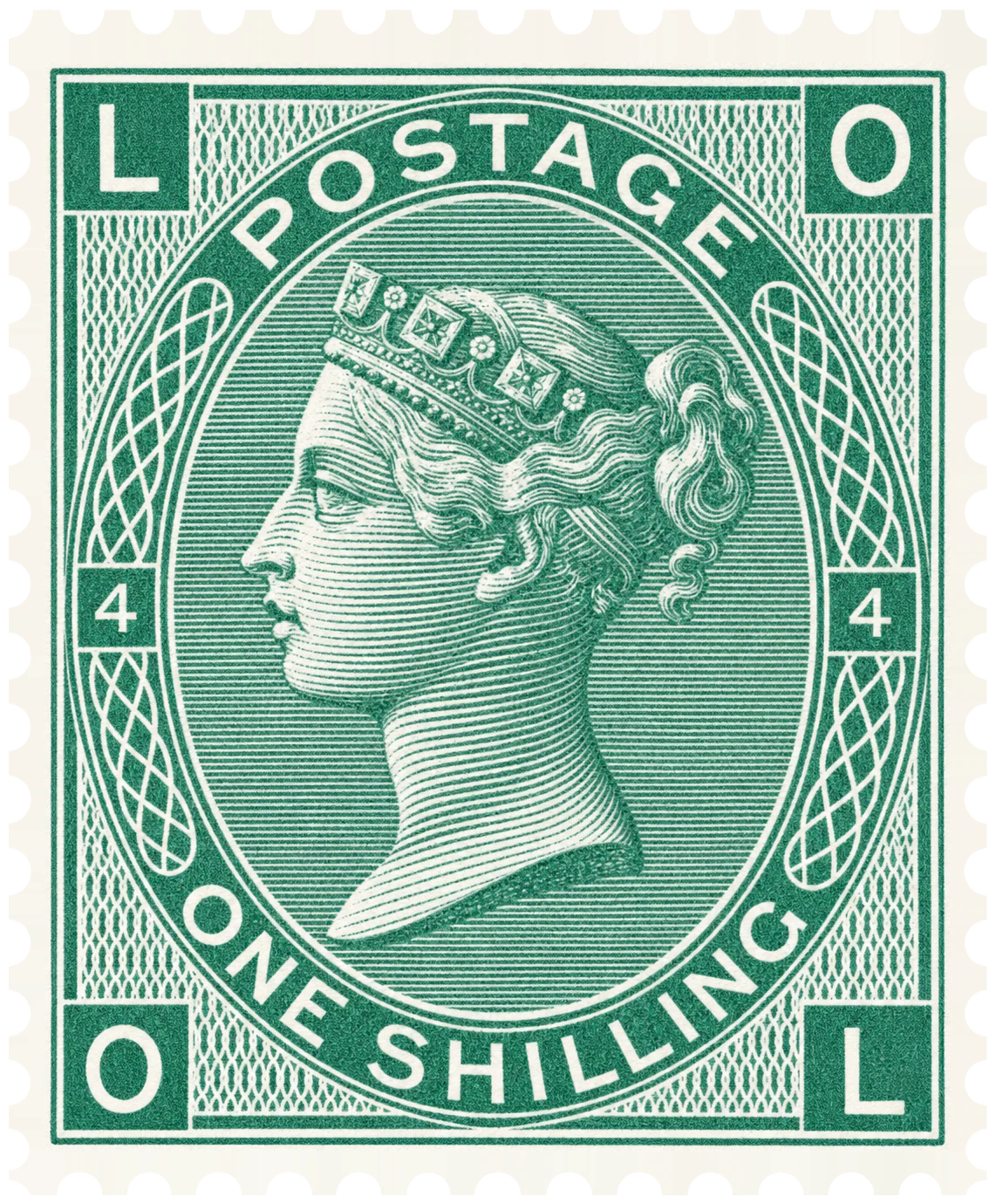
Victoria · 1s green · 1865
Thomas De La Rue & Co. printed the 1865 shilling green by typography. The revised design enlarged the white corner letters and added visible plate numbers; later printings used a different watermark.
On the stamp you were exploring
Victoria · 1s green · 1865
Thomas De La Rue & Co. printed the 1865 shilling green by typography. The revised design enlarged the white corner letters and added visible plate numbers; later printings used a different watermark.
On the stamp you were exploring
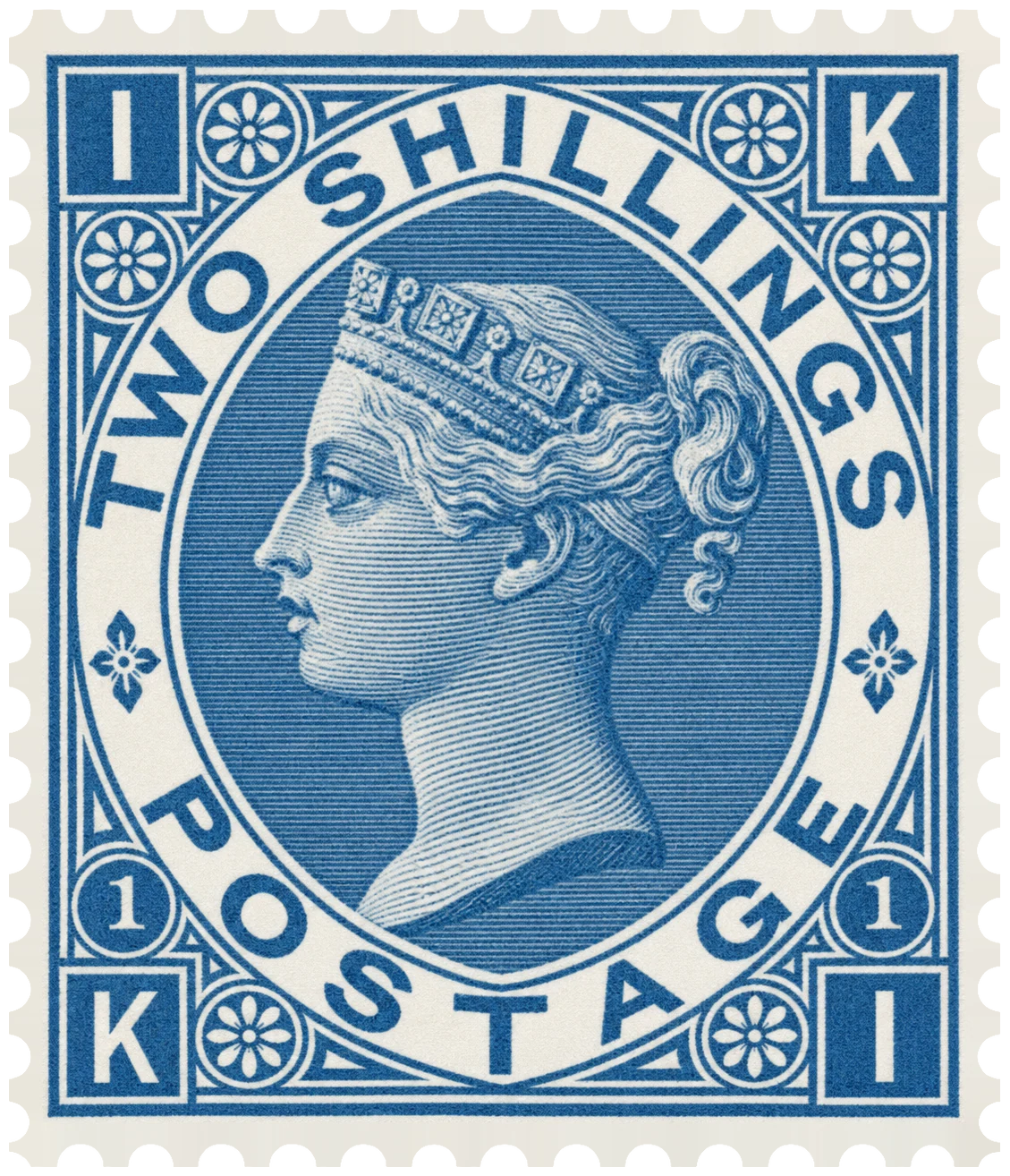
Victoria · 2s blue · 1867
Thomas De La Rue & Co. printed the 1867 two-shilling blue by typography. Owen Jones designed its pointed-oval setting around the inherited royal portrait; the issued stamps came from plate 1.
On the stamp you were exploring
Victoria · 2s blue · 1867
Thomas De La Rue & Co. printed the 1867 two-shilling blue by typography. Owen Jones designed its pointed-oval setting around the inherited royal portrait; the issued stamps came from plate 1.
On the stamp you were exploring
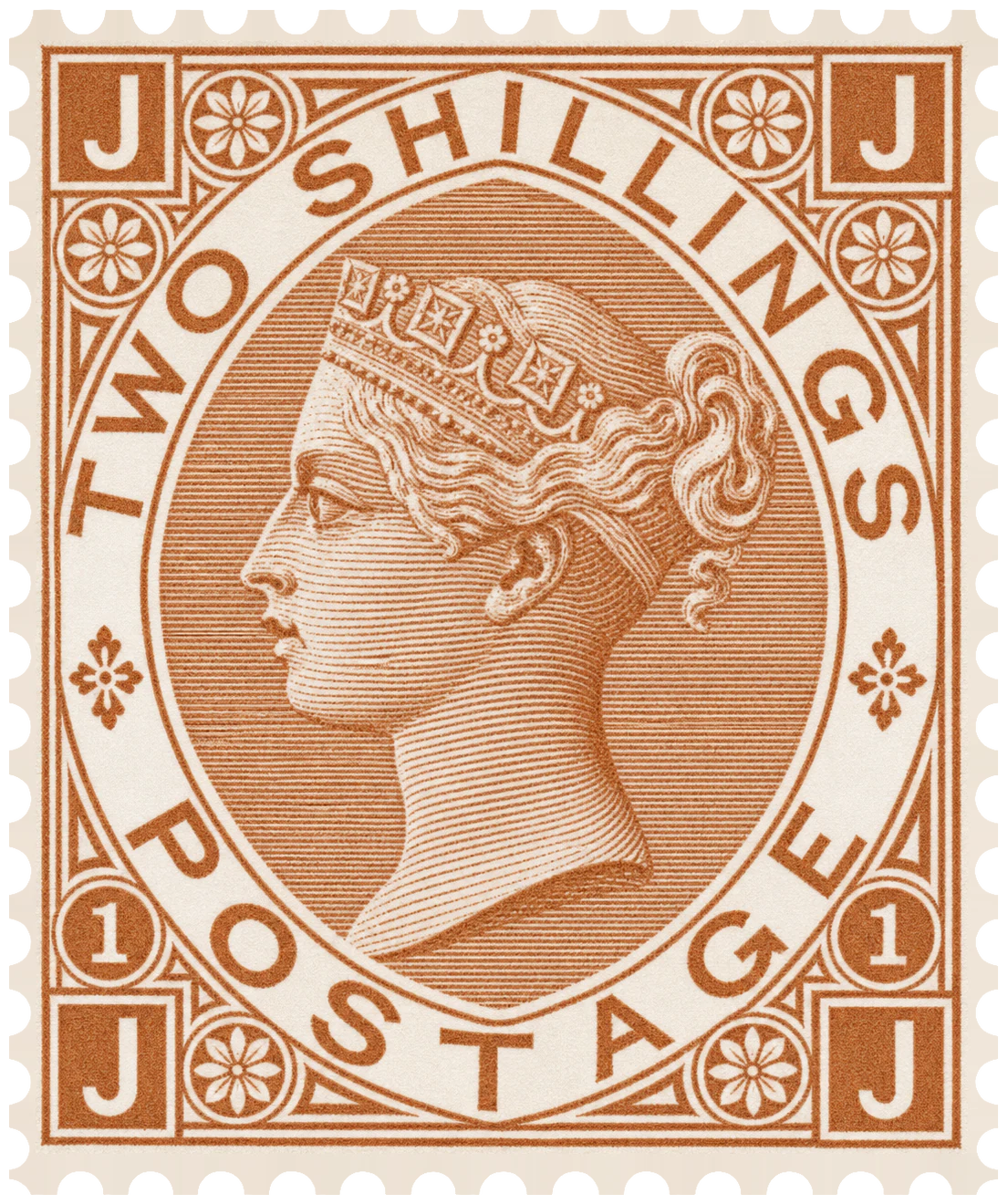
Victoria · 2s brown · 1880
Thomas De La Rue & Co. printed the 1880 two-shilling brown by typography. The colour changed, but plate 1 and Owen Jones’s design from the earlier blue issue were retained.
On the stamp you were exploring
Victoria · 2s brown · 1880
Thomas De La Rue & Co. printed the 1880 two-shilling brown by typography. The colour changed, but plate 1 and Owen Jones’s design from the earlier blue issue were retained.
On the stamp you were exploring
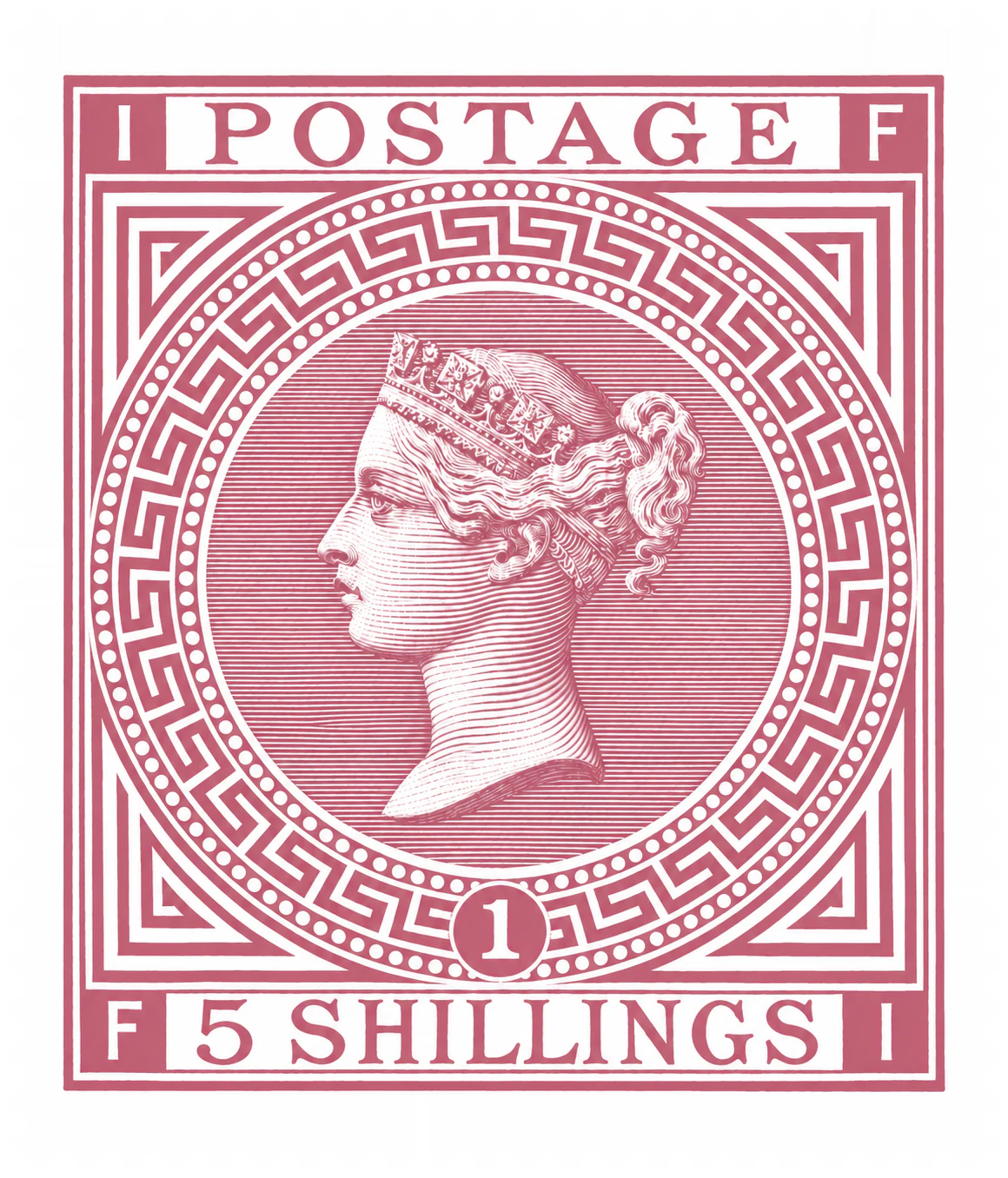
Victoria · 5s rose · 1867
Thomas De La Rue & Co. printed the 1867 five-shilling rose by typography. Owen Jones designed the larger setting around the inherited royal portrait; the illustration represents the original plate-1 issue on Maltese Cross paper.
On the stamp you were exploring
Victoria · 5s rose · 1867
Thomas De La Rue & Co. printed the 1867 five-shilling rose by typography. Owen Jones designed the larger setting around the inherited royal portrait; the illustration represents the original plate-1 issue on Maltese Cross paper.
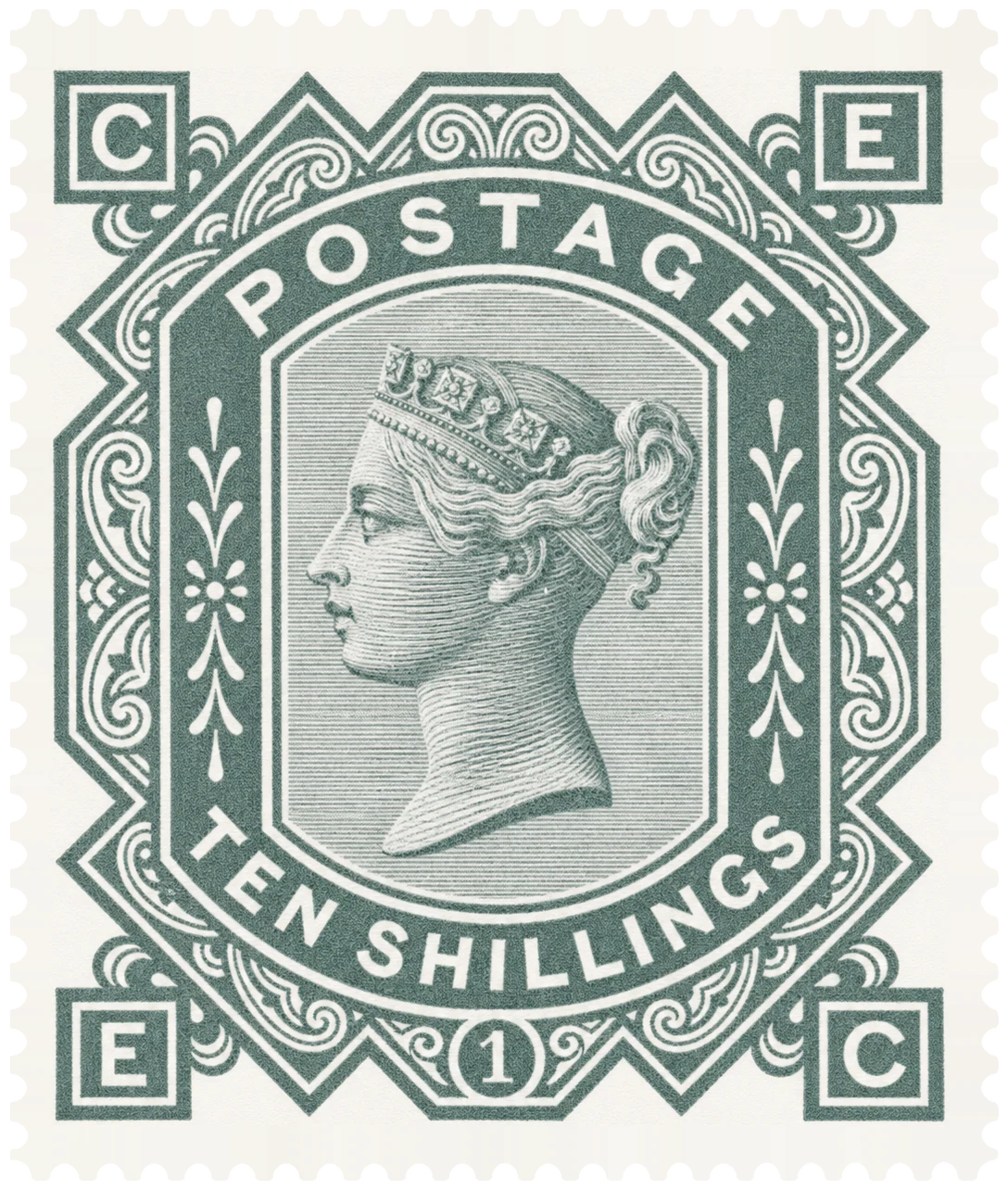
On the stamp you were exploring
Victoria · 10s greenish-grey · 1878
Thomas De La Rue & Co. printed the 1878 ten-shilling greenish-grey by typography. Its new ornamental frame surrounded the inherited royal portrait. The illustration represents plate 1 on Maltese Cross paper; the later Anchor-paper printing retained the design.
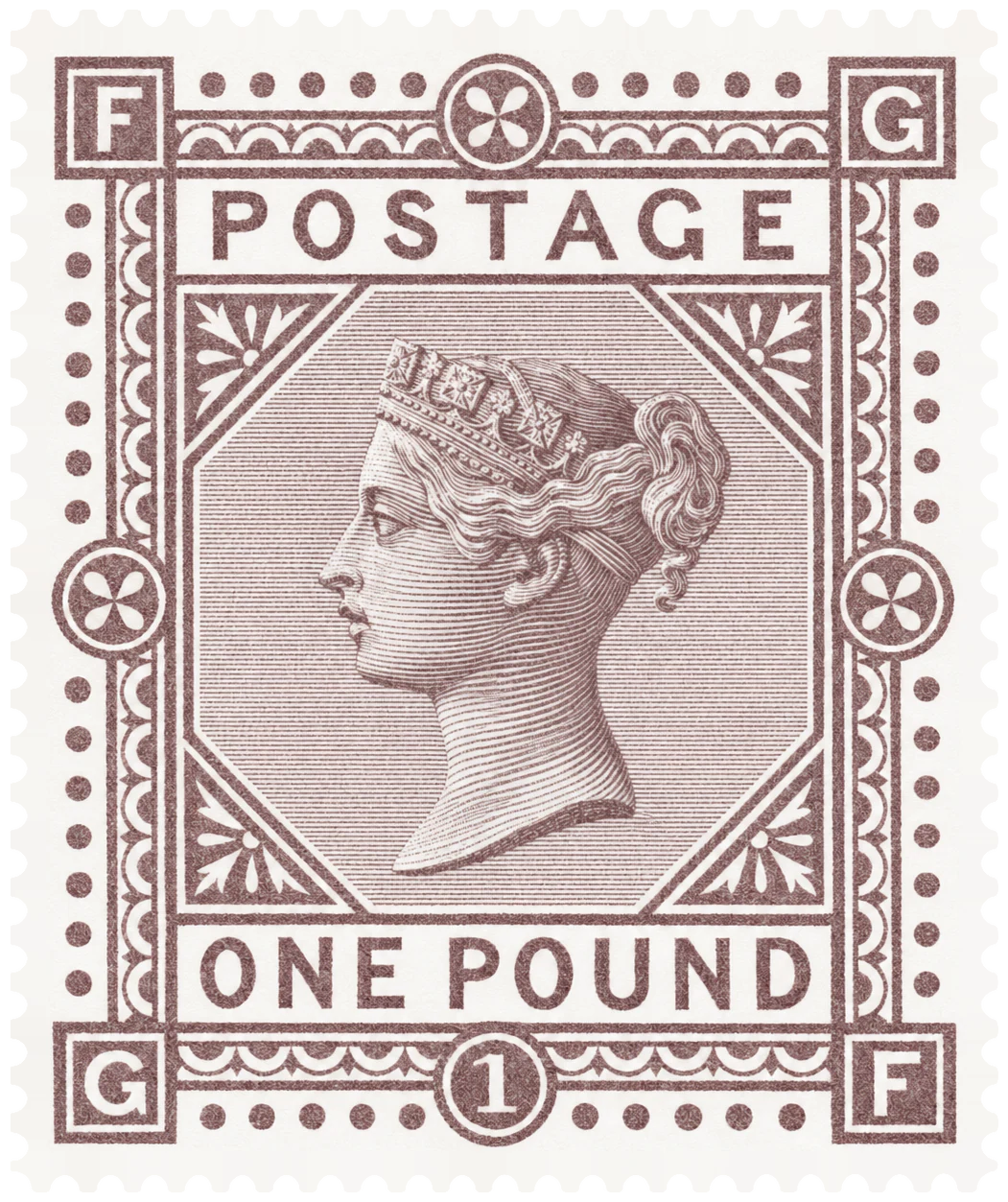
On the stamp you were exploring
Victoria · £1 brown-lilac · 1878
Thomas De La Rue & Co. printed the 1878 one-pound brown-lilac by typography, retaining the earlier royal portrait within a new octagonal setting. The illustration represents the original plate-1 issue on Maltese Cross paper; the later Anchor-paper issue retained the design.
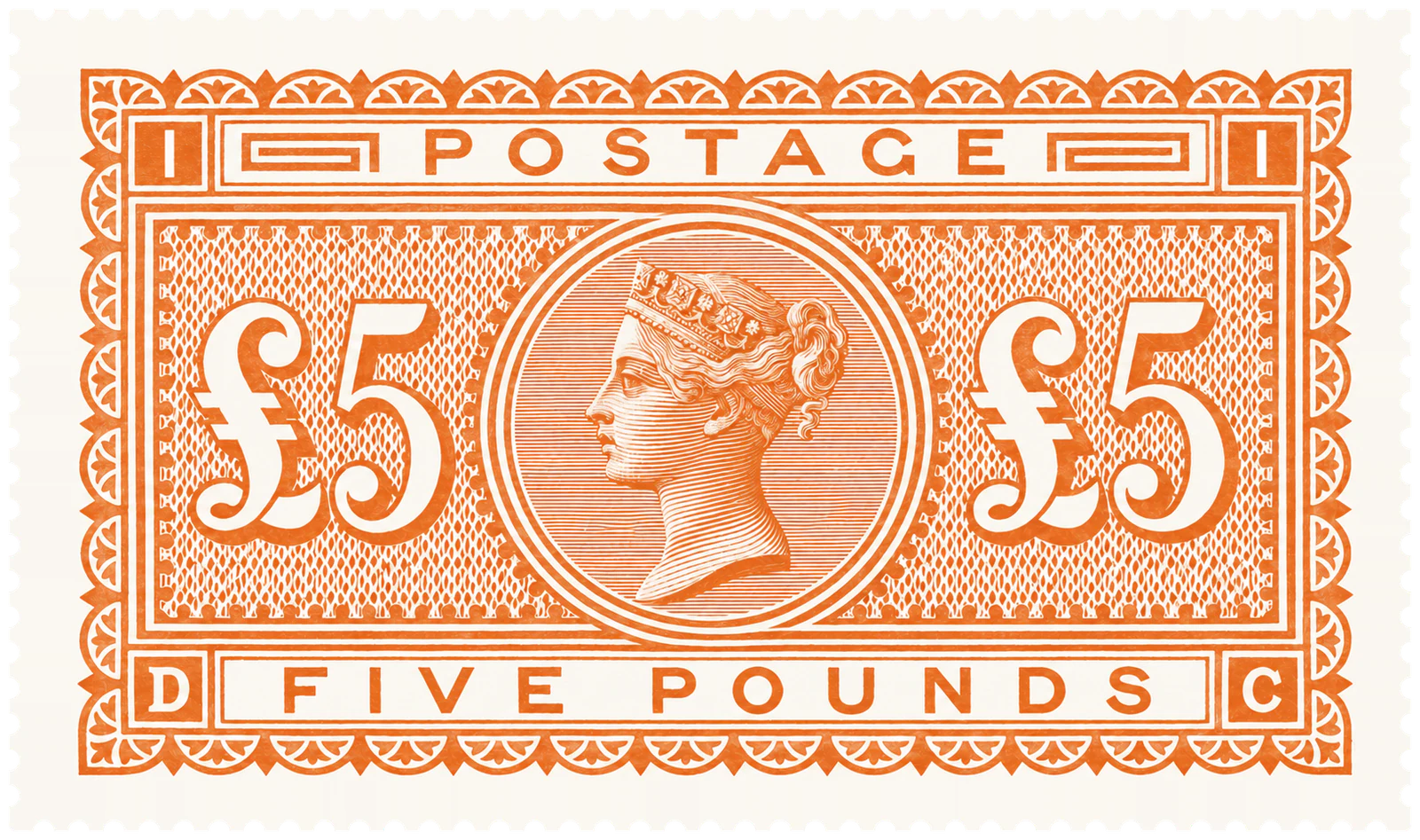
On the stamp you were exploring
Victoria · £5 orange · 1882
Thomas De La Rue & Co. adapted its five-pound telegraph plate for postage in 1882, printing the main design and POSTAGE separately in orange. The illustration represents the later SG137 printing on white paper, retaining the 1882 design; the first printings used blued paper.
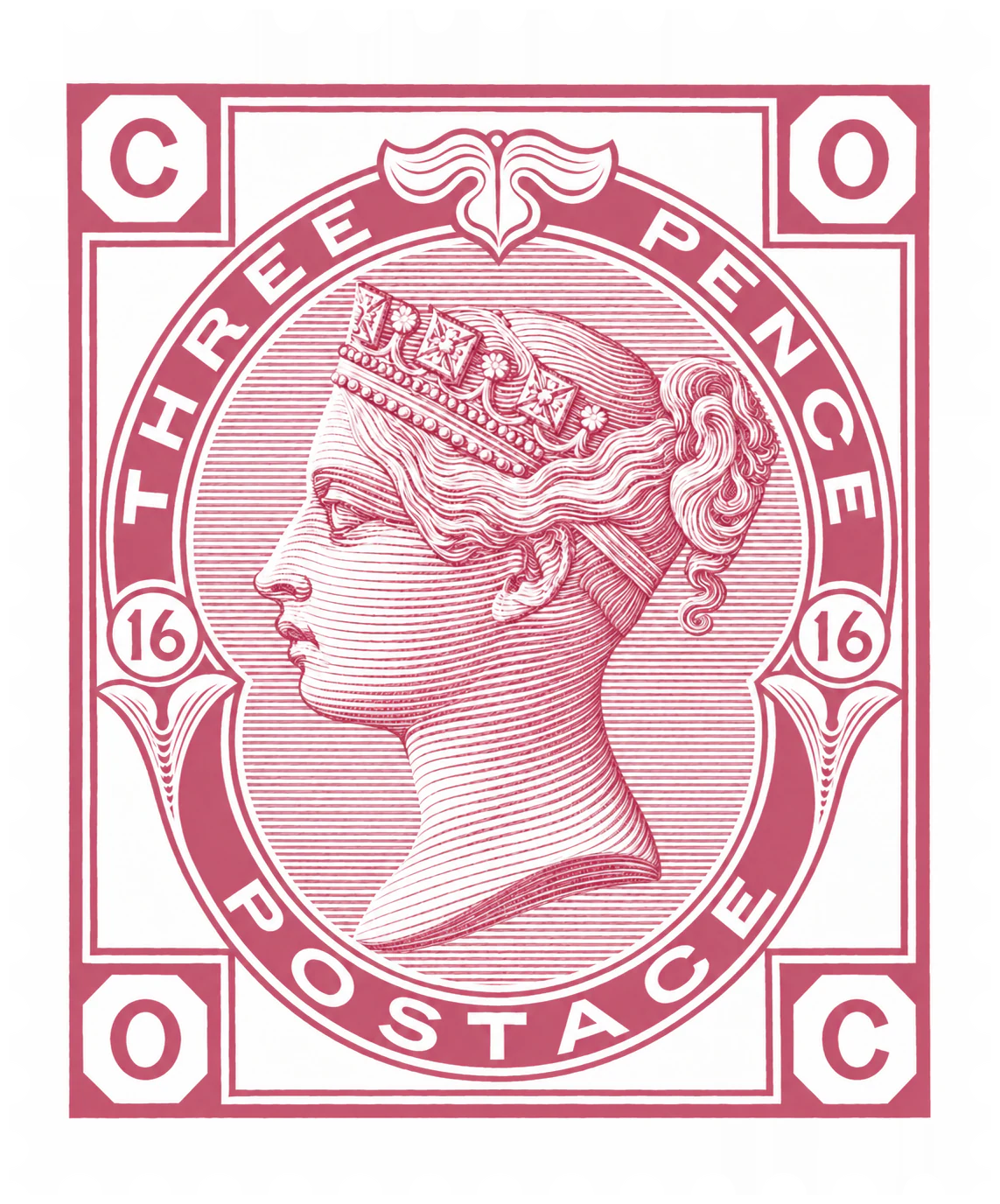
On the stamp you were exploring
Victoria · 3d rose · 1873
Thomas De La Rue & Co. printed the 1873 threepenny rose by typography. Coloured corner letters on white squares allowed interchangeable plugs to simplify plate preparation; the revised design also reduced the ornamental frame and retouched the established portrait.
On the stamp you were exploring
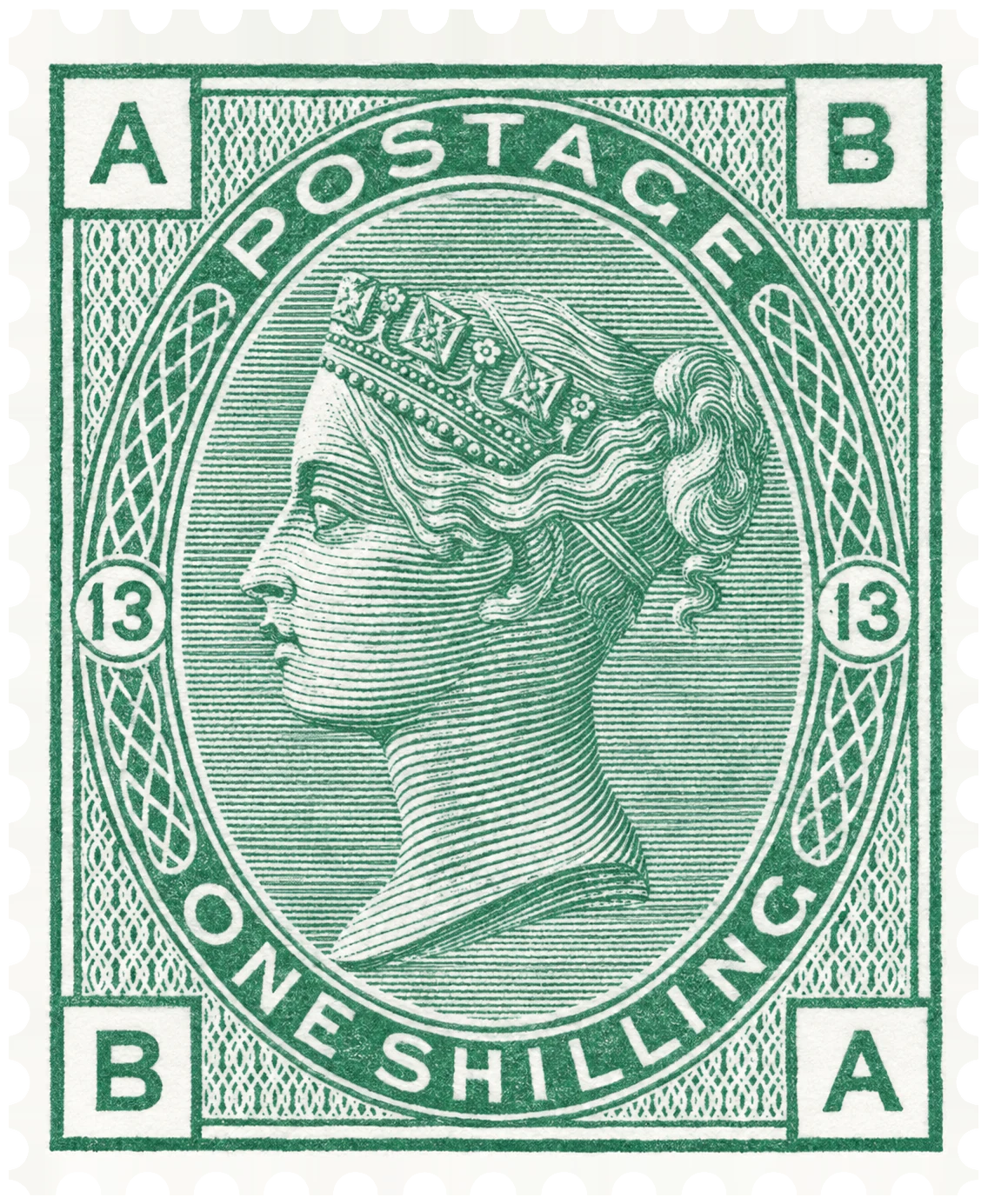
Victoria · 1s green · 1873
Thomas De La Rue & Co. printed the 1873 one-shilling green by typography. Coloured letters on white squares and separately inserted plate numerals simplified plate preparation. The oval frame was reconstructed around the retouched, inherited royal portrait.
On the stamp you were exploring
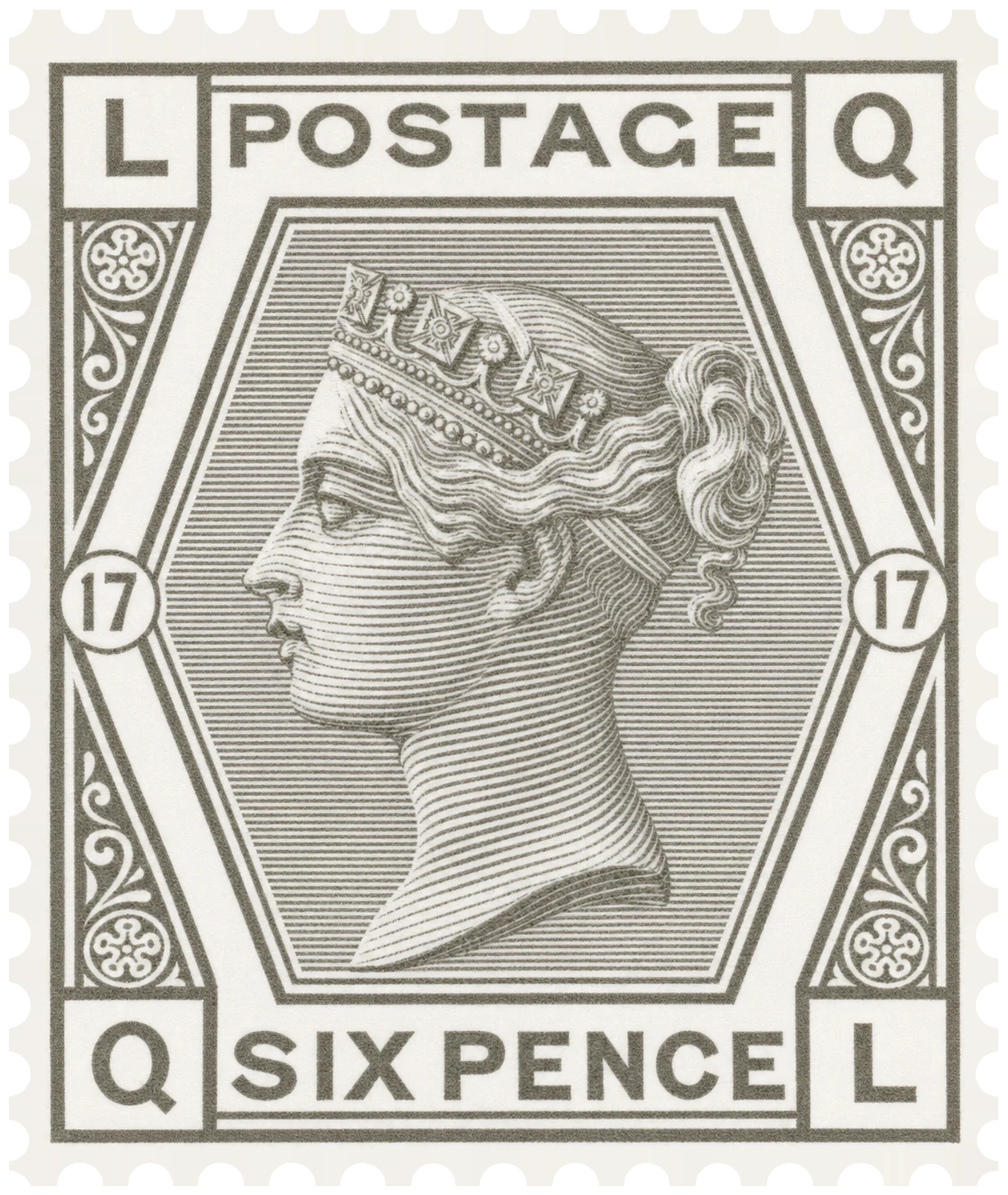
Victoria · 6d grey · 1874
Thomas De La Rue & Co. printed the 1874 sixpenny grey by typography. The revised design used coloured corner letters on white squares, a narrower hexagonal setting and plate numbers moved to the side angles. The illustration represents plate 17; the buff registration impressions belong to plate 13.
On the stamp you were exploring
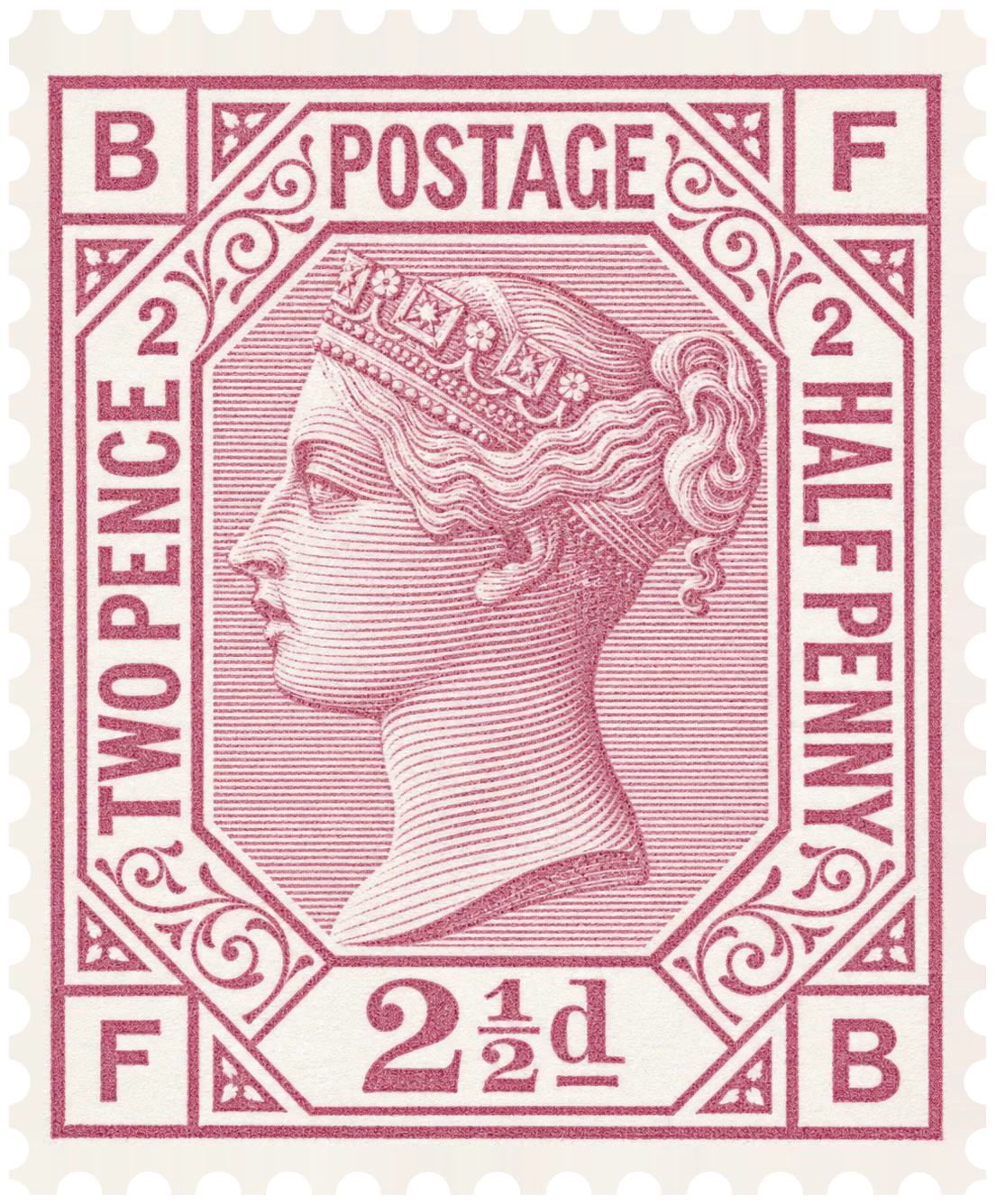
Victoria · 2½d rosy mauve · 1875
Thomas De La Rue & Co. prepared the essays and printed the 1875 two-and-a-halfpenny rosy mauve by typography. The illustration represents plate 2 on white Small Anchor paper. Later rosy-mauve printings used Orb paper, retaining the same design.
On the stamp you were exploring
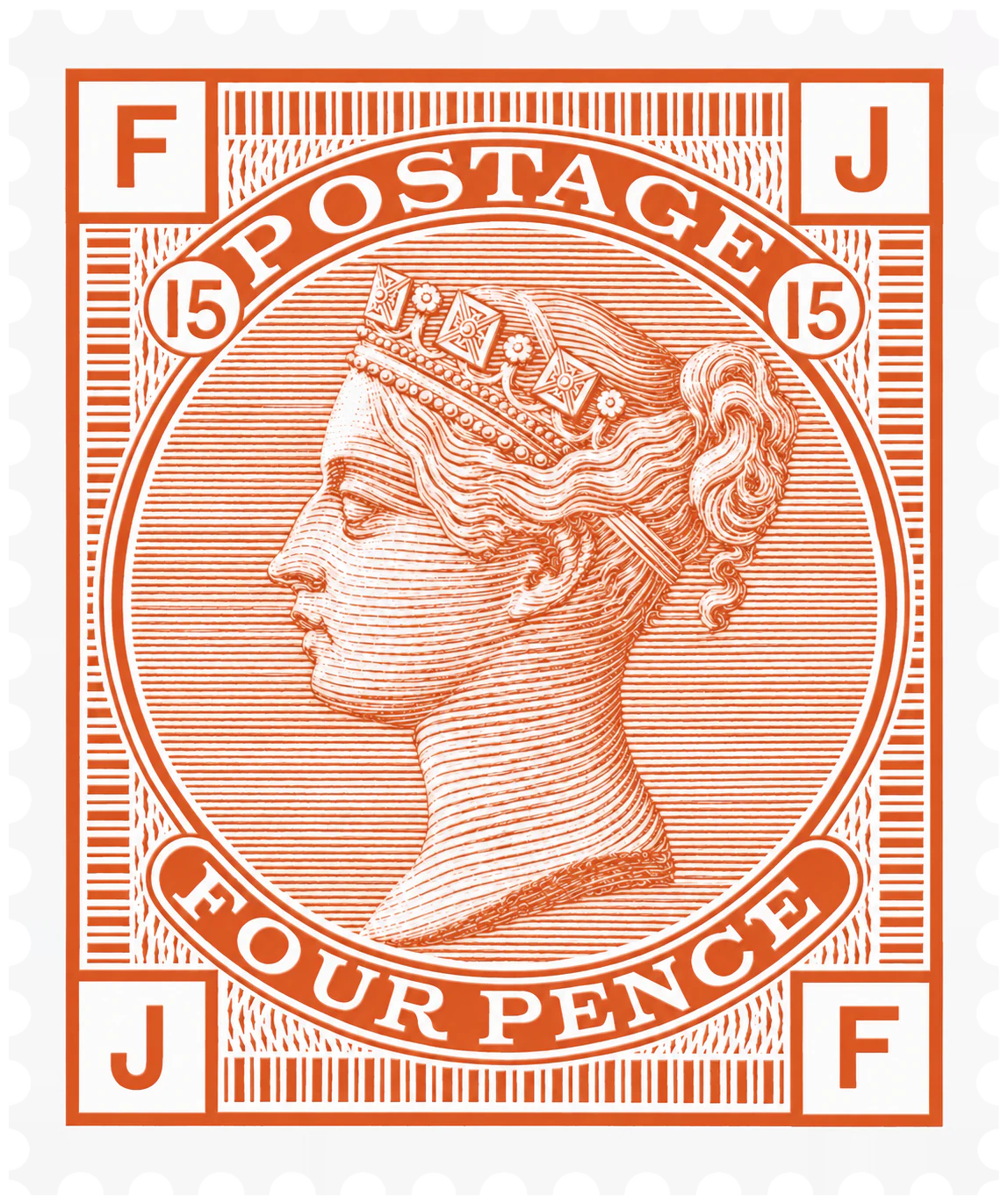
Victoria · 4d vermilion · 1876
Thomas De La Rue & Co. printed the 1876 fourpenny vermilion by typography, using the revised coloured-letter design. Plate 15 produced the ordinary issue and was later registered again in sage-green after the vermilion caused confusion with the eightpenny orange under gaslight.
On the stamp you were exploring
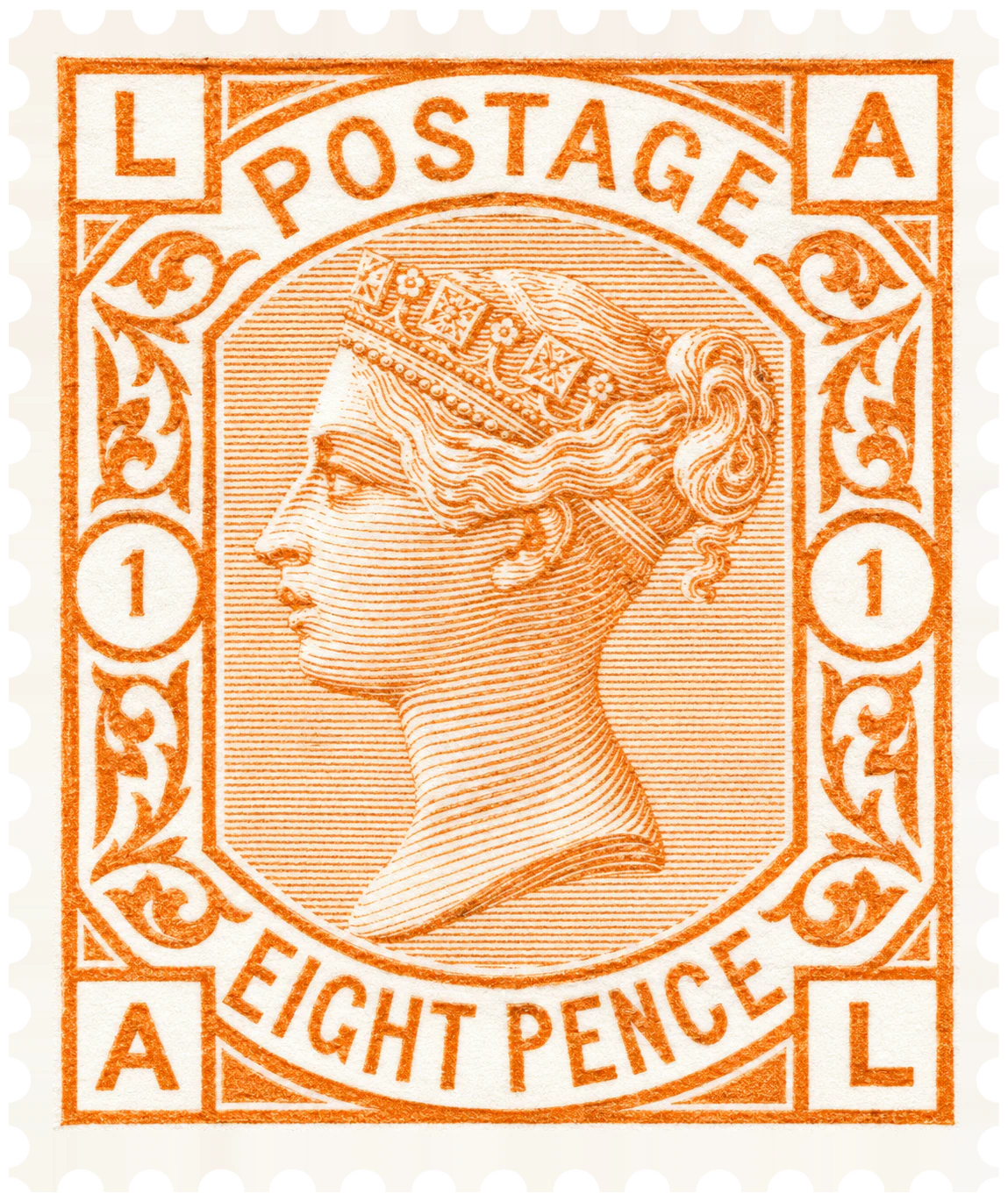
Victoria · 8d orange · 1876
Thomas De La Rue & Co. prepared the new eightpenny design and printed it by typography. Its rejected purple-brown printing was replaced by orange using the same design. The illustration represents plate 1, which supplied ordinary production; plate 2 produced registration impressions only.
On the stamp you were exploring
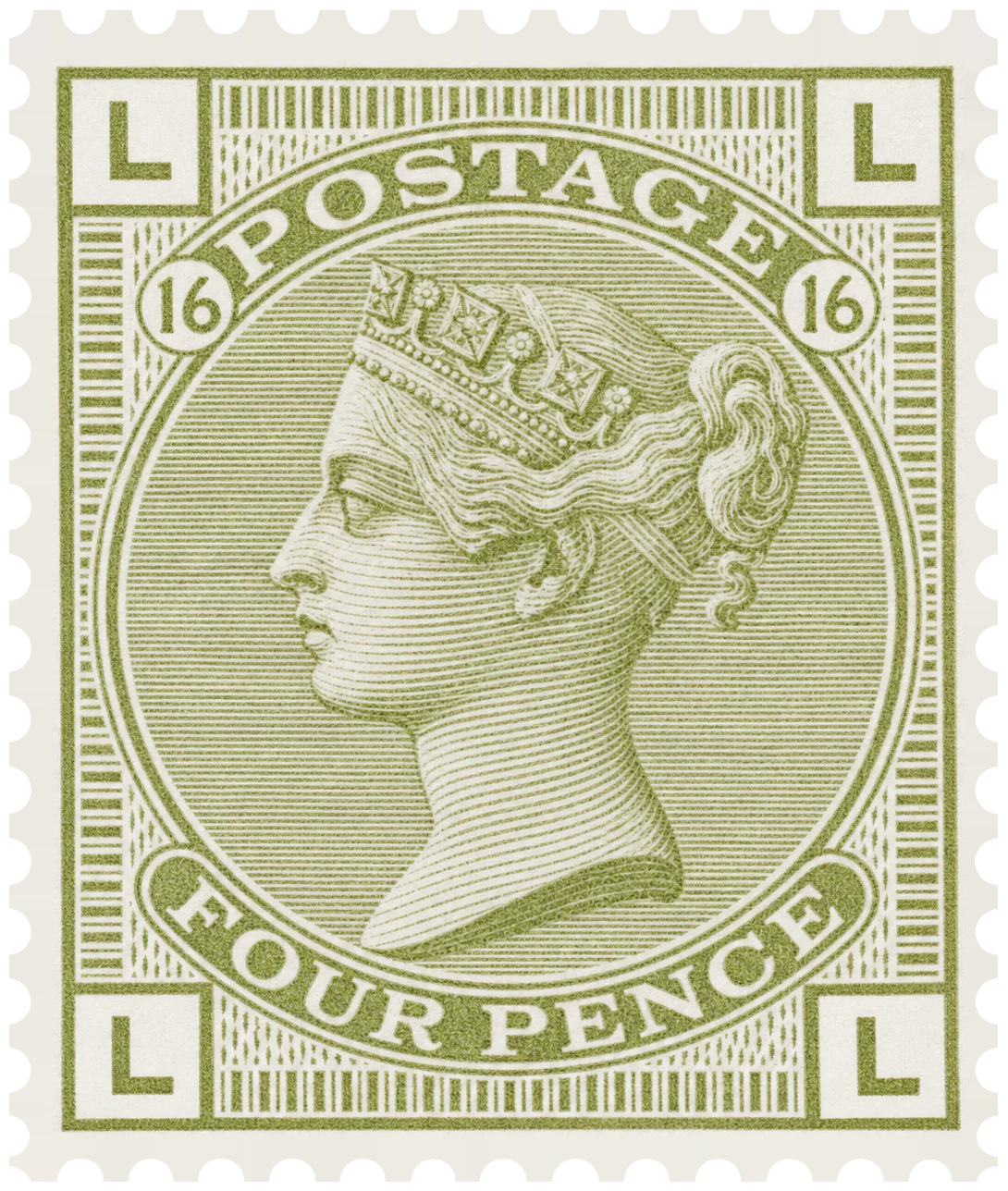
Victoria · 4d sage-green · 1877
Thomas De La Rue & Co. printed the 1877 fourpenny sage-green by typography, reusing the vermilion design and plates. The illustration represents plate 16 on Large Garter paper; the few plate-17 green impressions came from registration sheets.
On the stamp you were exploring
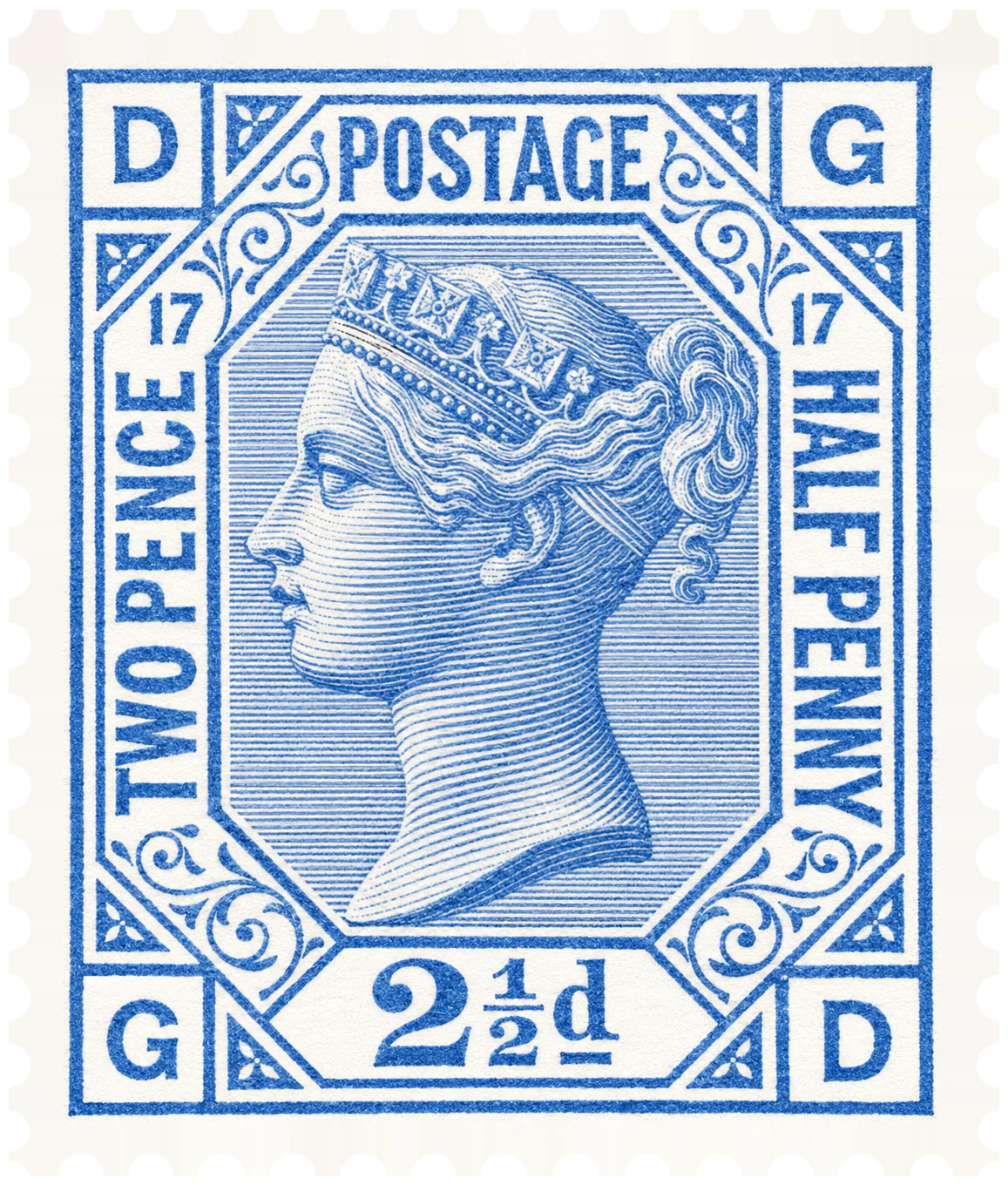
Victoria · 2½d blue · 1880
Thomas De La Rue & Co. printed the 1880 two-and-a-halfpenny blue by typography, retaining the 1875 design. Plate 17 produced both the last mauve and first blue impressions. The illustration represents that plate on Orb paper; Crown-paper printings followed later.
On the stamp you were exploring
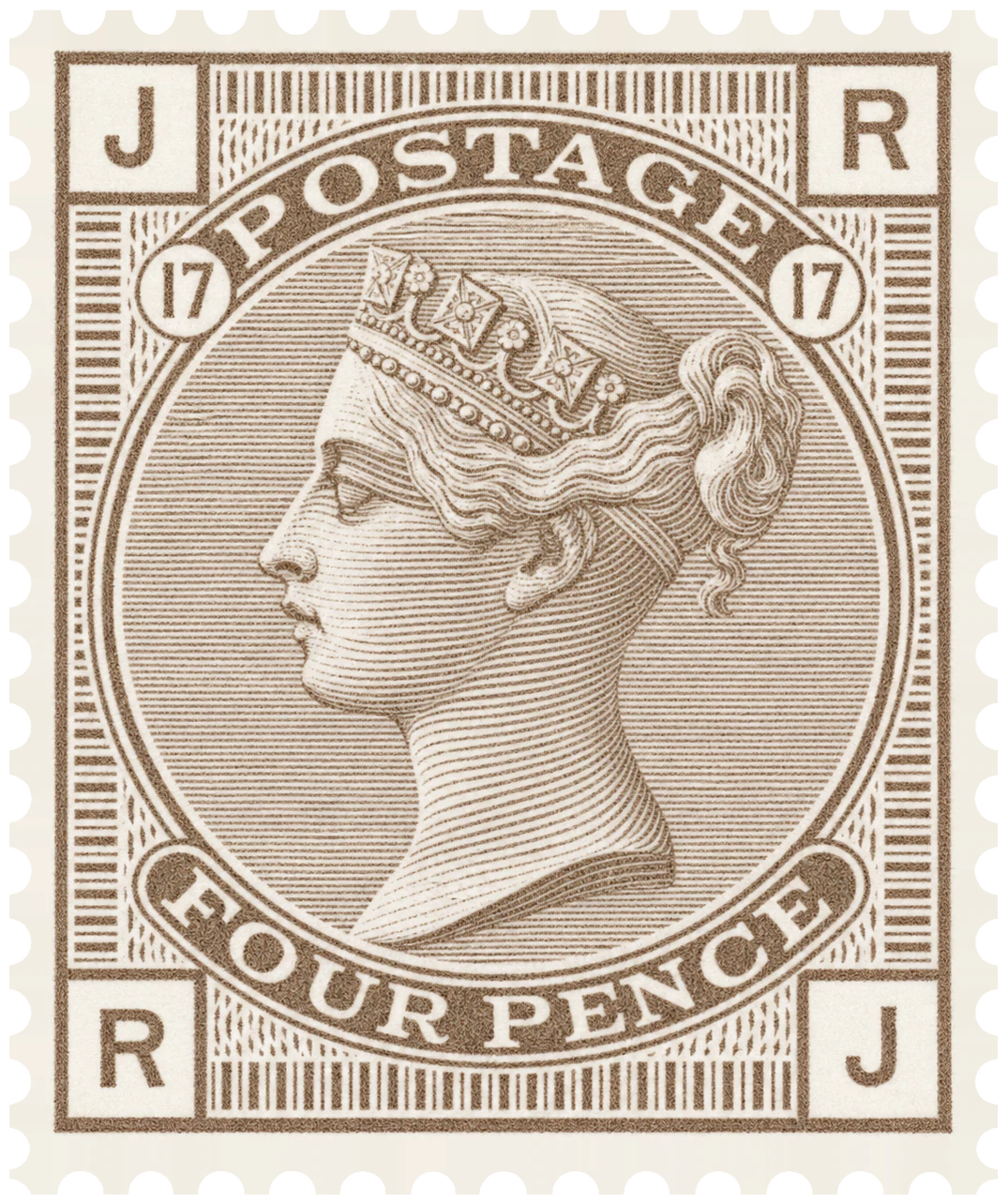
Victoria · 4d grey-brown · 1880
Thomas De La Rue & Co. printed the 1880 fourpenny grey-brown by typography from plate 17, retaining the earlier design. The illustration represents the original SG154 issue on Large Garter paper. Later Crown paper required a rearranged plate, and De La Rue took over perforating during the 1880 production transition.
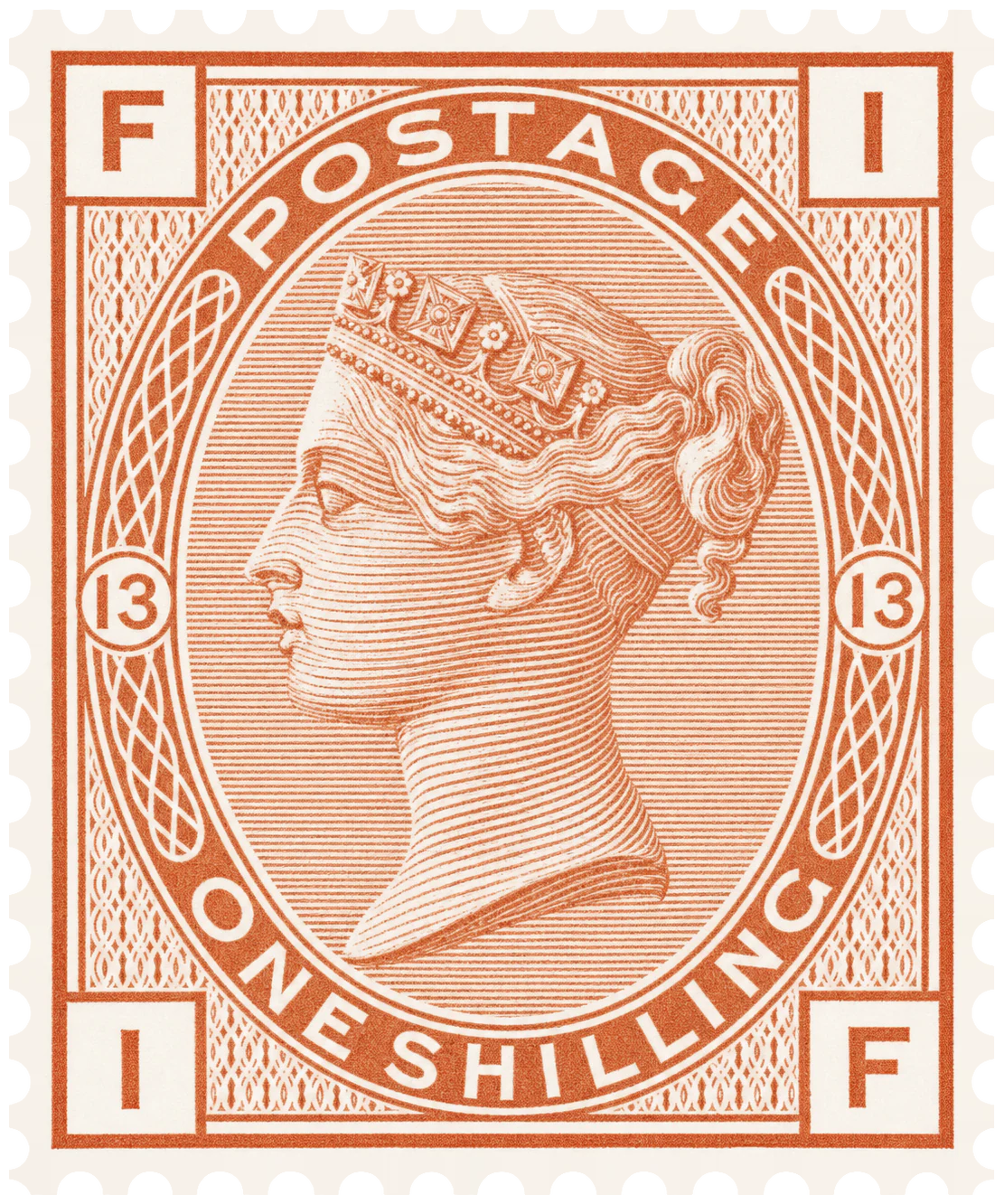
On the stamp you were exploring
Victoria · 1s orange-brown · 1880
Thomas De La Rue & Co. printed the 1880 one-shilling orange-brown by typography, retaining the 1873 design. The first orange-brown issue reused plate 13 on Spray of Rose paper; plates 13 and 14 were later rearranged for Large Crown paper in 1881.
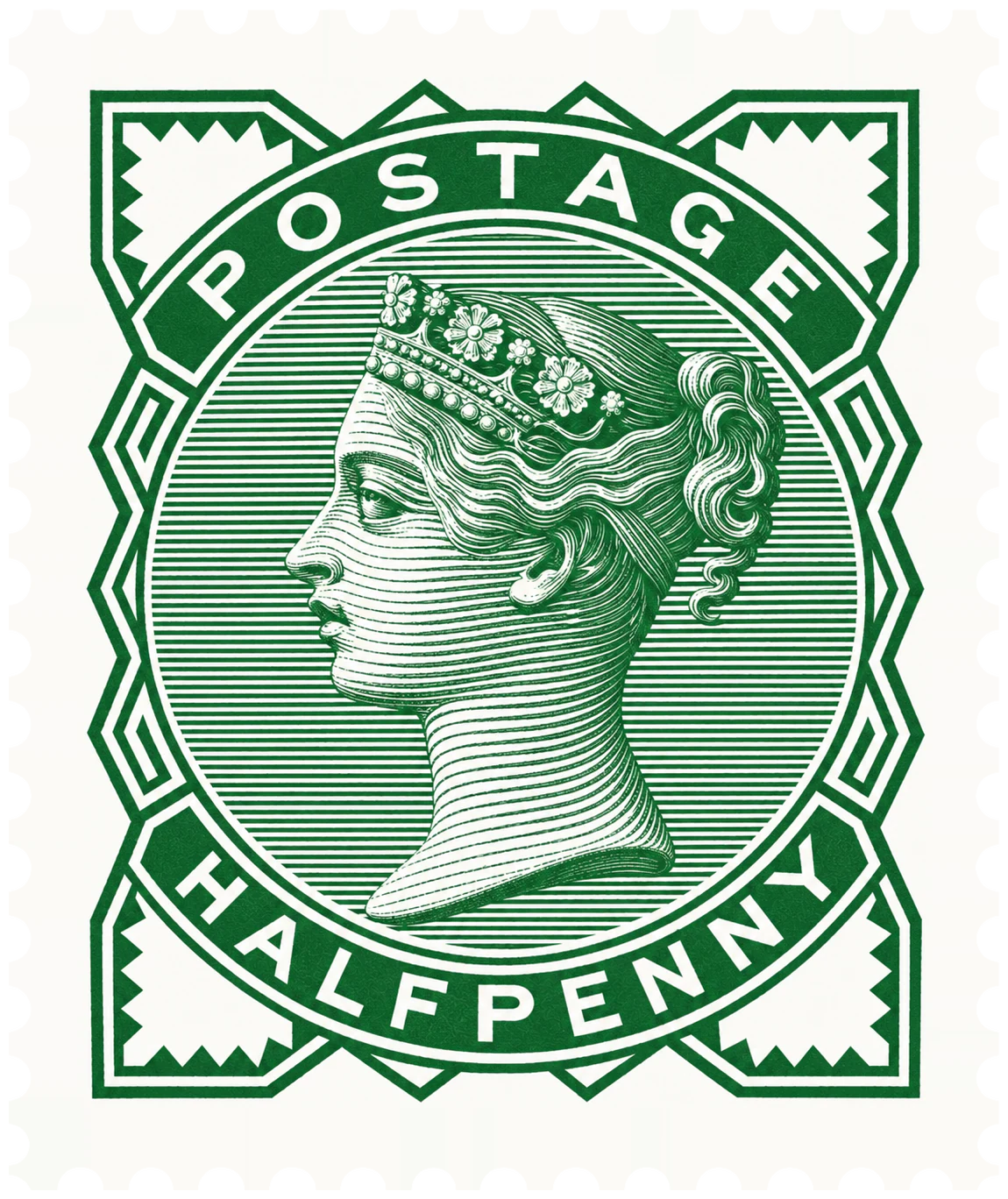
On the stamp you were exploring
Victoria · ½d deep green · 1880
Thomas De La Rue & Co. designed and surface-printed the 1880 green halfpenny that replaced Perkins Bacon’s Bantam. Its circular portrait and zigzag frame were prepared in the coarser style used for the new machine-printed low values. No individual engraver of this 1880 design is established by the sources used here.
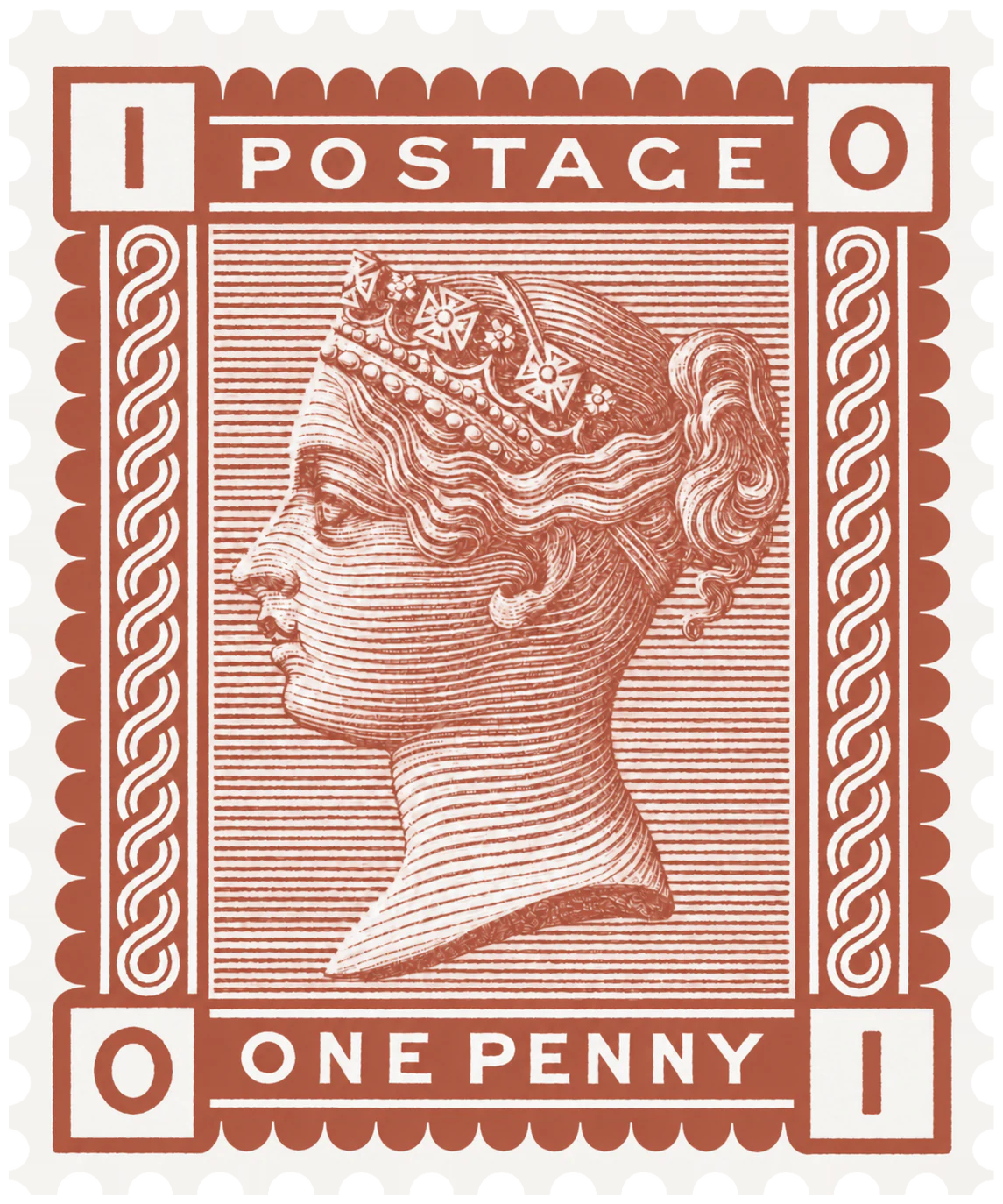
On the stamp you were exploring
Victoria · 1d Venetian red · 1880
Thomas De La Rue & Co. designed and surface-printed the Venetian-red penny introduced on 1 January 1880, replacing Perkins Bacon’s line-engraved Penny Red. The new chain-like frame retained four corner letters but omitted visible plate numbers. The 1880 design is credited to the firm, without assigning its coarser portrait to a named engraver.
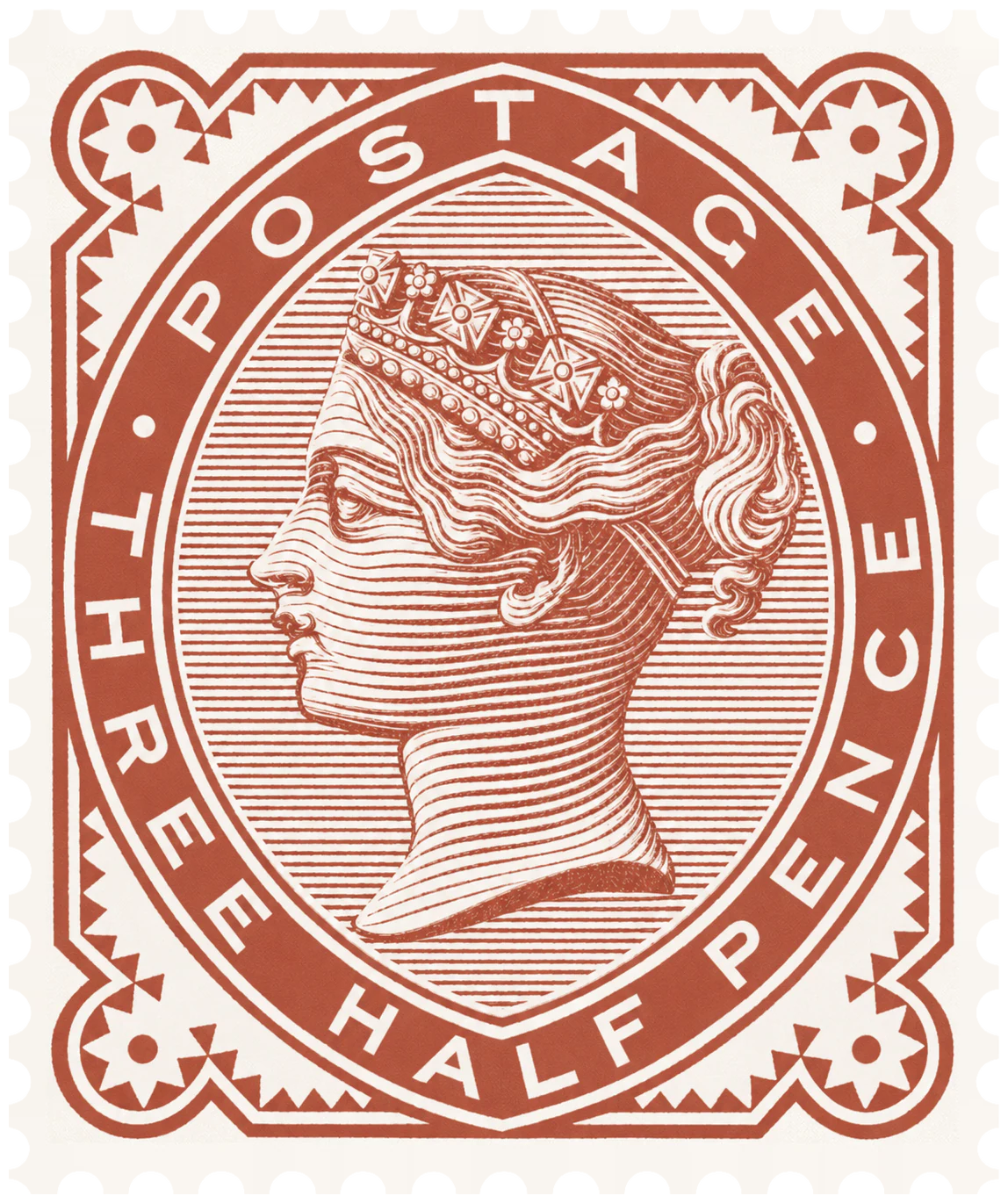
On the stamp you were exploring
Victoria · 1½d Venetian red · 1880
Thomas De La Rue & Co. designed and surface-printed the three-halfpenny Venetian red issued on 14 October 1880. Its pointed oval replaced Perkins Bacon’s triangular frame, with no corner letters or visible plate numbers. Two printing plates supplied the issue; the sources used here do not identify an individual engraver of the 1880 design.
On the stamp you were exploring
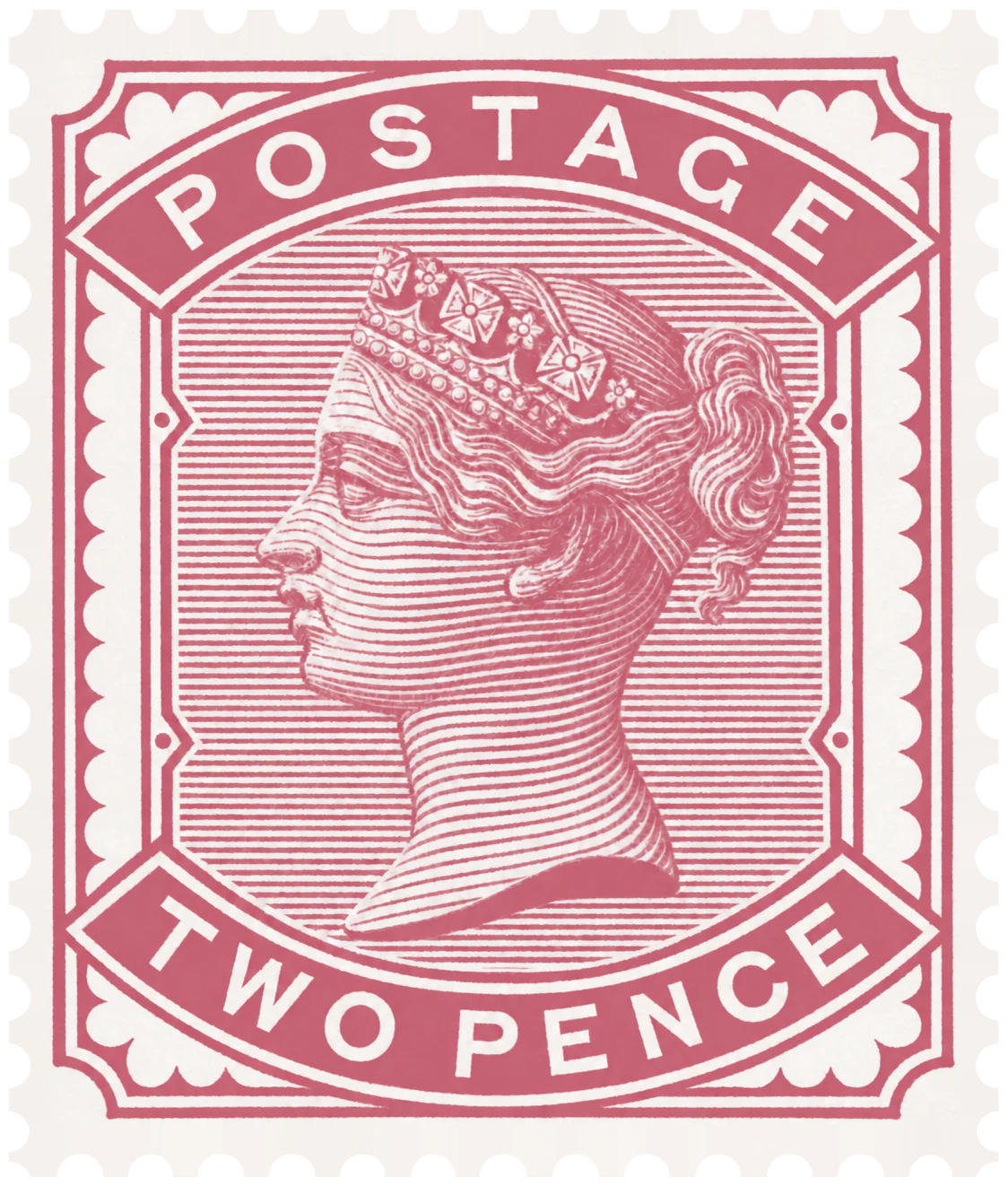
Victoria · 2d pale rose · 1880
Thomas De La Rue & Co. designed and surface-printed the twopenny introduced on 8 December 1880, replacing Perkins Bacon’s line-engraved blue stamp. Its curved inscription panels and decorative corners belong to the new machine-printed low-value series. The individual engraver of this coarser design is not established by the sources used here.
On the stamp you were exploring
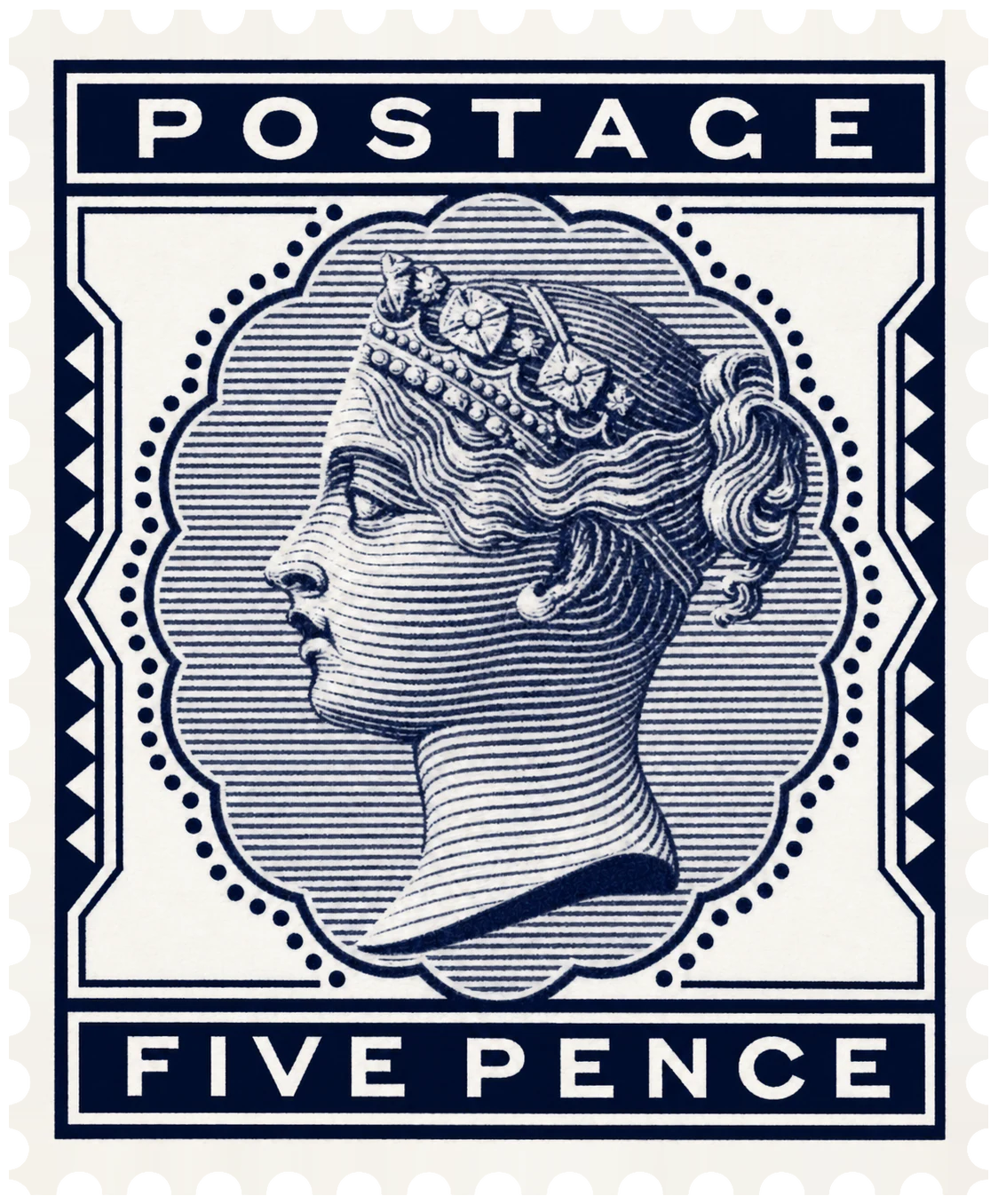
Victoria · 5d indigo · 1881
Thomas De La Rue & Co. designed and surface-printed the fivepenny indigo issued on 15 March 1881. The new denomination used a dotted, wavy portrait frame without corner letters or visible plate numbers. Two plates supplied ordinary production; plate 3 remained unused for that purpose. No individual engraver of this design is established by the sources used here.
On the stamp you were exploring
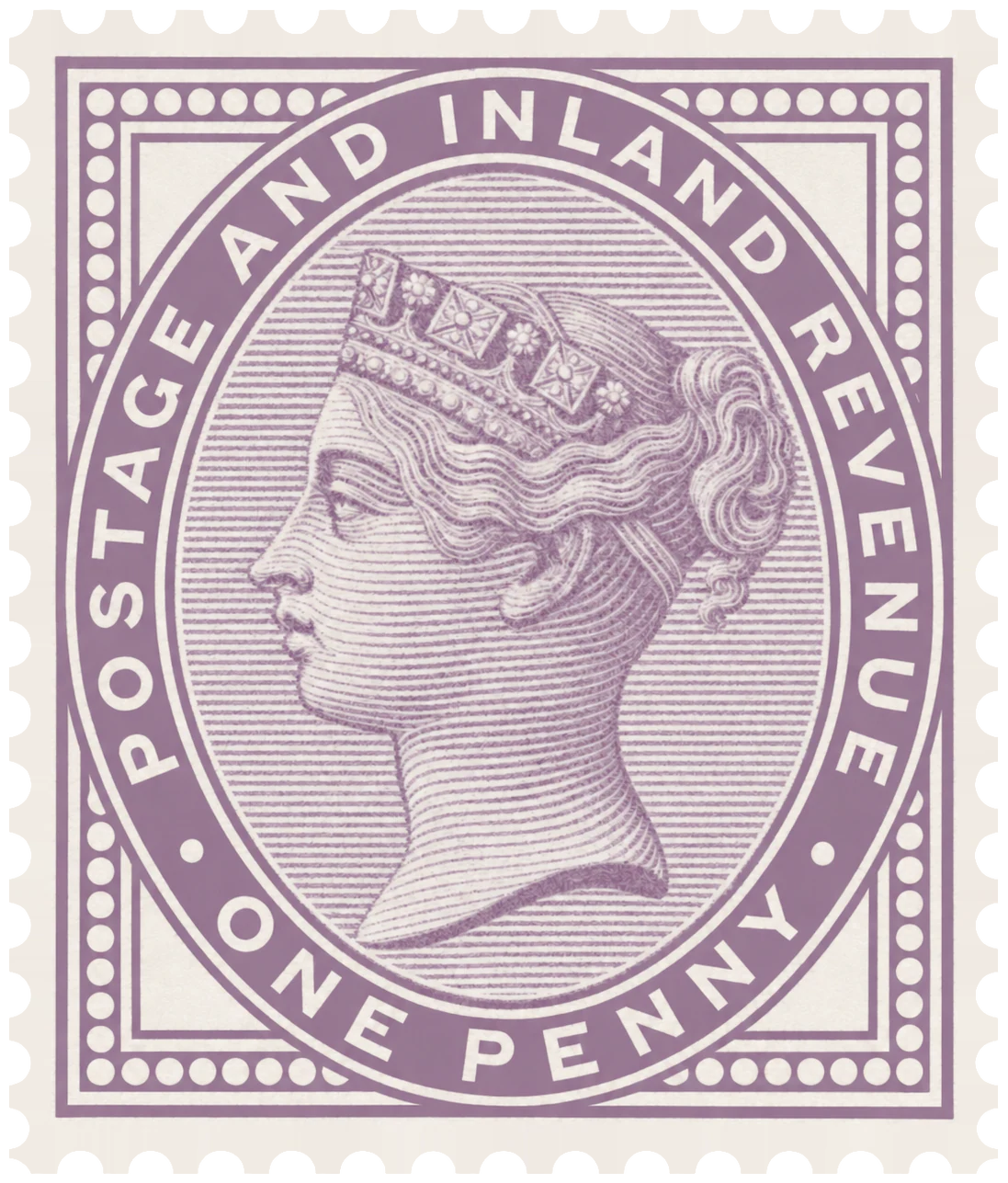
Victoria · 1d lilac · 1881
Thomas De La Rue & Co. designed and surface-printed the Penny Lilac introduced on 12 July 1881. Die I combined postage and penny revenue use in an oval design with fourteen pearls in each corner. Eight printing plates were made from this die. The firm is credited with the 1881 design; the individual engraver of the adaptation is not established by the sources used here.
On the stamp you were exploring
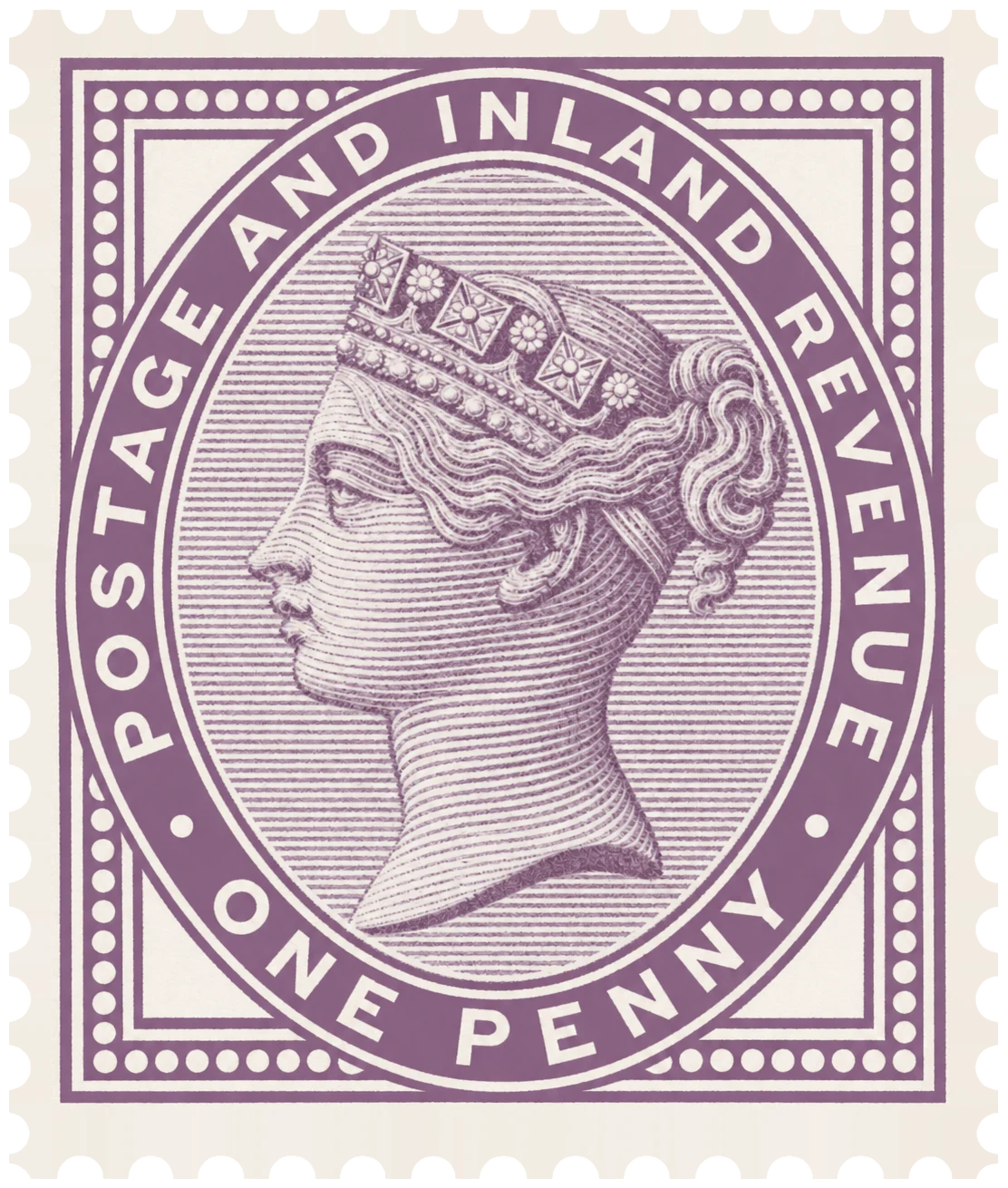
Victoria · 1d lilac · 1881
Thomas De La Rue & Co. prepared the revised Penny Lilac Die II, introduced in December 1881, with larger lettering and sixteen pearls in each corner. The firm printed it through the remainder of Victoria’s reign and into the transition to Edward VII. The later marginal rules and control letters belong to production management, not to a new portrait commission. No individual engraver of Die II is established by the sources used here.
On the stamp you were exploring
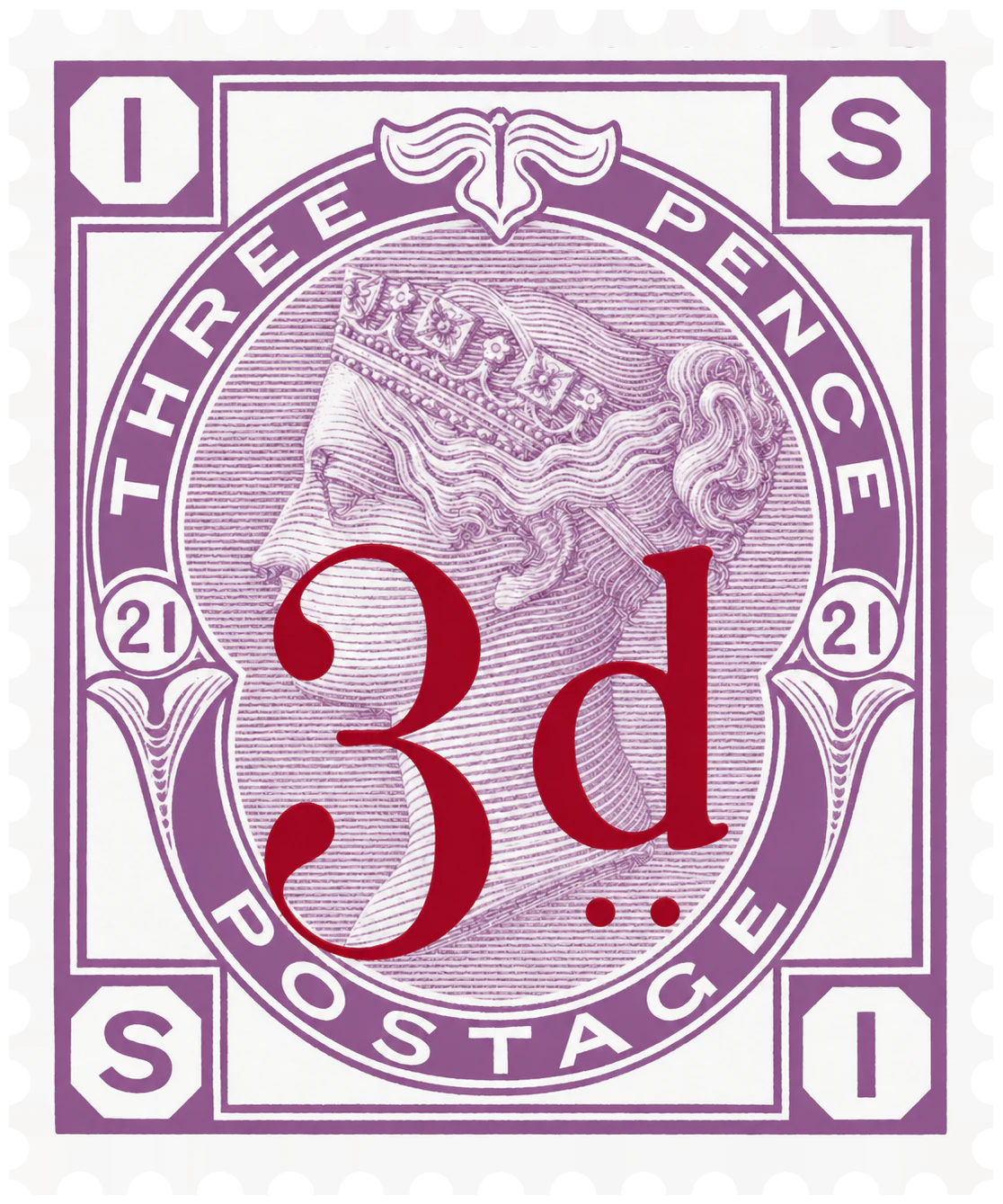
Victoria · 3d lilac with carmine value overprint · 1883
Thomas De La Rue & Co. printed the 1883 threepenny in lilac from the existing plate 21, then added the carmine value in a separate operation. The underlying design dates from 1873. Plate 21 was registered in its altered arrangement on 23 November 1882; its restored marginal ornaments marked the divisions into forty-stamp counter sheets.
← Back to 3d lilac with carmine value overprint: stamp details
On the stamp you were exploring
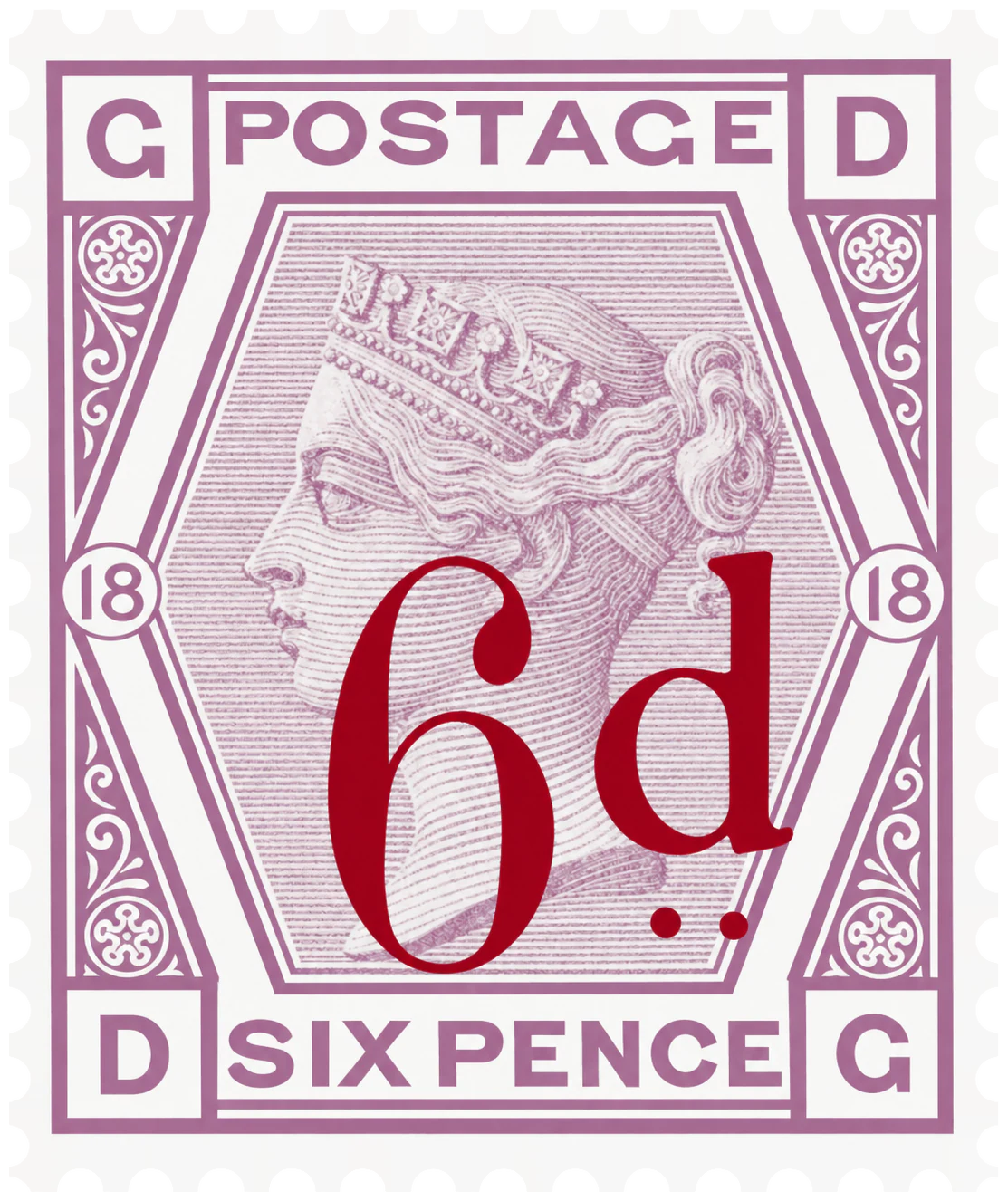
Victoria · 6d lilac with carmine value overprint · 1883
Thomas De La Rue & Co. printed the 1883 sixpenny in lilac from the existing plate 18 and applied its carmine value separately. The underlying design had appeared in grey in 1874. Plate 18 was registered for the new issue on 23 November 1882. The altered colour and added value did not require a new portrait engraving.
← Back to 6d lilac with carmine value overprint: stamp details
On the stamp you were exploring
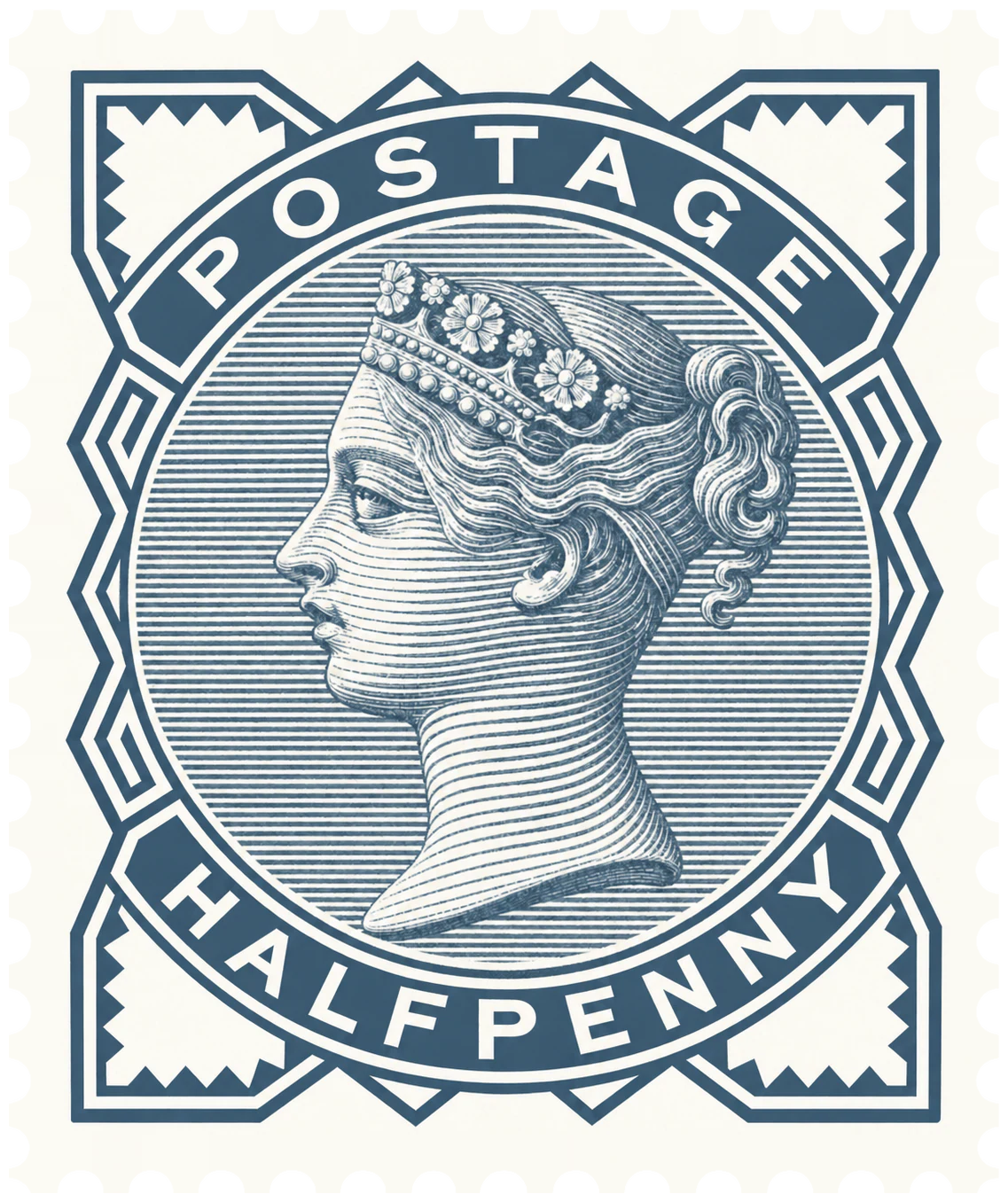
Victoria · ½d slate-blue · 1884
Thomas De La Rue & Co. printed the slate-blue halfpenny introduced on 1 April 1884, retaining the portrait and zigzag frame of the 1880 green stamp. Existing plates were reused and the sequence continued through plate 14. The change of colour did not require a new portrait engraving.
On the stamp you were exploring
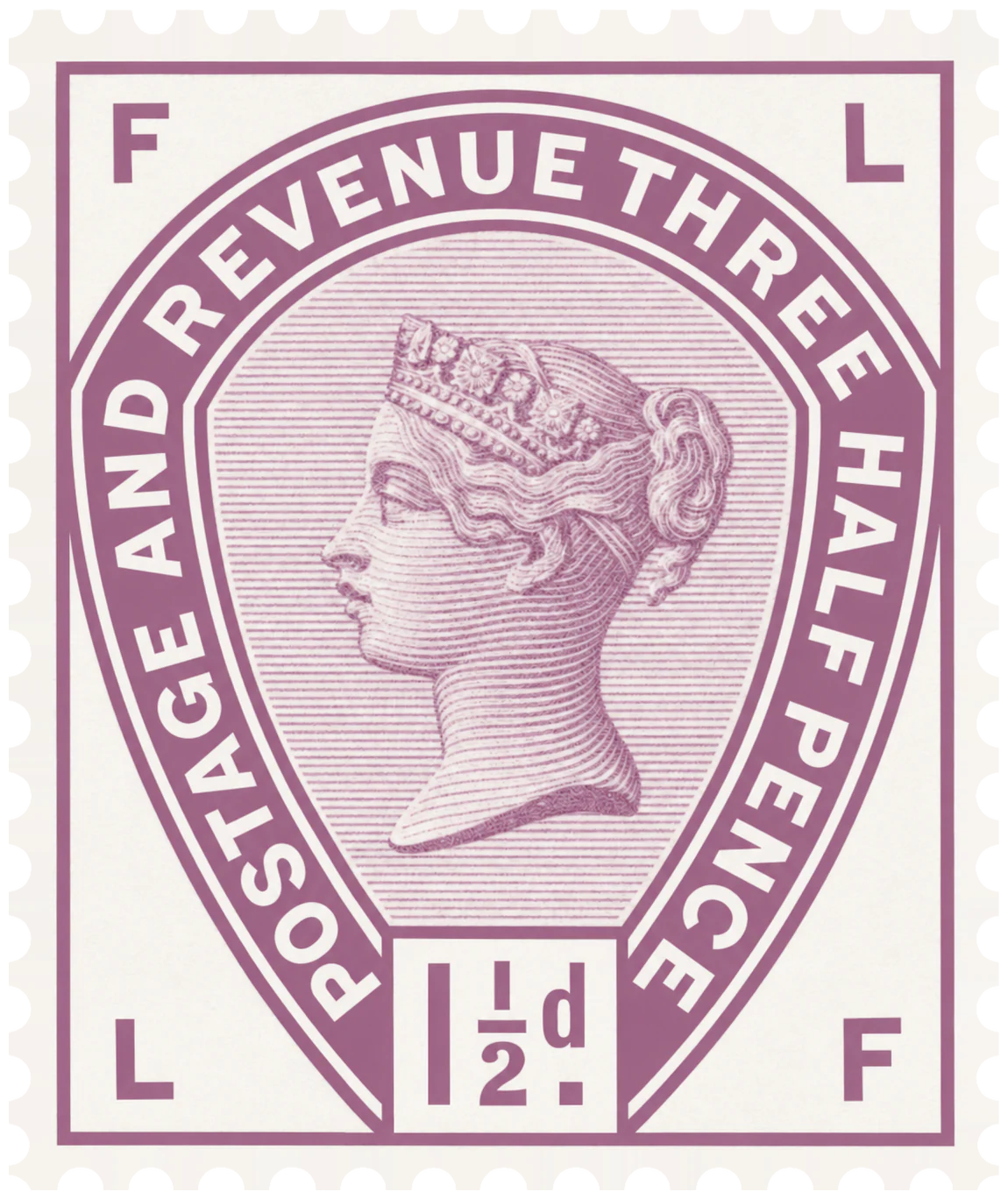
Victoria · 1½d lilac · 1884
Thomas De La Rue & Co. designed and surface-printed the new three-halfpenny lilac issued on 1 April 1884. Its curved shield-shaped frame, long inscription and fractional value distinguish it from the provisional design of 1880. Two printing plates were used. The earlier portrait sources are credited separately from this new design.
On the stamp you were exploring
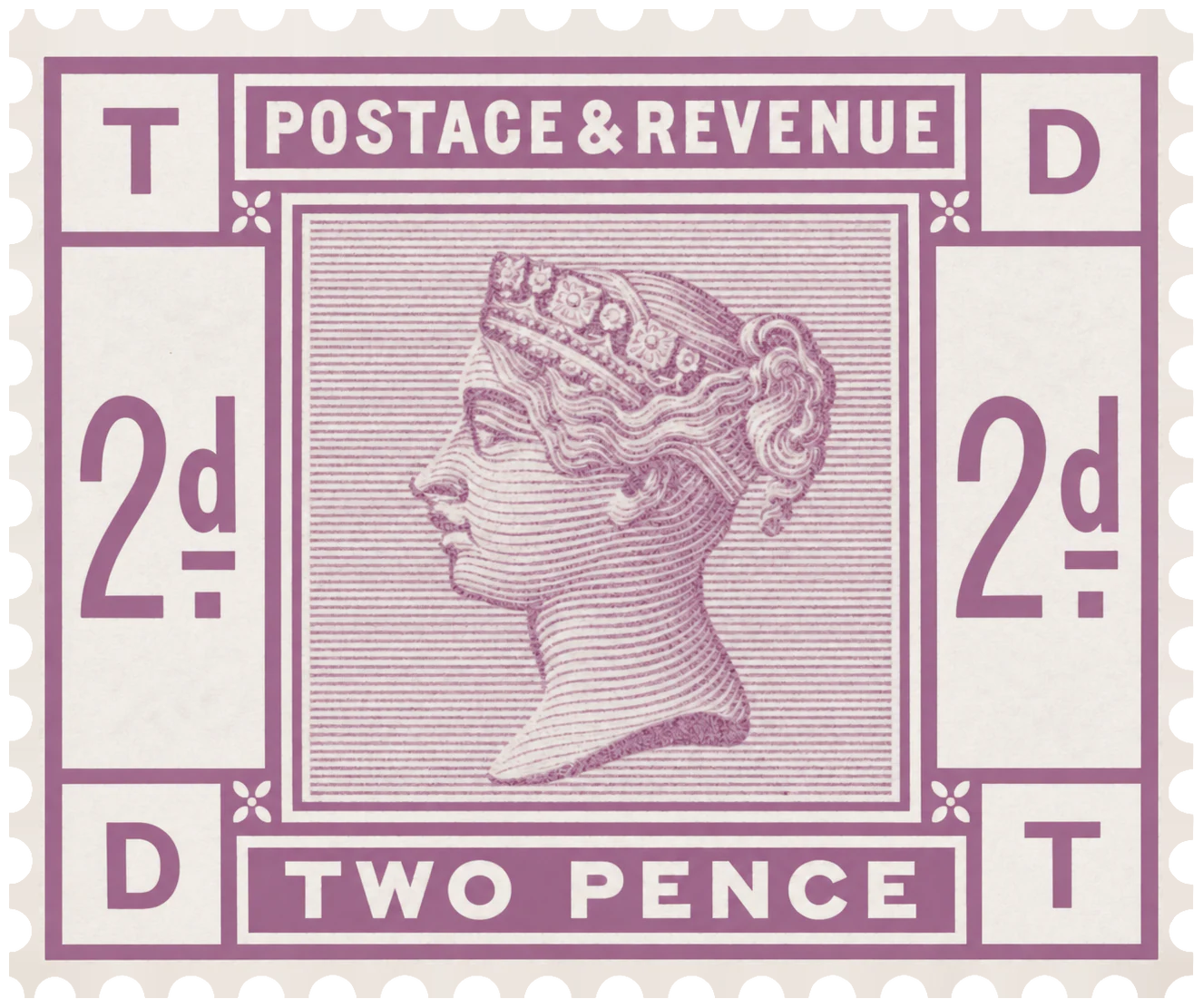
Victoria · 2d lilac · 1884
Thomas De La Rue & Co. designed and surface-printed the twopenny lilac issued on 1 April 1884. The horizontal design places a large value on either side of the portrait. Two plates were used, each arranged as two panes of 120. Its inherited portrait sources are distinct from the preparation of this new design.
On the stamp you were exploring
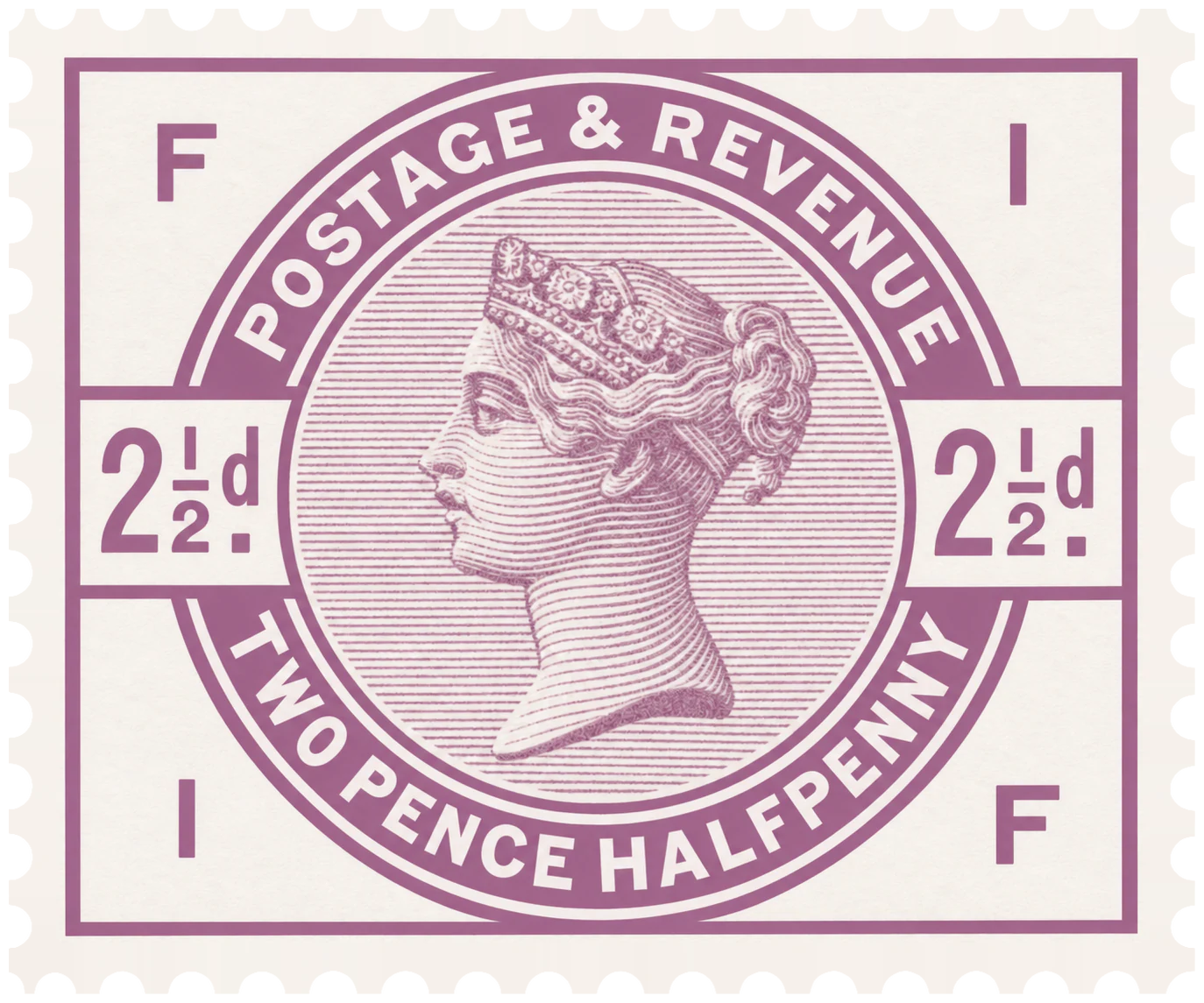
Victoria · 2½d lilac · 1884
Thomas De La Rue & Co. designed and surface-printed the two-and-a-halfpenny lilac issued on 1 April 1884. Its horizontal design places large value figures on either side of a circular portrait frame. Two printing plates were used. The inherited portrait sources are credited separately from the preparation of this later design.
On the stamp you were exploring
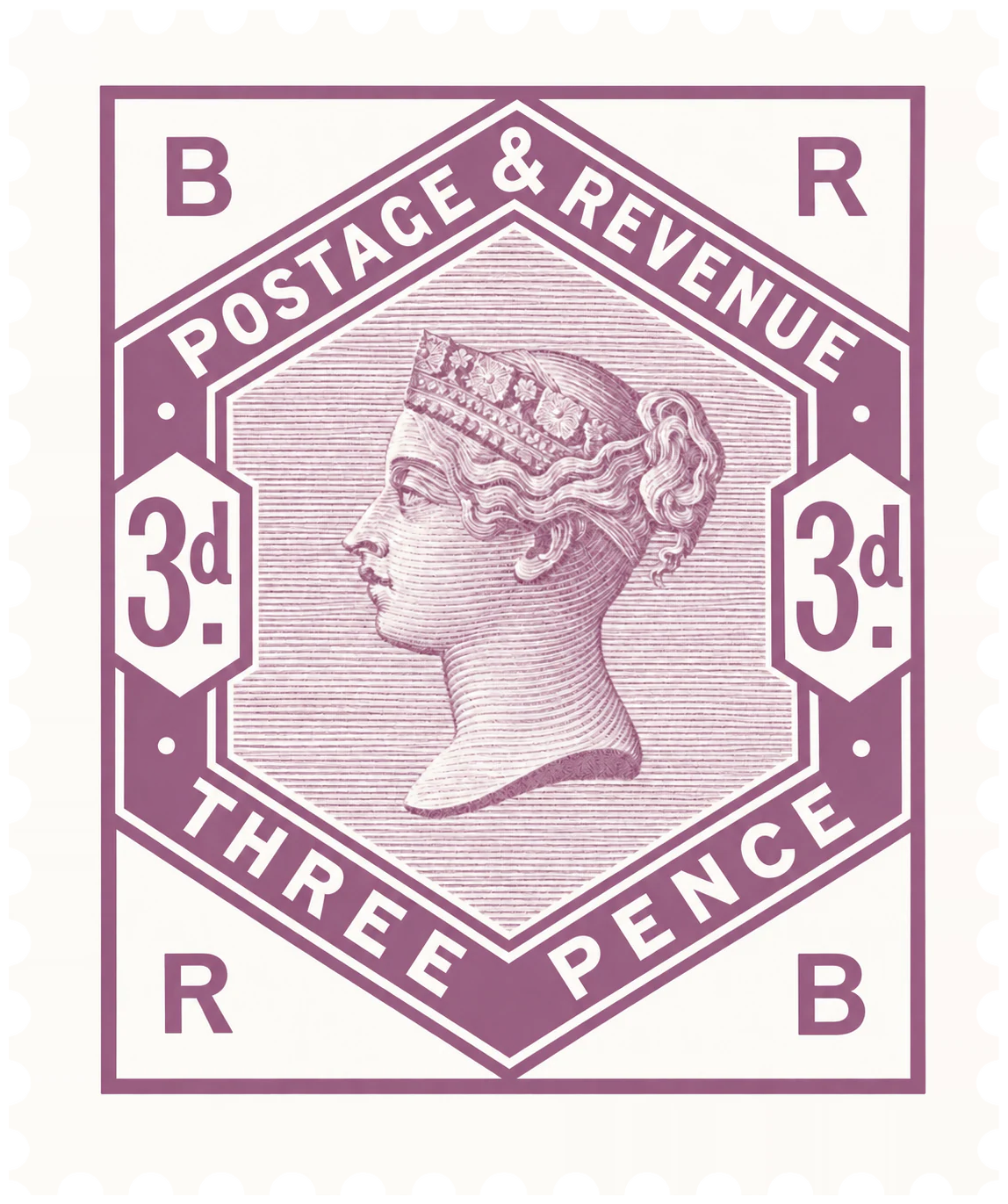
Victoria · 3d lilac · 1884
Thomas De La Rue & Co. designed and surface-printed the threepenny lilac issued on 1 April 1884. Its upright design combines an angular portrait frame with a large value on either side. Two printing plates were used. The earlier portrait sources are distinct from the engraving of this later design.
On the stamp you were exploring
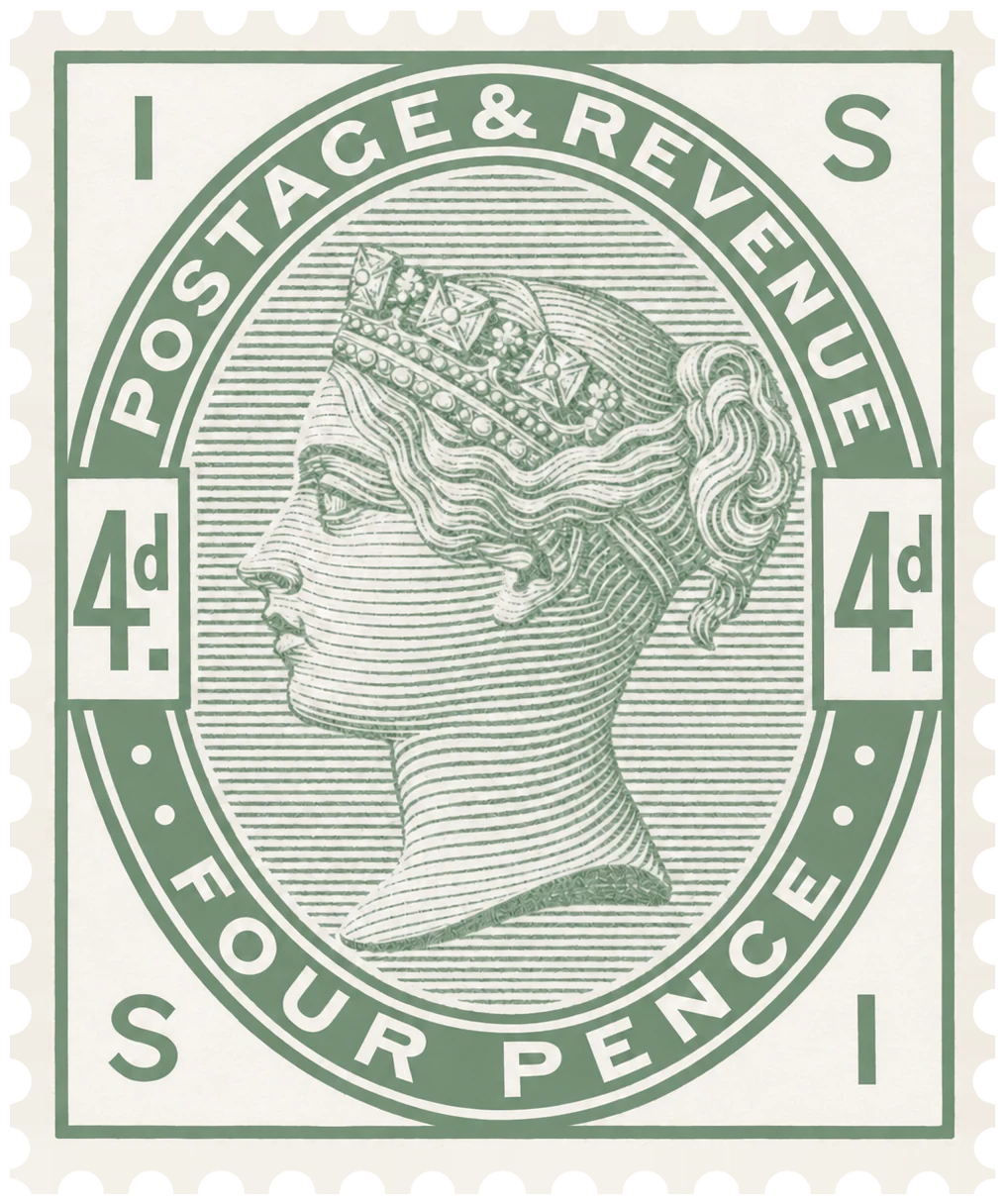
Victoria · 4d dull green · 1884
Thomas De La Rue & Co. designed and surface-printed the fourpenny dull green issued on 1 April 1884. The new upright design gives the portrait more space within an oval frame. Three printing plates were prepared, but only two were used. Earlier portrait sources are credited separately from this later engraving.
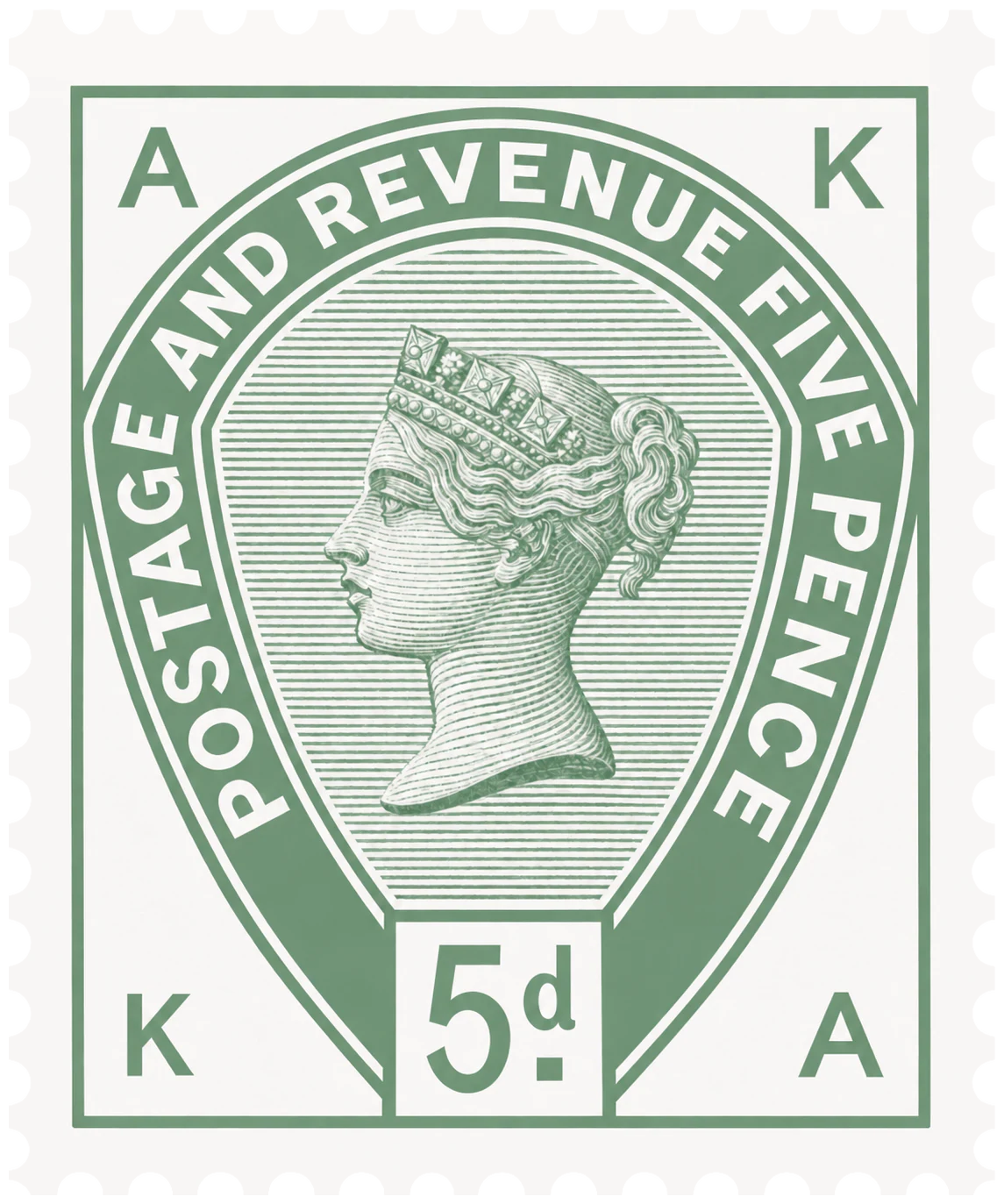
On the stamp you were exploring
Victoria · 5d dull green · 1884
Thomas De La Rue & Co. designed and surface-printed the fivepenny dull green issued on 1 April 1884. The first die cracked before issue. Plates 3 and 4 were prepared from the replacement Die II, identified by a dot beneath the d. The inherited portrait sources are separate from the cutting of that replacement die.
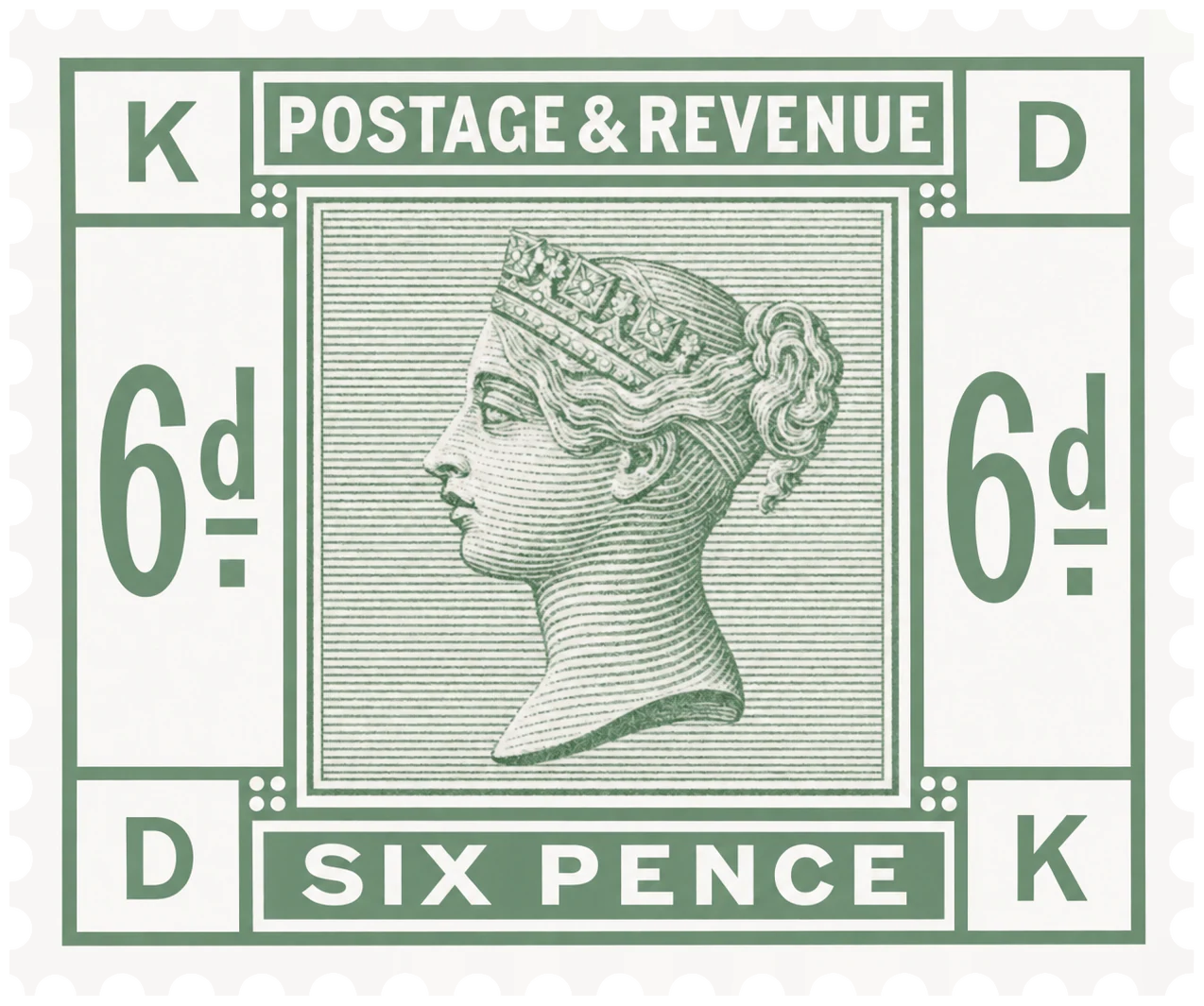
On the stamp you were exploring
Victoria · 6d dull green · 1884
Thomas De La Rue & Co. designed and surface-printed the sixpenny dull green issued on 1 April 1884. The horizontal layout adapts the twopenny arrangement, with large value figures beside the portrait. Two printing plates were used, with marginal marks showing divisions into forty-stamp counter sheets. Earlier portrait sources are credited separately from this new design.
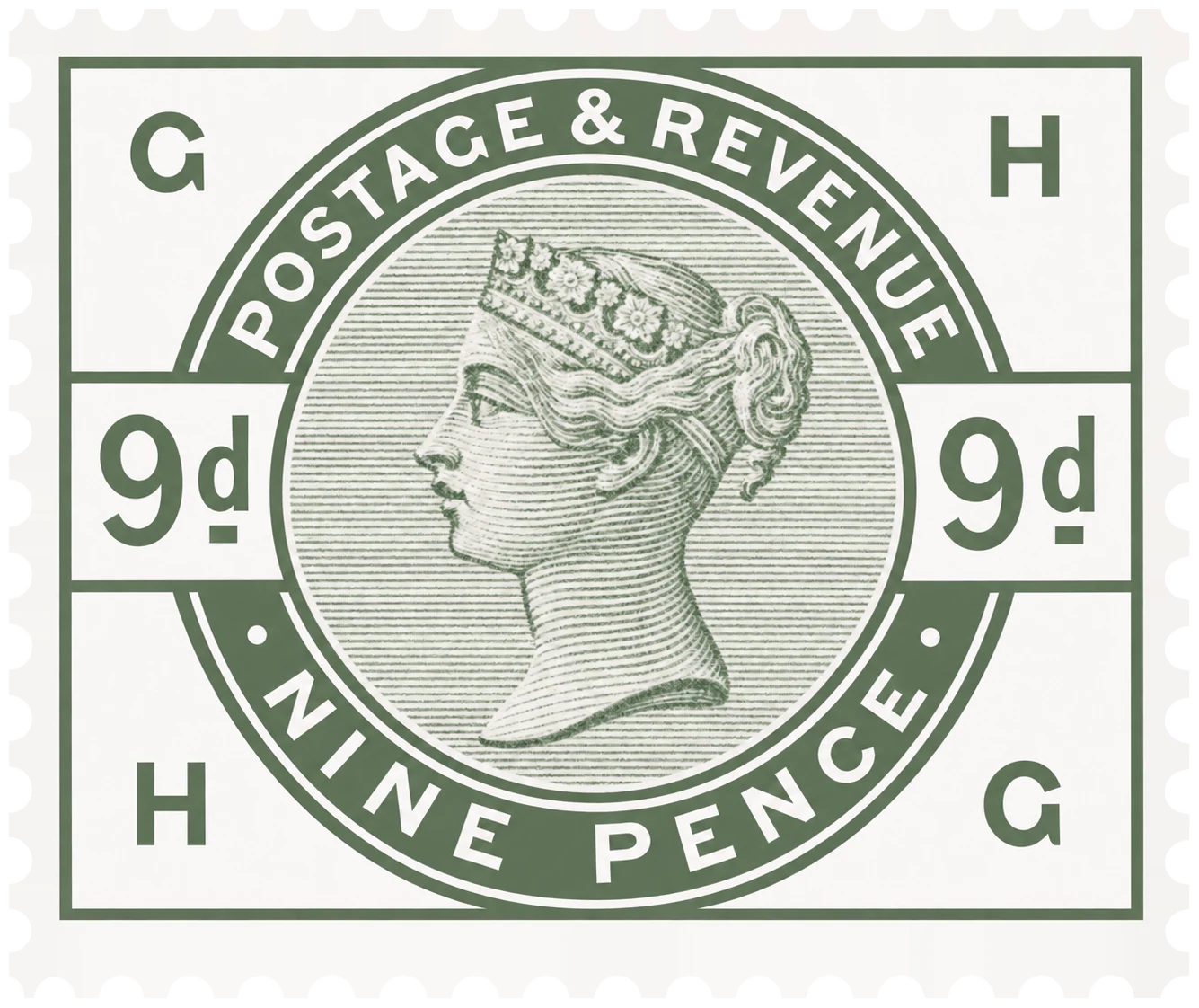
On the stamp you were exploring
Victoria · 9d dull green · 1883
Thomas De La Rue & Co. designed and surface-printed the ninepenny dull green issued on 1 August 1883. Plates 1 and 2 were rejected because of misplaced corner letters; plates 3 and 4 supplied the issued stamps. The inherited portrait sources are credited separately from this later design.
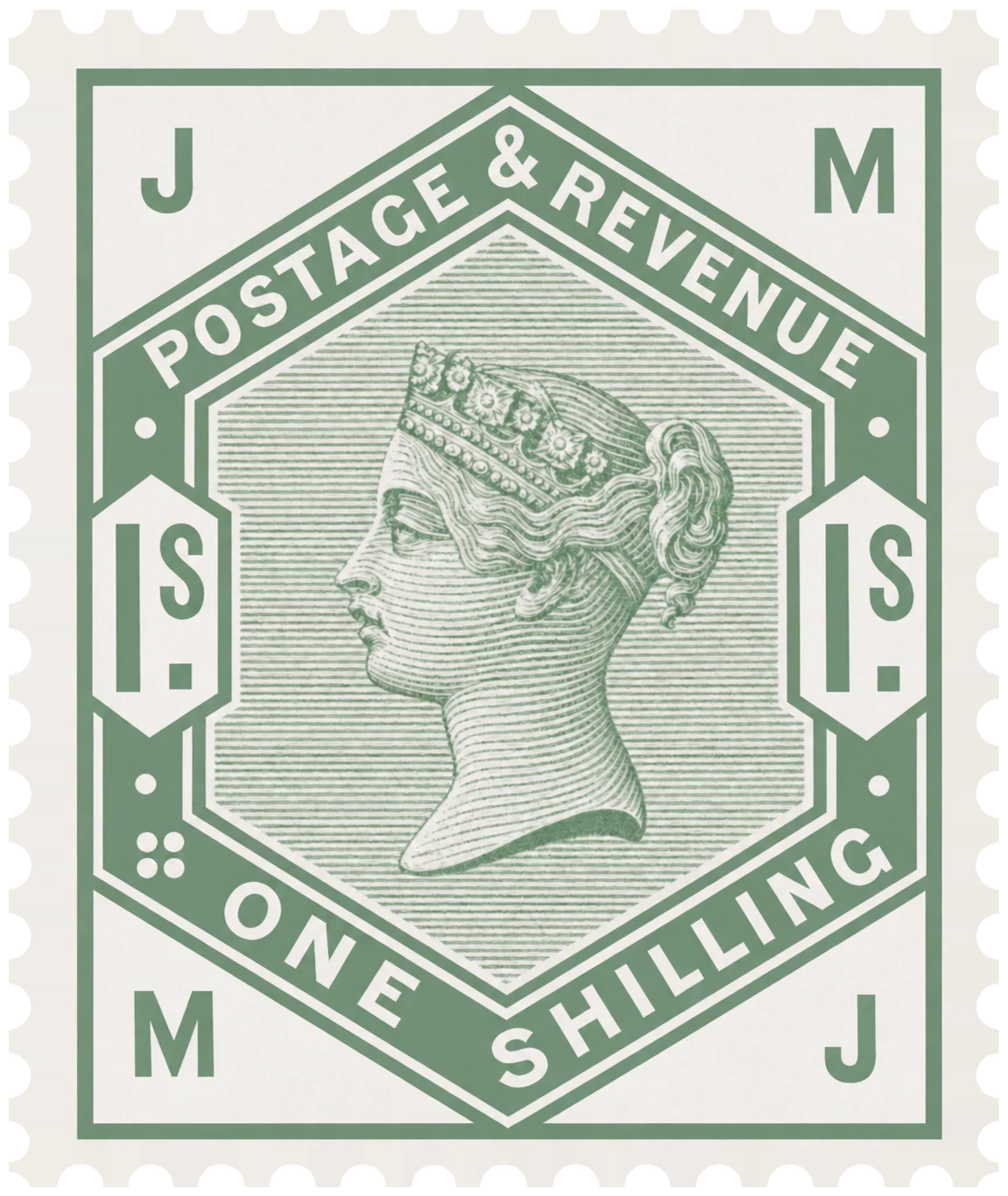
On the stamp you were exploring
Victoria · 1s dull green · 1884
Thomas De La Rue & Co. designed and surface-printed the one-shilling dull green issued on 1 April 1884. Two plates reproduced the new angular design, with marginal marks helping divide the printing sheets into groups of twenty stamps worth one pound. The inherited portrait sources are credited separately from the new die and frame.
On the stamp you were exploring
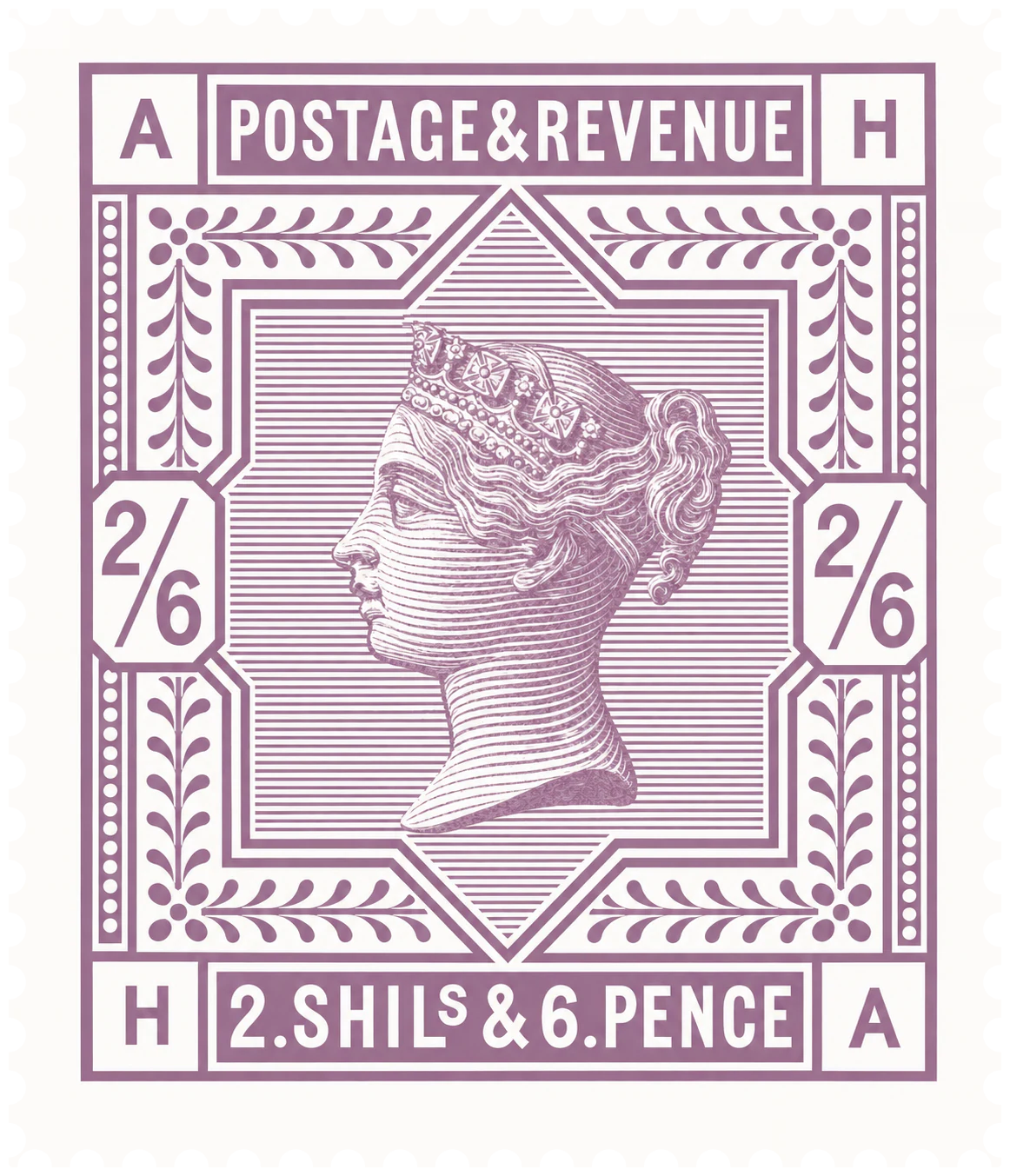
Victoria · 2s 6d lilac · 1883
Thomas De La Rue & Co. designed and surface-printed the half-crown lilac issued on 2 July 1883. Two plates were prepared, with plate 2 brought to press before plate 1. The inherited portrait sources are credited separately from the new frame and die.
On the stamp you were exploring
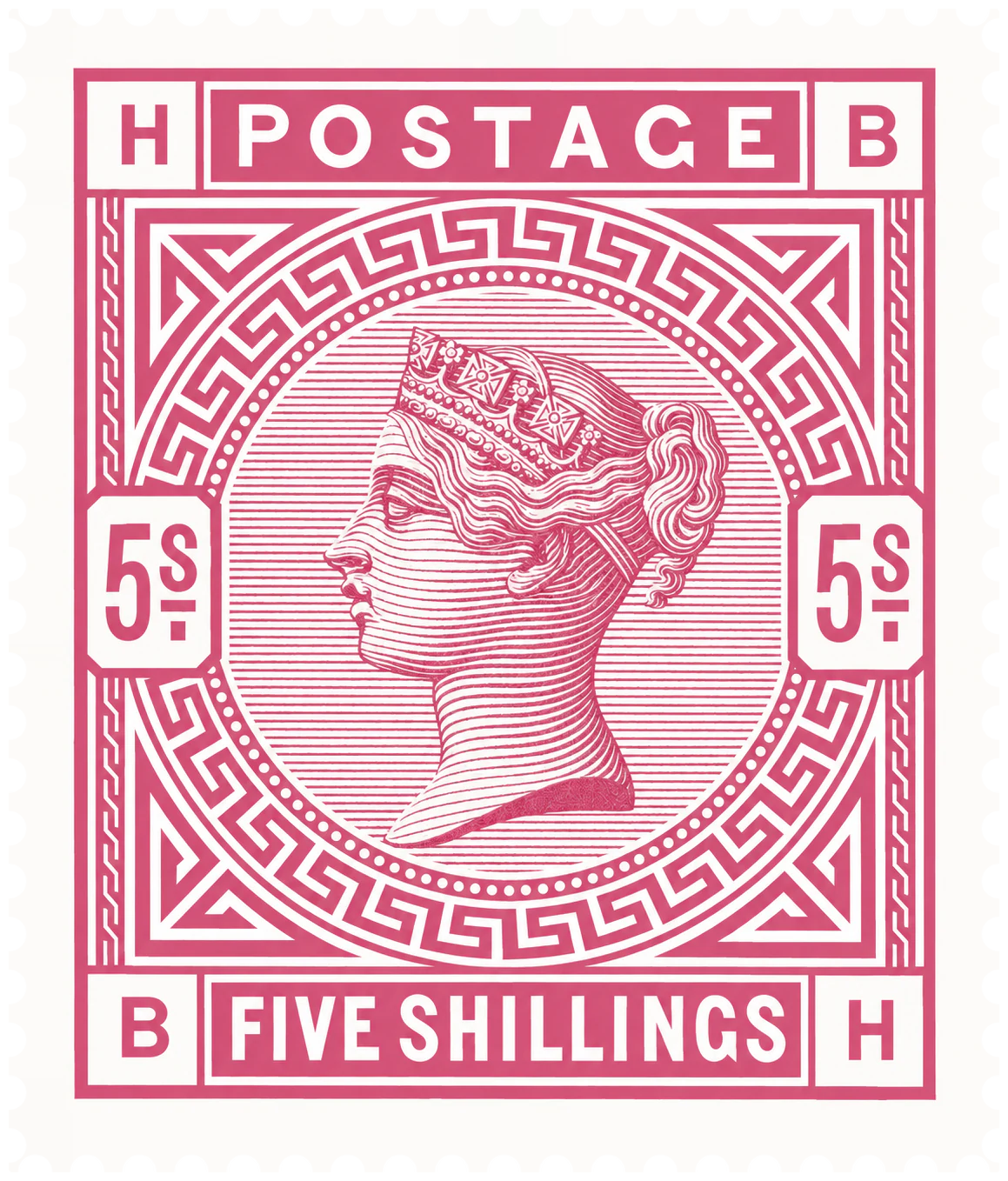
Victoria · 5s rose · 1884
Thomas De La Rue & Co. designed and surface-printed the revised five-shilling rose issued on 1 April 1884. Plates 5 and 6 continued the earlier five-shilling numbering. The Greek-key ornament recalls Owen Jones’s 1867 design; that inherited connection is separate from the later rearrangement and engraving.
On the stamp you were exploring
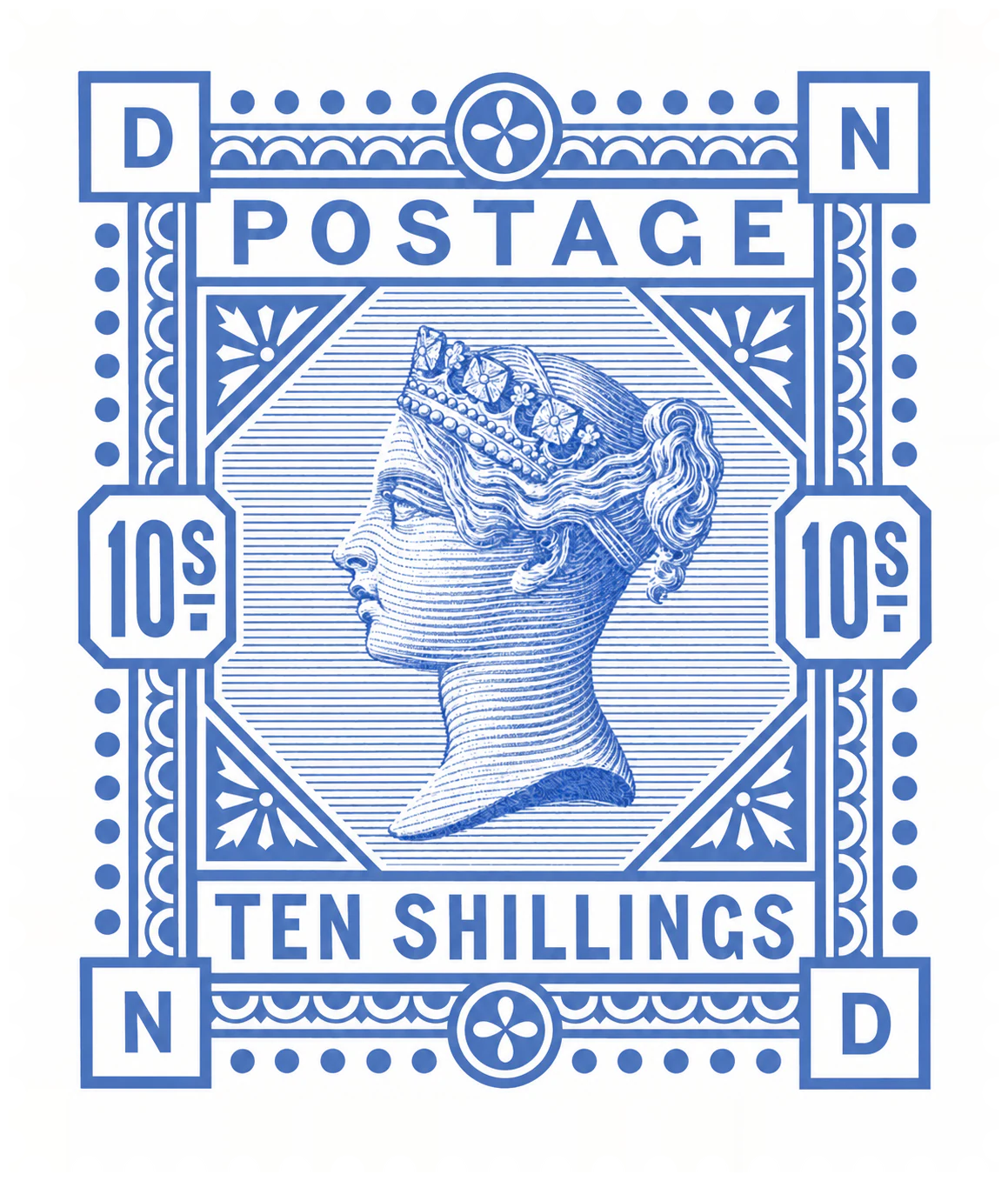
Victoria · 10s ultramarine · 1884
Thomas De La Rue & Co. designed and surface-printed the ten-shilling ultramarine issued on 1 April 1884. Plates 2 and 3 continued the numbering of the earlier denomination, while the portrait received a new octagonal setting. The earlier portrait sources are credited separately from this later engraving.
On the stamp you were exploring
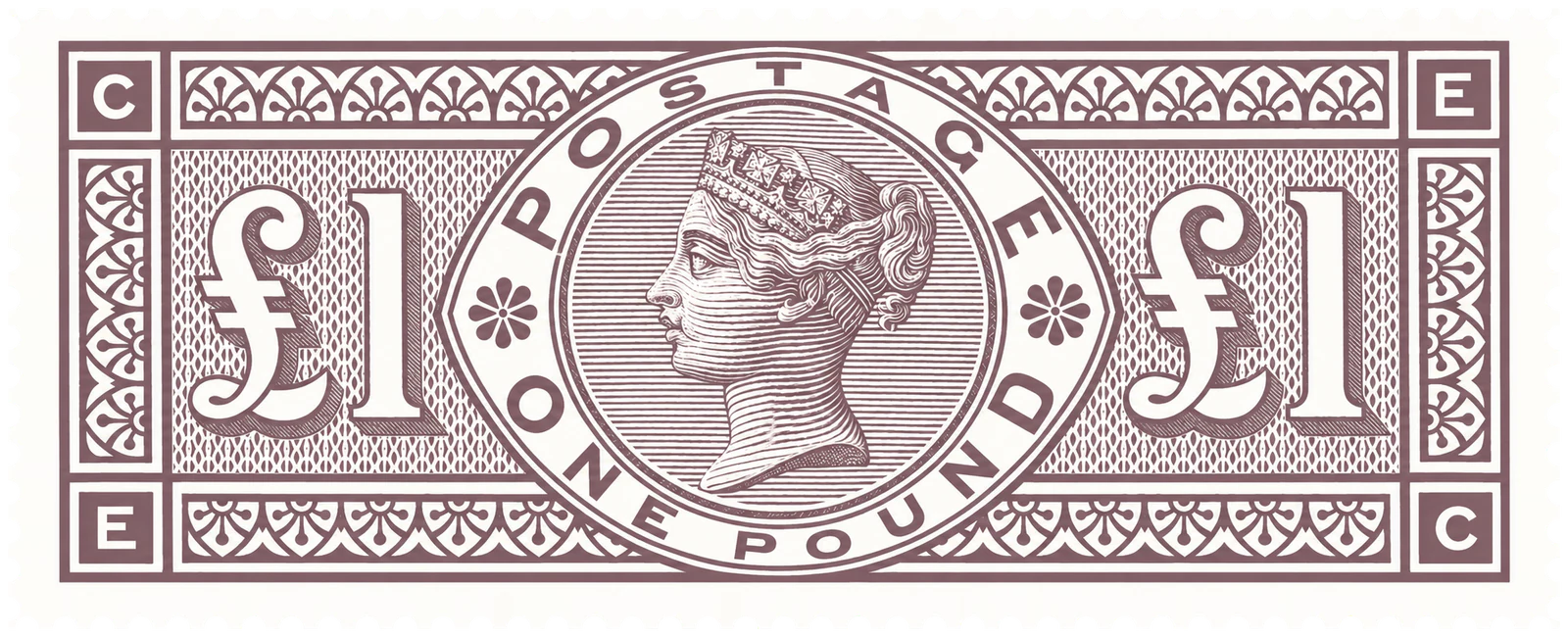
Victoria · £1 brown-lilac · 1884
Thomas De La Rue & Co. adapted its earlier one-pound telegraph design for the postage stamp issued on 1 April 1884. Plates 2 and 3 carried the horizontal design with its prominent £1 figures. The inherited portrait sources are credited separately from the later frame and postage inscription.
On the stamp you were exploring
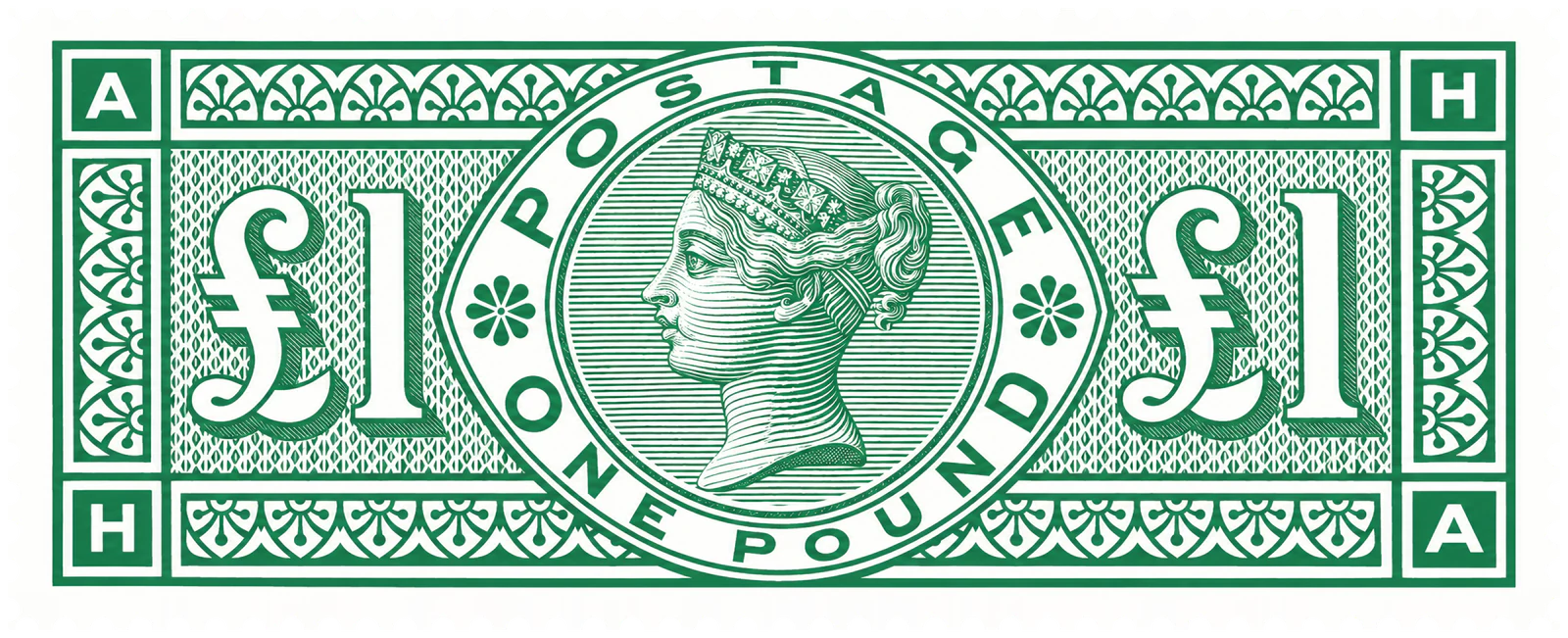
Victoria · £1 green · 1891
Thomas De La Rue & Co. printed the one-pound green introduced in January 1891 using the established 1884 design and plates. The change replaced brown-lilac ink with green without a new engraving. The earlier portrait sources are credited as inherited models, not as participants in the colour change.
On the stamp you were exploring
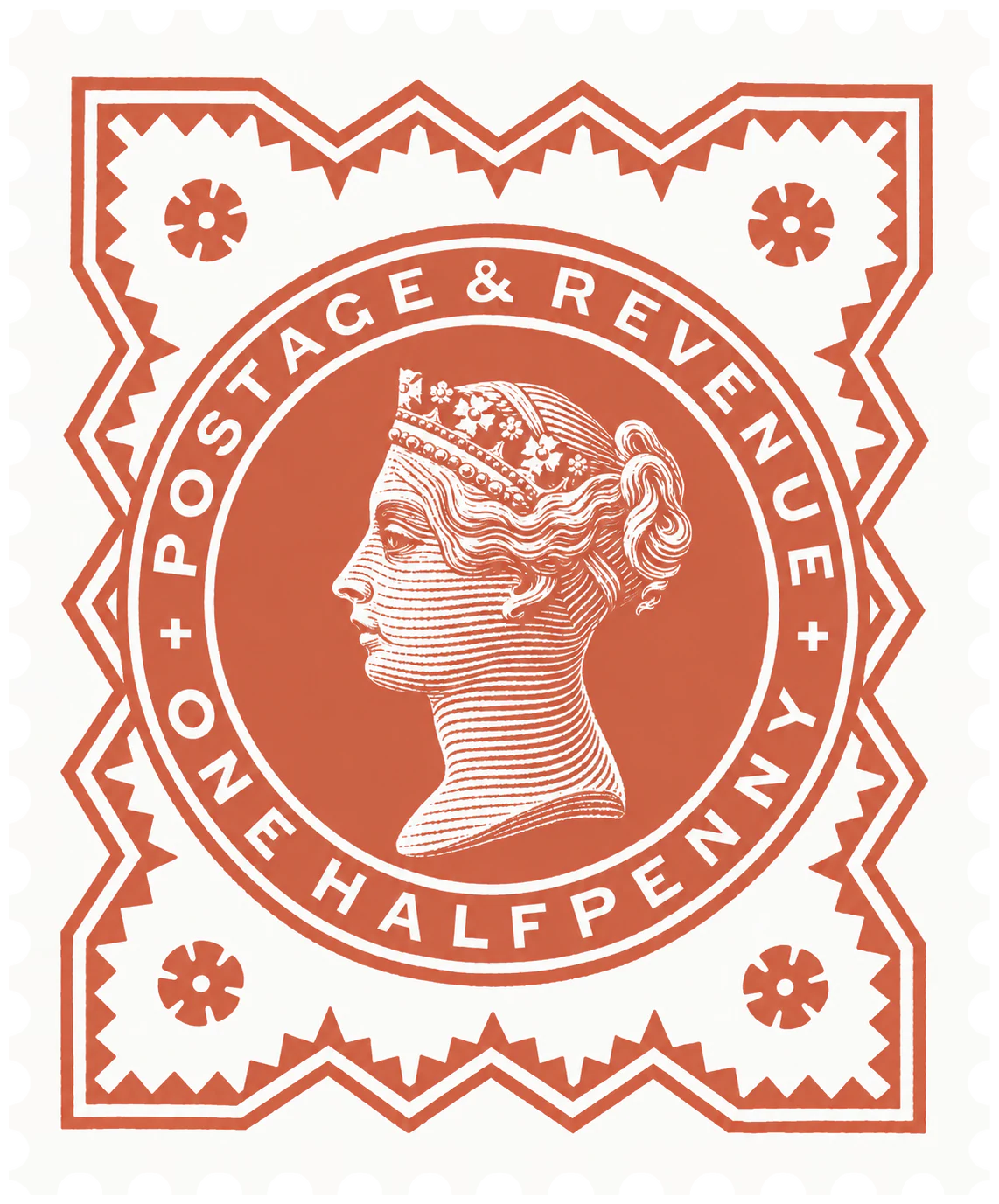
Victoria · ½d vermilion · 1887
Thomas De La Rue & Co. prepared and printed the halfpenny vermilion introduced on 1 January 1887. The firm developed new Jubilee designs after the 1884 Stamp Committee’s work; the halfpenny’s completed die proof is dated 5 February 1886. Its earlier portrait sources are credited separately from the later engraving.
On the stamp you were exploring
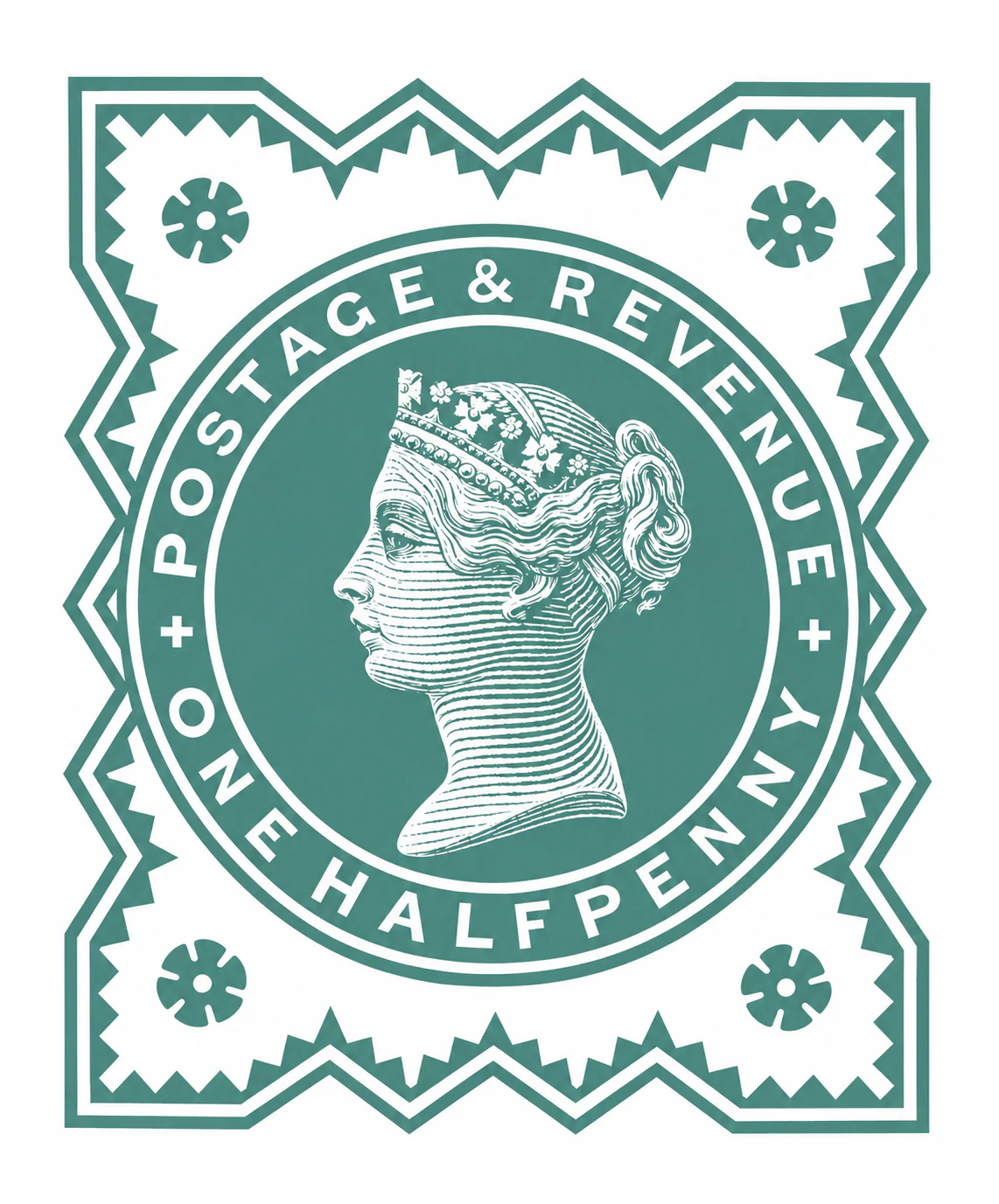
Victoria · ½d blue-green · 1900
Thomas De La Rue & Co. printed the blue-green halfpenny issued on 17 April 1900, retaining the 1887 design. Three successive ink preparations accompanied the change from vermilion. The colour experiments belong to the firm’s later production work, separate from the inherited portrait sources.
On the stamp you were exploring
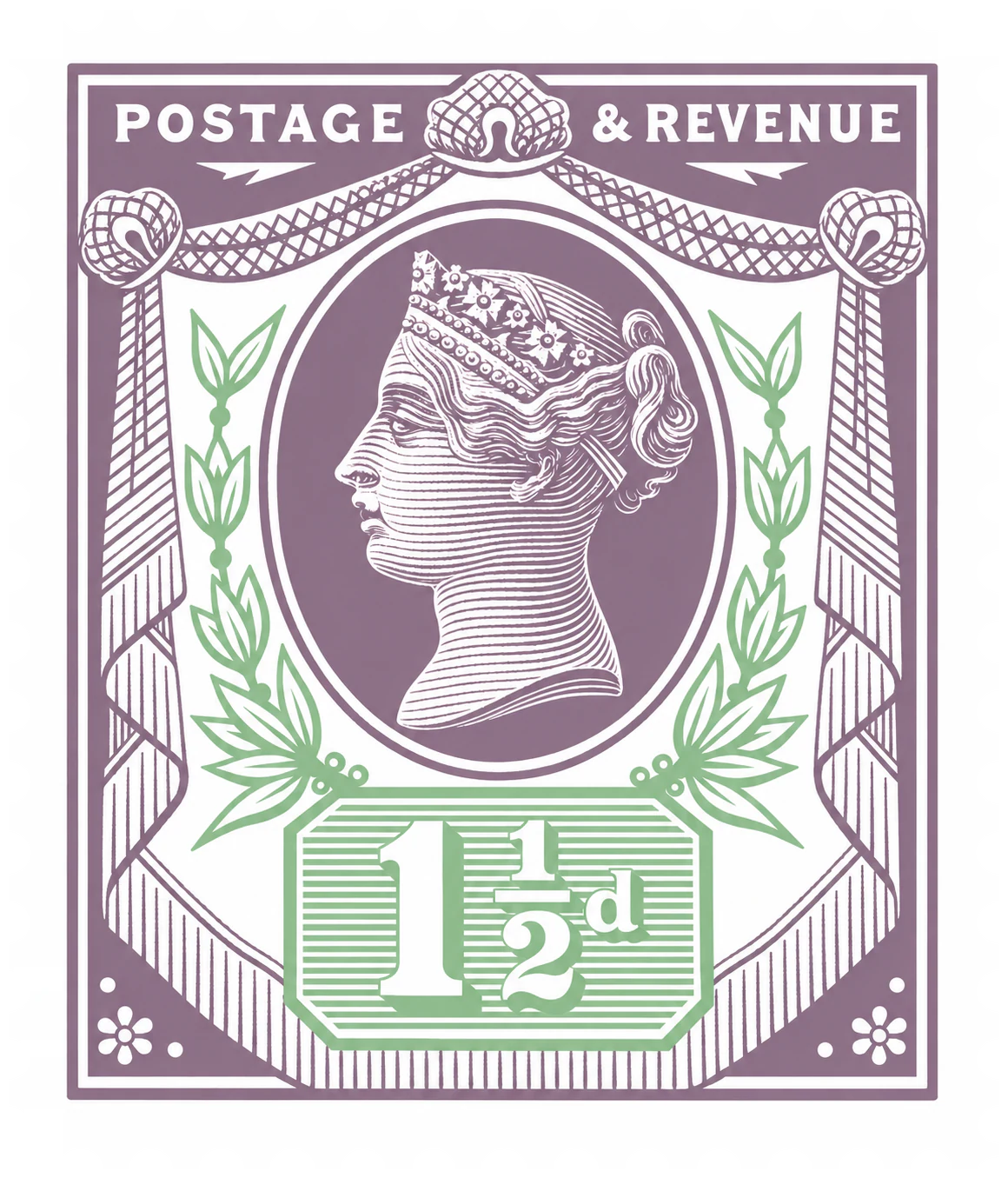
Victoria · 1½d dull purple and pale green · 1887
Thomas De La Rue & Co. prepared and printed the three-halfpenny introduced on 1 January 1887, using separate head and duty plates for the purple and green portions. The earlier portrait sources are distinct from the later Jubilee engravings and the firm’s 1894 reply-paid experiments.
On the stamp you were exploring
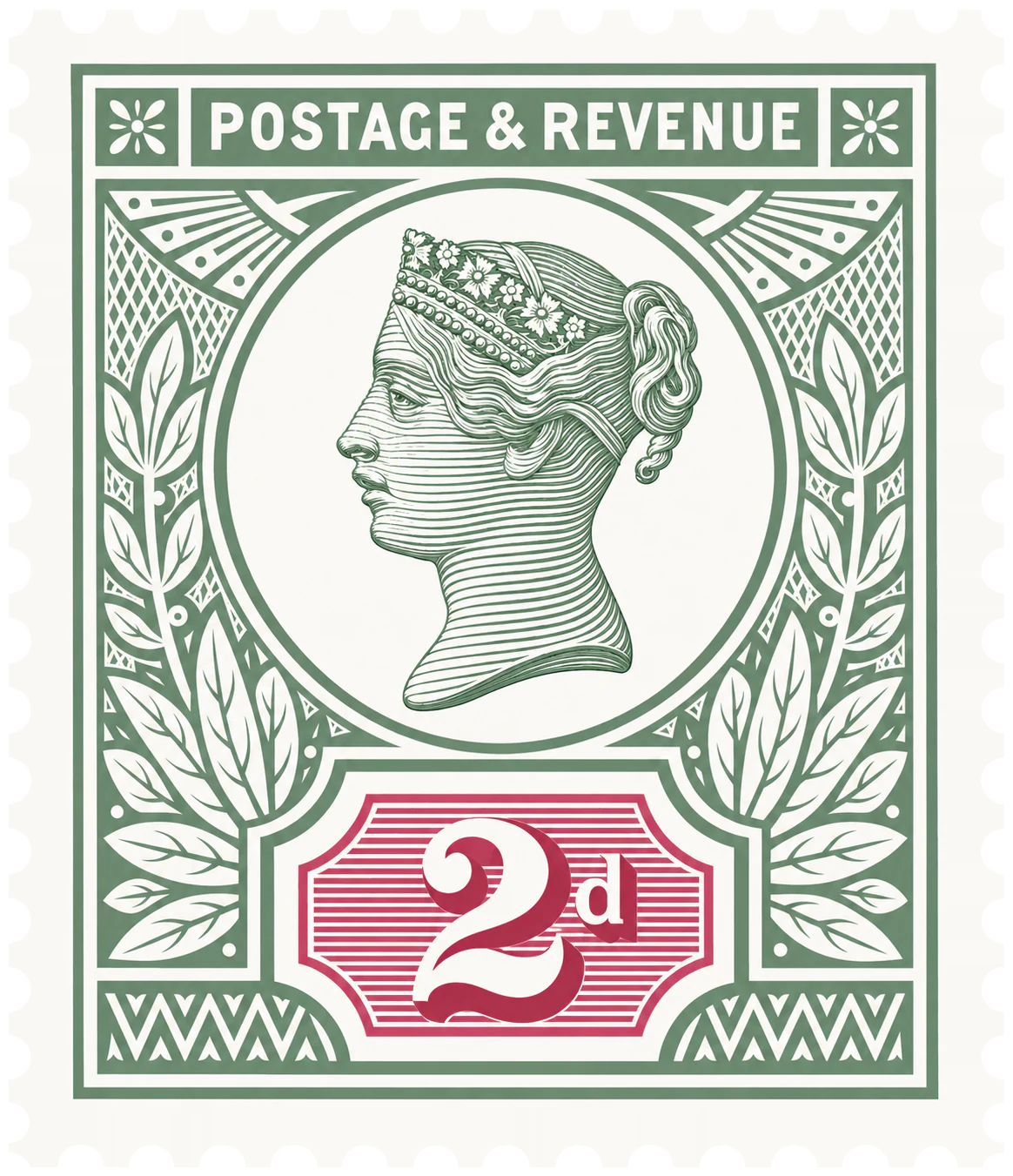
Victoria · 2d grey-green and carmine · 1887
Thomas De La Rue & Co. prepared and printed the Jubilee twopenny, combining a green portrait on a white background with a separate red duty impression. This grey-green and carmine article belongs to that printing family. The firm’s later engraving and colour work are distinct from the earlier artistic sources of the portrait.
On the stamp you were exploring
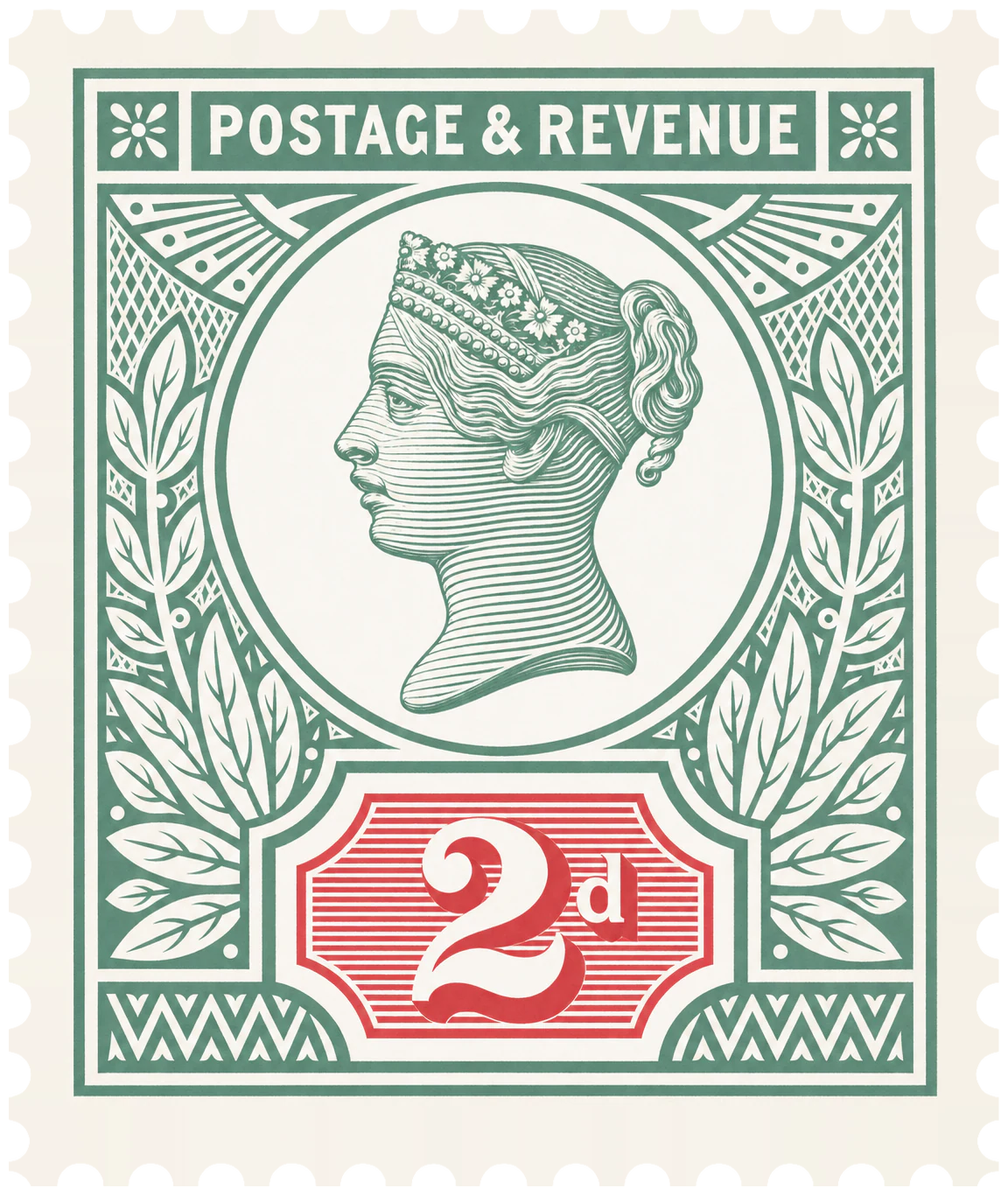
Victoria · 2d green and scarlet · 1887
Thomas De La Rue & Co. developed and printed the green and scarlet Jubilee twopenny, using separate head and duty plates. The green portrait appears on white, while the scarlet denomination supplies the contrasting colour. Its earlier portrait ancestry is credited separately from the later dies and two-colour manufacture.
On the stamp you were exploring
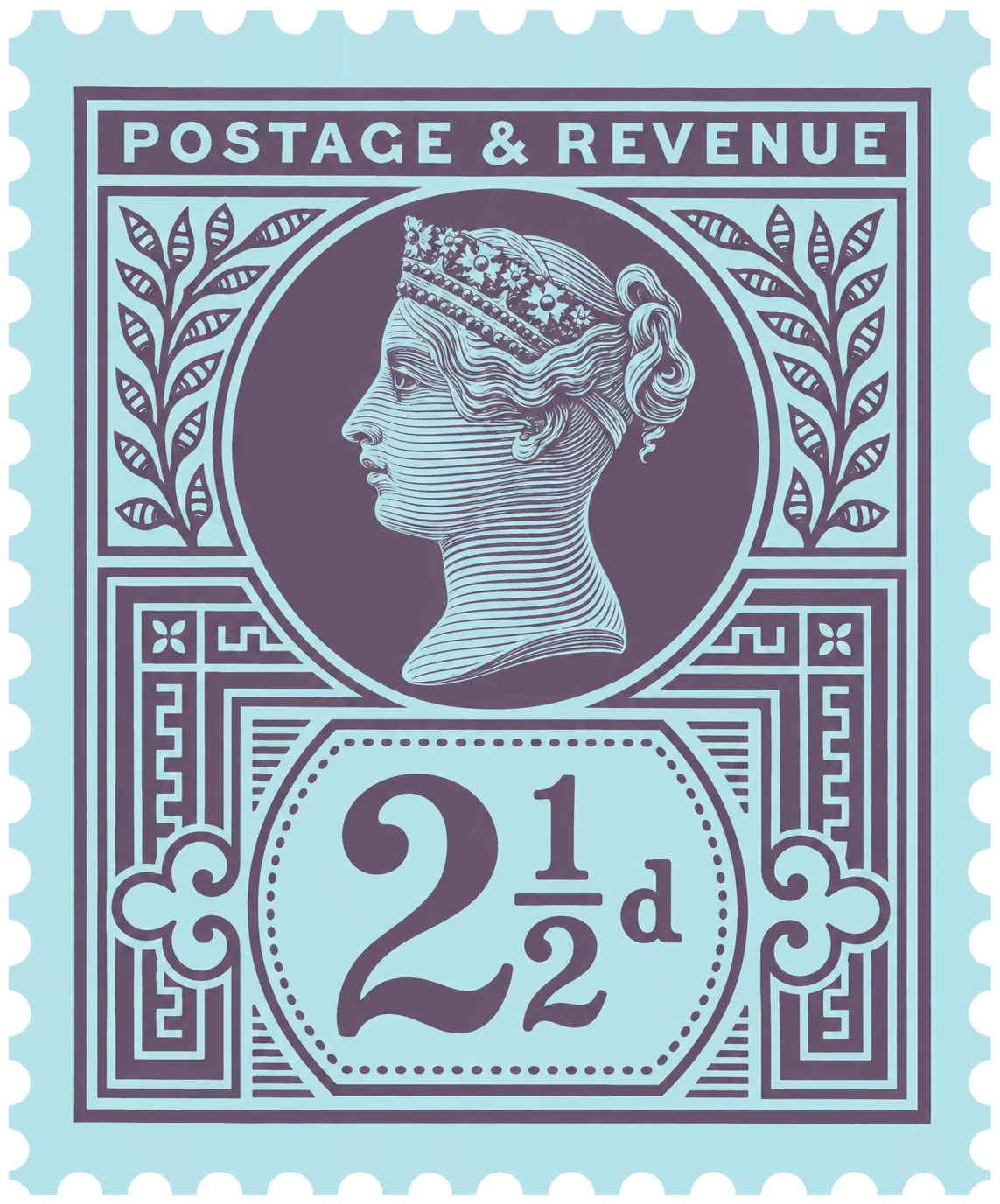
Victoria · 2½d purple on blue paper · 1887
Thomas De La Rue & Co. prepared and printed the Jubilee two-and-a-halfpenny using purple ink on blue paper, giving two visible colours without a separate duty printing. The inherited portrait sources are distinguished from the later die and frame. The individual engraver of the issued design is not established here.
On the stamp you were exploring
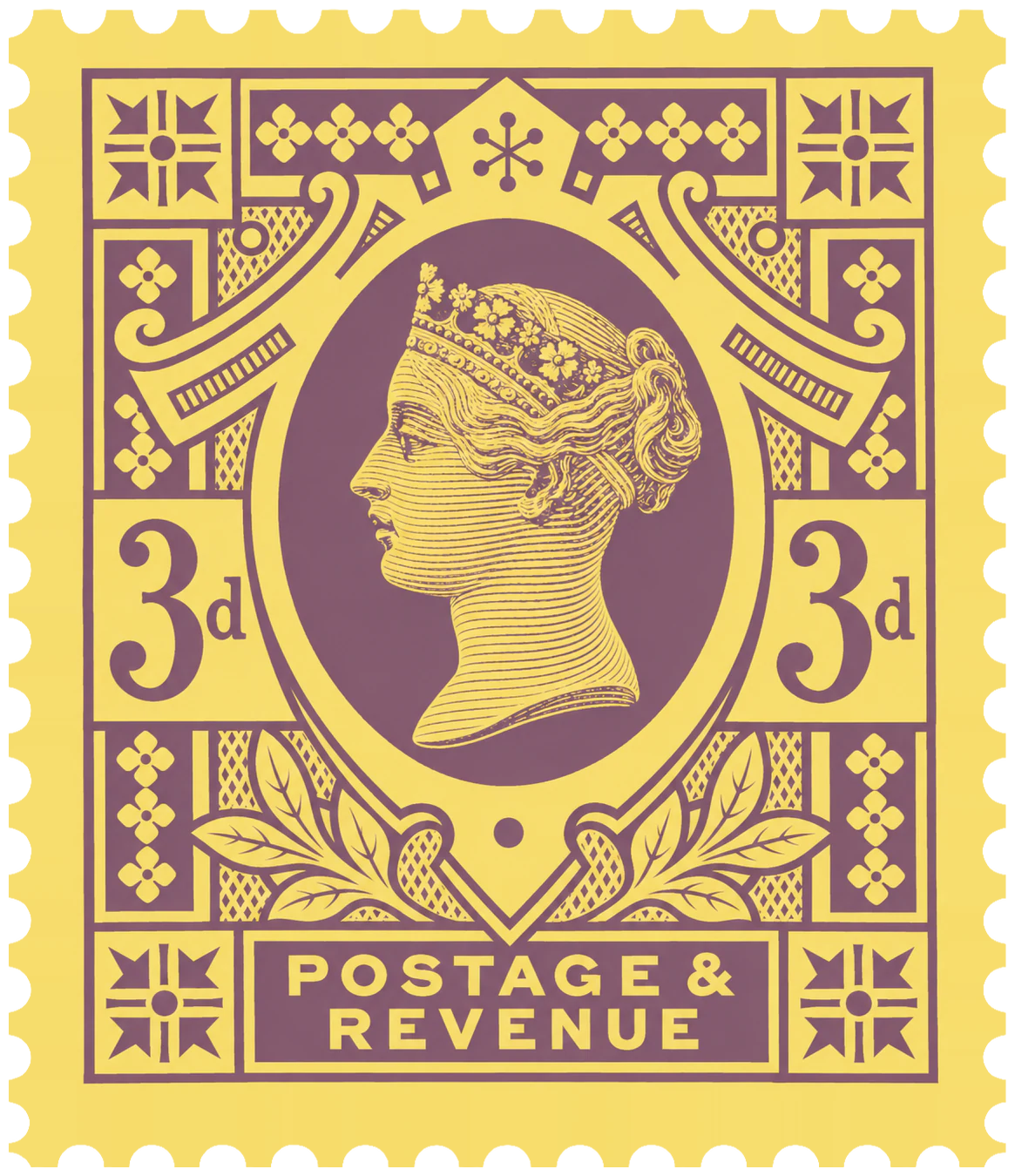
Victoria · 3d purple on yellow paper · 1887
Thomas De La Rue & Co. prepared and printed the Jubilee threepenny using purple ink on yellow paper. The paper supplies the second visible colour without a separate duty printing. Its inherited portrait sources are credited separately from the later Jubilee die, frame and printing work.
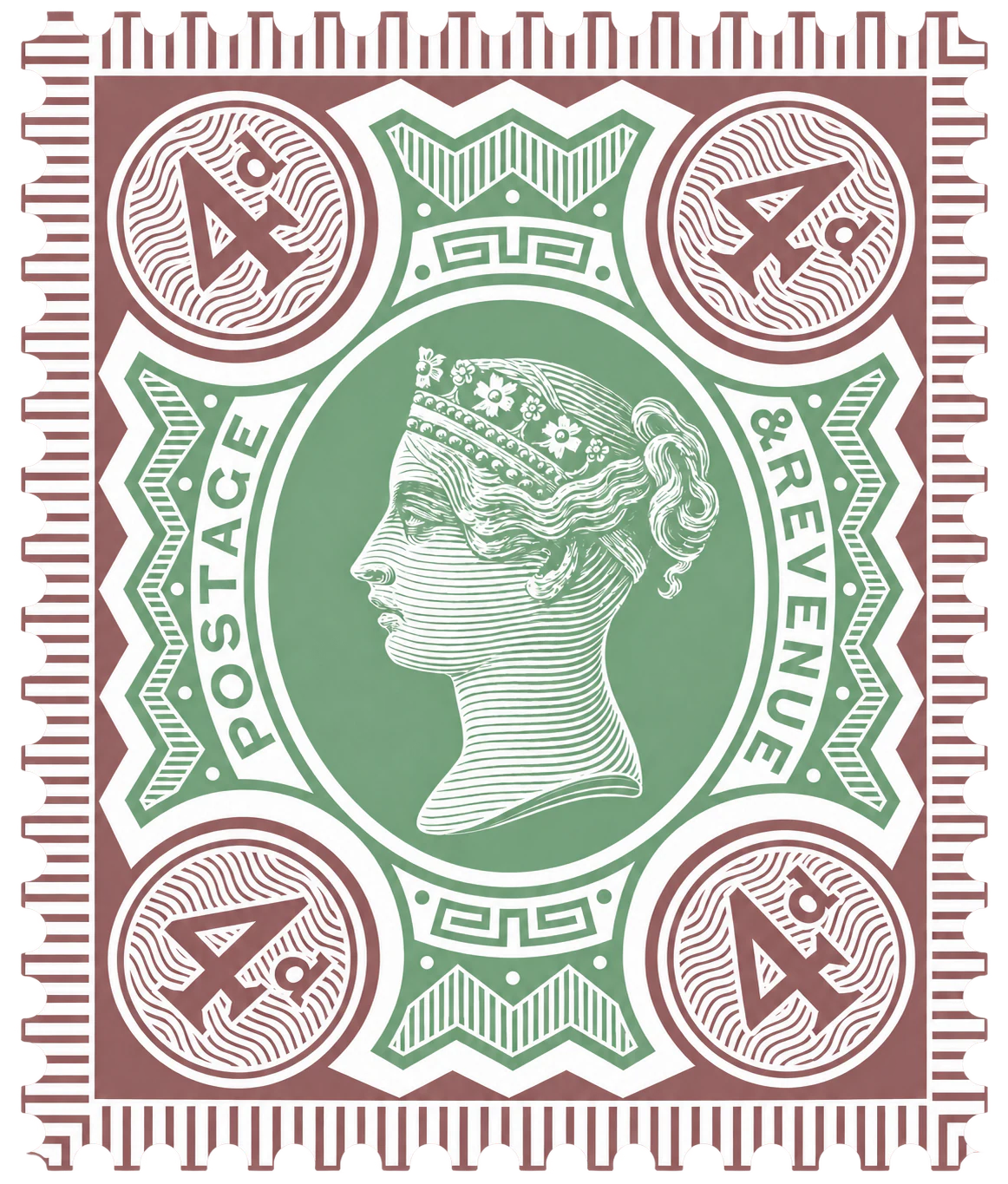
On the stamp you were exploring
Victoria · 4d green and purple-brown · 1887
Thomas De La Rue & Co. developed and printed the Jubilee fourpenny from separate head and duty plates. Its fringed design and small panes prompted experiments with protective rules and supports between panes. The company’s later manufacture is distinct from the earlier artistic sources of Victoria’s portrait.
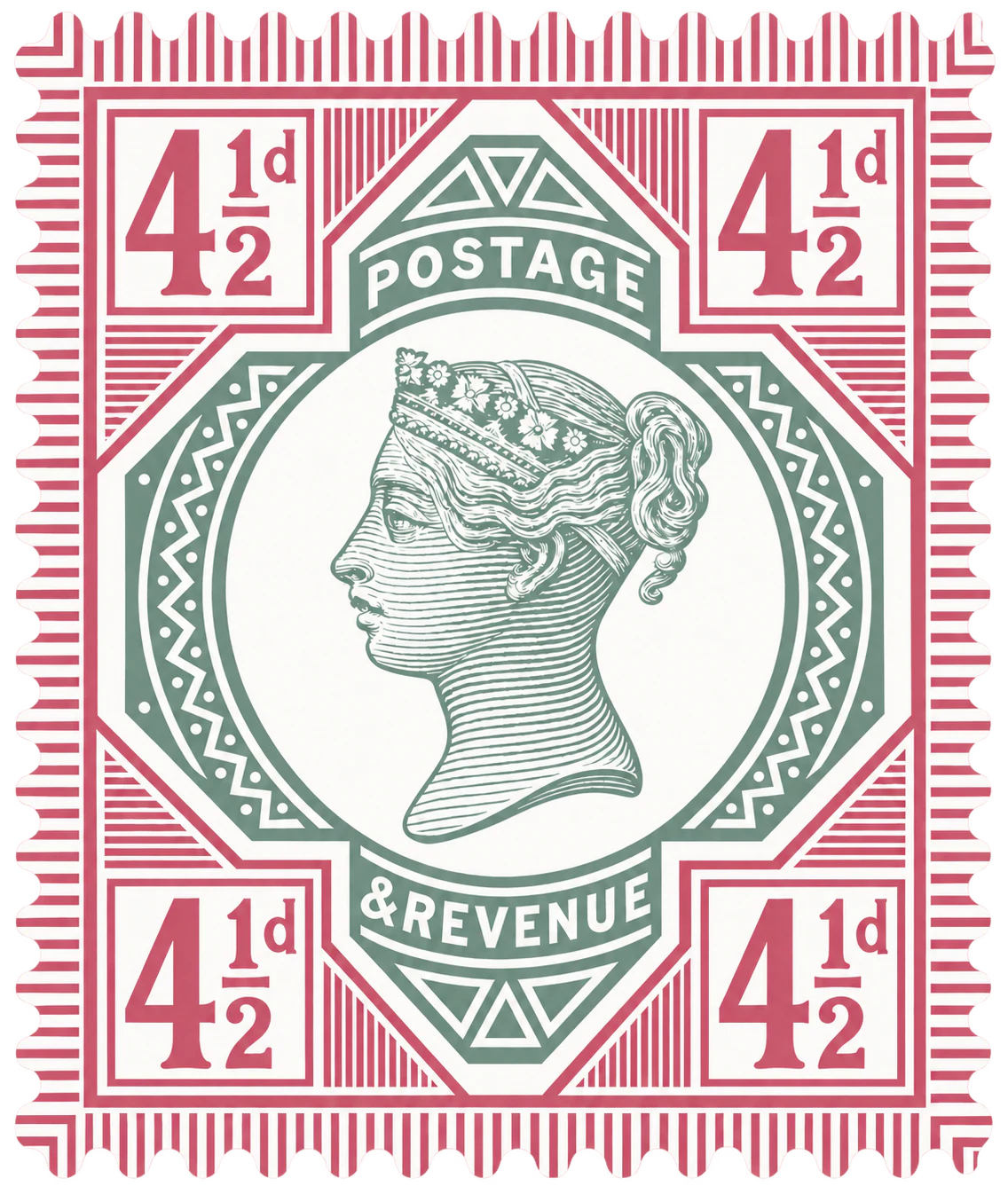
On the stamp you were exploring
Victoria · 4½d green and carmine · 1892
Thomas De La Rue & Co. prepared the later Jubilee four-and-a-halfpenny, issued in 1892, and printed its green and carmine elements separately. Its small printing panes and separate head and duty work belonged to that later production. The earlier portrait sources are credited as inherited artistic ancestry.
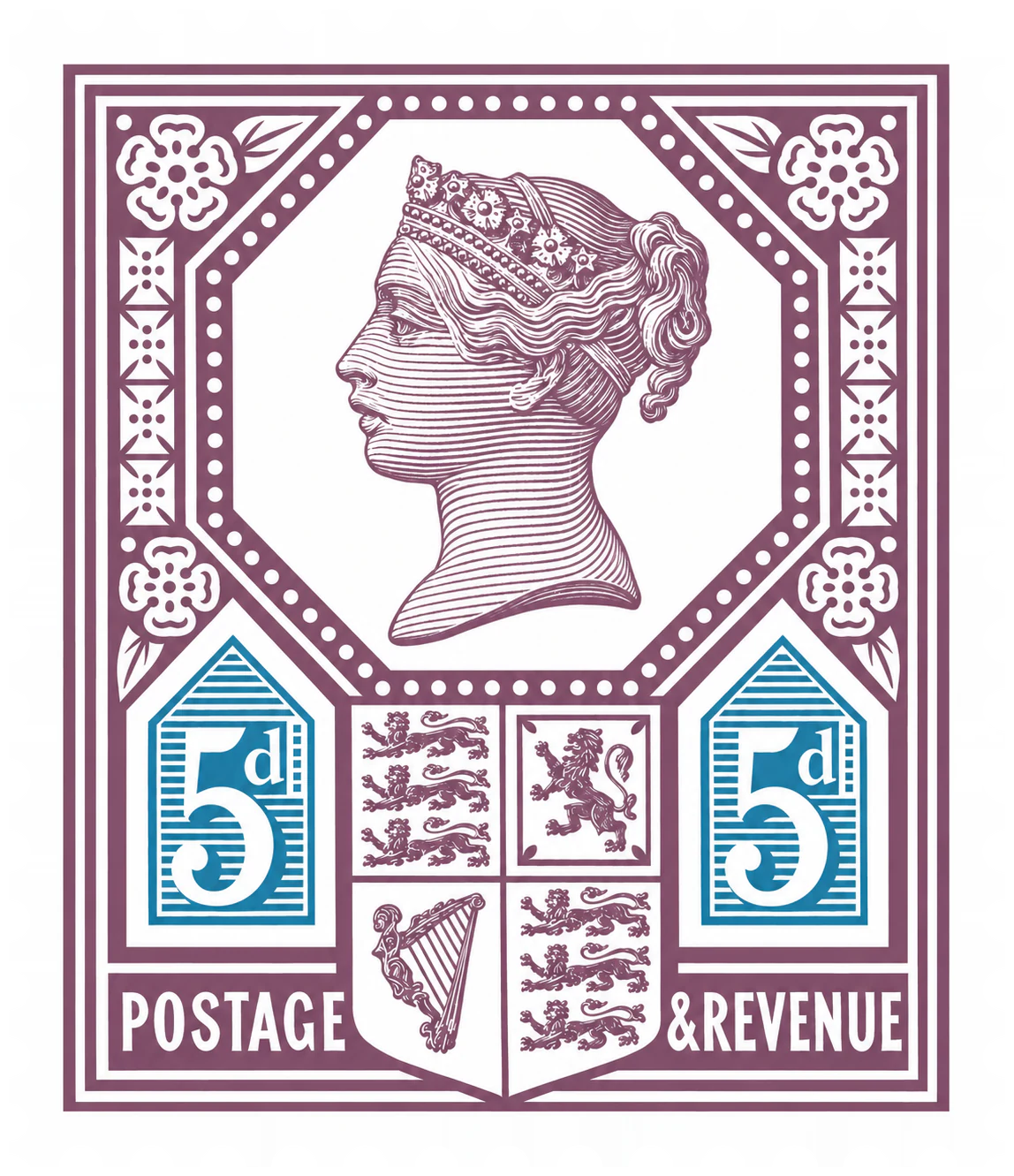
On the stamp you were exploring
Victoria · 5d dull purple and blue · 1887
Thomas De La Rue & Co. prepared and printed the Jubilee fivepenny with separate head and duty plates for the dull purple and blue elements. This article concerns duty Die I. The earlier artistic sources of the portrait are credited separately from the firm’s later engraving and printing work.
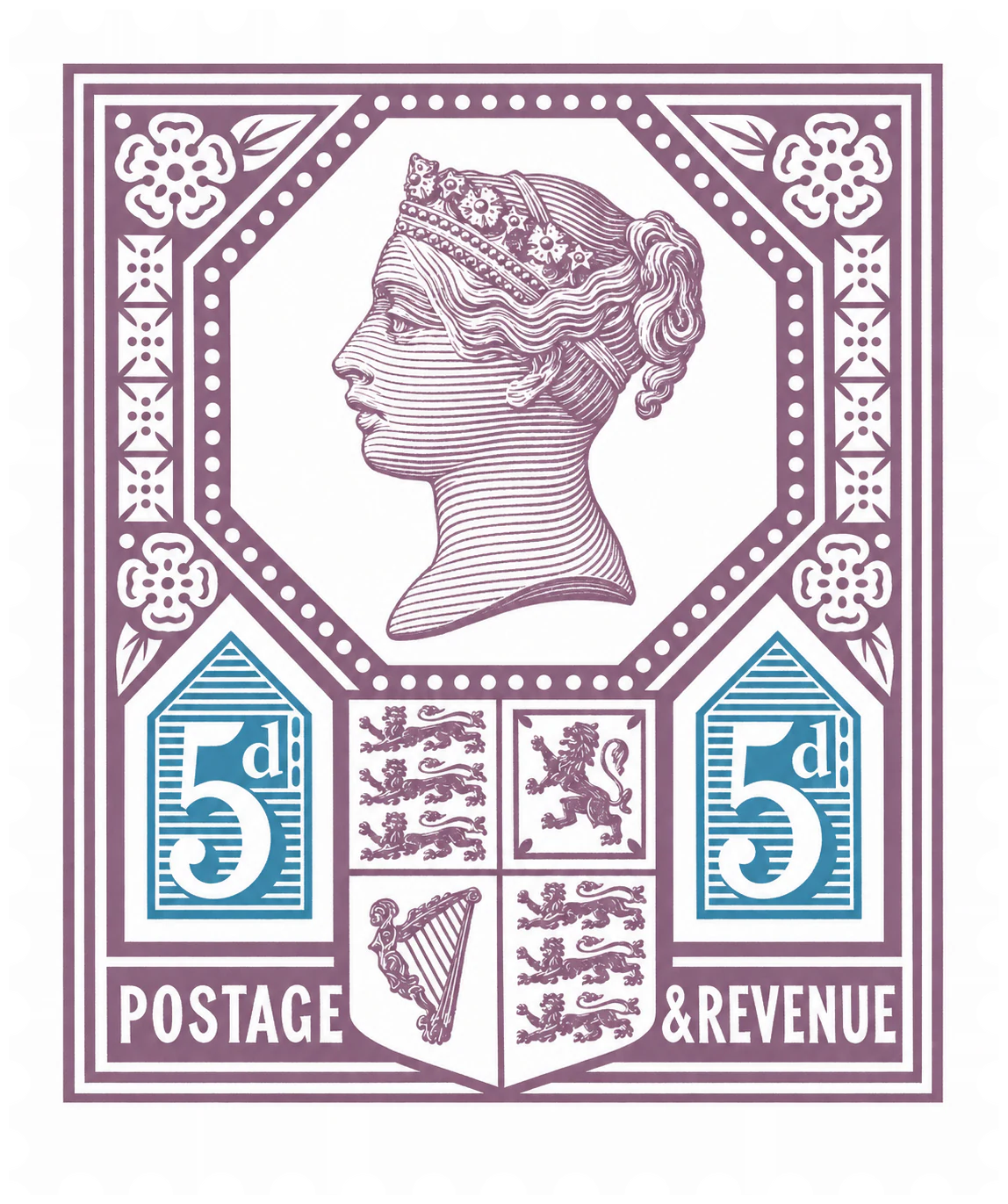
On the stamp you were exploring
Victoria · 5d dull purple and blue · 1888
Thomas De La Rue & Co. prepared and printed the Jubilee fivepenny, combining dull purple head printing with blue duty printing. The Die II distinction belongs to the blue duty engraving, while the purple portrait follows the same head design. The inherited portrait sources are separate from the later dies and printing plates.
On the stamp you were exploring
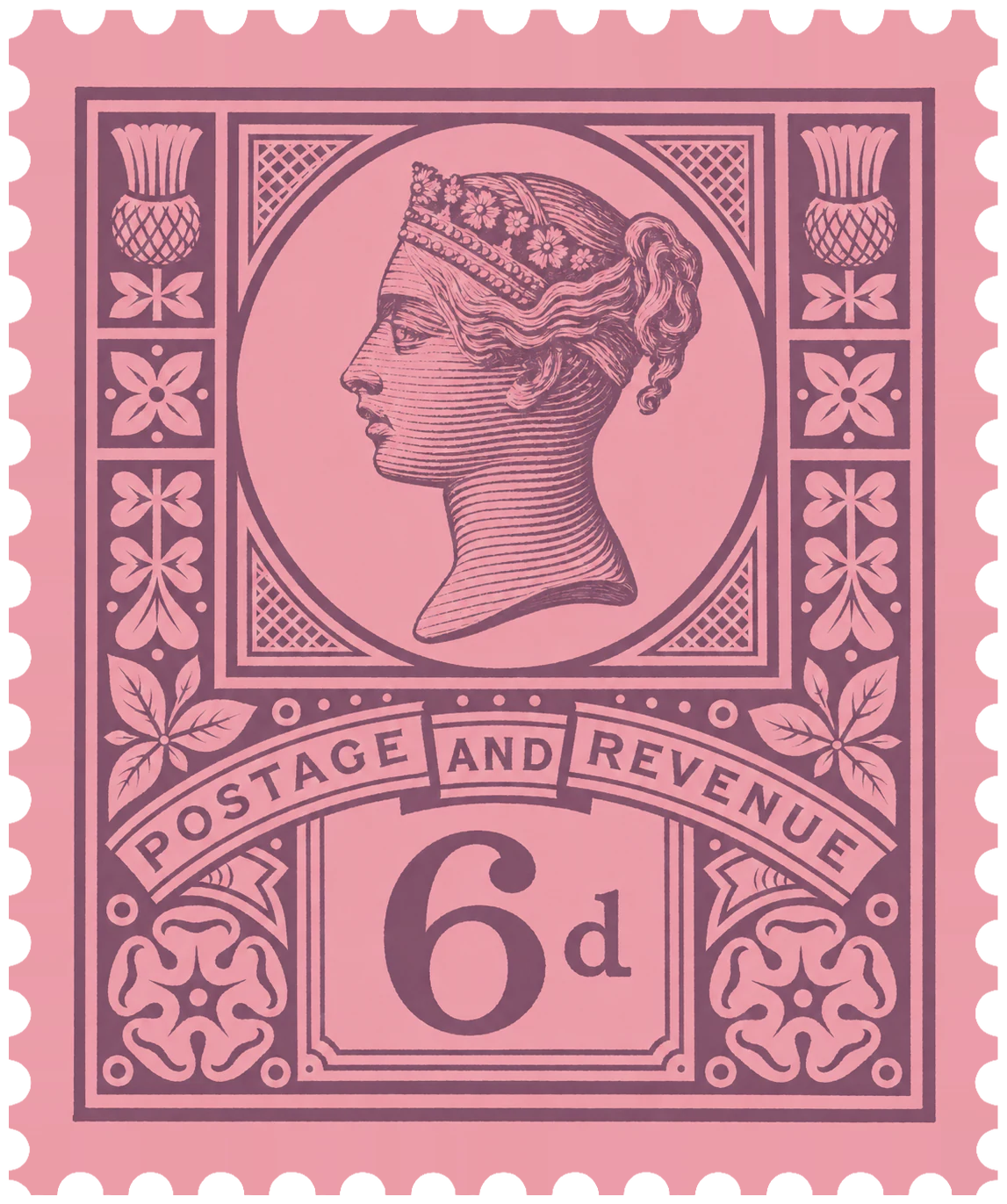
Victoria · 6d purple on rose-red paper · 1887
Thomas De La Rue & Co. prepared and printed the Jubilee sixpenny in purple ink on rose-red paper. The paper supplies the second visible colour, so the issued stamp did not require separate head and duty printings. Its earlier portrait ancestry is credited separately from the later die and frame.
On the stamp you were exploring
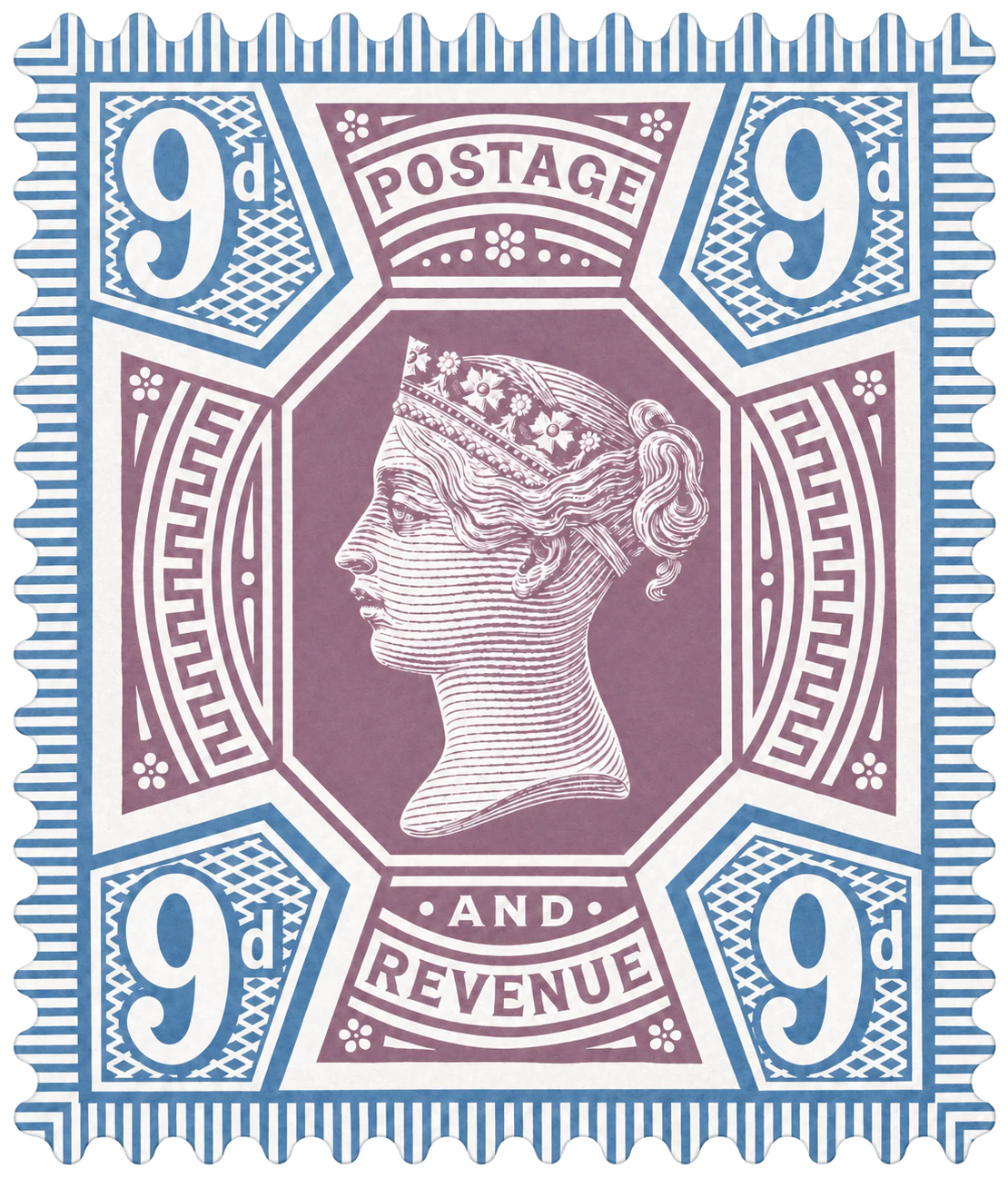
Victoria · 9d dull purple and blue · 1887
Thomas De La Rue & Co. prepared and printed the Jubilee ninepenny with separate head and duty plates for the dull purple and blue elements. Its two head engravings are distinguished by the pendant curl. The earlier portrait sources are credited separately from the firm’s later dies and printing work.
On the stamp you were exploring
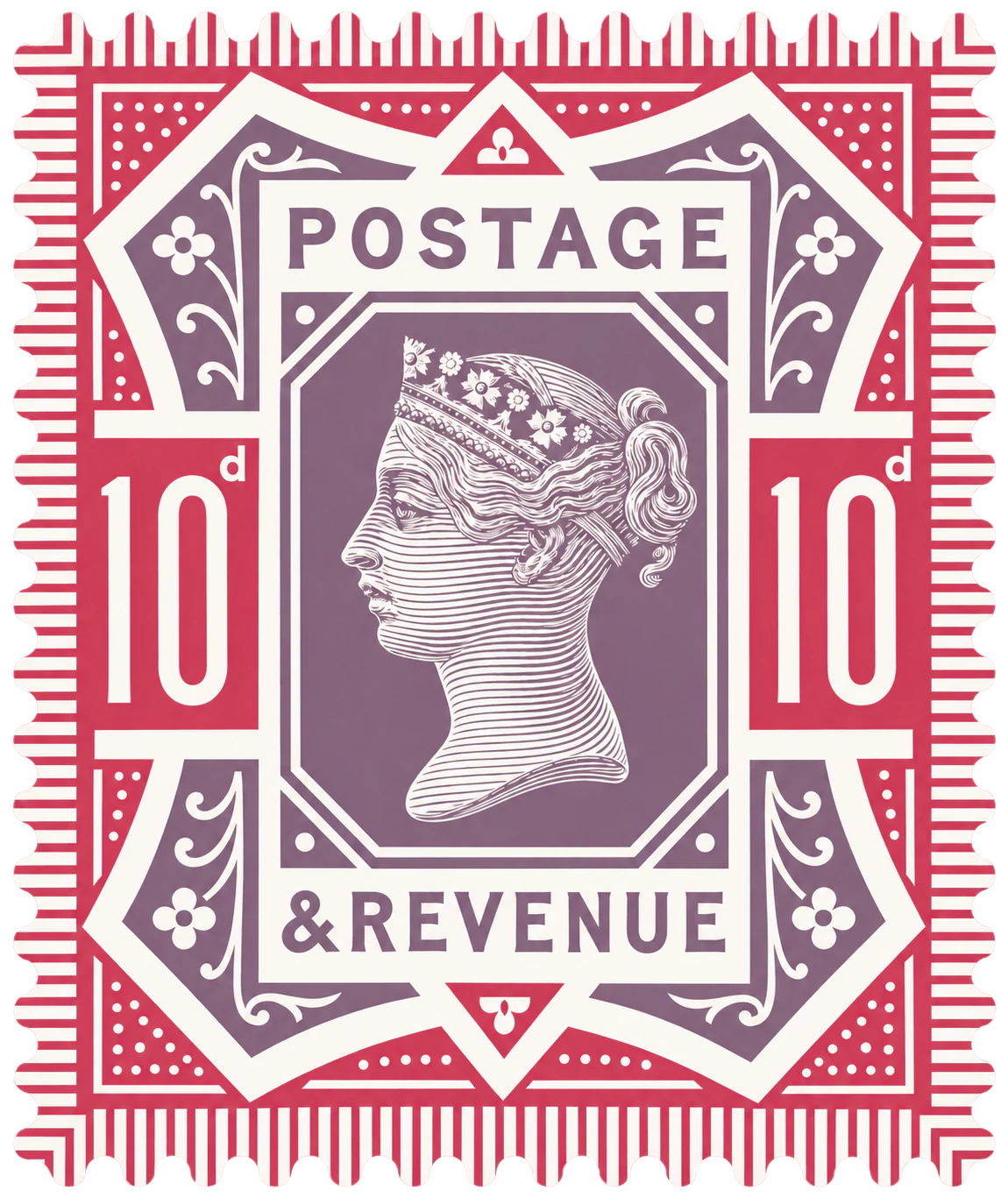
Victoria · 10d dull purple and carmine · 1890
Thomas De La Rue & Co. prepared and printed the tenpenny added to the Jubilee series in 1890. Separate head and duty plates supplied the dull purple and carmine impressions. The inherited portrait sources are distinct from these later engravings; the initials on the workshop instructions do not establish an individual design credit.
On the stamp you were exploring
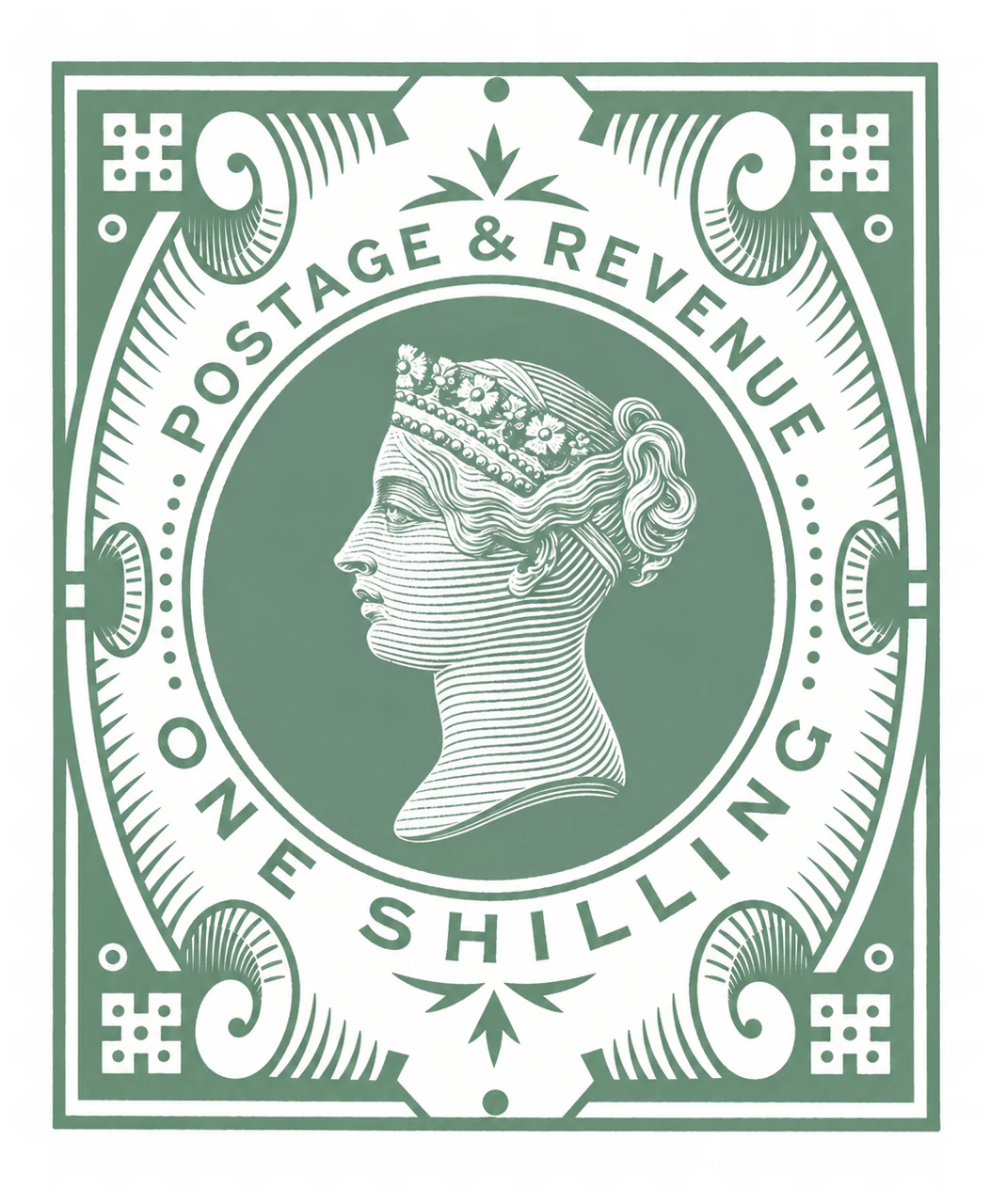
Victoria · 1s dull green · 1887
Thomas De La Rue & Co. prepared and printed the Jubilee shilling in a single dull-green impression on white paper. Its ornamental frame belongs to the later Jubilee design, while the familiar portrait inherits earlier artistic sources. The proposed essays do not establish an individual engraver of the issued stamp.
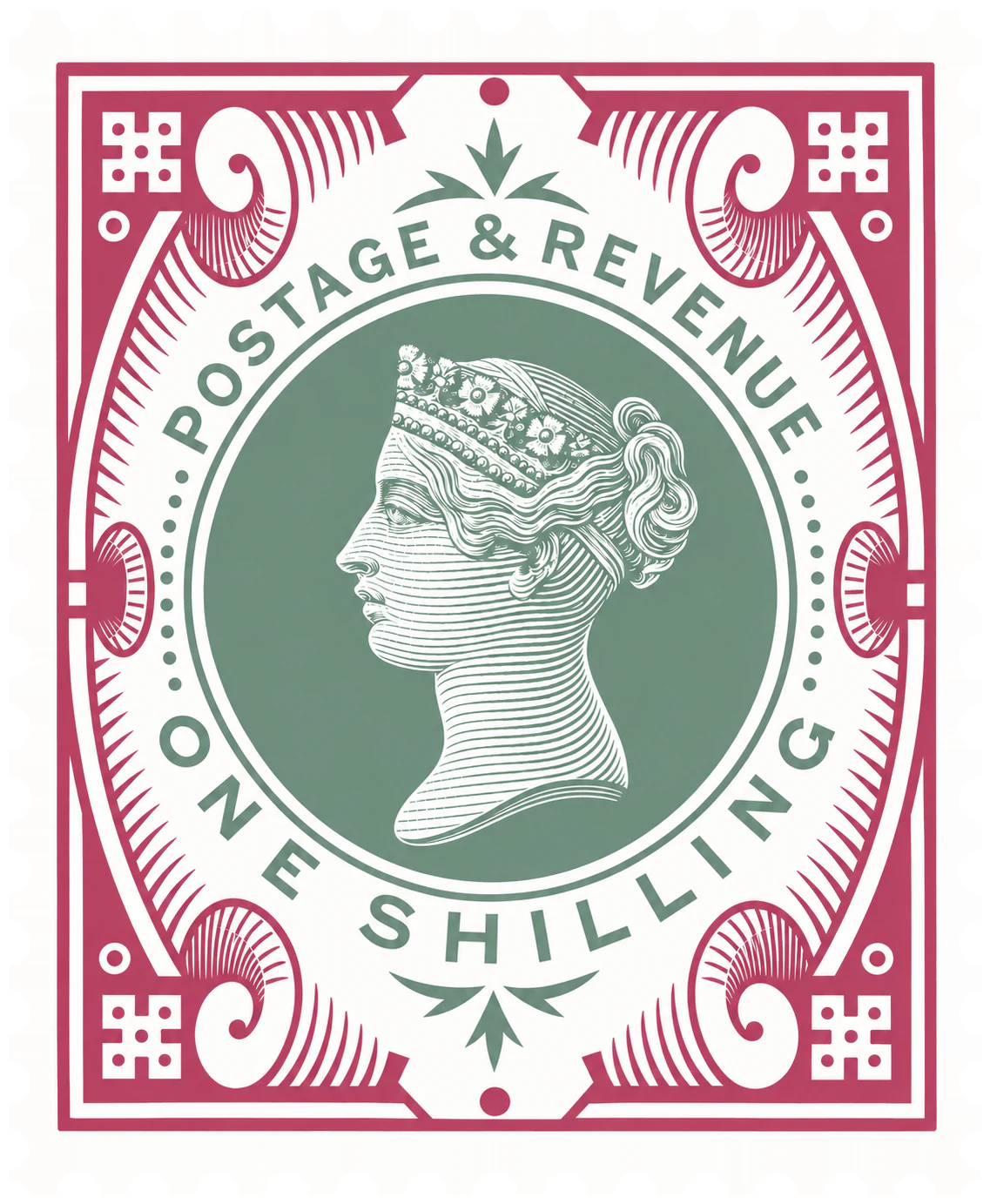
On the stamp you were exploring
Victoria · 1s green and carmine · 1900
Thomas De La Rue & Co. adapted and printed the shilling in green and carmine in 1900. The green centre plate carried the portrait, inscriptions and denomination; a separate plate supplied the carmine outer frame. This arrangement differs from Jubilee values whose contrasting duty plate printed the denomination.
From cards to stamps
The business established a reputation for glazed, coloured playing cards in the 1830s. William Frederick De La Rue developed its work in typography: printing from raised surfaces that carry ink. The firm supplied revenue stamps in 1853 and Britain’s fourpenny postage stamp in 1855. Revenue stamps paid taxes or fees, rather than postage. [1]
A family enterprise
Thomas De La Rue’s sons Warren and William Frederick helped develop the business. Stamp production called for more than an attractive design: the company had to make dependable plates, reproduce consistent colours and deliver large quantities. Its later Victorian contracts brought the lower postage values into the factory too. [1]
A new monarch, then a new contract
De La Rue printed the Edward VII definitives introduced from 1902. After the contract changed, Harrison & Sons and the government works at Somerset House continued Edwardian stamps while George V’s designs were prepared. A printer’s name can therefore distinguish stamps with very similar artwork. [1, 2]